
Quick Answer
Use a pooled account only under an approved legal and bank-program structure, with records attributing each contractor’s funds or entitlement. Balance journals, reserve funds atomically before payout, recover unknown outcomes before resubmitting, and reconcile cash, liabilities, suspense, and in-transit amounts. Account labels and virtual identifiers alone do not prove legal segregation or insurance coverage.
How Omnibus Account Architecture Works for Contractor Funds#
Step 1. Choose between pooled and separated account structures#
An omnibus account holds funds for multiple customers in one external account, with records allocating interests or obligations to each customer. For contractor funds, distinguish a fiduciary or FBO program from an ordinary company account. Your ledger can record attribution, but cannot by itself create lawful custody, segregation, or permission to hold money.
That is the basic go or no-go rule for this guide. If your team cannot maintain reliable attribution from inbound funds to contractor balance to payout, do not launch a pooled model yet. Shared balances become hard to untangle when a return, investigation, or hold arrives.
Step 2. Answer four ownership questions on one page#
Treat this as a product, ops, and engineering decision, not a bank-account naming exercise. Product needs clear user states for pending, held, and paid funds. Ops needs named owners for onboarding checks, release decisions, exceptions, and reconciliations. Engineering needs a ledger that can prove what happened when provider events arrive late, twice, or out of order.
Before you build, check whether you can answer four questions on one page:
- Who legally or contractually controls the master funds account
- Who performs or relies on compliance checks before release
- What record is the source of truth when provider data conflicts with your app balance
- What evidence you can export when a contractor, partner, or regulator asks why funds were held or paid
If any of those answers are still "shared," "TBD," or "handled by the provider," you do not have launch readiness. You have an ownership gap.
Step 3. Keep the scope narrow and check your program rules#
Before design approval, identify the account holder, bank or custodian, legal owner of the funds, platform’s regulated role, permitted use of balances, and insolvency treatment under the program’s law and contracts. Obtain the partner’s written approval for the intended funds flow. A clear ledger is a necessary operational control; it does not replace required licensing, safeguarding, or account documentation.
Account structure and internal records work together. Even a pooled account may be legally segregated from the platform’s own funds under the applicable arrangement. A separately numbered customer account still needs correct ownership records and reconciliation. Compare legal protection, control, and evidence instead of treating pooling and segregation as mutually exclusive labels.
In a U.S. bank deposit program, FDIC pass-through guidance makes ownership, disclosure, and recordkeeping conditions material to insurance treatment. An FBO label alone is not a guarantee of coverage or protection against a platform failure. Ask the bank to document the relevant ownership category and records for this program.
If you are comparing pooled accounts with dedicated account identifiers, see Virtual IBANs for Platforms: How to Give Every Seller Their Own Dedicated Bank Account Number.
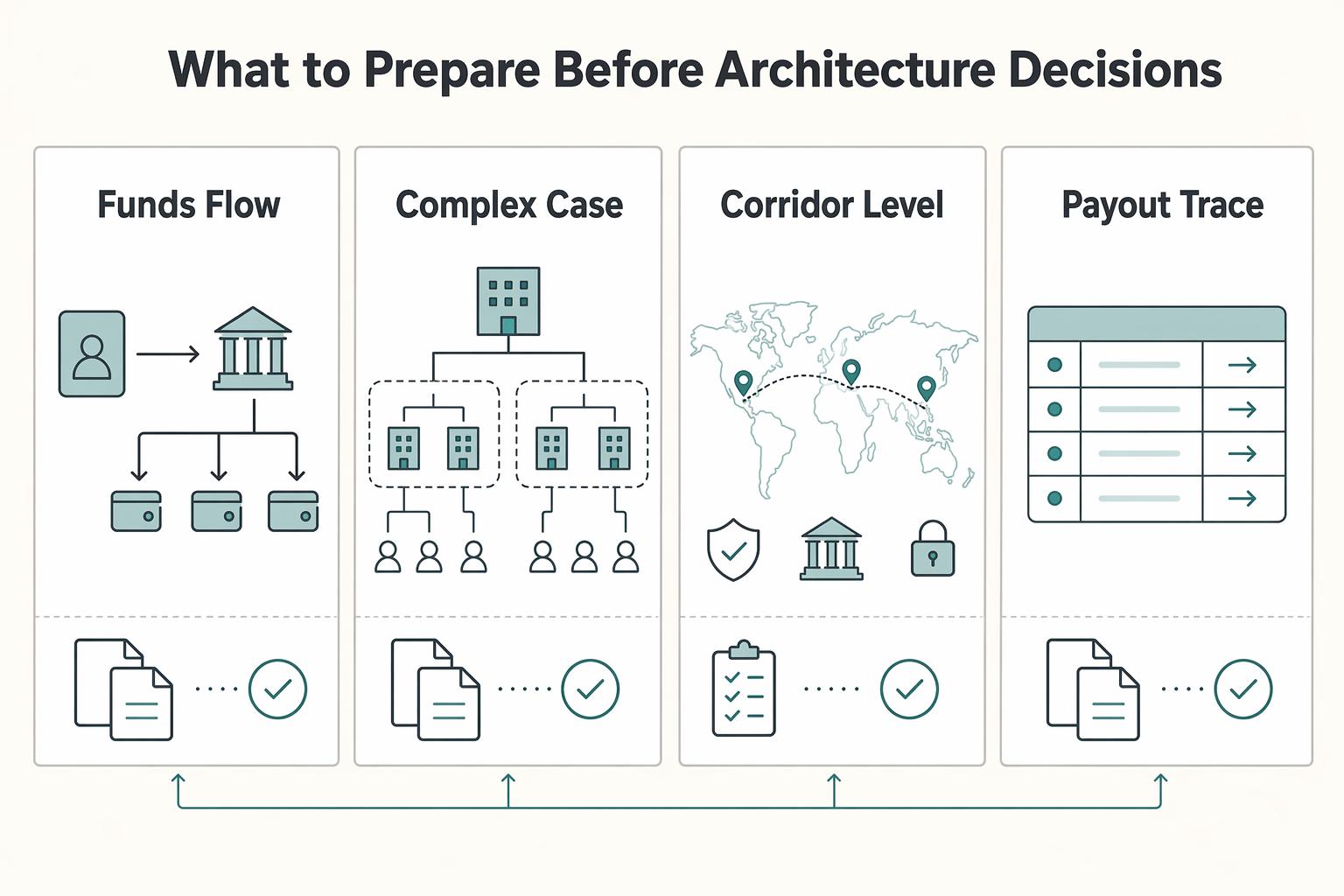
What to prepare before architecture decisions#
Prepare four things before choosing pooled or externally separated funds: a full funds-flow map, an entity-and-contract map, corridor-level compliance assumptions, and a ledger-first source-of-truth model. If you cannot tie each balance to a specific contractor with exportable records, pause the architecture decision.
| Preparation | What to document | Grounded check |
|---|---|---|
| Funds-flow map | From first receipt to final payout, including where a VBA credit is recorded, where holds or returns are handled, and which path releases funds | Ops can trace one inbound payment to one contractor balance and one payout or return without jumping across multiple tools |
| Entity-and-contract map | Your platform, the Intermediary, any Sub-custodian, the payout provider, and any Merchant of Record (MoR) role | Use segregation of duties as a control prompt when you review this map |
| Corridor-level compliance assumptions | Where KYC, KYB, and AML gates apply before release, where manual review is expected, and what evidence must be retained for held or cleared payments | Define the gate, the owner, and the record |
| Ledger-first source of truth | Ledger journal schema, a webhook event model, reconciliation exports, and beneficial-owner attribution fields | For any contractor, export journal entries, provider events, and reconciliation line items that explain the current balance |
Step 1. Map the funds flow from first receipt to final payout#
Map the full funds flow from first receipt to final payout. Document where a Virtual Bank Account (VBA) credit is recorded, where holds or returns are handled, and which path releases funds. If you use an FBO-style master account, mark it clearly and include the contractor-level balance record, not just the bank account. Program ledgers still need to track individual end-user balances.
Check whether ops can follow one receipt through provider records, internal journals, contractor attribution, and its payout or return. Linked records may span several systems; the requirement is a reproducible trace, not one screen.
Step 2. List every entity and contract in the chain#
List every entity and contract in the chain: your platform, the Intermediary, any Sub-custodian, the payout provider, and any Merchant of Record (MoR) role. This is less about reaching final legal conclusions and more about exposing handoff risk early.
A common breakdown is split ownership across funds holding, screening, and payout execution without a clean exception path. Use segregation of duties as a control prompt when you review this map.
Step 3. Set compliance assumptions corridor by corridor#
Set compliance assumptions by corridor, not as a single global policy. For each corridor, note where KYC, KYB, and Anti-Money Laundering (AML) gates apply before release, where manual review is expected, and what evidence must be retained for held or cleared payments.
Do not invent thresholds at this stage. Define the gate, the owner, and the record.
Step 4. Define your source of truth before engineering starts#
Keep the build sequence ledger-first: create the ledger, provision user-level ledger accounts, connect external accounts, then enable money movement. Minimum artifacts are a ledger journal schema, a webhook event model, reconciliation exports, and beneficial-owner attribution fields.
Final verification is simple: for any contractor, you should be able to export journal entries, provider events, and reconciliation line items that explain the current balance. If you cannot, the architecture choice is still premature.
For the accounting treatment of held funds, reserves, and liabilities, see What Is a Balance Sheet? How Payment Platforms Account for Held Funds Reserves and Liabilities.
Compare omnibus and segregated models before you build#
If you cannot prove beneficial owner attribution on demand and keep ledger postings replay-safe, do not launch an omnibus model. Pooled custody can reduce account sprawl, but it also puts more investigation and compliance pressure on your internal ledger controls.
Step 1. Start with custody mechanics and where control evidence lives#
Start with custody mechanics, not naming.
An omnibus account pools multiple customers’ funds in one externally held account. An FBO or fiduciary arrangement may identify that funds are held for others; the precise account title, owner, and rights depend on the bank program and contracts. Customer-level records allocate the pooled interests or obligations.
A separately held customer-account model uses distinct external accounts for individual customers. Separately numbered virtual receiving identifiers may instead route into one pool. Neither numbering nor pooling alone determines legal segregation, ownership, safeguarding, or insolvency protection.
Evaluate both account-level legal protection and customer-level attribution. The ledger remains necessary in either model; external separation may help evidence ownership but does not remove operational controls.
Step 2. Compare the models on decisions that create operational pain#
Compare the models on the decisions that create downstream operational pain.
| Decision point | Pooled external account | Separate external customer accounts |
|---|---|---|
| Setup complexity | Fewer external accounts, more internal ledger responsibility | More external account setup per customer |
| Reconciliation burden | Internal mapping from pooled funds to contractor balances is critical | Ownership separation is clearer at custodian level, but platform/provider reconciliation still matters |
| Control surface | Holds and releases can be routed through one pooled balance | More externally separated balances and handoffs |
| Payout path | Centralized release flow is possible if internal controls are strong | Flow depends more on per-account custodian handling |
| Exception handling | Investigations often start with decomposing pooled ownership | Contractor-level separation is clearer, but external coordination can increase |
| Legal protection | Verify ownership, safeguarding, permitted use, and insolvency terms; pooling alone decides none of these | Verify the same terms; separate numbering alone decides none of these |
Pooling increases the consequence of an attribution or release error because several contractors share the same external cash pool. The specific legal risks depend on the program. Avoid treating investment-custody examples as automatic rules for a contractor payment account.
Step 3. Apply one go/no-go test before you build#
Apply one go/no-go test before build: if your team cannot maintain reliable beneficial owner attribution and replay-safe ledger postings, do not use pooled custody for contractor balances.
Test it with real evidence. For one contractor, produce the inbound credit record, ledger entries, current balance explanation, hold or release decision record, and payout or return outcome. Then replay a duplicate provider event and confirm the balance does not post twice.
Prefer the program whose legal terms and records support your intended customer rights and whose operating controls your team can maintain. Separate accounts do not compensate for an unapproved funds-holding model or missing release controls.
If you need a deeper primer on structure mechanics, see Omnibus Accounts Explained: How Platforms Hold and Segregate Client Funds. We covered adjacent operating patterns in How Staffing Platforms Automate Healthcare AP for Clinical Contractors.
Assign accountability across the chain#
Do not launch until every control has a named owner, evidence artifact, and escalation SLA. In omnibus programs, accountability gaps, not account structure alone, are what turn routine exceptions into compliance risk.
Step 1 Name the accountable entity for each control#
List the actors actually present: platform, account-holding bank or custodian, intermediary, any sub-custodian, and payout provider. Include investment entities only if the program actually involves them. For each control, record the executing party, accountable regulated entity, and evidence owner.
If your platform makes hold or release decisions using another party's screening output, document who can approve, who can override, and who retains evidence. For U.S.-scoped programs, define who owns any BSA reporting or recordkeeping path tied to FinCEN (the Financial Crimes Enforcement Network within Treasury), since BSA administration authority is delegated to FinCEN.
Step 2 Build a responsibility matrix you can test#
Keep ownership, evidence, and timing in one place.
| Activity | Named owner | Evidence artifact | Escalation SLA |
|---|---|---|---|
| Onboarding and customer due diligence | Platform / Intermediary / other named entity | Approved onboarding record, review notes, decision timestamp | Written clock for unresolved cases |
| Sanctions and AML screening | Named screening owner | Screening result, match disposition, reviewer identity | Written clock for true-match escalation |
| Transaction monitoring and suspicious activity review | Named monitoring owner | Restricted alert/case records; operational exports contain only permitted references and release disposition | Written clock for escalation to the defined authority or compliance lead |
| Hold and release decisions | Named decision owner | Hold reason, release approval, linked ledger event | Written clock for release or continued hold review |
| Disputes and regulator inquiries | Named response owner | Authorized response packet; exclude SAR or information revealing its existence from routine exports | Written clock for first response and final handoff |
Run one end-to-end scenario through this matrix: onboarding, inbound credit, hold, alert, payout release or block, then dispute. If you cannot identify owner plus evidence at each step quickly, the matrix is incomplete.
Step 3 Assign reporting mechanics before go-live#
Separate tax/account reporting from transaction-monitoring reports. If a relevant U.S. person has a foreign financial account interest or signature authority, assess FBAR applicability rather than assuming every foreign payout triggers it. For a required FBAR workflow, FinCEN’s line-item instructions describe account valuation and whole-dollar reporting: USD 15,265.25 rounds up to USD 15,266, and a negative calculated value is entered as zero. Keep the valuation record apart from contractor payout eligibility.
The recurring failure pattern is split responsibility with no final decider. Before go-live, confirm every control has one accountable owner, one stored evidence artifact, and one written escalation SLA with backup coverage.
Related reading: Account Reconciliation for Payment Platforms: How to Automate the Match Between Payouts and GL Entries.
Design the ledger and wallet projection layer#
Use immutable, balanced ledger journals as the internal accounting record and derive wallet views from them. Reconcile the journals with authoritative external cash records and legal obligations. A projection may lag, but payout authorization must read controlled available funds and reservations rather than a stale displayed balance.
Step 1 Anchor truth in journal entries#
Record every money movement as a journal event first, not a direct balance update. When funds hit a Custodial account, write an immutable journal entry tied to that external event, then let the wallet layer project contractor balances from journals.
This separation is what keeps the system recoverable during retries, delayed webhooks, and backfills. Projections can be rebuilt; journals are your evidence trail. A quick check is to replay one contractor's journals in a lower environment and confirm available, held, and total balances match the current projection.
Step 2 Define the posting model before coding#
Define lifecycle events separately from their accounting effect. Not every status change moves cash or changes the total liability. Record balanced debit and credit lines, currency, contractor or suspense attribution, effective time, and immutable source references; use linked corrections rather than editing posted journals.
| Lifecycle event | Accounting or availability effect | Required reference |
|---|---|---|
| pending | Record unconfirmed signals as pending; confirmed unmatched cash belongs in suspense | Provider event ID or intake record |
| credited | Funds recognized to the contractor ledger | Custodial account credit event or statement line |
| held | Restrict available funds without removing total contractor liability | Hold reason code and decision record |
| released | Approval permits a reservation; it does not mean cash has settled | Release approval and payout instruction ID |
| returned | Post actual returned cash and liability effect, distinguishing an inbound reversal from a payout return | Return event ID or bank/provider return code |
| reversed | Prior posting economically undone | Linked original journal ID and reversal reason |
Keep entries immutable. Do not overwrite credited into returned; post a linked returned or reversed entry instead.
Step 3 Make ingestion idempotent and replay-safe#
Assume provider events arrive duplicated, out of order, and late. Your webhook path should let you process the same provider event repeatedly without creating duplicate contractor value.
Verify webhook authenticity before accepting it, durably record the event, and use a transactional deduplication guard when posting its economic effect. Store provider/account scope, event ID, underlying payment ID, type, currency, amount, timestamps, payload hash, and resulting journal IDs. Event-ID deduplication alone may miss separate notifications for the same payment. Handle out-of-order transitions by retrieving authoritative state and guard the underlying economic operation against duplicate posting.
Step 4 Reconcile in three hops#
Reconcile in the same order money moves:
| Hop | Compare | Catches |
|---|---|---|
| 1 | Provider statements or confirmed Custodial account events to your internal ledger | Intake mismatches |
| 2 | Ledger totals to wallet projections | Projection defects |
| 3 | Payout outcomes back to the ledger so released funds settle, return, or reverse visibly | Payout-state drift |
For an illustrative single-currency program, a USD 1,000 receipt becomes USD 600 owed to contractor A and USD 400 to B. Holding USD 200 of A’s funds changes A’s available amount to USD 400 without changing the USD 1,000 total liability. Reserving a USD 300 payout leaves A USD 100 available, USD 200 held, and USD 300 in transit. After confirmed settlement, cash and liabilities each fall to USD 700: A USD 300 and B USD 400. Fees are assumed zero here. Reconcile each stage, including suspense and in-transit accounts, rather than comparing only the app’s available balances.
Step 5 Build in implementation order#
Use this order: event schema first, posting engine second, balance projection third, reconciliation jobs fourth. Reversing it usually forces wallet behavior around incomplete event semantics and creates long-term exception debt.
Build the contractor funds lifecycle in production order#
Once your journal model is stable, enforce one production order end to end: collect, post, evaluate release controls, route payout, confirm settlement, then close exceptions. Keep one rule visible across the flow: credited is not the same as releasable.
Step 1. Collect into intake, then post to the ledger#
For Virtual Bank Account (VBA) intake, distinguish an unconfirmed payment signal from confirmed cash. Keep unconfirmed signals pending without recognizing cash. Immediately record a confirmed unmatched receipt through balanced cash and suspense postings, then investigate ownership using the provider reference, amount, currency, VBA identifier, and match notes. Once matched, reclassify suspense to the correct contractor liability through linked journals; do not credit an assumed contractor simply because funds arrived.
Step 2. Separate fund recognition from release eligibility#
Keep recognition and release as different decisions. Funds can be credited while release stays blocked under your control rules, including compliance holds, stale profile checks, or unresolved beneficiary mismatches. Require each release or unblock action to carry the decision reference so the reason is explainable later.
Step 3. Route payout from releasable funds, then wait for settlement truth#
Atomically reserve the releasable amount with creation of a durable payout operation and idempotency key before submitting it. Store the provider identifier when returned. Acceptance or a timeout does not establish settlement; retrieve the same operation before retrying an unknown outcome. On confirmed settlement, reduce the relevant cash and liability through balanced postings. A return restores cash and the appropriate contractor liability only according to the actual events, with funds held for exception review until eligible. Link every correction to its original instruction and journal.
Step 4. Use the same status language in ops and user views#
Use richer internal states, but map them to a small contractor-facing set that does not contradict what ops sees.
| Internal condition | Ops meaning | Contractor-facing status |
|---|---|---|
| pending intake | confirmed money remains unmatched or unconfirmed signal is under review | Receipt under review |
| credited with release block | funds recognized, payout not allowed yet | On hold |
| payout instructed, no final result | submission accepted or outcome unresolved; settlement not confirmed | Processing payout |
| settled | payout confirmed | Paid |
| returned or reversed | payout failed or funds moved back | Action needed |
For the liquidity side of funds that are ready to pay out, see Liquidity Management for Payment Platforms With Funds Ready to Pay.
Apply Required Compliance and Tax Controls Before Live Movement#
Treat compliance and tax controls as launch requirements, not back-office cleanup. Keep identity eligibility, tax profile readiness, and hold or release evidence as separate control lanes so each payout decision is explainable.
Step 1. Split identity checks from tax profile collection#
Determine the identity, screening, and eligibility checks required by the approved program before activation or release. Collect U.S. tax documentation such as W-9 or the appropriate W-8 form only where payer, payee, income, and reporting facts require it. Keep tax-profile collection separate from identity review; do not make one U.S. form a universal global contractor gate.
Test an identity-approved contractor missing required tax information and a tax-documented contractor held for a separate compliance review. Record the precise release, withholding, or remediation decision supported by the program’s rules. A missing form does not automatically justify indefinite retention or cancellation of an otherwise valid obligation.
Step 2. Capture reporting signals early, not after the first tax season#
Keep foreign-account reporting separate from compensation reporting and from release eligibility. The IRS comparison distinguishes Form 8938 and FBAR scope and thresholds. Holding or paying contractor balances does not by itself make the platform a filer for either form.
| Reporting route | Scoped applicability | Data to retain if relevant |
|---|---|---|
| Form 8938: U.S.-resident individual, unmarried or separate return | Specified foreign assets over USD 50,000 at year end or USD 75,000 at any time | Filer status, asset relationship, location, and valuation history |
| Form 8938: U.S.-resident joint return | Over USD 100,000 at year end or USD 150,000 at any time | Joint filer facts and relevant asset values |
| Form 8938: qualifying filer abroad | Higher thresholds apply; use current instructions for filing status | Residence and filing classification; relevant assets |
| FBAR | U.S. person with relevant foreign account interest or signature authority; aggregate accounts over USD 10,000 at any time, subject to exceptions | Account location, relationship, maximum values and valuation records |
| Compensation reporting | Determine responsible payer, payee status, income and tax-year rules | Required tax forms, payment category, amounts, withholding and correction history |
Retain the account relationships and value history needed for reporting that actually applies, with access and retention limits. For contractor compensation, identify the responsible payer and required payee classification before selecting a form, tax-year threshold, withholding rule, and filing process. FATCA financial-institution duties are a separate scope analysis, not a synonym for collecting every contractor’s W-8.
Step 3. Produce an evidence pack for every decision#
Keep a permitted operational evidence pack for each hold or release: decision time, authorized actor, policy version, affected journals, and access-controlled tax or identity references. Restricted AML investigation material and any suspicious activity report, including information revealing its existence, must stay in a separately authorized compliance record; do not include it in a routine contractor or general audit export.
Rehearse a blocked payout in a supported test environment and ask authorized ops to produce the permitted operational packet. Compliance retains any restricted reporting material. Record missing evidence and resolve material gaps before approving live release.
Related: FATCA Compliance for Marketplace Platforms: Identifying and Reporting Foreign Account Holders.
Common failure modes and how to recover fast#
Recovering fast starts with containment: stop expanding uncertainty, document what is known, and assign owners before you change flows.
| Failure mode | Grounded response |
|---|---|
| Balance drift between internal views and recorded obligations | Treat the mismatch as an incident, establish a single reconciled baseline, and avoid widening the affected flow until that baseline is clear |
| Unclear ownership between a platform and an Intermediary | Keep a written chain of responsibility with named control owners and evidence artifacts |
| Tax-profile gaps hidden inside broad compliance statuses | Make status visibility and remediation ownership explicit so operators can distinguish tax issues from other compliance issues |
| Launch decisions relying on unsettled interpretations or non-binding materials | Narrow operational scope and document assumptions before broadening exposure |
Step 1 Contain balance mismatches before scaling activity#
A common failure mode is balance drift between internal views and recorded obligations. Treat any mismatch as an incident, establish a single reconciled baseline, and avoid widening the affected flow until that baseline is clear. Fixing only a surface view without resolving underlying records usually creates repeat reconciliation work.
Step 2 Remove AML responsibility ambiguity across entities#
Define each party’s duties under applicable law as well as the signed program agreement. A service contract may allocate work, but does not erase a regulated entity’s statutory reporting responsibilities. Maintain a named compliance escalation contact and document who reviews alerts, who may decide release, and who handles any required report.
Step 3 Surface tax-readiness gaps as explicit operational blocks#
Tax-profile gaps often hide inside broad compliance statuses and then appear late in payout operations. If your flow uses W-8/W-9 data, make status visibility and remediation ownership explicit so operators can distinguish tax issues from other compliance issues. Ambiguous "verified" states are the pattern to remove.
Step 4 Tighten scope when legal posture is unsettled#
When the legal posture is unsettled, stop the affected new flow and obtain a scoped decision from the account partner and qualified counsel. Record the permitted activity, jurisdiction, rationale, and review triggers. Comment letters, industry papers, and unrelated regulatory guidance do not authorize a funds-holding program.
For a step-by-step walkthrough, see How Platforms Use Pooled Wallets vs. Individual Wallets for Contractors.
Conclusion#
Use an omnibus model only if your controls are stronger than your launch pressure. If attribution, reconciliation, or role ownership is still fuzzy, stop. Choose the simpler path or delay release.
Step 1. Confirm the model choice in writing#
Do not let "Omnibus account" or "Segregated account" stay as a verbal preference. Write the decision criteria you actually used: who holds funds, how contractor entitlements are attributed, what external statements you will reconcile against, and what breaks if a provider event arrives twice. A good verification point is simple: someone outside the build team should be able to read the memo and explain the ownership boundary without guessing.
Step 2. Assign named owners for controls that cannot float#
You need one owner each for AML, KYC or KYB review, hold and release decisions, and escalations across the platform, any Intermediary, and any Sub-custodian in the chain. The failure mode here is familiar. Everyone assumes screening or monitoring is "handled elsewhere," then no one can show the contract clause, policy, or queue that proves it. If a control has no named owner and no evidence artifact, treat that as a no-go item.
Step 3. Make the ledger the truth before you expose balances#
Your ledger postings should be replay-safe and idempotent before wallet balances go live. Verify three links in order: provider statement to internal ledger, ledger to wallet projection, and payout outcome back to ledger. If duplicate webhook delivery can create duplicate contractor value, or if returns and reversals cannot be traced to the original event reference, pooling funds will hide errors until they become payout disputes.
Step 4. Gate release on compliance and tax evidence, not intent#
Keep an artifact list for tax and compliance context where applicable, but do not assume one universal rule covers every filer or corridor.
For a scoped U.S. foreign-asset review, determine the filer and relevant account or asset relationships before requesting data. Form 8938 attaches to the taxpayer’s return when required; it is not a generic contractor disbursement control.
Do not replace applicability analysis with one threshold. Use the filer-specific table above and current instructions, including higher thresholds for certain filers abroad and joint filers. Collect enough account and value history for a required review, while limiting unrelated personal data. Where no income tax return is required, Form 8938 is not required.
Step 5. Test recovery before launch#
Rehearse unmatched deposits, duplicate and late events, returns, reversals, and unknown payout outcomes in a supported test environment. Ops should stop affected releases, identify contractor obligations and reservations, reconstruct journals, and produce authorized decision evidence. A release freeze does not remove existing obligations or mean already-submitted payments were canceled.
Frequently Asked Questions
What is omnibus account architecture for contractor platforms in plain terms?
It is a pooled external account plus customer-level records showing each contractor’s interest or payment entitlement and the controls on release. The program must also establish who legally holds and owns the funds; a wallet balance in your application is not an external bank account.
Is an omnibus account the same thing as a segregated account?
Not necessarily. Omnibus describes pooling, while segregation can describe legal separation from a platform’s own funds or separate customer accounts. A pooled fiduciary account may be legally segregated. Confirm the program’s account terms, customer rights, and records rather than deciding from the label.
Who is responsible for AML obligations when multiple parties are in the chain?
Each party retains the duties applicable to its regulated role. Contracts should allocate execution, evidence, and escalation, but cannot remove statutory duties. Name the accountable compliance owners before live activity and restrict sensitive investigation and reporting records to authorized access.
When should a platform avoid an omnibus model entirely?
Avoid an unapproved pooled model when legal authority, customer rights, ownership records, or release controls are unresolved. Operationally, defer launch if the team cannot attribute balances, prevent duplicate value, reconcile cash and liabilities, or recover unknown payout outcomes. Separate account numbers alone do not solve those defects.
What controls must exist before launching omnibus-based contractor balances?
Prepare approved funds-flow and account documents, customer attribution records, balanced postings, atomic reservations, authenticated and deduplicated events, reconciliation, named eligibility and release owners, and tested return/recovery procedures. This is an operational checklist; add the legal and safeguarding requirements specific to the program.
How do VBA credits, returns, and holds affect omnibus ledger design?
Match a confirmed receipt to the contractor or record it in suspense. A hold restricts availability without erasing the liability. Reserve funds before payout submission; when a confirmed return occurs, post the actual cash and liability correction and review release eligibility. Use immutable linked journals rather than replacing the original credit.
Which tax and reporting artifacts should be ready before payout scale-up?
Identify the applicable payer, payee, income, account ownership, and reporting regime before choosing tax documents or forms. Keep required compensation documentation separate from FBAR/Form 8938 account review and from identity or AML release checks. Maintain versioned decisions and accessible records for the responsible filer.
Try a related tool
Researched and edited by the Gruv editorial team. Gruv builds cross-border billing, payouts, and finance-operations software for global businesses.
Sources
- docs.stripe.com/webhookstrusted
- docs.stripe.com/api/idempotent_requeststrusted
- ecfr.gov/current/title-31/subtitle-B/chapter-X/part-1...trusted
- fdic.gov/financial-institution-employees-guide-deposi...trusted
- fincen.gov/system/files/shared/FBAR%20Line%20Item%20Fil...trusted
- irs.gov/businesses/comparison-of-form-8938-and-fbar-...trusted
- irs.gov/forms-pubs/about-form-8938trusted
Educational content only. Not legal, tax, or financial advice.
Related Posts
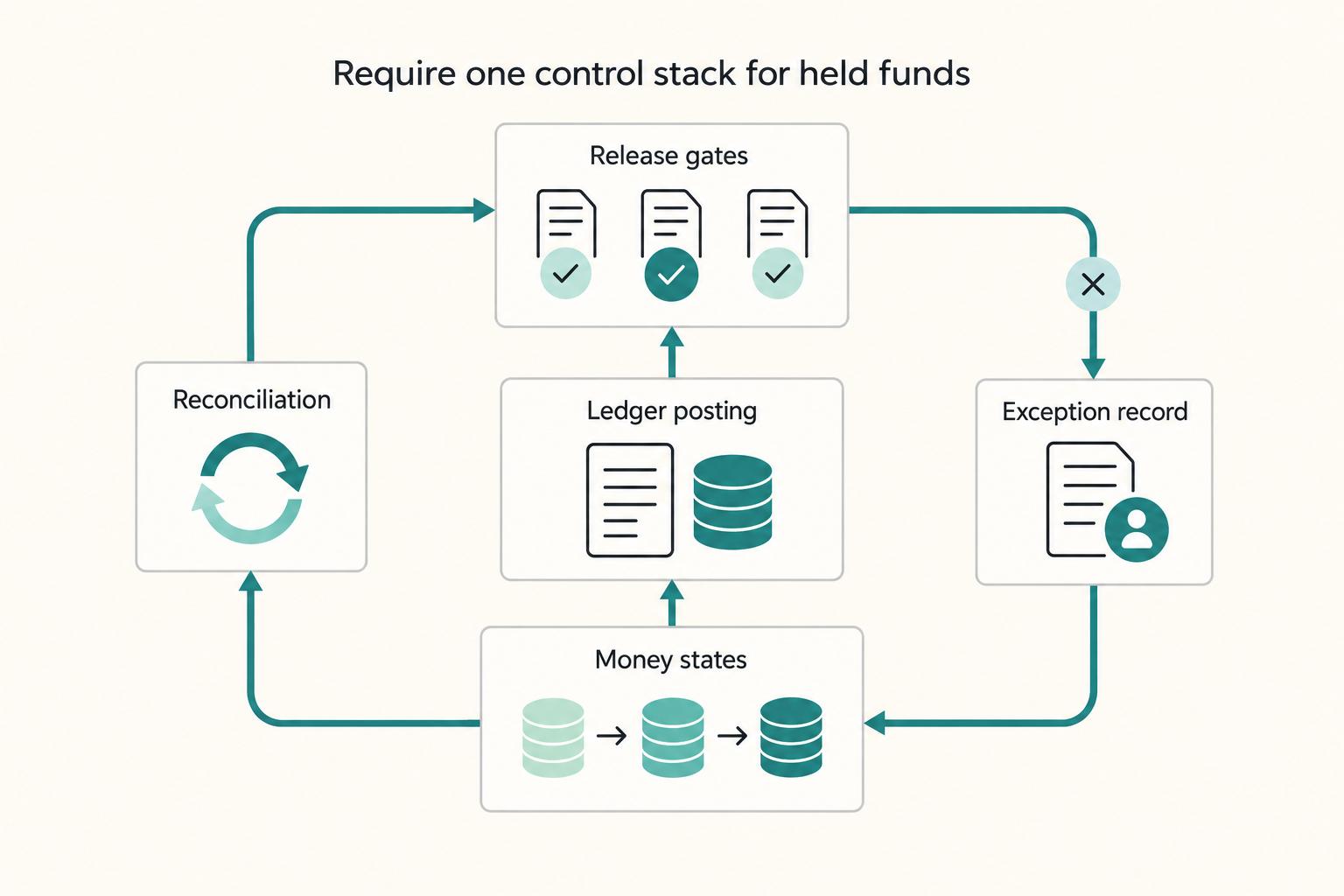
How Platforms Hold and Segregate Client Funds with Omnibus Accounts
An omnibus account pools money attributable to several clients in one external account. The platform or its provider maintains records of each client’s entitlement. That describes the account arrangement; it does not establish permission to hold the money, separation from operating cash, or protection if a company fails. A pooled account can be segregated from the holder’s own funds. Separate client accounts can still have inadequate legal terms or records.

Paying Unbanked Contractors in Developing Markets: Best Payout Routes for Platforms
If your team needs to send money to contractors, creators, freelancers, marketplace sellers, or other non-payroll recipients across borders, the payout decision can look deceptively simple at first. On paper, you are choosing a payment rail. In practice, you are choosing an operating model that affects onboarding, compliance, support load, engineering effort, treasury visibility, failure recovery, and the degree of legal risk your company is willing to carry.

FATCA Compliance for Marketplace Platforms: Identifying and Reporting Foreign Account Holders
For marketplace teams handling cross-border payouts, FATCA work is mostly a control-design problem. You need to decide what to implement first, what evidence to keep, and what to escalate before a payout creates avoidable reporting or withholding risk. The practical question is not whether FATCA exists, but which controls actually reduce reporting errors and potential 30% withholding outcomes.