
Quick Answer
Choose pooled wallets when centralized payout timing and platform-controlled movement are required; choose individual wallets when contractor key control is non-negotiable. For pooled wallets vs individual wallets platforms, the practical divider is whether your team can reconstruct each stored balance and approval trail from ledger records during disputes. If that proof is weak, pooled operations become expensive after go-live. If users hold private keys, document recovery limits clearly so support does not imply powers the platform does not have.
Why this wallet decision gets expensive after go-live#
Choose pooled wallets when your platform needs centralized control over funds and operations. Choose individual wallets when users must control private keys and accept the recovery boundary that comes with that choice.
Treat this as an operating-model choice, not a wallet-UI choice. Once you choose between a pooled wallet and an individual wallet, you are deciding who controls private keys, who owns the day-to-day risk around stored balances, and which team absorbs support and reconciliation work when something breaks.
That is the gap in many public explainers. They cover custody basics, but usually do not map those basics to day-to-day operational handling.
Where public guidance stops#
Public guidance is generally good at definitions and weaker on execution details. Custodial versus non-custodial is straightforward. So is the self-custody boundary: if the user alone controls the keys, lost assets may not be recoverable. What is usually missing is operating detail around payout mechanics, control design, reconciliation, and accountability.
One more constraint is worth stating early. Benchmark-quality data is thin. Hard comparisons on incident rates, fee outcomes, or compliance results for pooled versus individual contractor-wallet designs are not established. Even broader hosted-versus-unhosted wallet discussions still note unclear obligations in some contexts. So if someone offers precise cost or risk numbers early, ask what evidence pack they are using.
What you should decide before building#
This guide treats the choice as architecture, not marketing language. An omnibus or pooled wallet means multiple users' funds are commingled within the same wallet addresses, which can give the provider more control and more responsibility. An individual or non-custodial pattern pushes control toward the user, which can reduce platform custody handling but increases user recovery risk and changes support failure modes.
Before signoff, write down three things: who controls private keys, who can approve movement of value, and what record you can produce to prove each stored balance. If your answer depends on "engineering will sort it out later," treat that as a red flag.
Pooled designs can look easier at launch because the user experience is tighter. They become operationally heavier when finance, ops, and support need reconciliation evidence for exceptions. Individual designs avoid some central handling, but only if you are explicit about self-custody consequences, including the possibility that lost access cannot be recovered.
Before you build a contractor wallet, map feature scope, hidden cost, and operating ownership first. The right choice is the one your team can verify, support, and defend under real exceptions, not the one that only makes onboarding look cleaner. For related context, see Agentic Commerce Risk Scoring: Detecting Abuse When Bots Control Wallets.
Pooled wallets and individual wallets at a glance#
Use a pooled pattern when your platform needs centralized control of balances and payout timing, and use an individual pattern when user key control and wallet-level ownership are core to the product. The deciding constraint is evidence: in pooled setups, your internal records must always prove who owns what.
| Criteria | Pooled wallet / Platform wallet pattern | Individual wallet / Non-custodial wallet pattern | Decision signal |
|---|---|---|---|
| Private keys | Typically custodial: the platform or another third party holds the keys. | Typically non-custodial: the user holds the keys. | If user key control is required, favor individual. If your ops model requires controlled movement of value, favor pooled. |
| User control | Lower direct user control because balances are centrally handled. | Higher user autonomy, often tied to user-held keys. | If contractor autonomy is a product requirement, this points to individual. |
| Payout mechanics | Funds are commonly aggregated, then allocated through internal ledgers. | Ownership is tied more directly to distinct customer wallet addresses. | If you need centralized orchestration and batching, pooled is usually the better fit. If you want clearer address-level ownership mapping, individual is stronger. |
| Reconciliation burden | Higher internal accounting burden because ownership is determined by platform records. | Lower address-level attribution burden when each customer has a unique wallet address. | If finance needs ownership proof with less dependence on a master internal ledger, individual is usually easier to defend. |
| Incident blast radius | Can be broader because many customers depend on shared pooled balances and the same ownership ledger. Evidence is directional, not benchmarked. | Can be narrower because balances are separated by address. Evidence is directional, not benchmarked. | If one allocation error affecting many users is a key risk, lean individual and validate with your own incident data. |
| Support complexity | Support centers on allocation disputes, balance proof, and ledger-to-wallet exceptions. | Support centers more on wallet mapping, connectivity, and user key-control boundaries. | Choose the model that matches your team's operational strength: centralized finance ops vs. user wallet support. |
Naming overlaps, but the axes are different. Pooled commonly overlaps with non-segregated and custodial designs (combined funds plus internal ownership accounting). Individual commonly overlaps with segregated and non-custodial designs (distinct addresses plus user-side control). Treat those as common pairings, not exact synonyms.
Keep the operator checkpoints simple. For pooled, verify you can reproduce a single contractor balance from ledger entries and tie it back to pooled onchain totals without manual patching. For individual, verify each customer is assigned a unique wallet address and that mapping survives onboarding and payout retries.
Security and cost claims need restraint. Custody and ownership-structure differences hold, but treat precise breach-rate, support-cost, or compliance deltas across all platforms as unconfirmed.
Choose pooled when centralized control is the product and your ledger evidence is audit-ready. Choose individual when user control and clear wallet-level ownership matter more than central orchestration. For the full breakdown, read Fraud Prevention in Agentic Commerce When Bots Have Wallets.
What your platform owns in each model#
The ownership boundary is key control: whoever holds the private key controls the wallet. In a custodial wallet, your platform or provider holds the keys, so users will expect you to handle movement and recovery support. In a non-custodial wallet, the user holds the keys, so control and recovery stay with the user.
| Boundary | Custodial wallet | Non-custodial wallet |
|---|---|---|
| Private key control | Held by a third party such as the platform, exchange, or custodian | Held by the user |
| Who can approve value movement | The key holder, usually the platform or its provider | The user, because the platform does not control the keys |
| Recovery responsibility | Typically handled through platform support or custodian processes | Carried by the user through their recovery phrase |
| Typical user expectation | "You can help me get back in or fix this" | "This is mine to control, and mine to lose" |
For a platform-managed contractor wallet, convenience is usually higher, and so is user reliance on your support path. Custodial wallets are typically easier to use, set up, and access, but that convenience requires trust in the custodian.
For a user-managed personal wallet, the provider does not have seed access and cannot move funds on the user's behalf. Recovery depends on the user keeping the 12-word recovery phrase, so your onboarding, UI, and support language should be explicit about that boundary.
The tradeoff is simple: less user burden means more platform responsibility and more trust placed in you. If you promise user control, keep recovery and authorization boundaries unambiguous.
This pairs well with our guide on Business Process Automation for Platforms: How to Identify and Eliminate the 5 Most Expensive Manual Tasks.
How funds move from collection to payout in each architecture#
The core difference is sequence: in pooled flows, collection and recipient transfer are separate operations, while direct flows route payment to the connected account up front.
| Operational detail | What the article says |
|---|---|
| Retry handling | Transfer and payout creation should use idempotency keys so a timeout followed by a retry does not create duplicate movement. |
| Idempotency key retention | Keys can be removed once they are at least 24 hours old. |
| Undelivered webhooks | Undelivered webhook events can be retried for up to three days. |
| Manual event recovery | Manual recovery reaches only the last 30 days; when replaying, ending_before with auto-pagination returns events in chronological order. |
| Failed external account | A failed external account can block further payouts until the connected account's external accounts are updated. |
| Step | Pooled wallet or platform wallet | Direct to individual wallet |
|---|---|---|
| Collect | Payment lands on the platform first. In Stripe's separate charges and transfers model, the charge and recipient transfer are distinct steps. | Payment is made directly to the connected account in a direct charge flow. |
| Hold | Funds may sit in platform balance, or in an allocated state that does not appear in platform available balance and can only be transferred to a connected account. | Less platform-side holding, because value routes to the recipient account earlier. |
| Allocate | You assign ownership in your internal ledger. In pooled models like Coinbase Prime Trading Balance, allocation is tracked internally rather than by onchain address-level segregation. | Allocation is lighter because the destination account is selected up front; you still track fees, status, and reporting. |
| Execute payout | You control when to initiate transfer or payout to downstream rails. | Payout timing is tied more closely to the recipient account's own balance and payout configuration. |
| Reconcile | Reconcile against provider balances and activity records, not assumptions about per-address segregation. | Reconcile per account and per event, with fewer pooled allocation questions. |
In pooled architectures, the operational checkpoint is posting order: record the external collection event, post internal allocation, then release payout instructions. If you reverse that order, you can show a funded stored balance before the underlying collection is settled or allocable.
Retry discipline is non-negotiable in either model. Transfer and payout creation should use idempotency keys so a timeout followed by a retry does not create duplicate movement; keys can be removed once they are at least 24 hours old.
Event reconciliation also needs explicit recovery logic. Undelivered webhook events can be retried for up to three days, and manual recovery reaches only the last 30 days; when replaying, ending_before with auto-pagination returns events in chronological order.
Plan your exception paths early. A failed external account can block further payouts until the connected account's external accounts are updated, so your payout operations need a clear fix-and-resume workflow.
For a step-by-step walkthrough, see How Platforms Build Multi-Currency Sub-Wallets for Contractors.
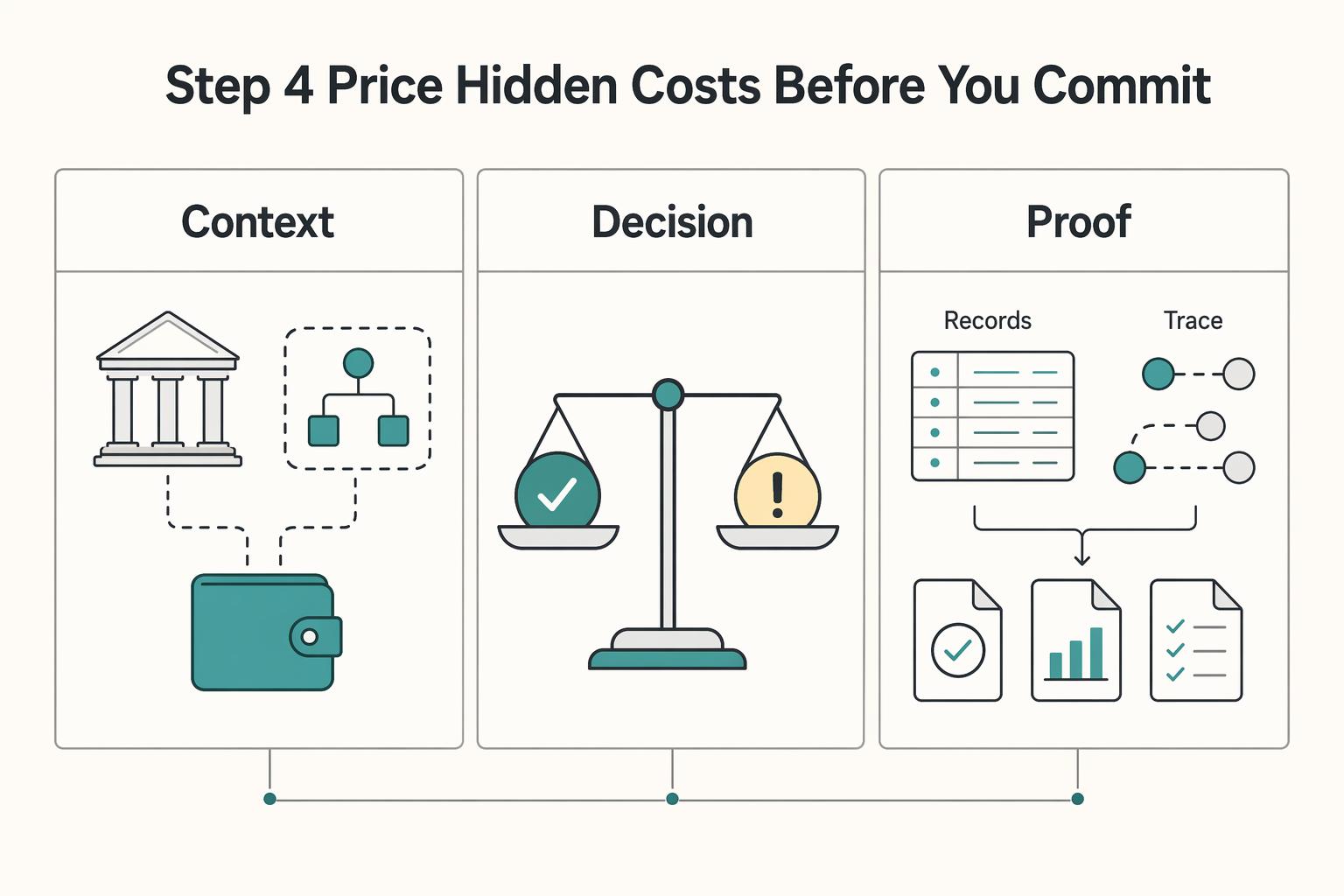
Hidden costs most teams miss during planning#
The hidden cost split usually shows up in operations: pooled or platform-managed custody tends to concentrate work in reconciliation, controls, and audit evidence, while individual or non-custodial routing shifts more work to user error handling and support.
| Cost bucket | Pooled wallet / platform wallet | Individual wallet / user-routed wallet |
|---|---|---|
| Support queue volume | More platform-owned exception handling when internal books-and-records and user expectations diverge. | More account setup and destination/key-management support, including irreversible user-error cases. |
| Dispute handling | The platform owns more of the investigation path because custody, records, and movement controls are centralized. | Cases can be narrower when routing is direct, but destination and key errors are often harder to unwind. |
| Reconciliation effort | Higher books-and-records burden in omnibus-style models, where separation is proven in internal records. | Lower pooled-ledger burden, but still ongoing reconciliation across account events, payout states, and external confirmations. |
| Controls overhead | Higher centralized responsibility for approvals, incident handling, and evidence retention when custody is hosted. | Lower central custody overhead, but higher need for user messaging, validation, and clear non-recovery policy boundaries. |
"Simple now" can become expensive later in platform-managed custody because exception volume scales faster than normal-case processing. When balances are challenged, teams need point-in-time ownership reconstruction from books-and-records, not ad hoc support notes.
The custody boundary drives the support model. In non-custodial flows, users hold private-key control, so support often shifts to education and policy communication when mistakes are irreversible. In custodial flows, recovery can be simpler for users, but incident response is centralized on your team, including movement authorization and evidence quality.
Regulated omnibus contexts also show why this can get heavier over time: some regimes require recurring position reporting and timeliness discipline. That does not mean every program inherits the same rule set, but it is a practical signal that pooled structures can carry more ongoing control work.
Public sources do not provide reliable numerical benchmarks for support queue volume, dispute rates, reconciliation hours, or incident-response cost by wallet model. Treat these as cost directions, not precise forecasts.
We covered this in detail in How to Build a Float Management Strategy for Marketplace Platforms.
Failure modes that should change your design choice#
Choose the model whose failure path your team can prove and contain. If you cannot produce audit-ready evidence for stored balances under stress, do not add pooled complexity yet.
| Failure mode | More likely in | What breaks first | Control needed before launch |
|---|---|---|---|
| Allocation mismatch | Pooled wallet / platform wallet | Internal books assign the wrong owner or amount while aggregate totals still look correct | Point-in-time ownership history per user balance, plus an approval trail for balance adjustments |
| Payout timing confusion | Pooled wallet | Users treat "paid" and "available" as the same state while ops is still resolving completion or exceptions | Clear status states, payout event timestamps, and a way to reconstruct what the user saw at that time |
| Reconciliation drift | Pooled wallet | Transaction truth lives in internal ledgers and is hard to verify independently | Reconciliation checkpoints and audit-ready event history for each movement into and out of stored balances |
| Key loss or missing recovery material | Individual wallet / non-custodial wallet | User cannot access funds and the platform has no technical recovery path | Explicit self-custody warnings, recovery-material education, and a support policy that cannot override key control |
| Self-custody setup errors | Individual wallet | User sends to the wrong destination or misunderstands wallet responsibility | Destination confirmation steps, irreversible-transfer warnings, and support scripts with clear recovery limits |
Pooled models often fail quietly at first: balances can look healthy in aggregate while one contractor allocation is wrong, or payout timing appears inconsistent because internal status logic is weak. If your team cannot produce ownership and movement evidence on demand, your architecture is ahead of your controls.
Individual routing fails more bluntly. Whoever holds the private key controls the wallet, and in user-controlled setups providers may be unable to move funds on a user's behalf; if recovery material is lost, recovery may not be possible. As Liat Shetret puts it, "Any institution engaging with digital assets faces a persistent compliance challenge."
Pre-launch tests worth running#
Before go-live, test failure handling as hard as you test payout success:
| Test | What to cover |
|---|---|
| Tabletop exercise | Run one for a contractor wallet balance dispute, a delayed payout, and a ledger mismatch. |
| Rollback paths | Check that reopened payout exceptions can return to the prior valid state without losing ownership history or creating conflicting balance records. |
| Historical replay | Replay payout exceptions across historical contractor-wallet events so plans and systems are exercised under adverse conditions, not only nominal flow. |
The practical decision rule is simple: pick the failure mode you can absorb. If you can reliably reconstruct balances and approvals, pooled may be worth it. If you cannot, choose the model where errors stay narrower even when recovery is harder. For related reading, see How Platforms Use Virtual Accounts to Reconcile Incoming Payments Per Client.
Which model to choose by platform scenario#
Choose based on one core question first: who controls the private keys. If your platform must control timing and orchestration, start with a pooled (omnibus/custodial) wallet. If user key control is a product requirement, prioritize an individual (segregated/non-custodial) wallet.
| Scenario | Do this | Not that | Why it fits |
|---|---|---|---|
| Marketplace payouts at scale | Start with a pooled, platform-managed omnibus model | Do not start with fully user-controlled wallets when centralized orchestration is required | Omnibus models combine client assets and support centralized flow management |
| High-support product with guided onboarding | Pick the model that matches your custody promise, and state it early | Do not blur custody boundaries in support scripts or product copy | Custodial vs. non-custodial is in the end a key-control commitment |
| Low-support, self-serve product for users with existing crypto wallets | Prefer individual, segregated, or non-custodial routing | Do not default to custody if direct control is the user expectation | Non-custodial setups put key control with the user |
| Mixed risk or mixed user segments | Use a hybrid pattern where supported | Do not force every flow into one wallet pattern | Some providers support identifiable client wallets managed in an omnibus manner |
Practical decision rules#
Use pooled when your product promise depends on centralized control of movement and timing. Use individual when your product promise is user control of keys. Do not claim user ownership while relying on custodial control behind the scenes.
What to verify before you lock it in#
Write down one answer and align product, ops, and engineering on it: who controls the private keys, and who can approve movement of funds. If that answer is inconsistent across teams, the model is not ready.
If you choose hybrid, confirm provider support before committing architecture. Hybrid structures exist, but they are not universal, so define exactly which flows stay pooled and which are segregated. You might also find this useful: The Best Crypto Wallets for Freelancers.
Decision checklist before implementation signoff#
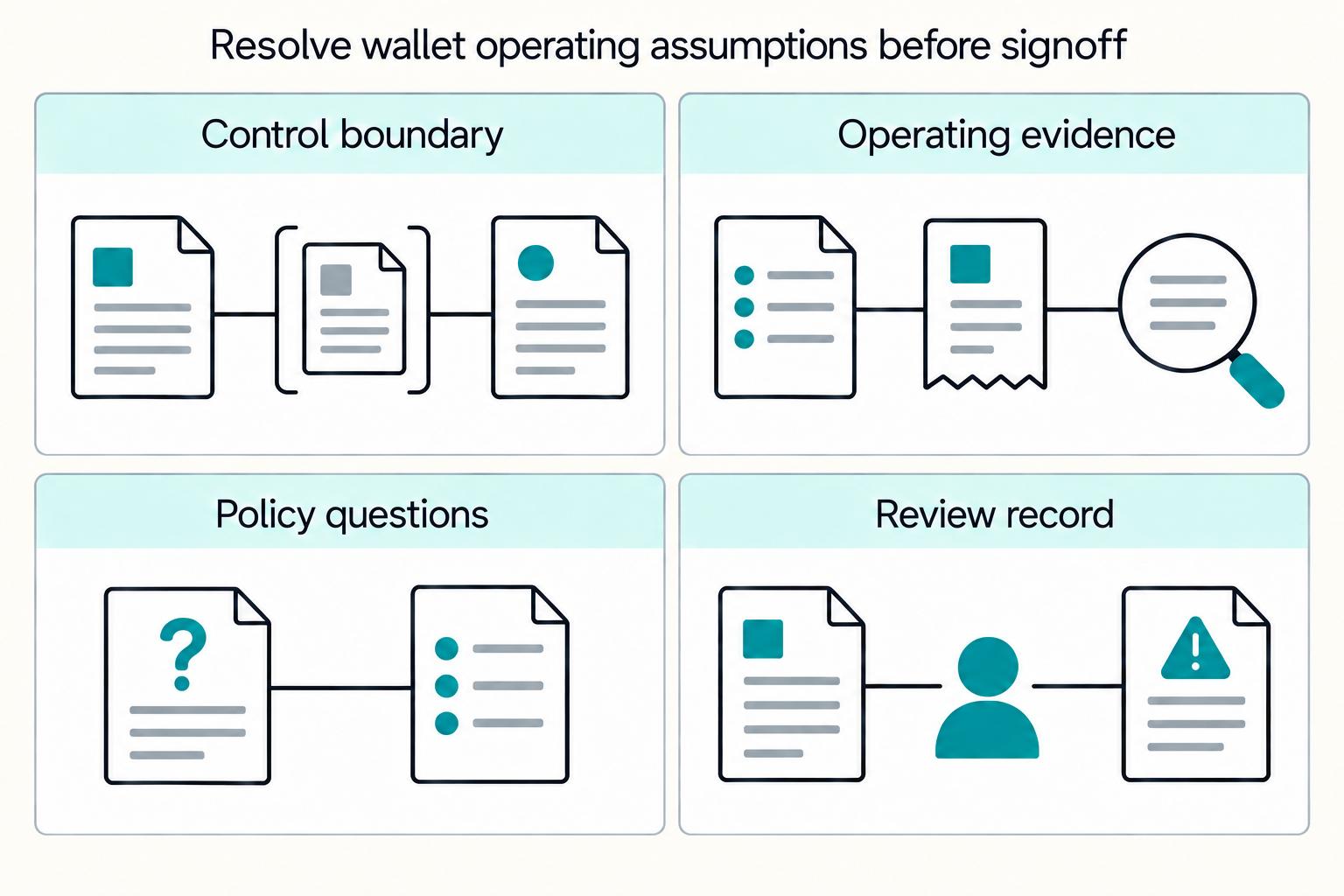
Before implementation signoff, lock four items in one review: custody boundary, operating evidence, policy dependencies, and final approvals. Do not lock architecture while teams still hold different assumptions about who controls funds, who handles exceptions, and what support can promise.
| Checkpoint | What must be explicit before signoff | Red flag |
|---|---|---|
| Custody decision | State custodial wallet or non-custodial wallet in writing, and name who controls the private keys | Product says users "own" funds, but the platform or provider can still approve movement |
| Operating evidence pack | Define reconciliation artifacts, payout exception handling, audit trail expectations, and incident procedures for treasury workflows | You cannot reconstruct a user balance, payout status, or exception path from ledger records |
| Policy dependencies | Validate any FDIC pass-through insurance assumption, market-specific compliance gates, and support ownership by program | Someone treats pass-through coverage as automatic or universal |
| Final approvals | Require internal signoff from product, payments ops, finance, and compliance before architecture lock | One team is still carrying an unstated assumption about recovery, reversals, or user messaging |
Make the custody line unambiguous: the core difference is who controls the private keys. If that answer is fuzzy, stop and resolve it before signoff.
For pooled or platform-managed balances, your evidence pack should include deposit and ledger records that let you trace funds by user and payout event. If anyone is relying on FDIC pass-through treatment, verify the records path, not just the label: pass-through insurance is not a separate ownership category, and fiduciary treatment depends on express disclosure in deposit account records under 12 C.F.R. § 330.5 and § 330.7.
Do not treat outsourcing as a transfer of accountability. Your incident materials should cover identification, coordination, remediation, recovery, and tracking across the response lifecycle.
If you want a deeper dive, read FDIC Pass-Through Insurance for Platform Wallets: How to Protect Your Contractor Funds.
Choose the model your team can operate every day#
Choose the wallet model your team can run reliably under exceptions, not the one that reads cleanest in a product spec. If recovery, incident response, and evidence handling are weak, a tidy design on paper will still break in production.
| Before implementation | What to include |
|---|---|
| Run the prior checklist | Assign named owners, not just tasks. |
| Test failure modes | Include payout exceptions, balance reconstruction, and contractor recovery questions. |
| Document ownership boundaries | State who controls private keys, who approves value movement, who handles recovery, and what evidence proves ownership. |
Wallet architecture is as much an operating decision as a product decision. A pooled or platform wallet can work when you can prove ownership in internal records, control value movement consistently, and respond quickly when something fails. An individual wallet, especially non-custodial, fits better when user key control is a real requirement and you are prepared to shift more responsibility to the contractor.
Use this readiness rule before signoff: if your team cannot reconstruct a contractor balance, approval trail, and payout outcome from records alone, do not add pooled complexity yet. If users are expected to hold private keys, document that boundary in plain language before launch so support, product, and compliance are not improvising during recovery disputes.
Before implementation, do three things:
- Run the prior checklist and assign named owners, not just tasks.
- Test failure modes with formal exercises, including payout exceptions, balance reconstruction, and contractor recovery questions.
- Document ownership boundaries for each model: who controls private keys, who approves value movement, who handles recovery, and what evidence proves ownership.
Structured testing should train people, exercise plans, and expose weak handoffs before a real incident. For day-2 operations, incident-response discipline is more useful than product copy because it focuses on detection, response, and recovery effectiveness. If your custodial flow depends on coordination across ops, finance, and support, rehearse that coordination.
Keep your evidence pack boring and complete. In pooled flows, tie deposits, internal allocation changes, approvals, and payout releases back to each contractor. In individual or non-custodial flows, emphasize address confirmation, user acknowledgments, and clear recovery limits. In both models, the biggest failures often happen after the payment event, when teams cannot prove ownership, approvals, or responsibility.
Finally, label unknowns. External benchmark data for support cost, exception rates, and incident frequency across models is still limited, so validate with your own pilot results, exercises, and support evidence before committing platform-wide.
Frequently Asked Questions
Which option gives contractors more control, pooled wallets or individual wallets?
Individual wallets, especially non-custodial wallets, give contractors more direct control because they control the private keys. In a pooled or platform-managed setup, the platform or custodian controls value movement even if the contractor sees an assigned balance. If user sovereignty is a hard product requirement, that should push you toward individual wallets early.
Why would a platform choose a pooled wallet if it adds operational responsibility?
Because a pooled or omnibus model can make it easier to coordinate collection, holding, and payout at scale while still tracking each user's ownership in internal books and records. That pattern fits operations where one wallet per user is not the main goal. The catch is simple: if your ledger cannot clearly prove who owns what at each step, pooled operations become fragile quickly.
Are custodial wallets always less secure than non-custodial wallets?
No. Security is not a universal custodial-versus-non-custodial rule, and the better fit depends on your goals and operating context. A custodial wallet puts more responsibility on the provider, while a non-custodial wallet gives the user sole control of private keys and the responsibility that comes with that control.
Can using multiple wallets reduce risk for contractor platforms?
Yes, segregated wallets can reduce shared impact from a single-wallet compromise because each wallet has its own private key. That can shrink blast radius for one contractor or one balance segment. That separation can also mean more wallet-management and reconciliation overhead.
How do payout operations differ between pooled and individual wallet models?
Pooled flows need accurate internal allocation before payout, plus books-and-records segregation that ties deposits, balance changes, and releases back to each contractor. A real checkpoint is whether your team can reconstruct a contractor's balance and a payout event from ledger records alone. Individual wallets can reduce some platform-side allocation work, but more key-control responsibility sits with the user.
What is the biggest hidden cost teams underestimate in this decision?
Usually it is not the wallet label itself. It is the cost of exceptions: payout issues, allocation mismatches, support disputes, and the records needed to prove what happened. In an omnibus structure, weak internal records can make incident resolution slower because ownership must be reconstructed from books and records.
Try a related tool
Researched and edited by the Gruv editorial team. Gruv builds cross-border billing, payouts, and finance-operations software for global businesses.
Sources
- cisa.gov/resources-tools/services/cisa-tabletop-exerc...trusted
- cisa.gov/resources-tools/resources/federal-government...trusted
- csrc.nist.gov/pubs/sp/800/84/finaltrusted
- csrc.nist.gov/pubs/sp/800/61/r3/finaltrusted
- ecfr.gov/current/title-17/chapter-I/part-17/section-1...trusted
- ecfr.gov/current/title-12/chapter-III/subchapter-B/pa...trusted
- fdic.gov/financial-institution-employees-guide-deposi...trusted
- fdic.gov/news/financial-institution-letters/2024/requ...trusted
Educational content only. Not legal, tax, or financial advice.
Related Posts
FDIC Pass-Through Insurance for Platform Wallets: How to Protect Your Contractor Funds
If your wallet holds user funds, even briefly, set the insurance boundary before launch. Pass-through protection can apply only after funds are deposited at an FDIC-insured bank under qualifying conditions. The wallet itself is not FDIC-insured.
Agentic Commerce Risk Scoring: Detecting Abuse When Bots Control Wallets
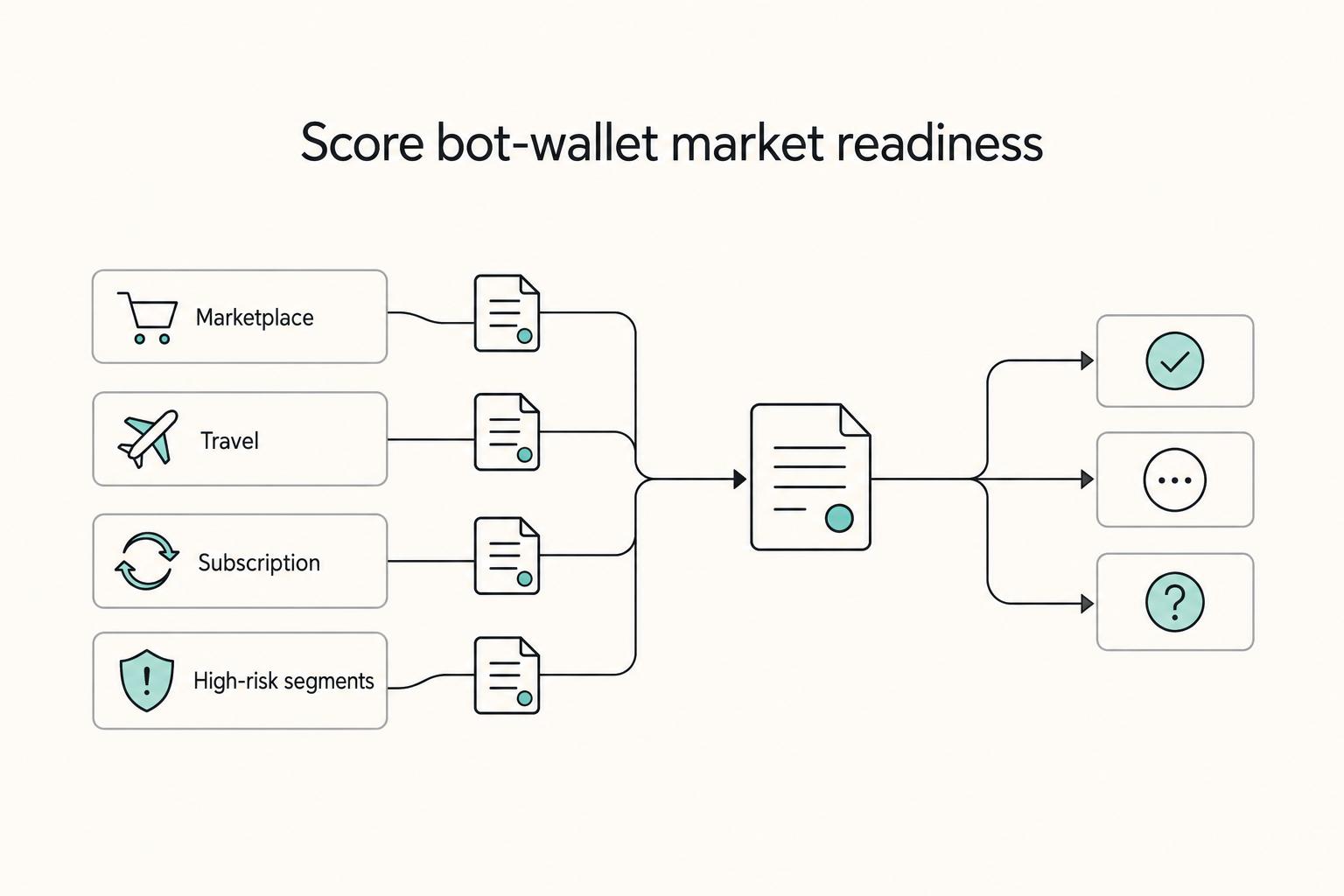
Agentic commerce is moving quickly, and the controls around it are still evolving. If you treat fraud, compliance, and accountability as one generic risk bucket, you can make the wrong launch call even when demand looks strong. A corridor can look attractive commercially and still be weak operationally because provider coverage, control expectations, or accountability are not ready.

The Best Crypto Wallets for Freelancers
**Treat "best crypto wallet for freelancers" as a workflow question (invoice to reconciliation), not a popularity contest between apps.** If you're a business-of-one, you are not picking a wallet logo. You are designing a payment system you can run under pressure. The goal is to reduce the failure points that hurt freelancers: payment uncertainty, missing records, and fragile withdrawal paths.