
Quick Answer
Use agentic commerce fraud prevention as a market-entry control system, not just a checkout model. Start by constraining delegated access, then run separate checks for approval, post-purchase actions, and funds release. Prioritize markets where your team can handle exceptions and reconstruct decisions under dispute. If you cannot quickly show permission scope, policy outcome, and transaction history for a contested action, treat launch as no-go.
What Changes When Bots Have Wallets#
Agentic commerce fraud prevention starts with a simple operating truth: a transaction can be fast, clean, and apparently authorized, and still create fraud, policy, or legal exposure. For founders and operators, that makes launch sequencing at least as important as model tuning. Whether AI shopping agents can buy on your platform is not the real question. The real question is where your permissions, controls, and support capacity are strong enough to let them.
The shift is structural. In agentic commerce, autonomous AI agents can initiate purchases, compare prices, apply promotions, and complete checkout without direct human action in the flow. The efficiency is real, but so is the added exposure. Security guidance on these models already pushes zero trust, strong identity controls, and strict runtime policies because agent-initiated transactions are changing how payment selection, authentication, and liability work.
The clearest early warning is delegated access. User permission is not always enough. A March 25, 2026 legal analysis of a federal injunction warned that an AI shopping agent may have violated U.S. hacking law even though the user had expressly authorized it. The court still treated the access as unauthorized. That does not create a global rule, but it is a sharp operator signal. If your launch depends on agent access that a merchant or program expressly prohibits, treat that as a no go until policy and terms are clear.
That is why this article focuses on market entry decisions across countries and verticals, not just detection logic. If you are choosing where to launch first, you need to weigh three things together: likely dispute pressure, policy and compliance gates, and the reality of rollout capacity. A market with strong demand but weak exception handling is often riskier than a smaller market where your team can verify permissions, review edge cases, and defend decisions when something goes wrong.
Before any production launch, verify by channel and market what the agent is allowed to do, whether that access is permitted by the relevant merchant or platform terms, and which identity and runtime controls enforce the boundary. If you cannot point to those answers quickly, you are not ready for scale. The common failure mode is overtrusting "clean" agent traffic and discovering too late that abuse shifted to delegated access paths.
There is also a timing reason to get ahead of this now. Industry reporting says fraud actors are already using AI against these flows. Broader merchant sentiment is getting worse, with 75% of merchants cited as facing fraud abuse and 84% saying fraudulent activity is harder to identify today. So the goal of this piece is straightforward: help you make go or no go calls with clear checkpoints, not better guesses.
For a step-by-step walkthrough, see A Comparison of Dubai Free Zones for E-commerce Businesses.
The threat model changed when bots got purchasing authority#
When an AI shopping agent gets authority to buy, fraud risk shifts from obvious bot noise to misuse of delegated access. Transactions can look clean, fast, and authorized while still being abusive at checkout or through post-purchase actions.
Agentic commerce fraud is the misuse of AI shopping agents or the permissions customers grant them. Legacy ecommerce fraud controls were often tuned to noisy human-session signals like retries, failed logins, and checkout friction. In agent-led flows, abuse can bypass that pattern and appear as successful orders that do not trigger those legacy alarms.
Speed is no longer a reliable standalone signal. Many legitimate agents are designed to optimize for price and speed, and that same efficiency can remove some of the informal risk filtering humans used to add. Treat fast execution as normal in this model, then separate good activity from abuse using delegated-access context and behavior over time.
A practical operating check is to confirm what the agent was allowed to do, how that permission was granted, and how post-purchase actions are scoped and logged. Your investigations become clearer when you can tie each action back to explicit permission and transaction history.
Early mistakes usually fall into two buckets: overtrusting clean agent traffic because it lacks old session noise, or overblocking by treating every non-human pattern as suspicious. If you cannot distinguish delegated agent access from direct account use, detection and review quality both degrade.
Legacy detection weakens when interaction signals disappear#
Legacy behavior-heavy detection weakens when interaction data is thin, so decisioning should shift toward identity continuity, order consistency, and historical abuse patterns from fraud intelligence networks. After you separate delegated access from direct account use, the practical question is which signals are actually present in each channel and market.
Legacy controls can fail in both directions: they can block legitimate customers and still miss sophisticated attacks. In agent-led traffic, clean and fast checkouts are not reliable proof of safety, but treating every non-human pattern as suspicious increases false declines.
| Legacy signal | Why it weakens with AI shopping agents | More durable signal to lean on | Common failure mode |
|---|---|---|---|
| Interaction data | Fewer mouse, typing, retry, and hesitation patterns are available when an agent executes quickly and cleanly | Customer data such as identity continuity across prior orders, account history, and known permission relationships | Clean bot traffic bypasses behavioral checks, or legitimate agent traffic is declined just for looking non-human |
| Device fingerprinting | The device seen at checkout may reflect an agent environment rather than the customer's usual browsing context | Delegated-permission context showing who granted access, what actions were allowed, and when scope changed | Teams overtrust a stable technical signature without confirming whether the permission was valid for this action |
| Connection analysis | IP and network patterns can be shared, proxied, or look operationally clean without proving legitimacy | Order data such as basket consistency, shipping logic, refund history, and velocity against prior abuse patterns | Analysts treat unfamiliar connection patterns as fraud by default and drive avoidable false declines |
Use a simple rule: when interaction coverage is weak, do not increase sensitivity on the same weak signals. Increase weight on stable customer identity over time, order-to-customer consistency, and known abuse patterns.
Run a weekly input review by channel and market. Check the last 7 days of scored transactions and confirm which inputs were present at decision time: interaction events, device identifiers, connection data, customer attributes, order attributes, and delegated-permission logs. If a signal family is mostly null or sparse, record it and stop treating it as a universal control.
Choose launch markets with a fraud and operations scorecard#
Choose launch markets by operational readiness, not demand alone. In agentic commerce, fraud and abuse exposure expands as autonomous capabilities expand, and agent-initiated transactions are reshaping payment, authentication, and liability, so your first markets should be the ones your team can explain and operate under stress.
Use a country scorecard to answer one question: can we run this market without creating disputes, compliance backlog, or payout handling failures we cannot manage?
| Scorecard area | What to capture by country | Launch risk if weak |
|---|---|---|
| Dispute pressure | Chargeback/refund/reversal patterns and where post-purchase steps can be abused | Review queues and evidence handling break first |
| Compliance depth | Whether KYC, KYB, or AML checks apply in your program, documentation load, and exception ownership | Approvals slow and exceptions stall |
| Payout complexity | Whether Virtual Accounts or payout batches are used, and how corrections/holds are handled | Failures surface after checkout |
| Program constraints | Whether MoR availability, VAT validation, or market policy gates affect your flow | A country can be technically reachable but not launch-ready |
Keep the matrix operational, not just red/yellow/green labels. Document who owns exceptions, what evidence is required, and how decisions are reconstructed when something goes wrong.
Match launch mode to risk and maturity. If risk is high and ops maturity is low, use observer mode first. If risk is moderate and controls are already proven in a similar market, allow limited production volume and review disputes and exceptions on a fixed cadence. This is also a trust decision: adoption is typically easier in low-risk, repeatable tasks than in high-stakes decisions.
Set go/no-go gates before first live volume:
- Complete evidence pack for disputed or blocked transactions (permission context, customer/order records, policy result, payout status)
- Named owners across risk, operations, compliance, and engineering
- Incident escalation SLAs for fraud spikes, payout errors, and compliance holds
If any gate is missing, delay broad launch. Market sequencing here is an auditability decision, not just a growth decision.
Related: Affiliate Fraud Prevention: How to Stop Fake Clicks Fake Signups and Payout Abuse.
Design controls across the full money lifecycle#
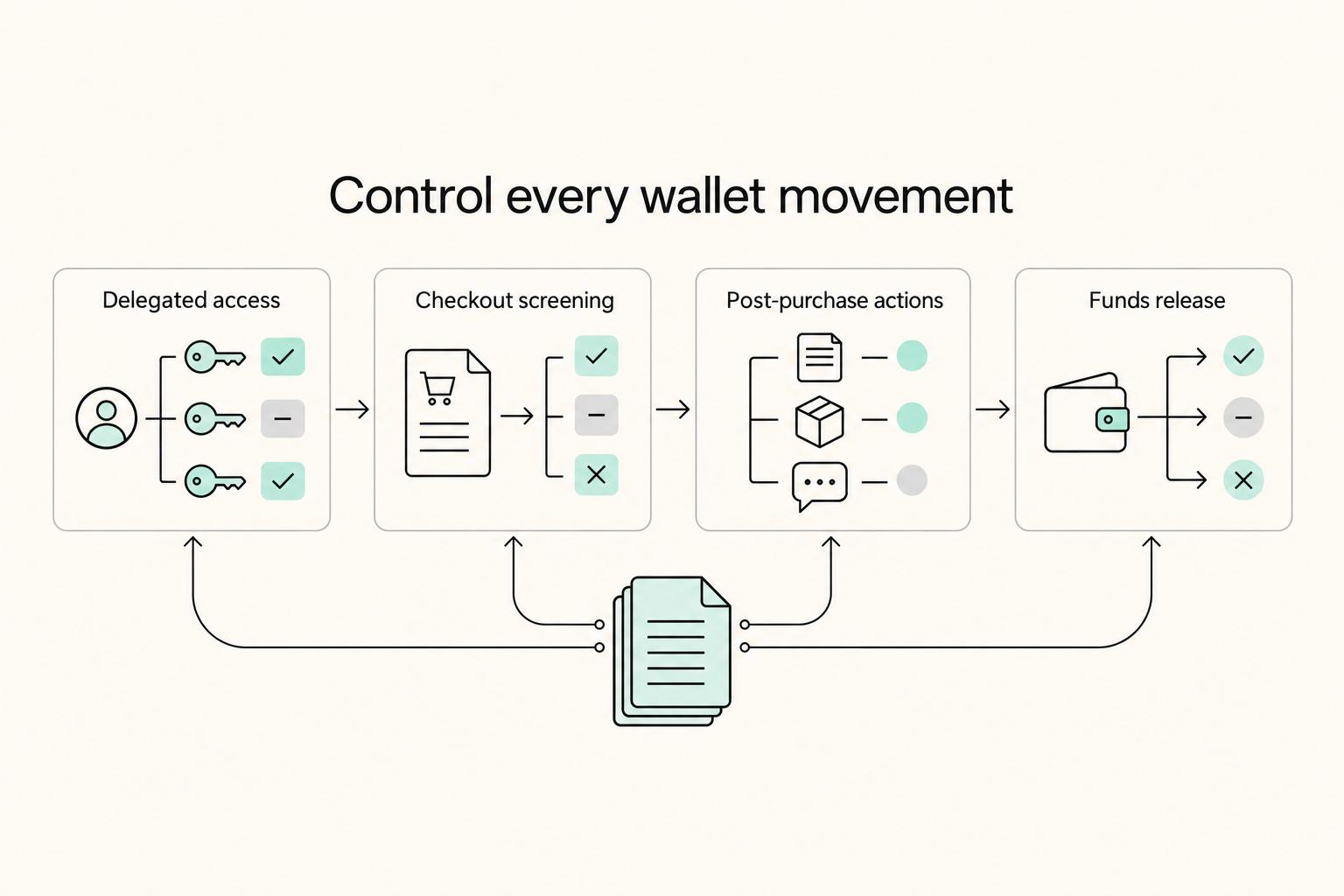
For agentic commerce fraud prevention, do not treat checkout as the only control point. Use separate decisions for delegated access, transaction approval, post-purchase actions, and fund release, because an approved checkout can still lead to refund, reversal, or payout risk later.
The anchor is delegated authority. In agentic commerce, autonomous software agents can initiate, authorize, and settle transactions on behalf of users, so start with a policy decision about what the agent is allowed to do. If your team cannot answer "what can this agent execute right now?" during a dispute or compliance review, authority is too broad.
Put a control at each point money can move#
Treat each stage as its own decision with its own evidence, not one long approved session.
| Stage | Control question | What you should be able to verify | Common miss |
|---|---|---|---|
| Delegated access | What authority was granted to the agent? | Spending, refund, and access limits tied to the customer or account | Broad purchase permission that also enables refunds or returns |
| Checkout screening | Should this transaction be approved now? | Customer record, order data, permission context, and policy result | Strong screening that assumes approval settles all later risk |
| Post-purchase actions | Can this agent initiate refunds, reversals, returns, or exceptions? | Whether original permission covered the action and whether policy allows it | Refund or return abuse after approval because post-purchase controls were weak |
| Funds release | Should money move now? | Hold status, compliance flags, account status, and a traceable release event | Auto-release after checkout without checking later holds or exceptions |
Delegated-access controls are meant to reduce fraud, chargeback, and refund risk, and uncontrolled refunds and policy abuse are explicit targets. In practice, an agent allowed to place an order is not automatically allowed to reverse it, request an exception, or trigger a refund.
Make the order of operations explicit#
Write and enforce one sequence across product, risk, and ops:
| Step | Action | Detail |
|---|---|---|
| Authorize agent scope | Define what the agent can do for the customer or account | Include spending, refund, and access limits |
| Evaluate transaction risk | Review the transaction | Use available customer, order, and permission context |
| Apply policy gates | Decide whether to proceed, pause, or require review | Keep any restrictions attached |
| Release funds with audit events | Release only after the policy result is recorded | Link it to the transaction and delegated-permission context |
- Authorize agent scope
Define what the agent can do for the customer or account, including spending, refund, and access limits.
- Evaluate transaction risk
Review the transaction using available customer, order, and permission context.
- Apply policy gates
Decide whether to proceed, pause, or require review, and keep any restrictions attached.
- Release funds with audit events
Release only after the policy result is recorded and linked to the transaction and delegated-permission context.
Traceability is the operating requirement: for any approved order, refund, or payout release, you should be able to reconstruct the chain from granted authority to policy decision to money movement.
Guard the rails after approval#
Do not let post-purchase and settlement paths bypass policy controls. If your program uses Virtual Accounts, AML holds, or payout batches, treat those paths as additional control points, not passive plumbing.
A practical rule: if a post-purchase action or release cannot be tied back to delegated permission and the governing policy decision, do not auto-execute it. The January 2026 CBA materials also describe gaps in current regulatory structures and uncertain application of consumer-protection rules to agentic payments, which makes clear internal decision traceability even more important.
The failure mode to prevent is straightforward: strong checkout controls with weak post-purchase governance. When that appears, tighten refund authority, reversal rules, and release checks as separate audited decisions, not just the checkout screen.
This pairs well with our guide on How to Secure a REST API: Prevention, BOLA Protection, Detection, and Response.
Tie fraud controls to compliance and tax artifacts#
Money release should be tied to fraud policy and to the compliance and tax states your program actually uses. If a required state is missing, expired, or not enabled for that program, do not auto-move funds.
Define prerequisites by program, rail, country, and account type. For each flow, record whether KYC is mandatory, conditional, or not enabled, whether KYB is required for that program, and which AML triggers pause, review, or block release. Do not assume a single universal KYC/KYB/AML standard applies, so your control model needs to be explicit and market-specific.
Treat tax artifacts as release gates when the program requires them#
If a program uses tax artifacts like W-8, W-9, FBAR, or 1099 tracking, treat those statuses as release gates rather than back-office cleanup. A clean checkout should not let payout, refund, or transfer bypass a required artifact state.
| Artifact or status | What your policy should record | Evidence you should be able to retrieve |
|---|---|---|
| KYC | Mandatory, conditional, or not enabled by program/country | Status at release time and the policy result tied to the transaction |
| KYB | Whether business verification is required in that program | Entity status used for the decision and release approver/system event |
| AML | Which triggers pause, review, or block movement | Trigger outcome, hold state, and release/block event |
| W-8 or W-9 | Whether collection is required in that program before the payment event | Document status, collection timestamp, and masked handling of sensitive fields |
| 1099 tracking | Whether the account is tracked in that program | Tracking status and contributing ledger event |
| FBAR | Whether the workflow needs FBAR-ready data for the relevant party | Stored account-value data, conversion basis, and filing-ready record where applicable |
Be exact where filing mechanics are exact#
For FBAR workflows, data formatting details are control details. FinCEN describes maximum account value as a reasonable approximation of the greatest value during the calendar year, reported in U.S. dollars and rounded up to the next whole dollar (for example, $15,265.25 becomes $15,266). For non-U.S.-currency accounts, values are converted to U.S. dollars, and if a computed value is negative, the instruction is to enter 0 in item 15.
Required XML elements also matter: missing required elements can trigger submission rejection. If your system captures data that may feed an FBAR process, store it so the record can be reproduced and audited. FinCEN also distinguishes timing by filer category, with April 15, 2026 remaining for other individuals with an FBAR obligation and April 15, 2027 for certain individuals covered by the extension notice for the 2025 calendar year.
The checkpoint is traceability: each blocked or released transaction should map to one clear policy decision and one retrievable audit record showing compliance state, relevant tax-artifact state, and release outcome.
We covered this in detail in A Guide to Stripe Radar for Fraud Protection.
Set explicit tradeoffs between conversion, fraud loss, and ops load#
Set decision bands based on both risk confidence and real review capacity, not a single cutoff. If you rely on one threshold, you either overload ops with edge cases or approve too much when queues back up.
Adoption is moving faster than operating discipline. Stord reports consumer use of generative AI for online shopping rose from 38% in 2024 to 51% in 2025. Oro reports 80% of surveyed B2B manufacturers and distributors had deployed AI in at least one function, but only 17% said it was working well, a 63-point gap.
Use bands with operating rules, not just labels#
Define three bands, then define the rule behind each band:
| Band | Used for | Condition |
|---|---|---|
| Auto-approve | Low-concern requests | Complete required evidence |
| Manual review | Conflicting signals | Unclear permission context |
| Block | Requests outside granted permission | Failed required gates or clear abuse indicators |
For delegated transactions, prioritize auditability. Record the decision band, reason code, policy version, and whether a human override changed the result.
Fix false positives at the permission layer first#
If legitimate agent traffic is getting declined, tune delegated access first before loosening controls globally. Start with the scoped path where false positives cluster, such as delegated checkout, instead of lowering standards across all checkout flows.
Keep purchase authorization separate from broader post-purchase actions, including refunds or reversals. Otherwise, conversion fixes in one path can shift abuse into the least constrained action after approval.
Let chargebacks slow expansion#
If chargebacks increase after expansion, tighten post-purchase gates and shorten review loops before adding new markets. Treat disputes as a control signal, not a background metric.
Your evidence should let you trace each dispute to the original permission state, decision band, reviewer action (if any), and final ledger-impacting event. If that chain is unclear, expansion is ahead of control maturity.
Assign clear owners so policy, queue handling, and evidence quality do not blur:
- Product owns permission UX and approval states.
- Risk owns decision logic and band criteria.
- Ops owns exceptions and queue handling.
- Engineering owns event integrity and audit retrieval.
You might also find this useful: Wire Fraud Prevention for Platforms: How to Spot Spoofed Bank Details Before You Pay.
Execute the first 90 days without losing control#
Treat the first 90 days of agentic commerce fraud prevention as a controlled proving period: do not scale volume until you can trace decisions, controls, and ledger outcomes end to end.
| Window | What to do | Checks |
|---|---|---|
| Weeks 1 to 2 | Map your real signal inventory by channel and market; define the minimum control set for each money-moving step | Identify where interaction data is present, thin, or missing; if key signals are missing, tighten approval bands; configure your site to handle nonhuman traffic |
| Weeks 3 to 6 | Deploy lifecycle controls in order; connect fraud intelligence networks only after internal gaps are clear | Stress-test payout batches, refunds, reversals, and manual overrides; for each test case, confirm a reason code, an owner, and the expected ledger impact |
| Weeks 7 to 12 | Review scorecards by market and vertical, and compare outcomes before expanding | Promote only markets that meet your own compliance and dispute checkpoints; keep higher-exception segments in limited volume until evidence quality and control handling are reliable |
Weeks 1 to 2#
- Map your real signal inventory by channel and market, and identify where interaction data is present, thin, or missing.
- Define the minimum control set for each money-moving step using the durable inputs you do have (for example, customer/order consistency and delegated-permission context).
- If key signals are missing, tighten approval bands rather than relying on legacy behavior checks.
- Include nonhuman-traffic readiness as a baseline requirement. Stripe's field guide (published March 10, 2026) explicitly includes: "Configure your site to handle nonhuman traffic."
Weeks 3 to 6#
- Deploy lifecycle controls in order: permission scope, transaction screening, post-purchase actions, then fund release.
- Connect fraud intelligence networks only after you are clear on which internal gaps they should supplement.
- Stress-test exception paths for payout batches, refunds, reversals, and manual overrides.
- For each test case, confirm a reason code, an owner, and the expected ledger impact.
Weeks 7 to 12#
- Review scorecards by market and vertical, and compare outcomes before expanding.
- Promote only markets that meet your own compliance and dispute checkpoints.
- Keep higher-exception segments in limited volume until evidence quality and control handling are reliable.
Final readiness test: confirm audit traceability from decision request to policy result to the ledger-impacting event. If any link is missing, expansion is ahead of control maturity.
Conclusion#
The hard part of agentic commerce fraud prevention is not picking a smarter model. It is deciding where to launch, what an agent is allowed to do, and what evidence you can produce when a refund dispute, chargeback review, or internal escalation lands. If your controls stop at checkout, you are not ready to scale.
Once AI agents become the shopper, you and your payment partners see less of the human and more of an automated request. That weakens familiar controls and shifts more risk into the authentication and integration layer. It also raises the cost of loose permissions because agents can operate continuously, act instantly, and scale quickly. That is why delegated access, checkout screening, and post-purchase actions need to be designed together, not treated as separate problems.
A good closing rule is simple: expand only where your market matrix and your operating proof agree. Infrastructure readiness is not enough for a full-speed rollout, and readiness is uneven across merchants and markets. If a country or vertical still depends on manual exceptions for core risk and compliance checks, refunds, reversals, or payout release, keep it in observer mode or limited production volume until those exception paths are owned and repeatable.
The checkpoint that matters most is evidence. Every release, block, refund, or reversal should map back to a clear policy decision and a retrievable audit record. That record should let you verify four things quickly: what scope the agent had, what customer and order data were checked, which runtime policies fired, and who handled any out-of-policy exception. When that trail is missing, teams often discover the gap during chargeback, liability, or escalation reviews.
A common failure mode is imbalance. Teams put effort into approval controls, then leave weak governance after the money moves. That is where fraud exposure, post-purchase abuse, and liability confusion can start to pile up. Another red flag is expanding because the integration works while ignoring whether risk, ops, and compliance can actually support the volume. Practitioners keep pointing to the same pressure points here: fraud exposure, liability, and chargeback management get more complex as agent-led buying grows.
If you need a crisp operating stance, start narrow and prove three things before widening the funnel: permission scope is tight, post-purchase gates hold, and ownership of the customer relationship and data stays with you. Teams that treat those controls and compliance artifacts as one connected decision set make better launch calls and reduce avoidable surprises later. That is the real advantage in agentic commerce: controlled expansion backed by policy evidence you can defend.
Related reading: Tax Residency and Co-Living When You Use Outsite.
Frequently Asked Questions
What is agentic commerce fraud prevention in practical terms?
It is the set of controls you use when an AI shopping agent can act with customer-granted permissions. In practice, that means watching not just checkout, but also what the agent was allowed to do, whether its behavior drifted from expected use, and whether it later abused refunds, reversals, or other post-purchase actions. A practical mistake is treating this only as ordinary bot filtering.
Why do traditional fraud systems fail when AI shopping agents place orders?
Older tools were built for human-facing sessions that produce noisy clues such as retries, failed logins, and messy checkout behavior. Agent-driven abuse can look clean, fast, and successful, so those heuristics lose value. If your policy treats speed alone as the main red flag, you can miss abuse that still appears operationally normal.
Which signals matter most when interaction data and device fingerprinting become unreliable?
Shift weight toward delegated-permission context, behavioral drift, and post-purchase behavior. Behavioral drift also matters: compare what the agent is doing now against the scope and pattern you expected when access was granted. One useful checkpoint is a regular review of model inputs so you know which signals are truly present versus assumed.
What controls should a team implement first for delegated access and post-purchase actions?
A practical first step is scope controls before transaction scoring. Define what the agent can buy, change, refund, or reverse, then apply screening at checkout, then add post-purchase gates. A failure mode to watch is strong approval controls paired with weak refund governance. You also want each release or block decision tied to a clear policy outcome that can be reviewed later.
How do we decide which country or vertical to launch first?
Do not start with the biggest demand pocket. Start with a market slice your current operations can manage, then keep higher-risk countries or verticals in observer mode or limited volume. That matters even more because companies still face regulatory uncertainty, and infrastructure readiness does not mean you should launch at full speed.
How should we balance conversion goals against chargeback risk and compliance obligations?
A practical approach is to use decision bands, not one approval threshold. Auto-approve low-risk cases, manually review uncertain ones, and block the rest based on both risk confidence and team capacity. If conversion drops on legitimate agent traffic, tighten permission scope first instead of broadly loosening controls. If chargebacks rise after expansion, shorten review loops and harden post-purchase checks before adding more markets or volume.
Try a related tool
Researched and edited by the Gruv editorial team. Gruv builds cross-border billing, payouts, and finance-operations software for global businesses.
Sources
- arcadiaca.gov/Document%20Center/Government/City%20Clerk/Ag...trusted
- bsaefiling.fincen.gov/docs/XMLUserGuide_FinCENFBAR.pdftrusted
- catalog.pvamu.edu/pdf/2025-2026%20Catalog%20(2nd%20revise).pdftrusted
- cde.ca.gov/be/ag/ag/yr25/documents/mar25item10a2.pdftrusted
- fincen.gov/system/files/2025-12/FBAR-FBAR-Filing-Requir...trusted
- fincen.gov/reporting-maximum-account-valuetrusted
- labor.hawaii.gov/wdc/files/2026/02/FINAL_FIRST_DRAFT_2026_MOD...trusted
- stripe.com/guides/how-to-prepare-for-agentic-commerce-t...trusted
Educational content only. Not legal, tax, or financial advice.
Related Posts
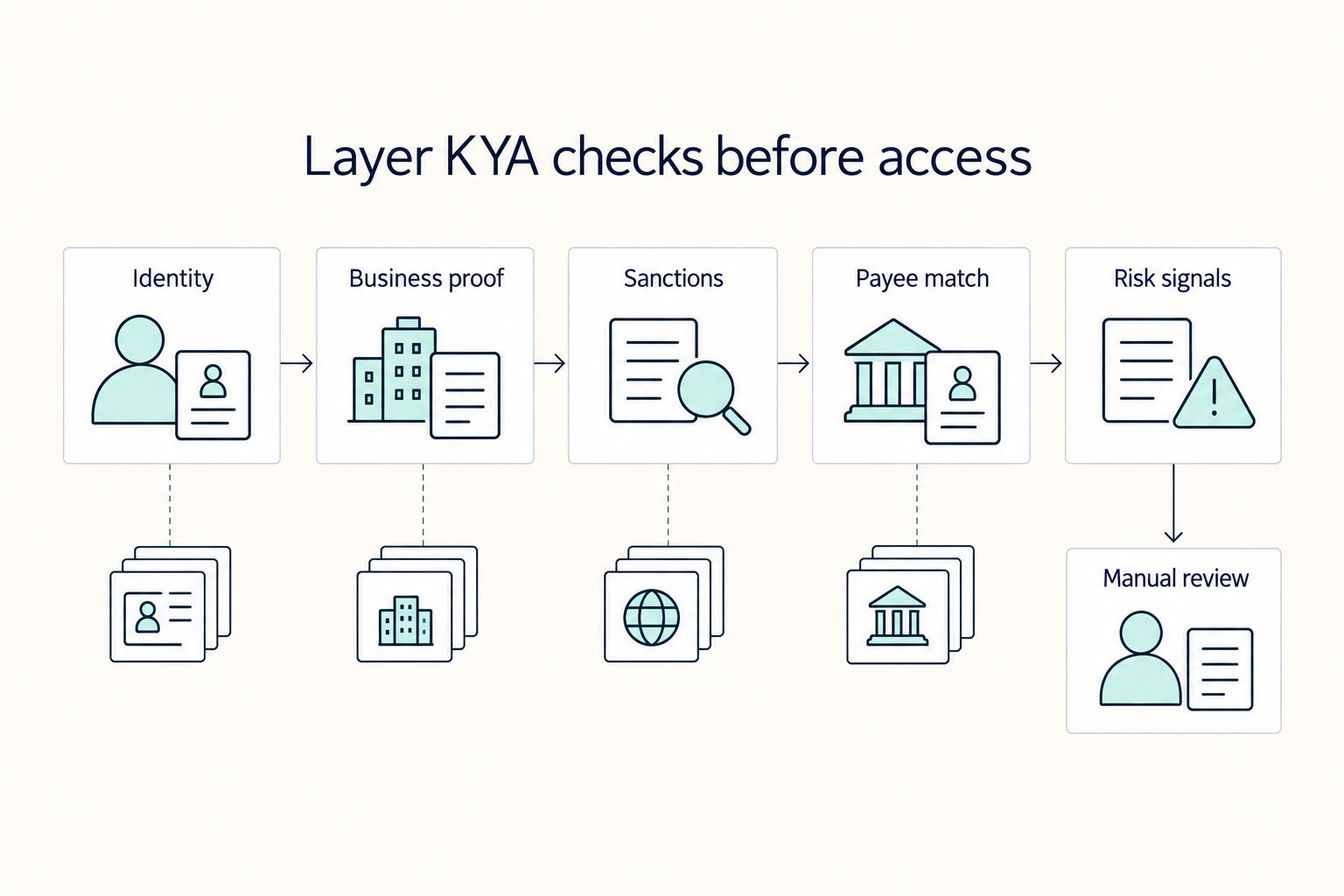
What Is Know Your Artist (KYA)? How Music Platforms Stop Streaming Fraud Before It Starts
So this piece stays practical. You will see where basic identity checks end, where KYA adds real value, and where enhanced review is worth the extra operational load. You will also see a failure mode many teams miss: collecting signals without a clear action path. A flag that does not route to a defined approve, hold, or reject decision is not much of a control.
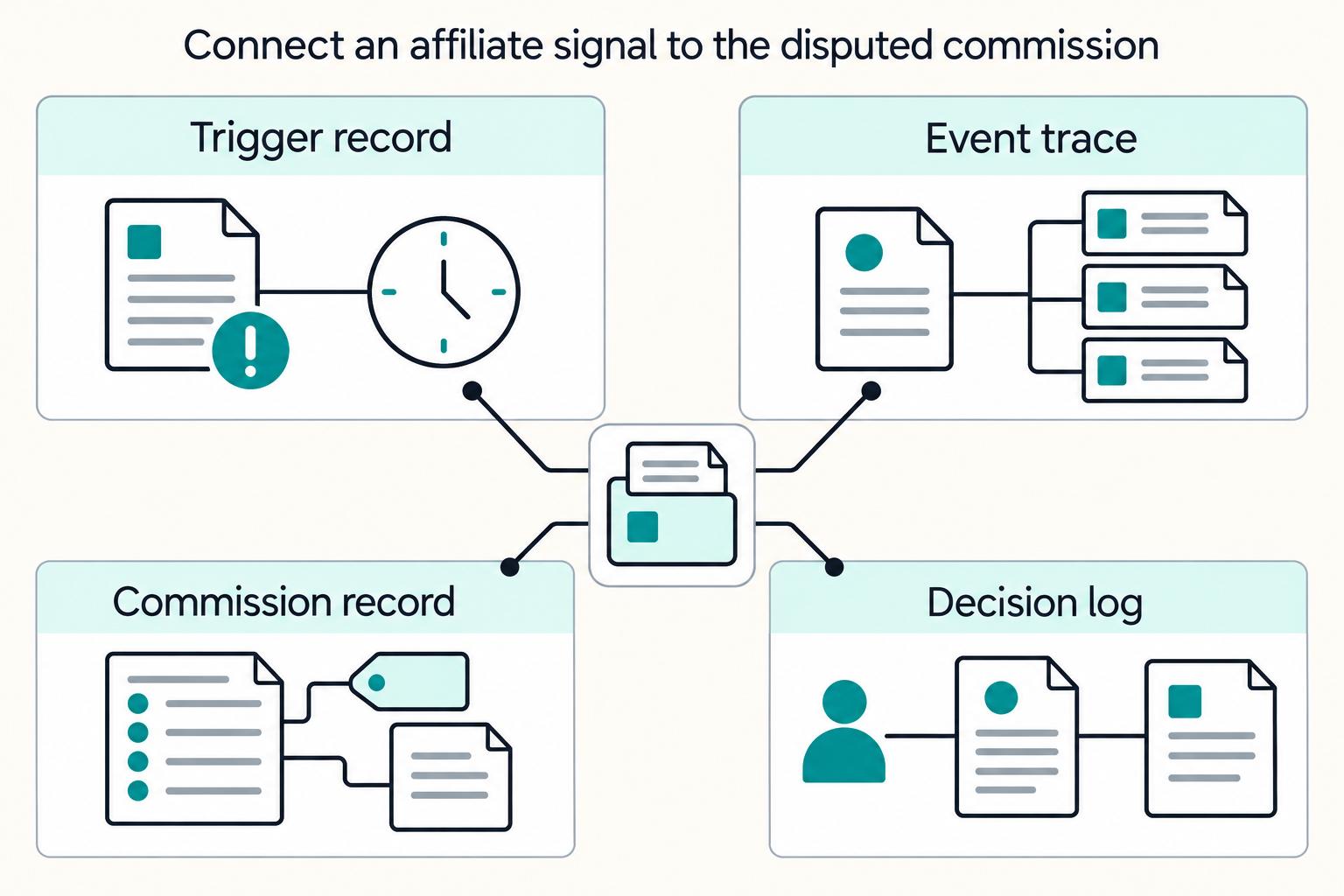
Stopping Affiliate Payout Abuse From Fake Clicks and Fake Signups
Affiliate fraud often looks like a marketing problem at first. It becomes a finance and compliance problem the moment an invalid event can produce a commission payment. In a performance-based commission model, affiliates are rewarded for measured outcomes such as customer actions or sales. That makes fake clicks, fake leads, and false attribution claims payout-eligibility questions, not just traffic-quality defects.
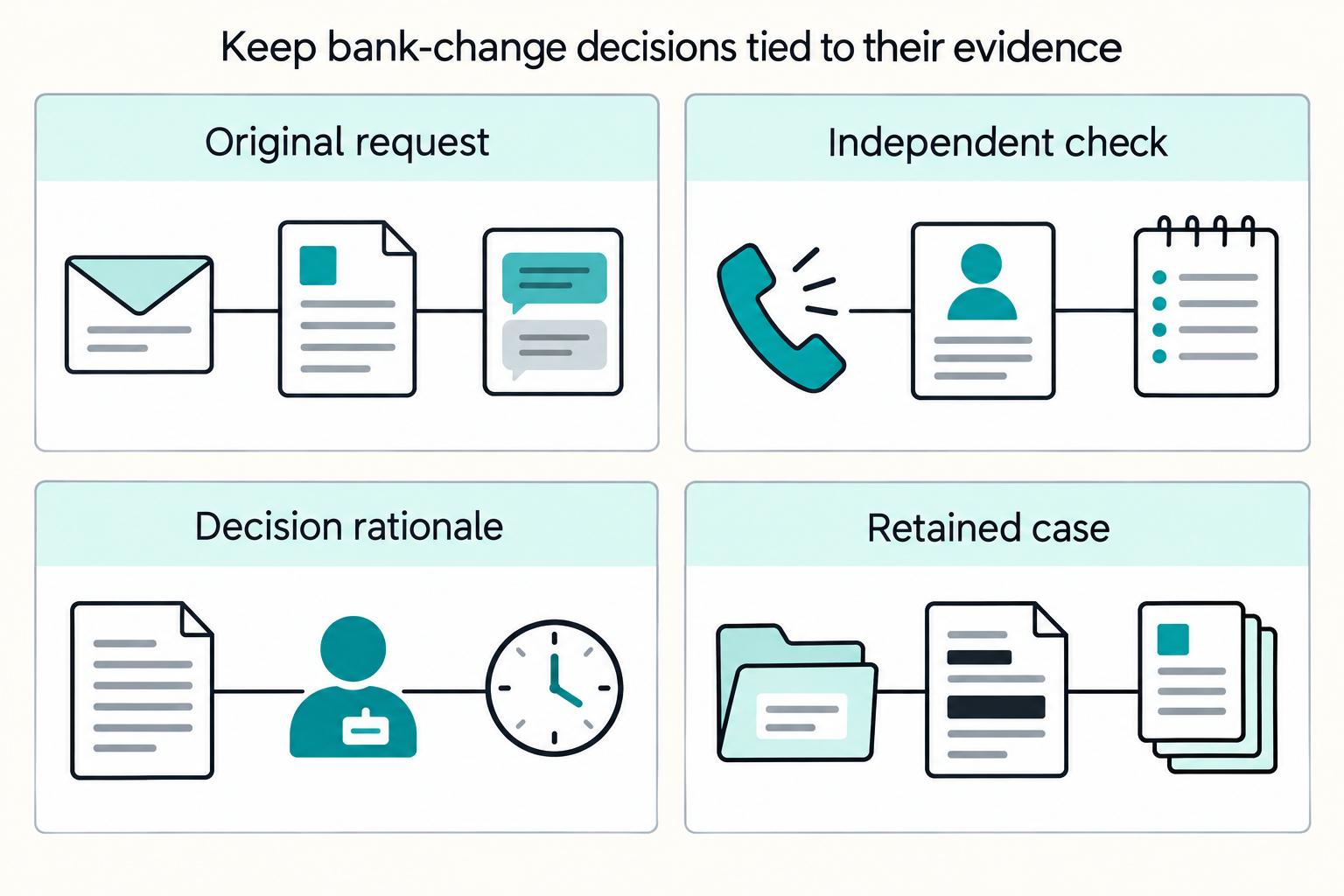
Wire Fraud Prevention for Platforms: How to Spot Spoofed Bank Details Before You Pay
Wire fraud prevention for platforms is a pre-payment control problem. Once a payout goes to spoofed bank details, you may be dealing with a loss event, especially on rails like Fedwire that are immediate, final, and irrevocable once processed.