
Quick Answer
Secure a REST API by defining each endpoint's business risk first, then enforcing a day 1 baseline of HTTPS everywhere, separate authentication and authorization checks, least-privilege access, server-side input validation, and throttling by identity and endpoint. Pay extra attention to object-level authorization to prevent BOLA, and back prevention with investigation-ready logging, sanitized client errors, and a simple incident response runbook.
Why a "Top 10 List" Is a Liability for Your Business#
If you want to know how to secure a rest api, start by rejecting the idea that a generic Top 10 list is a strategy. The OWASP API Security Top 10 (2023) is useful for naming common risks, but if you choose controls from a checklist before you define business exposure, you create false confidence. For incident follow-through, pair this with How to Handle Data Breach in Your Freelance Business.
| Checklist mindset | Risk-management mindset |
|---|---|
| Decision basis | "Which common controls should we add?" |
| Blind spots | Undocumented APIs, over-broad responses, client contract duties, uneven control coverage |
| Expected outcomes | Some visible controls, unclear residual risk |
Step 1 Define each endpoint before you pick controls#
For every endpoint, write down three things: data sensitivity, client obligation, and failure impact. It is easy to jump straight to jwt, OAuth2, or rate limits. However, the better question is simpler: if this endpoint fails, do you expose sensitive data, breach client commitments, or damage partner trust? To secure a REST API consistently, score each endpoint from 1 to 5 on those three factors before you choose controls.
Use the response itself as a checkpoint. Compare the response shape to the actual user action and ask whether every returned field is necessary. Excessive data exposure is a real failure mode because the endpoint still "works" in testing while quietly oversharing.
Step 2 Check for the blind spots a list will miss#
Do not stop at documented routes. Verify that your inventory includes undocumented or unmanaged APIs, and identify any API proxy layer or proxy configs that do not meet your standards so you can assign mitigation actions. A proxy layer is useful here because it can enforce shared controls like rate limiting and quotas across services, but only after you know which services matter most.
Keep the consequence language concrete. For regulated triggers or reporting timelines, verify the applicable threshold with counsel or current official guidance before using it. In addition, set explicit operating checkpoints such as 24-hour escalation, 7-day remediation review, and 30-day control re-test so a secure REST API program stays measurable. That business-first framing prioritizes prevention, detection, and response.
The Non-Negotiable Foundation: Your "Day 1" Prevention Mandates#
Once you know which endpoints matter most, set a prevention baseline you can audit on day 1 and re-check in day 2 operations. These controls do not guarantee security or compliance, but skipping them leaves avoidable risk. If your endpoint inventory is still maturing, use The Best Security Scanners for Your Web Application to tighten discovery coverage.
Step 1 Enforce transport-only access with TLS#
What you must do now: Require HTTPS on every path that can reach your API, including actual internal and proxy paths, and verify that no plaintext route still returns usable responses.
Why this reduces business risk: If transport is not encrypted, credentials and response data can be intercepted in transit, which weakens every control you add later.
Audit at the real edge: public hostnames, staging hostnames, and known gateway/proxy entry points over plain HTTP. Keep evidence in your hardening notes from planning through initial configuration and day 2 checks.
Common failure mode: TLS is active at the main gateway, but a legacy subdomain, health-check path, or direct service port still accepts bypass traffic.
Step 2 Separate authentication, authorization, and least-privilege enforcement#
What you must do now: For each sensitive endpoint, make three checks explicit: who the caller is, whether they may perform this action on this resource, and whether access is limited to the minimum required data or actions.
Why this reduces business risk: Identity alone does not prevent object-level access failures; an authenticated user can still be the wrong user for a given record.
| Control layer | Decision you must enforce | What to verify now | Common mistake |
|---|---|---|---|
| Authentication | Who is calling? | Missing or invalid credentials are rejected | Treating token presence (for example jwt) as full access control |
| Authorization | May this caller do this action on this object? | Server checks action + target object against caller permissions before data is returned | Assuming OAuth-based delegation replaces per-request object checks |
| Least privilege | Is granted access and returned data minimal? | Roles, scopes, and response fields are narrowed to business need | Using broad roles and broad response payloads |
Run a simple proof test: use two valid users with different record access and request the same object ID from both.
Common failure mode: You verify sign-in, then trust user-supplied object IDs without ownership or entitlement checks.
Step 3 Validate input at the server boundary#
What you must do now: Treat all incoming input as untrusted until server-side validation confirms allowed shape, type, and content before business logic or persistence runs.
Why this reduces business risk: Security depends on implementation and operational controls; accepting malformed or unexpected input opens injection and bad-state paths.
Keep validation rules, request schemas, and rejected-request examples as auditable evidence so changes do not silently weaken the boundary.
Common failure mode: The UI validates fields, but the API still accepts direct requests with extra parameters, unexpected properties, or encoded payloads.
Step 4 Apply throttling by identity and endpoint#
What you must do now: Set throttling by caller identity and endpoint, with tighter policies on high-abuse or high-cost routes.
Why this reduces business risk: Flooding, resource exhaustion, and bot traffic can degrade availability and create brute-force channels.
In test environments, trigger thresholds and confirm consistent rejection behavior and logging without spillover effects on unrelated routes.
Common failure mode: One global gateway limit exists, but authenticated abuse still passes because all users share a broad allowance.
Day 1 Readiness Check#
Before moving on, confirm this baseline is true in your stack now:
- HTTPS is mandatory on every live ingress path.
- Authentication, authorization, and least-privilege checks are separate and enforced per request.
- Sensitive object access includes object-level permission checks.
- Server-side validation blocks invalid input at the API boundary.
- Throttling is defined by identity and endpoint, not only by shared IP.
This is your prevention baseline, not your full security lifecycle. Next, move to detection and response planning so you can manage failures, not just try to prevent them.
Prioritizing the Greatest Threat: Preventing Catastrophic Data Leaks (BOLA)#
Your next priority is to stop BOLA, because a user can be validly signed in and still access the wrong object if object-level authorization is weak or missing. In plain terms: authentication confirms who is calling, but authorization still has to decide what that caller can do on this specific record.
In one published API risk list, BOLA appears as item 01. That matches the real failure pattern: if you only check identity, a normal session can still expose another user's data.
| Check passed | What can still fail | Required authorization control |
|---|---|---|
| Valid login or token | Caller requests an object owned by someone else | Check ownership or explicit entitlement before returning data |
Valid jwt or session | Caller can read a record but should not update or delete it | Check permission for the specific action, not just sign-in state |
| Valid account in the right tenant | Predictable paths like /api/users/123 make probing easier | Re-check object access rules (tenant or user) on every request |
Step 1 Use a repeatable endpoint decision pattern#
For each sensitive endpoint, evaluate four parts before data access: subject, resource, action, and policy decision. This keeps your review focused on the exact access decision instead of stopping at "user is authenticated."
Step 2 Apply an object-authorization checklist in implementation#
Use this checklist to reduce inconsistent endpoint behavior:
- Enforce object-level authorization where the service actually reads or mutates the record.
- Deny by default when the access decision is missing, ambiguous, or fails.
- Centralize policy logic so similar endpoints do not drift into different rule sets.
- Authenticate first, then complete the object permission check before returning or changing data.
A common BOLA failure is granting access before permission checks are complete.
Step 3 Verify with negative tests and recurring security checks#
Do not rely on happy paths alone. Use two valid users with different data access, request the same object ID from both, and confirm unauthorized requests are denied. Test predictable ID probing patterns, such as changing /api/users/123 to /api/users/124, and verify access is blocked. Then repeat across at least 3 high-risk endpoints per release to secure a REST API against drift.
Run these checks regularly with manual negative tests, API security tooling, and scheduled audits, then keep the results as review evidence. For deeper execution guidance, see The Best Security Scanners for Your Web Application.
Detect API Abuse Early and Respond Fast Enough to Limit Exposure#
Assume prevention can fail. Your operating goal is to detect API abuse early and respond fast enough to limit data exposure, outages, financial impact, and trust damage.
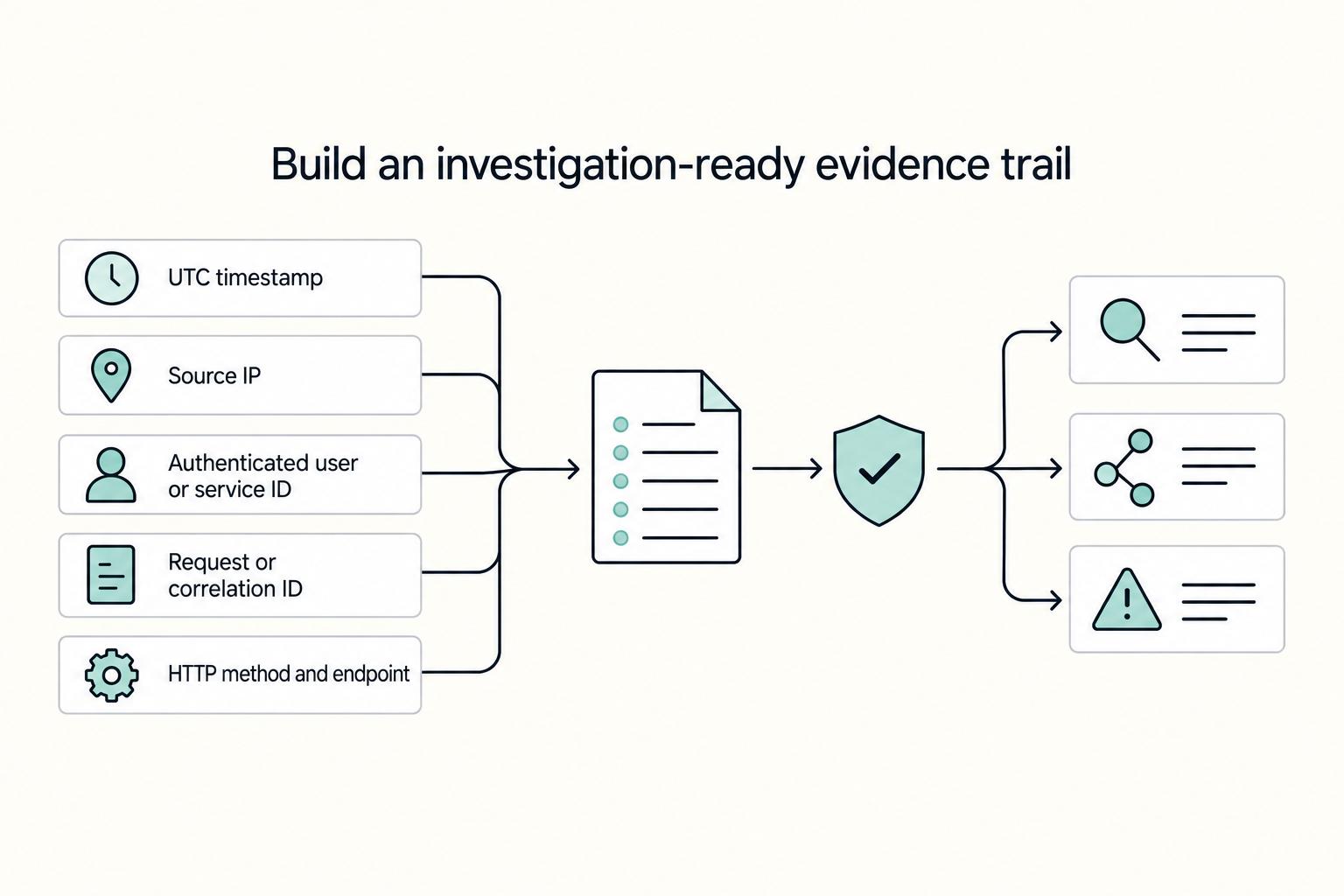
Step 1 Build an investigation-ready evidence trail#
If API events are buried in generic app logs, triage slows down and abuse can look normal, especially with business-logic attacks. Treat APIs as a first-class monitored surface, and make sure your API inventory includes unpublished, deprecated, and undocumented endpoints so shadow APIs do not stay invisible. Meanwhile, keep API credentials and admin account access hardened with controls similar to The Best Password Managers for Freelancers and Teams.
Use logging as a decision tool: capture enough to reconstruct events, and exclude data that creates a second breach if logs leak.
| Capture this | Incident use case | Exclude this | Risk if logged |
|---|---|---|---|
| UTC timestamp | Reconstruct the timeline across systems | Access tokens, API keys, session secrets | Replay and credential theft |
| Source IP | Spot unusual origins and cluster suspicious traffic | Passwords or secret values | Direct account compromise |
| Authenticated user ID or service ID | Tie actions to a specific actor | Full request or response bodies | Sensitive-data leakage and noisy logs |
| Request ID or correlation ID | Connect edge, app, and data-layer events for one request | Raw PII or full regulated records | Broader privacy exposure |
| HTTP method, endpoint, response status | Show what was attempted and whether it was allowed, denied, or failed | Internal stack traces in client-facing logs | Architecture disclosure for follow-on abuse |
Quick readiness check: take one real request and confirm you can trace it end to end with the same request or correlation ID within 15 minutes. If the trace takes longer than 30 minutes, treat that as a detection gap.
Step 2 Separate client errors from forensic detail#
In production, keep this split strict: sanitized client errors outside, rich diagnostics inside. Clients should get a short error and a reference ID; internal logs should keep exception details, auth context, endpoint, and dependency failures tied to that same ID.
Avoid mixing audiences. A generic 500 with a reference ID is appropriate for clients; database errors, stack traces, and internal object details are not.
Step 3 Run a one-page incident flow (solo operator)#
Use a simple runbook you can execute without improvising:
- Identify
Confirm the signal, pull relevant logs (actor ID, endpoint, source IP, request or correlation ID), and start a timestamped incident note.
- Contain
Reduce blast radius first: revoke exposed keys or tokens, disable affected integrations, tighten routing, or temporarily take the endpoint offline.
- Eradicate
Remove root cause, such as missing object authorization, weak validation, misconfiguration, or a forgotten endpoint, and record exactly what changed.
- Recover
Restore service in stages, re-run negative tests, and watch for recurrence of the same pattern.
- Communicate
Send a concise factual update: what happened, what is contained, what is still under review, and when the next update will be sent. Verify the contractual reporting window from signed terms before using it.
Your post-containment packet should include timeline, affected endpoints, revoked credentials, scope assumptions, and fix validation.
Readiness checkpoint: if you can detect abnormal API behavior, trace one request end to end, isolate affected endpoints, and issue a credible update quickly, your Detect and Respond layers are operational, not just documented.
Conclusion: Security as a Professional Standard#
The main ownership point is simple: API security is not something you finish once and move on from. Treat Prevent, Detect, and Respond as a review loop you maintain in routine operations. Therefore, secure a REST API as an operating system, not a one-time project handoff.
Step 1. Keep prevention boring and strict. Plan controls at design time, not after deployment. Start with the controls that should never drift: every API URL should use https://, not http://, and authorization belongs in the API itself, not only at the gateway. A practical verification check is to confirm that an authenticated user cannot access or modify data they are not authorized to use.
Step 2. Make detection useful for investigation. Use your API gateway where it helps standardize shared controls like rate limiting and proper logging, because otherwise you end up repeating those protections endpoint by endpoint. The point of logging is not volume. It is having an objective record you can actually use when something looks wrong, without depending on memory or guesswork. In practice, keep a 30-day hot log window and a 90-day searchable archive for API incident review.
Step 3. Write response steps down before you need them. Keep them tied to the controls above: what logs you will review, which authorization checks you will verify first, and how you will contain access while you investigate.
| Pillar | What it is for | What you implement | Business risk it reduces |
|---|---|---|---|
| Prevent | Stop bad requests before they become exposure | TLS (https://), rate limiting, authorization checks enforced in the API | Preventable data access and avoidable control gaps |
| Detect | Give yourself evidence when behavior looks wrong | Gateway logging and investigation-ready request records | Slow or uncertain investigations |
| Respond | Coordinate action during an incident | Documented response steps tied to logs and authorization checks | Delayed or inconsistent response decisions |
That is the professional standard. Review it, test it, and keep applying the checkpoints from each section so your security posture stays defensible over time. If you need to align API controls with payout or billing workflows, cross-check operating safeguards in How to Handle Data Breach in Your Freelance Business and Best Email Encryption Tools for Freelancers.
Frequently Asked Questions
Why is the distinction between authentication and authorization so critical?
Because they answer different questions. Authentication verifies who is calling before protected access is granted, while authorization decides what that caller can read or do. Treating "logged in" as "allowed" can lead to privilege escalation.
How does JWT authentication work in practice?
JWT is a common token format, often used with OAuth2, but the main requirement is the same: only verified users or systems should get API access. In practice, test live endpoints for authentication bypass instead of relying only on design assumptions. Runtime testing, including DAST, can expose weaknesses that static or dev-stage checks miss.
Why should authorization checks get extra scrutiny?
Because a caller can be fully authenticated and still attempt actions they should not be allowed to perform. Incorrect role or permission checks can escalate privileges. Test live endpoints with different permission levels and confirm unauthorized access is denied consistently.
Why can’t you rely on client-side input validation?
Client-side validation can improve usability, but it is not enough to secure an API. The API must enforce server-side validation because malicious input can trigger unintended commands or unauthorized data access. Exposed endpoints also still need rate limiting when repeated guesses or brute-force attempts are possible.
Try a related tool
Researched and edited by the Gruv editorial team. Gruv builds cross-border billing, payouts, and finance-operations software for global businesses.
Sources
Includes 5 external sources outside the trusted-domain allowlist.
- nvlpubs.nist.gov/nistpubs/SpecialPublications/NIST.SP.800-228...trusted
- nvlpubs.nist.gov/nistpubs/SpecialPublications/NIST.SP.800-228...trusted
- apisec.ai/blog/excessive-data-exposureexternal
- invicti.com/blog/web-security/how-to-secure-api-guideexternal
- services.google.com/fh/files/misc/mitigating_owasp_top_api_secur...external
- stackoverflow.blog/2021/10/06/best-practices-for-authentication...external
- stackoverflow.com/questions/55435461/how-do-i-secure-a-rest-apiexternal
Educational content only. Not legal, tax, or financial advice.
Related Posts
Value-Based Pricing for Freelancers Under Real Payment Risk
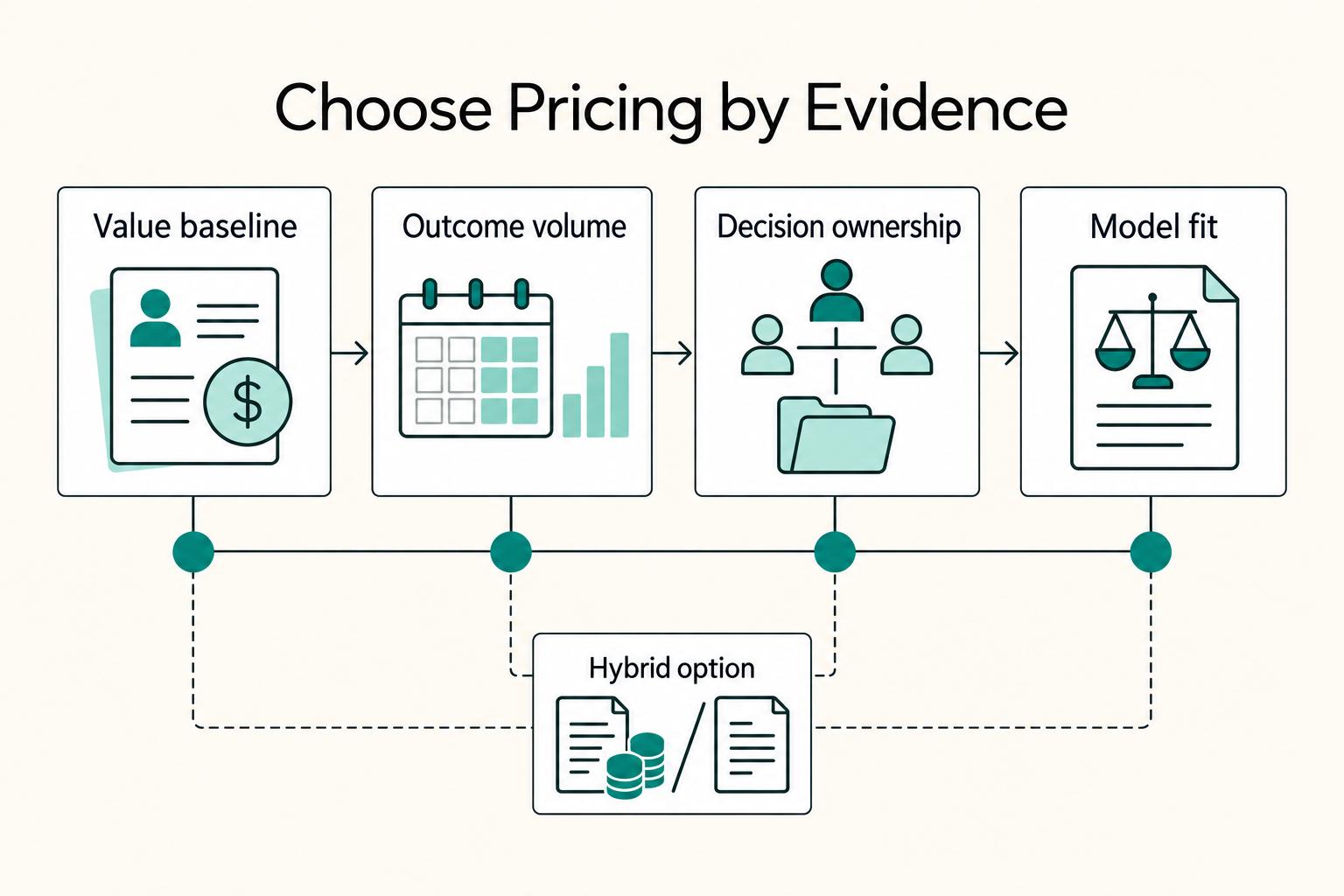
Value-based pricing works when you and the client can name the business result before kickoff and agree on how progress will be judged. If that link is weak, use a tighter model first. This is not about defending one pricing philosophy over another. It is about avoiding surprises by keeping pricing, scope, delivery, and payment aligned from day one.
How to Calculate ROI on Your Freelance Marketing Efforts
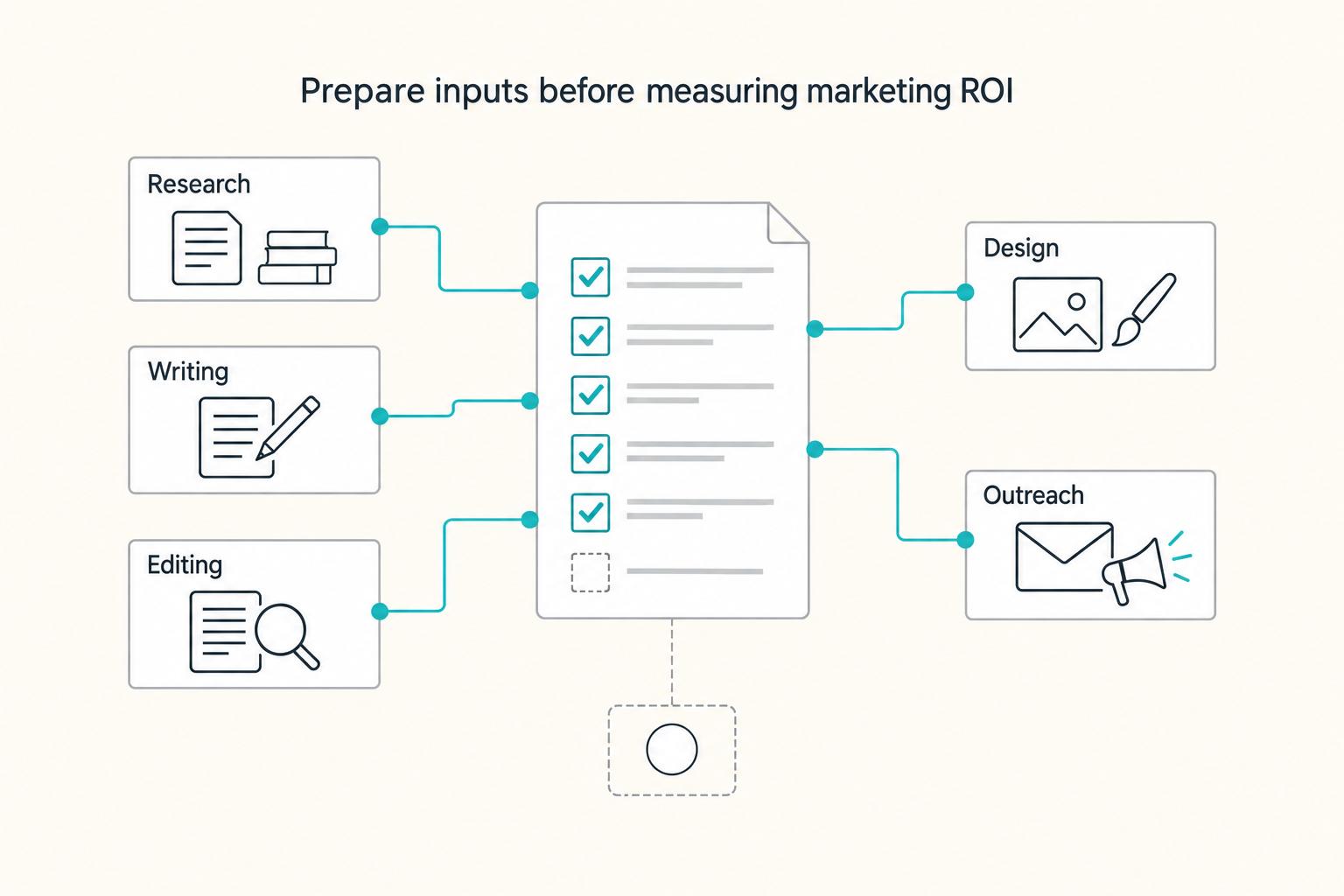
If you want ROI to help you decide what to keep, fix, or pause, stop treating it like a one-off formula. You need a repeatable habit you trust because the stakes are practical. Cash flow, calendar capacity, and client quality all sit downstream of these numbers.
The Best Security Scanners for Your Web Application
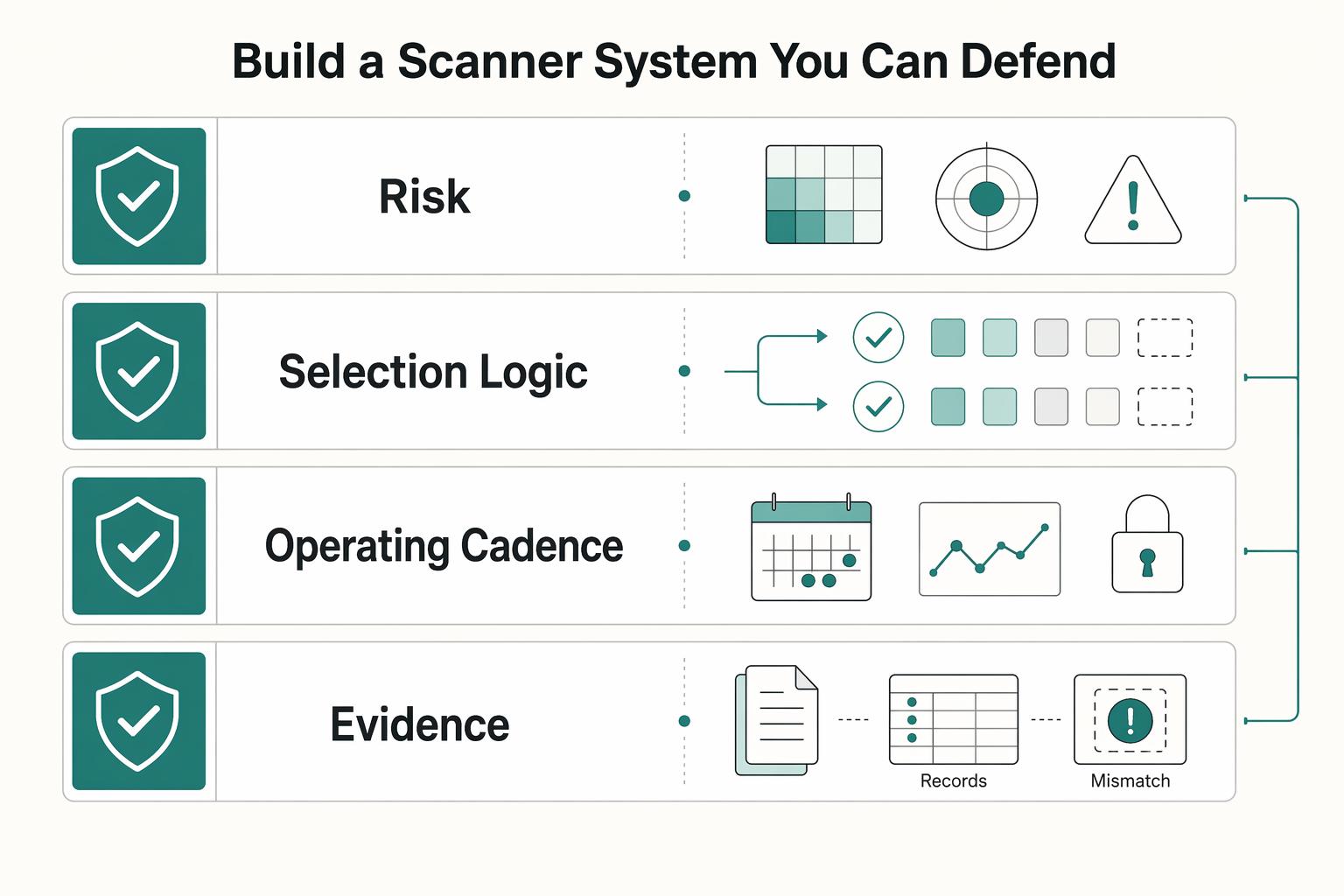
The right scanner stack is the one you can run on a schedule, triage without drama, and explain later with evidence. A web app scanner, or DAST-style tool, tests a live application and flags likely weaknesses. It does not give complete coverage, and it does not make you compliant on its own.