
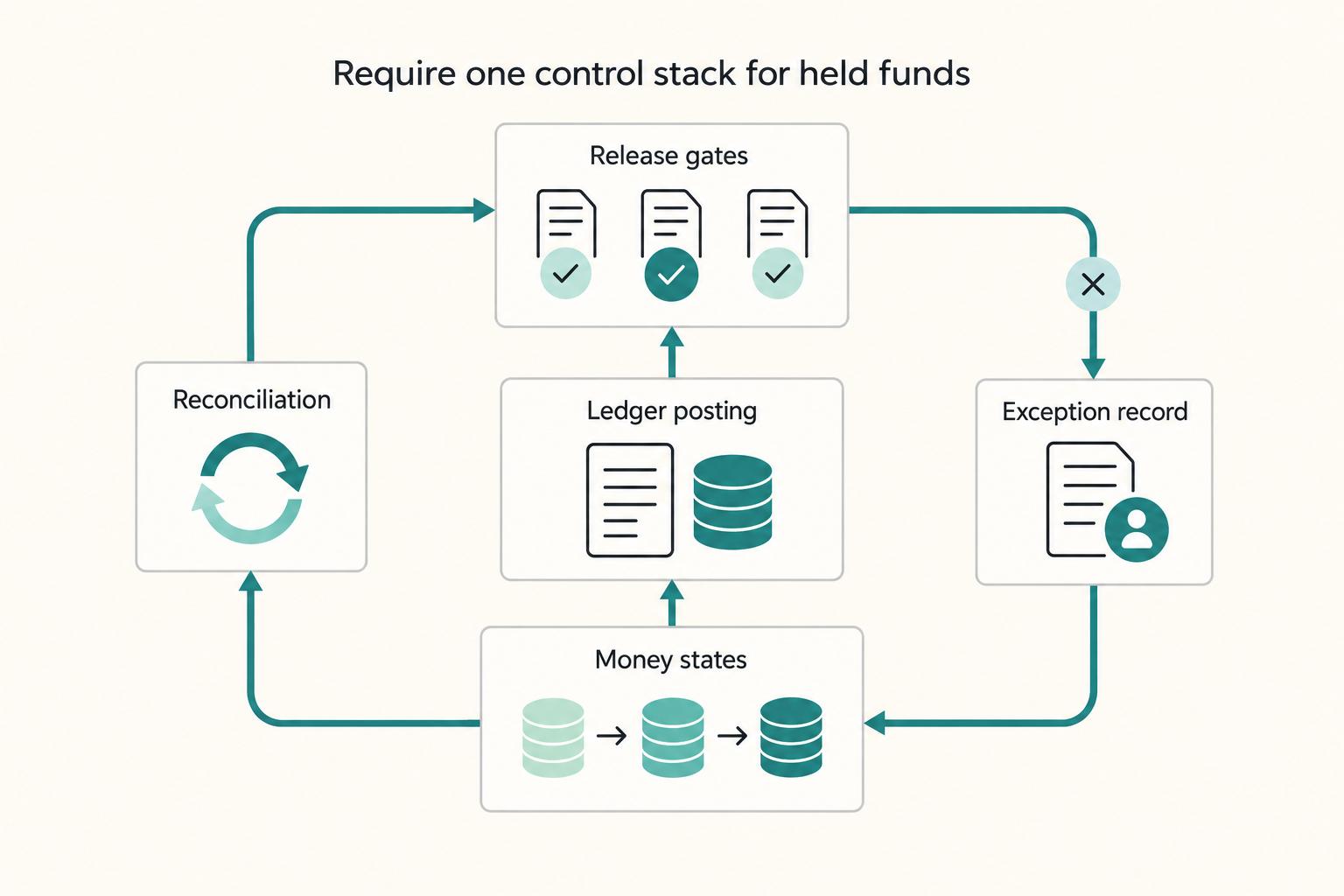
Quick Answer
An omnibus account pools several clients’ funds externally and attributes each entitlement through records. It can be segregated from operating money. Determine the applicable client-funds regime and provider responsibilities first; then compare pooled, separate-account and provider-held arrangements.
Pooling and safeguarding answer different questions#
An omnibus account pools money attributable to several clients in one external account. The platform or its provider maintains records of each client’s entitlement. That describes the account arrangement; it does not establish permission to hold the money, separation from operating cash, or protection if a company fails. A pooled account can be segregated from the holder’s own funds. Separate client accounts can still have inadequate legal terms or records.
Start with the activity and the funds owner. A marketplace collecting seller proceeds, an employer paying its own invoices, and a regulated payment institution holding payment-service funds do not necessarily have the same obligations. Identify the contracting entity, countries, licensed provider and point where money becomes owed to each client. Then choose an account arrangement permitted for that program. Weak controls are a reason to fix or suspend affected operations, not permission to postpone required segregation.
Identify who holds the funds before comparing accounts#
Draw the actual route: payer → collecting provider → holding bank or provider balance → recipient. At every stage, identify the account holder, beneficial owner or creditor, party controlling instructions, and governing agreement. If the licensed provider holds the funds while your platform supplies software, record that boundary. Your dashboard balance is not proof that your platform is the custodian or that the client has a direct bank deposit.
Ask the bank or provider to confirm the account purpose and title, whether operating funds may enter it, any set-off or lien rights, permitted deductions, access on provider failure, and which party maintains beneficiary records. Obtain the relevant account agreement and any required acknowledgement. A virtual account number may identify receipts into a pool; it does not by itself create a separate deposit or client-specific insolvency protection.
| Arrangement | Where client attribution sits | When to consider it | Operating consequence |
|---|---|---|---|
| Pooled client-funds account, separate from operating cash | One external pool plus client-level entitlement records | The applicable regime and provider allow pooling; the documents establish the required treatment | Reconcile the pool and every client allocation; keep company spending outside it |
| Separate external account for each client | External account mapping plus client-level records | Program terms or client needs require separate accounts and the provider supports them | More accounts, onboarding and statement feeds; still reconcile every movement |
| Provider-held balances with platform records | Provider contract and balance records linked to your platform ledger | The provider is the actual funds holder and the platform operates within that arrangement | Establish responsibility for safeguarding, records, releases and recovery; reconcile both systems |
These are implementation arrangements, not a ladder of legal protection. A controlled omnibus account is an omnibus account with controls, not a separate legal category. OSA and ISA terminology from derivatives clearing should not be imported as a universal taxonomy for marketplace cash. A contract requiring individual accounts cannot be satisfied merely by adding a stronger internal ledger to a pool.
Two scoped examples of the rules behind the account#
For UK payment and e-money institutions within scope, FCA safeguarding guidance describes segregation or qualifying insurance/guarantee arrangements for relevant funds. Its May 2026 update includes internal and external reconciliations on each reconciliation day and resolution records. This is a specific regulated regime, not a rule that every foreign marketplace can adopt by naming an account “safeguarded.”
The related CASS 15.2 rules distinguish allocated, unallocated and unidentified relevant funds and require arrangements preventing use of relevant funds for the institution’s own account. Operationally, a receipt with a missing customer reference is a record problem to resolve; it is not free cash for the business. Applicable allocation deadlines and safeguarding calculations remain those of the actual regime.
For qualifying US bank deposits, FDIC pass-through coverage depends on actual principal ownership, bank records disclosing the fiduciary relationship, and records identifying principals and their interests. Deposits aggregate with the owner’s other deposits in the same ownership category at that bank. FBO wording alone does not secure coverage. This addresses bank failure; it does not insure the platform’s business or guarantee recovery from a nonbank failure.
Reconcile entitlements, cash and availability separately#
Keep a client-level journal for receipts, authorized fees, releases, returns and holds. Each entry needs the client, currency, business obligation, external reference, effective date and reason. Reconcile transaction populations as well as totals: two wrongly assigned receipts can leave the pool total correct while both clients’ balances are wrong. Track unmatched receipts separately until ownership is established.
A client can remain entitled to funds that are temporarily unavailable for payout. An authorized reserve changes release availability; it does not turn client money into platform revenue. Likewise, pending payout instructions need their own state so available funds cannot be committed twice. Record the actual basis and scope of a restriction and who may resolve it. An internal policy cannot override a mandatory block or grant authority to withhold earned funds.
Worked example: a pool that balances but cannot pay every displayed balance#
Assume a hypothetical permitted USD pool with settled client receipts of USD 8,000 for A and USD 4,000 for B. The bank balance is USD 12,000 and summed client entitlements are USD 12,000. The company’s operating money and fees are held separately. There are no FX movements, returns or bank charges in this illustration.
| Stage | External pool | A entitlement | B entitlement | Release detail |
|---|---|---|---|---|
| Receipts allocated | USD 12,000 | USD 8,000 | USD 4,000 | All available under the assumed program |
| A reserves USD 2,000 for a pending payout instruction | USD 12,000 | USD 8,000 | USD 4,000 | A has USD 6,000 available; the pending USD 2,000 cannot be dispatched again |
| A payout completes and its financial effect is recorded | USD 10,000 | USD 6,000 | USD 4,000 | Matched USD 2,000 debit and completed payment reduce A’s obligation once |
| A new USD 500 receipt cannot yet be assigned | USD 10,500 | USD 6,000 | USD 4,000 | USD 500 remains separately recorded as unallocated client funds, unavailable to A or B |
The pending instruction does not reduce entitlement merely because a job was queued. If the bank debits before completion, account for the in-transit asset and continuing obligation under the approved accounting policy; do not fabricate completion to make the bank total agree. The applicable safeguarding calculation determines which assets count. Cash in transit is not automatically a qualifying substitute for safeguarded cash.
If the bank unexpectedly shows USD 9,950 after the completed payment, the USD 50 difference needs investigation. A provider charge, a missing receipt and an unauthorized debit require different corrections. Do not spread the difference across clients or label it a rounding adjustment. Where rules require a shortfall to be made good, follow that requirement while investigating; a case owner and target date do not cure underfunding.
Release funds without losing the original obligation#
Before dispatch, verify the recipient, currency, payable amount, available funding and applicable restrictions. Reserve the obligation durably so concurrent jobs cannot authorize another payment for the same amount. Keep each external attempt linked to that obligation, including partial batch results. A provider’s temporary idempotency cache is an additional safeguard, not your permanent record of what has already been paid.
A timeout leaves the outcome unknown. Retrieve status using the original provider reference and reconcile external evidence. Retry or change providers only after establishing that the original attempt cannot complete and accounting for any returned funds. A new reference, another approval or a matching invoice number cannot prevent two live attempts from paying the same client.
Use external transaction evidence to distinguish accepted instructions, debited funds, delivery confirmation and returns. Your ledger records the financial interpretation and client entitlement; it cannot overrule a bank’s evidence that a payment returned. Correct prior financial effects with linked entries instead of deleting the history or treating every failed status as a reversal.
Prepare for a records or provider failure#
Store recoverable beneficiary records, account mappings and journal exports outside a single provider dashboard. A recovery file should show each client’s currency entitlement, available and restricted amounts, pending attempts, external references and unresolved breaks at a stated cutoff. Protect personal and compliance data with role-based access; an entitlement export should not expose confidential review narratives to every operator.
Agree who can obtain statements and beneficiary records if your provider becomes unavailable, who can instruct or distribute funds, and which approvals are required. Rehearse reconstructing one client’s balance from preserved records. Account-level separation does not eliminate the need for this exercise: a separate account with an unknown pending debit is still unsafe to pay from.
When an account migration is warranted#
Change the arrangement when the law or program requires it, a client contract requires named separation, the provider cannot supply reliable records, or the operating design cannot meet reconciliation and recovery needs. Fix record quality at the same time. More account numbers will not repair duplicate journals or missing beneficial-owner data.
Set a migration cutoff, reconcile the old pool, identify pending payments and restrictions, transfer only the funds approved for movement, and match opening balances to the old client records. Keep old provider references accessible for late returns. Changing account architecture must not create new payout obligations for payments already in flight.
Frequently Asked Questions
Can an omnibus account also be segregated?
Yes. Pooling describes several clients sharing an external account; segregation can describe separation of that pool from the holder’s own funds. The legal effect depends on the applicable regime and account documents, while client-level records identify each entitlement.
Does an FBO account guarantee deposit insurance?
No. For eligible US deposits, pass-through coverage requires actual client ownership, disclosure of the fiduciary relationship in bank records, and records of the owners and their interests. Applicable limits aggregate deposits by owner, bank and ownership category. FBO wording does not insure the platform against its own failure.
Are separate accounts always safer than a pool?
No. Separate accounts can improve external attribution or meet a contractual requirement, but they still need accurate records, valid account terms and controlled instructions. Choose among arrangements that satisfy the applicable requirements, then compare their operating burden.
What should happen to an unallocated receipt?
Record it separately, preserve the external reference and investigate the entitled client. Do not allocate it by guesswork or use it for company expenses. Follow any applicable safeguarding and allocation requirements while resolving the missing information.
Can I send a replacement payout when the first attempt times out?
Only after resolving the first attempt’s outcome and establishing that it cannot complete. Keep a durable guard on the original client obligation across providers and attempts, and account for any funds returned before authorizing the replacement.
Try a related tool
Researched and edited by the Gruv editorial team. Gruv builds cross-border billing, payouts, and finance-operations software for global businesses.
Sources
Includes 2 external sources outside the trusted-domain allowlist.
Educational content only. Not legal, tax, or financial advice.
Related Posts
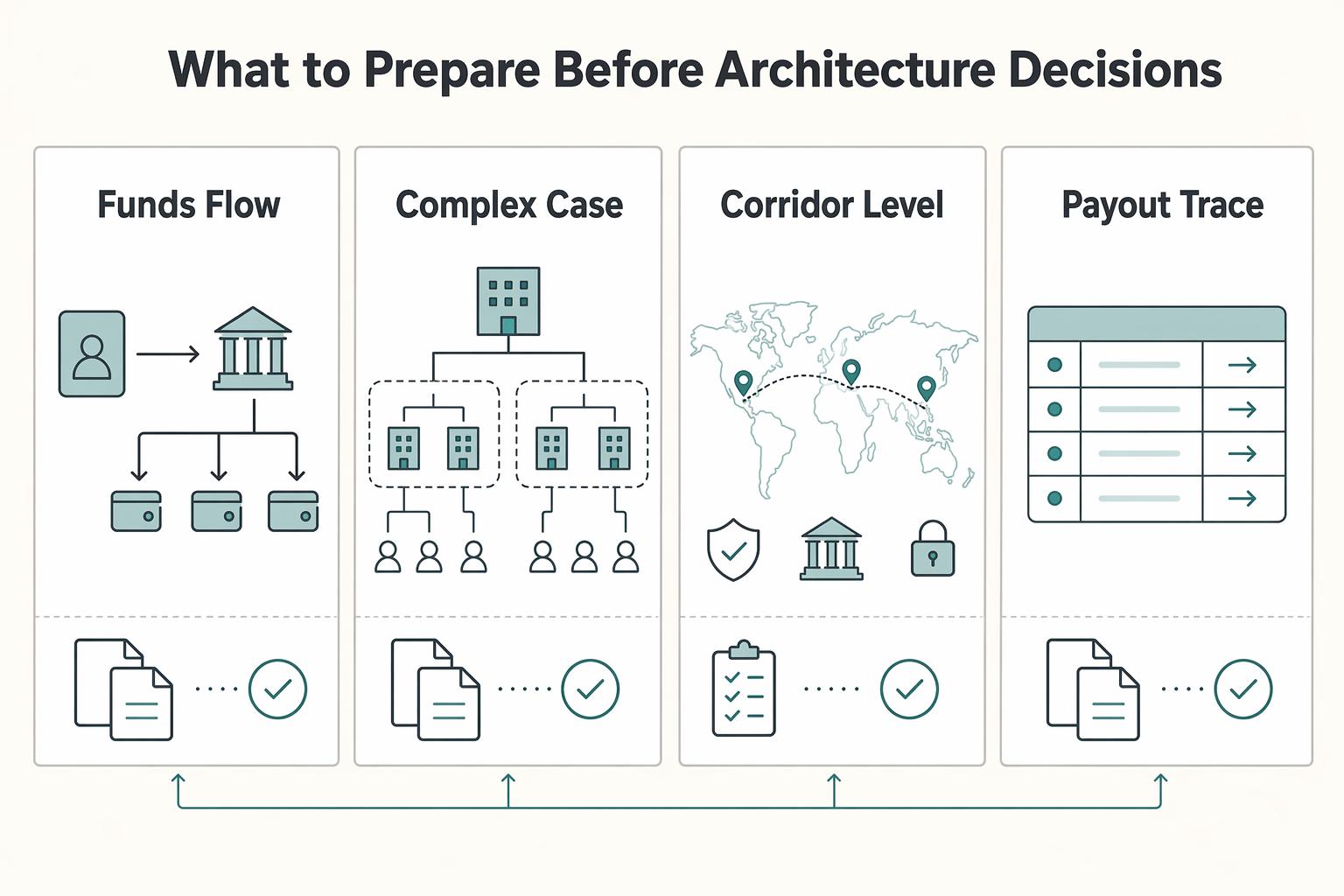
Omnibus Account Architecture for Platforms Holding Contractor Funds
An omnibus account holds funds for multiple customers in one external account, with records allocating interests or obligations to each customer. For contractor funds, distinguish a fiduciary or FBO program from an ordinary company account. Your ledger can record attribution, but cannot by itself create lawful custody, segregation, or permission to hold money.
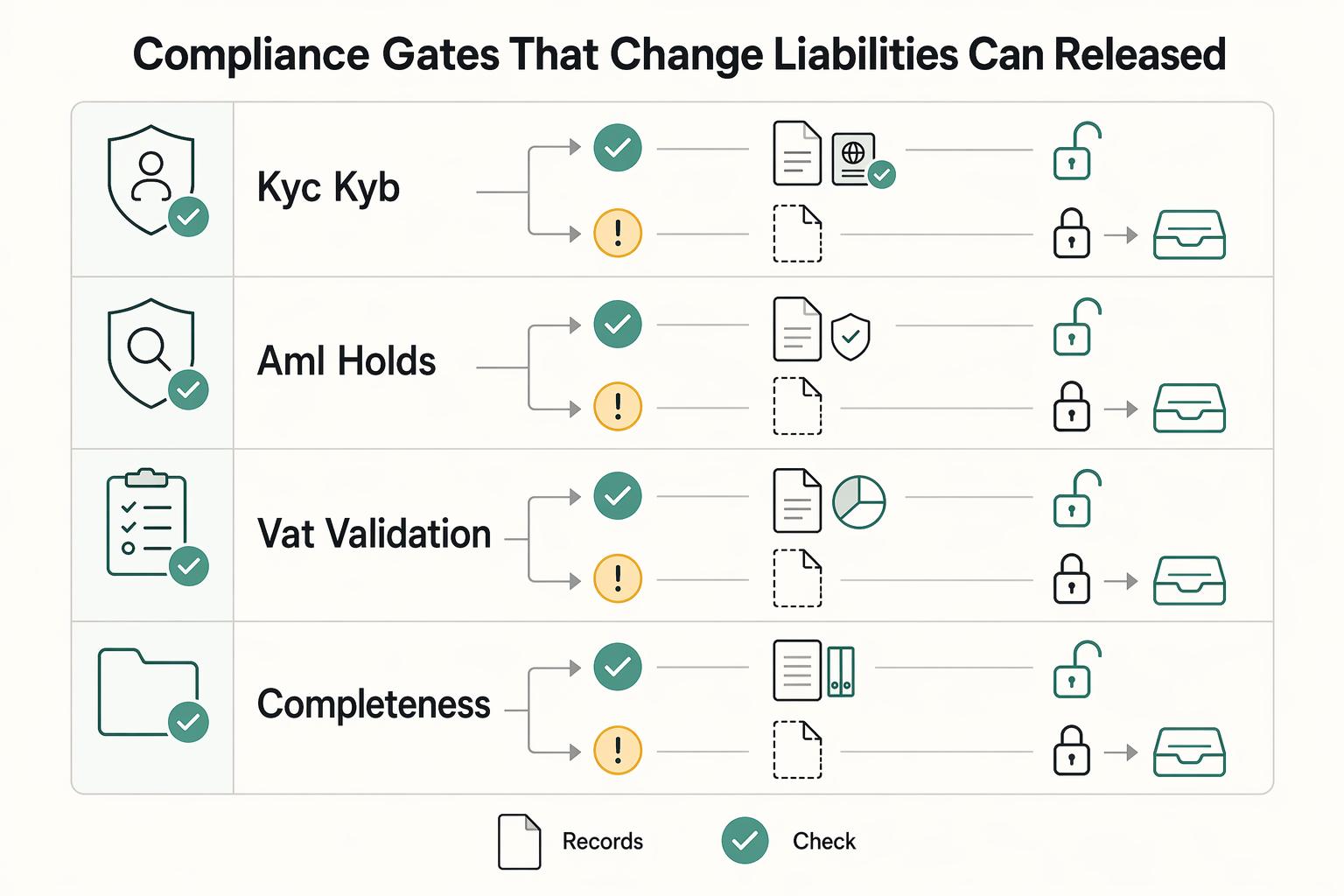
What Is a Balance Sheet? How Payment Platforms Account for Held Funds Reserves and Liabilities
If you own payouts, the core question is not what sits on the balance sheet. It is what obligation you can prove, what amount should stay held, and what can safely move. For finance, ops, and product teams dealing with balance sheet treatment for payment platforms - held funds, reserves, and liabilities - that distinction matters more than tidy labels. If your team cannot explain that distinction at release time, your close process is weaker than it looks.

When High-Risk Payout Accounts Need Source of Funds Checks Beyond KYC
A one-time KYC check may not be enough for higher-risk payout accounts. Risk can change after onboarding as transaction behavior shifts and customer risk profiles change.