
Quick Answer
Choose the route tied to your biggest year-one risk: AP suites for invoice and approval breakdowns, payment programs for supplier disbursement economics, or a platform-owned payout workflow when clinician reliability is core. Test a redacted transaction trail, exception ownership and ERP exports, including a rejected transfer and its correction, before selection.
Healthcare AP automation for staffing platforms is a different problem than hospital supplier AP#
Healthcare staffing platforms must connect approved clinical work to an accurate payable and a traceable payout. Hospital supplier AP tools can help with invoice capture and approvals, but clinician payments also need shift references, agreed rates, due dates and clear ownership when a transfer fails.
- Start with the real scope
In this guide, healthcare accounts payable automation means end-to-end AP operations across invoice capture, approval, payments, and reporting. That maps well to classic supplier AP, especially where manual work still creates heavy data entry, payment delays, and higher error or compliance risk.
If your use case includes contractor payouts, confirm fit beyond AP workflow automation before committing. You are not just trying to move documents faster. You are also deciding whether your payment model, controls, and exception handling can support a large population of clinical contractors without creating payout confusion or finance escalations.
- Judge options by execution risk, not by automation language
Compare operating models by what can break in production: an invoice captured twice, an unapproved shift, a changed bank account or a rejected transfer. Automation is useful when it makes those cases visible and recoverable, rather than just moving documents faster.
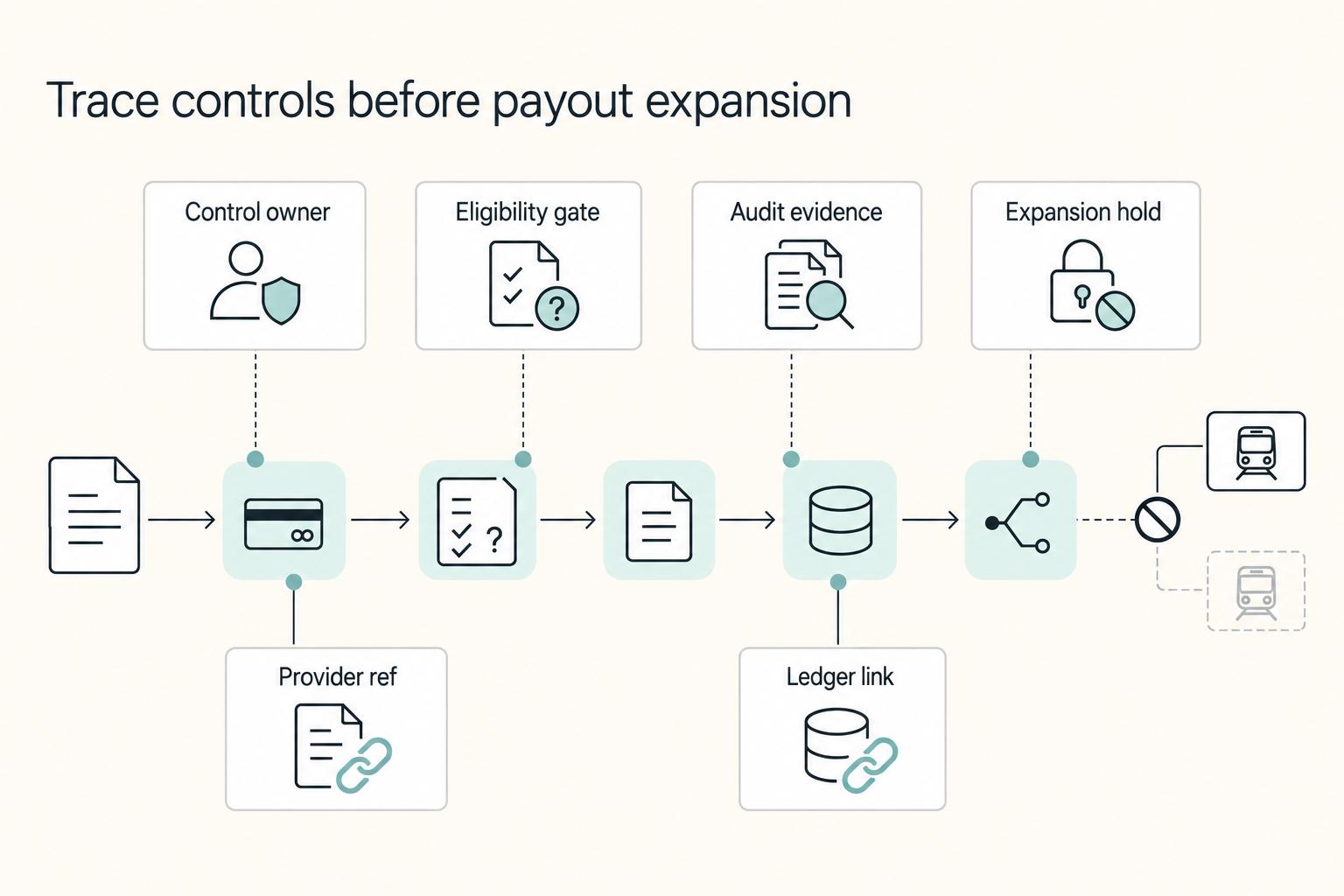
Look for audit trails, access control, and policy enforcement that let finance identify who approved a payable and who changed it. Ask a vendor to show, with redacted data, how one transaction is captured, approved, and evidenced for audit review. A clean invoice demo is insufficient if exceptions, ownership or finance exports remain unclear.
- Treat vendors that show up in search as category inputs, not contractor-payout proof
Use the three operating models below to structure your shortlist. For each candidate, test the exact workflow you need rather than assuming a supplier AP feature also handles clinical-contractor payouts.
Ask each shortlisted vendor for a redacted transaction history, approval records and exception exports. A walkthrough should show who can correct an invoice or bank detail, which changes require fresh approval and how finance links the result to the original payable.
How to choose a healthcare AP path and who this list is for#
Choose based on your primary year-one failure risk: if delayed supplier settlement is the core problem, start with AP automation; if contractor payout reliability and traceability are the bigger risk, prioritize payout infrastructure first.
This comparison is for founders and operators expanding healthcare staffing payments. More clinicians and entities mean more rate agreements, approval owners and payment exceptions. Compare the recurring cost of those failures with the implementation and support burden of each route.
Use a practical screening checklist when comparing paths: contractor payout volume, cross-border complexity, HIPAA/PII handling expectations, auditability, and integration depth with your ERP and product APIs. Ask for a redacted workflow example that shows review visibility, exception handling, and export behavior when something fails or needs correction.
This is not the right primary lens if you only need internal hospital accounts payable (AP) cleanup focused on approval-chain delays and supplier settlement. Use it when contractor payout orchestration is part of your product model.
For ROI planning, see Accounts Payable Automation ROI: How Platforms Calculate the Business Case for Payables Technology.
Option 1 AP suite vendors when invoice control is the bottleneck#
Choose an AP suite first when supplier invoice control is the operational failure, not clinical contractor payouts. If invoice volume, approvals, and payment-process complexity are straining finance, AP automation is usually the right first move.
In healthcare, this category is commonly framed as AP automation plus electronic payments, including ACH and commercial cards. That scope is useful for back-office control, but it is not the same as contractor payout orchestration for a staffing platform.
- Best fit
This option fits teams that want tighter invoice governance across entities, especially when AP runs inside established ERP workflows and the immediate goal is stronger financial control.
Start with the workload your finance team actually carries. Count invoices, approval touches, corrections and reconciliation time for a representative month; separate recurring exceptions from one-time onboarding work before estimating the benefit of automation.
- What to verify before you buy
Do not rely on category positioning alone. Ask for a redacted invoice walkthrough from intake through approval to ERP export, then test exception handling, such as duplicate or corrected items, and the audit trail your team will actually use.
Ask the vendor to measure straight-through processing against your own invoice mix. Include corrected timesheets, split cost centers and duplicate submissions; an automation percentage is useful only when its exceptions and human review cost are visible.
- Main tradeoff
Strong supplier AP coverage does not automatically solve clinical contractor payout orchestration, onboarding dependencies, or payout-status transparency.
Use this as phase one when supplier invoice control is the bottleneck. If contractor payouts are core to your product, do not treat AP-suite success as proof that contractor money movement is solved.
Option 2 Payment-program models when supplier payment economics matter most#
Choose this path when supplier payment operations are the main constraint and contractor payout redesign is not your immediate goal. It works best when you need to improve supplier disbursement mix and payment predictability, with contractor payout modernization handled later.
- Best fit
This option fits teams evaluating commercial-card, virtual-card or supplier-payment programs. Compare method acceptance, remittance detail and ERP handoff. Calculate any early-payment discount from actual agreed terms, and include funding costs and supplier charges before treating a rebate or discount as a saving.
Supplier adoption matters as much as the headline economics. Record which suppliers accept the proposed method, which prefer bank transfer and whether opting out changes fees or timing. Use that actual mix in the business case.
- What to verify before you buy
Require a live walkthrough of one real supplier payment flow: payment instruction creation, remittance delivery, ERP posting, and correction handling for changed bank details, rejects, and remittance-reference updates.
Ask for payment-method mix reports, remittance samples, ERP field mapping, exception codes and opt-out tracking. Test a bank-detail change and a rejected payment with the person who owns the correction. Compare implementation cost and recurring fees against measured savings, rather than relying on a general ROI range.
- Main tradeoff
This model can reduce paper-check dependence and improve supplier settlement predictability, but it does not by itself prove readiness for high-frequency clinical contractor payouts.
A successfully processed invoice does not show whether clinicians can see a blocked payment, a rejection or a reversal. If supplier payments are the urgent problem, use this as phase one and assign the contractor-payout gaps to a funded phase two with an owner and delivery date.
For payment fraud controls, see How Platforms Stop Business Email Compromise in Accounts Payable.
Option 3 Platform-native money movement when contractor payouts are the core product#
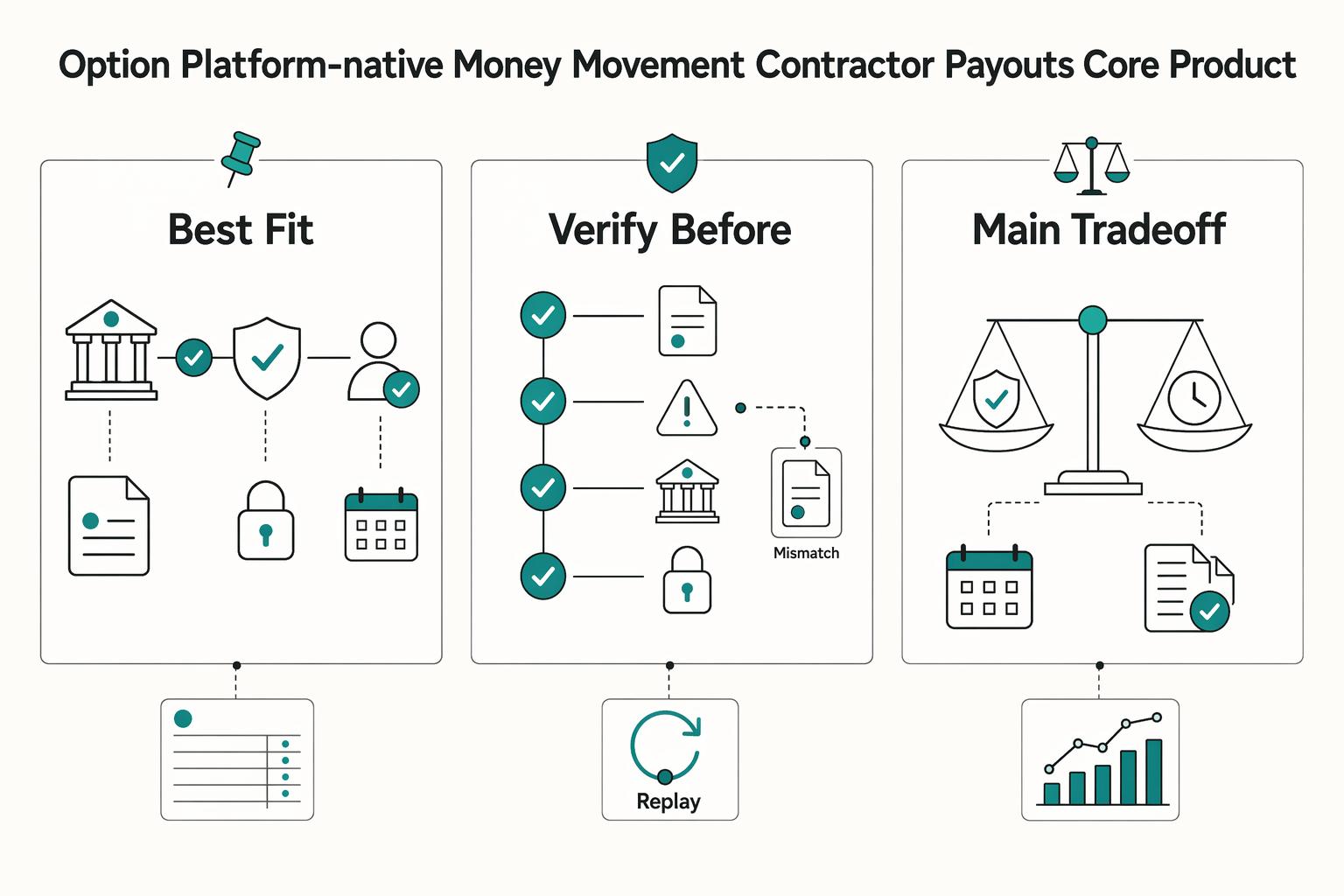
Choose this path when payout reliability is part of your product. Product, finance and support must agree on the status model and recovery behavior while a qualified payment provider executes the transfer. Owning the workflow does not by itself authorize the platform to hold or move client funds.
- Best fit
Use this route when your platform coordinates funding, readiness checks and contractor payouts. Set checks early enough to meet agreed payment dates. Keep approval of work, the amount owed, available funding and transfer status separate; an operational check must not silently rewrite the contract or a statutory pay obligation.
Keep patient information out of payment instructions wherever possible. HHS explains that HIPAA business-associate obligations depend on the function and PHI involved, while ordinary financial transaction processing has a distinct exception. If the service handles PHI on behalf of a covered entity, assess the required agreement and safeguards rather than treating a vendor label as sufficient.
- What to verify before you buy or build
Test a hypothetical approved shift worth $600: create one $600 payable linked to the clinician and shift, then attempt the transfer. If the bank rejects it, retain the unpaid $600 payable, record the rejection and notify the correction owner. After independently verifying corrected bank details, create an authorized replacement attempt linked to the original payable; reconcile the successful debit without booking a second expense.
Stress-test duplicate and failure handling. Replay the same payout instruction and confirm it does not create a second disbursement. Force a rejection and confirm it lands in a clear failed state with a reason code, not a vague pending status.
Require payout state definitions, provider references, exception codes, ERP field mapping and finance export samples. Show how the system handles a timeout with an unknown bank outcome: query the existing attempt before authorizing a replacement. An invoice-processing performance claim does not establish this recovery behavior.
- Main tradeoff
The upside is control over payout order-of-operations and exception handling. The cost is ownership: you must define and run those rules instead of relying on AP defaults built for supplier invoices and remittance.
The common failure mode is assuming supplier AP logic will cover contractor pay. If payout reliability is part of your product promise, document payout states, block reasons, and handoffs across product, finance, and support before scaling. If you are not ready to own that logic, an AP-focused tool alone will not close the gap. This is the best long-term fit when you are prepared to own integration depth, exception design, and audit-ready reconciliation.
For a step-by-step walkthrough, see Accounts Receivable Automation for Platforms to Collect from Enterprise Buyers at Scale.
Side-by-side comparison of the three paths#
Choose the path that minimizes your highest-cost year-one failure. The table describes design responsibilities to compare, not verified feature coverage for a named vendor.
Check tax workflows separately from money movement. For relevant US reportable payments, authorized payers can use the IRS TIN Matching program; establish who collects tax forms, applies required withholding and files information returns. Missing forms or a mismatch need the applicable tax procedure, not an automatic full-payment freeze.
| Comparison area | Option 1 AP suite vendors | Option 2 payment-program models | Option 3 platform-native money movement | What to verify |
|---|---|---|---|---|
| Implementation burden and speed-to-first-market | Usually lower if your immediate problem is manual AP workload | Moderate; can accelerate supplier payment changes | Highest; slower to first market because payout logic is product work | Measure setup and integration time against your actual entities, approval rules and provider |
| ERP dependency | Typically high for day-to-day AP workflows | Still meaningful for finance handoff and records | Meaningful for reconciliation, even when product owns payout states | Test the actual ERP connector, fields, posting timing and correction exports |
| Supplier AP automation depth | Best fit when your failure mode is AP manual effort and invoice-process friction | Good for payment-program execution, less centered on deep AP workflow control | Adjacent benefit, not supplier-AP-first by default | Test actual invoice and approval depth |
| Contractor payout readiness | Test the contractor workflow | Test the contractor workflow | Best strategic fit when payout reliability is core, but still requires proof | Show approved work through rejection, correction and final receipt |
| Audit trace depth and exception tooling | Stronger for AP process traceability | Stronger around payment-program exceptions | Potentially strongest if you define payout states and failure handling clearly | Inspect exported exceptions and linked transfer attempts |
| TIN Match and 1099 forms workflow support | Verify applicable collection, withholding and filing support | Verify applicable collection, withholding and filing support | Verify applicable collection, withholding and filing support | Do not assume coverage without direct workflow proof |
| Operational visibility | Better for finance/AP process visibility | Better for payment-program status visibility | Best potential for product-visible payout status if designed that way | Price implementation, recurring fees and exception support |
Related reading: Accounts Payable Software Comparison for Platforms That Need Operational Proof.
Rollout sequence that reduces rework in healthcare staffing payments#
After you choose a path, reduce rework by locking control logic before scaling payout execution. In practice: define states, formalize gates, lock reconciliation outputs, then launch with a strict document pack and deadlines.
- Map payout states before scaling execution
Start with a clear state model and ownership for each transition so support, finance, and engineering use the same status language. If state definitions are vague, exceptions surface late and get handled inconsistently.
- Define approval and policy gates as formal requirements
Make each approval and policy requirement testable: name its owner, required inputs, pass condition and correction path. Record whether a block is contractual, legal or operational, and how an authorized exception is handled. A blank configuration must not silently count as approval.
- Lock reconciliation outputs before broad launch
Set reconciliation requirements early around the finance system of record, including the export structure and required fields for your cloud ERP workflow. Decide how exceptions are represented and verified before scaling volume so finance can reliably tie records across systems.
- Require a go-live document pack and enforce cutoffs
Require onboarding requirements, exception taxonomy, payout cutoffs and sample reconciled transactions in the go-live pack. Work backward from agreed pay dates using the provider and bank cutoffs. Define who corrects a missed deadline, how clinicians are notified and how urgent replacements are authorized without double payment.
Mistakes that break trust with clinical contractors and finance teams#
Trust usually breaks on control gaps, not UI polish. If you cannot show who handled a blocked payout, why it was blocked, and what record supports that decision, contractors and finance will treat the system as unreliable.
- Using one payment workflow for unlike cases
Treating supplier AP and contractor payouts as interchangeable can create status and handoff blind spots. In healthcare operations, manual workflows are often slow, error-prone, and siloed, so vague payout states quickly expand into support and finance escalations. Clear, action-ready statuses keep one payment issue from bouncing across multiple teams.
- Automating exceptions without clear control boundaries
Automating faster does not fix unclear accountability. Segregation of duties in AP is the right control anchor: keep approval, release, and correction responsibilities separated so escalation paths stay clear. When one function can approve and rework the same payout path end to end, reconciliation disputes are harder to resolve cleanly.
- Optimizing speed before traceability
Fast movement is not enough if finance cannot explain what happened. Healthcare financial management operates under strict regulatory requirements, so payout approvals, ledger entries, exports, and corrections should stay connected as one audit trail. Dependable explainability at close is a stronger trust signal than isolated same-day payment wins.
- Pushing tax and payee readiness checks too late
Collect tax and payee information during onboarding so corrections do not first appear on pay day. For relevant US payments, missing or incorrect TINs can require backup withholding under IRS rules. Record the correction and withholding procedure alongside the payable; tax reporting and withholding are separate from permission to freeze all earned payment.
Related: Finance Automation and Accounts Payable Growth: How Platforms Scale AP Without Scaling Headcount.
Choose the model that matches your primary failure risk#
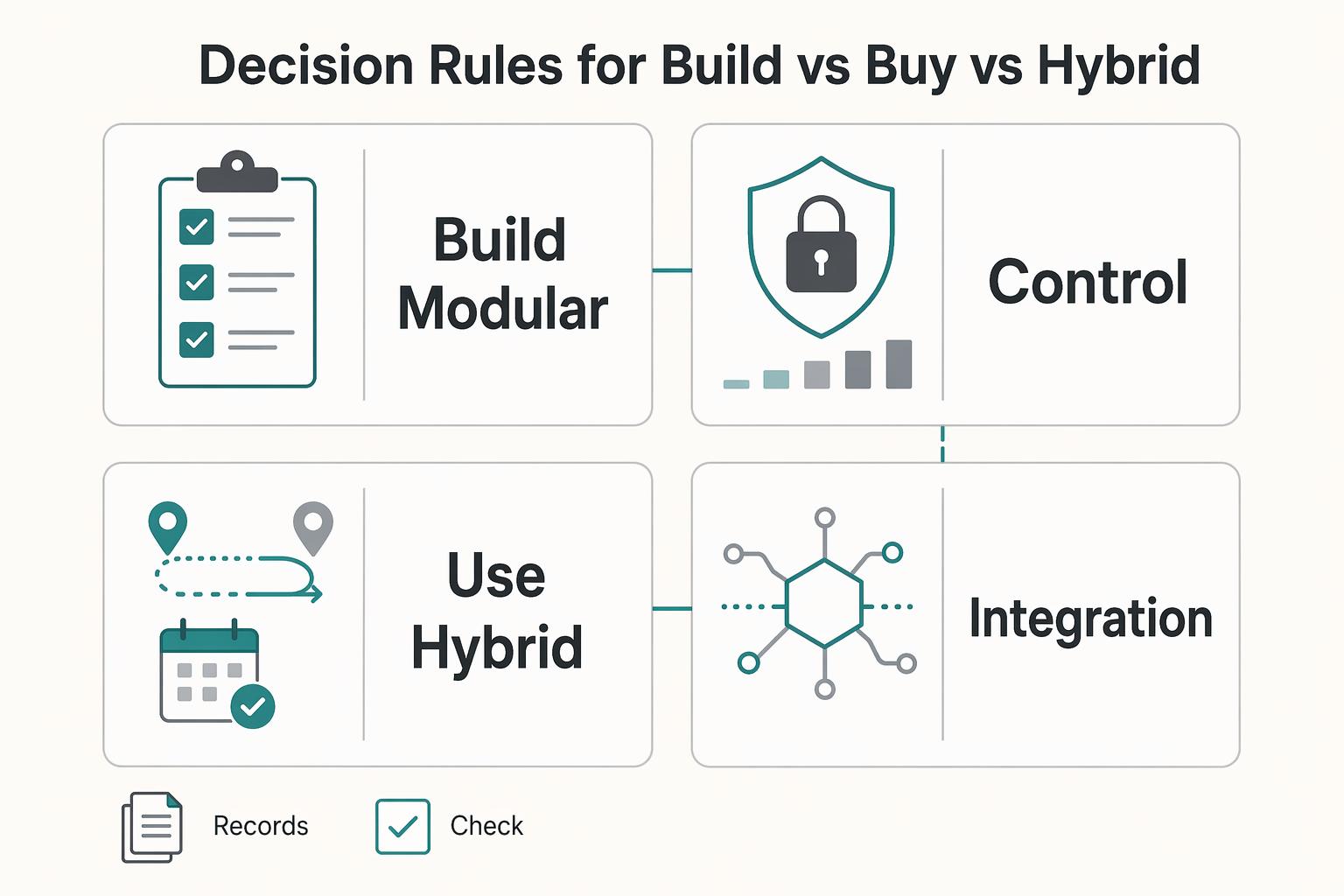
Choose based on the failure that will hurt you most in year one, not the broadest demo. For staffing platforms paying clinical contractors, these three models solve different first-order risks:
- AP-suite automation
Use this when your immediate pain is invoice throughput and approval delays. It fits best when the bottleneck is repetitive AP work and you need stronger control over capture, review, and posting. Before committing, ask for proof of controlled access rights, complete audit trails, encrypted transmission, and MFA/SSO support where healthcare data is involved, and confirm the integration surface you actually need, including EHR/EMR context where relevant. Apply minimum-necessary handling where required: payout records generally need a shift reference and approved amount, not a patient chart.
- Payment-program models
Use this when supplier payment economics and adoption are the primary constraint. This can help supplier-side disbursement workflows, but it is not evidence of contractor payout readiness by itself. Keep claims disciplined: do not overread program economics, enrollment outcomes, or coverage. Require a clear owner map for exceptions, settlement support, and reconciliation handoff into finance.
- Platform-native money movement
Use this when contractor payout reliability is core to your product promise. In that case, prioritize compliance gates, clear operational ownership, and audit-ready reconciliation from day one. If a vendor cannot show those controls in a real exception flow before launch, expansion risk rises quickly.
Pilot all three handoffs: approved clinical work to payable, payable to provider instruction, and provider result to bank reconciliation. Scale only when finance can explain the original obligation, every transfer attempt and the final paid or unpaid balance.
Frequently Asked Questions
What is the difference between healthcare supplier AP automation and clinical contractor payout automation?
Supplier AP handles invoice capture, approvals and posting. Clinical-contractor payouts must also connect approved shifts and agreed rates to a payable, each transfer attempt and the remaining unpaid balance. Test both sides before selecting a tool.
Which controls are table stakes before scaling contractor payout volume?
Use verified payee details, independent approval of bank changes, controlled release, duplicate prevention, rejection recovery and bank reconciliation. Add applicable tax controls and PHI safeguards based on the work and data involved.
What should a staffing platform automate first to reduce risk without slowing growth?
Automate the largest measured source of errors first. If invoice approval is the bottleneck, start there; if clinician payouts fail after approval, prioritize status visibility, correction ownership and reconciliation.
How should operators evaluate AP vendors when pricing and implementation depth are unclear?
Test a complete workflow from invoice capture through approval, transfer and ERP posting. Include a duplicate, a corrected timesheet and a rejected transfer, then price implementation and recurring exception handling.
When should a platform choose AP-card-style supplier programs versus API-first payout infrastructure?
Choose supplier programs when method acceptance and supplier-payment economics drive the decision. Choose a platform-owned payout workflow when clinician status and recovery are product requirements. Either route still needs a qualified provider and reconciled transfers.
What tradeoffs matter most when entering additional countries or market programs?
Check worker classification and payment obligations, supported receiving methods, currencies, bank cutoffs, fees, tax reporting and data handling for each market. Launch only after a representative payment and its correction path reconcile.
How should AP vendors be evaluated for a staffing-platform workflow?
Use each vendor as a candidate for a specific workflow, rather than treating its category as proof of contractor fit. Ask it to demonstrate your approved-shift-to-payout case, a rejection and the resulting ERP records.
Try a related tool
Researched and edited by the Gruv editorial team. Gruv builds cross-border billing, payouts, and finance-operations software for global businesses.
Sources
Educational content only. Not legal, tax, or financial advice.
Related Posts
Manufacturing Accounts Payable Automation for Industrial Platforms Paying Subcontractors
Industrial finance teams do not need another feature checklist. They need a clear way to decide what belongs inside AP automation, what belongs in payout infrastructure, and what needs to stay tied to ERP and production controls so payables do not create downstream delays.

How Platform Teams Scale AP Volume Without Adding Headcount
Use this as a decision list for operators scaling Accounts Payable, not a generic AP automation explainer. In these case-study examples, invoice volume can grow faster than AP headcount when the platform fit is right, but vendor claims still need hard validation.
Accounts Payable Automation ROI for Platforms That Need Defensible Results
Most AP projects do not miss ROI because the spreadsheet was wrong. They miss it when real costs show up in exception handling and post-go-live process work. If you are evaluating AP automation, the useful question is not whether automation can create value. It can. The question is whether that value survives contact with your actual process.