
Quick Answer
Yes. For platform operators, negative churn happens when recurring expansion from existing accounts outpaces revenue lost to cancellations and downgrades. Use one monthly evidence pack to verify it before scaling pricing changes: compare Gross Churn, Net Churn, and NRR on the same cohort, then check whether lift came from real upgrades or add-ons rather than discount expiry, one-off charges, or reporting relabels.
Negative Churn Explained#
Growth can flatten long before demand does. When customer losses and plan step-downs keep compounding across a growing subscription base, new sales have to work harder each month just to hold your ground. That is why revenue retention matters so much to founders, revenue leaders, product teams, and finance operators. It shapes medium- and long-term growth, not just this quarter's headline number.
Net Negative Churn describes a specific condition: expansion from existing customers exceeds the revenue lost to cancellations, downgrades, and other contraction. your base grows without asking new customers to do all the work. Expansion MRR is what makes that possible, but it only matters if the added recurring revenue reflects real expansion from existing customers.
This is also where teams can fool themselves. A business can post strong acquisition, healthy Monthly Recurring Revenue growth, or even solid Net Revenue Retention while still carrying damaging churn underneath. If you are making pricing or packaging decisions, the real question is not just, "Can we sell more to existing accounts?" It is, "Can we expand revenue without masking avoidable churn or contraction?"
If gross churn rises after a pricing change, treat that as a warning sign. Do not ignore it just because expansion looks strong.
This article takes an operator view for SaaS and platform businesses. It connects Net Negative Churn to the decisions that actually move it: price tiers, seats, add-ons, and packaging logic, plus the evidence finance needs before it trusts what the revenue line is saying. The goal is not to celebrate a metric in isolation. It is to help you tell the difference between healthy expansion and cosmetic expansion, and to show what to measure before you scale either one.
One caveat up front: there is no universal "good" churn or retention number. Benchmarks vary by model, customer size, market, and program structure, and retention comparisons should be segmented rather than treated as one target for every business. That matters even more when you look at public benchmark datasets drawn from different respondent mixes, geographies, and company profiles. Use outside numbers as context, then verify performance against your own ACV bands, customer segments, and expansion mechanics.
Related: Win-Back Campaigns for Platform Operators: How to Re-Engage Churned Subscribers Automatically.
Define the metric stack before making pricing decisions#
Define the metric stack before you touch tiers, seats, or add-ons. If finance, product, and revenue ops do not count losses and expansion the same way, pricing decisions can look stronger than they are.
Gross Churn is recurring revenue lost from cancellations and downgrades, with no expansion offset, so it cannot be negative. Net Churn uses those same losses but offsets them with expansion revenue from existing customers. Net Negative Churn means expansion is larger than churn and contraction, so the existing base still grows. Net Revenue Retention (NRR) measures how much starting recurring revenue from existing customers you kept after churn and upgrades, excluding new-logo revenue: NRR = (Starting MRR + Expansion MRR − Churn MRR) ÷ Starting MRR.
| Metric | Counts | Excludes | Practical read |
|---|---|---|---|
| Gross Churn | Canceled and contracted recurring revenue | Expansion revenue | Pure loss signal |
| Net Churn | Churn and contraction offset by expansion from existing customers | New customer revenue | Loss after expansion offset |
| Net Negative Churn | Same net-churn inputs | New customer revenue | Expansion exceeds losses |
| NRR | Starting recurring revenue from existing customers, plus expansion, minus churn | New-logo acquisition | Revenue retained in the base |
Use MRR and ARR together, but for different decisions. MRR is the month-to-month operating signal, while ARR is that same recurring revenue annualized over 12 months if current conditions hold. If you review churn in MRR and plan pricing impact in ARR, keep the recurring-only rules and cohort start point consistent in both views.
Treat this as a hard warning: a strong NRR can still hide damaging customer churn. Revenue churn and customer churn can diverge, especially when a few large expansions mask many smaller account losses. If logo churn rises after a pricing change, treat that as a red flag even when retained revenue still looks healthy.
You might also find this useful: How Solo SaaS Operators Use RevOps to Stabilize Revenue.
Build the economic model that makes growth without new customers possible#
Growth from your existing customer base works only when upgrades and add-ons from current accounts are consistently larger than revenue lost to cancellations and downgrades. If expansion does not clear that bar, you do not have net negative churn, even when new-logo sales keep total revenue moving.
This directly affects unit economics. Strong expansion raises the revenue a cohort can generate over its life, which improves LTV. When that expansion appears early and holds, it can also shorten CAC payback because acquisition cost is recovered from a larger recurring base.
Do not model expansion as automatic. Use it in LTV and payback assumptions only when it is visible in your recurring-revenue schedule by cohort, billing period, and source. Treat that schedule as decision-grade evidence for planning and board reporting, not a rough estimate.
A simple contrast shows why this matters:
| Scenario | Starting MRR from existing customers | Gross Churn from churn and contraction | Expansion Revenue from upgrades and add-ons | Ending MRR from existing customers | NRR |
|---|---|---|---|---|---|
| A | $100,000 | $8,000 | $4,000 | $96,000 | 96% |
| B | $100,000 | $8,000 | $12,000 | $104,000 | 104% |
Both scenarios start with the same base and the same gross loss. The difference is expansion quality: Scenario A shrinks inside the base, while Scenario B grows without help from new customers because expansion more than offsets losses.
Use concentration as a stress test. If most expansion comes from a small set of accounts while the rest of the base is flat or declining, headline NRR can still look healthy but the model is less durable. Check whether expansion repeats across cohorts, not just in aggregate.
If you want a deeper dive, read Subscription Revenue Forecasting: How Platforms Model MRR Growth Churn and Expansion.
Pick expansion motions that improve NRR without damaging trust#
Choose expansion motions that follow real customer behavior, because that is what improves NRR without weakening retention. Motions that temporarily raise MRR but trigger later downgrades or churn can make growth look stronger than it is.
Keep the metric boundary explicit: NRR tracks existing accounts only. It adds expansion from Upgrades and Add-ons, subtracts contraction and churn, and excludes new-logo revenue.
| Expansion motion | Best fit signal | Main risk to trust/retention | Practical owner split (adapt to your org) |
|---|---|---|---|
| Seat-based upgrades | More active users already need access | Seat counts get pushed up, then removed at true-up | Rev team runs offers; finance validates durability |
| Packaging add-ons | A distinct need beyond the base plan is clear | Core value feels repackaged behind a paywall | Product defines packaging; rev team tests message clarity |
| Service-led expansion | Services unlock higher-value usage | One-off services blur recurring expansion quality | Finance separates margin and recurring vs one-off revenue |
Seat expansion is usually the cleanest motion when added licenses clearly match active usage. If usage is not there first, expect reversals later.
Packaging add-ons need tighter control. If downgrades cluster after pricing or plan changes, inspect packaging and value communication before pushing more upsell, and segment churn by pricing tier to find where the break is happening.
Service-led expansion can be valid, but only if you keep reporting clean. Separate one-off service revenue from recurring expansion so margin and retention signals stay decision-grade.
Use GRR alongside NRR every month. If NRR holds up while GRR slips, expansion may be masking base-retention deterioration; in that case, prioritize retention-protective options like downgrade paths, usage-based options, or custom offers before scaling expansion pressure.
For a step-by-step walkthrough, see Building Subscription Revenue on a Marketplace Without Billing Gaps.
Decide when to prioritize churn reduction versus expansion#
Prioritize churn reduction first when cancellations cluster in early lifecycle cohorts; prioritize expansion first when churn is stable and retained accounts show room to grow through Add-ons and Upgrades tied to real usage.
Start with Cohort Net MRR Retention, then read Net Revenue Retention (NRR). Cohort retention shows where revenue is gained or lost over the customer lifecycle, which helps you catch early-stage leakage that a healthy headline NRR can mask. If early cohorts keep losing revenue, treat that as a retention and onboarding problem before scaling expansion campaigns.
When early-cohort leakage is not the main issue and account depth is low, expansion becomes the better lever. In that case, push add-ons and upgrades only where account behavior already supports the move. Expansion from existing customers can be more cost-efficient than relying only on new acquisition, but it should follow evidence, not force-fit offers.
The tradeoff is straightforward: reducing Gross Churn usually creates slower visible gains but lowers volatility in the base; expansion-first can grow faster, but it also raises execution risk if expansion masks underlying losses.
Use this monthly checkpoint, and read all three metrics together:
- Gross Churn: Are raw losses from contraction and cancellations rising, flat, or falling before expansion offsets?
- Net Churn: Is expansion merely covering losses, or is the base improving? Negative net churn means expansion is outpacing contraction and cancellations.
- NRR: Is retained recurring revenue from existing subscribers improving broadly, or mainly from a narrow set of accounts?
If these signals conflict, follow the cohort pattern first, then decide whether to push retention fixes or expansion programs.
This pairs well with our guide on How to Calculate and Manage Churn for a Subscription Business.
Put in place the operator evidence pack reviewed every month#
A monthly review should prove whether expansion is real, not just show a strong Net Revenue Retention headline. Build one evidence pack that shows movement type, lifecycle location, and classification quality.
What the pack has to include#
Keep it small enough to review every month, but strict enough that product, finance, and revenue operations can validate the same story.
| Pack element | Minimum detail | Notes |
|---|---|---|
| Metric snapshot | MRR, ARR, Revenue Churn, and Net Revenue Retention | For the period |
| Cohort view | Cohort Net MRR Retention | Monthly at minimum |
| Expansion source breakdown | Expansion, Contraction, Churn, Reactivation, and Neutral, plus customer counts | Movement-level detail |
| Contraction reasons | Downgrade and cancellation drivers | Short coded breakdown |
- Metric snapshot: MRR, ARR, Revenue Churn, and Net Revenue Retention for the period.
- Cohort view: Cohort Net MRR Retention (monthly at minimum) so you can see where revenue is gained or lost across the lifecycle.
- Expansion source breakdown: movement-level detail for Expansion, Contraction, Churn, Reactivation, and Neutral, plus customer counts for each movement type.
- Contraction reasons: a short coded breakdown of downgrade and cancellation drivers.
For historical comparisons, flag reporting-logic changes in your analysis notes. In ChartMogul, displayed customer and activity count logic changed on January 31, 2025, so before/after comparisons across that point need a note.
Reconcile definitions before you trust the trend#
Finance and product must align on what counts as Expansion Revenue before the monthly readout. Otherwise, expansion can look stronger because of movement relabeling rather than customer economics.
Reclassification can change movement labels without changing reported MRR value. Discounts also matter because discount-driven MRR reductions are classified as Contraction. So review the largest movement buckets and confirm what came from plan growth, add-ons, seat growth, discount changes, or billing-structure changes.
| Function | Primary ownership | Monthly verification checkpoint |
|---|---|---|
| Product | Expansion source logic, packaging changes, contraction reason taxonomy | Confirm expansions map to real plan or product changes; check whether contraction reasons cluster after packaging/pricing updates |
| Finance | Metric definitions, Revenue Churn, NRR, MRR/ARR reconciliation | Test for label changes that do not change reported MRR value; confirm discount-related movements are classified consistently |
| Revenue operations | Pack assembly, reporting consistency, customer-count views | Use one dataset for the review, compare movement amounts with customer counts, and flag known count-logic shifts such as the January 31, 2025 update |
If product, finance, and rev ops each report a different version of the month, treat that as a governance failure first, not a growth signal.
Add governance gates for global rollout#
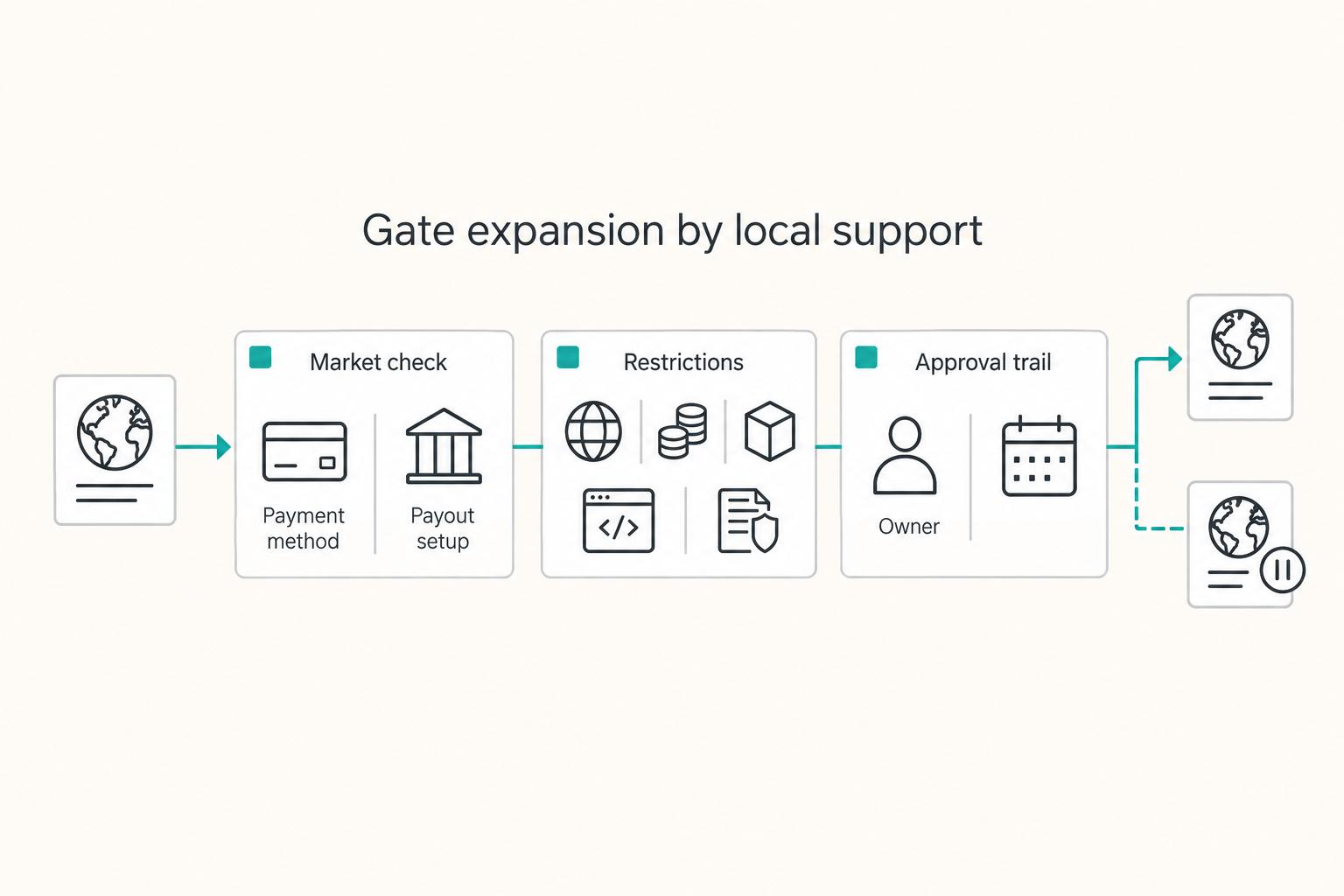
For cross-border platforms, add a governance gate before scaling expansion motions into new markets or programs. Payment methods can carry country, currency, product, API, and compliance restrictions, and platform coverage and payout requirements vary by jurisdiction.
If an expansion offer depends on a new payment method, payout setup, or market launch, confirm local support and restrictions before rollout. Keep an audit trail of what market or program was checked, what restrictions were found, who approved the decision, and when.
We covered this in detail in Choosing Between Subscription and Transaction Fees for Your Revenue Model.
Spot false signals that make negative churn look better than it is#
Do not treat Net Revenue Retention alone as proof of durable expansion. The most common false signal is reported expansion that comes from accounting treatment rather than real recurring customer growth.
| Check | What to verify | Why it can mislead |
|---|---|---|
| Discount expiry | Whether the MRR lift came from discount expiry rather than usage, seats, or product adoption | The end of a temporary discount can lift MRR and resemble Expansion Revenue |
| One-time charges | Whether one-time line items are fully excluded from recurring expansion | One-time line items do not belong in recurring revenue calculations |
| Concentration risk | Whether the net negative churn story still holds after removing the top outlier accounts | A few large Upgrades can offset broader downgrades or loss |
Start with discount handling. Because MRR is offset by discounts, the end of a temporary discount can lift MRR and resemble Expansion Revenue even when usage, seats, or product adoption did not change. Treat that lift as a pricing effect unless finance can trace it to a true recurring change. Apply the same rule to non-recurring work: one-time line items do not belong in recurring revenue calculations, so blending them into expansion overstates performance.
Then check concentration risk. Strong net retention can coexist with underlying weakness when a few large Upgrades offset broader downgrades or loss. Read Gross Revenue Retention alongside net retention for this reason: GRR excludes expansion and shows whether the base is holding. You can see 95% gross retention and 110% net retention in the same period, so the pair matters more than either metric alone.
Before you accept a strong month, run three checks:
- Did expansion come from real product growth, or mostly from discount expiry and billing cleanup?
- Are one-time charges fully excluded from recurring expansion?
- If you remove the top outlier accounts, does the net negative churn story still hold?
Execute a 90-day sequence to improve negative churn outcomes#
Run this in three gates: baseline first, then test, then scale. Start with retention truth, not an upsell push.
| Window | Focus | Key actions |
|---|---|---|
| Days 1-30 | Baseline | Lock one shared monthly baseline for Gross Churn, Net Churn, and Net Revenue Retention; run cohort analysis by start month, plan, or recent pricing change; fix instrumentation if contraction reasons are vague or inconsistent |
| Days 31-60 | Test | Run small, targeted Add-on and Upgrade tests; define the affected cohort, expansion hypothesis, expected lift in expansion revenue, and the maximum acceptable churn movement; keep scope tight so attribution is clear |
| Days 61-90 | Scale | Scale only motions where expansion outpaces churn in affected cohorts; make a go/no-go decision; continue, redesign pricing or packaging, or pause and fix retention fundamentals based on cohort results |
Days 1-30#
Lock one shared monthly baseline for Gross Churn, Net Churn, and Net Revenue Retention across finance, product, and revenue. Use Gross Churn to see unsmoothed revenue loss, then read Net Churn and NRR next to it, not as substitutes.
Then run cohort analysis by start month, plan, or recent pricing change to find where cancellations and downgrades cluster. If contraction reasons are vague or inconsistent, stop here and fix instrumentation before running expansion tests.
Days 31-60#
Run small, targeted Add-on and Upgrade tests with clear pass/fail criteria tied to churn and expansion in the same cohort. Define up front: affected cohort, expansion hypothesis, expected lift in expansion revenue, and the maximum acceptable churn movement.
Keep scope tight so attribution is clear. If conversion rises but later plan step-downs or exits rise in that cohort, treat it as a weak or failed result.
Days 61-90#
Scale only motions where expansion outpaces churn in affected cohorts. Do not scale based on top-line movement alone.
Close day 90 with a go/no-go decision:
- Continue when expansion is durable and cohort churn is stable or improving.
- Redesign pricing or packaging when add-ons/upgrades convert but are followed by step-downs.
- Pause and fix retention fundamentals when exits remain concentrated in early cohorts.
Related reading: How to Use a Community to Reduce Churn and Increase LTV.
Conclusion#
Net Negative Churn is not something you hit by accident. It is usually the visible result of three quieter disciplines working together: pricing that matches value, product execution that creates real expansion paths, and metric verification tight enough to separate signal from noise.
That matters because a healthy-looking top line can still hide risk. Strong Monthly Recurring Revenue growth, or even Net Revenue Retention above 100%, does not automatically mean the base business is healthy if Gross Churn stays elevated or contractions are being offset by a small number of upgrades. Churn and contraction often point back to product value, pricing, or customer experience, so the metric is only useful if you treat it as an operating check, not a victory lap.
The most practical next step is simple: get finance, product, and revenue operations to lock definitions this month, then test one expansion motion under controlled conditions. Use the same customer cohort throughout the review period, and keep the calculation recurring-only. That means excluding one-off services, temporary fees, and other non-recurring payments from churn and retention math. If your team cannot answer whether a line item came from an existing account and whether it is truly recurring, it should not shape a decision yet.
A good checkpoint is to review these together from the same evidence pack:
- Gross Churn
- Net Churn
- Net Revenue Retention
- expansion source by account or plan change
- contraction and account-loss reasons in affected cohorts
That combination helps you avoid a key blind spot: expansion can lift net retention while underlying churn or contraction risk remains. If plan step-downs rise after the test, pause and inspect packaging, value communication, and account fit before you scale. If Gross Churn stays stable and NRR improves on the same cohort, you have a much stronger case that the motion is real.
So the takeaway is straightforward. Do not chase the label. Build the conditions that make it credible: shared definitions, cohort-consistent measurement, recurring-only revenue treatment, and cautious rollout based on what happens to Gross Churn and Net Revenue Retention together.
If you need traceable payments and reconciliation infrastructure to support those decisions across markets, talk to Gruv to confirm coverage where supported.
Frequently Asked Questions
What is Net Negative Churn in plain terms?
It means revenue from existing customers grew even after you account for churn and contraction. More specifically, expansion revenue from the customers you already have is greater than the revenue you lost from churn.
How is Net Negative Churn different from Net Revenue Retention?
Net Negative Churn is a condition: expansion from existing customers exceeds churned revenue. Net Revenue Retention is the broader metric that tracks retained, contracted, and expanded revenue from existing customers over a set period, typically one month or one year. That is why NRR can range from 0% to well above 100%.
Can a platform still grow if Gross Churn is high?
Yes. It can still grow on the existing base if recurring expansion outpaces those losses. But a high gross number is still a warning signal, because that view shows revenue lost without the smoothing effect of upsells or add-ons. If those losses stay elevated, do not treat a strong net result as proof that the base business is healthy.
What should count as Expansion Revenue and what should not?
Count incremental recurring revenue from existing customers, such as upsells, cross-sells, add-ons, and similar expansion motions. Do not include revenue from newly acquired customers, and do not mix in non-recurring payments or one-off services. A simple check is to ask two questions for every line item: did it come from an existing account, and is it truly recurring?
Should we focus on reducing Customer Churn or driving Upgrades first?
Treat this as a both/and decision, not a permanent either/or. Some churn is inevitable, and expansion from existing customers can offset losses when it is recurring and executed well. Review churn and expansion together so a strong net result does not mask persistent gross losses.
How often should finance and product review churn and expansion metrics together?
Use the same review window you use for NRR, typically one month or one year. The exact cadence can vary, but review the metrics together from the same pack, with shared definitions for Gross Churn, Net Churn, and Expansion Revenue. If finance and product are looking at different inclusion rules, your comparison is not reliable yet. If your team keeps tripping over metric definitions, a short glossary can help align the language before the next review. SaaS Revenue Metrics Glossary: MRR ARR Churn NRR LTV CAC Explained for Platform Operators.
Try a related tool
Researched and edited by the Gruv editorial team. Gruv builds cross-border billing, payouts, and finance-operations software for global businesses.
Sources
Includes 6 external sources outside the trusted-domain allowlist.
- stripe.com/resources/more/how-to-use-monthly-recurring-...trusted
- stripe.com/resources/more/expansion-mrr-explainedtrusted
- baremetrics.com/blog/negative-churnexternal
- baremetrics.com/blog/gross-churn-vs-net-churnexternal
- chartmogul.com/blog/negative-churnexternal
- chartmogul.com/saas-metrics/customer-churnexternal
- churnzero.com/churnopedia/negative-churnexternal
- corporatefinanceinstitute.com/resources/valuation/nrr-meaning-calculation-...external
Educational content only. Not legal, tax, or financial advice.
Related Posts
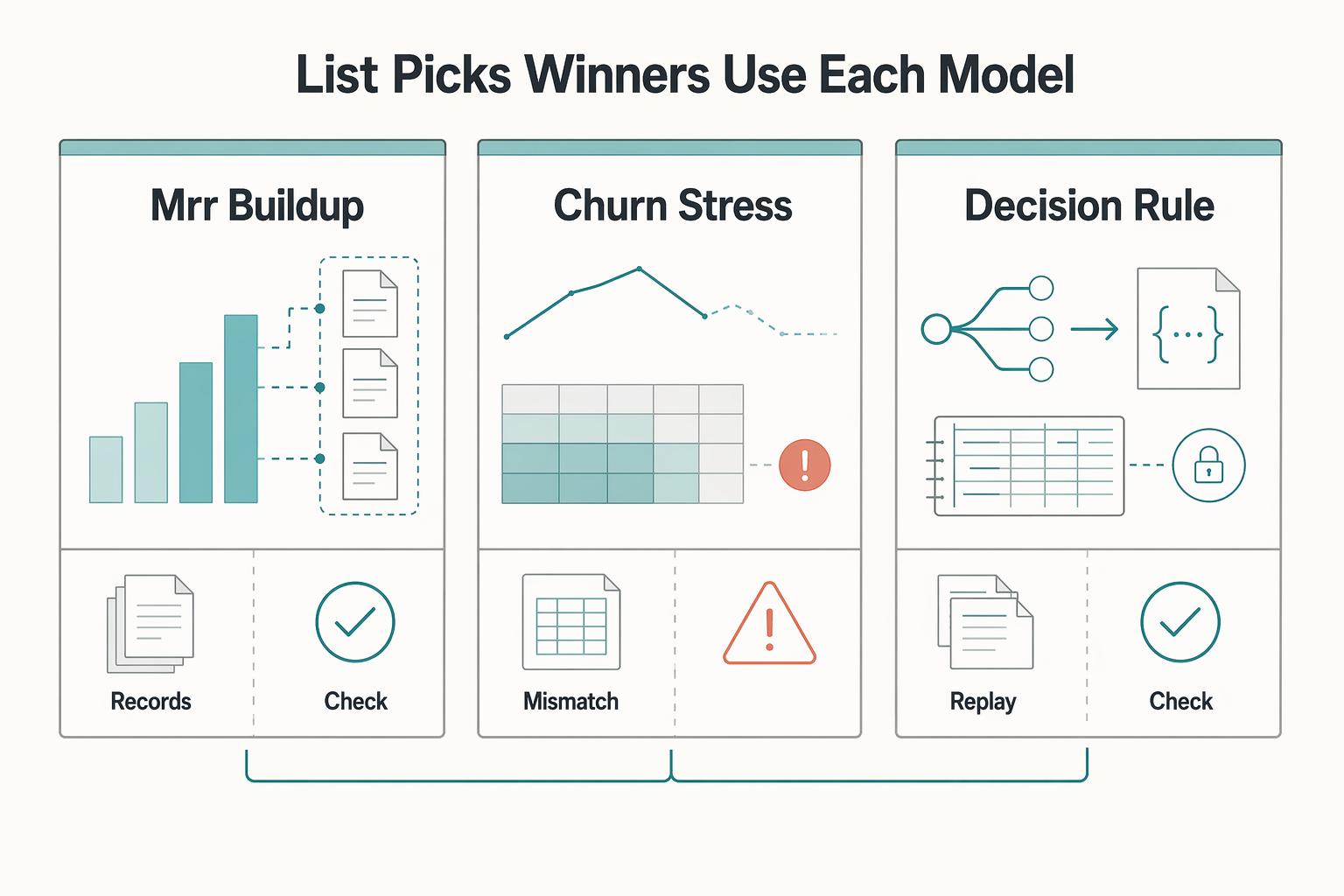
Subscription Revenue Forecasting for Platform Teams Modeling MRR Churn and Expansion
A usable forecast starts with shared definitions, not sharper formulas. If finance, ops, and product define MRR, Expansion MRR, or churn differently, the model can look precise and still fail the first serious review.
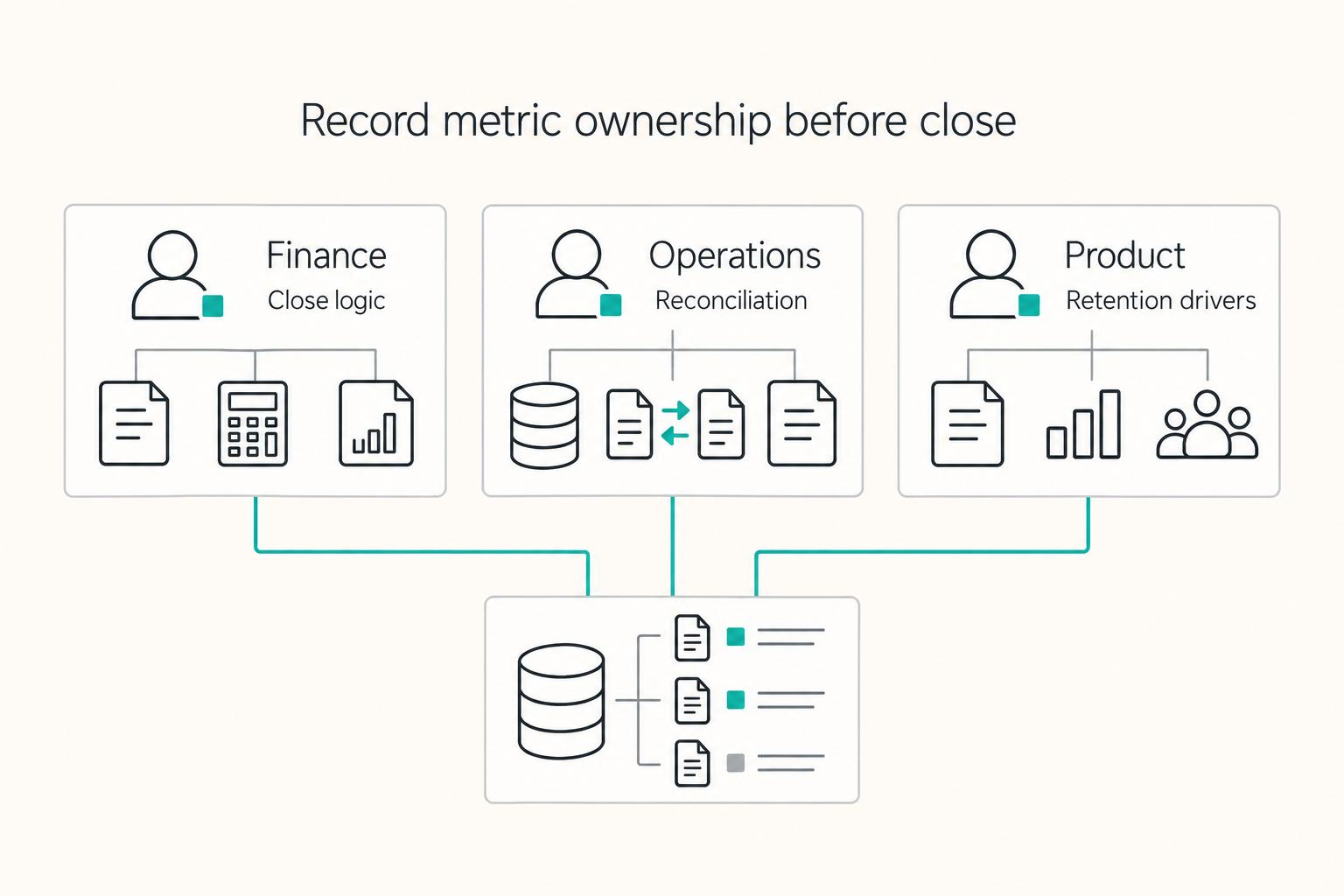
SaaS Revenue Metrics Glossary for Platform Operators
This glossary is for platform operators, not a generic SaaS KPI refresher. If your team owns the ledger, reconciliation, settlements, or payout execution, the real question is not what MRR or NRR means in theory. It is whether the number can be tied back to source records, period cutoffs, and settlement evidence before it reaches board reporting.
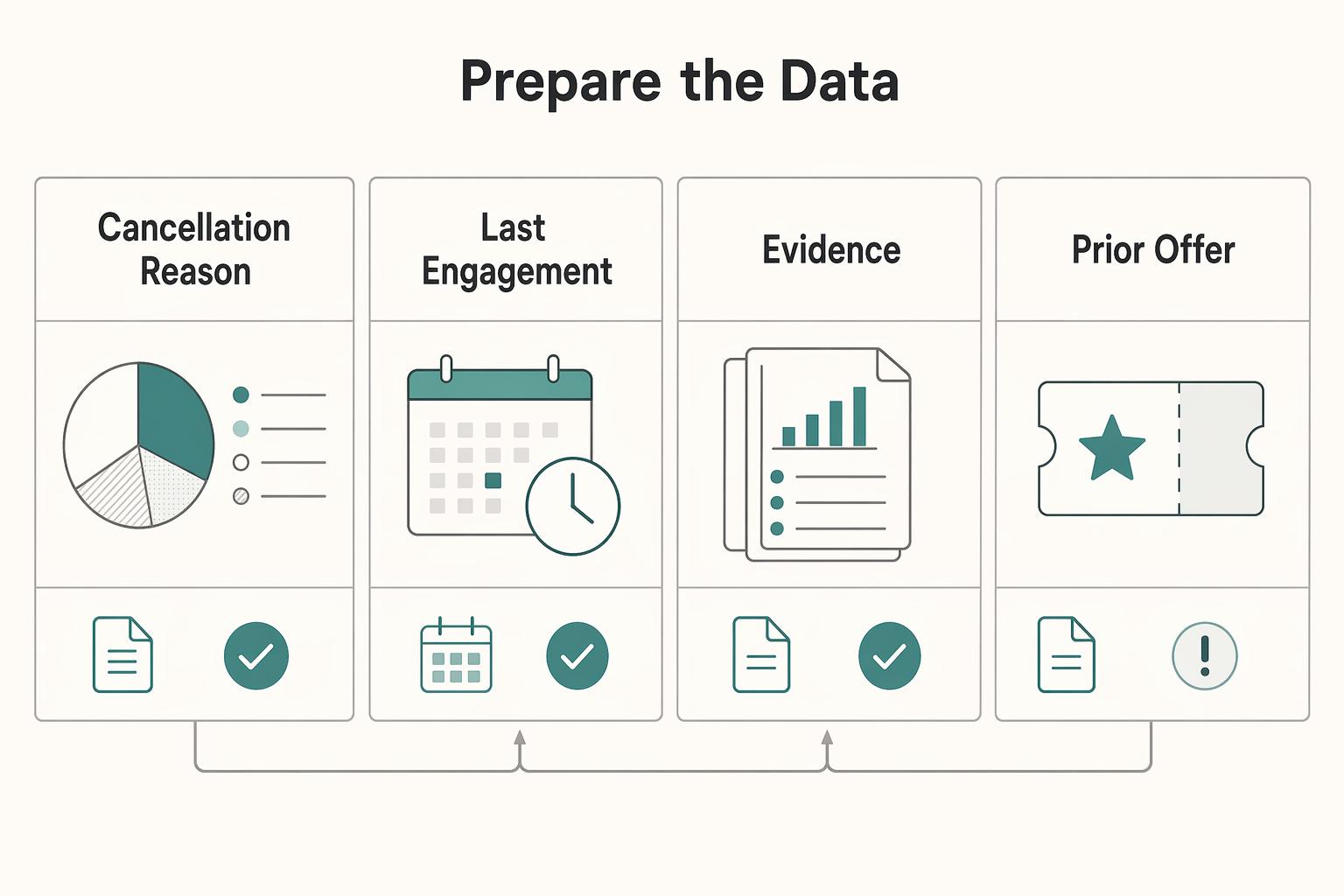
Win-Back Campaigns That Reactivate Churned Subscribers Without Margin Loss
Assume from the start that a win-back flow can lift reactivations and still be a bad trade. If you do not measure what those returns cost in incentives and short-term re-churn, you can end up celebrating activity that does not help the business.