
Quick Answer
MRR is the monthly-normalized active subscription run rate; ARR commonly equals MRR × 12. GRR excludes expansion and NRR includes it for the opening customer cohort. Calculate acquisition economics on a consistent gross-profit basis, and bridge subscription metrics to accounting and cash instead of requiring every movement to be settled.
Core SaaS Revenue Metrics#
MRR and ARR measure recurring subscription run rate, not cash collected or recognized accounting revenue. This glossary gives operators formulas, cohort boundaries and checks that explain differences between billing, accounting and settlement records.
Reconcile those views through a bridge rather than expecting equality. An annual invoice, a monthly recurring amount and this month’s cash receipt can all be different and correct. Investigate unexplained differences, not every timing difference.
The guide is simple: each metric gets a plain definition, then three operator checks that make it usable: the checkpoint to verify, the failure mode that commonly distorts it, and the decision trigger that tells you what to do next. A retention metric is not just a board slide label. It should tell you whether to investigate churn in a cohort, tighten reconciliation logic, or hold back on a growth decision until exceptions are cleared.
You should also assume labels and formulas will vary across companies. There is no single formula standard that every SaaS business follows, and definition drift gets worse as pricing, contracts, and product complexity increase. ARR definitions drift, and NRR calculations vary across teams. That is why leadership teams need a written KPI glossary before they rely on these numbers in finance workflows, board decks, or investor updates. If finance, ops, and product are each using slightly different assumptions, the conflict usually shows up late in reporting workflows, when it is harder to fix.
Write down each metric’s inclusions, exclusions, source systems and approval owner. For cash and payout reporting, use the relevant provider and bank reconciliation records. Subscription run-rate metrics also need active-contract and billing history, even when no payout occurs that month.
The rest of the piece follows that same operator-first logic. We start with the core glossary. Then we show how the metrics interact, where teams misread them, and how to run a monthly close checklist when the numbers need to hold up under scrutiny.
This pairs well with our guide on Revenue Recognition for SaaS Companies Under ASC 606.
The glossary baseline every operator should align before reporting#
Agree definitions and periods before reporting. The formulas below use an active-subscription run-rate convention and a gross-profit basis for acquisition economics; label any different convention explicitly.
| Term | One-line definition | Why ops cares | Common misuse | Formula or calculation convention |
|---|---|---|---|---|
| MRR | Monthly-normalized recurring subscription run rate from active customers. | Bridge active subscription amounts to billing and accounting; cash may differ. | Treating one-time fees or non-recurring items as recurring revenue. | Sum recurring charges normalized to a month, excluding one-time items and taxes; state discount and usage treatment |
| ARR | Annualized recurring revenue run rate, commonly MRR × 12. | A run rate, not a promise of next year’s receipts or recognized revenue. | Using total annual revenue as ARR. | MRR × 12 under the same scope |
| NRR | Recurring revenue retained from existing customers, including expansion and churn effects. | Depends on consistent expansion, contraction, and churn classification in source data. | Using it as if it were GRR. | (Opening cohort MRR − churn − contraction + expansion) ÷ opening cohort MRR × 100 |
| GRR | Recurring revenue retained from existing customers, excluding expansion effects. | Shows baseline retention without expansion masking contraction. | Including upgrades or cross-sells and still calling it retention. | (Opening cohort MRR − churn − contraction) ÷ opening cohort MRR × 100 |
| CAC | Average included acquisition cost per new customer in the defined cohort. | Channel or segment comparisons only work with consistent cost allocation. | Comparing CAC across teams that use different cost inputs. | Included sales and marketing costs ÷ new customers acquired; align cost and acquisition timing |
| LTV | Estimated lifetime gross profit per customer under the stated model. | Relies on churn and revenue inputs that must reconcile cleanly. | Using lifespan assumptions that are not explicit in the metric definition. | Simple steady-state estimate: monthly ARPA × gross margin ÷ positive monthly logo churn. Zero observed churn does not establish infinite LTV; use a supported lifespan or cohort model instead. |
| CAC payback | Estimated months to recover CAC from customer gross profit. | Separate modeled economic payback from actual cash recovery. | Reporting payback from incomplete acquisition costs. | CAC ÷ (monthly ARPA × gross margin), assuming stable revenue and positive monthly gross profit. If gross profit is zero or negative, ordinary payback is not defined by this formula. |
| LTV:CAC ratio | Relationship between customer lifetime value and acquisition cost. | Credible only when both sides use the same customer scope and definitions. | Treating it as a standalone health score. | Lifetime gross profit estimate ÷ CAC using matching cohorts and cost scope |
Logo churn is lost opening-cohort customers divided by opening customers. Gross revenue churn here includes lost MRR from cancellations and contractions, divided by opening-cohort MRR; some providers report cancellation-only churn, so name the convention. Both retention formulas exclude new customers. Specify how reactivations and currency changes are treated.
Lock the source records relevant to each metric and explain differences with accounting and cash. Publish supported metrics while labeling material unresolved limitations; a known settlement delay does not automatically invalidate the subscription run rate.
Bridge MRR and ARR to billing and accounting#
Trace MRR movements to effective subscription changes and the selected metric period. An upgrade may change the run rate before invoicing, payment or a revenue-recognition entry. Preserve those timing differences in the reconciliation bridge.
| Step | Action | Detail |
|---|---|---|
| 1 | Record the source event | new business, expansion, contraction, churn, or reactivation |
| 2 | Validate the subscription record | Effective date, recurring amount, discount, currency and billing interval |
| 3 | Apply the metric cut-off | Keep its period distinct from accounting recognition and cash timing |
| 4 | Roll up MRR | from approved recurring movements |
| 5 | Build ARR | annualized view of MRR, commonly MRR × 12 |
Use that order every period.
What counts as recurring#
Exclude one-time charges from MRR. Normalize billing intervals and apply a consistent policy for discounts and variable usage. Label contracted but not yet active revenue separately, rather than quietly adding it to the active run rate.
Reporting checkpoint before ARR narratives#
Tie opening MRR plus new, expansion and reactivation movements minus contraction and churn to closing MRR. Bridge that total to billed amounts, recognized revenue and cash where relevant, with explanations for timing, one-time items and other differences.
An unexplained subscription movement needs investigation. A missing cash receipt can instead be a collections issue; it does not by itself mean the MRR calculation is wrong.
Read churn NRR and GRR as retention quality not just growth optics#
Read retention quality through multiple lenses, not growth optics alone: logo churn tracks account loss, revenue churn tracks dollar loss, Gross Revenue Retention (GRR) isolates contraction by excluding expansion, and Net Revenue Retention (NRR) includes expansion.
| Metric | What it tells you | What it can hide |
|---|---|---|
logo churn | Percent of customers lost in a period | Losing a small number of high-value accounts |
revenue churn | Gross recurring revenue lost from cancellation and contraction under the chosen definition | A steady customer count can still mask material dollar loss |
Gross Revenue Retention (GRR) | Recurring revenue retained from existing customers, excluding expansion | Expansion is excluded, so compare GRR with NRR to see whether upsells offset losses |
Net Revenue Retention (NRR) | Recurring revenue retained from existing customers, including upgrades and churn effects | Expansion can make retention look stronger than the underlying base |
A stable logo base can still hide meaningful revenue churn if larger accounts are shrinking or leaving. That is why customer-count loss and dollar loss should be reviewed together, not separately.
Where NRR can flatter the story#
GRR can equal 100% when the opening cohort has no churn or contraction; it cannot exceed 100% under this convention. NRR can exceed 100% when expansion outweighs those losses. Neither includes new-customer revenue.
For illustration, an opening cohort with $20,000 MRR loses $1,000 to churn and $500 to contraction, then adds $2,000 in expansion. GRR is $18,500 ÷ $20,000 = 92.5%; NRR is $20,500 ÷ $20,000 = 102.5%. Another $3,000 from new customers raises total closing MRR to $23,500, but stays out of both retention calculations.
Use this operating rule: if NRR looks healthy while GRR weakens, treat it as a retention issue first and investigate product and pricing before scaling acquisition. Review both metrics for the same period and check whether the gap is broad-based or driven by a narrow upgrade set.
Use cohort analysis to find the real churn problem#
Cohort analysis makes retention trends practical by segmenting customers and tracking each segment over time. Use it to separate onboarding-era churn from mature-account churn so interventions are targeted instead of generic.
If losses cluster early, prioritize onboarding and activation fixes. If mature cohorts contract, investigate pricing and product durability. For monthly review, keep one shared pack with cohort start revenue, logos, losses, contractions, and expansion by account tier.
Use CAC LTV and payback to decide growth pace responsibly#
Set growth pace by reading CAC, LTV, CAC payback, and LTV:CAC ratio together, not one at a time. A channel can look strong on LTV:CAC and still strain cash if payback is slow.
Use gross profit consistently when comparing CAC payback and LTV:CAC. Revenue-only lifetime value overstates the money available to recover acquisition cost if service delivery has meaningful costs. Keep an observed cash-recovery schedule separately when prepayments or credit terms affect liquidity.
Read the chain as one operating decision#
Burn multiple is net operating cash burn over a period divided by net new ARR over that same period. Exclude financing inflows from operating burn. Zero or negative net new ARR makes the ordinary comparison undefined or misleading; show the components instead of ranking a negative ratio as efficient.
Set a payback target from margin, contract length, retention and available cash. A twelve-month target can be an internal planning choice, but it is not a universal viability boundary.
Keep the early-stage caveat in view#
Early-stage SaaS often misses standard metric guidelines even when the business is healthy, and early acquisition spend can arrive before recovery. Use that context before treating any single period as proof that a channel is broken or ready to scale.
Before comparing segments or channels, lock your CAC inclusion rules for the period and keep them consistent. If cost allocation shifts between reviews, the comparison can look better or worse without any real operating change.
Use a segment/channel grid for budget calls#
Make budget decisions on recovery speed and durability, not top-line volume alone.
For each segment or channel, compare CAC, CAC payback, LTV, LTV:CAC, retention trend, and burn-multiple impact together. Add budget when recovery and retention hold; slow spend when payback stretches and capital intensity rises.
For cross-row comparison, keep the same metric definitions and cost-inclusion rules across rows. Prioritize rows with faster, more durable recovery under consistent measurement.
If payback is stretching, burn multiple is worsening, and retention is not offsetting the pressure, pause growth spend and fix unit economics first. For a step-by-step walkthrough, see How Solo SaaS Operators Use RevOps to Stabilize Revenue.
Assign metric ownership so finance ops and product stop debating definitions mid-close#
Assign a named owner and reviewer to each metric. Mark unsupported or materially uncertain figures provisional; supported metrics can still be reported with their limitations and an exception log.
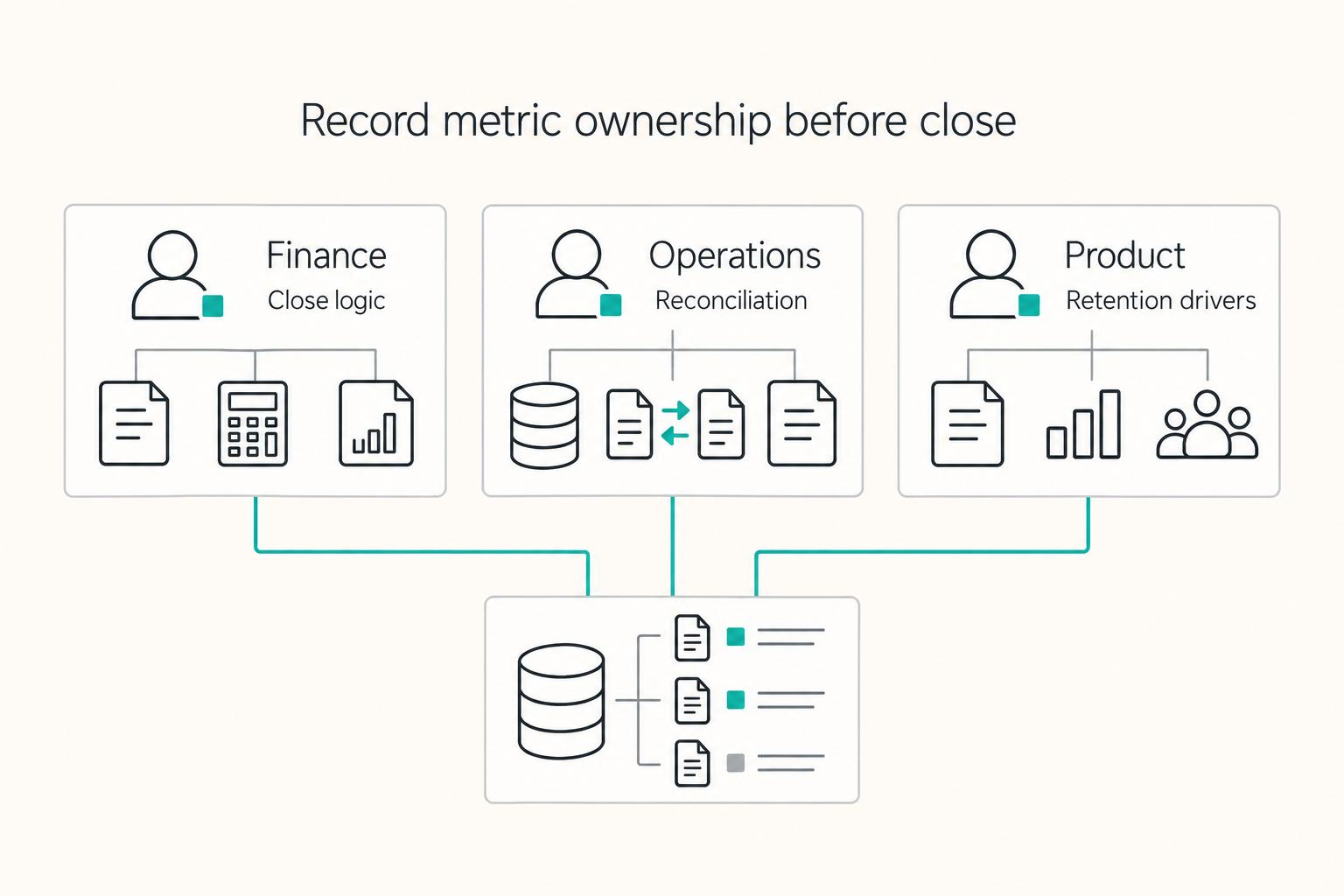
A workable model is to assign both a business owner and a data steward for each metric. One practical split is finance for close logic on MRR and ARR, operations for reconciliation integrity, and product for the drivers behind NRR, GRR, and churn. That is an accountability choice, not a universal org rule.
| Metric area | Primary owner | What they own |
|---|---|---|
| MRR and ARR | Finance | Close logic, period cut-off, inclusion rules, reporting approval |
| Reconciliation integrity | Operations | Source-to-ledger tie-out, exception handling, evidence completeness |
| NRR, GRR, churn drivers | Product | Retention analysis, expansion/contraction drivers, corrective actions |
Set two cadences: weekly operating checks and a monthly formal lock. Weekly reviews catch movement in churn, contraction, and expansion early; monthly close finalizes what is fit for board reporting after review and approval.
Keep the definition version, relevant source extracts, reconciliation bridge, exception log and sign-off. Include ledger and settlement evidence for the accounting and cash views where relevant, without demanding a new accounting entry for every subscription state change.
Catch the failure modes that make good metrics lie#
Check both formulas and data. A correct event count can still produce a misleading metric if the denominator, cohort or gross-margin assumption is wrong.
| Area | Failure mode | Check |
|---|---|---|
| Revenue and reconciliation | Duplicate events can inflate recurring revenue movement; timing differences, errors, and fraud can create reconciliation discrepancies between transaction and accounting records | Compare unique subscription changes and closing balances; separately reconcile accounting and payout records with a documented bridge |
| Retention optics | Stable logo churn can hide revenue loss; NRR and GRR interpretation is weak without segment and movement-type attribution | Break movements out by segment and by movement type: cancellation, downgrade, and expansion |
| CAC comparisons | Channel CAC comparisons fail when one view includes full sales and marketing costs and another uses only partial spend | Keep included costs, time window, attribution rule, and new-customer count source explicit; do not rank channels if allocation logic is not consistent |
Revenue and reconciliation traps#
Compare unique subscription movements with the closing active-customer records. Deduplicating delivery events alone is not enough: two different notifications can describe the same business change, while a pending event can still need processing after a crash.
Treat duplicates as a workflow risk, not just an instrumentation issue. Duplicate payments can emerge across normal invoicing, billing, and payment workflows, so they can flow into reporting until reconciliation catches them.
ARR is a subscription run rate. Reconcile accounting and cash separately, and explain any relevant differences. Unsettled funds can affect liquidity while leaving a correctly measured active recurring amount unchanged.
Manual and instant Stripe payouts require balance reconciliation rather than the automatic payout report’s transaction-batch allocation. Investigate unexplained cash differences promptly, but do not apply an unsourced fraud-loss percentage to every mismatch or use payout timing as the ARR definition.
Retention optics that hide the real loss#
Retention can look healthy in customer counts while worsening in revenue terms. You should separate the loss of many low-spend customers from the loss of a few high-value customers, so do not treat stable logo churn as enough on its own.
Make cohort attribution a reporting gate. If you cannot break movements out by segment and by movement type (cancellation, downgrade, expansion), your NRR and GRR interpretation is weak.
CAC comparisons that are not apples to apples#
Customer Acquisition Cost (CAC) is only comparable when cost allocation is consistent across channels. The common failure is comparing channel CAC where one view includes full sales and marketing costs and another uses only partial spend.
Use one decision rule: if allocation logic is not consistent, do not rank channels or reallocate budget from that comparison. Keep the channel evidence pack explicit on included costs, time window, attribution rule, and new-customer count source.
Before reporting, run a stop-ship check:
- Unexplained differences affecting the metric’s source records or calculation.
- Unclear cohort boundaries, denominators, currencies or cost allocation.
- Material uncertainty that changes the reported conclusion.
- Cash or accounting exceptions shown separately with owners and expected resolution.
Decide which figures each exception actually affects. Hold unsupported figures or label them provisional; disclose explainable timing differences without withholding otherwise supported metrics.
Build a monthly metric close checklist your team can actually run#
Run month-end metrics like a controlled release: lock inputs and definitions first, then prove movements, then discuss performance.
| Step | Focus | Key details |
|---|---|---|
| 1 | Lock the period and source extracts | Freeze relevant source snapshots and definition versions; include billing, accounting and settlement views where relevant |
| 2 | Tie out MRR, churn, and retention with exception tags | Validate active recurring movements and cohort denominators; bridge to accounting and cash rather than requiring equality |
| 3 | Review efficiency metrics with constraints | Review CAC payback, LTV:CAC ratio, and burn multiple after tie-outs are stable; use the 3:1 LTV:CAC benchmark as context, not an automatic pass/fail rule |
| 4 | Publish the board pack with approvals and unresolved actions | Include an approval trail, caveats on known constraints, and an exception log with owner and target resolution date; keep the period locked |
1) Lock the period and source extracts#
Save fixed extracts with timestamps, owners and definition versions. Keep reported snapshots unchanged. If an error appears later, follow the correction and restatement process, retaining the original and corrected versions rather than silently overwriting history.
2) Tie out MRR, churn, and retention with exception tags#
Validate the recurring movement bridge: opening MRR + new + expansion + reactivation − contraction − churn = closing MRR. For retention, use only the opening cohort and the stated reactivation policy. Explain differences from invoices, accounting entries and cash instead of forcing unlike totals to match.
3) Review efficiency metrics with constraints#
Review modeled gross-profit payback and LTV:CAC with the assumptions visible, and compare them with actual cash recovery. A 3:1 ratio is a contextual heuristic, not proof of viability. Check burn-multiple components and denominator before using it to judge growth efficiency.
4) Publish the board pack with approvals and unresolved actions#
Publish the final board reporting pack with an approval trail showing financials were reconciled, supported, reviewed, and approved. Include caveats on known constraints, plus an exception log with owner and target resolution date. Store the final close artifacts and keep the period locked to prevent silent post-close changes. If anomalies remain unresolved, mark affected metrics provisional and carry follow-up actions into the next close.
Conclusion#
The useful version of a SaaS metrics glossary is not a page of definitions. It is a set of definitions tied to named owners, evidence, and decision checkpoints that hold up during the monthly close. Without that, MRR, ARR, NRR, GRR, CAC, and LTV can turn into debate topics instead of operating signals.
That matters because formula drift is not a cosmetic problem. When teams use inconsistent definitions, it becomes hard to compare internal performance against external benchmarks, and harder to make confident capital allocation decisions. Standardization is the first step, not because it makes the numbers look cleaner, but because it gives teams a shared language for what changed and why.
Run one reporting cycle with stable definitions, relevant source snapshots and a bridge between subscription, accounting and cash views. Escalate unexplained differences and label material uncertainty. A reported metric should say what it measures without pretending all those views are identical.
Checklist discipline is what makes this repeatable. A standardized month-end close checklist can improve accuracy, save time, and make the close more predictable, but only if you define what "done" means in your environment. A practical evidence pack can include the current definition version, source-system extracts, reconciliation notes, open exceptions, and sign-off. A common failure mode is shared ownership where everyone can explain the metric but no one is accountable for proving it.
Once that foundation is stable, resist the urge to keep adding more KPIs. The better next step is to improve the depth of the metrics you already trust. Refine assumptions and analysis only after the core numbers are consistently reconciled and period-locked. If a metric does not directly help you change revenue or reduce cost, it is probably not the next one to improve.
If you want one concrete action from this guide, make it this: complete a single monthly close cycle where every reported metric is definition-locked, owner-backed, and evidence-supported. After that, you are in a stronger position to improve forecasting and board reporting with fewer definition debates. For the next step after that, move into Subscription Revenue Forecasting: How Platforms Model MRR Growth Churn and Expansion.
Frequently Asked Questions
What is the practical difference between Monthly Recurring Revenue (MRR) and Annual Recurring Revenue (ARR) for platform operators?
MRR is the monthly-normalized active recurring subscription run rate. ARR commonly annualizes it as MRR × 12. Neither is automatically equal to billed cash or recognized revenue; bridge those views and explain material differences.
Should teams prioritize logo churn or revenue churn first when retention signals conflict?
Do not pick one metric and ignore the other. Logo churn tells you how many customers left, while revenue churn tells you how much recurring revenue left. You need both for a complete picture. One failure mode is low logo churn coinciding with meaningful contraction in larger accounts, so when signals conflict, check cohort mix and account size before deciding where to intervene.
What does Net Revenue Retention (NRR) above or below 100% imply for operating decisions?
NRR above 100% means expansion from existing customers is outweighing churn and contraction within that base. Below 100% means the existing book is shrinking, and new logos are not part of that calculation, so you should not use new-customer growth to explain it away. The verification step is simple: confirm your NRR base excludes new-customer revenue, then read it alongside GRR because GRR excludes expansion and shows whether the core book is actually holding.
How do Customer Acquisition Cost (CAC), Customer Lifetime Value (LTV), and CAC payback work together in budget planning?
CAC estimates acquisition cost per customer; gross-profit payback estimates recovery time; gross-profit LTV estimates longer-term contribution. Use matching cohorts and cost scope, test the assumptions, and compare with actual cash timing. No universal twelve-month cutoff determines viability.
When is LTV:CAC ratio misleading, especially in earlier-stage operating models?
It gets shaky when you do not yet have a repeatable, scalable sales process. In that stage, acquisition-cost inputs and lifetime assumptions can move quickly, so treat LTV:CAC as directional rather than definitive. If churn history is still thin, lean more on observed payback and retention quality.
How often should Gross Revenue Retention (GRR) and NRR be reviewed for finance and product teams?
There is no single mandatory cadence for every company. NRR is commonly evaluated over recurring periods such as monthly or annual windows. Use a cadence you can support with stable definitions and current cohort data, and read GRR with NRR so expansion does not hide pressure in the core retained book.
Try a related tool
Researched and edited by the Gruv editorial team. Gruv builds cross-border billing, payouts, and finance-operations software for global businesses.
Sources
Includes 3 external sources outside the trusted-domain allowlist.
Educational content only. Not legal, tax, or financial advice.
Related Posts
The Best Analytics Platforms for SaaS Businesses
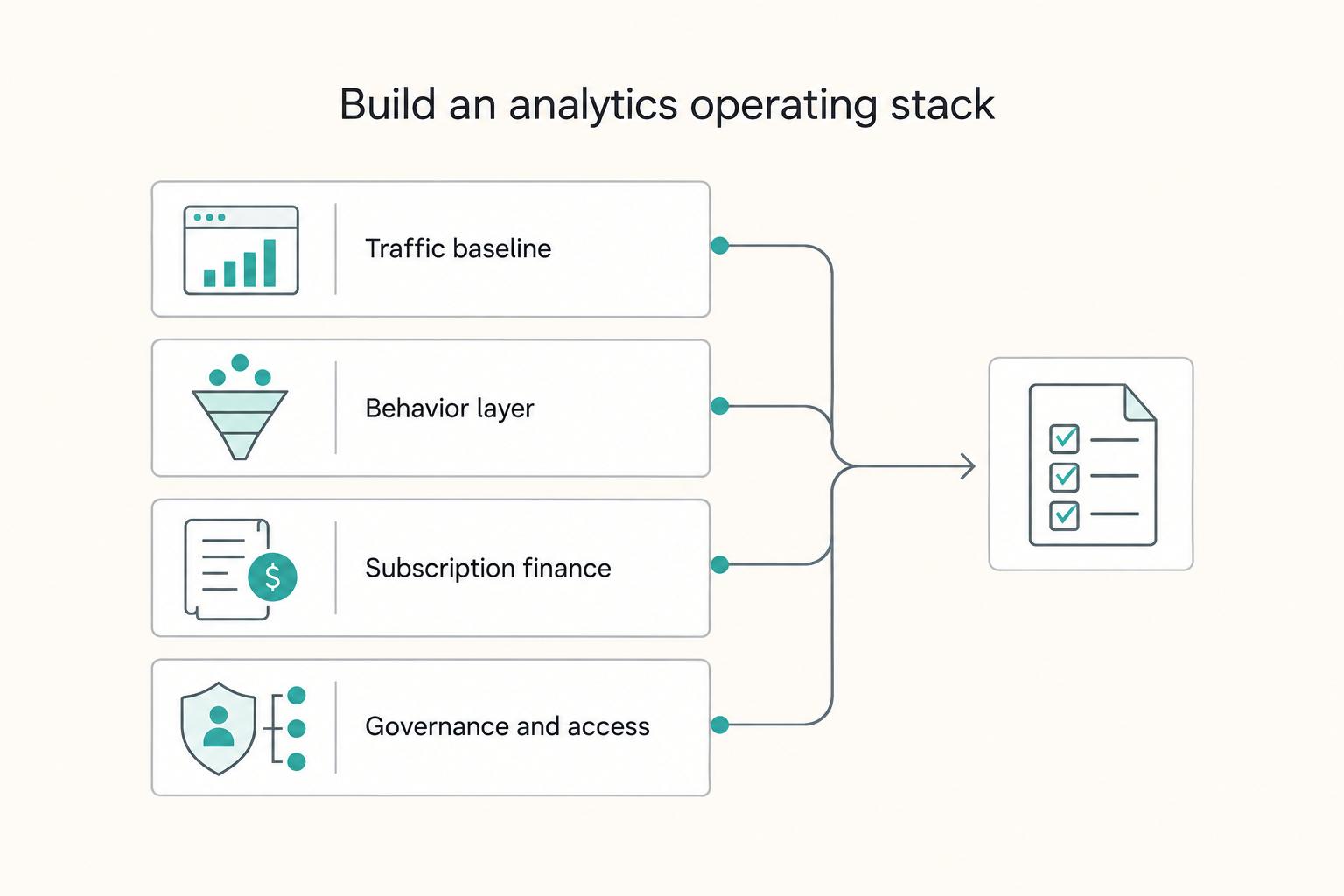
**Pick a SaaS analytics stack by role fit and decision ownership, not by the longest feature list.** Ad hoc dashboards drift when traffic, product, and subscription reporting split across tools, and decisions slow down.
Subscription Metrics MRR ARR and Churn for Better Pricing Decisions
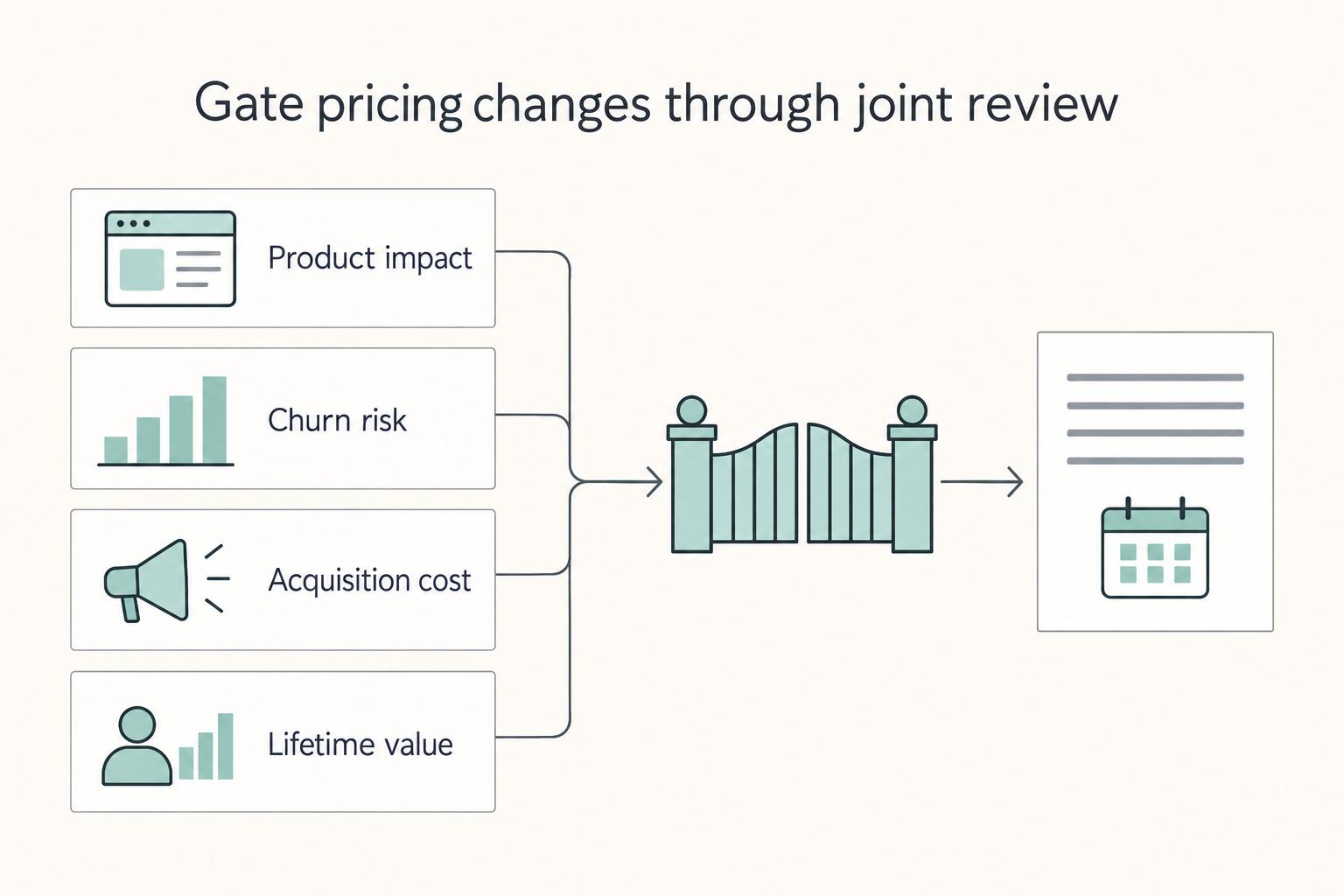
Recurring revenue is simple in principle: money your company receives on a regular basis. The trouble starts when clean definitions turn into messy decisions. Teams often track Monthly Recurring Revenue and Annual Recurring Revenue, but still make pricing, packaging, or customer-save calls without enough context.
Subscription Revenue Forecasting for Platform Teams Modeling MRR Churn and Expansion
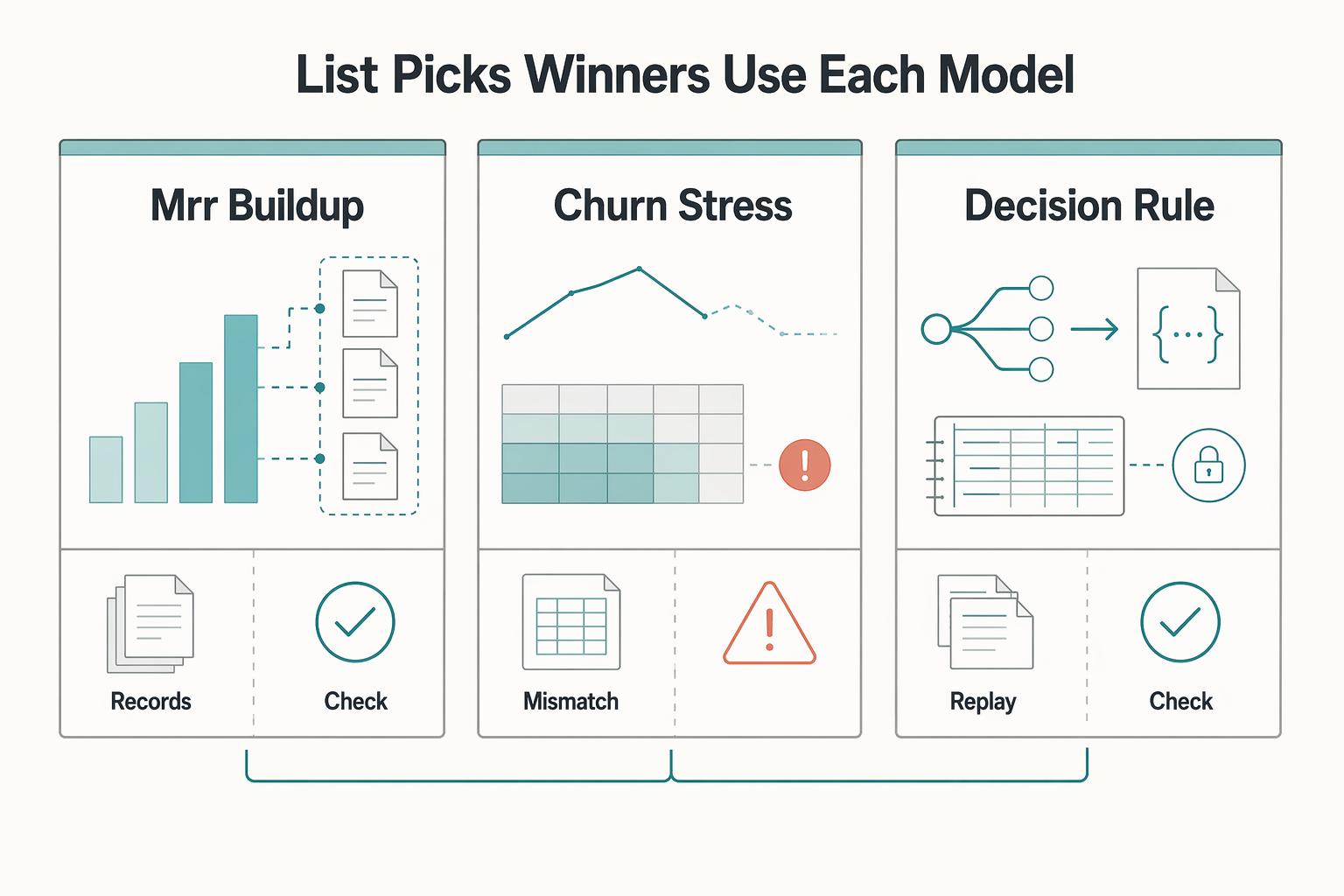
A usable forecast starts with shared definitions, not sharper formulas. If finance, ops, and product define MRR, Expansion MRR, or churn differently, the model can look precise and still fail the first serious review.