

Quick Answer
Choose invoice currency from buyer expectations, your functional currency, and the supported settlement path. USD can simplify dollar-based workflows; local currency can reduce in-country buyer friction. Require a pre-send approval gate comparing contract currency, invoice currency, and payer setup. Keep settlement quotes separate from accounting translation rates, post transactions when they qualify for recognition, and retain override evidence so settlement and close can be explained.
Start with reconciliation, then choose the currency#
Picking invoice currency late is how ordinary cross-border billing turns into month-end noise. The decision to bill in USD or local currency belongs at the contract and account-policy stage, not after payment posts and reconciliation exposes the mismatch.
That sounds basic, but it is where cross-border billing either stays controlled or starts to drift. Currency choice is not just a formatting preference on the invoice. It can change who absorbs FX movement between invoice issue and payment, how easy the bill is for the payer to process, and how cleanly the transaction lands in reconciliation and reporting. The buyer side matters too. Local currency can make payment and account reconciliation easier for the counterparty, while a single billing currency may simplify the number of paths your team has to support internally.
This guide is for finance, operations, and product owners who need a practical answer: when should you invoice in USD, and when should you invoice in local currency? You are not choosing in the abstract. You are choosing across invoicing, settlement, and downstream reporting, usually while balancing buyer expectations, FX exposure, and the limits of your current implementation. If your team can support localized currency handling well, you have more room to optimize the buyer experience. If not, each extra currency option adds implementation and operational discipline.
Treating this as a last-mile billing choice is the main mistake. Teams should agree currency and payment terms early, ideally in the initial contract or commercial agreement, because exchange rate movement can change realized cost between invoice creation and payment processing. If you do nothing else after reading this article, make one person or team the clear owner of the invoice currency decision before you enable another local-currency flow.
The sections that follow stay close to execution. First, compare USD versus local currency with clear decision criteria. Then move into the areas that usually create avoidable exceptions: who can override invoice currency, how invoice currency maps to base currency, functional currency, and reporting currency, and which checks should happen before send and before close. The goal is to leave you with concrete rules, not just principles. Make a few checkpoints non-negotiable, especially verifying contract terms before invoice send and flagging cases where billing setup, payment profile, and reporting treatment do not point to the same currency outcome.
There is no universal winner here. The right choice is case by case, and common failures tend to look similar in hindsight: no owner, no approval path, and no agreed rule for how the invoice should behave once money actually moves.
USD vs local currency at a glance#
Use one default invoice currency when internal consistency is the main bottleneck, and local-currency lanes when buyer acceptance justifies them. USD can reduce currency paths when your billing and settlement flows are already dollar-based. For a EUR-functional business, a EUR default may do the same job. Compare the payer's conversion burden with your own settlement and reconciliation work before choosing.
| Decision criteria | Invoice in USD | Invoice in local currency |
|---|---|---|
| Buyer expectation | Strong for cross-border B2B and centralized treasury models | Strong where local procurement expects domestic billing |
| FX exposure owner | A payer with a different currency may face conversion; you may also carry FX exposure if your functional or settlement currency differs from USD | Payer conversion may fall; your exposure depends on functional currency, settlement currency, and agreed terms |
| AP friction | Simpler when global AP and settlement workflows already use USD | Lower in-country buyer friction, with more cross-entity control complexity |
| Reporting impact | Cleaner alignment when functional and reporting workflows are dollar-based | Requires tighter currency mapping and variance investigation |
| Operational risk | Fewer currency permutations and clearer policy enforcement | Better local acceptance, higher mismatch risk without strong controls |
If your operating model is already dollar-functional, USD is often a workable default. If AP is fragmented, first standardize currency ownership and mappings; fragmentation alone does not make USD the right choice. Use local-currency invoicing where buyer acceptance and supported settlement paths justify it.
Set one explicit policy rule before send: if contract currency, invoice currency, and payer profile do not point to the same outcome, route for approval. Currency choice should follow implementation capability as much as commercial preference, especially because FX movement between invoice issue and payment can change outcomes.
Start with the currency your billing, settlement, and close process can explain consistently. Add local-currency lanes where buyer friction warrants the extra conversion and exception controls.
Set currency policy before the first invoice goes out#
Set ownership and override rules before the first invoice goes out. Otherwise, currency choices drift into avoidable approval, settlement, and reporting issues. Treat customer currency preference, contract currency, and invoice currency as separate controls.
A customer can have a default currency while a one-off invoice uses another currency. That flexibility is useful, but only if override rights are explicit and limited.
| Stage | Control | Typical owner | Override guardrail |
|---|---|---|---|
| Account | Default customer currency / preference | Revenue ops or billing admin | Change infrequently and record why |
| Contract | Commercial currency in agreed terms | Sales with finance review | Use as primary invoicing source unless approved exception |
| Invoice | Currency used on this bill | Billing team (restricted overrides) | If it conflicts with contract terms or payer payment profile, route to approval before send |
If you support exception routing, use it. Exception-based approval flows can move invoices into pending approval and assign clear approvers, which is safer than relying on AP to resolve mismatches after send.
Split rules by commercial motion#
Use stricter defaults for standard terms and narrower, documented exceptions for negotiated paths.
- Standard public offer: follow default currency policy unless pre-approved.
- Private offer: allow contract-specific currency overrides only with named approval and settlement review.
Require evidence before approving exceptions#
Do not approve currency exceptions from informal requests alone. Define a minimum evidence pack for your team, such as requester, reason, expected settlement impact, and post-close review owner.
Before sending, run one check that compares contract currency, customer default currency, invoice currency, and payer payment profile. This catches a common failure mode: invoice-level overrides that do not match recurring setup, especially where ongoing subscription currency is constrained. Related: The Best Multi-Currency Accounts for Digital Nomads and Freelancers.
Standardize currency fields across AP, ERP, and reporting#
Field drift across billing, AP, enterprise resource planning (ERP), and BI creates avoidable close risk, so define currency fields once, assign ownership, and block posting when mappings conflict.
These fields are not interchangeable:
- Invoice currency: transaction currency shown on the invoice.
- Functional currency: accounting anchor in the entity's primary economic environment.
- Base currency: configured setup currency selected before transaction activity is saved.
- Reporting currency: representation of a primary or secondary ledger in another currency for reporting.
Put the definitions in one shared contract#
Use one internal contract so billing, ERP, and BI apply the same meanings. Keep invoice currency as a billing transaction field, and keep functional/base/reporting currency tied to entity or ledger setup.
| Currency field | Typical source system | System of record | Allowed transforms | Reconciliation owner |
|---|---|---|---|---|
| Invoice currency | Billing / invoicing platform | Billing record tied to issued invoice | Copy to ERP as issued; no BI reinterpretation | Billing ops with AP review |
| Functional currency | ERP legal entity or ledger setup | ERP | No invoice-level override; derive from entity or ledger configuration | Accounting or controllership |
| Base currency | ERP setup or subsidiary configuration | ERP | Master-data change only; not a transaction edit | ERP admin plus accounting |
| Reporting currency | ERP reporting ledger or consolidation layer | ERP / consolidation ledger | Translation from related ledger for reporting and consolidation use | Controllership / reporting owner |
This gives you a practical boundary: transaction fields stay with the invoice, and accounting or consolidation fields stay with the ledger. Reporting-currency structures should remain aligned with related ledger attributes.
Add a posting gate, not just a report#
Detecting issues after posting helps, but prevention is stronger. Add a hard validation rule that blocks posting until invalid or contradictory mappings are corrected.
Block posting when:
- invoice currency exists but legal-entity ledger context is incomplete
- reporting currency is treated like a transaction field instead of a ledger representation
- source-to-GL mappings are missing
- source-to-GL mappings point to mismatched entity or ledger setups
Review on a repeatable cadence#
Use a repeatable checkpoint cadence across close activities:
| Checkpoint | Action | Timing |
|---|---|---|
| Pre-close validation | Check source-to-GL currency mappings | Before close starts |
| Close-day exception review | Resolve blocked items first, then post | Close-day |
| Post-close root-cause tagging | Classify mapping failures to prevent recurrence | Post-close |
If you only tighten one control after policy setup, make it this: one shared field contract plus a posting block. We covered related reconciliation controls in How to Reconcile Multi-Currency Payouts Across Multiple PSPs in One Ledger.
Run invoice to settlement in the right order#
Complete currency and policy checks in draft, then finalize the invoice before collecting payment. Keep this billing sequence separate from accounting recognition: post the underlying transaction when it qualifies for recognition, then record payment, settlement, and any FX difference against that balance. A payment attempt is not the trigger for every journal entry.
| Stage | Action | State note |
|---|---|---|
| Draft | Complete currency and policy checks | Resolve commercial currency and amount changes before finalization |
| Finalized invoice | Use the issued invoice as the billing record | Finalized before sending and collection; corrections follow the supported adjustment process |
| Payment attempt | Attempt payment and track its outcome | After finalization; failed attempts do not settle the balance |
| Accounting and settlement | Recognize the transaction and later clear or adjust its balance | Recognition follows accounting criteria; payment and settlement are separate events |
Stripe invoices start as status=draft; finalization makes most amount and customer fields immutable and allows payment collection. Complete currency and amount checks before that boundary. If an issued amount needs adjustment, use the supported credit-note or replacement process rather than treating the finalized invoice as an editable draft.
Separate indicative rates from executable rates#
Do not treat all exchange rates as interchangeable. Keep indicative and executable rates as separate states with different allowed uses.
| Rate state | Use | Required record fields | Reject conversion when |
|---|---|---|---|
| Indicative | Estimates, previews, internal quoting | Source, timestamp, pair, state=indicative | It is presented as a settlement quote or proof of an executed conversion |
| Executable | Payment/settlement conversion | Source, timestamp, pair, execution state, linked payment/provider result | Execution evidence is missing or outside your freshness policy |
ECB reference rates are a clear example of indicative data: the ECB states they are for information purposes, not market transactions, calibrated to market conditions at 14:15 CET, and published around 16:00 CET on working days.
Make retries financially safe#
Use idempotency for payment and posting retries so replayed requests do not duplicate outcomes. Stripe returns the stored result for a repeated key, but keys can be pruned after at least 24 hours. Keep your own durable payout or payment-intent record and check the provider outcome before retrying beyond its retention window.
Apply that rule to both layers:
- Payment retries: reuse the same key and parameters within the provider retention window; recover the existing provider result before retrying an older uncertain request.
- Posting retries: detect replayed requests and refuse duplicate journal outcomes.
Common failure modes that break reconciliation#
Reconciliation breaks can begin before send: payer setup, rate method, and AP or ERP mappings may point to different outcomes. Check those fields together so downstream exceptions retain enough context to resolve.
| Failure mode | What usually breaks first | What to verify before send |
|---|---|---|
| Payer payment profile does not match invoice setup | Payment routing and AP review split into separate exception threads | Invoice currency, payer payment profile currency or method, legal entity, and PO currency if a PO is involved |
| Manual and automated currency conversion are both used | Reporting-currency close packs show unexplained variance | Whether the rate came from an ERP default or a transaction-level override, plus source, timestamp, currency pair, and approver |
| Local billing is chosen without AP/ERP field alignment | Settlement and accounting records do not match cleanly for confirmation | Mapping for invoice currency, functional/base currency, reporting currency, and settlement reference across billing, AP, and ERP |
Start with document matching. AP matching compares invoice, purchase-order, and receipt data, and differences can become matching discrepancies. If invoice terms, PO data, and payer setup conflict, route the invoice before finalization instead of leaving AP to reconstruct the agreed terms later.
Rate handling is the other repeat offender. NetSuite allows exchange rates on individual transactions, which is useful for approved overrides but risky when defaults and manual edits are mixed without controls. If you allow overrides, require a clear evidence pack: reason, approver, source, timestamp, currency pair, and expected reporting-currency impact. Without that, FX gain or loss can post at payment application with no clear explanation for why similar invoices settled differently.
If you want a deeper dive, read The Best Accounting Software That Handles Multi-Currency Invoicing.
Scenario-based recommendations for platform teams#
Match the default invoice currency to your operational bottleneck and actual currency exposure, then control exceptions tightly. Centralized close can favor one default currency, but that currency need not be USD. Local-currency lanes can help buyer acceptance when pricing, settlement, and rate controls support them.
Multicurrency accounting is more complex than single-currency accounting, and Oracle Payables can carry both functional and foreign currency into GL journal flow. That is why broad local-currency billing usually increases mapping and exception work for teams that close centrally in one functional currency.
| Scenario | Default invoice currency | Why it usually wins | Verify before send | Main red flag |
|---|---|---|---|---|
| Centralized global AP, one functional currency | Currency aligned with the agreed billing and settlement model; USD if dollar-based | Fewer currency permutations in AP review and reporting | Invoice currency, payer payment profile, PO currency, reporting mapping | Local-currency exception issued without approval and ledger mapping |
| In-country conversion or payout speed is the bottleneck | Local currency | More transparent local pricing and better alignment with payment localization | Rate source, timestamp, approver, and whether the rate is guaranteed, defaulted, or overridden | Team cannot explain which rate was used at invoice, payment, and posting |
| Mixed B2B model across segments and geographies | Split by segment and geography | Aligns policy to buyer and market realities without forcing one rule | Segment policy, contract currency, settlement path, exception owner | Same cohort handled differently across systems without a written rule |
If your provider offers a guaranteed-rate window, store its actual expiry and quote identifier. Record the settlement quote separately from the accounting translation rate or a manual override so the team can explain each rate before posting.
Treat tooling as capability, not policy. Supported currencies and invoice approval features can help execute the flow, but they do not replace a written policy for invoice currency, approvals, exceptions, and reporting behavior.
Decision checklist before invoice send#
Do not send the invoice until all four checks are explicitly green.
| Check | What to verify before send | Evidence or owner | Red flag |
|---|---|---|---|
| Invoice currency | Invoice currency matches contract terms and the approved currency preference or exception record | Contract, account setting, or approved exception note | Draft currency changed (for example, USD to local) with no approval trail |
| Base and reporting mapping | AP and ERP mappings are complete from invoice currency to functional currency and reporting currency | Mapping fields across billing, AP, ERP, and reporting outputs | Invoice can be sent, but posting or reporting translation is incomplete |
| Exchange rate method | Rate method, source, and timestamp policy are defined for this transaction type at invoice entry and payment | Rate record, transaction-date basis, and any override approval | Team cannot explain which rate was used at invoice entry vs payment |
| Ownership | Named owners are assigned for exceptions, reconciliation proof, and final settlement signoff | Approval route with a final approver | Commercial approval exists, but close evidence and settlement ownership are unclear |
The highest-risk checks are mapping and exchange-rate control. In Oracle Payables, functional currency is defined in setup; invoice distributions use the selected rate at invoice entry; foreign-currency payments use the rate entered at payment time; and foreign-currency invoices cannot be posted or paid without exchange rates. Use that as the pre-send gate: confirm rate state and ledger translation path before release.
If you report under IAS 21, paragraphs 21-22 tie initial recognition to the spot exchange rate at the transaction date. If manual overrides are allowed, require an override reason and timestamp in the invoice record. Block send when any of the four checks is unresolved.
Conclusion#
The pattern usually becomes obvious in the monthly review: the right approach is not USD everywhere or local everywhere. It is a decision policy you can apply before send, backed by explicit controls for conversion and reconciliation risk.
Use USD first when your operating context is dollar-functional and the agreed billing and settlement model supports it. Use local currency when it helps buyer acceptance or recipient reconciliation. Compare provider estimates and fees for the actual route before assuming that a currency choice will accelerate delivery.
What matters next is process discipline. The simplest checkpoint still does the most work: before posting, verify the selected invoice currency, the rate source, and the transaction date on the actual record, not just in policy docs.
Uncontrolled conversion makes close harder to explain. Invoice-to-payment timing can expose a balance to FX movement, while provider conversions may add fees or processing steps. If future-dated certainty matters, evaluate an explicit hedging mechanism rather than improvising rates invoice by invoice. Keep the exception record compact: requester, reason, affected currencies, settlement impact, and post-close owner.
Your immediate next step should be concrete:
- Put the USD vs local currency comparison table in front of the team that owns billing, AP, and close.
- Turn the pre-send checklist into a required control for any invoice where contract currency, payer preference, or settlement path do not align.
- Review the first month of exceptions and tighten policy where the same reconciliation issue repeats.
That sequence will not solve everything at once, but it will show you where your real operating model is. Once you can explain every override, every manual rate change, and every reconciliation break in plain language, your policy is probably strong enough to scale.
Frequently Asked Questions
When should we invoice in USD instead of local currency?
Use USD when it fits the agreed billing and settlement model, particularly for dollar-based workflows. Use local currency when it reduces buyer conversion or reconciliation friction and your systems can support the resulting rate and settlement controls. A single invoice currency can simplify operations, but USD alone does not eliminate FX exposure.
What is the minimum policy we need before enabling multi-currency invoicing?
Keep the policy small but explicit. At minimum, define how invoice currency and transaction exchange rate are set, including the transaction date used for the rate, and how exceptions are approved and documented. If those controls are still implied, do not enable it at scale yet.
Which currency fields must be standardized across AP, ERP, and reporting?
Standardize invoice currency, functional currency, base currency, transaction exchange rate, and transaction date. Under IAS 21, functional currency is the currency of the primary economic environment where the entity operates, and in NetSuite transactions post to the general ledger in base currency. If you also maintain a separate reporting currency, map that explicitly rather than letting BI infer it.
How do we reduce exchange-rate risk without slowing invoice operations?
Set FX policy before issuing invoices. Conversion is needed when currencies differ across invoice, settlement, or functional-currency accounting; cross-border activity alone does not always require it. Use an approved rate method and, where appropriate, hedging such as forward contracts. Verify rate timing and source when recognizing the transaction and again when recording settlement.
Why do multi-currency invoices fail reconciliation even when automation is enabled?
Because automation usually applies defaults, and defaults can be wrong for specific invoices. In NetSuite, the default transaction exchange rate is based on the currency selected on the related entity and the transaction date, so incorrect entity-currency data or date changes can propagate into downstream records. Another common failure is mixing automated conversion with manual overrides and then having no evidence of what changed or why.
Who should be allowed to override invoice currency and when?
Use a limited, clearly defined approval path for currency overrides, and only when there is a documented conflict with contract or settlement requirements. The stronger control is the evidence pack, not the title: record the reason, affected currencies, expected settlement impact, and who owns the close explanation. If overrides are frequent, fix the default policy instead of normalizing exceptions.
What should we audit monthly to keep multi-currency operations stable at scale?
Review overrides, manual rate edits, and changes to entity currency or transaction dates. Sample records across billing, AP, ERP, and reporting to confirm that currency mappings and rate logic agree. Investigate recurring exceptions before labeling them: a repeated issue may reflect mapping, data entry, contract terms, or provider processing.
Try a related tool
Researched and edited by the Gruv editorial team. Gruv builds cross-border billing, payouts, and finance-operations software for global businesses.
Sources
Includes 3 external sources outside the trusted-domain allowlist.
- data.ecb.europa.eu/key-figures/ecb-interest-rates-and-exchange-...trusted
- docs.stripe.com/invoicing/multi-currency-customerstrusted
- docs.stripe.com/payments/currencies/localize-pricestrusted
- ecb.europa.eu/stats/policy_and_exchange_rates/euro_referen...trusted
- support.stripe.com/questions/set-or-change-currency-for-an-invo...trusted
- asq.org/-/media/public/wqm/ASQ-WQM25_RCA.pdfexternal
- docs.aws.amazon.com/marketplace/latest/userguide/pricing-overvie...external
- docs.oracle.com/en/cloud/saas/netsuite/ns-online-help/sectio...external
Educational content only. Not legal, tax, or financial advice.
Related Posts

The Best Accounting Software That Handles Multi-Currency Invoicing
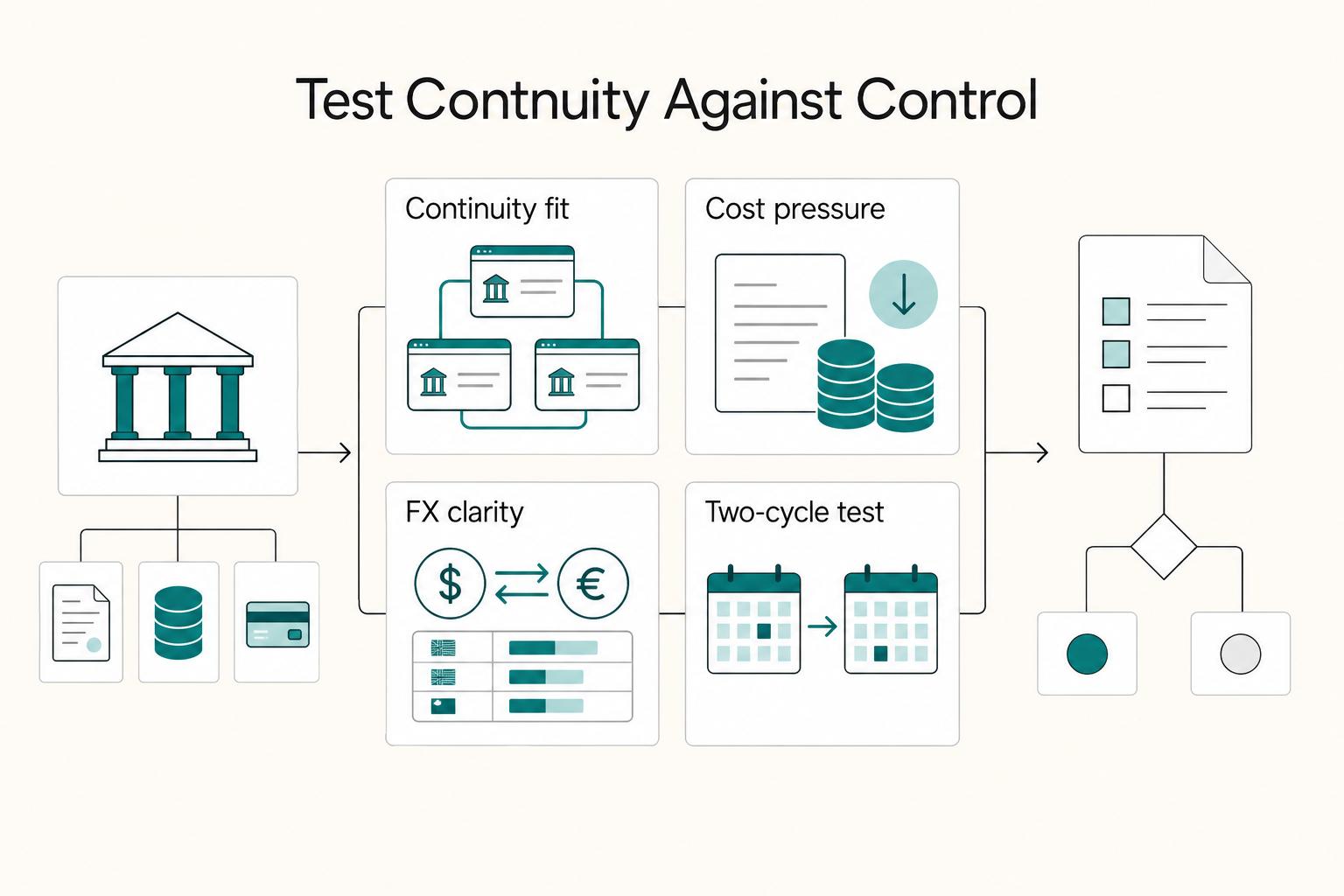
For a single business invoicing overseas clients, shortlist the multicurrency editions of Xero, QuickBooks Online, Zoho Books or Sage Accounting. The useful comparison is the supported workflow at the required subscription tier: issue an invoice, record the payment, explain exchange differences and reconcile the deposit. An attractive entry price means little when foreign-currency transactions require an upgrade.
Multicurrency Business Accounts for UK Freelancers and Small Companies
A multicurrency account can let a freelance business receive foreign client payments, keep the original currency and convert only the portion needed for local bills. The important choice is the exact product and market. A personal travel account, a UK business account and a US business edition can share a brand while having different eligibility, fees and protections.
How to Invoice as a Freelancer Without Chasing Late Payments
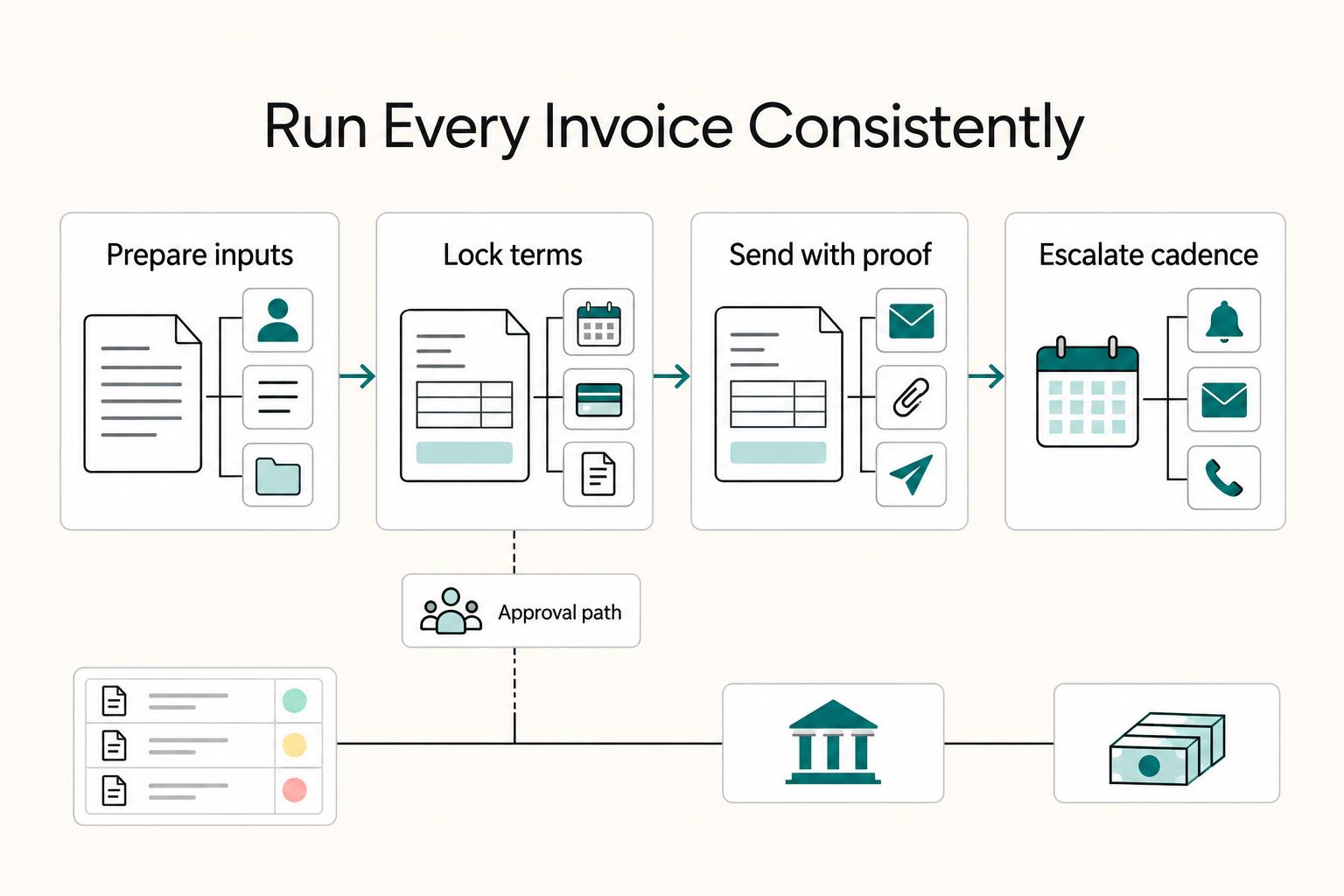
Set one standard from the start: every freelance invoice should identify the client, itemize the work, state agreed terms, and be tracked until funds settle. That habit helps prevent avoidable payment delays and keeps cash flow more predictable.