

Quick Answer
Store original amount, currency and recognition date separately. Link actual spending to an approved dated rate record, and keep the campaign’s planning rate in a separate field. Calculate reporting-currency amounts using the documented rate direction, flag missing rates and preserve the values used at close.
Build a multi-currency Airtable budget in three connected parts#
If your multi-currency budget in Airtable lives in a single table with one amount column, a currency label, and a conversion based on today's rate, it can work for rough planning. As a finance record, it is often fragile. The failure points are predictable: rate timing, audit trail clarity, and compliance visibility. Historical transactions can be translated at the wrong rate, and later edits can be harder to audit.
Use this rule: if a transaction does not clearly retain its date, original currency, conversion basis, and change history, treat it as planning data, not decision-grade finance data.
Where basic trackers break#
Airtable’s linked records connect transactions, accounts and rate records. Currency formatting supplies a display symbol; it does not convert values. Keep the numeric amount and currency code separate so a €1,000 supplier bill and a $1,000 bill remain distinguishable before conversion.
The next problem is rate timing. If you reprice old revenue or expenses with a current rate, historical profitability can shift as rates move. For U.S. tax returns, amounts must be expressed in U.S. dollars using the exchange rate when the item is received, paid, or accrued. In practice, each transaction should keep its own date, source currency, and linked rate record for that date.
The third gap is auditability. Airtable can auto-stamp created time and provide record-level revision history, but that only helps if your model preserves original facts instead of overwriting them. A practical test is to open an older transaction and confirm its converted value still points to the stored dated rate record.
The three-part build#
Instead of a basic tracker, build three connected parts:
- Part 1: Foundation
Separate Transactions, Accounts, and Currencies and Rates with linked records so each entry has a clear home and a traceable conversion path.
- Part 2: Automation
Use trigger-and-action automations to capture the correct rate record and required fields at entry time.
- Part 3: Dashboard
Use rollups, formulas, and dashboard interfaces to monitor margin, cash position, and reporting exposure with drill-down to the record level.
Simple tracker vs dated transaction records#
| Area | Simple tracker | Command center |
|---|---|---|
| Data accuracy | One amount field plus current FX assumptions | Original amount, currency, date, and linked dated rate per transaction |
| Compliance readiness | Low visibility and weak evidence trail | Dated records, stored conversion basis, change history, and a reporting trigger pending source-record or advisor verification |
| Decision quality | Margin and cash views shift when rates refresh | Historical profitability stays tied to transaction-date logic |
| Handoff readiness for advisors | Manual cleanup and explanation | Filtered views for advisor use without deleting base records |
This setup does require more discipline at entry time: transaction date, original currency, linked account, and stored reporting-currency value cannot be optional. The payoff is stable records you can explain quickly during monthly close, advisor review, or variance checks.
Plan handoff early, too. Shared-view CSV download can be disabled by the view creator, so decide upfront whether advisor handoff will use controlled exports, in-base views, or a documented evidence pack.
With that operating standard in place, the next step is the base design that keeps transactions, accounts, and rates connected without making the base hard to run.
You might also find this useful: How to Handle Multi-Currency Pricing for Your SaaS Product.
Part 1: Separate transactions, accounts, and exchange rates#
Keep the campaign’s approved planning assumptions separate from the rates used to translate actual spending. Otherwise an exchange-rate refresh can change both sides of a variance comparison.
If you use Airtable, a relational structure is one workable way to organize a multi-currency budget. A common draft pattern is separate records for transactions, accounts, and exchange rates, with links between them.
If you're deciding between a flat tracker and a relational base, define these points upfront:
| Area | Flat tracker (define upfront) | Relational base (define upfront) |
|---|---|---|
| Data handling | Where amount, currency, and conversion inputs live | How source values, links, and rate records relate |
| Change history | How edits are tracked over time | How linked records preserve context for updates |
| Workflow | How accounts, projects, and rates stay consistent | How each record type has a clear owner |
In a transaction record, decide and document fields such as:
Transaction DatePayment Date(if different)Original AmountCurrency CodeReporting-Currency ValueAccount(link)Project/Client(link)
For example, budget €10,000 of production costs at an illustrative rate of $1.10 per euro: the planned cost is $11,000. If actual cost is €10,000 and the approved actual conversion is $1.15 per euro, the reported cost is $11,500. The $500 variance comes from FX, not extra production spending. Store both rates and their purposes; do not overwrite the budget rate with the actual rate.
Before importing real data, run a small mixed-currency test set and confirm links, calculations, and permissions behave as expected.
For a step-by-step walkthrough, see The Best Multi-Currency Accounts for Digital Nomads and Freelancers.
Part 2: Capture dated rates and review failures#
Automate rate capture once your linked-table structure is stable. Store the rate for the transaction date, not a later spot pull. In the U.S. tax context, IRS guidance ties conversion to the rate when you receive, pay, or accrue the item, with USD usually treated as the functional currency. Any jurisdiction-specific compliance wording must be verified against official, tax, accounting, or advisor records before use.
| Approach | Data integrity | Rework risk | Audit readiness |
|---|---|---|---|
| Manual or spot-rate workflow | Past transactions can be converted using today's rate instead of the dated rate | Often higher, because you may need to revisit records after the fact | Can be weaker unless you separately track source and fetch timing for each conversion |
| Automated historical-rate workflow | Each transaction stores the historical rate tied to its own date | Often lower, because date and mapping are applied during entry flow | Can be stronger, because you can keep source label, fetch timestamp, and linked rate record |
Build the no-code path#
For many teams, a no-code connector such as Data Fetcher can be enough. Start here:
| Step | What to set | Grounded detail |
|---|---|---|
| Choose one provider with a historical endpoint | Selected provider | Open Exchange Rates supports historical requests and expects YYYY-MM-DD; name your selected provider in the base |
Pass Transaction Date dynamically | Request date input | Use the Airtable date field in the request so each run asks for the correct historical date |
| Map base and quote fields explicitly | API currency parameters | Read the response base and rates; base changes can depend on the subscription plan |
| Write back both outputs | Returned values | Calculate the converted amount from the returned rates, then update the triggering record with both rate and amount |
In practice, that means four things:
- Choose one provider with a historical endpoint. For example, Open Exchange Rates supports historical requests and expects
YYYY-MM-DD. Name your selected provider in the base. - Pass
Transaction Datedynamically. Use the Airtable date field in the request so each run asks for the correct historical date. - Read the response base and rate direction. Open Exchange Rates returns rates relative to one unit of its base currency; changing the base depends on the plan. For a common base, compute reporting-currency units per transaction-currency unit as reporting rate divided by transaction rate.
- Calculate the converted amount, then write it and the derived rate to the triggering record. Also retain the provider, effective date and publication timestamp; the historical endpoint returns a rate table, not your converted transaction amount.
Test dates and currencies before relying on the automation. With illustrative USD-based rates of EUR 0.80 and GBP 0.70, €100 converts to £87.50: 100 × 0.70 ÷ 0.80. Open Exchange Rates’ historical rates are end-of-day UTC values, except for the current day. Confirm that this basis fits your accounting policy; it is not proof of the exact rate at a transaction’s local timestamp.
Add guardrails before trust#
Failure handling should be part of the design, not cleanup. Airtable counts a run whenever a trigger fires, even if downstream actions fail. Trigger only when conditions are true, for example when the rate is missing and a review flag is off.
| Guardrail | What to track | Grounded detail |
|---|---|---|
| Failed-call handling | Rate Status and Error Detail | Rate Status can use Success, Failed, and Needs Review; Error Detail can store JSON error or message text where available |
| Retry logic | HTTP error type | 5xx can indicate server-side issues, 4xx usually indicates request or data issues, and 429 should use backoff |
| Retry timing | Airtable guidance | For an Airtable Web API rate-limit 429, wait 30 seconds; the per-base limit is 5 requests/second. External FX API limits are separate. |
| Rate validation | Effective date and coverage | Flag a date or currency mismatch; do not mark a valid closed-period rate stale just because it was fetched long ago |
| Review queue | Exception view | Create a filtered view for Needs Review, blank returned rates, or stale flags; check Automation history and enable failure notifications |
A few guardrails matter more than the rest:
- Failed-call handling: Keep fields such as
Rate Status(Success,Failed,Needs Review) andError Detail(JSON error or message text where available). - Retry transient failures under the relevant service’s limits. Airtable’s Web API permits 5 requests per second per base and requires a 30-second wait after a rate-limit 429; the FX provider and connector have separate limits. Keep writes tied to the same transaction and rate version.
- Validate historical rate coverage against the required date and currency pair. Use age checks for live planning-rate refreshes, while preserving approved closed-period historical rates.
- Create a review view for failed calls, blank rates and date or currency mismatches. Check run history and assign someone to resolve failures.
Govern the master rates table#
Use [Currencies & Rates] as a controlled source of truth, not a raw import table. Each row should keep the currency pair, effective date, returned rate, Source Label, and Fetch Timestamp, plus a lock or version rule once the row is used in reporting.
Define fallback behavior before production use. If the primary source returns blank or suspect values, route the record to review instead of silently overwriting it. Only apply a named fallback source when policy allows it, and label that substitution clearly.
When scripting is worth it#
Keep no-code as the default. Use Airtable's Run a script action when you need logic that no-code steps do not handle cleanly. Examples include conditional retries, multi-provider fallback, custom auth flows, or deeper error triage.
If you want a deeper dive, read How to Write a Follow-Up Email That Closes the Deal.
Before you lock your automation rules, sanity-check your assumptions against real transfer costs with the payment fee comparison tool.
Part 3: Manage from a dashboard that answers three operating questions#
Once rates are writing back correctly, manage from a dashboard, not raw tables. The dashboard should answer three operating questions quickly: are you approaching a reporting risk, where is margin drifting, and can you hand off a clean file without rework?
This is where the base becomes useful day to day. You get centralized data, decision-ready views, and a review schedule tied to defined deliverables.
| Decision context | No dashboard | Dashboard with alerts/views |
|---|---|---|
| Compliance readiness | Exceptions and status checks are scattered, so issues surface late | A single alert view and review queue can surface exceptions earlier and keep checks in one place |
| Profitability clarity | Margin trends stay buried in mixed records | Grouped views make revenue and cost trends easier to compare by project and client |
| Reporting workflow speed | Handoffs become manual cleanup | A saved export view keeps structure and timing consistent each cycle |
Build the alert around a rule, not a hardcoded number#
If you use an early-warning alert, make the trigger configurable. Keep a simple config record for the rule, scope note, and verification status, with the current threshold marked as pending official, tax, or accounting verification until the requirement is confirmed.
The key design choice is scope. Define which records are included for that rule, and document the inclusion logic. Do not assume everyone asking for the deliverable understands what that logic entails. Document what is included and what still needs confirmation.
Use the alert as a review prompt, not proof of compliance. Test it by manually recalculating a sample date and confirming the dashboard total matches.
Make profitability views answer one operating question each#
Give each view one job. For margin tracking, set one view to answer this question: where are costs rising faster than revenue by project and client?
In [Transactions], keep only the records needed for that question, then group by Project and Client so drift shows up early instead of at closeout. Keep a review schedule you can actually maintain, and run it at defined checkpoints before major handoffs. If pricing assumptions look off, revisit your model with Value-Based Pricing: A Freelancer's Guide.
Treat the accountant export as a defined deliverable#
Work backward from the advisor handoff. Create one saved export view, keep field order stable, and run it on a defined schedule so outputs stay consistent.
| QA check | What to confirm |
|---|---|
| Reporting period | Confirm the reporting-period filter is correct |
| Required fields | Check for blanks in required amount, currency, or status fields |
| Source validation | Spot-check key values against source records |
| Exceptions | Keep unresolved exceptions clearly labeled, or resolve them before export |
| Export method | Export from the saved view only, not ad hoc filters |
Define and freeze the export schema with your advisor, then use this pre-export QA checklist every cycle:
- Confirm the reporting-period filter is correct.
- Check for blanks in required amount, currency, or status fields.
- Spot-check key values against source records.
- Keep unresolved exceptions clearly labeled, or resolve them before export.
- Export from the saved view only, not ad hoc filters.
For a broader process view, see How to Manage Your Finances Across Multiple Currencies.
Keep the campaign history explainable#
Built this way, your multi-currency budget in Airtable can function as an operating record, not just a manual tracker. The result is practical: a cleaner month-end close process, clearer records for review, and smoother advisor handoffs.
Start with structure. Separate [Transactions], [Accounts], and rate data into linked tables so rollups, filtered views, and repeatable exports run from connected records instead of isolated rows. Then protect the rate logic. For reporting, the IRS says to use the exchange rate prevailing when you receive, pay, or accrue the item, rather than a rate pulled later. If historical values get overwritten, both profitability analysis and reporting output can become less reliable.
Use dashboard views to compare approved budget, committed costs and actual spending by campaign and supplier. Show both original-currency amounts and translated values so you can separate price, scope and FX changes. A transaction budget is not a foreign-account reporting calculation.
Spot-check the underlying amounts and approved conversion basis before closing a period. Export from the saved view you intend to share, and record the export date and unresolved exceptions.
| Before | After |
|---|---|
| Flat spreadsheet or manual tracker | Linked base with connected transaction, account, and rate records |
| Spot-rate guesswork or overwritten conversions | Stored historical-rate logic tied to each transaction date |
| Reactive checks near filing time | Early monitoring with saved reporting views |
From there, use this next-step checklist:
- Review linked tables and confirm each transaction is connected to the correct account and currency context.
- Validate the rate workflow and spot-check stored historical rates against sample transaction dates.
- Check that planning, actual and closed-period rates are kept separate and that unresolved records remain visible.
- Test reporting and export views with a real period filter before advisor handoff.
We covered this in detail in A Guide to Opening a Multi-Currency Bank Account with HSBC Expat.
When your Airtable process is stable, you can connect it to live cross-border collection and payout operations where supported via Gruv for freelancers.
Frequently Asked Questions
Does Airtable support multiple currencies?
Yes, if you design for it. Store amount, currency code, and rate as separate fields so the conversion logic stays clear and editable instead of buried in one long formula. If one transaction maps to multiple categories, use linked records with a join-table pattern rather than cramming categories into one field.
How do you automatically convert currency in Airtable?
Use formula logic that checks an origin condition and multiplies by the matching rate field. Keep rates in dedicated fields so you can update or audit them without rewriting long IF branches. Before you trust the output, spot-check sample rows for source currency, linked rate, and converted amount.
Should I use the current spot rate or a historical rate?
Pick a documented approach that fits your reporting needs, and apply it consistently so records remain auditable over time.
Can I use Data Fetcher or Zapier/Make to update rates?
Yes, a connector or script can retrieve rates and update records. Choose a tool that supports your provider’s historical endpoint, response mapping and error handling; test backfills and writes before relying on it.
What should I look for in a currency data source or API?
Check date coverage, base currency, rate direction, publication timezone, plan restrictions and request limits. Decide how missing dates or currencies will be handled, and store enough source information to reproduce a conversion.
How should I track foreign accounts or reporting thresholds in Airtable?
Keep account reporting separate from campaign transactions. Spending totals do not establish account balances or filing status. If an account-reporting rule applies, use the relevant account records and official conversion method with your advisor rather than reusing the project’s cost rollup.
What is the leanest version that still works?
Start with core linked tables and a simple dashboard showing total budget, total spend, and remaining budget. That lean setup works, but it becomes limiting if you later need deeper cuts by category, project, or account. If you expect growth, keep your linked structure in place from day one so your history stays usable.
Try a related tool
Researched and edited by the Gruv editorial team. Gruv builds cross-border billing, payouts, and finance-operations software for global businesses.
Sources
Includes 4 external sources outside the trusted-domain allowlist.
Educational content only. Not legal, tax, or financial advice.
Related Posts
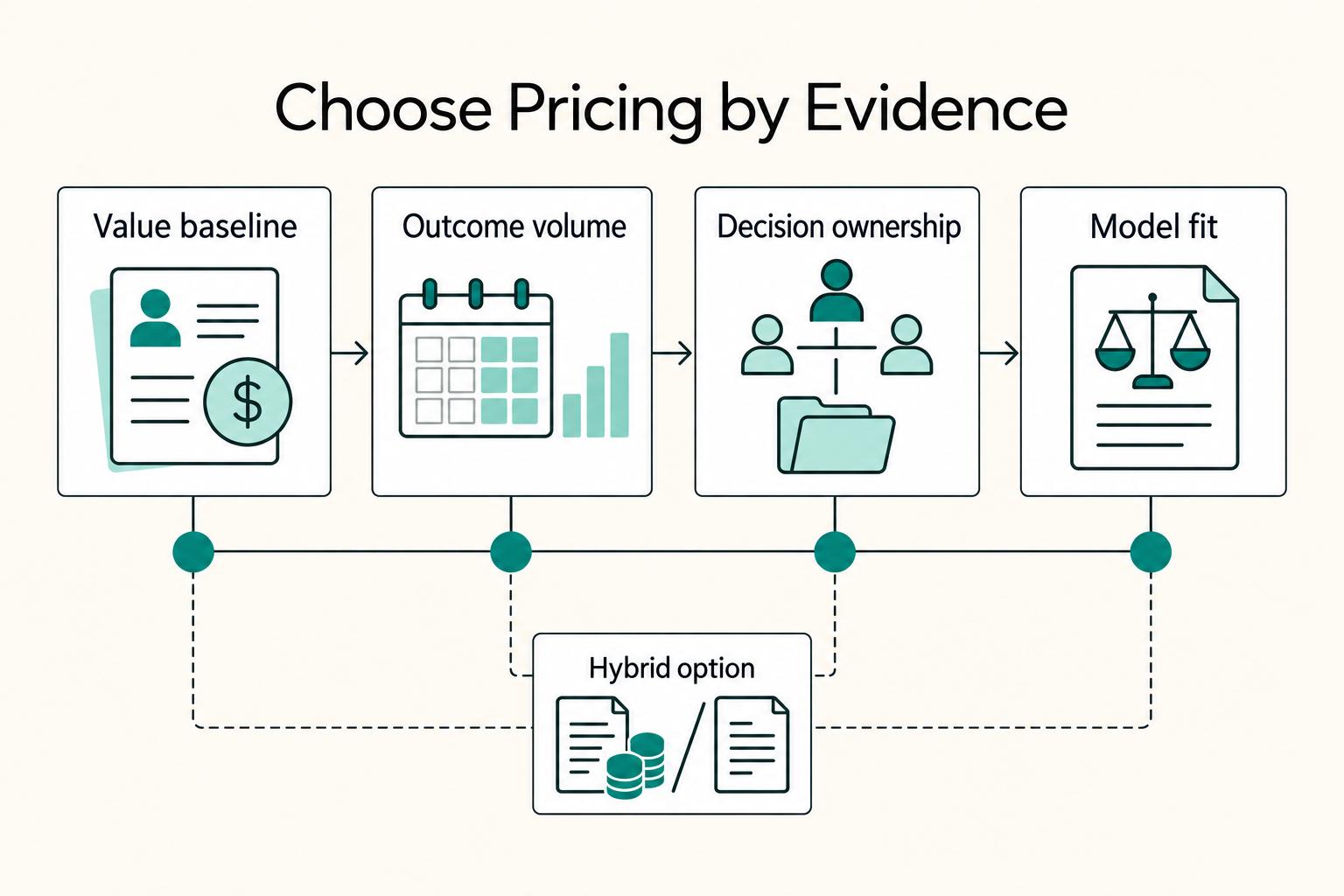
Value-Based Pricing for Freelancers Under Real Payment Risk
Value-based pricing starts with the client’s expected benefit and willingness to pay. It still needs a deliverable, scope and payment agreement you can perform. Use a discovery phase when the benefit or effort is too uncertain to support a defensible quote.
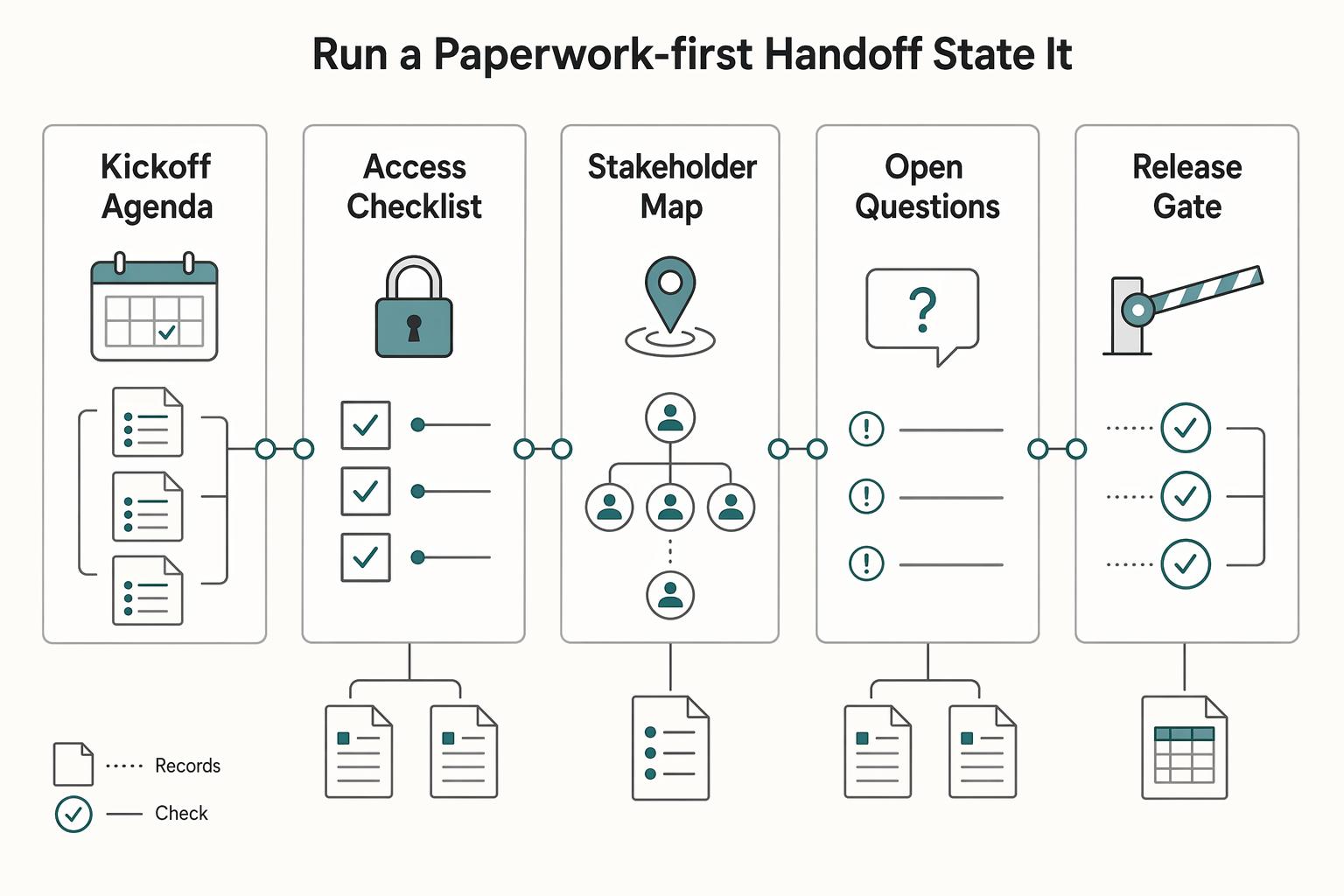
How to Write a Follow-Up Email That Closes the Deal
**Run every freelance follow-up email like a mini sales process that turns uncertainty into one clear next step.** As the CEO of a business-of-one, your job is to turn messy inbox threads into clean decisions you can actually plan around.
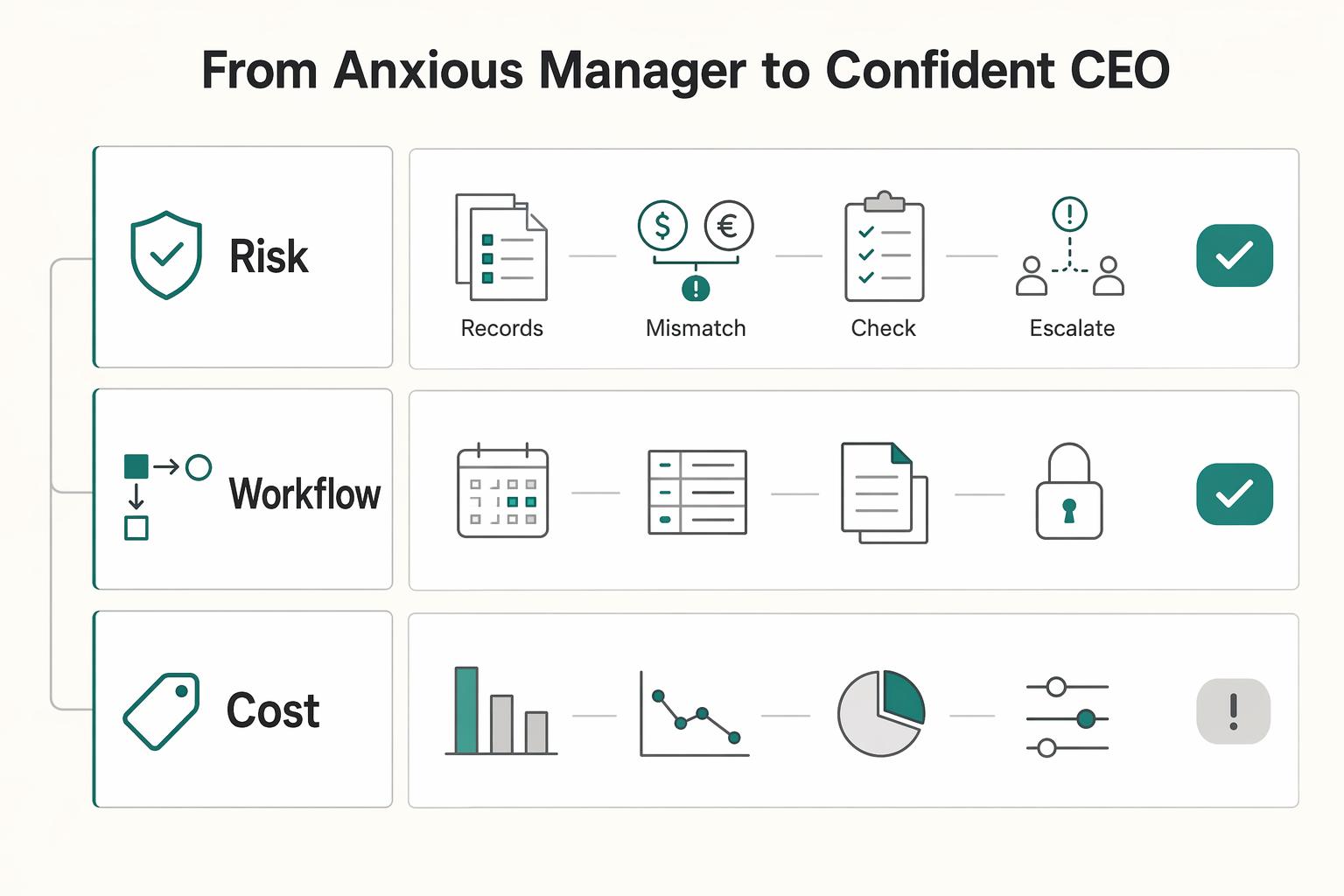
How to Manage Your Finances Across Multiple Currencies
The hard part of managing money across currencies is not shaving a few basis points off a wire. There is endless advice about the cheapest way to move money, with fintech comparisons down to the decimal. That focus can distract from the real risk. You wake up at 3 AM wondering whether you missed a compliance rule you did not even know applied, and whether that mistake could put the business at risk.