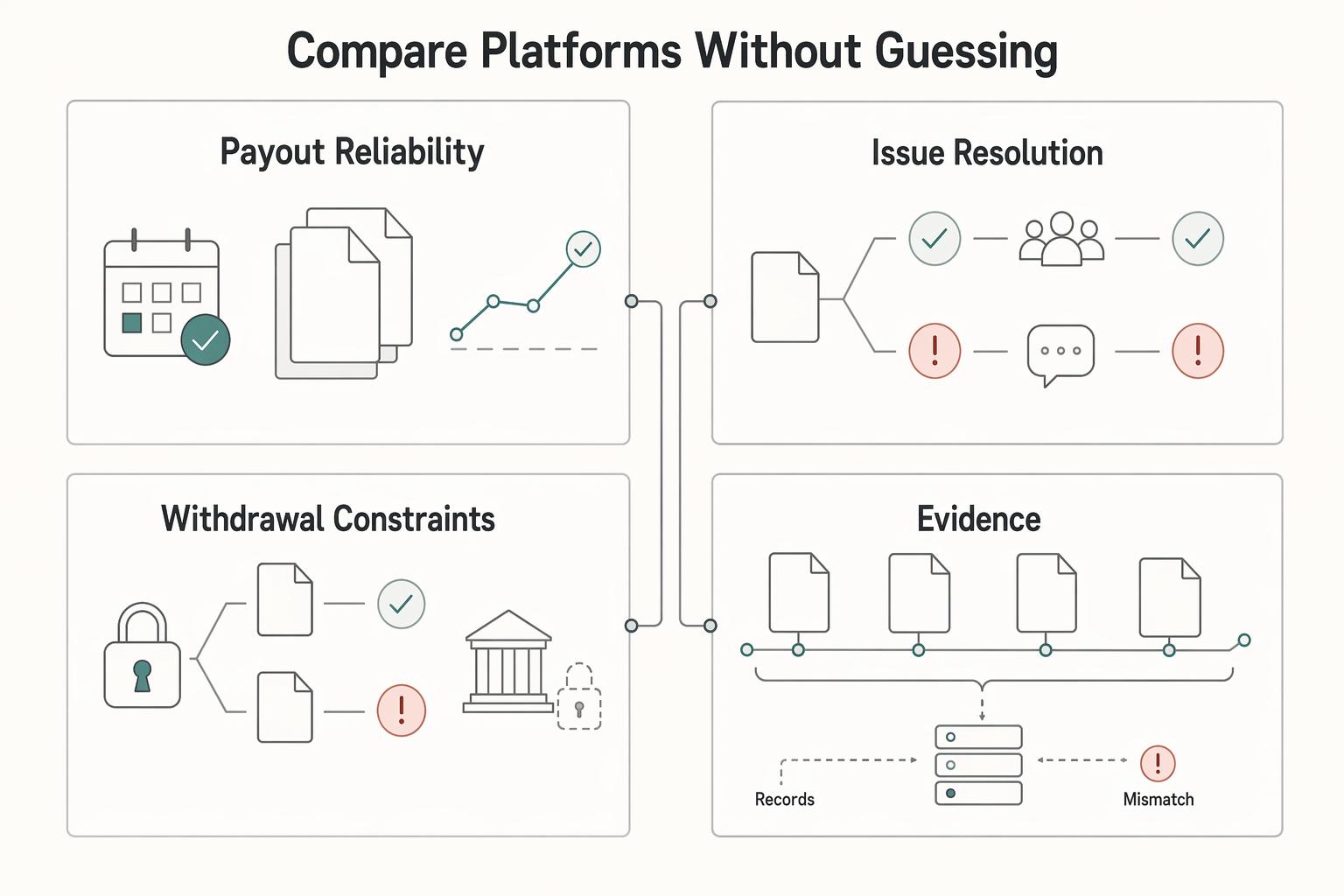
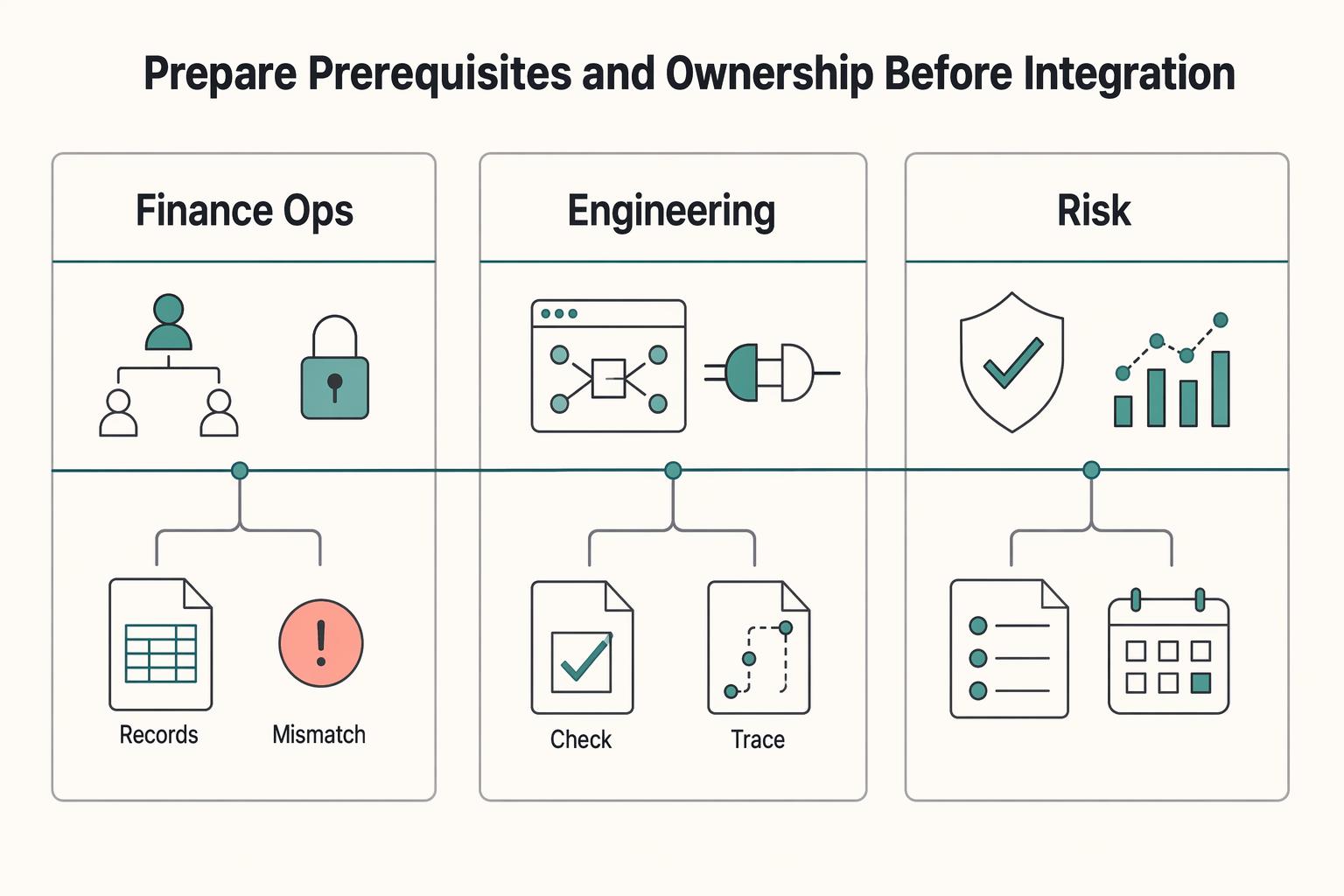
Choose an operating model before tooling: for freelance get paid crypto programs, teams should compare marketplace channels against invoice-led payout control, then pilot only what is documented. In this evidence set, vendor unknowns are the main signal, especially around direct USDC behavior, dispute flow, and tax-document depth. Use one evidence pack gate before launch: payment terms, payout confirmation, destination details, and exportable records. Scale only after legal, finance, and engineering can review the same checkpoints.
If you need to support workflows where freelancers get paid in crypto, start with the operating model. In practice, the choice is between marketplace-led discovery and a payout stack you control. For platform teams, the split is straightforward:
Cryptocurrency Jobs category.Treat older "crypto freelance platform" roundups cautiously, especially when the source itself is dated.
Set your filters before you book demos. For a contractor-scale crypto payout program, operating fit and evidence matter more than brand familiarity.
This shortlist is for teams paying many contractors, not for a solo freelancer choosing one Crypto wallet. At this scale, the real question is repeatability. Can you enforce clear payment terms, handle exceptions, and close month-end reconciliation without manual cleanup? Stripe's signal that 74% of freelancers report late payment is a reminder that the payment method is a control point, not a cosmetic choice. Treat wallet-only discussions as incomplete. The grounded crypto operations stack is wallet, invoicing, and tax apps. If invoicing and tax handling never appear, it is probably not a scalable payout path.
Define acceptance criteria before anyone shows you a UI. Keep three non-negotiables: payout traceability, a workable exception path, and a control model that legal and finance will approve. Require documented payment terms and conditions plus a sample audit trail. At minimum, ask for an invoice or request reference, payout confirmation, destination details for Cryptocurrency, and an exportable record finance can retain.
Shortlist by operating model, not by category label. If you need marketplace-style access, start with marketplace options. If you need tighter invoicing controls, evaluate invoicing-led options first. Keep claims narrow. Marketplace presence does not prove the exact payout mechanics you need. Request's January 2024 guide matters because it explicitly frames the stack as wallet, invoicing, and tax apps. For Stripe Payment Links, confirm the exact crypto payout behavior instead of assuming it.
If a provider cannot clearly document payout mechanics and retained audit evidence, do not move it to pilot. Unknowns here can become finance and compliance failures later. Your evidence pack should include payment terms, payout confirmations, reference IDs, exportable ledger data, tax-handling notes, and a written path for failed or disputed payouts. Also validate by jurisdiction before scale. One source reports Spain in 2026 requires reporting any payment amount and says the prior €3,000 threshold was removed. That is a practical reminder that corridor-specific checks cannot be deferred.
Related: How to Use Stripe Payment Links for Easy Invoicing.
Treat missing evidence as a decision signal, not a research gap. This shortlist should align product, finance, and engineering before any build starts.
| Option | Best for | Payout method clarity | Support for USDC | Escrow / dispute structure | Tax-document support | Ops visibility | Launch risk |
|---|---|---|---|---|---|---|---|
| Request Finance | Documentation review only (fit unverified) | Unknown from provided evidence | Unknown from provided evidence | Unknown from provided evidence | Unknown from provided evidence | Unknown from provided evidence | Medium to high: evidence gaps on payout and record behavior |
| LaborX | Marketplace comparison lane only | Unknown from provided evidence | Unknown from provided evidence | Unknown from provided evidence | Unknown from provided evidence | Unknown from provided evidence | High: key payout and failure-path details are unverified |
| CryptoTask | Additional comparison lane only | Unknown from provided evidence | Unknown from provided evidence | Unknown from provided evidence | Unknown from provided evidence | Unknown from provided evidence | High: escrow/dispute behavior is not confirmed in this evidence set |
| Upwork | Broad marketplace baseline comparison | Unknown from provided evidence | Unknown from provided evidence | Unknown from provided evidence | Unknown from provided evidence | Unknown from provided evidence | High: crypto-settlement behavior is unverified |
| GoLance | Secondary comparison only | Unknown from provided evidence | Unknown from provided evidence | Unknown from provided evidence | Unknown from provided evidence | Unknown from provided evidence | Very high: thin evidence and unresolved payout/tax unknowns |
The main output here is the pattern of unknowns, especially around USDC. Based on this evidence set, none of these options is confirmed for direct USDC payouts, so none should be treated as engineering-ready for stablecoin settlement.
Before integration discussions start, apply one gate. Require a sample evidence pack with a payment or invoice reference, payout confirmation, destination details, and an exportable record finance can retain. Also require one documented failed, delayed, or disputed payout path. If those artifacts are missing, keep the vendor in a documentation queue, not a pilot queue.
Turn your shortlist table into an execution plan by mapping payout states, exception paths, and reconciliation ownership against Gruv Payouts.
Request Finance can be a fit when invoice control matters more than marketplace discovery. Treat settlement and jurisdiction details as unverified until you test them.
The clearest supported signal is how the process is described. The freelancer guide, updated in January 2024, frames crypto payments around "wallet, invoicing & tax apps," and related material references a crypto invoice template or crypto invoice generator. That suggests a concrete onboarding model for finance, ops, and engineering.
The excerpts also name assets directly: freelancers can receive payments in USDC, USDT, DAI, and ETH. In practice, keep invoices explicit about the accepted coin and network. That is a simple failure-prevention checkpoint.
Do not assume more than the evidence shows. The provided material does not confirm settlement finality timing, country-specific withdrawal constraints, or jurisdiction-specific tax-form outputs. Before you expand beyond pilot, require one sample invoice, one paid invoice confirmation, destination wallet details, and one exportable finance record.
This option can be useful when you want invoice artifacts without building a full custom Web3 payout surface. Keep the tradeoff in view. Some crypto payments can include transaction fees, and volatile assets like BTC/ETH can change realized value before conversion.
This pairs well with our guide on Freelance Crypto Payments That Protect Cashflow and Reduce Disputes.
Consider LaborX for Blockchain or Smart contracts roles when generalist pipelines are too broad. Keep payout and tax operations as separate decisions until you verify them directly.
Why it can help hiring: The clearest support here is category fit. A Web3-versus-traditional comparison, published 3 January 2026, describes blockchain freelance platforms as a growing part of the market and cites 23% crypto payment usage among freelancers plus over $2.3 billion in DAO-created freelance opportunities. That supports testing a Web3-focused sourcing channel when generalist pipelines are too broad, while treating implementation details as complex.
What it does not prove: Marketplace presence does not confirm your payout rail, settlement path, or tax-document depth. The same comparison provides a scored example for Braintrust, not LaborX, so do not transfer platform-specific claims by proximity. Before a pilot, confirm role posting flow, written payment handling, and clear ownership for tax-form collection and reconciliation.
Hard-stop risk screen: If any flow asks a candidate or contractor to deposit personal funds, stop. The FBI pattern for cryptocurrency job scams notes these schemes can allow early withdrawals to build trust, then require larger deposits later.
A practical use case is an early-stage smart contract hiring burst. In practice, that can mean using LaborX for candidate discovery while keeping payment execution in your own contract, invoicing, and finance stack until the channel proves reliable.
Use CryptoTask only when milestone release control is your main requirement, and treat trust language as unverified until you test the workflow end to end. Its marketing positioning as escrow-first and decentralized may fit Cryptocurrency projects, but terms like "safest" or "trusted" are claims until your team validates release behavior, failure handling, and finance records.
This is most defensible for milestone-based Blockchain deliverables with clear acceptance stages. Staged payments are a practical risk control. One grounded payment-practice source recommends upfront or periodic milestones because that "massively reduces the risk on both sides."
Use concrete cadences during pilot design, such as weekly payments, sprint-based approvals, or first-of-month and last-of-month checkpoints. That structure is usually safer than a single pay-on-completion release.
Smart-contract-based controls are a plausible fit for Web3 operating models. A community blockchain submission describes faster approvals and more direct payment interactions as benefits. Treat that as a claimed benefit, not proof of CryptoTask's production behavior.
The broader human-cloud category connects workers to contingent work through digital platforms, but category scale does not validate one platform's escrow controls, dispute operations, or finance outputs. You still need workflow proof.
Do not approve CryptoTask on positioning alone. Require operating proof in four areas:
If several milestones are collapsed into one end-of-project release, most of the risk-reduction value from periodic milestones disappears.
Pilot CryptoTask where release logic matters more than deep enterprise finance integrations, and continue only if the controls are verified in your workflow. Start with a small multi-step Blockchain project, objective acceptance criteria, and controlled funding at each checkpoint. Keep final deliverables gated until payment is confirmed when risk signals appear.
If legal or finance needs deterministic tax-document handling, strong reconciliation exports, or proven dispute operations, keep those controls outside the platform until verified. CryptoTask may still support the engagement structure, but it should not own the full payout operation by default.
For a step-by-step walkthrough, see How Platform Teams Get Freelancers Paid Faster Beyond Net-30.
Use these channels to scan demand, not to approve payout operations. Upwork has concrete market-signal data in the provided excerpts, while community mentions can flag other options, but neither is payout proof on its own.
Upwork is useful for early channel testing because the discovery layer shows meaningful activity: 291 blockchain projects in the past 72 hours, plus 30+ filter attributes, alerts, and analytics. That is enough to evaluate demand and client patterns before you commit product or ops effort.
Treat listing signals as risk screens, not payout validation. Fields like "Payment method not verified" and "Client Rank - Risky" help qualify opportunities, but they do not prove crypto disbursement behavior, finance artifacts, or compliance readiness for your workflow.
The provided excerpts do not establish GoLance payout behavior. Keep GoLance on a watchlist unless you have direct payout evidence. Community discussion can surface options, but user-generated sources are anecdotal and can be unstable during review.
One practical issue is retrieval instability itself. For example: "Something went wrong. Wait a moment and try again." If legal or finance needs deterministic approval, require direct payout-policy documentation or a live test with reconcilable records. Treat community mentions as input only.
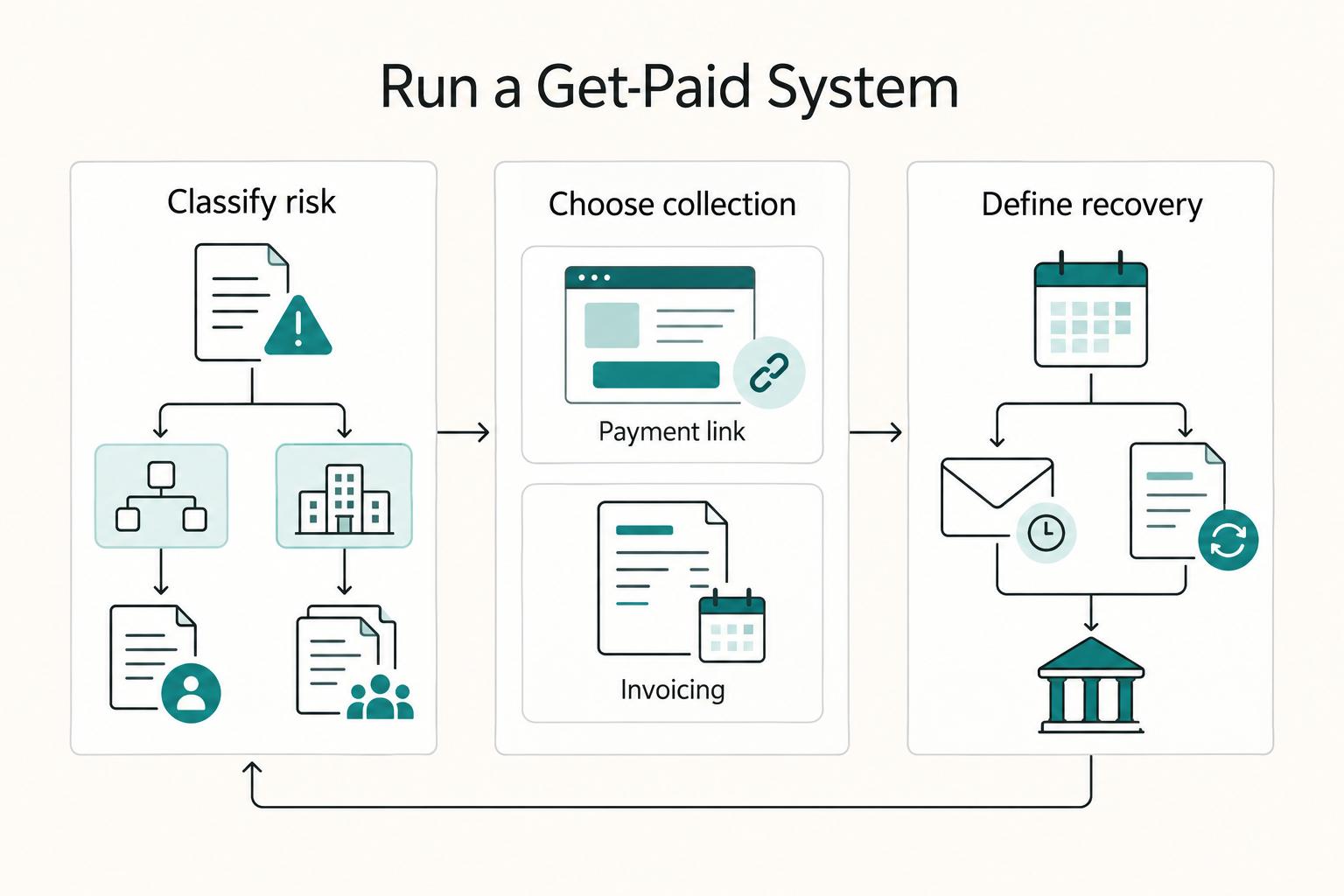
Choose the rail based on operating priority, not preference. Use USDC-first when payout speed and cross-border reach matter most, and use a mixed fiat/crypto model when you want lower treasury volatility.
| Model | Best fit | Main upside | Main control points |
|---|---|---|---|
| USDC-first payouts | Faster cross-border disbursement | Stablecoin payouts are described as 1:1 to fiat, with on-chain settlement in minutes and availability positioned as 24/7/365 | Verify sender before on-demand payouts; if converting fiat to stablecoin, require a locked rate and itemized fees |
| Mixed fiat + crypto | Keep more balance-sheet exposure in fiat while still offering crypto where useful | Hybrid settlement is possible: funds remain on-chain until payment while fiat settlement is used on the receiving side | Define exactly when conversion happens so payout amounts are predictable |
For DAO-linked contributors, decide up front whether you will run fully on-chain settlement or controlled off-chain payout operations. If legal or finance needs stoppable, reviewable flows, keep explicit off-chain approval controls.
If a provider references card-linked USDC payout announcements, treat availability as rollout-dependent, not universal. One reported Visa USDC path announced on November 12, 2025 was pilot-only for select partners, with broader rollout discussed for the second half of 2026.
Also plan for KYC gates and regional availability limits on some crypto payment layers.
Once you choose the rail, keep the operating sequence the same every time:
Do not scale payouts until compliance and tax handling is documented well enough for finance to audit. The speed tradeoff is real. Traditional international bank transfers can take several days because of verification checkpoints, while crypto transactions can complete within minutes. That speed benefit matters only if your controls are in place first.
| Checkpoint | Requirement |
|---|---|
| Eligibility gate | Define who can be paid, through which rail, and in which corridor, then require internal review status to clear before payout is offered. |
| Tax readiness gate | Be able to show what was collected, when it was reviewed, and how payout records tie back to it across contractor cohorts. |
| Evidence pack per corridor | Include a policy decision log, tax-document checklist defined by counsel, reconciliation proof linking invoice, approval, payout record, and ledger export, plus exception notes for failed, delayed, or manually reviewed payouts. |
| Expansion stop rule | Do not scale a corridor if the team cannot clearly explain the legal interpretation, tax handling path, and audit trail. |
Set eligibility before anyone is paid in Cryptocurrency. Define who can be paid, through which rail, and in which corridor, then require your internal review status to clear before payout is offered. If legal interpretation is unclear for a corridor, pause expansion there instead of relying on marketplace defaults.
Treat tax readiness as an audit standard, not a messaging standard. "We mention taxes" is not enough. At minimum, readiness should let you show what was collected, when it was reviewed, and how payout records tie back to it across contractor cohorts.
Also treat older crypto-payment content as context only. A piece published on Jun 6, 2023 is not a 2026 legal decision source, and this topic remains informational-only and not legal, tax, or compliance advice. Consult qualified legal and tax professionals before acting.
Create one evidence pack for each corridor and rail, including the crypto assets you plan to use, before volume ramps. Keep it consistent so finance and legal can review exceptions the same way every time.
Use a hard stop for ambiguous corridors. If your team cannot clearly explain the legal interpretation, tax handling path, and audit trail, that corridor is not ready to scale. Keep approved corridors clean and delay expansion until counsel confirms the unclear case.
If you want a deeper dive, read How to Get Paid in Crypto as a Freelancer (and Manage the Risks).
Treat operations as a launch gate, not a cleanup task. Once volume grows from 10 payouts to 10,000, complexity rises quickly, and delays, errors, or failed payments can damage trust.
Define who owns payout status, who owns reconciliation controls, and who owns payment-event reliability so exception handling does not stall. The goal is clear accountability when records conflict, such as a payout status that looks complete while reconciliation is still unresolved.
Apply one checklist across every payout path. Upwork describes its platform as providing tools intended to increase operational ease and transaction certainty, but you still need internal exception handling and evidence standards.
At minimum, force each case into a named bucket with an owner, next action, and reconciliation evidence.
For every transaction, keep linked records your team can audit: payout request details, transaction references, and reconciliation evidence. If confirming basic payout history still depends on ad hoc log pulls, your controls are likely not ready for scale.
Run recurring pilot checks focused on completion reliability, exception backlog, and reconciliation impact. Expansion should pause when operational quality declines. Payout speed and global reach only hold up when the infrastructure, compliance, reconciliation, and reporting controls stay intact, including for stablecoin flows.
Do not treat rollout as a single migration. Run it in phases with written checkpoints, and expand only when operations, legal, and compliance can review the same evidence.
Start with two paths only: one marketplace path and one invoicing-led path. Define success metrics before onboarding starts, then compare both paths under the same internal checks. Keep checkpointing explicit and light: track what is moving, what is stuck, what should be eliminated, and what comes next. Record docs and deadlines as part of the phase artifact.
Expand by narrowing variables: one contractor cohort and one payout flow before adding more options. This keeps outcomes comparable and makes root-cause analysis faster when issues appear. Use one evidence pack for each review cycle, including operational records, required docs, and decision logs for that cohort. If any path depends on third-party release timing, define how delayed or disputed releases are handled before expanding.
Pause onboarding when exception load outpaces what your team can clear in the normal review cycle. Fix recurring root causes first, then resume only after the same failure pattern stops repeating.
Move beyond pilot only when you can show a stable operating cycle, documented compliance controls, and a tested fallback for provider failures. "Fallback" should be operational, not theoretical: named owners, current docs, clear deadlines, and a customer-visible status plan.
Crypto freelancer payouts are easier to scale when finance can trace them end to end. The real advantage is not crypto by itself. It is being able to show how each payment moves from invoice terms to wallet confirmation, and where that flow can break.
Compare the five platforms on verified facts, not familiarity. Keep Request Finance, LaborX, CryptoTask, Upwork, and GoLance on one decision sheet, and score only what you can confirm for your corridor: payout-method clarity and invoice-level coin-and-network specification. If a platform cannot answer a checkpoint, mark it as unknown.
Set settlement policy before expanding channels. The core tradeoff is volatility versus predictability: BTC/ETH are described as higher-volatility assets, while stablecoins such as USDC/USDT are described as more predictable because they are pegged to fiat. If cash-flow predictability matters, price in fiat and define in payment terms who bears conversion risk when payment is made in stablecoin.
Pilot only what you can review and secure. Start with one cohort, one asset, and a minimal evidence pack: invoice terms, destination wallet, and payment confirmation records. A practical operational checkpoint is to specify both the coin and the network on invoices before payment.
Market signals can justify investigation, not rollout approval. The cited 45% vs 16% remote-work figures and the up to 15% cross-border loss claim are single-source inputs. Treat them as pilot triggers and require internal verification before scaling.
Use the platform list to prioritize validation, but do not skip proof. If you cannot document the unknowns and reconcile the payment trail, you are not ready to scale crypto freelancer payouts.
Related reading: How to Get Paid in Multiple Currencies Without Forced FX.
Before scaling beyond pilot, confirm corridor coverage, compliance gates, and rollout constraints with your stakeholders through Gruv's team.
Yes. The minimum setup cited in the evidence is a wallet, an invoicing tool, and tax apps. Make the invoice your first control point by stating exactly which coin and network you accept.
In this evidence set, Request Finance is the clearest signal of a documented crypto payment workflow because it explicitly ties together wallet, invoicing, and tax apps. A platform listing crypto jobs is not the same as proven crypto payout support. For LaborX, CryptoTask, and GoLance, keep payout mechanics and tax-document handling on the verification list until you confirm them directly.
This grounding pack does not confirm direct crypto payouts on Upwork. It also does not provide enough evidence here to verify Upwork payout mechanics. If direct crypto payout is required, verify current product documentation before piloting.
Use USDC when you want crypto settlement with less exposure to BTC/ETH price swings. The sources describe stablecoins as pegged to fiat currencies, making them a more predictable payout-value option. A practical setup is to price in fiat and request stablecoin settlement, or make the client carry conversion risk. If finance wants no crypto-value exposure, consider keeping that corridor fiat-only. For a deeper operator view, see How to Get Paid in Crypto as a Freelancer: USDC Stablecoin Payouts Explained.
Start with auditable controls: invoice language, accepted coin, accepted network, and how tax records will be produced. Then confirm who carries conversion risk and whether payment records can be traced from invoice to payout confirmation. Missing network details can create reconciliation issues.
No universal rule says they must. A decentralized autonomous organization (DAO) can use smart contracts to automate escrow and payment release, especially when release conditions matter. The tradeoff is implementation complexity, so use smart-contract escrow where it adds clear control value, not as a default for every DAO payout.
A former product manager at a major fintech company, Samuel has deep expertise in the global payments landscape. He analyzes financial tools and strategies to help freelancers maximize their earnings and minimize fees.
With a Ph.D. in Economics and over 15 years of experience in cross-border tax advisory, Alistair specializes in demystifying cross-border tax law for independent professionals. He focuses on risk mitigation and long-term financial planning.
Includes 1 external source outside the trusted-domain allowlist.
Educational content only. Not legal, tax, or financial advice.

Freelancers use crypto payments for a practical reason: slow payouts and high transfer costs can squeeze monthly cash flow. Traditional rails are still slow in many cases, and [crypto-freelance payment guides](https://www.request.finance/crypto-freelance/how-to-get-paid-in-crypto-a-freelancers-guide-2024) report regional fee pressure that can land around 5% to 10%. When a client wants to pay this way, the goal is not novelty. It is predictable settlement, clean records, and fewer avoidable disputes.

If you're evaluating a **get paid crypto freelancer USDC** workflow at platform scale, the real question is not whether stablecoins are interesting. It is whether you can add USDC as a payout rail without creating compliance, reconciliation, or support problems. This guide takes that narrower, more practical view.

---