
Quick Answer
Find the stalled stage between client approval, collection, funds availability and contractor arrival. Agree deposits or milestones where appropriate, price collection and disbursement separately, and verify actual acceleration eligibility. Preserve existing payment obligations, resolve unknown attempts before replacement and reconcile each money movement.
Why most freelancer payout advice breaks at platform scale#
Step 1 Define the operating context#
Most freelancer payment advice assumes a simple setup: one self-employed contractor, one client, one invoice, one due date. That works for an individual freelancer. It breaks quickly when you run a platform or an embedded payout product. Your team is not just trying to move cash faster. You are trying to do it across product, finance, ops, and engineering without losing control of approvals, records, or exceptions.
That is why paying freelancers cannot be treated like payroll. The accounts payable side is different, the payment method has to be chosen deliberately, and the payment terms need to be agreed up front. If you own the payout experience, you also own the fallout when terms are vague, payment details are incomplete, or support cannot explain why funds have not moved.
Step 2 Name the tension before you optimize for speed#
Faster payout sounds straightforward until you look at what actually makes a payment payable. If your payment terms are loose, your invoice rules are inconsistent, or your payout controls are easy to override, speeding up disbursement can move money before the underlying work is clearly accepted. That does not automatically create fraud, disputes, or reconciliation pain, but it can increase your exposure to all three.
Before shortening a timeline, identify the amount legally payable, the agreed due date, the funding source and the selected product’s current release requirements. Tax collection, reporting and withholding are separate duties; missing paperwork does not automatically authorize delaying money owed.
Work started without agreed funding can leave a platform carrying collection risk. Record who bears that risk rather than assuming the contractor must wait whenever a client pays late.
Step 3 Use levers beyond Net-30, but put gates around them#
The point is not to repeat "send invoices sooner" or "stop using Net-30." It is to help you choose among seven practical levers that can improve freelancer cash flow without pretending speed is free. Some options change contract structure. Some change collection timing. Some change payout timing. All of them come with tradeoffs in margin, ops effort, and exception handling.
Compare total collection and disbursement costs, including FX, acceleration fees, support effort and losses. A marketplace commission, a card-processing charge and an outbound payout fee pay for different services; comparing their percentages alone does not tell you which path pays a contractor sooner.
The next sections break down those seven levers with implementation checkpoints and risk gates, so you can move faster without turning payout speed into a finance and ops cleanup project.
For cross-border clients, How a US Citizen Can Get Paid by a Brazilian Company Reliably shows how rail choice and documentation affect paid-on-time work.
What actually slows freelancer payouts in production#
Payout delays are usually a reliability problem before they are a speed problem. A payment path that is nominally fast but unpredictable is harder to operate than a slower path you can trust, so diagnose timing variance before average speed.
Step 1 Map the delay path end to end#
Build one stage-by-stage time-to-paid timeline for each payment path, from invoice creation to confirmed payout. For each stage, record an owner, a trigger, and a timestamp so teams can see exactly where time is being lost.
Step 2 Split avoidable delay from structural delay#
Separate delays your team can tighten (unclear terms, inconsistent handoffs, manual bottlenecks) from delays you may only be able to plan around (constraints tied to the payout route itself). This keeps remediation practical and improves expectation-setting, which matters because unpredictable timing makes planning difficult even when the headline promise sounds fast.
Step 3 Use one diagnostic artifact across teams#
Track a single time-to-paid artifact by stage and attach a reason whenever the clock stalls. If useful for your workflow, split the view by fixed-price contracts and hourly contracts so finance, ops, and product can act on the same delay map instead of debating anecdotes.
What to prepare before you speed anything up#
Before you enable faster payouts, tighten your documentation and pre-work payment rules so payment decisions stay predictable.
Step 1 Standardize payment terms before work starts#
Agree payment terms before new work begins: amount, currency, due date, method, invoice cadence, acceptance authority and dispute process. Include late-payment charges only where agreed and lawful for the relationship and jurisdiction. Changes to an existing contract need agreement; a new platform setting does not rewrite its obligations.
Step 2 Agree pre-work funding where appropriate#
Negotiate a deposit based on committed costs and the client’s purchasing process. Define what it covers, when work starts and how unused amounts or cancellation are handled. A deposit can fund work earlier, but no single percentage fits every contract and existing commitments still apply.
Step 3 Make final-payment protection explicit in the contract#
If payment is intended to trigger delivery or an IP transfer, put the precise trigger in the agreement and confirm that the rights are yours to transfer. Licenses, work-for-hire terms and client-owned materials may have different obligations. A promise to arrange payment is not the same as receipt.
Late payments can damage both cash flow and client relationships, so put these controls in place before you accelerate payout speed.
Assign applicable tax-document, reporting and withholding work during onboarding. Separate it from invoice acceptance and any provider requirement that currently blocks release; retain a lawful treatment and owner for missing documents.
Compare the 7 levers beyond Net-30 before you ship changes#
Compare where each lever changes the timeline, then choose one supported by the contract, available funding and provider rules.
Step 1 Compare each lever’s mechanism and constraint#
This worksheet explains the timing mechanism. It does not rank measured speed or predict a universal margin improvement.
| Lever | What moves earlier | Constraint to verify |
|---|---|---|
| Deposit | Client funding before work begins | Agreed amount, refund terms and purchasing approval. |
| Milestone billing | Payment request after a smaller accepted unit | Acceptance authority and contractually agreed deliverables. |
| Weekly invoices | Invoice creation instead of a month-end wait | Client approval cadence and due dates; invoicing alone does not change bank timing. |
| Client credits | Funding available before later work | Product permission, refund obligations and treatment of held funds. |
| Accelerated payouts | Release of eligible available funds | Account and destination eligibility, fees, limits and the source of any advance. |
| Rail change | The collection or disbursement leg specified in the plan | Actual product coverage, cutoffs, arrival estimates and return handling. |
| Payout batching | Less preparation work per run | Batch schedule can add waiting time; measure contractor arrival separately. |
Step 2 Choose the first lever with rules, not preference#
If margin is thin, remove avoidable approval and invoicing delays before buying acceleration. Calculate the extra fee and any funding cost per payment. A shorter agreed invoice term helps only if the client can approve and pay on that schedule.
For a new project, pair an agreed deposit with small, explicit milestones when that suits both parties. Measure conversion and payment outcomes; this is a funding choice, not an established cure for churn.
Step 3 Mark provider unknowns before rollout#
For client credits, accelerated payouts and rail changes, record the exact product, account country, recipient eligibility, fee, funding availability and return handling. Upwork’s hourly faster-payment rules below are a specific example; they do not establish eligibility for another platform or fixed-price work.
Use one final gate before launch: ops should be able to trace contract -> acceptance -> invoice -> payout request without gaps. If that chain is weak, faster payout settings will not reliably reduce time-to-paid.
The same onboarding logic applies to partner networks: Affiliate Onboarding Best Practices shows how payment readiness reduces support churn.
Roll out agreed deposit and milestone controls#
Align the operating flow with the agreement: any pre-work funding condition, later acceptance events and delivery or transfer triggers should be explicit. Existing due dates and delivery obligations continue to govern.
Step 1 Confirm the agreed kickoff funding#
Where a deposit is agreed, confirm receipt and funding availability before the work that it funds begins. Record an authorized exception and its funding owner instead of silently shifting collection risk to the contractor.
Step 2 Keep milestones explicit and scoped#
Use milestone billing only when each milestone has a clear acceptance event. If acceptance is vague, narrow the scope so the approval trigger is obvious and billable.
Step 3 Apply the agreed delivery and rights-transfer triggers#
Follow the contract’s delivery and rights-transfer terms. Where final receipt is an agreed trigger, record receipt rather than a payment promise. Preserve required access to client-owned materials and other obligations; do not invent a blanket right to withhold deliverables.
Step 4 Align terms across sales, checkout, and finance#
Use the same payment logic in proposal language, checkout or contract acceptance, and invoice reminders. If a client rejects milestone terms, offer smaller, specific milestones instead of reverting to open-ended Net-30.
For multi-currency work, How to Get Paid in Multiple Currencies Without Forced FX covers forced-FX tradeoffs and payout setup.
Choose payment rails by speed, cost, and failure recovery#
Choose rails on end-to-end reliability, not headline fees. If cross-border volume is meaningful or exception volume is already high, favor the option that gives clearer status visibility, cleaner reconciliation, and a predictable payout date.
| Leg or product | What to price | What to verify |
|---|---|---|
| Stripe client collection | U.S. standard domestic card collection: 2.9% + 30¢; ACH Direct Debit: 0.8%, capped at $5. These are collection fees. | International cards, FX, other product fees and balance availability; price the outbound payout separately. |
| PayPal client collection | Business fees vary by payment product and market pairing. | Merchant collection and outbound Payouts are different products; check both fee schedules. |
| Contractor bank payout | Outbound transfer, FX and any acceleration fee. | Funding availability, eligible destination, banking-day cutoffs, arrival estimate and returns. |
| Wire payout | Sending, intermediary and recipient charges where applicable. | Who bears deductions, beneficiary credit timing and investigation procedure. |
Step 1 Compare rails on what you can verify#
Separate client collection from contractor disbursement. Card checkout, payment links and ACH Direct Debit collect money; an external bank payout sends it out. A faster collection acknowledgement does not prove funds are available for payout or that the contractor received them.
For a U.S. Stripe account, standard pricing lists 2.9% + 30¢ for domestic card collection and 0.8% capped at $5 for ACH Direct Debit. International cards and currency conversion can add charges. These figures do not price an outbound contractor payout. PayPal business fees likewise depend on the collection product and market; confirm the selected outbound product separately.
Step 2 Define failure handling before changing defaults#
Follow each provider’s retry and recovery contract. Preserve the original payout intent and attempt. A timeout can leave execution unknown: inspect provider records before a new key or route. For Stripe, the original response can be cached even when it is a 500, and keys can be pruned after at least 24 hours; expiry does not prove the original failed.
At minimum, keep one shared exception record with milestone or invoice ID, provider or bank reference, amount, currency, request timestamp, and intended payout date. If teams cannot answer "what happened to this payment?" from that record, your failure flow is not ready for scale.
Step 3 Tie collection choices to payout-date predictability#
Illustrative funding check: a client pays $1,000 and collection costs $30, leaving $970 after fees. If the contractor is owed $900, the payout still depends on when that balance becomes available and on outbound fees. Paying the $900 before availability needs a separately identified funding source and an owner for collection loss; an instant-payout feature is not automatically an advance.
Model fees and available funds for both legs, then compare end-to-end arrival and recovery effort. Stripe Instant Payouts have account, balance and destination eligibility requirements; verify them for the actual account. Payment links can simplify the collection leg: How to Use Stripe Payment Links for Easy Invoicing.
Implement accelerated payouts with clear eligibility and risk gates#
Accelerated payouts should be a controlled policy, not a default setting: define who qualifies, what blocks release, and who can approve exceptions before you promise faster money movement.
| Control | Operating requirement |
|---|---|
| Eligibility source | Keep a short eligibility record with source link, owner, and last-reviewed date. |
| Contract path split | Treat hourly contracts and fixed-price contracts as separate eligibility paths when acceptance evidence or dispute patterns differ. |
| Block conditions | The selected product’s current release-blocking requirement or a documented lawful payment condition; distinguish acceleration ineligibility from the underlying payment obligation. |
| Manual-release evidence pack | Contract or invoice ID; approval timestamp and intended payout date; payment attempt or provider reference; acceptance evidence for delivered work; current identity-verification status and hold reason. |
| Compliance checkpoints | Separate current provider requirements, future collection deadlines and independent reporting or withholding duties. |
| Ownership split | Compliance clears verification status; risk or finance approves hold releases and payout-speed exceptions; support handles communication, not final release approval. |
Step 1 Record the actual program rules. Upwork faster payments shorten eligible hourly earnings availability from the usual ten days to five for Top Rated and Top Rated Plus freelancers and agencies. The client’s five-day review remains. The client must be charged successfully, and disputed hours or refunds can affect eligibility. This does not apply to fixed-price earnings and does not eliminate withdrawal-method delivery time.
Treat hourly contracts and fixed-price contracts as separate eligibility paths when acceptance evidence or dispute patterns differ. That separation prevents one contract type from inheriting risk controls that were designed for another.
Step 2 Separate acceleration eligibility from lawful payment release. A failed collection or dispute may affect the selected transaction or an advance program, but does not establish a universal right to freeze every payment owed to that contractor. Record the affected amount, provider rule or lawful basis, reviewer and next action. Keep tax collection and any required withholding treatment separate.
Use a compact manual-release evidence pack:
- contract or invoice ID
- approval timestamp and intended payout date
- payment attempt or provider reference
- acceptance evidence for delivered work
- current identity-verification status and hold reason
Step 3 Apply the requirements that actually block release. Check current provider capabilities and independent legal obligations for this flow. Track future verification deadlines separately. Give any lawful hold a specific reason, affected amount and escalation owner; support should explain the reason and next review without promising an unsupported release date.
A practical ownership split is:
- compliance clears verification status
- risk or finance approves hold releases and payout-speed exceptions
- support handles communication, not final release approval
Step 4 Route failures through a dedicated escalation ladder and measure outcomes. When an accelerated payout fails, route it to a triage queue with a named first responder, a separate release approver, and SLA targets for acknowledgement and disposition. Keep these cases out of the standard payout ticket pool because the speed promise is different.
Monitor approval-to-disbursement and confirmed-arrival times, dispute rates and exceptions by contract type and rail. Before-and-after changes can also reflect client mix or seasonality, so use them as operating signals rather than proof of causation. Adjust future eligibility under the agreement when risk worsens.
Build reconciliation and status visibility so faster payouts stay trustworthy#
Faster payouts are only trustworthy when every payment is traceable from invoice to final status. Build the flow so support and ops can prove what was billed, what was paid, and when.
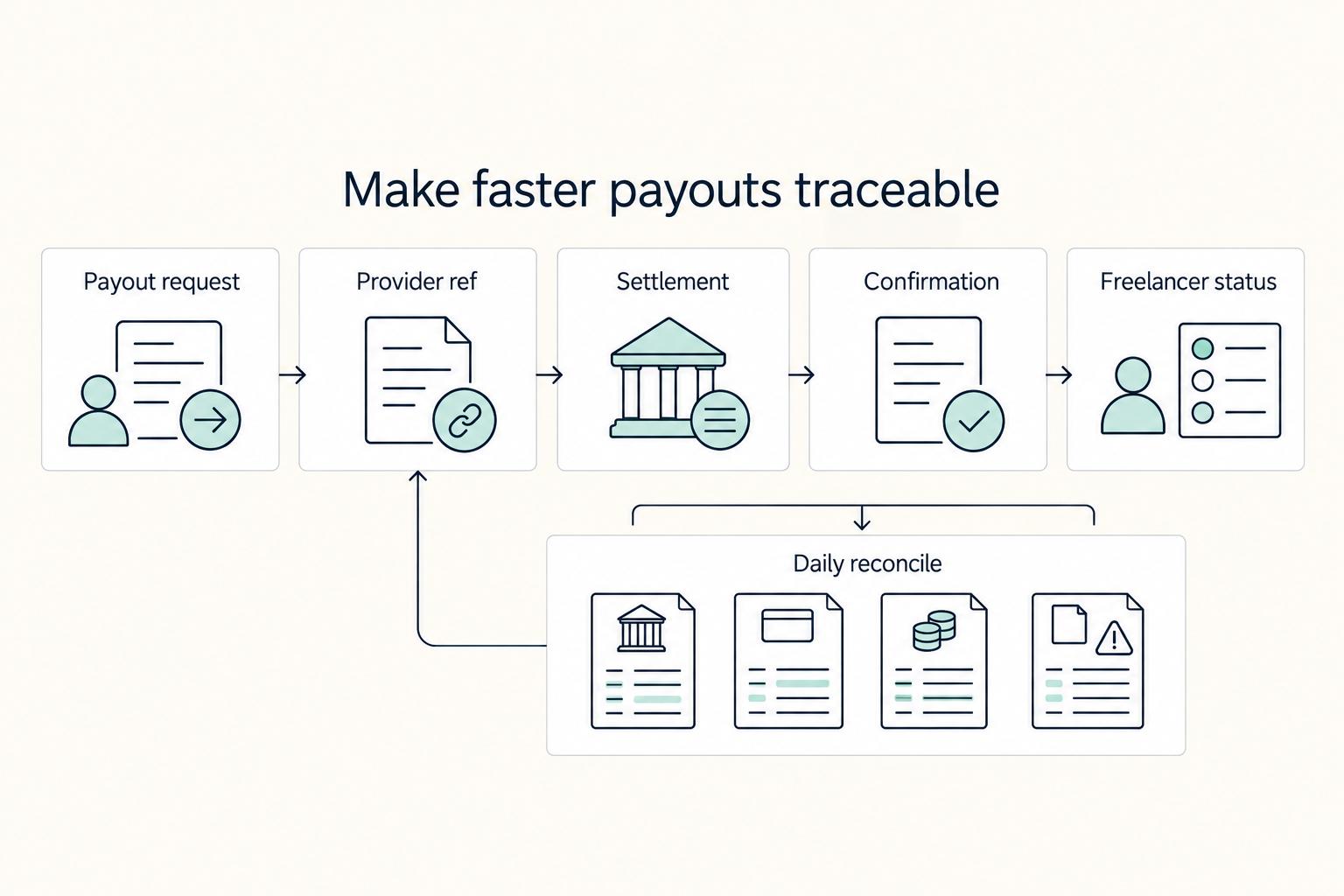
Step 1 Map the ledger path end to end. Track each payout in one chain: payout request, provider reference, settlement event, payout confirmation, and the status shown to the freelancer. Use consistent invoice IDs so reconciliation and lookup stay clean. For any payout ticket, your team should be able to verify the full trail without manual stitching.
Step 2 Map provider states to accurate public messages. Keep requested, processing, held, failed, unknown, completed and later returned or reversed outcomes where the provider supports them. Separate accounting posting from evidence of beneficiary receipt. Show an arrival estimate with its basis; do not label an unknown result failed or a ledger entry paid.
Step 3 Run a daily reconciliation pack. Review invoice totals, client credits, payout totals, and unresolved exceptions every day. Track timing with a consistent metric such as average time to pay, and separate that from vendor speed claims until those claims are validated in your own data. If totals look fine but exceptions keep growing, treat that as an operational warning.
Step 4 Make recovery durable. Keep payout intent, provider attempts and financial posting identities distinct. Resolve the original unknown result before replacement, within the provider’s idempotency scope and retention. Authenticate webhook events, store them durably and recover unfinished processing. Deduplicate event delivery and financial effects separately; a recorded event ID alone must not suppress work lost in a worker failure.
Use crypto only after finance has weighed volatility, documentation, and counterparty expectations: How to Get Paid in Crypto as a Freelancer lays out those risks.
Copy-paste checklist for the first 30 days#
Start with policy, then rails: in the first 30 days, faster payouts only hold if terms, funded work, and exception handling are clear.
| Action | Check or signal |
|---|---|
| Publish standard payment terms by contract type | Spot-check 10 new contracts to confirm the same terms appear in sales docs, checkout, and finance settings. |
| Launch agreed kickoff funding rules | Record receipt and any authorized exception with its funding owner. |
| Choose rail defaults from a comparison, not preference | Check PayPal's Policy Updates page and each provider's last-updated date before locking defaults. |
| Gate accelerated payouts explicitly | Compare approval-to-disbursement time and exception rate before and after activation. |
| Run daily reconciliation and exception review | Support should be able to answer "where is this payment?" without email-thread digging. |
| Review KPI movement weekly | Track time-to-paid, dispute rate, failed payout rate, and support tickets by contract type and rail. |
| Keep one fallback path ready | Resolve the original attempt before replacement or rerouting; rollback governs future instructions. |
- Publish standard payment terms by contract type.
Split terms for hourly and fixed-price contracts on day one, and define invoice cadence, approval cutoffs, dispute handling, funded kickoff, milestone language, and acceptance authority. Verification: spot-check 10 new contracts to confirm the same terms appear in sales docs, checkout, and finance settings.
- Launch funded kickoff rules.
For new agreements, define any deposit, funded milestone or other start condition and its refund treatment. Record exceptions and their funding owner. Preserve existing work, payment and delivery obligations rather than applying a new rule unilaterally.
- Choose rail defaults from a comparison, not preference.
Price client collection and outbound contractor payment separately. For each actual product and country, record fees, FX, available-funds timing, destination eligibility, arrival estimate, recovery rules and reconciliation references. Check current product terms before changing the default.
- Gate accelerated payouts explicitly.
Document acceleration eligibility, payout-detail validity and currently release-blocking requirements. Keep reporting, tax collection and any applicable withholding treatment separate. Start with a small eligible cohort and monitor timing and exceptions without overriding owed-payment obligations.
- Run daily reconciliation and exception review.
Assign one owner to a dashboard that links request ID, provider reference, settlement event, payout confirmation, and customer-visible status. Review failed, held, reversed, and unresolved items every day. Test: support should be able to answer "where is this payment?" without email-thread digging.
- Review KPI movement weekly.
Track time-to-paid, dispute rate, failed payout rate, and support tickets by contract type and rail. If collection speeds up but failed payouts or tickets rise, you have moved the bottleneck instead of fixing it.
- Keep one fallback path ready.
Define a policy rollback for future instructions if acceleration increases cost or risk. Before replacing or rerouting any submitted payout, resolve its original attempt so it cannot also execute. Slowing future releases does not undo money already delivered.
Use the free invoice generator to record the agreed amount, currency, due date and client details before you troubleshoot the payment path.
Frequently Asked Questions
What makes freelancer payouts slow even when invoices are sent on time?
A timely invoice can still wait on client approval, collection, funds availability or the outgoing bank leg. Record work acceptance, invoice submission, client payment, available balance, payout submission and confirmed arrival separately. Review one late case against its agreed due date and funding obligation. Assign the stalled stage to its owner rather than treating every delay as a processor-speed problem.
`deposit payment` vs `milestone billing` vs weekly `invoice` cadence: which one usually improves cash flow fastest?
A negotiated deposit moves client funding before work, so it can improve project cash flow earlier than invoicing completed work. Its amount, refund treatment and purchasing feasibility need agreement. Milestones reduce the amount of work waiting for acceptance; weekly invoicing reduces invoice-creation delay. Neither automatically shortens the client’s approval process or a provider’s banking timeline.
When do accelerated options like `Upwork Faster Payouts` help, and what commonly disqualifies accounts?
Upwork’s faster payments apply to eligible hourly earnings for Top Rated and Top Rated Plus freelancers and agencies, shortening the usual ten-day availability cycle to five days. The client review period remains; fixed-price earnings are excluded. The client must be charged successfully. Disputed hours or refunds can prevent faster availability; Upwork’s troubleshooting guidance notes refund-affected amounts can follow the standard cycle. Availability in Upwork is separate from withdrawal arrival at the bank.
Should we prioritize `online payments` or `bank transfers` for global freelancer payouts?
Choose separately for client collection and contractor disbursement. Compare the actual product’s total fees, FX, available balance, destination eligibility, arrival estimate, status evidence and return handling. An online collection method is not itself an outbound payout rail.
How do we balance faster `payout date` targets with fraud, dispute, and compliance risk?
Confirm the agreed amount and due date, available funding and selected program’s current eligibility. Price any acceleration and identify who funds an advance before promising an earlier date. Apply current release-blocking provider requirements and documented lawful payment conditions to the affected amount. Track tax documentation, reporting and withholding separately; acceleration ineligibility does not erase the underlying payment obligation.
What should we monitor in the first month to confirm payout changes are working?
Watch whether invoices are going out quickly, whether they need correction, and whether deposits are collected before work starts. Also review how many payments slip late and whether client-facing terms were acknowledged before kickoff. Compare delayed cases one by one, not just in aggregate. If payments are technically faster but late-payment patterns persist, you have moved the bottleneck rather than fixed it.
Try a related tool
Researched and edited by the Gruv editorial team. Gruv builds cross-border billing, payouts, and finance-operations software for global businesses.
Sources
Includes 2 external sources outside the trusted-domain allowlist.
Educational content only. Not legal, tax, or financial advice.
Related Posts
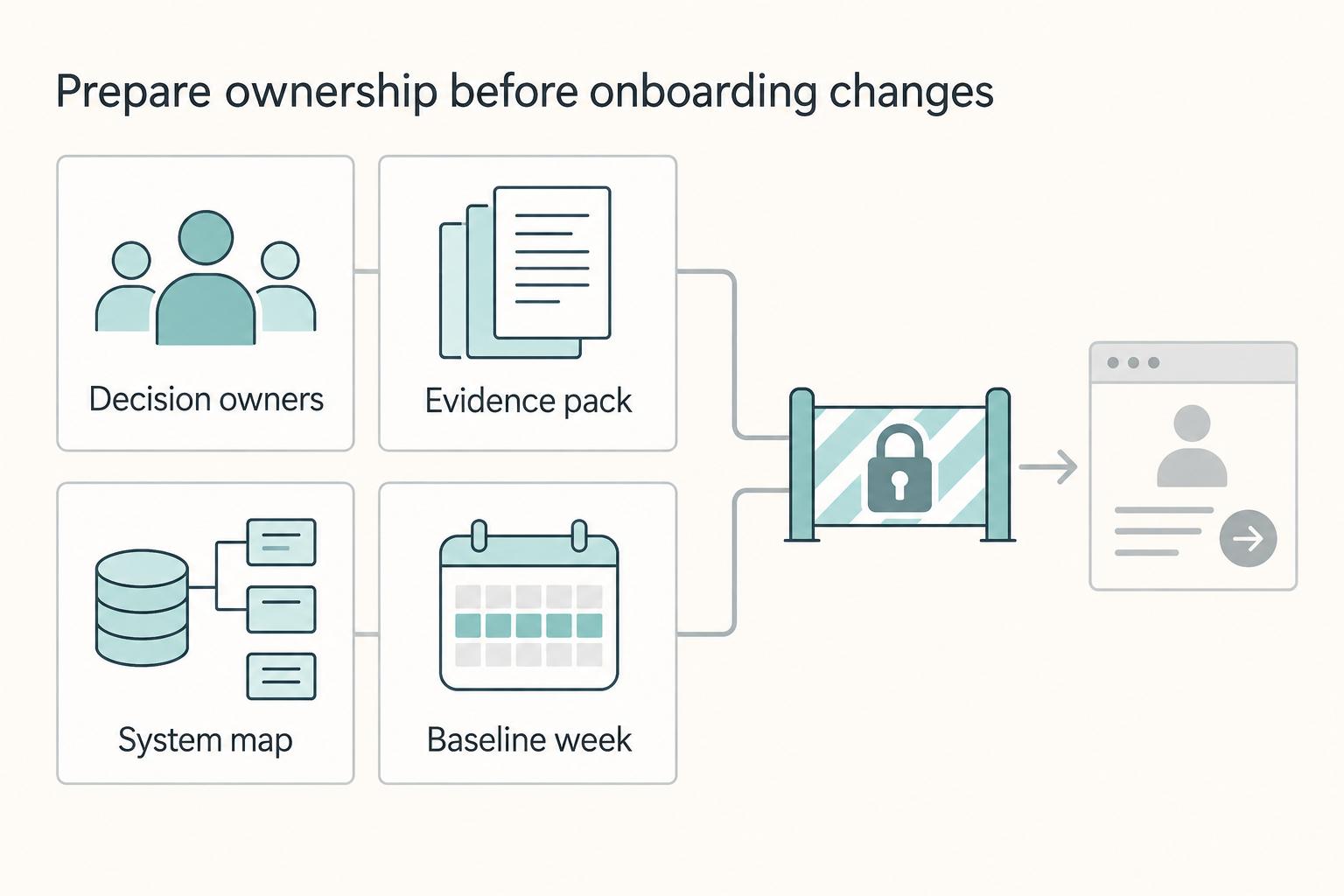
Affiliate Onboarding for Faster First Payouts Without Added Churn
Treat first payout as a retention decision, not just an accounts payable task. The goal is not to pay everyone faster at any cost. It is to shorten time to first payout without weakening the checks that protect margin, approvals, and trust.
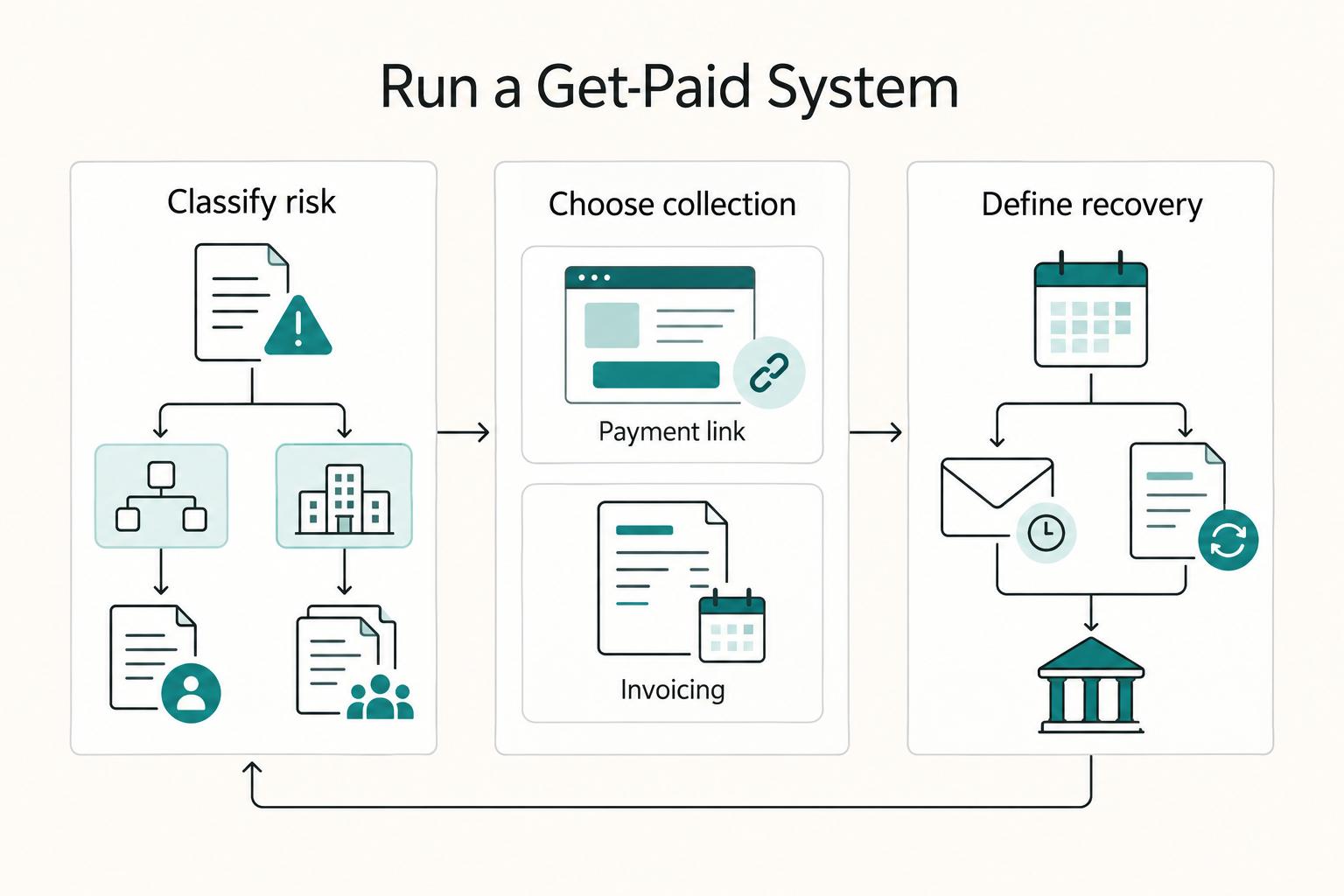
How to Use Stripe Payment Links for Easy Invoicing
**Use Stripe Payment Links for shareable checkout and Stripe Invoicing for customer-specific billing. Verify the actual payment state before releasing work at the agreed milestone.**
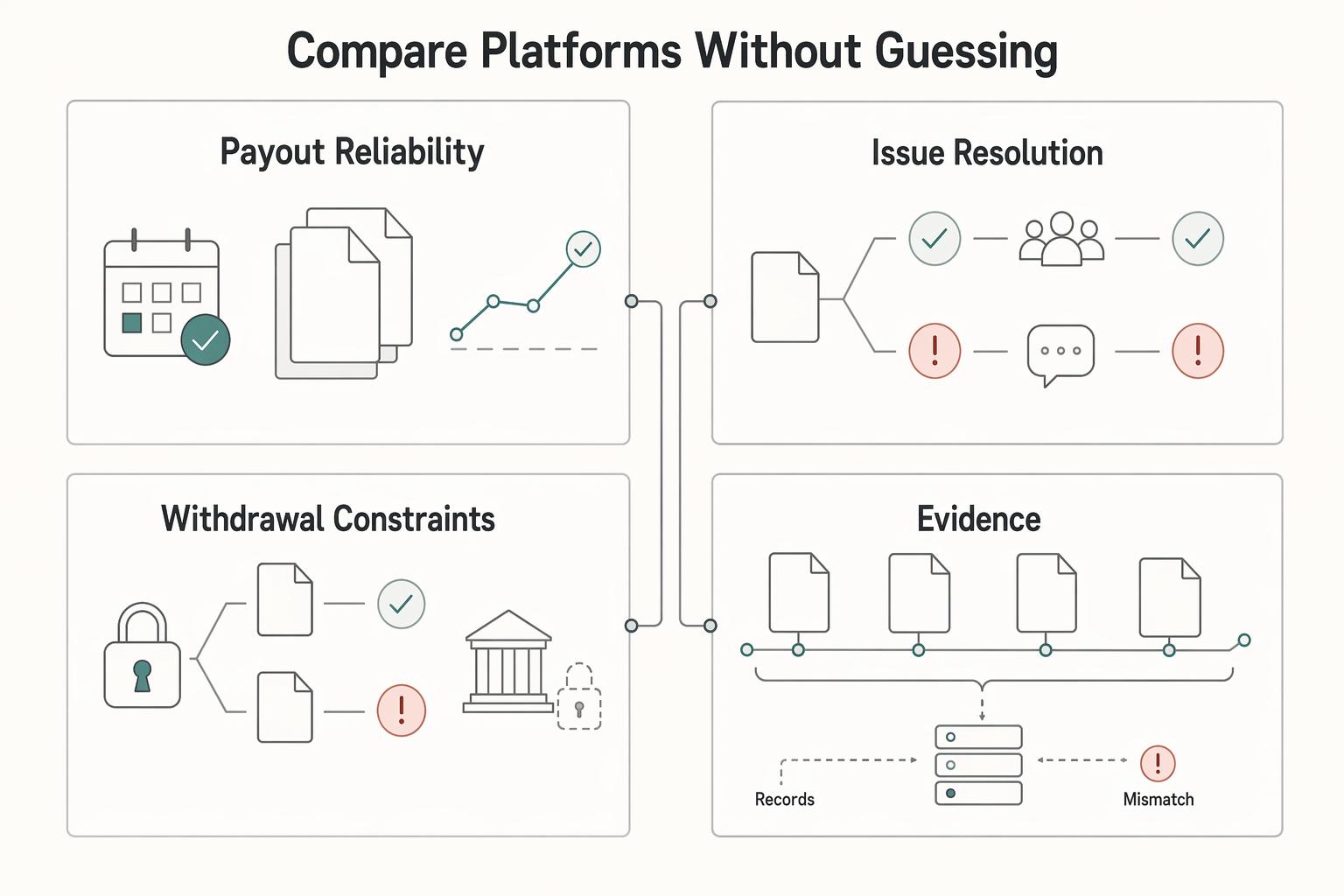
How to Get Paid in Crypto as a Freelancer (and Manage the Risks)
When a client wants to pay in crypto, compare the whole route: network costs, conversion spread, withdrawal fees, receipt timing, and the records you can retain. The goal is a payment you can verify and reconcile, with enough time to turn it into the currency needed for your expenses.