
Quick Answer
Map the path from signup to first payout into five owned stages, then fix the single bottleneck causing the longest wait. Keep verification and payout-eligibility gates where loss exposure is real, but remove duplicate reviews that add delay without reducing risk. Publish clear payout terms up front, including commission structure and payout schedule, and require complete payout details before earnings accrue. Use a partner journey dashboard plus weekly baselines for time-to-activation and time-to-revenue so progress is measurable and repeatable.
Why fast first payout is the retention lever most teams miss#
Step 1. Set the target as speed with controls intact#
Treat first payout as a retention decision, not just an accounts payable task. The goal is not to pay everyone faster at any cost. It is to shorten time to first payout without weakening the checks that protect margin, approvals, and trust.
That matters because early growth can hide retention problems. A new partner may sign up, generate interest, and even send traffic, but if getting paid feels slow, unclear, or inconsistent, churn risk can rise before the relationship is established.
Verification point: if you cannot currently show where partners are waiting between signup, approval, conversion, and payout release, you do not have a speed problem mapped yet. You have a visibility problem first.
Step 2. Name the tension between growth, risk, and margin#
This is where teams usually talk past each other. Founders and revenue leads want faster partner activation because pipeline pressure is real. Product teams want fewer steps because friction kills completion. Finance and risk teams want controls because weak payout logic, missing details, or loose approvals can create losses that are hard to unwind.
All of them are right, which is why the conversation stalls. Speed without controls can create payout errors. Controls without clear design can create avoidable delay. Margin depends on getting both right, especially when switching costs are lower and retention matters more.
A common failure mode is treating every delay as a fixed requirement. Another is removing review steps without deciding who owns exceptions. If your team cannot answer "who approves payout eligibility," "what blocks release," and "how rejected payouts recover," you are relying on heroics instead of a repeatable process.
Step 3. Use this guide to make ownership and recovery explicit#
Advice often stays at a high level: simplify onboarding, automate checks, communicate clearly. Useful, but not enough when you are trying to change operating behavior across product, revenue, and finance.
This guide takes a more practical route. You will map the path from signup to first payout, assign owners to each stage, define pass-fail checkpoints, and separate controls you must keep from friction you can remove. You will also build the evidence pack most teams skip: current signup steps, commission structure, payout schedule, payout rejection reasons, and first-payout support tickets.
Expected outcome: by the end, you should be able to point to one bottleneck, one owner, and one recovery path for the failures that create churn. That is the difference between hoping partners get paid faster and proving where the delay actually lives.
We covered this in detail in How to Get Paid in Multiple Currencies Without Forced FX.
What to prepare before you change onboarding#
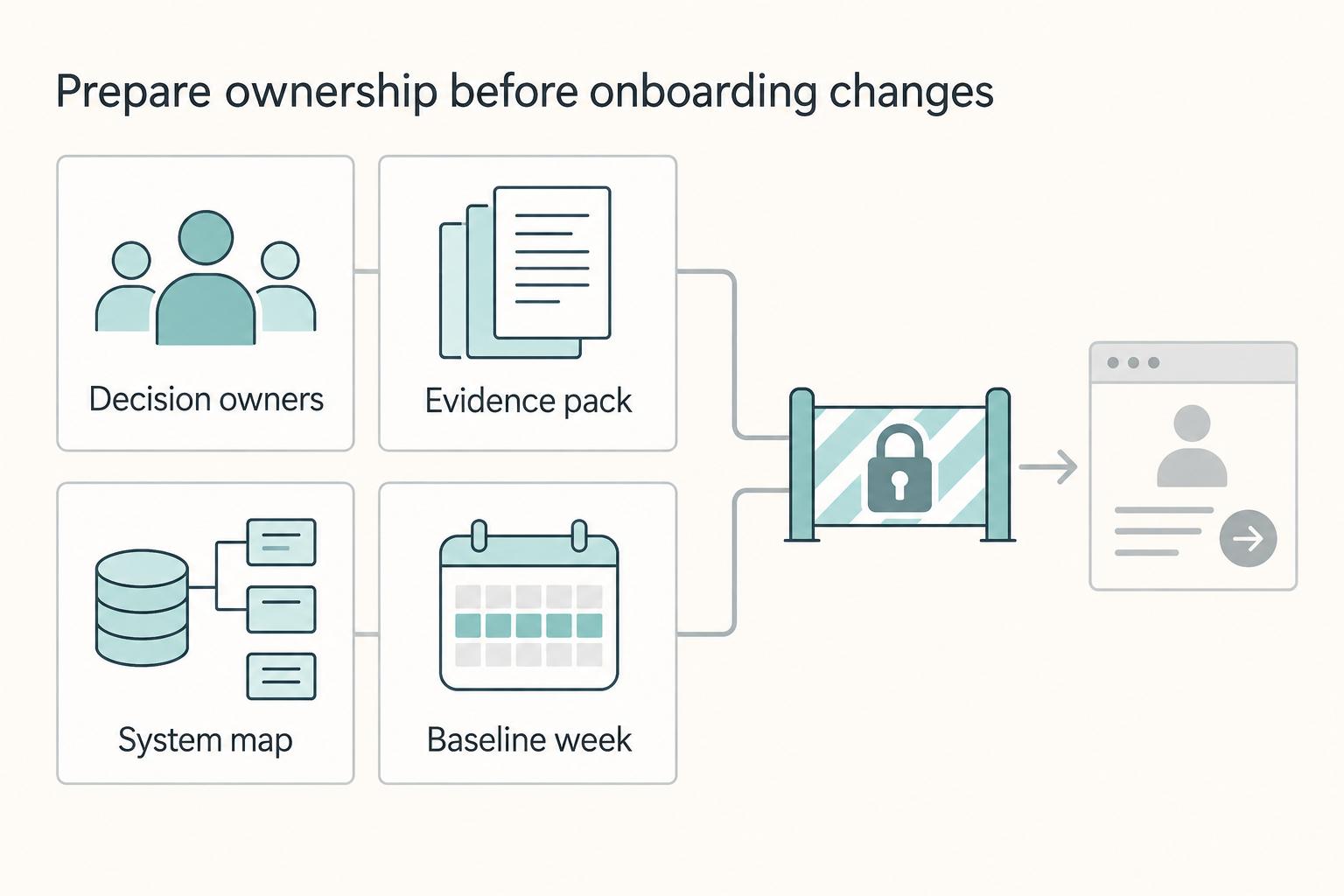
Before you remove friction, lock down ownership, evidence, and systems first. Faster onboarding only helps if you can see exactly where first payout is getting blocked.
| Preparation area | Items to confirm |
|---|---|
| Decision areas | Onboarding; payout operations; compliance approvals |
| Minimum evidence pack | Current signup steps; commission structure; payout schedule; payout rejection reasons; first-payout support tickets |
| System map | Affiliate portal; affiliate software; Partner Relationship Management (PRM) system; task management system |
| Baseline week | Time-to-activation; time-to-revenue; first payout |
Step 1. Assign one owner per decision area. Name one owner for onboarding, one for payout operations, and one for compliance approvals in your affiliate program. These may sit in the same team, but decision rights need to be explicit so blockers are routed quickly.
Verification point: you should be able to state who approves partner entry, who releases payout, and who clears exceptions.
Step 2. Pull a minimum evidence pack before making changes. Collect current signup steps, commission structure, payout schedule, payout rejection reasons, and first-payout support tickets. Include the steps affiliates actually experience: registration, tax-document collection, orientation, and partner information capture.
Step 3. Confirm your system map and source of truth. List each system touching the path to payment: affiliate portal, affiliate software, Partner Relationship Management (PRM) system, and task management system. Then map where each status is created and which system is authoritative.
Step 4. Freeze one baseline week. Use one recent week to baseline time-to-activation, time-to-revenue, and first payout with definitions you will reuse after rollout. If the baseline is not reproducible, improvement claims are not reliable yet.
Map signup to first payout with explicit stages and checkpoints#
The most reliable way to speed first payout without weakening controls is to map onboarding as explicit stages with clear owners, pass/fail checks, and required artifacts.
Use the same five stages every time: signup, verification, enablement, first conversion, and payout release. Track time-to-activation (signup to enablement) and time-to-revenue (enablement to first conversion) so delays are visible by stage, not hidden inside one total cycle-time number.
| Stage | Primary owner | Pass criteria | Fail signal | Required artifact |
|---|---|---|---|---|
| Signup | Onboarding owner | Partner submits required profile fields | Incomplete or abandoned profile | Approved profile record |
| Verification | Compliance or ops owner | Identity, tax, and payout details accepted | Verification pending, rejected, or missing payment setup data | Accepted payout details and required verification record |
| Enablement | Partner success or onboarding owner | Partner is approved to operate and has access to needed materials | Approved in one tool but blocked in another | Activation status in source of truth |
| First conversion | Revenue or program owner | Valid conversion event is recorded and approved | Conversion cannot be validated or is disputed | Confirmed conversion event |
| Payout release | Finance or payout ops owner | Partner meets payout eligibility and payment can be released | Eligible earnings exist but release is held | Payout eligibility confirmation |
Add one checkpoint per stage: what must be true before the partner can move forward. Keep checkpoints evidence-based. Early onboarding should collect what you need to verify, approve, and begin the relationship, including payment setup data like bank details.
A partner can still be blocked after hitting performance thresholds if admin steps are unresolved. For example, in a threshold-based program, someone may hit 50 followers, 500 total broadcast minutes, seven separate days, and an average of three concurrent viewers within a 30-day window, but unresolved email verification or tax prompts can still prevent activation.
Use a partner journey dashboard to group partners by current stage and show how long they have been there, plus owner, missing artifact, and last status update. Then apply one rule stage by stage: if failure is high and risk value is low, simplify or automate; if risk value is high, keep the stage and improve instructions and exception handling.
For a step-by-step walkthrough, see How to Get Paid in Crypto as a Freelancer (and Manage the Risks).
Separate protective controls from avoidable friction#
Once you can see where partners stall, separate controls that protect money, compliance, or payout accuracy from steps that only add delay. Keep strict gates where loss exposure is real, and remove manual review where the same outcome can be validated earlier with structured inputs and required artifacts.
Step 1. Bucket each gate by what it protects#
Split every onboarding check into two buckets: must-keep policy gates for partner activation or payout release, and avoidable friction inside the onboarding program.
Use one test for each gate: what loss happens if this check fails? If the loss is unapproved access, bad payout data, compliance exposure, or money sent to the wrong recipient, keep it. If the reason is mostly "a human prefers to look," treat that as friction unless it protects a specific risk.
Define each gate with evidence, not opinion. For every check, name the required artifact and source of truth, such as an approved profile record, accepted payout details, any required verification record, and payout eligibility confirmation.
Step 2. Make payout-release risk tiers explicit#
Write clear release rules so finance and product stop debating edge cases ad hoc. Think in payment-lifecycle terms: validation, release, reconciliation, and dispute handling should follow one explicit control path.
| Gate option | Fraud or payout risk impact | Ops effort | Delay to first payout | Use when |
|---|---|---|---|---|
| Structured input validation at signup | Medium reduction by catching bad or incomplete data early | Low once configured | Low | Required fields can prove what reviewers would otherwise check later |
| Manual review before partner activation | High for edge cases, but inconsistent if criteria are vague | High | Medium to high | Access or profile risk cannot be validated from submitted data alone |
| Manual hold before payout release | High when loss exposure is direct | Medium to high | High | Money could be released incorrectly or before required verification is complete |
| Automated payout release after required artifacts are accepted | Medium to high when the evidence pack is complete | Low | Low | Payout details, eligibility, and approval status already exist in structured form |
Step 3. Move validation upstream and narrow exceptions#
Run each validation once, as early as possible, and reuse that accepted status downstream. Re-checking the same payout details across onboarding, support, and finance usually adds more delay than protection.
Keep a narrow manual exception path for incomplete documents, mismatched payout details, or disputed conversions. Keep the standard path automated for everyone else.
The operating rule is simple: protect points where money and compliance are exposed, and remove review steps that re-prove what structured inputs already established.
Set payout terms affiliates can trust on day one#
Affiliates trust onboarding when payout terms are clear before they start earning. Publish those terms in the affiliate portal in plain language, and require terms acceptance before payout eligibility.
Step 1. Publish one payout terms page partners can actually use#
Give affiliates one portal page that clearly covers commission structure, how approvals work, and your payout schedule. Keep this aligned with your terms and conditions contract so partners, support, and finance all rely on the same rules.
Use consistent labels across the portal, terms acceptance flow, and support responses. If wording differs across those touchpoints, avoidable disputes follow.
A practical minimum page covers:
- how commission is earned
- when a conversion moves from pending to approved
- what must be true before payout release
- the payout schedule used by your program
- where partners can see status changes
Step 2. Offer payment choices and explain what affects timing#
Where supported, show payment options early so affiliates can choose their preferred payment method before earnings accrue. This sets expectations early and reduces confusion later.
Be explicit about process, not promises. State which issues can delay payout processing, such as incomplete payout details, missing terms acceptance, or unresolved eligibility checks. Avoid implying one method is always fastest unless your program evidence supports that claim.
Step 3. Add the three payout scenarios affiliates always ask about#
Add three short, concrete scenarios in the portal so partners can see how payout status changes in real cases:
| Scenario | What to explain |
|---|---|
| First conversion approved | Show the path from recorded conversion to approved earnings to payout release |
| Disputed conversion | Payout for the disputed amount can pause until review is complete, and where that status appears |
| Delayed payout release | List common causes, such as missing payout details or incomplete terms acceptance, and what the partner needs to submit |
Teams often publish commission terms but stay vague on approval and payout-status rules. Scenario-based language up front helps partners understand timing and can reduce avoidable support churn.
This pairs well with our guide on How a US Citizen Can Get Paid by a Brazilian Company Reliably.
Build two onboarding tracks for speed and control#
Once payout terms are clear, split onboarding into two tracks so partners can start promoting sooner without loosening payout controls.
Step 1. Split setup from earning and payout events#
Manage onboarding in two lanes:
- Operational onboarding: account setup, required documents, portal/tracking access, and profile completion.
- Transactional onboarding: tracked referral, conversion approval, and payout eligibility events.
These are working labels, not formal industry categories, but the separation keeps low-risk admin work from blocking payment-state decisions. Your partner record should show setup status and transaction status separately.
Step 2. Use a persona-based journey instead of one default sequence#
Do not run every partner through the same task order. Clear guidance helps, and partners usually move faster when they know exactly what to do first.
A practical check: the first actions should match the partner type and move them toward first promotion quickly, without forcing unnecessary steps first.
Step 3. Match assets to the right track and fix the right bottleneck#
Put setup aids in the operational track, and conversion-focused materials in the transactional track. Use your partner playbook, marketing collateral, and launch prompts where they directly support first-conversion progress.
Use this rule to diagnose delays:
- If onboarding stalls before first conversion, improve activation prompts and reduce setup friction.
- If conversion happens but payout stalls, fix payout-eligibility logic first (for example: accepted terms, payout method on file, required documents, conversion approval state).
Both weak onboarding and weak payout handling can drive partners off early, but they fail at different points. Diagnose the failure point first, then fix that lane.
Related: Contractor Onboarding Best Practices: How to Reduce Drop-Off and Accelerate Time-to-First-Payment.
Fix the failure paths that create churn#
After you separate setup from payout eligibility, exception handling becomes the churn lever. The main risk is unresolved ambiguity: when partners cannot tell approval status, what is missing, or what happens next, frustration rises and disengagement follows.
Step 1. Audit the breaks your affiliate software keeps recycling#
Start with your own exception logs, support tickets, and payout rejections, then rank issues by impact in your program. Treat these as failure paths to audit first, not universal top causes:
| Failure path | Issue described |
|---|---|
| Incomplete profiles | Block progression |
| Invalid payout details | Delay payouts |
| Disputed commissions | Referral or approval logic is challenged |
| Unclear approval status | No clear next action |
Use one verification standard for each failure type: current count, oldest age, current owner, and next action should be visible without digging through free-text threads. If explanations only live in chat or inboxes, the same issues will keep bouncing across ops, finance, and support.
Step 2. Add recovery steps, handoffs, and SLA clocks#
Every exception needs a defined recovery path with explicit ownership from detection to closure. Set who detects it, who resolves it, and who communicates with the partner, then start an internal response and closure clock for each case type.
The goal is not one universal SLA number. The goal is that each exception has a named owner, a visible status reason, and a clean handoff when another team must act.
Step 3. Reconcile before release and after status changes#
Reconciliation is what lets you move quickly without creating payout trust issues. Check record alignment before payout release, then check again after status updates so partner-facing and finance-facing statuses stay consistent.
Keep audit notes traceable: who checked, when, what records were compared, what mismatch was found, and what action resolved it. Skipping the post-update check is how you end up with conflicting payout statuses and partner churn.
Copy paste first payout readiness checklist#
First payout readiness is a go/no-go check: if any item below is unclear, fix it before you add more partners.
- Document the onboarding-to-payout flow end to end, with one owner per stage, clear handoffs, and pass/fail checks.
- Verify a new teammate can identify who approves setup, who confirms conversion tracking, and who releases payment without relying on chat context.
- Publish commission rules and payout conditions in the affiliate portal before partners send traffic.
- Pressure-test commission economics with LTV, CAC, and margins before finalizing rates.
- If helpful for planning, use Reditus reference points: many SaaS programs allocate 10-30% of customer lifetime value to affiliates, and a 60-90 day cookie window is typical.
- Define weekly KPIs for affiliate-driven signups, revenue contribution (% of MRR), CAC, and conversion rate.
- Confirm conversion tracking is working inside the affiliate flow; treat unclear tracking as a launch blocker.
- Use this checklist as pre-launch discipline to reduce avoidable errors like commission mistakes and broken links.
For related reading, see Best Affiliate Marketing Networks for Beginners Who Need Reliable Payouts.
The takeaway for founders and operators#
Do not optimize every onboarding step for speed. Faster first payout usually comes from keeping risk-reducing controls and removing friction that only creates rework.
Step 1. Treat affiliate onboarding as foundational work#
Treat affiliate onboarding as foundational work, not a one-off cleanup. Partnerships are a long-term strategy, so make the operating structure explicit early: clear owners by stage, visible payout terms, and a defined recovery path when something breaks.
Pressure-test the process with a simple record check. Pull five recent partner records and ask someone outside the day-to-day queue to confirm approval status, payout details, conversion status, and payout timing from the record alone. If they need chat threads to answer, speed is still dependent on heroics.
Step 2. Keep vetting fast and remove low-value friction#
Keep vetting and approvals fast, but careful. Preserve controls where loss exposure is real, especially around approval status, payout eligibility, and disputed commissions. Remove low-value friction like duplicate data entry, hidden terms, or manual follow-up for details you could collect at signup.
If your entry point is creating drop-off, test in-product discovery and signup. It can reduce friction, but it only improves payout speed when the partner record is complete enough to move through approval and payment without rescue work later.
Step 3. Audit the flow and prioritize the biggest bottleneck#
Target repeatability, not speed in isolation. Weak structure often shows up as low engagement, wasted effort, missed revenue, and delayed payouts. Common failure modes are operational: incomplete profiles, payout details collected too late, unclear commission approval status, and no clear owner when first payout is held.
Use one narrow next step: audit your current flow against your checklist, then prioritize the bottleneck causing the most delay in your own process. If delays happen before earning starts, fix signup and activation friction first. If delays happen after a valid conversion, tighten payout eligibility logic, published terms, and exception handling before changing anything else.
That is the core takeaway: first-payout speed becomes reliable when ownership, evidence, and recovery are built into the process from day one.
Frequently Asked Questions
What are the most important affiliate onboarding best practices to get partners paid faster?
Start with the basics that remove avoidable delay: collect key affiliate information at signup, including country, tax information, and preferred payment method. Give partners fast access to the affiliate portal and keep communication consistent so new partners do not drop off before their first referral. Strong onboarding helps ready affiliates for an on-time first payment.
How do we reduce time from signup to first payout without increasing compliance risk?
Move required checks earlier instead of skipping them. Registration, tax-document collection, and partner orientation are part of onboarding, so handle them in a clear sequence and confirm each one before first payout. Collecting structured information up front can reduce later review friction without removing key controls.
What is the practical difference between operational onboarding and transactional onboarding?
This guide does not explicitly define a formal split between operational onboarding and transactional onboarding. A practical way to use the terms is to treat onboarding as the setup phase (registration, required documents, orientation, and portal access) that starts at acceptance and continues through first conversion and beyond.
What must be true before a partner is eligible for first payout?
This guide does not provide a single universal payout-eligibility checklist. What they do support is that onboarding should include registration, tax-document collection, orientation, and key affiliate information (including preferred payment method), and that doing this well improves first-payment readiness.
Which metrics matter most for onboarding speed and payout reliability?
This guide does not define one required KPI set or an exact signup-to-first-payout SLA. A practical approach is to track where onboarding stalls, especially around missing required information, tax-document completion, and inconsistent communication, since those issues are tied to delayed first outcomes and early partner drop-off.
How should we handle payout disputes or failed payout details without increasing churn?
This guide does not specify a detailed dispute-handling workflow. They do support avoiding clunky processes and inconsistent communication, and giving partners clear, specific requests for any missing documentation or payout information needed to move forward.
Try a related tool
Researched and edited by the Gruv editorial team. Gruv builds cross-border billing, payouts, and finance-operations software for global businesses.
Sources
Includes 5 external sources outside the trusted-domain allowlist.
- comptroller.texas.gov/purchasing/docs/96-1809-4.0.pdftrusted
- scholars.unh.edu/cgi/viewcontent.cgitrusted
- stripe.com/resources/more/how-to-implement-split-paymen...trusted
- businessofapps.com/insights/saas-user-retention-in-2026-how-to-...external
- couponaffiliates.com/affiliate-onboardingexternal
- crayo.ai/blog/requirements-for-twitch-affiliateexternal
- help.getreditus.com/saas-checklist-launching-an-affiliate-programexternal
- impact.com/affiliate/affiliate-onboarding-challenges-an...external
Educational content only. Not legal, tax, or financial advice.
Related Posts
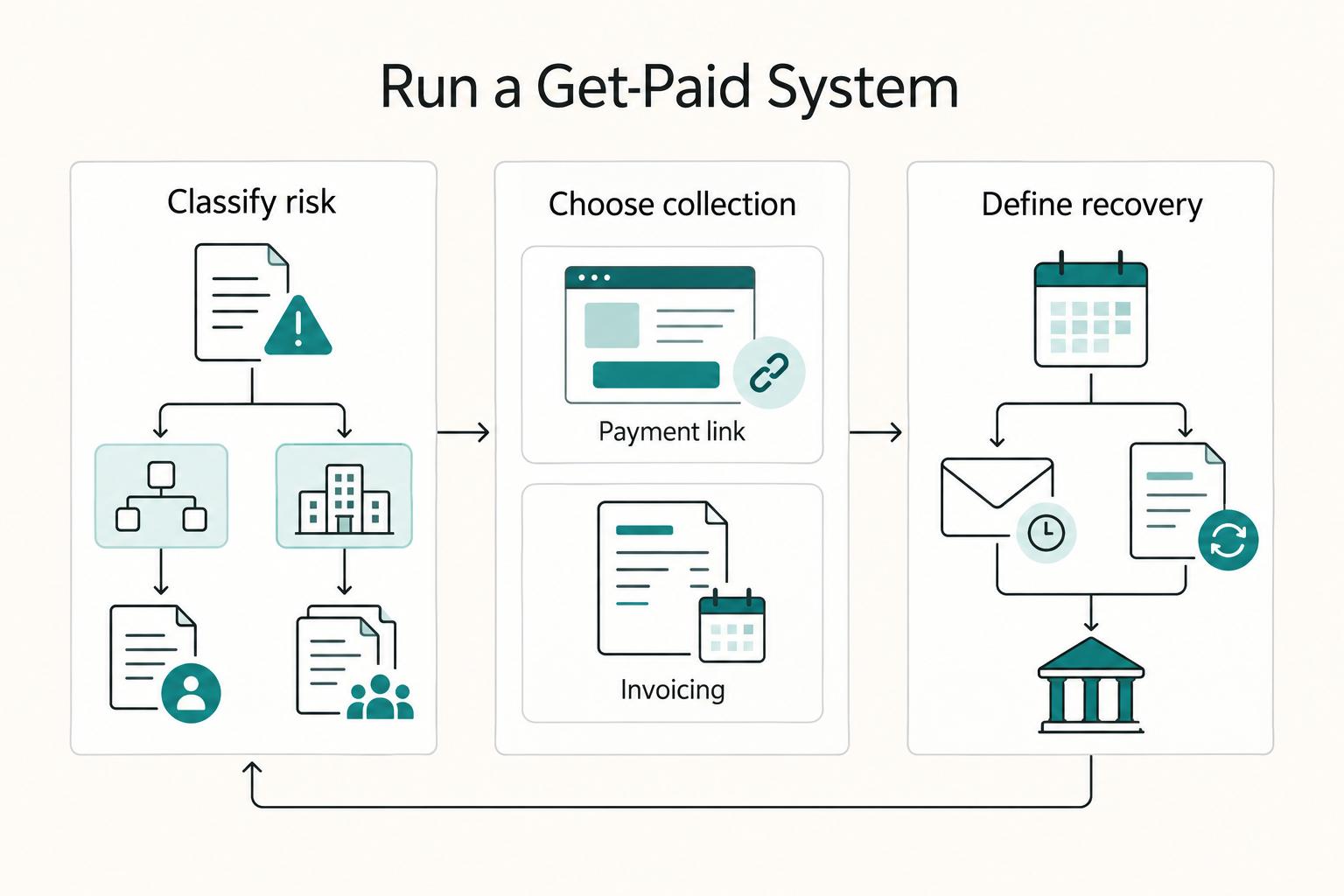
How to Use Stripe Payment Links for Easy Invoicing
**Build a risk-first get paid system with Stripe Payment Links for fast collection and Stripe Invoicing for controlled follow-through.**

Reduce Contractor Onboarding Drop-Off Before First Payout
If contractors stall between signup and first earnings, treat onboarding handoffs as an operations issue first, then confirm the causes with your funnel data. Drop-off often shows up at handoffs between identity checks, tax collection, document steps, and payout activation, especially when no one owns the full path. A cleaner intake form will not fix delays if identity verification is still pending, Form W-9 data is incomplete, or payout setup is unfinished in another tool.
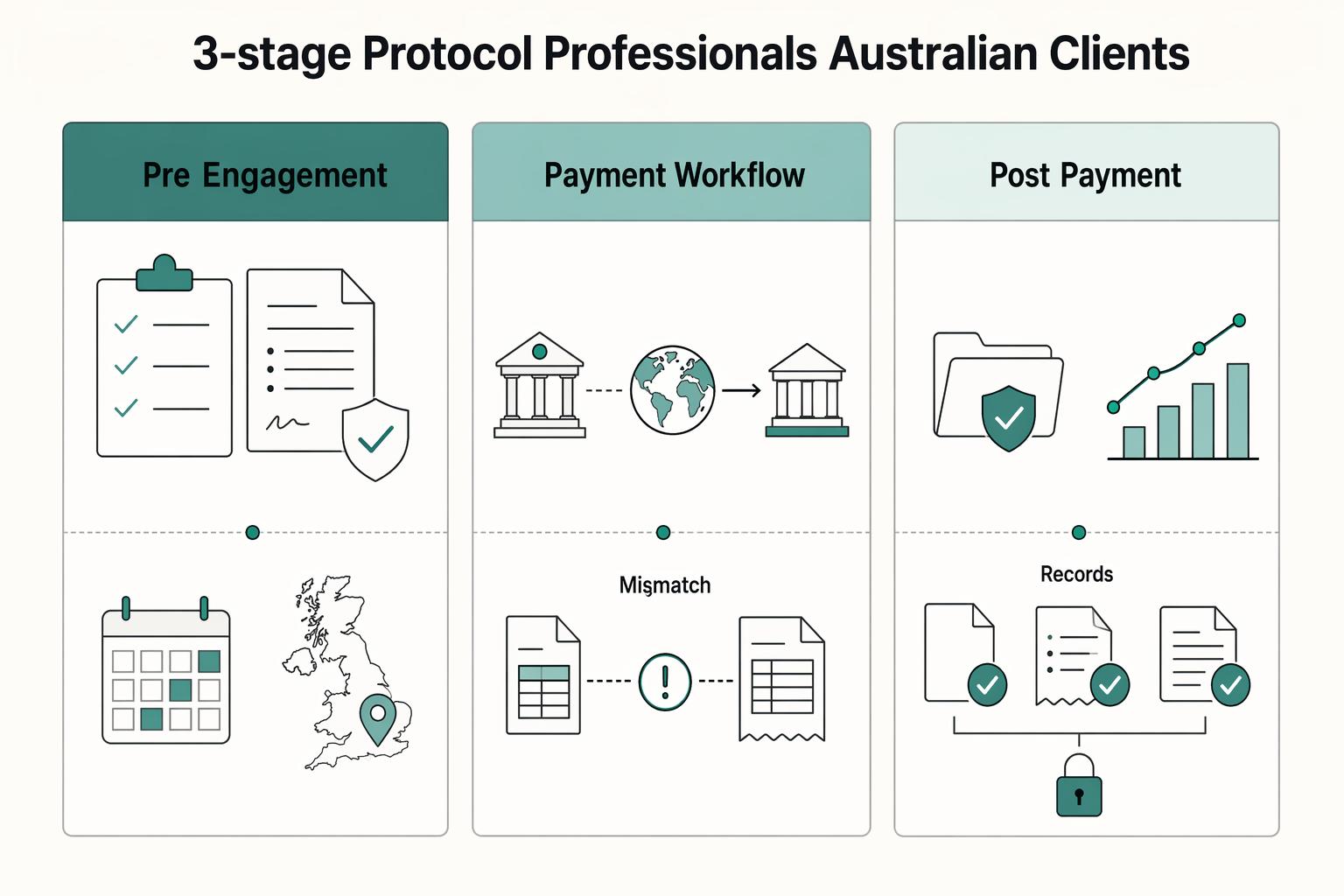
The Best Way for a UK Freelancer to Get Paid by an Australian Client
If you want predictable outcomes with an Australian client, manage three risks in order: contract scope, payment execution, and post-payment compliance. That sequence is what turns uncertainty into control.