
Quick Answer
Use an employer of record for platforms when you need to hire employees in a country before you open your own entity and speed matters more than immediate local control. Keep the boundary explicit: the provider handles the legal-employer layer, while your team still owns the actual work, manager conduct, records, and escalation flow. Before signing, require country-specific proof, a payroll calendar, termination and amendment steps, and a defined path for moving to your own entity later.
Start with the model decision before the vendor search#
Start with the operating model, not the shortlist. An employer of record for platforms is usually right when you need to hire an employee in a country before you have your own entity and you want legal employment coverage now, not six months from now.
For 2026, the most useful question is simple: are you bridging into a market, or are you building a permanent footprint? If you confuse those two goals, you end up arguing about vendor logos when the real decision is entity timing.
Bridge first if the market is uncertain. Build later only if the market earns it.
Define the operating goal before you compare providers#
We start with the operating goal. Use EOR when the hire is real but the market thesis is still provisional. If you are testing one country, opening one sales pod, or placing a first operations lead, a bridge model can be rational. If the country is already in the budget for durable headcount and long-term control, start the entity work earlier.
- Use EOR when speed matters more than immediate local control.
- Pause for entity setup when you expect permanent headcount in one market.
- Resolve classification first before you buy an employee solution.
- Treat payroll exports and offboarding data as requirements before procurement closes the deal.
If you need a simpler primer before this decision tree, read Employer of Record Explained: When Platforms Need One and When They Don't.
Name the owners before procurement starts#
We ask for named owners before procurement starts. Legal should own the contract posture. Finance should own payroll inputs, charge mapping, and downstream records. Operations should own onboarding, manager handoffs, and exception routing.
- Assign one legal owner for jurisdiction review and contract redlines.
- Assign one finance owner for payroll approvals, GL mapping, and archived reports.
- Assign one operations owner for onboarding tasks and issue escalation.
- Name the manager who will own role scope, performance, and access requests.
- Decide the approval path now for any move from EOR to entity.
That ownership step matters because EOR does not erase back-office work; it redistributes it. If your downstream record flow is already messy, fix that alongside the hiring model, not after signature. Our guide to accounts payable document management for platforms is useful when payroll and vendor records live in different systems.
Who should use an employer of record for platforms#
Platforms should use an employer of record when they need employee hiring coverage across borders, but not when they are really trying to solve contractor classification, merchant-of-record design, or revenue recognition. Those are separate decisions with separate owners.
| Signal | Better fit | Why |
|---|---|---|
| First employee in a new country | Employer of record | You can hire before entity formation while testing demand. |
| Large permanent team already planned | Local entity | Direct control and local infrastructure matter more than bridge speed. |
| Mostly independent contractors | Contractor compliance lane | You need classification and payout workflows, not employee payroll. |
| Question is revenue ownership | Merchant of Record or accounting review | Employment tooling will not answer principal-versus-agent treatment. |
Good fit for first-country hiring and market tests#
The strongest platform fit is a narrow launch: one country, a few hires, a real business case, and uncertainty about long-term scale. In that situation, EOR can buy speed without forcing you to open an entity before the market proves itself.
You still need discipline. Decide which roles truly need employee status, what support model your managers need, and how fast you would move to your own entity if the market works. If those answers are already stable, EOR may be a bridge, not the destination.
Wrong fit when the real problem is classification or merchant of record#
EOR is not a cleanup tool for blurry role design. If the real question is whether workers should remain contractors, move into a contractor compliance lane first and review how to pay international contractors compliantly before you convert the issue into employee payroll.
It is also the wrong tool when the live debate is buyer charges, seller remittance, or principal-versus-agent accounting. Route those questions to Merchant of Record for Platforms and the Ownership Decisions That Matter and ASC 606 for Platforms: How to Recognize Revenue When You're the Merchant of Record instead of asking HR tooling to answer accounting questions.
What does an employer of record handle for platforms#
An employer of record usually handles the legal-employer layer of the hire, while your platform still owns the work itself. That is the boundary to protect in every contract review and every operating handoff.
| Item | Usually owned by | What to verify |
|---|---|---|
| Employment contract, local onboarding, and payroll administration | Employer of record | Review the country template, payroll cutoff dates, and amendment process. |
| Day-to-day scope, targets, and performance management | Your platform | Confirm managers know those duties do not move to the provider. |
| Access provisioning, equipment, and process training | Your platform | Verify the onboarding sequence and the offboarding checklist. |
| Payroll data exchange, approvals, and issue escalation | Shared workflow | Review file formats, deadlines, and named escalation owners. |
What the employer of record usually owns#
In a practical platform setup, the provider should be able to show a localized employment contract, onboarding steps, payroll calendar, statutory benefits handling, and the written path for amendments and terminations. If that evidence is not ready during diligence, do not assume it will magically appear after signature.
We treat country proof as the threshold question. A provider with fewer jurisdictions but stronger local paperwork can be a better fit than a larger map with thin operating detail.
What your platform still owns#
Your team still owns job design, manager behavior, system access, security controls, compensation approvals, and the quality of the handoff into your internal finance stack. An EOR can run payroll, but it will not fix vague role scope or weak manager discipline.
We use a simple rule here: if a problem lives in product, finance, or people management after day one, assume it is still yours. If you want cleaner internal handoffs, pair the rollout with a documented exception path and a record trail that procurement and finance can both follow. That same discipline helps when you later outsource accounts payable for a platform workflow.
How is employer of record different from a PEO#
Employer of record and PEO are not interchangeable labels. If your team mixes them, the contract review will drift because the liability model and the operating assumptions are different.
Why the legal posture changes the contract review#
According to the NAPEO industry overview, a PEO works through co-employment. An EOR, by contrast, is used when another party needs to stand as the legal employer in the target jurisdiction. That difference changes how you read responsibility, local employment coverage, and entity assumptions.
For platforms, the practical takeaway is straightforward. If you do not have the local entity and need employee hiring now, start in the EOR lane. If you already have the employment footprint and want shared HR administration, a PEO comparison may make more sense.
When a PEO is the wrong comparison set#
Do not let domestic HR outsourcing lists distort an international hiring decision. If you need cross-border employer coverage, use EOR vs. PEO: What's the Difference? and A Guide to Employer of Record Services as the category reset before you shortlist providers.
The wrong comparison set wastes time because it hides the real diligence questions: who is the legal employer, what country documents exist, who owns payroll exceptions, and how cleanly can you leave later.
When should a platform open its own entity#
Open your own entity when the market is no longer experimental and direct local control has become more valuable than the speed of a bridge model. That shift usually shows up in headcount plans, control requirements, and tolerance for vendor dependency.
| Signal | What it suggests | Why it matters |
|---|---|---|
| Multiple long-term roles planned in one country | Start entity work | Economics and control are becoming durable. |
| Local sales or contracting needs require in-country presence | Start entity work | Employment design is now part of broader expansion. |
| Repeated payroll exceptions or custom policy requests | Entity may fit better | The vendor template is becoming a constraint. |
| Need for dedicated local benefits or compensation policy | Entity likely sooner | Direct control matters more than bridge speed. |
| Only one or two hires and uncertain demand | Stay EOR for now | Reversibility still has real value. |
Signals that EOR is still the right bridge#
We keep EOR in place when reversibility matters, the local team is small, and legal wants time before committing to permanent infrastructure. In that lane, the job is not to predict forever. It is to hire cleanly now while preserving an orderly next step.
- The country plan is real but the long-term headcount is still uncertain.
- You need only one or two hires before you know whether the market will scale.
- Your finance team can absorb the handoffs without building a custom process.
- You already know the switch trigger for moving to a local entity later.
Signals that entity setup should start now#
Entity work should start when the provider contract is becoming the bottleneck rather than the shortcut. That happens when local hiring is expanding, custom policy needs keep growing, or your finance team needs direct control over records and approvals.
- The country is already a planned operating hub rather than an experiment.
- You expect sustained headcount growth in one jurisdiction.
- Local policy or benefits design keeps falling outside the provider template.
- Your team needs direct legal and payroll control for operational or audit reasons.
We would not wait for total certainty. If two or three of those signals are already present, run the entity track in parallel so your EOR agreement does not become a permanent workaround.
How should platforms compare employer of record providers#
Compare providers with one weighted operating scorecard, not a rotating set of sales demos. The fastest way to buy the wrong EOR is to let each vendor define the criteria.
| Criteria | Weight | What good looks like |
|---|---|---|
| Country coverage for your actual launch markets | 30% | Localized contract and payroll proof for the jurisdictions you need now. |
| Employment scope and legal posture | 25% | Clear statement of who the legal employer is and how amendments and terminations work. |
| Support ownership and escalation design | 20% | Named contacts, country expertise, and issue-routing rules. |
| Systems handoffs and data exports | 15% | Payroll outputs, approval files, and record access that your team can actually use. |
| Offboarding and later transition terms | 10% | Clear exit steps, retained records, and migration support if you move to an entity. |
Start with country proof, not country counts#
Ask for country-specific proof before you debate software polish. A provider should show the localized employment contract, payroll timeline, statutory benefit approach, and the documented path for amendments and terminations in the jurisdictions you actually need.
We score missing proof as unknown, not as acceptable. Unknown is not neutral in a hiring workflow; it is execution risk.
Use reviews as discovery tools, not approval gates#
Use a directory like the SHRM Employer of Record category to generate a first pass only. It is useful for naming the market, not for proving country execution.
We narrow reviews into a three-vendor working set, then force every vendor through the same scorecard and evidence request. That keeps the conversation anchored to documents, owners, and exit terms instead of marketing copy.
What should be in your country evidence pack#
A provider is not ready for approval until it hands you a country evidence pack that your legal, finance, and operations leads can all review. Anything lighter is a discovery call, not diligence.
| Document | Why it matters | What to inspect |
|---|---|---|
| Sample employment contract | Shows that local terms actually exist | Employer name, probation terms, notice rules, IP language, and benefits framing. |
| Payroll calendar | Proves timing is real | Cutoff dates, pay dates, approvals, and correction path. |
| Statutory benefits summary | Shows the country lane is not generic | Enrollment timing, mandatory items, and employee-facing responsibilities. |
| Amendment and termination process | Shows how changes are handled | Who approves changes, notice requirements, and final-pay steps. |
| Data export sample | Shows what you keep after exit | Fields, format, historical access, and archive steps. |
| Support ownership map | Shows who actually answers problems | Named contacts, escalation route, and country expertise. |
Documents to request before signature#
We request the evidence pack before procurement treats the deal as selected. The pack should be country-specific, dated, and redacted only where necessary. A generic policy deck is not enough.
- One localized employment contract for each launch country.
- A payroll calendar with cutoffs, approvals, and pay dates.
- A benefits summary that names country-specific statutory obligations.
- A written change and termination process for amendments, leave changes, and offboarding.
- A sample export for payroll history and signed employee documents.
- A named escalation map for support, legal questions, and urgent payroll issues.
We also ask one blunt question: if we leave in twelve months, what payroll records, signed documents, and historical reports do we keep? If that answer is vague, the vendor has not finished the diligence step.
If U.S. hires are in scope, check I-9, recordkeeping, and payroll boundaries#
According to USCIS I-9 Central, employers need a documented employment eligibility process for U.S. hires. According to the IRS page on understanding employment taxes, employer payroll tax obligations need clear ownership. Published by the Department of Labor, the FLSA recordkeeping fact sheet and the EEOC recordkeeping requirements show why records cannot be treated as an afterthought.
If a U.S. employer is hiring abroad, pull the IRS guidance for persons employed abroad by a U.S. person into the review packet. According to the Department of Labor's page on misclassification, classification still has to be resolved on its own facts, so do not use EOR as a shortcut around role design.
How do you plan the exit from employer of record to entity?#
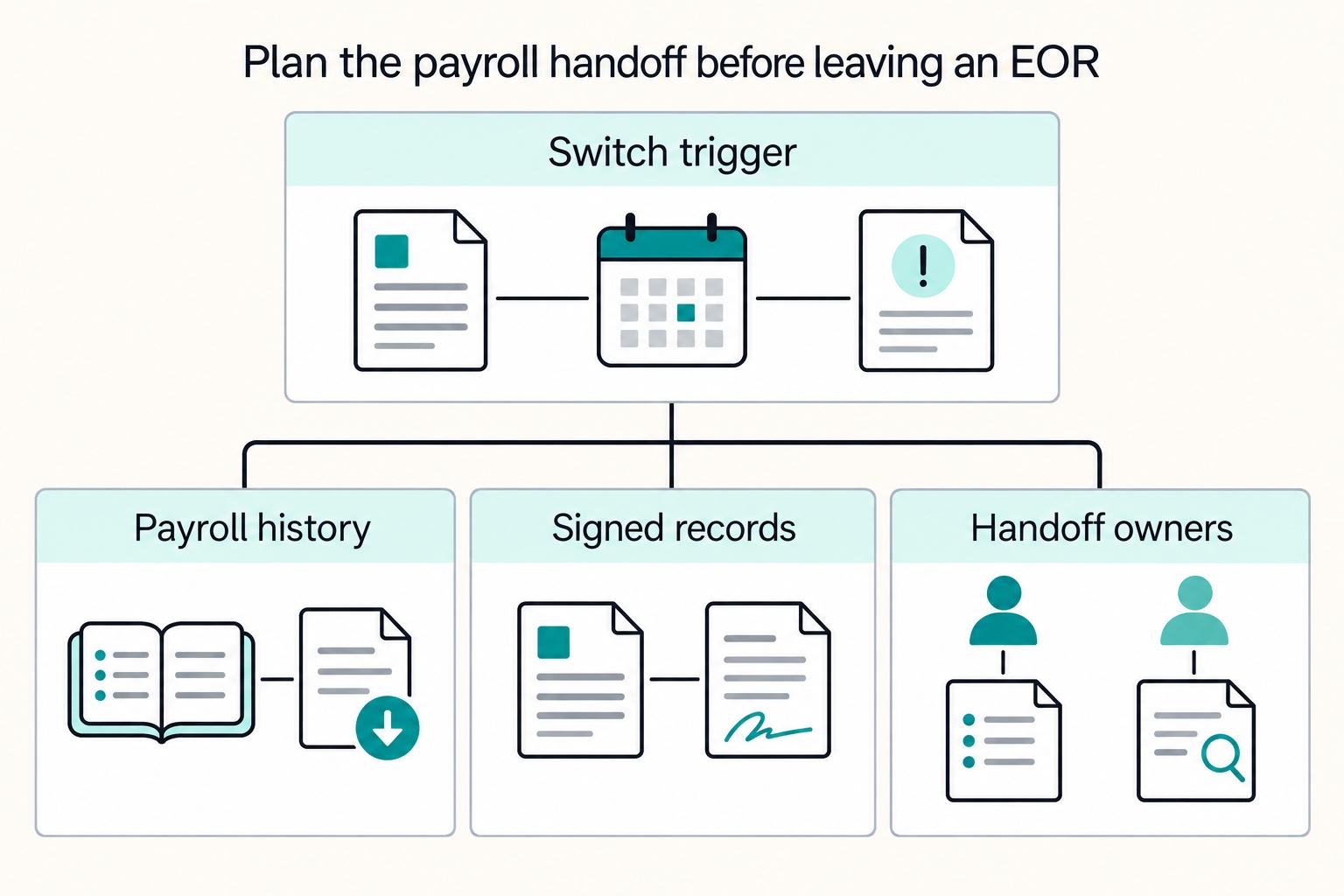
Plan the exit before the first hire. An EOR arrangement is much safer when the switch triggers, data handoffs, and offboarding records are spelled out while everyone is still trying to win the deal.
| Trigger | What to prepare now | Why it reduces pain |
|---|---|---|
| Country reaches your defined headcount threshold | Entity timeline and payroll migration plan | Avoids a reactive scramble once growth is obvious. |
| Local revenue or contracting needs require in-country presence | Legal workstream and banking plan | Keeps employment change aligned with broader expansion. |
| Custom compensation or benefits requests keep growing | Policy comparison and local counsel review | Shows where the provider template will break. |
| Repeated exceptions or offboarding friction | Export test and record archive plan | Prevents data loss when you leave the provider. |
Set switch triggers before the first hire#
We set exit triggers as operating facts, not vague hopes. Examples include a headcount threshold you define, a committed country budget, local contracting needs, or repeated payroll exceptions that show the bridge model is now the bottleneck.
- A pre-agreed headcount level in one country.
- A signed country budget for a permanent team.
- A legal need for in-country contracting or local invoicing infrastructure.
- A pattern of repeat exceptions that keeps returning to the same team.
Preserve payroll and document handoffs#
Before you sign, ask the provider to show sample exports for payroll history, signed contracts, amendments, and termination records. If your team cannot see the exit data structure during diligence, assume the migration will be harder than promised.
A real migration plan should name the data owner, the local counsel owner, the payroll cutoff owner, and the person who signs off on final records before the first worker moves. If you wait until the exit is already underway, you will be negotiating document access, final-pay timing, and archive quality at the same time. That is exactly when a clean bridge model turns into an expensive cleanup project.
That record discipline is the same reason we document final-pay steps when workers leave. If you are building the surrounding workflow, our article on contractor offboarding and final payment compliance helps frame the checklist even though the employment model is different.
Employer of record FAQ for platforms#
These are the questions platform operators ask once the shortlist becomes real and legal review starts.
What is an employer of record for platforms?#
It is a hiring model where a provider acts as the legal employer in the target jurisdiction so your platform can hire before it opens its own local entity. Your team still owns the actual work, manager conduct, security, and downstream operating controls.
When should a platform use an employer of record instead of a contractor model?#
Use EOR when the role should be an employee and you need legal employment coverage in-country. If the real question is independent-contractor status, solve classification first rather than buying an employee solution for a contractor problem.
Is an employer of record the same as a PEO?#
No. A PEO is a co-employment model, while EOR is used when another party must stand as the legal employer in the jurisdiction. That difference changes the contract review, the entity assumptions, and the diligence checklist.
When should a platform stop using an employer of record and open its own entity?#
Start the entity lane when the market is durable, headcount is growing, or the provider contract is limiting local control. If you already know the country is strategic, do not wait for frustration to become the trigger.
What should we ask every employer of record provider before signing?#
Ask for the country employment contract, payroll calendar, benefits approach, amendment and termination process, named support ownership, exportable records, and the exact exit steps if you migrate later. If any of that stays vague, the diligence is not finished.
Can an employer of record solve merchant-of-record or revenue-recognition questions?#
No. EOR solves employment coverage, not revenue ownership. If your live issue is who is the seller of record or how revenue should be recognized, move that review to accounting and payments design instead.
Bottom line on employer of record decisions for platforms#
Employer of record works best as a bridge, not as a substitute for clear ownership. If you need fast entry into one country, it can be the right move. If you already know the market is permanent, start the entity path before vendor convenience becomes dependency.
Your next step should be concrete: write the operating goal, name the owners, force every provider through one scorecard, and demand the country evidence pack before approval. That sequence is what turns EOR from a sales category into a defensible operating choice.
- Write the operating goal before you request proposals.
- Collect the evidence pack before procurement treats the deal as selected.
- Set the entity-switch trigger before the first hire is onboarded.
If you want a second set of eyes on the diligence packet or the exit terms, talk to Gruv.
Frequently Asked Questions
What is an employer of record for platforms?
It is a hiring model where a provider acts as the legal employer in the target jurisdiction so your platform can hire before it opens its own local entity. Your team still owns the actual work, manager conduct, security, and downstream operating controls.
When should a platform use an employer of record instead of a contractor model?
Use EOR when the role should be an employee and you need legal employment coverage in-country. If the real question is independent-contractor status, solve classification first rather than buying an employee solution for a contractor problem.
Is an employer of record the same as a PEO?
No. A PEO is a co-employment model, while EOR is used when another party must stand as the legal employer in the jurisdiction. That difference changes the contract review, the entity assumptions, and the diligence checklist.
When should a platform stop using an employer of record and open its own entity?
Start the entity lane when the market is durable, headcount is growing, or the provider contract is limiting local control. If you already know the country is strategic, do not wait for frustration to become the trigger.
What should we ask every employer of record provider before signing?
Ask for the country employment contract, payroll calendar, benefits approach, amendment and termination process, named support ownership, exportable records, and the exact exit steps if you migrate later. If any of that stays vague, the diligence is not finished.
Can an employer of record solve merchant-of-record or revenue-recognition questions?
No. EOR solves employment coverage, not revenue ownership. If your live issue is who is the seller of record or how revenue should be recognized, move that review to accounting and payments design instead.
Try a related tool
Researched and edited by the Gruv editorial team. Gruv builds cross-border billing, payouts, and finance-operations software for global businesses.
Sources
Includes 1 external source outside the trusted-domain allowlist.
- dol.gov/agencies/whd/flsa/misclassificationtrusted
- dol.gov/agencies/whd/fact-sheets/21-flsa-recordkeepingtrusted
- eeoc.gov/employers/recordkeeping-requirementstrusted
- irs.gov/businesses/small-businesses-self-employed/un...trusted
- irs.gov/individuals/international-taxpayers/persons-...trusted
- uscis.gov/i-9-centraltrusted
- uscis.gov/i-9-central/form-i-9-acceptable-documentstrusted
- napeo.org/intro-to-peos/industry-overviewexternal
Educational content only. Not legal, tax, or financial advice.
Related Posts

When Platforms Need an Employer of Record and When They Do Not
Scoping is often where cross-border EOR decisions go right or wrong. If your platform mixes employee hiring with contractor payouts and seller or creator disbursements, it is easy to spend real money on the wrong legal model before anyone notices. Often, only one part of the flow actually involves employment.
ASC 606 Revenue Recognition for Merchant of Record Platforms
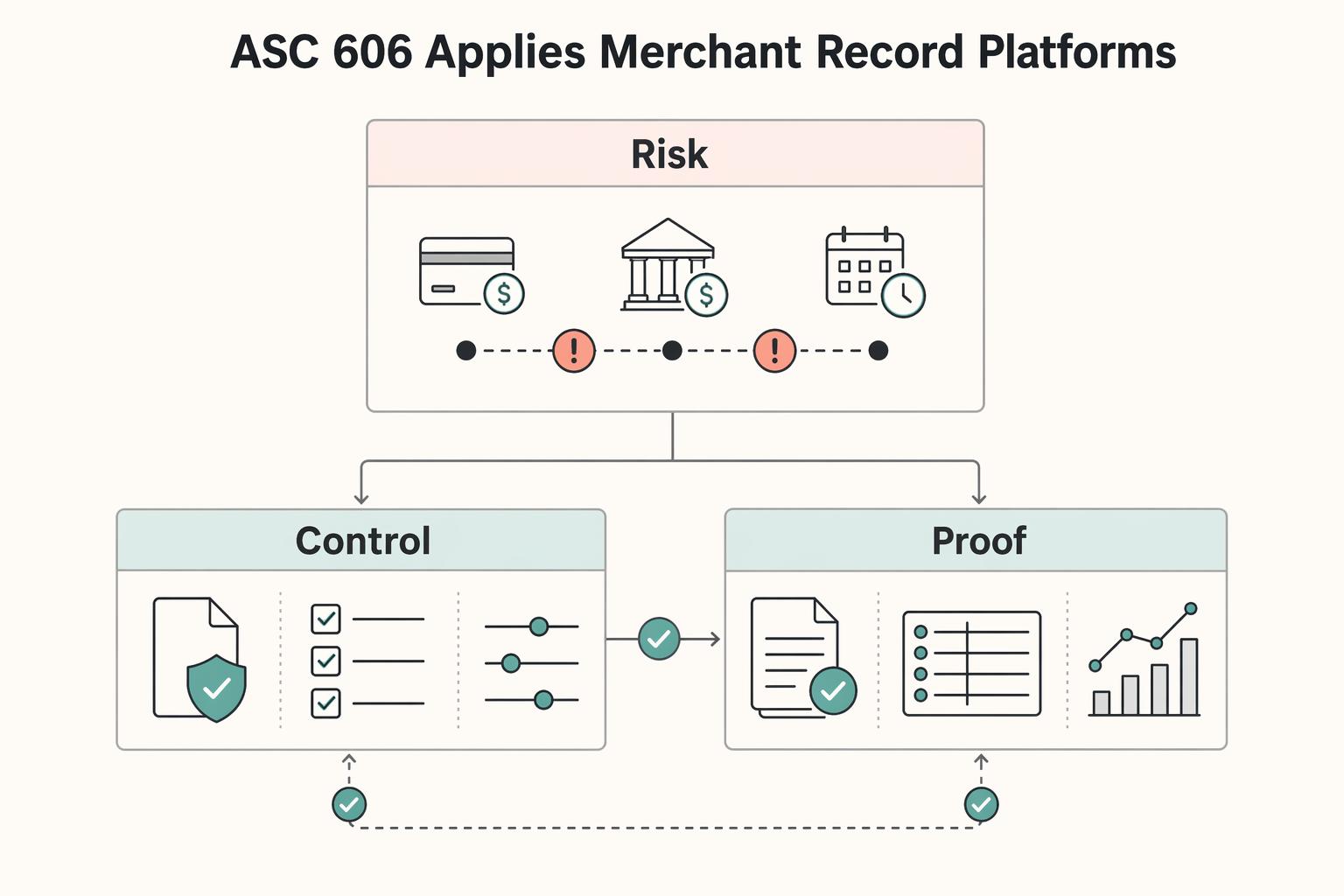
If you run a Merchant of Record flow, cash movement is not your revenue policy. Under ASC 606, the hard part is that customer payment, processor settlement, and the point when revenue is actually earned can sit on different dates and in different records.
Choosing Accounts Payable Document Management for Invoices, Contracts, and Payment Records
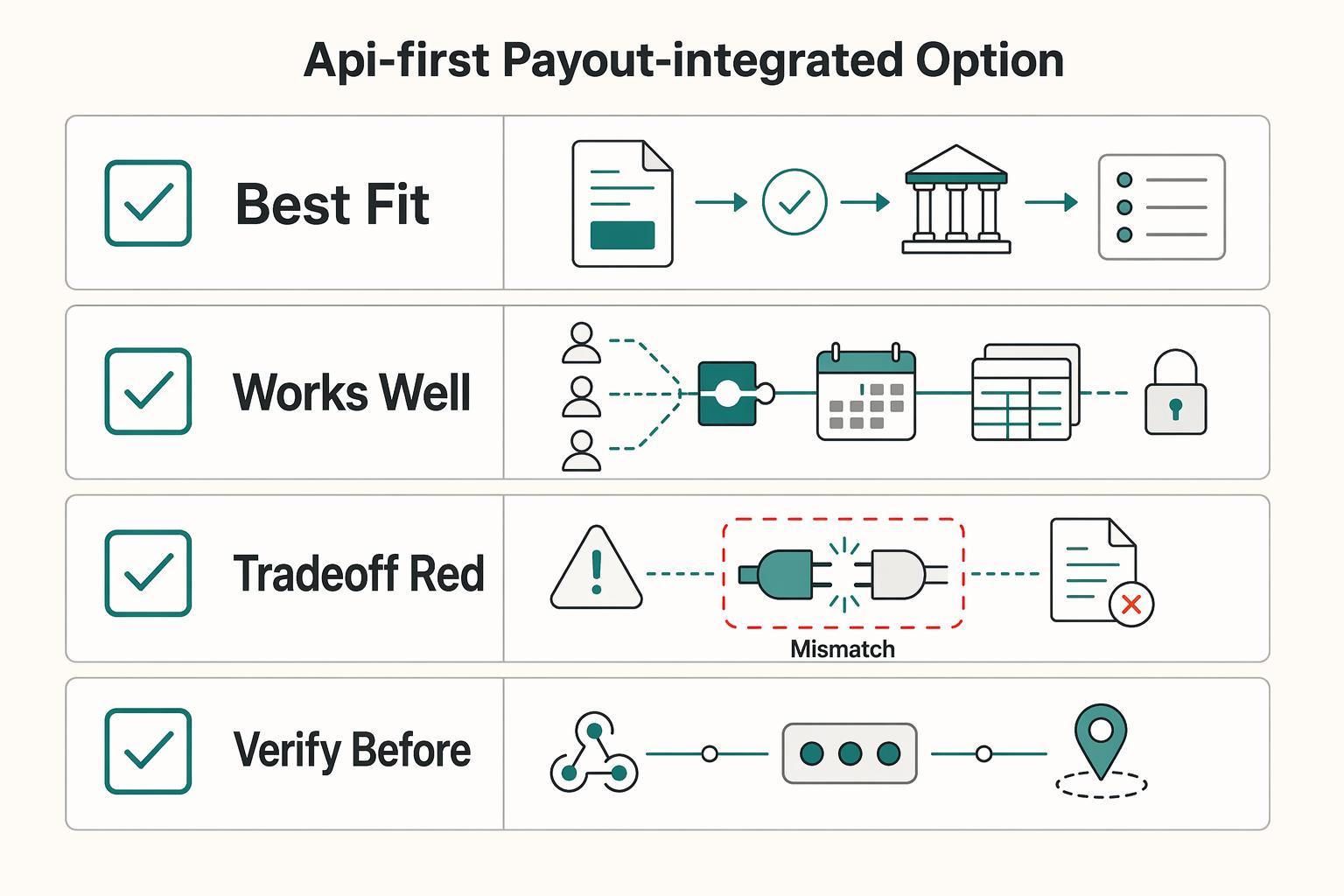
Choose an accounts payable document management platform for control, not storage alone. You need a traceable path from intake to approval, posting, and payout without pushing teams back into manual handoffs.