

Quick Answer
Yes, use employer of record for platforms when you need to hire employees in a country where your business has no local entity. EOR is usually the right path for legal employment setup, payroll handling, and tax withholding, but it is usually the wrong path for contractor, seller, or creator disbursements. Decide by worker type first, then verify contract ownership, onboarding records, and monthly compliance evidence before go-live.
Where an Employer of Record Fits in a Platform Model#
Scoping is often where cross-border EOR decisions go right or wrong. If your platform mixes employee hiring with contractor payouts and seller or creator disbursements, it is easy to spend real money on the wrong legal model before anyone notices. Often, only one part of the flow actually involves employment.
An Employer of Record, or EOR, lets you hire employees in a country without setting up your own local entity. The provider handles employment administration such as compliance, payroll, benefits, and contracts, while your team keeps day-to-day control of the worker. That split is useful, but only for actual employees. It does not turn every global payout problem into an employment problem.
Three framing rules matter before you evaluate any option:
- Start with worker type
Ask whether the person is an employee, an independent contractor, or a seller or creator receiving platform disbursements. That sounds basic, but it is the first control point. Contractor engagement is sometimes structured as an Agent of Record model rather than EOR, which is a useful reminder that contractor programs are not automatically employment use cases.
- Check the local-entity gap
Ask where you need to hire and whether you have a local entity there yet. EOR is strongest when you need to hire in a new market and do not have a local entity. That is what makes the model practical. Provider country counts vary, with examples in the market ranging from 110+ to 130+ countries, so coverage maps are not a substitute for deciding whether the legal-employer model fits your use case in the first place.
- Define what evidence you will need later
If you move ahead, decide early which records will prove the arrangement is working as intended. At minimum, that usually means contract packets, onboarding records, payroll outputs such as payslips, and a clear owner for amendments and terminations. If nobody can say who keeps those records and who reviews exceptions, rollout is premature.
That discipline matters because cross-border hiring creates payroll tax and labor law exposure, and paperwork or classification mistakes get expensive fast. A single misclassification or paperwork error can lead to fines, legal disputes, or the loss of talent. That is why this guide stays decision-oriented rather than vendor-led.
Read the rest of this list with one practical question in mind: are you solving an employment need in a jurisdiction where you lack a local entity, or are you trying to patch a payout, tax-document, or marketplace disbursement problem with the wrong tool? If the answer is mixed, pause and separate the flows before procurement. That helps prevent ownership and audit issues later.
For broader context on international hiring, see When to Use an Employer of Record for International Hiring.
Who this list is for and how to judge each option#
This list is for teams that own cross-border hiring risk and need decision rules, not a vendor leaderboard. If you work in compliance, legal, finance, or risk, use it to apply one policy across EOR, PEO, and non-employment payout paths.
Directory pages can give you context, but they are not a control framework. Gartner Peer Insights shows a market list (24 products), and SHRM shows multiple directory results (31 in the excerpt), yet counts and ratings do not establish who owns compliance monitoring, escalation, or audit evidence. EOR can handle employment administration while your organization still retains day-to-day supervision and work assignment, so signing an EOR contract does not remove your governance duties.
Use these three filters every time#
Apply the same three filters in every evaluation so legal fit drives the choice, not vendor packaging.
- Worker type
Classify the person first: employee, contractor, or seller/creator payee. If the case is not employment, do not force an employment model onto a payout problem.
- Jurisdiction footprint without a local entity
Map where you need to hire and where you lack a local entity. EOR is designed for hiring employees without establishing your own local entity; PEO is a co-employment model, not the same legal-employer structure.
- Compliance burden
Assess the operating load directly: payroll, tax withholding, benefits administration, onboarding, and the records you will need to prove control.
If you cannot name the accountable internal owner for compliance monitoring and audit evidence, pause procurement until governance is clear.
Related: ASC 606 for Platforms: How to Recognize Revenue When You're the Merchant of Record.
EOR, PEO, and MoR are not interchangeable#
Treat these as different decision paths, not different labels for the same tool. One core point holds throughout: EOR and PEO can both reduce administrative load, but they are not interchangeable, and a PEO is a co-employment model.
| Model | Legal relationship | Who runs global payroll | Where tax withholding sits | What remains with the sponsor organization |
|---|---|---|---|---|
| EOR | Different structure from a PEO; confirm exact legal posture in your contract set | Verify country by country | Verify filings and reporting ownership in contract | You still need explicit internal ownership for compliance monitoring, exceptions, and evidence |
| PEO | Co-employment model | Verify operational split and prerequisites | Verify what your entity must still handle | You still need explicit internal ownership for compliance monitoring, exceptions, and evidence |
| MoR or payout route | Separate review required | Separate review required | Separate review required | Route to finance, tax, and legal owners as a distinct workstream |
The practical decision rule#
Start by classifying the problem correctly: employment structure or payout structure. If you are deciding between employment models, compare EOR and PEO on legal posture first. If the issue is seller or creator disbursement, run a separate payout review instead of forcing an employment model decision.
In US hiring, do not treat this as federal-only. State and sometimes city-level rules can matter alongside wage and hour, leave, classification, tax administration, and workplace protections, so evaluate those layers together before signing.
Keep accounting boundaries separate. If your team is also evaluating MoR status or revenue treatment, route that through your ASC 606 for Platforms track in parallel rather than assuming an employment choice resolves it.
For a step-by-step walkthrough, see Merchant of Record for Platforms and the Ownership Decisions That Matter.
Seven platform situations where EOR is usually the best fit#
EOR is usually the best starting point when you need employees in a country where you do not have a local entity. The provider can act as the legal employer and handle contracts, payroll, and taxes while your team manages day-to-day work. The tradeoff is straightforward: faster legal-employer setup can mean less customization, integration friction, and higher per-employee cost.
| Situation | Best for | Pros | Cons |
|---|---|---|---|
| No local entity, but you need an employee now | First hires where waiting for entity formation would stall delivery | Moves legal-employer administration outside your platform instead of handling foreign hiring manually without a local entity | Less contract flexibility and possible HR/finance integration gaps |
| Market entry is approved, but entity setup is delayed | Teams with approved headcount that cannot wait for incorporation and setup steps | Lets you start hiring before entity formation is complete | Timelines vary; some vendors market very fast onboarding, while implementation can take months |
| Early market testing where legal-employer responsibility should stay outside the platform | Pilot hiring where a PEO co-employment structure is not the right fit | EOR can keep legal-employer responsibility outside your platform during the test phase | Less direct control over employment form and local policy design |
| High compliance volatility in the target country | Jurisdictions where employment and tax handling vary significantly by country and can shift | In-country support can reduce missed local requirements | Internal review is still required, and local counsel may still be needed |
| Controlled multi-country scale with one internal operating model | Legal, HR, and finance teams that want standardized onboarding, benefits administration, and compliance monitoring | More consistent records, approvals, and reporting across countries | Standardization can reduce country-level tailoring |
| Complex operating environment that needs high-touch support | Platforms with formal approvals and heavier legal/payroll coordination | Some providers are designed for enterprise complexity and higher-touch service | Higher cost and heavier implementation effort are common |
| Cost-sensitive entry where entity setup is still hard to justify | Small initial teams where fixed entity costs are disproportionate | Per-employee pricing can be easier to budget early | That figure is vendor-specific, and total cost can rise quickly as headcount grows |
Before signing, verify two items country by country: the provider's operating model (owned entities vs local partners) and the monthly evidence you will receive for onboarding, payroll, tax handling, benefits administration, and exceptions. Providers can differ materially by regional compliance approach, so strong performance in one market does not prove performance in another.
- No local entity, but you need an employee now.
Best for: first hires where waiting for entity formation would stall delivery. Pros: moves legal-employer administration outside your platform instead of handling foreign hiring manually without a local entity. Cons: less contract flexibility and possible HR/finance integration gaps. Use case: hiring a country manager where you already have customers but no registered company. Tradeoff: speed and risk transfer now, with higher per-employee cost than local infrastructure later.
- Market entry is approved, but entity setup is delayed.
Best for: teams with approved headcount that cannot wait for incorporation and setup steps. Pros: lets you start hiring before entity formation is complete. Cons: timelines vary; some vendors market very fast onboarding, while implementation can take months. Use case: opening local support or sales coverage while legal setup is still in progress. Tradeoff: useful bridge to launch, but not a guaranteed immediate activation.
- Early market testing where legal-employer responsibility should stay outside the platform.
Best for: pilot hiring where a PEO co-employment structure is not the right fit. Pros: EOR can keep legal-employer responsibility outside your platform during the test phase. Cons: less direct control over employment form and local policy design. Use case: testing demand with a small local team before deciding on a permanent entity. Tradeoff: cleaner legal posture for testing, with less room to tailor every clause and process.
- High compliance volatility in the target country.
Best for: jurisdictions where employment and tax handling vary significantly by country and can shift. Pros: in-country support can reduce missed local requirements. Cons: internal review is still required, and local counsel may still be needed. Use case: entering a market where payroll, leave, and contract terms need close local validation. Tradeoff: meaningful risk transfer, not full risk removal.
- Controlled multi-country scale with one internal operating model.
Best for: legal, HR, and finance teams that want standardized onboarding, benefits administration, and compliance monitoring. Pros: more consistent records, approvals, and reporting across countries. Cons: standardization can reduce country-level tailoring. Use case: expanding international hiring under one governance path instead of ad hoc local processes. Tradeoff: stronger control and consistency, with less local customization.
- Complex operating environment that needs high-touch support.
Best for: platforms with formal approvals and heavier legal/payroll coordination. Pros: some providers are designed for enterprise complexity and higher-touch service. Cons: higher cost and heavier implementation effort are common. Use case: hiring flows that require recurring legal, HR, and finance signoff with audit-ready outputs. Tradeoff: better exception handling, with slower setup and more coordination overhead.
- Cost-sensitive entry where entity setup is still hard to justify.
Best for: small initial teams where fixed entity costs are disproportionate. Pros: per-employee pricing can be easier to budget early; one vendor advertises pricing from $199 per employee per month. Cons: that figure is vendor-specific, and total cost can rise quickly as headcount grows. Use case: hiring a specialist in a new country before committing to full local setup. Tradeoff: better short-run flexibility, but often weaker long-run economics if hiring scales.
Use EOR when legal employment must start before local infrastructure exists, and treat it as a decision to re-evaluate over time. If you cannot verify the entity model, integration fit, onboarding complexity, and monthly evidence outputs before signing, you are paying for speed without enough control.
Six situations where EOR is the wrong tool#
Use EOR only for actual employment. If your core workflow is payouts or contractor operations, EOR usually adds the wrong legal and operational layer. If classification is unclear, escalate to legal and tax before you sign an EOR MSA, because vendor onboarding does not approve classification.
| Situation | Best for | Pros of the alternative | Cons |
|---|---|---|---|
| Seller or creator disbursements, not employment | Marketplaces and creator platforms where payout controls drive the process | Payout-first operations can handle beneficiary verification and tax-document collection without forcing an employment structure | Tax form ownership and year-end reporting still need clear internal accountability |
| Contractor-first programs that need gated payouts | Independent contractor populations where onboarding and payment release controls are the main challenge | You can align operations to KYC/KYB/AML checks and payout readiness instead of employee payroll cycles | Calling a program contractor-first does not remove classification risk |
| Your primary need is W-8/W-9 collection and 1099 operations | Non-employee tax-document and reporting workflows | Process design stays tied to the underlying reporting obligation | Finance and tax still need strong reconciliation between payee data and disbursement records |
| The local entity is already live and stable | Teams that can already hire directly in-country | Direct employment removes duplicate control layers and gives more control over terms, policy design, and integrations | You own more employment administration internally |
| You need co-employment support, not third-party legal employment | Companies with an existing entity that want HR administration support | A Professional Employer Organization (PEO) is built for co-employment, which is distinct from EOR legal-employer responsibility | PEO does not solve missing entity infrastructure |
| Payroll and payout boundaries are unclear across teams | Organizations ready to separate employee payroll from contractor or seller disbursements | Clearer audit trails and cleaner accountability between workflows | Reconciliation discipline is mandatory across systems and teams |
- Seller or creator disbursements, not employment.
Best for: marketplaces and creator platforms where payout controls drive the process. Pros of the alternative: payout-first operations can handle beneficiary verification and tax-document collection without forcing an employment structure. Cons: tax form ownership and year-end reporting still need clear internal accountability. Use case: paying creator earnings with W-8 or W-9 collection and Form 1099 workflows. EOR is typically overbuilt here because it is designed for employee contracts, payroll, and labor-law compliance.
- Contractor-first programs that need gated payouts.
Best for: independent contractor populations where onboarding and payment release controls are the main challenge. Pros of the alternative: you can align operations to KYC/KYB/AML checks and payout readiness instead of employee payroll cycles. Cons: calling a program contractor-first does not remove classification risk. Use case: onboarding service providers for task-based or invoice-based payment. A common failure mode is routing non-employees through EOR and then creating mismatched assumptions about withholding, benefits, and documents.
- Your primary need is W-8/W-9 collection and 1099 operations.
Best for: non-employee tax-document and reporting workflows. Pros of the alternative: process design stays tied to the underlying reporting obligation. Cons: finance and tax still need strong reconciliation between payee data and disbursement records. Use case: large creator or contractor payout populations. In the US example used here, the EOR holds the EIN and files Form W-2 for the worker, which is a different model from non-employee reporting.
- The local entity is already live and stable.
Best for: teams that can already hire directly in-country. Pros of the alternative: direct employment removes duplicate control layers and gives more control over terms, policy design, and integrations. Cons: you own more employment administration internally. Use case: a market where incorporation and registrations are complete. Continuing with EOR can leave you paying for a legal-employer wrapper you no longer need while your team still directs day-to-day work.
- You need co-employment support, not third-party legal employment.
Best for: companies with an existing entity that want HR administration support. Pros of the alternative: a Professional Employer Organization (PEO) is built for co-employment, which is distinct from EOR legal-employer responsibility. Cons: PEO does not solve missing entity infrastructure. Use case: a mature country operation where administration is the bottleneck, not legal market entry.
- Payroll and payout boundaries are unclear across teams.
Best for: organizations ready to separate employee payroll from contractor or seller disbursements. Pros of the alternative: clearer audit trails and cleaner accountability between workflows. Cons: reconciliation discipline is mandatory across systems and teams. Use case: employees run through EOR payroll while non-employees are paid through a payout stack. The failure mode is weak handoff: payroll and payouts apply conflicting assumptions, and exceptions are missed.
How to shortlist EOR providers without a marketing trap#
Start with evidence, not brand familiarity. There are well over 200 EOR providers, and many websites use similar language like "compliant" and "global," so treat public claims as unverified until each vendor proves the same items in the same format.
Use one neutral comparison table and keep it evidence-first:
| Provider | Coverage model | Compliance approach | Support model | Integration readiness | Unknowns to validate |
|---|---|---|---|---|---|
| Deel | Validate jurisdiction by jurisdiction (not headline country count) | Require documented responsibility split for contract, payroll, tax withholding, social contributions, and local compliance | Require named escalation ownership by issue type | Require concrete integration scope, file formats, and limits | Onboarding SLA definitions, exception handling, pricing comparability, and evidence quality gaps in public SERP content |
| Papaya Global | Validate jurisdiction by jurisdiction | Same evidence standard | Same evidence standard | Same evidence standard | Same unknowns |
| OysterHR | Validate jurisdiction by jurisdiction | Same evidence standard | Same evidence standard | Same evidence standard | Same unknowns |
| Rippling | Validate jurisdiction by jurisdiction | Same evidence standard | Same evidence standard | Same evidence standard | Same unknowns |
| Globalization Partners | Validate jurisdiction by jurisdiction | Same evidence standard | Same evidence standard | Same evidence standard | Same unknowns |
| Native Teams | Validate jurisdiction by jurisdiction | Same evidence standard | Same evidence standard | Same evidence standard | Same unknowns |
| Safeguard Global | Validate jurisdiction by jurisdiction | Same evidence standard | Same evidence standard | Same evidence standard | Same unknowns |
The table is only useful if it forces comparable diligence. If a vendor responds with country-count claims or generic compliance slides but no jurisdiction-level proof, treat that as incomplete diligence.
Four proof artifacts to require in the RFP#
| Artifact | What to request | What it lets you verify |
|---|---|---|
| Sample employment contract packet | A redacted country packet | Legal and HR can verify obligations and required onboarding documents |
| Payroll and tax withholding workflow | The end-to-end workflow from onboarding approval through payroll and remittance, including where withholding decisions and exceptions are handled | How withholding decisions, remittance, and exceptions are handled |
| Escalation matrix | Named roles and ownership for onboarding delays, payroll errors, and compliance exceptions | Who owns each escalation path |
| Monthly compliance monitoring output | A redacted monthly output showing what was monitored, what changed, what exceptions opened, and who closed them | What was monitored and how exceptions were closed |
- Sample employment contract packet
Request a redacted country packet so legal and HR can verify obligations and required onboarding documents.
- Payroll and tax withholding workflow
Request the end-to-end workflow from onboarding approval through payroll and remittance, including where withholding decisions and exceptions are handled.
- Escalation matrix
Require named roles and ownership for onboarding delays, payroll errors, and compliance exceptions.
- Monthly compliance monitoring output
Request a redacted monthly output showing what was monitored, what changed, what exceptions opened, and who closed them.
One RFP discipline point matters here: unclear or overly restrictive specifications can reduce good responses or increase risk pricing. Keep requirements precise by jurisdiction and worker type.
Use Gartner Peer Insights only as directional context, not as selection proof.
If the decision depends on whether the platform is acting as principal or agent, see ASC 606 Principal vs Agent Decisions for Merchant-of-Record Platforms.
What finance, legal, and risk must document before go-live#
Before go-live, your internal control pack should make ownership, reporting, and first-close review explicit. If finance, legal, and risk cannot point to signed owners, required reports, and first-close checks, delay rollout.
- Minimum control checklist
Document the responsibility split between the legal employer and the sponsor organization by jurisdiction. Name owners for employment contract terms, payroll approval, tax withholding review, benefits administration inputs, onboarding approvals, and exception handling. A jurisdiction register with named escalation paths is useful; a generic "vendor handles compliance" statement is not.
- Required reporting pack
Define the recurring evidence pack before first payroll. At minimum, require payroll and tax withholding reports, benefits administration records, onboarding logs, and reconciliation from provider outputs to internal ledgers. The test is whether this supports close and audit without manual reconstruction.
- Platform-specific evidence bridge
Where employment flows run next to contractor, seller, or creator payouts, document where controls connect and where they stay separate. Map whether KYC/KYB/AML controls are in payout processes, how W-8/W-9 collection is tracked for non-payroll populations, and who owns year-end tasks such as Form 1099 review or FBAR tracking where applicable. If your process includes FinCEN Form 114 (FBAR) tracking, apply these recording rules:
| FBAR recording point | What to record |
|---|---|
| Maximum account value | A reasonable approximation of the greatest account value during the calendar year |
| Currency conversion | Use the Treasury rate for the last day of the calendar year |
| Dollar format | Record in U.S. dollars, rounded up to the next whole dollar (example: $15,265.25 -> $15,266) |
| Negative computed value | Enter 0 in Item 15 |
- Go-live sequence and first-close review
Run a fixed sequence: contract sign-off, control mapping, test cycle, then first-close review with documented remediation actions. Keep evidence of each step, including signed contract versions, mapped controls, test outputs, and a first-close memo with issues, owners, and due dates. Assign an explicit owner for date-sensitive obligations, since filing timelines can change (for example, FinCEN posted multiple 2024 FBAR disaster-related extensions, including an additional notice dated 10/11/2024).
Escalation points that should trigger specialist review#
Not every issue is operational cleanup. If a conflict affects worker status, tax treatment, or control evidence ownership, pause launch and escalate before payroll runs.
- Legal review for status and model conflicts
Escalate when employment terms conflict with your contractor, seller, or creator flows, or when EOR versus PEO status is still unclear. Validate one worker end to end: contract packet, platform terms, and onboarding path should agree on who the legal employer is and who retains day-to-day management control. If those answers conflict, treat it as a legal-risk issue, not a workflow fix.
- Tax review for withholding and information-return mismatches
Escalate to tax when withholding treatment does not align with your W-8/W-9 collection logic, Form 1099 handling, or cross-border reporting responsibilities for the same population. Your practical test is simple: each worker should map to one tax-document path and one year-end reporting owner. If finance is manually stitching payroll records to contractor tax forms, your treatment boundaries are likely mixed.
- Risk review for evidence gaps and scope drift
Escalate to risk when monitoring evidence is incomplete, escalation SLAs are undefined, or provider scope changes across jurisdictions. Provider models vary (including owned-entity and partner approaches), and country-level employment and tax rules differ, so scope drift can become a control failure quickly. Require a current jurisdiction register, regular compliance outputs, and an escalation matrix that matches the signed scope.
Conclusion#
EOR is a precise employment tool, not a catch-all answer for every cross-border payment flow. The practical decision rule at the end of this guide is the same as at the start: match the worker model to the legal model first, then prove your controls before rollout.
-
Start with legal status. Use EOR when the provider will be the legal employer and your team will still direct the employee's tasks, goals, and performance. That is a strong fit when you need to hire in a country where you do not have a local entity. The key check is the contract split: read the employment contract packet and confirm who owns employment terms, payroll, tax withholding, and day-to-day management.
-
Test the evidence, not the pitch. Cross-border employment stays jurisdiction-specific because each country has its own rules on hours, termination, and privacy, so a broad "global payroll" claim is not enough. Before go-live, walk one worker record from onboarding approval to first payroll and then to the monthly reporting cycle. The differentiator here is document quality: if the provider cannot show sample onboarding logs, payroll and tax withholding outputs, and an escalation matrix, you are buying promises instead of controls.
-
Treat mixed populations as a stop sign. EOR can help with employment contracts, payroll, and tax withholding support, but it may be the wrong fit when your primary need is non-employee payout flows. A key risk is blurred scope, where worker classification is still unresolved. The differentiator is scope discipline: if that boundary is not clean, delay launch, narrow the first phase, and get jurisdiction-specific legal or tax advice before you commit.
That is the standard to apply to this decision. You are not really choosing a vendor first; you are choosing a legal posture, then checking whether the provider's reporting, escalation, and evidence pack can support it. If your team cannot explain the role split between the legal employer and the sponsor organization in plain English, or cannot show the records that back it up, pause procurement. Fix the design before rollout.
Related reading: Australian GST for Digital Platforms When to Register and Remit.
Frequently Asked Questions
What is an employer of record for platforms in practical terms?
An employer of record for platforms is a provider that manages the legal, HR, tax, and local compliance responsibilities for employees where you do not have local operations. In practice, the provider is the legal employer, while your team still directs hiring, compensation, assignments, duties, and termination. The key check is simple: confirm that the employment contract packet and onboarding flow match that split of responsibility.
How is EOR different from a Professional Employer Organization (PEO)?
An EOR takes the legal-employer role for the employee, which is why it is often the starting point when you lack a local entity. Safeguard’s FAQ treats EOR vs PEO as a distinct comparison, so do not treat them as interchangeable by default. If your team is comparing the two, ask counsel and the provider to map who the legal employer is in each target country before signing.
When does a platform clearly need EOR support?
Use EOR when you need to hire employees in a country where you do not have local operations and cannot run compliant local payroll and tax withholding yourself. It also fits when your platform wants local compliance support but still wants to keep day-to-day management control in house. If one worker needs employee onboarding plus payroll and tax handling, that is usually an EOR question, not a payout-tool question.
When is EOR unnecessary for contractor, seller, or creator payment models?
If the population is truly non-employee, evaluate contractor-focused tooling instead of defaulting to EOR. The clearest example is an independent contractor program that needs contractor engagement and payout controls; some providers present a separate Agent of Record model for that population instead of EOR. If the same person appears in both employee payroll and a contractor or creator disbursement flow, re-check classification before continuing.
Which provider criteria matter most beyond country-count claims?
Country count is weak selection logic on its own, especially because coverage claims vary by vendor and are marketing-specific. What matters more is the compliance approach, support model, integration readiness, and proof artifacts: sample employment contract packet, payroll and tax withholding workflow, escalation matrix, and monthly compliance outputs. If you hire in the EU, ask how the provider handles local time-tracking obligations, because member states define the system requirements.
What is still unknown before signing an EOR provider?
You still need to validate onboarding SLA definitions, exception handling, pricing comparability, and evidence quality. Do not assume “global payroll” means the same thing across providers or countries. Your verification step is to request sample reporting and walk one worker record from offer letter to first payroll to month-end reconciliation.
What should be in a minimum reporting and escalation checklist?
At minimum, document the role split between the legal employer and your sponsor organization, the jurisdiction register, onboarding approvals, payroll and tax withholding reports, benefits administration records, and onboarding logs. Add monthly compliance outputs, the escalation matrix, and reconciliation to internal ledgers. If any of those are missing, or no longer match the signed scope, treat that as a control break rather than an admin delay.
Try a related tool
Researched and edited by the Gruv editorial team. Gruv builds cross-border billing, payouts, and finance-operations software for global businesses.
Sources
Includes 3 external sources outside the trusted-domain allowlist.
- bsaefiling.fincen.gov/docs/XMLUserGuide_FinCENFBAR.pdftrusted
- eeoc.gov/meetings/meeting-january-31-2023-navigating-...trusted
- fincen.gov/reporting-maximum-account-valuetrusted
- fincen.gov/report-foreign-bank-and-financial-accountstrusted
- otda.ny.gov/contracts/2025/EIVS/25-EIVS-RFP.pdftrusted
- bamboohr.com/blog/employer-of-record-eor-guideexternal
- boundlesshq.com/blog/the-problem-with-employers-of-recordexternal
- boundlesshq.com/blog/employer-of-record-employ-globallyexternal
Educational content only. Not legal, tax, or financial advice.
Related Posts
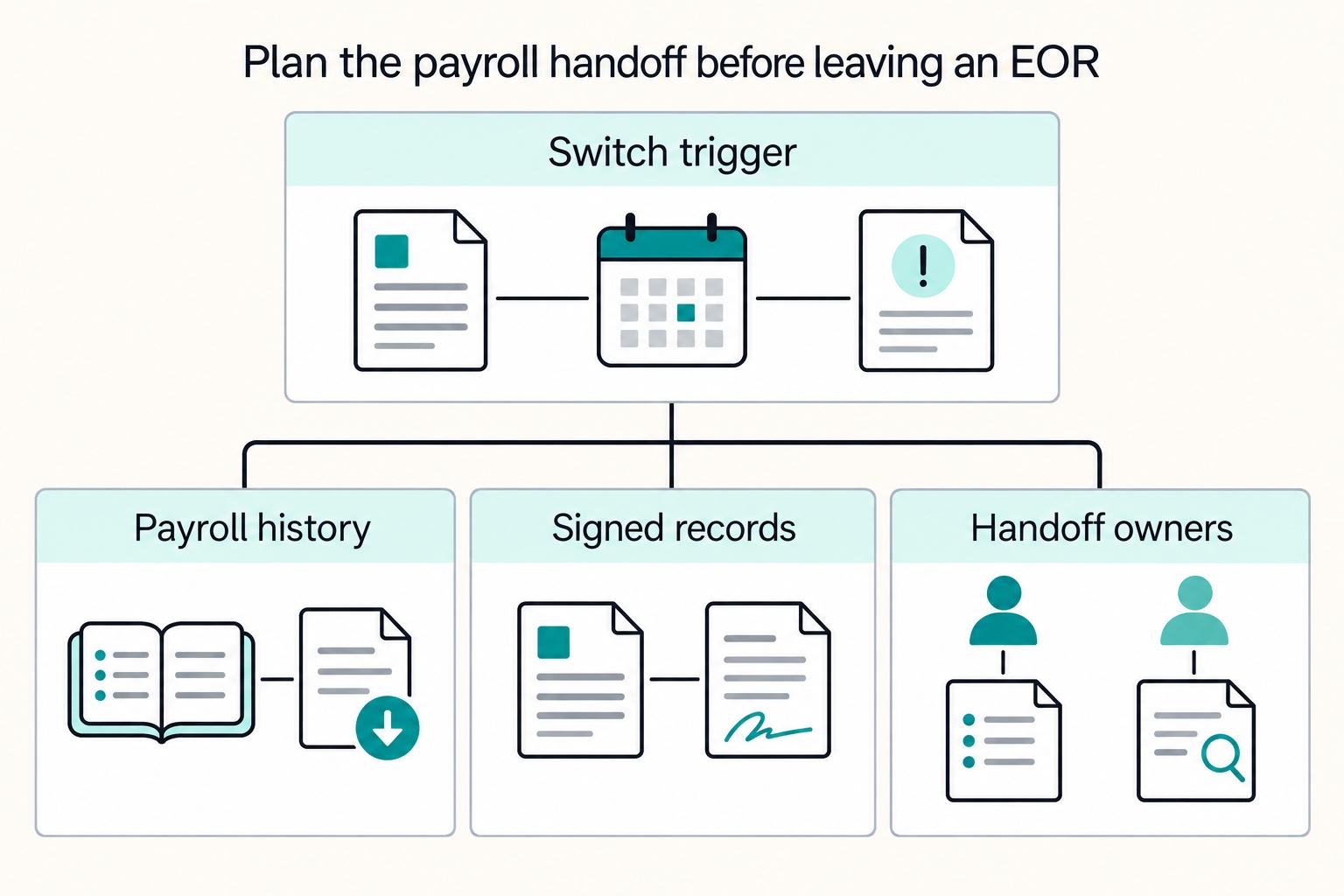
Employer of Record for Platforms When It Fits and When It Does Not
Start with the operating model, not the shortlist. An employer of record for platforms is usually right when you need to hire an employee in a country before you have your own entity and you want legal employment coverage now, not six months from now.
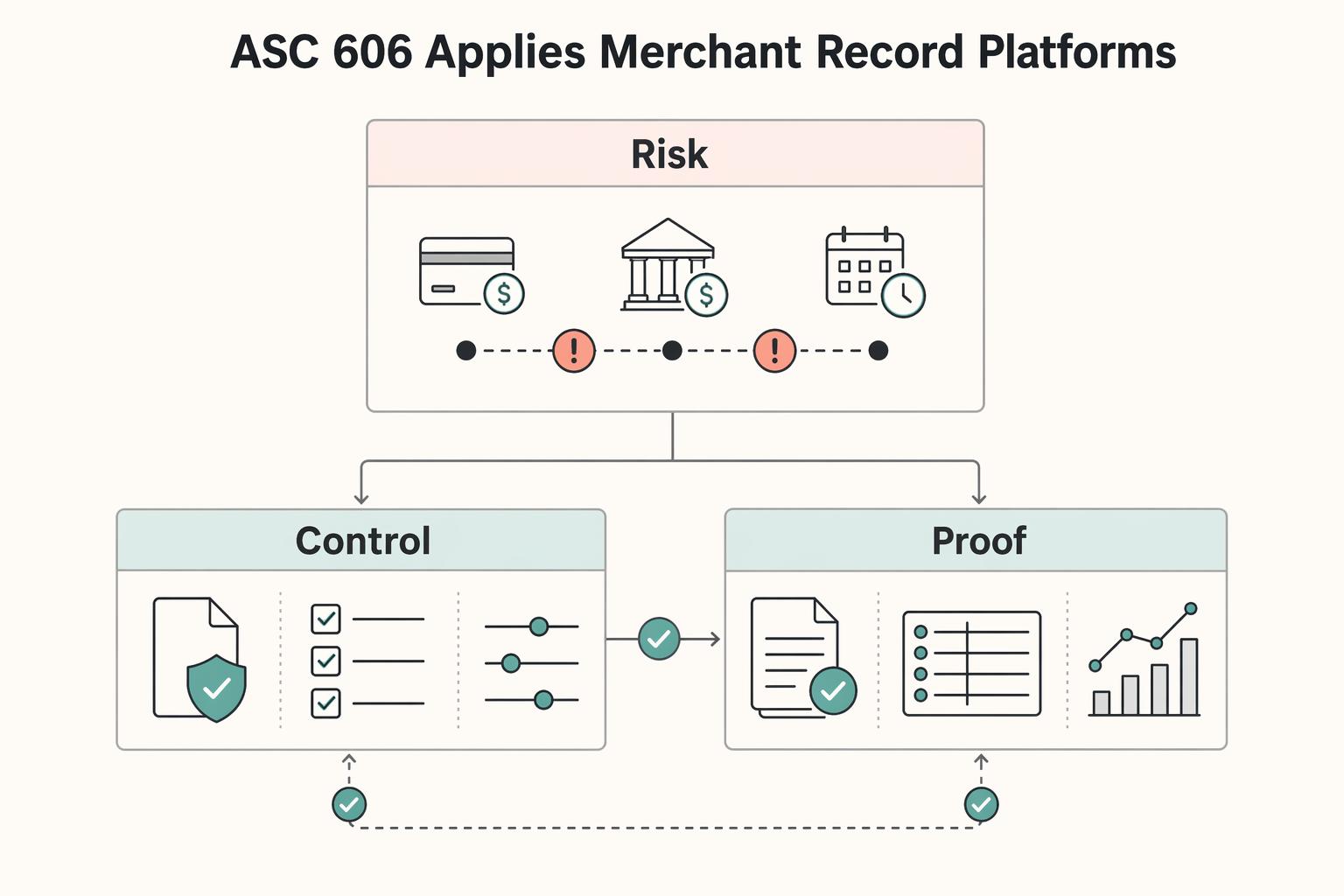
ASC 606 Revenue Recognition for Merchant of Record Platforms
If you run a Merchant of Record flow, cash movement is not your revenue policy. Under ASC 606, the hard part is that customer payment, processor settlement, and the point when revenue is actually earned can sit on different dates and in different records.
Choosing Accounts Payable Document Management for Invoices, Contracts, and Payment Records
Choose an accounts payable document management platform for control, not storage alone. You need a traceable path from intake to approval, posting, and payout without pushing teams back into manual handoffs.