

Quick Answer
Estimate contractor arrival from a defined start to confirmed availability. Record readiness, funding, provider/account, amount, destination bank/currency, rail, cutoff/time zone and calendars. Move to the next eligible submission window, apply the route's documented processing range and add recipient availability only if not already included. Show pending review without an invented completion date; this guide provides the method and examples, not an interactive calculator.
Contractor payout speed is an operations problem, not a widget problem#
If you treat payout speed like a front-end widget, you can overpromise. The real job is narrower and more useful: set realistic timing expectations, then turn them into product rules, contractor messaging, and internal controls that support, finance, and engineering can actually use.
This guide provides a calculation method for platform payout teams, with fields and worked examples you can implement in a spreadsheet or product. It does not contain an interactive calculator. Estimate a specific provider route from an explicit starting event to confirmed recipient availability; a country and currency alone cannot produce a reliable date.
That distinction changes what a "calculator" should do. A real contractor payout speed calculator is not just a date picker with a cheerful ETA. It should support routing and governance decisions: what you show in product, what support can promise, and how teams handle late or uncertain outcomes. If the output cannot be turned into policy, it is only a rough signal.
Separate an estimated arrival from the contractor's payment due date and from any contracted speed commitment. Required onboarding or tax review can affect readiness, but not every foreign payment requires the same form or report. Record required checks and expected resolution without treating an administrative delay as a change to an existing payment obligation.
Search-result tools can help frame the question, but they are not production truth on their own and may miss your specific operational constraints or exception handling.
Treat speed estimates like operational documents, not marketing snippets. Build an evidence pack before you publish anything. Include the source of each timing assumption, the owner of each exception state, the copy approved for "estimated" versus "guaranteed," and the escalation path when reality misses the estimate. That is what keeps a fast-looking payout experience from turning into a support and reconciliation mess.
For a deeper country-by-country view, read Global Contractor Payout Speed Index by Country.
Define payout speed so teams stop mixing it with payment terms#
Choose the clock start: invoice approval, payout request or provider acceptance. Also choose the endpoint: bank settlement, recipient credit or confirmed funds availability. Show both in the estimate. A rail estimate after provider acceptance omits approval and funding time, so it cannot answer an approval-to-arrival question by itself.
| Concept | What it means here | Use in payout ETA discussion |
|---|---|---|
| Invoice/payment terms | Contractual due date and approval conditions | Keep the obligation separate from a transfer ETA |
| Readiness time | Required review and available funding before release | Include when the displayed clock starts before readiness |
| Execution/availability time | Provider processing, rail calendar and recipient-bank availability | Use the selected route and endpoint; acceptance is not receipt |
| Contracted speed | Written commitment with clock, scope, exclusions and remedy | An estimate does not create the commitment |
Use this calendar-aware sequence: ready_at = later of approval completion, required-check completion and funds availability. submission_at = next eligible provider submission window at or after ready_at. Estimate provider acceptance separately where queue/review time applies. Apply the route's processing window from its documented clock start using the applicable calendar, then add recipient-availability time only if the window excludes it. Do not double-count overlapping phases; an eligible submission window is not confirmed acceptance.
Work with an earliest/latest range from current route evidence, with each assumption dated and owned. Where a required review has no supportable completion estimate, show 'awaiting review; arrival estimate not yet available' rather than inventing a bounded exception window.
Use one verification rule across product and support copy: every timing claim should map to documented inputs and approved terms. A common failure mode is blending payment terms with arrival timing and publishing a date no team can defend later.
Related: How to Pay Contractors in India Using UPI: Compliance and Speed Explained. This pairs well with our guide on Global Contractor Payout Benchmarks by Country.
Gather the minimum inputs before you calculate anything#
Record payer/provider account, funding and destination currencies, recipient-bank country, selected rail, amount, readiness status, timestamp/time zone, cutoff, relevant holiday calendars and evidence version. Invoice currency and the contractor's residence are useful context but can differ from the actual payout currency and bank destination.
| Input group | Minimum field | Source of truth | Common failure mode |
|---|---|---|---|
| Route and account | Provider program, payer account, destination bank country, currency, amount and rail | Current provider eligibility and recipient details | Assuming country-level coverage enables every account/amount |
| Clock/readiness | Start event, approval/check completion and available funds | Approved payable and provider balance/status | Starting the rail clock while funds are unavailable |
| Calendar | Cutoff/time zone, processing days and destination holidays | Current route terms and bank calendars | Adding ordinary calendar days to a business-day window |
| Processing endpoint | Normal range, recipient availability and exception status | Provider terms plus observed end-to-end outcomes | Double-counting availability or treating acceptance as receipt |
| Evidence quality | Source date, sample size, cohort and outstanding/failed outcomes | Versioned route configuration and operational records | Training estimates only on fast successful payouts |
Before you publish estimates, map each required input to a concrete field and define fallback behavior for missing data. That keeps support, product, and ops aligned on the same inputs and cuts down downstream confusion.
Worked calendar example, with fictional provider terms: a ready payout reaches the provider Friday at 16:30, after a 16:00 cutoff. Weekends do not process and Monday is a relevant holiday, so Tuesday is the next eligible acceptance day. If the route promises processing one to two business days after acceptance, and this example excludes acceptance day, the estimated arrival is Wednesday to Thursday. If recipient availability is already included, add nothing; if separately documented as one business day, the range becomes Thursday to Friday. Label the holiday, time zone and counting convention so someone else can reproduce it.
Compare rail behavior by speed, certainty, and failure modes#
Once the minimum inputs are fixed, the real choice is not the fastest-sounding rail. It is the rail whose timing you can defend. Choose by certainty first and speed second. For each rail, publish only three fields you can stand behind: normal window, exception window, and confidence level.
Treat every lane as estimate-only until route evidence is verified for the exact country, program, and payout path in scope. If any check is missing, show a range or a review state, not a date.
Compare rails with route evidence, not inherited claims#
Use this table to keep the comparison structured while you verify current behavior in your own provider docs, product settings, and test results.
| Route | Timing boundary | Verify before estimating |
|---|---|---|
| ACH credit | Provider submission, banking-day processing and recipient availability | Provider cutoff and speed, readiness, return states and actual bank endpoint |
| Same Day ACH credit | Eligible same-business-day processing; not every provider submission qualifies | Program enablement, amount, cutoff, banking calendar and recipient availability |
| Card-funded payment | Funding method, not the destination payout rail | Funding availability/review plus actual ACH, card or bank payout route |
| Push-to-card payout | Destination card-network/provider transfer where supported | Recipient eligibility, program speed, availability endpoint and failure states |
| UPI | Instant domestic India bank transfer where supported | Actual payout provider/program support and funding/FX stages before UPI; cross-border end-to-end timing separately |
Nacha describes Same Day ACH as same-business-day processing. NPCI describes UPI as instant bank-account transfers available around the clock. Those rail properties do not determine the time to fund an intermediary or clear provider review. Rate confidence from the complete route evidence, not an arbitrary rail hierarchy.
What confidence should mean in practice#
Label confidence using current documentation, cohort size, estimate coverage and known exceptions. For example, a current route with 500 comparable observations and stable on-time coverage is stronger evidence than a new corridor with five completed payouts. Neither sample establishes a guarantee; disclose pending, failed and returned outcomes so success-only data does not hide misses.
Operational check: run the calculation after inputs are set, then inspect the output logic. If the same inputs do not reproduce the same result, keep the ETA internal until it is repeatable.
Failure modes to control before launch#
The fastest way to lose trust is to ship ETA logic that breaks on normal exceptions. Control these failure patterns before launch:
| Failure pattern | Product signal | Operator action |
|---|---|---|
| Timing evidence missing or stale | A selectable rail has no current verified support for the shown estimate | Follow your documented review workflow and avoid date-specific ETA |
| Route eligibility unclear | Rail availability is not confirmed for the selected route or account context | Verify eligibility before publishing timing language |
| State mismatch across systems | Provider, UI, and ledger do not agree on payout state | Reconcile states before showing or updating ETA |
| Duplicate/out-of-order events | Updates disagree or arrive late | Deduplicate, retrieve authoritative provider state, preserve event/receipt timestamps and update status without waiting for an impossible perfect event order |
| Exception after ETA display | Review, failure, or return appears after a date was shown | Replace date-specific ETA with your documented exception state |
The decision standard is promise reliability, not headline speed. A slower lane with stronger evidence and cleaner exception handling is often safer than a faster lane you cannot defend.
Related reading: Contractor Spend Management: Total Cost and Payout Controls.
Model country and program constraints before promising speed#
Calculate only for a supported route with known account readiness and current evidence. Where readiness or review is unresolved, show the current status and next update time. An uncertain process cannot become predictable merely by choosing a wider number.
Support is not enablement#
Confirm the provider program enables the payer account, recipient bank, currency, amount and selected route. Country-level coverage and invoice currency alone do not establish availability.
Make that check explicit in your process and save the exact inputs you used. That gives you a concrete reference later if the displayed options or timing change.
Inputs are part of the estimate#
An estimate changes when readiness, funding, cutoff, calendar or route changes. Save the original estimate/version and explain revisions; do not overwrite the history or silently reset a clock to hide a miss.
Show the clock start and endpoint, selected route and destination currency, expected arrival range, important assumptions and next update. Make outstanding review or funding visible.
When certainty is limited#
If a required review has no reliable completion time, publish that state with an update commitment. A conditional rail window can be shown separately as 'after provider acceptance', but it must not look like the total arrival estimate.
Choose rails with explicit if-then rules, not preference debates#
Routing works best when the rule is explicit and testable. A rule should only go live when it is tied to inputs and outputs you can verify.
Start from the decision you need to defend#
Compare routes using the same ready amount, bank destination, start/end events and funding state. Include fees, FX, eligibility and failure handling; invoice currency alone can hide different conversion and funding steps.
Remote's Contractor Payout Explorer is a provider-specific reference, not a universal routing engine. Its displayed options and approximate times need validation against your active program. Do not imply that an explorer result guarantees support or timing in another provider.
What a defensible rule record looks like#
A defensible routing record is simple, but it needs to be complete. Keep it in a real system of record so routing decisions can be traced and reviewed.
| Record part | Included details |
|---|---|
| Condition set | Provider/account, ready amount, funding/destination currencies, recipient bank country, rail, clock and calendars |
| Action | show available withdrawal options, block incomplete inputs, or route to manual review |
| Evidence pack | Versioned route terms, timestamped readiness, estimate/endpoint and observation cohort |
| Review trigger | Route terms, amount/eligibility, readiness, calendar or observed coverage changes |
Avoid the global-default failure mode#
Avoid shipping a universal default or treating timing as exact everywhere. Publish only the branches supported by the required inputs, and treat payout timing as approximate rather than guaranteed.
Related reading: Mobile Contractor Payout UX: Design Rules and Launch Checks.
Turn calculator output into an SLA your legal and ops teams can defend#
Calculator output remains advisory. A contractual speed commitment needs an agreed clock, endpoint, scope, exclusions, escalation and remedy, plus operational capability to meet it. Writing an estimate into SLA copy does not itself establish that capability.
Turn estimates into SLA bands with explicit scope#
Group supported routes into documented service bands only when measured behavior and program terms support them. Define clock start, endpoint, valid exclusions and miss handling. Avoid unbounded pauses that make a nominal guarantee meaningless; preserve the underlying contractor due date.
Separate estimate copy from guarantee copy#
Use different language for expected timing and guaranteed timing across payout flows. Estimated arrival is guidance based on current route inputs and operating conditions. Guaranteed timing exists only where your SLA explicitly commits to it. Keep terms aligned across UI, SLA text, and support responses so users get one consistent message.
Define the exception path before the first miss#
Set the delay trigger, assign a named owner in Payments Ops, and pre-approve the communication timeline before launch. Require classification before you send a revised date, and record the status evidence that opened the exception. If that chain is incomplete, communicate timing as an estimate rather than a guarantee.
Implement it in product with auditability from day one#
If you want payout operations people trust, build the product so each status is traceable from request to final outcome in one auditable record.
Keep a durable payout record despite event disorder#
Record business/attempt IDs, event occurrence and receipt timestamps, authoritative provider state and the accounting effects. The conceptual stages below can overlap or arrive out of order; they are not a guaranteed webhook delivery sequence:
- Route/readiness snapshot and original estimated window
- Approved payout request and durable attempt reference
- Provider acceptance or unknown submission outcome
- Retrieved state plus signed, deduplicated provider updates
- Settlement/availability evidence and any later return
- Separate reconciled ledger effects and visible status history
Keep the route snapshot with the payout so later reviews can see the destination and any review state present at initiation.
Design retries so they cannot create duplicate outcomes#
Treat retries as normal behavior and design for them up front.
- Persist a business payout ID and each request/attempt mapping beyond the provider's idempotency-key retention. Use the same key for a permitted retry of the same request; retrieve an unknown outcome before considering a replacement.
- Verify webhook signatures, deduplicate delivery and make ledger effects replay-safe. Do not assume ordering or that API creation idempotency covers webhook side effects; reconcile with authoritative provider state.
| Entity | Example checkpoints to instrument | Red flag |
|---|---|---|
| Single payouts | initiated, acknowledged, under review, submitted, settled, returned | Operational state lacks authoritative provider evidence, or a policy-required accounting effect is missing |
| Payout batches | batch created, items accepted, partial failures, batch submitted, batch closed | Batch closed despite unresolved items or unreconciled required accounting effects |
| Funding credits or returns | credit received, funds available, payout linked, return received, reversal posted | returned funds are not linked back to the originating credit |
Verify before rollout#
Before you publish status expectations in product, verify that the record trail and the copy line up.
| Check | What to verify |
|---|---|
| Webhook replay test | Duplicates, out-of-order updates, unknown submissions, delayed credit and later return |
| Ledger reconciliation sample | Approved obligation, provider/bank outcomes, fees/FX, posting and any return; payment and posting retries separated |
| Copy review | product text and support responses use the same timing and exception language |
This control layer supports scalable automation and helps cut the manual, error-prone work common in payout handling. Related reading: LATAM Contractor Payout Rails for Brazil, Mexico, Colombia, and Argentina.
Build for predictable speed, not optimistic speed#
Improve estimates against all eligible requests, including overdue outstanding attempts and failures. Completed successes alone can bias the model toward the fastest outcomes. Define what counts as on time for the selected endpoint before measuring coverage.
Use one consistent field set for every estimate, and keep wording conservative when assumptions are uncertain. That reduces optimistic drift and keeps timing language explainable from records.
Route by conditions#
Route by documented conditions, not memory. A side-by-side comparison helps keep speed and cost factors in the same view.
Before publishing timing language, pressure-test assumptions against observed outcomes. Then confirm your product wording still matches what your team is delivering, for example with the Global Contractor Payout Speed Index by Country.
Start conservative#
Start with wider evidence-based bands and tighten only after stable cohort coverage. Include outstanding, failed and returned requests as well as completed successes; success-only timing can hide overdue cases. Track the same endpoint and clock weekly.
A compact governance loop is enough:
- Track requests and elapsed time weekly, including outstanding and failed cases
- Measure arrival-window coverage and confidence by comparable route/cohort
- Log misses by readiness, funding, cutoff, provider, bank and return cause
- Update assumptions and copy when performance changes; do not silently restart clocks
Treat your baseline estimate as a minimum reliability threshold, not a marketing target. If you want promise language, define it separately with clear miss handling in your Contractor Payout SLAs: How to Promise and Deliver Payment Speed Guarantees.
Frequently Asked Questions
What determines contractor payout speed most in practice?
Readiness, funding, provider program, actual bank destination, currency/amount, rail, cutoff, calendars and recipient availability determine the estimate. Name the clock start and endpoint, and retain the route evidence. Invoice currency and contractor residence alone are insufficient.
Can I treat a displayed payout date as a guarantee?
No. If timing is shown as approximate, treat it as an estimate. If you need promise language, keep it separate from calculator output and tie it to a documented policy such as your contractor payout SLA.
How do cutoff times, weekends, and holidays affect payout estimates?
Apply the provider cutoff in its stated time zone, then move to the next eligible processing window when missed. Use the relevant banking and destination calendars and the documented counting convention. The fictional Friday-after-cutoff example with a Monday holiday starts acceptance Tuesday; its one-to-two-business-day range begins Wednesday.
How should I compare payout rails without overpromising speed?
Compare routes for the same provider/account, funding and destination currencies, bank destination, amount, readiness and clock endpoint. Verify cutoff, calendars, availability and exceptions for each route. Do not rank rails from country and currency alone or turn approximate evidence into a promise.
Can I publish payout speed estimates before compliance checks are complete?
Show pending review and a next-update commitment when its completion time is unknown. You may display a conditional rail window after acceptance separately, but avoid presenting it as the end-to-end arrival date. A label saying 'approximate' does not make an unsupported review-duration estimate useful.
What should a contractor payout speed calculator include to be decision-ready?
Include route/account eligibility, funding and destination currencies, actual bank destination, amount, readiness, cutoff/time zone, calendars, clock start/end, processing/availability range and evidence version. Show calculation steps and unresolved states, retain revisions and measure actual coverage including outstanding or failed payouts.
How should I update contractors when a payout enters review and the ETA changes?
State the new status, reason category, what is being investigated and when the next update will arrive. Give a revised arrival range only when supported; otherwise withdraw the old date without pretending it remains reliable. Preserve the original estimate and due date in the record.
Try a related tool
Researched and edited by the Gruv editorial team. Gruv builds cross-border billing, payouts, and finance-operations software for global businesses.
Sources
Includes 3 external sources outside the trusted-domain allowlist.
- docs.stripe.com/payoutstrusted
- docs.stripe.com/webhookstrusted
- nacha.org/same-day-achexternal
- npci.org.in/what-we-do/upi/faqsexternal
- remote.com/resources/contractor-payout-explorerexternal
Educational content only. Not legal, tax, or financial advice.
Related Posts

Contractor Payout SLA Payment Speed Guarantees That Hold Up Under Load
“Paid within a day” can mean three different things: a payout was submitted, a provider marked it paid, or the contractor could use the funds. A speed guarantee becomes hard to defend when a website promises the third and an operations dashboard measures the first.
Global Contractor Payout Speed Index by Country
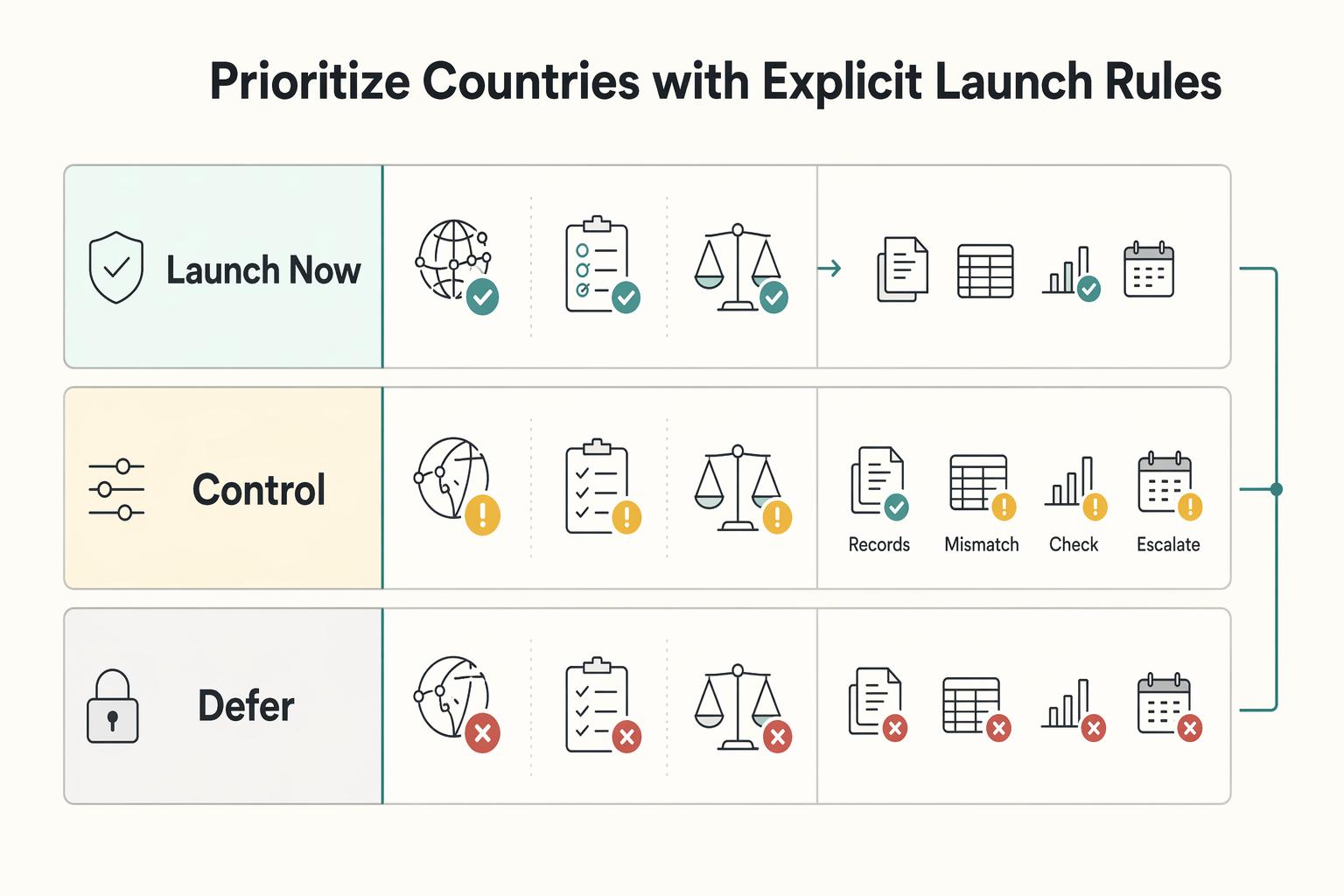
A **global contractor payout speed index by country** should tell you one thing first: how reliably contractors in each corridor receive funds when you expect them to. Coverage maps are not the same as reliable time to funds. If you are deciding where to launch first, the useful question is not "can we pay there at all?" but "how often do contractors in that market get paid when we expect them to?"
Pay Contractors in India With UPI Without Losing Control
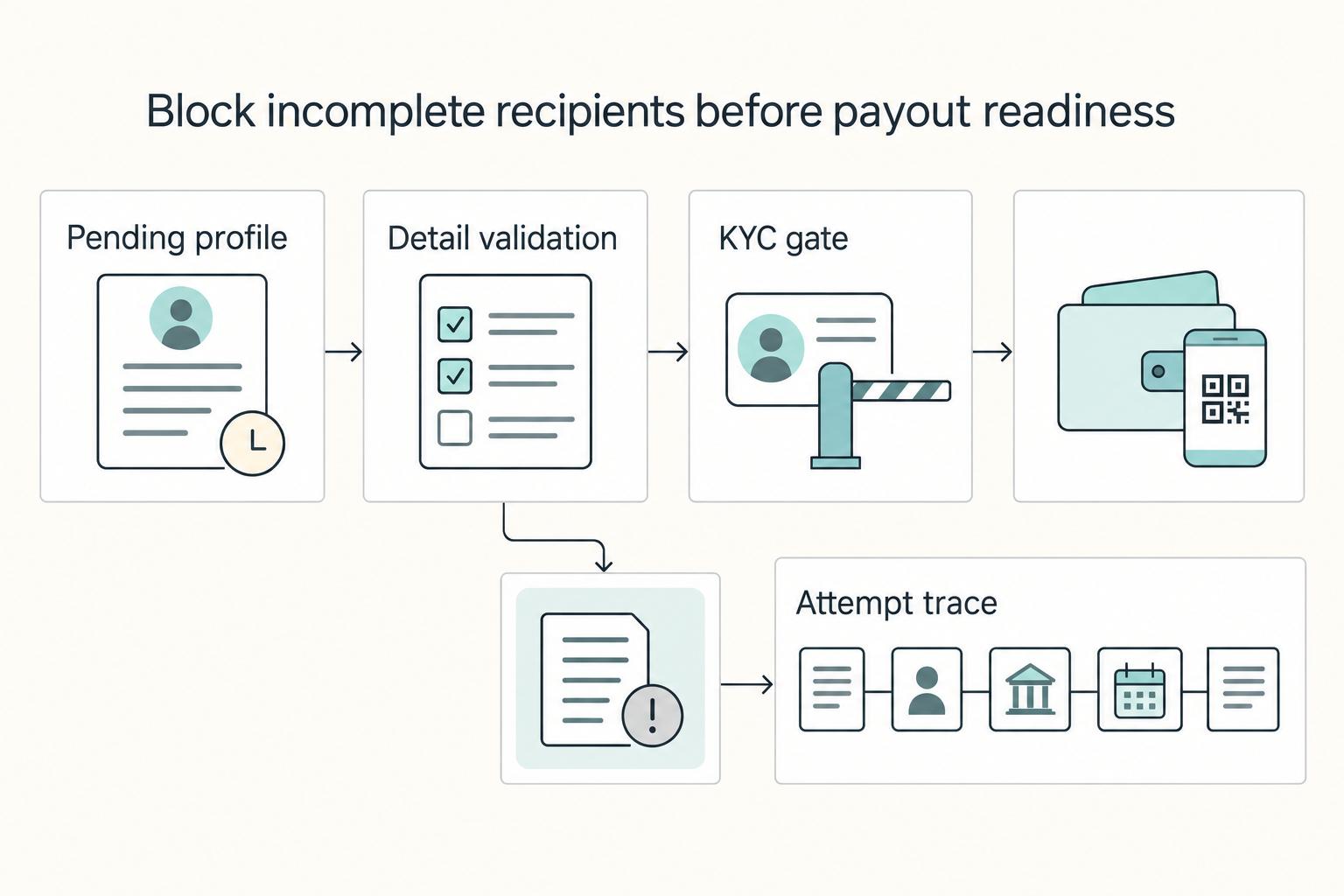
Treat UPI as a fast payment rail, not the whole contractor payout operation. In India, that distinction matters. Unified Payments Interface was established by NPCI in 2016, supports instant bank-to-bank transfers across multiple banks 24/7, and works through widely used apps such as Google Pay, PhonePe, and Paytm. The rail is proven at national scale, with [BCG](https://www.bcg.com/publications/2025/india-upi-the-global-benchmark-for-digital-payments) reporting over 20 billion transactions each month and 84% of India's digital retail payments.