
Quick Answer
Yes - use UPI for India contractor disbursements only after control points are live. Set internal KYC and approver ownership, require a complete recipient record with UPI ID or VPA, and send each payout with an idempotency key plus a unique transaction ID. Keep provider references on the same payout record, and hold unclear states instead of re-sending. Route to NEFT, IMPS, or RTGS only through a defined fallback rule.
How to pay India contractors via UPI with approval gates, traceability, and fallback rails#
Treat UPI as a fast payment rail, not the whole contractor payout operation. In India, that distinction matters. Unified Payments Interface was established by NPCI in 2016, supports instant bank-to-bank transfers across multiple banks 24/7, and works through widely used apps such as Google Pay, PhonePe, and Paytm. The rail is proven at national scale, with BCG reporting over 20 billion transactions each month and 84% of India's digital retail payments.
Even so, your team still has to decide how payouts will be approved, tracked, retried, and reconciled.
Treat UPI as infrastructure, not finished operations#
At a product level, UPI reduces friction because you can often pay using a UPI ID instead of collecting full bank account details. That is why it can look deceptively simple. For a platform paying contractors, the real work starts after that first happy-path transfer succeeds.
If you can send money to a recipient identifier but cannot prove who approved the payout, what status it reached, and how a failed attempt should be handled, you may not yet have a production-ready flow. A useful early checkpoint is simple: can finance and ops trace one payout from initiation to final recorded outcome without asking engineering to dig through logs?
Choose the decision you are actually making#
Most teams are not deciding whether UPI matters. They are choosing between a lightweight approach, where they disburse to a UPI ID with limited internal tooling, and a fuller payouts setup with API integration, status handling, and operational controls around it.
That choice usually maps to ownership. Finance typically cares about auditability and settlement visibility. Ops typically cares about exception handling and retries. Engineering typically cares about idempotency, event delivery, and whether payout states can be trusted downstream. If those owners are not aligned on who handles ambiguous outcomes or re-initiation rules, rollout can look fast in testing and messy in production.
Define control points before you optimize for speed#
The practical goal of this guide is not just to move faster on UPI. It is to do so while keeping internal approval gates, failure recovery, and service-level risk visible enough that surprises do not land at month-end.
A good starting rule is this: if your only success signal is "submitted," or your dashboard cannot show a reference that ties the transfer attempt to an internal approval record, you are still too early to scale. One common failure mode is assuming that because UPI is known for speed and interoperability, every contractor payout will resolve cleanly without explicit retry and reconciliation logic. That is where duplicate risk, unresolved statuses, and finance cleanup work begin.
The sections that follow are for finance, ops, and engineering owners making that call in India. They cover when a simple UPI-first approach is enough, when you need fuller API-backed controls, and what to put in place before the first live contractor batch goes out.
For a step-by-step walkthrough, see How Independent Contractors Should Use Deel for International Payments, Records, and Compliance.
What UPI payouts actually solve for contractor operations in India#
UPI payouts mainly solve fast recipient addressability for domestic India disbursements; they do not, by themselves, solve approval control, exception handling, or auditability.
Step 1: Define the payment objects clearly. UPI is the rail. A payout is the business disbursement of funds to another party. The recipient identifier is usually the UPI ID, also called a Virtual Payment Address (VPA), which is the address used for UPI money transfers and is linked through UPI apps to bank accounts for instant transfers.
Step 2: Treat speed as table stakes, not the end state. Operational value comes from controlled execution and traceable states. For each payout, your team should be able to answer three questions: why it was sent, who approved it, and what state it finally reached. If you only have a "submitted" signal, you still need stronger controls such as explicit business purpose, an approval trail, and references you can reconcile later.
Step 3: Set scope boundaries early. UPI is strongest for local India payout flows. Some providers describe cross-country routing through local instant rails that include UPI, but that does not mean cross-border contractor operations are solved by UPI alone. You still need to handle underlying contractor-payment requirements, including TDS and GST compliance in India.
Decide when UPI-first is right and when fallback rails should lead#
Use UPI-first for domestic India contractor payouts when volume is high and recipient experience matters, but design fallback rails from day one if coverage will be mixed. Decide on coverage and control, not speed claims alone.
Step 1: Compare rails by operational criteria, not marketing labels. UPI's grounded advantage is clear: it runs on an interoperable real-time network in India, and payouts can be routed via UPI ID/VPA, which can reduce recipient data collection. That helps when you are onboarding many contractors quickly, but it also raises the bar for status tracking, retries, and reconciliation.
For NEFT, IMPS, and RTGS, do not assume one bank-transfer experience. Use your provider or bank contract to confirm recipient fields, status model, and support path. Treat these rails as fallback coverage when UPI details are missing, invalid, or unsupported for a contractor profile.
| Rail | Recipient data posture | Expected processing pattern | Operational effort | Failure handling burden |
|---|---|---|---|---|
| UPI | Usually centered on UPI ID or VPA, which can reduce bank-detail collection | Real-time network behavior is the default expectation for the rail itself | Lower onboarding friction, higher need for API status monitoring | High if your team cannot distinguish pending, failed, reversed, and truly paid states |
| NEFT | Confirm exact bank-detail requirements with provider | Confirm whether your provider handles this as bank-driven or batch-like processing | More data collection and validation overhead than VPA-led flows | Moderate to high if account details are wrong or fallback is handled manually |
| IMPS | Confirm exact bank-detail requirements with provider | Confirm provider behavior and status surfaces in contract or API docs | Useful as non-UPI coverage, but only if ops can support another exception path | Moderate to high if you lack clear references for tracing and reattempt rules |
| RTGS | Confirm exact bank-detail requirements with provider | Confirm provider behavior, release conditions, and availability terms | Usually a deliberate fallback choice, not a default contractor rail | High if teams route there ad hoc without approval and evidence rules |
A practical checkpoint: for each rail, can you name the minimum recipient payload, the status events you receive, and the exact evidence you keep after payment? If not, that rail is not production-ready.
Step 2: Apply two rollout rules before expanding coverage. Rule one: if contractor volume is high and recipient experience matters, start UPI-first. Rule two: if your team cannot monitor asynchronous statuses and retries through API integration, limit rollout until those controls exist.
Fast submission without reliable status handling is where duplicate sends, premature retries, and "paid or not paid?" escalations start. If your payout context requires non-UPI coverage from the start, design that fallback early instead of treating it as an exception.
Keep cross-border separate in your decision model. Cross-border payments are transfers between parties in different countries, and they have historically lagged domestic payments on cost, speed, access, and transparency. Domestic UPI success should not become a proxy for international readiness.
Step 3: Lock provider unknowns in writing before choosing a default.
Before you commit to any provider, confirm these contract points in writing:
- Fee model: per payout, per failed attempt, per reversal, and any rail-specific differences
- Settlement behavior: when your account is debited, when the recipient is considered paid, and how unresolved states are handled
- Service Level Agreement terms: support hours, response times, outage communication, and escalation routes
- Dispute and reversal process: who investigates, which reference IDs are required, and what evidence pack you must submit
Ask for sample payout status payloads and a sample dispute ticket before launch. If the provider cannot clearly show status states, reference fields, and reversal responsibilities, keep rollout narrow until they can.
Related: IBAN vs. SWIFT: How to Know Which Code to Use When Paying International Contractors.
Prepare prerequisites before sending the first live payout#
Do not launch live UPI payouts until your governance, recipient data contract, backend controls, and rollback triggers are documented, approved, and tested. In 2026 guidance, UPI operations are framed around performance, security, and resilience, so this is an execution requirement, not paperwork.
| Area | What to define or prove | Checkpoint |
|---|---|---|
| Policy gates | Internal KYC standard, approval path, and exactly who can release payouts in production | Audit trail captures reviewer, approver, and reason |
| Recipient payload | Stored legal name, UPI ID or VPA, usable purpose/reference field, and fallback-rail eligibility (NEFT/IMPS/RTGS) | Operator can tell which rail is allowed and why |
| Engineering readiness | Idempotency keys on payout creation, persisted provider references, async webhook/event handling, and clear status visibility for ops | Force a duplicate submission and confirm the second send is suppressed |
| Launch criteria | Reconciliation format, escalation owner, and rollback conditions if failures spike | Finance and ops can trace each payout from approval through latest status |
Step 1: Lock policy gates. Define your internal KYC standard, approval path, and exactly who can release payouts in production. This is an internal control decision, not a universal India rule. Remove ambiguity up front: who marks payout-ready, who approves exceptions, and who can release funds.
Run two sample approvals before go-live and confirm the audit trail captures reviewer, approver, and reason. If a batch can be released with no accountable record, stop there and fix that first.
Step 2: Define the minimum recipient payload. Treat this as your internal payout data contract. Keep it explicit: stored legal name, UPI ID or VPA, a usable purpose/reference field, and fallback-rail eligibility (NEFT/IMPS/RTGS).
If fallback needs extra bank data, either collect it intentionally or mark the recipient UPI-only until complete. Spot-check real records so an operator can tell, without guessing, which rail is allowed and why.
Step 3: Prove engineering readiness. Before live traffic, confirm idempotency keys on payout creation, persisted provider references, async webhook/event handling, and clear status visibility for ops. Your status surface should separate the states your provider supports (for example: submitted, processing, paid, failed, reversed, unresolved).
Avoid designs that depend on constant manual refresh. The 2026 UPI-rules discussion highlights limits on balance/status checks and stronger backend processes, so repeated polling can become an operational risk. In test, force a duplicate submission and confirm the second send is suppressed.
Step 4: Publish launch criteria. Write a short go-live note covering reconciliation format, escalation owner, and rollback conditions if failures spike. Reconciliation should be consistent enough for finance and ops to trace each payout from approval through latest status.
Where disbursements are treated as business spends, keep the same control bar: track, approve, and reconcile them for compliance and control. If you cannot name who pauses rollout and under what failure pattern, you are not ready for live payouts.
Build the recipient onboarding and compliance path#
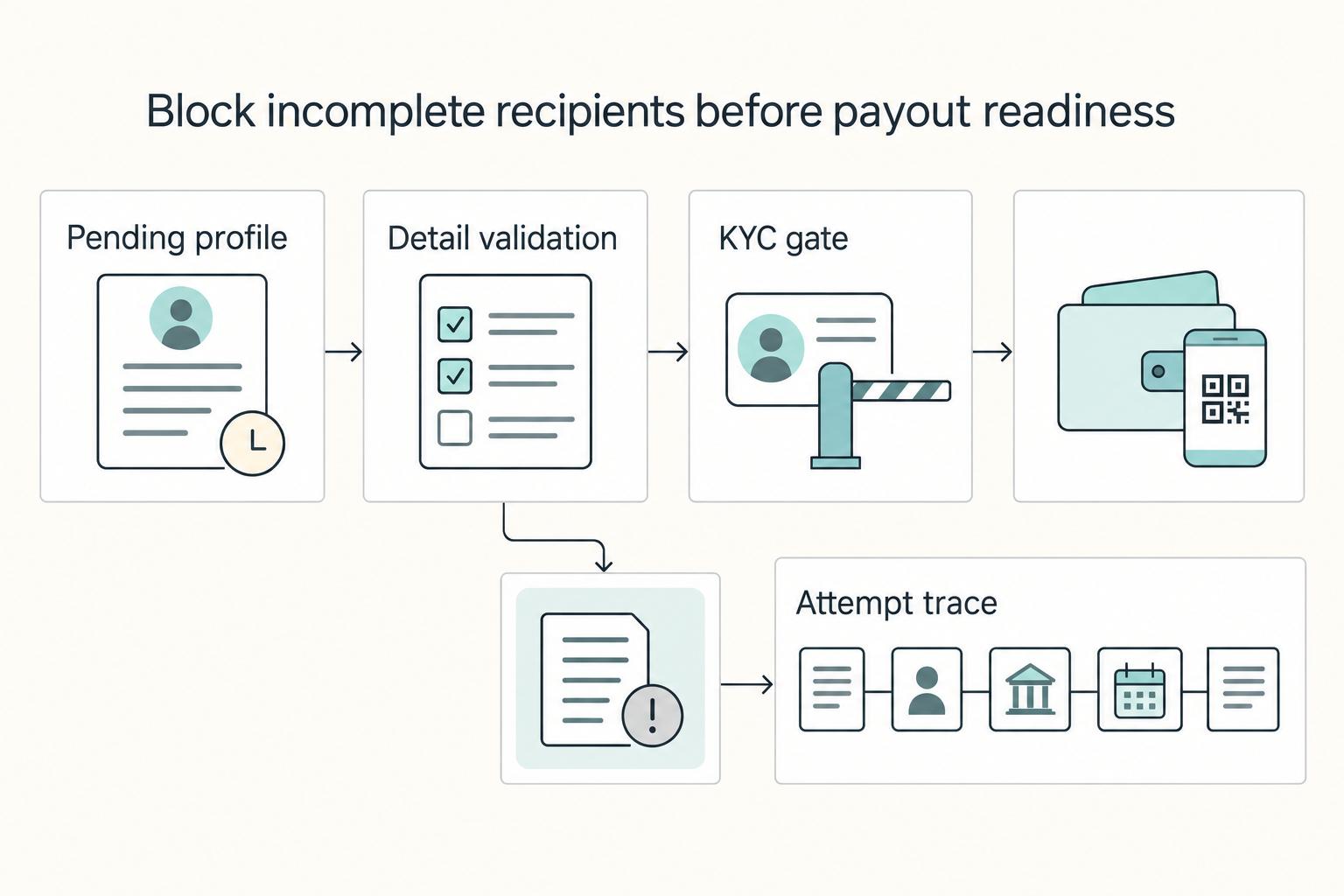
Build this flow so incomplete or unverified records stop before money moves, and only approved records become payout-ready.
Step 1: Collect the contractor profile in a pending state. Start with a staged record, not a live payout target. Capture the contractor name as stored internally, the UPI ID/VPA provided, a reconciliation-ready reference field, and fallback-rail eligibility (NEFT, IMPS, or RTGS). Do not let form submission equal payout readiness. Your payout workflow spans onboarding, disbursement, and reconciliation, so the record must be controlled from the start.
Step 2: Validate UPI details early and block incomplete records. Apply consistent completeness and format checks as soon as details are submitted. If required fields are blank, malformed, or clearly inconsistent with the profile you hold, reject them with a clear reason and keep the record blocked. This prevents avoidable payout noise later, especially because API acceptance alone does not confirm the recipient received funds.
Step 3: Apply required KYC and control fallback routing. If your policy or provider requires KYC, keep it as a hard gate before payout-ready status. Record reviewer, decision, and date so the decision is traceable. Treat fallback rails as an operator decision path, not a silent resend pattern. If UPI details keep failing your validation checks, route to correction or an approved fallback flow instead of repeated blind retries.
Step 4: Minimize stored data and keep per-attempt auditability. Store only the fields needed for payout operations and compliance, and mask sensitive attributes in operator views. Track each payout attempt against the internal payout ID, including who initiated it, which approved record was used, masked recipient identifier, provider reference when available, and status history over time. Contractor payout spend should be tracked, approved, and reconciled for compliance and control.
Implement payout execution with idempotent tracking#
Execution should prevent duplicate money movement: one payout intent maps to one internal payout record, one idempotency key, one provider submission trail, and one readable status timeline for ops.
| Control point | Required record or behavior | Rule |
|---|---|---|
| Create payout request | Store the internal payout ID, recipient record version, approved amount, purpose/reference, selected rail, and approval record | If amount, payee, or reference changes, create a new payout object |
| Attach idempotency key | Generate and persist the idempotency key before the first outbound call | Reuse the same key only for the exact same payout when the outcome is ambiguous |
| Persist provider references | Persist any provider acknowledgement or reference on the same payout record and track asynchronous updates as source events | Normalize to internal states such as submitted, processing, paid, failed, reversed, and manual-review where supported |
| Retry guardrails | Replay only idempotent requests while the original payout is unresolved | Do not issue a new payout object until a terminal outcome is confirmed, or you have provider confirmation that no live transaction exists |
Step 1: Create the internal payout request before any API call. Create an immutable payout object in your system first, not a fire-and-forget submit. Store the internal payout ID, recipient record version, approved amount, purpose/reference, selected rail, and approval record. If amount, payee, or reference changes, supersede the record and create a new payout object instead of silently editing the original.
UPI is a mobile-centric, real-time interbank payment platform, so weak controls can be hidden by speed. Your first checkpoint is simple: for any pending payout, an operator should be able to see exactly which approved recipient details will be sent before submission.
Step 2: Attach the idempotency key before submit, and treat retries as replays of the same intent. Generate and persist the idempotency key on the payout request before the first outbound call. This is your internal control for replaying the same intent, not proof of a UPI-mandated retry standard.
Reuse the same key only for the exact same payout when the outcome is ambiguous (for example, transport timeout). Do not create a second payout object just because a response is delayed. If you cannot confirm the first attempt was not accepted, hold and investigate.
Step 3: Persist provider references and expose event history to ops. Persist any provider acknowledgement or reference on the same payout record as soon as it arrives. UPI's modular API-based architecture supports fast product builds, but acceptance, updates, and final outcomes may arrive through different calls or channels.
Track asynchronous updates as source events, then normalize to your internal states (such as submitted, processing, paid, failed, reversed, and manual-review where supported). Ops should see event time, current state, provider reference, last update source, and who triggered any replay or hold.
Step 4: Add strict retry guardrails and explicit incident ownership. Replay only idempotent requests while the original payout is unresolved. Do not issue a new payout object until a terminal outcome is confirmed, or you have provider confirmation that no live transaction exists.
Define incident triggers and owners at launch:
- Duplicate-risk patterns tied to the same contractor, amount, and business reference without a confirmed terminal outcome
- Payouts stuck in non-terminal states beyond your documented review window
- Repeated failures concentrated on one provider integration or channel
Assign ownership clearly across engineering, payments ops, and finance so ambiguous cases are investigated, not resent under pressure.
Run reconciliation and audit evidence without month-end fire drills#
If you cannot prove what happened for each payout quickly, your reconciliation is too weak. Treat reconciliation and evidence capture as a live operating control, not a month-end cleanup task.
Step 1: Build one internal evidence pack per payout cycle. For each India contractor batch, store the same records together: internal payout request ID, provider reference, recipient UPI ID or VPA snapshot, status history, and approval log. If a payout moves from UPI to NEFT, IMPS, or RTGS, keep the original failed or blocked attempt linked to the fallback record so the trail stays intact.
Use a simple checkpoint: pick one paid item and one failed item, and confirm ops or finance can produce the full trail without raw logs or chat history. If evidence is split across systems, fix that before volume grows.
Step 2: Reconcile three views on a fixed daily cadence. Compare payout operations logs, ledger journal entries, and finance export totals for India contractor batches each day. Start with counts and gross amounts, then isolate mismatches by rail and payout state.
Use one strict rule: a payout marked paid in ops should match one ledger entry and one finance export record. If one view is ahead, move it to exception review and resolve it by request ID plus provider reference.
Step 3: Separate exception buckets early. Keep distinct queues for failed UPI payouts, fallback NEFT/IMPS/RTGS items, and unresolved statuses needing manual review. UPI may be central, but fallback flows are still part of real operations and should stay visible.
To reduce double-count risk, keep one business reference across the original attempt and any fallback, and require manual review before reissuing anything with a non-terminal UPI status.
Step 4: Assign named daily owners and signoff. Finance owns batch completeness signoff, ops owns exception triage, and engineering owns status-ingestion or export defects. When a status remains unresolved past your internal review window, hold resend decisions and investigate the provider reference first.
Related reading: How Foreign Companies Can Comply With India's DPDP Act.
Handle common UPI payout failures and recover fast#
Classify first, retry second. The right recovery for an invalid VPA is different from a payout that may still be in flight.
Step 1: Correct recipient data before re-initiation. If the UPI ID or VPA is invalid, correct the recipient record first, log what changed, and re-initiate only after the earlier request is clearly failed under your normal idempotency policy. Keep the same contractor obligation, but use a new payout request ID linked to the original attempt. If money was successfully sent to the wrong UPI ID, do not treat it as a normal failure: it is not automatically reversed, and recovery depends on beneficiary consent through the NPCI dispute-redressal path.
Step 2: Hold ambiguous states and resolve by provider reference. For processing, missing webhook updates, or conflicting statuses, freeze the item and investigate before any resend. Use published reversal windows as escalation timing, not resend logic: technical debit-without-credit cases are described as T+1 (with Rs 100 per day compensation if delayed), while merchant confirmation-failure cases are cited at T+5 for auto-reversal.
Step 3: Treat approval bypasses as control failures. If ops bypasses approval under pressure, treat it as a policy and permissions issue, not a one-off. After the incident, tighten payout permissions, require named approval for manual retries, and enforce daily reconciliation signoff for manually touched batches. Verify that the urgent case has one complete trail: original approval, manual action, provider reference, and final ledger outcome.
Step 4: Validate provider promises in signed terms, not demos. Marketing claims about speed or exception handling are not operational protection by themselves. Before you scale, confirm in contract language how final status is defined, how fees are handled for failed or reversed payouts, and how escalation works when support is needed fast.
Conclusion and copy-paste launch checklist#
Choose UPI first only if your controls are ready for the speed you want. The deciding factor is not whether UPI is fast in theory. It is whether your team can prove who initiated a payout, what was sent, which transaction ID was used, and what status came back from the bank or provider.
If you are using a UPI app or intent-based flow, do not skip the prerequisites that matter most in practice. The implementation notes behind UPI intent flows call out two checks that are easy to miss under launch pressure. Your business channel should be accepted for UPI and verified by NPCI or banks, and you should already have the bank APIs needed to check payment status. That is the difference between a usable payout rail and one that forces ops into guesswork.
Before broad rollout#
Step 1. Confirm provider unknowns in writing. Get fee, settlement, dispute, and status-visibility terms clarified in your provider agreement before volume goes up. A sales demo is not enough. If support escalation or payment-status visibility is vague in the agreement, treat that as an operational risk, not a paperwork detail.
Step 2. Lock the recipient data you will require. Decide the minimum schema before the first live batch. Recipient payment address (UPI ID or VPA), reference or purpose field, and any program-required identity fields should be defined up front. The checkpoint is simple: no record should be payout-ready if required fields are missing or inconsistent.
Step 3. Make duplicate prevention explicit. At minimum, ensure every transaction uses a unique transaction ID and that the same payout request is not casually recreated under pressure. The failure mode here is familiar. An unclear status gets treated as a failure, a second transfer is sent, and finance now has a duplicate to unwind.
Step 4. Wire status retrieval before scale. Do not launch on the assumption that "real-time" means always settled and obvious. Verify that ops can retrieve payment status through bank or provider APIs and see a clear state trail for submitted, completed, failed, or unresolved items. If you cannot check status quickly, keep rollout narrow.
Step 5. Publish the exception path. Write down who reviews unclear statuses, who can approve retries, and when another rail can be considered. This does not need to be long. It does need to stop people from improvising around pending transactions.
Step 6. Run daily reconciliation before opening the floodgates. For each payout cycle, keep a small evidence pack with your request ID, unique transaction ID, provider or bank reference, recipient payment address, and final status. Review exceptions daily until the process is boring. That is the point where UPI payouts stop being a speed feature and start being dependable operations.
Frequently Asked Questions
Can platforms pay contractors in India using only a UPI ID?
Often yes for the payment address itself, because a UPI payment flow can be set up around a linked bank account plus a unique ID and PIN. But you should not treat the UPI ID as your only record. Keep an internal transaction record (including a unique transaction ID), the contractor record, and a clear payment note so finance can reconcile what was sent and why.
Is UPI payout truly real-time for every contractor transaction?
UPI is described as a real-time payment system, but you should not assume every payout is instantly final in practice. Treat finality as a confirmed status, not a marketing phrase. If your provider or bank has not returned a clear paid or failed result, hold the item and investigate instead of sending a replacement.
What should finance teams verify before scaling UPI payouts?
Check that every transaction gets a unique transaction ID and that your team can retrieve status updates through bank or provider APIs. Also verify that payout notes or references are consistent enough to match provider records to your ledger. A simple test is to sample recent payouts and confirm transaction ID, recipient UPI ID, status history, and ledger entry line up without manual guesswork.
What happens when a UPI contractor payout fails but status is unclear?
Do not retry on instinct. Move the payout into manual review, use the provider reference or bank status API to determine whether the payment is failed, still processing, or already completed, and only then decide the next action. One risk here is creating a duplicate because ops treated a delayed confirmation as a failed transfer.
When should we route a contractor payout to NEFT, IMPS, or RTGS instead of UPI?
This section does not establish specific decision rules for switching between UPI and NEFT, IMPS, or RTGS. Define fallback criteria in your internal payout policy and provider agreements, and apply them consistently. Before sending a second attempt on any rail, confirm the first attempt’s status is resolved.
How much KYC is typically needed before enabling contractor UPI payouts?
There is no single supported answer you should copy across providers. The exact KYC expectation depends on your bank, payout partner, and internal compliance policy, so make that gate explicit before launch. A practical checkpoint is simple. Do not mark a contractor payout-ready until the required review is complete and recorded.
Which provider claims should be validated in the Service Level Agreement before launch?
Start with what your signed Service Level Agreement actually commits to around transparency, efficiency, settlement timeliness, and finality. You also want the document to be clear on how payment status is exposed and how support escalation works when a payout is stuck. If a provider promises speed or smooth exception handling in a demo but the signed agreement is vague, assume you do not have dependable coverage.
Try a related tool
Researched and edited by the Gruv editorial team. Gruv builds cross-border billing, payouts, and finance-operations software for global businesses.
Sources
Includes 6 external sources outside the trusted-domain allowlist.
- bis.org/cpmi/publ/d222.pdftrusted
- business.cornell.edu/hub/2024/12/20/indias-unified-payments-inter...trusted
- aciworldwide.com/cross-border-payments-landscape-challenges-a...external
- aciworldwide.com/blog/indias-unified-payments-interface-break...external
- bcg.com/publications/2025/india-upi-the-global-bench...external
- business-standard.com/finance/personal-finance/wrong-upi-payment-h...external
- cashbook.in/blogs/make-business-payments-using-upiexternal
- cashbook.in/blogs/corporate-expense-tracking-india-upiexternal
Educational content only. Not legal, tax, or financial advice.
Related Posts
Invisible Payouts: How to Remove Payment Friction for Contractors Without Sacrificing Compliance
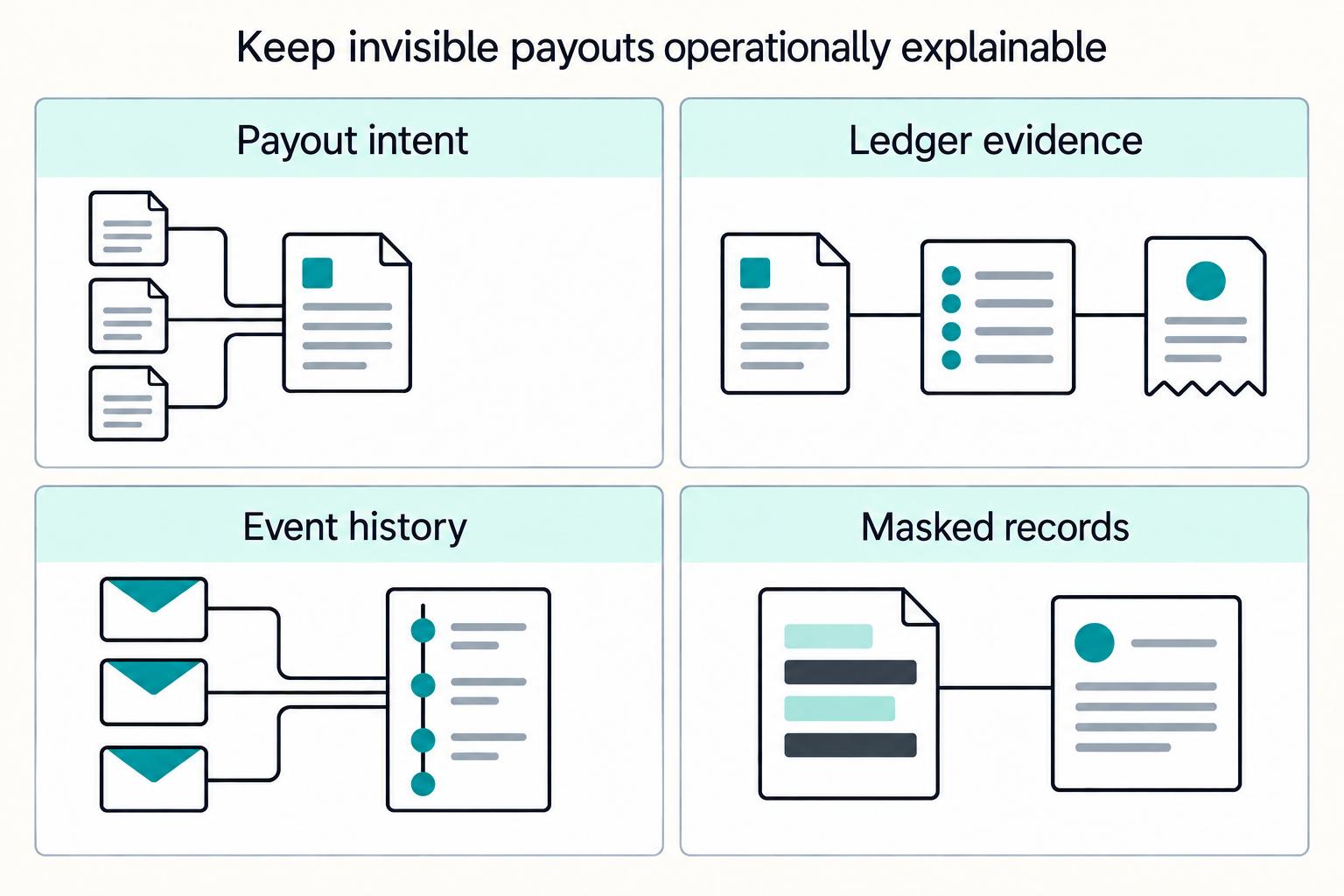
Invisible payouts should make life easier for contractors without hiding the controls your team needs. Contractors should get a predictable, low-friction flow, while internal teams can still enforce and document payout decisions when needed. If you run contractor payouts at scale, you need both outcomes at once. We recommend treating every easy payout as a controlled release path your team can replay later.
IBAN vs SWIFT for International Contractor Payouts on Platforms
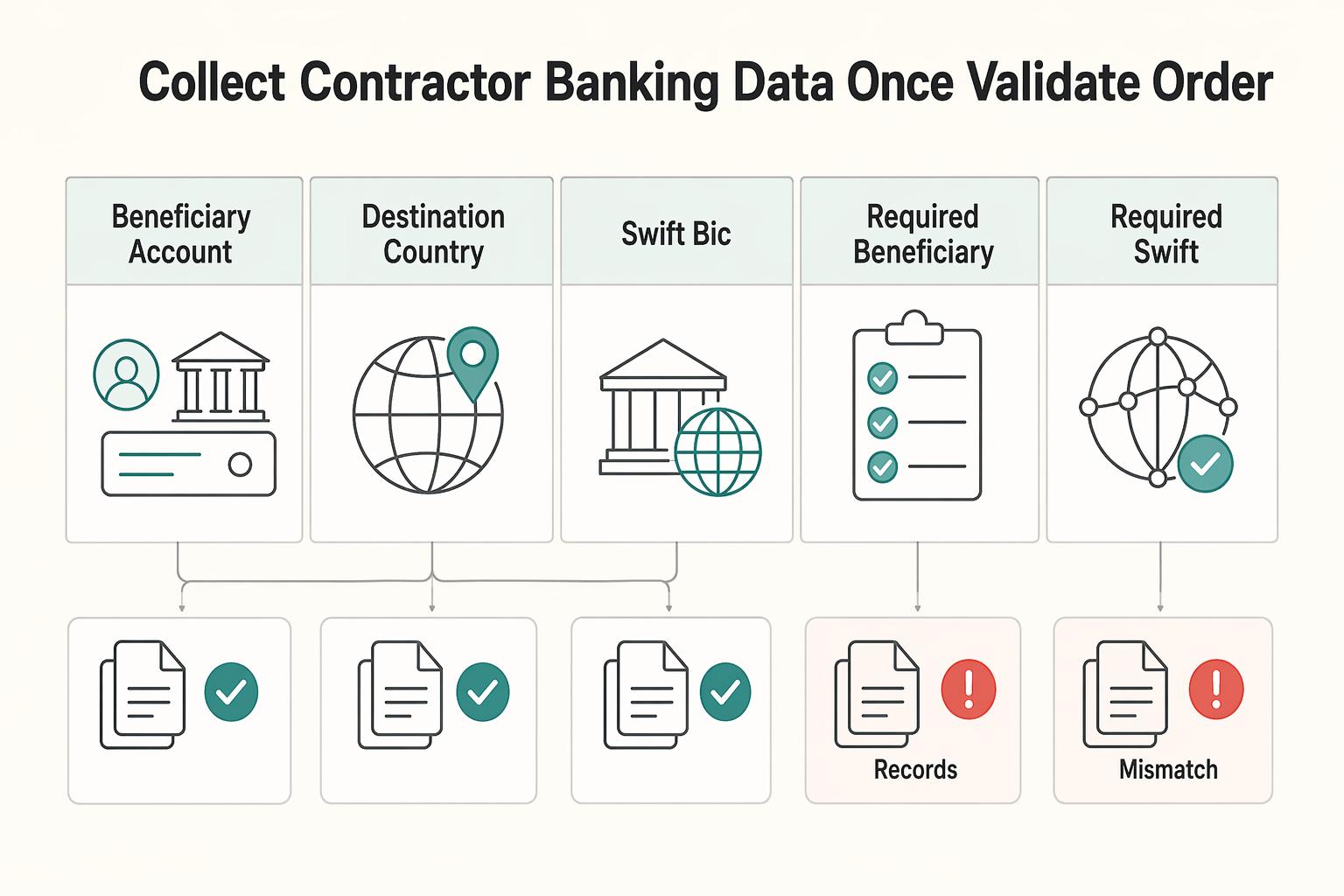
If you are scaling international contractor payouts, treat code choice as a release control, not a glossary question. The practical rule is simple: collect the right bank identifiers up front, validate them before approval, and keep enough evidence to explain every submitted, rejected, returned, or retried payout later.
Stablecoin Payouts for Platforms Disbursing USDC to Global Contractors
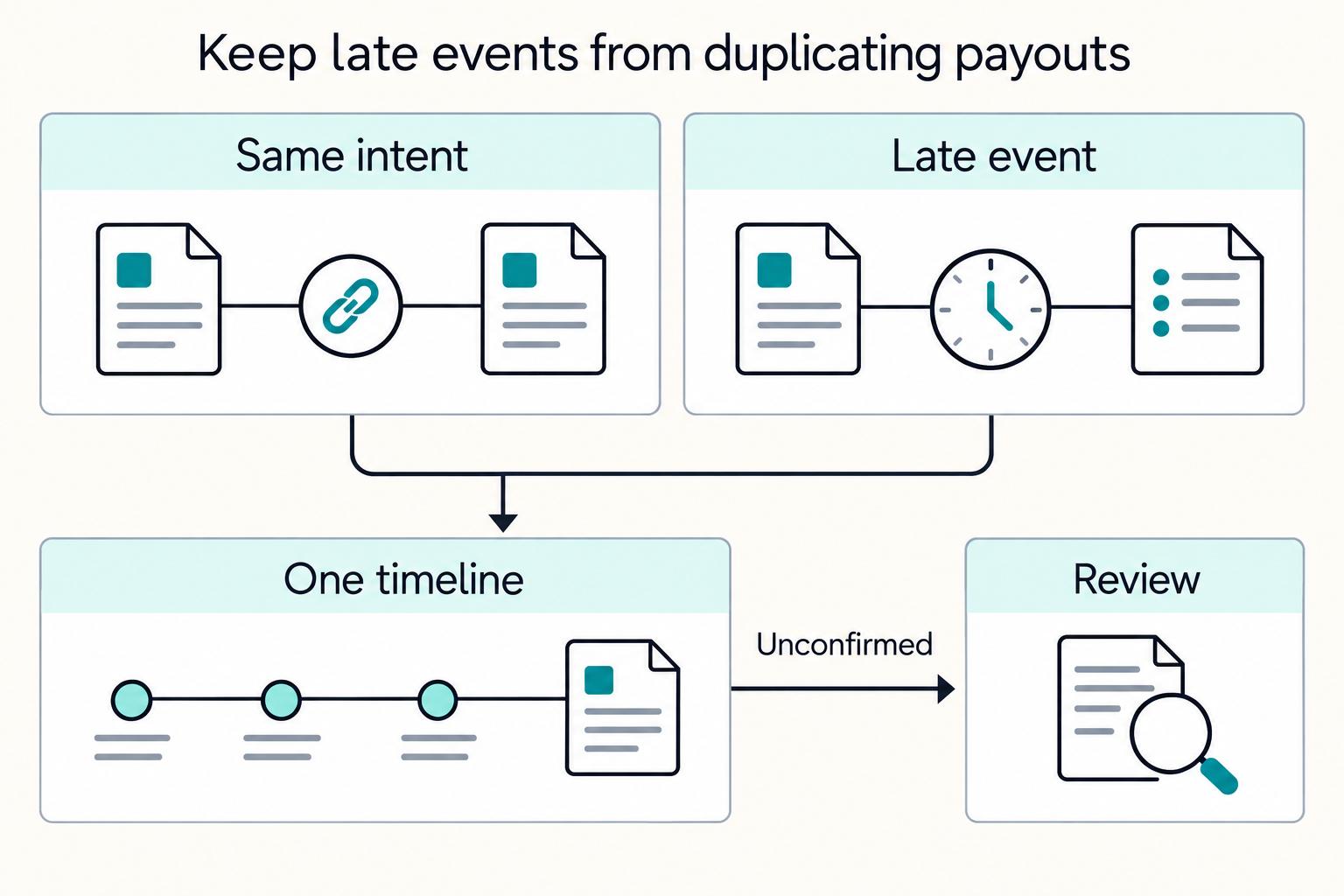
**Step 1. Set the operating model before you talk about speed.** This guide is for platform operators shipping stablecoin contractor payouts in production, not for freelancers choosing a wallet. The core stance is simple: approve compensation in USD, use a stablecoin as the settlement rail, and treat controls as product requirements from day one. Stablecoins are built to behave like money, and businesses already use them for supplier payments, cross-border invoicing, and treasury movement. That makes stablecoin payouts worth a look, but only if your payout process is as disciplined as your fiat process.