
Quick Answer
Separate metric types first, then score evidence quality before ranking markets for global contractor payout benchmarks by country. Use country-specific data only when scope, recency, and method are clear, and keep salary or outsourcing figures as directional context. Next, combine benchmark cost with execution factors like payout routing, compliance ownership, and tax-document handling. Countries should advance to scale only after pilot results confirm reconciliation and operational reliability.
What to Compare in Each Country#
Treat most country ranking pages as inputs, not answers. If you are evaluating country-level contractor payout inputs, the first mistake is assuming every page measures the same thing. Many do not.
| Source | Measures | Article note |
|---|---|---|
| Rise | Contractor rates by role and location | Rate input |
| ERI SalaryExpert | Contractor salaries by country | Salary input |
| Insignia | Outsourcing pricing benchmarks | Averages mix customer support, software development, accounting, and design |
| Remote's payout explorer | Pay-in currency, withdrawal options, and approximate payout times | Operational payout signal |
That confusion shows up quickly in search results. Rise frames its page around contractor rates by role and location. ERI SalaryExpert frames its directory as contractor salaries by country. Insignia publishes outsourcing pricing benchmarks and explicitly says its averages reflect a mix of services such as customer support, software development, accounting, and design. Remote's payout explorer is different again. It focuses on operational signals like pay-in currency, withdrawal options, and approximate payout times. All of those can be useful, but they are not interchangeable, and turning them into one country league table creates false precision.
This matters more for platform operators than for casual market research. A founder can look at one page, see a low hourly figure for Country A, then look at another page showing fast payout timing for Country B, and come away thinking both belong in the same ranking. They do not. One input may be a labor cost proxy, another may be outsourced vendor pricing, and another may be an execution signal about how money moves.
If you price, forecast margin, or prioritize launch markets on that blended view, you can end up solving the wrong problem. You choose a country that looks cheap on paper but is weak on the payout execution path you need.
The practical checkpoint is simple. Before you compare one country with another, verify the metric label on the page itself. If the page says "contractor rates," "contractor salaries," "outsourcing rates," or "currencies you can pay in, withdrawal options, and approximate payout times," keep those in separate columns. Do not merge them into a single score until you know what each one represents. The failure mode here is common and expensive: salary estimates get treated like payout costs, outsourcing prices get treated like contractor take-home, and marketing pages get treated like launch evidence.
This article is built to prevent that. The goal is not to produce another superficial ranking. It is to help you turn mixed benchmark inputs into expansion decisions grounded in operations and payout execution. We will separate cost signals from execution signals, show where the data is directional only, and make the unknowns visible enough for finance, product, and payments ops to challenge them before a country goes live.
Scope matters here. As of 2026, this piece uses only verifiable country signals, calls out unknowns when methodology or definitions are thin, and avoids treating promotional claims as decision-grade evidence. A page may be recent, widely shared, or backed by a provider with real payment volume, but that still does not make it a standardized payout benchmark.
The standard here is stricter. If a source cannot clearly tell you what is being measured, how it was grouped, and what it should influence, it can inform a shortlist at most, not a launch decision.
Related: Xero + Global Payouts: How to Sync International Contractor Payments into Your Accounting System.
Define the benchmark terms before you compare countries#
Do not compare countries until each source is labeled by metric type. A payout benchmark reflects execution mechanics such as pay-in currency, withdrawal options, and approximate payout times, while contractor charge-out rates, outsourcing rates, and salary estimates answer different questions and should not be merged into one ranking.
This confusion is common because search results group these pages together. Rise presents contractor rates by role and location (2026 edition). ERI SalaryExpert presents average contractor pay by country. Insignia Resource publishes 2025 outsourcing pricing benchmarks, and it also states that pricing is only one part of outsourcing decisions and that its averages combine services like customer support, software development, accounting, and design. Normalize first, then compare like with like.
| Term | What it tells you | Gruv decision it can inform |
|---|---|---|
| Payout benchmark signal | How money may move in a country | Payout scoping and whether to investigate routing and settlement options further |
| Contractor charge-out rate | What an individual contractor may bill by role and location | Budget planning for direct contractor models |
| Outsourcing rate | What a vendor may charge for bundled service delivery | Model selection decisions (direct contractor vs managed service), then downstream payout planning |
| Salary estimate | Local pay context, not payout execution | Market context only, not Virtual Accounts setup or payout flow design |
Apply one operator rule throughout: if a source does not clearly separate payout data from outsourcing pricing and salary context, treat it as directional only, not a launch input. The failure mode is predictable and expensive: teams model margin from a low headline number, then later find that FX margins, transaction fees, tax documentation, and payout method choices materially change total spend. Keep the checkpoint simple: every source in your sheet must carry one explicit tag before anyone scores a country (payout, rate, outsourcing, or salary).
Score source quality so weak data does not drive expansion#
Score each source before it enters your country model. If coverage, method, or definitions are unclear, keep that input directional only and out of launch math.
| Source | Metric type | Country granularity | Recency | Method transparency |
|---|---|---|---|---|
| Rise | Contractor rate benchmark for workforce planning | Country-level framing in title; role-and-region framing in body | September 10, 2025 | Partial: cites scale ($800 million across 190 countries), but benchmark construction is not fully shown on the page |
| ERI SalaryExpert | Global salary benchmark | Explicit coverage: 77 countries, 8,200+ cities, 35,300+ positions | Updated every six weeks | Moderate: coverage and refresh cadence are disclosed, but this is still a salary benchmark, not a payout dataset |
| Skuad | Salary benchmark output | Country granularity not verifiable here | Confirm with the relevant authority | Low: discloses "gross salary figures" and includes a lead form, but sample definition is not visible here |
| Clockify | Freelancer rate benchmark | Multi-country coverage shown at 84 countries; page also uses regional summaries | Confirm with the relevant authority | Partial/mixed: cites datasets with different scopes (84 countries vs 122 countries and 2,000 freelancers) |
Use a simple pass/fail rubric so weak inputs do not drive expansion:
- Country-specific coverage: Pass only when country-level coverage is explicit. Fail when regional averages are presented like country facts.
- Methodology visibility: Pass only when sampling, assembly, or refresh logic is visible.
- Definitional clarity: Pass only when the page clearly separates salary, contractor rate, and payout context.
A practical operating rule is at least 2 of 3 checks must pass before a source affects country priority. If methodology fails, store the page capture and disclaimer, then mark the source directional only.
Red flags to tag immediately:
- Regional averages presented as country facts
- Promotional or lead-gen pages without method detail
- Missing sample definitions behind "average" or "market rate" figures
This is not a theoretical risk. As Rise notes, teams can pay more upfront for the right operating model but avoid "misclassification penalties that can reach $100,000+," which is exactly why low-trust benchmark inputs can become expensive country-launch mistakes.
Build a country decision matrix that combines cost and execution risk#
Do not rank countries on rates alone. A launch decision should combine two signals for each country or region candidate: benchmark cost and evidence that you can run payouts and compliance cleanly.
Start with four weighted fields#
Use a simple 1-5 scoring matrix with weights so low headline rates do not auto-win.
| Field | Example weight | Strong score | Low or unknown score |
|---|---|---|---|
| Benchmark level | 35% | Country-specific, clearly labeled benchmark with usable recency and method context | Regional average treated like a country fact, or salary data presented as contractor payout data |
| Payout operational complexity | 25% | Payout method assumptions are clear, including likely fee and FX drivers | Payout method or routing is unclear, or total cost may shift by geography/rail |
| Compliance burden | 25% | KYC/KYB/AML, tax-document, and VAT responsibilities are identified with an owner and review path | Checks are copied from another market, or tax/onboarding requirements are still inferred |
| Rollout uncertainty | 15% | Few unknowns, documented and time-bounded | Open questions could block onboarding, payouts, or reporting after launch |
This reflects the core operating reality: total contractor cost changes with payment rails, transaction fees, tax documentation, and payout methods, not just hourly benchmarks. Published benchmark sets also mix country rows with regional buckets, so treat regional labels as directional until replaced with country-level proof.
Gate the score with document and tax checks#
A country is not launch-ready until it clears document and compliance checkpoints. AML has an international baseline, but countries implement measures differently, so do not assume one checklist transfers market to market.
| Item | Use in article | Specific detail |
|---|---|---|
| W-8BEN | Foreign beneficial owners in U.S. withholding/reporting contexts | Keep document paths explicit for U.S.-connected flows |
| W-9 | Provides a correct taxpayer identification number | Keep document paths explicit for U.S.-connected flows |
| 1099-NEC | Reports nonemployee compensation | Keep document paths explicit for U.S.-connected flows |
| FBAR | Review flag when U.S. tax exposure is in play | $10,000 aggregate foreign account trigger |
| FEIE | Review flag when U.S. tax exposure is in play | Physical presence test: 330 full days in 12 consecutive months, with other IRS conditions |
For U.S.-connected flows, keep document paths explicit:
W-8BEN: foreign beneficial owners in U.S. withholding/reporting contexts.W-9: provides a correct taxpayer identification number.1099-NEC: reports nonemployee compensation.
Log FBAR and FEIE as review flags when U.S. tax exposure is in play, not as universal contractor requirements. FBAR includes a $10,000 aggregate foreign account trigger, and FEIE qualification can include the physical presence test (330 full days in 12 consecutive months) with other IRS conditions.
For VAT, require country-specific treatment checks before launch. Use explicit if-then rules:
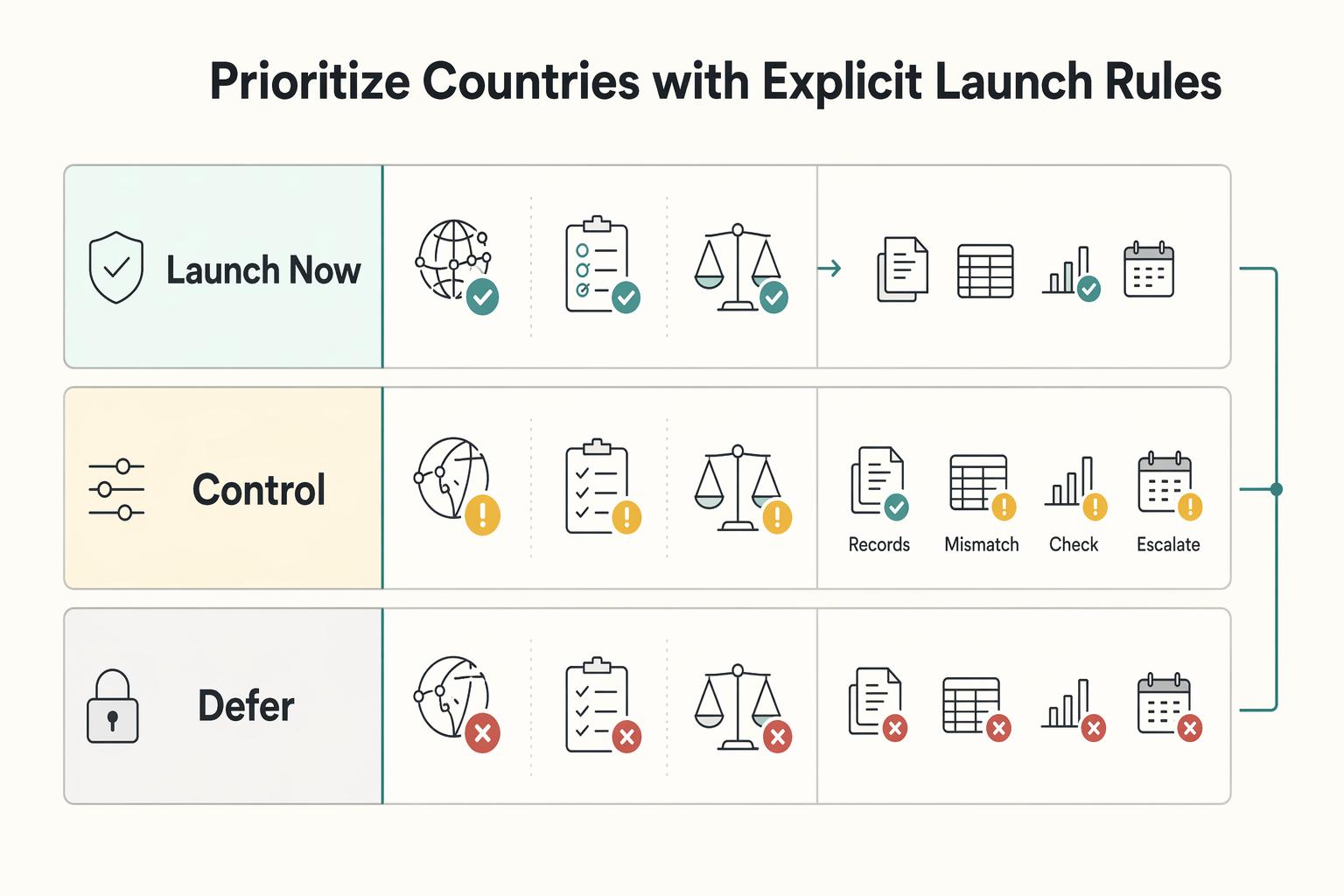
- If benchmark signal is strong but compliance evidence is thin, run pilot only.
- If benchmark and compliance evidence are both strong, prioritize full launch.
- If cost looks attractive but payout method, VAT treatment, or tax-document routing is unclear, keep the country in discovery/backlog.
Mark proven versus inferred#
Make uncertainty visible to leadership. Add four tracking columns next to score: evidence status, exact artifact, owner, and last verification date.
Use Proven only when the row ties to a concrete artifact (for example, page capture, form requirement, or policy note). Use Inferred when the row depends on regional rollups, adjacent-country assumptions, or vendor claims without visible method.
The common failure mode is clear: strong rate signals can hide execution drag in unknowns. Wide location spreads may be real, but if KYB review paths or tax-document handling are unsettled, the advantage is still provisional.
For a country-level view of which local bank transfer networks support lower-cost, more reliable contractor payouts, see Local Bank Transfer Networks by Country: A Platform Operator's Global Payout Rail Map.
Match country picks to your expansion scenario#
Match each country to the expansion job you need it to do. A country that works for an early test can fail for margin-sensitive scale or premium talent acquisition, even when benchmark rates look strong.
| Scenario | What matters most | What to require before go-live | Main red flag |
|---|---|---|---|
| Early market test | Speed to launch and low setup drag | Clear country-specific KYC/KYB responsibility, known payout route, known currency and withdrawal options | Cheap benchmark, but unclear compliance ownership or unclear withdrawal path |
| Margin-sensitive scale | Cost confidence that survives fees and compliance work | Strong country-level benchmark evidence plus validated payout routing assumptions and review ownership | Salary or rate data treated as total payout cost |
| Premium talent acquisition | Access to specific roles or senior talent pools | Role-level pay context, operability checks, and acceptable payout experience | Strong talent signal but payout UX that slows acceptance or hurts retention |
If speed is the priority, choose countries where the responsibility map is already clear. KYC responsibility can change by integration path, including paths where the platform must collect and submit KYC data. You also need payout basics confirmed up front: supported currencies, withdrawal methods, and expected payout timing. If those are still assumptions, treat the country as discovery, not early launch.
For margin-sensitive scale, hold a stricter line. SalaryExpert is useful for directional pay context because its dataset is collected, verified, and statistically summarized, and it reports broad coverage across countries, cities, and positions. But salary benchmarks are not proof of payout operability. Before scaling, validate routing, fee drivers, and compliance handling in the specific country.
Rise-like reports help with role-level planning and show that geography spreads can be wide, including examples of 5-10x differences. They also reinforce that compliance costs can outweigh hourly-rate savings and that misclassification risk can materially change economics. Use these as planning signals, then confirm country execution details before launch decisions.
Tie the scenario to Gruv product choices#
Use the scenario to decide which Gruv modules to evaluate first. If you are comparing Merchant of Record and direct contractor payouts, keep the responsibility line explicit: a Merchant of Record is the entity legally responsible for payment-processing and transaction compliance obligations. A direct payout model is only a fit when you have validated the country-level compliance and payout tasks your team will own.
Use one operating rule across scenarios: for fast entry, prioritize countries with a verified responsibility map; for scale, require both strong cost evidence and strong execution evidence; for premium hiring, accept higher nominal rates only when payout execution is clean enough to support contractor experience.
If speed is a major decision factor in your market shortlist, Global Contractor Payout Speed Index by Country breaks down how quickly funds typically move across markets.
Account for compliance and tax friction before pricing conclusions#
Do not approve a country budget from rate benchmarks alone. A lower-rate market with unclear KYC, KYB, AML, VAT, or tax-document handling can create more delay, manual review, and rework than a higher-rate market with a clean onboarding path.
After scenario selection, the decision question should be: can we onboard, pay, report, and evidence this country without creating an uncontrolled queue? If that answer is unclear, treat the country as pilot-only rather than scale-ready.
Use a readiness check before budget signoff#
KYC and KYB are country-specific operational requirements, not generic box checks. AML controls are part of a formal framework, including timely beneficial-ownership information. Use this pre-budget check before signoff:
| Area | What you need to verify | Minimum artifact before approval |
|---|---|---|
| KYC | Which party collects identity data, required country fields, and when payout is blocked for missing data | Country onboarding requirements list and collection owner |
| KYB and beneficial ownership | Whether business payees need entity verification and beneficial-owner details, and how updates are handled | Entity verification checklist and beneficial-ownership evidence path |
| AML review | What triggers manual review or policy holds, who resolves them, and expected turnaround | Escalation rule, review owner, and hold-resolution process |
| VAT | Whether the country or region creates VAT handling requirements, including EU member-state treatment within the VAT Directive framework | Tax treatment note approved by finance or tax counsel |
| Tax documents and reporting | Which payees need Form W-9, which may need Form W-8BEN when requested, and downstream reporting ownership | Tax form matrix, filing owner, and reporting calendar |
For U.S. flows, keep forms and thresholds explicit. Form W-9 provides the correct taxpayer identification number to payers, and Form W-8BEN is submitted by foreign individuals when requested by the withholding agent or payer. IRS FAQ guidance for Form 1099-NEC reporting states $600, increasing to $2,000 for payments made after December 31, 2025; confirm applicability by payee type and jurisdiction before applying it broadly.
Watch the failure modes that erase "cheap country" savings#
Low benchmarks do not guarantee low operating cost. Documentation gaps, unresolved beneficial-ownership checks, AML review queues, or tax-form mismatches can stall first payout and shift work into case-by-case operations.
A second failure mode appears as volume grows: teams often start with wires or wallets, then see breakdowns as contractor networks expand. If manual document chasing or repeated holds already appear in a small launch, treat that as a scale signal, not a temporary inconvenience.
A practical red flag: if no one can show the exact stop point for missing contractor or business data, launch cost is still unknown. The same applies when finance cannot name ownership for late or invalid W-8/W-9 forms and filing follow-through.
Require an evidence pack, not a verbal assurance#
Before moving a country from shortlist to approved budget, require a compact evidence pack with four parts:
- Policy map: ownership for KYC, KYB, AML review, VAT interpretation, tax-form collection, withholding decisions where applicable, and filing.
- Required artifacts: onboarding and payout data requirements, including identity details, entity docs, beneficial-owner details, and tax forms.
- Exception path: handling for incomplete, inconsistent, or expired documents, including override authority and payout-pause rules.
- Audit-trail ownership: source-of-truth record for collection dates, approval status, changes, and filing evidence.
If the approval memo cannot answer those four items, the pricing conclusion is incomplete. That is where global contractor payout benchmarks by country often fail operators: benchmarks may be directionally useful, but the country is not decision-ready until the compliance and tax path is visible, owned, and auditable.
If FX costs are skewing your country comparisons, How to Hedge FX Risk on a Global Payout Platform covers the controls operators use to protect margin.
Validate payout rails and ledger operations before launch#
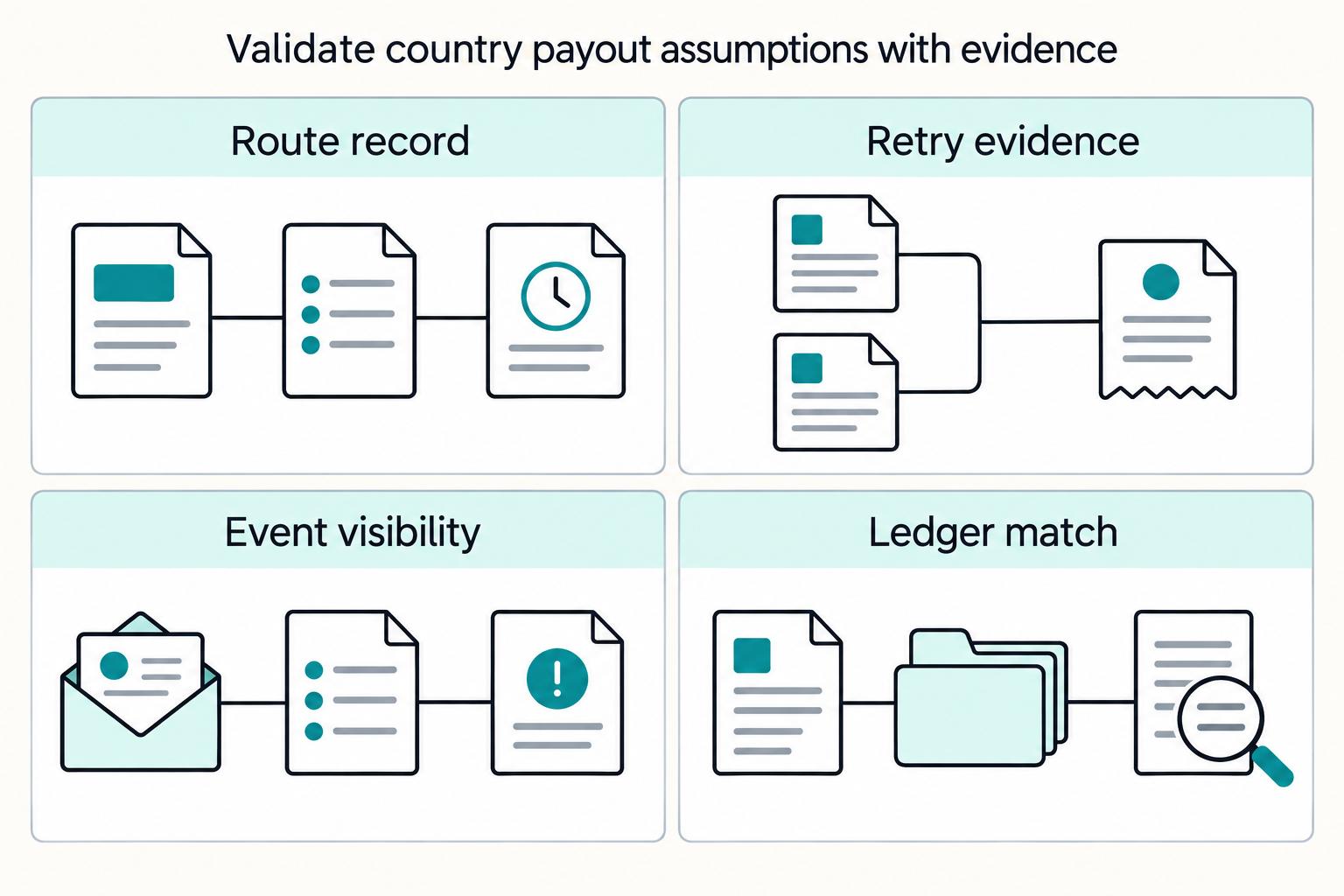
Treat a country benchmark as incomplete until the payout path is proven end to end in your own stack. After compliance and tax checks, confirm you can route, retry, observe, reconcile, and then scale without duplicate money movement or cleanup-heavy closes.
| Step | What to confirm | Example detail |
|---|---|---|
| Route selection | Actual rail, funding currency, withdrawal method, and expected payout timing | Benchmarks are not decision-ready if those details are still assumptions |
| Idempotency design | Retry safety in payout creation | Send the same request twice with the same idempotency key and confirm one disbursement outcome |
| Webhook status handling | Replay-safe handlers and visible failures | Keep provider event IDs and log delivery outcomes |
| Reconciliation checks | Funding movement, balance effects, batch debits, and contractor-level ledger entries can be matched | Support the same reconciliation standard finance expects in Xero |
| Batch payout rollout | Provider-specific duplicate controls and limits before increasing volume | PayPal sender_batch_id reuse rejection within 30 days; Wise batch groups up to 1000 transfers |
Use this order before launch:
- Route selection
Pick the actual rail, funding currency, withdrawal method, and expected payout timing for that country. Benchmarks are not decision-ready if those details are still assumptions, especially when payout schedules vary by provider, industry, and country.
- Idempotency design
Build retry safety into payout creation from day one. Validate it with a forced-timeout test: send the same request twice with the same idempotency key and confirm one disbursement outcome.
- Webhook status handling
Assume duplicate event delivery and make handlers replay-safe. Keep provider event IDs, log delivery outcomes, and route failures to visible operational surfaces (for example, webhook logs or cloud event destinations).
- Reconciliation checks
Prove you can match funding movement, balance effects, batch debits, and contractor-level ledger entries before close. In practice, this should support the same reconciliation standard finance expects in Xero: statement activity matched to recorded transactions.
- Batch payout rollout
Scale batches only after the first four checks pass. Batch semantics differ by rail, so validate provider-specific duplicate controls and limits (for example, PayPal sender_batch_id reuse rejection within 30 days, and Wise batch groups up to 1000 transfers) before increasing volume.
For Gruv implementations, map provider statuses to explicit internal state transitions across Virtual Accounts, payouts, and ledger postings, then run retries and webhook replays against that map before production rollout. If ledger-to-wallet reconciliation and retry behavior are not proven, pause launch and treat the country benchmark as operationally incomplete.
For a step-by-step walkthrough, see Choosing Global Contractor Payment Rails in 2026 Without False Precision.
Roll out in phases with hard go and no-go checkpoints#
Use a three-phase gate: shortlist, controlled pilot, then scaled rollout, with explicit exit criteria at each step.
In shortlist, prioritize evidence quality over launch speed. A country should exit only when you have a documented benchmark confidence score, a defined tax-document workflow, and an AML review with a named owner and open-issues log. If you cannot show how W-8BEN validity will be tracked through the last day of the third succeeding calendar year, or how Form 1099-NEC obligations will be handled by January 31 where relevant, do not move to pilot.
In a controlled pilot, run a canary-style release: limited contractor cohort, limited payout volume, and full exception review. The gate is operational proof: finance can reconcile the payout batch in Xero, ops can explain each failed or pending payout, and AML outcomes are clear enough to support continued use. A pilot is for evidence, not automatic approval to scale.
Treat these as hard no-go triggers:
- unresolved tax-document handling or missing expiry tracking
- repeated payout exceptions that indicate poor origination quality or route mismatch
- incomplete AML controls, unclear beneficial-owner verification, or AML policy outcomes still pending legal/compliance review
Keep the pre-launch pack compact:
- benchmark confidence score with assumptions logged
- compliance artifacts, including AML controls and tax-document ownership
- payout rail validation with retry and status evidence
- finance signoff that batch-level reconciliation works in Xero
Final rule: no country moves from pilot to scale without both cost confidence and operational proof.
Related reading: Reduce Payout Fees by Matching Disbursement Rail to Destination Country.
Conclusion#
Benchmarks help you narrow the field, but they should not decide expansion on their own. The core lesson is simple: country picks get better when rate data sits beside compliance evidence and payout execution proof. Pricing is only one piece of the puzzle, and the headline number often hides the parts that make a launch easy, slow, or expensive in practice.
That is why standalone country rate figures are a weak approval artifact, even when they look precise. A spread like $3 to $120/hr across 24 countries tells you there is variation, but not whether you can support the payout path cleanly or forecast the real cost. FX margins, transaction fees, tax documentation, and payout methods all affect true contractor cost, and those variables are exactly where operator teams can get surprised if they optimize only for nominal rates.
Before you commit product or GTM resources, use a confidence-scored matrix instead of a single benchmark table. Your matrix does not need a universal formula, but it does need comparable inputs: benchmark type, currency assumption, fee structure, documentation path, and payout reliability. A useful checkpoint is whether every shortlisted country has a current evidence pack that explains how the cost number was derived and how the contractor will actually get paid. If a country has an attractive rate but thin proof on documentation or payment execution, keep it in pilot only.
This matters even more because market inputs move. Contractor rates do not change only with role pricing. They also reflect inflation, currency moves, shifting demand, and tighter compliance. A country that looked cheap in one snapshot can become operationally noisy if fees rise, payout methods are constrained, or documentation handling starts generating exceptions. A common failure mode is seeing a low benchmark, approving a launch, and only later discovering friction that should have been visible before go-live.
The practical next step is to get finance, payments ops, and product working from one shared evidence pack per country. That pack should be strong enough to support country-level forecasting and payout-method comparison before anyone treats the opportunity as ready to scale. If you are evaluating global contractor payout benchmarks by country, the right sequence is not rank, launch, and fix later. It is align on evidence, score confidence, then pilot where both data quality and operational readiness are strong. That is the point where a country moves from interesting to decision-ready.
Frequently Asked Questions
What is the difference between contractor payout benchmarks and outsourcing rates?
They are different inputs. A contractor rate benchmark is usually a country-and-role pay range, while an outsourcing rate can be a blended service price that mixes work like customer support, software development, accounting, and design. If a page looks more like the Insignia Resource model, treat it as directional context, not as a direct payout benchmark.
Can I compare countries reliably when sources use different definitions?
Yes, but only after you normalize the metric. One source may show role-based hourly contractor rates, while another mixes geography and service category, so you need to line up role, unit, and country scope before comparing. If you cannot tell whether two numbers describe the same thing, do not rank countries from them.
What minimum data should I require before prioritizing one country over another?
A practical baseline is three kinds of evidence: a country-specific rate signal, payout execution inputs, and the tax-document path. In practice, that means you can name the benchmark type, confirm currency, withdrawal options, and payout-time expectations, and state whether W-9 collection, W-8BEN submission when requested, or Form 1099-NEC handling is part of the flow. If one of those is unknown, keep the country in shortlist or pilot only.
How should operators balance lower benchmark costs against compliance and payout complexity?
Cheaper is only useful if you can actually pay and document the contractor cleanly. A low-rate country with unclear withdrawal options, payout-time uncertainty, or unresolved tax-document collection may not be decision-ready even if the headline rate looks attractive. If cost looks attractive but operability is thin, run a controlled pilot instead of committing GTM spend.
What makes a benchmark decision-ready rather than marketing-level?
Decision-ready data shows method, scope, and recency, and it survives an operations check. A marketing page gives a number; a usable input tells you what role it covers, whether it is country specific, and how it fits the payout path. One good checkpoint is whether your evidence pack includes current tax references, such as the IRS W-9 page last reviewed on 30-Mar-2026, rather than an old screenshot or secondhand summary.
What should I do when country benchmark data is partial or inconsistent?
Log the unknowns instead of smoothing them away. Wide spreads like $3 to $120/hr across 24 countries are useful as a warning that definitions and country mixes matter, not as a reason to average everything together. When data conflicts, pick one source as primary, mark the others as directional, and require pilot evidence before scaling.
How do I build a first-pass country shortlist without overcommitting product and GTM resources?
Start with a narrow filter for global contractor payout benchmarks by country: country-specific rate data, visible method, and a known payout path. Then remove any country where you cannot yet explain currency handling, withdrawal choices, payout-time expectations, or the W-8BEN or W-9 collection path. The point of a shortlist is not coverage. It is to preserve focus for the few countries that can survive finance, ops, and compliance review.
Try a related tool
Researched and edited by the Gruv editorial team. Gruv builds cross-border billing, payouts, and finance-operations software for global businesses.
Sources
Includes 5 external sources outside the trusted-domain allowlist.
- ecfr.gov/current/title-31/subtitle-B/chapter-X/part-1...trusted
- irs.gov/forms-pubs/about-form-w-9trusted
- irs.gov/forms-pubs/about-form-w-8-bentrusted
- fatf-gafi.org/en/publications/Fatfrecommendations/Fatf-rec...external
- fatf-gafi.org/content/dam/fatf-gafi/recommendations/FATF%2...external
- insigniaresource.com/research/outsourcing-rates-by-countryexternal
- nacha.org/rules/ach-network-risk-and-enforcement-topicsexternal
- remote.com/en-sg/resources/contractor-payout-explorerexternal
Educational content only. Not legal, tax, or financial advice.
Related Posts
Global Contractor Payout Speed Index by Country
A **global contractor payout speed index by country** should tell you one thing first: how reliably contractors in each corridor receive funds when you expect them to. Coverage maps are not the same as reliable time to funds. If you are deciding where to launch first, the useful question is not "can we pay there at all?" but "how often do contractors in that market get paid when we expect them to?"
Xero + Global Payouts: How to Sync International Contractor Payments into Your Accounting System
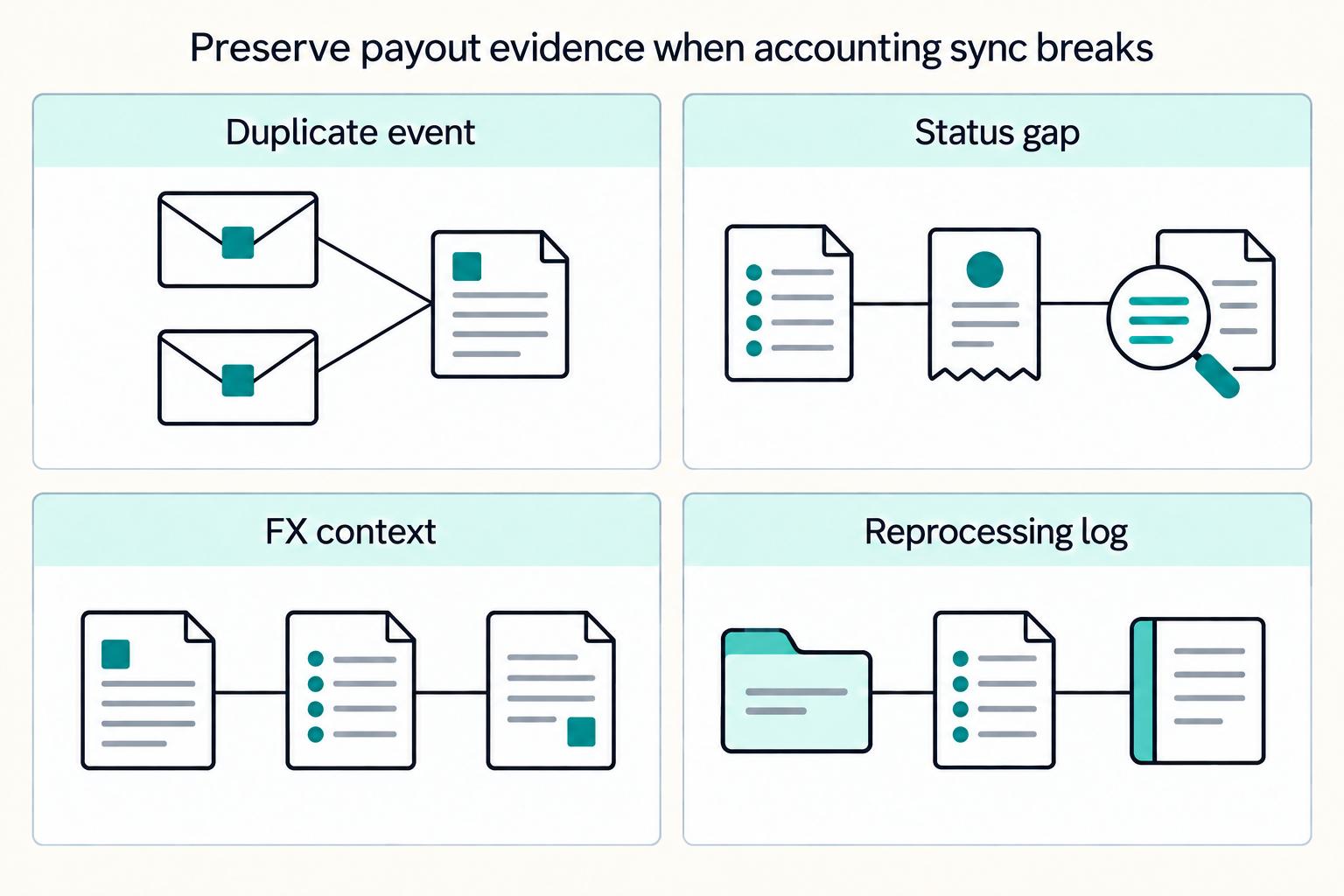
Treat this as a disbursement-sync problem, not a receivables setup task. Xero has clear ways to help customers pay invoices and, in some cases, to pay certain supplier bills. That is not the same as running outbound contractor payouts across countries, currencies, and payout methods end to end.
Choosing Local Bank Transfer Networks by Country for Platform Payouts
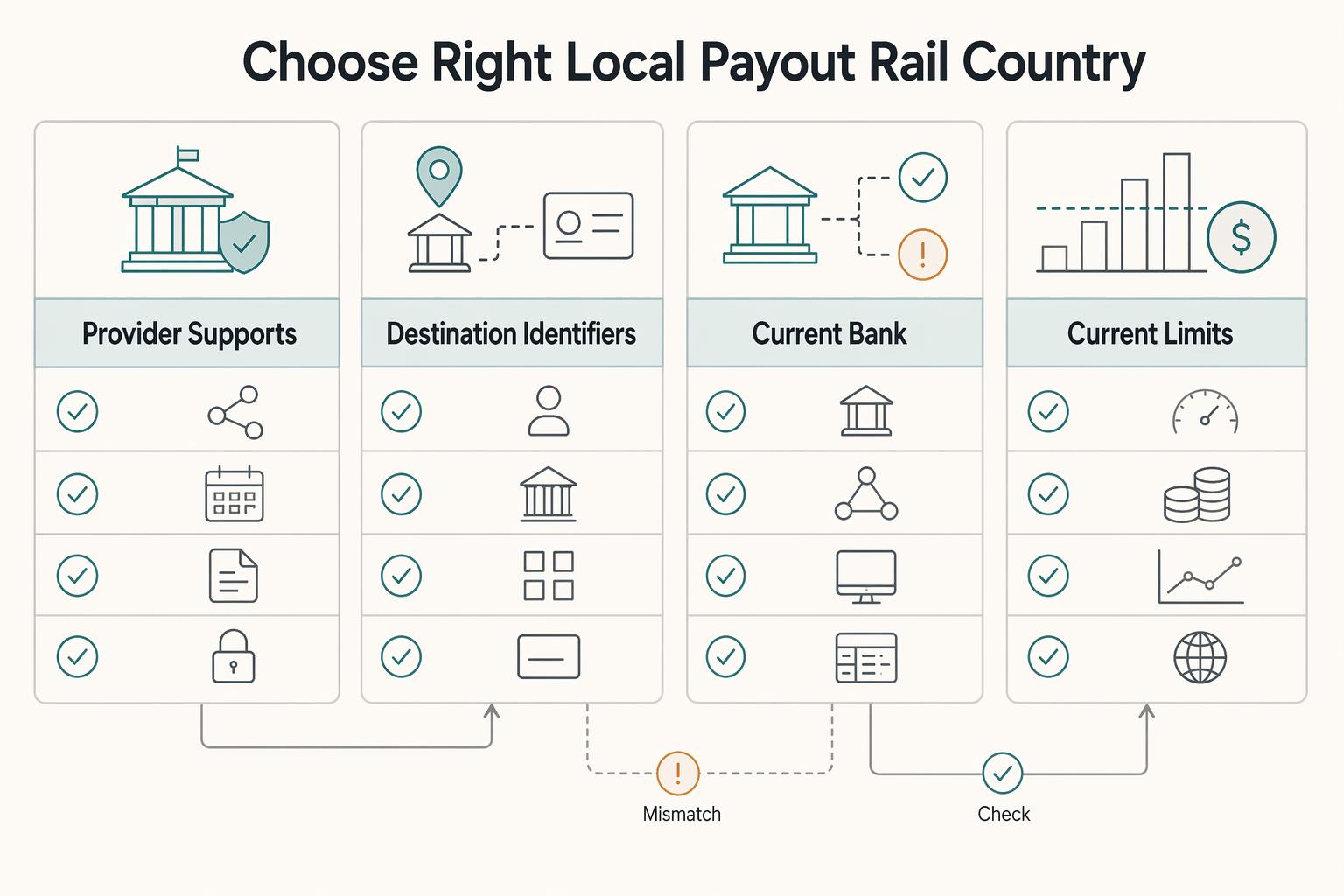
Treat this as a decision map for operators, not a glossary of payment acronyms. The goal is to help you choose a payout rail you can actually launch, support, reconcile, and defend when market or provider conditions shift.