
Quick Answer
To pay before delivery, use an expressly authorized contractual advance with a named cash funder and residual loss owner. Buyer prefunding may avoid a platform-funded loan but does not eliminate non-delivery risk. Approved-invoice early-payment products and check guarantees serve different needs. Before release, verify permitted funding, eligibility, recourse and recovery terms, then trace both cash and the outstanding obligation.
Why this matters for platform operators#
First distinguish an advance before work is delivered from early payment of an already earned receivable. The former exposes someone to non-delivery as well as payment default; the latter mainly accelerates cash after work or goods meet the funder’s eligibility conditions. A payment rail or MoR arrangement does not remove either risk. This guide compares financing and guarantee mechanisms, then shows how to assign funding authority and residual loss ownership.
1. Delayed buyer settlement creates a real cash gap#
A contractor may need cash for materials or labor before a buyer pays. If the buyer pays after delivery but the contractor needs cash now, decide whether the need is a true pre-delivery advance or early collection of an approved receivable. That distinction determines which evidence can support funding.
Delay pressure does not reduce the need for strong approval signals.
2. Thin margins punish loose approval rules#
With a hypothetical 8% operating margin on a $10,000 job, expected profit is $800. An unrecovered $2,000 advance would exceed that profit. Tie release to the agreed funding milestone and evidence rather than assuming an invoice proves earned work.
Use a document pack appropriate to the trade and jurisdiction: signed scope, delivery or milestone evidence where applicable, beneficiary details and required insurance or licenses. A true pre-delivery advance instead needs a clear purpose, budget, recovery right and loss approver. Construction lien waivers are jurisdiction-specific; use conditional or unconditional forms correctly and do not treat a premature unconditional waiver as ordinary funding evidence.
3. Model choice is really a risk and operations choice#
Choosing an advance model is mostly an operating-risk decision. Enterprise contractor-payment programs face higher fraud exposure when systems and teams are fragmented. Contractor payment fraud can include fake invoices or other dishonest attempts to extract extra payment. Advance payment guarantees can improve security, but they also add diligence, dispute-management burden, and trust sensitivity.
Use a simple decision rule: if your team cannot reconstruct who approved the work, which document supported that approval, and when payout was released, your controls are not ready yet.
Who this list is for and the selection criteria that actually matter#
This category is only worth evaluating if you can enforce approval evidence and maintain one clean record of what was approved and paid. If you cannot do that, speed claims are not the priority.
- Best fit
These options fit platforms with a measurable cash-timing gap and enforceable records. Receivable-based products may cover approved work already completed, while a contractual mobilization payment may fund work not yet delivered. For progress billing, track earned amounts and retained amounts separately; a funder may exclude retainage or disputed items.
- Poor fit
Skip this category for now if approvals are fragmented or not consistently documented. Payment validation depends on large, changing datasets tied to billed work and contract terms, so weak controls raise the chance of funding against incomplete evidence.
- Use five filters before you compare vendors
Ask every provider the same five questions, in writing:
Ask which party supplies the cash, what event makes the request eligible, which entity approves release, who owes repayment and what happens under buyer insolvency, fraud, non-delivery, disputes and mistaken payments. Also ask which countries, currencies and products the signed program actually covers.
- Red flags that save you time
Treat "faster pay" as non-credible if the provider cannot clearly show approval checkpoints and centralized invoice and payment record-keeping. Treat broad coverage claims, such as country or currency reach, the same way. They are items to verify, not proof that your control requirements are met.
Related: Intake-to-Procure for Platforms: How to Simplify Request-to-Pay Before a PO Is Raised.
Compare the four models before choosing any vendor#
Compare the mechanisms before vendors. Public product documentation can establish a workflow or eligibility condition; only the executed terms establish your recourse, reserves and liabilities. The following rows describe distinct uses, not interchangeable ways to pay before delivery.
For a true pre-delivery payment, one party must fund the cash and accept or contractually transfer non-delivery exposure. Options include buyer-prefunded mobilization payments, platform-funded advances or an independently underwritten financing program that expressly permits this use. Confirm licensing, fund ownership, permitted use and cancellation recovery before release; unearned work is not automatically an eligible receivable. Hypothetically, a buyer prefunds a $10,000 engagement and authorizes a $2,000 mobilization advance. Record the advance against that engagement, leaving $8,000 unadvanced. If the work is cancelled before anything is earned, apply the agreed refund/recovery terms to the $2,000; the remaining $8,000 is not platform revenue or spare funding for another contractor. Prefunding removes the platform’s need to lend that cash but not the risk of recovering it.
Scan the models, but mark every unproven field#
| Model | Best for | Risk holder | Trigger event | Contractor UX | Buyer UX | Typical failure mode |
|---|---|---|---|---|---|---|
| Approved pay-application finance; Billd example | Earned construction work awaiting cash | Repayment and default exposure depend on terms; subcontractor repayment is part of the published flow | Approved pay application and funder confirmation | Submit eligible work and repay under terms | GC pays subcontractor in the documented model | Confusing approved work with undelivered work or assuming no repayment obligation |
| Approved-invoice early pay; Vendor Pay Express example | Delivered goods/services with buyer approval | Contract names buyer-credit and seller dispute exposure | Completed delivery and buyer-approved invoice | Receive net early payment after agreed fee | Redirect eligible payment to program recipient at maturity | Pre-billing submitted as eligible or buyer pays wrong party |
| Check guarantee; CrossCheck example | Merchants accepting qualifying checks | Provider covers only eligible agreed payment failures | Check approval and covered unpaid return/claim | Not a contractor advance product | Buyer pays using accepted check | Missing guarantee conditions or confusing reimbursement with working-capital funding |
| Buyer-prefunded or platform-funded modular advance | Contract expressly permits payment before delivery | Buyer/platform retains specified exposure unless separately transferred | Authorized advance request plus available permitted funding | Receive advance and deliver/reconcile under agreed terms | Fund or owe cash under agreed advance clause | Rails move cash but no party has approved non-delivery or credit loss |
Use this table to remove ambiguity, not to pick a winner. If a provider cannot answer a cell with a document reference, treat that cell as open risk.
Compare contract mechanics before product mechanics#
If you cannot clearly name who pays when a buyer defaults, do not launch that model.
| Model | Recourse / Non-Recourse | Notice of Assignment | Reserve Account / Holdback usage | Dispute path |
|---|---|---|---|---|
| Approved pay-app finance | Verify repayment, guarantees and repurchase/default clauses | Verify who receives GC proceeds; do not assume factoring | Identify any deductions or reserves | Assign pay-app disputes, repayment and recoveries |
| Approved-invoice early pay | Verify exactly which credit losses are transferred and seller exceptions | Verify buyer enrollment and payment redirection | Confirm fee, adjustments and reserve rights | Assign buyer default separately from delivery disputes |
| Check guarantee | Coverage depends on guarantee conditions rather than a factoring label | Not necessarily a receivable assignment | Confirm any recovery rights or held amounts | Covered return and claim/reimbursement procedure |
| Modular contractual advance | Name the funder and residual loss holder; payout services do not transfer risk | Only where a separate assignment is actually used | Use only funds legally and contractually available for the advance | Assign cancellation, non-delivery, default, fraud and repayment |
The verification standard that matters#
Before you score any vendor, request the official contract set rather than a marketing PDF. At minimum, that means the master agreement, order form or program schedule, assignment language, reserve or holdback schedule, and clauses naming collections and dispute ownership. Ask for one sample transaction packet too: approval evidence, payment instruction, posting record, and final payout status.
One avoidable failure looks like this: product expects faster pay, finance assumes the provider bears losses, legal finds a repayment obligation in a schedule, and operations learns that an approval reversal reopens exposure. Reconcile all governing documents and exceptions before mapping them into release logic.
Use one decision rule for speed. Do not compare speed, fees, or experience until the risk holder, trigger event, and dispute path are each named in signed documents. Until then, you are comparing assumptions, not models.
Related reading: Transaction Monitoring for Platforms: How to Detect Fraud Without Blocking Legitimate Payments.
Billd style buyer approved pay app advance#
Billd’s Pay App Advance documentation describes funding against an approved pay application for work already earned. It is an early-receivable financing example, not evidence that Billd funds undelivered work or that a platform has no default exposure.
- Best fit
Use this example for eligible construction pay applications, subject to the actual agreement and jurisdiction. Identify which approved portion is fundable, who confirms it and whether retainage, disputes or incomplete work are excluded. A future milestone or merely submitted invoice is not the same as an approved earned pay application.
- Why operators consider it
The documented workflow links project and contract records, an approved pay application and a funding confirmation. Check whether your platform can collect those facts without duplicate entry and whether the provider’s program permits your platform’s role. Public product pages do not prove an embedded platform integration.
- Hidden economics usually sit in documents, not demos
Billd’s published flow has the GC pay the subcontractor, which then repays Billd; it also describes weekly payments and a term limit. Do not infer a provider-held default loss from early funding. Confirm repayment obligations, purchase fee, guarantees, overdue treatment and state-specific terms in the current contract.
- Concrete use case and operator checkpoint
Use one sample transaction as an evidence test, not a sales demo. Confirm each step with signed terms and records:
Keep the governing agreement and fee/repayment schedules together with the approved pay application, confirmation, funding instruction, delivered amount, buyer receipt and repayment records. Match the same obligation across both payment legs.
If your team cannot reconstruct that packet end to end, pause rollout. If you need to tighten that control layer first, start with invoice verification.
Vendor Pay Express style supplier early payment program#
Vendor Pay Express is an approved-invoice early-payment example. Its seller FAQ says goods or services must already be fully delivered and pre-billing invoices are ineligible. It therefore cannot be used as evidence for a pre-delivery advance.
| Clock basis | What it means | What to confirm |
|---|---|---|
| Net 30 | Full payment is due within 30 calendar days | Define the start point in the agreement and on invoice artifacts |
| Net 60 example | Full payment is due within 60 calendar days from invoice date | Confirm that invoice date is the clock start |
| Shipment date start | Some vendors start the clock from shipment date instead | Spell out shipment as the start point |
| Delivery date start | Some vendors start the clock from delivery date instead | Spell out delivery as the start point |
1. Best fit#
Use this model when a delivered obligation is approved, the vendor needs earlier cash and the buyer can pay at the agreed later maturity. The published buyer flow redirects payment to Vendor Pay Express. Verify the buyer commitment and seller protections in the signed program.
Define payment terms precisely in the agreement and on invoice artifacts:
- Net30 means payment is due 30 calendar days after the agreed trigger.
- For Net60, record the actual trigger and maturity date rather than assuming every agreement starts at invoice date.
- Shipment, delivery, invoice receipt or acceptance may start a different clock; confirm the governing clause.
2. Why operators consider it#
Buyer payment timing may remain on the original agreed terms, while the buyer completes program setup, approves the eligible invoice and redirects payment to the named program recipient. Verify those required changes and the supplier’s net payout before calling the workflow simple.
Treat simplicity as something you have to prove. If payment instructions or date reconciliation still require manual intervention, the admin burden comes back fast.
3. Hidden economics usually sit in documents, not demos#
Most of the real risk shows up in contract wording and fee logic, not in a high-level walkthrough.
Before launch, request one complete evidence set. Include:
- master agreement, fee schedule, and supplier terms
- one settled transaction trail with invoice date, approval date, payout date, buyer due date, and final settlement amount
- a clear statement of when the payment clock starts, whether invoice date, shipment, or delivery date
Compare the actual transaction fee, who bears it, the net delivered amount and any reversal or reserve rights. If payment-method costs or FX are added, show them separately. A public fee range is context; your signed quote and settlement statement establish the charge.
4. Concrete use case and operator checkpoint#
One common use case is an approved supplier invoice paid early while the buyer remains on Net 30 or Net 60 terms. Confirm responsibilities in signed documents rather than a sales narrative.
The due-date trigger must be explicit: invoice date, receipt, shipment, delivery or acceptance can produce different maturity dates. Record the original contractual clock and approved changes. A financing program does not itself authorize extending the buyer’s due date or waiving mandatory payment rights.
If you are also setting payout timing policy, see Net-30 Payment Terms for Platforms: How to Set Vendor Payment Terms Without Killing Contractor Cash Flow.
CrossCheck check guarantee: protection on eligible accepted checks#
CrossCheck’s check-guarantee page describes protection for qualifying accepted checks that are returned unpaid. This is a payment-loss guarantee, not a contractor working-capital advance and not proof of guaranteed cash at fulfillment.
1. Best fit#
Use this example only where a merchant accepts checks and wants a contractual protection mechanism. It does not fund an unperformed contractor milestone or cover every form of buyer or delivery dispute.
For the standard service, the merchant obtains approval before deposit and submits an eligible returned check for reimbursement; the electronic service has a different returned-item flow. Confirm the exact service, exclusions, evidence and claim deadlines rather than treating any check as guaranteed.
2. Where certainty holds and where it breaks#
Certainty depends on complete contract terms and a consistent transaction record trail. At minimum, keep these records tied to one transaction ID:
- authorization or order record
- delivery or fulfillment record with amount match
- settlement record and statement mapping
- dispute or adjustment records tied to statement dates
If that trail is incomplete, the flow becomes a dispute and recovery problem.
3. Contract controls that matter#
Verify covered return reasons, approval conditions, submission method, claim deadline and exclusions in the agreement. Check any right to recover reimbursement when eligibility fails. A guarantee provider’s label does not establish blanket coverage for contractual non-delivery.
Record the current service terms, renewal and cancellation provisions, claim dates and required evidence. Do not import a statement-dispute deadline or term length from an unrelated merchant agreement.
4. Failure modes and tradeoff call#
Most breakdowns are operational: missing records, amount mismatch, or incomplete fulfillment documentation. Any of these can turn a clean handoff into a reversible or disputed payment.
Apply stricter controls to higher-risk cohorts and route lower-risk buyers under clear eligibility rules.
Gruv build option with modular rails#
A modular workflow can let you control approval, payment instructions, reconciliation and exceptions. It still needs a named cash funder. If the platform advances its own money, it retains exposure unless a valid separate agreement transfers the specified risk; payout modules alone do not do so.
Treat this as a design path, not a pre-verified bundle. Do not assume a fixed Gruv module sequence or universal rail coverage without confirmation for your specific market and program.
1. Start with the evidence chain, not the rail#
In a modular build, control comes from deciding exactly what facts must exist before money moves. That matters because approved facts can still change. Change orders are commonplace, and they can alter original contract amount or completion dates.
Make version control around the payable event your first operating rule. If a later change order modifies scope, the advance request should reference both the prior approval and the updated record, not overwrite history. A reliable trail should let finance reconstruct request time, approver, amount, change history, and payout result from one traceable record set.
If you cannot produce that quickly, the model is not launch-ready. Previously approved scope changes can still require further design development, so treat older approvals as potentially incomplete until revalidated.
2. Put formal review thresholds on exceptions#
A modular model only works if exception governance is explicit before launch. Use named escalation tiers with written rationale for large or unusual advances.
Set your own delegated-authority matrix against exposure and liquidity. The following hypothetical thresholds illustrate a small pilot; they are internal choices, not statutory limits:
| Trigger | Governance action |
|---|---|
| Up to $5,000 within approved cohort limits | Authorized operations release after documented eligibility checks |
| Above $5,000 or any policy exception | Finance/risk approval naming residual exposure |
| Above $25,000 aggregate per buyer in this pilot | Funding committee approval or decline until the cap is revised |
Size limits to the actual cohort and available capital. For an exception, record what changed, why funding is permitted, evidence, residual loss owner and approver. Aggregate related requests so splitting payments cannot bypass the limit.
3. Use rail combinations as optional lanes#
Use collection, virtual-account and payout services only where enabled for the actual program. MoR concerns the buyer-facing sale and associated obligations; it is not automatically contractor lending, factoring, credit insurance or a funding guarantee. Keep any financing agreement and approved funding balance explicit.
The key is not universality. Confirm availability, onboarding requirements, compliance constraints, and realistic payout timing for each country, entity type, and method before you make launch commitments. If ACH is in scope for your program, see Same-Day ACH for Platforms.
4. Make reconciliation and retry discipline a launch requirement#
A modular build is only an upgrade if traceability is tighter than a packaged alternative. Set transaction classifications from day one so you can clearly separate invoice advances, scope adjustments, reversals, fees, and manual corrections.
Classify advances, earned-payable settlement, scope adjustments, repayments, fees and reversals separately. Replay delayed or duplicate events in the permitted test environment to verify one financial outcome per originating request; a retry must not authorize a second advance.
For a step-by-step walkthrough, see How Platforms Reconcile Foreign Contractor Payments in QuickBooks Online.
Pick recourse structure before you talk about growth#
Decide risk ownership before growth planning. If an approved invoice is later disputed or unpaid, this choice can change your dispute posture and operating model.
- Treat risk ownership as the first contract test
Ask who is exposed after release under each failure scenario, not just buyer default. Buyer insolvency, a disputed invoice, contractor non-delivery, fraud and a mistaken duplicate can have different loss holders. Capture the applicable contract clause and recovery path for each.
- If a contract uses Non-Recourse language, verify carve-outs in writing
The label alone is not enough. Confirm that eligibility, exclusions, dispute triggers, and controlling documents are explicit in the agreement, and escalate gaps before launch.
- Calibrate controls to risk profile and relationship context
Calibrate eligibility, exposure limits and review intensity to the cohort, term length, concentration and recoverability. A cap per request is insufficient if many requests share the same buyer or contractor.
- Clarify dispute and collections ownership before launch
"Approved invoice" is not the end of risk. Make sure the agreement clearly assigns who handles dispute communication, collections steps, and record updates. Keep a traceable record chain from approval artifact to payout record to dispute timestamp.
- Red-line ambiguity and verify legal references against official sources
Resolve conflicting schedules and responsibility language with the governing agreement and applicable law before launch. Keep the final clause reference in the implementation record so operations is not relying on a legal conclusion from a sales slide.
Before signing any provider agreement, turn your risk-allocation and dispute-ownership terms into an implementation checklist in the Gruv docs.
Price the product so margin survives real losses#
Price the product so each cohort covers its own risk and operating load, not just the speed of payout.
- Build a full pricing table before setting any headline fee
Model funded principal, funding duration and cost, provider fee, payment/FX costs, expected unrecovered losses, recoveries and operating cost. State whether the buyer, contractor, platform or provider bears each item. Separate contractor cash received from platform revenue and provider repayment.
- Choose a fee shape that matches risk concentration
Flat pricing can work when segments behave similarly. If term behavior or supplier price responses differ by segment, use segment-based pricing and eligibility.
| Variant | Best fit | Main risk |
|---|---|---|
| Flat fee | Similar suppliers, terms, and cost behavior | Strong segments subsidize weak ones |
| Segment-based fee | Clear differences by supplier or category | Commercial friction if segment logic is unclear |
| Term-bucket pricing | Meaningful mix of shorter and longer terms | Margin drift if hidden costs are not tracked by term bucket |
- Stress-test term mix and concentration before launch
Longer buyer terms can help buyer cash timing while increasing the funder’s capital duration and exposure. Stress-test late collection, concentration and loss severity instead of treating term extension as free liquidity. Include any supplier price response and who bears late fees. In a separate hypothetical platform-funded lane, a $10,000 advance for 30 days at 12% annual simple funding cost on an actual/365 convention costs $98.63. Add $40 payment/operations cost and $100 expected unrecovered loss: total $238.63. A $300 platform fee leaves $61.37 expected contribution before overhead. An actual $1,000 unrecovered loss turns that result negative; reserves and delayed repayment can increase capital cost.
- Use a clear decision rule for pricing and eligibility
If one segment drives most volume and most hidden-cost exposure, pricing and eligibility should be segment-specific, not global. Run reviews on a single operating view with account setup, monitoring, and issue-resolution data so margin pressure is visible early.
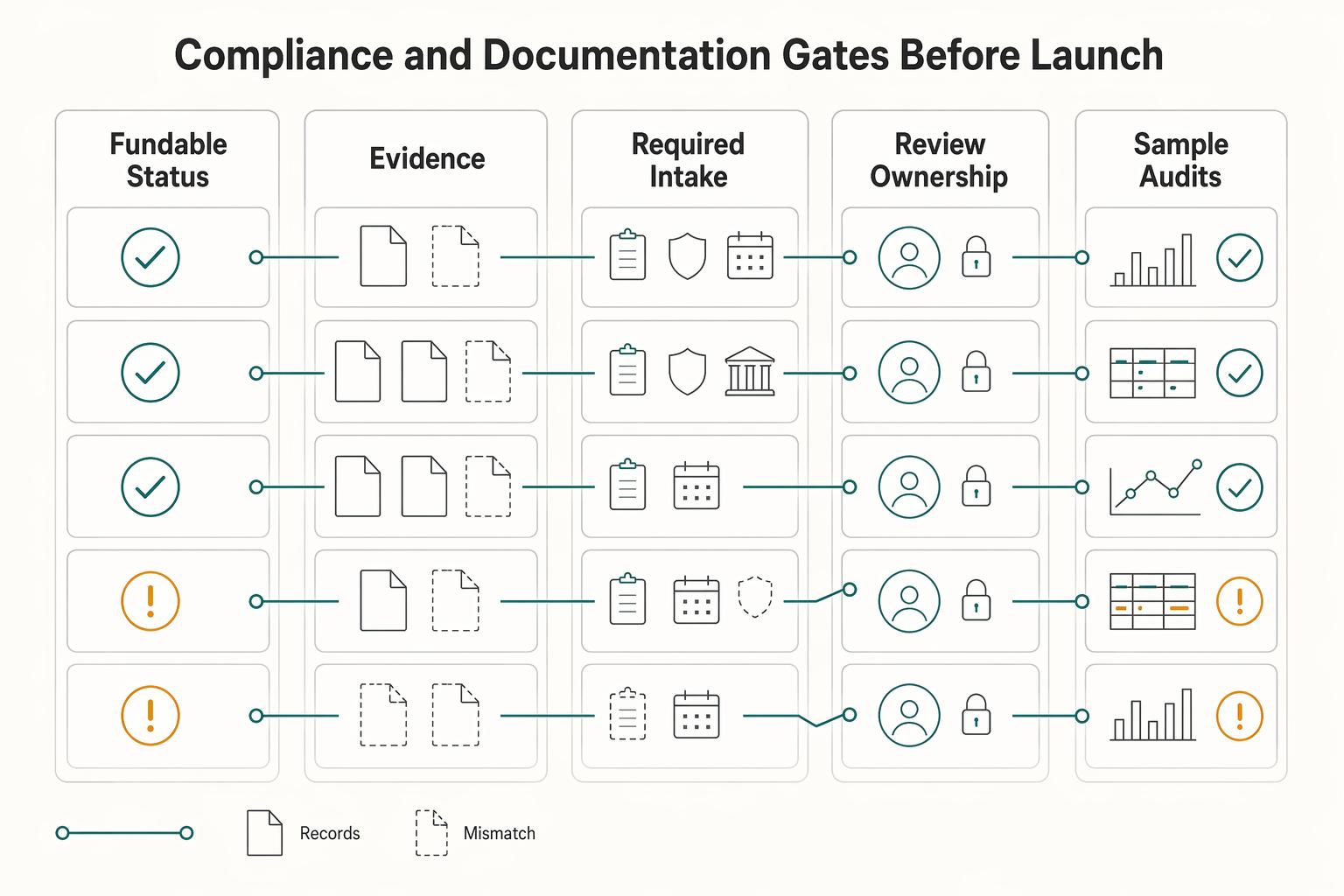
Compliance and documentation gates before launch#
Before launch, fund only the transactions you can justify from records in your own system, with a clear decision trail from review to payout.
| Gate | Requirement | Why it matters |
|---|---|---|
| Fundable status | Define one explicit state that means "eligible to fund" and make every payout path use it | Fast payout should follow that completed state, not bypass it through side workflows |
| Minimum evidence pack | For earned-receivable lanes, approved earned invoice/pay application and delivery evidence; for pre-delivery lanes, signed advance authority, purpose/budget, permitted funding and recovery/loss approval. Retain contract IDs and timestamps. | Documentation gaps and manual checks consume time and can escalate disputes |
| Required intake fields | Define model-specific obligation, advance or invoice data, beneficiary and available permitted funding before approval | This avoids chasing missing details after the first payout request |
| Review ownership | Keep a clear audit trail of who reviewed and approved each transaction | If teams can change records without clear accountability, tighten the process before launch |
| Sample audits | Pull funded samples and verify each can be rebuilt from request, review, approval, payout, and outcome | If a funded transaction cannot be reconstructed, it is not launch-ready |
-
Set one fundable status and make every payout path use it. If your program includes payment or invoice compliance reviews, define one explicit state that means "eligible to fund." Fast payout should follow that completed state, not bypass it through side workflows.
-
Require model-specific evidence for every funded transaction. Earned-receivable lanes need the approved earned invoice or pay application and delivery support. Pre-delivery lanes need signed advance authority, purpose/budget, permitted funding entitlement and recovery/loss approval. Link the contract, beneficiary, amount, approver and timestamps in either case.
-
Document required intake fields before funds move. Specify the obligation or advance request ID, governing contract, beneficiary, amount/currency and required model-specific evidence. Do not require an earned invoice as if it existed for every pre-delivery advance.
-
Define review and approval ownership up front. Treat record handling as a product and operations decision, with a clear audit trail of who reviewed and approved each transaction. If teams can change records without clear accountability, tighten the process before launch.
-
Run pre-launch sample audits for end-to-end traceability. Rebuild request, evidence, approval, funding, receipt and recovery. Hypothetically, a $10,000 approved invoice with a $300 agreed early-payment fee delivers $9,700 to the contractor; the buyer later owes $10,000 to the named recipient. Match both legs and the $300 fee without marking the buyer’s obligation paid merely because the contractor received cash.
If a funded transaction cannot be reconstructed from documents, statuses, and timestamps, it is not launch-ready.
Rollout sequence for the first 90 days#
Treat 90 days as an illustrative operating sequence, not a provider delivery promise. Prove one narrow lane can fund, reconcile and resolve exceptions before expanding. Some losses and buyer disputes mature after the pilot; set exposure limits accordingly.
| Stage | Scope | Gate |
|---|---|---|
| Phase 1 | One cohort, one buyer segment, one funding trigger | Validate approval-to-payout timing on live transactions and keep eligibility strict |
| Phase 2 | Add batching, retries, and exception handling | Treat GL reconciliation and audit trail completeness as a gate |
| Phase 3 | Expand corridors and terms one change at a time | Expand only when dispute handling, recovery flow, and margin behavior remain stable in your own operating data |
| Adjacent levers | Keep rail speed and spend controls separate from the first advance-payment proof point | Avoid confusing faster money movement with sound eligibility and control design |
| Weekly dashboard | Track approval lag, funding lag, dispute aging, and reconciliation completeness in a single view | Operators should be able to explain a specific funding event quickly |
-
Phase1: one cohort, buyer segment and funding trigger. For an earned-invoice lane, timestamp delivery and approval before funding; for a pre-delivery lane, use the separate contractual advance authority. Verify net receipt, fees, retained exposure and remaining buyer obligation on each live transaction.
-
Phase 2: add batching, retries, and exception handling before scale. Once the first lane is stable, enable payout batches and a finance-owned exception queue. Treat GL reconciliation and audit trail completeness as a gate, not a nice-to-have. Finance ops should be able to trace the approval artifact to payout to ledger outcome without manual reconstruction. Stress the lane with rejected payouts, retries, and delayed events, then confirm ownership and closure for each exception.
-
Phase 3: expand corridors and terms only after stability is clear. Add new corridors or terms one change at a time, then compare outcomes against the baseline cohort. Expand only when dispute handling, recovery flow, and margin behavior remain stable in your own operating data. Keep rollback simple if the new lane increases dispute pressure or slows recovery.
-
Adjacent levers: keep rail speed and spend controls separate from core proof. Treat faster payment-rail options and spend-control features as separate switches from the first advance-payment proof point. This avoids confusing faster money movement with sound eligibility and control design. If off-contract risk is already visible, tighten that first with Maverick Spend in Platforms: How to Stop Off-Contract Contractor Payments Before They Drain Margin.
-
Run one weekly operator dashboard that supports transaction-level answers. Track approval lag, funding lag, dispute aging, and reconciliation completeness in a single view. Each metric should drill into the underlying funding event, approval artifact, payout attempts, exception status, and reconciliation trail. If operators cannot explain a specific funding event quickly, expansion is early.
Red flags that mean pause expansion#
If funded volume is rising but your controls are getting harder to explain transaction by transaction, pause expansion.
-
Adoption rises, but economic risk is less clear. In repeat-billing setups, higher usage alone does not prove the lane is healthy. Repeat billing patterns, including monthly/quarterly cycles, can still carry chargeback risk, so pause expansion until dispute controls are clear.
-
Onboarding controls lag program complexity. If risk review relies on exceptions instead of clear onboarding guidelines, pause and tighten the process, because multi-merchant programs become harder to scale safely as onboarding complexity increases.
-
Volume grows faster than fraud prevention. On-demand payment flows can create risk pressure because higher transaction volume requires strong fraud prevention measures. If volume is scaling ahead of those controls, pause expansion and close the control gap first.
-
Operational integration is not ready for scale. Where funding depends on delivery or fulfillment events, confirm the PSP integrates cleanly with logistics systems to reduce transaction and tracking errors before broadening the program.
For the broader cash flow model behind payout timing, see How Payment Platforms Use DPO to Improve Cash Flow Without Reconciliation Risk.
The decision to make next#
Choose one model for one cohort, and do not scale until risk ownership, economics, and traceability are clear. If you test multiple models at once, demand can hide weak controls.
- Choose one pilot lane, not several
Start with the lane that matches the approval evidence you already collect. In construction-heavy flows, that often means milestone-driven approvals, since payment management is tied to contractual milestones and project timelines. Keep the first cohort tight enough that finance can manually review every funded transaction if needed.
- Validate operations before you treat demand as success
Demand for earlier cash is not proof of a healthy funding lane. Compare approval-to-receipt timing, retained exposure, overdue principal, disputes and recoveries against the original cohort. Track earned and unearned obligations separately.
Before scaling, confirm you can reconstruct each funded event end to end: progress reports, insurance coverage, licensure, payment details, and lien waivers where relevant. Missing documentation is a control failure, not a growth win.
- If you need control and cross-border flexibility, keep Gruv modular from day one
If a modular Gruv setup fits your program, confirm the available services, contracting entities and responsibility boundaries. Keep financing, funding custody, payout execution and reconciliation as explicit roles, even when one interface coordinates them.
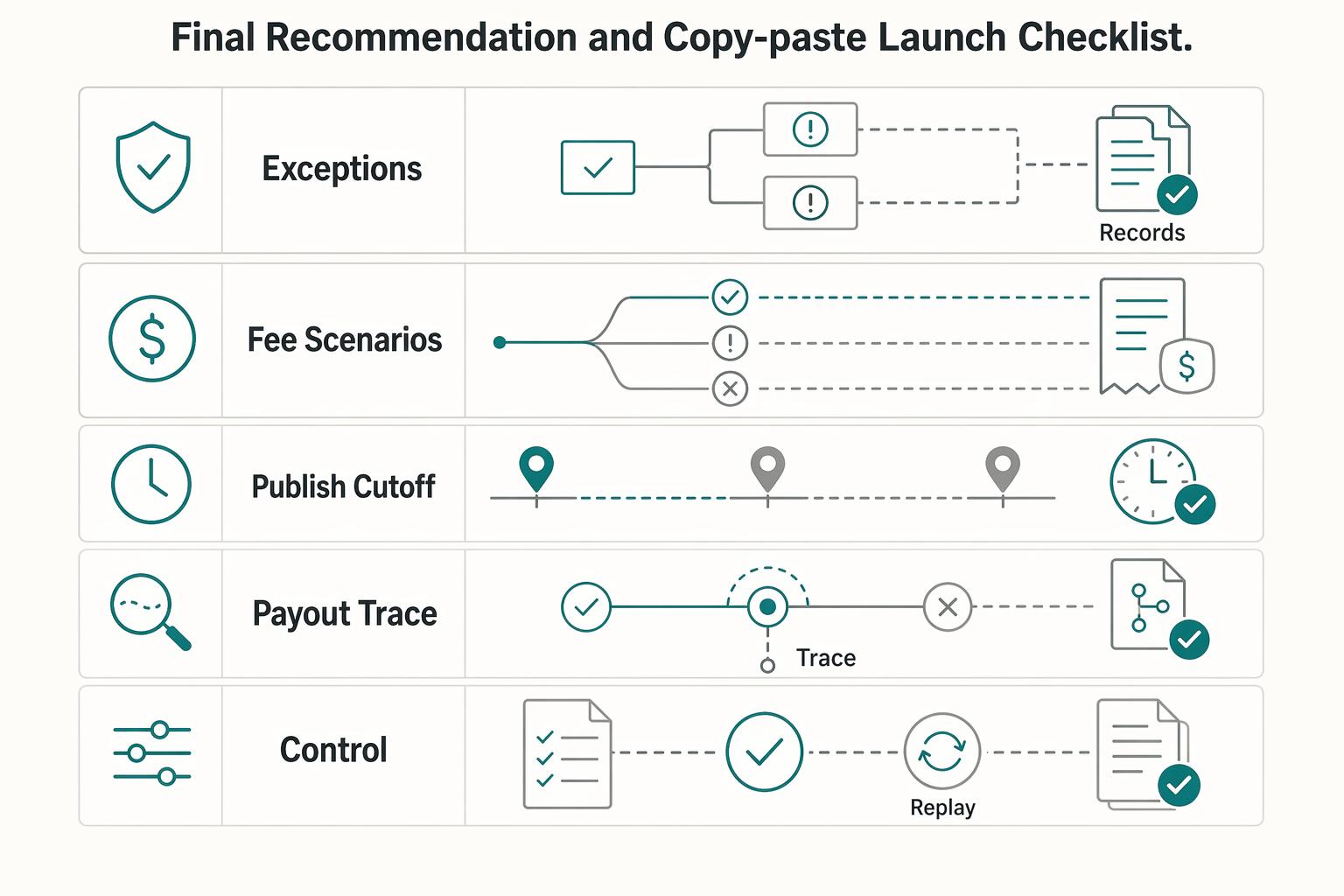
Next step: align finance, product, and legal on contract red lines and the first launch dashboard before signing any provider agreement. If your team cannot clearly state who authorizes funding, which document releases payout, and how exceptions escalate, pause launch and fix that first.
If you are deciding between a single-vendor program and a modular build, validate coverage, compliance gates, and payout availability for your first cohort with Gruv.
Frequently Asked Questions
How can a platform pay contractors before delivery without taking credit risk?
A buyer-prefunded advance can avoid the platform lending its own cash, but someone still bears non-delivery risk. Third-party finance or a limited non-recourse purchase can transfer specified credit risk only if the agreement covers the transaction. Approved-receivable products generally address earned work; payment rails and MoR do not themselves remove credit exposure.
What is the practical difference between early pay, Factoring, and guaranteed-funds models?
An advance supplies cash before the agreed earning or delivery event. Early pay accelerates cash for an eligible earned obligation. Factoring purchases receivables under a contract that defines recourse and collection rights. A payment guarantee covers specified payment failures; it need not advance cash or protect against non-delivery.
Who bears the loss if the buyer never pays after an invoice is approved?
Do not infer this from marketing copy. Loss ownership has to be explicit in the agreement, including whether reserve, holdback, or clawback terms can shift exposure back to you. If that is ambiguous, pause launch.
When should we choose recourse instead of limited non-recourse?
Compare the actual covered risks, exclusions, cost and recovery obligations. Recourse leaves specified repayment or repurchase exposure with the seller or platform; limited non-recourse may transfer qualifying buyer-credit loss while retaining fraud, dispute or performance exposure. Choose only after pricing and approving the retained exposure.
What should founders verify in contracts before enabling advances?
Verify payment-timing terms, loss ownership, dispute path, and any reserve or holdback rights in writing. Also check payment-timing commitments against prompt payment laws, because timing rules and non-compliance penalties vary by location. Use a location-based prompt payment requirements check before making rollout promises across mixed jurisdictions.
How do we price contractor advances so we do not destroy margin?
Use full economics: funded amount and duration, funding and provider charges, payment costs, expected loss, recovery and operating effort. Test late payment and concentration scenarios. Identify which entity earns the fee and absorbs each cost; fast payout alone cannot support a margin claim.
Which controls are mandatory before cross-border rollout?
For the actual countries and entities, verify authority to fund and move money, permitted use of client funds, required onboarding and sanctions checks, applicable financing and payment-timing rules, tax treatment, currency restrictions and data handling. Keep a documented release gate and reconcile each funding and repayment leg. Requirements depend on the model; no one checklist makes every cross-border advance lawful.
Try a related tool
Researched and edited by the Gruv editorial team. Gruv builds cross-border billing, payouts, and finance-operations software for global businesses.
Sources
Includes 4 external sources outside the trusted-domain allowlist.
- billd.com/pay-app-advanceexternal
- cross-check.com/check-guaranteeexternal
- vendorpayexpress.com/faq/sellersexternal
- vendorpayexpress.com/faq/buyersexternal
Educational content only. Not legal, tax, or financial advice.
Related Posts
Same-Day ACH for Platforms: How to Speed Up Contractor Payments Without Wire Transfer Fees
The goal is simple: cut avoidable wire use without making contractor payouts less reliable. That is where Same-Day ACH earns its place. Nacha describes it as the faster payment method on the ACH Network. It also notes that it can support same-day pay for many gig and contract workers, with settlement that can occur within a few hours.
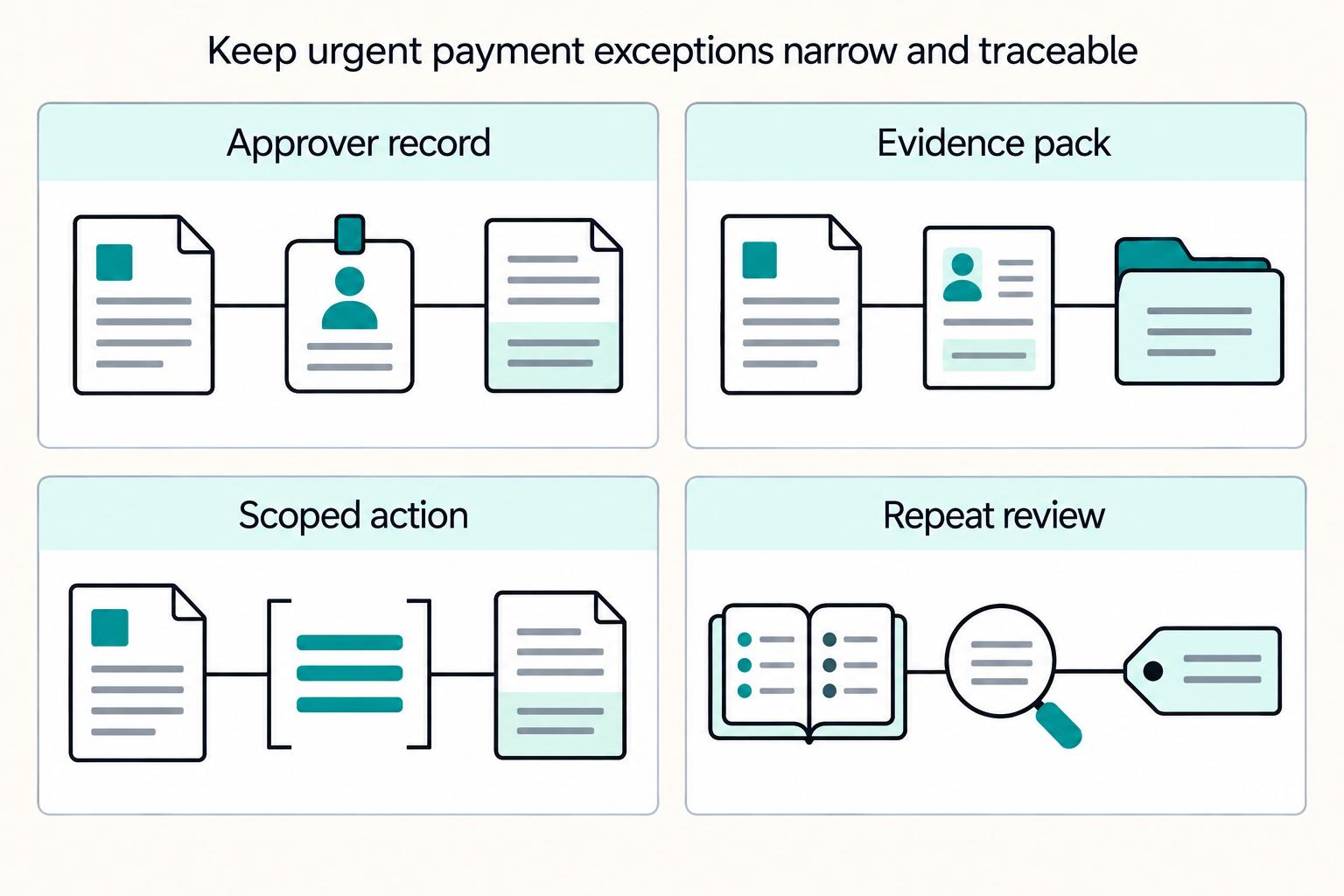
Maverick Spend in Platforms: How to Stop Off-Contract Contractor Payments Before They Drain Margin
Off-contract contractor payments become dangerous when they repeat. Small off-policy spend adds up, fragments data, and weakens compliance. Teams usually discover it later during invoice review, audit, or reconciliation.
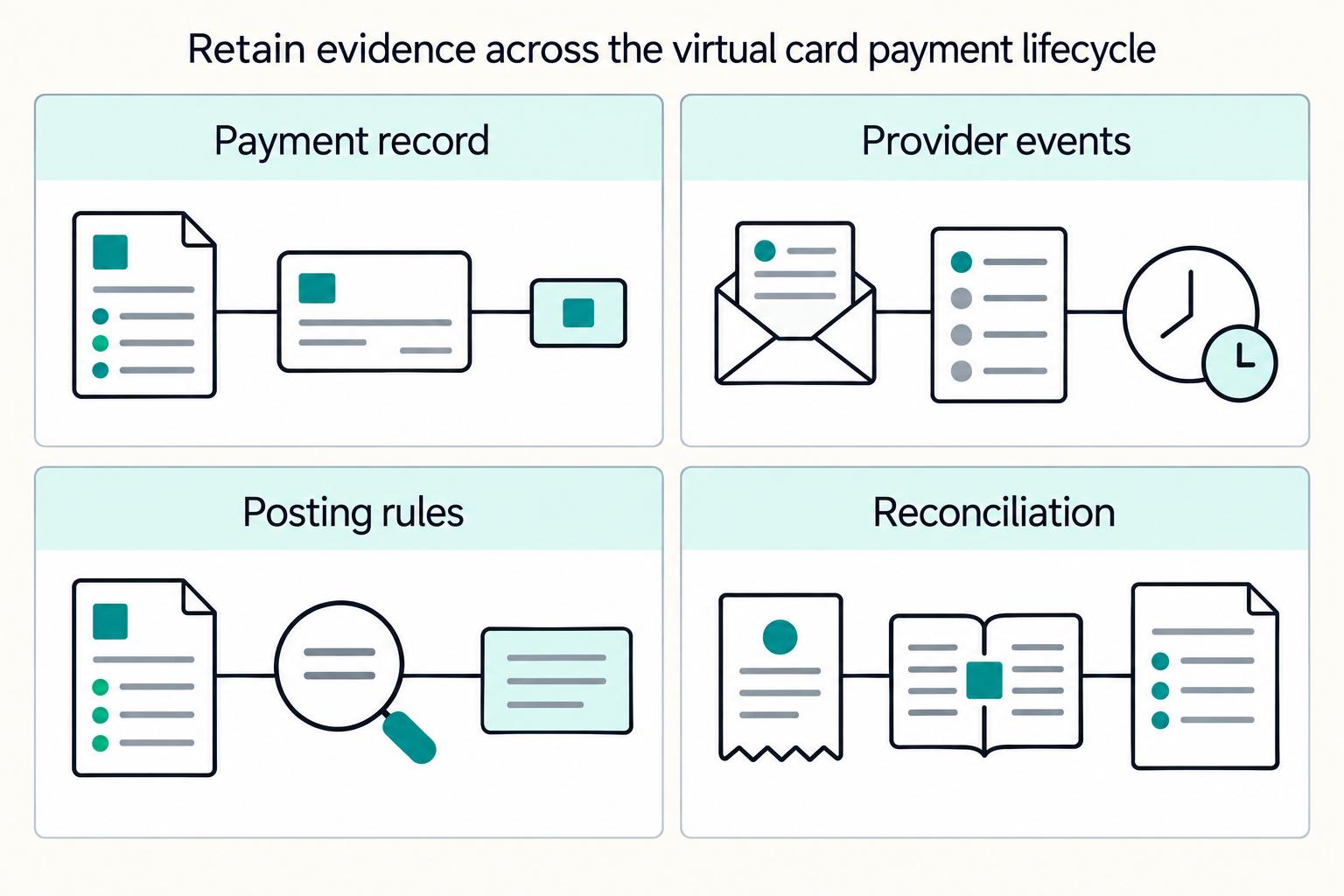
Virtual Credit Cards for Platforms: How to Issue Single-Use Cards for Contractor and Vendor Payments
Single-use virtual cards are often positioned as a fit for controlled vendor payments, but not for every contractor payout. This guide helps product, Payments Ops, and AP teams decide whether virtual cards fit their operating model, or whether cards belong alongside ACH, checks, or other payout rails.