
Quick Answer
Platforms should use Net 30 only after deciding who funds the gap between buyer collections and contractor payouts. Net 30 is a financing choice, not just an invoice setting, because it changes DPO, DSO, and payout timing. Before rollout, align contract terms, invoice logic, AP timing, and payout controls, and set protections such as funded buffers, delayed payout rules, or early-pay options.
Why Net-30 Terms Are Harder on Platforms#
Net 30 can improve a buyer's cash position, but it can also shift cash-flow pressure onto vendors and contractors, especially if payout timing does not change with it. Net terms are financing terms, not just invoice settings, because they change working-capital timing and supplier relationships.
Net 30 means payment is due 30 days after the agreed starting event, commonly the invoice date. State that event explicitly: invoice receipt or acceptance can produce a different due date. Longer buyer terms extend your receivable timeline; contractor due dates remain governed by their own agreements.
That is why this guide matters across Finance, Ops, Product, Engineering, and AP. Term changes can affect contract language, invoicing, approval timing, payout eligibility, ledger logic, and exception handling. When those pieces are not aligned, cash pressure and operational friction usually increase.
Use one decision rule from the start: do not approve longer buyer terms until you decide who absorbs the float and under what conditions. Depending on your model, that could be platform working capital, tighter payout rules, early-pay options, or limiting longer terms to buyers with reliable payment behavior.
Smaller contractors may have little room to absorb a delay. The Federal Reserve’s 2024 payments report, based on the 2023 Small Business Credit Survey, found roughly four in five surveyed small firms faced payment-related challenges. Those challenges included fees as well as timing; the figure is not a measure of late payments alone.
Treat controls as part of product design, not a post-launch finance patch. Before changing terms, confirm disbursements can be authorized, recorded, and reconciled to invoice and payout events. If your team cannot trace one invoice from issue date to payment receipt to payout release without spreadsheet stitching, policy has already moved ahead of operations.
This guide stays practical. Net 30 can work at scale when term changes come with explicit cash-flow safeguards, clear compliance ownership, and reconciliation controls that still hold up as volume and exceptions grow.
Net 30 is a financing choice not just an invoice deadline#
Net 30 is a trade-credit financing decision, not just an invoice setting. If terms change before you decide how the timing gap will be funded, you are still making a financing choice, just without control.
Define terms where they are enforced#
Define terms exactly where they are enforced: the trade credit agreement and the invoice or AP logic.
| Term | What it means |
|---|---|
| Net 30 / Net 60 / Net 90 | Buyer has 30, 60, or 90 days to pay in full. |
| 2/10 Net 30 | Buyer gets a 2% discount if payment is made within 10 days; otherwise full payment is due in 30 days. |
Checkpoint: contract language, invoice template, and AP settings should use the same term label and due-date logic. If they do not, they can create avoidable disputes and exceptions.
Track DPO and DSO together#
Track the platform’s DSO for buyer collections and its DPO for its own supplier payments. Extending buyer terms can raise your DSO and the buyer’s DPO. It does not automatically change your DPO or a contractor’s agreed payment date.
Extending buyer terms increases buyer cash-hold time and delays receivables on your side. That is why payment terms affect both working capital and supplier relationships. Push DPO too far and suppliers may tighten credit. Let DSO keep rising and cash-flow stress can build. The link is visible in the cash conversion cycle: Cash Conversion Cycle = DIO + DSO - DPO.
Set the funding rule before rollout#
A practical control is to approve the funding approach for the timing gap before you extend buyer terms.
The rollout check is simple: Finance should be able to name the funding source in advance. If it cannot, the term change should not go live.
Choose term tiers by counterparty and margin profile#
Choose terms from buyer credit risk, margin and available funding. Net 30 can be a starting policy, but a new or risky buyer may need a deposit or payment upfront. Offer Net 60 only with a funded plan for contractor obligations. A 2/10 Net 30 discount depends on the buyer’s AP process paying within ten days, not your own AP team.
That keeps term setting tied to financing reality. Once payout funding has to be planned up front, terms stop being only a sales concession and become an operating decision.
Choose a term from counterparty evidence, not one default#
Look at buyer reliability, payment behavior trends, and cash impact together. No single signal should decide the term.
For a buyer with limited payment history, compare Net 30 with a deposit or upfront payment. A shorter term still creates credit exposure; set a limit you can afford if the first invoice is late.
Move to Net 60 only when payment behavior is consistently reliable and disputes are limited. Longer terms improve buyer-side cash hold while increasing receivables pressure on your side.
Offer 2/10 Net 30 when collecting early is worth the discount to you and the buyer can approve and send payment within the agreed ten-day window. When you are the buyer receiving the discount, your own AP cycle determines whether you can capture it.
Before approving any tier, require one approval note that shows payment behavior, cash-cycle impact, and expected funding effect. Then keep monitoring after launch, because payment behavior can deteriorate over time.
Match the term to cash impact and AP reality#
| Term | Best fit | Working capital benefit | Contractor cash-flow risk | Buyer AP requirements | Default fallback term |
|---|---|---|---|---|---|
| Net 30 | Mixed or moderate-risk buyers | Moderate buyer flexibility without a long collection stretch | Lower than longer terms, but still requires funded payout planning | Low to moderate with standard invoice controls | Net 30 |
| Net 60 | Reliable buyers with low dispute friction | Higher buyer cash hold as DPO extends | Higher if payouts are not funded or tightly sequenced | Moderate due to longer aging and exception follow-up | Revert to Net 30 if reliability, disputes, or funding support weakens |
| 2/10 Net 30 | Buyers likely to pay early where faster cash is worth the discount | Near-term cash acceleration if discount is captured | Lower delay risk, but with discount cost | Buyer must approve and pay within ten days | Net 30 if AP cannot execute inside 10 days |
Measure the relevant AP cycle instead of borrowing a generic benchmark. A seller offering a discount needs evidence that the buyer can use it; a platform claiming a supplier discount needs its own approvals ready in time.
Keep contract terms, invoice terms, and AP logic aligned too. Mismatches can create avoidable disputes and manual corrections.
Set an internal rule for enterprise exceptions#
Enterprise buyers may request non-standard terms like Net 45 or Net 60, and in platform payout models those exceptions can delay payout timing. Some payout structures also require float funding because payouts may happen before customer collection.
Set a clear internal rule: if proposed terms push DSO pressure beyond your funded window, approve them only with a paired mitigation in the same decision, such as early-pay participation or tighter payout controls.
If no funded mitigation is approved, decline the longer terms and keep a term your cash position supports. Review Payment Volume Forecasting for Platforms: How to Predict Cash Flow if forecast quality is the blocker.
Gather prerequisites before changing any vendor contract#
Do not change a vendor contract until your current cash cycle, known failure points, and rollback path are documented and reviewable in one place.
Build the minimum evidence pack#
Start by making the current state legible. Net terms sit inside a trade credit agreement between buyer and vendor, and they affect working capital and vendor relationships, not just due dates. At minimum, collect:
| Evidence | What to collect |
|---|---|
| Contract language | Current signed vendor contract language, plus any invoice-term or trade-credit addenda |
| Cash-cycle baselines | DPO and DSO baselines for the affected segment |
| Recent exceptions | Payment exceptions or payout-delay incidents, with cause, impacted cohort, and resolution path |
| AP cycle-time data | Use one consistent definition: calendar days from invoice receipt to transmitted payment |
Use one AP cycle-time definition throughout: calendar days from invoice receipt to transmitted payment. If Finance, Ops, and Product cannot align on one contract version and one baseline set, do not move terms yet.
Also confirm contract language, invoice templates, AP logic, and payout timing all say the same thing. If they do not, disputes can start before the economics are even tested.
Review legal and operational readiness together#
Confirm the agreed due-date trigger, contractor obligations and implementation plan together. Testing a new setting does not authorize changing a signed contract.
Run full change testing across the actual implementation set: systems, integration, functional, user acceptance, and security. Confirm disputed or failed payments route into exception queues by exception type and have a clear investigation owner.
Require evidence, not intent. Collect test results, a version-controlled change record, and a short signoff stating what passed and what failed.
Assign named owners and a rollback path#
Separate duties before launch. Do not let one function request, approve, implement, and review the same payment-term change.
| Function | Responsibility |
|---|---|
| Finance | Cash impact, DPO and DSO baseline, term economics approval |
| Ops | Exception handling, incident response, manual fallback |
| Product | User-facing term behavior and policy alignment |
| Engineering | Deployment integrity, version control, rollback or back-out execution |
Use named owners across Finance, Ops, Product, and Engineering, with one accountable application or system owner authorizing production changes in advance.
Specify rollback triggers and owners. Reverting a software setting does not cancel terms already agreed with buyers or contractors; preserve their effective contract versions and obtain agreement for any change that requires it.
Make the contract record auditable#
Make contract governance auditable from day one. Tie this prep to procurement data management so every version, exception, and override has a complete history and central control.
Keep one locator for the signed contract, redlines, approval note, effective date, linked change ticket, and non-standard-term exceptions. If records are decentralized, assign maintenance responsibility and enforce a central index.
For a deeper operating model, see Procurement Data Management for Platforms: How to Centralize Vendor Contracts and Payment Terms.
If you want a deeper dive, read Webhook Payment Automation for Platforms: Production-Safe Vendor Criteria.
Map cash flow exposure before approving Net 30#
Suppose a buyer owes $10,000 on day 30 and contractors are owed $8,000 on day 7. Ignoring fees and tax, the platform needs $8,000 available for 23 days. If the buyer pays on day 45, exposure lasts 38 days. The $2,000 spread is not spendable cash before collection.
Net terms are payment timelines inside trade-credit agreements, and they affect working capital for both sides. For platform decisions, review collections forecasting, payout timing, and DPO/DSO together, not in separate workstreams.
Forecast collections first#
Build expected inflows before you change payout assumptions. Use buyer segment, invoice cohort, expected receipt timing, open receivables, planned invoicing, current terms, and recent DSO behavior.
Treat this as a collections model, not a due-date model. If forecasted collections do not reconcile to aging and planned issuance, stop and fix that before moving forward.
Map payout obligations on real promised dates#
Map outflows on the dates contractors are actually expected to be paid, including operational cutoffs and any policy that pays before buyer funds settle. Keep real payout cadence in the model instead of collapsing everything to month-end totals.
This is where you test working-capital pressure directly. Extending terms may improve buyer liquidity, but it can also increase supplier-side cash-flow strain. The real question is whether your platform can fund the gap without breaking payout expectations.
Stress-test multiple scenarios#
Run the same model across scenarios such as:
- on-time buyer payment
- late buyer payment
- disputed invoice
For each case, show:
- lowest projected cash on hand
- peak working-capital draw tied to the term change
- cohorts driving the draw
- duration of exposure until cash is collected or the dispute is resolved
Decide who absorbs the float cost#
| Float owner | What this means operationally | Core tradeoff to approve explicitly |
|---|---|---|
| Platform balance sheet | Platform funds payout timing gaps directly | Higher internal cash exposure |
| Early-pay program | Third-party or program structure advances payout timing | Program cost and operating complexity |
| Delayed payout policy | Future payout timing can move toward collections only where agreed and lawful; existing due dates still apply | Contractor experience and policy impact |
Use explicit go/no-go gates#
Treat these as approval gates, not advisory notes:
Payment volume forecasting: collections forecast reconciles to receivables and planned invoicingWorking capital: downside scenarios stay fundable at required payout pointsDPO/DSO checkpoints: track whether the term change improves your terms profile without creating an unfundable cash-timing gap
Related: Build a Contractor Payment Flow for Home Services Marketplaces.
Payout tracking helps you operate the approved schedule, but it does not fund a cash shortfall. Arrange the funding first, then use Gruv Payouts to track release status and reconciliation.
Protect contractor liquidity while buyers pay later#
Do not let contractors finance buyer terms by default. Once you decide who absorbs float, turn that into explicit protections, especially when terms extend from Net 30 to Net 60 or Net 90.
Offer a protection that matches the risk#
Match each contractor cohort to a payout protection, not just a contract term.
| Protection | When used | Key detail |
|---|---|---|
| Optional accelerated pay | When your provider supports it | Disclose eligibility, fees, destination and expected arrival before the contractor chooses it |
| Invoice factoring | For accepted invoices that are not yet collected | Use selectively for approved invoices with clear acceptance evidence and low dispute history |
| Funded milestone protection | For milestone work and higher-risk buyer segments | Fund the agreed milestone before work; define acceptance, dispute and release rules in the contract |
Optional accelerated pay can be a practical protection when your provider supports it. In marketplace operations, faster access can materially change behavior.
For accepted invoices that are not yet collected, targeted Invoice factoring can help protect specific cohorts instead of your full book. Factoring converts receivables to cash through sale of those receivables, so use it selectively for approved invoices with clear acceptance evidence and low dispute history.
For milestone work, agree how deposits, acceptance and disputed portions are handled. A provider’s automatic-release timetable applies only to that provider’s contract and workflow; it is not a general fourteen-day rule.
Verification check: for each buyer-term cohort, define the protection type, funding owner, eligibility rule, and fallback if collection is late.
Set explicit rules for Net 60 and higher#
When buyers get Net 60 or longer, make contractor protection a policy choice up front. Longer terms can improve buyer float while delaying vendor receivables, which is where contractor liquidity pressure increases.
For Net 60 or longer, fund existing contractor due dates first. Optional early pay can offer an additional benefit, but cannot be the only way a contractor receives an already-promised payment on time.
- Fund a buffer or other approved source that preserves contracted due dates.
- Offer optional early pay with disclosed fees and timing for genuinely earlier access; declining it must not postpone the existing due date.
Prioritize stronger protection for cohorts that are hard to replace, rely on frequent earnings, or show low dispute rates and high completion reliability.
Document timing, disputes, and delays in plain language#
Contractors need predictable payout expectations, not just speed. State the expected payout date, the event that makes payout eligible, and the conditions that can delay it.
At minimum, document:
- normal payout timeline by contractor or work type
- whether eligibility depends on buyer payment, buyer approval, or milestone submission
- what happens during disputes, returns, and verification reviews
- how contractors are notified if funds are held or rescheduled
Explain the actual provider and policy timelines for the payment route. Give contractors an expected review date and a contact for delayed payments rather than implying a universal maximum hold.
Build the operating sequence from invoice to payout batch#
Make invoice-to-payout handoffs explicit before you run live volume. Do not move money into a Payout batch until each prior state has a clear trigger, a verification check, and an exception path.
Define gated states#
Keep collection and payout eligibility as separate tracks. In a collection-funded model, confirm the receipt before release; in a platform-funded model, verify available approved funding and the contractor obligation even while the buyer invoice remains unpaid.
Distinguish invoice issuance, payment recorded and funds available. A paid invoice can reflect an approved out-of-band payment entry; verify bank or processor evidence before counting cash as available.
| Handoff | Minimum evidence to advance | Release blocker |
|---|---|---|
| Invoice issued and finalized | Invoice ID, finalized amount, term, counterparty | Draft invoice, changed amount, active hold |
| Funding confirmed | Available buyer receipt or approved platform funding tied to this payout | Insufficient available funds, unresolved receipt or funding approval |
| Ledger posted | Ledger entries tied to the earning obligation and available receipt or approved platform funding, as applicable | Unposted funds movement, out-of-balance entry |
| Payout eligible | Eligibility rule passed, no hold | AP hold, review flag, missing onboarding data |
Payout batch created | Locked batch ID, batch total, item count | Amount mismatch, duplicate line item |
| Status updated | Provider payout status and timeline record | Failed, returned, canceled status |
Assign owners for predictable failures#
Identify what an invoice hold affects. A hold on the contractor’s own obligation can block that payout under documented policy. A disputed buyer invoice does not by itself cancel an independently funded, undisputed contractor obligation.
Keep unmatched deposits in the exception queue until they are linked to the correct obligation. They cannot fund a collection-dependent payout; an independently funded payout can proceed only under its approved funding policy.
A third is payout retry conflict. When a timeout triggers a replay, someone must verify whether the original request already created a disbursement.
Enforce idempotent payout actions#
Use a stable internal instruction ID and a provider idempotency key where supported. Persist the request and intended recipient, amount and currency before submission. After a timeout, recover the original provider result before creating another instruction.
Provider keys have limited retention. Stripe may prune keys after at least 24 hours; reusing a pruned key can create a new request. Keep a durable internal uniqueness constraint and outcome record, and investigate an unknown result before retrying outside the provider window.
Reconcile before funds leave#
Before release, confirm available funding, the approved earning or invoice obligation, and batch totals. Reconcile buyer receipts where they fund the payout; a platform-funded model must instead show its approved funding source.
Stripe’s payout reconciliation report links balance transactions to automatic payout batches. Manual and instant payouts need a different balance-reconciliation approach. Use the actual provider’s statuses and investigate failed or returned items; submission alone is not proof of recipient receipt.
Add compliance and tax gates without stalling payouts#
Treat compliance and tax as release gates, not cleanup after a payout fails. If your platform is directly subject to these obligations, or relies on regulated payout partners, run checks early, define clear blockers, and assign an owner to every hold before funds reach a batch. Exact requirements depend on jurisdiction and institution type.
Put identity and business checks at onboarding, then recheck on defined risk events#
Document the identity and business checks required by your regulated provider and the rules that apply to your own operating role. Bank CIP requirements do not automatically make every platform a bank. Review partner requirements when the payee or risk profile changes.
Do not leave review triggers implicit. Define which events force review, such as a new legal entity, changed business details, or activity escalated by your risk team or payout partner. In practice, a compliance hold should stop a record at payout eligible, not after a Payout batch is created.
Attach an evidence pack to each counterparty record: verification status, review date, documents received, and hold reason. That keeps release decisions auditable.
Add explicit escalation paths for compliance holds#
A hold without an owner becomes a payout backlog. Assign Compliance or Risk to decide identity and AML holds, Ops to collect missing documents, and Finance to keep blocked items out of release batches until status changes.
Keep statuses explicit and shared across teams, for example: pending review, verified, on hold, and cleared for payout. Clear status logic prevents compliance exceptions from looking arbitrary to contractors and vendors when timing is already tight.
Gate tax forms before peak payout periods, not at year end#
Collect the applicable tax certification early: U.S. payees generally provide W-9, foreign individual beneficial owners generally provide W-8BEN, and foreign entities generally provide W-8BEN-E, with exceptions for income and payment role. Keep these certifications with the payer; information-return filing is a separate task.
| Gate | When to check | What to verify | Release blocker |
|---|---|---|---|
| Form W-9 | U.S. payee onboarding | Form received and linked to payee record | Missing certification routes to tax review, including applicable backup withholding; any payout hold follows documented policy |
| Applicable W-8 form | Foreign payee onboarding when requested by payer/withholding agent | Correct current certification for the recipient and income | Unsupported treatment needs withholding-agent review or approved lawful alternative |
| Form 1099-NEC readiness | Before year-end and before large contractor runs | Payee classification and reporting record complete | Incomplete reporting record needs remediation; return readiness alone is not a universal payout prohibition |
| VAT validation via VIES | EU cross-border VAT use cases | VAT number returns valid or invalid in VIES | Unconfirmed result needs VAT review; do not infer invalid registration from a service outage |
Where 1099-NEC reporting applies, plan for its January 31 deadline and the applicable weekend or holiday adjustment. Confirm the relevant reporting year and payment category with Finance.
Keep VAT validation and policy logic explicit in product and/or SOPs#
VIES checks EU cross-border VAT registration, not every aspect of VAT treatment. Keep the result and timestamp; an invalid response may reflect incomplete activation, while an unavailable service needs a retry or tax-authority check.
Do not run these gates as ad hoc decisions. Encode them in product logic where practical, and mirror them in written SOPs so reviewers, Ops, and Finance apply the same release rule.
Instrument systems for audit trail and reconciliation#
If you extend buyer terms, your ledger must answer one question quickly: where is the money now, and why. Treat the ledger as your source of truth, and require every invoice, collection, hold, reversal, and payout status to reconcile back to it before Finance starts diagnosing cash pressure.
Map every state change to a ledger event#
Link invoice and payout events to the ledger entries they support. Some state changes, such as review approval, are operational evidence rather than new accounting entries. Preserve both without inventing a funds movement for every status.
This is especially important when your platform is the Merchant of Record (MoR), because the MoR is legally responsible for processing customer payments. Your audit trail should link invoice ID, internal ledger entry ID, external processor transaction or settlement reference, beneficiary or payee ID, and final payout reference in one chain. A simple check is enough: pick any paid invoice and confirm a reviewer can trace it end to end without an Engineering export.
Capture external references at transaction level#
For virtual-account flows, keep the account or attribution key, credited amount, settlement destination and any return reference. The account structure varies by provider; verify whether the identifier maps to a pooled settlement account or a separate account.
For settlement flows, also store settlement-batch references where they exist. Some providers reconcile automatic payouts as settlement batches and show items not yet settled by report end date. Others provide transaction-level settlement detail. Your checkpoint is straightforward: can Finance explain whether a missing payout item is unsettled timing, failure, reversal, or missing funding?
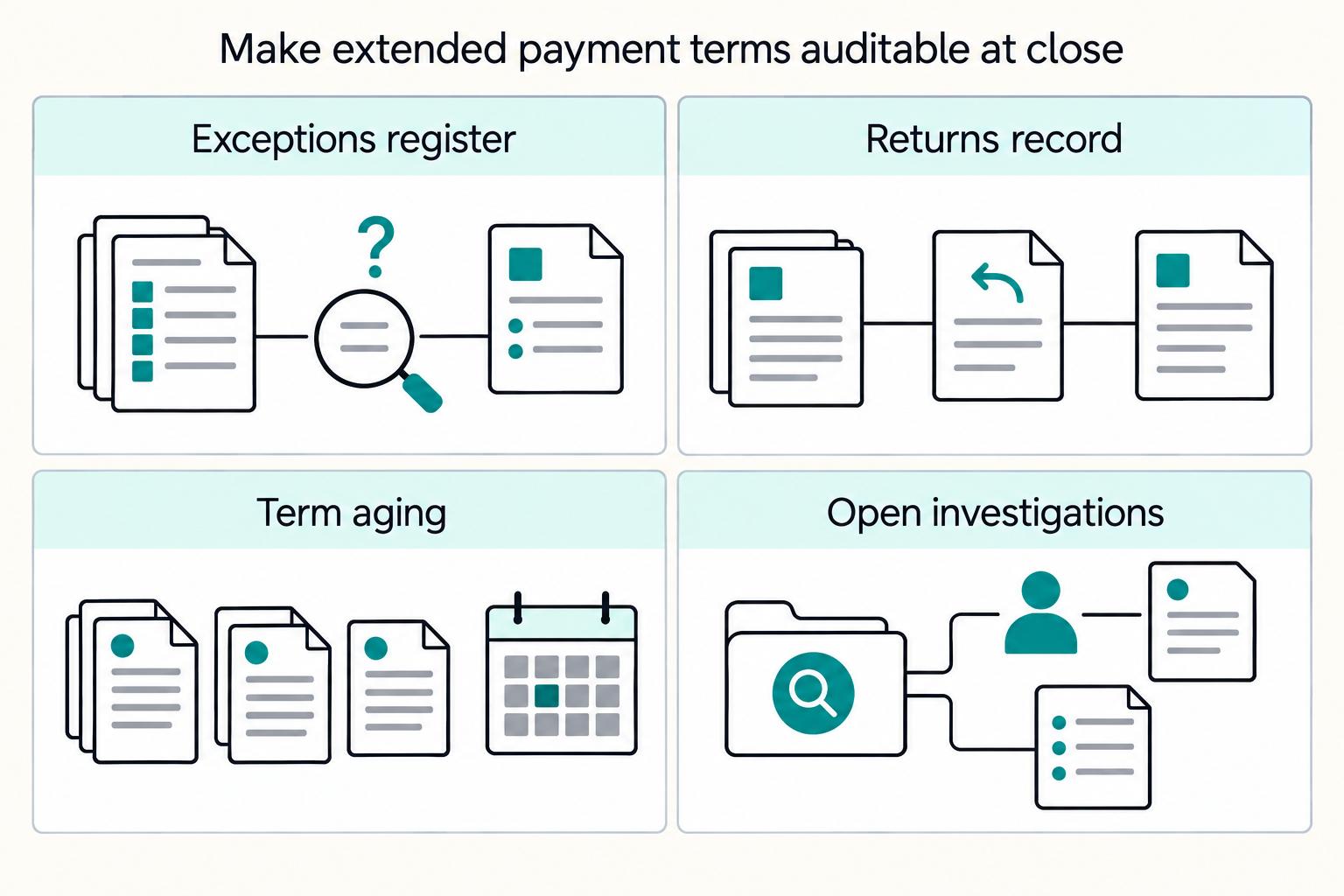
Define the Finance reconciliation pack#
Use a standard reconciliation pack for each period close instead of ad hoc spreadsheets.
| Pack component | What it should show | Why it matters |
|---|---|---|
| Exceptions register | Unmatched ledger entries, missing provider references, balance breaks | Surfaces items that need direct remediation |
| Reversals and returns | Payout reversals, returned funds, and correction-linked items where relevant | Prevents false revenue or cash assumptions |
| Aging by term cohort | Open receivables and contractor payables shown separately by term cohort | Shows where delayed collections are increasing contractor or vendor exposure |
| Unresolved investigations | Owner, opened date, current status, next action | Keeps discrepancies from aging without action |
Age receivables and payables from their own due dates. Assign exceptions by severity and the next promised payment date; suspected duplicates or missing contractor funds need prompt investigation rather than a generic 30-to-60-day waiting window.
Split timing dashboards from loss dashboards#
As an internal reporting policy, separate timing-state issues from true loss events. Track unsettled items, provider delays, and expected payout lag in one view. Track failed collections, unrecoverable returns, confirmed fraud loss, and write-offs in another.
This can prevent a common diagnosis error. Timing lag can look like distress. True loss can be mislabeled as delay if both appear as "missing cash." If you mix them, teams can misread working capital, term performance, and payout health.
For a step-by-step walkthrough, see How to Build a Contractor Payment System for a Nursing or Allied Health Staffing Agency.
Avoid the failures that break payout promises#
Trust can break before audits do, especially when payment terms move faster than AP, payout operations, contract governance, and compliance controls.
Freeze term changes until AP and payout timing are proven#
Do not expand terms until the provider’s settlement schedule, bank cutoffs and contractor due dates fit the funded plan. Funds pending availability cannot be assumed usable; verify the actual route instead of applying a universal two-day delay.
Check obligation approval, available funding, payout eligibility and completion against the contractor promise. For collection-funded payouts, verify buyer receipt and settlement too. For platform-funded payouts, verify approved funds are available even if the buyer has not paid.
Fund the gap instead of hiding DSO pain#
If you extend buyer terms, plan for contractor cash-flow pressure up front. Longer terms help buyers hold cash longer, but they can strain supplier cash flow, so track DPO and DSO together when payees expect predictable payouts.
If collections move later while contractor due dates stay fixed, fund the difference before rollout. Any change to future contractor timing needs the required agreement and clear disclosure; a software SLA does not replace an existing payment obligation.
Centralize overrides and ownership#
Term exceptions should be governed in a single system of record, not scattered across messages and spreadsheets. Store overrides in procurement data management with contract version, approval log, effective date, and owner by organizational unit so you can reconstruct a complete transaction history.
If a trade credit or invoice-term override exists only in Slack, email, or sheet comments, treat it as a control gap and centralize it before expanding terms. For deeper setup detail, see Procurement Data Management for Platforms: How to Centralize Vendor Contracts and Payment Terms.
Move compliance and tax checks ahead of payout#
Run applicable identity, AML, sanctions and tax checks before release under a documented policy. Missing or incorrect TIN information can require 24% backup withholding in applicable U.S. cases; it does not mean every payment must be canceled.
Your pre-payout gate should block or route exceptions before batch creation. At minimum, define payee status, required tax form, sanctions screening result, and an exception owner in the payout record.
Make the decision and launch with a copy-paste checklist#
Do not launch new terms until you can explain who gets the cash benefit, who carries the float, and what happens when payment is late. In practice, segmented terms plus a phased rollout are often safer than one blanket policy.
Choose terms by segment and document the rationale#
Set terms by segment, based on operating and cash-flow needs. Net 30, Net 60, and Net 90 give buyers 30, 60, or 90 days to pay the full invoice, and 2/10 Net 30 gives a 2% discount for payment within 10 days.
For each segment, document the selected term, expected DPO or DSO direction, and how contractor payouts stay protected if buyer cash arrives later.
Validate operating and compliance prerequisites#
Before changing terms, confirm your AP cycle time from invoice receipt to payment transmission. That gives you a concrete readiness check on whether your invoice-to-payout chain can support the policy you are setting.
Confirm payout funding and applicable compliance checks. Route U.S. and foreign payees to the right certification, and keep required reporting data ready. Tax review must approve any lawful alternative withholding treatment; a missing form does not authorize ops to invent one.
Stress-test failure cases before approval#
Approve only after testing the cases most likely to break trust: late payer, disputed payment, and unmatched bank-transfer or virtual-account deposits. Disputes matter for cash planning because chargebacks can immediately reverse a payment.
For bank-transfer flows, test what happens when transfers are not auto-reconciled and remain in customer balance until manually reconciled. Also test retry behavior with idempotent requests so operational retries do not create duplicate disbursements. Confirm your retry and investigation window accounts for idempotency-key retention behavior, including at least 24 hours in Stripe's documented behavior.
Roll out in waves and adjust based on evidence#
Start with a small cohort, then expand in progressively larger waves only when results are stable. Set a review cadence for DPO, DSO, payout health, disputes, and reconciliation exceptions. If a segment shows recurring issues, pause expansion for that segment and tighten terms or controls before widening rollout.
We covered this in detail in SOC 2 for Payment Platforms: What Your Enterprise Clients Will Ask For.
If you want one accountable operating model for collections, compliance controls, and downstream disbursements as you roll out new terms, review Gruv Merchant of Record for business.
Frequently Asked Questions
What does Net 30 mean for a platform that pays both vendors and contractors?
Net 30 means payment is due thirty days after the starting event stated in the agreement, commonly the invoice date. Specify that event and the due date. Contractor payouts may follow a separate funded schedule rather than buyer collection.
How do Net 30 and Net 60 change DPO, DSO, and contractor payout timing in practice?
Longer buyer terms can raise the buyer’s DPO and the platform’s DSO. The platform’s own DPO changes only if its supplier payment timing changes. Preserving contractor due dates requires funding any longer collection gap.
When should we use 2/10 Net 30 instead of standard Net 30?
Use 2/10 Net 30 when faster cash receipt is worth a 2% discount for payment within 10 days instead of full payment in 30 days. This is usually a cash-flow decision, not a default term. Compare that discount cost against funding payouts from your own balance sheet or an early-payment program.
Can we offer enterprise buyers longer terms without delaying contractor payouts?
Yes, if an approved funding source covers contractor obligations through late-payment and dispute scenarios. Optional early pay can help some payees, but it must not quietly replace existing due dates or make contractors pay fees just to receive an already-promised payment.
What controls must be in place before changing vendor payment terms?
Put the controls in place before rollout: clear contract terms, payout-timing gates, and tax-readiness checks. For U.S. payees, Form W-9 is used to provide the correct TIN, and applicable IRS cases can require 24% backup withholding. Add idempotency keys or equivalent retry safety for payout operations so failures do not create duplicate payment actions.
Which teams should own approvals, exceptions, and rollback if the rollout fails?
Your org chart can vary, but ownership must be explicit and separated. Define structure, responsibility, and authority for term approvals, exceptions, and rollback, and enforce segregation of duties so one person does not control all critical steps. Before launch, confirm named owners for approval, payout execution, and rollback execution.
Researched and edited by the Gruv editorial team. Gruv builds cross-border billing, payouts, and finance-operations software for global businesses.
Sources
Includes 1 external source outside the trusted-domain allowlist.
- docs.stripe.com/api/idempotent_requeststrusted
- docs.stripe.com/reports/payout-reconciliationtrusted
- europa.eu/youreurope/business/finance-and-tax/vat/chec...trusted
- irs.gov/businesses/small-businesses-self-employed/ba...trusted
- irs.gov/forms-pubs/about-form-w-8-bentrusted
- fedsmallbusiness.org/reports/survey/2024/2024-report-on-paymentsexternal
Educational content only. Not legal, tax, or financial advice.
Related Posts

The Freelance Payment Penalty: A Modeled Audit of Platform Fees, FX Spreads, and Payout Delays
The money rarely disappears through a single, easy-to-spot fee. The real loss is stacked. A marketplace takes its commission, a processor adds a charge for international cards, a bank or payment company converts the currency at a spread, a platform holds the funds before release, and a wire sheds a little to intermediaries on the way in. Each layer looks defensible on its own, but the worker feels the combined result as a smaller deposit and a later payday.

How to Respond to a Subpoena for Business Records
Move fast, but do not produce records on instinct. If you need to **respond to a subpoena for business records**, your immediate job is to control deadlines, preserve records, and make any later production defensible.
A US Expat's Guide to Investing in UCITS ETFs to Avoid PFIC Issues
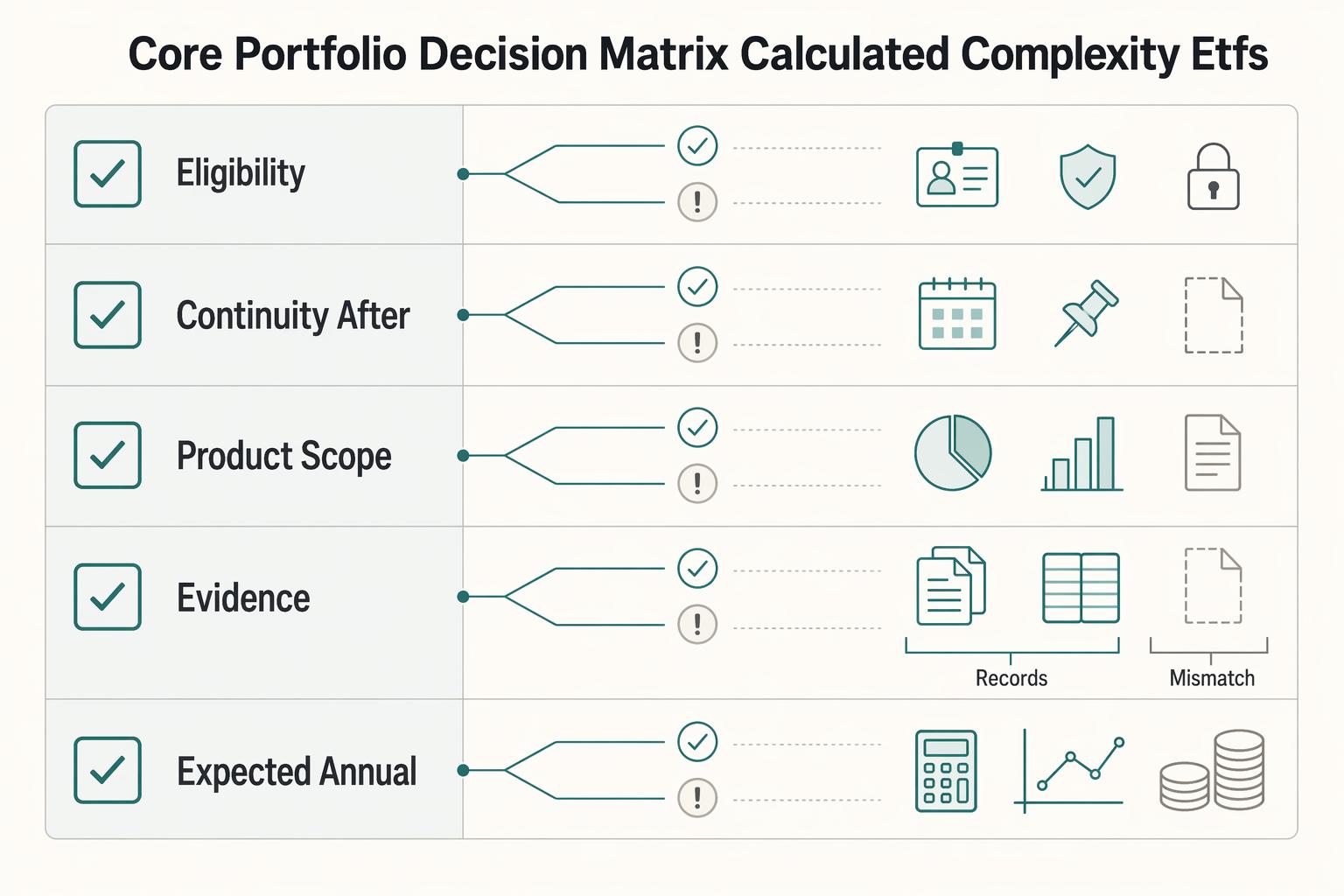
The real problem is a two-system conflict. U.S. tax treatment can punish the wrong fund choice, while local product-access constraints can block the funds you want to buy in the first place. For **us expat ucits etfs**, the practical question is not "Which product is best?" It is "What can I access, report, and keep doing every year without guessing?" Use this four-part filter before any trade: