
Quick Answer
Enterprise clients will usually ask for proof beyond a badge claim. After you mention SOC 2, they often want the Type II report, questionnaire responses such as SIG Core or VSAQ-style answers, a current sub-processor list, and a clear data-flow explanation across providers and integrations. If PHI is in scope, written BAA readiness can become a contract gate.
What Enterprise Clients Want to See#
If you are evaluating platforms that enterprise clients can approve, start with this assumption: SOC 2 is a baseline, not the finish line. A SOC 2 examination gives buyers control assurance, but enterprise review usually moves past a badge claim quickly.
In practice, the conversation shifts to proof. Buyers often ask for the SOC 2 Type II report itself, a SIG, a VSAQ-style questionnaire response, and a clear explanation of how data moves across providers. If your package is mostly marketing language, expect more procurement follow-up questions.
That gap becomes especially visible in payments workflows. Payment models can involve multiple parties handling sensitive data. Once third parties are in scope, buyers usually ask who those providers are, what they do, and how data sharing is controlled.
Use this checkpoint early. Do not just ask whether a provider is "SOC 2 compliant." Ask whether SOC 1 and SOC 2 Type II reports are produced annually and available on request, then verify recency across supporting materials. Trust materials make the difference here: one provider highlights a 2025 SOC 2 Type II cycle, while a sub-processor disclosure can show a freshness marker such as "Last updated: December 20, 2025."
This article focuses on three decision points that enterprise review tends to test, and the goal is simple: choose an option that stays credible when procurement asks for proof, not just positioning.
- Evidence depth
Current attestation materials and supporting documents matter more than broad compliance claims.
- Questionnaire readiness
Teams should be ready to answer SIG or VSAQ-style due diligence with named artifacts and clear owners.
- Sub-processor clarity
Vendors should clearly disclose sub-processors, their roles, and the contractual controls used before sharing data.
How to use this shortlist and who it is for#
Use this shortlist to eliminate weak options before enterprise procurement does it for you. It is for founders, product leads, engineering owners, and finance ops leads going through a buyer vendor risk assessment.
- Start with role fit
Use this if security review can block revenue for your team. The practical test is whether you can clearly explain who touches sensitive data, where it moves, and which third parties act as sub-processors under your instructions.
- Score evidence depth, not badge language
Score each option on real SOC 2 Type II evidence, sub-processor model clarity, and the ability to answer a SIG Core questionnaire without a one-off scramble. A Type II package should include management's assertion, a system description, and the service auditor's Type II report.
- Assume follow-up beyond "Do you have SOC 2?"
Even if a buyer starts with a badge check, be ready to show Trust Services Criteria coverage and explain data-flow controls across downstream providers.
- Make HIPAA/BAA readiness a gate when PHI is in scope for covered-entity or business-associate work
If your workflows involve PHI in a HIPAA covered-entity or business-associate relationship, treat HIPAA and Business Associate Agreement (BAA) readiness as mandatory. If a written BAA is not available where required, remove that option from the shortlist.
Compare options on what procurement actually checks#
Use this matrix to spot likely stalls before they happen. If two vendors both claim SOC 2, prioritize evidence depth, packet readiness, and integration-specific control ownership over badge language.
| Option | Certification posture | Audit operator | Ongoing monitoring tooling | Enterprise fit by segment | Sub-processor count | Shared-infrastructure exposure | BAA support | PHI handling expectation | Security packet completeness | SIG Core questionnaire response quality | Escalation path for legal/security exceptions | Integration surface via Salesforce, Workday, Epic | Likely stall point |
|---|---|---|---|---|---|---|---|---|---|---|---|---|---|
| Named SOC 2 vendor with public operator and monitoring example | Mesh-stated posture: SOC 2 stated; verify whether SOC 2 Type II, SOC 1, or SOC 3 are available for buyer review | KPMG | Drata | Enterprise deals where security review starts with trust evidence; healthcare-sensitive flows still need separate HIPAA/BAA checks | Count alone is not the score. Ask for list, role, and data touched by each sub-processor | Verify tenancy, logging, and caching boundaries instead of assuming isolation from the badge | Verify in contract, not marketing | If health data may enter the flow, confirm whether the vendor or any subcontractor creates, receives, maintains, or transmits PHI | Strong only when reports, policies, and procedures are current and packaged | Moderate to strong when answers map to named artifacts, not generic claims | Needs a named security/legal owner who can answer redlines | Moderate. Connectors into Salesforce, Workday, or Epic can expand review scope if data is stored, transformed, or logged | Buyer asks for Type II evidence or sub-processor detail and gets a trust page instead |
| Generic SOC 2 claim only | SOC 2 mentioned; Type II not clear; SOC 1 and SOC 3 unknown | Not named | Not named | Early-stage security screening where SOC 2 is mentioned but detailed evidence is not yet shared | Undisclosed in summary claims; request list, role, and data-touch details during diligence | Hard to judge because architecture boundaries are not documented | Unknown until contracting | Unsuitable for PHI-adjacent use unless BAA and handling terms are explicit | Can be thin; missing policies, procedures, and architecture detail can stall review | Weak to moderate. SIG Core is for vendors handling highly sensitive or regulated information, so vague answers can stall quickly | Escalation path may be unclear until diligence starts | High if integrations are central and no data-flow diagram exists | Security review stops at "please provide the actual report and supporting documents" |
| Vendor with SOC 2 Type II and SOC 1 | Strong package for security plus controls relevant to user entities' internal control over financial reporting; SOC 3 is optional and not a substitute | Verify named auditor | Verify continuous monitoring method | Good for finance-sensitive platforms where audit and reconciliation questions matter | Still requires a disclosed list and ownership model | Moderate unless the vendor clearly documents what is multi-tenant, cached, or delegated | Must be confirmed separately | Better fit when regulated-data boundaries are explicitly limited and documented | Usually strongest when packet includes current reports and policy references | Strong when the vendor maintains current questionnaire responses and evidence mapping | Clearer exception handling when legal and security contacts are named up front | Moderate to high. Workday API and Salesforce distribution paths create extra ownership questions; Epic raises health-data review risk | Finance assurance looks good, but healthcare or integration answers are incomplete |
| SOC 3 or public trust-page led vendor | SOC 3 can be freely distributed, but does not provide the same level of detail as SOC 2; Type II and SOC 1 may be absent | May not be stated publicly | May not be stated publicly | Early screening only unless detailed assurance evidence is available privately | Public trust materials may not include this detail | May be opaque in public materials | Unknown from public materials until contracting | Not enough for PHI decisions without contract and handling terms | Low for enterprise review because detail is limited | Low to moderate. Public material usually cannot satisfy a tailored questionnaire | Weak unless there is a private escalation path behind the trust page | High if your use case depends on deep integrations | Early procurement block when buyer requests detailed assurance and process evidence |
Read the assurance line before the logo line#
For procurement, SOC 2 Type II is the stronger signal when you need proof that controls operate effectively over time. SOC 3 can still help as a public trust signal, but it is a general-use report and does not carry the same detail.
SOC 1 answers a different question: controls relevant to user entities' internal control over financial reporting. It can strengthen finance and reconciliation discussions, but it does not replace SOC 2.
Score the packet, not just the certification posture#
Where sensitive or regulated data is in scope, a usable vendor row should show whether the team can answer a SIG Core questionnaire with mapped evidence, not just compliance claims. Since SIG is used for vendor risk assessment and Core targets highly sensitive or regulated information, missing artifacts are a predictable stall point.
Record the questionnaire version date in your matrix. SIG is updated every year, and Shared Assessments public materials reference both 19 risk domains and 21 risk domains depending on version.
Treat integrations as scope expansion#
Integrations expand review scope, so keep them explicit in the table. Salesforce distribution paths can trigger security-gate requirements, Workday API paths increase data-flow and control-ownership scrutiny, and Epic-connected FHIR flows can raise health-information handling questions.
If your flow may involve PHI, contract readiness is a gate. HIPAA generally requires contracts with business associates, and subcontractors that create, receive, maintain, or transmit PHI are in scope. If BAA support is not confirmed in writing, procurement is likely to stall there.
For a step-by-step walkthrough, see ISO 27001 Certification for Tech Companies Working With Enterprise Clients.
Best if you need baseline trust proof for standard enterprise deals#
This route can work when procurement wants a credible trust signal and the deal is not opening with healthcare-data requirements. Mesh Payments is a useful badge-forward example because it publicly states SOC 2 Type II, names KPMG, and says it uses Drata for ongoing compliance monitoring.
Why buyers accept this sooner#
For many enterprise first-pass reviews, a named assurance posture can keep the conversation moving. Instead of a generic "we have SOC 2," the claim is anchored to a report type, an audit firm, and ongoing monitoring language.
This aligns with SOC 2 as a controls report across the Trust Services Criteria of security, availability, processing integrity, confidentiality, and privacy.
What actually makes the difference#
What matters here is the combination of specific signals, not the badge alone:
- SOC 2 Type II
Described as examining security measures over time.
- KPMG
Makes the public audit claim more concrete for internal vendor profiling.
- Drata
Supports a maintenance narrative instead of a one-time compliance snapshot.
Where badge-first positioning starts to fail#
Badge-first messaging thins out once buyers move into formal vendor risk assessment. SOC 2 reports are used by teams that need detailed controls assurance, so teams often ask for evidence depth, not just trust-page language.
A common pressure point is the SIG questionnaire, which is used for vendor risk assessment and updated every year. If responses are not mapped to named artifacts, review can stall. Sub-processor oversight can also become a contract issue. For example, UK GDPR Article 28 requires written authorization before engaging another processor.
Use this route when the deal looks like this#
This posture fits when:
- You need a credible first-pass answer for enterprise security review.
- The buyer is not starting with HIPAA, BAA, or PHI handling requirements.
- You can provide deeper review materials on request.
Before relying on this path, confirm that you can produce SOC 2 Type II evidence and a usable questionnaire and sub-processor response pack. If either is weak, expect friction after the initial trust conversation. Related: Inward Remittance for Platforms: How to Accept Payments from Overseas Clients.
Best if cross-border payout scale is the primary buying driver#
If payout reach is the main constraint, start with a cross-border provider that pairs broad disbursement coverage with a public SOC 2 claim.
Routefusion is a useful market signal for this pattern. It publicly states it is SOC 2 certified, in an announcement dated February 26, 2025. It also markets one-API coverage for global FX and SWIFT payments in 180+ countries plus local pay-ins and payouts in 140+ countries. That combination matters because cross-border payouts involve currencies, changing regulations, inconsistent payment networks, and broader global risk.
Why this route fits scale-led deals#
For marketplaces and contractor platforms, enterprise buyers may look for two things at once: confidence that you can scale international payouts and a baseline trust signal for procurement. This route fits that buying motion when payout reach is a primary requirement.
What matters more than the badge#
The differentiator is the combination of scale and assurance, not the badge alone:
- Coverage signal: Routefusion's public footprint claims (180+ / 140+ countries) can align with scale-driven payout roadmaps.
- Assurance signal: A public SOC 2 certification claim can give procurement a concrete starting point for control review.
Where the scale story weakens#
This route weakens when public claims are not backed by review-ready evidence. A SOC 2 examination reports on controls relevant to security, availability, processing integrity, confidentiality, or privacy. Procurement may still ask for control-level proof in formal vendor risk assessment.
That gap often shows up in SIG Core. Shared Assessments positions SIG Core for deeper assessment of medium-high-risk third parties, including contexts involving sensitive or regulated information, and SIG content is updated annually. SIG questionnaires span 19 risk domains, so expect detailed follow-up.
What to verify before you take this into enterprise sales#
Before you lean on the reach story, verify two things:
- Assurance artifact quality: Confirm which SOC report materials are available and what control scope they cover. If buyers ask for controls operating over time, verify whether a SOC 2 Type II report is available.
- Questionnaire readiness: Confirm security, legal, and product can answer SIG Core with named artifacts and control evidence, not summary claims.
Use this route when global payout scale is the buying driver and procurement still needs formal evidence. If documentation depth is weak, the scale story can still stall in review.
Best if integrations create your biggest compliance risk#
When integrations drive the risk, a trust badge is not enough. You need to explain the integration data path as clearly as the control posture. Enterprise procurement often asks where sensitive data moves, what gets logged or retained, and which third parties can access it.
Workato is a useful example of that tradeoff. It publicly lists SOC 1 Type II, SOC 2 Type II, and SOC 3, which is a real trust signal. But if your payment workflow depends on middleware, connectors can expand your review surface and your sub-processor scope.
Why an integration layer can still help#
An integration layer can reduce custom engineering while connecting into systems enterprise buyers already run. Workato states it can sync data between Workday and other cloud apps, and its Salesforce connector supports Professional, Enterprise, Unlimited, and Developer environments. That indicates broad integration scope for payout, onboarding, and reconciliation flows.
Where teams get burned#
The core risk is not integration itself. It is unclear data handling across multiple hops.
A SOC 2 examination covers controls relevant to security, availability, processing integrity, confidentiality, or privacy. It does not, by itself, map exactly where payloads are cached, what lands in logs, or how retention changes when connectors are added. That is why teams with a valid report can still fail a vendor risk assessment.
Procurement sensitivity can increase when flows touch systems like Salesforce, Workday, or Epic, especially when patient-related actions are involved. Workato markets Epic integrations with patient-oriented actions, which can increase scrutiny around architecture and data handling.
What to verify before procurement asks#
Document the full path before security review starts, not during it.
| Checkpoint | Why it matters | Confirm |
|---|---|---|
| Control posture | Buyers need evidence beyond a generic claim | Whether the integration vendor supports SOC 2 Type II and what other reports are available (for example SOC 1 Type II, SOC 3) |
| Data retention | Retained job/event data can widen exposure | For Workato, covered job data retention is stated as 30 or 90 days from completion, depending on workspace type and plan |
| Sub-processor scope | Downstream processors can widen personal-data access | Current sub-processor list, and where a sub-processor may have or potentially have access to personal data |
| Integration sensitivity | Some connectors can trigger deeper review | Any flow touching Salesforce, Workday, or Epic, with architecture notes ready |
If procurement sends a SIG Core questionnaire, treat it as a deep evidence request, not a summary form. Shared Assessments positions SIG Core for third parties handling highly sensitive or regulated information, and SIG spans 19 risk domains.
As CISA Director Jen Easterly put it: "Businesses can also help move the needle by making better risk-informed decisions when purchasing software." That is the buyer posture you should plan for.
Practical recommendation#
Before sales commits to enterprise readiness, do three things:
- Map where data is transmitted, cached, logged, and retained across the integration path.
- Tie each answer to a named artifact, not a verbal explanation.
- Re-check the sub-processor list whenever you add a connector or environment.
The common failure mode is assuming a vendor's compliance posture carries your architecture. It does not. If you can document the path with evidence, this route can support enterprise review. If you cannot, it can expand your compliance footprint and slow procurement.
This pairs well with our guide on A Guide to SOC 2 Compliance for SaaS Companies.
Best if healthcare or regulated data is in scope#
Once PHI enters the picture, the decision stops being just a security review and becomes a contract gate. If your workflow may involve Protected Health Information (PHI), confirm Business Associate Agreement (BAA) support before deeper security review. If PHI is in scope and a vendor will not sign a BAA where one is required, keep that vendor out of the transaction path. That remains true even if it has SOC 2 Type II.
SOC 2 and HIPAA answer different questions. A SOC 2 examination reports on controls such as security, availability, processing integrity, confidentiality, and privacy, and Type II speaks to operating effectiveness over time. It does not replace HIPAA's written business-associate contract requirement.
The gate that matters most#
Under HIPAA, a business associate includes an entity that creates, receives, maintains, or transmits PHI for a covered entity. Where that relationship applies, the covered entity must have a written business-associate contract. That contract must define permitted and required PHI uses and disclosures (45 CFR 164.504(e)(2)(i)).
| Checkpoint | Why it matters | What to verify |
|---|---|---|
| PHI in scope | This gate only applies if PHI is in the workflow | Data map showing where PHI is created, received, maintained, or transmitted |
| Business-associate role | The contract requirement depends on role and relationship | Whether your workflow places the vendor in a business-associate position |
| BAA availability | Written assurances are required where applicable | Signed BAA, contract form, or explicit written refusal |
| PHI use/disclosure terms | HIPAA contract terms must be specific | Contract language defining allowed PHI uses and disclosures |
Why this filter helps#
This route gives you a clear go or no-go filter before late legal escalation. It also makes internal decisions cleaner: legal knows the contract requirement, engineering knows which flows are allowed, and sales gets a direct answer.
Where teams still get burned#
Teams can get delayed when they treat PHI scope as a later question or assume SOC 2 Type II covers HIPAA contracting. It does not. This is also not a one-time check. If a covered entity knows of a business associate pattern of activity that violates obligations and does not cure or terminate when feasible, compliance risk remains.
Practical recommendation#
For workflows where PHI may be involved, require these before committing architecture:
- A PHI data flow map.
- Written BAA position from each vendor that may act as a business associate.
- Contract review of permitted PHI uses and disclosures.
Tradeoff: this may mean fewer vendor options and potentially slower onboarding because legal and security review can be stricter.
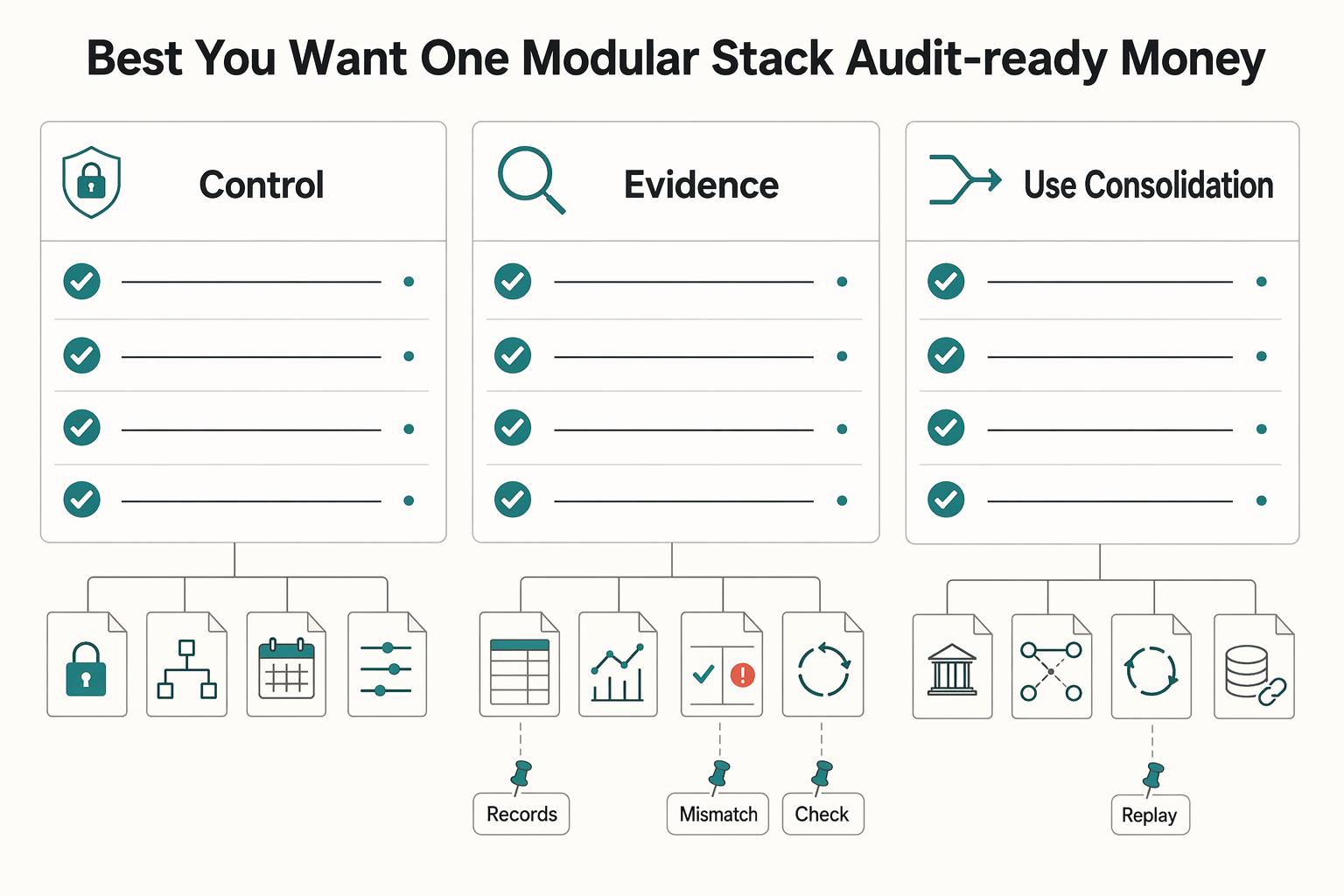
Best if you want one modular stack with audit-ready money operations#
Choose the modular path only when it gives you stronger audit evidence and cleaner operations, not just fewer vendors. If you are evaluating Gruv, pressure-test whether the stack can produce procurement-ready answers for controls, reconciliation, and data flow before security review starts.
- Verify control points that hold up under retries and failures
The core question is whether money movement is traceable and repeat-safe in real operations. Ask for written detail on whether compliance-gated payouts, idempotent retry handling, and ledger-linked traceability are enabled for your program from request through settlement. Idempotency is a practical control point because it is designed to allow safe retries without duplicate operations. If retry boundaries or key-retention handling are unclear, treat duplicate-movement risk as unresolved.
- Map evidence to enterprise diligence requirements
Ask for a SOC 2 package built for detailed assurance, not a badge check. For enterprise review, Type II evidence is typically more useful than a generic SOC 2 claim because it addresses operating effectiveness over time. The packet should connect evidence to the Trust Services Criteria: security, availability, processing integrity, confidentiality, and privacy. In practice, useful artifacts include webhook event records for async events, reconciliation exports, and a short controls narrative that ties those records to how finance and security teams validate the same flow.
- Use consolidation to reduce friction, but keep disclosures explicit
Fewer systems can reduce handoff drag across sales, legal, finance, pricing, and IT. A 2026 survey of more than 1,200 decision-makers reported that 93% said deals frequently stall across departmental handoffs. Separate 2026 reporting cited 38% reporting lost or delayed revenue tied to system handoffs. Tradeoff: a modular stack does not remove buyer disclosure requirements. Enterprise teams may still ask for a current sub-processor list and a clear data-flow explanation. If either is vague or delayed, risk review can slow down even when the SOC 2 narrative is otherwise strong.
Use this route when you can confirm three items in writing up front: control behavior for retries and approvals, reconciliation evidence tied to actual money movement, and explicit sub-processor and data-flow disclosures.
What enterprise clients will ask after your SOC 2 claim#
Once a buyer accepts the headline claim, the work usually shifts from badge-checking to evidence-checking. Prepare for a sequence like this: SIG Questionnaire (often SIG Core for higher-risk cases), then legal and security exceptions, then implementation details tied to artifacts.
| Step | Buyer request | What to send or do |
|---|---|---|
| Start with the SIG framework, not ad hoc answers | Use the SIG Questionnaire as the base question bank; the 2025 version covers 21 risk domains, and SIG Core is typically used for vendors handling highly sensitive or regulated data | Keep one maintained answer bank across teams and refresh it on the SIG's yearly update cadence |
| Expect architecture-level data-handling questions | Buyers may ask where data is stored, which sub-processor relationships exist, and how incident communication works | Point to architecture diagrams, sub-processor documentation, and incident-response policy or contract language |
| Send a detailed evidence pack, not only a badge | Enterprise reviewers usually want detailed assurance materials | Build a packet from SOC 2 Type II materials, management assertion, system description, and the service auditor's report; include SOC 1 Type II for financial reporting concerns and SOC 3 as a general-use document |
| Assign ownership by question type before review starts | Pre-assign owners so answers stay accurate under pressure | Use legal for contract artifacts, engineering for architecture and data flow, and finance ops for controls tied to financial reporting concerns |
| Run a verify checkpoint before sending | Treat submission as evidence mapping, not copy editing | Map each answer to a named artifact, owner, and last-review status; if it cannot be tied to current evidence, mark it for confirmation |
- Start with the SIG framework, not ad hoc answers.
Use the SIG Questionnaire as your base question bank, then layer buyer-specific exceptions. The SIG is used for third-party risk control evaluation, the 2025 version covers 21 risk domains, and SIG Core is typically used for vendors handling highly sensitive or regulated data. Keep one maintained answer bank across teams to reduce contradictions, and refresh it on the SIG's yearly update cadence so stale language does not leak into vendor risk assessment cycles.
- Expect architecture-level data-handling questions.
Buyers may ask where data is stored, which sub-processor relationships exist, and how incident communication works. Your responses should point to named artifacts, such as architecture diagrams, sub-processor documentation, and incident-response policy or contract language. If EU personal data is in scope, align sub-processor responses with GDPR Article 28 authorization and change-notice requirements. If PHI may be involved and you may act as a business associate, treat BAA readiness as a contract gate because HIPAA requires written assurances.
- Send a detailed evidence pack, not only a badge.
Enterprise reviewers usually want detailed assurance materials. Build a packet from what you actually have, such as SOC 2 Type II materials, management assertion, system description, and the service auditor's report. Include SOC 1 Type II when the buyer's concern is controls relevant to their financial reporting. Include SOC 3 as a general-use document when useful, but do not position it as a replacement for detailed SOC 2 review content.
- Assign ownership by question type before review starts.
Pre-assign owners so answers stay accurate under pressure, for example: legal for contract artifacts (including BAA and terms), engineering for architecture and data flow, and finance ops for controls tied to financial reporting concerns. There is no universal mandatory split, but clear ownership improves response quality and follow-through.
- Run a verify checkpoint before sending.
Treat submission as evidence mapping, not copy editing: each answer should map to a named artifact, owner, and last-review status. Shared Assessments describes a post-questionnaire verify phase, and you can follow a similar pattern. If an answer cannot be tied to current evidence, mark it for confirmation instead of asserting it.
Red flags that stall deals even when you have SOC 2#
Deals can stall when your SOC 2 report, questionnaire responses, and contract position do not line up, not simply because you have or do not have a SOC 2 report.
| Red flag | Why it stalls | Article detail |
|---|---|---|
| A clean SOC 2 claim with muddy scope | Reviewers focus on the system description to confirm scope | If you cannot show what is in scope versus out of scope, reviews can slow and architecture follow-ups increase |
| Unclear sub-processor and data-handling answers | The sub-processor list, architecture diagram, and SIG Core questionnaire responses should align | When those artifacts conflict, enterprise review can move into exception handling |
| Thin security depth for an enterprise review | Type II and Type I are not interchangeable, and buyers may escalate if answers sound like positioning instead of evidence | Map claims to named artifacts such as control summaries, remediation tracking, or policy excerpts |
| HIPAA-adjacent deals without BAA readiness | A Business Associate Agreement can be a contract gate in PHI-related workflows | If you cannot support a BAA in that context, surface it early instead of treating it as a late negotiation point |
- A clean SOC 2 claim with muddy scope
A SOC 2 examination reports on controls. It is not blanket coverage for every product path or dependency. Reviewers may need more than the opinion section, so they focus on the system description to confirm scope. If you cannot show what is in scope versus out of scope, reviews can slow and architecture follow-ups increase.
- Unclear sub-processor and data-handling answers
Subservice organizations are part of SOC risk language, so downstream providers remain in scope for buyer questions. Your sub-processor list, architecture diagram, and SIG Core questionnaire responses should align on who stores or transmits customer data. When those artifacts conflict, enterprise review can move into exception handling.
- Thin security depth for an enterprise review
Type II and Type I are not interchangeable, and Type I provides less assurance. Even with Type II, enterprise buyers may escalate if answers sound like positioning instead of evidence. If you cannot map claims to named artifacts such as control summaries, remediation tracking, or policy excerpts, scrutiny increases.
- HIPAA-adjacent deals without BAA readiness
In PHI-related workflows, a Business Associate Agreement (BAA) can be a contract gate, not a preference item. HIPAA guidance requires written assurances between covered entities and business associates, and extends obligations to relevant subcontractors handling ePHI. If you cannot support a BAA in that context, surface it early instead of treating it as a late negotiation point.
A 30-day execution sequence to reduce procurement risk before launch#
Use this 30-day sequence to align evidence, contracts, and product claims before buyers ask for proof. Treat it as prelaunch discipline: if a claim is not tied to a document and owner, it is not ready for enterprise review.
| Timing | Focus | What the article says |
|---|---|---|
| Week 1 | Map every sub-processor and real data path | Inventory every sub-processor that processes customer data, trace data flow by product workflow, and confirm what data moves through each integration |
| Week 2 | Assemble the procurement packet buyers can actually use | Build one packet centered on the SOC 2 Type II report, with control summaries mapped to the Trust Services Criteria and concise policy summaries for commonly tested controls |
| Week 3 | Run a mock SIG Core and make missing answers a launch blocker | Review with legal, engineering, and finance ops, and label each response as documented, needs evidence, or unknown |
| Week 4 | Close regulated-data gaps and pre-approve contract language | If PHI is in scope, decide upfront whether you will sign a Business Associate Agreement and which product paths can handle that data |
| Final checkpoint | Freeze unsupported claims before sales uses them | Require a backing document, functional owner, and update cadence for every sales-stage compliance claim |
- Week 1: map every sub-processor and real data path
Start by inventorying every sub-processor that processes customer data. Then trace data flow by product workflow, not vendor logo. If flows connect with systems such as Workday or Epic, confirm what data moves through each integration. A current sub-processor list plus architecture diagram helps reduce scope conflicts between questionnaire answers and real implementation.
- Week 2: assemble the procurement packet buyers can actually use
Build one packet centered on your SOC 2 Type II report and supporting evidence. Include control summaries mapped to the Trust Services Criteria (TSC) and concise policy summaries for commonly tested controls. Since SOC 2 reports are used by reviewers who need detailed assurance, depth matters more than a badge-level claim. Practical checkpoint: legal, sales, and security should all be able to pull the same packet without searching across drives.
- Week 3: run a mock SIG Core and make missing answers a launch blocker
Run a cross-functional SIG Core questionnaire review with legal, engineering, and finance ops as if it were live. The SIG framework is used to evaluate vendor and service-provider risk controls and includes 21 risk domains, so gaps surface quickly. Label each response as documented, needs evidence, or unknown. If an answer is weak internally, treat it as a launch blocker rather than discovering it during procurement.
- Week 4: close regulated-data gaps and pre-approve contract language
If PHI is in scope, decide upfront whether you will sign a Business Associate Agreement (BAA) and which product paths can handle that data. HIPAA generally requires written contracts between covered entities and business associates, and subcontractor obligations apply when subcontractors handle ePHI on behalf of a business associate. That makes subcontractor readiness a real gate. Pre-approved exception language helps avoid late-stage contract and architecture conflicts.
- Final checkpoint: freeze unsupported claims before sales uses them
Require three fields for every sales-stage compliance claim: backing document, functional owner, and update cadence. This keeps claims credible as procurement questionnaires evolve, including annual SIG updates. Without this gate, teams end up reconciling marketing language, policy docs, and incomplete diagrams during active deals.
Want to convert this 30-day sequence into implementation tickets? Map your controls to webhook events, payout states, and reconciliation flows in the developer docs.
Conclusion#
Do not lead with a badge and hope procurement fills in the blanks. Lead with evidence. For payment platforms selling into enterprise clients, the deciding factor is often whether you can answer security, legal, and data-handling questions on day one with named documents, clear owners, and no contradictions.
- Certification depth
A SOC 2 examination reports on controls relevant to security, availability, processing integrity, confidentiality, or privacy. Enterprise reviewers usually want detailed assurance, not a marketing claim, so a current SOC 2 Type II report with a clear reporting period and controls mapped to the Trust Services Criteria carries more weight because it shows controls operating effectively over time.
- Architecture clarity
Buyers assess risk in your actual service model, including outsourced components and integrations that can add exposure. Show clear data-flow and storage boundaries across your platform and providers.
- Owned evidence pack
Keep a current, review-ready pack, such as SOC report materials, architecture diagrams, policy excerpts, and required contract artifacts. When Protected Health Information (PHI) is in scope, written HIPAA assurances, such as a Business Associate Agreement (BAA) or similar agreement, must be in place. Every answer should map to an artifact and an internal owner.
The strongest option is usually the one that can draw a clean line from SOC 2 Type II to real controls, then to SIG questionnaire responses, and then to contracts and implementation details. Because SIG is updated every year, questionnaire responses need active ownership and refresh.
Before your next enterprise pilot, run one practical check: can each material claim be tied to a current report section, diagram, policy excerpt, sub-processor entry, or signed agreement? If not, treat that gap as a launch blocker.
If you want a procurement-readiness walkthrough for your specific payment architecture, including policy gates and audit-trail expectations, talk to Gruv.
Frequently Asked Questions
Is `SOC 2` enough for enterprise payment clients?
No. It is an attestation report on controls, not blanket approval of all buyer requirements. Enterprise buyers often continue with questionnaires, audits, sub-processor review, and evidence checks, so weak documentation can still stall procurement.
Why does `SOC 2 Type II` usually carry more weight than a generic SOC 2 claim?
Type I addresses control design, while Type II covers design plus operating effectiveness over the reporting period. That gives reviewers stronger evidence that controls worked over time. Buyers should confirm the exact report type and reporting period instead of relying on badge language.
Can a platform pass `SOC 2` and still fail enterprise procurement?
Yes. Buyers often continue with questionnaires, contract review, and architecture questions even when a report exists. Common failure points are incomplete sub-processor disclosure, weak evidence mapping, or missing paperwork in PHI-related deals.
What does a buyer typically ask in a `SIG Core questionnaire` after initial security review?
The SIG is a standardized vendor-risk questionnaire used for initial assessment of vendors and service providers. After initial review, buyers often expect evidence across cybersecurity, IT, privacy, data governance, and business resiliency, tied to the actual service they will use. The practical approach is to anchor each answer to a named artifact such as a report section or policy excerpt.
How do `HIPAA`, `Business Associate Agreement (BAA)`, and `Protected Health Information (PHI)` change vendor selection?
They turn vendor selection into a scope-and-contract decision, not just a security narrative. When PHI is in scope and the vendor acts as a business associate, HIPAA requires written satisfactory assurances through a contract or other agreement. Self-certification is not a substitute, and subcontractor handling of PHI must be reviewed.
Which `sub-processor` details should we disclose before a `vendor risk assessment` asks for them?
Disclose the current sub-processor list, each provider's role, and the affected product workflow. If you rely on general written authorization under GDPR processor terms, intended additions or replacements should be communicated as required. The main risk is not just omitting a name, but giving answers that conflict with contracts or actual data handling.
Researched and edited by the Gruv editorial team. Gruv builds cross-border billing, payouts, and finance-operations software for global businesses.
Sources
- cisa.gov/news-events/news/cisa-releases-secure-demand...trusted
- cisa.gov/software-acquisition-guide/tooltrusted
- cms.gov/priorities/key-initiatives/burden-reduction/...trusted
- cms.gov/files/document/mln909001-hipaa-basics-provid...trusted
- csrc.nist.gov/pubs/sp/1326/ipdtrusted
- ecfr.gov/current/title-45/subtitle-A/subchapter-C/par...trusted
- ecfr.gov/current/title-45/subtitle-A/subchapter-C/par...trusted
- hhs.gov/hipaa/for-professionals/privacy/guidance/bus...trusted
Educational content only. Not legal, tax, or financial advice.
Related Posts

The Freelance Payment Penalty: A Modeled Audit of Platform Fees, FX Spreads, and Payout Delays
The money rarely disappears through a single, easy-to-spot fee. The real loss is stacked. A marketplace takes its commission, a processor adds a charge for international cards, a bank or payment company converts the currency at a spread, a platform holds the funds before release, and a wire sheds a little to intermediaries on the way in. Each layer looks defensible on its own, but the worker feels the combined result as a smaller deposit and a later payday.

How to Respond to a Subpoena for Business Records
Move fast, but do not produce records on instinct. If you need to **respond to a subpoena for business records**, your immediate job is to control deadlines, preserve records, and make any later production defensible.

A US Expat's Guide to Investing in UCITS ETFs to Avoid PFIC Issues
The real problem is a two-system conflict. U.S. tax treatment can punish the wrong fund choice, while local product-access constraints can block the funds you want to buy in the first place. For **us expat ucits etfs**, the practical question is not "Which product is best?" It is "What can I access, report, and keep doing every year without guessing?" Use this four-part filter before any trade: