
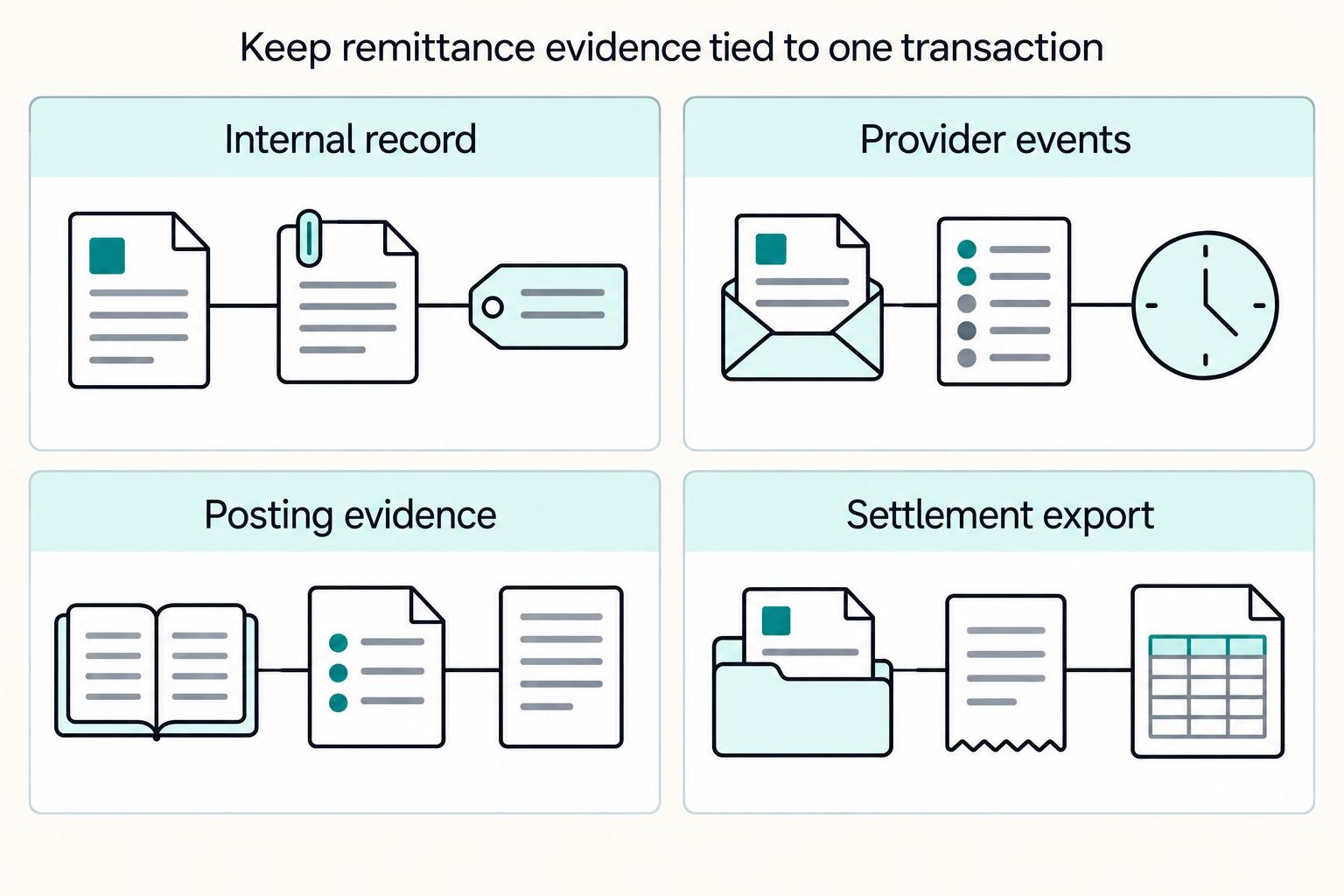
Quick Answer
Start by choosing a single pilot corridor and defining release controls before provider selection. Require proof of status history, provider reference IDs, and cancellation/refund states, then implement a state machine from `invoice_created` to `ledger_posted` with idempotent retries. Run one dry run into Xero or QuickBooks and one forced exception case. If either path needs manual reconstruction, pause rollout until ownership, evidence fields, and webhook handling are fixed.
Inward remittance for platforms is an operating decision, not a checkout feature#
Define the job as traceable receipt, not just payment acceptance#
Your core promise is traceable cross-border receipt, not an "international checkout" button. For platform teams, that means tracking who initiated the payment, who the designated recipient is, what amount was expected, what arrived, which provider statuses came back, and whether funds can move to the next internal step.
U.S. Regulation E (12 CFR Part 1005, Subpart B) defines a remittance transfer as an electronic transfer requested by a sender to a designated recipient abroad. That is not a global definition of inward remittance, but it is a useful operating anchor. If you cannot trace one overseas receipt from request to final posting with references and timestamps, the flow is not ready to launch.
Set the expectation that product, finance, and engineering share the outcome#
Treat this guide as a build-and-control plan, not a gateway shopping list. Product owns customer states and disclosures. Finance owns fee visibility, reconciliation evidence, and defensible refund handling. Engineering owns the integration and must preserve transaction identity and status transitions instead of flattening everything to "paid" or "failed."
In the U.S. remittance context, written disclosures are required, errors are explicitly defined, cancellation and refund procedures are mandatory, and provider liability can extend to agent behavior. Even if your program sits outside that exact rule set, those are still useful pre-launch checks. Can you produce written records tied to a receipt? Can you distinguish incorrect-amount errors from cancellation cases? Can you identify which partner or agent touched the transaction?
For vendor evaluation, ask for a sample transaction package, not a polished demo. You should be able to inspect status history, provider reference IDs, disclosure artifacts, and the exact way cancellation and refund states are represented.
Scope this for platform operators who need audit-ready flows#
This guide is for marketplace and embedded-payments teams operating many senders, many recipients, and internal controls such as holds, release rules, and downstream payouts. It is not freelancer-only guidance.
That scope matters because embedded-finance value chains can fragment, raising complexity and lowering transparency. Cross-border collection no longer sits only with banks in many markets. Non-bank PSPs have reshaped the market. Central-bank guidance such as Bank of Ghana inward remittance guidelines also shows PSP+MTO partnership models that terminate into bank accounts, mobile money wallets, and other approved electronic accounts.
Use that reality to set the order of operations: define the acceptance model, confirm the controls and evidence you need, then build the integration. If a provider pitch cannot clearly explain traceability, error handling, partner responsibility, and audit evidence, treat that as a red flag even if the checkout looks complete.
Related: Music Royalty Tax Compliance: How Platforms Handle 1099-MISC vs. 1099-NEC for Artist Payments.
What inward remittance means in platform operations#
Define inward remittance as a managed receipt event#
For platform operations, inward remittance is best treated as a managed receipt flow, not a single "payment received" moment. A practical internal definition can span: payer instruction created, provider status captured, funds received, internal status updated, and, where relevant, ledger and eligibility states updated.
This is an operating standard, not a universal legal formula. A simple test is whether finance or support can open one transaction and verify the payer, designated recipient, expected amount, received amount, provider reference ID, timestamps, and current status without rebuilding the trail from emails or CSV exports.
Separate channel types before you design statuses#
Channel type should be one of your first design decisions. A global gateway may collect overseas payments in one surface, but the underlying methods still vary, including cards, bank debits, bank redirects, bank transfers, wallets, and others.
Model statuses and reconciliation around the actual channel used. Bank-transfer receipt paths, including transfers into your platform-linked bank account, should be tracked separately from card-style confirmation flows so support and finance can match, verify, and close transactions reliably.
Set the real operating target#
The real target is predictable settlement timing and defensible fee transparency. International gateway flows can take several days, depending on method and banks, so set and show realistic availability windows instead of implying instant access by default.
For transparency, store the same core fields every time: exchange rate, fees, taxes, and final amount received. In U.S. remittance disclosures, the recipient amount is labeled "Total to Recipient." Even outside that rule context, this discipline helps prevent disputes between support, finance, and operations about what arrived and when it became available.
For more on collection infrastructure, see What is a Virtual IBAN and How Do Platforms Use It to Collect Payments Globally?.
Decide your acceptance model before selecting a provider#
Choose the acceptance model first, then the provider. For platforms handling overseas receipts, the right choice depends on whether your main operating risk is exceptions, reconciliation, or both.
Match the provider shape to your receipt pattern#
Contractor, creator, and invoice-led B2B flows do not need the same controls, even if all of them involve accepting overseas payments.
For contractor networks, prioritize traceability and ledger mapping. You need provider references, clear status changes, and enough API detail to map transactions to your release rules.
For creator or high-volume P2P-like patterns, start with exception visibility. Status updates pushed through webhooks, plus a way to retrieve status manually when needed, matter more than broad reach claims alone.
For invoice-led B2B flows, favor auditable status and reconciliation artifacts. Reconciliation features and clean accounting-system alignment matter more than speed claims. If reconciliation and policy controls matter more than speed marketing, favor stronger API and status surfaces over broad marketing coverage.
Compare only verifiable signals#
Use provider claims as screening signals, not final proof. Compare only what you can verify:
| Provider | Verifiable integration/control signal | Better-fit signal | Confirm before signing |
|---|---|---|---|
| GoCardless | Webhooks send server-to-server event notifications; localized payments for 30+ countries in one integration. | Event-driven ops updates and downstream automation. | Exact corridor and method availability for your entity type; webhook-to-internal-state mapping. |
| Convera | API covers batching, processing, reconciliation, and sanctions visibility; statuses can be pushed by webhook or pulled via Get Payment. Also positions control, track, and reconcile visibility. | High-volume domestic or FX operations that need explicit tracking and reconciliation surfaces. | Corridor behavior, onboarding detail, and status granularity for exception queues. |
| BILL | International payments to over 130 countries; Local Transfer for international sends; multi-currency behavior across QuickBooks, NetSuite, Xero, and Sage Intacct; international USD wire fee listed at $19.99 USD. | Invoice-led B2B flows with finance-owned reconciliation and accounting dependencies. | Applicable fees in your flow, country-by-country method availability, and returned remittance detail. |
| Brightwell | ReadyRemit docs describe every offered API endpoint; markets embedded cross-border payouts across 195+ countries with built-in compliance and fraud prevention. | Embedded P2P remittance or digital-banking-style product flows. | Onboarding friction, exception visibility, and transaction evidence quality for finance review and reporting. |
Coverage numbers such as 30+ countries, over 130 countries, 195+ countries, or over 140 currencies to more than 200 countries and territories should guide questions, not decide selection.
Choose deliberately between exception handling and auditability#
For high-volume P2P remittance patterns, optimize for exception visibility. Push-and-pull status models give support and ops two ways to monitor and triage cases.
For invoice-led patterns, optimize for settlement predictability and audit artifacts. Accounting integration support is a useful starting signal, but it is not proof of reconciliation readiness by itself. Status and webhook features improve visibility, but they do not replace internal ledger mapping and hold or release controls.
Confirm unknowns with sample evidence#
Before commercial sign-off, get written answers and sample artifacts for:
- Market coverage for your exact entity type, corridor, and payment method.
- Onboarding detail, including compliance checks and setup steps for your platform or users.
- Real settlement behavior in live conditions, not homepage speed language.
- Evidence fields: reference IDs, timestamps, status history, fees, FX context, and export methods.
- Transparency fields aligned with your controls as payment-transparency expectations evolve, including FATF Recommendation 16 updates published 18 June 2025.
If a provider is strong on reach but weak on verifiable status, reconciliation, or evidence, treat that as a core risk.
For a step-by-step walkthrough, see Payments Infrastructure for Creator Platforms: A Complete Build vs. Buy Guide.
What to prepare before implementation starts#
Before coding starts, lock four things: named owners, fixed system handoffs, a minimum evidence pack, and a narrow first launch slice. Teams move faster when these are settled early instead of trying to support every cross-border path at once.
Assign named owners across product, finance ops, and engineering#
Name owners for the gateway integration, support escalation, and incident response. If ownership is vague, exceptions stall and finance can end up rebuilding transactions by hand.
A practical split is:
- Product: customer-visible states, launch scope, and support-policy decisions.
- Finance ops: reconciliation rules, reporting cadence, and evidence requirements.
- Engineering: API and webhook handling, ERP sync reliability, and incident remediation.
Make the handoffs specific. Engineering can own provider event ingestion, while finance ops owns the rule for when a receipt becomes reportable or payout-eligible. Also assign a first responder for escalation in each function.
Verification checkpoint: each exception type has one primary owner and one backup before implementation starts.
Define your source systems and reporting rhythm#
Map the flow from invoice creation to accounting output before designing state changes. Fix the invoicing source, accounting destination, and reporting window up front. Use system capabilities as planning constraints:
| System | Noted capability or constraint |
|---|---|
| Xero | Invoices support GET, PUT, and POST; bank-feed statement data can be delivered daily. |
| QuickBooks | Payments can link to multiple invoices and credit memos; QuickBooks Online provides a Reports API, and its docs recommend limiting report-request date ranges to six months. |
| Zuora | Requires payment gateway configuration before customer-account setup. |
Then set a reporting cadence your systems can actually support.
Red flag: near-real-time product promises paired with weekly finance exports often create support and reconciliation failures.
Lock the minimum evidence pack before coding#
Define the minimum evidence pack now and attach it to every in-scope payment/transmittal event. Do not wait until after launch. At minimum, capture:
- Internal transaction status history with timestamps.
- Provider reference ID plus your invoice or customer reference.
- Amount, execution date, and remitter identity fields where applicable.
- Reconciliation export path for finance review or audit.
This gives you traceability between internal records and external gateway data. For U.S.-scoped flows, recordkeeping text includes fields such as transmittor identity, amount, and execution date. It also includes cited thresholds at $3,000 or more and cross-border instructions of more than $10,000. Validate exact obligations with counsel or compliance before go-live.
Start with one narrow launch slice#
Start with a narrow first slice, such as one corridor, one customer segment, and one acceptance method. Expanding geography, customer type, and method at the same time makes failures much harder to isolate.
Corridor-based rollout is a practical unit because remittance markets are tracked that way, for example 367 corridors across 48 sending and 105 receiving countries in the World Bank dataset. Expand only after you can trace one live transaction end to end, from invoice creation to accounting output, without manual reconstruction.
Related reading: How MoR Platforms Split Payments Between Platform and Contractor.
Set compliance gates and onboarding rules early#
Set compliance gates before payout logic. If you cannot define, by corridor, when identity checks finish, when funds move to hold, and who can release them, delay launch instead of shipping a permissive default.
Place KYC onboarding before payout eligibility#
Use a clear sequence per corridor: onboard, verify, receive, review if needed, then release. Funds should not become payout-eligible while required KYC or customer due diligence steps are unresolved.
That ordering is grounded even though implementation varies by jurisdiction. In the U.S., CIP requires minimum customer information before account opening, and beneficial ownership procedures apply at new account opening for legal-entity customers. In UK-regulated contexts, FCA guidance indicates that if required CDD cannot be applied, the firm must not enter into or continue the relationship. FATF also states countries do not take identical measures, so do not copy one corridor's sequence into another without checking local rules.
In product terms, expose explicit states such as pending_verification, funds_received_on_hold, under_review, and payout_eligible. If funds can jump from confirmed receipt to payout release without a verification gate, that is a policy gap.
Verification checkpoint: create a test customer with incomplete onboarding and confirm funds cannot reach payout_eligible until required review is complete.
Define hold and release rules in the ledger, not only in support docs#
Put hold and release logic in the transaction model, not just in SOPs. Embedded payments flows can split responsibility across onboarding, receipt handling, conversion, and payout release, so the controls need to be enforced in the system.
Manual hold overrides without reason codes can create audit gaps. Require each release to include a timestamp, actor, and linked transaction or customer reference. If manual release is allowed, tighten evidence requirements instead of loosening them.
For platform receipt flows, this is the key control boundary. You are not only receiving funds, you are deciding when funds are eligible to move forward.
Minimize PII while keeping enough evidence to reconstruct the transaction#
Collect only the data needed for the stated purpose, and separate identity data from transaction evidence. ICO guidance is explicit on minimization: keep what is necessary, no more.
At the same time, keep enough records to reconstruct transactions. In UK-scoped AML contexts, Regulation 40 requires sufficient supporting records and sets a five-year baseline retention period in specified cases. Use that as a design anchor, not a global default.
A practical boundary is simple. Finance exports should include transaction references, state history, amount, execution date, and decision reason. Raw identity documents should stay in the controlled onboarding system, not in support tickets, BI exports, or general logs.
Mark where each control applies across the flow#
Document control points before wiring provider events into product flows. FATF's 18 June 2025 update to Recommendation 16 says the payment chain starts with the institution receiving the customer instruction, which matters even more when multiple actors participate.
| Flow point | Control to define | Evidence to keep |
|---|---|---|
| Client onboarding | CIP or equivalent identity checks, beneficial ownership where relevant | verification status, document decision, customer reference |
| First receipt | define hold or equivalent restriction on receipt until required checks pass | provider reference, amount, execution date, state change |
| Conversion event | who can trigger conversion and under what review state | event timestamp, actor or provider reference, linked transaction |
| Payout release | final eligibility rule and exception authority | release reason, approver, timestamp, payout link |
If you cannot map these four control points for a corridor, do not ship that corridor yet.
Build the collection flow from invoice to confirmed funds#
Treat this flow as a strict state machine. Invoice creation, payment acceptance, provider confirmation, internal status update, and ledger posting are separate controls. Do not treat "provider says paid" as the same thing as "funds confirmed and posted," or you can create duplicate records, reconciliation gaps, and unreliable settlement messaging.
Create the invoice and bind it to one payment path#
Start with a distinct invoice state before payment collection begins. In a Stripe-style model, invoices start as draft, finalization moves them to open, and finalization creates an incomplete PaymentIntent.
The operating rule should be simple: one invoice, one provider-side payment object, one internal transaction reference. As an operating policy, avoid a second collection attempt unless the first is explicitly canceled or expired. In your integration, write provider object ID, invoice ID, customer ID, and created timestamp in one transaction boundary where possible.
Use this internal sequence:
invoice_created → payment_intent_created or payment_intent_accepted → awaiting_provider_confirmation
Verification checkpoint: create a test invoice, force a client retry, and confirm you still have one payable invoice record and one active collection record. If the same invoice can produce two active records without explicit operator action, fix it before launch.
Wait for provider confirmation before moving business state#
Move downstream business actions off provider confirmation, not initial client-side acceptance. Stripe's PaymentIntent guidance supports using payment status for business actions, and some confirmations are asynchronous or delayed by extra customer steps or timeout paths.
Keep these states separate:
payment_intent_acceptedprovider_confirmation_pendingprovider_confirmedinternal_status_updatedledger_posted
If you merge them, customer messaging and finance records can drift. In automatic invoice collection flows, webhook handling can also affect timing. Stripe may wait 1 hour after successful invoice.created webhook responses before attempting payment, with a 72-hour fallback if successful responses are not received. Set visible settlement windows from confirmed processing behavior, not assumptions.
Make retries safe with idempotency and replay-aware webhooks#
Every retriable write request should use idempotency so retries do not create duplicate side effects. Stripe supports this with client-generated idempotency keys, up to 255 characters, and notes keys can be pruned after at least 24 hours.
| Provider | Handling detail |
|---|---|
| Stripe | Supports client-generated idempotency keys; retries undelivered events for up to 3 days. |
| PayPal | May retry up to 25 times over 3 days. |
| Adyen | Recommends returning 200 or 202 quickly; if no response is received within 10 seconds, it marks the webhook as failing and retries. |
For outbound create and confirm calls, generate keys from the business action, not just the current time. A retry of the same action should reuse the same key. A genuinely new attempt after cancellation should use a new key and attempt ID.
For webhooks, assume delivery can be delayed and duplicated. Stripe retries undelivered events for up to 3 days. PayPal may retry up to 25 times over 3 days. Adyen recommends acknowledging webhook receipt quickly, for example 200 or 202, before running heavy logic. If no response is received within 10 seconds, it marks the webhook as failing and retries. Adyen also recommends timestamp checks to support chronological handling.
Use this handler pattern:
- Verify the event with the provider mechanism your integration uses.
- Persist event ID, type, object reference, and timestamp.
- Return
2xxquickly. - Run business logic asynchronously.
- Ignore already processed events and return success.
Failure mode to test: the same confirmation event arrives twice, or an older event arrives after a newer one. Deduplicate by event ID and block stale transitions with stored state and timestamp checks.
Add operator checks and named alert ownership at each transition#
Add explicit operator checks at each transition so provider state and ledger state cannot drift silently. Use a simple ownership map:
| Transition | Check | Alert owner |
|---|---|---|
invoice_created to payment_intent_accepted | invoice ID maps to one active collection record | Engineering |
payment_intent_accepted to provider_confirmed | provider reference received and amount matches invoice expectation | Finance ops |
provider_confirmed to internal_status_updated | customer-facing status update succeeded | Engineering |
internal_status_updated to ledger_posted | journal entry created with transaction reference and amount | Finance ops |
| any state to timeout or exception | pending age exceeds expected threshold for that payment method | Finance ops first, engineering for processing faults |
Keep the branch logic explicit. Pending confirmation, failed payment, and timeout are different states. Provider-confirmed but unposted is an operational exception, not settled finance state. If provider_confirmed is reached and ledger_posted is not, alert immediately and block downstream payout eligibility until it is resolved.
Design your ledger and reconciliation evidence pack#
Your ledger should let finance trace any receipt end to end, from payment acceptance to accounting output, without rebuilding the record manually. Put one internal transaction record at the center and attach every provider event, status update, and export row to it.
Anchor reconciliation on one transaction spine#
Use one internal transaction ID across the full lifecycle, from payment acceptance through reporting. Keep internal business IDs, for example invoice and customer IDs, provider name, merchant reference, provider reference, current state, and state-change timestamps on that same record.
Treat provider events as state updates to the same journaled transaction, not as new finance records. Use provider and merchant identifiers together as join keys across APIs, webhooks, and reports, for example a provider PSP reference plus your merchant reference. As an operational check, run one test payment and confirm it is retrievable by your key internal and provider references.
Map every provider event to a journaled state#
Store the finance state each provider event drives, not only the raw event name. Include a balance-transaction-style funds-movement record where available so gross, fee, and net posting are auditable at transaction level.
For each transaction, keep at least:
- provider reference and merchant reference
- invoice and customer mapping
- balance transaction, or equivalent funds-movement record
- gross amount, fee, and net amount,
amount - feewhen fees apply - FX context when conversion applies, including exchange rate if exposed
- exception reason code or gateway response code for mismatches and failures
Use coded exceptions, not free-text-only notes, so discrepancy triage and reconciliation remain queryable.
Preserve settlement traceability into bank and ERP outputs#
Reconciliation depends on matching accounting records to bank or card statements. Keep a clear transaction-to-settlement link in your exports so downstream matching in tools such as Xero and QuickBooks is straightforward.
If your provider supports automatic payout grouping, use it to preserve the transaction-to-payout association. Also validate export compatibility early. QuickBooks bank uploads require 3-column or 4-column CSV layouts, and reconciliation flows in Xero, QuickBooks, and Zuora depend on clean internal-to-external record alignment.
Use a launch-readiness trace test#
As a readiness check, run a trace test in your rollout process. A transaction should be followable from payment acceptance to provider confirmation, ledger posting, payout or bank reporting, and the final export consumed by finance systems. If the trace breaks anywhere, treat it as a control gap and fix it before scaling payment methods or corridors.
Where supported, add internal IDs to provider metadata as pointers, not as your primary ledger. For Stripe, metadata supports up to 50 keys, 40-character key names, and 500-character values.
Define FX and fee rules finance can defend#
Once finance can trace a transaction, the next question is whether every amount means the same thing across product, support, and accounting. Separate provider fees, markup above a reference rate, and conversion economics into distinct fields and disclosures or you can create avoidable disputes.
Separate each money component#
Do not use "fees" as a catch-all. For FX payments, keep three lines distinct in both policy and data: provider transfer or processing fee, markup above a reference rate, and exchange-rate margin or spread in conversion.
A practical model is the FCA pricing-transparency review. Before transfer initiation, show markup above a reference rate, variable fees, fixed per-transaction fees, total remittance fees, the applied exchange rate, and the recipient amount in local currency. You do not need identical wording in every market, but this structure makes fee transparency operational.
Your internal record for each receipt should store:
- reference rate used for comparison
- applied exchange rate
- provider fee
- platform fee or margin
- total charged to the sender
- recipient amount in local currency
- quote ID and quote expiry timestamp, if quoted FX is used
Verification check: run one live test payment and confirm support can explain the customer price from these fields alone, without finance rebuilding the conversion.
Align customer-facing and internal views#
Customer copy and finance reporting should describe the same money movement at different levels of detail. If checkout says "conversion included" but your ledger books an FX margin plus provider fee, support is more likely to improvise and reconciliation can slow down.
The World Bank notes that remittance cost is often unclear because multiple variables are involved, including exchange-rate margin and sometimes a recipient fee. Use one canonical fee dictionary across UI, exports, and support macros so labels do not drift. This is not cosmetic. As one finance leader put it, "The reconciliations are very manual and a waste of human resources."
Set your quote-certainty rule#
If rate certainty matters more than conversion convenience, use tighter quote windows and make expiry explicit. Write this tradeoff down before launch so product, engineering, and finance all apply the same rule.
Quoted rates are time-limited in practice. Wise describes guaranteed rates as locked for a specific period. Stripe's Extended Rate Quote is time-limited and may be withdrawn. PayPal says expired locked rates can revert to the prevailing processing-time rate. Your policy should define what happens on expiry: cancel and requote, continue at the prevailing rate with disclosure, or hold for manual review.
Write edge-case rules before corridor expansion#
Document edge cases before expanding corridors, especially in flows with multi-currency steps or long confirmation paths. At minimum, define handling for quote expiry, stale conversions, provider quote withdrawal, and provider or flow constraints that affect whether a locked rate can be shown.
If your flow may fall under the CFPB remittance transfer rule, subpart B of Regulation E, get legal review on disclosure timing and content before launch in that corridor. Even when it does not apply, keep the same discipline: each exception path needs a clear customer outcome and an auditable internal reason code.
Final checkpoint: test one expired-quote path in staging and one in production-like conditions. If support, finance, and engineering cannot all explain the outcome from the same record, the policy is still too loose.
Set settlement and exception operations before launch#
Once FX and fee policy is clear, the next gate is operational. Define corridor-specific settlement windows and design exceptions around the fact that confirmation, retry, and return clocks differ.
Define settlement windows by corridor and method#
Do not publish one global ETA for cross-border payments. Settlement timing varies by country and payment method, and payout availability also varies by country and industry risk, so your internal SLA should be a matrix.
For each corridor and collection method, set three bands: expected, delayed but still normal, and escalated. Keep the time unit explicit, because some delays are counted in business days and others in calendar days depending on the country setup.
Anchor the first draft in rail behavior. Bacs Direct Credit is less than three days from start to finish. Nacha reports approximately 80% of ACH volume settles in one banking day or less. Initial provider payouts can still be much slower at launch, sometimes 7-14 days after the first successful payment. If your flow uses provider balance before bank payout, document those as separate clocks.
Verification check: pick one live corridor and confirm the support macro, ops dashboard, and ledger report show the same settlement band for the same transaction.
Build exception queues for asynchronous flows#
Your integration should assume asynchronous confirmations. Webhooks cover successful confirmations and other status changes, including disputes. If you only model the happy path, delayed money gets misclassified as missing.
| Queue | Definition |
|---|---|
| Unmatched receipts | Have a provider reference but no clean invoice or customer mapping. |
| Delayed confirmations | Have not advanced within the corridor's settlement window. |
| Return events | Are payouts that failed at the destination and were returned for remediation; incorrect destination information causes most returned payouts, and returns are typically seen within 2-3 business days but can take longer by recipient country. |
Create separate queues for unmatched receipts, delayed confirmations, and return events. Unmatched receipts have a provider reference but no clean invoice or customer mapping. Delayed confirmations have not advanced within the corridor's settlement window. Return events are payouts that failed at the destination and were returned for remediation.
Do not assume retry behavior is uniform across providers. Stripe can resend undelivered events for up to three days. Adyen retries three times immediately, then can continue from a retry queue for up to 30 days. That long tail should be reflected in queue ownership and alerting.
Returned payouts need a dedicated path. Incorrect destination information causes most returned payouts, and returns are typically seen within 2-3 business days but can take longer by recipient country. Attach destination details, provider reference, return reason, and remediation owner at case creation.
Verification check: fail webhook delivery in staging and confirm retries occur, the event lands in the right queue, and backfill works when needed.
Set escalation ownership before the first incident#
When a case moves from normal delay to exception, ownership should already be set. Name the internal incident owner, the team that opens provider tickets, the approval path for credits or reversals, and the owner for customer status updates.
Use one evidence pack for every provider ticket: provider reference ID, event ID, corridor, payment method, payment creation timestamp, latest status timestamp, webhook delivery status, and the customer-visible status in product. That keeps finance, engineering, and support aligned on one record.
Prepare customer communication templates in advance for:
- delayed confirmation still under extended review
- returned payout needing destination-data correction
- provider-side incident with no confirmed recovery time
Pause expansion when pilot exceptions exceed your agreed limit#
Set an exception-volume threshold before the pilot for the first corridor and payment method. There is no universal number, but there should be a clear stop point for expansion.
If pilot exceptions exceed that agreed threshold, pause corridor expansion, fix instrumentation, and verify queue classification before adding coverage. Check for root causes such as missing provider references, weak webhook observability, and misaligned status clocks between product and ops.
For more on monitoring incoming payments without unnecessary friction, see Transaction Monitoring for Platforms: How to Detect Fraud Without Blocking Legitimate Payments.
Common failure modes and how to recover fast#
Many problems in these flows come from a small set of predictable gaps. Name the gaps and define the recovery path before you expand corridors.
Tighten KYC onboarding before payout release#
Weak KYC onboarding can look fine at sign-up and then block payouts later. In staggered verification models, additional checks can be triggered at higher processing tiers, and payouts can be disabled until the missing information is collected.
Make the recovery path operational. Move the account into a re-verification queue, set a clear payout-hold state, and tell the user payout is paused pending verification instead of saying "payment failed." Verification check: use one test account with missing information and confirm product status, payout lock, and support view show the same hold reason.
Rewrite settlement window promises as estimates#
Settlement language should be written as an estimate, not a guarantee. Arrival timing is estimated from cutoff timing, payment method, and network speed, and slight delays can occur. Changing payout frequency does not change when pending funds become available.
Recover by updating customer and support language to "expected by" or banded estimates, then send early notices when a payment moves outside the expected band. Keep units explicit in business days. A practical check: with a two-business-day delay, a Monday sale may become available on Wednesday.
Standardize fee transparency across product and finance#
Incomplete fee transparency can create avoidable mismatches between support and finance. Make exchange rate, fees, taxes, and delivered amount visible up front, and use consistent labels in product copy, receipts, and reports.
Run a transaction trace before launch so the customer view, support console, and reconciliation export tell the same fee story. Keep customer-facing disclosure with the transaction record. If a remittance-style error is reported promptly, the investigation window can run up to 90 days.
Make API integration retries replay-safe#
Brittle retry handling can create duplicate records. Require idempotency keys on create and update calls, and deduplicate webhook events by logging processed event IDs and skipping repeats.
Recover duplicates with a fixed playbook: quarantine by provider reference and event ID, reverse only the duplicated internal action, and replay from the last confirmed external state. Verification check: force retries in staging and confirm you end with one transaction, one ledger posting, and one payout decision.
Copy and paste launch checklist for your first market#
Launch only after one live-like transaction completes end to end and one exception path is recovered cleanly. The gate is simple: prove core operations with test evidence, not vendor promises.
- Confirm the operating model and phase-one non-goals.
Decide whether phase one uses a connected-account platform flow or another operating model. Keep the first slice narrow, and explicitly list what is out of scope for phase one, for example additional corridors, payout methods, or customer types. If payout controls are still undefined, stop here.
- Validate provider claims with your own test evidence.
For settlement windows and fee-transparency checks where applicable, require proof from test transactions, for example status events and exported records. Treat timing as provisional until your own flow proves it. Some providers may state an additional 1-3 Business Days, and FX-converted transfers may add 1-5 days, but those are not guarantees.
- Sign off compliance gates before payouts are eligible.
Your KYC onboarding flow should collect and submit the required verification information, and your policy should define who can place, review, and release holds. Missing or unverified information can pause charges or payouts, so name the hold state and escalation owner. Verification check: create one account with incomplete data and confirm it reaches a blocked or suspended payout state your support team can track.
- Run one invoice-to-reconciliation dry run.
Start with an invoice, confirm receipt through webhook or manual status fetch, post your internal transaction update, then export into Xero or QuickBooks. Pass only when provider reference, invoice ID, fees, and final amount match without manual reconstruction.
- Test exceptions, support scripts, and rollback before go-live.
Force a delayed confirmation and an unmatched receipt. For each case, your team should already have the customer message, internal owner, and rollback action ready. If exception handling is still ad hoc, do not launch yet.
Before pilot go-live, map your checklist items to concrete webhook states and reconciliation outputs using the Gruv docs.
Choose for controllability first, then optimize speed#
Choose the setup you can trace, reconcile, and defend first, then optimize for speed. In cross-border payments, speed is only one part of the decision alongside cost, access, and transparency. A route that looks fast can still create operational risk if your team cannot explain movement or amount changes.
Turn that principle into a narrow launch plan, not a broad rollout.
Start with one pilot corridor and define the internal promise#
For an initial pilot, start with one payment corridor and define the exact internal promise. Document the sending country, receiving country, customer type, payment method, expected settlement window, and the event that makes funds payout-eligible.
Route behavior is not uniform. Network-level median processing can be less than two hours, while end-to-end routes can range from less than five minutes to more than two days. If a provider cannot show corridor-specific behavior for your route, treat timeline claims as unproven.
Create a short launch note with corridor scope, owners across product, finance ops, and engineering, and customer-facing status language, for example: pending, confirmed, held, and failed.
Ask for transaction evidence, not summary claims#
For the pilot corridor, request timestamped status changes, provider reference IDs, final credited amount, fee lines, and the FX context that affects the received amount.
If UETR is available, use it to improve traceability, but do not treat UETR alone as full operational proof. The standard is that one provider event maps cleanly to your internal record, your invoice or customer reference, and your reconciliation export without manual stitching.
Run live test transactions before approving scale#
Run live test transactions before approving scale. Public remittance benchmarks are useful context, but they are point-in-time snapshots, not guarantees of your production pricing or timing.
Use the pilot to confirm three things: settlement windows match support messaging, fees match finance expectations, and one transaction can be reconciled end to end without manual reconstruction. If any of those answers is no, do not expand yet.
Pause expansion while exceptions still reveal basic data gaps#
Pause expansion while exceptions still reveal basic data gaps. Delayed confirmations, unmatched receipts, missing fee fields, and amount mismatches are signs the control model is not ready.
Use a hard gate: if you cannot explain one failed or delayed transaction from your own logs and exports, do not add another corridor. Fix traceability and reconciliation fields, tighten customer references, and retest the same route. A controllable first launch will not remove risk, but it will cut avoidable risk before you scale.
If you want a corridor-by-corridor fit check on controls, settlement behavior, and rollout sequencing, contact Gruv.
Frequently Asked Questions
What is inward remittance for a platform?
Inward remittance is money received into a local account from a foreign country. For a platform, this typically involves operational controls around those funds, including status tracking and reconciliation-ready recordkeeping.
What should we evaluate first when choosing a provider?
Start with use-case fit, because providers specialize in different cross-border payment types. Then validate integration and operational depth for your first corridor: status visibility through API or webhooks, reconciliation data, and fee and settlement clarity. If a provider advertises broad coverage, treat it as a claim to verify for your exact countries, customer type, and payment method before committing.
Why do inward remittance implementations stall?
Stall patterns vary by corridor and operating model. A key risk is launching money movement before exception ownership, reconciliation design, and policy gates are clearly defined. When confirmations are delayed or receipts do not match, unclear ownership can slow escalation and increase manual reconciliation work.
How do we compare providers when data is incomplete?
Use a verification checklist and mark any unproven point as open risk, not fact. Ask for production-relevant proof: settlement and confirmation events, reconciliation fields, retry behavior, rate limits, and idempotency support. Duplicate-safe processing is necessary because webhook systems may deliver the same event more than once.
What is still unknown after basic vendor demos?
Demos rarely prove real corridor behavior in live conditions. You still need evidence on settlement timing, intermediary-bank effects, fee clarity with FX, and reporting completeness for your customer mix. For regulated flows, legal-entity checks and beneficial-ownership procedures can materially affect launch readiness.
When should we prioritize control over speed?
Prioritize control when audit requirements, multi-step approvals, or downstream payout dependencies make failure costly. In those cases, written error-resolution procedures and clear operational ownership matter more than launch speed. If your flow touches U.S. consumer remittance rules, disclosure accuracy at payment time, a recipient-amount label such as "Total to Recipient," and a cancellation window of no later than 30 minutes after payment are part of the control baseline.
Try a related tool
Researched and edited by the Gruv editorial team. Gruv builds cross-border billing, payouts, and finance-operations software for global businesses.
Sources
- bis.org/cpmi/pietf/fx_risk_mitigation.pdftrusted
- consumerfinance.gov/compliance/compliance-resources/deposit-acco...trusted
- consumerfinance.gov/rules-policy/regulations/1005/33trusted
- ecfr.gov/current/title-12/chapter-X/part-1005/subpart-Btrusted
- ecfr.gov/current/title-12/chapter-X/part-1005/subpart...trusted
- files.consumerfinance.gov/f/documents/cfpb_adult-fin-ed_remittance-tra...trusted
- law.cornell.edu/cfr/text/12/1005.31trusted
- legislation.gov.uk/uksi/2017/692/regulation/40trusted
Educational content only. Not legal, tax, or financial advice.
Related Posts
Airline Delay Compensation Payments for Customer Experience and Control
If you are evaluating an `airline compensation payments customer experience delays platform`, split the work into three lanes first: legally owed refunds, discretionary compensation, and outsourced claims recovery. Vendor pages often blur these together, but they lead to different policy choices, ledger treatment, and customer outcomes.
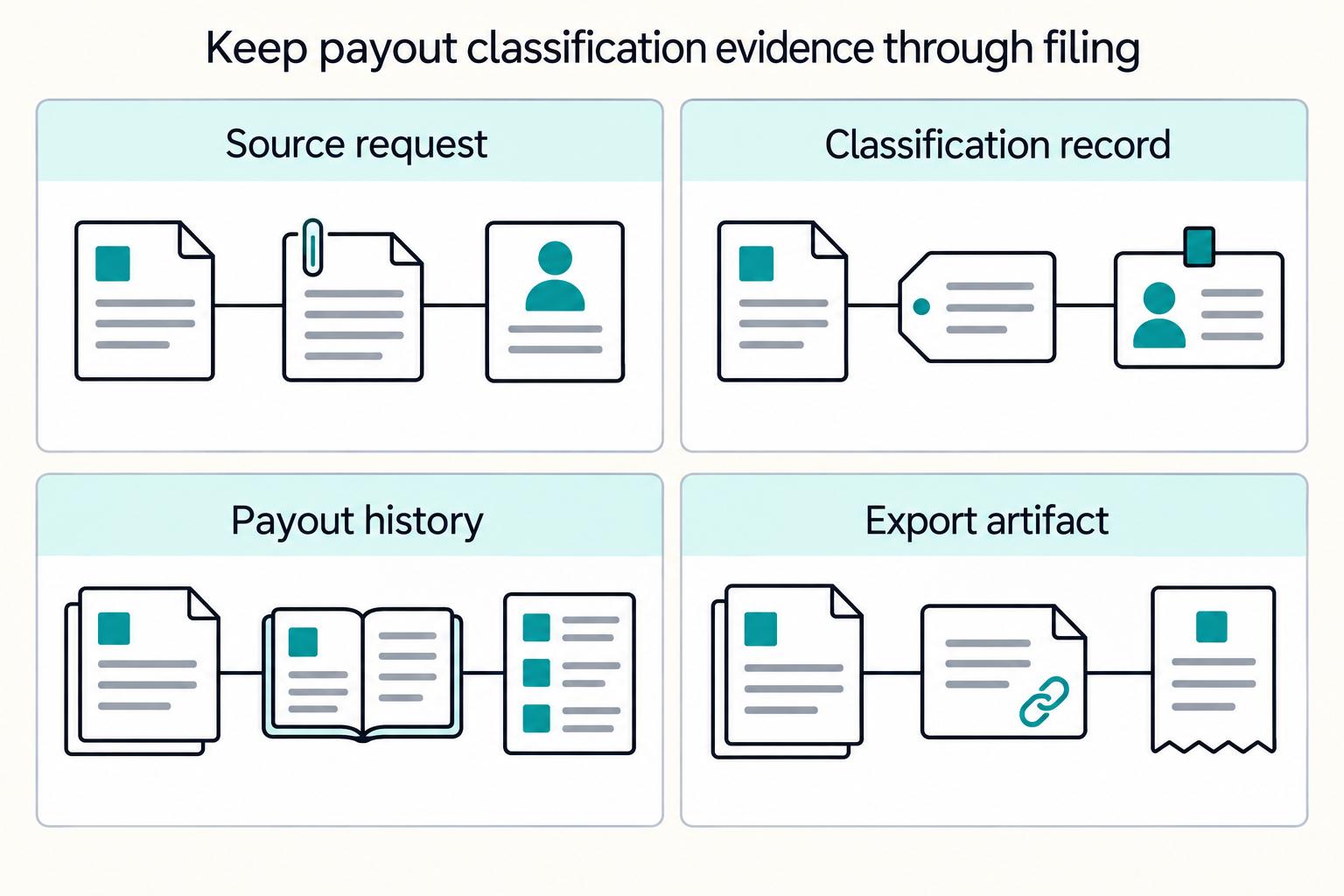
Music Royalty Tax Compliance: How Platforms Handle 1099-MISC vs. 1099-NEC for Artist Payments
This is an operating-model decision, not a year-end form choice. A team can ship quickly and still end up with misclassified payouts, correction cycles, and filing risk if the classification logic is weak. If you run creator payouts, you need the classification rule before your first batch, not after your first correction cycle.
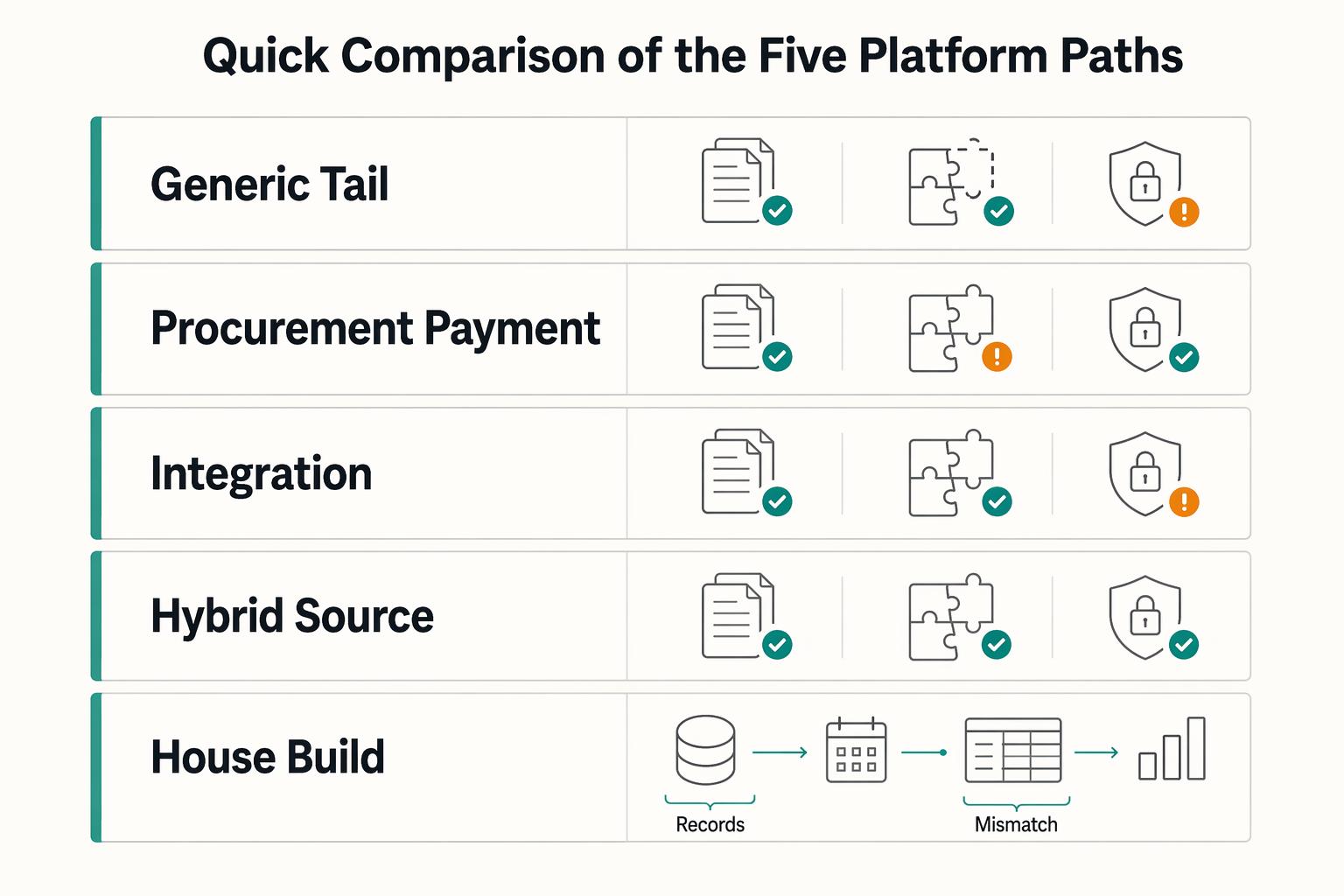
Choosing a Tail-End Spend Management Platform for Long-Tail Contractor Payments
Tail-end spend management can start to break down when long-tail contractor payouts begin to scale. Tools built for low-value, low-visibility procurement can tighten approvals and policy. They are not automatically built for payout-state tracking, retry safety, payout failures, or reconciliation evidence. That gap is the real decision here.