
Quick Answer
Choose the model by where attribution breaks today. For a virtual iban for platforms setup, use named identifiers when pooled inflows keep creating unmatched cash, and treat provider speed claims like 1 to 3 business days as secondary. Before go-live, lock a webhook-to-ledger mapping table, assign KYC/KYB/AML owners across legal, ops, finance, and engineering, and verify that statement/report limits such as 16-character IDs still preserve traceability.
Virtual IBANs for platforms in plain terms#
A virtual IBAN model gives each seller or customer a unique Virtual IBAN (vIBAN) while routing funds into one underlying Master account or pooled structure. The practical value is straightforward: clearer attribution and cleaner reconciliation without opening a separate bank account for every user. This section is for finance, ops, and engineering teams that need operating decisions, not vendor claims.
- A vIBAN is a unique reference, not a standalone bank account.
A standard IBAN usually points to a standalone account for one legal entity. A vIBAN is a unique account reference linked to an underlying safeguarding or settlement account at a licensed institution. In pooled setups, multiple vIBANs can route to one master account, with segregation handled in your ledger, so confirm that mapping and segregation model early.
- The main gain is better attribution in a centralized collection setup.
Platforms use vIBANs to identify incoming payments at customer, merchant, or transaction level while still collecting into a shared underlying account. That can improve automatic matching and reduce manual reconciliation work. It will not remove every exception, but it can cut down ambiguous deposits that create finance and customer friction.
- The real decision is your operating model, not the account format.
Some providers cite setup in 1 to 3 business days when documentation is complete, but launch speed is only one part of the decision. The bigger choice is how account structure, ledger flows, exception handling, and compliance ownership are defined for your program and market. Provider selection can materially affect both cost and operational efficiency, so pressure-test ownership and day-to-day processes before you go live.
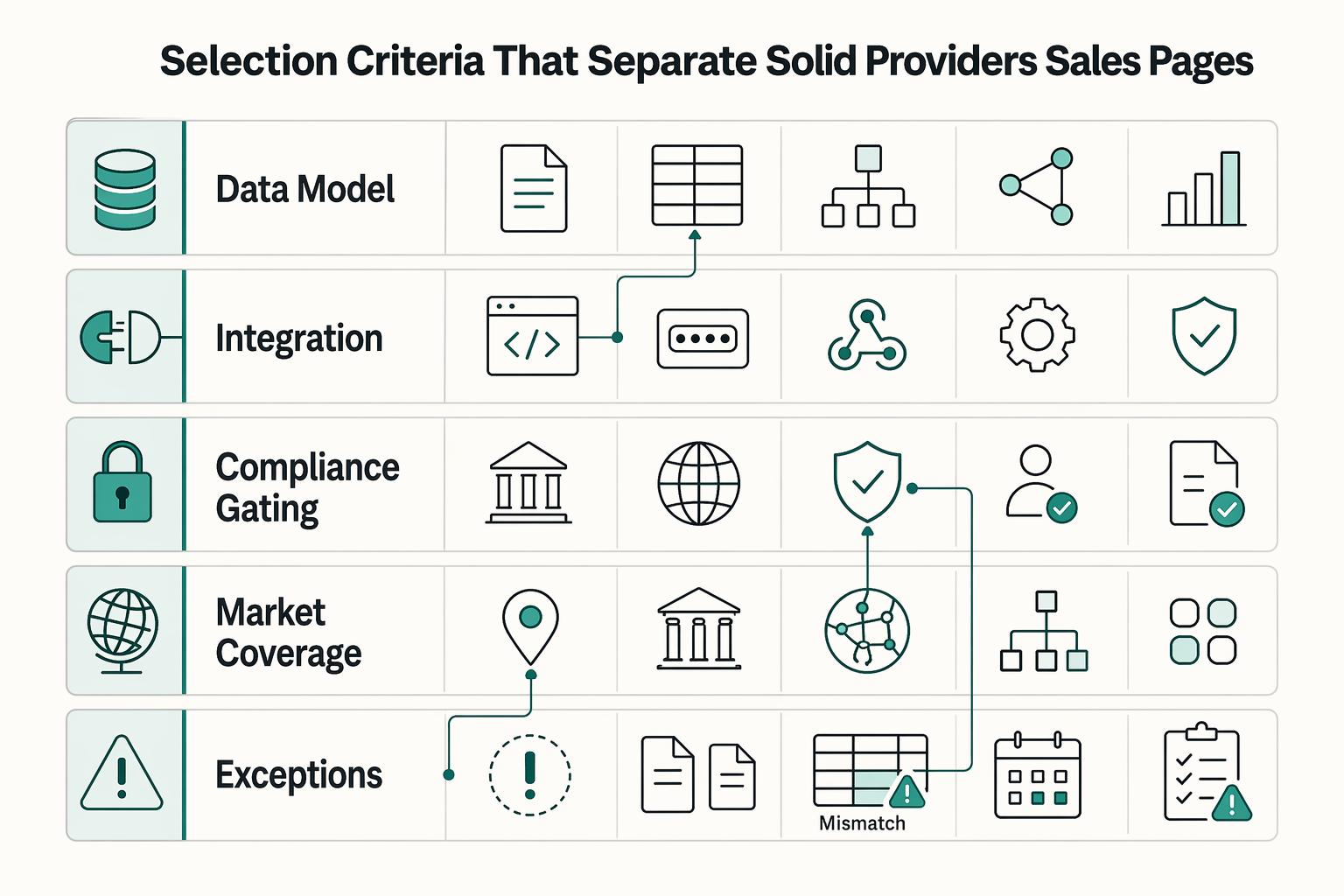
Selection criteria that separate solid providers from sales pages#
If you are dealing with recurring bank-transfer inflows and reconciliation friction, evaluate providers on operating evidence, not demos. If your flow is mostly card checkout, prioritize criteria that match your current operating needs.
- Data model clarity (including named virtual IBANs, if relevant)
Start with the data model. A practical diligence check is whether capabilities appear across product and functional feature groups, not just on a feature list. Confirm how account mapping appears in API responses, operational views, and the exports your finance team actually uses.
- Integration behavior you can run on
Treat event handling as a core risk check. In many BaaS implementations, there are two integration layers: your company to the platform, then platform to the bank. Ask for clear integration and event-handling documentation, including failure-flow detail.
- Compliance gating with explicit ownership
In 2025, the pressure is to launch faster without losing control of compliance. Some BaaS models place compliance and core banking operations with the bank behind the platform brand, but ownership can still depend on setup. Require a written operating split for compliance responsibilities, and confirm what your team can see when payments are delayed or reviewed.
- Market coverage beyond headline maps
Pressure-test coverage claims with operating-model detail. Fragmentation in alternative-payments ecosystems can limit network effects, and cooperation between AS-PSPs and e-AP providers is one route to broader reach. Ask where the provider is direct versus partner-dependent, and how operational handoffs are handled.
- Exception tooling and diligence artifacts
Judge providers on exception handling, not happy-path flows. During diligence, ask for the operational artifacts they can share, such as event-handling docs and compliance posture documentation relevant to your program. If unmatched deposits are your current pain point, weight reconciliation visibility and exception workflows heavily in your evaluation.
Before you finalize provider scoring, use this as a technical checklist for event handling, reconciliation surfaces, and rollout constraints: Read the Gruv docs.
How virtual IBAN collection works once money starts moving#
Once money starts moving, the model is less about account labels and more about traceability. You need to know how each inbound payment is identified, where it lands, and how quickly your team can explain any exception.
- Payer sends to the IBAN
The payer uses the International Bank Account Number (IBAN) that your provider issued as a vIBAN. In a typical setup, clients can send national and cross-border payments to that vIBAN. You can run multiple vIBANs, including by currency, while still routing funds into one master account.
- Provider routes funds to your central account
The provider links the inbound transfer to the assigned vIBAN and automatically forwards the payment to your main account. Centralizing this flow gives finance one place to review incoming activity and reconcile.
- Reconciliation is reference-driven
Tie each inbound payment to a consistent reference and the vIBAN assignment so unmatched cash is easier to resolve. If you use an end-to-end payment ID, remember that some statements and reports populate only the first 16 characters, so keep IDs structured for downstream traceability.
Related: What Is an IBAN Number? How Platforms Use IBANs to Send Error-Free European Payouts.
Comparison table for the main setup choices platforms make#
Choose based on attribution depth and exception handling ownership, not just account structure. The table below keeps the main tradeoffs side by side.
| Setup choice | Best for | Operational burden | Compliance steps (KYC/KYB/AML) | Common failure modes | Escalation ownership | Buyer-side verification before signing |
|---|---|---|---|---|---|---|
| Pooled-only collection (one pooled/master account, attribution handled mainly in the internal ledger) | Teams prioritizing a simpler account structure | Less account assignment work, but reconciliation can become more manual when attribution data is incomplete | Confirm where onboarding, monitoring, and exception reviews sit | Attribution gaps across shared inflows when payment data is incomplete | Define internal vs provider escalation paths for routing and settlement anomalies | Request reconciliation samples and inbound webhook logs; validate consistent processing and predictable settlement behavior |
| Pooled + Named virtual IBANs (multiple named vIBANs linked to one underlying account) | Platforms that need cleaner client/merchant/use-case attribution without opening one bank account per user | Requires identifier assignment and mapping governance over time | Confirm how identifier issuance and ongoing monitoring align with KYC/KYB/AML controls | Mapping mismatches between vIBAN identifiers and customer records | Define the ownership split across ops, engineering, and provider before launch | Request sandbox plus API/webhook coverage for account, payout, and reconciliation events, and evidence that inbound events preserve vIBAN-to-customer attribution |
| Hybrid virtual accounts + payout rails (inbound attribution connected to outbound payouts) | Multi-sided flows where teams need receipt-to-payout visibility | Coordination load across inbound attribution, ledger posting, payout prep, and exceptions | Confirm inbound and payout control checkpoints and KYC/KYB/AML steps | Unclear linkage between collection attribution and payout records if integration is incomplete | Shared ownership across finance, ops, engineering, and provider | Ask for end-to-end webhook payloads (collection + payout) and evidence showing how collected funds map into payout records or batch-level reporting |
The tradeoff is straightforward. Pooled-only keeps the structure simpler, but clean attribution depends more on attribution data quality and ledger discipline. Named vIBAN models improve client/merchant/use-case attribution without opening one bank account per user, but require identifier and mapping governance. Hybrid setups can extend attribution into payouts, but the coordination surface is wider.
For a step-by-step walkthrough, see Merchant of Record for Platforms and the Ownership Decisions That Matter.
The best virtual IBAN operating models for platforms#
The practical choice is where attribution should live and who should own exceptions. Named identifiers per counterparty can be a stronger model when unmatched deposits are recurring. Pooled references can still work for simpler rollouts, and collection-plus-payout orchestration is useful when you need end-to-end traceability.
| Model | Best fit | Operational note | Key checkpoint |
|---|---|---|---|
| One vIBAN per seller | Marketplaces with frequent seller deposits and recurring reconciliation effort on shared inflows | Assign a dedicated identifier per seller without opening one bank account per seller | Check whether inbound reporting consistently preserves seller-to-vIBAN mapping across the payment lifecycle |
| One vIBAN per enterprise client | B2B platforms where billing and approvals are managed at account level | Providers can issue identifiers per client, region, or currency while settling to one underlying treasury or master account | Confirm how identifiers are added, frozen, or replaced, and how exceptions are reviewed when payers use outdated instructions |
| Regional pooled collection with virtual references | Early expansion with low-to-medium deposit complexity | Can reduce rollout overhead and match coverage to your current operating geography | Validate that reconciliation outputs clearly separate matched, unmatched, and resolved items |
| Collection plus payout orchestration | Flows that need to trace money from inbound collection into downstream payouts | Needs clean ledger separation between operational funds and client money before payout preparation | Start from one inbound payment, confirm its mapping and ledger posting, then verify how that balance is included in or excluded from payout batches |
1. One vIBAN per seller#
This can fit marketplaces with frequent seller deposits and recurring reconciliation effort on shared inflows. A vIBAN is a reference linked to a master account, not a separate bank account. That lets you assign a dedicated identifier per seller without opening one bank account per seller.
The main benefit is cleaner attribution. Incoming transfers can be auto-matched to a specific customer or transaction, and named virtual IBANs can carry end-customer identity for clearer audit trails. If sellers are paid by many buyers or references are inconsistent, this model can reduce manual allocation pressure.
The tradeoff is lifecycle discipline. You need reliable processes for assignment, status changes, and mapping maintenance so exception handling stays manageable.
Before launch, check whether inbound reporting consistently preserves seller-to-vIBAN mapping across the payment lifecycle. If that mapping is inconsistent in reporting, investigations can stay manual.
2. One vIBAN per enterprise client#
For B2B platforms, one identifier per enterprise client can be a strong model when billing and approvals are managed at account level. It can give finance clearer client-level controls for collections and review.
It also supports more structured commercial setups. Providers can issue identifiers per client, region, or currency while settling to one underlying treasury or master account. That can give clients clearer remittance instructions without requiring separate operational bank accounts for each case.
Configuration timelines vary. Some providers cite setup timelines around 1 to 3 business days with proper documentation, but real timelines depend on onboarding and approvals. Treat client identifier setup as part of onboarding, not as a last-minute payment task.
A useful checkpoint is simple: confirm how identifiers are added, frozen, or replaced, and how exceptions are reviewed when payers use outdated instructions.
3. Regional pooled collection with virtual references#
For early expansion with low-to-medium deposit complexity, regional pooled collection can be a fast way to go live. It can reduce rollout overhead and lets you match coverage to your current operating geography instead of building for expansion plans too early.
The tradeoff is attribution risk in reconciliation. When references are missing or inconsistent, shared inflows can be harder to attribute cleanly. Pooled structures can also create more friction during regulatory examinations for platforms handling client money.
Use this model when exception volume is still manageable. Validate that reconciliation outputs clearly separate matched, unmatched, and resolved items so the exceptions stay workable.
4. Collection plus payout orchestration#
This model fits when you need to trace money from inbound collection into downstream payouts. vIBAN infrastructure can support attribution on both incoming and outgoing payments at client, merchant, or transaction level, which improves payout-level traceability.
The tradeoff is a wider control surface across compliance and operations. The key design requirement is clean ledger separation between operational funds and client money before payout preparation.
Your practical test is end-to-end traceability. Start from one inbound payment, confirm its mapping and ledger posting, then verify how that balance is included in or excluded from payout batches. If inbound attribution is strong but payout linkage is weak, you create a second reconciliation problem.
If payout-level traceability is not a current requirement, keep the scope narrower. If you already move funds onward to many recipients, building this model earlier can be cleaner than retrofitting it later.
Compliance ownership map before you go live#
If ownership is unclear, pause launch. The biggest risk is not a missing control. It is finding out too late that legal, ops, and your provider each assumed someone else owned execution and evidence.
1. Separate provider controls from your policy ownership#
Treat provider controls as one layer, not a full outsourcing of your obligations. A provider may handle parts of regulated processing, and one example says payments are categorized for local compliance and require KYC plus currency selection before network access. That still does not answer who in your program executes customer verification and AML decisions.
Define evidence ownership explicitly: who verifies each customer, who monitors and risk-scores transactions, who reviews alerts, and who can explain a case later. If the answer is only "it is in the provider portal," you are not audit-ready.
2. Put the jurisdiction caveat in writing#
Coverage does not mean control consistency. A provider can offer broad currency and country reach while onboarding, monitoring, and recordkeeping duties still vary by market and program.
Before go-live, create a market-by-market matrix for each corridor. Record:
- Who performs customer verification
- What AML monitoring is in scope
- What documents are collected
- Where records are stored
- Who handles regulator or banking queries
Working payment rails are not proof that legal and regulatory ownership is complete. Your launch documentation should explicitly cover the legal and regulatory aspects of the program and the risks around them.
3. Add adjacent checks that often fall through the gap#
Decide before launch whether tax or reporting checkpoints elsewhere in your broader stack apply to this flow (for example, VAT validation or W-8/W-9/1099 processes). Set the timing now: onboarding, pre-payout, or a separate tax-ops step.
Do not assume these controls are bundled with a vIBAN program unless your contract and implementation docs say so. Keep one shared evidence pack with the document list, validation result, collection date, and escalation owner.
4. Force named owners and escalation paths#
Use one written ownership table across legal, ops, finance, and provider contacts. For each control area, record the decision owner, execution owner, evidence location, and escalation path.
Real-time status tracking and reconciliation reports help, but they do not replace exception ownership. If ownership is ambiguous between legal and ops, pause launch until the owners and escalation steps are written and approved.
Engineering and finance integration checkpoints that prevent rework#
The key checkpoint is simple. Engineering and finance need one shared money-state model before launch. Without it, you risk losing the reconciliation advantage that vIBAN collection is meant to provide.
| Checkpoint | What to define or test | Go-live check |
|---|---|---|
| Shared event contract | Map each inbound state change to one ledger event and one reconciliation status | Traceability from provider event data to ledger entry to reconciliation report without manual interpretation |
| Idempotency at ingest and posting layers | Define duplicate-handling at both event ingest and ledger posting | Treat exact idempotency mechanics as implementation-specific and document them explicitly |
| Environment tests for real failure paths | Run environment-level tests for delayed or replayed provider events, duplicate delivery for the same reference, and compliance-review states used in your operating model | Confirm that state transitions stay consistent across ledger and reconciliation views |
| Launch readiness pack | Include API field mappings, reconciliation report format and status-label definitions, exception ownership and escalation contacts, and test evidence for documented failure paths and compliance checkpoints | If finance cannot explain key payment-state handling, launch is not ready |
In a Master account model, many vIBANs can route funds into one main account while still preserving identifiers for attribution. In practice, your internal event, ledger, and reconciliation definitions need to stay aligned.
1. Shared event contract#
Lock this down early. If your provider exposes inbound Webhooks or equivalent status events, require one written contract before dashboards or reports are built. Each inbound state change should map to:
- one ledger event
- one reconciliation status
Use a table, not slides: provider event, provider reference, internal payment object, ledger action, reconciliation label, and exception owner. The go-live check is traceability from provider event data to ledger entry to reconciliation report without manual interpretation.
2. Idempotency at ingest and posting layers#
Define duplicate-handling at both layers, because protecting only the webhook consumer may still leave downstream duplicate-posting risk:
- event ingest
- ledger posting
This matters even more when balances are derived from a master-account structure with many vIBAN inputs. Exact idempotency mechanics should be treated as implementation-specific and documented explicitly.
3. Environment tests for real failure paths#
Test real failure paths before launch, not just happy-path receipts. At minimum, run environment-level tests for:
- delayed or replayed provider events (if applicable)
- duplicate delivery for the same reference (if applicable)
- compliance-review states used in your operating model
Automatic routing to the main account does not remove timing and state-change risk inside your system. Your checks should confirm that state transitions stay consistent across ledger and reconciliation views.
4. Launch readiness pack#
Make one handoff artifact mandatory across legal, finance, ops, and engineering. At minimum, it should include:
- API field mappings between provider objects and internal payment records
- reconciliation report format and status-label definitions
- exception ownership and escalation contacts
- test evidence for the documented failure paths and compliance checkpoints
An early documentation pack can reduce pre-screening back-and-forth. One onboarding perspective estimates up to 70% of typical questions when documentation and due diligence are prepared early. If finance cannot explain key payment-state handling, launch is not ready.
Failure modes competitors skip and how to handle them#
Your exception model has to work before you scale. Treat unmatched deposits, holds, returns, and timing drift as control-sensitive states, and make sure exception handling stays reviewable as complexity grows.
That posture is justified. In its 2022 assessment of payment institutions, published 16 June 2023, the EBA treated the sector as high inherent ML/TF risk. It also examined whether AML/CFT systems and controls were adequate and effective. In practice, that means your handling of exceptions should be reviewable, explainable, and difficult to bypass.
1. Unmatched deposits#
Handle unmatched inbound payments through a documented investigations path rather than ad hoc decisions. Keep the relevant payment records tied to the case so reviewers can reconstruct why each decision was made.
A practical control check is whether a reviewer can trace each item from inbound record to final disposition without guesswork. If that trace breaks, control effectiveness is harder to demonstrate.
2. Returns and AML holds#
If your process uses different exception outcomes, document how each outcome is classified and reviewed within your AML/CFT control framework.
Keep definitions and decision records clear in operations and reporting so teams can explain outcomes consistently. Collapsing different outcomes into a generic failure label can reduce control visibility.
3. Settlement timing drift#
Track expected versus actual posting behavior, not only explicit failure messages. Investigate unexplained delays or missing updates as part of regular control monitoring.
This helps keep "nothing happened" from becoming invisible operational debt. Consistent monitoring makes timing issues easier to surface and review.
4. Exception volume outruns capacity#
Treat sustained exception backlogs as a control-risk signal. When review capacity is persistently exceeded, reassess workflows, staffing, and controls to maintain effective AML/CFT oversight.
The goal is to keep controls adequate and effective as operational complexity grows in a high-risk sector.
Related reading: How to use Paddle to handle sales tax and VAT for a SaaS product sold globally.
Total cost of ownership for virtual IBAN collection#
The lowest transfer fee is not always the lowest total cost for virtual IBAN collection. Price this as a full operating model, not just a per-payment quote. Use four cost buckets in one review window:
| Cost bucket | What to review | Section note |
|---|---|---|
| Account and transfer fees | Model fixed and variable fees together, and validate rails by currency | Examples only: £19 monthly or £49 p/m and ~0.35%-0.6%; confirm local rails or SWIFT with correspondent fees |
| FX and treasury overhead | Include FX pricing and the operational work to monitor balances and time conversions when collection, safeguarding, and payouts sit in different currencies | A lower collection fee can still lose if treasury has to do repeated manual conversions to keep payout batches running |
| Exception operations | Compare lower per-transfer pricing against ops effort when unmatched items and returns still require heavy investigation | Include the downstream impact on payout batches when items stay unresolved |
| Engineering and compliance maintenance | Include integration rework, compliance exposure, architecture limits, and compliance review load | Account structure choices can change regulatory obligations and client-fund protection responsibilities |
- Account and transfer fees
Start with visible charges, but model fixed and variable fees together. Providers may combine plan fees, for example £19 monthly or £49 p/m, with percentage transfer pricing, for example ~0.35%-0.6%. These are examples, not market standards.
Validate rails by currency, not generic "multi-currency" claims. Confirm whether each corridor uses local rails or goes through SWIFT with correspondent fees, because that can change collection economics quickly.
- FX and treasury overhead
A vIBAN is a reference layer tied to a master account, so treasury cost starts after funds land. If collection, safeguarding, and payouts sit in different currencies, cost includes both FX pricing and the operational work to monitor balances and time conversions.
"Transparent FX rates" only matter if rate application is clear in practice. A lower collection fee can still end up costing more if treasury has to do repeated manual conversions to keep payout batches running.
- Exception operations
Client-level attribution can reduce manual reconciliation work and errors, but only when mapping quality and exception handling are strong. If unmatched items and returns still require heavy investigation, lower unit pricing can be offset by higher ops effort.
Compare scenarios directly: a lower per-transfer price can still cost more if it creates more suspense items and manual touches. Include the downstream impact on payout batches when items stay unresolved.
- Engineering and compliance maintenance
A poor provider choice can drive integration rework, compliance exposure, and architecture limits. Account structure choices, including pooled setup versus named client accounts, can change regulatory obligations and client-fund protection responsibilities, so compliance review load belongs in TCO.
Before signing, request evidence for how operational edge cases and auditability are handled in practice. If screening or policy work is presented as auditable in one call, test it against your own cases instead of assuming vendor benchmarks will match your outcomes.
Track these regularly: reconciliation cycle time, unmatched rate, payout delay impact, and manual touch count per payment. That shows whether you are actually removing work or just shifting it from fee lines into operations.
Launch checklist and day two controls#
Go live only when you can trace each inbound payment from the assigned vIBAN to the final ledger outcome in the master-account flow.
- Go-live controls
Validate inbound payment handling in your environment so each payment can be matched to the right vIBAN identifier and reconciliation record. Confirm your mapping by client, region, or currency before first live traffic, because attribution depends on preserving that identifier through posting. Document how compliance exceptions are escalated so operations can separate risk-driven actions from other exceptions.
- Day-two operating cadence
Adopt a repeatable exception and reconciliation cadence. One documented control pattern uses two tracks: a short-cycle run and a deeper monthly review. If your volume is rising, a 3-day reconciliation rhythm alongside the monthly deep dive can surface attribution issues before they accumulate.
- Audit evidence that stands up later
Keep a consistent audit trail for each inbound flow from vIBAN identifier through reconciliation to posted outcome. This matters because funds routed through vIBANs land in a linked master account while remaining source-identifiable, and that traceability supports defensible reconciliation. Capture evidence when decisions happen, not after incidents.
A practical red flag is scaling complex sub-account structures before these controls are stable. As structures become more layered, AML and regulatory exposure can increase, so tighten escalation ownership first, then expand rollout scope.
Choose the model that matches your risk and operating reality#
Choose the structure that reduces reconciliation risk and compliance strain in your operating model, not the one that demos fastest. In practice, that means three things:
-
Prioritize attribution and reconciliation clarity. If unmatched or misattributed deposits are costly for your team, a pooled-only setup can be weaker than per-customer account provisioning with isolated balances and clear reconciliation. Ask providers to show operating evidence and a clear exception path for payment issues. If you collect across many markets, for example 15 countries, test whether routing inflows through one USD account adds FX loss, correspondent fees, or settlement delays.
-
Score embedded fit and compliance load, not speed claims. Validate that the model supports API-based, high-throughput, programmatic operations for a platform context, rather than manual portal workflows designed for direct users. Treat launch-speed messaging such as "under six weeks" as a claim to verify during diligence, not a planning fact. Also weigh the operational cost of traditional local-account expansion, which can involve entity setup, local compliance overhead, and months of approvals, with legal fees often cited around $5,000-$25,000 per jurisdiction.
-
Run two gates before rollout. First, complete a scored provider comparison based on your real operating requirements. Second, run a cross-functional launch-readiness review with finance, ops, engineering, and compliance owners, and walk one payment end to end, including an exception scenario, to confirm traceability from assigned account details to final ledger outcome.
For any platform vIBAN decision, optimize for reconciliation clarity and compliance reality before headline speed. Use sales conversations to confirm exact market coverage, supported controls, and available evidence artifacts, then consider launching one corridor first to prove posting, exception handling, and auditability before expanding.
If you want to validate market coverage, compliance boundaries, and rollout sequencing for your specific corridors, talk to Gruv.
Frequently Asked Questions
What is a virtual IBAN for a platform, and how is it different from a standard IBAN?
A virtual IBAN (vIBAN) is a unique account number linked to a real bank account. For platforms, it is typically assigned by a provider and linked to a master account, so incoming funds route to that central account while staying identifiable by source. A standard IBAN is the International Bank Account Number used to make and receive international transfers. As a format check, IBANs can contain up to 34 alphanumeric characters and include 2 check digits.
When should we assign one vIBAN per seller or customer instead of using a pooled structure?
Consider assigning one vIBAN per seller or customer when source-level attribution is a priority for reconciliation. A pooled structure may still work, but it provides less built-in source separation than dedicated identifiers. Before deciding, confirm whether accounts are issued in the client’s name or your platform’s name, because naming structure can affect licence-scope risk.
What happens when a deposit arrives with missing or wrong reference data?
There is no single universal outcome across providers or setups, so treat this as a process-design checkpoint before launch. In practice, vIBAN-level source identification can help investigate unmatched deposits. Your team should define how exceptions are reviewed and evidenced so posting decisions remain auditable.
Who owns compliance checks in practice between the provider and our platform team?
Do not assume a fixed compliance split between provider and platform; confirm responsibilities in writing before go-live. Provider capabilities do not remove your need for clear internal owners for execution, escalation, and audit evidence. If control ownership is unclear, resolve that before launch.
What should finance, ops, and engineering validate before launching in a new market?
Start with rails by currency, account naming structure, and reconciliation traceability. Do not rely on generic multi-currency claims alone. Verify the exact rails and corridors you need, then confirm inbound-to-ledger mapping, exception handling, and evidence capture.
Can virtual IBANs work without changing our payout architecture?
It depends on provider and implementation. If collections route into an existing master-account flow, fewer payout-side changes may be needed, but this is not automatic. Validate end-to-end traceability from inbound payment to final ledger outcome before assuming your payout architecture can stay unchanged.
Which metrics tell us the setup is actually reducing reconciliation risk?
Track whether inbound payments are being matched and posted correctly with fewer exceptions over time. Practical signals include unmatched volume, manual handling load, and exception resolution speed. The key test is not only collection volume, but consistent traceability from the assigned vIBAN to the correct ledger result.
Try a related tool
Where Gruv fits
Researched and edited by the Gruv editorial team. Gruv builds cross-border billing, payouts, and finance-operations software for global businesses.
Sources
Includes 5 external sources outside the trusted-domain allowlist.
- eba.europa.eu/sites/default/files/document_library/Publica...trusted
- abe-eba.eu/wp-content/uploads/2025/07/opinion-paper-on-...external
- fiatrepublic.com/blog/what-is-a-virtual-iban-a-complete-guideexternal
- finextra.com/blogposting/30580/top-virtual-iban-providers...external
- sdk.finance/blog/top-virtual-iban-providers-a-structured...external
- thepaymentsassociation.org/article/navigating-aml-obligations-in-the-ag...external
Educational content only. Not legal, tax, or financial advice.
Related Posts
Virtual IBANs for Platforms: How to Give Every Seller Their Own Dedicated Bank Account Number
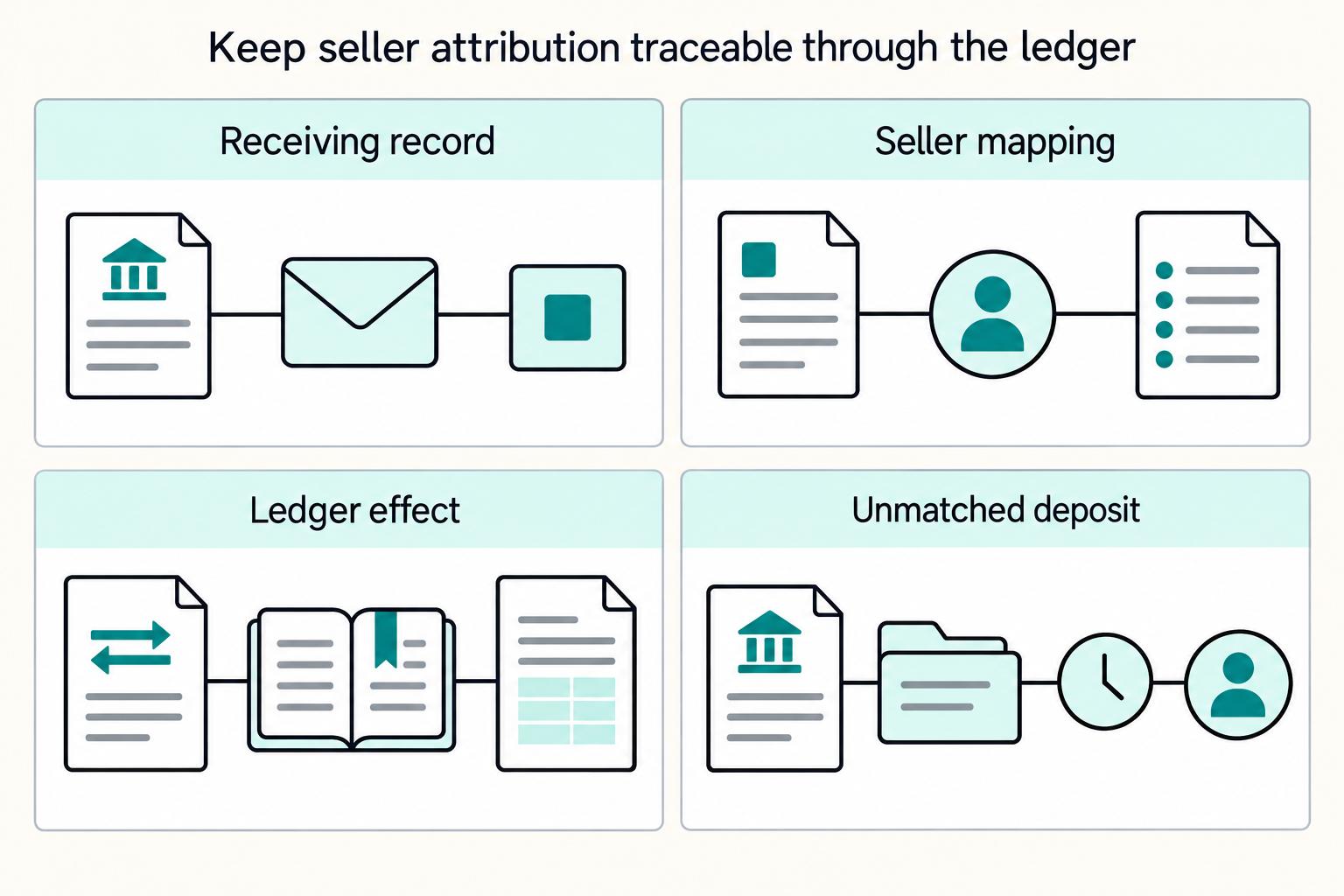
If you want to give each seller their own receiving bank details without opening a separate traditional account per seller, start by treating this as an account-mapping and controls decision, not just a UI feature. In common setups, a virtual IBAN looks like a standard IBAN but points to an underlying master payment account rather than a standalone account.
What Is an IBAN Number? How Platforms Use IBANs to Send Error-Free European Payouts
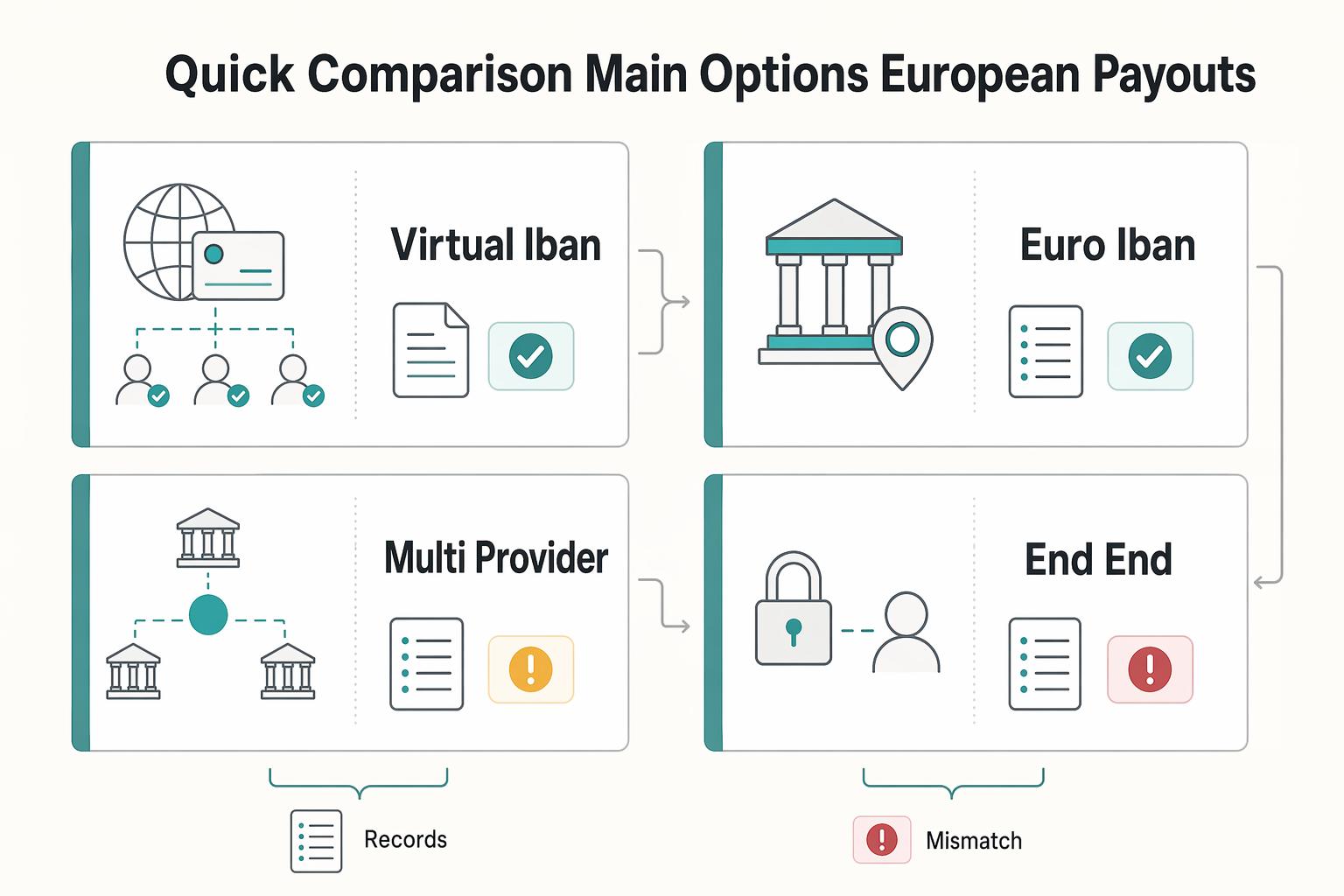
If you are evaluating **iban number platforms european payouts**, skip the glossary. The real decision is which payout setup will keep money moving, exceptions visible, and reconciliation manageable as volume grows. This guide is for platform founders, finance ops leads, and engineering owners who need to ship reliable European payouts, not for readers looking for a basic banking explainer.
How Platforms Use Virtual Accounts to Reconcile Incoming Payments Per Client
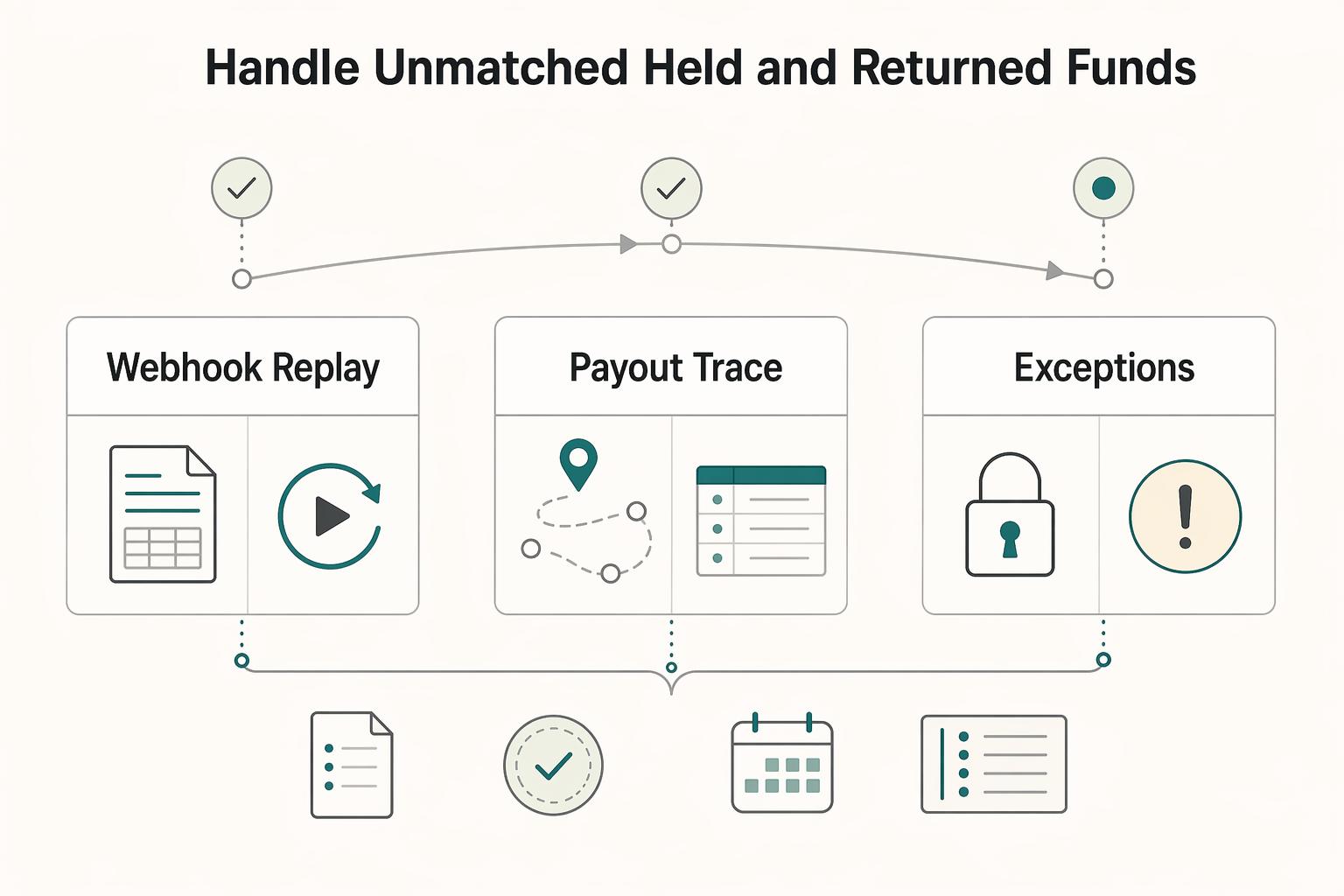
Virtual accounts can remove a lot of manual matching, but only if you design reconciliation into the product instead of treating it as cleanup after integration.