

Quick Answer
Start by choosing the operating path per market, then budget three buckets: setup, recurring operations, and event-driven remediation. The article keeps countries provisional until ownership and evidence are clear for core checks and for tax-document workflows such as W-8, W-9, and 1099 when in scope. Legal entity, EOR, MoR, hybrid, and pilot options are treated as control-boundary decisions, with mandatory escalation when exceptions repeat or interpretation is uncertain.
Per-country compliance cost planning starts with the operating model, and that choice needs to happen early#
Per-country compliance cost planning starts with the operating model, and that choice needs to happen early. Use this guide if you are a compliance, legal, finance, or risk owner making country launch decisions before go-live. It helps you test assumptions before they turn into delays, rework, or avoidable spend.
- Start with the country decision, not a global benchmark
"Global expansion cost" is too broad to approve a launch. From day one, split each country into at least two cost buckets: initial entity or launch setup, and ongoing annual tax and compliance costs.
- Use this when choosing entity, EOR, MoR, or a hybrid model
The scope is cross-border payout operations across multiple markets. Model choice can change both the cost shape and the control boundary. Obligations are not uniform across jurisdictions, so local validation is still required. Setting up a local entity may require careful planning in markets such as Brazil or China.
- Expect decision rules and escalation points, not legal advice or universal fee tables
You will get a practical decision structure, checklist prompts, and escalation triggers for go or no-go calls. You will not get a universal per-country fee schedule or a substitute for local legal or tax advice, because cross-border tax compliance depends on meeting obligations across multiple jurisdictions.
- Treat uncertainty as a budget line, not a footnote
Payroll, tax, and compliance requirements vary by jurisdiction and should be validated locally before launch. Recurring payroll, HR, and compliance obligations can also differ significantly by country and raise ongoing operating cost.
You might also find this useful: Gruv Platform Payments for Global B2B Payouts and Compliance.
Who this list is for and how to choose#
Use this list if your team approves country launches and needs a repeatable pre-launch review for compliance, tax, and operating readiness. It is designed for country decisions, not for producing one blended benchmark across unlike markets.
- Use it when launch approval needs evidence, not assumptions
It is built for compliance, legal, finance, and risk owners making go or no-go calls by country. Before you approve a country, make sure the country file has clear ownership, a legal-framework review, and core setup artifacts such as company details, invoice display address, tax address, and VAT or Tax ID fields where applicable.
- Decide country by country, not benchmark first
Obligations stay local, even when some providers operate across more than 200 countries and territories. Coverage scale does not make requirements uniform, and compliance mistakes can still lead to fines, delays, or reputational harm.
- Apply three selection criteria in every market
Evaluate required control, recurring compliance burden, and speed to launch. Faster entry may favor an Employer of Record because it can reduce immediate local-entity setup pressure. But comparison pricing points like $599, $699, or $850 per employee per month are directional, not approval-grade.
- Use exposure to choose control depth
If exposure is persistent and material, favor durable in-country control. If exposure is limited or uncertain, start with a lower-commitment model and tighter monitoring, then set escalation checkpoints early when evidence is missing or exceptions repeat.
For a step-by-step walkthrough, see How to Build a Global Accounts Payable Strategy for a Multi-Country Platform.
Compare the operating models before choosing a country path#
Decide the operating model as a control choice first, then as a speed or procurement choice. If ownership of checks, records, and handoffs is unclear at launch, hidden costs usually follow.
Treat entity setup versus EOR as the first path decision, and apply the same control discipline to other options, including MoR, hybrid, and pilot paths. Name control owners, define evidence retention, and document handoffs before approval.
| Model | Best for | Required controls | Likely hidden costs | Escalation risk | Exit complexity |
|---|---|---|---|---|---|
| Legal entity | Teams that want direct in-country operating control | Document who owns identity, tax, and sanctions checks, plus evidence retention and export | Setup plus ongoing tax and compliance support; rework if verification is fragmented | Escalates when identity, tax, and sanctions checks are split across teams | Can be document-heavy, so define exit and record-transfer steps early |
| Employer of Record (EOR) | Faster entry when employment setup is the immediate blocker | Contract should state what the provider handles versus what your team still owns, including evidence access | Tax, compliance, setup, and transition costs can still be underestimated | Escalates when teams assume scope is broader than contracted | Requires transfer planning for people, process, and records |
| Merchant of Record (MoR) | Teams evaluating a provider-led transaction model in selected markets | Define scope boundaries in contract and workflow, and confirm evidence access and retention | Compliance, setup, and evidence-access work can still be underestimated | Escalates when commercial scope appears complete but verification evidence is fragmented | Depends on data portability, record access, and handover terms |
| Hybrid split model | Mixed-risk portfolios where one model would overbuild some countries and under-control others | Maintain a country ownership matrix and one retained evidence trail for identity, tax, and sanctions checks | Governance overhead, inconsistent decisions, and slower onboarding if controls are fragmented | Escalates when escalation triggers are undefined or repeated gaps persist across review cycles | Flexible only if responsibilities and records stay centralized and traceable |
| Limited cross-border pilot | Testing demand with a small team before long-term commitment | Time-box scope; require a documented verification workflow, clear go or no-go criteria, and evidence retention from day one | Remediation costs when early controls are informal, plus later setup/compliance redesign | Escalates when a pilot drifts into production without control upgrades | Simpler when scope stays limited and records remain complete |
Use one practical checkpoint before launch: trace a single counterparty file end to end. You should be able to see identity, tax, and sanctions checks together and retrieve stored evidence without reconstructing it across scattered systems.
The common failure mode is fragmentation. When verification lives across email, spreadsheets, provider dashboards, and local teams, onboarding slows, decisions become inconsistent, and sanctions-screening failures can lead to payment disruption or audit failure. The fastest path can look attractive under launch pressure, but if you cannot name owners, produce the evidence pack, and explain handoffs, the model is not ready.
For a deeper dive, see Local Bank Transfer Networks by Country: A Platform Operator's Global Payout Rail Map.
If MoR is one of your candidate paths, confirm market coverage and control boundaries early with Gruv Merchant of Record.
Option 1 local legal entity#
If direct in-country control is non-negotiable, a local legal entity is often the right path. It is also a high-investment, slower-to-implement option.
When this option is justified#
Choose this path when you need to own the local operating posture rather than contract around it. In practice, that means taking direct responsibility for in-country obligations, including local tax withholdings and filings.
Do not treat this as a global default. The decision should stay country- and context-specific, based on your goals, available resources, activities, and timeline. If demand is still uncertain or entry timing is tight, an entity-first move can front-load cost and delay before the market is proven.
What you gain#
The main benefit is direct control and clearer internal accountability. A local entity can give you clearer ownership over local policy design and compliance operations.
A useful checkpoint is explicit ownership of local tax withholdings and filings. If you cannot name the owner and accountability path, you do not yet have the control benefit this model is meant to deliver.
What makes it expensive#
The tradeoff is not just setup. It is the ongoing burden. Local entities require significant investment and longer timelines, with reported annual expenses ranging from thousands to millions of dollars once tax, payroll, and administration are included.
The common failure mode is timing. Extended setup can delay revenue and reduce strategic flexibility, especially when commercial launch pressure is high.
Concrete use case and approval test#
This model fits teams that need direct, long-term in-country control and are prepared for the associated investment and timeline.
Before you approve it, require a short evidence pack. It should include local activity scope, timeline expectations, available resources, and a named owner for tax withholdings and filings. If that pack is incomplete, or speed matters more than direct ownership, use a bridge solution such as EOR while the entity is being established.
For more detail, see Gig Worker Tax Compliance at Scale: How Platforms Handle 1099s W-8s and DAC7 for 50000+ Contractors.
Option 2 Employer of Record EOR#
Use an Employer of Record when your main blocker is compliant local hiring speed, not full in-country merchant or payment control. It can be a strong bridge for market entry, but it should not blur ownership of KYC, KYB, AML, tax reporting, or regulator-facing payment questions.
An EOR is the in-country legal employer for workers hired on your behalf. In practice, scope commonly includes onboarding, payroll, benefits, and time-off administration. That can reduce direct employment setup burden before building your own local employing entity.
Where EOR earns its keep#
EOR is most useful when you need an in-market team quickly while country demand is still being proven. It can absorb the employment layer while you keep tighter internal control over the rest of the operating model.
Regulatory change is also a practical pressure point. One cited study reports 63% of HR decision-makers find cross-jurisdiction regulatory change difficult to track. If employment compliance is the launch bottleneck, this is a problem EOR can help handle.
What it solves and what it does not#
EOR solves employment-law and hiring-operations burden. Do not assume it also covers transaction monitoring, payout-side KYC, KYB, AML, or finance reporting interfaces unless your contract says so explicitly.
This is where teams get exposed. The HR layer may be covered, but payment compliance ownership can still be undefined. Apply the same caution to merchant and indirect-tax exposure. If transaction-level tax handling or merchant obligations are the main risk, evaluate MoR or an entity-first path instead.
Pricing and hidden-cost checks#
EOR commercial models usually fall into three structures:
| Pricing model | How it works | What to verify |
|---|---|---|
| Flat fee | Fixed monthly fee per employee | Which country services are included versus billed separately |
| Percentage of payroll | Fee scales with payroll value | Whether bonuses, allowances, and employer costs are in the base |
| Hybrid | Mix of fixed and payroll-based fees | Which components are fixed, which scale, and how changes are approved |
Typical cited pricing is $299 to $800 per employee per month, with benefits and visa support adding about 15 to 20% to base cost. The visible monthly fee is often not the full cost. Setup fees, deposits, currency markups, and termination penalties are common sources of budget surprises.
Approval test before you sign#
Before you sign, require this short evidence pack:
- Confirm exact EOR scope: legal employer status, onboarding, payroll, benefits, and time-off administration.
- Lock commercial terms in writing: monthly fee, setup fees, FX treatment, deposits, and termination terms.
- Name internal owners for KYC, KYB, AML, payment reporting, and tax-document handling outside EOR scope.
- Set a trigger to revisit model choice if merchant, VAT, or payment-control issues keep surfacing.
If workforce compliance is the blocker, EOR can be a fast option. If transaction-layer obligations are the blocker, it may be the wrong primary tool.
We covered this in detail in Build a Global Contractor Payment Compliance Calendar for Monthly, Quarterly, and Annual Obligations.
Option 3 Merchant of Record MoR#
Use a Merchant of Record when your main bottleneck is fragmented transaction tax and checkout compliance across countries, not full local licensing or payout compliance ownership. If risk is concentrated in local licensing, payout-side KYC, KYB, AML, or ongoing risk monitoring, MoR is partial coverage, not a complete answer.
A MoR is the business entity legally responsible for the sale transaction. In this model, the MoR is the seller of record. It can take on tax handling for the sale, including calculation, collection, and remittance, plus checkout-layer compliance where supported. That can reduce immediate pressure to open local entities or register foreign VAT IDs in additional markets at launch.
Where MoR earns its keep#
MoR is especially useful when transaction-tax handling is the launch blocker across multiple countries.
One cited market view says 150 countries now require VAT or GST registration for digital services, up from 38 in 2015. The exact count can vary by business model, but the direction is clear: tax scope has expanded quickly. MoR can also simplify finance operations. One source describes the benefit as moving from many jurisdiction returns to one consolidated invoice.
The real upside and the real tradeoff#
If the MoR program includes local acquiring, payment performance can improve in some markets. One cited source reports a 10 to 15 percentage-point local versus cross-border authorization gap on average. In parts of LATAM and the Middle East, the gap is reported as closer to 20 points. Treat that as market evidence to validate, not a guaranteed uplift.
The tradeoff is control and visibility. Because the MoR is seller of record, its name can appear on card statements, which can shift dispute, refund, and support workflows.
What to verify before approval#
| Area | What to verify |
|---|---|
| Exact scope | whether tax, fraud controls, payment processing, and sale-transaction regulatory duties are fully included or only partly covered |
| Internal ownership | owners for payout-side KYC, KYB, AML, seller controls, and regulator-facing obligations outside the sale transaction |
| Finance outputs | invoice, settlement, refund, chargeback, and reconciliation artifacts, including delivery cadence |
| Customer-facing behavior | statement descriptor behavior and escalation ownership for failed payments and disputes |
Decision rule#
Choose MoR when your bottleneck is country-by-country tax handling and checkout standardization, and you can operate with the provider as seller of record. If launch risk keeps coming back to local licensing sufficiency or direct ownership of transaction controls, an entity-led model may be the better fit.
This pairs well with our guide on Global VAT Compliance Map for Digital Services Platform Operators.
Option 4 hybrid by country tier#
A hybrid by-country-tier model can work when your portfolio has uneven compliance risk and one model would either overbuild controls or leave gaps. It is often suited to mixed-country portfolios where risk, evidence readiness, and regulatory change do not move at the same pace.
The advantage is flexibility. Evaluate total compliance cost, including advisory fees, internal resource time, penalty risk, and opportunity costs. Then use higher-control operating models in higher-exposure markets and managed models where risk is lower, with re-tiering as conditions change. The tradeoff is governance complexity, so this approach typically requires clear ownership boundaries, a shared control taxonomy, and defined escalation paths.
In practice, this can fit a phased rollout where higher-risk markets start with tighter controls while lower-volume markets begin with managed models and closer monitoring. Review unresolved compliance exceptions each cycle, confirm you still have real-time visibility into payment flows rather than annual-only snapshots, and test whether your stack can meet automated evidence expectations with ongoing monitoring.
If a country repeatedly misses your evidence or exception standards, move it to a higher-control operating model instead of extending temporary fixes.
Option 5 limited cross-border pilot before full entry#
Use a limited cross-border pilot when country uncertainty is still too high for a long-term model. The goal is to test whether you can run required cross-border data exchange in a timely, controlled way under a clear legal basis before you scale.
Why this option works#
A pilot lets you test operating assumptions before committing to a full-entry model. The key check is simple: can your team collect and exchange the minimum data needed for risk management, on time, within legal and regulatory boundaries? If not, scaling can increase later remediation work.
What to lock down before launch#
Treat the pilot as controlled from day one, not informal. Document the required data set, the purpose of each field, the collection method, the retention period, and which parties may receive the data. Keep the scope tied to legal mandate and data minimization rather than collecting extra fields just in case.
| Evidence item | Required detail |
|---|---|
| Approved pilot data set | owner and purpose |
| Advance electronic data proof | advance electronic data moves in a timely way between relevant parties |
| Exception log | failed data collection or handoff steps, with closure dates and named owners |
Where pilots usually fail#
The main tradeoff is a narrow operating envelope. Pilots can drift into quasi-production when retention rules, sharing permissions, or legal-scope limits are not stable before volume rises. That often leads to control rework before expansion.
Go or no-go rules#
Set exit criteria before launch. If required data expands beyond clear legal mandate, timely exchange repeatedly fails, or legal interpretation depends on unofficial text, pause and escalate to legal review. For U.S. rule checks, treat FederalRegister.gov XML as informational and verify against an official Federal Register edition before treating a requirement as settled.
Build the country cost stack that finance and compliance can both defend#
Treat country cost as a lifecycle stack, not a single launch number. No row gets approved without a named owner and an evidence source.
| Lifecycle | Minimum rows to include | Primary owner | Evidence source to attach |
|---|---|---|---|
| Setup | business licensing and operational permits (where applicable), VAT registration or assessment (where applicable), initial tax filing support, policy drafting for KYC/KYB/AML controls, payment-provider setup fees where relevant | Legal, Tax, Compliance, Treasury | counsel advice, provider pricing page, internal approval record, registration checklist |
| Recurring | VAT and tax filing operations (where applicable), KYC/KYB/AML operations, periodic license or permit renewals (where applicable), translation/notary/admin support, routine payment and FX review | Tax Ops, Compliance Ops, Finance | filing calendar, operating metrics, monthly invoices, fee schedules, policy-gate results |
| Event-driven | exception investigations, remediation reserve, re-filings, control redesign, access rollback, extra document handling for tax forms (for example W-8, W-9, 1099) when in scope | Compliance, Legal, Finance Controller | exception log, incident review, reserve memo, audit trail, document completeness report |
- Separate setup, recurring, and event-driven costs first
Setup is often easier to quote. Recurring and exception costs can drive variance later. Keep each lifecycle distinct so finance and compliance can challenge assumptions by row.
- Use non-negotiable rows in every country file
Default to including rows for business licensing, operational permits, VAT/tax filing support, KYC/KYB/AML operations, and a remediation reserve. If a row is not applicable, mark it as such with a reason and approver instead of leaving it blank.
- Make hidden-cost rows explicit
Include translation, notary, and admin overhead, exception investigations, and payment and FX leakage checks. For directional payment-cost evidence, retain provider rate artifacts. Wise shows a regulator-standardized fee view, a mid-market-rate position, fixed-fee-per-payment cases, sending fees shown from 0.57%, discount eligibility above 25,000 USD that resets on the first of the month, and Wise Business pricing that shows a set-up fee model with 31 USD and receiving account details in 24 currencies priced at 31 USD. Use these as checkpoints, not as total country compliance-cost benchmarks; they do not provide country-by-country licensing, VAT, tax-filing, or KYC/KYB/AML operating cost benchmarks.
- Add verification checkpoints per country
Track counsel sign-off status, policy-gate test results, and readiness for W-8, W-9, and 1099 handling when those forms are in scope. If any checkpoint is open, keep the stack marked provisional and keep the launch decision open. For a deeper pre-launch document pass, use the Cross-Border Compliance Checklist for Platform Payouts: Licenses Registrations and Reporting by Country.
Related: The Cost of Non-Compliance: What Gig Platforms Pay When They Get It Wrong.
Publish a monthly reporting checklist before every new country launch#
Treat the monthly reporting pack as a launch control, not an admin task. If the pack is incomplete or the evidence is missing, keep the country provisional.
- Lock the minimum monthly pack before launch approval
Define the baseline pack up front: control outcomes where those controls apply, the current exception log, filing-calendar status, and unresolved compliance risks. The point is early visibility, so open issues can be stopped, fixed, or scoped down before launch risk compounds. For each open item, require an owner, a due date, and supporting evidence. Without that, treat it as unresolved.
- Make tax operations visible enough to withstand verification
Tax administrations focus on the accuracy and completeness of reported information and increasingly use electronic checks, validations, and data matching. Your monthly pack should show tax validation outcomes, required tax-document completeness, and reconciliation exceptions that could affect filings or reporting quality. If validation fails, source documents are outdated or incomplete, or reconciliation breaks remain open at month-end, escalate review instead of carrying the issue forward.
- Set evidence standards reviewers can actually follow
For every approval, record who approved what, when, and which artifact they used. Keep artifacts practical and traceable, for example registration confirmations, control test results, filing calendar extracts, invoices, or document-completeness reports. Make the trail exportable so internal and external review does not depend on reconstructing decisions from chats and screenshots.
- Use launch-stage checkpoints and force corrective action on variance
Use a clear checkpoint cadence, for example pre-launch readiness, first-month variance review, and first-quarter control retrospective with corrective actions. At pre-launch, confirm the pack exists, owners are assigned, and, where payroll is in scope, registration requirements are confirmed before in-country payroll runs. In first-month and first-quarter reviews, convert repeated exceptions into explicit corrective actions and escalate early when patterns suggest engagement-model or worker-classification risk. For the full breakdown, read Employer Cost by Country Benchmark for Finance and Ops Teams.
Set escalation triggers early so the team does not improvise under pressure#
Escalation works best when triggers are defined before launch and used in day-to-day decisions, not only after the fact in reporting. Start formal review when regulatory interpretation is unclear or teams cannot apply one consistent control decision.
| Escalation path | When to trigger | What to define |
|---|---|---|
| Formal review | regulatory interpretation is unclear or teams cannot apply one consistent control decision | named owners, internal timelines, and required audit evidence |
| Control remediation | repeated compliance exceptions, missing evidence for required checks, missed attestations, outdated policies, and unverified vendor controls | named owners, internal timelines, and required audit evidence |
| Operating-model review | repeated obligations no longer fit the current workflow, especially when manual tracking creates blind spots | named owners, internal timelines, and required audit evidence |
Start control remediation when failure looks systemic. Common signals include repeated compliance exceptions, missing evidence for required checks, missed attestations, outdated policies, and unverified vendor controls.
Trigger an operating-model review when repeated obligations no longer fit the current workflow, especially when manual tracking creates blind spots. For each escalation path, define named owners, internal timelines, and required audit evidence so accountability and traceability are clear. Route higher-impact issues to appropriate specialists and executive risk sign-off based on the trigger itself, not ad hoc judgment under pressure.
Conclusion#
Choose your market-entry model by control requirements and country risk, not launch speed alone. A practical sequence is straightforward: pick the control model, build the cost stack around that choice, and define evidence and escalation before go-live.
- Match model choice to control needs
For each country, decide what must remain under your direct control if rules tighten. Cross-border operations are more complex than domestic-only operations, and what is acceptable in one jurisdiction can be restricted in another. If country reviews keep surfacing unresolved regulatory scope or recurring control exceptions, move toward a higher-control setup instead of treating speed as the main decision rule.
- Model lifecycle cost, not just launch cost
Build your cost stack across setup, recurring operations, and remediation, with an owner and evidence source for each line item. Directional evidence supports this lifecycle view: a World Bank study using firm-level data from 16 developing countries found that a 1% increase in investment to meet compliance requirements was associated with a 0.06% to 0.13% increase in variable production costs. That evidence is older and not a per-country platform benchmark, but it reinforces that compliance spend can continue after go-live.
- Define evidence and escalation before launch
Put a regular evidence pack in place before day one, including risk assessment status, compliance status, open exceptions, unresolved regulator-facing questions, and decision ownership. Pre-define escalation triggers for unresolved cross-jurisdiction interpretation, repeated missing evidence, compliance slippage, or signs that the current model no longer matches actual obligations. This week, run one target country through the checklist, document unknowns, and confirm where external legal or tax advice is mandatory using this Cross-Border Compliance Checklist for Platform Payouts: Licenses Registrations and Reporting by Country. When your checklist surfaces country-specific unknowns, align legal, tax, and ops owners in one implementation plan with Gruv docs.
Frequently Asked Questions
What does compliance cost per country include for a payout platform?
Compliance cost per country is broader than filing fees. In the sourced material, global expansion cost includes tax, compliance, relocation, and setup fees, and requirements can apply across national, state or province, and local layers. For planning, it can help to track one-time market-entry work separately from ongoing compliance operations for each country.
What is the difference between setup cost and recurring compliance cost?
A useful planning distinction is setup work to get operational in a new market versus recurring work to stay compliant after launch. In practice, teams often separate one-time setup tasks from ongoing HR, payroll, tax compliance, and benefits administration where those functions apply. This is a planning lens, not a universal global formula, because requirements vary by country and can change.
When should a platform choose a local legal entity instead of EOR or MoR?
If risk assessment keeps surfacing unresolved worker-classification risk or broader legal exposure, escalate for country-specific legal advice and reassess your operating model. Use the EOR path when you need faster market entry without setting up a local entity. Treat entity versus EOR versus MoR selection as a country-by-country legal decision.
What are the most common hidden costs teams miss in new-country launches?
A common hidden cost is the operating burden of manually tracking interrelated rules across countries. The sources describe that work as difficult, time-consuming, and risky, which can create remediation work, delays, or specialist-support costs that may not appear in the initial launch budget. Another common miss is assuming conditions stay stable when laws, currency conditions, and governments can change.
What is the minimum monthly reporting pack for cross-border compliance?
Do not assume there is a universal minimum monthly pack. If you define one internally, keep it compact and traceable with clear ownership of open compliance risks so material issues can be escalated quickly.
Which signals mean we must escalate to external legal or tax counsel now?
Escalate when you cannot determine which obligations apply, especially across more than one jurisdiction layer. Escalate when worker-classification risk or broader legal exposure remains unresolved. Escalate quickly when a material issue could create financial, legal, or reputational damage.
Try a related tool
Researched and edited by the Gruv editorial team. Gruv builds cross-border billing, payouts, and finance-operations software for global businesses.
Sources
- congress.gov/117/plaws/publ103/PLAW-117publ103.htmtrusted
- dni.gov/files/NCSC/documents/Regulations/Technical-S...trusted
- dol.gov/sites/dolgov/files/OASP/evaluation/pdf/First...trusted
- federalregister.gov/documents/2025/01/08/2024-31486/preventing-a...trusted
- oecd.org/en/publications/tax-administration-2025_cc01...trusted
- oecd.org/content/dam/oecd/en/publications/reports/202...trusted
- openknowledge.worldbank.org/entities/publication/39863815-71e5-5e1c-9f04...trusted
- pmc.ncbi.nlm.nih.gov/articles/PMC11851621trusted
Educational content only. Not legal, tax, or financial advice.
Related Posts
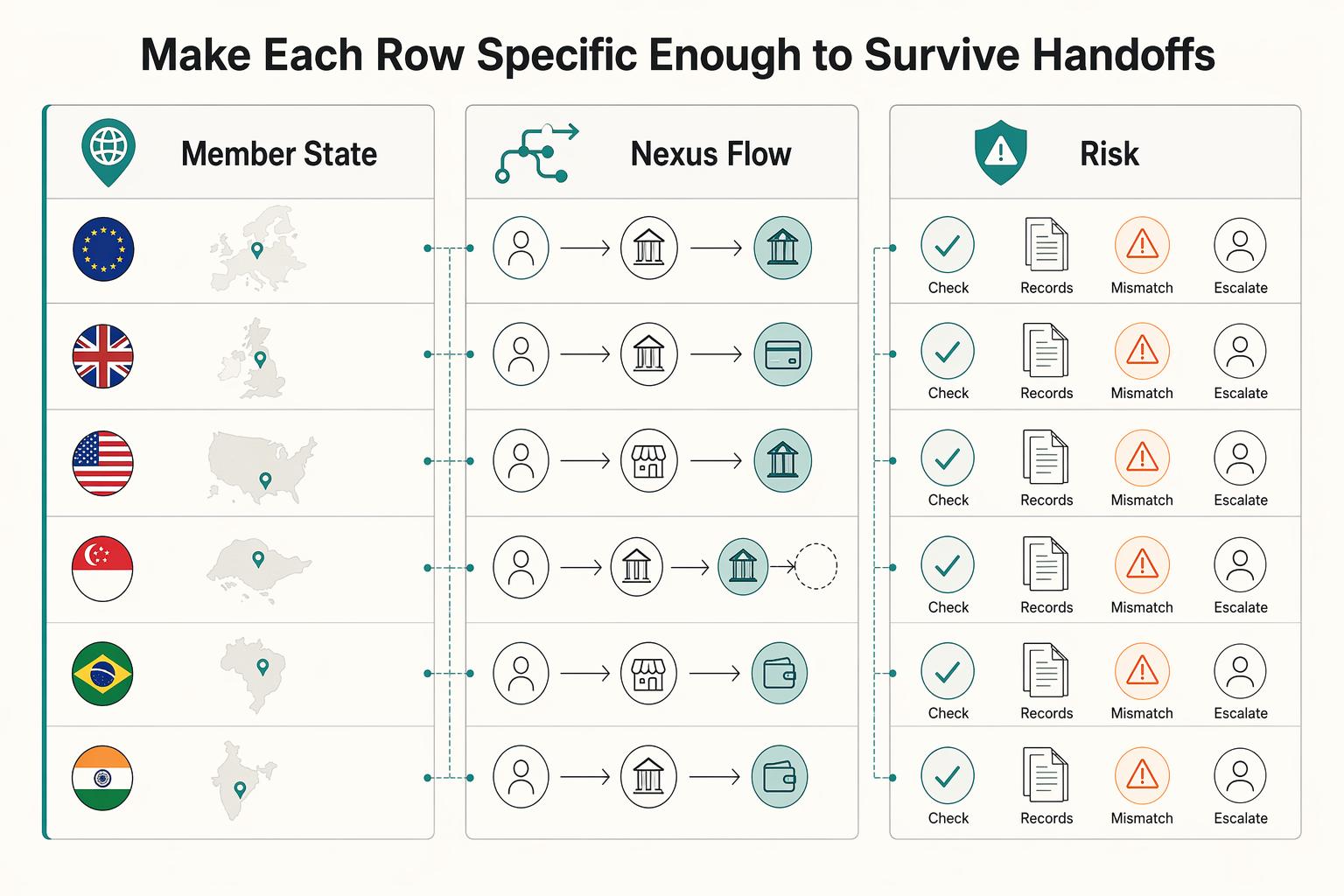
Country-by-Country Launch Rules for Platform Payout Compliance
Treat each new payout country as a go or no-go decision. It may be blocked by law, blocked by operations, or cleared only with conditions. This guide helps compliance, legal, finance, and risk teams make that call early, assign ownership, and keep an evidence trail that holds up later.
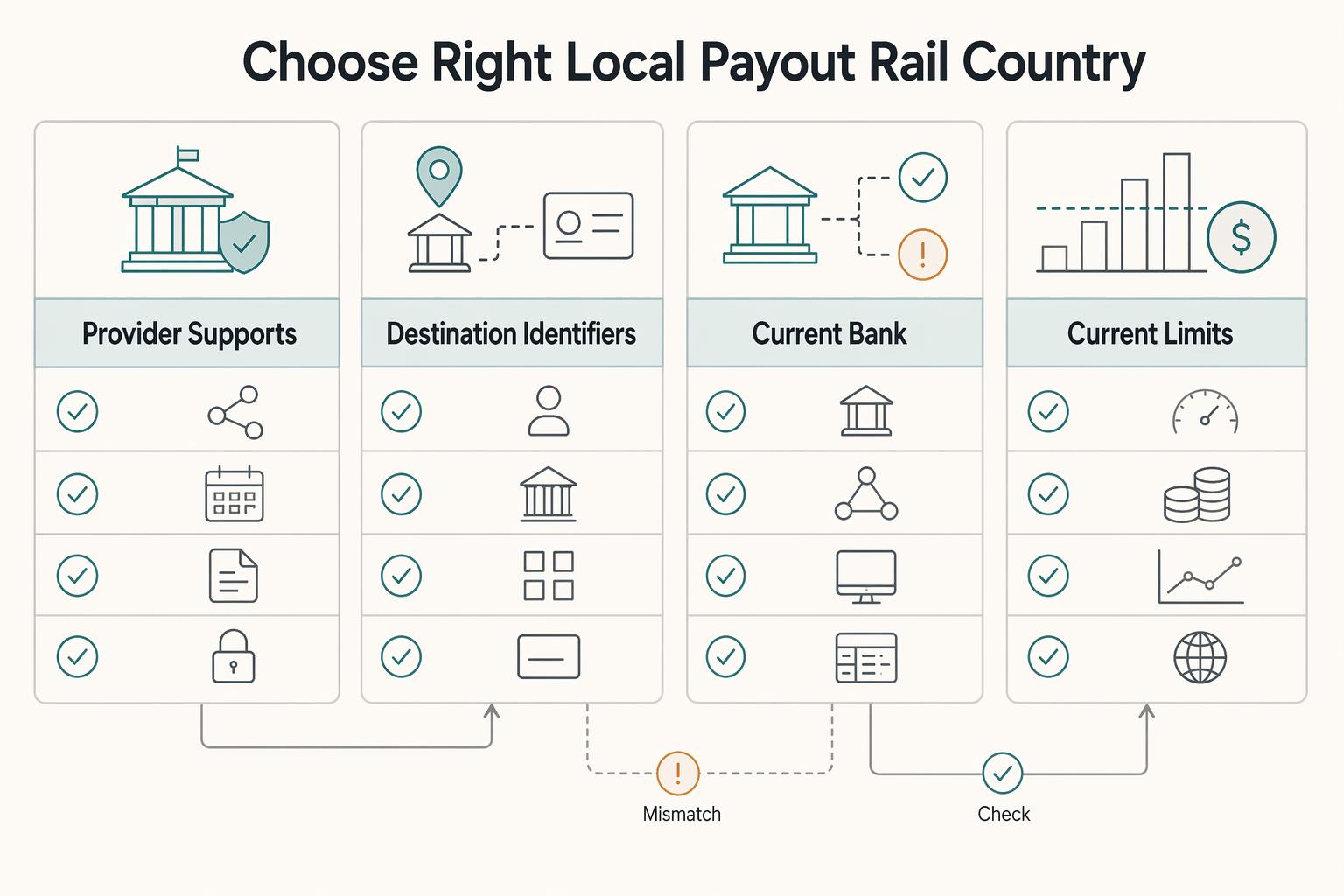
Choosing Local Bank Transfer Networks by Country for Platform Payouts
Treat this as a decision map for operators, not a glossary of payment acronyms. The goal is to help you choose a payout rail you can actually launch, support, reconcile, and defend when market or provider conditions shift.
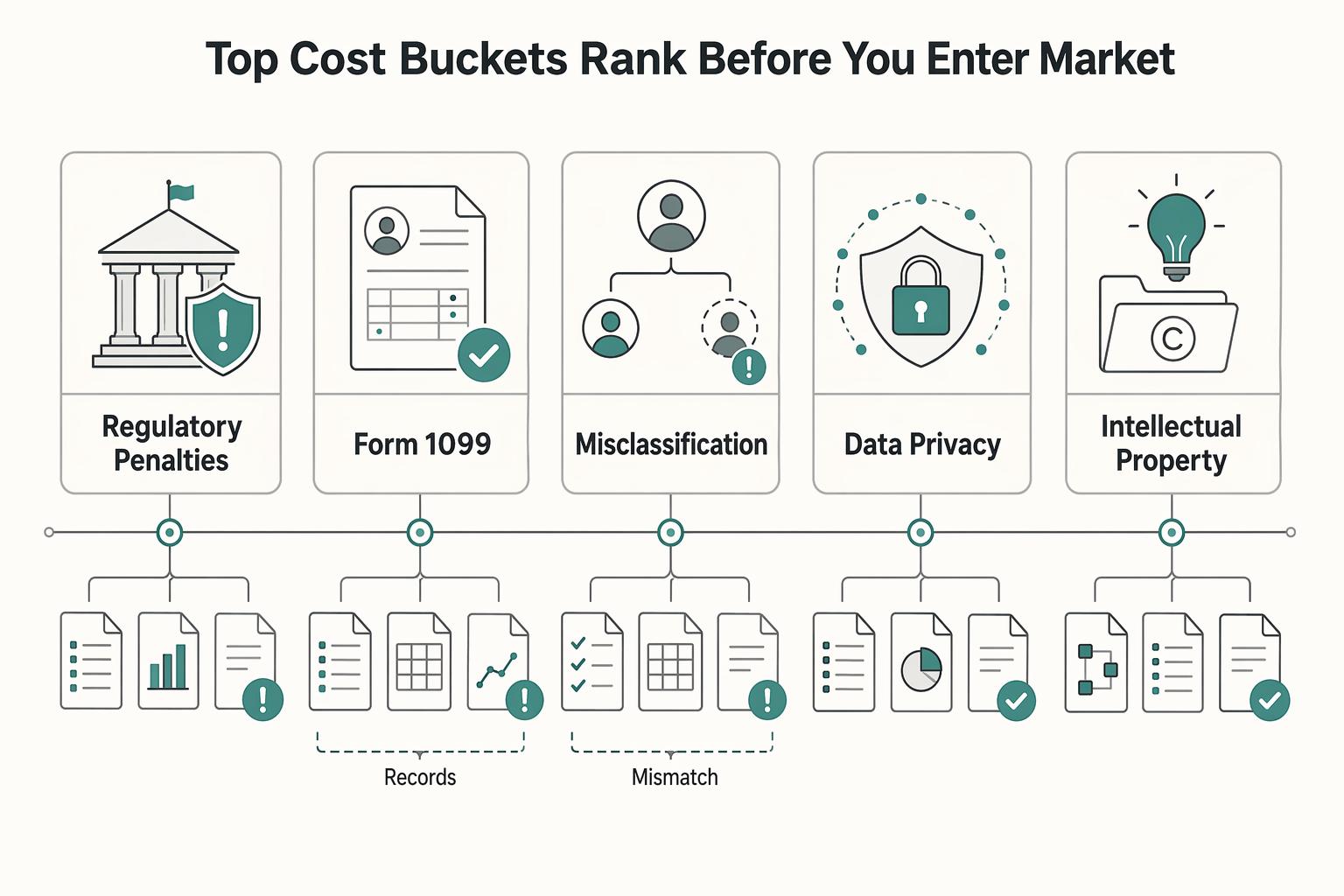
What Non-Compliance Costs Gig Platforms Before Market Expansion
The cost gig platforms absorb from non-compliance rarely sits neatly in a legal reserve on a spreadsheet. In expansion work, it often shows up first as operating drag. Launch plans can slow, operational flows may need exceptions or rewrites, and teams can lose confidence when compliance assumptions do not hold.