
Quick Answer
Start with a strict branch-and-sequence model: classify the payee path, apply deductions in a fixed order, and label numbers as estimate until checks clear. In contractor flows, keep self-employment obligations separate from platform-side charges, and do not infer withholding from W-8 or W-9 status alone. Move to final only after control states like KYC, KYB, or AML are satisfied and the result is posted with one balanced Ledger journal record.
What Platform Teams Need to Define Before Calculating Net Pay#
Treat this as a platform-side gross-to-net planning exercise, not personal budgeting advice. The goal is to make your payout logic understandable across product, finance, ops, and engineering, with clear ownership for each line item and clear labels for what is estimated versus final.
Before you start#
Step 1. Define the payout path before you touch the math. This guide is for teams handling contractor payouts. It is not personal tax advice for workers. A basic onboarding question such as "Will I receive a 1099 or a W-2?" should create an early branch in your process.
Step 2. Agree on who owns each deduction. Teams run into issues when contractor obligations, platform fees, and other deductions get mixed together. Separate those categories up front. For example, keep contractor-side items such as self-employment tax distinct from platform-side charges, and assign an owner for each line item.
Step 3. Promise the right output at the right stage. At quote time, treat the number as an estimate. Mark it as final only after the required checks in your payout flow are complete. If a number can still change because key data is missing or unresolved, label it as estimated and make the reason visible.
Step 4. Build this as a shared contract, not a tax spreadsheet. The deliverable is not just a formula. It is a shared contract between product, finance, ops, and engineering about what gets deducted, when it gets deducted, and how changes are tracked.
This pairs well with our guide on Choosing a Tail-End Spend Management Platform for Long-Tail Contractor Payments.
Lock Down Who Owns Each Deduction Before You Build#
Ownership comes first: if deduction code stands in for legal responsibility, your net number can look precise and still fail audit, support, or review.
Separate every deduction into three lanes#
Define three lanes before you write calculation logic: contractor obligations, platform-imposed fees, and statutory withholding your platform may need to apply under an approved rule set.
For independent-contractor scenarios, keep self-employment tax in the contractor-obligation lane. IRS materials describe self-employment tax as Social Security and Medicare taxes for people who work for themselves (including independent contractors), usually when net earnings from self-employment are $400 or more. They also state that, generally, 92.35% of net earnings is subject to self-employment tax, the Social Security base changes annually, and all net earnings are subject to Medicare tax.
Your minimum control is simple: each deduction line needs an owner, source document, effective date, and a label finance and support can read the same way.
Use a profile table to assign only what is safe now#
Use profile data to decide what you can assign now and what must wait for tax/legal signoff. Do not infer withholding triggers from W-8 or W-9 status alone.
| Payee profile signal at calculation time | What you can assign now | What still needs explicit review | Release rule |
|---|---|---|---|
W-9 on file | Keep contractor-obligation, platform-fee, and withholding lanes separate in logic and UI | Any withholding rule application and final liability mapping | Release only with approved rule version attached |
W-8 on file | Keep lanes separate; do not merge withholding into contractor-obligation lines | Whether withholding applies and which approved rule to run | Hold final execution until tax/legal approval is attached |
| Missing, expired, or conflicting tax profile data | No tax ownership assumption beyond your fee schedule | Correct form status, liability mapping, and withholding treatment | Block final payout; show estimate-only state |
Require three signoffs for rule changes#
Require three owners on every deduction-rule change: tax/legal for liability mapping, product for labels and estimate-vs-final behavior, and engineering for calculation logic, tests, and release gates.
Package each release with rule version, changed fields, effective date, tests, and rollback path. This keeps legal logic, product labels, and shipped math aligned.
If you want a deeper dive, read Bad Payouts Are Costing You Supply: How Payout Quality Drives Contractor Retention.
Prepare Inputs and Controls Before Running Any Net Pay Formula#
Run net pay calculations only on complete, current inputs; if key fields are missing or stale, return an estimate and avoid treating the result as executable.
Define the minimum input contract#
Define a clear input contract for each calculation request. In many platform payout flows, that minimum set includes:
| Input | Grounded note |
|---|---|
| gross amount | Listed as a common field in many platform payout flows |
| fee schedule or fee schedule version | A fee schedule without a version is not audit-friendly input |
| payee tax profile (for example, W-8 or W-9) | Listed as a common field in many platform payout flows |
| jurisdiction | A jurisdiction without normalized country or state data is not audit-friendly input |
| payout rail | Listed as a common field in many platform payout flows |
| settlement currency | Listed as a common field in many platform payout flows |
This is the minimum context that helps explain why a result changed. A fee schedule without a version, or a jurisdiction without normalized country or state data, is not audit-friendly input.
Query control state at calculation time#
Check control state when you calculate, not later. If your flow uses KYC, KYB, or AML gates, surface those statuses in the calculator so the result can be clearly labeled as estimate-only or payout-eligible.
Store evidence with each result: rule version, timestamp, actor or service account, and related Ledger journal reference ID when available. Project accounting (also called job cost accounting) tracks direct costs, overhead, and revenue at the project level; your payout record should be similarly traceable.
Make retries safe before you wire up the formula#
Make retries safe before final wiring. Use request fingerprints and Idempotency keys for calculation and payout initiation so retries stay deterministic.
Replay the same request twice and verify one stable result, one stable journal linkage, and no duplicate payout attempt.
Apply the Gross to Net Order That Holds Up in Audit#
An audit-safe gross-to-net flow is a controlled, versioned sequence, not a universal legal order. Define the sequence once, route each payee to the right branch first, and make every step reproducible in your Ledger journal.
| Step | Action | Checkpoint |
|---|---|---|
| Step 1 | Route the worker path before deduction math | inputs valid and rule selected |
| Step 2 | Apply your defined gross-to-net sequence consistently | amount balanced at each stage before continuing |
| Step 3 | Round, handle remainders, and post once | posting successful with one journal reference, one balanced entry set, and one net payable value |
Step 1: Route the worker path before deduction math Decide the branch before you touch gross. Use the contractor path for contractor records (W-8/W-9, fee schedule version, jurisdiction, payout rail), and hand employee-like cases to payroll logic that uses Form W-4, FICA, and Federal Income Tax Withholding inputs.
For classification authority, consult the primary regulatory source directly. The Federal Register entry for Employee or Independent Contractor Classification Under the Fair Labor Standards Act is dated 01/10/2024, and that page also states it is not the official legal edition and does not provide legal or judicial notice.
Checkpoint: inputs valid and rule selected.
Step 2: Apply your defined gross-to-net sequence consistently Run the same ordered stages every time for the selected branch: gross earnings -> platform fees -> pre-tax items (if applicable) -> statutory tax treatment for that branch -> payout/FX costs -> net payable. Record the rule versions and produced lines at each stage so you can replay the result exactly.
Checkpoint: amount balanced at each stage before continuing.
Step 3: Round, handle remainders, and post once Set one explicit rounding point and one remainder policy, then apply both consistently. Write the final entry set to the Ledger journal with gross, deduction lines, applicable withholding lines, payout/FX costs, any rounding adjustment, and final net payable. If you support multiple currencies, store source and settlement amounts in the same journal context.
Checkpoint: posting successful with one journal reference, one balanced entry set, and one net payable value.
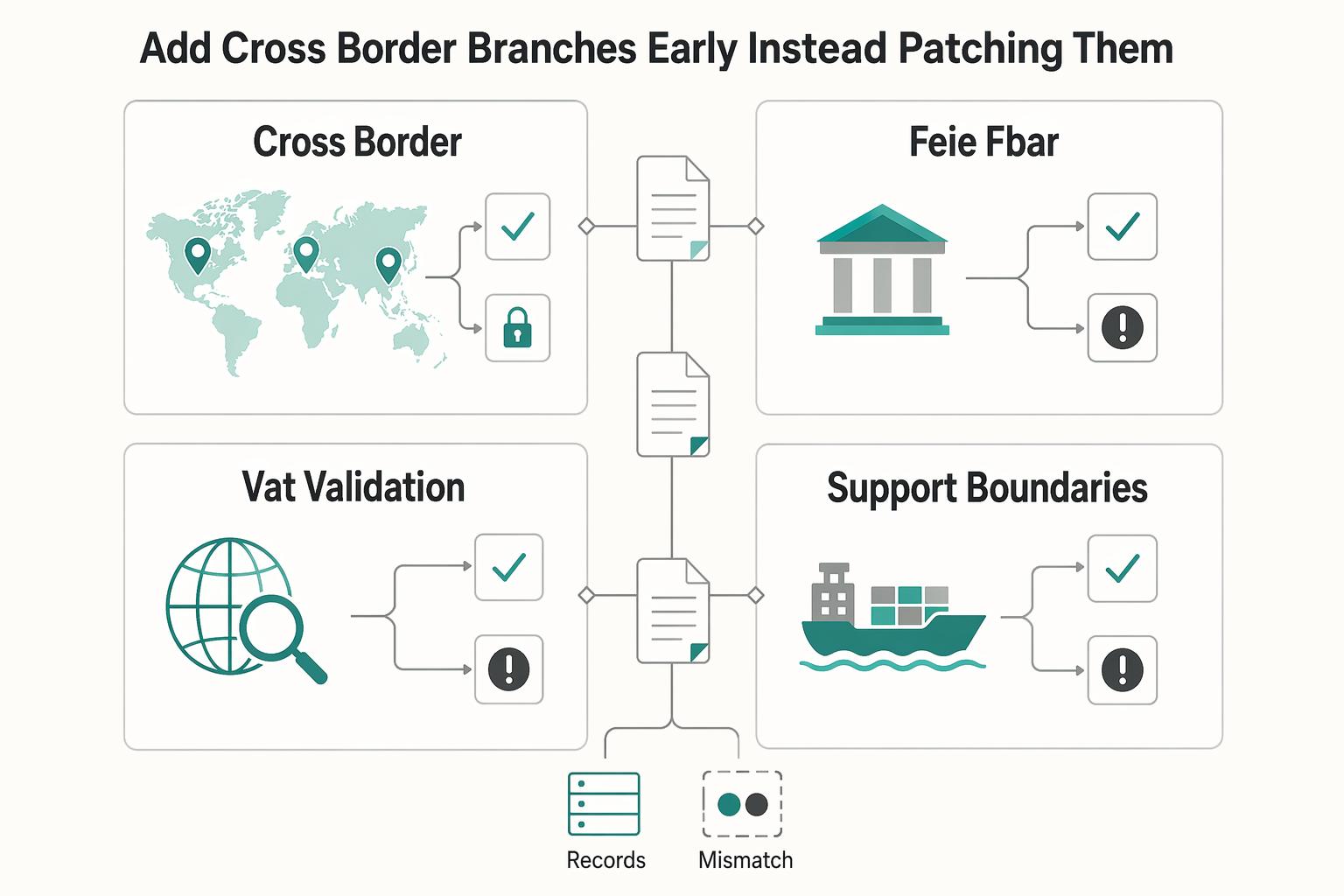
Add Cross Border Branches Early Instead of Patching Them Later#
Build cross-border branches before launch, or you will patch risk controls under pressure later. The practical goal is simple: keep tax facts, product coverage, and invoice treatment in separate rule paths so each payout is explainable.
| Topic | What the article says | Operational result |
|---|---|---|
| Cross-border rule branch | Branch cross-border logic before any withholding decision, using tax-form status and jurisdiction as required inputs | If the run cannot show the tax-form and jurisdiction inputs that drove the branch, fail it |
| FEIE and FBAR | Treat FEIE and FBAR as record and guidance inputs unless you have a supported rule that makes them practical in platform math | If a contractor raises FEIE, record the claimed basis and review it |
| VAT validation | Use VAT validation as a gate where your market or program flow depends on service classification or invoice treatment | If the route is VAT-sensitive and validation is missing, stop with a clear not-final status and reason code |
| Support boundaries | Make support boundaries explicit in both rules and UI so unsupported cross-border paths fail clearly | Use a clear "coverage varies by market or program" state instead of silent partial support |
Create a separate cross-border rule branch#
Branch cross-border logic before any withholding decision, using tax-form status and jurisdiction as required inputs. At minimum, persist the form type, country context, and rule version that determined whether Non-resident withholding is in scope. Do not rely on a generic "international" toggle while domestic defaults still run underneath.
Your checkpoint: every calculation should show which branch fired and why. If the run cannot show the tax-form and jurisdiction inputs that drove the branch, fail it. Keep deeper withholding logic in a dedicated rule pack, not scattered across fee or payout-rail config. For deeper implementation detail, use your non-resident withholding guide.
Treat FEIE and FBAR as informational until supported#
Treat FEIE and FBAR as record and guidance inputs unless you have a supported rule that makes them practical in platform math. The IRS says the Foreign Earned Income Exclusion applies only to a qualifying individual with foreign earned income who files a return reporting that income, so FEIE relevance does not automatically change a platform withholding line.
If a contractor raises FEIE, record the claimed basis and review it. For the physical presence path, the IRS test is 330 full days during any period of 12 consecutive months, and missing that threshold fails the test regardless of reason. Use that as a documentation and review control, not as ad hoc deduction logic.
Add VAT validation as a product gate#
Use VAT validation as a gate where your market or program flow depends on service classification or invoice treatment. The control is operational: require the needed identifiers, invoice fields, or validation result before producing a final payable amount.
Do not allow silent fallback. If the route is VAT-sensitive and validation is missing, stop with a clear not-final status and reason code.
Expose support boundaries in product logic and UI#
Make support boundaries explicit in both rules and UI so unsupported cross-border paths fail clearly instead of returning a number finance cannot defend. A clear "coverage varies by market or program" state is better than silent partial support.
Also keep authority standards clear in your rule sources. The cited IRS practice unit PDF states it is not an official pronouncement of law, so use it for internal research context only, not as binding production authority. For adjacent finance controls, see Accrued Expenses vs. Accounts Payable: How Platform Finance Teams Classify Contractor Liabilities.
Engineer for Async Reality in Payout Execution#
Treat payout execution as an asynchronous state machine, not a single paid flag. Keep calculation and fund movement separate so you can prevent duplicates, handle returns, and explain every balance change.
| Internal state | What it means | Typical trigger | Evidence to store |
|---|---|---|---|
| calculated | Net payable is frozen from a specific rule set | Calculation completed | rule version, inputs snapshot, amount hash |
| authorized | Internal checks/approvals passed | compliance or ops approval | actor, timestamp, approval result |
| submitted | Instruction sent to provider | API create call succeeds | request ID, Idempotency key, batch/item IDs |
| provider confirmed | Provider status update received | Webhook event or status poll | provider event ID, mapped external status |
| settled | Funds settled and reconciled | settlement report or final event | Ledger journal reference, reconciliation reference |
These are internal control states, not a provider standard. Providers expose different transfer lifecycle stages, so map external statuses into your own model explicitly.
Step 1. Define execution states before rail integration. A successful submit response confirms acceptance, not final settlement. Your operator view should always show current internal state, mapped provider status, and transition timestamp.
Step 2. Make Webhooks first-class and replay-safe. Process asynchronous provider events as core inputs, not side signals. Use Idempotency keys for mutation retries, and dedupe webhook events by provider event ID; if already processed, return success to stop retries. Keep a bounded repair path for undelivered or replayed events.
Step 3. Track Payout batches at batch and item level. Batch creation and item outcomes are different concerns. Persist batch IDs and item IDs separately so held or returned items can be retried and reconciled without reprocessing the entire run.
Step 4. Model Virtual Accounts as staged lifecycle events. Treat incoming funds as multi-step (for example, internal credited/held/returned mappings) until they reconcile to posted transactions. Route unmatched, held, or returned events to investigation with virtual account ID, payer reference, amount, and linked contractor or batch context.
Step 5. Reconcile every transition to the Ledger journal. Each state change should create or update journal lines with reconciliation references so related entries can be grouped and audited. If provider status says settled but journal movement is missing, keep it in reconciliation rather than marking it complete.
You might also find this useful: QuickBooks Online + Payout Platform Integration: How to Automate Contractor Payment Reconciliation.
Make the Breakdown Transparent to Contractors and Actionable for Ops#
Make the payout breakdown explicit in the contractor view and reusable in ops records, so the same numbers can be explained later without rework.
Build a line item schema that mirrors the actual calculation#
Show the full structure, not just a single "you will receive" amount.
| Line item | What to show |
|---|---|
| Gross | Starting amount before deductions |
| Deductions | Each deduction with its own label |
| Withheld amounts | Any amount currently withheld |
| Platform fees | Fee lines with clear names |
| FX impact | Conversion impact when currency conversion applies |
| Final net | Net payable after all visible line items |
Use stable, specific labels across UI, exports, support views, and internal records so payout explanations stay consistent.
Mark every amount as estimate or final#
Label each line as estimate or final, and include a short reason whenever it is still estimated. Keep the payout-level final state tied to your actual settlement and reconciliation condition, not just request submission.
Offer downloadable records that match tax and profile status#
Provide a downloadable payout record per payment and a period summary that aligns with your 1099 fields and the tax profile status on file (W-8 or W-9) at calculation time. Keep the record straightforward: payout ID, timestamp, currency, line items, and estimate/final markers.
Position calculators carefully#
If you offer a Gross Up Calculator, present it as an estimation tool and not as the settlement record. A simple note is enough: calculators support planning, while the payout record reflects what your platform actually processed. For UI examples, see How to Show Fee Transparency to Contractors: Building a Clear Payment Breakdown UI.
We covered related recovery workflows in Bank-Rejected Contractor Payout Recovery for Platform Teams.
Common Failure Modes and How to Recover Fast#
When a payout state looks wrong, recover through a controlled exception workflow, not a quick overwrite. The fastest stable path is clear ownership, preserved records, and a traceable correction path.
Freeze the exception into a case record#
Treat the issue as a formal case and hold changes until the before-state is captured. IRS IRM 11.3.41 gives a practical structure here through Roles and Responsibilities, Program Controls, and Inventory Management Requirements: define who owns the case, what evidence is required, and how it is tracked to closure.
Before any correction, confirm the case includes the original calculation context and the current visible state. If you cannot reconstruct the before-state, you will not be able to defend the after-state.
Compare the records before you change anything#
Do not start by editing the visible number or flipping status. First compare the original request, the calculated output, and any later external updates so you can identify which record actually needs correction.
A common recovery mistake is fixing what users see first and reconciling the underlying record later. That creates conflicting histories and slows final resolution.
Issue the correction as a new version#
Apply corrections as an explicit modification, not an overwrite. FAR Part 52 and 52.104 provide the right operating model: modifications should be clear, structured, and traceable.
Preserve the prior version, link the corrected version, and attach a short variance note that ops, finance, and support can all use. Need the full breakdown? Read How MoR Platforms Split Payments Between Platform and Contractor.
Conclusion#
Do not ship this on formula quality alone. The launch sequence is simple: map deduction ownership, lock the minimum inputs, implement the ordered branches, then prove your payout-state handling can survive exceptions without changing the gross-to-net story.
Step 1. Map ownership before code freezes. Make one responsibility matrix that separates contractor obligations, platform fees, and any withholding your platform is actually responsible for applying. The verification point is simple: for every deduction line, you should be able to name the owner, the rule source, and the team that approved it. A common failure mode is blending worker obligations into platform-side deductions just because the UI has a place to show them.
Step 2. Lock the input contract before you promise a final number. Your calculator should not produce a final payable amount unless the required profile data, jurisdiction, currency, and fee schedule are present and versioned. If you collect worker tax/work identifiers (for example, a SIN where applicable), treat them as required branch inputs for that flow, not optional metadata. If classification is still uncertain, stop there.
The U.S. employee-versus-independent-contractor line is a legal branch. The FederalRegister.gov page for the Wage and Hour Division rule dated 01/10/2024 also notes users should verify against an official Federal Register edition because that page is not itself the official legal edition. CRA learning material likewise distinguishes employee vs self-employed status and related income-reporting responsibilities.
Step 3. Implement one deterministic order and test it with evidence. Use the same ordered path every time: gross, platform-controlled deductions, any applicable withholding branch, payout or FX costs, then net. The checkpoint is mechanical and unforgiving: gross must equal total deductions plus net, with no unexplained remainder, and the posted result should tie back to a timestamped record. If your team can manually edit a payout after calculation without preserving the original version, your audit trail is already broken.
Step 4. Harden payout-state recovery before scale-up. Calculation and movement of funds are different states, so your ops team needs clear recovery rules for submitted, failed, returned, and settled payments. Use go-live tests to confirm that payout states and contractor-facing amounts stay consistent through retries and late updates. If they do not, mark the contractor-facing amount as an estimate until the state is reconciled.
Copy and paste this into your launch review:
- Responsibility matrix approved for withholding ownership, platform fees, and contractor obligations
- Input contract live for classification, required identifiers, jurisdiction, currency, and fee schedule
- Deterministic calculation order implemented and tested
- Payout-state recovery tests passing
- Contractor-facing breakdown UI shows estimate or final status and clear line items
- Exception and recovery paths documented for ops before scale-up
If you want one more gate before launch, review your contractor breakdown UI against the same standard of labeled deductions and confidence state. The math matters, but explainability is what keeps support, finance, and ops aligned.
Related reading: How Platform Operators Pay Creators Globally Across YouTube, Twitch, and Substack.
Frequently Asked Questions
What is the correct order to calculate contractor net pay on a platform?
There is no single universal order to follow. A practical baseline is to start from gross pay, separate platform fees from contractor tax obligations, and only treat tax amounts as withheld when a specific withholding rule applies.
Which deductions should be platform-side versus contractor-side?
As a rule of thumb, platform-side deductions are amounts the platform is actually required to withhold or charge, while contractor-side obligations are generally the worker’s own taxes. Independent contractors are generally paid without automatic tax withholding, so personal tax obligations are usually handled by the contractor.
How is contractor net pay different from employee paycheck net pay?
The biggest difference is withholding. W-2 employees generally have taxes withheld from every paycheck by the employer, while contractors are generally paid their full amount without automatic withholding. That means a contractor-facing net figure often does not represent the worker’s full personal tax liability.
What minimum inputs are required before a net pay amount is trustworthy?
At minimum, you need gross pay, clear worker classification, and complete payment records. In U.S. contractor contexts, two thresholds often matter: self-employment tax can apply when net earnings exceed $400, and a client that paid $600 or more will typically issue Form 1099-NEC at year end.
When should net pay be labeled estimate versus final?
Label it as an estimate when key classification or payment details are still incomplete or may change. Label it final only when those inputs are confirmed and the amount matches what will actually be paid and recorded.
What usually breaks net pay accuracy in production systems?
A common failure is mixing up worker classification and treating contractor taxes like employee paycheck withholding. Incomplete or inconsistent records can also create errors, especially when reconciling year-end reporting expectations.
How should a platform audit and reconcile gross-to-net calculations at scale?
Keep consistent records for gross pay, deductions, and final paid amounts so totals can be checked later. For U.S. contractor records, reconcile year-end populations against Form 1099-NEC expectations, which typically apply when a client paid $600 or more. For any edge case or withholding decision that is not obvious, get situation-specific advice from a qualified tax professional rather than guessing in product logic.
Try a related tool
Researched and edited by the Gruv editorial team. Gruv builds cross-border billing, payouts, and finance-operations software for global businesses.
Sources
- acquisition.gov/far-overhaul/far-part-deviation-guide/far-ov...trusted
- apply07.grants.gov/grantsws/rest/opportunity/att/download/342507trusted
- federalregister.gov/documents/2024/01/10/2024-00067/employee-or-...trusted
- fincen.gov/report-foreign-bank-and-financial-accountstrusted
- iicl.law.pace.edu/sites/default/files/cisg/cross-border_contra...trusted
- irs.gov/individuals/international-taxpayers/figuring...trusted
- irs.gov/individuals/international-taxpayers/foreign-...trusted
- mass.gov/info-details/designer-procedures-and-guidelinestrusted
Educational content only. Not legal, tax, or financial advice.
Related Posts
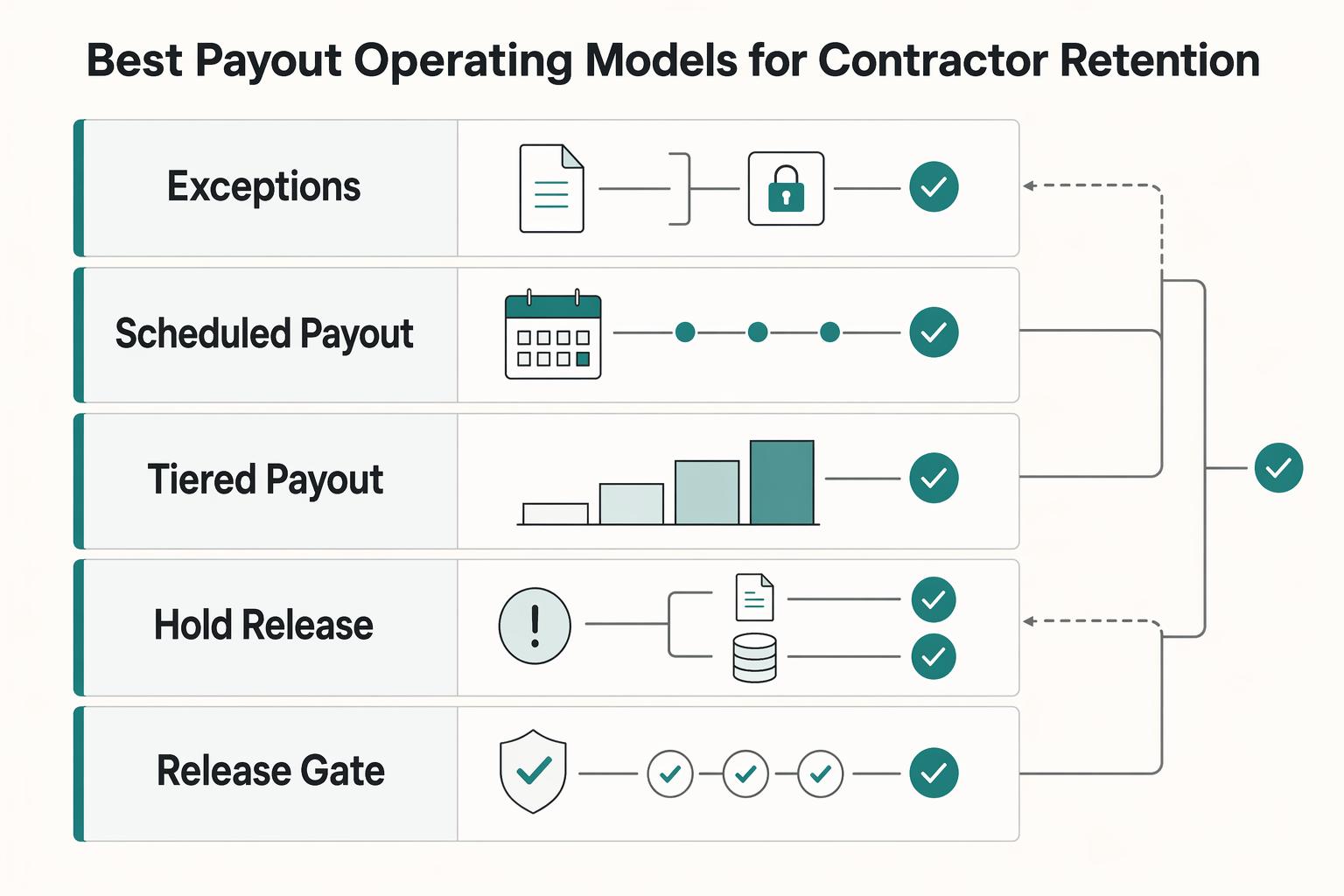
Bad Payouts Are Costing Your Supply in Two-Sided Platforms
Payout issues are not just an accounts payable cleanup task if you run a two-sided marketplace. They shape supply-side trust, repeat participation, and fill reliability. They can also blur the revenue and margin signals teams rely on.
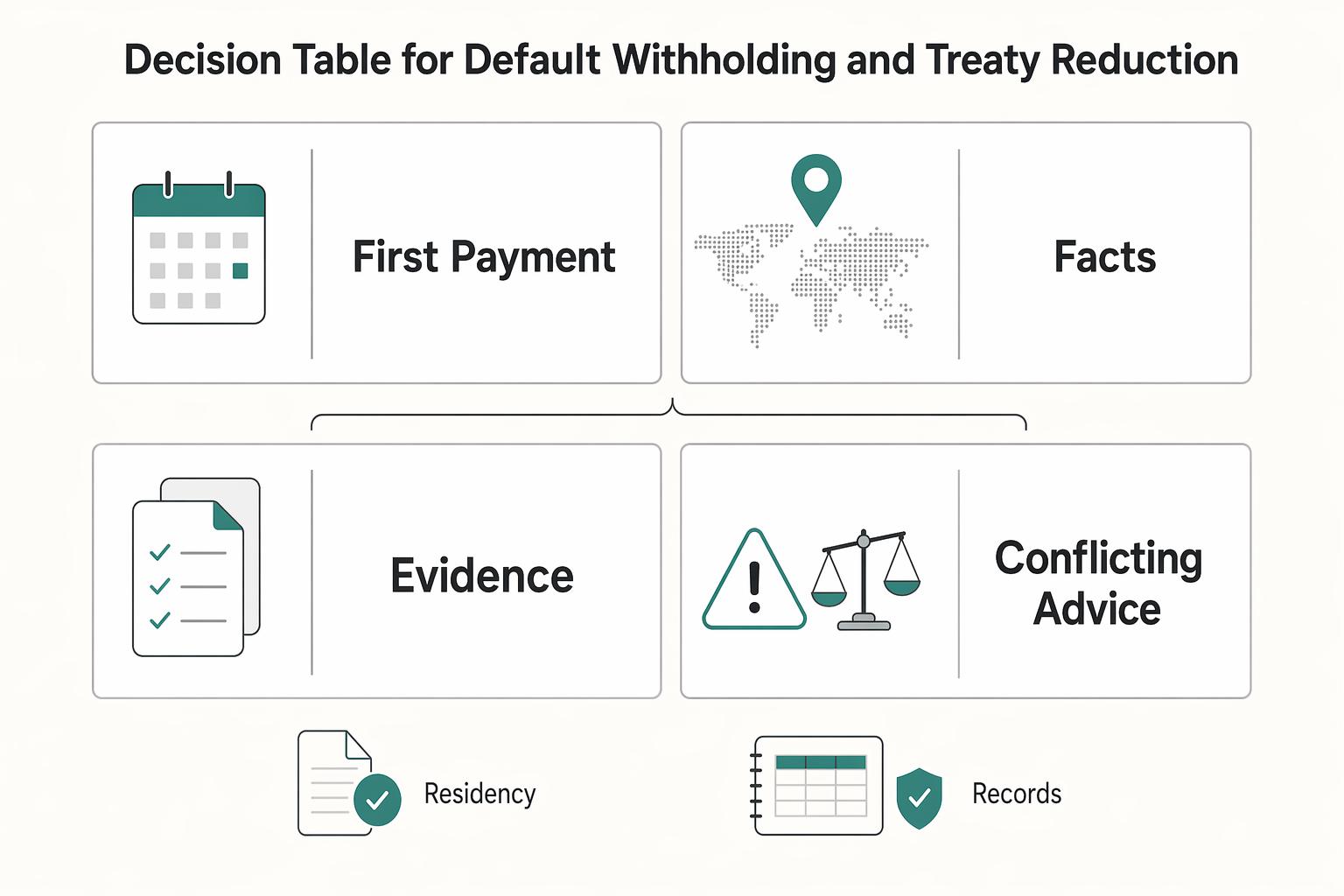
Non-Resident Withholding on Contractor Payments: Platform Guide to the 30% Rule and Treaty Reductions
Start with the default. If a payment is in scope for NRA withholding and you cannot support reduced treatment, withhold 30% and escalate unresolved cases before release.
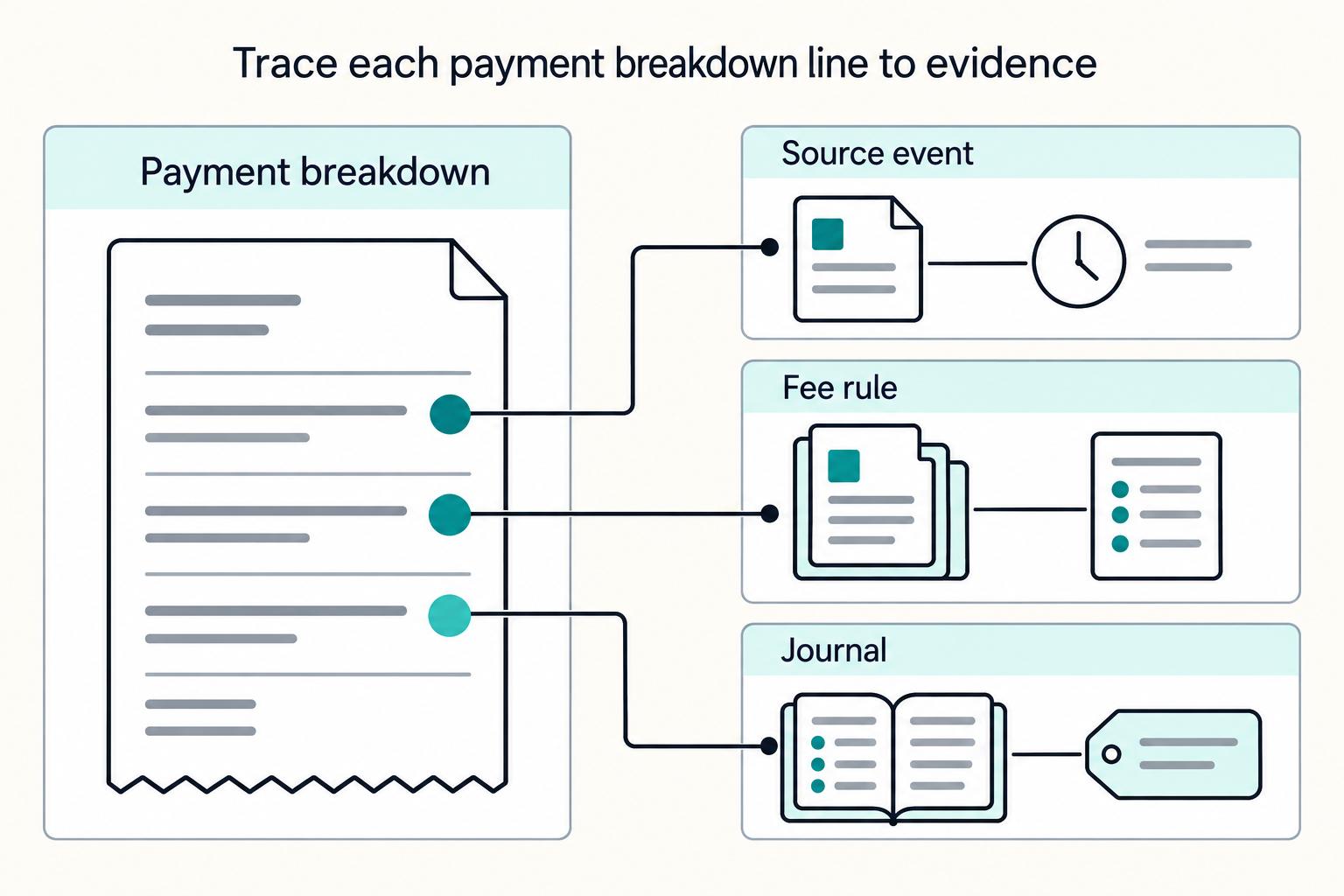
How to Show Fee Transparency to Contractors: Building a Clear Payment Breakdown UI
Your payment breakdown UI should answer two questions at a glance. Contractors should be able to see how an invoice turns into a net payout. Finance should be able to close the payout without manual cleanup. If the recipient view cannot be traced back to approval and accounting records, it is not transparent enough to run.