
Quick Answer
Choose a U.S. expat tax advisor by comparing written scope, named ownership, and escalation rules, not marketing claims. Ask every firm to confirm in writing whether the annual return, Form 8938, and FBAR are included, who reviews and signs the work, and how late filings, missing records, or changed facts are handled. Then use a pass or fail scorecard before comparing price.
Why most expat CPA lists fail risk owners#
If you're choosing the best cpa for us expat taxes, a brand-led list is not enough for a risk decision. Many lists emphasize visibility signals like review volume, tenure claims, or fast extension messaging. That can be useful context, but it does not tell you who owns technical judgments, what is actually in scope, or how escalation works when facts are incomplete.
For compliance, legal, finance, and risk owners, the real standard is documented control, not marketing strength. Use a simple rule: if a claim cannot be tied to written scope, named ownership, or explicit assumptions, do not treat it as selection evidence.
A practical way to compare firms is to ask hard questions early and ask every firm the same questions. Require written answers on what they need from your team, what they verify themselves, who reviews filings, and what triggers escalation when facts arrive late or conflict.
To make advisor selection defensible later, document outputs such as a pass/fail scorecard, a discovery-call script, red-flag triggers, and a handoff checklist. The goal is not to overbuild procurement. It is to make the selection auditable.
Related: The Best Way to Pay Property Taxes on a Foreign Property.
Decide what this advisor must own before you compare firms#
Write down ownership before you compare firms. If you skip that step, proposals will rest on different assumptions and the comparison will not be real.
Define filing and reporting scope#
Define scope line by line: annual return prep, Form 8938, FinCEN Form 114 (FBAR), FATCA-related items, and late-year cleanup. Form 8938 is attached to the annual return and filed by that return's due date, including extensions. Filing Form 8938 does not remove a possible FBAR filing obligation.
Have each firm label every item as included, excluded, or assumption-dependent. Require at least one concrete review checkpoint, such as whether foreign assets were acquired or sold during the tax year.
Separate return prep from operational control#
Separate return preparation from operational control work. Name who decides whether Form 8938 is required, who gathers foreign-asset data, who tracks annual return inputs, and who owns filing-calendar monitoring. Do not assume deadline ownership is automatic. FBAR timing can change through official notices, so calendar accountability needs an explicit owner.
Set escalation triggers before onboarding#
Set escalation triggers before onboarding. If prior filings are missing, records are incomplete, or facts conflict across years, require a written statement on whether the firm can handle or coordinate the required remediation path.
You do not need a promised outcome. You do need a named escalation owner, a written decision point, and a defined evidence pack for that call.
Match advisory depth to your risk profile#
Choose advisory depth based on your risk profile. Filing-only support can work when facts are stable and the work is routine annual compliance.
If you expect policy decisions, recurring edge cases, or late-year fact changes, you may need ongoing cross-border advisory support, not only return prep. In practice, that is often the real divider when choosing a CPA for U.S. expat taxes. For software-only workflows, The Best Tax Software for US Expats is a useful comparison point, but it should not replace advisor scoring when facts are complex.
Gather the minimum evidence pack before outreach#
Use one shared evidence packet for every candidate firm before outreach. If advisors review different facts, their proposals are not comparable.
Send one comparison packet to every firm#
Assemble one comparison packet and send the same version to every firm. Treat it as a comparison baseline, not proof that your file is complete for filing.
Require each firm to confirm in writing that it reviewed that same packet, then list missing facts and assumptions. This helps prevent silent scope drift between "routine return" pricing and cleanup-driven pricing.
Include your tax-data flow if forms touch payouts#
If your workflow touches tax-reporting forms tied to payouts, include a simple map of how payee tax data is collected and how it reaches year-end reporting. The goal is comparability: show where data starts, who handles it, and where handoffs can break.
Ask firms to point out control gaps they see in that flow rather than assuming your current process is sufficient.
Flag unresolved technical issues instead of guessing#
Flag unresolved issues instead of trying to settle them before outreach. One key flag is possible Schedule SE treatment. Schedule SE (Form 1040) is used to figure tax due on net earnings from self-employment. Self-employment tax is 15.3% (12.4% Social Security and 2.9% Medicare). You usually must pay it if net earnings from self-employment are $400 or more, and generally 92.35% of net earnings is subject to that tax.
| Schedule SE point | Detail | Note |
|---|---|---|
| Schedule SE (Form 1040) | Used to figure tax due on net earnings from self-employment | Possible Schedule SE treatment is a key flag |
| Self-employment tax rate | 15.3% | 12.4% Social Security and 2.9% Medicare |
| Net earnings threshold | $400 or more | You usually must pay it if net earnings from self-employment reach this amount |
| Portion generally subject | 92.35% of net earnings | Generally subject to self-employment tax |
| Instructions for taxpayers abroad | 2025 instructions include coverage for taxpayers abroad | Document currency should be checked |
| IRS correction | 20-FEB-2026 | The IRS posted a correction |
If facts involve a U.S. citizen or resident alien living outside the United States, ask which Schedule SE instructions the firm is using. The 2025 instructions include coverage for taxpayers abroad, and the IRS posted a correction on 20-FEB-2026, so document currency should be checked. Flag other unresolved facts for specialist follow-up instead of guessing.
Require the same response format from each candidate#
Require every candidate to respond in the same format: missing facts, stated assumptions, and whether any flagged issue needs specialist follow-up. That structure gives you a true apples-to-apples comparison beyond marketing claims.
Use The Best Accounting and Tax Advisors for US Expats as a broader comparison set after your own evidence pack is standardized.
Build a pass fail scorecard for CPA firms#
Use hard gates first, then weighted scoring. If a firm cannot provide Certified Public Accountant (CPA) or Enrolled Agent (EA) coverage, written Form 8938 and FBAR scope, and a named escalation owner in writing, remove it from the shortlist.
Start with hard gates before scoring#
Set pass/fail gates before points so marketing signals cannot hide scope gaps.
| Score area | What must be in writing | Verification checkpoint | Disqualifier | Weight |
|---|---|---|---|---|
| Credential coverage | Named CPA or EA on the file, including who reviews and who signs | Proposal or email names the responsible person and role | No named reviewer or no clarity on who signs | Pass/fail |
| Form 8938 scope | Whether Form 8938 is included, excluded, or needs specialist follow-up | Written assumptions on specified-person status and reportable foreign-asset interest | No written scope for Form 8938 | Pass/fail |
| FBAR scope | Whether FBAR is included, excluded, or separately priced | Written statement that FBAR and the return are separate deliverables when applicable | Treats Form 8938 as a substitute for FBAR | Pass/fail |
| Escalation owner | One named person for late filings, notices, and specialist escalation | Owner appears in the proposal, not only sales notes | No named owner | Pass/fail |
| Operational reliability | Response timing, draft-review process, amendment path, notice handling | Steps and timing documented in writing | No documented late-filing or amendment path | 35 |
| Technical review depth | Questions on asset changes, excluded accounts, and return-filing requirement | Discovery notes show more than balance collection | Only asks for balances and country list | 25 |
| IRS remediation handling | Evidence of prior amendment or notice-response workflow | Redacted checklist, sample process note, or written sequence | Cannot explain correction workflow | 35 |
| Reputation signals | Reviews, referrals, years in business | Used only as tie-breakers | Used to override failed gates | 5 |
No hard-gate pass means no shortlist.
Score operational reliability on its own#
Score operational reliability separately from reputation. Ask for a written response timeline, then check whether the firm states it clearly, aligns it to your filing calendar, and assigns exception ownership when facts or documents arrive late.
Test technical depth against filing mechanics#
Test technical depth against filing mechanics, not slogans. Require written treatment of Form 8938 filer status, reportable foreign-asset interest, and whether Form 8938 is attached to the annual return and filed by that return due date, including extensions.
Also require a clear separation between Form 8938 and FBAR obligations, and ask whether the review checks for assets acquired, sold, or closed during the tax year. A firm should also address whether an income tax return is required, because if no income tax return is required, Form 8938 is not required even if assets exceed threshold levels.
Keep three disqualifiers non-negotiable#
Keep three disqualifiers non-negotiable: no written scope, no documented late-filing path, and no clarity on who signs and reviews the return. For late filings, require a written sequence for issue identification, review ownership, amendment decision points, and specialist escalation.
Use Trustpilot, referrals, and years in business only to break ties between firms that already passed every hard gate. Best Accounting Firms for Startups if You Run on Client Cashflow is only relevant as a firm-screening comparison, not as proof for expat tax fit. Before outreach, standardize one part of your evidence pack so firms are evaluated on the same inputs: Generate a W-8 form template.
Verify technical coverage for your exact filing profile#
Once a firm clears your hard gates, the decision should come from written technical scope matched to your facts, not "expat expert" positioning.
Build a written filing map for your case#
Start with a written filing map for your fact pattern. It should cover foreign account reporting, income reporting, and any return components they plan to review.
For FBAR, require item-level scope: included, excluded, or pending follow-up based on stated assumptions. Do not accept generic "we handle expat reporting" language, and do not accept a process that collects balances without clearly separating FinCEN account reporting from the income tax return package. Ask how they track deadline exceptions when FinCEN publishes event-specific extension notices.
Confirm FEIE competence in writing#
If FEIE could materially change the return, require demonstrated Foreign Earned Income Exclusion (FEIE) competence in writing. Ask whether they can explain eligibility mechanics, the claiming form, and the assumptions that could invalidate the claim.
| FEIE check | Article standard | Note |
|---|---|---|
| Claiming form | Form 2555 | A credible response should reference it |
| Physical presence duration | 330 full days | In 12 consecutive months |
| Full day definition | 24 consecutive hours | Beginning and ending at midnight |
| Shortfall result | Physical presence test fails | Even if the reason is illness, family issues, vacation, or employer orders |
| Income while present in a country in violation of U.S. law | Does not qualify as foreign earned income | Services performed there do not qualify |
| Filing effect | You still file a U.S. return reporting the income | FEIE does not eliminate filing |
A credible response should reference Form 2555 and explain the physical presence test mechanics. The standard is 330 full days in 12 consecutive months, with a full day defined as 24 consecutive hours beginning and ending at midnight. The IRS standard is duration-based, and missing the 330-day requirement fails the physical presence test even when the reason is illness, family issues, vacation, or employer orders. They should also be able to flag that income from services performed while present in a country in violation of U.S. law does not qualify as foreign earned income. FEIE also does not eliminate filing. You still file a U.S. return reporting the income.
Validate the missed-years process early#
Validate the missed-years process before you need it. If prior filings or reporting may be incomplete, ask how the firm handles early remediation and what assumptions control that path.
Require a named owner, a written issue-identification sequence, and a document request list for the remediation review. If they can only offer a general "we can fix that" answer, treat that as under-scoped late-coverage risk.
Check data ownership for payouts and reconciliations#
Confirm data ownership for contractor, seller, and creator payouts.
Ask for the exact inputs they need and who resolves mismatches, including payout exports, annual summaries, platform adjustments, prior return amounts, and reconciliations between platform payouts and what the return reports. If your income spans multiple platforms or payout channels, require a written reconciliation step before engagement. If they only request one total figure and a country list, the review is likely too shallow for your profile.
Related reading: How to Handle Payroll Taxes for a Remote US Team.
Compare pricing and service model without getting trapped#
Price is only meaningful after scope is explicit. Until scope is written, the lowest quote usually means the most assumptions are still unstated.
Your objective is to choose the right ownership model for your filing risk, then force each quote to show what is included, what triggers extra fees, and what happens if facts change.
Choose the service model by risk complexity#
Choose the service model based on risk complexity, not headline price. DIY can work when the year is current, clean, and you can confidently validate the filing logic yourself.
| Service model | When it can fit | Checks to make |
|---|---|---|
| DIY | When the year is current, clean, and you can confidently validate the filing logic yourself | Use it when the issue is mostly data entry |
| Assisted | For straightforward current-year filing | Confirm who reviews the return, whether that reviewer is a CPA or EA, and whether FBAR work is included or separate from the income tax return package |
| Advisor-led specialist firms | When the risk is judgment-heavy | Ask for named ownership for scope decisions, sign-off, and follow-up |
Assisted models sit in the middle, including split models where software intake and human review are separate. These can work for straightforward current-year filing, but only if you confirm who reviews the return, whether that reviewer is a CPA or EA, and whether FBAR work is included or separate from the income tax return package.
Advisor-led specialist firms are usually a better fit when the risk is judgment-heavy: missed years, multiple payout sources, possible Form 8938 complexity, or unclear filing status. In those cases, ask for named ownership for scope decisions, sign-off, and follow-up.
Use a simple filter: if the issue is mostly data entry, assisted may be enough. If the issue is judgment, remediation, or threshold-driven foreign asset reporting, move up to advisor-led.
Force apples-to-apples pricing lines#
Require apples-to-apples line items across firms. A "starting at" number is not usable unless it states return type, included forms, assumptions, and change-order triggers.
At minimum, require explicit included/excluded scope for:
- Base return
- FBAR
- Form 8938 review/preparation
- Prior-year returns
- Amendments
This separation matters because Form 8938 is attached to the annual return and filed by that return's due date, including extensions, while FBAR is separate. Filing Form 8938 does not remove a possible FBAR obligation. Use scenario pricing instead of one headline price:
| Scenario | What the quote should explicitly include | Red flag |
|---|---|---|
| Simple current year | Base return, named preparer/reviewer, whether FBAR is included or separate, whether Form 8938 threshold applicability was reviewed | One "starting at" price with no FBAR/Form 8938 scope |
| Late-filing year | Prior-year return count, late-year review, amendment policy if facts change, whether remediation review is separate from prep | "We handle late filings" with no owner, sequence, or separate scope |
| Multi-form year with Form 8938 complexity | Threshold assumptions, asset/account review, item counts, maximum-value inputs, and whether both FBAR and Form 8938 are covered | Price increases only after intake because assumptions were never documented |
Practical checkpoint: Form 8938 work depends on concrete inputs such as account counts and maximum values. If a firm cannot name the data points that drive the work, the quote is likely a marketing entry point, not scoped effort.
Also require threshold assumptions in writing. IRS guidance indicates higher Form 8938 thresholds for joint filers and taxpayers residing abroad, so quotes should state which filing-status and residency assumptions were used.
Read guarantees as contract language#
Treat guarantees as contract terms, not sales language. Compare firms using engagement-letter wording, not call summaries. Focus on three items:
- What is covered
- What is excluded
- Who pays if facts change after intake
If "we stand behind our work" is not translated into written terms for amendment labor, notice response, and penalty-risk handling, treat that guarantee as non-operational.
A useful test is a written scenario question: if an omitted foreign account is discovered after draft approval, what is included, what becomes billable, and who bears resulting penalty risk?
Lock the quote to a defined document pack#
Lock price to a defined document pack and explicit change triggers. That prevents scope drift after records are transferred.
If Form 8938 pricing depends on "complexity," require observable complexity criteria: account counts, maximum values, threshold status, and whether specific accounts are excluded. IRS guidance notes that some accounts maintained by certain U.S.-connected institutions are excluded from Form 8938 reporting, so pricing that treats all foreign-looking accounts the same can signal shallow intake.
One final rule check: if no income tax return is required for the year, Form 8938 is not required for that year. Your quote logic should reflect that filing rule rather than a generic foreign-asset surcharge.
Choose the model that prices your real scenario clearly. In practice, the safer quotes are the ones that document assumptions, separate FBAR from return prep, and define when late-year or amendment work becomes a new engagement.
Run a discovery call that surfaces unknowns early#
Use the discovery call to verify execution, not chemistry. If the firm cannot name owners, sequence, and escalation for mid-engagement changes, your scope is still incomplete.
Map the workflow and name every owner#
Map the workflow in order and require named owners for each stage: intake, reviewer assignment, draft prep, draft review, filing, and post-filing support.
Push past "our team handles that." Ask who owns Form 8938 threshold review, who determines whether a separate FBAR filing (FinCEN Form 114) is required, and who handles post-filing IRS notices. If a CPA or EA is involved, confirm whether they are the reviewer, signer, or only an escalation resource. Before the call ends, ask for this sequence by email with one owner per step. Strong processes are easy to document.
Test timing, pauses, and scope-change rules#
Get explicit timing and escalation rules, not marketing language. Ask for the normal range from complete intake to first draft, what pauses the clock, and what they need from you to keep work moving.
Then test scope control with one scenario: an omitted foreign account is discovered after intake but before filing. Ask who reassesses FBAR and Form 8938 exposure, who decides whether the work stays in scope, and who tells you if terms change.
Keep one compliance check in view: Form 8938 is attached to the annual return and filed by that return's due date, including extensions, while FBAR is separate. Filing Form 8938 does not remove a possible FBAR obligation. Also ask: if no income tax return is required for the year, is Form 8938 still required? It is not.
Ask for a similar anonymized case#
Ask for one anonymized case similar to your profile and listen for process detail. You are checking whether they can explain what changed, what evidence was requested, who reviewed it, and how return work and foreign account reporting work were handled.
Useful answers reference concrete checkpoints such as account counts, maximum values, and whether assets were acquired or sold during the tax year. Vague answers like "we handle this all the time" without sequence or ownership are a risk signal.
Screen for red flags and recovery options#
Treat unclear ownership and vague scope as a stop signal. Even if the call sounded strong, you still have a compliance risk if the firm cannot state who owns Form 8938, who owns the separate FBAR (FinCEN Form 114), and which assumptions they are using.
Catch scope gaps before procurement approval#
Flag scope gaps before procurement approval. Core red flags are unclear ownership for Form 8938 or FBAR, missing written assumptions such as filing status or residency, and sales language in place of technical answers.
Form 8938 is attached to the annual return and filed by that return's due date, including extensions. FBAR is separate, and filing Form 8938 does not remove a possible FBAR requirement. If a firm blurs those obligations, treat it as a material gap.
Ask for a written scope that names forms, owners, and assumptions. It should identify who reviews Form 8938 threshold exposure, who prepares or coordinates FinCEN Form 114, and which residency and filing-status assumptions are being used. That matters because Form 8938 thresholds vary by taxpayer profile, with higher thresholds for joint filers and taxpayers residing abroad.
Pause when call, proposal, and reviewer do not match#
Pause selection when discovery responses conflict. If the call, proposal, and reviewer answers do not align on Form 8938 or FBAR scope, require a revised written scope before approval.
Ask them to restate:
- Exact forms included
- Who owns review, preparation, filing, and post-filing notices
- Which facts change scope, including missed accounts or prior-year omissions
- How no-income-tax-return years are handled for Form 8938
Use one technical check: if no income tax return is required for the year, Form 8938 is not required for that year. Also ask whether their review uses the IRS Form 8938 vs FBAR comparison chart as a validation checkpoint.
Switch to recovery mode when missed years appear#
If missed-year exposure appears after onboarding, switch to a recovery path immediately. Treat new prior-year account or asset facts as a risk change, not routine extra prep.
Require an escalation path that includes review of whether formal prior-year remediation should be considered and whether counsel review is needed. Keep current-year filing work separate from any prior-year remediation decision so ownership and timelines stay clear.
Do not use anecdotes as final vendor evidence. Forum and review-site chatter can inform your questions, but final approval should rest on written scope, named ownership, and a credible recovery path.
Freelancer tax reserves are a separate operating control; How Much Should a Freelancer Save for Taxes? can help set monthly reserve rules before year-end.
Set operating controls after you choose a firm#
Selection is only half the job. After you choose a CPA or EA, set controls that make filing gaps, document gaps, and payout-to-reporting mismatches visible before submission.
Run one control calendar with named owners#
Run one control calendar with named owners, review points, due-date logic, and required evidence for each task. Keep annual return work, foreign account disclosure work (FBAR/FATCA support in scope), and any payment-side tax tasks in the same system so ownership is explicit.
If payroll tax deposits are in scope, record the deposit cadence and checkpoints in the same calendar. That can mean monthly or semi-weekly EFTPS deposits, with due dates tied to that cadence, and quarterly FUTA checkpoints where applicable. For each line item, require an owner, reviewer, due date, and stored proof such as a filing confirmation, approval record, or payment proof.
Standardize intake before peak filing season#
Standardize tax-document intake before peak filing periods. Use one intake path and one source of truth so your team is not reconciling conflicting versions later.
If you store sensitive tax documents, masked views and change logs can be practical internal controls. Keep this framed as your control design, not as a statement of IRS-required storage mechanics.
Tie tax checks to onboarding and payout gates#
Where your platform supports it, connect tax checks to onboarding and payout gates instead of treating tax as end-of-cycle cleanup. Use those steps to trigger tax-document validation and exception routing.
Document owner splits for different worker models. In mixed populations, this matters because self-employed individuals bear the full FICA burden, unlike an employee and employer split.
Reconcile outputs before anything is filed#
Reconcile payout records to tax outputs before filing, not after. At draft stage, tie payee totals, classifications, and payment or deposit records to reporting outputs so exceptions are resolved while changes are still low-cost.
If payroll is involved, use pay stubs as evidence points because FICA lines are visible there and can be checked against deposit and filing records. For foreign-account disclosure work, add an extra review checkpoint for first-time filers. Also set a written escalation trigger for newly discovered prior-year facts, including whether Streamlined Filing Procedures for Late or Non-Filers should be considered.
Registered-agent selection is separate from expat tax prep, but How to Choose the Best Wyoming Registered Agent may matter if your filing profile includes an LLC.
Make the final decision with explicit escalation rules#
Make the award decision on risk coverage, not headline price. Choose the finalist that clears every hard gate in writing, even if another quote is lower.
Choose the finalist that owns the full filing set#
Select the finalist that explicitly owns the full filing set, as applicable: annual return, Form 8938, and FBAR. Do not accept vague scope labels like "expat return" or "international support."
Your check is the engagement letter: it should name each filing, whether it is required, and ownership. Filing Form 8938 does not replace FBAR, so treat unclear FBAR ownership as a scope gap to resolve before signing.
Resolve uncertainty before the contract is signed#
Escalate any Form 8938 or FBAR uncertainty before contract signature. Do not sign and defer the decision.
Ask the firm to confirm, in writing, whether you are treated as a specified person, whether Form 8938 is in scope, who owns account-value data collection, and who reviews maximum-value inputs for accuracy. Also confirm due-date ownership for Form 8938 with the annual return, including extensions.
Confirm threshold treatment before signing: Form 8938 thresholds are higher for some joint filers and taxpayers residing abroad, and Form 8938 is not required for a year when no income tax return is required.
Break ties on written clarity and escalation design#
If two firms tie, break the tie on written clarity and escalation design. Prefer the firm with clearer assumptions, a defined amendment protocol, and a faster path to senior tax review when new facts appear.
Request one written example covering what triggers an amended return, who approves it, and how scope changes are documented.
Lock the contract to deliverables and response rules#
Lock the contract to explicit deliverables, review depth, and response SLAs. At minimum, document each filing, reviewer level, draft-review expectations, amendment handling, and who monitors IRS and FinCEN deadline changes, including event-driven FBAR relief updates.
The deciding standard is simple: documented ownership, explicit assumptions, and escalation rules that still work when facts change.
Conclusion and copy paste selection checklist#
Choose on written scope and operating controls, not badges or broad "expert" claims. The stronger firm is the one that can document what it files and how it escalates issues before filing. Use this checklist before procurement sign-off:
- Confirm preparer credentials.
Verify the preparer's credentials and make sure escalation paths are documented in the engagement scope.
- Confirm written scope for each filing area.
Require written scope for the annual return, FBAR, FEIE analysis, and late-filing work. For FEIE, confirm how the firm tests eligibility, including the 330 full days in a 12-month period standard under the physical presence test, and whether it prepares or reviews Form 2555.
- Confirm pricing and fee triggers in writing.
Get written pricing and clear triggers for additional fees before you sign.
- Confirm open discovery-call items in writing.
Resolve unknowns in writing before signature, especially FEIE edge cases. If a taxpayer is short of 330 full days, the physical presence test is not met for that period, including when the shortfall is due to illness, family issues, vacation, or employer orders. Days in a foreign country while in violation of U.S. law also do not count, and adverse-condition waiver paths should be assessed and documented when relevant.
- Confirm post-selection operating controls.
Set ownership for document intake and filing calendar tracking. For FBAR timing, confirm who rechecks FinCEN's due-date resource and monitors event-based extension notices before filing.
Final check: if a technical position is supported only by IRS practice-unit training material, treat that as incomplete support. That material is not an official pronouncement of law, so your advisor should tie conclusions to the actual return position and forms filed.
If your shortlist passes technical gates but payout and tax-document controls still feel fragmented, validate operational fit with Gruv for your markets and workflow: Talk to Gruv.
Frequently Asked Questions
How do I choose the best CPA for U.S. expat taxes if every firm claims to be “expert”?
Start with written scope instead of marketing labels. The engagement letter should separately name the annual return, Form 8938, and FBAR, and it should state who owns account-value collection and review. If a firm says FATCA is covered but will not confirm Form 8938 and FinCEN Form 114 scope in writing, treat that as a gap.
CPA vs EA for expat taxes: what actually matters for risk and filing accuracy?
Credential alone is not the decision point. For either one, check written scope, clear filing logic, named review ownership for foreign reporting, and documented amendment handling. The safer choice is the firm that can explain your fact pattern and responsibilities in writing.
When is DIY expat filing too risky compared with advisor-led filing?
DIY is riskier when you cannot clearly determine whether you are a specified individual, whether specified domestic entity analysis is needed, or whether Form 8938 applies. Risk also increases when you mix return-attached reporting with separate FinCEN reporting without clear ownership. If you cannot produce a clean account inventory with account counts and reported values, get professional review before filing.
What should be included in expat tax pricing before I sign?
Pricing should map to scope line by line before you sign. Ask for explicit treatment of the annual return, Form 8938 analysis and preparation, FBAR preparation, amendments, extension support, and out-of-scope triggers. If the pricing sheet and engagement letter do not match, expect scope disputes later.
What documents should I request from a CPA firm before engagement?
Request the engagement letter, written scope summary, assumptions, document request list, and amendment or escalation procedure. Also ask for written ownership of Form 8938 timing with the annual return, including extensions, and who monitors FinCEN event-specific FBAR relief notices. If assumptions are not provided in writing before signature, treat that as a process risk.
How do FBAR, FATCA, and Form 8938 differ in practical selection decisions?
Form 8938 is attached to the annual return and follows that return's due date, including extensions. FBAR is separate, and filing Form 8938 does not remove an otherwise required FBAR filing. In vendor selection, focus on who determines whether Form 8938 is required, who prepares it, and who separately owns FBAR instead of accepting a blanket FATCA-covered claim.
Researched and edited by the Gruv editorial team. Gruv builds cross-border billing, payouts, and finance-operations software for global businesses.
Sources
Educational content only. Not legal, tax, or financial advice.
Related Posts

The Freelance Payment Penalty: A Modeled Audit of Platform Fees, FX Spreads, and Payout Delays
The money rarely disappears through a single, easy-to-spot fee. The real loss is stacked. A marketplace takes its commission, a processor adds a charge for international cards, a bank or payment company converts the currency at a spread, a platform holds the funds before release, and a wire sheds a little to intermediaries on the way in. Each layer looks defensible on its own, but the worker feels the combined result as a smaller deposit and a later payday.

How to Respond to a Subpoena for Business Records
Move fast, but do not produce records on instinct. If you need to **respond to a subpoena for business records**, your immediate job is to control deadlines, preserve records, and make any later production defensible.
A US Expat's Guide to Investing in UCITS ETFs to Avoid PFIC Issues
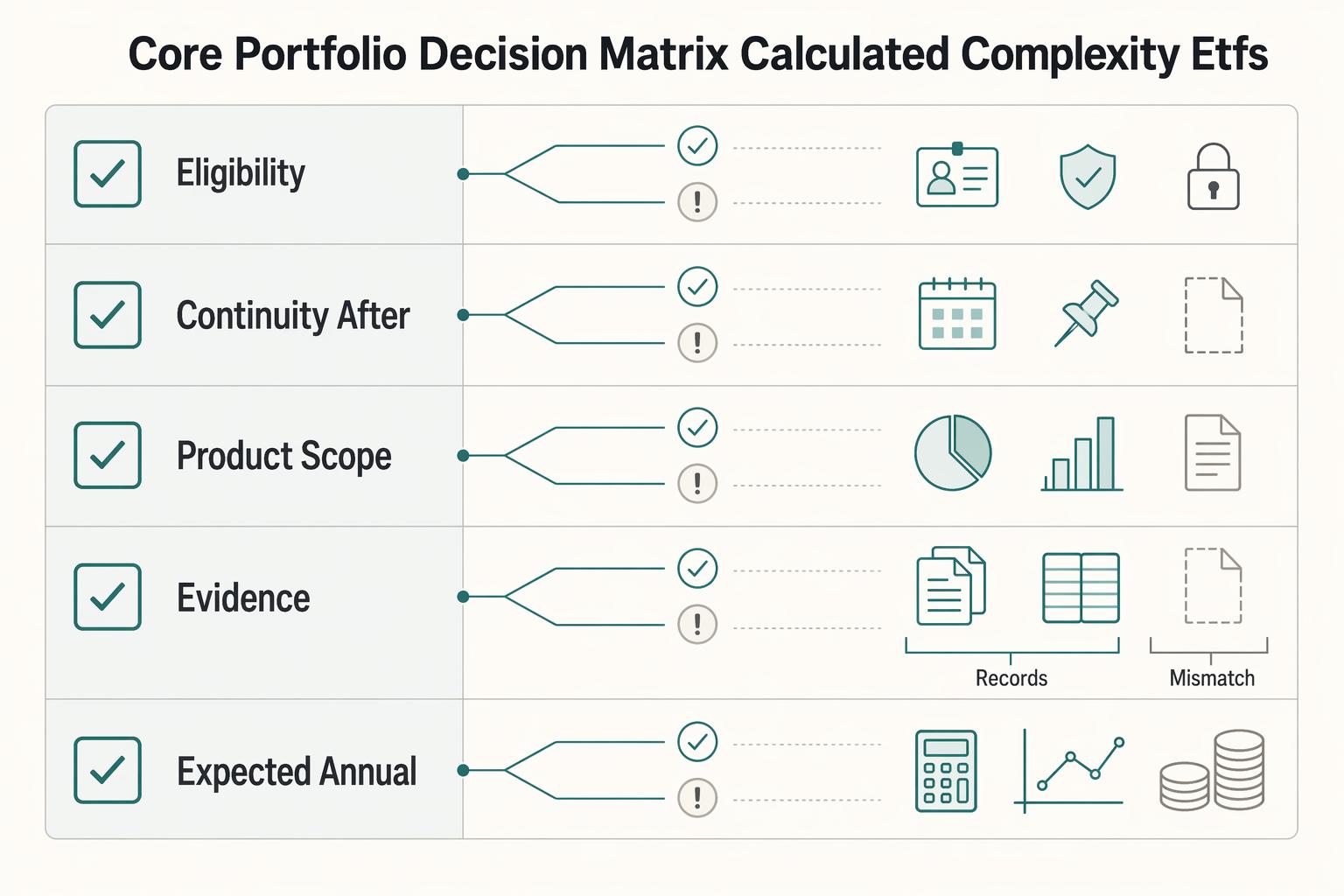
The real problem is a two-system conflict. U.S. tax treatment can punish the wrong fund choice, while local product-access constraints can block the funds you want to buy in the first place. For **us expat ucits etfs**, the practical question is not "Which product is best?" It is "What can I access, report, and keep doing every year without guessing?" Use this four-part filter before any trade: