
Quick Answer
Start with a 15-minute complexity screen, then pick your path: DIY for clean, current-year returns, DIY plus review when form handling is partly unclear, and professional prep for past-due or conflicting records. Before paying, confirm support for the schedules you actually need, plus FBAR workflow and how Form 8938 is handled when required. If e-file fallback steps or escalation support are vague, stop and move to a tax professional.
Start Here to Pick the Right Expat Tax Tool Without Guessing#
Pick by filing complexity, not brand familiarity. For many U.S. citizens living overseas, the right choice is the one that matches your form load, filing history, and tolerance for correction risk with the Internal Revenue Service (IRS).
| Route | Best when | Key differentiator |
|---|---|---|
| DIY software only | Facts are clean, current-year only, and prior filings are complete. | Faster and cheaper at the entry point, but only if your required forms are explicitly supported before payment. |
| DIY plus expert review | You want control but have moving parts across income, account reporting, or filing obligations. | You keep drafting control while lowering accuracy risk when rules or instructions are unclear. |
| Full professional preparation | Facts are late, messy, or incomplete, including past-due return situations. | More support for cleanup and remediation when your filing situation is unresolved. |
If you freelance or consult across borders, treat this as a decision guide, not a popularity contest. Search results often blur together DIY software and full-service preparation, which is how people end up comparing the wrong things. This article separates those paths on purpose. Choose the route first, then compare providers inside that route. The goal is simple: finish with one clear route, a short verification checklist, and obvious escalation triggers if the facts do not stay clean.
Your first decision is not which brand looks most familiar. It is which lane your return belongs in.
- DIY software only: Fastest and cheapest at the entry point when facts are clean, current-year only, prior filings are complete, and your required forms are explicitly supported before payment. Timing still matters. One 2024 filing-season example opened January 29, and a historical IRS reprogramming delay once pushed some filing ability to February 14, 2011.
- DIY plus expert review: A good fit when you want control but have moving parts across income, account reporting, or filing obligations. You keep drafting control while lowering accuracy risk when rules or instructions are unclear.
- Full professional preparation: Better when facts are late, messy, or incomplete, including past-due return situations. You get more support for cleanup and remediation when your filing situation is unresolved.
For many freelancers, a sensible starting point is DIY plus review, then a quick move to a professional if uncertainty remains after the first pass. Filing from abroad is often harder than domestic filing, and when the facts get murky, mistakes can spill into both federal and state outcomes.
Before you spend time comparing price pages, ask yourself three practical questions. Can you identify the schedules your return is likely to touch? Are your prior filings complete? Are any account-reporting questions still open? If those answers are fuzzy, the issue is not that you need a few more minutes of research. You may already be outside a clean DIY lane.
Use this short checklist before you pay or file:
- Confirm required forms and reporting steps are explicitly supported, not just implied by broad expat marketing.
- Verify who handles each filing step and what is included, especially if one part is software-driven and another part requires a human handoff.
- Check e-file eligibility and fallback support if e-filing is blocked, including what help you get next.
- Price the full path, not the base tier. Published examples in excerpts range from about $220 to $323 for simpler prep and from $2,000 to $3,000 in another abroad-focused estimate.
- Escalate to a professional if you have past-due years, contradictory records, or unresolved residency facts.
A useful first-pass rule stays the same throughout this guide. Employee-only, current-year filing can start with DIY screening. Self-employed filing can still fit DIY, but only when the form path and support path are explicit. Past-due or contradictory facts belong in the professional lane early, not after a failed software attempt.
If you want a deeper dive, read Digital Nomad Taxes in 2026 With a Defensible Filing Plan.
Who This List Is For and How We Score Each Option#
This list is built for globally mobile freelancers and consultants comparing tools against a real filing workload, not a marketing promise. The scoring is aimed at filers who may need a federal return with schedules like B, C, D, and SE, plus foreign-asset reporting checks.
That focus matters because a lot of expat content quietly assumes a simple employee return. This guide does not. It assumes you may have self-employment income, investment activity, account-reporting questions, or enough moving parts that the wrong DIY choice creates more work than it saves. At the same time, it does not assume that every filer abroad needs a professional. Either way, the goal is to help the right DIY candidates avoid guessing and help the wrong DIY candidates spot that early.
If you have unresolved multi-year filings, unclear residency facts, or conflicting records, this is a non-fit for DIY-first selection. In that situation, the best use of this list is not to find the cheapest software. It is to recognize that your issue is fact cleanup first, filing mechanics second.
We use a narrow scoring lens:
- Fit profile: Mobile self-employed filers with complete records who can map income and accounts to required forms.
- Non-fit profile: Filers with open prior years or unresolved facts where form decisions are still uncertain.
- Scoring criteria: We prioritize (1) clear handling of FBAR and Form 8938, (2) explicit schedule support, (3) support quality, and (4) total cost including add-ons.
- Form 8938 check in scoring: Form 8938 is attached to the tax return and applies when specified foreign financial assets exceed the applicable threshold; IRS also notes higher thresholds for joint filers and taxpayers residing abroad.
- Evidence rule: If a vendor claim is not verified here, we mark it as unknown and do not assume capability.
That evidence rule matters because vague promises are usually where trouble starts in expat filing. A product can sound broadly suitable while still leaving the most important question unanswered: whether your actual forms, your filing sequence, and your fallback path are covered. For that reason, explicit proof beats broad claims, written confirmation beats implied support, and all-in cost beats the entry price that got your attention.
Before you score anything, run one more filter: confirm whether you are required to file an income tax return for the year. If no return is required, Form 8938 is not required for that year. That one question can narrow the decision quickly because it changes what you need the tool or service to do in the first place.
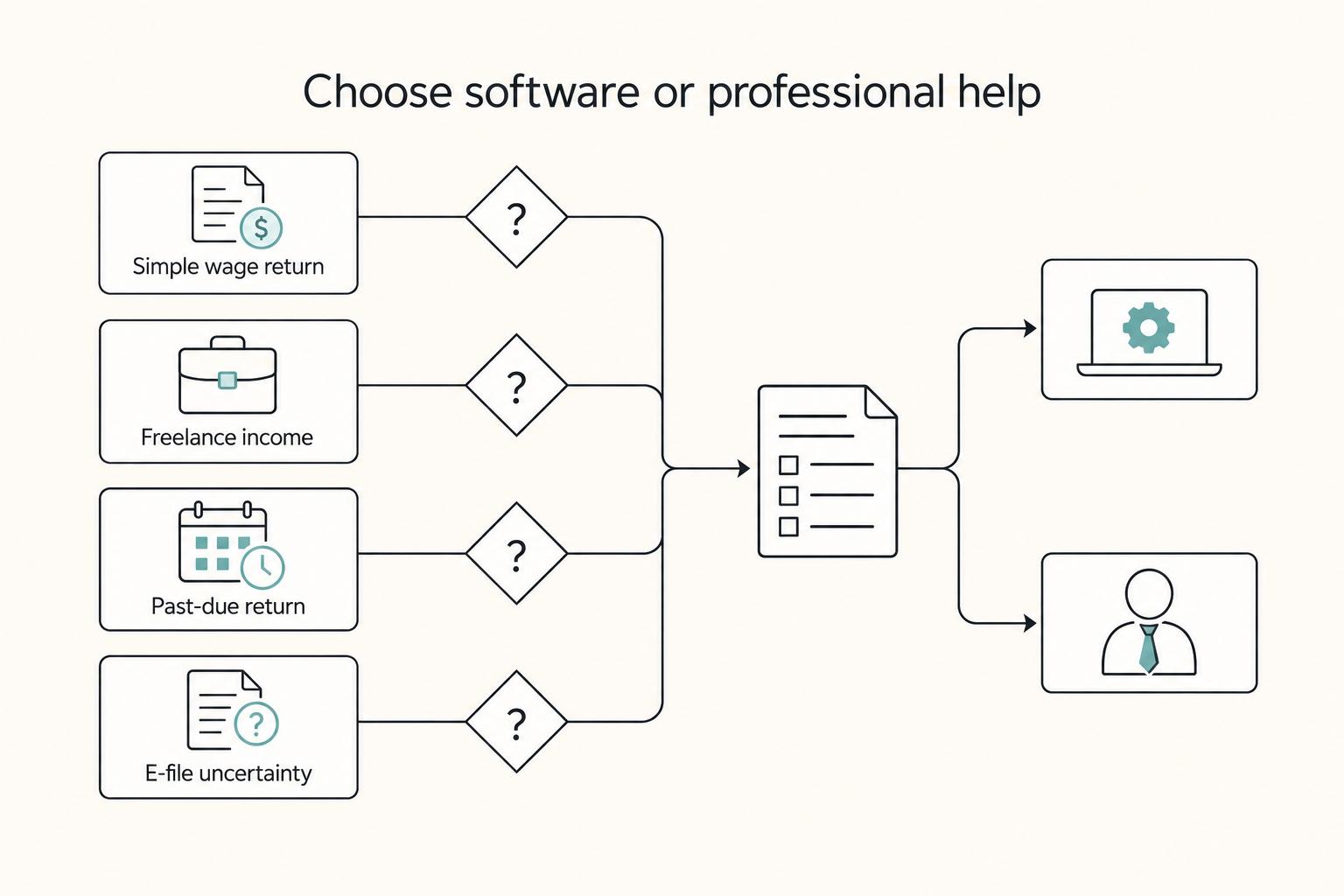
The 15-Minute Decision Tree for DIY Software or a Tax Pro#
Make the call in 15 minutes: use DIY only when your facts are complete and the filing path is clear; move to a tax pro when facts are incomplete, late, or uncertain.
| Situation | Default route | What to verify | Escalate when |
|---|---|---|---|
| Wage-heavy return with basic Schedule B and no prior-year issues | Start with DIY. | Verify how Form 8938 is handled when required, including that it is attached to the annual income tax return. | You discover contractor income, unclear filing history, or another unverified reporting step. |
| Freelance or consulting income with Schedule C and Schedule SE exposure | Use DIY only if form handling is explicit and there is a clear escalation path to human help. | Confirm the product clearly supports the forms you need, what happens if your facts change mid-return, and whether support is included or extra. | That path is unclear. |
| Past-due return or uncertain compliance history | Default to professional preparation, not a DIY test. | When you are still reconstructing what should have been filed, form decisions are not actually settled. | The basic facts are still uncertain. |
| Uncertain e-file eligibility | Prioritize providers that clearly explain fallback steps and support timing. | Confirm what happens when e-filing is blocked, who helps next, and what the next filing step looks like. | Fallback is vague. |
A fast way to do this is to run a three-part screen before checkout. First, inventory your return at a high level: wage-heavy, freelance-heavy, or past due. Second, note any account-reporting questions and whether your e-file path seems clear. Third, test whether the provider can explain your exact route without vague language. If you cannot get through that sequence cleanly, the complexity is already telling you something.
Here is the practical decision tree.
- Wage-heavy return with basic Schedule B and no prior-year issues
Start with DIY, then verify one gate before checkout: how Form 8938 is handled when required, including that it is attached to the annual income tax return. This is the cleanest DIY lane because it avoids self-employment complexity. Keep the lane narrow, though. If you discover contractor income, unclear filing history, or another unverified reporting step, stop treating it as a simple employee return.
- Freelance or consulting income with Schedule C and Schedule SE exposure
Use DIY only if form handling is explicit and there is a clear escalation path to human help when facts conflict. If that path is unclear, escalate. For this branch, do not rely on a polished interview alone. You want to know whether the product clearly supports the forms you need, what happens if your facts change mid-return, and whether support is included or extra. Schedule SE is where self-employment complexity stops being theoretical and starts affecting the filing path.
- Past-due return or uncertain compliance history
Default to professional preparation, not a DIY test. The issue here is not only complexity. It is uncertainty about the basic facts. When you are still reconstructing what should have been filed, a do-it-yourself flow can create false confidence before the form decisions are actually settled. That is the wrong time to optimize for convenience.
- Uncertain e-file eligibility
Prioritize providers that clearly explain fallback steps and support timing. If fallback is vague, escalate. If a product cannot tell you what happens when e-filing is blocked, who helps next, or what the next filing step looks like, that uncertainty belongs in the decision itself.
Two checks carry the most weight across all four branches. First, confirm whether an income tax return is required, because Form 8938 is not required if no return is required. Second, confirm whether Form 8938 applies for your filing context and appropriate reporting threshold. Higher thresholds can apply to joint filers and taxpayers who reside abroad, and some taxpayers are flagged above $50,000.
If any branch is still ambiguous after 15 minutes, treat that ambiguity as your answer. At that point, the fastest safe move is usually escalation, not more optimism.
Quick Comparison Table You Can Use in 2 Minutes#
Use this table as an evidence filter. If a vendor claim is not supported, treat it as unknown and escalate sooner.
The easiest way to use the table is to circle your non-negotiables before you read row by row. For a simpler employee filer, that may be federal return coverage, basic schedule support, and clear Form 8938 handling when required. For a freelancer, the non-negotiables usually widen to include explicit schedule handling, account-reporting visibility, and a believable human-help path if facts change. The point is not to prove that one brand is good or bad. It is to stop you from inferring support that has not actually been established.
Shared baseline before you compare options: Form 8938 is used to report specified foreign financial assets when threshold conditions are met, it is attached to the tax return, and if no income tax return is required, Form 8938 is not required.
| Option | Best for | Federal tax return coverage | FBAR support | FATCA/Form 8938 visibility | Schedule support | Human help | Known add-on fees | Escalate to pro when... |
|---|---|---|---|---|---|---|---|---|
| MyExpatTaxes | Fast initial screening of a DIY option without assumptions. | Unknown from excerpts. | Unknown from excerpts. | Known from excerpts: Form 8938 exists in FATCA context and is attached to the return when required. Unknown from excerpts: provider-specific handling. | Unknown from excerpts (Schedule B, C, D, SE). | Unknown from excerpts. | Unknown from excerpts. | You cannot confirm form handling for your facts before paying or filing. |
| H&R Block Expat | Comparing a known expat brand under strict evidence rules. | Unknown from excerpts. | Unknown from excerpts. | Known from excerpts: Form 8938 reporting can apply when thresholds are met, including $50,000 in some cases. Unknown from excerpts: provider guidance quality. | Unknown from excerpts (Schedule B, C, D, SE). | Unknown from excerpts. | Unknown from excerpts. | You are past due, your filing history is unclear, or Form 8938 applicability is unresolved. |
| TurboTax | Verify expat support directly with the provider before purchasing. | Unknown from excerpts. | Unknown from excerpts. | Known from excerpts: if no return is required, Form 8938 is not required. Unknown from excerpts: product handling of that gate. | Unknown from excerpts (Schedule B, C, D, SE). | Unknown from excerpts. | Unknown from excerpts. | Any uncertainty remains on expat reporting obligations or filing path. |
| Taxes for Expats (TFX) | Considering a service-led route while keeping evidence standards strict. | Unknown from excerpts. | Unknown from excerpts. | Known from excerpts: Form 8938 applies to taxable years starting after March 18, 2010. Unknown from excerpts: provider execution details. | Unknown from excerpts (Schedule B, C, D, SE). | Unknown from excerpts. | Unknown from excerpts. | Facts are messy, multiple years are involved, or form uncertainty is still open. |
Read the table as a go or no-go screen, not a final ranking. Unknown is not a negative verdict by itself. It is an evidence gap. But when the gap touches a required form, a filing step, or the fallback path you would need if something goes wrong, the practical answer is still to escalate before filing.
That framing also explains why this article is organized by filing situation rather than by brand prestige. Once you know where your case sits, the shortlist usually gets smaller very quickly.
Best for Straightforward Expat Employee Filing#
H&R Block Expat is a reasonable first candidate if your case is a straightforward employee filing: no business income, no late-filing cleanup, and needs that stay close to a federal return and basic Schedule B territory.
The recommendation is intentionally narrow. It is not saying this brand is the right answer for every return abroad. It is saying the fit can make sense when your facts stay in the simplest lane described here and you are willing to verify the details before checkout. That distinction matters because many people start in what looks like an employee lane and only later discover contractor income, account-reporting questions, or filing-history gaps that push the return out of DIY territory.
This lane is usually simpler because it avoids Schedule C and Schedule SE complexity. Schedule SE is used to calculate tax on net self-employment earnings, and in this IRS context, self-employment tax refers to Social Security and Medicare taxes. Once that layer enters the picture, the burden of proof on form handling gets much higher.
Before you pay, verify the details for your exact return. The Schedule SE materials include a correction dated 20-FEB-2026, and the instructions include a section for U.S. citizens or resident aliens living outside the United States. Those details are reminders that overseas filing sits inside the regular tax system, but it still has its own failure points.
Use these checks before you commit:
- Scope check: Confirm your return is employee-only, with no Schedule C income and no Schedule SE trigger.
- Coverage check: Confirm how your federal return and any needed Schedule B details are handled.
- Total-cost check: Price the full filing path up front, including any add-ons; this article does not verify provider-specific fee amounts.
- Escalation check: If contractor income appears or prior filings are unclear, move to professional prep.
A practical way to use this section is simple: verify the lane before the brand. Confirm there is no business income, no cleanup problem, and no unresolved reporting question. Then ask for written confirmation on the exact filing path and the total cost. If the answer changes once you begin the intake flow, that is not a minor annoyance. It means the case no longer fits the simple employee lane that made the DIY route attractive in the first place.
This is also where people can overvalue convenience. A simple employee return can often be screened quickly, but only if it is actually simple. If you find yourself asking whether a side contract counts, whether a prior year was fully handled, or whether a foreign account issue still needs to be sorted, you are no longer deciding among easy employee tools. You are deciding whether the return is still simple enough for software at all.
A typical fit here is simple: you are salaried abroad, you have no business income, and you do not have past-due filing issues. You want a predictable DIY flow and you are willing to spend a few extra minutes confirming coverage and all-in cost before checkout. If you later discover contractor income or another missing piece, rerun the decision instead of forcing the return through the wrong lane. That reset is cheaper than cleanup.
Best for Freelancer and Consultant DIY with Built-In Flexibility#
If your income is freelance-heavy and you want to stay DIY, MyExpatTaxes can make your shortlist only after you verify core filing coverage yourself.
For freelancers and consultants, the real question is not whether a tool sounds expat-friendly. It is whether it can handle your actual mix of schedules, account-reporting questions, and support needs without guesswork. That is why this is framed as a verify-first path, not an automatic recommendation.
The tradeoff is speed versus certainty. Bundled positioning can be appealing, but do not assume provider-specific support for Schedule C, Schedule D, FBAR, or Form 8938. So the decision standard needs to be stricter. If you cannot confirm the forms, the support path, and the escalation path, a polished intake flow does not solve the real problem.
Start by checking whether your own return is as clear as you think it is. Freelancer filings tend to go wrong when the filer knows the income sources but has not mapped them to the return. That gap matters. A tool may be perfectly usable for a clean self-employment case, but you still need to know whether the return includes self-employment, investment layers, account reporting, or unresolved questions that need human review.
Use these gates before you commit:
- Complexity fit check: Confirm your return actually includes self-employment and investment layers, then map your own needs to Schedule C and Schedule D before checkout.
- FATCA/Form 8938 gate: Confirm how the product handles Form 8938 decisions. Form 8938 is attached to the annual income tax return when required, and higher thresholds apply for joint filers and U.S. taxpayers who reside abroad.
- Documentation and escalation gate: Save proof (screenshots or help text) of FBAR and Form 8938 workflow, plus escalation steps if facts become unclear. If no income tax return is required for the year, Form 8938 is not required.
A practical way to test fit is to sketch your return on one page before you start. List which schedules you expect to need, whether account reporting is in play, and what questions are still open. Then compare that one-page map to what the product can clearly confirm. If the tool only seems clear on the easy part of the return, you do not yet have a safe DIY answer.
The most useful proof here is operational proof, not marketing language. Can you see how the return is built? Can you confirm how Form 8938 decisions are handled? Can you tell what happens if you discover a new fact after you begin? Can you get to a human review path without restarting from scratch? Those are the questions that make or break a freelancer DIY experience.
In practice, the strongest DIY fit in this lane usually means current-year filing, complete records, and quick answers on the required forms and support path. A weak fit looks different: you are still researching whether a form applies, trying to infer coverage from broad marketing, or discovering contradictions while entering data. That is not a software usability problem. It is a filing-fit problem.
One common failure mode is paying for access before the hard questions are answered. Once you have started entering data, there is a natural urge to keep going and hope the product will sort things out. That is exactly when a self-employed return can drift from manageable to expensive. If two key answers are still unclear after your first pass, pause DIY and get professional review. That pause is often cheaper than paying once for software access and then paying again for cleanup after an avoidable mismatch.
Best When You Are Behind or Your Facts Are Messy#
If returns are past due or your facts conflict, default to professional handling early. That is usually safer than guessing through DIY and fixing avoidable errors later.
The reason is sequencing. Before forms, you need a coherent filing history, a usable document pack, and a stable version of the facts. DIY tools are weakest when you are still figuring out what happened across years or which obligations were triggered. In those cases, professional help is not an upgrade from DIY. It is usually the right starting lane.
That lane change also affects how you should compare providers. When the facts are messy, headline marketing matters less than service model. You are no longer shopping mainly for software features. You are shopping for who does what, how a handoff works, what happens when the record set is incomplete, and whether the provider can keep the case moving when new facts appear.
For this situation, compare options by service model, not by headline language:
- Professional-first route (Taxes for Expats / TFX): Positioned as a specialized firm and shown on Trustpilot as an accounting firm profile. The same Trustpilot page displays a 4.8 score and 2,647 reviews, and also states review claims are not fact-checked.
- Verify-before-you-buy route (H&R Block Expat): Keep it on your shortlist only if you can get clear written confirmation that your exact past-due situation is supported.
- Hybrid route with escalation (MyExpatTaxes): Marketed with both software and a professional filing option, which can help if you start DIY and later need handoff. The site also shows a $175 package including federal return, FBAR, Schedule C, and Schedule D for baseline comparison.
A good way to compare these paths is to ask each provider the same short set of questions in writing: what they need from you to start, how your records should be organized, what is included in the quoted path, and what happens if the facts turn out to be messier than expected. That does not create certainty by itself, but it helps you compare service models instead of comparing slogans.
If you are already behind, build a handoff pack before you engage anyone. Put your records in tax-year order, list the years that may be open, flag contradictory or missing items, and separate what you know from what you still need to confirm. That kind of preparation does not replace professional advice, but it makes a professional-first route more efficient and lowers the risk of a confused start.
This is also the point where people can lose time by trying to be too clever with sequencing. A common mistake is to test a DIY path first, then escalate only after the software exposes gaps in the history. By then, you have already spent time and mental energy on the wrong job. When the filing history is unclear, the highest-value move is not data entry. It is reconstruction and verification.
Use this checkpoint before you sign or pay: if you cannot reconstruct your filing history with confidence, pay for expert handling upfront. That is not overbuying. It is avoiding a false start in the highest-risk category covered by this article.
The Pre-Filing Checklist That Prevents Common Expat Mistakes#
Use this order before you pay or file. It catches the most common expat filing misses early and gives you a practical stop signal before a bad DIY choice turns into cleanup work.
The order matters. A lot of avoidable mistakes happen because filers jump straight into software intake before they know whether their records are complete, whether Form 8938 is even in play, or whether the product can handle the exact route they need. This checklist is built to surface those issues in the right sequence.
- Build your evidence pack in filing order.
Map income records to Schedule B, Schedule C, and Schedule D first. Then prepare your FBAR account list for FinCEN filing. After that, gather Form 8938 data for specified foreign financial assets.
Keep the pack practical, not theoretical. Organize one folder per tax year, use clear filenames, and keep a short note listing any open questions or missing records. This lets you see quickly whether you have a clean filing pack or are still reconstructing the return. If you are missing key records, mark that early instead of hoping the software interview will smooth it over.
It also helps to save any provider support replies, screenshots, or help pages in the same folder. If you relied on a written answer about form coverage, escalation, or e-file fallback, keep that proof with the tax-year file. That way, your filing file holds the assumptions and confirmations you used to make decisions, not just the records.
- Run the Form 8938 gate before checkout.
Confirm whether you are a filer type that may need Form 8938 (specified individual or specified domestic entity), then check whether your asset values exceed the applicable threshold. Thresholds are not universal, and IRS guidance notes higher thresholds for joint filers and taxpayers abroad. If you do not have to file an income tax return, you do not need Form 8938.
The sequence matters here. First, determine whether an income tax return is required at all. Only then decide whether Form 8938 needs to be attached. This prevents a common mistake: spending time or money solving a form question before confirming that the annual return gate has even been met.
Because the threshold rules vary by filing context, do not rely on a broad product page to answer this for you. If the product or service says it supports FATCA or expat filing generally, that is still not the same as confirming how your Form 8938 decision is handled in your case. Save the workflow proof before you pay.
- Verify product fit before you pay.
Get written confirmation that your exact forms and filing path are supported, including any e-file limits and whether human support is included or extra. You are buying verified form handling, not brand familiarity.
Ask the same questions every time so you can compare like to like: Which forms are supported for my case? Who handles each filing step? What happens if e-file is blocked? Is human review included or sold separately? If my facts change mid-return, what is the escalation path?
Treat vague answers as unresolved, not reassuring. A response like "should be fine" does not solve a form-handling question. If you are choosing a hybrid route, also confirm the handoff rules before you start so you know what happens if DIY stops being appropriate halfway through. That is especially important for self-employed cases, where the return can look simple until one missing detail changes the whole route.
- Finish with a compliance and audit-folder check.
Confirm return completeness, FBAR status, and whether Form 8938 is required and attached to the tax return. For specified domestic entities, common trigger checks include $50,000 on the last day of the tax year or $75,000 at any time during the year. Store IRS-facing records in one folder by tax year and form type (for example, 2025_ScheduleC.pdf, 2025_Form8938.pdf).
Do one last pass for completeness before submission or handoff. Make sure the final return copy, any filing confirmations, and the written answers you relied on are all stored together. That way, if you need to revisit the filing later, you are not reconstructing your own process from memory.
This is also the point to check whether anything still feels unresolved. If a required form is still unclear, if an account list is incomplete, or if your filing path depends on an assumption you have not verified, stop. The checklist is doing its job by showing you that the case needs escalation before filing, not after.
If key checkpoints are still unresolved after this pass, stop DIY and escalate to a pro. That is not a failure of planning. It is the result the checklist is designed to give you when the facts do not support a clean self-serve route.
The Bottom Line for Choosing the Best Tax Software for Expats#
Choose by complexity and verification checkpoints, not by broad "best" marketing claims.
That is the thread running through every section above. The right starting point is not the best-known brand or the lowest posted price. It is the route that matches your facts: clean employee filing, self-employed filing with explicit support, or professional handling for anything late, contradictory, or unclear.
Cross-border filing can carry a heavy compliance burden. Taxpayer Advocate Service discussion describes complexity and administrative load that can leave even willing taxpayers noncompliant, overpaying, or exposed to penalties. That evidence is older and not a current market ranking, but it still supports a conservative decision style when facts are messy or uncertain.
Keep the final filter simple:
- Complexity-first final filter: Classify your return by real complexity (income mix, filing history, and account-reporting exposure) before choosing a product.
- Verification checkpoint before payment: Get written confirmation of required form handling, filing path, e-file fallback, and whether human review is included or add-on.
- Early escalation rule for unclear facts: If key facts are still unresolved after your checklist pass, move to professional preparation instead of forcing a DIY flow.
If you want the shortest practical summary, use this: clean employee-only cases can start with DIY screening, self-employed cases need stricter verify-first discipline, and past-due or contradictory facts belong with a professional early. Early escalation is not a failure of DIY. It is the control that keeps a hard filing situation from getting harder.
Run the decision tree, complete the pre-filing checklist, and choose the shortest path that still protects compliance. Related: The Best Virtual Mailboxes for Digital Nomads and LLCs.
Frequently Asked Questions
Is DIY expat tax software enough for freelancers with Schedule C income?
Sometimes, if records are clean and form handling is explicit. A key risk is incomplete mapping between business activity and required forms. If support cannot confirm your exact Schedule C path and escalation options in writing, use professional preparation.
What is usually not included in base expat software pricing?
Base tiers may not guarantee edge-case form handling, deeper review, or late-stage troubleshooting support. Some products separate optional help from core filing access. Ask for a written included-versus-add-on list for your exact return profile.
When should I choose a tax professional instead of DIY software?
Choose a pro when filing history is incomplete or facts conflict across years. Also escalate when key form handling remains unclear after first verification or when e-file eligibility is uncertain. Prioritizing accuracy early can reduce amendment risk.
Can one tool reliably handle FBAR, FATCA, and Form 8938 together?
Do not assume this from marketing copy. Form 8938, when required, must be attached to the annual return and is threshold-driven, with higher thresholds for joint filers and taxpayers abroad. FBAR is in a FinCEN electronic filing context, so verify both paths directly.
Is H&R Block Expat better for employees than self-employed expats?
Treat this as case-specific, not automatic. For self-employed cases, use a stricter standard: confirm exact form coverage and escalation path before checkout.
How should I evaluate MyExpatTaxes vs Taxes for Expats (TFX)?
Use a checklist, not brand preference. Ask both providers for written confirmation on form coverage, handoff rules, and what happens if facts change mid-return.
Where does TurboTax fit for U.S. citizens living overseas given current unknowns?
Treat it as conditional, not automatic, when expat requirements are in scope. Verify required form handling in advance. If coverage is unclear, choose a provider with clearer confirmation or move to professional prep. Form 8938 timing context: reporting applies to taxable years starting after March 18, 2010, and most individuals began with the 2011 income tax return. If you do not have to file an income tax return for the year, you do not need to file Form 8938.
Try a related tool
Researched and edited by the Gruv editorial team. Gruv builds cross-border billing, payouts, and finance-operations software for global businesses.
Sources
Educational content only. Not legal, tax, or financial advice.
Related Posts

Digital Nomad Taxes in 2026 With a Defensible Filing Plan
With digital nomad taxes, the first move is not optimization. It is figuring out where you may be taxable, where filings may be required, and what proof supports that position.
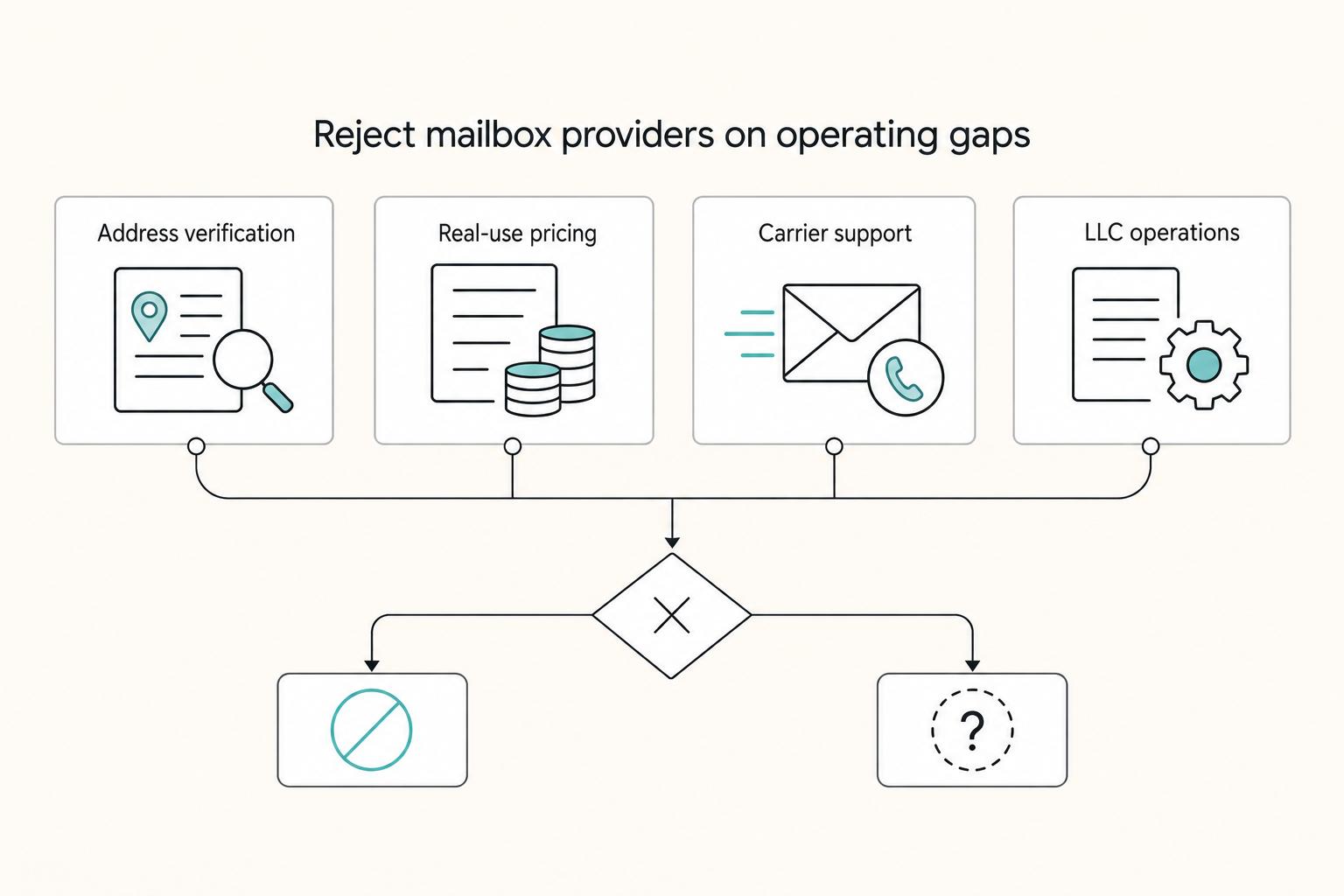
The Best Virtual Mailboxes for Digital Nomads and LLCs
If you are looking for the **best virtual mailbox for nomads**, the useful question is not who offers the cheapest scans. It is which service will still work when you are moving between countries, receiving packages, updating business records, and relying on the address for real admin.

The Freelance Payment Penalty: A Modeled Audit of Platform Fees, FX Spreads, and Payout Delays
The money rarely disappears through a single, easy-to-spot fee. The real loss is stacked. A marketplace takes its commission, a processor adds a charge for international cards, a bank or payment company converts the currency at a spread, a platform holds the funds before release, and a wire sheds a little to intermediaries on the way in. Each layer looks defensible on its own, but the worker feels the combined result as a smaller deposit and a later payday.