
Quick Answer
Choose a Wyoming registered agent by prioritizing reliability, privacy, compliance, and document-delivery workflow over the lowest price. Verify that the provider has a physical Wyoming street address, can accept service of process, maintains required email and communications contacts, and uses clear notification and escalation steps. Optional features like scanning, text alerts, and annual report reminders matter only after those basics are covered.
Choosing Your Wyoming Registered Agent: A Risk Mitigation Framework#
Start with reliability, not price. For a Wyoming LLC, the first question is whether the agent can consistently receive legal papers and state notices, follow clear privacy practices, and stay operational over time.
In practice, a Wyoming registered agent is your legal point of contact in Wyoming for service of process and official notices. State rules require every business entity to continuously maintain a registered agent and a registered office, and that office must be a physical Wyoming street address. The job is specific: the agent must accept service of process, notices, and demands served on your entity.
What is required and what is extra#
Separate legal requirements from vendor add-ons before you compare plans.
| Type | Item | Article detail |
|---|---|---|
| Required | Registered office | A physical Wyoming registered office tied to your agent |
| Required | Service acceptance | Acceptance of service of process, notices, and demands |
| Required | A maintained email address for both the entity and registered agent for Secretary of State communications | |
| Required | Communications contact | A current designated communications contact for your entity |
| Optional feature | Document scanning | Northwest says documents are uploaded within 24 hours |
| Optional feature | Notifications | Bizee (formerly Incfile) advertises text and email notifications |
| Optional feature | Annual report reminders | LegalZoom advertises reminders |
Required:
- A physical Wyoming registered office tied to your agent
- Acceptance of service of process, notices, and demands
- A maintained email address for both the entity and registered agent for Secretary of State communications
- A current designated communications contact for your entity
Optional vendor features that may still matter in practice:
- Document scanning and uploads, such as Northwest saying documents are uploaded within 24 hours
- Notification channels, such as Bizee (formerly Incfile) advertising text and email notifications
- Annual report reminder alerts, such as LegalZoom advertising reminders
Cost first vs risk based#
Price matters, but not on its own. Wyoming advises businesses to research agents before contracting. Published pricing shows meaningful variation: Bizee lists $119/year, ZenBusiness advertises $99 first year with $199 renewal, and LegalZoom lists $249/year.
| Evaluation area | Cost-first selection | Risk-based selection |
|---|---|---|
| First question | "What is the cheapest annual fee?" | "How quickly and clearly will legal and state documents reach me?" |
| What you verify | Promo price and renewal price | Notification channels, document-delivery workflow, upload timing, and who is alerted |
| Privacy check | Often skipped | Review privacy-policy language on data sale and sharing, for example Northwest stating it does not sell personal information |
| Continuity check | Often skipped | Check Wyoming CRA listing status where relevant (the roster is not complete) and review posted administrative-order outcomes |
| Questions before you buy | "What does renewal cost?" | "How are service-of-process documents delivered to me?" "Which alerts do I get, email, text, or both?" "How do I keep my communications contact current?" |
A practical red flag is an unclear workflow. If you cannot tell exactly how documents move from the registered office to you, treat that as risk. Also remember that if a registered agent cannot be served with reasonable diligence, Wyoming allows service by registered or certified mail to your principal office, and one completion trigger is five days after mailing. That is why your final call should rest on three pillars: privacy, compliance, and operations. Related: Registered Agent vs Virtual Mailbox and How to Split Mail Correctly.
Pillar 1: The Privacy Shield#
Use privacy as a checklist, not a promise. For your Wyoming LLC, a real privacy shield has two separate parts: public-record address substitution and provider-level handling of your data and incoming documents. You should verify those separately.
The filing-side protection is structural. Your registered-agent line can show the agent's address instead of yours. The service-side protection is operational. It comes down to how legal documents are handled, what the privacy policy allows, and what account controls you can actually use.
| Buyer check | What to verify | Good signal | Risk flag |
|---|---|---|---|
| Mail filtering workflow | How service of process is received, scanned, and delivered | Provider-specific timing and steps, such as within an hour or same-day delivery, plus any stated escalation path if unread for more than three days | Vague claims like "we forward mail" with no timing or escalation detail |
| Data-sharing policy language | Exact privacy-policy wording on selling and sharing personal data | Explicit limits, for example no selling or sharing for targeted advertising | Broad language that personal information may be shared with business partners |
| Account-level privacy controls | Security and privacy controls in your account | User-managed controls like optional MFA | No visible account security controls or an unclear setup path |
| Registered office validation | Whether the office is a real Wyoming street address and service-ready | Street address in Wyoming, physically present to accept service of process | PO box, drop box, UPS store, mail-forwarding substitute, or vague mailbox wording |
Run this quick due-diligence pass before you buy:
- Review the provider's privacy policy, service-of-process FAQ, and security page.
- Ask support how legal papers reach you, what happens if you miss the first notice, and whether someone is physically present at a Wyoming street address to accept service of process.
- Treat untestable timelines, no escalation path, or unclear data-sharing terms as risk flags.
Before you move on, do one more check: continuity. Wyoming requires a Wyoming street address where the agent is physically present to accept service, and registered-office or agent changes require a filing with the Secretary of State. The former registered-agent information must match state records exactly, so privacy and continuity need to be evaluated together.
For broader context, read Sole Proprietorship vs. LLC: The Definitive Guide for Global Freelancers.
Pillar 2: The Compliance Firewall#
A registered agent is only as good as its handoff process. When you compare providers, prioritize how reliably legal papers reach you over branding, bundles, or headline pricing.
Service of process is the formal procedure for giving legal notice that a lawsuit or proceeding has started. Default judgment is a ruling a court can grant when a defendant does not respond or appear. Chain of custody is not a Wyoming statutory term here. It is still a useful operating standard: a documented record of who handled a document, when, and how it was transferred. Good standing in Wyoming is tied to filing the annual report and paying the required fee.
Where failures happen#
The failure path is usually simple: papers are delivered to the registered agent, the agent receives and routes them, you are notified, and you respond within the applicable window. If any step breaks, your risk goes up.
Wyoming requires a registered agent with a physical Wyoming address and acceptance of service of process, notices, and demands for the entity. Wyoming commercial-agent rules also require presence at the registered office during normal business hours. If an agent cannot be served with reasonable diligence, service may shift to registered or certified mail to the entity's principal office. One statutory route treats service as perfected five days after mailing. That makes current address records a core control, not an admin detail.
Minimum workflow versus reliable workflow#
| Evaluation point | Minimum-compliance workflow | High-reliability workflow |
|---|---|---|
| Intake at Wyoming office | Accepts papers during business hours, with limited visibility after receipt | Staffed intake with a receipt record showing date, time, entity, and document type |
| Notification to you | Single channel, for example one email or portal upload | Primary notice plus a backup escalation step if unacknowledged |
| Confirmation workflow | No confirmation that you saw it | Explicit receipt confirmation and follow-up on no response |
| Audit trail | Basic document storage | Retrievable handling history that can be produced on demand |
| Record hygiene | Assumes your contact data is current | Active prompts or checks to keep key contact fields current |
The checklist to use before you sign#
Before you sign, ask these four questions and look for concrete process details:
| Area | Question |
|---|---|
| Intake procedures | Who accepts service at the Wyoming office, and what record is created at receipt? |
| Escalation channels | If the first notice is missed, what is the second step? |
| Confirmation workflow | How do you confirm I received and opened a critical notice? |
| Audit trail | What receipt history or legal-delivery log can you produce on demand? |
If a provider answers those with marketing language instead of a concrete process, keep looking.
One verification point is worth checking here. Wyoming requires registered-agent records to be maintained in a format that can be reasonably produced on demand, and those records are subject to examination by the Secretary of State.
What the provider controls and what you control#
This is a shared responsibility. The provider controls office availability, acceptance of service, and its internal logging and notice workflow. You control whether your entity records stay current, including principal-office details, account monitoring, and designated communications contact data.
Wyoming requires that contact record to stay current, including name, mailing address, physical address if different, and business phone. That contact generally cannot be the registered agent or the agent's employee.
Keep your expectations realistic about veil risk. Missing a legal notice does not automatically pierce LLC protection, but it can create default exposure and leave you with a weaker compliance record. Use a simple rule: if a provider cannot explain intake, escalation, and proof-of-delivery steps in plain language, keep shopping. Wyoming requires continuous registered-agent coverage, and failures can lead to dissolution, revocation, or defunct status if not cured.
For a step-by-step walkthrough, see The Best Tools for Managing a Company's Legal Documents.
Before you pick a provider, turn your criteria into a written shortlist so you can compare policies and response workflows consistently. Explore Gruv tools.
Pillar 3: The Operational Hub#
Once privacy and compliance are covered, the next decision is operational. Decide whether you only need a legal receiver or whether you also need a working mail setup you can run remotely. The right choice is the provider whose legal role is clear and whose mail and portal features fit the way you actually work.
Where legal compliance stops#
This boundary matters. Your registered agent handles legal receipt, not your entire mail operation. Wyoming requires every business entity to continuously maintain a Wyoming registered office at a physical street address, with someone physically present to accept service of process.
Mail scanning, forwarding, and shredding are separate operational services. A virtual mailbox can handle those tasks, and if it operates as a Commercial Mail Receiving Agency, USPS Form 1583 must be on file. That does not replace your Wyoming registered-agent requirement. If a provider implies a mailbox alone covers registered-agent compliance, treat that as a red flag.
Decision matrix#
| Workflow area | Registered agent only | Registered agent + integrated mail handling | Separate registered agent + CMRA |
|---|---|---|---|
| Incoming mail triage | Focused on lawsuits and official state notices | Can handle legal documents plus some routine business mail, depending on scope | Legal mail goes to agent; routine mail goes to mailbox provider |
| Scanning and archive | Usually centered on critical legal documents | Better if regular mail is scanned into a secure account; Northwest says it scans regular mail on receipt and uploads it to a secure account | Often strongest for routine operations because open, scan, forward, and shred are core features |
| Forwarding controls | May forward key items, but not built as a full mailroom | Better if you need legal originals forwarded; Bizee says SOP is sent via FedEx with tracking | Flexible for routine routing, but you must manage two providers |
| Alerts and responsiveness | Basic legal-notice delivery in many cases | Stronger if multi-channel alerts are included; Bizee advertises text and email alerts for SOP and state correspondence | Varies; legal and routine alerts may be split across portals |
| Team access and task visibility | Usually enough for solo owners | Better if the portal supports document tracking/filtering and role-based notification controls | Can work, but split systems increase handoff risk as your team grows |
| Best fit | You mainly need legal compliance | You want one account for legal documents plus selected business mail | You want specialized mail operations and can handle multi-vendor coordination |
Use a simple rule. If you only need legal coverage, do not pay for unused mail features. If you operate abroad and expect regular tax or client mail, a bare registered-agent service may be too limited unless you add a mailbox layer.
What to verify in a portal demo#
Do not accept "modern dashboard" claims without proof. In a live demo, or even from screenshots, verify these four points.
| Portal check | What to confirm | Article detail |
|---|---|---|
| Searchable archive | Filtering and download workflows for delivered documents | Harbor Compliance documents the ability to track, download, and filter documents |
| Alert controls | Notifications can be managed by user and company | Harbor Compliance states admins can edit notifications for all users, while regular and restricted users edit their own |
| Deadline visibility | Annual report due dates are clearly visible | Wyoming ties annual reports to the anniversary month; a January 15 registration means a January 1 annual due date, and filing can be done up to 120 days early |
| Change-management support | How the system flags address or responsible-party changes | Form 8822-B is used to notify the IRS of business mailing address or location changes, and responsible-party changes must be reported within 60 days |
Those four checks tell you whether the portal is usable for real deadlines and changes, not just document storage.
If you operate from abroad#
If you are managing the company from outside the US, the practical issues show up fast. Use this checklist before you commit:
- Bank mail: Decide where sensitive originals should go, then run a test forwarding cycle so you understand timing and tracking.
- Tax notices: Treat IRS letters as deadline-driven. If the IRS asks for a response, act by the due date. Missing deadlines can affect appeal rights.
- Client correspondence: Keep routine client mail out of the legal inbox. Route it to the address you actively monitor.
- Secure forwarding: For important originals, ask about trackable delivery options. USPS Certified Mail provides proof of mailing and delivery or attempt status, and Return Receipt adds signature evidence.
Judge formation bundles as a long-term fit test, not a first-year discount. Bizee advertises a free first year and lists $119/year standalone registered-agent service. Harbor Compliance lists $99 first year, renewing at $149. Northwest lists $125/year. Before buying, confirm renewal terms, archive exportability, and migration steps. Wyoming allows registered-agent changes through two specific forms, so switching is possible, but you want the exit path clear upfront. Related: The 'Profit First' Method Part 2: Setting Up Your Bank Accounts.
Check the Evidence Before You Finalize a Provider Choice#
Do not make this choice like a commodity purchase. Use the table below as an evidence check first and a price decision second.
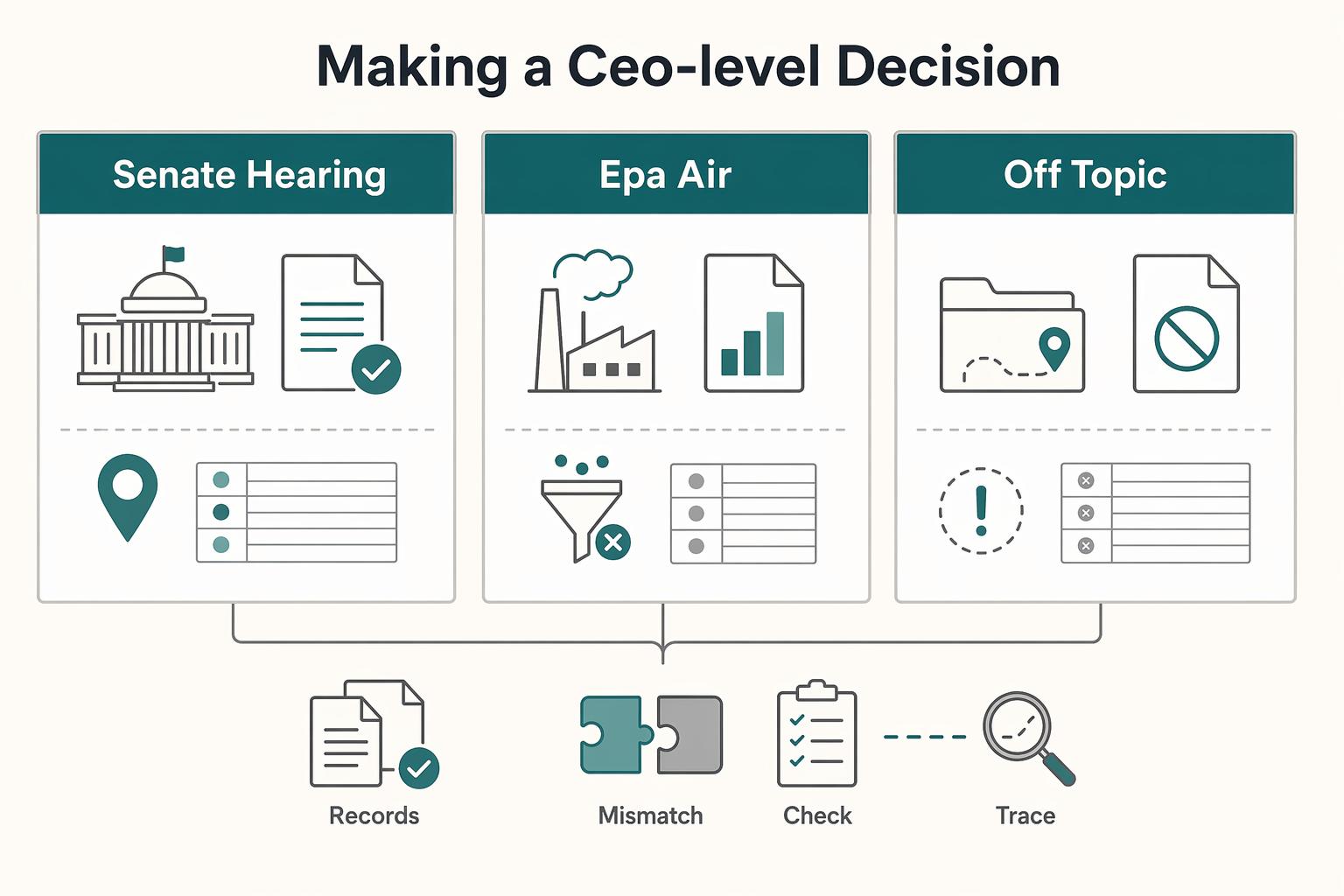
| What the current guidance shows | What they do not support |
|---|---|
| A Senate hearing on Endangered Species Act listing/delisting (May 9, 2001) | Any Wyoming registered-agent ranking, winner, or "best" claim |
| An EPA air-quality-modeling conference transcript (October 9, 2008) | Any current registered-agent pricing, service, or workflow comparison |
| Off-topic and older material for this decision | A 2026 purchase verdict |
Given that evidence gap, do not finalize a provider decision yet. First gather current, Wyoming registered-agent-specific materials that are directly comparable across providers.
Use this decision rule:
- If evidence is off-topic, do not score providers.
- If evidence is outdated for your decision window, do not finalize a choice.
- If key provider claims are not verifiable in current documents, pause the purchase decision.
We covered this in detail in Delaware C-Corp vs Wyoming LLC for Your Next Growth Stage.
After you choose your registered agent, set up your payment operations with compliance controls and traceable records so your back office scales with you. See Gruv for freelancers.
Frequently Asked Questions
What to confirm before choosing
| Common question | What to verify before you buy | Why it matters | |---|---|---| | Can I be my own agent? | Confirm you have a physical Wyoming address and can be available there during normal business hours | Wyoming requires continuous registered-agent coverage, and a drop box is not acceptable as a standalone address | | What is the cheapest option? | Review renewal terms, cancellation steps, and how reminders, notices, and filing evidence are delivered to your email | A low first-year price is weak value if notices are unclear or exit is difficult | | Agent vs. virtual mailbox? | Verify whether legal receipt, routine mail handling, scanning, and forwarding are sold as separate services | A virtual mailbox does not automatically satisfy the registered-agent requirement | | Does the agent address become my business address? | Check how the provider handles registered office, mailing address, and principal office fields | Wyoming treats these as distinct filing fields, so you should set each one intentionally | | How fast will I hear about a lawsuit? | Ask for the exact alert workflow in contract terms and in the dashboard | You need a notification path you can reliably monitor, especially if you operate abroad | | What if the agent fails or resigns? | Ask about continuity, record export, and the Wyoming form process to change agents | If an agent is removed, your entity can be left without a registered agent | | What about alerts, privacy, and continuity? | Confirm email setup, data-sharing terms, and transition ownership before signing | These controls affect whether legal notices reach you and whether you can switch providers cleanly |
Can I be my own registered agent in Wyoming?
Yes, but only if you maintain a physical Wyoming address and are available there during normal business hours. If you cannot meet both conditions consistently, consider hiring a provider.
What is the cheapest registered agent in Wyoming?
Treat this as a risk decision, not a price-only decision. Wyoming advises businesses to research agents before contracting, so check the renewal language, support path, and how notice delivery is documented. If a provider cannot clearly show how notices are delivered, the lower price is usually not the safer choice.
What's the difference between a registered agent and a virtual mailbox?
Your registered agent is your legal contact for service of process in Wyoming. Your virtual mailbox is an operational service for receiving and managing routine mail. If you need both legal coverage and day-to-day mail handling, confirm you are buying both functions, not just one. For deeper context, see How to Get a Registered Agent for Your US LLC.
Does the registered agent's address become my official business address?
Not by default. Wyoming filing forms separate the registered office from the mailing address and principal office address, so "official business address" depends on the specific field. Set each address intentionally, and remember that Wyoming law allows alternative service by registered or certified mail to the principal office if service cannot be made on the agent.
How quickly will I be notified if my LLC is sued?
Do not rely on broad claims like "instant alerts" unless the contract or portal terms define the process. Verify the exact notice path: which email receives notice and how documents are delivered. Response deadlines can vary, so verify the deadline as soon as notice arrives and send the documents to counsel promptly.
What happens if my registered agent resigns or goes out of business?
You still must continuously maintain a registered agent in Wyoming. Wyoming provides dedicated forms to change agents, so switching is a defined process. Before you sign, confirm continuity steps, document export access, and who controls your account during the transition.
What should I check in the provider's alerts, privacy terms, and continuity plan?
Start with the basics. Verify your entity email and the agent email are correctly captured, because Wyoming requires both to maintain usable email for service-related documents. Then confirm where reminders, notices, and filing evidence will be sent. Finally, read the privacy terms for what data is shared, with whom, and why, and ask for written clarification when the terms are vague.
Try a related tool
Researched and edited by the Gruv editorial team. Gruv builds cross-border billing, payouts, and finance-operations software for global businesses.
Sources
- csrc.nist.gov/glossary/term/chain_of_custodytrusted
- epa.gov/sites/default/files/2020-12/documents/epa-hq...trusted
- govinfo.gov/content/pkg/CHRG-107shrg78073/html/CHRG-107s...trusted
- irs.gov/forms-pubs/about-form-8822-btrusted
- irs.gov/individuals/understanding-your-irs-notice-or...trusted
- sos.wyo.gov/Forms/WyoBiz/Registered_Offices_and_Agents_A...trusted
- sos.wyo.gov/Business/Docs/HowToFindOrBecomeARegisteredAg...trusted
- wyb.uscourts.gov/content/default-judgment-proceduretrusted
Educational content only. Not legal, tax, or financial advice.
Related Posts

Sole Proprietorship vs LLC for Global Freelancers in 2026
For most freelancers in 2026, the practical default is still simple: use the simplest structure you can run cleanly, then formalize when risk actually rises. If your work is still in validation mode and the downside is contained, a sole proprietorship is often the practical starting point. When contract exposure, delivery stakes, or dispute risk starts climbing, forming an LLC deserves earlier attention.
The 'Profit First' Method Part 2: Setting Up Your Bank Accounts
Most freelancers who try Profit First open a few extra bank accounts and call it done. That's the wrong move.
How to Get a Registered Agent for Your US LLC
Use these 30 minutes as a decision sprint. Pick a setup you can run reliably, file it correctly, and avoid cleanup later.