
Quick Answer
Revenue follows satisfaction of the actual performance obligations, while billing and cash are separate. Identify distinct promises, transaction price/constraint and allocation before building schedules. Contract liabilities can arise from payment received or unconditional consideration due before transfer. Classify approved modifications using distinct services and standalone pricing, then preserve close evidence.
How ASC 606 Affects Subscription Pricing Decisions#
ASC 606 is not just a compliance topic for subscription companies. It is a pricing and packaging constraint that affects how you sell, how you report, and how much confidence people can place in your financial statements. The practical goal of this guide is simple: turn subscription revenue recognition under ASC 606 from accounting language into decision rules you can use before a launch, not after a close problem.
ASC 606 applies five steps: identify the contract, identify performance obligations, determine transaction price, allocate it and recognize revenue as obligations are satisfied. Billing and cash are separate dimensions. Subscription access can be recognized over time where the actual performance obligation and progress measure support that pattern; pricing and packaging affect the analysis.
This guide is for founders, revenue leaders, product teams, and finance operators who all touch monetization from different angles. Founders want fewer reporting surprises. Revenue leaders need to know when an offer creates accounting drag. Product teams need to understand that packaging choices can change revenue timing. Finance teams need cleaner inputs and better documentation as new offers are introduced.
The tension is real. Pricing wants speed, while accounting usually wants standardization. Growth experiments move fast, but a clean close can depend on stable contract terms and predictable billing behavior. Automation helps, but only after you decide the policy and the source data you trust. As subscription businesses grow, they add more payment patterns and more revenue streams, which can make it harder to keep what was sold aligned with what gets recognized.
A useful checkpoint before any launch is this: can your team explain, in one sentence, what the customer is buying and when that obligation is delivered? If not, you probably do not have enough alignment yet. A second check is even more practical: compare the product offer, the contract language, and the billing configuration before go-live. When those three do not match, the problem tends to show up late, during reporting instead of design.
Treat ASC 606 as an operating issue here, because for subscription businesses, it is one.
Build the core mental model before touching pricing#
Start with the core rule: under ASC 606, revenue follows delivery of the promised service (customer control), not invoice timing or cash receipt. The anchor is the performance obligation in the contract, and revenue is recognized as that promise is satisfied.
A contract liability arises before transfer when payment is received or unconditional consideration is due, whichever occurs first. Therefore an unpaid amount that is actually due can create a receivable and contract liability; merely drafting an invoice does not. Distinguish cash, receivables, contract assets, liabilities and recognized revenue in the record.
This is why pricing and packaging are not just accounting cleanup. If you change the subscription contract by adding promises, bundles, or modifications, you can change recognition timing, deferred balances, and period-to-period margin optics even when total cash looks similar.
Use one checkpoint before go-live: can the team state the obligation and timing in one sentence? Then confirm the product spec, contract language, billing setup, and finance documentation match. If they do not, pause launch. Manual stitching across CRM, billing, and accounting, especially in spreadsheets, is where recognition errors and compliance risk rise because the five-step model depends on one consistent view of customer promises and payments.
We covered this in detail in Deferred Revenue Accounting for Client Prepayments.
Apply the 5 ASC 606 steps to real subscription contracts#
Run each subscription contract through the five-step model before launch, because ASC 606 requires judgment in practice, not just during close. Keep the analysis tied to what was promised, the transaction price, how price is allocated, and when each obligation is satisfied.
Work the contract through the five steps#
| Step | Key focus |
|---|---|
| Identify the contract | Start from the executed subscription agreement and confirm the commercial terms are the same terms your teams and systems are operating on |
| Identify the performance obligations | Identify distinct goods/services or a qualifying series and their performance obligations |
| Determine the transaction price | Assess fixed/variable consideration and apply the applicable constraint |
| Allocate the transaction price | Allocate using relative standalone selling prices, with supported exceptions where applicable |
| Recognize revenue when obligations are satisfied | Recognition timing should follow satisfaction of the promise under the contract, not a shortcut based only on billing events |
Use the five-step checklist against enforceable contract terms. Identify distinct promises, evaluate fixed/variable pricing and the applicable constraint, allocate to performance obligations using relative standalone selling prices unless a supported exception applies, and recognize as each obligation is satisfied. For bundle mechanics, see Subscription Revenue Recognition for Bundles and Discounts.
Keep decisions traceable#
You do not need excessive documentation for routine contracts, but you do need clear support for your conclusions. Keep the contract terms, pricing structure, system configuration, and accounting rationale aligned, and re-check them as business models, contracts, or pricing structures change over time.
Pause on gray areas before close#
Bundled onboarding, service credits, and renewal incentives are common judgment areas and should be reviewed and documented before period close. If contract language and system mapping do not match, resolve the mismatch before posting manual workarounds.
If you want a deeper dive, read ASC 606 for Platforms: How to Recognize Revenue When You're the Merchant of Record.
Choose recognition logic by pricing model#
Use the same five-step ASC 606 model for monthly, annual, and usage-based plans; what changes is the evidence you rely on each close. Revenue is recognized as promises are fulfilled, not simply when cash is collected, so your pricing model should map cleanly to how service delivery is proved.
Monthly, annual and usage-based plans use the same framework. An annual prepayment does not automatically create twelve identical monthly revenue amounts: recognition follows the identified obligations and appropriate progress measure. Ratably delivered stand-ready access may support time-based recognition; bundles, distinct delivery and usage terms need their own analysis.
How the models behave in practice#
For monthly subscriptions, the core check is whether access was provided for the stated month and whether contract dates, billing setup, and revenue schedule align.
For annual prepay, the core check is deferred-revenue tracking across the full term. The common control point is a clean rollforward tied to contract start and end dates and renewal setup.
For usage-based pricing, the core check is how you apply the five steps to a variable, ongoing service. In many SaaS setups, that includes a stand-ready obligation plus consumption-based charges, so late or incomplete usage data can create period-cutoff errors.
Practical comparison#
| Pricing model | Recognition pattern | Forecastability and churn exposure | Variable consideration | Error-prone points |
|---|---|---|---|---|
| Monthly subscription | Revenue recognized over the monthly service period as access is provided | Depends on renewal and cancellation behavior in your customer base | Often more limited when monthly fees are fixed | Contract dates and billing periods out of sync; invoice timing substituted for service period |
| Annual subscription | Recognize as actual obligations are satisfied; time-based allocation fits ratable access where supported | Depends on term structure, renewals, and customer behavior over the contract period | Can arise from discounts, credits, or add-ons that affect transaction price | Deferred-revenue rollforward gaps; incorrect term or renewal configuration |
| Usage-based pricing | Revenue recognized as service is delivered based on usage, not payment timing | Depends on usage stability and metering reliability | Usually needs closer review because amounts vary with consumption | Metering cutoff issues; incomplete usage feeds; contract-to-usage mapping errors |
If you are testing new pricing, tighten pre-launch review of transaction price assumptions. Before launch, confirm three points in plain language:
- what part of the price is fixed versus variable
- what event shows the service was delivered
- what record finance will use at month-end to support the revenue schedule
A useful red flag is when product, billing, and finance describe the same price differently. If that appears, resolve the transaction-price logic before launch.
You might also find this useful: Building Subscription Revenue on a Marketplace Without Billing Gaps.
Handle contract changes before they create restatements#
Screen upgrades, downgrades, pauses, credits and add-ons for accounting impact. An approved change in enforceable scope or price can be a contract modification; a credit or variable-pricing adjustment under existing terms may follow another treatment. Document the classification before changing the revenue schedule.
A modification is a separate contract when it adds distinct goods/services and the added price reflects their standalone selling prices, adjusted appropriately for contract circumstances. Otherwise assess whether remaining services are distinct from those already transferred: that distinction determines prospective treatment, cumulative catch-up or mixed treatment.
Use the classification test before you post the billing change#
Classify the change before the invoice posts, not after. Start from the amendment or approved change record, then decide the treatment; even simple subscription changes can become complex once they affect remaining service periods, discounts, or usage-based charges.
| Change pattern | What usually points to the treatment | Likely accounting path |
|---|---|---|
| Added distinct goods/services priced at appropriate standalone selling prices | Both separate-contract criteria met | Separate contract |
| Not separate; remaining services distinct from those transferred | Apply 25-13(a), including distinct remaining periods in a series | Prospective treatment of remaining consideration/services |
| Not separate; remaining services not distinct within a partially satisfied obligation | Apply 25-13(b) to changed price/progress | Cumulative catch-up at modification date |
| Combination of distinct and non-distinct remaining services | Apply the relevant combined treatment | Mixed treatment supported by the facts |
Use this table as a decision aid, not a substitute for document review. Your control point is the effective date: if the legal amendment, billing effective date, and revenue schedule date do not match, resolve that before close.
Promotions change accounting, not just conversion#
Bundles and discounts are accounting events, not only sales tactics. A discounted add-on, renewal incentive, or bundled upgrade can change how consideration is spread across remaining promises, so revenue review should happen before launch.
Variable consideration creates the same risk through a different path. Usage credits, service credits, temporary overage waivers, or promotional volume commitments can change expected recognized revenue even when service delivery continues. If your team cannot state whether the offer changes fixed consideration, introduces variable consideration, or changes allocation across remaining services, it is not ready.
Require a short evidence pack for non-standard changes: customer-facing amendment or approval, billing diff, effective date, and finance's conclusion on separate contract vs adjustment. If discounting is frequent, document the review logic once, then direct teams to Subscription Revenue Recognition for Bundles and Discounts: ASC 606 Allocation Rules.
Watch for the failure modes that create restatement risk#
Most close surprises come from repeatable control failures:
- backdated amendments entered after revenue was already recognized
- missing approvals for plan changes, credits, or pauses
- manual billing overrides that bypass standard controls
- contract terms updated in CRM but not in billing or rev rec records
- credits issued as customer service gestures without finance review
When these appear, do not patch only in the ledger. Fix the source record and keep the audit trail. If the contract, billing platform, and spreadsheet override disagree, treat the modification as unresolved and review it before posting.
For a step-by-step walkthrough, see Choosing Between Subscription and Transaction Fees for Your Revenue Model.
Decide principal vs agent early in platform design#
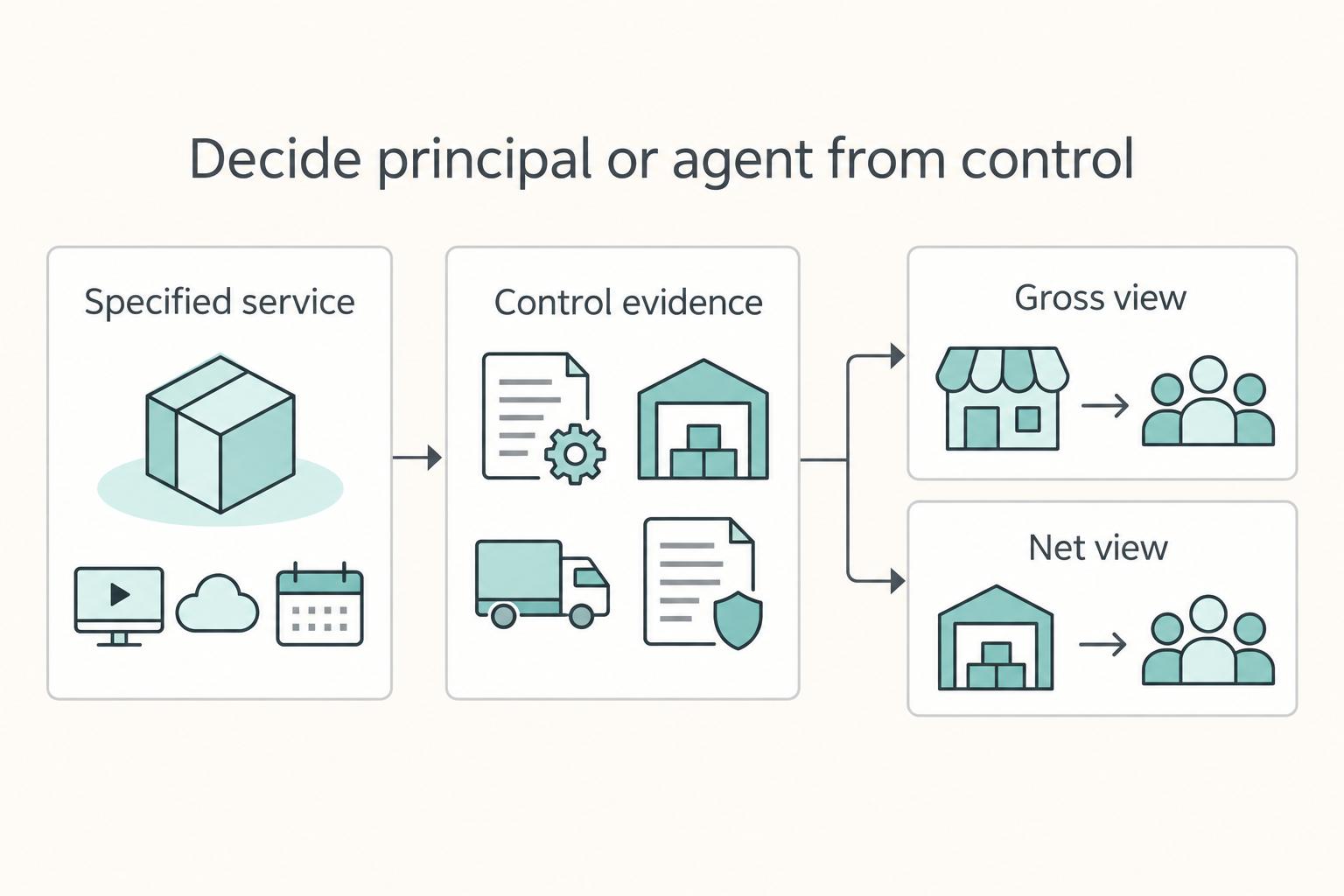
Principal-versus-agent is a revenue-scale decision, not a formatting detail. The same customer spend can be reported as gross revenue or as a smaller net fee, which can materially change top-line and gross-profit optics even when the underlying cash economics are similar.
Design this assessment early, especially in platform and merchant-of-record models. The core test is control of the specified good or service before transfer to the end customer. A practical sequence is to identify the specified good or service, then assess who controls it before transfer. Contract labels alone do not decide the outcome.
Why the same sale can produce different revenue#
With the same end-customer transaction, outcomes diverge based on control:
| Classification | Revenue presentation |
|---|---|
| Principal | Gross presentation (full sale amount as revenue) |
| Agent | Net presentation (fee or commission as revenue) |
That single conclusion can shift growth rates, margin percentages, and KPI comparability. If you wait until after launch, finance may need to rework reporting and forecast assumptions.
Use a practical starting rule#
If your platform controls pricing and delivery obligations, test principal indicators first. If your platform primarily arranges for another party to deliver the service and retains a fee, test agent indicators first.
Use that as a starting point, not a shortcut. Anchor the decision in the specified good or service and evidence of control before transfer. Review customer terms, supplier terms, checkout flow, invoice presentation, and refund or support obligations together, and resolve conflicts before posting revenue.
A common failure mode is assuming cash collection, checkout ownership, or merchant-of-record status automatically means gross presentation. It does not. Merchant-of-record structure can change which obligations you must analyze, but it does not by itself resolve principal versus agent.
If your model is close to the line, document the conclusion before launch and revisit it when pricing, fulfillment, or support ownership changes. For implementation detail, go deeper on ASC 606 for Merchant-of-Record Platforms: Principal vs Agent Revenue Recognition.
This pairs well with our guide on Subscription Billing Platforms for Plans, Add-Ons, Coupons, and Dunning.
Build a month-end close evidence pack finance can defend#
A defensible month-end close under ASC 606 is about traceability, not volume: finance should be able to show how revenue moved from contract and billing activity into the financial statements.
| Evidence item | Includes |
|---|---|
| Contract snapshots | Terms tied to performance obligations, pricing, renewals, and changes |
| Billing event support | Invoices, credits, renewals, usage charges, cancellations, and other recognition-impacting events |
| Adjustment log | Manual entries, overrides, reclasses, and fixes tied to billing or contract issues |
| Deferred revenue rollforward | Beginning balance, additions, recognitions, and ending balance |
| Close sign-off | Preparation, review, and approval |
In practice, the pack can stay compact: contract snapshots for the period, billing event support, an adjustment log, a deferred revenue rollforward, and close sign-off. If a reviewer cannot trace a material number backward, the close is not ready. Build a clear path from billing event to ledger entry to financial statement line so audit and investor questions can be answered quickly.
What to verify before final posting#
Make these checkpoints explicit and documented before final post:
| Checkpoint | Detail |
|---|---|
| Subledger-to-ledger ties | Reconciliation tolerances for subledger-to-ledger ties |
| Exceptions | Clear ownership for exceptions (unmatched or incomplete billing events) |
| Revenue entries | Approval timing so revenue entries are reviewed before posting |
This matters because recurring billing changes are financially consequential, not just operational. Upgrades, downgrades, cancellations, credits, and backdated changes can alter recognition outcomes, so unresolved breaks should stop close until they are explained.
Keep the pack useful across audits and scaling#
Preserve period-specific evidence instead of relying on current system state to reconstruct prior periods. Keep the contract version, billing export used for close, and reviewer notes on exceptions.
If you operate across markets or program structures, confirm local tax and compliance requirements before enforcing one global close format.
Related reading: Retainer Subscription Billing for Talent Platforms That Protects ARR Margin.
Automate revenue recognition without giving up control#
Automation should handle repetitive processing while finance keeps control of ASC 606 judgment calls. For subscription revenue recognition, use software to simplify recurring workflows only after your accounting policies are clearly defined.
Finance owns judgments such as standalone selling price, distinct promises, variable consideration and progress measures. Document those choices before automating recurring schedules and revisit them when contract facts change; do not import an unsupported benchmark for how long judgment work takes.
A practical rule is simple:
- define and document the ASC 606 policy choices first
- automate the repeatable processing those choices drive
- keep finance ownership of policy updates as contracts and pricing change
Automation can improve speed and consistency, but it is not a substitute for policy decisions.
Related: Revenue Recognition for SaaS Companies Under ASC 606.
Conclusion#
Treat ASC 606 as a strategic design constraint before you ship pricing, not a cleanup project after close. The teams that stay out of trouble are not doing more accounting. They are making sure the subscription contract, pricing logic, and revenue policy stay aligned before a plan goes live.
That matters because subscription businesses create complexity fast, especially once you introduce cancellations, upgrades, and downgrades. At that point, the gap between what was sold, what was billed, and what was actually earned can widen quickly. Bookings show what you sold. Revenue shows what you earned. If your product and sales motions move faster than your recognition logic, you invite audit risk, weaker forecasts, and a slower close.
The practical takeaway is simple: your revenue answer is usually hiding in your contract language and product design. If you cannot state in plain English what was sold, what was billed, and what was earned, you are not ready to automate anything yet. One useful checkpoint is to take a real subscription contract and trace it end to end: signed terms, billing event, revenue treatment, revenue release, and modification handling. If that trail breaks at any point, fix the design before you fix the tooling.
A short next-step checklist is usually enough to expose where recognition risk actually sits:
- Align contract language, pricing logic, and accounting policy. Your contract should describe what the customer receives, your billing setup should reflect those terms, and finance should have a written position on recognition.
- Test the ugly cases, not just the clean ones. Review cancellations, upgrades, and downgrades. These are where revenue recognition issues usually show up.
- Verify the evidence trail. Confirm you can tie bookings, billing events, contract modifications, and recognized revenue back to source records without manual guesswork.
- Then automate with controls. Automation helps once your contract taxonomy and standard paths are stable. If disconnected quote-to-cash data is still driving manual overrides, automation will only move bad logic faster.
The main risk is not that the standard is obscure. It is that teams treat it as a back-office issue until a pricing change exposes a broken assumption. The fix is simple but disciplined: keep business models, contracts, and pricing structures under regular review so revenue policy stays aligned with how you actually sell.
Before your next packaging or pricing change, review your current subscription contract patterns and pinpoint where recognition risk is highest. That is usually the fastest way to prevent a future close problem.
Frequently Asked Questions
When should a subscription business recognize revenue under ASC 606?
Recognize revenue when you satisfy the performance obligation, not when the invoice is sent or the cash lands. For a standard subscription, that usually means recognizing it gradually over the service term as access is delivered. Your first check is simple: can you point to the promised service in the contract and show when the customer actually receives it?
Why is cash collection timing different from subscription revenue recognition timing?
Cash timing reflects billing terms, while revenue timing reflects when the service is earned. If a customer prepays for future months, you have cash now but have not yet delivered all of the subscription service, so you do not recognize all of that amount as revenue immediately.
What is deferred revenue in a monthly vs annual subscription model?
Contract liabilities cover consideration received or unconditionally due before the related transfer, so they are not limited to cash already collected. Track receivable, cash, revenue and liability movements separately. Recognition depends on actual obligations/progress, not whether billing is monthly or annual.
How do the five ASC 606 steps change for usage-based pricing?
The 5-step model does not change for usage-based pricing. What changes is the evidence you rely on at close: pricing may be variable, and recognition depends on reliable usage records and clean period cutoffs. You still identify the contract, identify the performance obligations, determine the transaction price, allocate it if needed, and recognize revenue when the obligation is satisfied.
When does a contract modification require reallocation of transaction price?
First test separate-contract treatment: added distinct services plus an appropriate standalone-selling-price increase. If that fails and remaining services are distinct, apply prospective treatment to remaining consideration/services. If they are not distinct and form part of a partially satisfied obligation, apply cumulative catch-up; mixed cases need the corresponding combination. A series can be one obligation while its service periods are distinct.
How does principal vs agent affect reported revenue for a merchant of record model?
It affects whether you report gross revenue or only the net fee. If you are the principal, revenue is presented gross; if you are the agent, revenue is presented as a net fee or commission. For a merchant of record model, start with the specified good or service and assess control before transfer rather than assuming checkout ownership or cash collection settles the issue.
Try a related tool
Researched and edited by the Gruv editorial team. Gruv builds cross-border billing, payouts, and finance-operations software for global businesses.
Sources
Includes 3 external sources outside the trusted-domain allowlist.
Educational content only. Not legal, tax, or financial advice.
Related Posts
Subscription Revenue Recognition for Bundle Discounts Under ASC 606
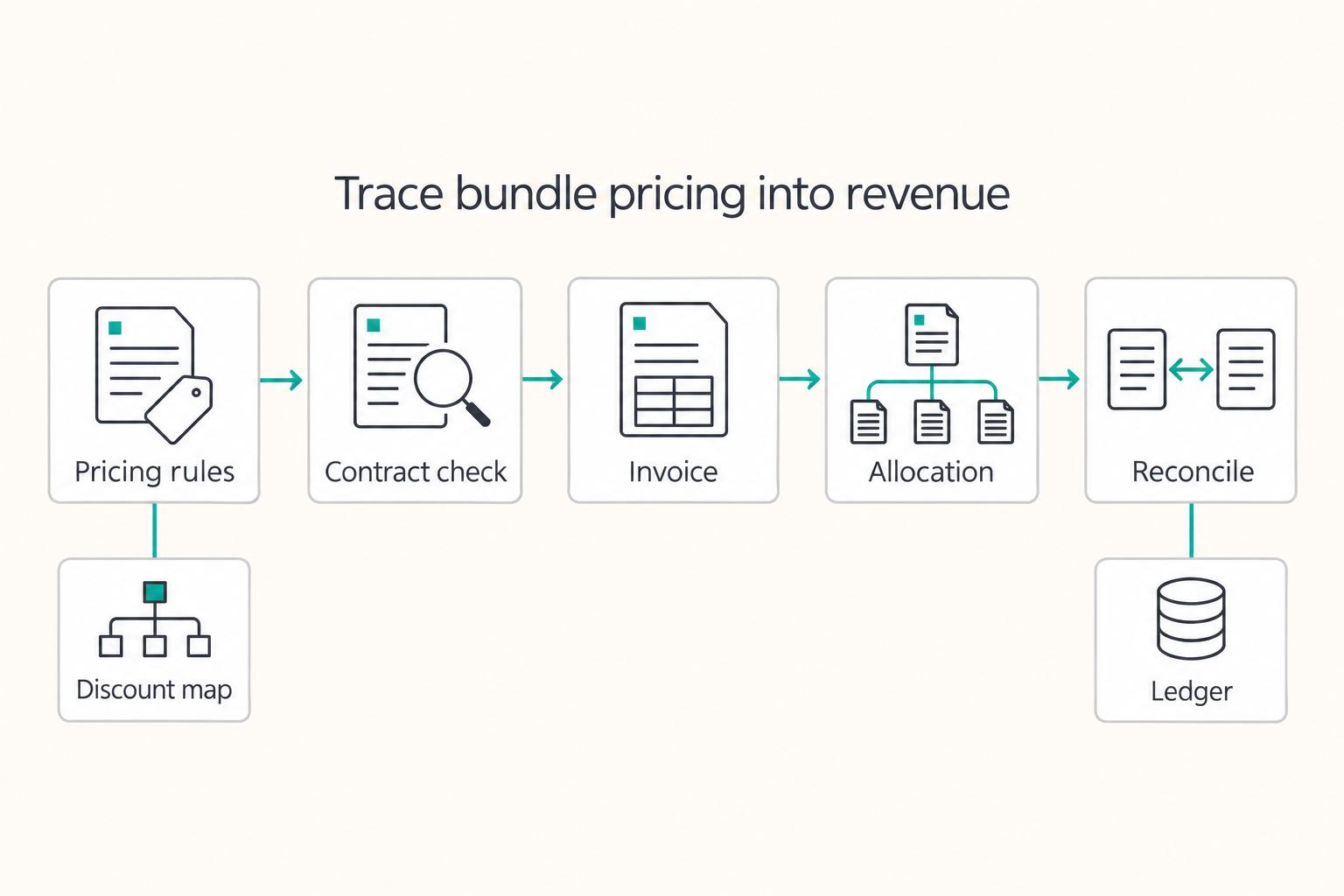
A discounted subscription bundle can put one amount on an invoice while producing several revenue schedules. The invoice total does not tell finance how much belongs to software access, a distinct training service or another promised deliverable. Start with the actual promises and supported stand-alone selling prices, then calculate the allocation and recognize each amount when or as its obligation is satisfied.

ASC 606 Revenue Recognition for Merchant of Record Platforms
If you run a Merchant of Record flow, cash movement is not your revenue policy. Under ASC 606, the hard part is that customer payment, processor settlement, and the point when revenue is actually earned can sit on different dates and in different records.
ASC 606 Principal vs Agent Decisions for Merchant-of-Record Platforms
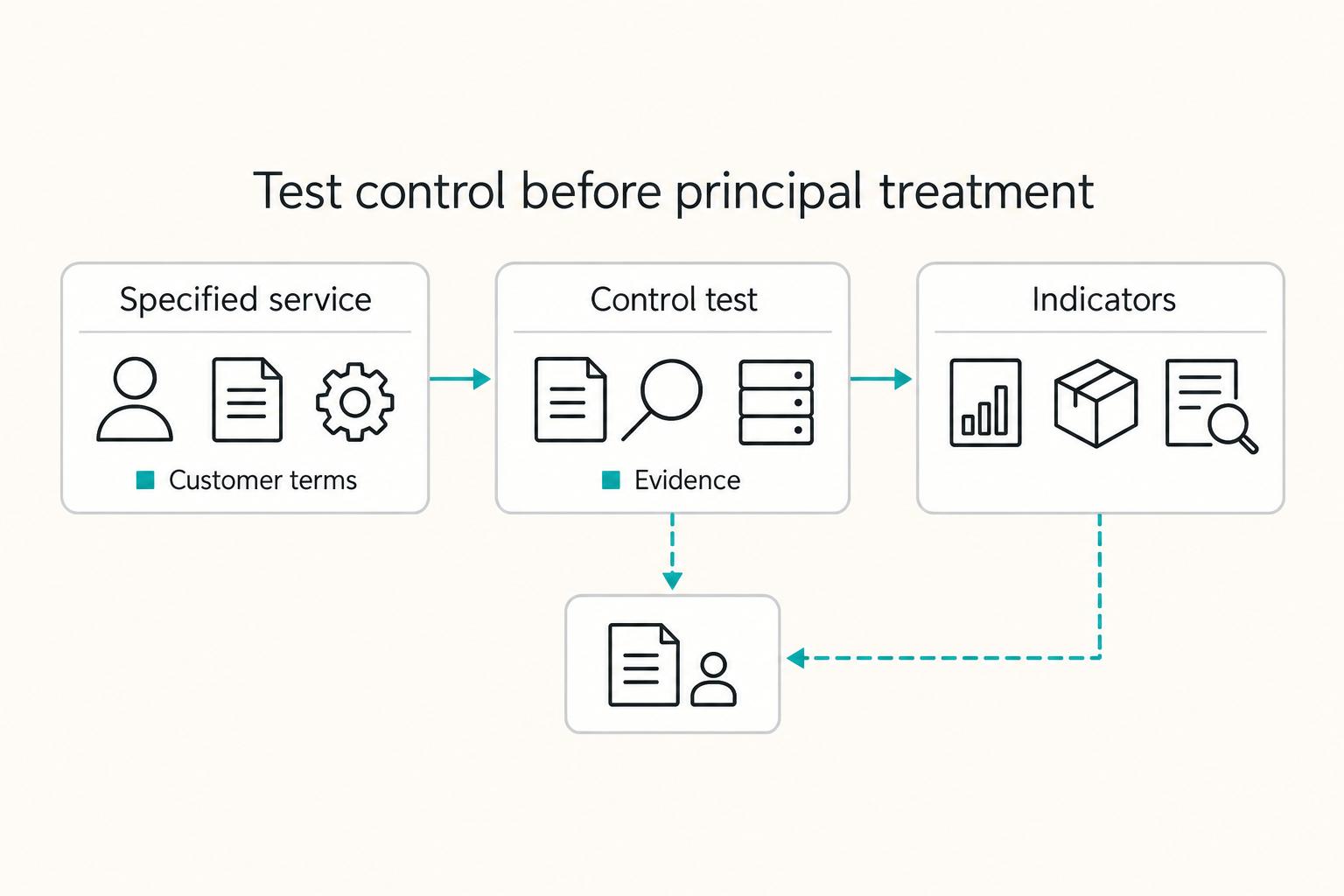
For merchant-of-record teams, the **ASC 606 principal vs agent merchant of record** call is a high-stakes judgment, not a presentation preference. It can move revenue from gross to net and raise the level of judgment finance, audit, and compliance teams need to defend.