
Quick Answer
Choose based on the bottleneck you must fix now: annual for upfront cash and steadier contracted ARR, monthly for lower entry friction, and dual-plan only with explicit switch timing. In the article’s worked case, 100 customers at $100/month gives $10K monthly, while annual at a 15% discount produces $102K upfront. Use that lift only after term length, auto-renewal, cancellation timing, and revenue-recognition handling are aligned across checkout and finance.
How billing cadence affects ARR and churn#
Annual vs monthly billing is an operating decision before it is a pricing-page choice. It affects when cash is collected, how much commitment is required upfront, how cancellation works, and how finance tracks collected cash versus recognized revenue.
| Option | How it bills | Renewal or cancellation | Term note |
|---|---|---|---|
| Annual subscription billing | 12-month purchase paid upfront | Typically auto-renews unless the customer cancels | Locks the customer for the term |
| Monthly subscription billing | Charges each month while the subscription stays active | Customers can generally cancel at any time, with cancellation taking effect on the next payment date | Spreads payment month to month |
| Dual-plan pricing | Gives customers both monthly and annual choices | Movement between monthly and annual usually happens at term boundaries | Adds policy choices that need to be explicit at term boundaries |
The definitions are straightforward. Running them cleanly is harder. Annual subscription billing is a 12-month purchase paid upfront and typically auto-renews unless the customer cancels. Monthly subscription billing charges each month while the subscription stays active, with cancellation generally taking effect on the next payment date. Dual-plan pricing offers both choices, with movement between monthly and annual usually happening at term boundaries.
So this is more than a preference call. Annual plans collect payment in advance and lock the customer for the term. Monthly plans spread payment month to month and generally let cancellation take effect on the next payment date. Dual-plan pricing can cover both needs, but it adds policy choices you need to spell out at term boundaries.
The common mistake is treating these plans like interchangeable packaging. They are not. Each model changes the balance between upfront commitment, cancellation flexibility, and cash-collection timing. If you offer both options, unclear switching or renewal terms can create avoidable confusion.
This guide is for founders, revenue leaders, product teams, and finance operators who need a billing decision they can actually execute and defend. There is no single best model for every business. The useful question is not which model SaaS companies use, but which billing frequency fits your current operating priorities and customer expectations. That framing leads to a workable answer.
A few operator checks matter right away. Make sure your checkout, order form, and renewal language all state the term length, whether auto-renewal applies, and when cancellation takes effect. Also make sure finance has a clean view of cash collected versus recognized revenue, because billing frequency affects revenue recognition even when the customer-facing offer looks straightforward.
You will also see annual discounts used to steer behavior, often in the 10% to 25% range. Treat that as a pricing input, not a rule. The goal is not to copy a common discount pattern. It is to choose annual, monthly, or a dual-plan structure based on explicit tradeoffs you can measure: upfront cash collection, cancellation flexibility, and revenue recognition implications.
For a broader revenue-model lens, read Choosing Between Subscription and Transaction Fees for Your Revenue Model.
Annual vs monthly comparison that matters in operations#
Choose billing cadence based on what your team can operate cleanly at your current stage, not on pricing-page preference. Annual subscription billing can improve upfront cash position when buyers accept larger commitment. Monthly subscription billing lowers entry friction and gives you a tighter month-to-month operating read.
In the grounded example of 100 customers at $100/month, monthly billing yields $10K/month, while annual billing with a 15% discount yields $102K immediately. Use that cash advantage as one input, not the whole decision.
| Criterion or stage | Annual subscription billing | Monthly subscription billing | Operator read |
|---|---|---|---|
| Cash flow | Upfront payment can improve cash position | Smaller, predictable month-to-month inflows | Tight runway usually favors annual |
| Conversion rate | Higher upfront commitment | Lower barrier to start | Early hesitation usually favors monthly |
| Churn rate visibility | Churn pressure is concentrated around renewal points | Churn pressure is visible sooner | Compare cohorts on the same window |
| Retention rate pattern | Term structure can look steadier during the term | Retention is tested continuously | Interpret retention with term context |
| ARR / MRR forecastability | Supports a clearer ARR view from contracted recurring revenue | Gives the month-to-month MRR movement view | Keep ARR focused on recurring components, not one-time fees |
| Revenue recognition complexity | Cash arrives upfront but is recognized over the service period | Billing and recognition happen in smaller recurring cycles | Separate cash collected from recognized revenue in both models |
| Customer flexibility | Lower flexibility after commitment | Higher flexibility and easier exit | Flexibility can help acquisition but can increase leakage |
| Cancellation support burden | Fewer events, but higher-stakes cases when terms are unclear | More cancellation events to process | Keep cancellation terms explicit in checkout and order forms |
| Failed collections | Fewer billing attempts, larger misses | More billing attempts to recover | Both create ops load, in different shapes |
| Renewal operations | Larger, less frequent renewal events | Smaller, recurring renewal handling | Annual needs tighter renewal coordination |
| Downgrade handling under Dual-plan pricing | Annual-to-monthly needs clear end-of-term or credit rules | Monthly-to-annual still needs clear timing/proration rules | Hybrid adds billing and revenue-recognition complexity |
| Early validation | Harder if trust is still forming | Usually easier to adopt | Decision output: default monthly |
| Post-PMF | More viable as value proof and onboarding execution improve | Still useful for lower-commitment entry | Decision output: dual-plan with steering |
| Scaled B2B SaaS | Often stronger for contracted recurring-revenue planning | Still useful as an entry path | Decision output: default annual |
Dual-plan pricing is often where hidden costs surface first: switch timing, effective-date rules, and downgrade handling. If those rules are not explicit in policy and product behavior, support and finance absorb the ambiguity.
The operational checkpoint is simple: your checkout, order forms, and renewal language should match on term length, auto-renewal, cancellation timing, and plan-change timing. Related: Subscription Metrics That Matter: MRR ARR LTV and Churn Rate Explained.
Set the economic objective before setting billing frequency#
Pick the economic objective first, then pick billing cadence. If you try to optimize near-term cash flow, ARR durability, and top-funnel conversion at once, your test will be hard to interpret.
For the next two quarters, decide the tradeoff upfront. Monthly billing is usually easier at sign-up, while annual billing is usually stronger for short-term cash flow and a more stable recurring base. If leadership cannot rank those outcomes, pause the billing change.
| Primary objective (next 2 quarters) | Billing tendency | Metrics to lock before launch | Red flag |
|---|---|---|---|
| Maximize near-term cash flow | Bias toward annual billing | CAC, LTV, churn rate, net new MRR | Treating upfront cash as success while conversion weakens |
| Improve ARR durability | Bias toward annual, or dual-plan steering to annual | ARR, churn rate, LTV, net new MRR | Mixing one-time revenue into ARR |
| Protect top-funnel conversion | Keep monthly available, often as entry | Conversion rate, CAC, churn rate, net new MRR | Forcing annual before value is proven |
Lock metric definitions before launch. If ARR is a decision metric, keep it to recurring subscription and upgrade revenue, and exclude one-time charges so it reflects predictable recurring performance.
Create a finance-approved constraints list in writing: acceptable payback period, acceptable churn increase, and revenue-recognition requirements. If those constraints are not agreed in advance, teams will read the same rollout differently.
Use one final alignment check before launch: what metric decides success, what tradeoff is acceptable, and what is off-limits. If stakeholders answer those differently, do not ship the billing change yet.
This pairs well with our guide on Retainer Subscription Billing for Talent Platforms That Protects ARR Margin.
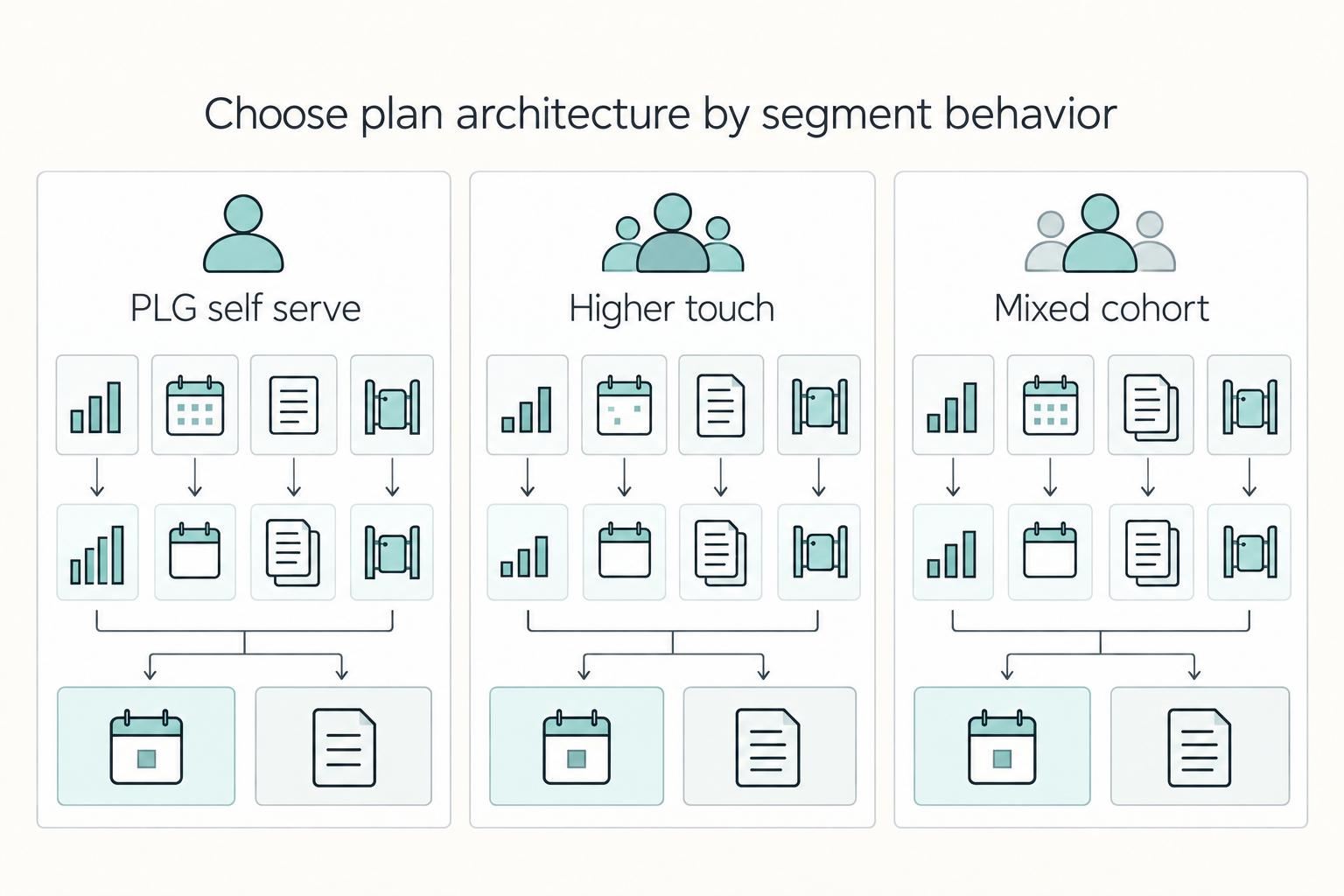
Choose plan architecture by segment not by opinion#
Plan architecture should follow segment behavior, not internal preference. If a segment's Conversion rate is fragile, keep Monthly subscription billing as the entry path. If Retention rate is strong and onboarding is repeatable, push Annual subscription billing harder.
The core split is usually sales motion. Product-led growth (PLG) self-serve users often have more budget uncertainty and payment risk, so monthly entry protects sign-up volume with a lower-commitment option. Higher-touch B2B SaaS accounts often buy for cost predictability and procurement clarity, which can make annual a better fit when implementation risk is controlled.
| Segment pattern | Better billing architecture | Why it fits | Verify before rollout | Common failure mode |
|---|---|---|---|---|
| PLG self-serve, early value not yet proven | Monthly-led | Lower commitment protects conversion | Segment-level conversion rate, failed-payment rate, month-1 retention by cohort | Forcing annual too early and losing sign-ups before users reach value |
| Higher-touch B2B SaaS, onboarding repeatable | Annual-led | Buyers often want predictable costs | Time-to-value, renewal behavior, expansion or NRR trend in existing accounts | Selling annual before implementation risk is under control |
| Mixed cohort with both behaviors | Dual-plan pricing with steering | Captures both motions without forcing one term | Default selection, upgrade prompt timing, monthly-to-annual conversion rate | Giving monthly and annual equal visual weight and learning nothing |
For mixed cohorts, Dual-plan pricing is usually better than pretending one term fits everyone. Set a default based on the segment you want to move, then use upgrade prompts after value is visible so the annual ask follows delivery.
Use cohort tracking, not aggregate views, as your operator check. Cohort analysis can reveal retention issues 3-4 months earlier than topline churn, and failed payments are a major involuntary churn driver, so headline MRR can look healthy while a segment is weakening underneath.
Use a simple scenario rule: startups with budget uncertainty usually need monthly entry, while mature teams optimizing procurement predictability and Annual Recurring Revenue (ARR) stability are stronger annual candidates. If you are unsure, start monthly for fragile-conversion cohorts, then earn the annual ask with onboarding proof, renewal evidence, and segment-level retention data. If you need a practical next step on this annual-vs-monthly pricing decision, browse Gruv tools.
Set annual discount from retention economics and unit economics#
Set your annual discount from retention and unit economics first, then compare it to market norms. Many companies offer 10% to 25% off annual plans, but that range is only a benchmark, not a decision rule.
Use a simple pressure test before rollout: annual price / (monthly price × 12). This ratio makes the revenue tradeoff explicit and keeps discounting from becoming a default habit.
Start from retention, not competitor screenshots#
If retention is weak, a deeper annual discount can improve near-term collections without fixing the core issue. At 5% monthly churn, you can lose about half your customers over a year, so discount depth should follow retention evidence, not pricing-page parity.
Review this as one decision: cohort retention, segment-level CAC recovery, and current annual take rate. If one is missing, you are setting price with partial evidence.
Model discount depth as a unit economics choice#
Annual plans are typically paid upfront, lock the customer for the term, and usually auto-renew unless canceled. That can help cash flow and CAC recovery, but only if discount depth does not erode LTV and margin more than the upfront payment helps.
| Discount candidate | Pricing ratio | Likely effect on annual take rate | Gross margin trajectory | Downside if annual conversion underperforms |
|---|---|---|---|---|
| 10% | 0.90 | Usually a modest lift | Light margin pressure | Limited downside, but weaker cash-flow improvement if buyers stay monthly |
| 15% | 0.85 | Often a clearer pull to annual | Moderate margin pressure | Repeating revenue shortfall if behavior does not materially improve |
| 25% | 0.75 | Can drive stronger annual interest | Heavy margin pressure | Highest risk of lower realized value if uptake is weaker than expected |
The core risk is compounding: underpricing is not a one-time hit when the gap repeats across the subscription lifetime. Start shallow, test, and only move deeper when retention and conversion data justify it. For a related retention lens, see eLearning Subscription Retention: How EdTech Platforms Reduce Churn with Cohort-Based Billing.
Design packaging and pricing page mechanics that steer the right behavior#
Treat the pricing page as a conversion control surface: make the value and the commitment equally clear so buyers can choose confidently.
| Page mechanic | What to do | Failure mode |
|---|---|---|
| Default selection | In a dual-plan layout, make the preferred plan prominent only when that cohort already shows stable retention | Forcing commitment too early can increase friction and weaken trust |
| Savings framing | Show annual savings against 12 months of monthly in the same view as term length | Heavy "save" language without clear term context feels misleading |
| Commitment copy | Say plainly that annual billing is upfront payment for ongoing access over the term | One-off purchase language hides the ongoing subscription relationship |
| Renewal and cancellation language | State automatic renewal and cancellation policy in plain language before payment | Vague or conflicting policy wording creates avoidable support and billing disputes |
If you want more annual uptake, keep the tradeoff explicit: what the buyer gets, what they save, when they are charged, whether renewal is automatic, and what cancellation changes. Transparent pricing should support long-term value, not just short-term bookings.
Before launch, align finance and support on the exact promises shown in pricing, checkout, receipts, billing terms, and support macros. After release, track a focused metric set tied to the pricing experiment, including annual take rate, checkout conversion, cancellation contacts, and cohort-based retention.
We covered this in detail in How to Use a Community to Reduce Churn and Increase LTV.
Build renewal migration and cancellation controls before rollout#
Before you roll out plan changes, lock renewal, migration, and cancellation operations first. Publish policy docs, configure renewal reminders, train support scripts, and test cancellation end to end before release. If those controls are inconsistent, you create avoidable churn through your own process, not market demand.
Small churn shifts can compound. A commonly cited example is moving from 3% monthly churn to 2% monthly churn, which can translate into 9% less ARR churn in 12 months. If you want stronger annual revenue, your renewal and cancellation handling has to be as clear as your pricing.
Lock the order of operations before launch#
Use a strict sequence and avoid compressing it under deadline pressure:
| Step | Action | Key detail |
|---|---|---|
| 1 | Publish policy docs in plain English | Cover automatic renewal, cancellation effect, and plan-change rules |
| 2 | Configure renewal notices | Test that term, amount, and renewal date are correct |
| 3 | Train support | Use the exact approved language for upgrades, downgrades, and cancellations |
| 4 | Release plan changes | Update checkout and account settings only after the first three steps are complete |
A common operational risk is fragmented data across systems plus manual reconciliation. When billing events, customer communications, and finance reporting are split, execution errors are more likely, and finance teams often absorb the burden in spreadsheet-heavy close work.
Document both migration directions under Dual-plan pricing#
Under Dual-plan pricing, clarity on movement between terms matters as much as offering both terms.
| Migration path | Decision you need to document | Failure mode if unclear |
|---|---|---|
| Monthly subscription billing to annual | Whether the upgrade takes effect immediately or on the next billing date, and how the current monthly period is treated | Support improvises credits or dates, creating inconsistent charges |
| Annual subscription billing to monthly | Whether the downgrade is allowed mid-term or only after the annual term ends, and when monthly billing begins | Customers think "cancel annual" means "switch to monthly now" |
| Cancellation on either plan | What cancellation changes: auto-renew only, or access timing too | Customers cancel successfully but are still charged or lose access unexpectedly |
Use the same wording in policy docs, account UI, support macros, and receipt emails. If one flow says "downgrade" and another says "cancel," you invite avoidable refund requests.
Verify the controls like an operator#
Check three things before and after release:
- Use test accounts to confirm renewal reminders are delivered and logged.
- Complete cancellations through each entry point and verify the next charge is suppressed when it should be, with confirmation emails recorded.
- Track cohort-level retention rate by plan term after the policy change, not as one blended average.
If annual uptake increases while cancellation contacts rise, treat it as a signal that cash collection improved but trust may have weakened.
You might also find this useful: ARR vs MRR: Annual and Monthly Recurring Revenue Explained.
Run a bounded test and decide with evidence#
Treat annual vs monthly as a test decision, not a narrative one. Once renewal and cancellation controls are stable, validate with cohort analysis and A/B testing, then decide from a written scorecard instead of anecdotes.
| Decision | When it fits | Readout basis |
|---|---|---|
| Scale | Results and operating load are both acceptable | Decide from cohort analysis and A/B testing, then make the call in writing |
| Revise | Economics improve but customer friction rises | Evaluate economics and operating impact together, including support workload signals |
| Rollback | Outcomes are mixed and not defensible from cohort evidence | Use cohort evidence and a written scorecard instead of anecdotes |
Use cohorts to isolate billing-cadence effects from channel mix, segment mix, or seasonality. Keep your test conditions stable during the window so the readout reflects cadence, not mid-test execution changes.
Evaluate both economics and operating impact together. Annual billing is often associated with stronger retention, lower churn, higher LTV, and better short-term cash flow, while monthly billing is often easier at sign-up and offers more buyer flexibility. Include support workload signals in the same decision pack so operational strain is visible alongside revenue movement.
Make one explicit call in writing after the readout:
- Scale when results and operating load are both acceptable.
- Revise when economics improve but customer friction rises.
- Rollback when outcomes are mixed and not defensible from cohort evidence.
For a step-by-step walkthrough, see How to Calculate and Manage Churn for a Subscription Business.
Choose the model your team can execute consistently#
Choose the billing model your team can run cleanly end to end, because ARR quality depends on both plan design and consistent execution. The better option is the one that improves predictable Annual Recurring Revenue (ARR) without hurting acquisition, creating migration exceptions, or forcing finance to clean up avoidable billing issues.
There is no single payment model that wins in every case. The practical question is which option fits your segments, onboarding reality, and your team's ability to support renewals, cancellations, and reporting without constant manual fixes.
| Model choice | When the evidence supports it | What to verify before scaling | Main risk if forced too early |
|---|---|---|---|
| Annual-led | A segment shows strong retention, reaches value quickly, and can accept a 12-month purchase paid in advance | Conversion rate holds, annual discount still works for your economics, and auto-renew plus cancellation terms are visible before payment | Upfront price suppresses new-logo conversion or creates post-sale disputes |
| Monthly-led | A segment is price-sensitive, budget-uncertain, or still validating value | Monthly conversion stays healthier than annual, churn remains acceptable, and support can handle recurring cancel decisions | More flexibility, but weaker ARR predictability and more frequent cancellation exposure |
| Controlled dual-plan pricing | Segments behave differently, or evidence is not yet stable | One option is clearly default, discount depth is intentional, and migration rules are documented | Equal visual weight creates confusion and pushes edge cases into support and finance |
Anchor the decision on segment-level evidence, not benchmark chasing. If self-serve buyers hesitate at commitment, keep Monthly subscription billing as the entry point. If a higher-confidence segment consistently activates and stays, steer those accounts toward Annual subscription billing instead of presenting both plans with no clear steer.
Document the operating rules in a short decision memo: annual discount, pricing-page default selection, cancellation policy, and annual-to-monthly migration rule. If you allow that downgrade, state whether monthly billing commences only at the end of the annual subscription term so support does not have to improvise.
Before rollout, verify both commercial and operational signals: segment-level conversion, retention or churn by billing cadence, cash-collection timing, and renewal/cancellation exceptions. Finance should also sign off, since billing frequency affects revenue recognition and poor handling can distort performance interpretation.
A common failure mode is assuming ARR quality improved when only cash timing or recording conventions changed. Small handling mistakes can mislead the business, especially when data is still noisy. If data is still noisy, run a bounded dual-plan test, identify real friction, then tighten toward annual-led or monthly-led only when both outcomes and operations are stable. Related reading: ARR vs MRR for Your Platform's Fundraising Story.
Frequently Asked Questions
When is Annual subscription billing the better default?
Use it when your onboarding is proven, your buyer already understands the value, and near-term cash flow matters. An annual plan is a 12-month purchase paid in advance, so it can strengthen upfront cash collection and reduce transaction costs. Keep the commitment terms explicit at checkout because the bigger upfront price can still deter otherwise qualified buyers.
When should we keep Monthly subscription billing as the primary offer?
Keep monthly first when your conversion rate is fragile, your segment has budget uncertainty, or customers need a lower-risk starting point. Monthly billing lowers the entry barrier, but it usually comes with more churn exposure and more administrative work. If moving to annual hurts new-logo conversion more than it helps cash flow, stay monthly-led.
Should most SaaS companies offer Dual-plan pricing?
Many SaaS companies do offer both monthly and annual options, and the right choice still depends on price point, customer segment, and business stage. A common mistake is offering both plans with no steering, which can leave buyers unsure which option to choose. If you use dual-plan pricing, set a clear default, define upgrade and downgrade rules in advance, and verify that support, finance, and checkout copy all describe the same terms.
How should we set an annual discount without hurting LTV?
Start with your own retention and payback math, not a competitor screenshot. Many companies use 10% to 25% to encourage annual purchase, but that range is only a starting reference, so pressure-test each discount against LTV, churn, and cash timing. In the example of 100 customers at $100/month, monthly billing yields $10K/month, while annual with a 15% discount yields $102K immediately. That is great for cash flow only if the discount does not erase too much long-term value.
What is the biggest mistake teams make with Pricing page architecture?
They treat the pricing page like a design choice instead of a behavior control. If the annual savings message is vague, the default selection is unclear, or the term commitment is buried, you create avoidable confusion. Check the live page yourself so the billing cadence, savings framing, automatic renewal language, and cancellation timing are visible before payment.
How do Automatic renewal and Cancellation policy choices affect churn and brand trust?
They shape churn risk and how fair your company feels after the sale. Annual plans typically renew automatically unless the customer cancels, while monthly plans generally allow cancellation at any time effective on the next payment date, so your notice timing and wording matter. A common failure mode is promising flexibility in marketing while enforcing stricter billing terms in support. If you allow annual-to-monthly moves, state clearly whether the monthly plan starts only at the end of the annual term, and confirm renewal notices are actually being delivered.
Try a related tool
Researched and edited by the Gruv editorial team. Gruv builds cross-border billing, payouts, and finance-operations software for global businesses.
Sources
Includes 8 external sources outside the trusted-domain allowlist.
- baremetrics.com/blog/annual-vs-monthly-pricing-better-retentionexternal
- billingplatform.com/blog/annual-subscription-modelexternal
- churn.fm/episode/how-freemius-aligns-pricing-with-gro...external
- digitalapplied.com/blog/subscription-commerce-recurring-revenue...external
- ecaplabs.com/blogs/how-to-reduce-churn-and-maximize-ltv-i...external
- ecosire.com/blog/subscription-business-model-complete-guideexternal
- fastspring.com/blog/arr-vs-nrr-how-they-drive-growthexternal
- foundra.ai/key-reads/monthly-vs-annual-pricing-saas-bil...external
Educational content only. Not legal, tax, or financial advice.
Related Posts
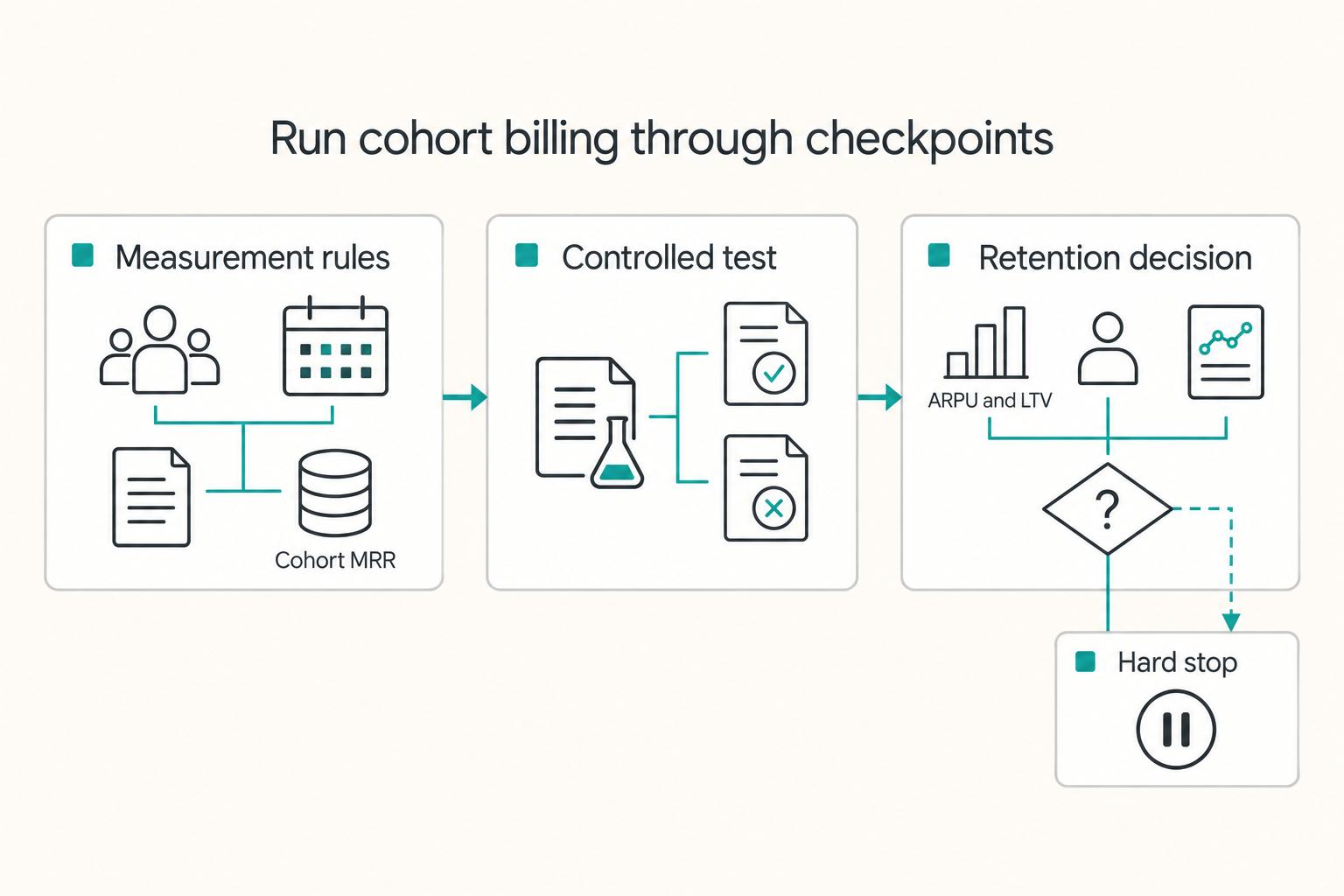
How EdTech Platforms Reduce Churn With Cohort-Based Billing
This is not really a pricing-page decision. It is a billing and measurement decision you need to explain, measure, and operate without mixing up product churn, billing churn, and reporting noise. That is the real job behind **elearning subscription retention cohort billing**, especially once finance asks why retention moved and ops has to prove the answer.
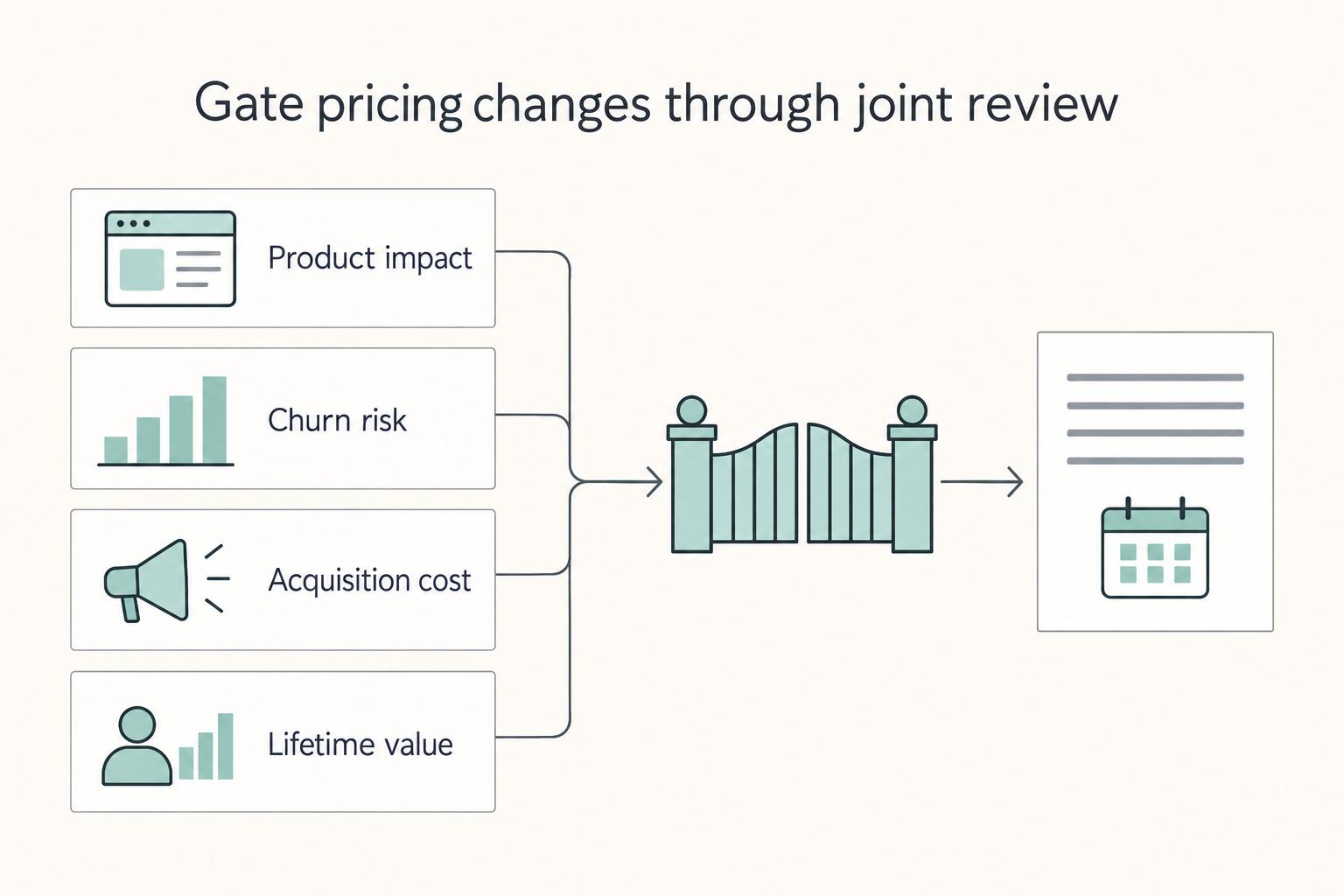
Subscription Metrics MRR ARR and Churn for Better Pricing Decisions
Recurring revenue is simple in principle: money your company receives on a regular basis. The trouble starts when clean definitions turn into messy decisions. Teams often track Monthly Recurring Revenue and Annual Recurring Revenue, but still make pricing, packaging, or customer-save calls without enough context.
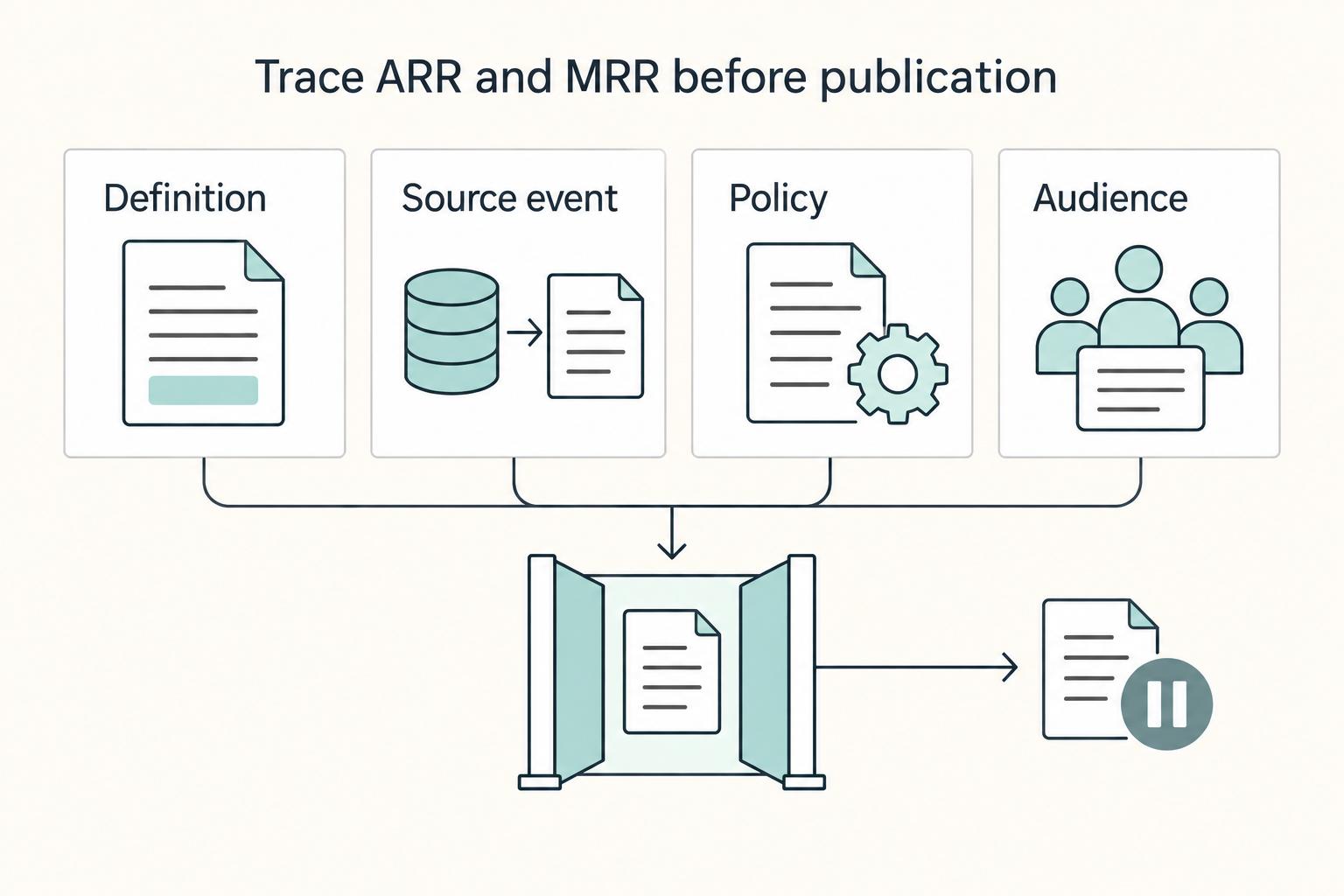
ARR vs MRR for Platform Teams Managing Subscription Revenue
**ARR vs MRR is not a branding debate. It is a decision problem.** If you run a subscription business, you usually need both views. Monthly Recurring Revenue gives you close-up operating visibility. Annual Recurring Revenue helps with planning and leadership communication. Used together, they connect short-term movement to longer-term impact.