
Quick Answer
Start with a written control map before choosing any AI fraud detection subscription platform. Require proof that KYC, KYB, Sanctions Screening, and AML monitoring connect from onboarding to payout release, then review a real Case Management export with hold and release reasons. Use 12 CFR 21.21(d)(1) and 31 U.S.C. 5318(h) as ownership checkpoints for escalation accountability. Finally, separate published pricing from quote-only terms so entry price does not hide downstream manual-review cost.
AI fraud detection for subscription platforms in plain terms#
An AI fraud detection subscription platform is not just a model score. For a subscription business, it should help you manage fraud risk and compliance exposure across onboarding, recurring payments, and payouts or withdrawals. It should also give your risk, finance, legal, and compliance teams decisions they can defend.
-
Start with scope, not scoring. The market uses this label for a range of capabilities across digital channels, not one standalone detector. In practice, you should expect coverage across account opening, payment activity, and money movement. Vendor positioning reflects that breadth: Feedzai talks about fraud and financial crime "across every transaction and every risk," while Sardine says it can prevent fraud during account funding, deposits, withdrawals, and card or bank payments. Use a simple checkpoint here: ask the vendor to map where it acts in your lifecycle, from onboarding to recurring billing to payout release. If it can only show a transaction score and not the control points around it, you are looking at a partial tool, not a full platform decision.
-
Assume the real evaluation happens in diligence and contract review. Public material often describes broad coverage and scale, but regulated procurement expects more than that. The FDIC's third-party risk guidance frames vendor oversight as a lifecycle that includes planning, due diligence, contract negotiation, ongoing monitoring, and termination. That matters because fraud tools often touch customer onboarding, payment decisions, and investigation handling at the same time. A practical check is to test broad claims against your own traffic and geography instead of treating them as proof. A claim like serving enterprises in "over 70 countries" signals reach. It does not tell you whether the controls fit your subscription flows, review staffing, or escalation needs. If a vendor cannot show what will be validated during diligence, slow down before security and legal review.
-
Buy for governable controls and defensible outcomes. The value is not "more AI." It is clear ownership over decisions, case handling that supports alert disposition, and reporting that stands up to management oversight. That is where the NIST AI Risk Management Framework, released on January 26, 2023, helps: AI risk has to be managed at the organizational level, not left inside a black box. A good operator test is to ask for two artifacts before you get pulled in by demo accuracy: a sample case management view for alert disposition and a sample oversight report for management review. If those are weak or vague, you can usually predict the failure mode. Scores may look better on paper, but nobody can explain a hold, release, or escalation when finance, compliance, or legal asks for evidence.
If you want a deeper dive, read Fraud Detection for Payment Platforms: Machine Learning and Rule-Based Approaches.
How to choose and who this list is actually for#
Choose this category only if you need linked controls across onboarding and monitoring, and you can name who owns holds, releases, and escalations. If you only want the lowest upfront tool cost and a score output, this is usually the wrong buy.
- Best fit
This fits teams running cross-market subscriptions or platform payments that need connected KYC, KYB, sanctions screening, and AML transaction monitoring. That aligns with the common FATF baseline (as amended in October 2025) and is especially important when onboarding legal entities. Ask vendors to show one connected path from due diligence and business verification through unusual-activity monitoring.
- Not a fit
Do not proceed if the operating model is "buy now, figure out review later." Case management for alert disposition is a core requirement once alerts begin. If ownership is unclear, you will not have a defensible explanation for why an account was held or released.
- Minimum selection criteria
Prioritize four checks: decision latency, false-positive governance, audit-evidence quality, and integration readiness with your RiskOps process. Request proof, not claims: a sample alert with disposition notes, an export that ties the decision to financial records, and evidence of low-latency decisions with minimal customer friction. Public "fewer false positives" claims are diligence inputs, not proof for your traffic.
- Delay procurement if ownership is fuzzy
Treat this as a hard stop. Suspicious-activity handling requires designated individuals, and internal-control responsibility sits with senior management and the board, including references such as 12 CFR 21.21(d)(1) and 31 U.S.C. 5318(h). If you cannot assign escalation owners across compliance, legal, and finance, pause procurement, even if Sardine or Feedzai demos look strong.
Related: Device Fingerprinting and Fraud Detection: How Platforms Identify Bad Actors.
Quick comparison criteria before vendor demos#
Use one written scorecard across all vendors before demos. If a vendor cannot map capabilities to your controls, especially KYC, KYB, AML Transaction Monitoring, and Sanctions Screening, the demo is not decision-ready.
The scorecard rows that matter#
| Row | What to verify | Grounded reference |
|---|---|---|
| Data inputs and control mapping | Line-by-line map of inputs for onboarding controls, transaction review, and sanctions checks | Sardine publicly describes CDD, business verification, sanctions screening, and document verification in one platform |
| Model explainability and transparency | One approved case and one declined case with reason fields exposed | Feedzai publicly positions AI around fair, transparent, and explainable decisions |
| Case Management and incident response path | Who receives alerts, what can be held or released, and what evidence follows each decision | FraudNet is described with integrated case management and a workflow that can freeze suspected transactions until specialist review |
| Sanctions and monitoring depth | Keep sanctions as a separate control row and ask for one sanctions case plus one AML transaction-monitoring alert | Sanctions screening is a formal requirement for regulated sectors, and control mapping should connect onboarding and monitoring together |
| Documentation maturity and evidence export quality | Full case export with audit trail and reporting fields | Dashboards are not equivalent to legal/audit evidence |
- Data inputs and control mapping
Compare end-to-end control coverage, not UI polish. Require a line-by-line map of which inputs support onboarding controls, transaction review, and sanctions checks. Sardine is one reference point because it publicly describes CDD, business verification, sanctions screening, and document verification in one platform. The real test is whether onboarding evidence and monitoring decisions connect in one path.
- Model explainability and transparency
Require decision explanations that work for operators and compliance stakeholders, not just model branding. As a grounded check, simply adding an "AI sticker" to a solution doesn't tell you much about its capabilities. Feedzai publicly positions its AI around fair, transparent, and explainable decisions, which is testable in demo workflows. Ask for one approved case and one declined case with reason fields exposed; a score plus confidence band alone usually creates downstream review friction. If you operate in scope, ask how the vendor handles transparency obligations under the EU AI Act.
- Case Management and incident response path
Scores without case handling are operationally weak. FraudNet is a useful comparison point because Fiserv describes integrated case management and a workflow that can freeze suspected transactions until specialist review. Score this row directly: who receives alerts, what can be held or released, and what evidence follows each decision. If overrides happen without durable records, escalation and audit quality usually break later.
- Sanctions and monitoring depth
Keep sanctions as a separate control row, not a sub-item under onboarding. The grounded baseline is that sanctions screening is a formal requirement for regulated sectors, and control mapping should connect onboarding and monitoring together. Ask for side-by-side examples: one sanctions case and one AML transaction-monitoring alert.
- Documentation maturity and evidence export quality
Demand audit-ready exports, not dashboard screenshots. FraudNet's dashboard and analytics positioning can be useful, but dashboards are not equivalent to legal or audit evidence. Ask for a full case export with audit trail and reporting fields that can be reviewed by legal, audit, or oversight teams.
Treat network claims as a separate hypothesis#
Keep network-intelligence claims in their own row. FraudNet's Global Anti-Fraud Network claims "trillions of data points," but you should test network-scale claims on your traffic mix with the same review staffing and policy thresholds. Treat this as a controlled hypothesis, not proof by default.
Commercials to split early#
Separate published from undisclosed pricing signals early so finance can compare like-for-like assumptions.
| Vendor | Public commercial signal | What to ask next |
|---|---|---|
| SEON | Public pricing page exists; a Fraudio comparison lists a starting example of $699/month | What entry pricing includes, and which AML or review capabilities are outside base plans |
| FraudNet | Public path is demo-led: "Request a demo or free fraud analysis" | Written pricing structure, implementation assumptions, and volume/review dependencies |
| Sardine Payments | Public docs say pricing is tailored to business model, transaction volume, and geographic coverage | How geography and module mix change pricing, especially for combined KYB and sanctions coverage |
If a vendor cannot provide a written control map, sample case export, and clear commercial structure before diligence deepens, slow the process. That is an early risk signal, not procurement noise.
You might also find this useful: Subscription Billing Platforms for Plans, Add-Ons, Coupons, and Dunning.
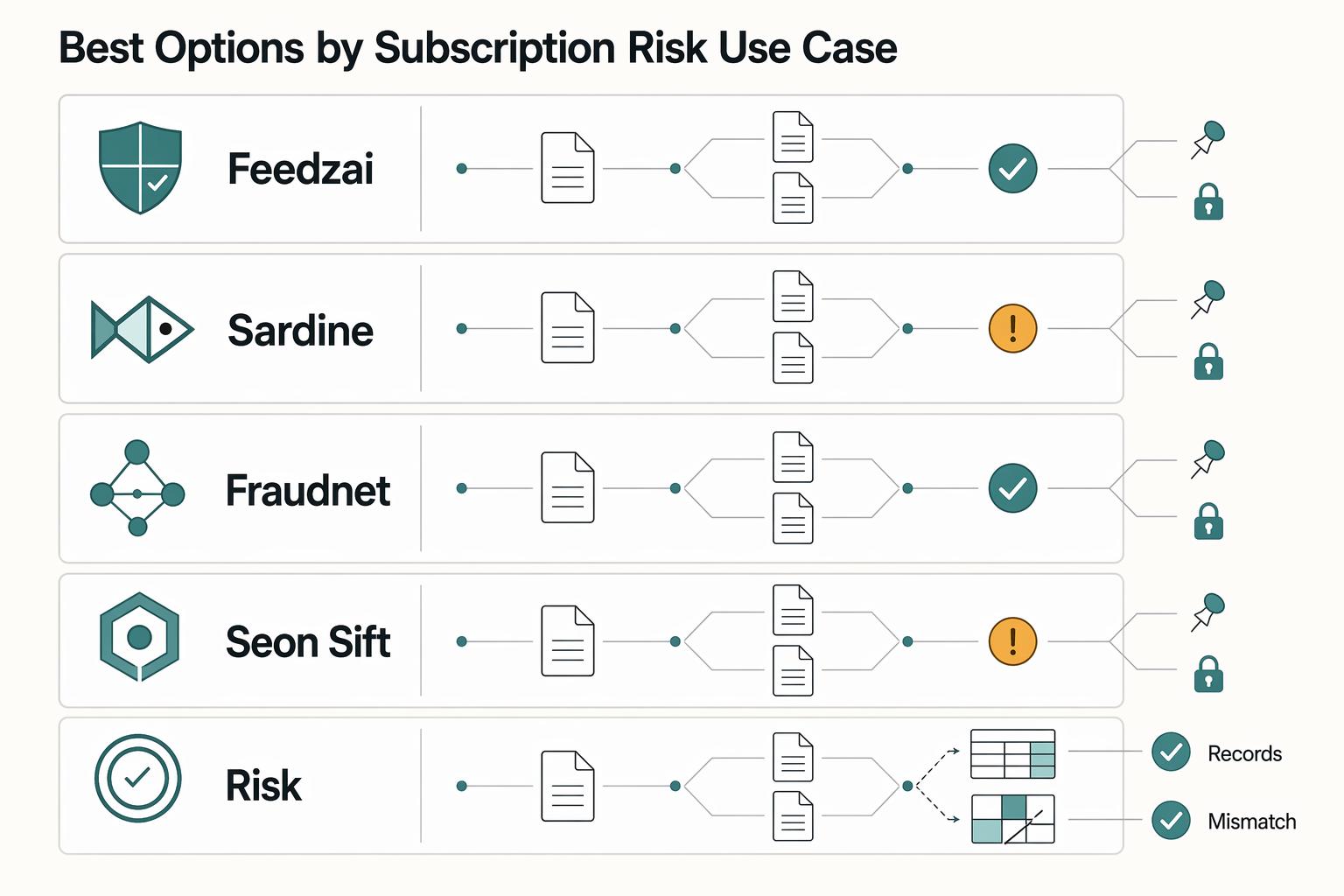
Best options by subscription risk use case#
Once your scorecard is set, choose for operating fit first and treat each vendor's public positioning as a starting hypothesis, not a final decision.
| Option | Public positioning | Diligence ask |
|---|---|---|
| Feedzai | Public positioning spans large institutions; FRAML material is explicit about aligning fraud and AML teams, data, and processes | Ask for one end-to-end case path and written commercial and implementation detail early |
| Sardine | CDD, business verification, sanctions screening, document verification, Device and Behavior signals, and enterprise use in over 70 countries | Ask for a single workflow from onboarding evidence to case handling and monitoring decisions, plus module-level and geography-based pricing in writing |
| FraudNet | Real-time fraud detection, case management, advanced analytics, and the Global Anti-Fraud Network | Ask for before/after case evidence that shows what changed the decision, plus written limits on data intake, review flow, and exportable reporting |
| SEON or Sift | SEON emphasizes 900+ first-party data signals; Sift emphasizes ~1T annual events across 700+ global brands | Ask each vendor to walk a borderline case with the raw signals, analyst context, and decision rationale your team will actually see |
| Riskified, Forter, LexisNexis, and Kount | Riskified centers a Chargeback Guarantee; Forter positions a Trust Platform across fraud, payments, disputes, and abuse controls; LexisNexis and Kount emphasize fraud and identity management | Request a written control map that states what is covered, what is not, and what evidence can be exported when decisions are challenged |
- Feedzai for large institutions that need fraud and AML alignment
Feedzai can fit well when your team needs fraud and financial-crime workflows to run in one operating model. Its public positioning spans large institutions, and its FRAML material is explicit about aligning fraud and AML teams, data, and processes. In diligence, ask for one end-to-end case path that shows how fraud and AML review connect, including reasons and audit history. Also require written commercial and implementation detail early, since public pricing and contract structure are not clearly disclosed.
- Sardine for teams consolidating fraud and compliance controls
Sardine is a practical option when you want fewer separate tools across fraud and compliance. Publicly, it combines CDD, business verification, sanctions screening, and document verification, and it highlights Device and Behavior signals plus enterprise use in over 70 countries. Ask for a single workflow from onboarding evidence to case handling and monitoring decisions without side-system handoffs. Press for module-level and geography-based pricing in writing before assuming consolidation lowers total effort.
- FraudNet for centralized adjudication with analytics and network signals
FraudNet fits best when fragmented alert handling and inconsistent case outcomes are your main pain points. Its public positioning combines real-time fraud detection, case management, advanced analytics, and the Global Anti-Fraud Network. Treat network claims as testable inputs, not proof. Ask for before-and-after case evidence that shows what changed the decision, and require written limits on data intake, review flow, and exportable reporting.
- SEON or Sift for digital fraud programs under sustained pressure
Evaluate SEON and Sift side by side when you need digital fraud controls, but do not assume a public winner. They have direct comparison visibility in verified review ecosystems; SEON emphasizes 900+ first-party data signals, while Sift emphasizes ~1T annual events across 700+ global brands. Ask each vendor to walk a borderline case with the raw signals, analyst context, and decision rationale your team will actually see. Signal scale and market presence help with screening, but they do not prove fit for your false-positive tolerance or review capacity.
- Riskified, Forter, LexisNexis, and Kount for specialist commerce or identity-heavy needs
Treat this group as specialist options rather than universal defaults. Publicly, Riskified centers a Chargeback Guarantee, Forter positions a Trust Platform across fraud, payments, disputes, and abuse controls, and LexisNexis plus Kount emphasize fraud and identity management. If your risk program also requires broader cross-border compliance controls, do not assume commerce-focused strengths cover the full obligation set. Request a written control map that clearly states what is covered, what is not, and what evidence can be exported when decisions are challenged.
For a step-by-step walkthrough, see Building Subscription Revenue on a Marketplace Without Billing Gaps.
When to choose usage based pricing and when not to#
Choose usage-based pricing when your fraud workload moves with transaction volume. Choose a custom enterprise contract when governance and investigation depth are the real requirement.
- Choose usage-based pricing for volatile volume
Usage-based models are usually the better fit when activity spikes and dips, because spend can track processed activity. SEON is a clear public reference: it lists $699 per month, includes 2,500 fraud checks / month, and also offers custom pricing. Before you rely on the entry price, get the usage meter in writing: what counts as a fraud check, how overages are billed, and whether limits apply to API calls or users.
- Choose custom enterprise contracts when controls drive value
Custom contracts are usually the better path when you need case workflows and fraud-to-compliance operating depth, not just a low entry cost. Public disclosures support that split: SEON's higher tier includes Case Management & AML Compliance, Unlimited API calls, and Unlimited users, and Sardine positions KYC, AML transaction monitoring, case management and SAR filings in one platform. If FRAML-style alignment matters, make it a contract topic early and require clear terms on review operations and evidence handling.
- Pause early if pricing transparency is limited
If public pricing is thin, require a written pricing anatomy before security or legal review starts. Sardine states pricing is tailored to business model, transaction volume, and geography, and asks buyers to contact them for a detailed proposal; FraudNet's public path is demo-led rather than a posted price table. Ask for comparable line items up front so you do not spend diligence cycles on non-comparable commercial structures.
- Do not assume lower entry price means lower operating cost
A lower monthly number can still cost more if false positives increase manual review and escalation load. Feedzai's positioning explicitly links lower false positives and explainable AI to regulator expectations, which is a useful reminder that decision quality and evidence handling affect total cost. If ownership for false-positive review, escalation, and evidence retention is unclear, do not let entry pricing decide the purchase.
This pairs well with our guide on A Guide to Stripe Radar for Fraud Protection.
Implementation order that avoids control gaps#
Use this rollout order to reduce control gaps: onboarding controls first, then transaction scoring and override governance, then payout gates tied to traceable event flows. It is an implementation pattern, not a single regulator-mandated sequence.
| Stage | Focus | Prelaunch check |
|---|---|---|
| Start with onboarding controls | Put KYC and KYB checks in front of account activation or first billable activity; run KYB in parallel with KYC, AML, and fraud checks where the stack allows it | A failed onboarding check creates a case or alert, a clear decision status, and a decision audit trail in one place |
| Set override ownership before live scoring | Define who can hold, who can release, and who must escalate; define the required case evidence before launch | Case evidence includes alert reason, linked KYC/KYB result, transaction or payout ID, reviewer identity, timestamp, and disposition reason |
| Connect alerts and decisions to financial records before payout gates | Carry shared identifiers from decision to case record to ledger outcome | Replay one flagged transaction end to end and verify the alert, hold status, reviewer action, and final financial outcome all match |
-
Start with onboarding controls. Put KYC and KYB checks in front of account activation or first billable activity so you can stop risky users early. Where your stack allows it, run KYB in parallel with KYC, AML, and fraud checks instead of forcing a slow serial review. Before go-live, verify that a failed onboarding check creates a case or alert, a clear decision status, and a decision audit trail in one place.
-
Set override ownership before live scoring. Real-time scoring only works operationally when authority is explicit: who can hold, who can release, and who must escalate. Define the required case evidence before launch, including alert reason, linked KYC/KYB result, transaction or payout ID, reviewer identity, timestamp, and disposition reason. If a case may support SAR handling through a banking partner, identify and maintain supporting documentation, and align retention practices with the common BSA expectation of keeping most records for at least five years.
-
Connect alerts and decisions to financial records before payout gates. Stream transaction events from your APIs, and make sure alerts, holds, releases, and escalations carry shared identifiers from decision to case record to ledger outcome. Ongoing monitoring depends on this traceability; without it, you can flag activity but fail to prove which control action affected funds. As a final prelaunch check, replay one flagged transaction end to end and verify the alert, hold status, reviewer action, and final financial outcome all match.
Reporting checklist and escalation evidence your auditors will ask for#
Use your end-to-end alert trail as a monthly control packet, not just a one-time test. Auditors and examiners mostly need to see that an alert is traceable from generation through investigation, escalation, and resolution.
-
Report both workload and control quality every month. Include alert volume, disposition outcomes, false-positive trends, investigation time, and unresolved investigations by your internal risk tiers. The packet should let reviewers drill from summary charts to case IDs and reviewer actions so performance claims can be tied to actual decisions.
-
Keep evidence attached to the control that drove the decision. For most teams, that means KYC/KYB outcomes, CDD/EDD records, AML monitoring alerts, sanctions or PEP screening results, and case notes with approval history. Screening hits should be documented as cases with an audit trail, and sanctions records should retain scan, alert, and case-action history.
-
Set function-based escalation rules before urgent cases arrive. Document what routes to legal, what routes to finance, and what requires executive risk sign-off, then map those points into your sanctions escalation and recordkeeping flow. If a case may feed a U.S. bank partner SAR process, capture initial detection date at case creation because, in banking context, reporting cannot be delayed beyond 60 calendar days after initial detection of a reportable transaction.
We covered this in detail in Retainer Subscription Billing for Talent Platforms That Protects ARR Margin.
Red flags that signal you are overbuying or under-governing#
You are probably overbuying or under-governing when claims are hard to verify, ownership is unclear, and feature scope grows faster than your core fraud priorities.
- "Better accuracy" with no shared measurement method
Treat performance claims as unproven unless the vendor gives you the baseline, cohort definition, and measurement method. The FTC has challenged unsupported AI accuracy marketing, including an April 28, 2025 example tied to a "98 percent accurate" claim. Ask for an outcome breakdown for a subscription cohort similar to yours and the review policy used to label fraud and false positives. If you only get a headline percentage, you are buying marketing, not evidence.
- Network-effect messaging without a local test plan
Claims around Sonar or FraudNet's Global Anti-Fraud Network may be useful, but "real-time insights" or "trillions of data points" do not prove lift on your traffic. Require a pilot with a fixed success measure tied to your own fraud mix. A common failure mode is strong network performance on other patterns with little movement on yours. If needed, anchor the pilot to your own subscription fraud trends.
- Contracts that ignore operational ownership
Governance should cover planning, due diligence and third-party selection, contract negotiation, ongoing monitoring, and termination, not just procurement. In practice, contract review should name implementation burden, response-time obligations, record export quality, and who owns Case Management when alerts become holds, releases, or escalations. A polished demo paired with vague contract language on timeliness, reliability, and records is a red flag.
- Feature shopping that outruns your risk priorities
Chargeback Guarantee, merchant-acquiring modules, or B2C credit underwriting can be valuable only when they map to your actual loss drivers. Start with your top subscription risks and ask which feature changes those outcomes first. If that answer is unclear, you are probably overbuying breadth while underfunding core controls. For related reading, see Choosing Creator Platform Monetization Models for Real-World Operations.
The decision that matters most#
Choose the platform your team can govern and defend, not the one with the strongest demo.
- Start with control ownership. Define who owns block, hold, release, and escalation decisions, and treat model-related risk as a formal risk responsibility.
Checkpoint: risk, finance, and legal should be able to point to the same override path and the same evidence required for release.
- Prioritize defensible reporting. Require consistent reporting on alert volume, outcomes, false-positive trends, and unresolved investigations by risk tier. If case records are not exportable with context, decision reason, reviewer notes, and approval history, you may not be able to defend outcomes later.
Why this matters: AI decisions should sit inside a defined risk-management framework, not a black-box dashboard.
- Treat pricing and performance as hypotheses. A quote or benchmark is not proof for your traffic mix, review capacity, or operating constraints. Ask for written pricing anatomy: what is metered, which volume and geography assumptions are built in, and what changes as review workload grows.
Common failure mode: low apparent platform cost, high downstream review burden.
- Match governance depth to exposure. Keep governance proportionate to your risk exposure, business activity, and implementation complexity. Validate claims about speed or growth without control tradeoffs using your own data, escalation paths, and evidence requirements before you commit.
This shortlist process helps you avoid two expensive failures: buying more platform than your team can govern, or deploying too little control for your cross-market exposure.
For revenue-model tradeoffs that affect fraud incentives, use Choosing Between Subscription and Transaction Fees for Your Revenue Model.
Frequently Asked Questions
What is an AI fraud detection subscription platform in practical terms?
In practice, it is a decision layer that scores sign-ups, payments, and logins in real time. It looks for patterns that static rules may miss and routes events to block, hold, or escalate. The useful test is not whether it says "AI" in the demo, but whether those actions are traceable and reviewable.
How is AI fraud detection different from rules-based controls for subscription businesses?
Rules-based controls catch patterns you already know and define ahead of time. AI-based controls can adapt to new fraud tactics without you manually rewriting rules each time, which matters when attack patterns shift. The tradeoff is governance: if the vendor cannot explain how results were measured, you may end up with a score your team cannot defend.
What metrics should risk teams track beyond fraud rate?
Track recall, because missed fraud is the quiet failure. In a perfect teaching example, recall is 1.0, or 100%, but that is not a realistic operating target. Pair recall with false-positive rate or volume, then watch how many events end in block, hold, or escalate. If those action counts drift, your review burden or customer friction may be moving before the headline fraud rate makes it obvious.
What does enterprise fraud platform pricing usually include?
Enterprise pricing often varies by your business model, transaction volume, and geographic coverage. Sardine publicly says pricing is tailored to those factors, while Kount asks buyers to get a custom quote. Ask for a written pricing anatomy early so you know what is metered, what assumptions sit behind the quote, and what changes when volume or geography expands.
How should compliance teams set escalation points for fraud decisions?
Make the action path explicit across sign-ups, logins, and payments: block, hold, or escalate. Each path needs an owner, a trigger, and a release rule. A good checkpoint is simple: can finance, legal, and risk each name who may override the decision and what evidence must be attached?
What evidence should be audit-ready for fraud decisions?
Keep the case record that supports the action taken, including the transaction context, the reason for the decision, and reviewer notes for any hold or escalation. Where SAR rules apply, supporting documentation must be retained for 5 years from filing; OFAC-related transaction records must be available for examination for at least 10 years after the transaction. Make sure your team can export those records, not just view them inside the vendor interface.
What key details usually remain unknown until vendor diligence?
The biggest gaps are usually commercial and operational: real implementation burden, evidence export quality, response expectations, and how quote-based pricing changes with scale or geography. Feedzai, for example, directs buyers into a sales conversation rather than publishing self-serve pricing, and you may see a similar pattern with other enterprise vendors. Treat website copy as a starting point until the vendor shows contract language, data requirements, and who owns review decisions once alerts start firing.
Try a related tool
Researched and edited by the Gruv editorial team. Gruv builds cross-border billing, payouts, and finance-operations software for global businesses.
Sources
- bsaaml.ffiec.gov/manual/AssessingComplianceWithBSARegulatoryR...trusted
- bsaaml.ffiec.gov/manual/AssessingTheBSAAMLComplianceProgram/02trusted
- digital-strategy.ec.europa.eu/en/faqs/guidelines-and-code-practice-transpa...trusted
- ecfr.gov/current/title-31/subtitle-B/chapter-X/part-1...trusted
- ecfr.gov/current/title-12/chapter-I/part-21/subpart-B...trusted
- fdic.gov/news/financial-institution-letters/2023/fil2...trusted
- ftc.gov/news-events/news/press-releases/2025/04/ftc-...trusted
- ftc.gov/business-guidance/blog/2023/02/keep-your-ai-...trusted
Educational content only. Not legal, tax, or financial advice.
Related Posts
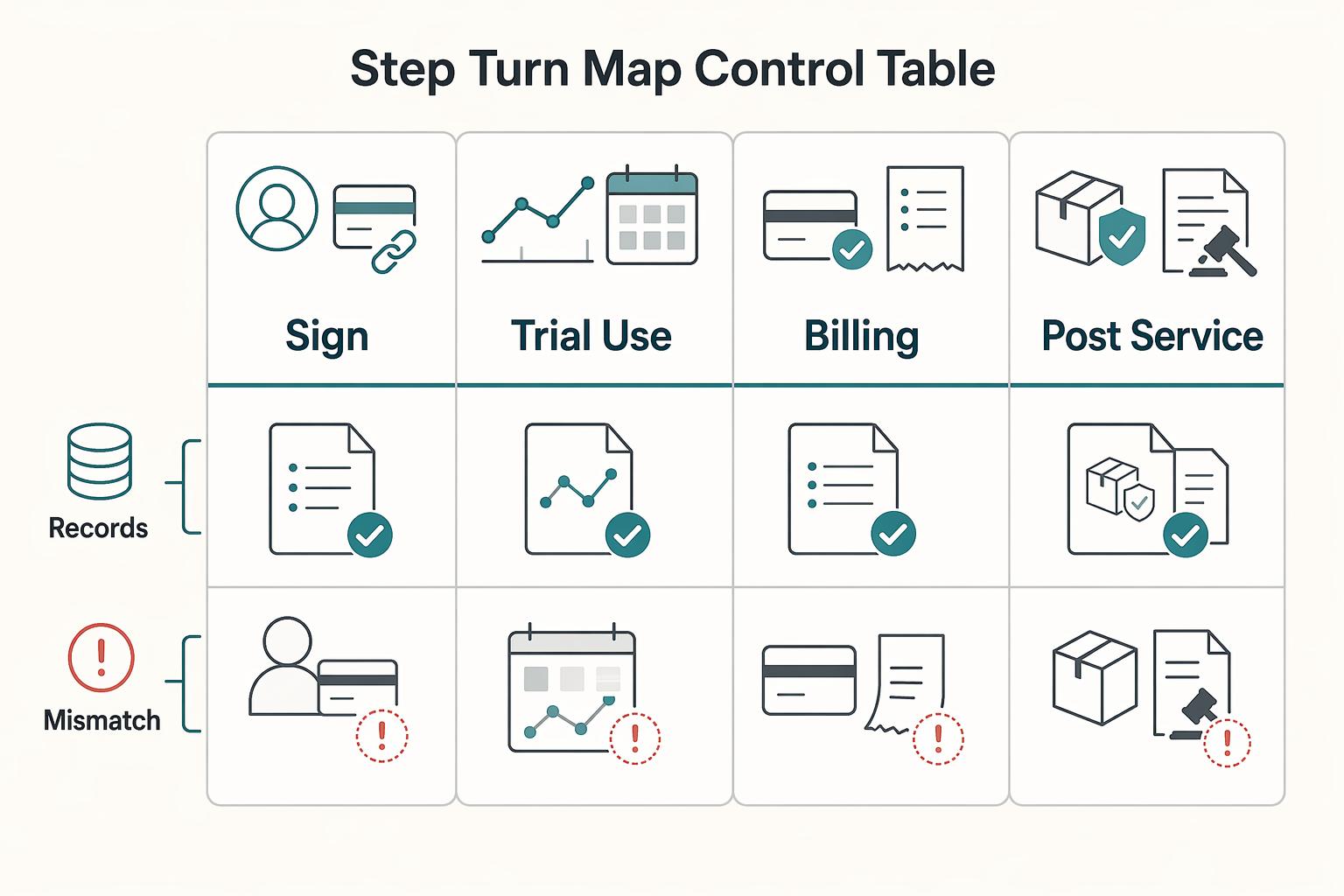
How Platforms Detect Free-Trial Abuse and Card Testing in Subscription Fraud
If your platform sells subscriptions while also handling contractor, seller, or creator payouts across markets, this is not just a signup filter issue. It is a control design issue that cuts across risk, finance, legal, compliance, and product. The damage often shows up later in the customer lifecycle, not only at account creation.

Fraud Detection on Payment Platforms with Rules and Machine Learning
For cross-border payout platforms, effective fraud detection is less about a single model or rule than about controls you can document, explain, and defend under audit or incident pressure.
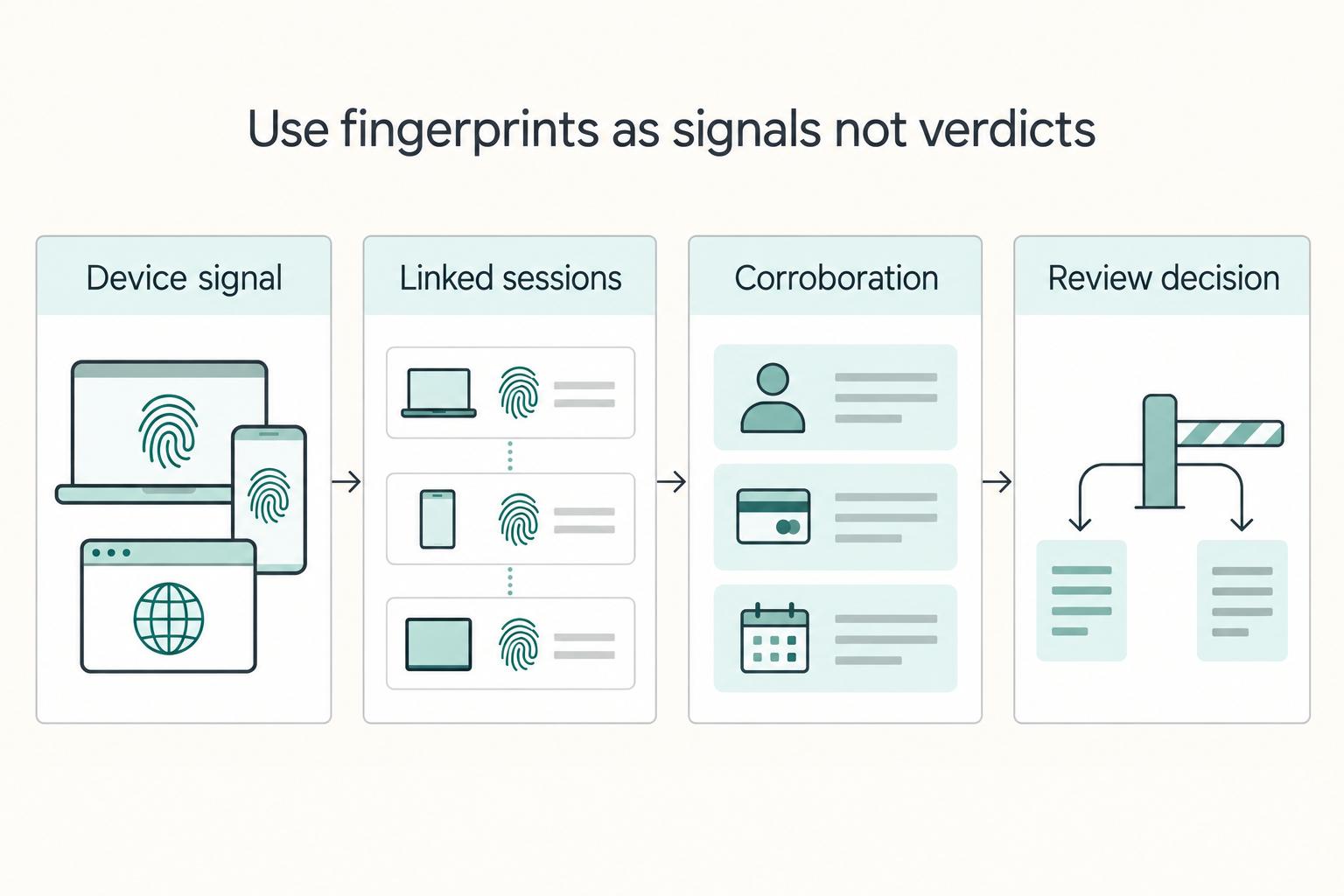
Device Fingerprinting Fraud Detection Platforms for Payment Risk Teams
For payment platforms handling contractor, seller, or creator payouts across markets, the starting point is not vendor hype. It is control design. Device fingerprinting can help detect suspicious behavior and reduce fraud risk, especially when the same device appears across repeated sign-ups or refunds. But it only works if risk, compliance, legal, finance, and payments ops agree on what the signal can support and what evidence must exist when a decision is challenged.