

Quick Answer
Run a narrow pilot first: one country, one vertical, and a controlled publisher cohort. In affiliate network payment software selection, only advance vendors that can show the chain from completed advertiser transaction to approved payout, then to finance export, while passing payout execution, compliance throughput, and finance-readiness gates.
Define the affiliate payment job before comparing software#
If you are evaluating affiliate network payment software, start by defining the exact job you need done before you compare feature lists. Teams make poor decisions when they treat partner discovery, tracking, and payment operations as the same problem.
An affiliate network sits between publishers and merchants, and it can include tracking, reporting, program maintenance, and payment support. Affiliate tracking software manages the program itself, often under labels like partner marketing platform or performance marketing software. If you blur those categories, you can buy strong referral tracking and still miss the payment support you actually need.
The market is large, and broad vendor claims are easy to find. Tipalti cites U.S. affiliate marketing spend at $8.2 billion, up from $5.4 billion (2017). That growth shows demand, not equal operational fit.
Before you start#
Before demos begin, write down three inputs so the evaluation stays grounded when the conversation drifts into generic automation claims:
- the type of publishers you plan to pay
- the first markets you plan to open
- whether you need single-brand program tooling or broader network-style payout support
Step 1: Define the buying category in one sentence. Write the job in plain language, then test every demo against it. If the pitch stays centered on referrals and attribution while your real constraint is payment support and operational control, treat that as a mismatch.
Step 2: Verify setup mechanics, not just promises. Ask to see the live setup path. In one documented flow, campaign setup starts with Add campaign, then Generate link creates the dedicated registration URL. Have vendors show the exact actions, registration path, and market-availability controls.
At least one platform documents campaigns as global by default, with options to narrow market availability. If your rollout is selective, confirm those defaults early.
Step 3: Price convenience against operating cost. A network can reduce tooling burden because you may not need separate tracking software. That convenience still comes with fees. Start with three questions: what work disappears, what work stays with your team, and what costs come with that tradeoff?
Use this guide to structure an early evaluation before you commit product or GTM resources. The goal is practical: an evaluation sequence, a defensible vendor scorecard, and an executive memo grounded in documented setup and cost tradeoffs.
For the payout automation layer, see Automating Affiliate Network Payouts for Publishers and Partners at Scale.
Set the decision scope before you compare vendors#
Set scope before you shortlist. If you do not, you can pick the wrong category and inherit commission errors, manual rework, and payout mistakes.
Step 1: Define the job in one sentence. Write the use case without vendor names. "Track referrals for one brand" is a different buying decision from "run a larger affiliate program with more moving parts." First classify the category you actually need: network, standalone, or SaaS.
Step 2: Set decision criteria in outcomes you can measure internally. Use your own targets for payout accuracy and reconciliation effort, then test every demo against them. Include practical checkpoints like integration fit, commission management, scalability, ease of use, and whether the tool reduces manual tracking and commission-calculation errors.
Step 3: Treat SERP leaders as inputs, not winners. Use vendor names from comparison pages as inputs, not conclusions. Different sources rank different leaders, so list placement is not proof of fit.
Decision rule: Remove any tool from consideration if it misses your required integration, commission-management, scalability, or ease-of-use bar, or if it still leaves manual tracking and commission-calculation risks unresolved.
We covered this in detail in Affiliate Program Management for Platforms Running a High-Performing Publisher Network.
Prepare the evidence pack before any demo call#
Build the evidence pack before the call. Otherwise, the demo mostly tests a happy path, not your actual payout operations. For either network or tracking software, the useful test is whether the product can handle your partner mix, compliance flow, and finance controls in one operating path.
Bring a minimum operating dataset#
Bring a minimum operating dataset, even if some fields are estimates: target countries, target verticals, expected payout volume, average publisher profile, and planned settlement cadence for payout batches. Add a plain-language partner mix, such as individual creators, registered businesses, agencies, or sub-partners, so the vendor tests your actual onboarding and payout lanes.
Use a simple checkpoint: can they run your exact mix in product, not in slides? Ask them to show where those country and partner attributes appear in onboarding, approval, payout setup, and reporting.
Bring the compliance artifacts you need to test#
Bring the compliance artifacts you need to test in product: KYC steps, screening outputs, and tax-document requirements relevant to your partner base. Include a few sample onboarding scenarios so you can compare lower-risk and higher-risk cases.
| Artifact or control | Grounded check |
|---|---|
| KYC steps | Bring the KYC steps you need to test in product |
| Screening outputs | Ask where screening outputs, decisions, and supporting artifacts live, and how they connect to the partner record |
| Tax-document requirements | Bring the tax-document requirements relevant to your partner base |
| Sample onboarding scenarios | Include a few scenarios so you can compare lower-risk and higher-risk cases |
| Case-management view | Require a view that records each action, the decision rationale, and attached evidence |
Focus on process, not forms. KYC forms are only the interface. The KYC process is the full cycle of data collection, identity verification, risk assessment, onboarding decision, monitoring, and periodic review. Ask where screening outputs, decisions, and supporting artifacts live, and how they connect to the partner record.
Require a case-management view that records each action, the decision rationale, and attached evidence. If screening, documents, and decisions are fragmented across systems, auditability weakens and compliance can break down.
Define finance controls before the call#
Define your finance controls before the call so you can test them directly: who approves payouts, who handles exceptions, and what audit trail finance needs for reconciliation. You do not need a universal model. You need a clear model the vendor can test against.
Ask for the full record from payout request through status changes and export. The key checkpoint is clear roles, SLAs, and an audit trail, not just a final "paid" status. If a vendor can only demo the happy path and cannot show exception review, documentation, and resolution, pause that evaluation.
Related: How to Use Gusto for Payroll for a Small US-Based Agency.
Rank countries and verticals by payout feasibility first#
Rank each country-vertical lane by payout feasibility before major budget commitments. If a lane cannot clear payout and compliance checks with evidence, the revenue case is still hypothetical.
Use your evidence pack to sequence launch lanes by operational readiness, not by market-size labels alone. Tier 1, 2, and 3 can be a market shorthand, but they are not proof that a lane is launch-ready.
Build the country-vertical matrix#
Build a country-vertical matrix first, then assign recommendation bands. A weighted model is enough if it forces a decision.
| Dimension | What to score | Minimum evidence to accept |
|---|---|---|
| Payout feasibility | Payment-path practicality for the lane | Clear documented coverage for that lane |
| Onboarding burden | KYC-related effort and localization load | Clear onboarding flow, decision points, and required artifacts |
| Operational risk | Funnel/workflow risk plus finance traceability | Traceable linkage across events, contracts, and payouts |
Checkpoint: each row needs a score, evidence note, and confidence level. If a lane still reads "probably supported," keep it out of launch decisions.
Run mandatory checks on every lane#
Run mandatory checks on every lane, including high-upside lanes. Confirm payout method support for the expected partner mix. Then confirm localization and compliance burden, including KYC-related effort, and payment-stack due diligence such as rates, fees, fraud and chargeback controls, and support coverage. Treat country-specific KYB, AML, and VAT requirements as unknown until they are validated separately.
Also confirm that the operating chain stays intact. Performance events like leads, calls, downloads, and sales must stay linked to contracts and payouts.
Tag each lane for launch, pilot, or defer#
Tag every lane as launch now, pilot only, or defer based on evidence. Use launch now only when the payout path, onboarding flow, and operational traceability are already proven. Use pilot only when the opportunity is real but core checks are still uncertain. Use defer when the payment path or compliance path is not yet workable.
| Lane tag | Use when |
|---|---|
| launch now | Use only when the payout path, onboarding flow, and operational traceability are already proven |
| pilot only | Use when the opportunity is real but core checks are still uncertain |
| defer | Use when the payment path or compliance path is not yet workable |
Decision rule: if a high-priority lane is pilot only because payout or compliance is still uncertain, do not commit full GTM budget yet.
Compare vendors against the same phased-rollout standard#
Apply the same phased-rollout proof standard to Trackdesk, Post Affiliate Pro, and Gruv. Do not assume equal expansion support without evidence.
Ask each vendor to show how you would keep uncertain lanes in pilot status and expand only after checks pass. If a demo only shows a global happy path, treat that as insufficient for launch sequencing.
Separate affiliate program software from network payout infrastructure#
If you are buying software for affiliate network payouts, separate referral tooling from payout infrastructure at the start. A product can handle links, attribution, dashboards, and commission rules, but still fail when you need durable payout operations and finance-ready records.
Classify the product by operating model#
Classify the product by operating model, not homepage language. Affiliate management software is built to launch, track, and scale affiliate programs, usually through referral tracking, commission calculation, affiliate links, dashboards, and reporting.
Use the vendor's center of gravity as your first filter. SaaS-oriented tools are often positioned around Stripe-native recurring commissions, so a Rewardful-style setup can fit if you run one SaaS brand and mostly need clean referral automation. If you need multi-client management or broader payout operations, treat that as a different requirement class.
Verify network fit with evidence#
Verify network fit with evidence, not positioning language. High-volume tools are often presented with deeper analytics and multi-client management, which is closer to network operations than basic tracking.
In the demo, require real records for:
- handling multiple clients where relevant
- visibility across the customer journey and key events
- exportability of dashboard data for ROI analysis
Your checkpoint is simple: can your team explain why a partner is owed money, and can you export dashboard data for ROI analysis? If not, you are still evaluating program software, not network payout infrastructure.
Require payout-operations proof before selection#
Require payout-operations proof before selection. If your finance team needs auditable paper trails, ask for a traceable flow from payout request to reconciliation-ready export.
If embedded disbursements matter, ask whether a Payouts API exists and what it actually covers. Then have the vendor walk one payout record end to end with evidence. Seeing only a payable amount on a dashboard leaves a visibility gap, and manual patchwork stays error-prone and hard to scale as partner volume grows.
Match tooling complexity to your operating model#
Choose lighter tooling only when your operating model is simple. For one-brand SaaS referral automation, lighter tooling may be enough and may align with commonly cited mid-market pricing around $50-200/month.
Make the opposite call when your model depends on multi-client management and finance-grade payout records. In those cases, higher-cost platforms, often starting around $500+/month, with upper ranges that can reach $750+ monthly depending on volume and features, can be justified. The reason is simple: they may reduce manual exceptions and improve operational traceability.
You might also find this useful: Affiliate Network Payout Structures: Performance-Based Commission Models for Publisher Partners.
Verify payment stack fit and integration depth#
Treat integration as proven only when a vendor can show the event path from attribution to commission logic to payout eligibility. If that path is not demonstrable for Stripe, Paddle, or Chargebee, treat it as unproven and keep the lane in pilot.
Map each integration claim to an outcome#
Map every claimed integration to one operational outcome before you accept it. Require a matrix with source platform, event received, fields captured, and downstream action. "We integrate with Stripe" is not enough unless the vendor can show whether it powers attribution, commission logic, payout triggers, or only part of that chain.
Use the Stripe Connect pricing page as a baseline artifact when a vendor claims Stripe compatibility. It gives your team one concrete reference point for fee-model questions before you accept broader integration claims.
Stripe is the only path in this section with grounded pricing and model detail, so use it as the benchmark for answer depth.
| Stripe path or fee model | What to verify | Why it matters |
|---|---|---|
| Standard processing | Whether your baseline economics start from the currently listed 2.9% + 30¢ for domestic cards, plus 1.5% for international cards and 1% for currency conversion where applicable | Gateway and FX costs can materially affect margin as volume grows |
| Connect, Stripe handles pricing | Whether this model avoids additional account, payout-volume, tax-reporting, and per-payout fees | This changes platform cost structure and reconciliation assumptions |
| Connect, you handle pricing | Whether fees include $2 per monthly active account and 0.25% + 25¢ per payout sent, plus 1% of payout volume for Instant Payouts | High partner counts and frequent payouts can become expensive quickly |
| Managed Payments | Whether the 3.5% managed fee is charged in addition to standard processing fees, and whether country pricing pages override listed fees | Country-level pricing can supersede global assumptions |
Checkpoint: ask the vendor to walk one transaction from payment event to commissionable record to payout-ready status. If the trail breaks, treat the integration as marketing language, not operating proof.
Validate commerce connector claims before timelines lock#
Validate commerce connector claims before you commit onboarding timelines. For Shopify and BigCommerce lanes, treat third-party comparison claims as leads only, then require product-specific proof in your own flow.
Ask for a live demo with a store setup close to yours and verify what order-level and product-level data appears in the commission record. If that detail is missing, payout decisions become harder to calculate and defend.
Treat webhook retry behavior as a control requirement#
Treat webhook retry behavior as a financial control requirement, not a nice-to-have. Require a replay test of the same payout or status event and verify that only one financial action is produced with a clear event trail.
Webhook idempotency behavior for Stripe, Paddle, or Chargebee in this stack is not confirmed. Keep this as a mandatory test item in evaluation rather than an assumed capability.
Keep Virtual Accounts and Merchant of Record conditional#
Treat Virtual Accounts and Merchant of Record as conditional until support is explicitly confirmed. Availability, scope, or country coverage for either option in this evaluated stack is not established.
Document both as "where supported" in your country matrix and launch memo, and require explicit jurisdiction and onboarding details before planning around them.
For a step-by-step walkthrough, see How Payment Platforms Should Structure Affiliate Payouts.
Test compliance and tax operations that usually break expansion#
Treat compliance and tax as a hard expansion gate. If a vendor cannot show redacted, in-product proof, keep that country or publisher cohort in pilot.
Test onboarding and tax operations end to end#
Assume onboarding and tax operations are unproven until you see them end to end. Concrete rules for KYC, KYB, AML, W-8, W-9, Form 1099 readiness, or VAT handling in this stack are not established.
Ask for a redacted demo that starts with a new publisher and ends with a payout-eligible or payout-blocked outcome. Do not accept "we support tax compliance" without the actual screens, document prompts, review handoff, and export or audit fields finance would use.
Use three operator checks:
- What data or documents are required before first payout?
- What moves a record from onboarded to payout eligible, and what holds it back?
- What evidence can finance export if a publisher disputes a delay?
If those answers live outside product workflows, record the manual effort risk now.
Treat VAT validation as a payout control#
Treat VAT validation as a payout control, not a form field. VAT validation rules and how failed validation affects payout eligibility are not confirmed, so require a live proof case.
Test two publishers in the demo: one VAT case that should pass, and one that should fail or stay incomplete. Confirm the actual outcome: restricted state, warning-only but payable, or no effect. If VAT capture is not tied to payout eligibility, document the manual control, owner, and review point before launch.
Require audit and exception evidence before expansion#
Require concrete audit and exception evidence before expansion. A required status schema or masking method is not defined here, so ask for one redacted record with status history and one failed or held payout through resolution.
Verify that the record shows who changed status, when, why, and what downstream teams can view without exposing unnecessary raw PII. A current status without prior state history is not enough for dispute handling.
For failed or held payouts, confirm that operators can identify root cause, whether onboarding gap, tax document gap, or payout issue, and close with an exportable reason.
If you want a deeper dive, read How CRO and Payments Can Make or Break Your Affiliate Network.
Model total cost and failure cost before commitment#
Treat total cost as operating cost plus failure cost, not license price alone. If a lower-price option adds engineering lift, finance cleanup, and payout exceptions, it can stop being the lower-cost choice.
Model the operating work before pricing#
Model the operating work first, then add subscription costs. Include hidden categories such as engineering lift, compliance, and FX, plus day-to-day onboarding, tax handling, error states, and support burden.
Use one worksheet per candidate: Everflow, impact.com, Refersion, and LeadDyno, with the same assumptions across all four: target countries, payout count, settlement cadence, commission model, and expected exception rate. Ask each vendor for post-launch artifacts, not just a quote: implementation scope, integration requirements, payout export examples, and how failed or held payouts are surfaced. If the answer is mostly "handled by your team" or "possible via API," log it as operating cost.
Separate platform fees from operator cost#
Separate direct platform fees from operator cost so the tradeoffs stay visible. Keep operator cost explicit for payout ops time, reconciliation when commission, payout, and ledger states diverge, compliance review cycles, and engineering effort for implementation and exception handling.
Implementation capacity is a real fit constraint. If your team lacks developer capacity for a heavier integration, that is a cost driver now, not an "unexpected" delivery issue later.
Add failure cost before comparing totals#
Add failure cost before comparing totals. Track at least delayed payouts, partner churn risk from payout experience, and finance rework when tracking and payment states diverge.
Include commission mechanics in this layer. CPL pays on qualified lead actions, while CPS pays after completed purchases. CPS ties spend to realized revenue events, but attribution can depend on cookie windows that are often 30 to 90 days in some programs, which may lengthen reconciliation timing. Validate one end-to-end math path in your model. For example, 10% on a $100 sale = $10. Then confirm the vendor can show the state flow from tracked event to approved payout to exportable finance record.
Decide from a side-by-side TCO view#
Decide from a side-by-side TCO view with one hard rule: reject the "cheaper" option if added manual ops and failure exposure erase license savings. Consistent assumptions matter more than perfect precision.
In the comparison memo, call out pressure points directly: engineering lift, compliance and tax liability handling, including 1099s, KYB, and KYC, payout methods, global reach, security and certification expectations such as SOC 2, and integration needs. If a vendor is vague on any of these, keep a risk note. Hold that scope in pilot instead of pricing the gap at zero.
This pairs well with our guide on Affiliate Marketing Management for Platform Operators Running a Partner Network.
Run a pilot with explicit go or no-go gates#
Use a time-boxed pilot as a real decision gate, not a soft launch. Run a deliberately narrow test so you can validate what works, isolate what fails, and decide expansion from evidence.
| Gate | Focus | Evidence to confirm |
|---|---|---|
| Gate 1 | Execution quality under real conditions | Trace from approved commission to payout instruction and resulting status updates |
| Gate 2 | Compliance throughput as an operating process | Show how a case enters review, what evidence is requested, who owns the next action, and how exceptions close |
| Gate 3 | Finance readiness before the go or no-go call | Trace payout records back to approved commissions and payout statuses; define monitoring triggers and sampling cadence before testing |
Constrain scope and evidence before build starts#
Keep scope tight so results are diagnosable, for example one country, one vertical, and a controlled publisher cohort for this evaluation lane. Confirm 1-3 use cases and name the approval path before the first payout attempt.
Create a proof map for both the vendor and your team: claim, required artifact, and what is missing. Use DDQ response review plus an evidence request list, and document pilot gates and rollback so both are testable. Start traceability logs on day one, including decision log, change log, and access trails, so exceptions and changes are explainable later.
Gate payout execution quality under real conditions#
Gate 1 should be explicit and testable. Define the execution checks you will use in bounded real payout cycles, then record evidence against those checks before any expansion decision.
For each sample lane, trace from approved commission to payout instruction and resulting status updates so the go or no-go call is evidence-backed.
Gate compliance throughput as an operating process#
Gate 2 is about throughput, not checkbox features. Test compliance review as a queue: how a case enters review, what evidence is requested, who owns the next action, and how exceptions close.
Maintain an exception register during the pilot with opened date, status, missing document, and owner. At any point, your team should be able to explain why a publisher is blocked and what action resolves the case.
Gate finance readiness before the go or no-go call#
Gate 3 is finance readiness. Finance should be able to trace payout records back to approved commissions and payout statuses. Define monitoring triggers and sampling cadence before testing so review expectations are explicit.
A practical pattern is a 30-day cycle with days 16-25 focused on gates and monitoring readiness. Expand rollout only if all three gates pass. If any gate fails, fix root causes, rerun the same lane, and keep rollback ready until the evidence pack is complete.
Related reading: SaaS Accounting Software Evaluation: What Payment Platforms Need Beyond Standard GL Features.
If your pilot passes on execution but still has country-level unknowns, align your next-phase checklist to operational payout controls and status visibility: Review Gruv Payouts
Catch common rollout mistakes early and recover fast#
After the pilot, one risk is expanding scope before each country lane is proven end to end. Treat rollout as a sequence of checkpoint passes, not a confidence-based scale-up.
Require country proof, not "all in one" positioning#
Do not approve a country lane on a global demo alone. Require lane-specific evidence for payout path, onboarding flow, hold reasons, status transitions, and the finance export for cleared, failed, and pending payouts.
Use a simple pass test: trace one publisher from approved commission to payout instruction, final status, and finance export in that country. If that trace is incomplete, keep the lane in pilot or defer it.
Pull tax and policy gates into the pilot#
Validate tax-document and internal policy gates during the pilot, not after launch. You should be able to see missing-document holds, case ownership, and the action needed to clear each blocked publisher.
This can reduce post-launch recovery work when policy or regulatory logic does not match reality. If those checks are incomplete at launch, teams can end up handling documents and payout decisions manually.
Choose operational control over demo speed#
Prioritize failure handling and traceability over a smooth demo. For failed payouts, verify usable failure reasons, clear retry behavior, and a stable trace identifier that links retries to the original attempt.
A single retry tactic for every failure is a warning sign, and a bare "failed" status is not enough for operations. Routing decisions can drive failures, so your team needs cause-level visibility, not status-only reporting.
Phase expansion by feasibility tier#
Expand in tiers: launch now, pilot next, and defer the rest. For each newly live lane, review 100% of transactions in the first batch and promote only after checkpoints pass cleanly.
If a lane adds routing or compliance complexity, slow rollout on purpose. Balance cost and performance explicitly, because broad expansion can hide where failures actually began.
Build the final decision memo for leadership signoff#
Your memo should end the decision, not restart it. State the recommendation in the first paragraph, tie it to the selection mandate, and anchor it to measurable outcomes after go-live.
Write one page per vendor#
Use the same one-page format for every vendor so comparisons stay fair: market fit, integration fit, compliance readiness, operating cost, rollout risk, and must-win scenarios.
For each heading, write three things: judgment, evidence, and constraint. Keep claims tied to pilot results, scored requirements, or documented gaps. If a page leans on broad positioning without workflow-level proof, mark it as missing evidence.
Make the recommendation bounded#
Give leadership a bounded, fundable choice in one line, then list constraints: what is in scope now, what stays limited, and what evidence is still required before expansion.
Use a weighted vendor evaluation matrix with deal-breaker gates and an evidence audit trail to prevent feature debates and scope drift. If a vendor scores well overall but fails a must-win scenario, keep the recommendation constrained and explicit.
Attach the audit pack#
Attach the vendor evaluation matrix, pilot results, and risk register so the decision is auditable and repeatable for finance and ops. Include operating detail, not just total scores: workflow tested, test date, owner, blocked states observed, unresolved exceptions, and whether finance could trace transactions into exports.
If traceability is incomplete, show that gap before signoff.
End with one action line#
Close with one action line only: proceed with Gruv module mix, proceed with another vendor, or pause expansion. If you need more than one action line, the memo is still undecided.
Conclusion#
The right affiliate network payment software is the stack you can verify for payout feasibility and operating control in the markets you plan to enter. The real decision is not who demos best, but who can show a clear path from tracking signal to payout outcome and finance review.
Step 1. Choose proof over positioning. Affiliate software can track referrals, and tracking software is often the most visible layer, but network operations still depend on the offers-and-payment center role. If a vendor cannot show how a tracked event becomes a payout record you can review, approve, and reconcile, treat that as a network-readiness gap.
Step 2. Verify core tracking checkpoints before rollout. Performance marketing depends on real-time measurement, so validate concrete tracking and conversion states, not just dashboard summaries. Two explicit checkpoints are user-client IP detection and the advertiser's completed transaction. If those signals are unclear or hard to audit, payout operations are not ready.
Step 3. Review full cost, not just license cost. TCO matters because price tags are only part of the decision. A lower upfront option can still drive higher operating effort through manual handling, exception management, and reconciliation work.
Step 4. Approve a constrained launch scope. Your decision memo should state what launches now, what stays in pilot, and what is deferred pending stronger evidence. This reduces the risk of scaling go-to-market or partner onboarding ahead of proven payout operations.
Use this launch checklist (treat each item as unknown until validated in your own rollout evidence):
- Country-vertical feasibility matrix completed
- Vendor evidence pack validated for payouts, integrations, and compliance
- Pilot passed payout, compliance, and finance gates
- TCO and failure-cost model reviewed by finance and ops
- Executive memo approved with clear launch scope and constraints
Final go or no-go rule: do not approve expansion until you can trace a completed advertiser transaction to a payout outcome. You should also be able to explain the operating cost of doing it at volume.
Before final signoff, validate market coverage and compliance-gate fit for your target countries and publisher mix with your exact rollout scope: Contact Gruv
Frequently Asked Questions
What is affiliate network payment software, and how is it different from affiliate tracking software?
Affiliate network payment software supports network operations, not just attribution. An affiliate network acts as an intermediary between advertisers and publishers, and network-oriented software is presented as handling multiple campaigns or programs plus routine processes such as payouts. If a vendor only proves tracking and analytics, treat it as tracking tooling until payout handling is shown in practice.
What minimum features should we compare before shortlisting vendors?
Compare four baseline capabilities first: multi-campaign or multi-program support, payout handling, analytics and tracking, and fraud protection. Then require one concrete implementation walkthrough, including tracking-code setup and launch assets like banners, XML feeds, or campaign description. If that proof stays vague, you are evaluating positioning rather than operating readiness.
How is affiliate network infrastructure different from single-brand affiliate program tooling?
Single-brand commission programs are typically framed around rewarding affiliates for bringing customers to one merchant. Network infrastructure has a broader intermediary role across merchants, publishers, and campaigns. If you need that multi-party operating model, require evidence of network operations and payout processes, not just referral features.
Which payment and payout details are usually missing from vendor pages?
In vendor FAQs, gaps often appear in caveats, eligibility limits, and optional paid extras. Broad claims like “unlimited traffic” or “99%” compatibility can still include overload suspension conditions. Pricing can also look complete until FAQ details show optional plugins or services, so confirm exact base scope and add-ons before shortlisting.
What should we validate before entering a new country or vertical?
Validate launch prerequisites before committing rollout dates. That includes tracking implementation steps, required campaign materials for go-live, and fit gates that can block onboarding, such as publisher website requirements or merchant eligibility criteria. Put those constraints in your evidence pack before leadership signoff.
Can we trust “all-in-one” positioning without a pilot?
No. Treat “all-in-one” as a claim to test, not a decision by itself. Run a small pilot to verify your implementation path and surface real operating limits. This is usually where hidden caveats and optional paid components become visible.
When should we consider Merchant of Record or Virtual Accounts in the payout stack?
Treat them as separate capabilities to verify if vendor conversations reveal a gap between affiliate-management claims and the payout operations you still need to run. Do not assume either capability is included from broad marketing language alone. Keep them out of the final decision memo unless the vendor provides clear, written scope and proof.
Try a related tool
Where Gruv fits
Researched and edited by the Gruv editorial team. Gruv builds cross-border billing, payouts, and finance-operations software for global businesses.
Sources
Includes 6 external sources outside the trusted-domain allowlist.
- stripe.com/connect/pricingtrusted
- amnavigator.com/blog/2019/01/22/affiliate-marketing-tracking...external
- coredo.eu/kyc-forms-vs-the-kyc-process-why-documents-d...external
- developers.payproglobal.com/docs/affiliates-partners/create-affiliates-n...external
- dognet.com/faqexternal
- postaffiliatepro.com/faq/best-affiliate-tracking-software-chooseexternal
- tipalti.com/resources/learn/affiliate-networkexternal
Educational content only. Not legal, tax, or financial advice.
Related Posts
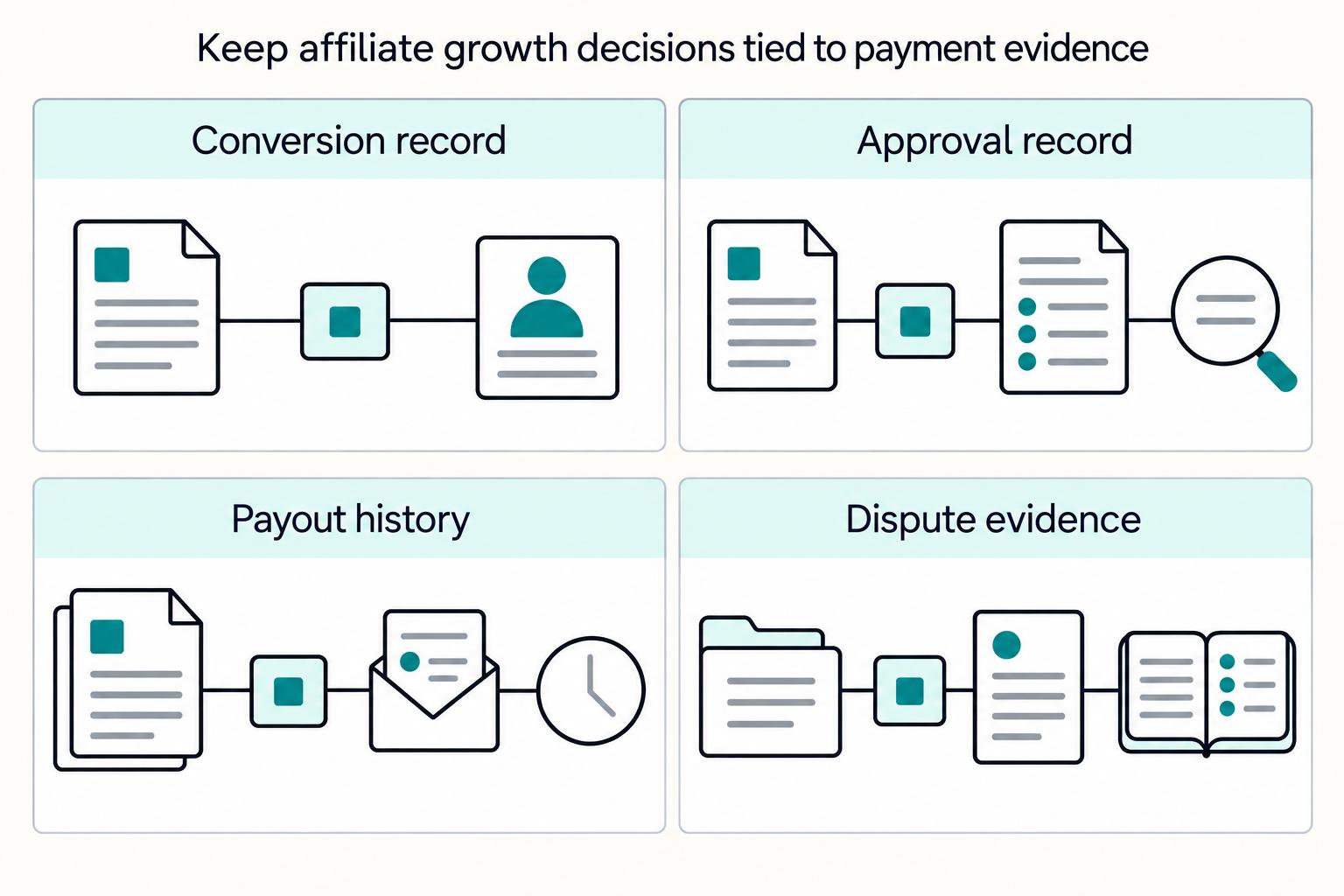
How CRO and Payments Can Make or Break Your Affiliate Network
An affiliate network can scale more reliably when you run Conversion Rate Optimization (CRO) and payouts as one revenue system, not as separate growth and finance tracks. CRO improves the share of visitors who complete a desired action, and in a commission-based model, that affects partner earnings.
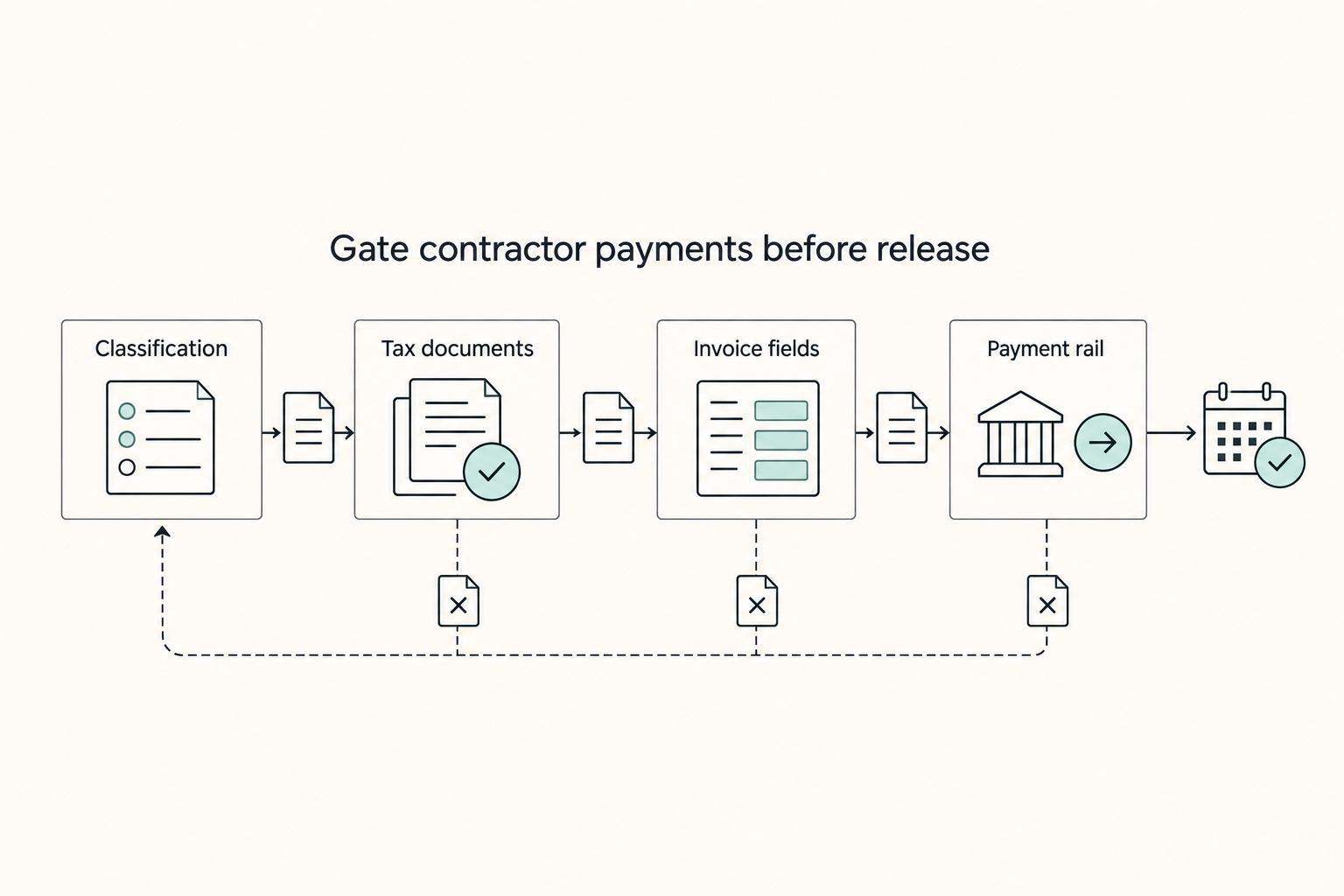
How to Use Gusto for Payroll for a Small US-Based Agency
Gusto is a strong primary payroll system when your agency mostly runs U.S. payroll. Once you start paying people outside the U.S., it becomes one part of a broader stack, because sending money and carrying compliance responsibility are different jobs.
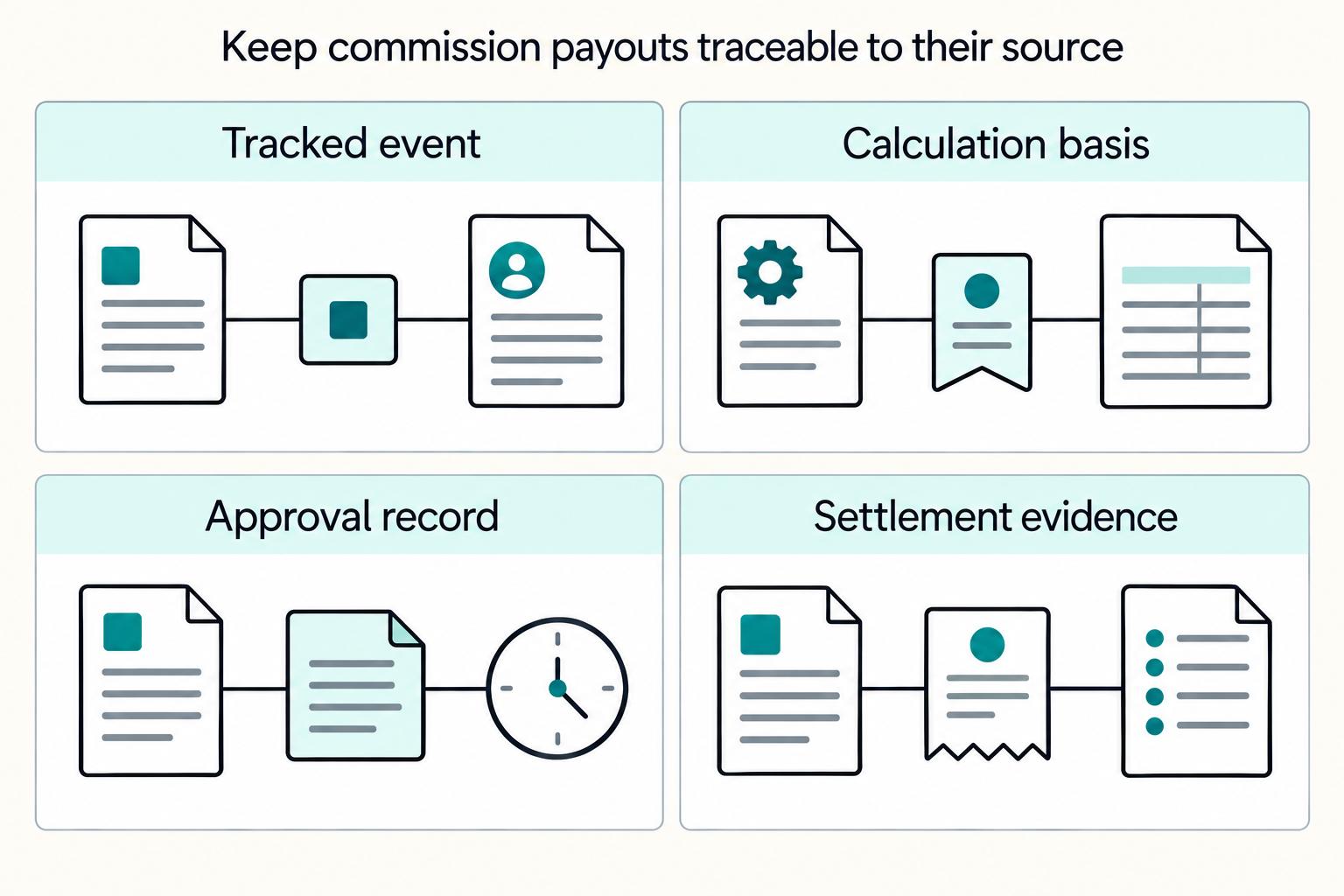
Affiliate Network Payout Structures for Publisher Commissions
Commission design is an operating decision, not a pricing footnote. The structure you choose affects what behavior you reward and the economics of the program. It is easy to announce rates. It is much harder to define a model that still holds up once reversals, edge cases, and partner questions start showing up.