
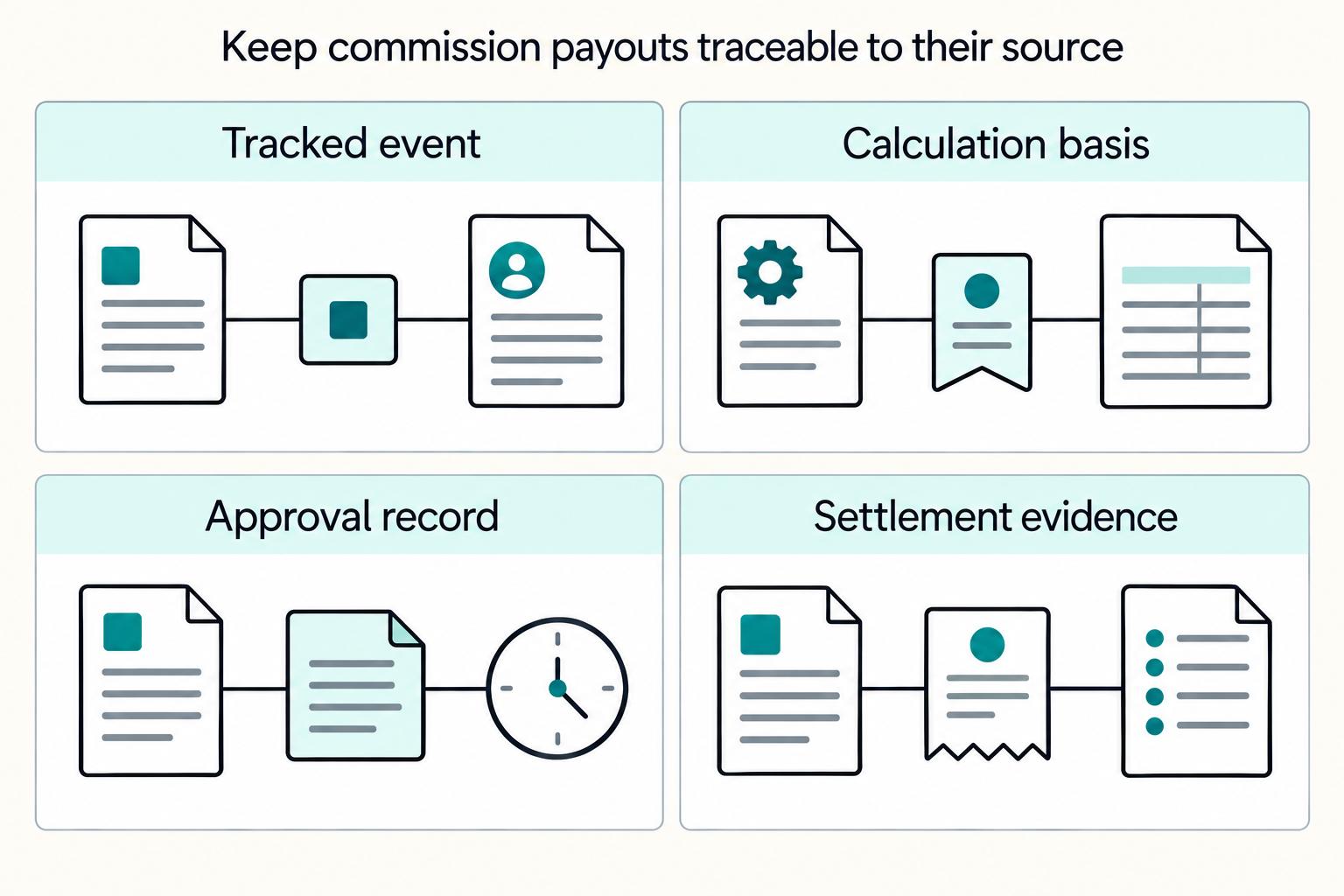
Quick Answer
Define the earning event, calculation basis and reversal rules for each commission type. Separate action locking from payment scheduling and document precedence before combining flat, percentage, recurring or tiered models. Preserve a traceable record from conversion through payout and settlement.
How affiliate network payout structures work#
Commission design is an operating decision, not a pricing footnote. The structure you choose affects what behavior you reward and the economics of the program. It is easy to announce rates. It is much harder to define a model that still holds up once reversals, edge cases, and partner questions start showing up.
That is why you should align on payout structure early. A commission model does more than decide how publisher partners get paid. It shapes partner behavior and program economics, so the wrong setup can create friction long before anyone calls it a payout problem. Performance-based models are useful because they tie earnings to qualified outcomes such as sales or conversions, not raw activity that may never produce value.
This guide is for finance, product, ops, and engineering owners who need something practical enough to implement and defend. If you are the person who will be asked why one partner was paid, why another was reversed, or why margin moved after a commission change, you need more than model names. You need shared vocabulary, clear decision rules, and a way to verify that payout logic matches what the business actually intends to reward.
One early trap is assuming one payout model will fit every partner type and product context. It usually will not. Different partners contribute in different ways, products behave differently, and the same logic can create very different incentives across segments.
So this article moves in a practical order. It defines the main models in plain language, compares their economics with their operating burden, sets policy gates before payout, and builds verification checkpoints into the live process.
Keep one test in mind as you read. Can your team point to the exact event that earns commission, the exact conditions that can delay or reverse it, and the exact record that proves the payout was correct? If that answer is fuzzy, the model is not ready. A workable plan clearly names the qualified outcome and the key approval and exception rules before any code or partner announcement goes live.
The goal is not to find one model that fits every case. There is not one. The goal is to choose a performance-based commission model that fits your margin tolerance, partner mix, and operating capacity, then add complexity only when your controls can carry it. That is how you scale with publisher partners without creating avoidable disputes or trust problems later.
Define payout models and where each one fits#
Start by fixing the vocabulary before anyone configures rates. Your payout model should map to a qualified outcome such as a sale, approved lead, or renewal, not raw clicks or signups that may never produce value. A clean taxonomy keeps teams from arguing about terms later:
| Model | Plain definition | Usually fits when |
|---|---|---|
| Flat commission model | A fixed amount per qualified conversion | You want predictable cost per approved action |
| Percentage-based commission model | A percentage of sale revenue | Order values vary and you want payouts to scale with revenue |
| One-time commission model | A single fee paid at conversion, such as a flat payout like $50 for a new paid subscriber | You reward acquisition once and do not pay on later renewals |
| Recurring commission model | A commission earned on later qualifying renewals; its calculation can be flat or percentage-based | Customer lifetime value depends on subscription retention |
| Tiered commission model | The rate increases after defined performance thresholds are met | You want to reward higher-volume or higher-quality partners |
| Hybrid payment model | A mix of CPA-style upfront payment and revenue share | You need both acquisition incentive and ongoing upside |
Specify three independent choices: the qualifying earning event, the calculation basis, and the duration. An acquisition commission can be flat or percentage-based; recurring commissions can also use either calculation. Revenue share describes a percentage basis, while one-time versus recurring determines whether later qualifying events earn additional commission. Write the formula and eligible events instead of relying on labels alone.
Put these definitions in your affiliate payout structure spec before implementation. At minimum, each model entry should name the earning event, the verification rule, the commission basis, and the reversal condition. Use this checkpoint before launch: can you point to the exact record that proves why a partner earned a flat payout, a percentage payout, or a renewal payout? If not, the model is still too vague to ship.
For more on automating commission structures and global payout distribution, read Affiliate Network Payout Automation: Commission Structures and Global Distribution.
Compare model economics against operational complexity#
Once definitions are set, the real question is practical: which model gives you acceptable unit economics without creating a dispute queue your team cannot clear? The hard part usually is not calculating the rate. It is handling timing, reversals, and edge cases when actual customer behavior does not match the first conversion event.
| Model | Margin volatility | Payout timing pressure | Exception risk | What to check before launch |
|---|---|---|---|---|
| Flat commission model | Usually easier to predict per approved conversion, but it can become limiting as partner mix and product differences grow. | Medium. Pressure rises if you pay before refunds, cancellations, or qualification checks settle. | Medium. Disputes usually center on whether the conversion qualified. | Confirm one qualifying event, one payout amount, and one reversal rule in the spec. |
| Percentage-based commission model | Payout scales with order value or revenue, so margin exposure moves with basket size and discounting. | Medium. The team will want a clean revenue basis before approval. | Medium to high. Net versus gross revenue and refund handling create frequent disagreements if undefined. | Verify the exact commission basis on every record: sale price, net revenue, taxes excluded, discounts included or excluded. |
| Recurring commission model | Commission duration often affects margin more than the headline rate, especially when retention, downgrades, and churn vary. | High. You are paying across future billing cycles, not just one conversion. | High. Renewal failures, plan changes, pauses, and attribution breaks create long-tail exceptions. | Do not launch unless you can link each renewal to the original referral and apply clawbacks or stops automatically when subscriptions end. |
| Hybrid payment model | You combine upfront acquisition cost with later revenue share, so the economics need to support both. | High. Multiple earning events mean more approval points and more reconciliation work. | High. Precedence rules, reversals, and partner explanations get complicated fast. | Write which component pays first, which reverses first, and how the components interact if later revenue share is canceled. |
A clear decision rule follows from that table. If retention is the main source of value, a recurring commission model is often a closer fit than a one-time commission model because it follows repeat customer payments rather than only the initial signup. If your offer has meaningful refund, cancellation, or qualification risk, you may want to start narrower with CPA and a tighter clawback policy, then widen only after you have reversal data by partner and offer.
That tradeoff is easier to see when you look at partner and product context side by side:
| Segment context | Usually worth testing first | Why it often fits | Main operator warning |
|---|---|---|---|
| SaaS and AI tools | Recurring commission model or percentage-based commission model | Subscription retention can matter as much as the first purchase. | Check whether renewals, downgrades, free-to-paid conversions, and annual prepay plans are all tracked consistently. |
| Health and wellness | A simpler flat commission model or CPA first | A simpler structure can be easier to explain and validate before adding more variability. | If refund or return rates are elevated, define the dispute window and clawback trigger before any partner onboarding. |
| Finance and fintech | Tightly defined CPA or another narrowly defined qualifying-event model | Qualification logic should be explicit before payout approval rules are automated. | Do not pay on vague "signup" language. Require one exact approved event and evidence that the customer met the qualification rule. |
Use public benchmarks to frame questions, not set your commission rate. Test actual margin, refunds, retained revenue and partner contribution before selecting a rate.
Validate on your own cohort economics before you copy a public benchmark. The minimum checkpoint is simple: pull recent approved conversions, reversals, refund timing, and retained revenue by partner type, then model payout cost under each structure. If you cannot produce that evidence pack, especially for renewals and clawbacks, be cautious about launching hybrid or recurring designs. One failure mode is not picking the wrong rate. It is launching a model whose exceptions you cannot prove, reverse, or reconcile later.
For a closer look at commission fees, payout costs, and margin tradeoffs, see Platform Economics 101 for Commission Fees, Payout Costs, and Gross Margin.
Choose by growth goal, margin tolerance, and stage#
After you know which models your margins can survive, pick the simplest one your current team can actually govern. Early on, fewer branches usually beat clever incentives. As the program matures, you can add tiers or bonuses, but only after payout approval, reversals, and partner exceptions are behaving predictably.
For subscription offers, a simple recurring percentage can align incentives with retained revenue. For acquisition-only offers or tighter exposure limits, a flat commission can be easier to control. Choose the simplest model that fits the economics rather than one universal early-stage default.
Cap exposure with an explicit duration rule. A commission on the first invoice only is one-time. A commission on the first three qualifying invoices is limited recurring, and each can use a flat amount or percentage. Record the eligible invoices and calculation before adding further hybrid earning events.
Add tiers only after baseline controls are boring#
A tiered commission model often fits the growth stage better than the setup stage. The upside is clear: tiered commissions reward consistent growth and can push stronger publisher partners to keep improving. The catch is that every promotion or downgrade rule becomes a policy question unless you write it down before launch.
| Tier rule | Define |
|---|---|
| Move up a tier | What performance event moves a partner up a tier |
| Move down a tier | What event moves them down, including refunds, invalid transactions, or quality failures if those matter to your program |
| Temporary pauses | Whether temporary pauses freeze tier progress or fully reset it |
| Exceptions | Who approves exceptions and where that approval is stored |
Put those rules in the affiliate agreement, because that document is where commission mechanics and partner conduct should live. Finance, ops, and partner management should all be able to read the same agreement and reach the same payout decision on a sample partner record. If they cannot, the tier logic is not ready.
Write a finance-owned do not combine list#
Hybrid structures can become hard to operate when the payout logic makes sense to growth but not to the underlying records. You do not need a universal blacklist, but you do need a finance-owned "do not combine" list for your program. Review these patterns hard:
| Pattern | Review point |
|---|---|
| An upfront fixed commission plus recurring revenue share on the same customer | Clear reversal precedence |
| Tiered commissions plus ad hoc performance bonus terms | Whether the bonus terms are approved outside the main payout spec |
| Recurring payouts that continue after downgrades or plan changes | Whether the stop rule was defined |
If the team cannot map each earning event, reversal event, and approval state cleanly, do not launch that mix yet. Growth features are easy to announce. The harder part is cleaning up combinations that nobody can reconcile later.
For a step-by-step walkthrough, see Affiliate Program Management for Platforms Running a High-Performing Publisher Network.
Set policy gates before any payout is released#
Once you have a commission model you can reconcile, freeze the release gates before the first payout batch. The core rule is simple: a conversion is not payable when it is tracked. In a controlled program, it becomes payable only after it survives validation, clears the dispute window, passes fraud review, and exits any payout hold.
Lock the sequence#
A workable pre-payout sequence usually looks like this:
| Step | What it covers |
|---|---|
| Conversion validation | While the action is still pending and reversible |
| Dispute window expiry | So refunds, invalid sales, or attribution issues can surface before payout |
| Fraud checks | Including any later risk re-review on the underlying charge |
| Payout hold release | Once the action is locked and any risk delay has passed |
| Final payout timing | Based on your scheduled release cycle |
The most important lever to name in your policy is the difference between an action locking period and a payment scheduling period. In impact.com terms, the action locking period is the time between tracking and lock, and the payment scheduling period is the time between lock and partner payout. That distinction matters because pending actions can still be modified or reversed before the Locking Date, while approved actions finalize the commission amount due and move toward clearing.
Explain the gap between approval, clearing and scheduled payout using the actual program terms. Approved does not necessarily mean payable today.
Use this checkpoint before you go live. Pick five sample conversions and verify that finance, ops, and partner management all reach the same answer on current status, next gate, and expected payout timing. If one team reads "approved" as payable now and another reads it as waiting for clearing, your policy is not ready.
Put the gates in product logic#
Do not enforce clawback policy, dispute windows, or payout holds in a spreadsheet. Manual tracking breaks down when a refund posts after approval, a fraud flag lands mid-cycle, or an exception approval never gets attached to the payout record. Those are the cases that create overpayment and partner disputes.
Build explicit states for pending, locked, held, approved for payout and paid. Keep post-lock adjustments and fraud holds governed by the agreement and provider rules; do not import an unnamed provider’s delay as a universal standard.
Confirm the identity, business and tax checks required by the chosen payout program and applicable market before enabling automated disbursement. Requirements depend on entity and partner scope; a generic KYC checklist does not establish every platform’s obligations.
Each payout cycle should also produce an evidence pack defined by your own policy. At minimum, it should include the underlying transaction records, invoices, or receipts needed for audit and dispute review. If your policy requires additional fields, define them before launch rather than reconstructing them later. If you cannot reconstruct why a partner was paid from the cycle file alone, you may be releasing money too early.
Related: How to Build a Tiered Commission Structure for Your Marketplace: Performance-Based Fee Models.
Build the end-to-end payout operations flow#
If you cannot trace one commission from tracked event to bank movement, your payout flow is not finished. The practical goal is a single operating path that survives retries, explains exceptions, and gives the business enough evidence to reconcile every batch without detective work.
The policy gates from the last section only matter if they are wired into an actual movement path. In most programs, that path should be explicit and boring: tracked conversion, commission calculation, approval or lock, payout batching, then reconciliation after the provider settles funds.
Map the operating path as states, not handoffs#
Treat each payout as a chain of state changes with a persistent record at each step. One useful reference point is the affiliate action lifecycle used by impact.com. A conversion starts as a Pending action, later becomes an Approved or Locked action after the locking date, then moves through clearing and appears on the next partner invoice, often on the 2nd of the month after clearing passes. You do not need to copy that exact timing, but you do need the same separation between commission approval and payout due status.
| Stage | What to record | Why it matters |
|---|---|---|
| Tracked event | event ID, partner ID, order or conversion reference, event timestamp | Proves the commission started from a specific underlying action |
| Commission calculation | commission structure version, rate or tier applied, calculated amount, currency | Lets you explain why the amount is what it is |
| Approval or lock | approval status, lock date, hold or dispute flags, approver or rule source | Distinguishes earned from merely tracked |
| Payout batch | batch ID, scheduled payout timing, payee details, provider submission status | Tells ops what should be sent and when |
| Reconciliation | provider reference, settlement date, export artifact, posting result | Gives finance a clean path from payout to settled funds |
Your checkpoint here is simple: pick one paid commission and verify that ops can answer five questions in under five minutes. What event created it? Which commission structure was in force? When did it lock? Which payout batch included it? What provider or settlement reference proves it left your control?
Make retries safe before you automate#
Duplicate payout jobs are usually caused by dull operational issues: job retries, webhook replays, timeouts, and operators clicking send twice because the first attempt looked stuck. For any payout-creating POST call, use idempotent processing so the same request can be retried without creating the same disbursement twice. That is the whole point of an idempotent request: safe retrying without accidentally performing the same operation twice.
Keep a durable internal payout intent and endpoint-specific request keys. Stripe may prune its keys after at least 24 hours, but that is not a universal retention floor. Confirm the actual endpoint’s scope and preserve internal duplicate controls beyond provider retention. Query uncertain original outcomes before replacement.
A common failure mode is scoping the key too narrowly. If your key changes every time a worker retries, or if the batch can be regenerated with a new internal ID, you have not actually protected the payout.
Keep finance traceability and exception ownership tight#
Review should not depend on screenshots or inbox threads. Keep traceability from the commission event through payout timing, provider reference, and the exact export artifact used to submit or reconcile the batch. Reconciliation reports are strongest when they match each payout to the transaction batch it settles, ideally grouped in a way the team can review by reporting category or payout type.
Store both your internal IDs and the provider's reference identifiers. A practical rule is that every disbursement record should point to the originating commission record, the payout batch record, the provider reference, and the reconciliation file or report row used to confirm settlement. If a partner disputes a payment, that chain is what gets you to an answer fast.
Maintain an explicit branch for approved commission with blocked disbursement. Retain the provider’s actual status and references, assign an owner and next update time, and escalate under your internal policy. Do not infer a shared status-code standard across providers.
Set a simple ownership split:
- Payments or payout ops owns first investigation and provider follow-up
- Finance owns reconciliation exceptions
- Partner management owns external communication if payout timing changes
If you skip that ownership map, approved commissions can pile up in limbo and partners may get inconsistent answers about timing.
If you are building payout operations at scale, see Affiliate Network Payouts: How to Pay Publishers and Partners Automatically at Scale.
Catch failure modes that destroy trust and margin#
Many payout issues start with commission rules launched before precedence, validation, and partner visibility were nailed down. If you are adding complexity to your affiliate program, make one rule non-negotiable: every commission path must say what happens while a transaction is pending, what can still be reversed, and what the partner will see.
Use the program's validation period to screen out cancelled or returned orders before commission is finalized. Partners should also be able to see core status states such as pending, approved, and declined, with decline reasons available in reporting or exports when possible. Clear payout-window and dispute-review expectations also help reduce avoidable confusion.
Write precedence rules before you mix models#
CPA and revenue share can work together, but only if you define which rule wins for the same conversion. If one publisher partner sends an order that qualifies for both, you need a written answer to three questions. Can they earn both, only one, or one after the other? What event triggers each? What happens if the order is later cancelled or returned?
The practical red flag is ambiguity, not the model mix itself. Put the answer in the agreement and in the payout spec so ops, finance, and partner management read the same rule.
For the operating side of running a partner network, read Affiliate Marketing Management for Platform Operators Running a Partner Network.
Frequently Asked Questions
Which affiliate payout model fits an early-stage partner program?
Start with the simplest structure that fits the offer: a flat commission can control acquisition cost, while a recurring percentage can fit subscription retention. Add tiers or hybrid components only after validation, reversal and payout ownership are stable.
When should a network use tiered or revenue-share commissions instead of a flat CPA?
Use those models when the business can defend more variable economics and when partner performance is measured consistently enough to support precedence rules. If the same conversion can qualify for multiple models and you have not defined which rule wins, the program is not ready for the mix.
How do you prevent duplicate affiliate payouts when batches retry?
Use a durable internal payout intent and endpoint-supported duplicate protection. Preserve provider references and query uncertain outcomes before replacement. Deduplicate webhook events separately from payment-request keys so replayed events do not create another disbursement.
What should finance trace in every affiliate payout batch?
Finance should be able to trace the originating commission event, the payout batch record, the provider reference, and the reconciliation artifact used to approve or investigate the disbursement. That evidence pack is what keeps partner timing questions from turning into manual archaeology.
Try a related tool
Where Gruv fits
Researched and edited by the Gruv editorial team. Gruv builds cross-border billing, payouts, and finance-operations software for global businesses.
Sources
Includes 7 external sources outside the trusted-domain allowlist.
- docs.stripe.com/api/idempotent_requeststrusted
- blog.goaffpro.com/subscriptions-saas-affiliate-strategy-recurr...external
- docs.paypal.ai/growth/payouts/manage-payouts/reports-transa...external
- help.awin.com/docs/validating-transactionsexternal
- help.impact.com/brand/what-would-you-like-to-learn-about/per...external
- help.impact.com/partner/what-would-you-like-to-learn-about/p...external
- help.rewardful.com/en/articles/14148863-campaign-settings-overviewexternal
- help.rewardful.com/en/articles/2266933-does-rewardful-support-o...external
Educational content only. Not legal, tax, or financial advice.
Related Posts
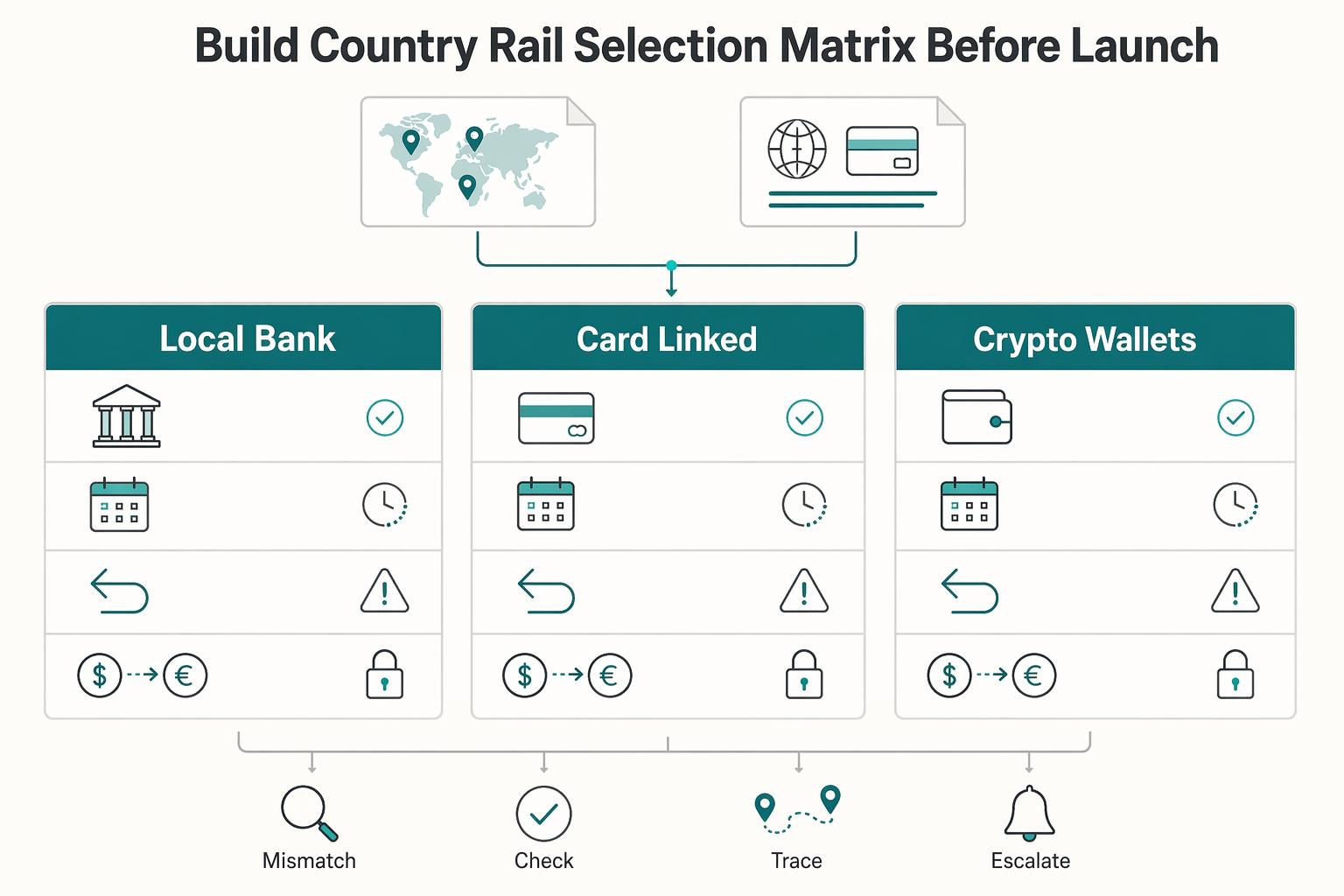
Affiliate Network Payout Automation for Commission and Global Distribution Decisions
Affiliate network payout automation only works if you define it as the full commission-to-cash path, not the moment a transfer succeeds. In practice, that path starts with affiliate onboarding, runs through commission logic and contract terms, and ends only when payouts are recorded in a way your team can reconcile.
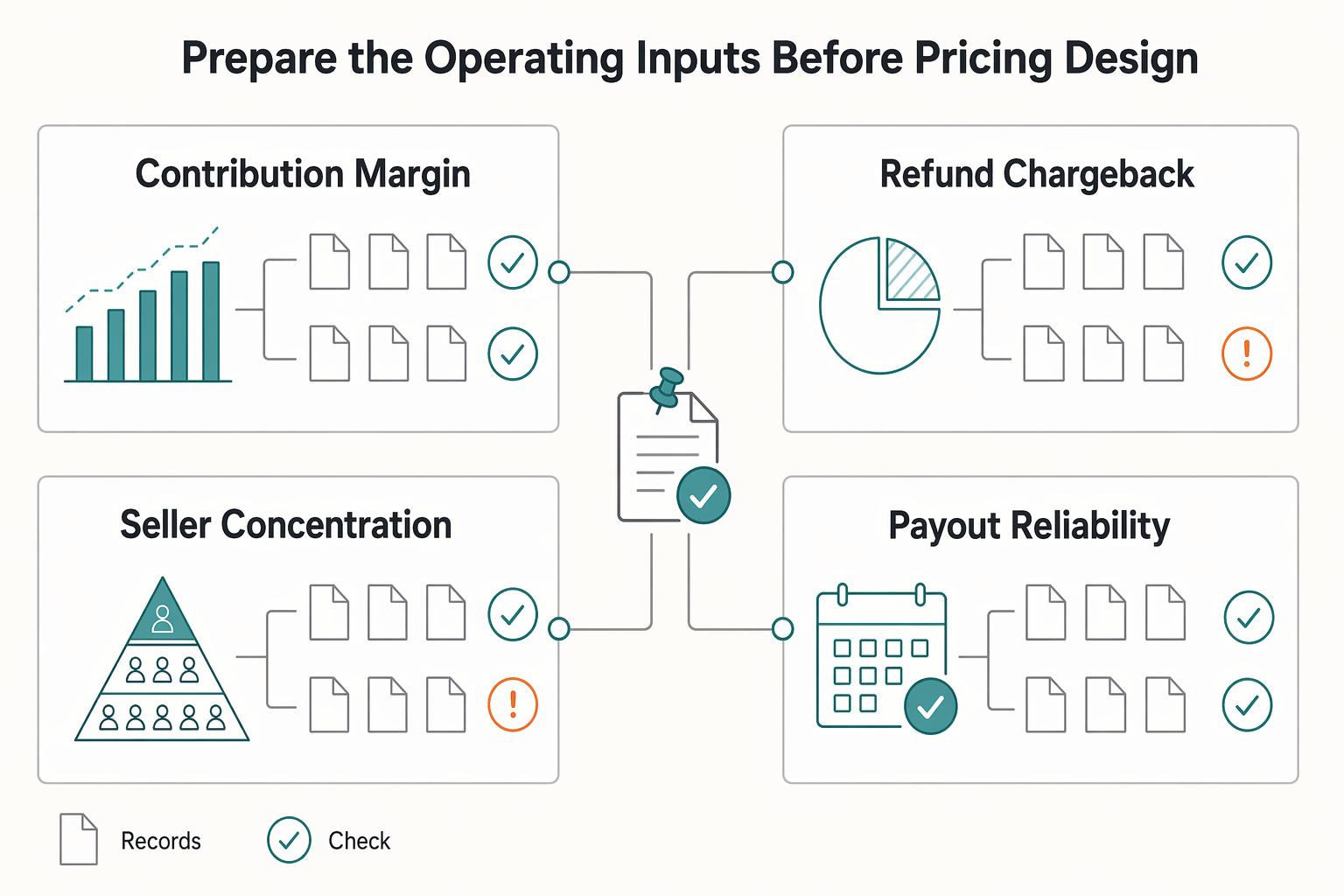
Building Tiered Commission Structures for Marketplace Performance-Based Fees
Here, commission means the platform fee retained from the seller’s commissionable sales. Some tools call the seller’s retained share commission instead. State the direction explicitly: a lower platform take rate means a higher seller share before other deductions.
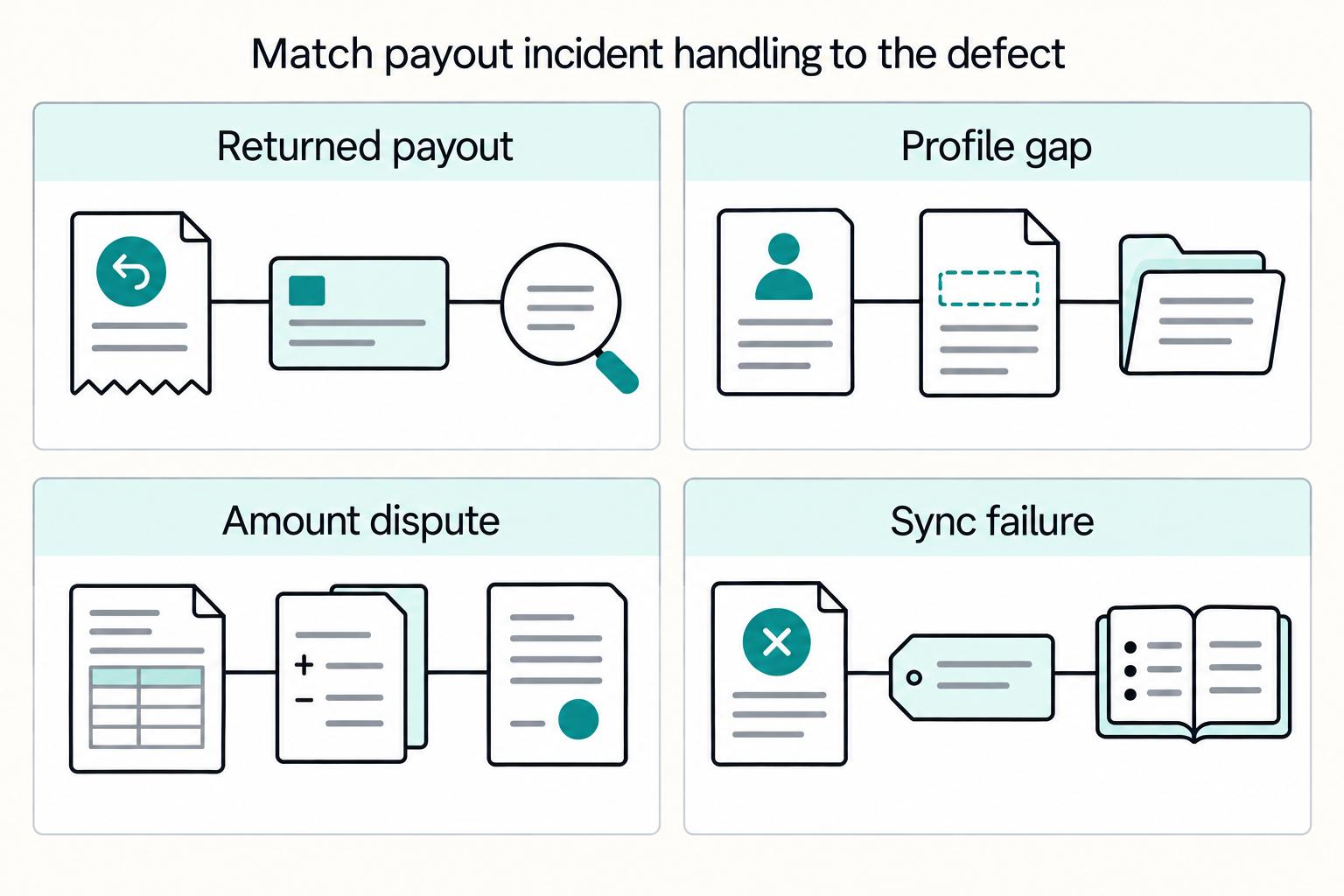
Automating Affiliate Network Payouts for Publishers and Partners at Scale
Automating affiliate payouts is worth doing, but only after you decide what has to stay controlled. As programs grow, payouts become a real operational burden, and payout reliability affects whether partners stay engaged. If you automate the payment motion before you clean up approvals, tax data, and reconciliation, you usually do not remove work. You just move it into exceptions that are harder to unwind.