
Quick Answer
Start by selecting the affiliate program management platform publisher network model that protects margin after commissions, payout processing, compliance checks, and operating effort. Use a written decision file, choose control-first or reach-first based on your constraint, and lock commission plus payout governance before partner recruitment. Validate attribution and webhooks on test traffic, then launch with a small cohort. Awin-size claims can help sourcing, but they should not replace payout and reconciliation proof.
Affiliate program management for platform operators starts with margin, not marketplace hype#
If a partner setup does not improve contribution margin after commissions, payout costs, compliance overhead, and internal operating load, it is the wrong choice, no matter how polished the marketplace pitch sounds. This guide is for founders, revenue leaders, product teams, and finance operators who need an answer that holds up in a planning meeting and in the monthly close.
Before you start#
Handle category labels carefully. An affiliate marketing platform is software for tracking, commissions, and payouts between businesses and publishers. Some vendors pitch a broader model, like impact.com positioning itself as one platform across creators, affiliates, and referrals. Others lead with publisher network scale, like Awin's homepage claim of 30K+ brands and 1M+ approved partners. Those are different buying motions, and mixing them up is where weak decisions begin.
Step 1. Define success in contribution-margin terms. Start with one test: for every dollar of partner-sourced revenue, what is left after commission expense, payout processing, compliance handling, and the hours your team will spend operating the program? That is the number that matters. If you cannot write that formula down before vendor demos, you are at risk of buying reach without knowing whether the channel is actually accretive.
Use a simple checkpoint before you look at decks: can finance and the revenue owner agree on the same threshold for moving forward? If not, pause. The software needed to track sales and leads and pay out commissions gets complex quickly, and complexity that looks manageable in a demo can become real cost after launch.
Step 2. Separate partner discovery from operating control. A large publisher network can broaden partner discovery. It does not automatically improve unit economics. The real tradeoff is speed versus control. A network-led route can reduce sourcing friction, while a platform-led route can give you more control over tracking, commissions, and payouts across multiple partnership channels.
That distinction matters because affiliate operations are no longer lightweight admin. Industry commentary describes the channel as data-intensive, fraud-sensitive, and performance-led, with complexity that can include multiple geographies, payout models, and compliance rules. One failure mode is choosing by brand recognition or network-size claims alone, then discovering that payout and compliance operations eat into the margin you expected to create.
Step 3. Use the rest of this guide as a decision sequence, not a vendor tour. You should leave with three things: a step-by-step way to choose your model, concrete checkpoints to validate implementation before go-live, and a copy-and-paste execution checklist you can hand to the people who will actually run it. If you are weighing a platform against a publisher network, that sequence matters more than any single feature grid.
The goal is not to find the biggest network. It is to choose the setup that produces durable partner revenue with operating cost and compliance burden you can actually carry.
If you want a deeper dive, read What Is Affiliate Marketing Management? A Platform Operator's Guide to Running a Partner Network.
What to prepare before you pick any platform#
Start with a written decision file before demos. Define economics, governance, and operating requirements first, or the process will drift toward marketplace-scale claims instead of operating fit.
Step 1. Build an evidence pack finance and revenue both accept. Document current CAC by channel, target CAC/CPA/ROAS outcomes, expected partner mix, and margin floors by product line. Be explicit about whether content affiliates, referral marketing, or a B2B partner program is expected to drive early volume, because that changes commission design and operating load. If finance and the revenue owner cannot sign off on the same targets before demos, pause.
Step 2. Lock commercial constraints and governance up front. Define acceptable commission structure, required attribution visibility, and the SLA commitments you need in contract language. In the same document, set governance rules for coupon usage, brand bidding, paid social amplification, content standards, and escalation ownership. If those points are vague in writing, treat it as a selection risk.
Step 3. Set non-negotiable operations requirements. List required webhooks, payout reconciliation exports, fraud controls, and cross-border payout handling needs. Ask vendors to prove workflows, not just list features. API-first claims and large integration catalogs can reduce manual work, but they do not by themselves confirm your stack fit or reconciliation readiness.
Step 4. Align decision owners early. Bring the revenue owner, finance operator, product lead, and integration owner into the first evaluation round. The goal is one shared approval view with named owners for economics, policy, implementation, and support. Bringing them in only after shortlist usually creates rework.
We covered this in detail in How to Create a Channel Partner Program for a Business-of-One.
Decide your model first before you compare vendors#
Pick your operating model before you compare demos. The core decision is simple: do you need more control, more reach, or more external operating help? That choice sets ownership for tracking, commission rules, compliance workflows, and partner curation.
Step 1. Compare the three models by ownership, not vendor logos. A mature affiliate program needs structured tracking, commission rules, compliance workflows, and a curated partner mix, so your first filter is who owns each job.
| Operating model | What you gain | What you give up | Best-fit checkpoint |
|---|---|---|---|
| Stand-alone software with in-house management | More direct control over tracking, partner curation, and commission logic | Higher internal operating load; you need a dedicated internal owner | You can name who owns recruitment, approvals, disputes, and payout exceptions |
| Network-led onboarding (for example, through Awin) | Faster partner discovery and onboarding support | Less flexibility to shape every operating rule to your process | Your bottleneck is partner discovery, not custom attribution design |
| Hybrid setup (platform control plus network or OPM support) | Control where it matters, with external help for sourcing or operations | More handoffs to manage across teams and systems | You can define one source of truth for conversions, approvals, and partner status |
Build a one-page ownership map before shortlisting vendors: who recruits partners, who approves commissions, who handles compliance issues, and who resolves cross-geo payout questions.
Step 2. Choose control-first when attribution design drives your economics. If your model depends on custom conversion attribution and partner segmentation, prioritize options that let your team control those rules. In demos, require a full walkthrough from click to approved payout using your logic so you can verify how credit and commission approval work across partner types.
Step 3. Choose reach-first when speed and operating capacity are the constraint. If partner discovery is the blocker and your internal ops bench is thin, a network-managed route can be the better starting point. You are trading flexibility for launch speed, which can be a practical decision early on.
If you cannot support a strong internal owner yet, network-managed operations or outsourced program management (OPM) can reduce day-one operating burden.
Step 4. Pressure-test model fit against your actual partner mix. Sort your first target partners into practical lanes before final vendor comparison. If most partners are high-touch, control usually matters more; if sourcing at volume is harder, reach usually matters more; if both matter, hybrid can work only when ownership handoffs are explicit.
For a step-by-step walkthrough, see How to Set Up an Affiliate Program for Your SaaS Product.
Set commission and payout economics before partner recruitment#
Do not recruit at scale until commission and payout rules are documented and finance can model the outcome by partner type. That keeps payout decisions consistent once volume rises.
Step 1. Freeze the commission rules in writing. Write one policy defining how a tracked conversion becomes an approved payout, when it can be reversed, and who approves exceptions. If two internal owners would resolve the same conversion differently, the policy is not ready.
Step 2. Turn payout design into partner-segment margin math. Model economics by segment rather than as one blended view. Include gross commission plus the operating burdens your setup creates, such as processing overhead, cross-border FX handling, and VAT handling, then confirm net contribution by segment.
When you review tools, pressure-test whether finance can trace each payout to tracked events and partner terms. Impact's public listing says it automates recruitment, contracts, tracking, and payments, while Everflow's listing emphasizes real-time data, customization, and precise tracking for high-volume, multi-channel campaigns. Use that as a verification step, not marketing copy.
Step 3. Add payout governance before finance receives live invoices. Set approval thresholds, an exception queue, and a reconciliation cadence tied to your SLA and close calendar. Assign clear owners for standard approvals, exception review, and reversals so disputes do not become ad hoc policy.
For compliance-sensitive corridors, confirm legal gates before execution. OFAC notes that in at least one sanctions-context case, a specific license was required before a sale could be executed.
Step 4. Gate expansion until payout quality is stable. Do not open new geographies or sub-affiliate layers until payout error rates and dispute cycles are consistently within your targets. Scale partner volume only after payment accuracy is stable.
You might also find this useful: Affiliate Network Payouts: How to Pay Publishers and Partners Automatically at Scale.
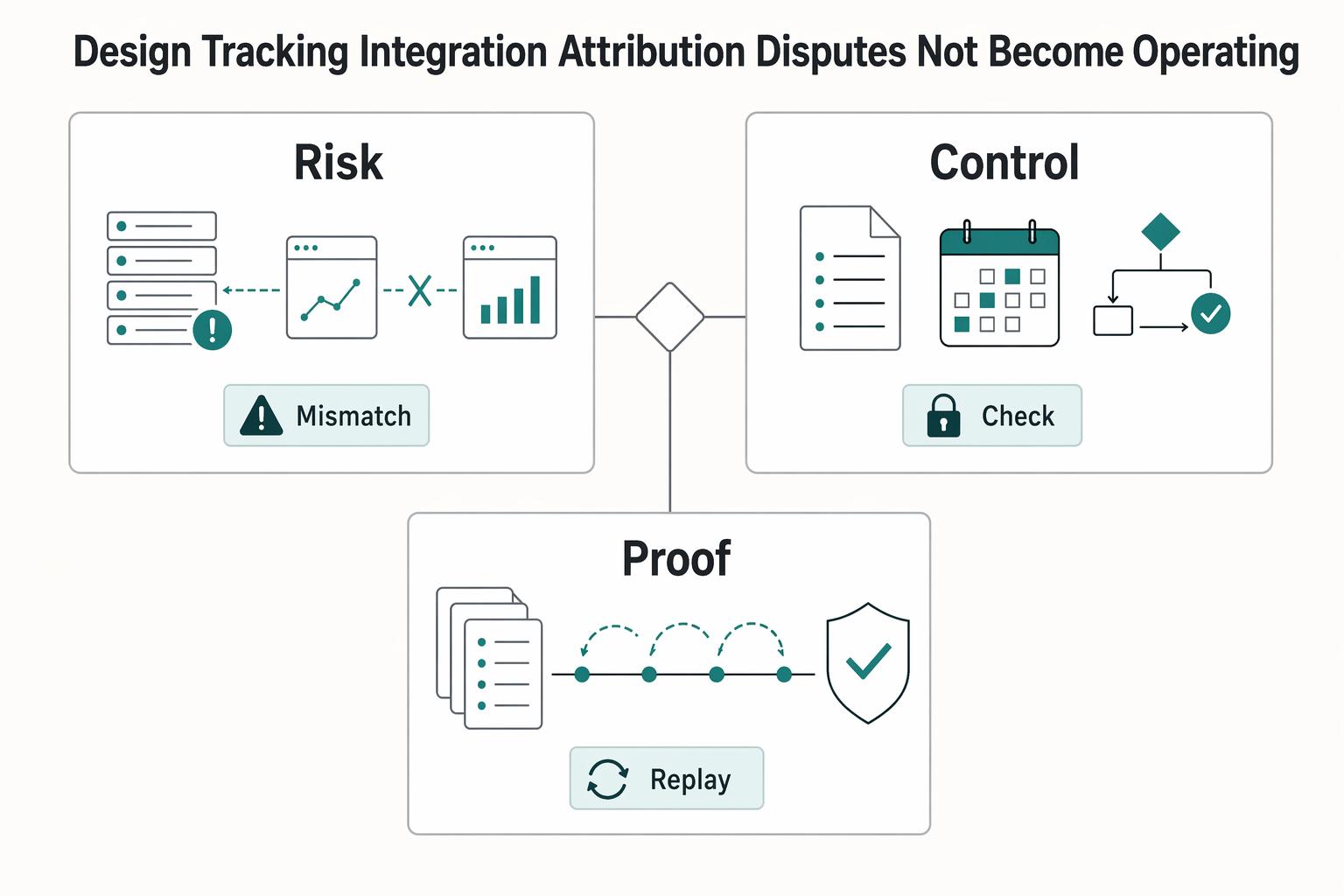
Design tracking and integration so attribution disputes do not become your operating model#
Attribution needs a written operating policy before launch, or disputes will become routine and erode revenue control, spend efficiency, and partner trust.
Step 1. Write one attribution policy across partner lanes. Document source precedence, lookback handling, and tie-break logic before vendor selection. Cover affiliates, referral marketing, and other partner channels in the same policy so overlap is handled consistently from day one. A platform can only automate the logic you have actually defined.
Use a checkpoint before go-live: run a few realistic conflict scenarios and force one payout decision for each. If revenue, product, and finance cannot reach the same answer from the written policy, it is not ready.
Step 2. Require technical proof, not feature-sheet language. Tracking tools are meant to reduce misattribution risk and improve visibility across the funnel, not just clicks. In demos, have vendors show the full event path and dispute evidence trail. At minimum, ask for:
- webhook delivery history and failure handling
- replay handling for delayed or repeated events
- event traceability from click to conversion to payout record
- exportable logs finance can use during reconciliation
If that chain is unclear, you are buying ongoing dispute work, not reliable operations. This is especially important if you want one system to run affiliates, creators, and referrals together, as impact.com positions its unified platform.
Step 3. Run parallel tracking before go-live. Validate attribution on test traffic in both systems and compare payout-relevant outputs side by side. If you are evaluating impact.com, PartnerStack, or Everflow-style setups, compare how each model resolves the same conversion events, not just top-line conversion totals.
A practical check is to trace a small set of named test conversions end to end: timestamps, partner IDs, conversion state, reversal handling, and payout export match.
Step 4. Keep manual overrides as controlled exceptions. Manual overrides should require reason codes, approver names, and linked evidence. If overrides become routine, governance weakens and partner disputes increase.
Watch for repeated "one-off" corrections on the same partner or event type. When that appears, pause growth and fix the tracking rule or integration gap first.
This pairs well with our guide on How to Create a Referral Program for Your SaaS Product.
Build cross-border payout and compliance controls into day-one operations#
Once attribution is stable, payout controls become the next trust checkpoint. Run cross-border payouts as a defined operations lane from day one, with clear release controls, audit evidence, and a clean finance and tax handoff.
| Control area | Define or keep | Checkpoint |
|---|---|---|
| Evidence pack | Partner legal name, country, contract version, required billing or tax details, beneficiary account record, conversion approval log, and the named approver who released funds | Finance can explain one sampled payout end to end |
| Corridor rules | Who creates the payment record, which VAT or indirect-tax fields you collect, what happens when bank details change, and how long payouts remain pending after a compliance or fraud review | Set by corridor, not one global default |
| Reconciliation chain | Each payout batch should map cleanly to the partner record, approval record, and underlying conversions | If the chain is incomplete, disputes usually follow |
| Payout events | One stable payout identifier, states such as pending, released, failed, reversed, and reconciled, and idempotent webhook processing | Retried or duplicated events cannot create a second payment |
Step 1. Separate payout approval from payout release. Do not let approved conversions automatically move money. Keep release checks in front of payout execution, so earnings can accrue while funds stay blocked until required checks are complete.
For each payout batch, keep an evidence pack finance can verify quickly: partner legal name, country, contract version, required billing or tax details, beneficiary account record, conversion approval log, and the named approver who released funds. Your test is simple: can finance explain one sampled payout end to end without asking the partner for missing documents?
Step 2. Define international payout rules by corridor, not one global default. Set corridor-level rules before launch: who creates the payment record, which VAT or indirect-tax fields you collect, what happens when bank details change, and how long payouts remain pending after a compliance or fraud review.
Set the same standard for reconciliation: each payout batch should map cleanly to the partner record, approval record, and underlying conversions. If that chain is incomplete, disputes usually follow.
Step 3. Keep U.S. foreign-asset tax readiness narrow and explicit. If your structure creates foreign-asset reporting questions, escalate to tax with the correct forms named. IRS says certain U.S. taxpayers with foreign financial assets outside the United States generally report using Form 8938, and Form 8938 is attached to the taxpayer's annual tax return.
Keep Form 8938 and FBAR separate in your process. IRS notes some taxpayers may also need FinCEN Form 114 (FBAR), and taxpayers not required to file an income tax return for the year do not file Form 8938.
Do not put a single universal Form 8938 threshold in your operating notes. IRS says reportability is generally above $50,000, but some thresholds are higher; Form 8938 instructions note specified domestic entities may have a trigger above $50,000 at year-end or above $75,000 at any time during the tax year. IRS also notes penalties: $10,000 for failure to report, up to $50,000 for continued failure after notification, plus a 40 percent substantial understatement penalty in some cases.
Step 4. Make payout events idempotent and traceable. Use one stable payout identifier from approval through settlement, and track state changes such as pending, released, failed, reversed, and reconciled. Process payout webhooks idempotently so retried or duplicated events cannot create a second payment.
Run a repeat-event test: resend the same payout event and confirm the partner ledger, batch total, and settlement file do not move twice.
Related reading: How to Structure an Affiliate Agreement for Your Digital Product.
Recruit and govern publishers with explicit quality thresholds#
Set approval thresholds before commission negotiations, and use them consistently across partner types. The goal is to approve publishers on traffic and operating quality, not on headline commission rates.
Step 1. Split recruitment into lanes. Run separate approval lanes for strategic direct publishers, network-sourced publishers (for example, Awin), and controlled sub-affiliate relationships. Require each partner to explain traffic sources and how conversion credit should work under your attribution model before they move out of review.
Step 2. Filter quality before economics. Do not approve on headline rate alone. Review traffic relevance, historical conversion quality, fraud or invalid-traffic signals, payout dispute history, expected ACPS, cookie-window fit (especially when your cycle needs 60-90+ days), and payment terms such as threshold (for example, $100) and cadence (monthly or quarterly). Also confirm tracking reliability and payment timeliness up front, since both are operationally non-negotiable.
Step 3. Use probation, then graduate deliberately. Start new publishers with limited exposure and standard economics until they clear your quality and compliance checkpoints. Increase access and economics only after performance and operations are consistently clean, so you do not scale weak traffic quality or avoidable disputes.
Common failure modes and how to recover fast#
Operational drift usually starts after publisher approvals go live. The fastest recovery is to narrow scope, document the rule, and verify it against real conversion and payout data before you reopen volume.
If you picked on brand recognition instead of fit#
Brand rankings are a starting point, not a decision rule. G2 rankings are algorithmic and based on review and external data, so rescore finalists using tailored evaluation factors: unit economics, SLA terms, and integration depth.
Ask each vendor to show your exact path from click to approved conversion to payout file, including webhook retry behavior and reconciliation exports. If finance cannot trace that path cleanly, the tool is not a fit, regardless of brand.
If you launched generous tiers without clawback protection#
Link commission approval to transaction validation, not just captured conversions. Validation windows like 30, 45, or 60 days give you room to handle cancellations, returns, and invalid orders before payout.
Backtest revised terms on historical conversions, then phase changes by cohort instead of switching everyone at once. Use reversal/modification workflows to correct commissions after order-status changes, and compare gross versus net commission by partner type to confirm the policy is working.
If attribution rules exist only in conversation#
Attribution conflicts are normal when multiple ads influence one conversion. Recovery is to publish one attribution policy for source precedence, lookback handling, and tie-break logic, then enforce that same policy across partnerships and finance.
Do not assume webhook delivery order is guaranteed. Store timestamps, source IDs, conversion IDs, and an idempotency key, and keep audit logs for manual overrides so disputes are traceable.
If payout ops debt is stacking up#
If KYC, VAT checks, or reconciliation are incomplete, expansion usually just increases failure volume. Treat verification and compliance states as release gates, because unresolved requirements can block payouts.
For EU flows, confirm whether OSS applies to your setup, then reestablish reconciliation discipline before reopening any market: approved conversions, reversals, payout files, and payment confirmations should tie out. If exceptions only live in spreadsheets, pause expansion until the audit trail is reliable.
Your next 30 days to launch a high-performing publisher network#
Run this as a gated launch, not a volume sprint. Prove margin, attribution clarity, and payout control with a small cohort first, then scale.
- Confirm your operating model (platform-led, network-led, or hybrid).
Choose based on the tradeoff you need now: control or reach. If your model depends on deeper attribution across partner types, prioritize operating control. If discovery is your bottleneck, a network-led path can accelerate recruiting, but treat headline scale as input, not proof of fit: Awin markets 30K+ trusted brands and 1M+ approved partners.
- Lock commission and payout policy before partner approval.
Get finance, revenue, and program ownership aligned in writing before recruitment starts. Define baseline commission logic, exception ownership, clawback handling, and reconciliation cadence. If finance cannot trace approved commission records to payout outputs cleanly, you are still in design mode.
- Test tracking and webhook flows before launch traffic.
Document attribution rules first, then validate the path from click to conversion to commission decision in a pre-launch test. Check that UI views and exports stay consistent under retries and ordering edge cases. If the event trail is not traceable, disputes will compound quickly.
- Approve compliance and international payout controls with clear ownership.
Assign who can review eligibility, hold payouts, and release payouts, and confirm how records are captured for review. For VAT-related handling where relevant, make sure documentation and evidence paths are explicit. Vendor "supported" claims are not enough without visible records your team can audit.
- Launch with a controlled cohort and review weekly before scaling.
Start with a partner set small enough to review in detail every week. Track conversion quality, approved commissions, payout exceptions, and whether economics hold after payment and operating effort. If a lane creates dispute-heavy reconciliation, fix it before expanding.
Related: Affiliate Network Payout Structures: Performance-Based Commission Models for Publisher Partners.
Frequently Asked Questions
What is the difference between an affiliate program management platform and a publisher network?
A platform is the operating layer you use to track referrals, manage commissions, and run the program. A publisher network is the pool of affiliates, also called publishers, that can promote you. Some vendors blur the line: Awin describes itself as a trusted third party between advertisers and publishers and says it provides account management, strategy, and technology, so you need to separate who gives you reach from who runs your operating logic.
Which features are non-negotiable in affiliate tracking software for a platform business?
Do not treat any vendor list as complete, but the baseline is simple: unique tracking links and clear handling of completed purchases within a set cookie window. If your finance owner cannot trace a conversion from link click to approved commission with a usable record, the tool is not ready for your business. A practical miss is buying for partner discovery first and only later validating how commission exceptions are handled.
When does publisher network size actually matter in vendor selection?
It matters when partner discovery is your bottleneck and you need an intermediary to help you work with publishers. It matters much less when your main gap is operating fit in tracking and commission logic, because a big directory alone does not fix that. Ask for proof on the actual publisher types you want, not just a large headline network.
How should we evaluate international payout readiness, including VAT and compliance controls?
Ask vendors to show how international payouts are tracked, approved, and documented in the product before you rely on broad "supported" claims. Confirm specific VAT and compliance requirements with the relevant authority before finalizing your evaluation.
What should we still treat as unknown before signing any vendor contract?
Treat attribution accuracy, reconciliation effort, and exception handling as unknown until the vendor proves them on your use case. Ask for the exact path from click to completed purchase to commission record, plus sample reporting outputs used for reconciliation. If critical workflows are only described verbally, assume the operating cost is still hidden.
How much customization do we need for conversion attribution and multi-tier commissions?
Use the lightest setup that matches your business model. If you have one main conversion event, one cookie window, and simple commission rules, heavy customization usually adds more failure points than value. If you need advanced attribution or multi-tier commissions, validate those rules explicitly before launch instead of assuming they work by default.
Try a related tool
Researched and edited by the Gruv editorial team. Gruv builds cross-border billing, payouts, and finance-operations software for global businesses.
Sources
- acquisition.gov/far/15.304trusted
- dhcs.ca.gov/ar/provgovpart/Documents/CalAIM-Eval-Design-...trusted
- dor.wa.gov/sites/default/files/2022-03/K2033_response_f...trusted
- fdic.gov/bank-examinations/applications-procedures-ma...trusted
- federalregister.gov/documents/2026/02/11/2026-02769/patient-prot...trusted
- grayson.edu/employee-resources/images/Update%2032LOCAL%2...trusted
- irs.gov/businesses/corporations/fatca-information-fo...trusted
- irs.gov/forms-pubs/about-form-8938trusted
Educational content only. Not legal, tax, or financial advice.
Related Posts
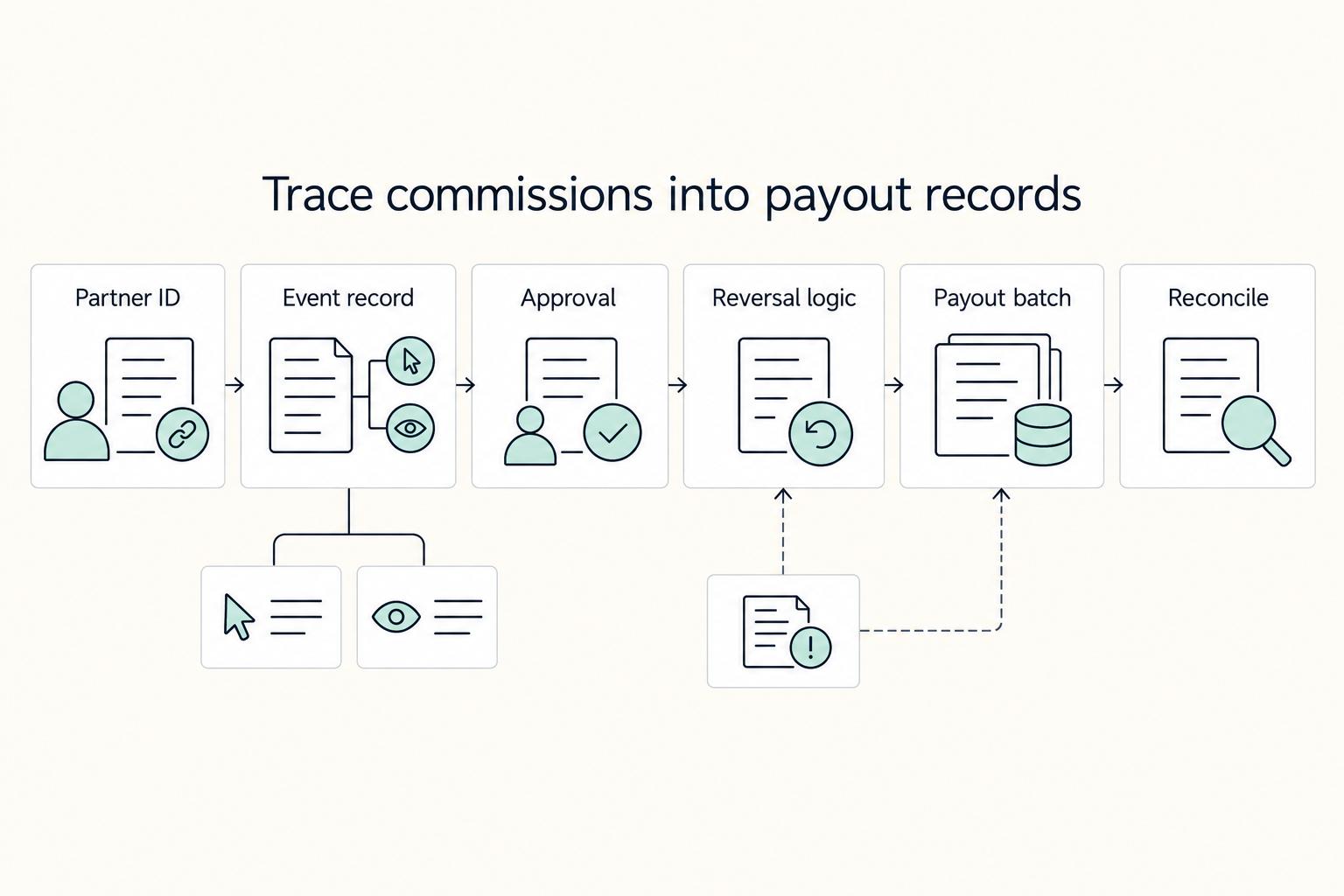
Affiliate Marketing Management for Platform Operators Running a Partner Network
Partner revenue can be a clean growth engine, or it can turn into an expensive mess of unclear attribution, manual payouts, and commission disputes. The difference is usually not partner enthusiasm. It is the operating model you choose, and whether that model matches the control your team actually needs.
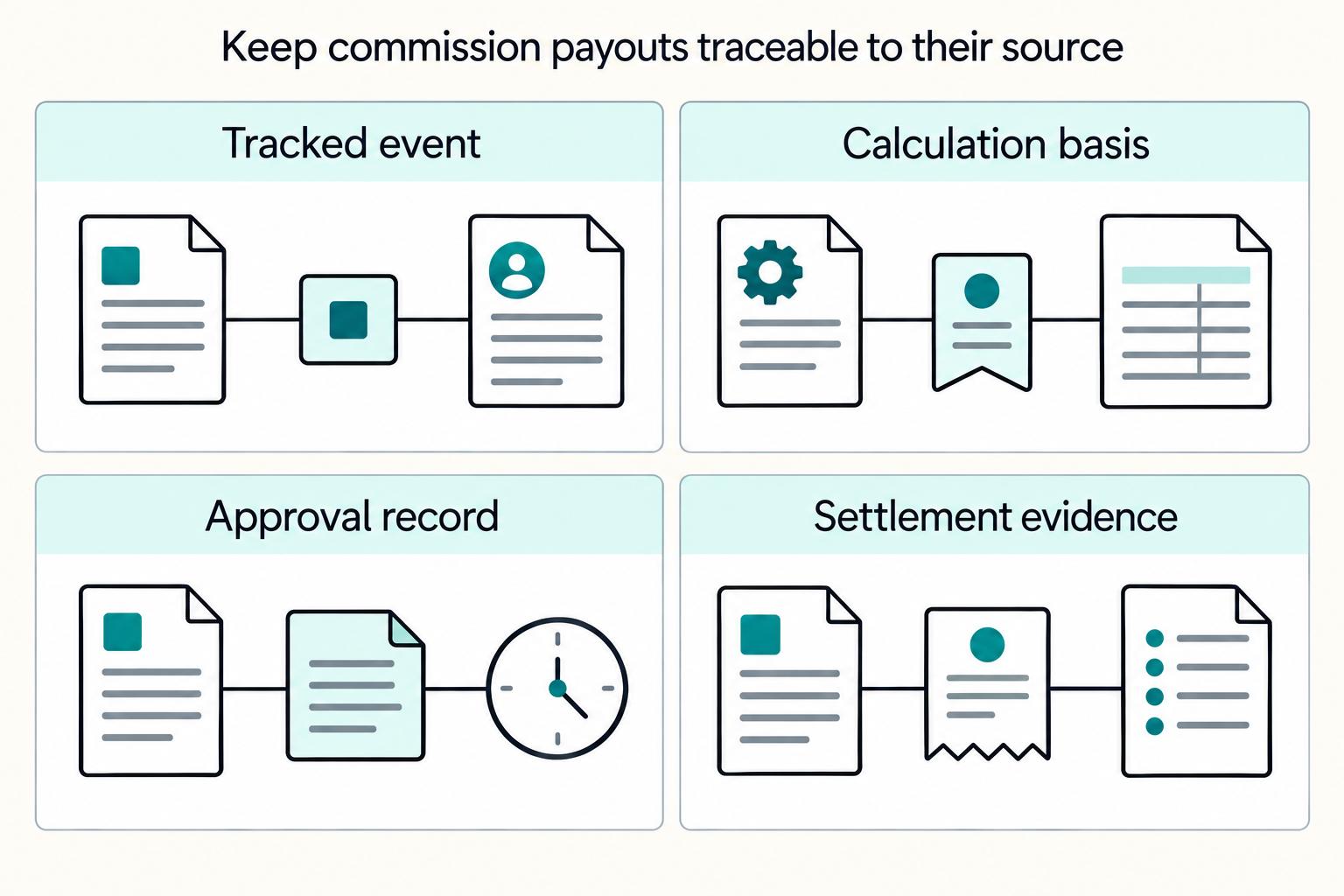
Affiliate Network Payout Structures for Publisher Commissions
Commission design is an operating decision, not a pricing footnote. The structure you choose affects what behavior you reward and the economics of the program. It is easy to announce rates. It is much harder to define a model that still holds up once reversals, edge cases, and partner questions start showing up.
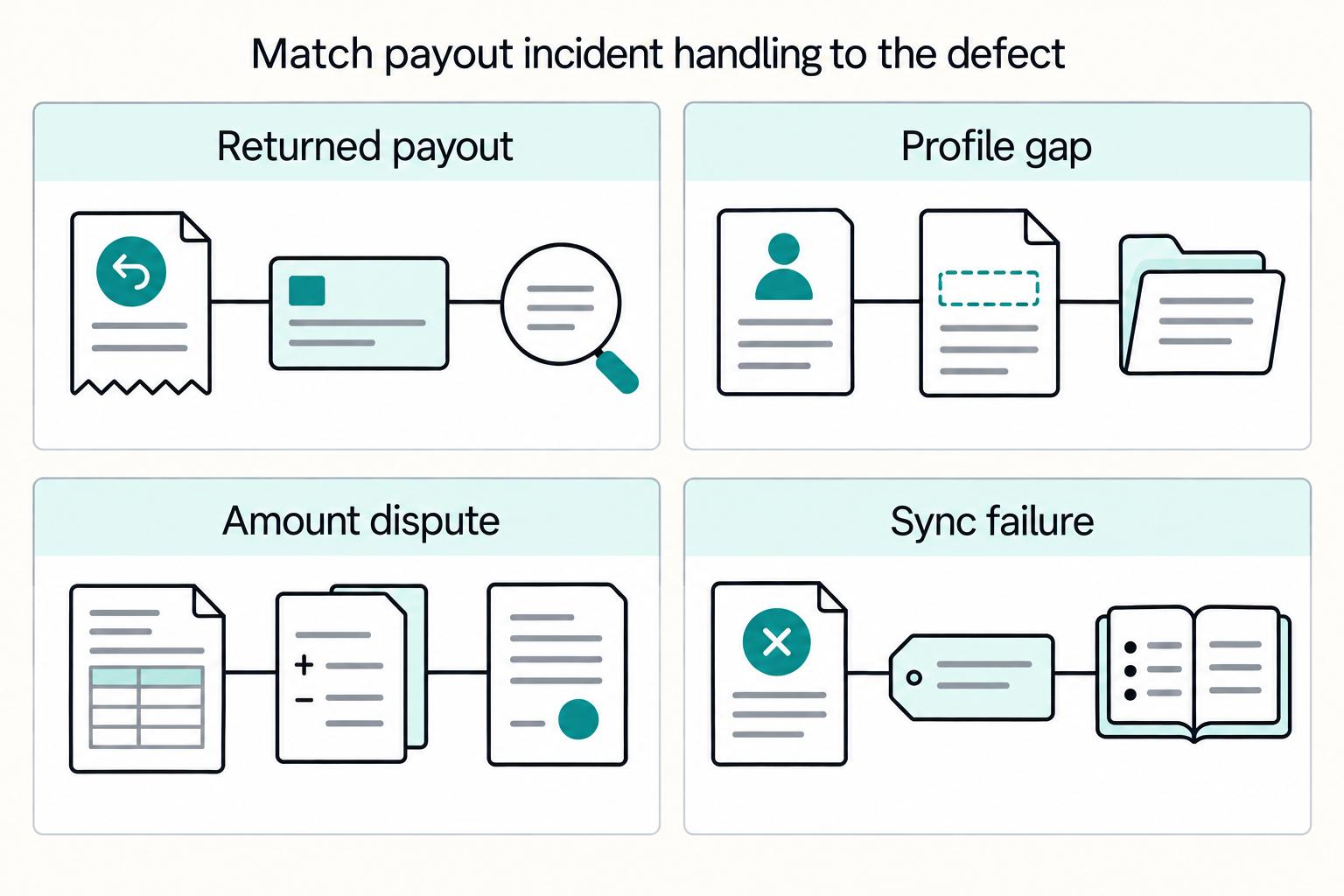
Automating Affiliate Network Payouts for Publishers and Partners at Scale
Automating affiliate payouts is worth doing, but only after you decide what has to stay controlled. As programs grow, payouts become a real operational burden, and payout reliability affects whether partners stay engaged. If you automate the payment motion before you clean up approvals, tax data, and reconciliation, you usually do not remove work. You just move it into exceptions that are harder to unwind.