

Quick Answer
Start by locking ownership before writing payout endpoints: choose custodial, non-custodial, or hybrid responsibility, require signed webhook handling (such as `X-PAY-SIGNATURE`), and prove each transfer links request context, provider status, and ledger records. Then run sandbox drills for timeout and replay behavior, and pick stablecoin or fiat paths by corridor based on finance reporting needs and posting expectations.
What to Decide Before You Add Crypto Payouts#
Crypto payouts can look straightforward in a demo and become much harder to run once real users and failed transfers are involved. A common mistake is starting with endpoints before you decide custody, ownership, and settlement rules. That gets you to a working demo fast, but it can also leave you with a payout stack that is difficult to support, reconcile, and explain.
Think of this as financial plumbing, not wallet generation. Integration guidance increasingly describes crypto payments as a scalable pipeline, not just a wallet-address step. The harder part is turning that into one traceable pipeline from payout request to status events, internal records, and settlement outcomes.
Decide who manages the wallet before you design the flow#
Make this decision before you build product flows around it. In practice, that responsibility can sit with your team, a provider, or the user. That choice changes support ownership, incident handling, and how much control you have over the payout experience. If user self-custody is a hard requirement, design for the added operational complexity from the start.
Define what counts as truth in your payout lifecycle#
Decide early what counts as truth in your payout lifecycle. A typical crypto integration includes asynchronous webhook callbacks for status updates, so your product will deal with asynchronous status changes from day one. Webhook handling is also a control point: verify signatures, for example headers like X-PAY-SIGNATURE where your provider uses them, before you update status. The early check is simple: can every payout event be tied back to your request ID, the provider reference, and an internal audit record? If that answer is fuzzy, the demo may work while operations later struggle to explain whether money is pending, confirmed, blocked, or failed.
This is also where compliance and payout checkpoints should be named explicitly, even if implementation comes later. Your design should include an evidence trail and a clear owner for review.
Choose settlement paths with treasury reality in mind#
Choose settlement with treasury reality in mind, not just API convenience. Stablecoin rails may be available in some programs, but availability and compliance requirements vary by provider, market, and program. Verify your actual provider and market constraints before you promise outcomes to users. If finance needs bank-native reporting, predictable fiat accounting, or local payout expectations are not crypto-friendly, fiat settlement may be the cleaner path even when the payout starts on crypto rails.
That is the scope of this guide: wallet and payout integration, wallet management, policy gates, wallet state, reconciliation, and settlement choices across crypto and fiat paths. Coverage, rails, and compliance obligations can vary by jurisdiction and program, so confirm those constraints before moving anything into production.
Related reading: ERP Integration for Payment Platforms: How to Connect NetSuite, SAP, and Microsoft Dynamics 365 to Your Payout System. Gruv itself is software and fiat-side orchestration only; it does not custody crypto, hold private keys, or convert fiat and crypto, and any such capability is delivered by licensed third-party partners. If you are evaluating crypto payout API integration and wallet management, a quick next step is to browse Gruv tools.
We covered related operating patterns in How RENTAS Works: Malaysia Central Bank RTGS for Platform Payouts.
Prepare the prerequisites before you write integration code#
Do this before you touch endpoints: if ownership, setup checkpoints, and evidence are unclear, payout integrations are easy to demo and hard to run.
| Prerequisite | What to define | Check |
|---|---|---|
| Build the evidence pack | For each target jurisdiction, list expected policy gates, tax artifacts you may need to collect or support, and the approver for each item | Every row has one owner and one source document |
| Define the boundary line | Decide what your product owns vs. what the payout or wallet provider owns, including support and record-keeping responsibilities | Every payout action and exception path has one clear owner |
| Confirm setup checkpoints | Document the provider's required setup flow, including server-side setup steps and capture-context requests where applicable, status tracking model, and issue-handling process | You have written answers and sample payloads for normal and exception paths |
| Set launch acceptance criteria | Require a traceable path from request to provider status to internal records, plus day-level reconciliation | You can explain day-level differences between provider records and your internal records |
If these prerequisites are not explicit, operational gaps usually show up after launch as unresolved exceptions and reconciliation friction. With this in place, custody and settlement decisions are easier to make without guessing who owns the fallout.
Related: Invoice API Integration: How to Programmatically Generate Invoices for Your Platform. This also pairs with How to Build a Partner API for Your Payment Platform: Enabling Third-Party Integrations.
Choose the custody model based on liability and operating constraints#
Choose custody by who owns incidents, recovery, and compliance work in production, not by ideology. Custodial and hybrid models are usually easier to operate when you need clear ownership; non-custodial can fit when user key control is a hard requirement, but recovery and user education burdens rise immediately.
| Model | No-go condition |
|---|---|
| Custodial | compliance coverage, audit evidence, or incident ownership is not clear enough for your operating model |
| Non-custodial | your product promise includes recovery or operator intervention the model cannot reliably provide |
| Hybrid | shared authority exists on paper, but approvals, recovery, and escalation are not mapped to named owners |
| WaaS | launch speed improves, but key responsibilities or operational visibility stay too ambiguous for your team to run safely |
| Model | Control of keys | User recovery burden | Compliance burden for payout program (KYC/KYT) | Incident response complexity |
|---|---|---|---|---|
| Custodial wallet | Platform, provider, or institutional custodian controls keys | Lower for end users when recovery is handled by platform/provider processes | Operational burden remains, with custody partners often handling major compliance/reporting functions | High for the operator, but ownership is clearer |
| Non-custodial wallet | User controls keys | Highest, because access loss sits more with the user | Still present for the payout program, while key custody stays with users | Support is harder when user key errors cause lockout |
| Hybrid wallet | Control is shared across parties | Medium, based on how recovery and approvals are split | Medium to high, depending on how ownership is assigned | Can be high if shared-control roles are vague |
Hybrid only works when shared-control rules are explicit. In your evidence pack, assign one owner each for key control, user recovery, KYC/KYT review, and incident communication.
After liability, apply a speed filter: build in-house or buy infrastructure. [Wallet-as-a-service](https://www.cobo.com/post/wallet-as-a-service-waas-guide) is a cloud model that lets teams integrate wallet functions through APIs/SDKs instead of building everything from scratch. In-house wallet builds are often described as complex and resource-intensive; one vendor estimate puts them at 12-18 months and $2-5 million, so treat that as directional, not universal.
Treat custom custody, including MPC, as a dedicated product and security investment. If timeline is the priority, hosted infrastructure is often the more supportable starting point. If long-term control is the priority, document that rationale before buildout. Before procurement, write those no-go conditions down so the team knows when speed or flexibility no longer justifies the model.
Verify safeguards and reporting posture early: cold storage, multisig, HSM, MFA, and audit-ready reporting.
Once custody is set, the next decision is where operational truth lives. That should be your ledger, not a provider balance screen.
If you support bank rails alongside crypto, ACH API Integration to Programmatically Initiate and Track Transfers in Your Platform covers the ACH side of the stack.
Related reading: IndieHacker Platform Guide: How to Add Revenue Share Payments Without a Finance Team.
Design wallet management around ledger truth, not balance snapshots#
Use your internal ledger as the source of truth, and treat wallet or payout API balances as downstream views. If you depend on provider balances alone, delayed updates or corrections can make tracing a payout harder.
Record transfer events before you rely on balances#
Record the event trail first, then derive balances from that trail. Transfer flows include tracking and confirmation, so each payout or wallet movement should keep audit-ready references that support end-to-end tracing:
- internal movement ID
- request ID
- provider reference
- timestamps from your system and the provider
- internal ledger posting or journal reference
- current internal state
- raw event payload used for review
A practical test: support or finance should be able to start from a provider reference and find the originating request plus internal ledger record without an engineering log dive.
Define canonical states before wiring provider statuses#
Define a small internal state model first, then map provider webhooks and API responses into it. Keep states clear for operators while covering core outcomes such as pending, confirmed, failed, reversed, or canceled.
Keep the request and event references needed to reconcile retries and repeated deliveries, so operations can handle duplicates consistently.
Document what is pending, what is final, and how to close gaps#
Write your eventual-consistency rules before launch. Some transfers stay open until tracking and confirmation evidence arrives, so operators need clear rules for what can remain pending and what is final for customer display.
Use webhooks for fast updates and polling as a fallback when updates are delayed or missing. From day one, include core trace fields in reconciliation exports so teams can investigate and close issues quickly. For a platform example, see How Platform Teams Manage Crypto Freelancer Payouts.
Implement the minimum viable integration sequence with verification gates#
Treat this as a gated rollout, not a happy-path build: wire the minimum flow first, and require proof at each step before you move on.
| Step | Minimum scope | Verification gate |
|---|---|---|
| 1. Credentials and environments | Set up API credentials and environment config, with sandbox and production separated before shipping payout code | A new engineer can run the full sandbox flow without production secrets |
| 2. Create and track payout/payment requests | Implement request creation first, for example POST to /invoices or /payments, include callback configuration, and persist internal and provider references | From one internal payout ID, the team can retrieve request payload, provider reference, canonical state, and linked ledger posting |
| 3. Async updates and status convergence | Accept webhook notifications, validate signature headers such as X-PAY-SIGNATURE before state changes, and use polling only as fallback | Late or repeated updates do not create duplicate postings, and unresolved conflicts route to reconciliation |
| 4. Failure drills before launch | In sandbox, simulate success, timeout, underpayment, and repeated callback delivery paths | For a failed payout, operators can produce request ID, provider reference, async event/status history, and final ledger impact without engineering log forensics |
Step 1. Credentials and environments. Keep sandbox and production separated from day one, and block release until sandbox execution is complete with the intended credentials model.
Step 2. Create and track requests. Start with one traceable path: create the payout or payment request, store your internal ID, store the provider reference, and confirm you can read status back cleanly.
Step 3. Handle asynchronous updates safely. Webhooks should drive real-time status updates, but only after signature verification; polling is your fallback when callbacks are delayed or missing. Map both inputs into one canonical state model with deterministic conflict handling. For deeper event-sync patterns, see ERP Integration Architecture for Payment Platforms: Webhooks APIs and Event-Driven Sync Patterns.
Step 4. Run failure drills before production. Test replay and timeout behavior in sandbox, and include underpayment scenarios so operators have a complete incident trail before launch.
If you are prioritizing rollout order across payout cohorts, What Is Addressable Spend? How Platforms Can Identify and Automate Their Highest-Volume Payouts is a useful companion.
If your payout APIs need delegated access, How to Implement OAuth 2.0 for Your Payment Platform API: Scopes Tokens and Best Practices covers scope design and token handling.
Add compliance and tax gates where they block payouts in real life#
Put compliance and tax checks directly on fund-release decisions, not only at onboarding. When coverage or ownership is unclear, keep wallet access read-only and delay payout activation until the gate logic is explicit.
| Step | Focus | Required handling |
|---|---|---|
| 1 | Fund-release checkpoints | Define the release checkpoints before payouts are enabled, assign clear ownership for go/no-go decisions, and record what was checked, when it was checked, who owned the decision, and which result set the final state |
| 2 | Blocked payout state | Include hold evidence, a named escalation owner, and an unblock path that preserves traceability; avoid side-channel releases outside the product flow |
| 3 | Tax artifact readiness | Model readiness states clearly: present, missing, expired, under review; mask sensitive data in handling flows, and keep payout release blocked if tax handling rules are not clearly defined |
| 4 | Read-only default | Use visibility-only access when market coverage or policy ownership is unresolved, and move to live payouts only after each market has named owners, documented hold reasons, unblock evidence requirements, and clear operating rules |
Step 1. Gate the exact moments that can release funds. Define the release checkpoints before payouts are enabled, and assign clear ownership for go or no-go decisions. For each payout attempt, record what was checked, when it was checked, who owned the decision, and which result set the final state.
Step 2. Treat "blocked payout" as an operating state. A blocked payout should always include hold evidence, a named escalation owner, and an unblock path that preserves traceability. Avoid side-channel releases outside the product flow, because they break the audit trail when decisions are reviewed later.
Step 3. Tie payout readiness to explicit tax artifact status, not inferred conclusions. If tax artifacts are part of your process, model readiness states clearly, for example present, missing, expired, under review, and mask sensitive data in handling flows. If tax handling rules are not clearly defined, keep payout release blocked and route the case to the accountable tax owner.
Step 4. Use read-only wallet access as the safe default when boundaries shift. Compliance boundary shifts are a real integration risk, so default to visibility-only access when market coverage or policy ownership is unresolved. Move to live payouts only after each market has named owners, documented hold reasons, unblock evidence requirements, and clear operating rules.
For a step-by-step walkthrough, see How to Set Up Automated Tax Collection for Your Subscription Platform: Avalara and TaxJar Integration.
For token selection and payout-rail tradeoffs, read Crypto Payouts for Contractors: USDC vs. USDT - What Platforms Must Know.
Build operations for payout failures, exceptions, and reconciliation#
Treat payout failures as distinct operating states, not one generic error bucket. Your ops model should classify the failure, route it to the right owner, and keep enough evidence to explain what happened without ad hoc log digging.
Classify failures before you choose an action#
Use provider error details to split cases by what can actually be fixed.
| Failure signal | What it usually means | Default handling | Evidence to retain |
|---|---|---|---|
message: "insufficient funds" | Funding state issue, not a transport glitch | Hold and resolve funding before resend | request ID, provider reference, status, error message |
Authentication failure (for example 403) | Credentials or permission problem | Stop retries; fix auth/config first | status code, error payload, environment, change history |
Other failed API request (for example 400) | Request/data problem that needs correction | Correct the request, then resubmit as a new instruction if payload changes | full error details, submitted payload, idempotency key |
Match retries to failure type, not to one blanket policy#
Automatic retries help with transient technical failures, but they do not resolve compliance holds or bad credentials. Keep retries replay-safe with the same idempotency key and unchanged request body. If the body changes, treat it as a new instruction and preserve the prior trail.
Reconciliation should prove the full payout path#
At reconciliation time, you should be able to connect payout execution to confirmation and final reconciliation, with clear links back to the originating business context. This is the same operating goal as invoice-led flows: approved invoice, payout executed, proof captured, reconciliation completed.
For event-handling patterns that reduce reconciliation drift, see ERP Integration Architecture for Payment Platforms: Webhooks APIs and Event-Driven Sync Patterns. For architecture decisions around payout rails, see On-Ramp and Off-Ramp Infrastructure for Platform Crypto Payouts. If you also coordinate upstream billing systems, see How to Integrate Your Subscription Billing Platform with Your CRM and Support Tools.
Choose settlement paths that match treasury and user expectations#
Treat settlement as an operating design choice, not a token checklist. In most platforms, fiat and stablecoin rails work best as complementary paths by corridor, compliance needs, and treasury workflow, not as a one-rail replacement strategy.
Compare settlement paths on production criteria#
| Decision point | Fiat settlement | Stablecoin settlement |
|---|---|---|
| Corridor coverage | Often strong where local banking rails are mature | Useful as an additional rail in supported corridors and cross-border flows |
| Role in your stack | Familiar for bank-centric finance and reporting workflows | Best treated as another gateway path for selected payout and treasury flows |
| Compliance and delivery build-out | May rely more on existing bank processes | Provider fit depends on how much compliance and fiat-delivery infrastructure you must build |
| Operating window | Tied to banking-rail timing | Can support 24/7 settlement in supported setups |
| Launch risk | Lower if it matches your current operating model | Wrong platform fit can force a rebuild after launch commitments |
Choose providers based on architecture, compliance requirements, and target corridors#
Choose providers based on architecture, compliance requirements, and target corridors, not token support alone. Before you commit, confirm whether the provider gives you the compliance and fiat-delivery coverage you need or leaves those layers to your team.
Validate settlement behavior in sandbox before production#
Run settlement-path tests in sandbox before you expose real funds. Simulate normal success, timeouts, and underpayments, and verify webhook signatures before status changes are written in asynchronous flows.
Write a rail-specific user contract in plain language#
For each rail, define what users should expect for settlement currency, fees, posting behavior, and when a payout is treated as complete. Keep those definitions consistent across UI text, receipts, and status updates so users, support, and finance are working from the same meaning.
Also see How to Choose a Treasury Management System for Your Payment Platform.
Conclusion#
Teams that ship cleanly do not treat this as "add an API and launch." They treat it as a sequence of decisions with proof at each gate. Even when the integration pattern looks clean, operational risk starts after the first successful API response.
| Step | Action | Launch checkpoint |
|---|---|---|
| 1 | Confirm the operating model and name the liability owner | One launch document names the internal owner for payout support, user recovery, blocked payout handling, and incident response |
| 2 | Validate policy and tax gates before payout activation | List the checks and artifacts per market and per program before turning on payouts |
| 3 | Standardize request and reference tracking on every mutating payouts API call | Keep the request ID and provider reference tied together and confirm the team can explain the final state in staging with retries |
| 4 | Implement webhooks first, then add polling fallback | Simulate callback disruptions and confirm the status flow still converges to the correct terminal state |
| 5 | Prove reconciliation before production | Run a day-end test where totals by currency tie back to exported provider references after terminal statuses settle |
| 6 | Decide the settlement path per market and program | Publish the user-facing posting window, fee treatment, and exception path before launch |
- Step 1: Confirm the operating model and name the liability owner.
Decide how funds and responsibilities are split between your team and your provider, then write down who owns payout support, user recovery, blocked payout handling, and incident response. The verification point is simple: one launch document should name the internal owner for each of those cases. A common failure mode is assuming the provider handles exceptions while your support team is the one getting the ticket.
- Step 2: Validate policy and tax gates before payout activation.
List the checks and artifacts your program expects, and do it per market and per program, not as one global checkbox. Confirm your compliance and tax requirements before turning on payouts. The red flag is enabling money movement while coverage is still described as to be confirmed.
- Step 3: Standardize request and reference tracking on every mutating payouts API call.
Creation, retry, and status-affecting actions should all be traceable with consistent request context. Keep the request ID and provider reference tied together so you can prove how a business action reached its final payout outcome. Test in staging with retries and confirm your team can explain the final state without ambiguity.
- Step 4: Implement webhooks first, then add polling fallback.
A webhook notification is the asynchronous callback that updates payout status, and signatures should be verified before changing order state. You still need a fallback path when callbacks are delayed or missed. Your checkpoint is to simulate callback disruptions and confirm your status flow still converges to the correct terminal state. One easy mistake is building a webhook-only flow and discovering in production that missed callbacks leave payouts stuck in pending.
- Step 5: Prove reconciliation before production.
The API may handle core payment flow steps, but your ledger still has to explain every movement. Run a day-end test where totals by currency tie back to exported provider references after terminal statuses settle. If finance cannot trace a payout from request to ledger to final provider state, you are not ready.
- Step 6: Decide the settlement path per market and program.
Document whether each corridor settles on crypto rails or fiat, and make sure treasury, finance, and support all use the same definition of completed. Many businesses accept crypto while settling in fiat, which is often the cleaner choice when period close and bank reporting matter more than token-based speed. Whatever you choose, publish the user-facing posting window, fee treatment, and exception path before launch.
If one of these six items is still unresolved, wait. Shipping a week later with traceability beats spending a quarter untangling payout state, support debt, and reconciliation gaps.
Frequently Asked Questions
What does it actually take to add crypto payouts to a platform without creating integration debt?
Start with ownership boundaries and evidence, not endpoints. Before deeper buildout, complete the unglamorous prerequisites first: account signup, wallet address setup, API key creation, and integration method selection. A crypto wallet API can keep you from running your own nodes, managing keys, and decoding raw transaction data, but you still need to prove one payout from request to final status. If scope is getting fuzzy, narrow launch to the payout segment that matters most by volume and exception load, then expand from there with help from What Is Addressable Spend? How Platforms Can Identify and Automate Their Highest-Volume Payouts.
How do I choose between a custodial wallet, non-custodial wallet, and hybrid wallet for payouts?
Pick the model whose failures your team can actually own. Write down who handles key recovery, incident response, payout exceptions, and user support before launch, then choose the custody approach that matches that document. If those responsibilities stay vague, hybrid will not save you and non-custodial will not make risk disappear.
How should webhooks and polling work together for payout status without duplicate state changes?
Use webhooks as the primary signal and polling as a backup check when updates are delayed or missed. The practical checkpoint is whether you can track statuses, filter payment records, identify which payouts are finished, and prevent duplicate postings when states are reprocessed. If you need a deeper event-sync pattern, read ERP Integration Architecture for Payment Platforms: Webhooks APIs and Event-Driven Sync Patterns.
What are the most common payout failure modes, and which ones should auto-retry versus require manual review?
Define auto-retry for clearly transient technical failures, and route rejected, ambiguous, or state-mismatch cases to manual review. Keep a compact evidence pack: payout request, provider reference, webhook history, and the internal ledger entry. If support cannot explain why a payout moved from pending to failed, do not automate the next attempt.
How should wallet balances be calculated if the ledger is the source of truth?
If your internal ledger is the balance authority, treat provider-reported balances as external signals. Customer-visible balances can come from your own posted records, then be reconciled against provider status updates after transactions reach a finished state. A red flag is any team using wallet dashboard snapshots as the final answer during support or finance close.
When should a platform settle in stablecoins versus fiat?
Choose stablecoins when recipient preference, supported corridors, and around-the-clock movement matter enough to justify tighter treasury handling. Choose fiat when your reporting, close process, or user promise depends on bank-account delivery. Do not equate API acceptance with recipient receipt: crypto payments can settle in minutes to hours, while traditional rails often take 1 to 3 business days.
Which vendor questions are mandatory before integration starts?
Ask for clear answers on onboarding prerequisites, status taxonomy, how finished payments are identified, and what records you can filter during reconciliation. Also ask what an API success response means versus when the recipient actually sees funds. If a provider cannot show status visibility and a usable finished-state definition in writing, pause the integration.
Try a related tool
Researched and edited by the Gruv editorial team. Gruv builds cross-border billing, payouts, and finance-operations software for global businesses.
Sources
Includes 3 external sources outside the trusted-domain allowlist.
- ecommons.cornell.edu/server/api/core/bitstreams/d64aa5a7-97eb-4a2...trusted
- pmc.ncbi.nlm.nih.gov/articles/PMC7522652trusted
- pmc.ncbi.nlm.nih.gov/articles/PMC12883517trusted
- stripe.com/ae/resources/more/crypto-wallet-integration-...trusted
- stripe.com/resources/more/money-movement-apistrusted
- bitgo.com/resources/blog/what-to-look-for-in-an-instit...external
- cobo.com/post/wallet-as-a-service-waas-guideexternal
- cobo.com/post/crypto-payments-the-complete-guide-to-d...external
Educational content only. Not legal, tax, or financial advice.
Related Posts
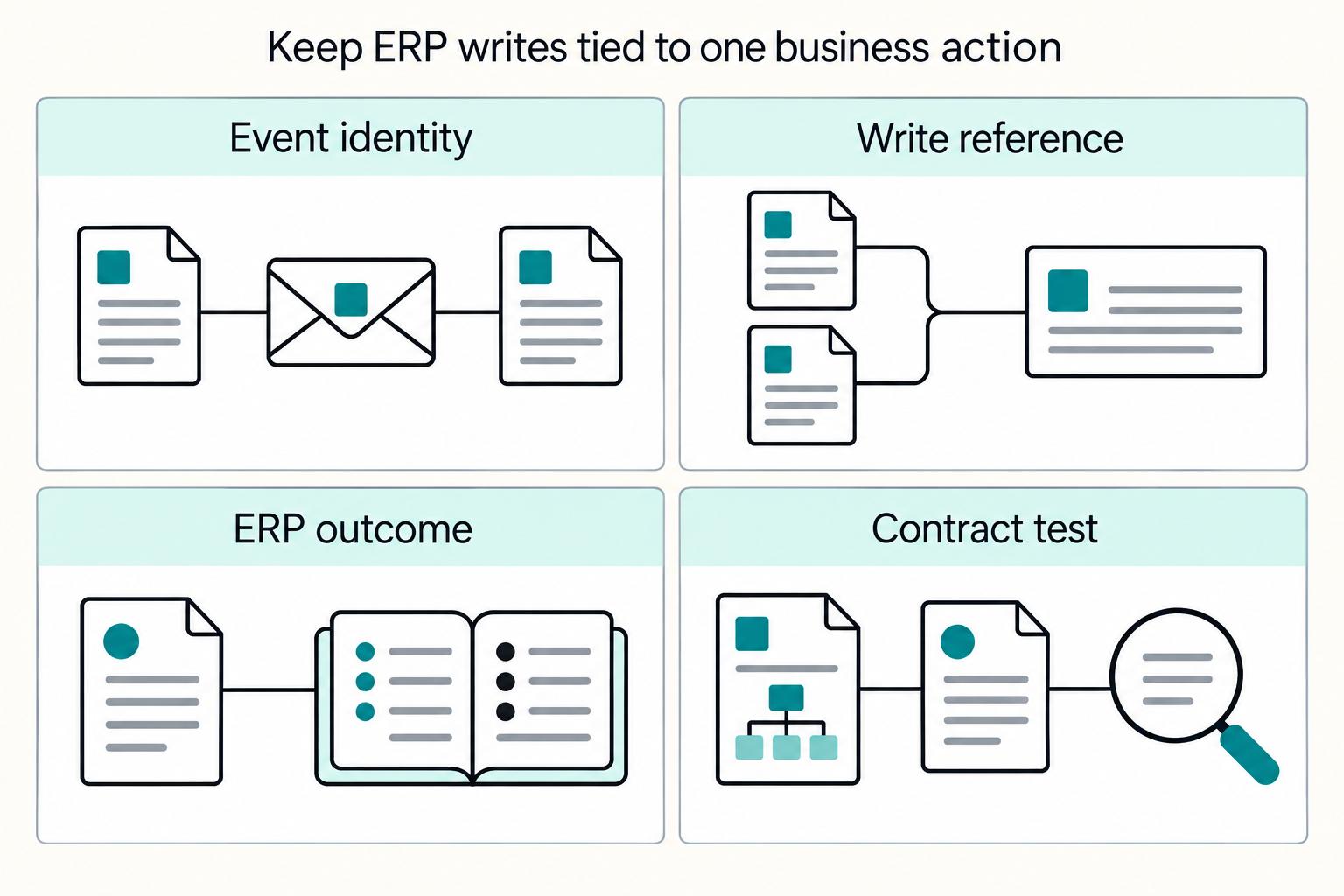
ERP Sync Architecture for Payment Platforms Using Webhooks, APIs, and Event-Driven Patterns
If you run payouts into an ERP, "just use an API and a webhook" is not enough. The design has to survive retries, late events, and finance scrutiny without creating duplicate payouts or broken reconciliation. The real question is not which transport looks modern. It is which pattern keeps postings correct, traceable, and recoverable when delivery gets messy.

Addressable Spend for Platform Payouts: What Counts?
The useful question is not whether you should automate payouts. It is which spend is actually controllable, repeatable, and risky enough to automate first. For platform operators, that usually means isolating the share of contractor, creator, and marketplace disbursements you can actively influence, then pairing automation with controls that keep retries, status tracking, and payout outcomes reliable.

Invoice API Integration for Programmatic Generation on Your Platform
For teams implementing invoice APIs and programmatic invoice generation, the hard part is usually not the create-invoice call. The real work is making invoice creation line up with payment collection, ERP posting, and the checks finance needs so nobody is rebuilding the trail later. If your team can generate an invoice but cannot trace it to a payment reference and an export-ready accounting record, you have a demo, not a production setup.