
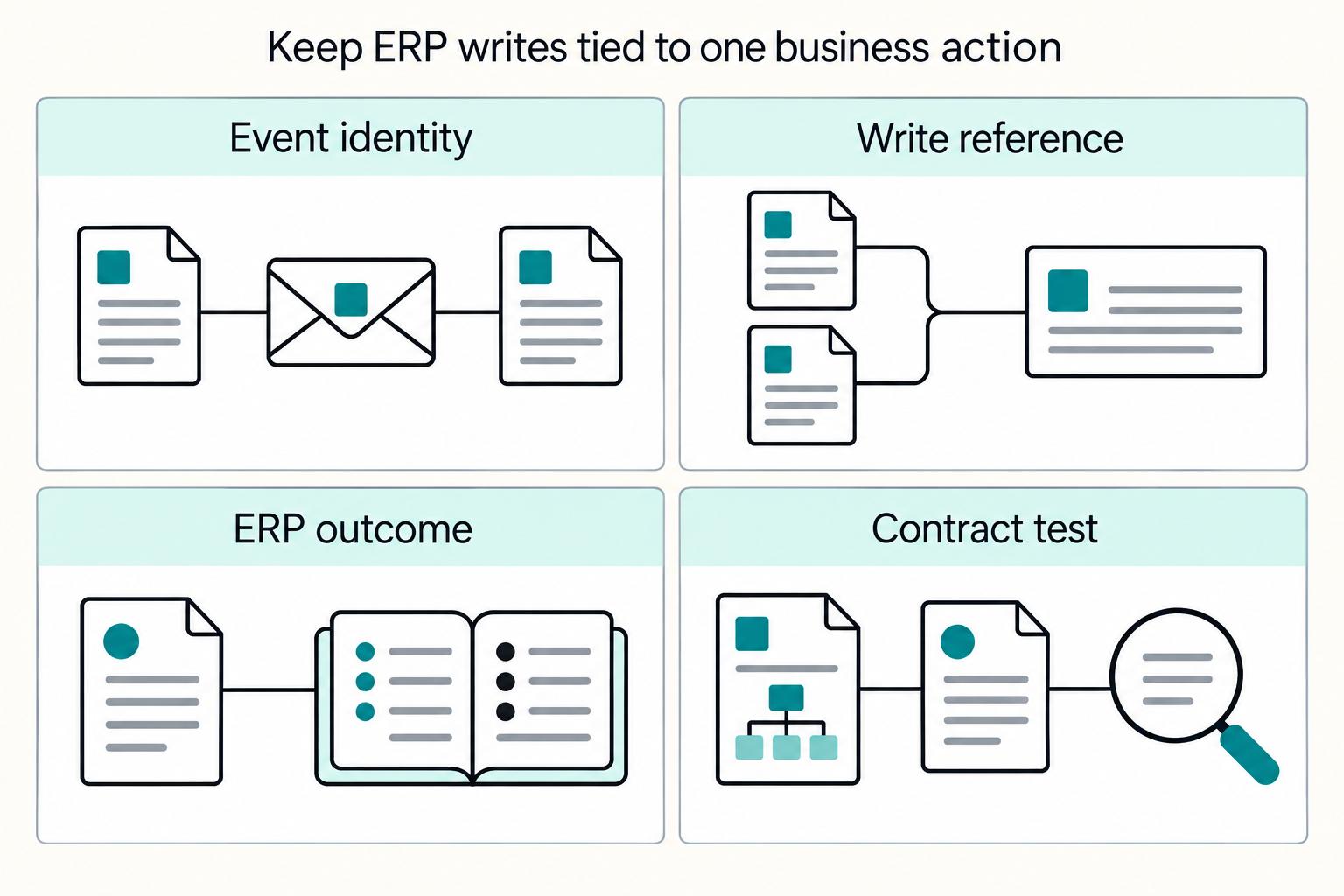
Quick Answer
Start with webhook-triggered retrieval when timing matters, and retain event-time facts alongside current operational state. Prove durable financial-effect uniqueness, recoverable ERP writes and source-to-journal traceability. Use polling or wider fan-out when the actual latency and consumer requirements justify them.
Why ERP Sync Gets Hard in Payment Platforms#
If you run payouts into an ERP, "just use an API and a webhook" is not enough. The design has to survive retries, late events, and finance scrutiny without creating duplicate payouts or broken reconciliation. The real question is not which transport looks modern. It is which pattern keeps postings correct, traceable, and recoverable when delivery gets messy.
- Finance-first sync
Choose patterns by finance outcomes. A payout batch can contain many recipients and independent item outcomes, so preserve batch and item identities, partial failure states and the actual API limits of your selected program. ERP sync must reconcile each financial effect rather than treating batch acceptance as every recipient being paid.
- Retry-safe by design
Provider webhook retry and duplicate controls are bounded and provider-specific. Stripe live-mode automatic retries can continue for up to three days. Maintain durable business-action uniqueness and processing state so redelivery converges to the intended ERP outcome even beyond provider retention.
- Built for platform money movement, not generic ERP theory
This guidance is for marketplace and embedded-payments models, plus similar multi-party payout setups where one product tracks money state across multiple parties. That is why the focus is on payout batches, virtual accounts, and ledger-backed movement. A virtual account is a sub-ledger account linked to a physical demand deposit account, and it does not hold funds directly. Treating it like a standalone bank account can create reconciliation problems later.
- Event-driven where it earns its complexity
Use event-driven architecture when finance, risk and analytics need the same facts and decoupling justifies subscriber complexity. Prioritize replayable evidence, durable action keys and traceable ERP writes; cross-border reach counts do not determine whether an event bus is appropriate.
How to choose the right architecture for your platform#
Choose based on operating constraints, not transport labels. If your team owns payout reliability, ERP reconciliation, and compliance controls, favor the design that keeps finance postings correct when events retry, arrive late, or need reprocessing. If payout decisions are near-real-time, consider a hybrid event-driven approach instead of pure polling. A simple way to make the decision is to walk from ERP writeability to latency, then to replay and finance traceability.
- Check whether your ERP can be addressed cleanly
If you plan direct ERP posting, confirm your ERP supports API-based record operations, not only file intake. As a practical check, confirm existing records can be targeted by record type plus an internal or external ID, as explicitly required in NetSuite. If that mapping is unclear for your payout and posting records, resolve it before you tune for speed.
- Choose latency by business impact
Polling is periodic checking, so it is straightforward but can create stale windows and higher message overhead. Webhooks are push-based, and Stripe supports a hybrid pattern: handle the webhook, then fetch the current object state via API. If payment status changes drive customer-facing decisions, prefer webhook-plus-fetch over pure polling when it is available.
- Prefer designs that contain failures and support replay
Event-driven architecture is strong when multiple consumers need the same payment facts and producer-consumer decoupling helps isolate failures. Replayable streams also support recovery and reprocessing after fixes. The tradeoff is operational load, so define deduplication and a clear reprocessing path before you add subscribers.
- Score options by finance traceability, not architectural neatness
Score options by your constraints: sync latency, failure containment, finance traceability, and operating burden on engineering plus Payments Ops. Validate by tracing one payout from event data to ERP posting without manual joins. Keep related event and API-retrieval records together, especially when event retrieval windows can be limited, for example 30 days in Stripe event retrieval docs.
Related: Invoice Matching Explained: How Platforms Automate 2-Way and 3-Way Matching to Prevent Overpayment.
Comparison table of the six architecture options#
Use this table to rule out fragile designs early. If payout risk is high and your reconciliation SLA is strict, treat webhook-triggered fetch as a default risk-control pattern rather than pure polling or push-only writes.
| Option | Best for | Expected latency | Failure blast radius | Reconciliation effort | ERP migration notes across SAP, NetSuite, Microsoft Dynamics, Odoo, Acumatica | Do not choose when |
|---|---|---|---|---|---|---|
| Periodic Polling | Low-volume workflows and simple scheduled sync | Interval-bound; stale within each poll window | Usually limited to the polling worker, but misses can accumulate between runs | Higher, because finance must explain timing gaps between source and ERP state | Verify scheduled read APIs, pagination and supported versions in the actual SAP, NetSuite, Dynamics, Odoo or Acumatica tenant. | Do not choose when payout decisions, holds, or customer-visible status changes need near-real-time handling. |
| API pull with incremental cursors | Teams that want pull-based control with better incremental behavior than full scans | Pull-based; typically tighter than full scans if cursor state is healthy | Mostly contained to the consumer and its cursor/checkpoint state | Moderate, with less duplicate read noise but ongoing checkpoint/replay discipline | Good where source and ERP integrations support stable incremental reads. Stripe-style cursor patterns (starting_after, ending_before) are the reference model for this approach. | Do not choose when you cannot persist cursor checkpoints and safely recover missed windows. |
| Webhook-triggered API fetch | Payment platforms that need timely signal plus source-of-truth reads | Fast event signal, then confirmed state via API fetch | Usually contained when fetch and writes are idempotent | Lower than pull-only designs because you keep delivery evidence and fetched object state together | Verify event delivery and required event/resource reads per ERP and provider; prove the actual target posting workflow. | Do not choose when the source lacks dependable webhook delivery or a replayable read path. |
| Webhook-first push | Verified event contracts sufficient for the intended status or historical financial effect | Immediate on successful delivery | Wider risk than fetch-on-demand if payload quality drifts | Depends on event completeness, immutable evidence, financial-effect uniqueness and external reconciliation | Use only when the verified payload contract contains the needed facts; preserve event-time evidence and target-write recovery. | Do not choose when required historical facts are missing or a controlled new action needs current eligibility/state not present in the event |
| Event bus fan-out | Multi-consumer platforms where finance, risk, and analytics all need the same payment events | Push distribution to multiple targets | Can be isolated per consumer, but weak contracts can propagate errors across subscribers | Moderate for finance integration itself, with higher overall ops discipline required | Strong fit when many-to-many routing is already required. Event buses are built to route events from many sources to many targets; ERP systems may participate as targets through their API or event capabilities. | Do not choose when ERP is the only meaningful consumer or when you cannot run deduplication, ordering, and replay controls per subscriber. |
| Dual-write with ledger backfill | Short-lived migration bridges from one integration path to another | Appears fast, but correctness is only proven after reconciliation or backfill | Elevated inconsistency risk because one write can fail while the other succeeds | High, since finance must reconcile two paths during overlap | Use only as a bounded transition pattern. Mitigate dual-write risk with transactional outbox so message staging and business-entity update happen in one transaction boundary before broker publish. | Do not choose as steady-state architecture, or when you cannot tightly control overlap and reconciliation operations. |
| Decision rule | Strict reconciliation SLA and high payout risk | Prioritize timely signal and evidence appropriate to the intended historical or current-state action | Reduce duplicate and out-of-order side effects with replay and idempotent writes | Depends on complete source evidence, durable effect keys and target/external reconciliation | Use verified event-time facts for historical accounting and retrieve current state when operational decisions require it; retain both versions and recoverable target-write evidence. | Do not relax this rule purely to reduce build effort when postings affect ledger close or compliance-gated settlement. |
Keep the evidence pack consistent across options: webhook delivery logs, fetched API payloads, cursor checkpoints if used, idempotency keys, provider references, and ERP write responses. If your team cannot assemble that pack for one disputed payout without manual joins, the design is not production-ready.
For a step-by-step walkthrough, see Webhook Payment Automation for Platforms: Production-Safe Vendor Criteria.
Top integration patterns for most payment platforms#
For many teams, webhook-triggered fetch is the practical default. It gives you fast signal, confirmed reads, and a clear recovery path without forcing the full operating overhead of a broader event bus on day one.
1. Webhook-triggered API fetch#
Treat a webhook as a signal to retrieve the appropriate event or resource and evaluate a transition. Current-state fetch helps operational synchronization, while historical accounting can require event-time facts. Preserve both versions where needed rather than replacing an old transaction with today’s mutable object.
The advantage is source-of-truth discipline and simpler recovery. You are not relying on a pushed payload to contain every field you need. You can also pair webhook delivery with replay paths: Stripe retries undelivered webhook events for up to three days, and its Events API supports retrieval for replay or backfill.
Track durable intake separately from processing completion. Store verified event evidence first, then apply the intended ERP action under a stable business key. If ERP and the local database cannot share a transaction, use a durable write intent/outbox and a recoverable target reference or lookup; mark completed only when the ERP effect is confirmed.
A common failure mode is webhook-only posting with no follow-up fetch or reconciliation path. Delivery is not always guaranteed. Provider-side idempotency retention can also be bounded, for example keys may be removed after they are at least 24 hours old, so keep your own dedupe controls.
2. Hybrid event-driven sync#
Use this when the same payment events need to reach multiple consumers, not just ERP. In event-driven architecture, the bus routes one event to zero or more targets, which lets ERP, analytics, risk, and reporting subscribe without each building direct provider listeners.
The main benefit is decoupling across consumers. Event buses are built for many sources and many targets, so this pattern can fit multi-consumer platforms better than wiring each consumer directly to provider webhooks.
The cost is operational complexity. Fan-out means each subscriber needs clear ordering, replay, and duplicate-handling rules, plus stable event identifiers. Do not assume the bus alone guarantees correctness. Keep a reconciliation pull path, because webhook delivery is not always guaranteed.
3. API pull with smart polling#
Choose this when volume is lower, freshness requirements are looser, or operational simplicity is the priority. Scheduled pulls with checkpoints or cursors can be easier to run than webhook-plus-replay flows in some environments.
The strength is control. You own timing, retry behavior, and backfill windows. Smart polling with incremental checkpoints is generally better than repeated full scans.
Polling adds a freshness window and API pressure. Set the interval against business latency, provider pagination/rate limits and recovery requirements. Measure missed transitions and backlog instead of importing another product’s API limit into your ERP design.
If control requirements are strict, avoid polling-only designs. Pair webhook-triggered fetch with strong idempotency controls, and keep polling as reconciliation support.
If you want a deeper dive, read ERP Integration Patterns for Payment Platforms: Flat File vs. API vs. Webhook Sync.
Niche patterns that solve edge cases#
These patterns solve real problems, but each moves risk to a different control point. Use them when the default pattern does not fit your constraints, not because they look simpler on a diagram.
1. Webhook-first push to ERP#
Direct event processing can support status or historical financial effects when the verified event contract supplies the required facts. Preserve event-time values and versions, enforce durable effect uniqueness and reconcile external records. Fetch current state when an operational decision needs it; current state is not a substitute for historical transaction facts.
Distinguish the documented event model: Stripe snapshot data.object reflects the event-time object, while a latest-resource fetch can differ; thin notifications require appropriate retrieval. Preserve event/API versions and historical values needed for accounting, and use current state for operational decisions without silently rewriting earlier journals.
For every ERP write, retain verified event identity/version, historical posting inputs, target response and any separately labeled current-state fetch. Keep recovery and reconciliation paths; Stripe retries can continue after manual handling. The defect is missing or misapplied evidence, not the mere use of an event payload.
2. Event bus fan-out before ERP commit#
Use an event bus when one payment event must feed multiple consumers in parallel, such as finance, risk, and ERP. In event-driven terms, the bus routes one event to targets so consumers do not all need direct provider listeners.
This pattern is useful when you need parallel downstream handling from one matching event. EventBridge rules can fan out to multiple targets, with up to five targets per rule, and Stripe can publish to webhook endpoints and cloud event buses.
A key operational risk is unclear control boundaries. Before ERP commit, define which consumer is authoritative, how lagging targets are handled, and which stable business identifier and idempotent write rule every subscriber must use. Poor fan-out design can create divergence across systems.
3. Dual-write with ledger backfill#
Use dual-write as a migration bridge, not a permanent architecture. It keeps business continuity while you run source and target writes in parallel. It also creates known inconsistency risk if one write succeeds and the other fails.
During migration, send the same intended financial action through a controlled authoritative execution path; shadow computation or projection writes must not submit a second payout or journal. Backfill historical records with stable action keys, retain old/new outputs and reconcile differences before switching authority. Stop new rollout on unresolved divergence without erasing valid records.
Define controlled volume, batch limits, timeouts and exit criteria for your actual source and target. A product called dual-write can have its own synchronization semantics and limits; its name alone does not prove a payment migration is atomic or safe.
Decision checkpoints before you commit#
Before you scale an event-driven model, verify the control points that stop duplicate writes and reconciliation debt from showing up later. If checkpoint 2 or checkpoint 3 fails, pause rollout and harden observability and reconciliation first.
1. Stable ERP write surface#
For this rollout, confirm your ERP exposes stable object identifiers and API mutation paths for the finance objects you need, for example invoices, payouts, and journal lines. Without that, teams fall back to brittle field matching and manual repair.
Prove creation, update and recovery lookup for the actual target finance objects and API version. Record stable internal/external IDs and the journal validation/posting workflow. A custom object can support orchestration, but must not be mistaken for a posted finance entry without the applicable ERP evidence.
2. Replay-safe events with clear ordering rules#
A webhook integration is only reliable if you can process retries safely and handle out-of-order delivery. Set idempotency by business action, not delivery attempt, and define the object key each consumer uses to treat duplicates as no-ops.
Stripe’s supported idempotent requests return the first saved result, including 500 responses, with keys of up to 255 characters that can be pruned after at least 24 hours. Keep durable internal uniqueness beyond that boundary and verify an unresolved original outcome before a fresh request. Define event-time accounting and current-state operational synchronization separately.
3. Traceability from payout request to Ledger Journal#
Finance Ops should be able to trace one payout end to end without manual joins. A practical chain is request ID, provider payout reference, provider balance transaction reference, and the matching Ledger Journal entry.
Stripe payout objects include a balance transaction reference, and balance transactions include a source object ID, which gives you a drill-down path. Validate this with a settled payout and confirm those same identifiers appear in ERP posting evidence, not only in engineering logs.
4. Compliance holds that preserve state cleanly#
If KYC requirements or risk controls can pause payouts, your sync model must preserve hold and release transitions on the same payout record. Connected accounts can be blocked from accepting payments or sending payouts until KYC requirements are met, and risk controls may require payout pauses for suspicious behavior.
Record hold and release states on the existing operation, and test pause/resume without duplicate submission. A release hold blocks new money movement where policy requires it; it must not prevent recording liabilities, accruals or movements that already occurred. Reconcile those records even while release remains blocked.
If checkpoint 2 or 3 is still weak, do not launch yet. Tighten duplicate detection, replay handling, and distributed tracing, then re-run the decision gate. These checkpoints are not a full production-readiness review.
Event contracts that prevent duplicate money movement#
One business operation can produce multiple lifecycle events and legitimate financial entries. Keep provider event identity separate from each intended ERP financial-effect key and its target record/journal references. Duplicate delivery must not repeat an effect, while later fees, reversals and corrections must remain recordable.
- Define canonical money events, then map each one to a single ERP write behavior
Define canonical operation and lifecycle events such as invoice.paid, payout completion and later failure/return signals. Map each to the intended status updates or accounting actions under policy. Later events can update the operation and create distinct adjustment journals; they must not duplicate the original financial effect.
- Set idempotency keys per business action, not per transport attempt
Use a durable key for each intended financial effect, such as an operation plus posting type/version, rather than the transport attempt. For an external ERP write, persist the intent and target lookup/reference before execution and recover uncertain results before retrying. Record provider event IDs separately; retries of the same action converge, while valid corrections use a distinct linked action.
- Include replay-safe metadata that supports duplicate detection and evolution
Carry stable event identity, producer timestamp, schema/API version and operation references. Keep raw verified event evidence and the facts used by the posting rule so older records can be replayed independently of a provider’s retrieval window. Record historical snapshots and current-state fetches distinctly; neither is automatically interchangeable with the other.
- Gate payload changes with consumer-driven contract tests in CI
Put a contract test gate in front of deploys so ERP-facing consumers define required fields and expected shapes, and providers verify compatibility. Pact fits this model by replaying contract requests against the provider and checking responses against expectations. Use that gate to catch breaking mapping changes before production, especially renames, enum drift, or dropped required fields that can create unmatched ERP records.
Failure modes and first-response matrix for operators#
Once your event contract is tight, do not let uncertain delivery behavior mutate ERP state. The first move is containment before correction when payouts, invoices, or settlements could be duplicated, delayed, missing, or sequenced incorrectly.
| Failure mode | Detection signal | Immediate containment step | Permanent fix owner |
|---|---|---|---|
| Duplicate event | Same event ID appears again, or the same business action has an existing idempotency record | Check delivery identity and durable financial-effect state; acknowledge completed duplicates, and recover uncertain target writes before retry. | Integration engineering |
| Delayed event | Receive time is materially later than event creation time, or provider retries are still in progress | Acknowledge fast, persist the event, and queue it for evaluation instead of running business logic inline. Compare event timestamp or resource-version signals with current state before it affects close or settlement reporting. | Platform engineering |
| Missing webhook event | An expected provider object change exists but no inbound event was recorded | Run a compensating polling pass with bounded windows over provider events or resource APIs. Recover undelivered events, then reconcile recovered items against local processing records before posting to ERP. | Payments Ops plus integration engineering |
| Out-of-order transition | A later state arrives before a prerequisite state, or incoming version or timestamp is older than current state | Persist evidence and distinguish missing historical effects from stale operational snapshots; retrieve appropriate source records and review unresolved release decisions. | Integration engineering plus Finance Ops |
1. Duplicate events need a hard stop, not a best-effort check#
At-least-once delivery makes duplicates expected. Deduplicate delivery identity and also enforce financial-effect uniqueness, because different events can describe the same operation. Do not mark a target write complete merely because intake or a local status update succeeded.
Make your first operator question binary: has this business action already been applied? If yes, do not reprocess it. Stripe's recovery guidance is explicit: ignore already-processed events and return success to stop retries.
2. Delayed events are usually intake problems first#
A delayed event becomes risky when teams treat it as fresh state. The immediate fix is disciplined intake, not inline business logic.
Keep intake fast: verify the provider signature/secret mapping, persist or durably queue the evidence, then return the provider’s documented success response. Process business effects asynchronously with recoverable state. Acknowledgment proves receipt, not ERP posting completion.
A delayed event can remain valid. Retain event-time evidence and evaluate whether it is a missing historical effect, a current-state update or a stale operational notification. Do not discard a required correction merely because the operation has since advanced.
3. Missing webhook events should trigger recovery, not guesswork#
A missing webhook does not prove nothing happened. Run bounded recovery against available events, source transaction reports or resource APIs, then compare recovered financial effects with durable local/ERP references before applying them.
When an expected event is missing, run a bounded recovery pull and reconcile it against local processing records. Stripe supports this directly with event-list recovery filters such as delivery_success=false, and chronological replay using ending_before with auto-pagination.
4. Out-of-order events should block final state, not all state#
Do not assume delivery order. Accept late valid history and adjustments under their business keys, while preventing stale operational snapshots from regressing current state. Use the provider’s documented event/resource version semantics rather than timestamp sorting as a universal ordering guarantee.
Persist first, then decide whether the evidence affects historical accounting, current status or a linked correction. Latest-state reads alone can hide intermediate transactions; retain required event-time facts and reconcile against transaction reports. Hold uncertain new release actions for review without suppressing valid records of completed activity.
Finance and compliance controls required at launch#
Before launch, connect approvals, applicable eligibility/tax status and accounting evidence to each operation. Release policy and financial recording are separate: a held payout can still represent an existing liability that belongs in ERP.
| Control | What to keep | Reference |
|---|---|---|
| Approval and historical evidence | Decision records, verified events and target journal references | Retention follows applicable legal, contractual and accounting categories |
| Release eligibility | Actual program/entity/jurisdiction requirements and decision evidence | Release holds do not suppress existing liabilities or completed-movement records |
| Tax documentation references | Applicable form status and secure source references | Use current instructions and reporting-year rules; avoid unnecessary personal-account fields |
| Close reconciliation | Opening balances, movements and unresolved exceptions | Set cadence and deadlines for volume, materiality and close obligations |
- Approval trail and immutable history
Keep an exportable approval and event history with source and target references. Map retention to the legally applicable record category, contracts and accounting needs; BSA-required records generally have a five-year rule in their scope, while other duties can differ. A single retention label is not a complete policy.
A practical evidence pack can include payout approval record, provider reference, event ID, Ledger Journal reference, ERP posting ID, and the timestamp sequence. It can also include the KYC or KYB status snapshot at release time.
- Policy gates before payout release reaches ERP
Map identity, beneficial-owner and AML duties to the actual regulated entity, partner program and jurisdiction. Verify current requirements and exceptions for that role rather than treating bank rules as universal platform obligations. Record release eligibility and decision evidence; do not require a released state merely to book a liability or completed movement.
- Tax artifacts by reference, not by payload copy
Keep applicable tax-document status and secure source references in event/operator views rather than copying sensitive documents into every payload. Select forms by the actual payer/payee classification and current instructions; examples do not exhaust foreign-payee cases. Personal foreign-account reporting is not a generic platform-payout event. Record needed obligations while release data is remediated.
- Month-end reconciliation checkpoint using Ledger Journal projections
Set reconciliation frequency and close deadlines against materiality, volume and accounting requirements. Compare ERP balances with authoritative journals, processor reports and bank movement; verify opening balances, period activity and unresolved exceptions. A monthly checkpoint may suit close, while high-risk release controls can need more frequent checks.
For the full breakdown, read Tipping and Gratuity Features on Gig Platforms: Payment and Tax Implications.
ERP-specific implementation notes teams usually miss#
ERP integration trouble often comes from contract drift even when transport options are available. Keep the ERP side thin, lock state vocabularies early, and define data ownership before payout events start writing financial records.
- SAP and Microsoft Dynamics: start with a minimal canonical model
For SAP and Dynamics implementations, keep the adapter model small and separate from unnecessary core customization. Verify the tenant’s supported extension and posting interfaces, then add entities incrementally as payout and accounting requirements are proven.
- NetSuite, Acumatica, and Odoo: treat statuses as contracts, not labels
For NetSuite, Acumatica and Odoo, validate status IDs, labels, workflow transitions and finance posting behavior against the actual edition/API version and customizations. Keep a versioned mapping dictionary and contract tests. A label shown in a UI or a historical release note is not proof of an equivalent financial state across ERPs.
- CRM versus ERP: assign an authoritative owner by domain or process
Assign an authoritative system by domain: customer identity, approved liability, payment operation and accounting journal can have different owners. Define how CRM/ERP conflicts are reviewed rather than resolving them implicitly during payout release.
Conclusion#
Use a webhook as a timely signal, appropriate event/resource retrieval as evidence and durable financial-effect records as the ERP reconciliation anchor. Preserve historical accounting inputs separately from mutable current state, and recover target writes with stable keys and lookup evidence.
-
Choose the pattern you can verify. Retrieve the appropriate event-time and current-state evidence and prove the target posting workflow before broad fan-out.
-
Prove replay safety. Test one financial-effect path, one ERP recovery lookup and one missed-event recovery path; preserve durable keys beyond provider retry windows.
-
Test failure handling as hard as the happy path. Use provider tooling and non-production modes to test delayed, duplicated, and missing-event handling before production. Stripe supports local webhook testing with the Stripe CLI and non-production API testing in test mode, so you can validate handling without affecting live data or banking networks. A rollout that relies only on provider retries and has no API catch-up read path is a clear risk.
-
Make traceability a release gate. Before full rollout, confirm you can trace from provider event ID to your internal accounting record and then to the ERP posting record. When finance asks why a payout or reversal posted a certain way, you need one clear evidence chain rather than manual joins across logs and payloads.
-
Treat broader fan-out as phase two. Event-driven architectures let one payment event serve multiple consumers. Add fan-out after the core accounting write path is stable, replay-safe, and straightforward to reconcile.
Run a narrow payout slice and verify relevant historical/current source evidence, duplicate-safe recoverable ERP writes and end-to-end operation/journal references before expanding.
For more on compliance-side monitoring, see Continuous KYC Monitoring for Payment Platforms Beyond One-Time Checks. If you are moving from polling to webhook-plus-API confirmation for payout batches, talk with Gruv.
Frequently Asked Questions
What is the practical difference between Webhooks and APIs in ERP sync for payment platforms?
Webhooks signal events asynchronously; APIs retrieve event or resource evidence. A current-state read helps operational sync, but historical finance posting may require the event-time snapshot and transaction reports. Preserve the facts and versions used by each ERP action instead of treating every latest object as historical truth.
When should a platform choose Event-Driven Architecture over a simpler REST API plus Polling model?
Choose event-driven when you need near real-time reactions and one payment event must feed multiple consumers like ERP, analytics, and risk. Use REST plus polling when urgency is lower and periodic checks are acceptable. Once stale windows become unacceptable, polling lag and inefficiency are the signal to move to event-driven patterns.
Which payment events must be idempotent to avoid duplicate payouts and bad ERP postings?
Do not assume a universal mandatory event-type list exists, so use a broader rule: every write path that moves money or creates a financial record should be idempotent. In practice, that typically includes payout submission, settlement posting, reversal or return handling, and related ERP journal writes. Tie the idempotency key to the business action so retries return the same result instead of creating duplicate effects.
What are the minimum controls required before going live with webhook-based ERP integration?
At minimum, use an HTTPS webhook endpoint, verify signatures, and enforce correct endpoint-secret mapping. Also ship a catch-up path outside webhook delivery so missed events can be retrieved and reprocessed via API. Store event IDs, processing state, and the idempotency reference used for downstream mutations so recovery does not create duplicate ERP writes.
How do you handle missing or out-of-order webhook events without stopping Payout Batches?
Persist out-of-order evidence and apply durable financial-effect keys. Reconcile missing history through available event/report APIs; use current-state reads for operational decisions and retain event-time facts for historical accounting. Stripe live-mode retries can continue for up to three days, but internal recovery and target-write verification remain necessary.
Can you run Merchant of Record (MoR), Virtual Accounts, and ERP sync in one architecture without creating reconciliation debt?
MoR, account identifiers and ERP sync can coexist when contractual roles and accounting ownership are explicit. Neither a charge configuration nor a virtual account label establishes all MoR obligations. Keep operation and financial-effect references across consumers, with separate eligibility, journal and transfer evidence.
Try a related tool
Researched and edited by the Gruv editorial team. Gruv builds cross-border billing, payouts, and finance-operations software for global businesses.
Sources
Includes 2 external sources outside the trusted-domain allowlist.
- docs.stripe.com/webhooks/process-undelivered-eventstrusted
- docs.stripe.com/api/idempotent_requeststrusted
- ecfr.gov/current/title-31/subtitle-B/chapter-X/part-1...trusted
- docs.aws.amazon.com/eventbridge/latest/userguide/eb-event-bus.htmlexternal
- learn.microsoft.com/en-us/azure/architecture/guide/architecture-...external
Educational content only. Not legal, tax, or financial advice.
Related Posts
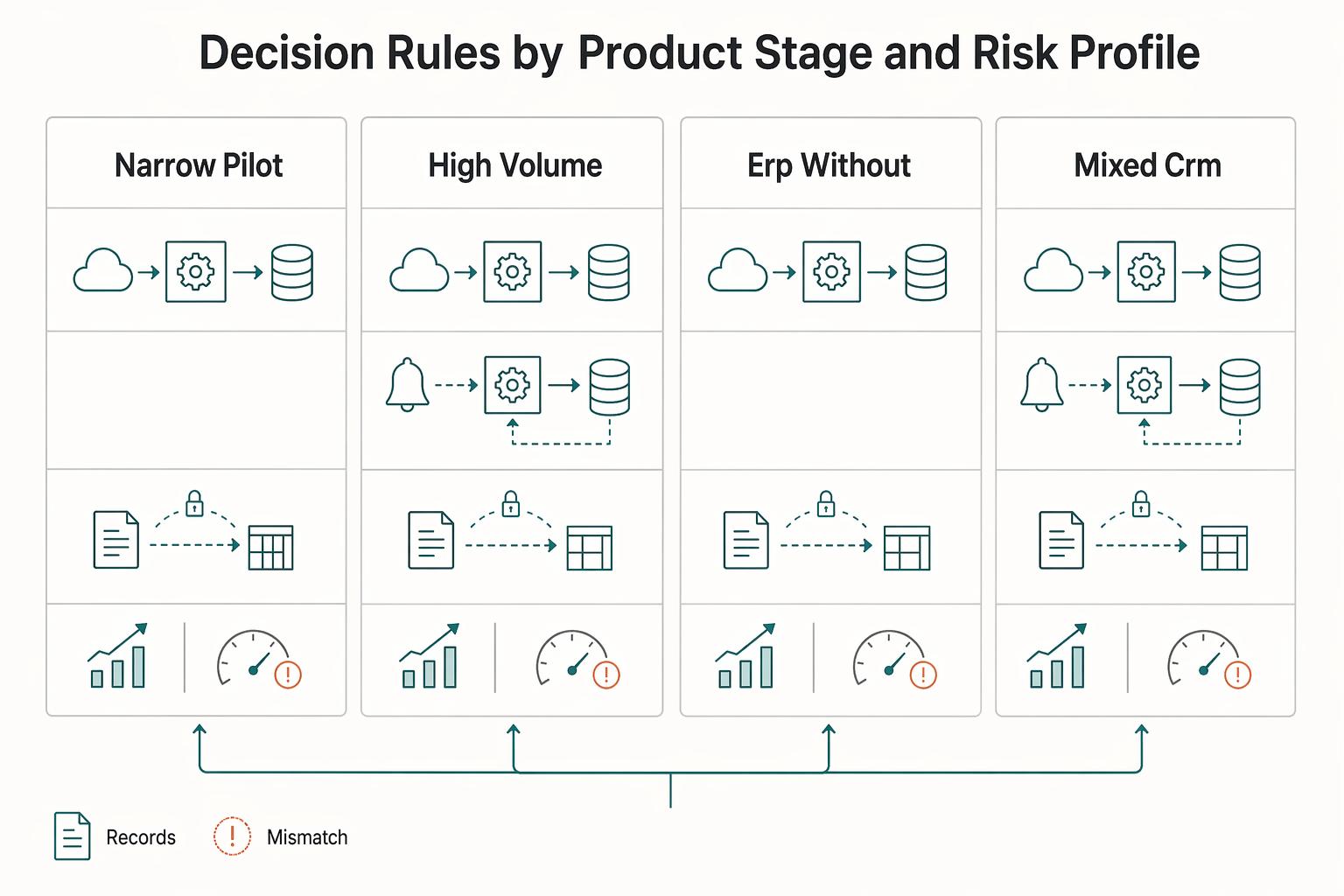
Choosing ERP Sync Patterns for Payment Platforms
For a payment platform, this is a pattern-choice decision, not a generic back-office integration project. The job is to pick the sync model that can keep payout infrastructure, billing-record state, and payment lifecycle updates reliable.
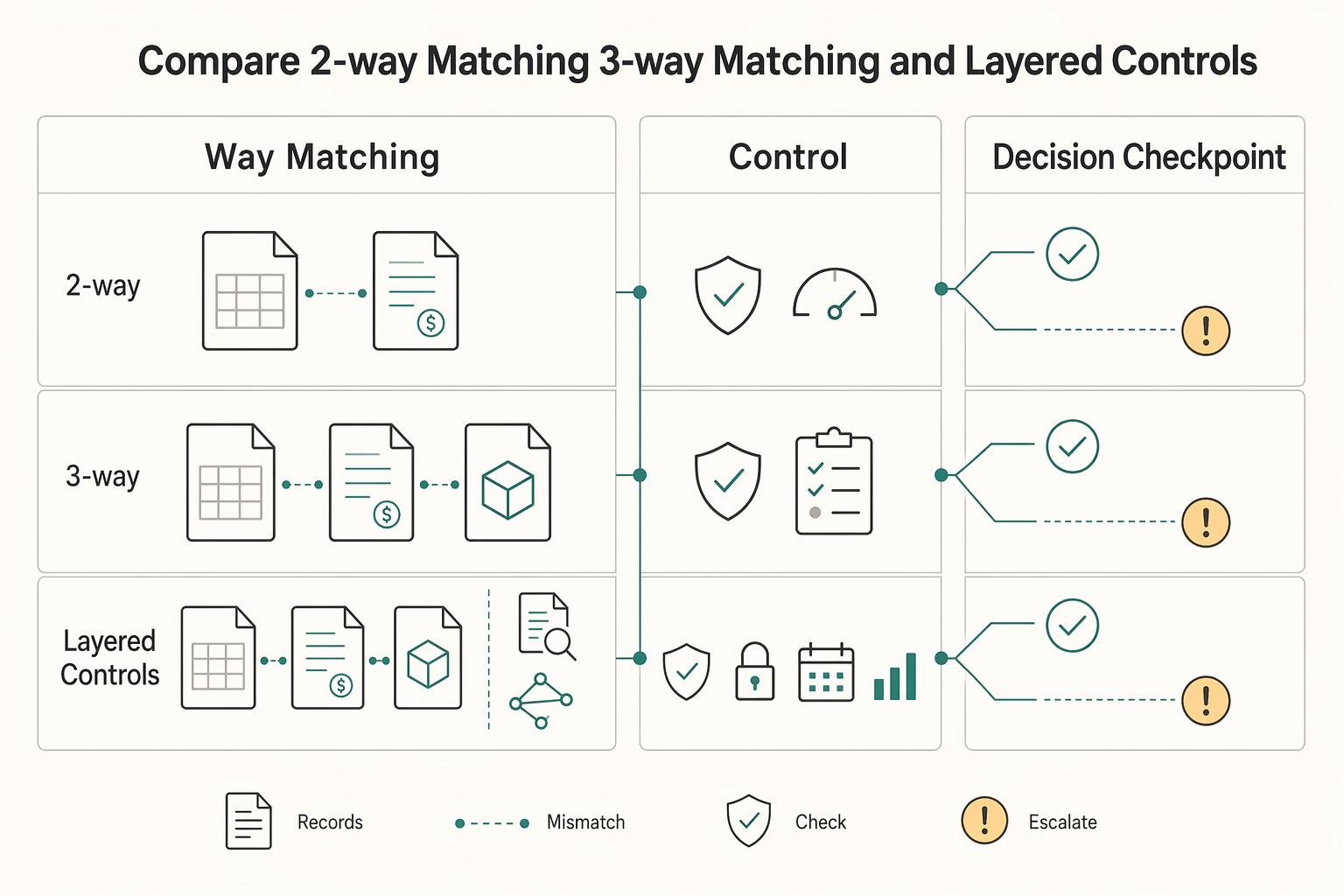
How Platform Teams Use 2-Way and 3-Way Invoice Matching to Stop Overpayment
Platform teams do not need another glossary entry on invoice matching. They need controls that stop real overpayment paths before money goes out the door. At its core, invoice matching compares an invoice with supporting records before payment. The practical question is what you add when a clean match still does not mean the invoice should be paid as submitted.
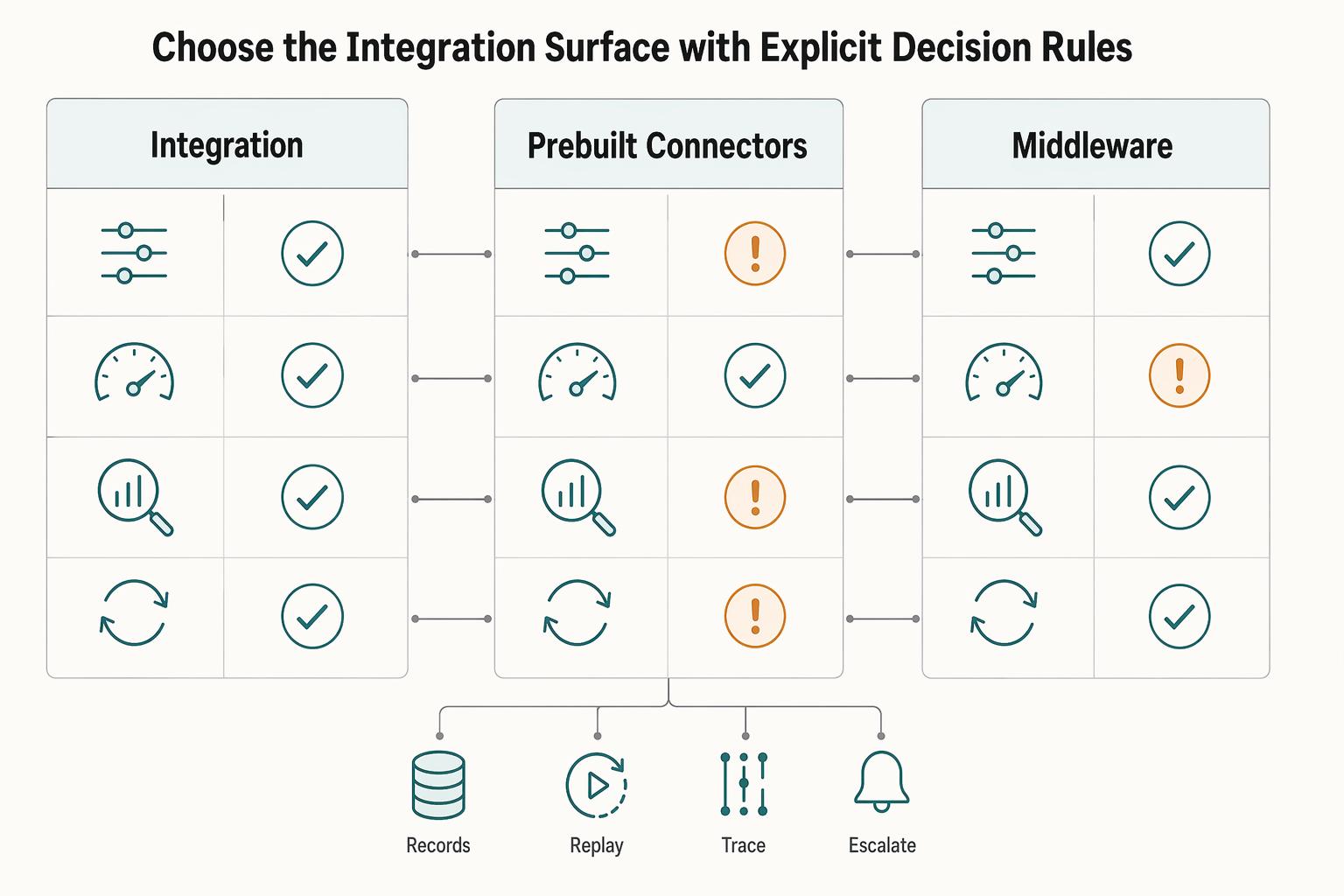
Integrating Acumatica with Payout Infrastructure for Payment Platforms
The fastest way to create platform debt in an **acumatica payment platforms cloud erp payout infrastructure integration** is to assume ERP coverage means payout ownership. Acumatica can handle important payment-acceptance and accounting-posting workflows, but you still need explicit ownership for payout execution, reconciliation, exceptions, and operator controls.