
Quick Answer
Choose a subscription commerce platform by the work it must own: storefront, recurring invoices, customer changes, payment recovery and records. Map any seller settlement separately. Test failed renewals and migration before selecting a product, and compare the full cost of software, collection and any payout flow.
Why Billing Gaps Happen in Marketplace Recurring Revenue#
If you treat a subscription ecommerce platform like a checkout add-on, you can make the wrong call. Recurring revenue can change pricing and cash timing, add support work around renewals and plan changes, and require tighter finance coordination before you scale.
Before you start#
Step 1: Treat subscriptions as an operating decision, not a feature request. Your first check is whether the team can explain, in plain terms, how renewals, plan changes, failed payments, and cancellation timing affect both margin and workload. If that answer is still fuzzy, do not start with vendor demos. A common failure mode is choosing for front-end speed, then finding out later that support queues, invoice states, or reconciliation exports do not match how the business actually runs.
Step 2: Align founders, product, and finance on what matters. This guide is built for those three groups because each sees a different kind of risk. Product tends to focus on account experience and plan logic. Finance needs clean cash timing, reporting, and enough legal and financial setup to launch without manual patchwork. Founders often focus on growth, but recurring revenue quality can matter more than headline signups if discounts, failed payments, and exceptions start eating margin.
Step 3: Verify coverage directly with vendors before rollout. Features, benefits, and costs vary by provider, so do not assume category labels mean the same thing across products. Even if you are reviewing a familiar vendor, confirm the exact market coverage, responsibilities, and commercial terms that apply to your case. Vendor pages can point you in the right direction, but they are not a substitute for written confirmation on the items that would block launch.
Start with the monetization model you are actually running#
Start by mapping how money moves in your model, not by comparing tools, because buyer and seller subscriptions create different operating work.
Separate buyer subscriptions from seller subscriptions. A buyer may pay for access, benefits or recurring deliveries; a seller may pay the platform a service fee. Neither automatically creates a seller-payout obligation. If the marketplace also collects sales proceeds and pays sellers, map that flow separately, including who is the contracting seller and merchant for each charge.
Write one plain sentence for each flow: who is charged, what they receive, whether the subscription is cancelable, and what happens on downgrade or non-payment. That alignment matters because some subscription models are cancelable and some are not.
Define success for each flow. Track renewal collection, cancellations, entitlement accuracy and support contacts for subscription fees. Where seller proceeds are also in scope, track their settlement and payout reliability separately; do not deduct an unpaid subscription fee from earned proceeds unless the agreement and applicable requirements permit it.
A storefront platform’s subscription features do not establish support for multi-seller settlement. Subbly presents an integrated subscription-commerce product; check your separate marketplace collection and seller-payment requirements directly rather than inferring them from that category.
Document the merchant, buyer and seller roles, supported markets and tax responsibilities before comparing products. If seller payment reporting is in scope, identify the actual reporting party and form under current primary guidance. Charging a subscription fee does not by itself establish a Form 1099-K obligation.
IRS Form 1099-K guidance distinguishes payment reporting from taxable profit. Record your reporting analysis separately from invoice tax calculations and subscription access rules.
For more on handling plans, add-ons, coupons, and dunning, see Subscription Billing Platforms for Plans, Add-Ons, Coupons, and Dunning.
Prepare the decision packet before comparing vendors#
Build the packet before any demo so every vendor is tested against the same evidence, ownership, and failure rules.
- Build a minimum evidence pack from your live stack first.
List the storefront and billing tools still in your path, including dependencies you are not replacing (for example Shopify, WooCommerce, Magento, BigCommerce, and recurring layers like Recharge, PayWhirl, or MoonClerk). Document the edge cases already creating support load, then trace one renewal end to end: storefront event, charge attempt, and ledger/export handoff. If you cannot trace that path clearly, your shortlist is still assumption-driven.
- Document finance, tax, and risk as named ownership decisions.
Name the owner of each applicable requirement: customer billing information, seller onboarding where seller payments exist, invoice tax treatment and any payee documentation or reporting. Determine applicability first. W-8/W-9 collection and financial-institution due diligence are not universal conditions for buying a subscription.
- Set integration boundaries before vendors set them for you.
Define one authority for invoice amounts and subscription changes. Stripe documents asynchronous subscription events: the subscription, invoice, payment and access entitlement are related records with different states. Verify incoming events, deduplicate deliveries, and enforce uniqueness of each business effect. Keep processing recoverable across a crash so recording an event as received does not cause unfinished work to be skipped.
- Write red lines and manual fallback limits in advance.
Set explicit failure limits: duplicate charges, an unrecorded receipt, inaccessible history or an unexplained entitlement change must be investigated before expansion. If an outbound charge times out, keep the attempt pending and resolve it with the provider before issuing another charge. A manual fallback must preserve the same invoice and attempt history.
Related: How to Build a Subscription Billing Engine for Your B2B Platform: Architecture and Trade-Offs.
Should you buy all-in-one or layer billing on your existing stack?#
Pick the option that contains complexity where you can operate it reliably. If your storefront and catalog are stable but billing is the pain point, a billing layer is usually the better fit. If your priority is speed with minimal engineering lift, an all-in-one platform can be the better first move.
Step 1: Choose based on where complexity lives#
| Path | Better fit when | Implementation ownership | Operational overhead | Reversibility in 12-18 months |
|---|---|---|---|---|
| Subscription-first platform (for example, Subbly) | You want faster launch and fewer moving parts | More vendor-owned | Check the ongoing work for your exact flows | Test export, token portability and contract exit requirements |
| Billing-first layer (for example, Chargebee, Stripe Billing, Recurly) | Storefront is stable, but billing logic needs more control | More team-owned | Moderate | Depends on data, payment-method portability and migration support |
| Storefront plus modules (for example, Shopify + Recharge, WooCommerce plugins, Magento extensions) | You want to keep storefront and add recurring with targeted changes | Shared across team and vendors | Can rise over time | Test each module’s records, contract and token dependencies |
Use decision rules, not brand preference. If your catalog and storefront change frequently, avoid taking on a second major storefront migration just to add recurring billing.
Step 2: Price the ownership model, not just the category#
Price recurring billing, payment collection and seller settlement separately. Stripe Connect pricing concerns connected-account money movement; it is not the price of Stripe Billing and is unnecessary if your design has no connected-account flow.
| Cost layer | What to request | Why it matters |
|---|---|---|
| Storefront and subscription software | Plan price, billing-volume fees and paid modules | A base subscription may not include every recurring feature |
| Payment collection | Local processing rates, conversion and dispute fees | A billing fee alone does not cover taking payment |
| Seller settlement, if present | Connected-account, transfer and payout charges for the selected model | Keep sales-proceeds costs separate from subscription-fee collection |
| Migration and support | Token migration, invoice history, implementation and ongoing exception work | A cheaper plan can require more manual work |
Step 3: Test migration blast radius before signing#
Test paused plans, scheduled downgrades, failed renewals, coupons and reactivation. Include the actual pause behavior: Stripe distinguishes pausing collection from a paused subscription, and collection pauses can still create invoices. Verify which records and access states your product intends to preserve:
- Customer account state
- Dunning behavior
- Invoicing flow
- Self-serve portal parity
Then score each option on implementation ownership, ongoing overhead, and reversibility in 12-18 months. If two options are close, favor the one with cleaner exports and a clearer rollback path.
For a step-by-step walkthrough, see Building Subscription Revenue on a Marketplace Without Billing Gaps.
Design pricing and packaging around unit economics, not feature menus#
Design pricing and packaging around the unit that reflects customer value and your operating reality, not around the longest feature list. That keeps recurring revenue growth tied to revenue quality instead of hidden margin drag.
Step 1 Anchor the pricing metric to real value and real cost#
Choose a pricing unit that a customer understands and that you can measure reliably: membership, seller location or defined usage, for example. State the included amount, overage rules and effective dates. A seller plan fee and a percentage of sales are different charges and should appear as separate lines when both apply.
Illustrative seller-plan cycle: the platform charges USD 30 per month for a listing service, separately from sales proceeds. Its assumed collection cost is USD 1.20 and support cost USD 4, leaving USD 24.80 before other costs. If the renewal fails, keep that USD 30 invoice open and apply the agreed access or grace-period policy. Do not label it collected revenue or silently remove USD 30 from unrelated earned seller proceeds.
Step 2 Stress-test package shape before scaling acquisition#
Pricing and packaging should be designed together around value and segmentation. In a subscription model, the package that converts first is not always the one that holds margin and retention later.
| Package shape | Typical pressure point | What to check before launch |
|---|---|---|
| High-frequency, low-ticket | Small renewal value can make operating load more sensitive | Failed-payment handling, support load, and payout exceptions |
| Bundled or heavily tiered | Can support subscriptions and retention, but may reduce ARPU and pressure profitability; revenue upside is uncertain | Eligibility logic, renewal behavior, and discount boundaries |
| Lower-frequency, higher-ticket | Fewer events, but each churn or dispute carries more revenue impact | Downgrade flow, pause/reactivation behavior, and billing-state clarity |
Use a clear tradeoff rule: if discount-led growth increases churn risk, tighten eligibility and renewal logic before expanding acquisition.
Step 3 Treat revenue quality and finance observability as launch criteria#
Packaging is not complete until post-purchase states work cleanly. Check downgrade paths, pause/reactivation behavior, and involuntary churn handling through recurring billing controls before rollout.
For each package, run scenario checks that include a downgrade, pause, reactivation, failed renewal, and discount expiration. Confirm customer-facing state, invoice-state changes, journal-posting consistency, and reconciliation readiness. If those are not reliable, treat the package as unfinished.
For help choosing when subscriptions make more sense than transaction fees, see Choosing Between Subscription and Transaction Fees for Your Revenue Model.
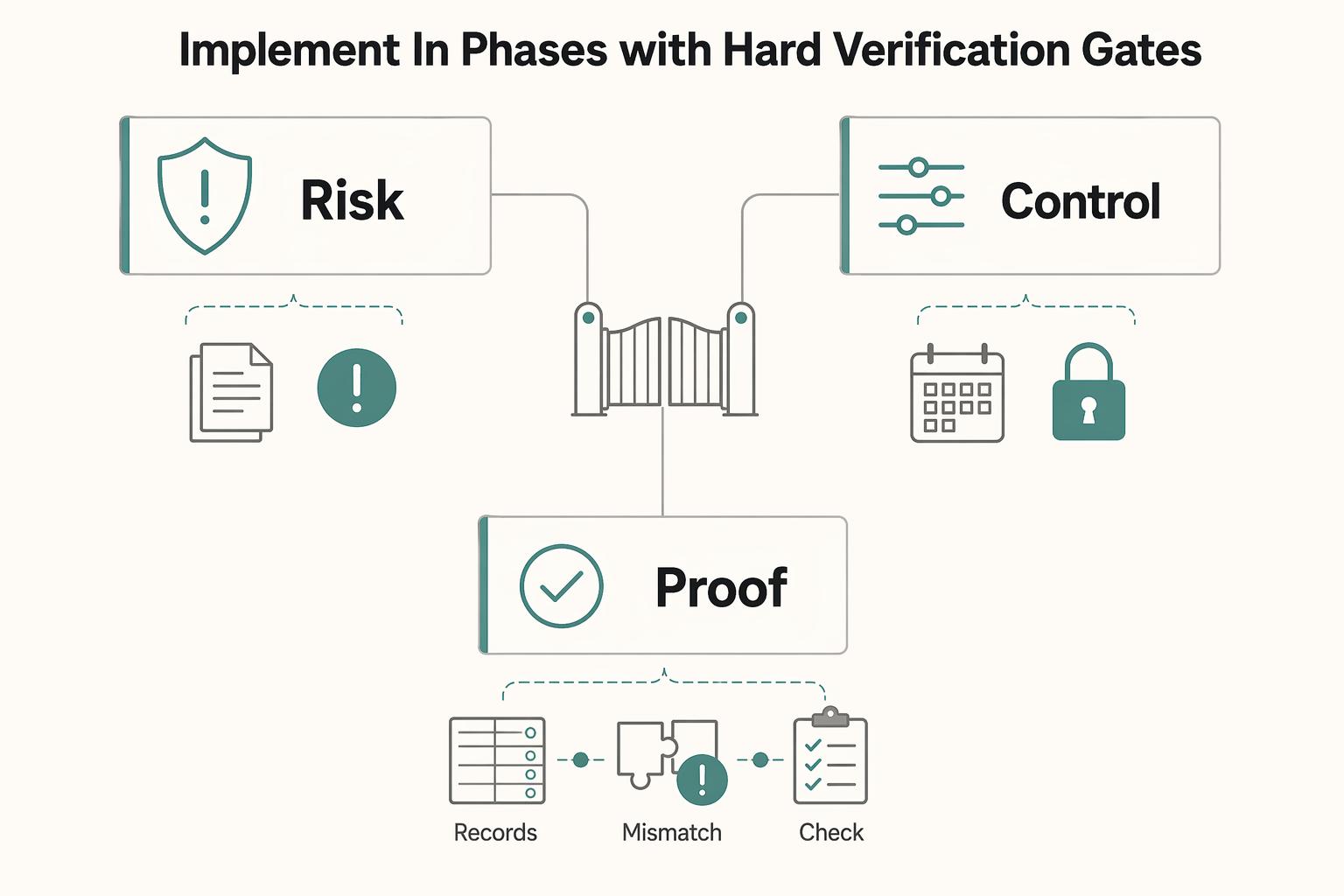
Implement in phases with hard verification gates#
Treat phased rollout as a risk-control tool, not a delivery ceremony. In billing-heavy products, a stage-gate mindset is useful, but it works best when you keep it lightweight and adapt it to a fast-moving team.
| Phase | Scope | Verification focus |
|---|---|---|
| 1 | Launch core recurring billing and account management | Correctness under real-world conditions, clear account and invoice state transitions, and reliable reconciliation paths |
| 2 | Add recovery automation and reporting | Core flows are stable |
| 3 | Expand geography and payout complexity | Earlier phases are consistently verifiable |
Use explicit go/no-go criteria at each gate so product, engineering, and finance can make the same release decision from the same evidence. Keep those checks focused on correctness under real-world conditions, clear account and invoice state transitions, and reliable reconciliation paths.
Before migration, choose the system responsible for each next charge and disable competing renewal schedules at cutover. Reconcile migrated invoice IDs, next charge dates and already-paid periods. A rollback must resolve charges already created; restoring old records and restarting their scheduler can bill the same period again.
Build compliance and tax controls into product behavior#
Map each restriction to the action it actually governs. Seller payout eligibility, buyer subscription access and invoice tax readiness can differ; one pending status should not block every action without a documented reason.
| Control area | What to define | Verification |
|---|---|---|
| Billing and access | Payment, invoice and entitlement states with the agreed grace-period policy | Test first payment, failed renewal, recovery and scheduled cancellation |
| Seller payouts, if present | Actual provider restrictions and requirements for the seller-payment flow | Enforce the same payout rule in API, UI and admin |
| Tax documentation, where applicable | Which document is required, why, owner, access and version history | Retrieve the current valid record and its reporting analysis |
| Audit trail | Stable business IDs linking each invoice, attempt, receipt and adjustment | Replay an event and verify no second financial effect |
- Gate risky actions with one shared compliance state.
Apply the same rule for a given action across UI, API and admin. A seller payout restriction should prevent a prohibited payout everywhere. It need not prevent an unrelated subscription-plan change; specify that decision independently under the contract and program requirements.
Test each action against its own conditions. For example, a seller may have a valid paid subscription while its payout destination needs review. Support should be able to explain both states without changing the invoice or implying that sales proceeds have disappeared.
- Define tax-document collection and handling before launch.
Where your reporting or withholding analysis requires W-8 or W-9 documentation, collect the appropriate form through a controlled process. Keep applicability, validity, version history and access permissions with the payee record. Customer subscription purchases alone do not make these forms mandatory.
Keep the Form 1099-K reporting role explicit: applicable payment settlement entities report gross payments, not seller profit. Subscription invoices, seller proceeds and reportable payment totals need separate definitions and reconciliations.
- State jurisdiction and program limits where users decide.
State the actual supported tax markets and product limits. Assign tax registration, calculation, invoicing and remittance responsibilities to the proper party rather than assuming a storefront or billing vendor supplies a merchant-of-record service.
Use current IRS and relevant state guidance for any payment-reporting threshold. Keep the tax year, payment type, reporting entity and supporting authority in the analysis; do not propagate a practitioner’s old threshold into product behavior.
- Require an end-to-end audit trail from request to export.
Trace relevant events from the original request through the resulting operational record and any provider reference. Link journal entries and finance export rows only when the event has an accounting effect. Onboarding decisions and tax-document changes need auditable histories without invented ledger postings.
Review a blocked onboarding decision and a tax-document update through their operational histories. Separately trace a successful renewal and any reportable seller payment through the applicable invoice, receipt, accounting and reporting records. Each review should establish the actual effect of the event.
Common mistakes that kill subscription margin and how to recover#
- Mistake: choosing tools by demos alone. Recovery: run a structured trial on edge cases.
Demos rarely show the exceptions that drive support load and churn risk. Run the same edge-case script across Subbly, Chargebee, and one incumbent-stack option, then score expected versus actual outcomes, self-serve resolution, and downstream finance impact.
- Mistake: treating migration as data copy only. Recovery: reconcile states, history, and entitlements before cutover.
Subscription operations run on a strict cadence, so state errors compound quickly. Validate status, invoicing history, and customer self-serve entitlements with sample accounts before go-live, because trust breaks when customers lose expected access or cannot understand invoice history.
- Mistake: splitting ownership between product and finance. Recovery: assign one cross-functional owner.
Margin decisions need one owner across pricing logic, reconciliation quality, and exception handling. That is how you keep profitability aligned across revenue growth, cost efficiency, and pricing strategy, and how you catch retention tradeoffs when add-ons or bundles boost acquisition but hurt long-term outcomes.
- Mistake: under-scoping abuse controls. Recovery: define checks and operational alerting early.
Put checks in place for trial abuse patterns, repeated low-value authorization attempts, and unusual signup bursts, then route failures to clear alerts with accountable responders. If failures stay buried in logs, you usually discover the issue only after support pressure or renewal performance deteriorates.
Conclusion#
The right choice is the one that keeps pricing logic, billing operations, and finance controls lined up as volume grows. A subscription platform does not win because it has the longest feature list. It wins if you can explain every charge, every status change, and every exception without pulling data from three different places.
Before adding a plan, name the recurring value customers receive and check whether delivery cost and support workload leave a workable margin. A market-growth forecast does not establish demand or retention for your offer.
- Confirm model scope and success metrics.
Write down whether you are charging buyers, sellers, or both, then define what "good" looks like in operating terms: renewal rate, failed payment recovery, downgrade behavior, support contacts per 1,000 subscribers, and finance close accuracy. The goal is one page that product, finance, and support all read the same way. A common failure mode is optimizing for headline MRR while ignoring churn quality and exception handling costs.
- Finalize vendor comparison with migration and reversibility scores.
If you are deciding between platform options, score them on ownership questions first: who owns pricing logic, who owns invoice truth, and who owns fees and payout responsibilities. Then test reversibility. Verify how you would move active, failed payment, canceled, scheduled change, and grandfathered accounts if you had to switch in 12 months. If that answer is fuzzy, the migration risk is already too high.
- Approve compliance and tax gates with evidence artifacts.
Lock down who handles compliance checks, tax logic, and document collection before launch, not after the first exception queue builds up. Your evidence pack should include invoice history, provider references, ledger exports, and clear data-handling rules for sensitive tax information. A clear red flag is support teams manually overriding blocked actions with no audit trail.
- Pass phased verification before each expansion step.
Do not treat launch as one cutover. Verify sample accounts through core states first, then add recovery automation, then widen geography or payout complexity. Check next charge date, billed amount, invoice trail, proration output, refund behavior after partial use, retry behavior, and rollback steps. If finance cannot reconcile a failed renewal or a scheduled change from the system record alone, stop there.
- Validate economics after launch and adjust packaging before scaling spend.
Compare actual collection fees, support cost, cancellations and failed-payment recovery with your assumptions after the first cycles. Adjust packaging only through clear effective dates and customer communications, then check the next invoices for the promised amounts.
Frequently Asked Questions
What is the difference between a subscription ecommerce platform and subscription billing software?
A full subscription ecommerce platform can cover storefront, checkout, recurring plans, and customer self-serve in one place. Subscription billing software is narrower. It handles recurring billing and lifecycle actions such as upgrades, downgrades, renewals, and related account changes, while you keep more of your existing stack around it. If your storefront is already working, the billing layer may be the smaller move.
When should a marketplace choose an all in one platform instead of adding subscriptions to Shopify, WooCommerce, or Magento?
Choose all in one when speed to launch matters more than deep control and your recurring model is still simple enough to test with a tight edge-case script. If you already run a stable storefront and expect billing exceptions, seller fees, payout dependencies, or finance-heavy reconciliation, adding subscriptions to the current stack can be safer. A red flag is needing admin-only fixes for routine actions like pause, resume, or failed renewal recovery.
What minimum capabilities are table stakes before launching recurring revenue?
You need reliable recurring billing, customer account management for plan changes, and reconciliation artifacts finance can actually use. At minimum, verify next charge date, amount, invoice trail, and self-serve entitlement behavior on sample accounts before launch. If you cannot explain a failed renewal, a proration, or a refund after partial use from the system record alone, you are not ready.
What usually breaks first during subscription rollout: billing logic, account management, or operational reconciliation?
Operational reconciliation can hurt first because the customer-facing flow can look fine while finance cannot match invoices, status changes, and payouts later. Billing logic can also break early when edge cases like coupon removal or scheduled changes were only demoed, not tested. A useful checkpoint is to compare old and new state for active, failed payment, canceled, scheduled change, and grandfathered accounts before cutover.
What should founders and finance teams evaluate first when choosing between Chargebee, Stripe Billing, Recurly, or Subbly?
Start with the operating model: who sells, who invoices, who collects, and whether seller settlement exists at all. Compare vendors on those requirements and test their records and exit path. Connect fees concern connected-account flows; subscription software pricing and processing costs must be evaluated separately.
How should teams validate pricing, integration effort, and total cost of ownership when vendor pages are vague?
Request a quote for the actual merchant country, billing volume, payment methods and product combination. Separate software, processing, tax services, any merchant-of-record service and seller-payout costs. Include migration and ongoing support work; do not treat one published card rate as the whole cost.
Try a related tool
Researched and edited by the Gruv editorial team. Gruv builds cross-border billing, payouts, and finance-operations software for global businesses.
Sources
Includes 1 external source outside the trusted-domain allowlist.
Educational content only. Not legal, tax, or financial advice.
Related Posts

How Marketplace Platforms Pay Third-Party Sellers Compliantly
Generic marketplace payout advice usually skips the part that breaks in production. Paying many sellers is not just moving money out. It is deciding who gets paid, when they become eligible, what happens when a buyer disputes a payment, and how finance proves every release later. If you are working on **ecommerce reseller payouts marketplace platforms pay third-party sellers**, this guide is for the marketplace operator, not for solo freelancer banking tips.
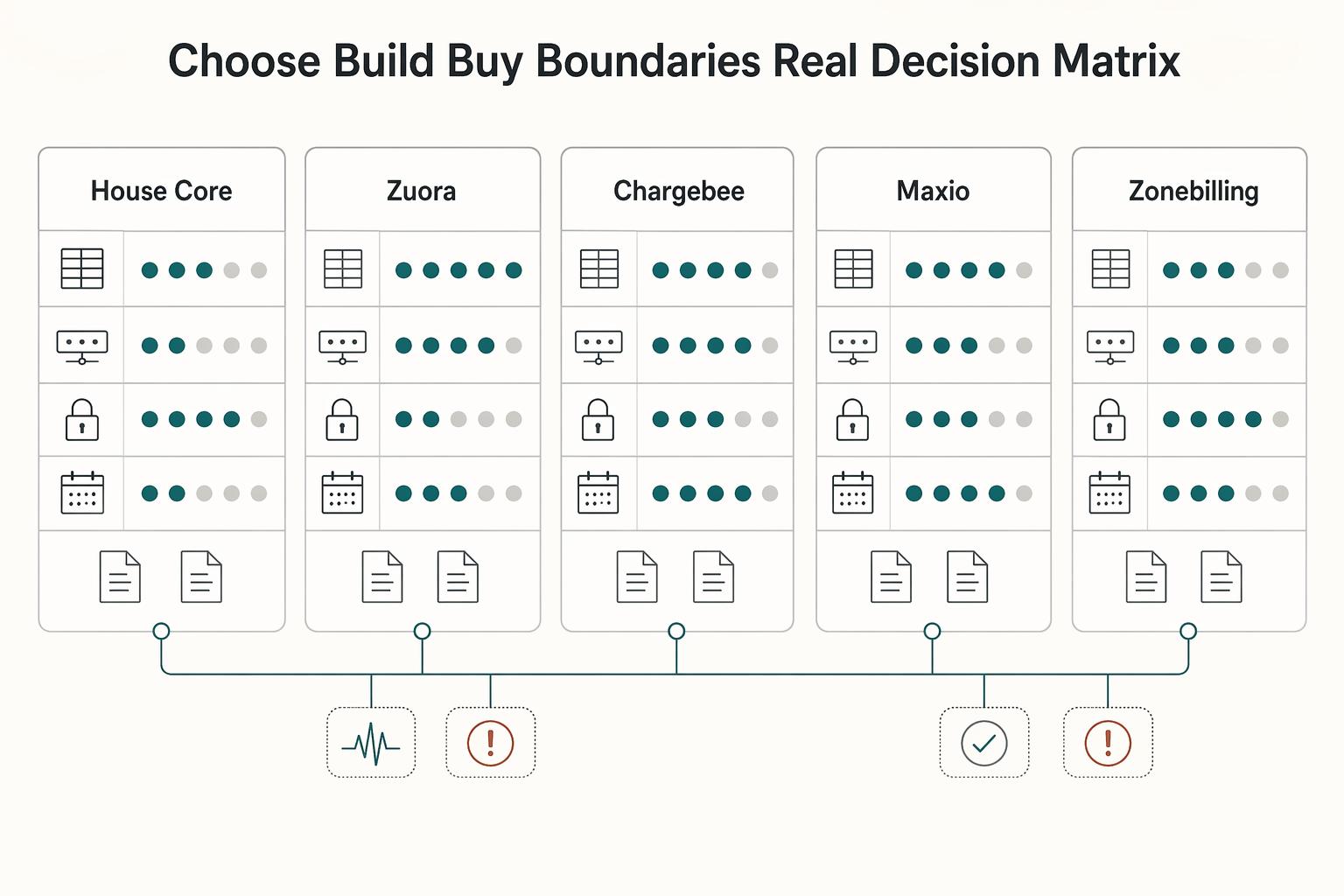
How to Build a Subscription Billing Engine for Your B2B Platform
If you are designing a B2B subscription billing engine, get the close and reconciliation model right before you chase product flexibility. A durable sequence is to define recurring billing scope (plans, billing periods, usage, and trials), then map settlement and payout reconciliation to transaction-level settlement outputs, and finally tie that discipline into month-end close controls. The real test is simple: finance should be able to trace invoices, payments, and payouts from source events through settlement records into reconciled close outputs without ad hoc spreadsheet rescue.
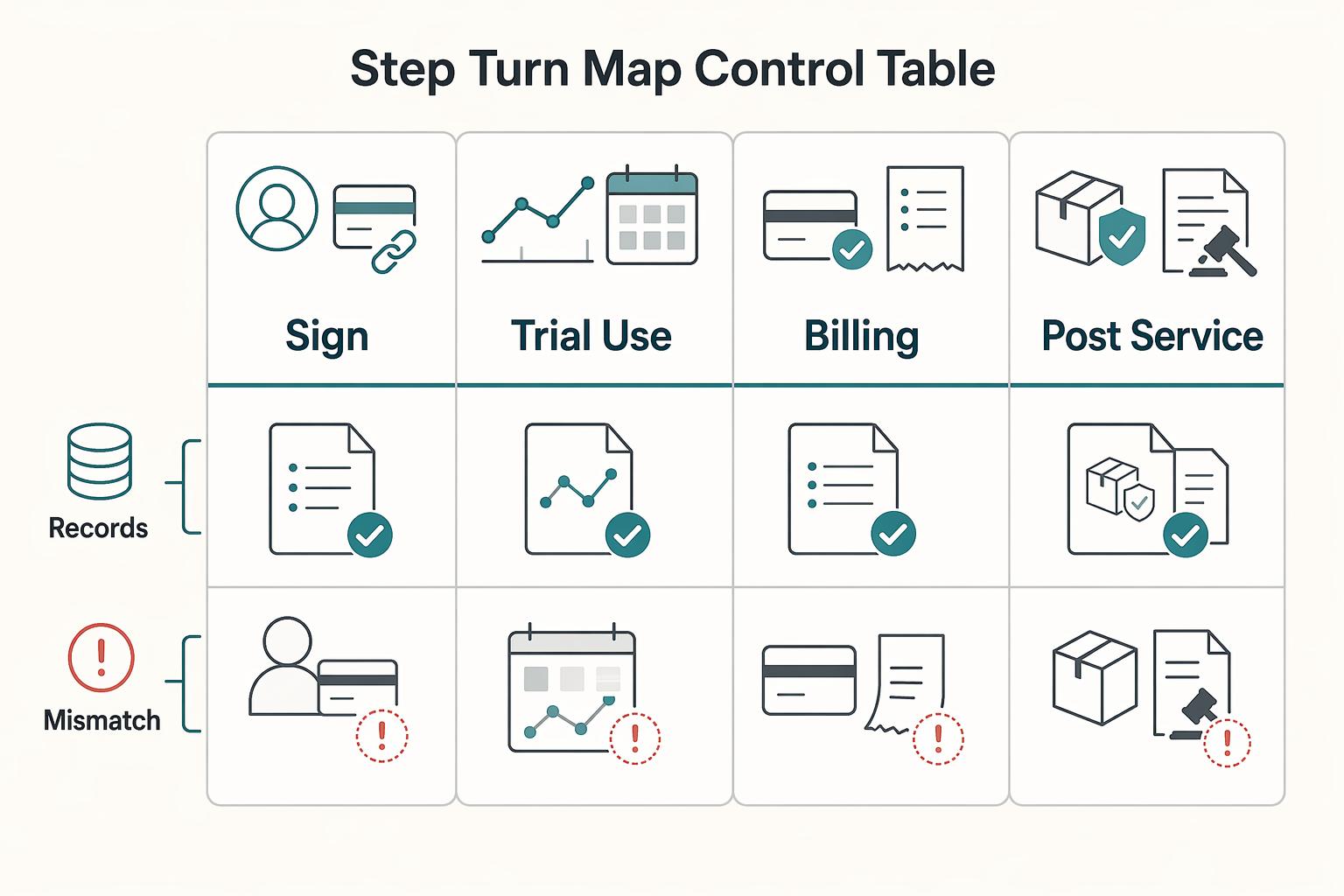
How Platforms Detect Free-Trial Abuse and Card Testing in Subscription Fraud
Trial abuse consumes product benefits; card testing probes payment credentials. They can appear in the same signup flow but need different responses. Track account behavior and payment attempts separately, then give each response an owner.