
Use a weighted scorecard and require proof on your own scenarios before selecting a billing vendor. This evaluation recommends testing per-seat and usage changes, decline recovery with dunning management, and finance outputs tied to IFRS 15 and ASC 606. Include concrete cutover checks: CRM-to-ERP field mapping, invoice and credit-note samples, and a parallel cycle with rollback triggers. When evidence is missing, mark it as Unknown and treat it as execution risk, not a neutral item.
Choose billing with both a CFO and product lens. Otherwise, you buy checkout convenience and inherit finance cleanup later. This shortlist is for founders, revenue leaders, product teams, and finance operators who need billing decisions tied to pricing logic, recurring operations, controls, and integration reality.
This guide is for teams changing how they monetize, not just how they send invoices. It assumes you care about plan changes, add-ons, per-seat logic, usage charges, multi-currency support, and what those choices do to accounting, CRM, and ERP. The goal is cross-functional fit. It is written for teams that need clearer ownership across product, finance, and rev ops, not for a business that only needs a basic invoice sender.
The scope is wider than charging a card each month. Recurring billing covers scheduled subscription charges, but the harder question is whether the tool still fits when your pricing model changes. Public product documentation shows that modern stacks may support flat rate, per-seat, usage-based, tiered, package, volume, and variable pricing models across multiple currencies. If you expect per-seat plus usage soon, treat pricing flexibility as a first-pass filter, not a nice-to-have.
Finance controls belong in the first conversation, not later in implementation. Some billing architectures are modular, and one published example explicitly splits the solution into 3 modules that can be used independently. That matters because scope changes implementation burden, ownership, and what still sits outside the billing layer. If your close process depends on line-level revenue allocation or compliance mapping to IFRS 15 and ASC 606, ask for proof early.
Billing can support retention work, but no platform fixes churn on its own. What you can fairly evaluate is whether failed-payment handling, subscription changes, and customer communications are strong enough to reduce avoidable revenue leakage risk. Treat retention features as risk controls, not magic growth claims.
Integration risk is often where cost and timeline pressure show up. CRM and ERP integration is meant to connect customer, sales, and operational data in real time and reduce manual reconciliation, but poor data governance and legacy constraints can still complicate the project. Before you shortlist anything, verify three things: field mapping between CRM and ERP, sample invoice and credit-note outputs, and how historical subscriptions will be cut over and validated. If a vendor cannot help you pressure-test those points, treat that as a red flag.
This is a decision-oriented shortlist based on currently visible evidence, with tradeoffs, unknowns, and execution checkpoints called out on purpose. It is not a full market map, and it is not a substitute for your own evidence pack: current catalog, contract terms, invoice history, revenue-recognition requirements, and integration dependencies. Use it to narrow the field, not to skip validation.
You might also find this useful: SaaS Subscription Billing Benchmarks: Churn MRR Expansion and Payment Decline Rates.
Use a weighted, cross-functional scorecard if you are changing monetization, not just swapping invoice software.
This shortlist fits SaaS teams redesigning pricing, packaging, or ownership across product, finance, and rev ops. If you run per-seat pricing now, where each pricing unit represents one user, and expect usage-based charges or add-ons, evaluate whether each tool can support those changes and keep data aligned across billing, CRM, and accounting workflows.
If you only need simple recurring invoices with no near-term model changes, limited failed-payment recovery needs, and no immediate revenue-recognition pressure, this level of evaluation may be more than you need right now. You can avoid implementation burden that no team will actively use.
Set criteria first, then score each tool against the same weights. Keep the categories practical: pricing flexibility, failure recovery (dunning on declines), finance controls (including outputs aligned to IFRS 15 and ASC 606), global readiness, and implementation burden across ERP and CRM. Ask vendors to prove flat-rate, per-seat, and usage-based support in working flows.
When the next 12 months may include combined per-seat and usage changes, give billing-logic flexibility meaningful weight instead of optimizing only for fastest launch. Bring evidence into scoring: current plan catalog, invoice and credit-note samples, contract amendment patterns, and your ERP/CRM field map.
This pairs well with our guide on The Best Customer Support Software for SaaS Businesses. If you want a quick next step on subscription billing for SaaS, Browse Gruv tools.
Use a matrix that rewards evidence, not promises: if a vendor cannot show public or demo proof for a criterion you care about, score it as Unknown and treat it as execution risk.
| Vendor | Pricing models | Dunning management | Revenue recognition | Tax support | ERP / CRM sync | Audit trail depth | Exception handling | Reconciliation readiness | Integration path, cutover, rollback, verification |
|---|---|---|---|---|---|---|---|---|---|
| Stripe Billing | Public evidence supports recurring and usage-based pricing via API or Dashboard | Recovery tooling is evidenced; configurable campaign depth is not established in reviewed sources | Unknown in reviewed sources | Unknown in reviewed sources | Unknown in reviewed sources | Not established in reviewed sources | Not established in reviewed sources | Not established in reviewed sources | Stripe states migration is multi-step; require named cutover owner, rollback trigger, and parallel invoice checks |
| Recurly | Pricing-model breadth is not established in reviewed sources | Documented dunning campaigns with multiple collection strategies | Unknown in reviewed sources | Unknown in reviewed sources | Documented integrations with ERP, CRM, and data warehousing applications | Not established in reviewed sources | Not established in reviewed sources | Not established in reviewed sources | Validate retry sequencing, past-due logic, and ERP/CRM field mapping before cutover |
| Paddle | Subscription management is publicly stated; broader pricing-model detail is unknown in reviewed sources | Unknown in reviewed sources | Unknown in reviewed sources | Public positioning includes sales tax and VAT compliance, smart payment routing, and localized checkouts | Unknown in reviewed sources | Not established in reviewed sources | Not established in reviewed sources | Not established in reviewed sources | Public evidence is thin on migration path, rollback, and edge-case handling; demo burden is high |
| Chargebee | Unknown in reviewed sources | Unknown in reviewed sources | Unknown in reviewed sources | Unknown in reviewed sources | Unknown in reviewed sources | Unknown in reviewed sources | Unknown in reviewed sources | Reconciliation readiness is evidenced via QuickBooks reconciliation documentation | Ask for close-process outputs, reconciliation artifacts, and a cutover test plan tied to your accounting books |
| Zuora | Unknown in reviewed sources | Unknown in reviewed sources | Zuora Revenue is documented for automating complex revenue recognition processes | Unknown in reviewed sources | Unknown in reviewed sources | Audit Trail is documented across Billing, Payments, Finance, Revenue, and Platform | Exception specifics need validation | Reconciliation specifics need validation | Strong for finance-led review, but still require parallel-close proof on your own data |
| Maxio | Unknown in reviewed sources | Unknown in reviewed sources | Unknown in reviewed sources | Unknown in reviewed sources | Unknown in reviewed sources | Public evidence is limited in reviewed sources | Public evidence is limited in reviewed sources | Public evidence is limited in reviewed sources | Highest verification burden here if finance-control quality is a deciding factor |
Use three rules in the budget review:
One reminder from current public evidence: a finance leader on Maxio's site says, "AR used to be complex for us in the past. Maxio has made it very, very easy." Treat that as a prompt for validation, not proof of control quality on your data.
Bring an evidence pack: current plan catalog, invoice and credit-note samples, ERP account mapping, CRM field map, and at least one past-due scenario. Need the full breakdown? Read Building Subscription Revenue on a Marketplace Without Billing Gaps.
Stripe Billing fits teams that want billing, tax, and revenue workflows closer together in one commercial stack, but only if your architecture can handle the integration tradeoffs.
Stripe Billing fits growth-stage SaaS teams that want recurring, usage-based, and sales-negotiated contract billing in one platform. Stripe documents per-seat pricing, with seat count as billable units, and usage-based billing. It is especially relevant when finance wants fewer handoffs, because Stripe Revenue Recognition can work directly with Stripe Billing subscriptions without further setup for those subscription types.
Start by validating pricing logic and plan-change behavior on real scenarios. Stripe documents proration options for upgrades and downgrades, including immediate, next period, or no proration, and provides a hosted customer portal for billing info, subscriptions, and invoices. Test a live sample set for seat changes, downgrades before renewal, and usage true-ups, then confirm invoice amount, proration, tax result, and accounting output all match expectations.
The main risk is coupling, not missing a headline feature. Stripe supports subscription integrations through Checkout or custom payment flows with Elements, so some logic can still live in product code. If entitlement rules, contract exceptions, or approval logic stay in your app or CRM, operations can remain split across engineering, finance, and rev ops.
Stripe documents accounting integrations to QuickBooks Online and Xero, but that is not evidence of broader ERP coverage. Validate the field mapping you need for invoices, credits, customer records, and account codes. Stripe also describes migration as a multi-step process and requires Stripe Billing integration before migration; the published no-code toolkit claim of 100,000 subscriptions in approximately 30 minutes should be treated as throughput under stated conditions, not a go-live guarantee. Require parallel invoice checks and a written rollback trigger before cutover.
For a step-by-step walkthrough, see Retainer Subscription Billing for Talent Platforms That Protects ARR Margin.
Recurly is a strong shortlist when your main bottleneck is retention operations in a high-volume subscription model, not broad stack consolidation. It positions itself as subscription management software and a recurring billing platform for high-volume digital commerce, so the evaluation should center on churn and recovery workflows first.
Recurly fits subscription-first teams where recurring execution is the core operating motion. Its retention tooling includes cancel flows, win-back offers, and intelligent retry logic, which is useful when avoidable churn is the immediate revenue issue. It also cites 15+ years of expertise, which may matter if your team prefers a long subscription-focused track record.
Validate retention mechanics before feature breadth. Recurly says it can recover payments automatically with intelligent retries, so test failed-payment recovery, cancellation flow behavior, and win-back paths against real scenarios. If Shopify is part of your go-to-market stack, verify how the native subscription management app for Shopify fits your storefront setup rather than assuming full coverage.
The common miss is assuming retention tooling also solves integration and reporting depth. Recurly states integrations with leading ERP, CRM, and data warehousing applications, and its partner network includes CRM, ERP, BI, and taxation categories. Still, you should confirm exact objects, sync direction, and mapping ownership for your workflow before committing.
Recurly's analytics are positioned around interactive dashboards and broad subscription reporting visibility. That may be enough for many operating views, but it is not automatic proof that external BI is unnecessary. A practical check is to map the retention and finance metrics your team actually runs, then separate what can live in Recurly dashboards from what still needs warehouse or BI modeling.
We covered this in detail in Subscription Billing Platforms for Plans, Add-Ons, Coupons, and Dunning.
Paddle is a strong shortlist option when your priority is reducing tool sprawl, and the tradeoff is clear: you get one platform across billing and payments, but you accept more vendor concentration.
Paddle fits early-to-mid stage SaaS teams that prefer operational simplicity over maximum component-level control. Its public positioning is explicitly all-in-one, combining subscription management, invoicing, billing support, tax compliance, fraud protection, and churn prevention. It also operates as Merchant of Record, where it states it manages payments, tax, and compliance, including tax obligations in over 100 jurisdictions.
Teams usually shortlist Paddle when fragmented ownership across checkout, recurring billing, tax, and failed payments is creating execution drag. Paddle's billing materials frame this as one automated system with fewer third-party dependencies, plus built-in automatic dunning for churn prevention. It also states support for over 20 currencies, which can simplify international operations.
Validate real workflows first, because public materials do not fully document every edge case or implementation constraint.
Paddle publishes a baseline price of 5% + 50¢ per Checkout transaction and also offers custom pricing for rapidly scaling and large-scale businesses. It also states that high-growth customers can purchase premium implementation help through Paddle Architects. Treat that as useful support, not proof that implementation will be low-effort in every case. Related: A Guide to Dunning Management for Failed Payments.
When compliance scope, entity structure, or approval chains are expanding, evaluate Chargebee, Zuora, and Maxio on finance controls and rev-rec/ERP fit, not landing-page visibility. Treat SERP comparison pages as shortlist input only: even a page updated March 22, 2026 is a starting list, not selection evidence.
| Vendor | Prioritize when | Stated capabilities | Validate in demo |
|---|---|---|---|
| Chargebee | Finance-led replatforming depends on revenue recognition controls | Chargebee RevRec is stated as automated and compliant with ASC 606/IFRS 15; provides audit-ready documentation; integrates billing with ERP, CRM, and payment gateways; includes configurable recognition controls | Billing event, rev-rec treatment, and audit output |
| Zuora | Pricing-model complexity is the pressure point | States support for recurring, usage-based, and one-time pricing mixes; links rev-rec operations to audit and GAAP disclosure workflows | Approvals, exceptions, and finance ownership for non-standard deals |
| Maxio | Finance controls and CRM operating sync need to stay aligned | Positions GAAP/IFRS compliance and CRM sync, including Salesforce and HubSpot, as part of its operating model | Field-level handoffs for plan, contract, and account changes |
Prioritize Chargebee when finance-led replatforming depends on revenue recognition controls. Chargebee RevRec states it is automated and compliant with ASC 606/IFRS 15, provides audit-ready documentation, integrates billing with ERP, CRM, and payment gateways, and includes configurable recognition controls. In demo, validate the control path end to end: billing event, rev-rec treatment, and audit output.
Prioritize Zuora when pricing-model complexity is the pressure point. Zuora states support for recurring, usage-based, and one-time pricing mixes, and it links rev-rec operations to audit and GAAP disclosure workflows. In demo, test governance first: approvals, exceptions, and finance ownership for non-standard deals.
Prioritize Maxio when you need finance controls and CRM operating sync to stay aligned. Maxio positions GAAP/IFRS compliance and CRM sync, including Salesforce and HubSpot, as part of its operating model. Validate field-level handoffs for plan, contract, and account changes so ownership is clear before go-live.
Migration discipline matters more than feature breadth once vendor selection is done. Do not cut over until you have proven catalog mapping, ledger and tax parity, and failed-payment behavior in a parallel test.
| Check | Grounded detail |
|---|---|
| Inventory live model | Plans, add-ons, coupons, contract terms, billing intervals, and any usage logic outside the billing tool |
| Map history and fields | Historical invoices and subscription states; align CRM and ERP fields |
| Run parallel validation | Run a parallel billing cycle before go-live |
| Test payment recovery | Validate retries and customer reminders; confirm retry logic, duplicate-charge prevention, and idempotent behavior under API replays |
| Set rollback triggers | Pause if ledger postings, tax outputs, or retry outcomes drift during parallel validation |
| Add compliance evidence only when in scope | For in-scope U.S. cases, include beneficial ownership checks, AML controls, and tax-document handling workflows (W-8 BEN, W-9, 1099-NEC); keep FEIE and FBAR only when tax and finance owners confirm they apply |
| Decide cross-border rails early | Merchant of Record can shift some seller obligations; virtual accounts can support collections, treasury structure, and reconciliation |
Inventory your live model first: plans, add-ons, coupons, contract terms, billing intervals, and any usage logic outside the billing tool. Then map historical invoices and subscription states, align CRM and ERP fields, and run a parallel billing cycle before go-live. Ordering is a control, not a preference: Stripe says to create new subscriptions before canceling old ones, and warns cancellation timing affects double-billing risk; Chargebee runs migration on Test before Live; Zuora documents unit, integration, and UAT stages. If a partner wants to skip that sequence, treat it as risk.
Many migrations fail after launch when renewals start declining. Validate dunning as an end-to-end flow: retries and customer reminders, not just invoice creation. Confirm retry logic, duplicate-charge prevention, and idempotent behavior under API replays. Define rollback triggers before cutover and pause if ledger postings, tax outputs, or retry outcomes drift during parallel validation.
Not every migration needs KYC, KYB, AML, or tax-document collection. But if your model includes payouts, legal-entity onboarding, or cross-border flows, settle evidence requirements before launch. For in-scope U.S. cases, include beneficial ownership checks, AML controls, and tax-document handling workflows (W-8 BEN, W-9, 1099-NEC) as applicable. Keep FEIE and FBAR in cross-border review, but only include them in the migration checklist when tax and finance owners confirm they apply.
If international monetization is in scope, decide this before final ERP mapping. Paddle states it operates as Merchant of Record for digital products; J.P. Morgan positions virtual account management as a way to improve cash visibility and reduce reliance on physical accounts. The point is operational fit: Merchant of Record can shift some seller obligations, while virtual accounts can support collections, treasury structure, and reconciliation.
A practical gate: if you cannot show one invoice, one failed renewal, and one amended subscription moving cleanly through billing, CRM, ERP, and tax outputs in test, you are not ready to migrate.
As one former head of revenue operations put it, phased implementation is meant to ensure there are no surprises before full migration.
Related reading: A Guide to the Statement of Work (SOW) for a SaaS Development Project.
Choose the platform that can handle pricing changes, support retention mechanics, and keep finance controls reliable as complexity grows, not just the one that launches checkout fastest. The decision should connect pricing design, collections, payments, and revenue outputs from day one.
Test whether each vendor can support your current model and where you are likely headed, including recurring, usage-based, and negotiated contract models. Run the same scenario for each: one catalog change, one mid-cycle amendment, and one invoice outcome before and after the change. If flexibility looks good in demo but proration or amendment outputs break, you are trading short-term speed for future rework.
Billing features alone are not enough if quoting, billing, collections, payments, and revenue recognition do not stay connected. Use a practical traceability check: can your team follow one contract change from quote through invoice to finance output without manual patching? If reconciliation depends on spreadsheet fixes, treat that as a core risk.
Replatforming risk usually appears in configuration, data mapping, and validation, so make those unknowns explicit in a weighted comparison. Keep an "unknowns" column for migration mapping, retry behavior, reconciliation outputs, and integration ownership. Vendor maturity signals can help with diligence, but they do not prove your migration will be clean.
After you narrow the list, talk to sales to confirm constraints for your exact market, compliance requirements, currencies, and ERP/CRM stack. Use that call to verify what is supported now, what needs custom work, and what remains manual at go-live.
If you want a deeper dive, read The Best Tools for Managing Subscription Billing. Want to confirm what's supported for your specific country/program? Talk to Gruv.
SaaS billing is the recurring-charge layer for software subscriptions, not just a way to send invoices or collect card payments. Public definitions from Stripe and Zuora describe it as broader than one-time invoicing, covering recurring and usage-based pricing, consumption tracking, invoice generation, payment collection, and often revenue recognition. The practical difference is simple: payments move money, invoicing sends a bill, and billing owns the commercial logic over time.
Use the same scenario test for every vendor instead of judging websites or demos. At minimum, have each one walk through a new subscription, a mid-cycle seat change, a usage overage, a failed renewal, a credit or rebill, and an ERP export. A red flag is any sales process that shows the happy path but avoids exceptions, retry behavior, or reconciliation outputs.
Switch when patches are creating manual work in finance, rev ops, or support every billing cycle, especially around amendments, renewals, and failed payments. You do not need a universal threshold to know it is time. If you cannot prove one clean invoice, one failed renewal, and one amended subscription all land correctly across CRM, ERP, and tax outputs, you may be paying more for workarounds than for change.
The better fit is the one that can prove recurring and usage-based pricing, consumption tracking, and invoice accuracy in your model, not the one with the loudest product page. Zuora’s SaaS billing definition explicitly includes managing recurring and usage-based pricing and tracking consumption, which is the exact checkpoint that matters here. If your pricing will change within the next year, ask for a test catalog and validate upgrades, downgrades, and proration before you sign.
Frequent migration risk areas include catalog mapping errors, failed-payment recovery that was never tested, and handoff issues into ERP, CRM, or tax tools. De-risk them with a parallel billing cycle, invoice and ledger parity checks, and one deliberate failed-payment test with dunning enabled. If retry behavior or financial outputs drift in test, pause the cutover instead of fixing it after launch.
There is no universal order for every SaaS team. A common first wave is CRM, ERP, payment gateway, and sales tax automation, and vendor materials from Zuora and Stripe explicitly tie billing to CRM and ERP handoffs. My rule is to prioritize the connection where errors become liabilities fastest: ERP and tax first for finance-heavy teams, CRM earlier if sales-driven amendments are your main source of billing change.
It affects them indirectly, not magically. Chargebee positions smart retries and dunning management as a way to recover failed payments, and Maxio publicly ties billing to MRR, ARR, churn tracking, and automated revenue recognition. In practice, the potential gain is fewer lost renewals, cleaner expansion billing, and less manual finance work. Measure that in your own decline recovery, amendment accuracy, and close effort rather than assuming a guaranteed lift.
Arun focuses on the systems layer: bookkeeping workflows, month-end checklists, and tool setups that prevent unpleasant surprises.
Includes 2 external sources outside the trusted-domain allowlist.
Educational content only. Not legal, tax, or financial advice.

**Protect cashflow by selecting for recovery and control first, then layering convenience features.**

If you run recurring invoices, failed payments are not back-office noise. They create cashflow gaps, force extra follow-up work, and increase **Involuntary Churn** when good clients lose access after payment friction.
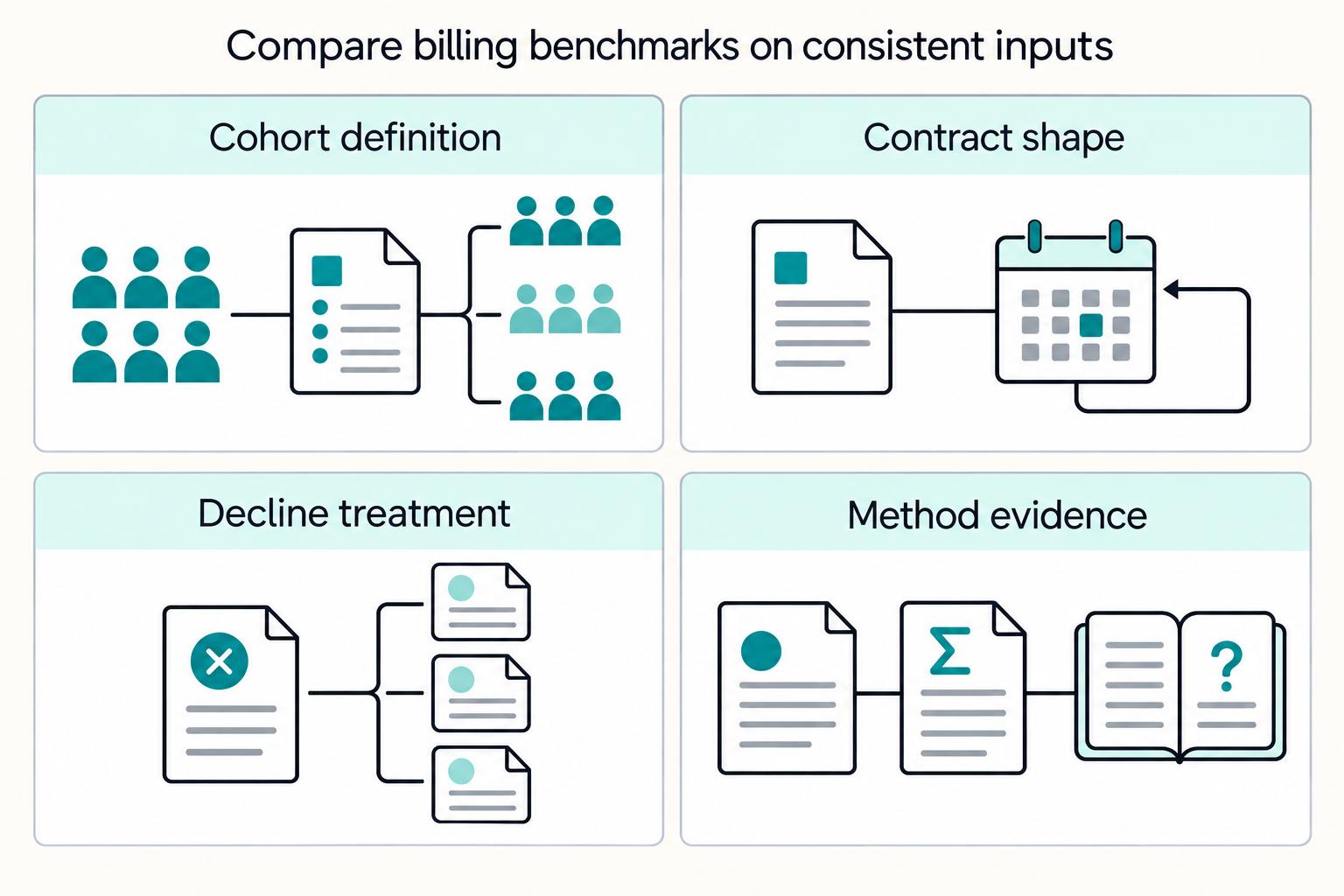
For expansion decisions, treat payment decline rate, churn, and expansion as one system, not three separate metrics. That gives product, finance, and GTM a view they can defend before rollout resources are committed. If you own the budget call, you need that view before your team starts treating one good month as a trend.