

Quick Answer
Use one seller-obligation ledger with six verified local routes. Separate rail capability from provider approval, reconcile seller liabilities and reserves, and resolve unknown attempts before another provider or rail can settle the same obligation.
Build around seller liabilities and six actual routes#
A Southeast Asian marketplace needs a dependable way to turn collected customer money into the amounts owed to sellers. Start with who owes whom, which entity holds the money, the permitted funds flow and each seller’s receipt currency. Domestic payout rails help deliver those amounts; they do not decide ownership, tax duties or permission to hold seller funds.
The six markets below use different currencies, identifiers and payment schemes. Use one regional obligation ledger while configuring the actual approved route separately for Singapore, Malaysia, the Philippines, Indonesia, Thailand and Vietnam. Confirm recipient type, account ownership, funding, amount limits, charge allocation and completion evidence for each route before opening it to sellers.
The provider examples use Airwallex’s public bank-payout documentation checked on October 3, 2026. They illustrate concrete field and routing differences, rather than recommend one provider for every marketplace. Confirm the product approved for your entity and seller funds flow; a corporate account for paying your own suppliers is not automatically approval for distributing third-party marketplace proceeds.
Singapore: SGD through FAST and registered PayNow destinations#
PayNow transfers Singapore-dollar funds through FAST using registered identifiers. Individuals can use mobile numbers, NRIC/FIN or supported virtual payment addresses; entities link a UEN. Verify the recipient name through the permitted bank or provider workflow before confirming the destination. Do not treat an unregistered phone number as a ready payout account. ABS PayNow.
Airwallex’s Singapore guide supports FAST payouts using bank details or supported PayNow IDs, distinguishes company UEN from personal identity routes, and lists a SGD 200,000 FAST transaction maximum. It also documents GIRO and RTGS as different local options. That ceiling belongs to the described provider route; recheck the live configuration rather than copying it into every provider integration. Singapore payout guide.
For a company seller, select the verified company destination and capture its exact supported registration or account details. A director’s personal phone proxy is a separate ownership question. Keep a stable destination record and an approved change history so the next batch cannot silently follow a changed spreadsheet cell.
Malaysia: MYR through DuitNow with the right identity type#
PayNet’s DuitNow Transfer supports linked identifiers, including a business registration number for registered businesses and personal identifiers for individuals. Receiving through an ID requires linking it to an account or supported wallet. Verify the registered beneficiary rather than assuming that a familiar mobile number belongs to the contracted seller. PayNet business transfer guide.
Airwallex’s Malaysia guide documents local MYR payouts through bank details or supported DuitNow IDs. It separates personal NRIC/passport routes from company BRN routes and lists RENTAS as another local option. Use the schema for the selected recipient and method; do not send the same generic identity field for every seller. Malaysia payout guide.
Confirm whether a seller requests a company bank account, personal bank account or supported wallet destination and whether your program permits it. Domestic transfer capability does not establish cross-border funding eligibility. Reconcile the funded MYR amount and provider charges separately from the gross customer sales allocated to that seller.
Philippines: distinguish instant PHP delivery from PESONet batches#
Under the Philippine retail payment framework, InstaPay and PESONet serve different transfer models: InstaPay provides real-time low-value transfers, while PESONet processes batch credit transfers. Participating banks and electronic-money issuers are part of the interoperability framework; check the actual receiving institution and product. BSP retail payment system.
Airwallex’s Philippine guide documents local PHP payout through InstaPay/PESONet and states that amounts above PHP 50,000 go through PESONet, with a stated 0–1 business-day flight time. It requires account name, bank identifier and account number for the described local route. This routing threshold is a documented product rule, not a promise that every platform payout arrives instantly. Philippines payout guide.
A seller earning PHP 80,000 therefore needs the selected provider’s actual batch timing explained before approving release. Do not divide it into arbitrary smaller transfers merely to evade a review or limit. Where permitted installments are part of the agreement, represent them explicitly and keep their combined liability and fees visible.
Indonesia: IDR rail selection and recipient-bank support matter#
Bank Indonesia describes BI-FAST as real-time infrastructure available around the clock, with individual and bulk credit-transfer services among its capabilities. Those capabilities belong to the infrastructure; a marketplace still needs access through its approved bank or provider route. Bank Indonesia retail infrastructure.
Airwallex documents local IDR delivery through SKN, BI-FAST or iACH, with account name, account number and a supported bank identifier. Its guide lists a general IDR 300 million transaction limit with specified recipient-bank exceptions. Do not confuse that provider-routing limit with a universal BI-FAST scheme ceiling or assume every IDR instruction selects BI-FAST. Indonesia payout guide.
Capture the actual chosen scheme and receiving bank when the provider exposes them, and preserve the quote and expected delivery window. If the bank is unsupported or a required field fails validation, repair the instruction before release. Account-number length checks help catch mistakes but do not establish bank-account ownership.
Thailand: THB delivery can change with the amount#
PromptPay links existing accounts to registered identifiers such as a citizen ID or mobile number, and includes corporate services. A Thai QR payment option and a platform’s outbound bank-payout capability are separate integration questions; verify which destination types your provider actually accepts. Bank of Thailand PromptPay.
Airwallex’s local THB guide asks for account name, account number and bank identifier and lists PromptPay, Smart Credit and BAHTNET. It states that payouts above THB 2 million use BAHTNET and that beneficiary banks may deduct an additional fee up to THB 300. Use the applicable live quote and route when promising a net receipt. Thailand payout guide.
For a large seller settlement, record who bears any additional charge and whether the planned transfer delivers the full amount owed. A low-fee domestic experience on someone’s personal banking app does not establish the fee or timing of your cross-border-funded commercial route.
Vietnam: VND through NAPAS with account and investigation records#
NAPAS describes its FastFund 247 service as an immediate transfer service through participating channels and directs customers to their bank for investigation when funds are debited but not received. VietQR can encode a transfer instruction; creating or scanning a QR is not itself recipient-credit evidence. NAPAS digital payment handbook.
Airwallex’s Vietnam guide documents local VND through NAPAS, with account name, account number and bank identifier. It lists a VND 10,000 minimum and VND 499,999,999 transaction maximum and a separate daily compliance-information threshold. These are provider-route conditions; validate them before scheduling a large seller settlement. Vietnam payout guide.
Keep the seller’s intended local currency and verified bank destination intact through FX and payout submission. A customer checkout method called VietQR does not imply that a marketplace can send seller payouts through that checkout product. Investigate a debit without confirmed receipt through the actual provider and receiving-bank process.
Work a marketplace settlement through the ledger#
Assume a permitted Singapore funds flow, all in SGD, with customer collections of 10,000. Under this hypothetical seller agreement, 9,000 belongs to the seller and 1,000 is the platform commission. The platform bears 200 of processing costs. A 300 customer refund is contractually charged to the seller. Ignore taxes and FX in this example; actual seller agreements may allocate refunds and charges differently.
The settlement account now holds 10,000 − 200 − 300 = 9,500. The seller liability is 9,000 − 300 = 8,700; the platform’s earned amount after processing cost is 1,000 − 200 = 800. Together, 8,700 + 800 = 9,500. This bridge checks ownership, rather than treating all cash in the account as platform revenue.
If an authorized seller reserve is 500, the available seller payout is 8,200 while the total seller liability remains 8,700. After the 8,200 payout completes, cash is 1,300: seller reserve 500 plus the platform amount 800. Releasing the reserve later settles the remaining seller liability; it does not create a new operating expense or commission.
Keep processor settlement pending, provider funding pending and seller payout pending as separate states. Where permissions require external segregation or safeguarding, ledger ownership must be matched by the required external arrangement. The arithmetic above does not make an otherwise impermissible pooled account acceptable.
Localize authority and economics as well as the endpoint#
Singapore’s payment-services framework regulates activities including account issuance, domestic and cross-border transfer, and merchant acquisition. Indonesia’s PBI 10/2025, effective March 31, 2026, addresses activities, authorization, participation and payment-industry responsibilities. These are concrete reasons to assess your funds flow by jurisdiction, rather than assume that one regional API grants regional permission. MAS guidance, Bank Indonesia current framework.
For each market, identify the marketplace entity, provider contracting entity, seller identity checks, permitted collection/holding/disbursement model, applicable tax and reporting duties, reserve authority, and refund/return responsibilities. Assign an owner and supporting basis to each decision. Required permission cannot be waived by a small pilot or an internal exception expiry.
Compare payout frequency using the actual commercial quote. For example, a hypothetical fixed SGD 0.50 charge for each of five weekly transfers costs SGD 2.50, compared with SGD 0.50 for one weekly transfer: SGD 2.00 of fee difference, before FX and other costs. Faster seller access and cash held between releases are separate tradeoffs; batching is not automatically better.
Use the seller agreement and route conditions to set the schedule, minimum payout, fees and reserve release. A commercial preference to reduce fees is not authority to withhold earned seller proceeds indefinitely. Explain a delayed release with the specific valid reason, remaining amount, owner and next update.
Resolve unknown attempts before switching providers or rails#
Give each approved seller payout one durable obligation identifier and record every funding, FX and delivery leg against it. Write the financial effect and processing result atomically, with a guard that remains effective across provider changes, manual transfers and retries. A provider reference or temporary idempotency key alone cannot enforce that cross-route rule.
When a request times out, query the original attempt and investigate its outcome. Only authorize a replacement once the original cannot complete. Switching from an instant route to a batch route does not resolve the first instruction. A provider “accepted” response should remain distinct from the reliable completion evidence that discharges the seller liability.
For a confirmed return, reconcile the actual cash returned, fees retained and reopened seller balance before authorizing another attempt. For a customer refund, apply the seller agreement to the original transaction and any reserve; do not confuse it with an outgoing payout return. Keep both events connected without reversing unrelated commission or settlement entries.
Launch with an approved seller and a permitted small amount, confirm the actual recipient credit and reconciliation, and then expand. Track rejection reasons, unknown-attempt age, net-receipt shortfalls and unmatched balances by route. Those measures show where the configured operation needs repair without pretending that every regional rail shares the same failure behavior.
Frequently Asked Questions
Can one payout API cover all six Southeast Asian markets?
A provider may expose one API, but currencies, recipient identities, amount limits, route selection and permissions still differ. Verify the actual approved product and funds flow in each market rather than treating regional coverage as universal eligibility.
Are QR checkout methods also seller payout methods?
Do not assume that. A QR may encode a payment instruction or support customer acceptance, while seller disbursement uses a separate bank or provider route. Check supported destination types and reliable recipient-credit evidence.
Does a seller reserve reduce the amount owed to the seller?
An authorized reserve can reduce the amount currently available for payout while the reserved amount remains a seller liability. Match the contract and applicable rules, record release conditions, and keep that money distinct from platform revenue.
Should an instant-rail timeout trigger a batch-rail replacement?
No automatic replacement. Investigate the original and keep the underlying obligation guarded across rails, providers and manual payments. Authorize a replacement only when the original cannot complete; reconcile a confirmed return separately.
Does a small payout pilot waive local permissions?
No. A pilot tests an already permitted configuration with an eligible recipient. Required licensing, provider approval, identity checks and applicable funds-holding duties must be established before live money moves.
Try a related tool
Researched and edited by the Gruv editorial team. Gruv builds cross-border billing, payouts, and finance-operations software for global businesses.
Sources
Includes 6 external sources outside the trusted-domain allowlist.
- ask.gov.sg/mas/questions/clx8ktis400bvryozwe0wzsg7trusted
- bsp.gov.ph/Pages/PAYMENTS%20AND%20SETTLEMENTS/National%...trusted
- abs.org.sg/e-payments/pay-nowexternal
- airwallex.com/docs/payouts/payout-network/bank-accounts/si...external
- airwallex.com/docs/payouts/payout-network/bank-accounts/ma...external
- bi.go.id/id/fungsi-utama/sistem-pembayaran/ritel/infr...external
- bi.go.id/id/publikasi/peraturan/Pages/PBI_102025.aspxexternal
- bot.or.th/en/financial-innovation/digital-finance/digi...external
Educational content only. Not legal, tax, or financial advice.
Related Posts

How Marketplace Platforms Pay Third-Party Sellers Compliantly
Generic marketplace payout advice usually skips the part that breaks in production. Paying many sellers is not just moving money out. It is deciding who gets paid, when they become eligible, what happens when a buyer disputes a payment, and how finance proves every release later. If you are working on **ecommerce reseller payouts marketplace platforms pay third-party sellers**, this guide is for the marketplace operator, not for solo freelancer banking tips.
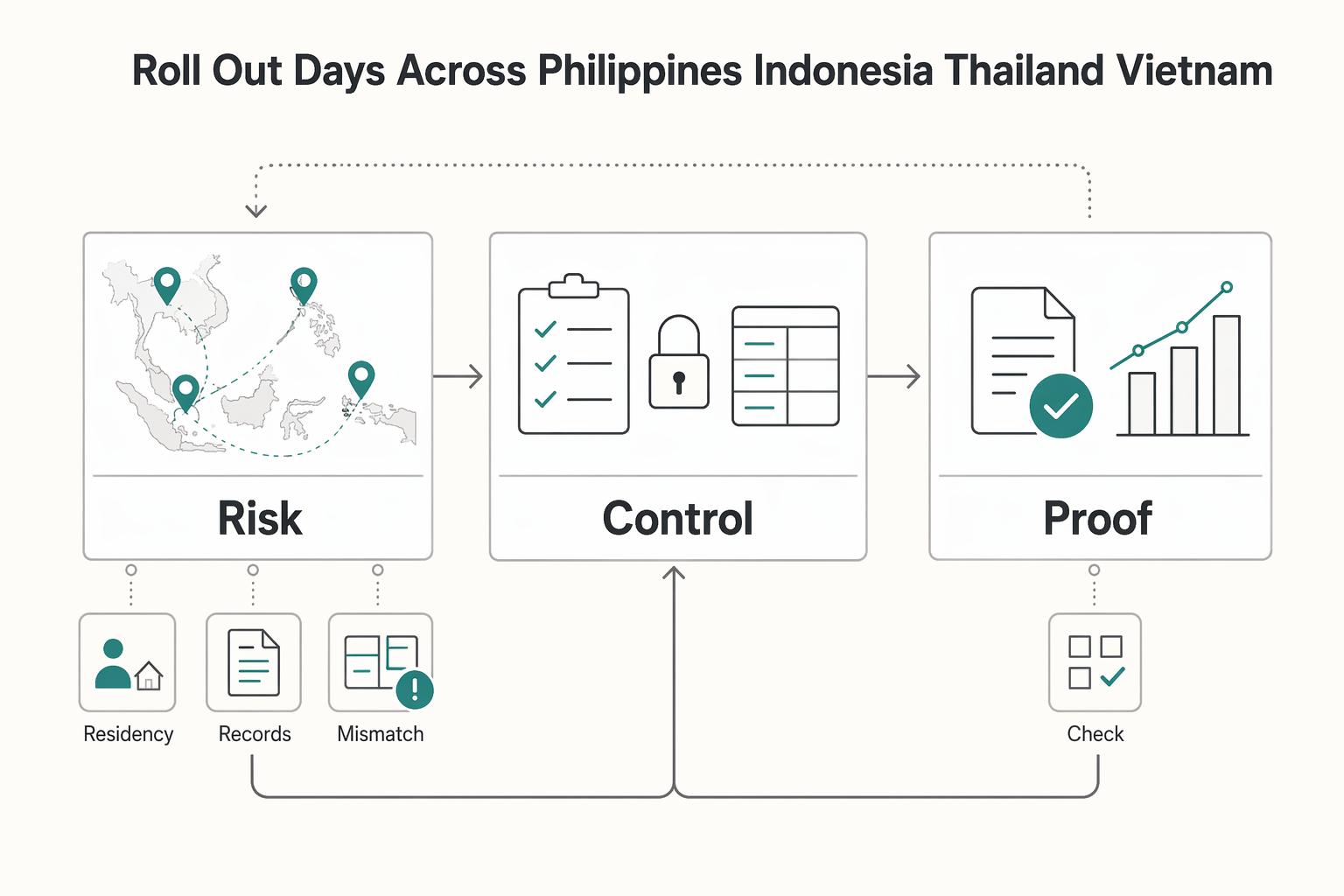
Southeast Asia Contractor Payouts Across Philippines, Indonesia, Thailand, and Vietnam
Treat Southeast Asia as four separate launch decisions, not one regional rollout. If you approach the Philippines, Indonesia, Thailand, and Vietnam with a single APAC payout template, you can create avoidable rework in compliance, rail selection, and reconciliation.
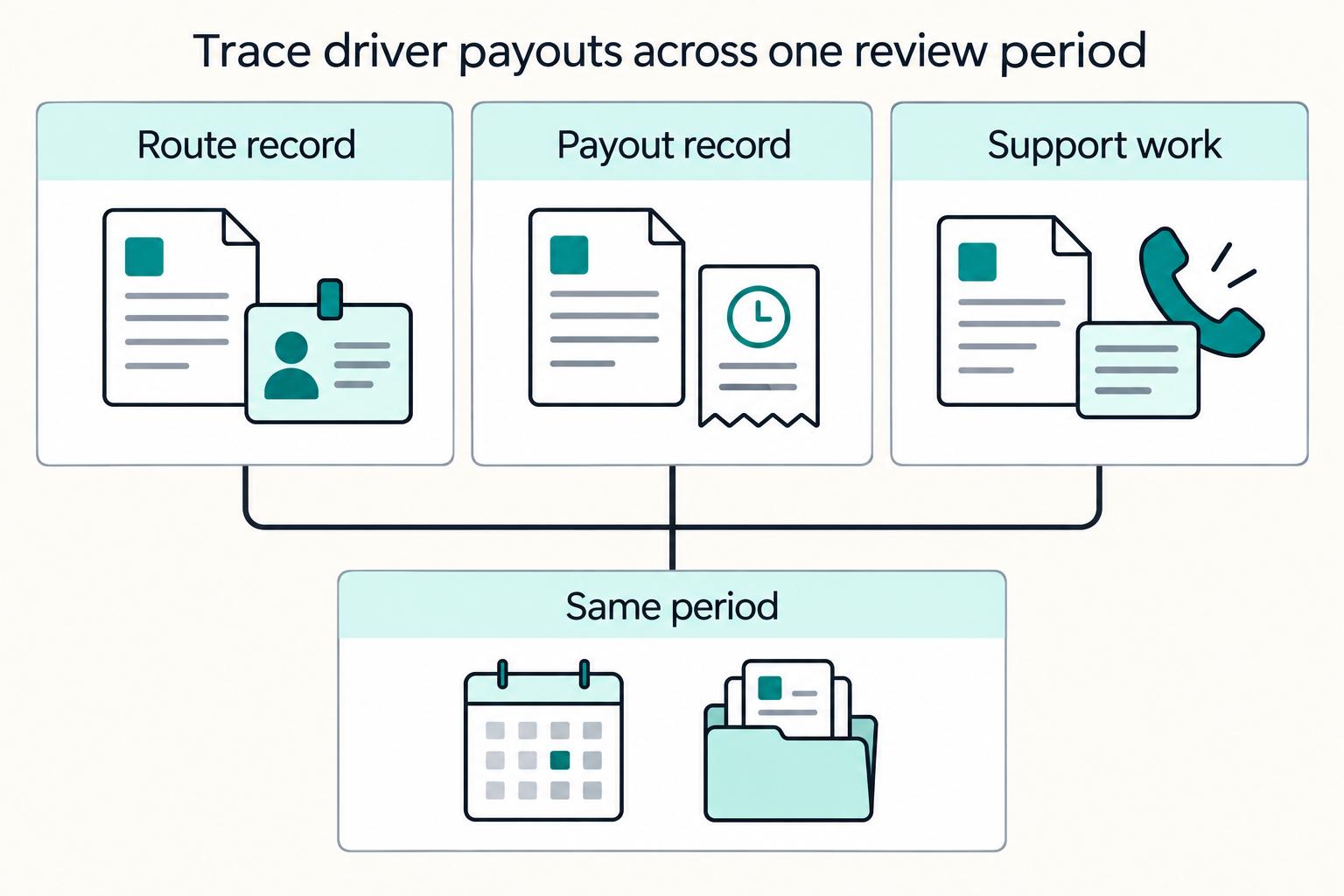
How a Logistics Platform Scaled Driver Payouts Across Southeast Asia
Redesigning driver payouts is rarely just a payments project. For a logistics platform, it is often a margin decision hiding inside an ops problem. Do you fix driver uncertainty first, settlement speed first, or manual finance work first?