
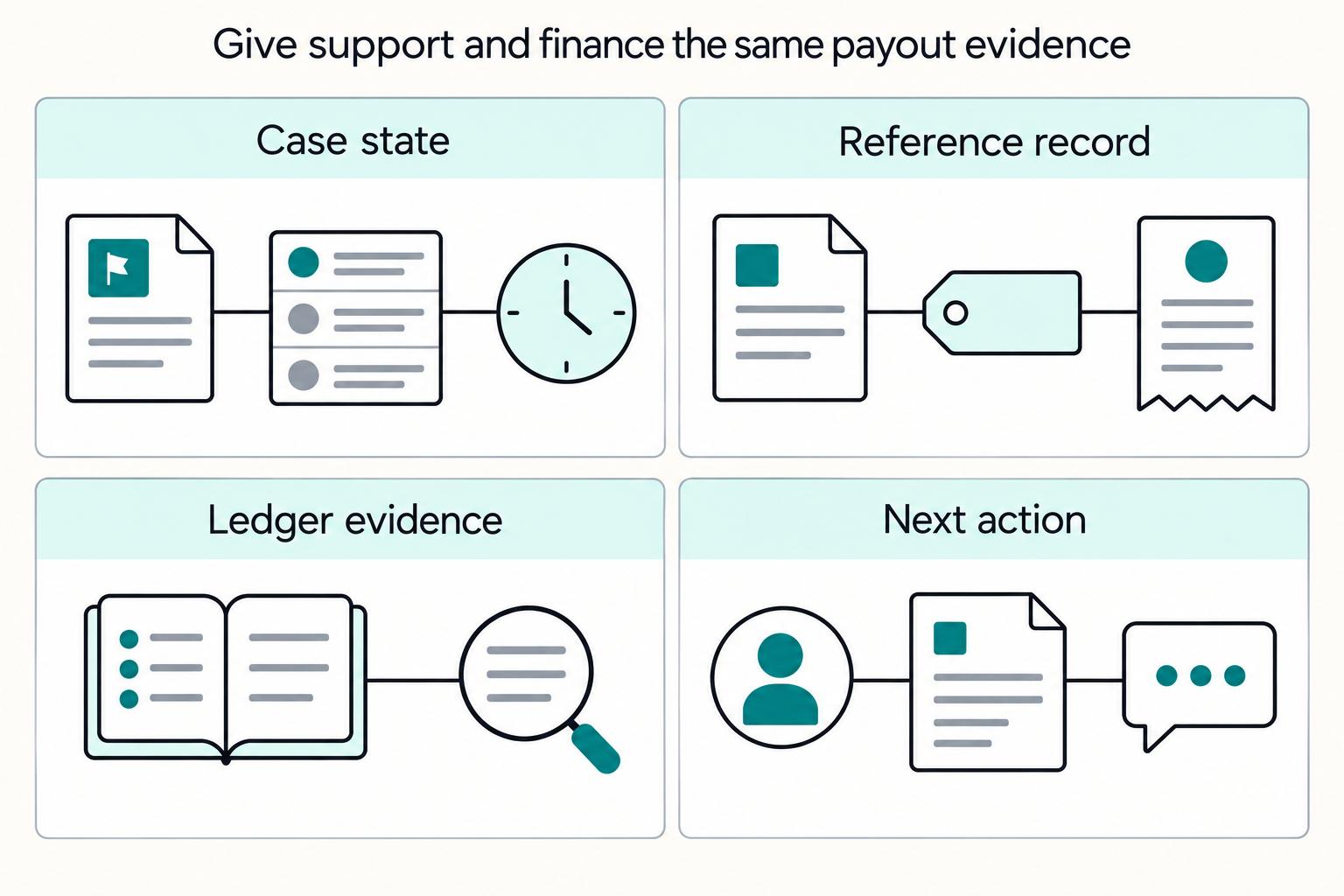
Quick Answer
Design SEPA euro payouts using the current EPC country and territory list, actual PSP and account reachability, and a separate platform live scope. Choose SCT or SCT Inst per flow, verify beneficiary details and applicable controls, preserve payout identity through unknown outcomes, and reconcile external status to ledger and bank evidence.
When SEPA Is the Right Rail for Platform Euro Payouts#
Treat SEPA euro disbursements across European countries as an operating model decision, not a compliance checkbox. The real test is whether your payout flow still works when volume rises, funds are returned, a beneficiary is paused, or finance needs a clean month-end audit trail.
SEPA standardization is real, and it helps. But it does not remove the platform decisions that matter most. Scope changes over time. Legal applicability is not identical across all SEPA countries. Provider readiness is not automatic when a country is added to scheme scope.
A common mistake is to start with a dashboard demo or a single API endpoint and assume the rest will sort itself out. That approach usually works on a happy path, then breaks when the operating questions appear. Which countries are actually in scope today? Which rail fits the payout promise you made? Who owns the hold or release decision? How does finance trace a payout from request to ledger movement to bank outcome? What happens when a retry lands after an unclear response?
If you get those decisions right up front, SEPA can be a strong baseline for euro disbursements. If you leave them vague, you end up with country confusion, inconsistent go-live decisions, manual reconciliations, and duplicate work across product, compliance, finance, and engineering.
Before you start#
Use dated sources to define scope before you design anything. Record an internal snapshot using the ECB SEPA overview and the EPC List of SEPA Scheme Countries, and keep the date with the decision.
As checked on 2 October 2026, the EPC country list remains version 8.0, issued 24 December 2025: 27 EU states, three additional EEA countries, and 11 non-EEA countries, plus listed territories. The ECB overview also describes 41 countries, with a scope status date of 22 May 2025. Keep the precise document and territory codes with your routing decision.
Without that baseline, teams drift. Product assumes a country is live, compliance classifies it differently, and engineering builds routing on stale assumptions.
What to do first#
Define actual payout scope first. Separate scheme coverage from your go-live eligibility list. The EPC list sets jurisdictional scheme scope, but your live scope still needs legal, compliance, and operational sign-off.
Also keep SEPA scope separate from EU or EEA legal applicability. SEPA scheme rules apply across SEPA countries, but some rules from EU legislation do not apply outside the EU/EEA.
Pick the rail based on the payout requirement, not the label you know best. For outbound disbursements, the practical choice is usually SEPA Credit Transfer or SEPA Instant Credit Transfer.
- SEPA Credit Transfer: payer-initiated push payment.
- SCT Inst: ten-second execution framework from receipt of the payment order by the originator PSP; verify account reachability and distinguish prior platform processing.
If urgency is part of your SLA, test instant first. If coverage and handling consistency matter more, standard credit transfer is usually the cleaner baseline. Keep SEPA Direct Debit out of your default outbound payout design because it is a pull flow based on payer consent.
Decide the support model before you shortlist providers. Some platforms only need euro payout execution. Others need the full operating layer across balances, ledgering, compliance holds, reconciliation exports, and disbursement events.
Use one verification question: can finance trace a payout from request to ledger movement to bank outcome through reference IDs and exports, not just dashboard views?
Launch this as a controls program, not just an API project. Follow this order: scope, rail, provider fit, compliance boundaries, integration behavior, then launch checks.
That sequence cuts a common failure mode: a SEPA flow that passes happy-path testing but breaks on exceptions, returns, or country-specific handling. SEPA gives you a shared scheme layer. Your operating model determines whether euro disbursements stay reliable under real conditions. Related reading: Internal Controls for AP Platforms to Prevent Fraudulent Disbursements.
Confirm your real SEPA country scope before architecture decisions#
Lock your SEPA country scope before you design routing, compliance checks, or launch plans. If scope is not date-stamped, teams end up using different country counts that were each true at different times.
The problem is rarely a lack of information. It is usually the opposite. Different people pull numbers from different sources, and each source reflects a different moment. All of them can sound authoritative in isolation. One team says "SEPA means this set of countries," another says "SEPA means that set," and nobody notices the mismatch until launch planning, policy review, or a failed country enablement.
Use one internal snapshot by date#
Use the ECB overview and the EPC List of SEPA Scheme Countries together, then freeze one internal snapshot by date. The ECB gives broad SEPA context. The EPC list is the operative scheme-jurisdiction scope document. Record the snapshot metadata in your decision log, not just the URLs.
Record the EPC list version and issue date, your verification date, and the country or territory codes used by the provider. Refresh the snapshot when scheme scope or provider reachability changes. A fixed historical country count does not establish current account reachability.
| Source | Figure | What it means |
|---|---|---|
| EPC country list v8.0 | 27 EU + 3 additional EEA + 11 non-EEA | Issued 24 December 2025; listed territories and BIC/IBAN country codes must also be checked |
| Provider/account reachability | Check the chosen rail and account | Geographic scope does not prove participation or account reachability |
| Platform live scope | Approved subset | Internal controls and applicable legal requirements determine launch readiness |
A dated snapshot does more than settle an argument. It becomes the common reference point for product requirements, compliance review, routing assumptions, support playbooks, and launch approvals. If you do not freeze that shared reference, each team will quietly keep its own version.
Fix the language before it spreads. "Single Euro Payments Area (SEPA)" is not interchangeable with the EU, the EEA, or a generic "SEPA zone" label. SEPA covers EU countries and non-EU countries, and SEPA scheme rules are not the same thing as all EU-law obligations outside the EU/EEA.
That matters because vague language turns into bad operational decisions. If a requirements document uses "EU" where it should use "SEPA," a team may exclude a valid SEPA country. If a policy document uses "SEPA" where it should discuss EU or EEA legal applicability, a team may assume a legal conclusion that does not hold outside the EU/EEA. The wording is not just editorial. It affects what gets built and what gets approved.
If your internal materials say "36 countries," treat that as dated context, not a permanent architecture fact. Otherwise product, compliance, and engineering will build from different assumptions.
Separate scheme scope from go-live scope#
A country being in SEPA scheme scope does not mean it should be in your launch set. Your live scope still needs legal, compliance, and operational sign-off. Keep those decisions explicit rather than implied. A simple way to stay disciplined is to maintain a country eligibility record that includes:
- the source date
- the country name as listed
- the internal country code
- rail eligibility
- compliance sign-off
- live or not live status
- any operating note that matters to launch
- PSP participation and beneficiary account reachability for the selected rail
That record turns "Are we live there?" from an informal answer into a controlled decision. It also helps when a provider says a country is supported but your internal stack is not ready, or when your policy team wants a narrower launch than scheme scope would allow.
Put a real gate in front of country enablement#
No country should be payout-enabled until it is verified against the current EPC List of SEPA Scheme Countries and mapped to your payout-eligibility logic.
Make the evidence pack explicit: source date, country name as listed, internal country code, rail eligibility, and compliance sign-off. If a country is in SEPA scope but your provider or policy stack is not ready, keep it out of production. Scheme inclusion is not operational readiness.
This is the point many teams skip because it feels administrative. It is not. It is architecture hygiene. Routing, controls, support messaging, and finance reporting all depend on the same answer to the same basic question: which countries are live right now, on which rail, under which controls? Freeze that answer before you design around it.
Choose the right rail for each payout flow#
Do not pick a SEPA rail by familiarity. Pick it by the promise you are making to the recipient, the urgency of the disbursement, and the operational behavior your team can support.
| Rail | Description | Outbound payout guidance |
|---|---|---|
| SEPA Credit Transfer | Payer-initiated push payment | Usually a cleaner baseline if coverage and handling consistency matter more |
| SCT Inst | Ten-second execution framework from PSP receipt of the order | Verify participant/account reachability; platform queue time and unknown outcomes are separate |
| SEPA Direct Debit | Pull flow based on payer consent | Should not be your default for outbound payouts |
Outbound disbursements normally use SCT or SCT Inst. SCT is a payer-initiated push; SCT Inst has a ten-second execution framework from receipt of the payment order by the originator PSP. Your platform’s approval queue, funding and compliance steps can occur before that clock starts. Verify both PSPs’ participation and account reachability before making an instant-delivery promise. Direct debit is a consent-based collection flow.
Start with the payout requirement#
Ask what the payout has to achieve in practice. If urgency is part of your SLA, test instant first. That is the cleanest use case for SEPA Instant Credit Transfer. If your business promise is that the recipient should have funds available quickly and that timing matters to the user experience, then instant is the relevant rail to evaluate.
If coverage and handling consistency matter more, standard credit transfer is usually the cleaner baseline. For many teams, that matters more at launch than speed alone. A predictable baseline can reduce operational surprises while you build confidence in your controls, finance workflow, and exception process.
The useful question is not "Which SEPA rail sounds better?" It is "Which rail fits this payout promise without creating support and reconciliation issues you cannot run well?"
Do not let labels do the thinking#
Teams sometimes anchor on the rail they already know. That is risky because "SEPA" is a broad label and does not answer the disbursement design question by itself. A rail decision should reflect the actual flow:
- who initiates the money movement
- how quickly the funds need to be available
- what coverage you can actually support
- how the provider handles outcomes, returns, and tracing
- whether finance can reconcile the full lifecycle
That is why a single default answer can mislead. A platform may reasonably use one rail for time-sensitive disbursements and another as the standard baseline for broader handling consistency. The rail follows the operational requirement.
Keep outbound design separate from collection design. It is especially important not to pull SEPA Direct Debit into an outbound payout architecture just because it sits under the same SEPA umbrella. The distinction matters. Direct debit is a pull flow based on payer consent, which makes it a poor default for outbound disbursements.
The practical benefit of staying disciplined here is clarity. Product understands the user promise. Engineering implements the right initiation model. Compliance evaluates the right control points. Finance reconciles the right event sequence. When teams blur collection logic and payout logic, they usually create confusion that later shows up as incorrect requirements or messy support escalations.
Choose per flow, not once for the whole company#
A platform can have more than one disbursement flow, and those flows may not need the same rail. The clean way to decide is flow by flow. Map the recipient promise, the urgency, the countries in live scope, the provider readiness, and the finance handling model. Then choose the rail that matches that flow.
That is also how you avoid unnecessary rewrites later. If you force every disbursement through the same rail from the start, you may lock yourself into a design that works for one payout type but not for another. Keeping the decision tied to the payout requirement preserves flexibility without losing control.
Decide your platform model before comparing providers using operational evidence#
Provider comparisons go wrong when teams compare features before they decide what they are actually buying. Some platforms only need euro payout execution. Others need the broader operating layer around the transfer itself.
That distinction matters because a provider can be perfectly capable at execution while still being a poor fit for your internal model. If your business only needs payment initiation and outcome reporting, your shortlist may look one way. If you also need balances, ledgering, compliance holds, reconciliation exports, and disbursement events, your shortlist should be much narrower.
Decide your support model first#
Start by deciding whether you need:
- euro payout execution only
- or the full operating layer across balances, ledgering, compliance holds, reconciliation exports, and disbursement events
Do not bury that choice inside procurement. Make it an explicit design decision. It affects ownership boundaries, reconciliation effort, support workflows, and how much internal tooling you need to build.
A team that needs only execution can often tolerate more internal assembly. A team that needs the broader operating layer usually needs stronger evidence that the provider can support real operations, not just send a payment.
Use a finance-led verification question#
Use one verification question: can finance trace a payout from request to ledger movement to bank outcome through reference IDs and exports, not just dashboard views?
That question is powerful because it forces the provider evaluation onto operational evidence. A demo can make almost any payout flow look smooth. A traceable path from request to ledger movement to bank outcome is much harder to fake, and it matters much more once you are live.
If the answer is weak, you are not just dealing with a finance inconvenience. You are taking on support risk, month-end risk, and escalation risk. When something goes wrong, you need reference IDs and exports that let internal teams reach the same answer quickly. If each team has to consult a different screen or manually piece together the story, the provider fit is probably weaker than the sales process suggested.
Compare on evidence, not only on claims#
You are not trying to win a feature matrix. You are trying to confirm whether the provider can support the operating model you chose. A practical comparison usually centers on evidence like this:
| Area | What to verify |
|---|---|
| Lifecycle representation | How payout requests are represented through their lifecycle |
| Reference IDs | Whether reference IDs stay usable across internal and external tracking |
| Exports | Whether exports support reconciliation without manual reconstruction |
| Bank outcomes | How clearly the provider surfaces bank outcomes and returns |
| Holds and releases | Whether compliance holds and releases can be understood by the teams that own them |
| Country readiness | Whether country readiness matches your actual live scope rather than broad marketing language |
| Beneficiary checks | Supported IBAN validation, current beneficiary details, verification-of-payee results where applicable, and controlled changes to bank instructions |
Watch for the dashboard trap#
A dashboard can help, but it should not be the only way to understand payout status. That traceability test matters for a reason: finance needs reference IDs and exports, not just dashboard views.
If a provider looks strong in a demo but weak in traceability, your team will pay for that later. Support will struggle to answer beneficiary questions. Finance will need manual workarounds. Engineering will spend time building internal stitching logic. Compliance will ask for evidence that the operations team cannot produce cleanly. All of that is avoidable if you compare providers on operational evidence before you commit.
Choose the provider that matches your controls program. Launch this as a controls program, not just an API project. A provider is part of that controls program. The right fit is not the one with the loudest promise. It is the one that supports your order of operations: scope, rail, provider fit, compliance boundaries, integration behavior, then launch checks.
If you make the provider choice before you decide the model, you end up adapting your operating standards to the vendor. If you decide the model first, you can judge the vendor against something more durable: whether it helps your payout flow stay reliable under real conditions.
For a step-by-step walkthrough, see Global Treasury Management for Platforms Across 50+ Countries.
Lock compliance boundaries before turning on payouts#
A payout flow is easier to build than to govern. That is why compliance boundaries must be locked before production, not discovered after the first hold, pause, or return.
The core point is simple: your live scope needs legal, compliance, and operational sign-off. Carry that principle through the whole payout flow. Every meaningful decision point should have a clear owner, a clear trigger, and a clear record of what happened.
Make ownership explicit#
Do not rely on informal understanding. When ownership is vague, operations tend to continue moving money until someone objects. That is the wrong default. The safer model is to require a known owner for each control boundary before payout activation. At minimum, your teams should know who owns:
- country eligibility
- beneficiary pause decisions
- compliance holds
- release decisions
- changes to live scope
- escalation when a payout cannot proceed cleanly
- the evidence kept for each decision
Separate approval from execution#
Assign your platform’s internal approval decisions and the provider’s execution duties explicitly. The provider can independently reject or hold an instruction under its legal and operational controls; internal approval does not override those duties.
The practical outcome is simpler support and cleaner audits. If a beneficiary is paused, your internal teams should know why, who owns the next action, and how that status appears in the payout record. If a country is not enabled, the reason should be visible before the payout is sent, not discovered after a failed attempt.
Keep scope decisions and legal applicability distinct#
Separate scheme coverage from the law applicable to the actual PSP, account, currency and jurisdiction. The EU Instant Payments Regulation has staggered deadlines by country and PSP type. In euro-area member states, covered bank PSPs reached the sending and verification-of-payee deadlines on 9 October 2025; payment and electronic money institutions have distinct 2027 instant-payment deadlines. Do not infer a single deadline for every SEPA provider.
Confirm verification-of-payee handling with your provider for both standard and instant euro credit transfers where applicable. Record match, close-match, no-match or unavailable outcomes and the permitted approval path before sending. Test eligible batch-payment handling and any documented exception rather than assuming each platform instruction uses the same UI check.
Build compliance into the lifecycle, not around it#
A common mistake is to bolt compliance review onto the edges of a payout flow. That creates unclear handoffs and messy audit trails. A better model is to make compliance status part of the payout lifecycle itself.
A payout request should not appear as simply "sent" or "not sent." It should clearly show whether it is waiting on a control decision, has been released to proceed, or has been stopped from progressing. Finance, ops, and engineering do not need legal theory in that moment. They need a reliable operational state they can act on.
Define what evidence must exist before go-live#
Before you turn on payouts, require an evidence pack for the control model. The exact format is your choice, but it should make the operating boundaries unmistakable. If someone asks why a country is live, why a payout was paused, or who authorized a release, the answer should come from a record, not from memory.
That discipline pays off fast. It reduces back-and-forth between teams, makes launches cleaner, and keeps compliance questions from turning into engineering emergencies.
Build the payout lifecycle and ledger checkpoints in the right order#
A payout system is only as clean as its lifecycle. If you cannot say what state a disbursement is in, who moved it there, and what the ledger should show at that moment, you do not have an operating model yet. You have a transfer request and some hope.
The goal is straightforward: finance should be able to trace a payout from request to ledger movement to bank outcome through reference IDs and exports. To get there, your lifecycle and ledger checkpoints need to line up.
Start with business states that teams can understand#
Design the lifecycle in the order your teams actually need to reason about it:
- a payout is requested
- the request is reviewed against scope and control boundaries
- the payout is either held, released, or stopped
- a ledger movement reflects the financial event you intend to recognize
- the payout is submitted for bank execution
- an outcome is received
- the payout is either complete or needs follow-up because of a return or another exception
The exact names can vary inside your system, but the logic should not. A payout should not jump from "requested" to "done" without a visible control or accounting path in between.
Put ledger checkpoints where finance needs them#
The reason to think about ledger checkpoints early is that finance will eventually need to explain the journey, not just the endpoint. If your ledger only captures a final result, month-end becomes reconstruction work. If your ledger checkpoints track meaningful transitions, finance can reconcile without guessing.
Place accounting checkpoints at meaningful financial events and reconcile them to verified external evidence. An internal hold or reservation does not itself prove an external debit or beneficiary credit. Keep submitted, accepted, credited, rejected, unknown and returned outcomes distinct so finance can explain the state at the reporting cutoff.
Keep references consistent across the whole path#
A payout lifecycle stays traceable only if the same chain of references survives from request to ledger movement to bank outcome. This is why reference IDs and exports matter so much. Without them, lifecycle design becomes theory and operations become manual stitching.
A good internal test is simple: give support, finance, and engineering the same payout case. Can each of them follow the same references to reach the same conclusion? If not, the lifecycle may exist in code, but it does not yet exist in operations.
Design for holds and returns from the start#
Do not design only for the happy path. A payout lifecycle should handle real conditions, which means it must comfortably represent a beneficiary pause, a compliance hold, a release, and a return.
Those events should not look like awkward afterthoughts. They should fit into the main model. If a payout is paused, the lifecycle should show that clearly. If a payout returns after initial movement, the ledger path should preserve the story cleanly. These are not edge cases in practice. They are normal operating conditions.
Sequence matters. Use the same launch order here: scope, rail, provider fit, compliance boundaries, integration behavior, then launch checks. Put the control decisions in front of the money movement, and put the accounting checkpoints where they can be reconciled against later outcomes.
When teams reverse that order, they create the exact failure mode described earlier: a flow that passes happy-path testing but breaks on exceptions, returns, or country-specific handling. Building the lifecycle in the right order is how you avoid that.
Implement idempotent APIs and retries that do not duplicate money movement#
If your payout API cannot be retried safely, you do not have a production-ready disbursement flow. You have a duplication risk.
This is one of the most important engineering controls in any payout system because uncertainty is normal. Requests time out. Responses arrive late. Networks fail. Providers acknowledge at a different moment than your client expects. None of that should create a second money movement.
Treat retry safety as a money control#
Persist one business payout identity and original provider operation reference before submission. Reuse a provider-supported idempotency key with the same payload for a retry within its documented scope and retention. Do not replace a timed-out instant transfer with a standard transfer until its original outcome is resolved; a late successful outcome could otherwise duplicate payment.
That logic should hold across the full path, not only at the first API boundary. An internal service may retry. A job may replay after a partial failure. An operator may resubmit a request because the first one looks stuck. The system should still preserve one intended money movement for one intended payout.
Tie retries to the payout record, not only to the request event#
A weak pattern is to think only about duplicate API calls. A stronger pattern is to tie retry handling to the underlying payout identity and its current lifecycle state.
That makes operations much safer. If a request is replayed, the system can return the existing payout record and current status rather than opening a fresh path. Finance keeps one ledger story. Support sees one case. Engineering can reason about one chain of events. You avoid the mess where the same business payout appears multiple times in different states and nobody knows which one is real.
Make unclear outcomes survivable#
Treat a timeout or missing notification as an unknown outcome. Query status using the original operation reference and reconcile provider or bank evidence before creating replacement movement. An expired provider idempotency record does not turn an unresolved instruction into a new payout.
That means your system should prefer lookup and recovery over blind resubmission. If the state is uncertain, the first task is to determine whether a payout already exists, where it sits in the lifecycle, and what references connect it to downstream processing. Safe retry behavior depends on traceability.
Keep idempotent behavior aligned with ledger logic#
Use concurrency-safe submission and posting controls for the same business payout, including job replay and manual actions. Deduplicate webhook deliveries and the financial effect they describe, preserve original references, and block a new instruction while an earlier outcome remains unknown.
This alignment is one reason the earlier provider question matters so much. If finance cannot trace the path through reference IDs and exports, duplicate detection becomes harder to prove and harder to audit.
Test the failure path, not only the happy path#
A payout integration is not ready because one request worked in a clean test. It is ready when retries under uncertainty still do not duplicate money movement. Useful tests are the ones that force uncomfortable questions:
- what happens when the client does not receive a timely response
- what happens when the same request is submitted again
- what happens when the payout exists internally but the external outcome is not yet visible
- what happens when an operator tries to "fix" a stuck payout by sending it again
The right outcome is not a clever explanation after the fact. The right outcome is a system that makes the safe action the easy action.
Design exception handling that finance and ops can actually run#
Most payout failures do not become serious because the initial problem was exotic. They become serious because the operational response was unclear. A good exception model is not one that sounds complete in a design document. It is one that finance and ops can actually run when a beneficiary asks questions, a payout is paused, or a return lands near month-end.
Build around real exception categories#
The trouble spots that matter most are the ones you will actually see: funds are returned, a beneficiary is paused, and finance needs a clean month-end audit trail. Those are exactly the moments your exception process should be built for.
Your exception model should make it obvious:
- what happened
- where the payout is now
- who owns the next action
- what references identify the case
- what the ledger shows
- what communication the support or operations team can give confidently
If any of those answers depends on asking multiple teams to investigate from scratch, your exception handling is too fragile.
Give operations states, not mysteries#
Operations teams should not have to interpret raw provider behavior to decide what to do next. They need clear internal states that map to action. A paused beneficiary should look different from a compliance hold. A returned payout should look different from a payout still awaiting outcome. A not-live country should be blocked before it turns into an execution issue.
That does not mean oversimplifying reality. It means translating system and provider behavior into an internal operating language that finance and ops can use consistently.
Keep the support path tied to the finance path#
A common failure is to let support tooling and finance tooling drift apart. Support sees one status, finance sees another, and engineering sees a third. The result is predictable: the beneficiary receives mixed messages, finance cannot close the case cleanly, and engineering becomes the interpreter.
The better pattern is a shared case narrative built from the payout lifecycle, ledger checkpoints, and reference IDs. Support may use a different interface than finance, but both should be able to reach the same conclusion about the payout without inventing their own version of events.
Define escalation before you need it#
Exception handling breaks down most often when ownership is unclear. A payout is stuck, but nobody knows whether the next action belongs to finance, ops, compliance, or engineering. Avoid that by defining the escalation path before launch.
That path does not need to be complicated. It just needs to answer practical questions such as who investigates ambiguous status, who can release a hold, who can confirm that a country is not live, and who signs off on closing a returned payout case. The more explicit that path is, the less likely exceptions are to turn into prolonged internal debate.
Design month-end behavior into the exception process. Month-end audit trail quality belongs at the center of this design. Exception handling is where month-end often gets damaged. If returned payouts, paused beneficiaries, or unsettled statuses are not represented cleanly in the lifecycle and ledger, finance is forced into manual workarounds.
The safer approach is to assume that exceptions will exist at inconvenient times and to design the records so finance can still explain what happened. Clean exception handling is not separate from reconciliation. It is one of the main reasons reconciliation remains manageable.
Use a launch checklist for your first 30 days#
Use the first month to test the live country scope, beneficiary checks, execution states, unknown-outcome recovery and accounting evidence with a limited payout cohort.
Mistakes to avoid#
Treating SEPA scope as static. Public scope references move. If you do not date-stamp your source and freeze an internal snapshot, different teams will each be right according to a different moment and wrong as a group.
Using SEPA, EU, and EEA as if they mean the same thing. They do not. SEPA scheme rules apply across SEPA countries, but some rules from EU legislation do not apply outside the EU/EEA. If you blur those concepts, your architecture and your controls will drift apart.
Assuming scheme inclusion means launch readiness. It does not. The EPC list tells you scheme-jurisdiction scope. Your actual live scope still needs legal, compliance, and operational sign-off. Provider readiness is not automatic when a country is added to scheme scope.
Choosing a rail by habit. Outbound disbursements usually mean SEPA Credit Transfer or SEPA Instant Credit Transfer. Direct debit is a pull flow based on payer consent, so it should not sit at the center of your default outbound payout design.
Comparing providers before deciding the model. If you have not decided whether you need only execution or the broader operating layer across balances, ledgering, compliance holds, reconciliation exports, and disbursement events, your comparison will be noisy and shallow.
Launching as an API project instead of a controls program. This is the big one. A payout flow can pass a simple integration test and still fail in production because the team did not define scope, compliance boundaries, retry behavior, or exception ownership.
A practical first 30 days checklist#
For your first 30 days, focus less on expansion and more on making the initial operating loop stable and explainable. Get one loop working cleanly before you widen scope.
Freeze and circulate the scope snapshot. Use the ECB overview and the EPC List of SEPA Scheme Countries together. Record the source date and document metadata in your decision log. Make sure product, compliance, finance, and engineering all point to the same snapshot.
Publish the live country list separately from scheme scope. Do not let anyone assume that scheme scope equals immediate enablement. Keep a clear list of what is live now and what is not yet live.
Confirm rail choice per payout flow. If urgency is part of the SLA, test instant first. If coverage and handling consistency matter more, keep standard credit transfer as the baseline. Make the choice flow-specific rather than abstract.
Finalize provider evidence, not just provider selection. Confirm that finance can trace a payout from request to ledger movement to bank outcome through reference IDs and exports. If that path is weak, fix it before scale exposes the problem.
Write down compliance ownership. Make it clear who can pause, release, approve, or block. If ownership is only implied, exceptions will be slow and inconsistent.
Walk one payout end to end with every team. Take a single case and follow it from request through ledger movement and bank outcome. Use the references and exports you will use in real operations. This usually reveals gaps faster than another feature review.
Test retries under uncertainty. Do not stop at successful request submission. Test the situations where the response is unclear and the temptation is to resend. The correct behavior is safe recovery without duplicate money movement.
Run an exception drill. Use a paused beneficiary or a returned payout as the scenario. The point is not to create drama. The point is to confirm that finance and ops can run the playbook with the information they actually have.
Review month-end traceability early. Do not wait for the first close cycle to discover that the ledger and payout states do not line up. Ask finance to validate the exports and reference path while the launch scope is still small.
Keep launch discipline after initial success. A few clean payouts do not prove that the operating model is complete. Keep reviewing holds, returns, scope decisions, and retry behavior until the process is boring in the best possible way.
Frequently Asked Questions and conclusion#
Is SEPA the same as the EU or the EEA?#
No. "Single Euro Payments Area (SEPA)" is not interchangeable with the EU or the EEA. SEPA covers EU countries and non-EU countries, and SEPA scheme rules are not the same thing as all EU-law obligations outside the EU/EEA. That is why your architecture should keep scheme scope separate from legal applicability and separate again from your actual go-live country list.
Why do I need a dated SEPA scope snapshot?#
The latest EPC scope list checked on 2 October 2026 is version 8.0, dated 24 December 2025, covering 41 countries plus listed territories. Save that version and verification date with provider reachability and account checks. Scheme inclusion is broader than the set of destinations your provider and platform can actually enable.
Which rails matter most for outbound payouts?#
Use SCT for standard payer-initiated payouts and SCT Inst where both PSPs and the account are reachable on the instant scheme. The ten-second execution framework begins when the originator PSP receives the payment order; prior platform approval and funding time is separate. A timeout requires status reconciliation before any fallback transfer.
Should SEPA Direct Debit be part of the default outbound payout design?#
No. Keep SEPA Direct Debit out of your default outbound payout design because it is a pull flow based on payer consent. It belongs to a different operating pattern than a standard outbound payout.
If a country is in SEPA scheme scope, can I turn it on immediately?#
Not by default. The EPC list sets jurisdictional scheme scope, but your live scope still needs legal, compliance, and operational sign-off. If a country is in SEPA scope but your provider or policy stack is not ready, keep it out of production. Scheme inclusion is not operational readiness.
What is the single most useful provider check?#
Ask whether finance can trace a payout from request to ledger movement to bank outcome through reference IDs and exports, not just dashboard views. That question exposes whether the provider supports your real operating model rather than only a clean demo.
What order should I follow to reduce launch risk?#
Follow this order: scope, rail, provider fit, compliance boundaries, integration behavior, then launch checks. That sequence matters because it reduces the common failure mode of a SEPA flow that works on a happy path but breaks on exceptions, returns, or country-specific handling.
Frequently Asked Questions
Is SEPA the same as the EU or the EEA?
No. "Single Euro Payments Area (SEPA)" is not interchangeable with the EU or the EEA. SEPA covers EU countries and non-EU countries, and SEPA scheme rules are not the same thing as all EU-law obligations outside the EU/EEA. That is why your architecture should keep scheme scope separate from legal applicability and separate again from your actual go-live country list.
Why do I need a dated SEPA scope snapshot?
The latest EPC scope list checked on 2 October 2026 is version 8.0, dated 24 December 2025, covering 41 countries plus listed territories. Save that version and verification date with provider reachability and account checks. Scheme inclusion is broader than the set of destinations your provider and platform can actually enable.
Which rails matter most for outbound payouts?
Use SCT for standard payer-initiated payouts and SCT Inst where both PSPs and the account are reachable on the instant scheme. The ten-second execution framework begins when the originator PSP receives the payment order; prior platform approval and funding time is separate. A timeout requires status reconciliation before any fallback transfer.
Should SEPA Direct Debit be part of the default outbound payout design?
No. Keep SEPA Direct Debit out of your default outbound payout design because it is a pull flow based on payer consent. It belongs to a different operating pattern than a standard outbound payout.
If a country is in SEPA scheme scope, can I turn it on immediately?
Not by default. The EPC list sets jurisdictional scheme scope, but your live scope still needs legal, compliance, and operational sign-off. If a country is in SEPA scope but your provider or policy stack is not ready, keep it out of production. Scheme inclusion is not operational readiness.
What is the single most useful provider check?
Ask whether finance can trace a payout from request to ledger movement to bank outcome through reference IDs and exports, not just dashboard views. That question exposes whether the provider supports your real operating model rather than only a clean demo.
What order should I follow to reduce launch risk?
Follow this order: scope, rail, provider fit, compliance boundaries, integration behavior, then launch checks. That sequence matters because it reduces the common failure mode of a SEPA flow that works on a happy path but breaks on exceptions, returns, or country-specific handling.
Where Gruv fits
Plan and approve payout batches
See how payee status, approval rules, route review, and exception handling sit in one payout workflow.
See reconciliation and mismatch review
Compare ledger entries, provider payment records, and statement rows to see what matches and what finance needs to review.
Researched and edited by the Gruv editorial team. Gruv builds cross-border billing, payouts, and finance-operations software for global businesses.
Sources
Includes 2 external sources outside the trusted-domain allowlist.
- docs.stripe.com/api/idempotent_requeststrusted
- docs.stripe.com/webhookstrusted
- ecb.europa.eu/paym/retail/sepa/html/index.en.htmltrusted
- ecb.europa.eu/paym/retail/instant_payments/html/instant_pa...trusted
- europeanpaymentscouncil.eu/document-library/other/epc-list-sepa-scheme-...external
- europeanpaymentscouncil.eu/sites/default/files/kb/file/2025-12/EPC409-0...external
Educational content only. Not legal, tax, or financial advice.
Related Posts

The Freelance Payment Penalty: A Modeled Audit of Platform Fees, FX Spreads, and Payout Delays
The money rarely disappears through a single, easy-to-spot fee. The real loss is stacked. A marketplace takes its commission, a processor adds a charge for international cards, a bank or payment company converts the currency at a spread, a platform holds the funds before release, and a wire sheds a little to intermediaries on the way in. Each layer looks defensible on its own, but the worker feels the combined result as a smaller deposit and a later payday.
How to Respond to a Subpoena for Business Records
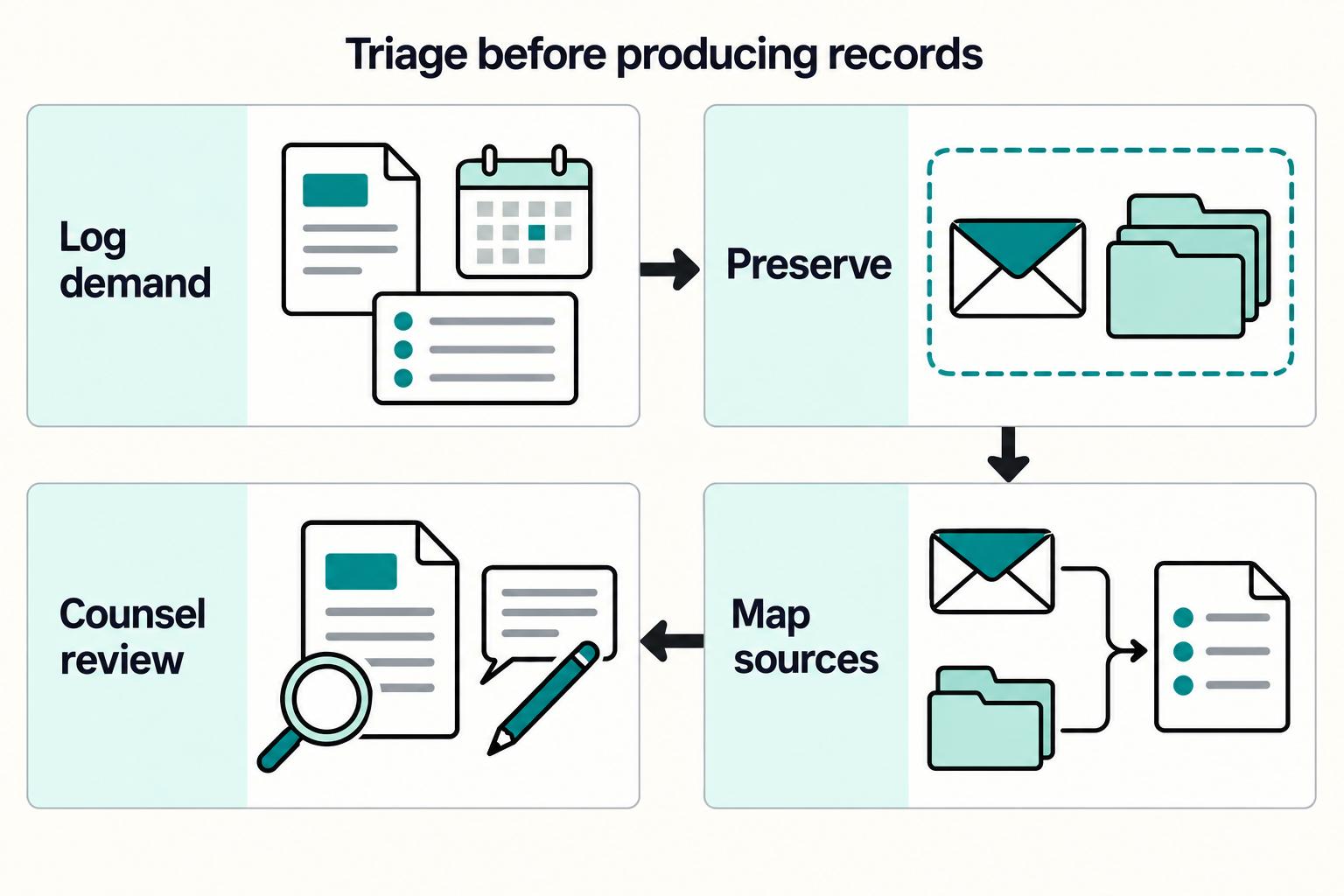
Move fast, but do not produce records on instinct. If you need to **respond to a subpoena for business records**, your immediate job is to control deadlines, preserve records, and make any later production defensible.
A US Expat's Guide to Investing in UCITS ETFs to Avoid PFIC Issues
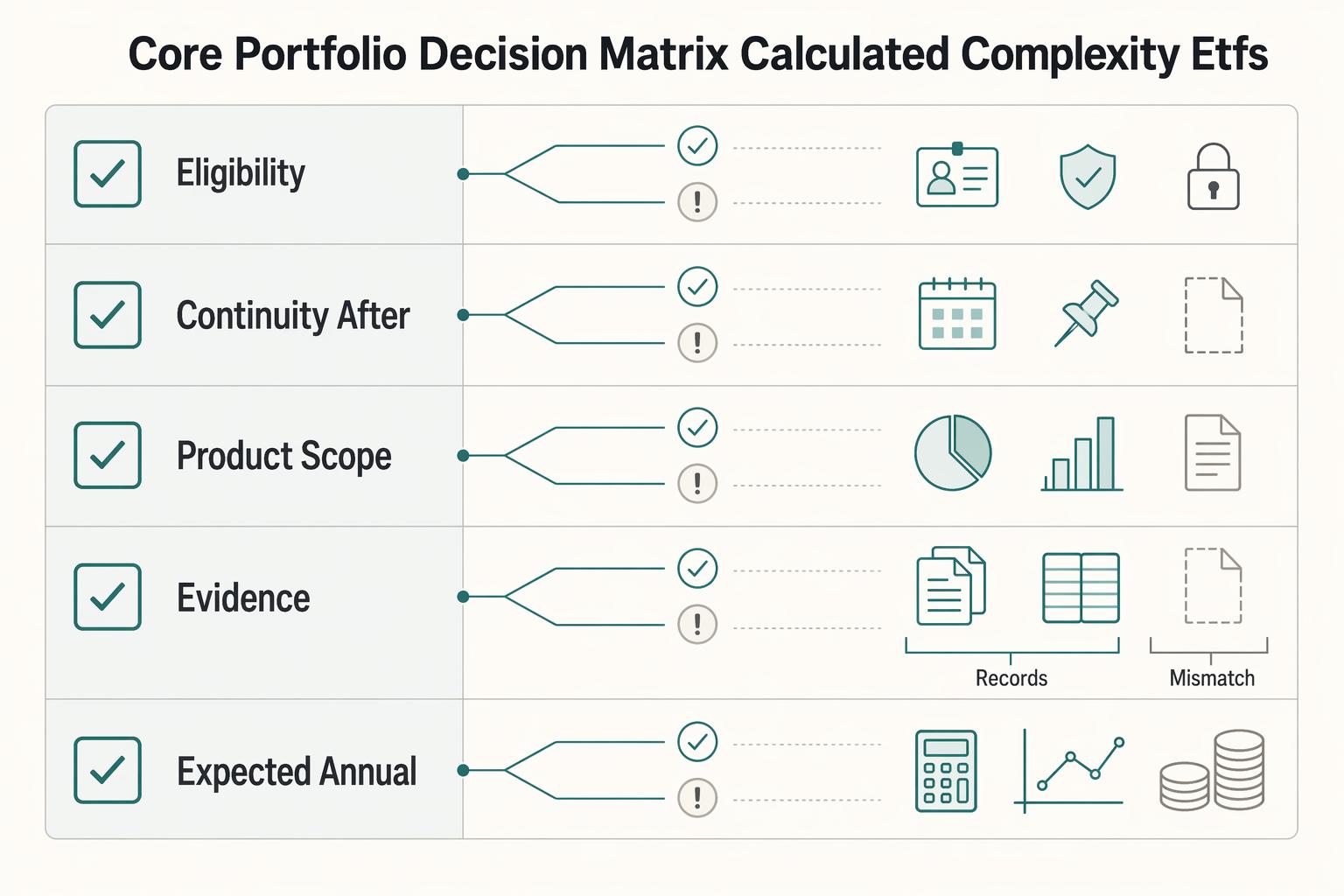
The real problem is a two-system conflict. U.S. tax treatment can punish the wrong fund choice, while local product-access constraints can block the funds you want to buy in the first place. For **us expat ucits etfs**, the practical question is not "Which product is best?" It is "What can I access, report, and keep doing every year without guessing?" Use this four-part filter before any trade: