
Quick Answer
Verify treasury coverage by country, entity, account and bank connection. Trace each consolidated position to source balances, timestamps and reconciliation records. Separate available, pending and restricted funds, and test local cutoffs before relying on the view for payouts.
What Global Treasury Management Looks Like Across 50+ Countries#
A treasury dashboard is useful when your team can trace cash positions across entities and banks, identify stale data, and decide whether funds are available for the next payout run. Across 50 or more countries, account ownership, local cutoffs and restricted balances matter as much as the consolidated number.
Global treasury management means controlling cash, liquidity, and financial assets across countries. For platform teams, that gets hard fast as you expand internationally. Fragmented balances, missing bank data, and entity-level blind spots do not just make reporting messy. They weaken day-to-day funding decisions, risk management, and your ability to keep funds available when the business is moving quickly.
Define the operating bar before the feature list#
Use this guide to separate table-stakes Treasury Management System (TMS) capability from actual operating readiness across multiple countries. They are not the same thing. A platform can look strong on paper and still fall short when you need entity-by-entity visibility, reliable balance timing, or reconciliation support across multiple banking partners.
The first rule is simple. Do not treat category language as proof that a product is ready for your environment. "Cash visibility," "cash flow analytics," and "global cash management" are useful labels, but you still need to know what data arrives, how fresh it is, and whether finance can rely on it for reporting and internal controls.
Treat market coverage as a claim to verify#
J.P. Morgan Access is marketed for 50+ countries, 120+ currencies and 10 languages. That describes the product’s reach; verify the particular bank accounts, entities and services available under your own arrangement.
Use an operational checkpoint, not a promotional one. Before you trust any "global" claim, ask for direct verification against your entity structure and banking partners. At minimum, you want evidence that the balances you care about can be surfaced consistently, tied back to source data, and used in the decision windows that matter to treasury and payouts.
Split ownership before evaluation starts#
This decision crosses three functions, and confusion here leads to bad buying decisions. Finance should own policy, financial reporting, and the definition of usable cash visibility. Ops should own exception handling, because stale balances and broken feeds usually show up first in payout queues and manual follow-up. Engineering should own integration reliability, because a platform is only as good as the bank, ERP, and ledger connections feeding it.
Agree on those responsibilities before demos so reporting requirements, exception handling and integration reliability are tested together.
What credible global cash visibility actually includes#
Credible global cash visibility means one operating view your team can trust across banks, entities, and ERPs. A cleaner balance screen alone is not enough.
Define the required balance freshness for each funding decision. Some sources can supply intraday updates; others provide statements on a schedule. Show source timestamps, balance type and currency so a consolidated view does not disguise stale data as real-time availability.
Require control-plane features that hold up in finance review: account reconciliation, drill-down by entity and currency, and audit-ready reporting. If you cannot move from a consolidated total to the underlying account, entity, currency, and source record, month-end variance work turns manual quickly.
Keep risk context in the same working view, including foreign exchange risk, interest rate risk, and credit risk, so cash and exposure decisions stay aligned. Then apply one hard rule: if the platform cannot connect both your ERP systems and external banking partners, do not treat it as centralized visibility.
What to prepare before vendor selection starts#
Do this work before demos. Without it, you can end up selecting for a polished balance screen instead of a setup that actually supports usable cash visibility across your entities, accounts, and banking relationships.
| Prep item | Scope | Key details |
|---|---|---|
| Build the source-of-truth inventory | List every place cash data is created, updated, or corrected | ERP systems; bank portals; payout rails; internal ledgers; trading platforms; owner; legal entity; bank or account link; currency; access method; update cadence; system-of-record or reference-only |
| Define the minimum country evidence pack | Require the same core pack for each country where you hold or move funds | account ownership; statement access method; cutoff times; reconciliation owner; exception path when a balance, statement, or feed is missing |
| Set acceptance criteria before demos | Decide tolerances and required outputs before vendor testing | real-time cash balances latency; how quickly reconciliation issues must be cleared; financial reporting and compliance outputs by entity and currency; late statements; stale feeds; entity-level variances |
| Assign owners by lane | Split responsibilities before evaluation | Finance: controls, policy and reporting; operations: exception queues and cutoffs; engineering: bank/ERP connector reliability; compliance: applicable payment-program and local restrictions |
-
Build the source-of-truth inventory. List every place cash data is created, updated, or corrected:
ERP systems, bank portals, payout rails, internal ledgers, and anytrading platformsthat affect cash movements or exposure. For each source, document the owner, legal entity, bank or account link, currency, access method, update cadence, and whether it is system-of-record data or reference-only. Your test is simple: you should be able to trace one consolidated cash number back to each contributing source. -
Define the minimum country evidence pack. For each country where you hold or move funds, require the same core pack before vendor claims count: account ownership, statement access method, cutoff times, reconciliation owner, and the exception path when a balance, statement, or feed is missing. Keep this tied to legal entity and banking relationship, not just a country label. This matters because scattered entity accounts make a consolidated real-time cash position harder to see, and many major-bank liquidity solutions rely on full connectivity across accounts.
-
Set acceptance criteria before demos. Decide in advance your tolerance for
real-time cash balanceslatency, how quickly reconciliation issues must be cleared, and whichfinancial reporting and complianceoutputs are required by entity and currency. Then test vendors against your scenarios, such as late statements, stale feeds, and entity-level variances that must be explained from source records. If they can show dashboards but not exception handling and evidence trails, manual cleanup risk stays with your team. -
Assign owners. Finance owns policy and reporting requirements, operations owns exceptions and cutoff handling, and engineering owns connector reliability. Include compliance when bank access or payment-program restrictions affect the design.
If you want a deeper dive, read Working Capital Management for Payment Platforms: How to Optimize Cash Between Collection and Disbursement.
Choose architecture with explicit tradeoffs#
Choose the architecture based on your main constraint, not vendor branding. Favor broader native TMS coverage when treasury complexity is high and integration capacity is low; favor a modular stack when product velocity and programmable control are the priority. Once your source inventory and country evidence pack are complete, this should be an operational decision, not an abstract one.
Match the architecture to your actual bottleneck#
A broad Treasury Management System (TMS) suite is usually the better fit when your hardest problem is treasury breadth across entities, currencies, and reporting, and you want less custom stitching across bank, ERP, FX, and payout data. A modular stack is usually the better fit when your hardest problem is change velocity, and you need dedicated visibility, FX, and payout components that can evolve with product requirements.
Use one test: which option leaves you with fewer hand-built joins between bank balances, ERP systems, and payout events in your highest-priority countries? If a suite handles most of that natively, it is often the lower-risk path. If you need tighter control over payout logic, FX routing, and product-side events than one suite can provide, modular can be the stronger choice, but only if engineering owns the seams.
Two failure patterns repeat:
- Teams choose modular because component demos look strong, then lose entity-level visibility and reconciliation coherence.
- Teams choose a large TMS for breadth, then fall back to portal exports and manual uploads in weaker markets because coverage was never proven by country and bank.
Score both paths against the four criteria that matter#
Do not accept vague "global platform" claims. Score both options against the same four checks, and require evidence for each.
| Criterion | What to test | TMS suite tends to fit better when | Modular stack tends to fit better when |
|---|---|---|---|
| cash and liquidity management depth | Entity and currency views, liquidity planning, controls across accounts | You need one native surface for multi-entity treasury activity | You need focused visibility and will keep some treasury functions separate |
| account reconciliation automation | Matching logic, exception handling, evidence trails | Finance needs fewer moving parts between cash view and reconciliation | You accept more assembly for specialized tools |
integration load with ERP systems | Connector count, mapping effort, failure ownership | Internal integration capacity is limited | Engineering can own connector reliability and data normalization |
| cross-entity reporting quality | Drill-down by legal entity, currency, and source record | Consolidated reporting is a primary buying driver | Reporting can be composed from multiple systems without losing auditability |
Then run a trace test: ask the vendor to walk one consolidated cash position down to the contributing bank balance, ERP posting, and payout or collection event for a named legal entity. If they cannot show source references and stale-feed exception handling, assume manual cleanup risk.
Downgrade any "global coverage" claim that is not documented country by country#
Require country-level connectivity evidence: statement format and availability, balance update cadence, local cutoffs and legal-entity mapping. A broad coverage map does not show whether your particular accounts can support the funding decisions you need.
Require the same country-and-bank evidence pack regardless of architecture: connectivity method, statement and balance access method, expected latency, local cutoff times, legal-entity mapping, reconciliation owner, and fallback when a feed fails. If a vendor provides a coverage map but cannot attach those details to your operating countries, mark the claim unverified.
Evaluate proposed future infrastructure separately from the bank connections available now. Use a pilot to prove the current operating path before making coverage commitments.
Map your cash data model and integration sequence#
If you want cash visibility people will trust, map your data model and integration order before you optimize dashboards. Fragmented processes and disconnected teams reduce visibility, so your sequence should prioritize shared, connected finance data.
A practical implementation pattern is:
- Bank data
- ERP systems
- Payout and collection events
- Analytics and reporting layers
Define consistent account, legal-entity, currency, balance-type and timestamp fields. Separate available funds, booked balances, pending movements and restricted funds. A bank balance and the ERP’s record of that same cash are two views to reconcile, not two amounts to add to a group total.
As you connect each layer, add control points for freshness and integrity. Make stale feeds, missing statements, and breaks between centralized bank account management and account reconciliation visible instead of masking them in a single "clean" balance view.
Preserve auditability by default. For each balance movement, retain the source reference from the originating record (bank, ERP, payout, or collection) so finance and ops can trace what changed, when it changed, and why. That is what turns connected systems into real transparency and more resilient liquidity decisions.
Roll out in phases with hard verification checkpoints#
Do not expand country coverage until each rollout phase proves cash visibility under real operating conditions.
| Stage | Focus | Verification |
|---|---|---|
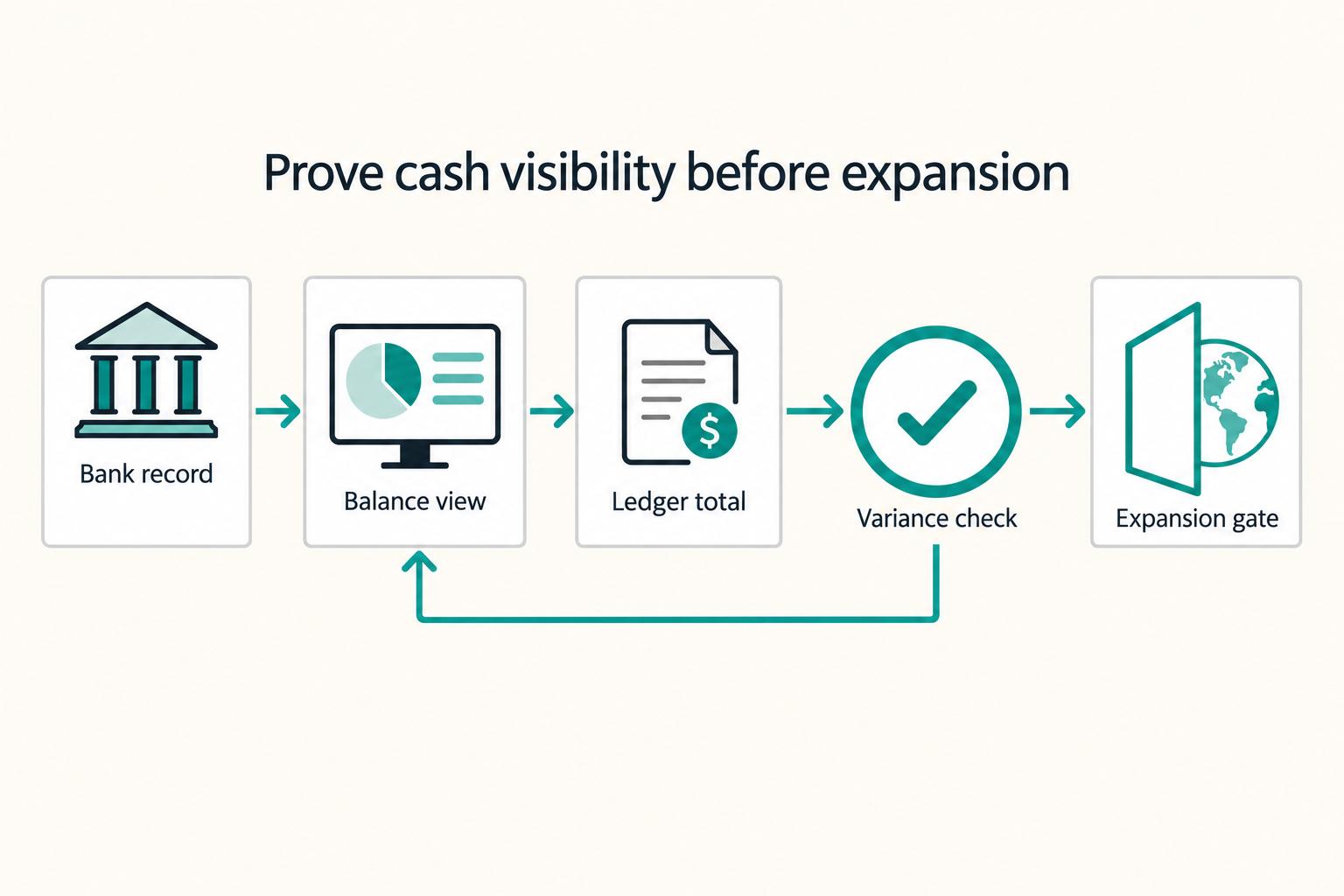
| Phase 1 | prove the base cash view in one cluster | Confirm balances can be traced from your dashboard to bank records and then to internal ledger totals, with account, entity, currency, and timestamp intact; use manual trace checks first |
| Phase 2 | add countries only after reconciliation stays stable | Require an evidence pack for banking partners and ERP systems before go-live: statement access; cutoff behavior; entity mapping; reconciliation owner; exception path |
| Phase 3 | enable advanced controls after visibility quality is proven | Turn on cash flow forecasting and hedging strategies only after the core balance layer is consistently trustworthy; test newer rails or cross-border structures in controlled environments first and route it through legal and compliance review |
| If variance spikes | pause expansion and isolate the failing connector set | Stop adding countries; split failures by source family (banking partners vs ERP systems); rerun your phase-1 trace checks; resume rollout only after the broken connectors are repaired and exceptions are stable again |
Phase 1: prove the base cash view in one cluster. Start with one region or entity cluster and confirm balances can be traced from your dashboard to bank records and then to internal ledger totals, with account, entity, currency, and timestamp intact. Use manual trace checks first so you can explain any delta as timing, pending movement, or posting lag before scaling.
Phase 2: add countries only after reconciliation stays stable. Expand only when your pre-defined reconciliation checks and exception handling are consistently under control. Treat new connectors as approval-gated: require an evidence pack for banking partners and ERP systems (statement access, cutoff behavior, entity mapping, reconciliation owner, and exception path) before go-live.
Phase 3: enable advanced controls. Once balances are reliable, test forecasting and hedging workflows against the same source records. Check the permissions, limits and local restrictions for the specific activity before enabling it.
If variance spikes, pause expansion and isolate the failing connector set. Stop adding countries, split failures by source family (banking partners vs ERP systems), and rerun your phase-1 trace checks. Resume rollout only after the broken connectors are repaired and exceptions are stable again.
Set ownership and operating cadence across teams#
Once rollout moves beyond a pilot, ownership becomes a control. Name one accountable owner for cross-functional cash visibility decisions, then split responsibilities by failure type. Without that, stale balances and unresolved country breaks usually sit between teams.
Assign decision rights by failure type#
A practical split is: finance owns policy, controls, and risk management; operations owns the daily exception queue; engineering owns integration reliability, replay safety, and source recovery. This is an operating recommendation, not a regulatory requirement, but it aligns with how failures show up in practice.
| Team | Owns | Example |
|---|---|---|
| Finance | policy, controls, and risk management | If FX exposure is unresolved because balances are late, finance decides risk treatment |
| Operations | the daily exception queue | If a statement file is missing or duplicated, ops owns and tracks the exception |
| Engineering | integration reliability, replay safety, and source recovery | If a connector needs reprocessing, engineering owns replay decisions and confirms reruns will not duplicate movements or overwrite source timestamps |
Document who decides, not just who attends. If FX exposure is unresolved because balances are late, finance decides risk treatment. If a statement file is missing or duplicated, ops owns and tracks the exception. If a connector needs reprocessing, engineering owns replay decisions and confirms reruns will not duplicate movements or overwrite source timestamps.
Pressure-test the model with one live issue: accountable owner, source record, next action, and business deadline. If any of those are unclear, the RACI is still theoretical.
Run a fixed treasury review with consistent inputs#
Keep the review small, but keep the inputs consistent so you can compare issues over time:
- balance freshness score by bank or source family
- reconciliation break volume and aging
- unresolved country exceptions
- forecast confidence where visibility gaps affect cash flow forecasting
Keep the pack evidence-based. For each unresolved country, include banking partner, statement access method, cutoff time, affected entities, owner, and current workaround. This helps separate connector issues, posting-timing issues, and policy issues that look like integration issues.
Escalate on business impact, not noise volume#
Escalate according to payout delay, funding shortfall and unresolved FX exposure. Identify the affected accounts and entities so a single connector defect can be contained without automatically freezing unrelated operations.
When a break crosses your agreed threshold, the owner should be able to state the next move in plain terms: which payouts are at risk, which entities may need funding, which currencies are exposed, and whether the fix is operational, financial, or technical.
Common implementation mistakes and how to recover#
Selection and rollout usually fail in three places: feature-led buying, assumed global readiness, and visibility without control evidence.
Test reconciliation, not just features#
Do not buy on feature lists alone. Prove entity-level reconciliation with real artifacts first. Run a proof that traces one live account from source statement to reported balance to reconciliation result, including source timestamps, exception queue records, and variance at entity and currency level. If the vendor cannot show source references, timestamps, and reason codes for breaks, you are still evaluating a demo. This is the fastest way to avoid replacing the spreadsheet trap with a cleaner interface while manual consolidation work stays the same.
Demand country evidence from banking partners#
Treat "global" as a claim to verify, country by country. Require named banking partners, access method, cutoff time, statement availability, covered entities, integration owner, and local constraints for each market. This is critical in restricted markets, where documentation and regulatory hurdles, FX controls, and withholding taxes can block cross-border movement and leave cash trapped or restricted. If you only get a coverage map, downgrade the proposal until operational evidence is provided.
Tie visibility to controls on day one#
Cash visibility is only useful if it supports financial reporting, compliance, and risk review from the same records. For every visible balance, require entity, currency, source record, freshness timestamp, reconciliation status, and open risk notes. If finance and treasury cannot use the same trail for reporting review and funding or FX decisions, your visibility layer is disconnected from control.
Related: How to use Mercury's Treasury product to manage a startup's runway.
Conclusion and copy-paste execution checklist#
The practical takeaway is simple: treat cash-balance visibility, cash flow forecasting inputs, and reconciliation as entry criteria, not proof that a platform is ready. For multi-country cash visibility programs, the difference is operating readiness: country-level evidence, traceable source data, freshness checks, and one owner who can force remediation when feeds break.
For each country and entity, identify the bank connection, account permissions and operating constraints, then test the expected data delivery and reconciliation path. Record gaps before rollout rather than inferring readiness from product coverage.
-
Confirm the TMS boundary. Write down what your Treasury Management System (TMS) must handle on day one: cash-balance visibility, cash flow forecasting inputs, source references, and reconciliation status by entity and currency. The test is whether your team can state exactly which records stay in the TMS, which stay in ERP systems, and which must come directly from banking partners. If that line is fuzzy, manual work can creep back in quickly.
-
Build a country and entity evidence pack. For every market, collect the bank account owner, statement access method, cutoff time, source system, reconciliation owner, and escalation path for missing or stale balances. Ask for proof tied to named banking partners and named ERP systems, not a coverage map. Red flag: if a country has no documented statement method or no owner for exceptions, it is not rollout-ready.
-
Run a phased proof first. Start with one region or entity cluster and trace a small live account set from bank statement to reported balance to ledger outcome over several cycles. Your checkpoint is straightforward: every balance should show a freshness timestamp, source reference, entity tag, currency tag, and reconciliation result. If the report is only right after manual cleanup, pause and fix the connector, mapping, or source issue before expanding.
-
Assign one accountable owner. Finance should own policy and reporting requirements, ops should own daily exceptions, and engineering should own feed reliability and replay. Still, one person must own the overall decision queue. Shared accountability can leave country breaks unresolved for too long.
-
Expand only after controls are stable. Add countries in waves only when variance is inside tolerance, the exception backlog is manageable, and finance can review reporting without asking for screenshots from bank portals. If freshness slips or reconciliation breaks spike after a wave, stop expansion and recover first.
-
Use advanced treasury use cases last. Once visibility is stable, then use that data for forecasting, liquidity planning, and broader treasury decisions. If you want the next layer after visibility, see Treasury Management for Platform Finance Teams: Cash Pooling Forecasting and Investment. Delaying advanced analysis is usually cheaper than building it on stale balances.
Frequently Asked Questions
Does global cash visibility automatically mean coverage is ready in 50+ countries?
No. "Global" is still a claim to verify country by country, bank by bank, and entity by entity. Ask for named banking partners, access method, statement availability, cutoff times, and any local restrictions. If you only get a coverage map, treat that as a starting point, not operating proof.
What are the minimum features a Treasury Management System (TMS) must have for platform-grade visibility?
Set the freshness requirement around your funding decisions. Useful visibility shows source timestamps, account and entity ownership, currency, balance type, restrictions and reconciliation status. Real-time feeds help where available; a scheduled statement can also be usable when its timing and limitations are explicit.
Which team should own cash visibility decisions across finance, ops, and engineering?
There is no one required ownership model. In practice, teams often assign a single accountable owner in finance or treasury and define clear responsibilities with ops and engineering so issues do not sit between teams. The key is clear accountability when data is missing or delayed.
What should we verify in a vendor demo before signing?
Ask the vendor to trace one live account from source statement to reported balance and reconciliation outcome. You want to see data freshness, entity and currency context, and how exceptions are handled when values do not match. A demo that only shows dashboards can still leave teams doing manual consolidation later.
How do we test whether real-time cash balances are truly reliable?
Do not test with screenshots. Pull bank statements and ERP ledger extracts for a small live scope, then compare reported balances and timestamps on the same accounts over several cycles. If the group report is only correct after manual cleanup, balances may look current on screen but be stale in practice.
What are the most common failure modes in multi-country treasury visibility programs?
Common failure modes include fragmented bank portals, spreadsheets, disconnected ERPs, and a Treasury Management System (TMS) that is present but underused. This aligns with reported practice: complete multi-bank visibility remains one of treasury's toughest challenges, and manual consolidation can leave reports outdated by the time they are ready. If reports are consistently stale, fix data flow and consolidation gaps before expanding scope.
Try a related tool
Researched and edited by the Gruv editorial team. Gruv builds cross-border billing, payouts, and finance-operations software for global businesses.
Sources
Includes 3 external sources outside the trusted-domain allowlist.
Educational content only. Not legal, tax, or financial advice.
Related Posts
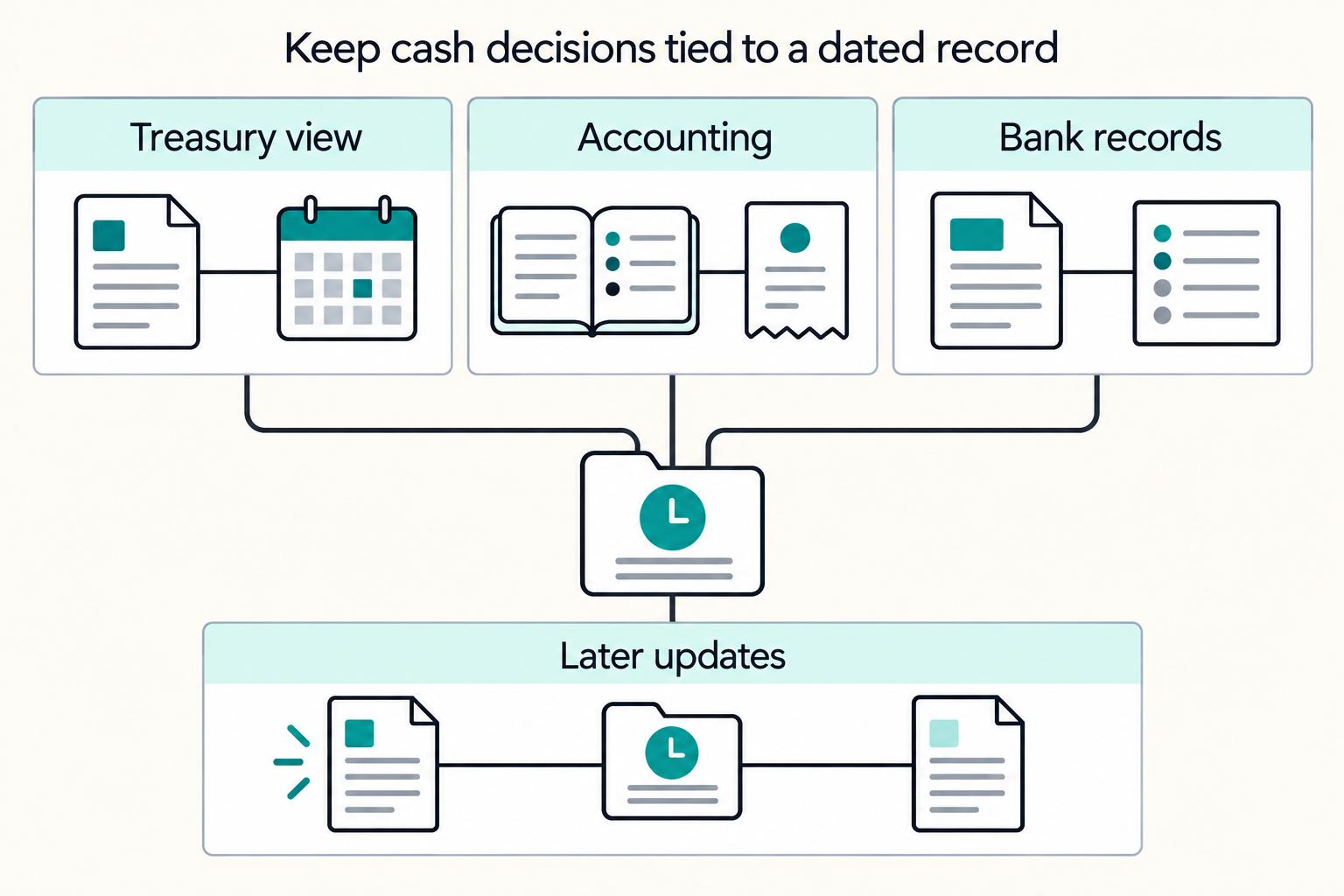
Treasury Management for Platform Finance Teams: Cash Pooling Forecasting and Investment
A Treasury Management System should act as an operating control layer, not just a reporting screen. If your setup does not hold up during reconciliation and payment execution, the feature list is secondary.
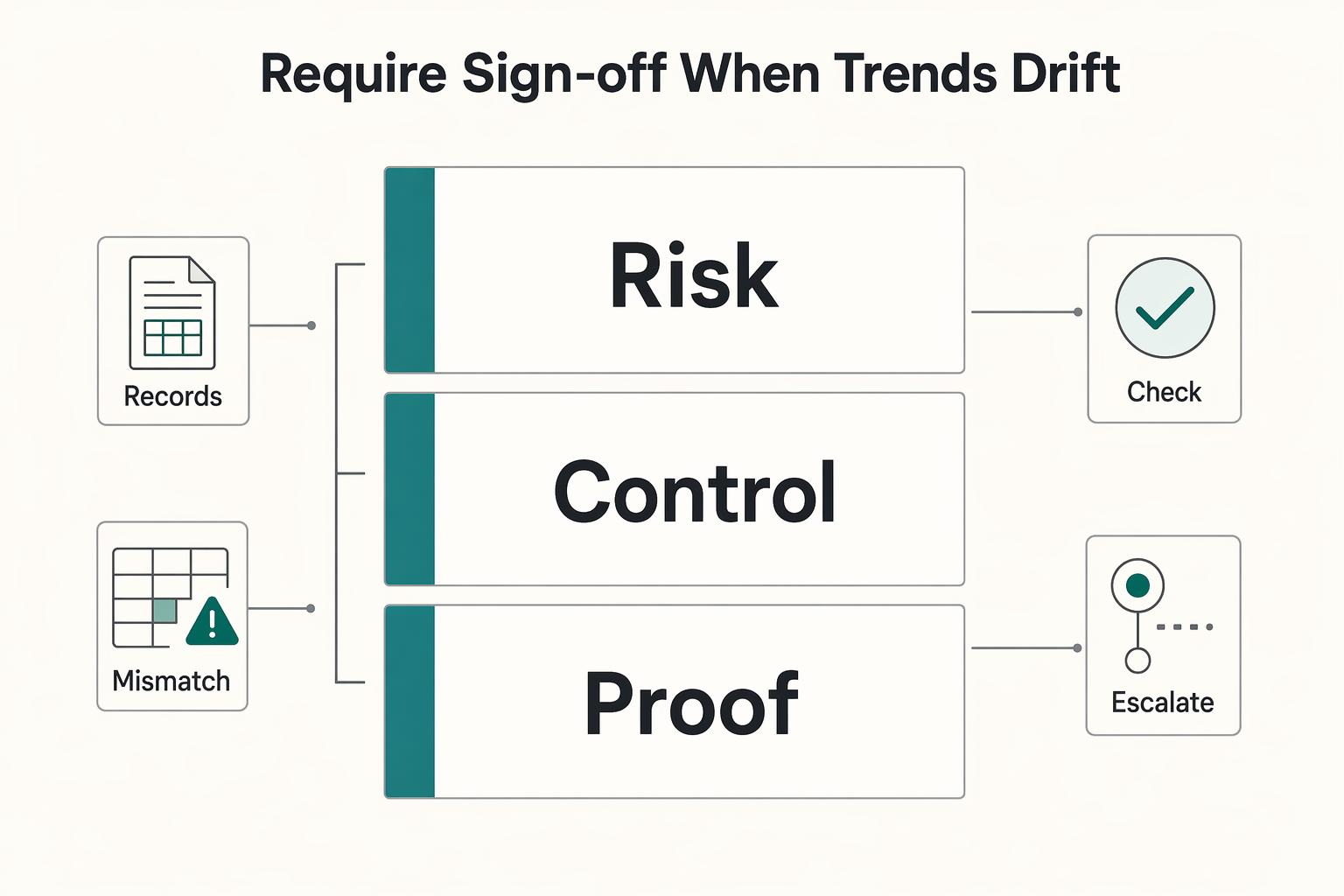
Working Capital Management for Payment Platforms: How to Optimize Cash Between Collection and Disbursement
Working capital in a payment platform is often an execution problem: cash may be collected before it is actually available for disbursement. You improve your cash position by tightening the path from collection to payout release and by keeping a clear evidence trail for key state changes.
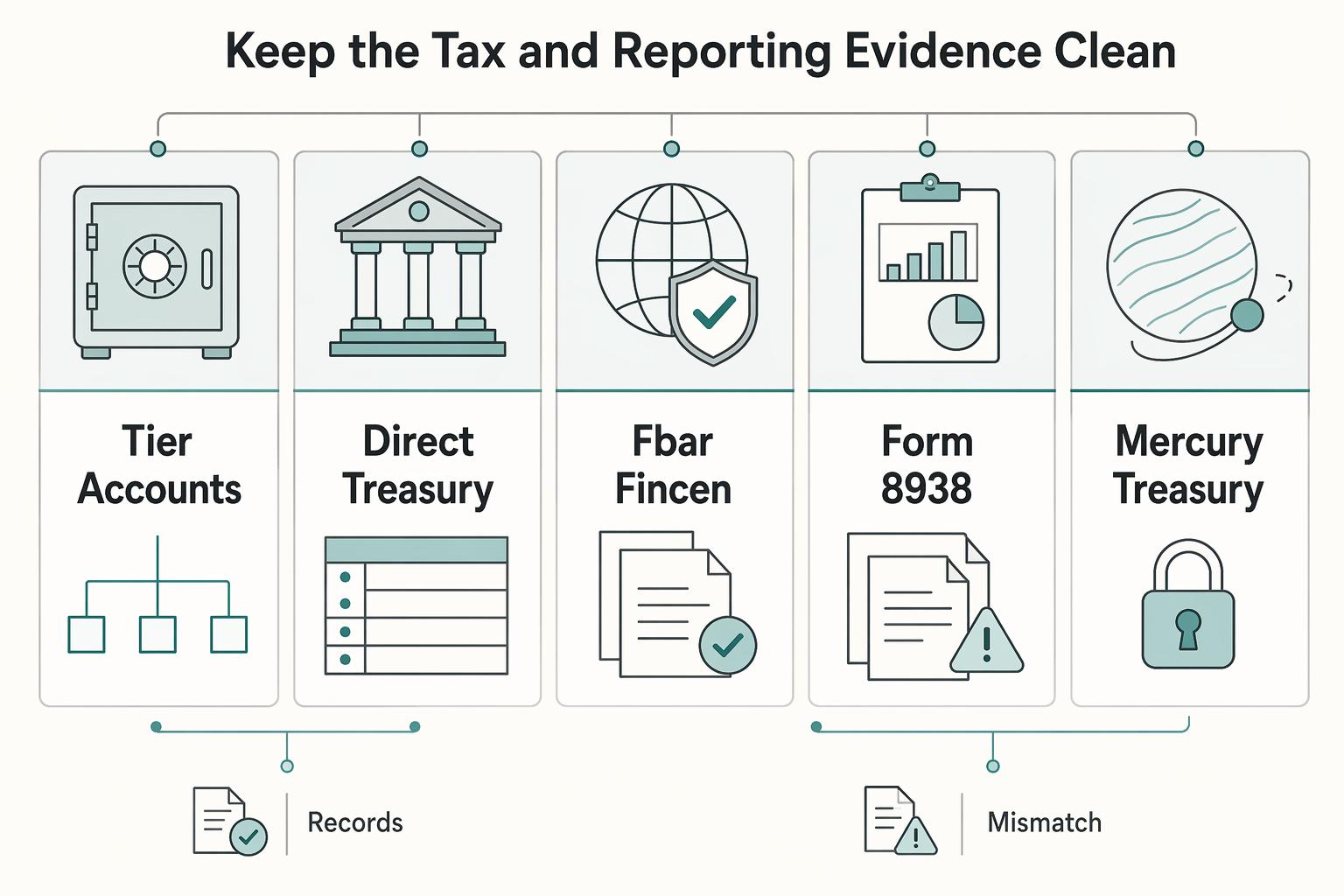
How to Use Mercury Treasury for Startup Runway Without Cash Gaps
Mercury Treasury can make sense if you run a qualifying U.S. company, keep substantial cash on the platform, and want one place to move operating funds into liquid mutual funds. If you are a solo operator, consultant, creator, or very small team, a tiered treasury approach is often more practical because it separates immediate cash needs from short-horizon reserves and long-term investing.