
Quick Answer
Optimize cash on a payment platform by shortening the verified path from customer collection to payout release, not by paying out against pending funds. Map each cash state from invoice to settlement, release only from available settled balances, hold exceptions for review, and baseline CCC, DSO, DPO, and exception aging before changing tools or payout speed.
Where Cash Gets Trapped Between Collection and Disbursement#
Working capital in a payment platform is often an execution problem: cash may be collected before it is actually available for disbursement. You improve your cash position by tightening the path from collection to payout release and by keeping a clear evidence trail for key state changes.
Accounts Receivable, or AR, are short-term amounts customers still owe. Accounts Payable, or AP, are short-term liabilities you need to pay. In platform flows, that timing gap matters because collected funds can sit in a pending balance until settlement, and pending funds are not yet spendable or withdrawable.
Use Cash Conversion Cycle, or CCC, as a practical decision aid, not a standalone score. The formula is CCC = DIO + DSO - DPO, with DSO capturing collection time after a sale and DPO capturing how long the company takes to pay suppliers. The operating goal is simple: shorten avoidable collection-to-disbursement lag so financing pressure is lower and cash is available for other decisions.
If your team tracks free cash flow, keep the label precise. Free cash flow is commonly treated as a non-GAAP measure, so the focus should stay on underlying cash movement and reconciled records, not the label alone.
Before you change payout speed, verify three checkpoints:
- when funds move from pending to available for payout or spend
- who owns reconciliation for each payout flow, especially where payout timing is manually controlled
- what record proves each bank payout matches the transaction batch it settles
That same thread runs through the rest of this guide. Get the sequence right, tie release rules to cash certainty, assign ownership, and keep reconciliation controls strong enough to hold up as volume grows.
Set the operating target before changing tools#
Set one primary operating target for the next planning cycle before you change tooling. If you try to improve CCC, payout exceptions, and free cash flow all at once, you may not know whether a change actually helped or just moved the problem.
Define the primary objective#
Write the primary objective in one sentence and attach a decision rule. The objective might be to shorten CCC through collection timing, reduce payout exceptions before changing payout speed, or improve cash visibility for free cash flow reporting.
Keep the core metrics explicit: CCC = DIO + DSO - DPO. DSO tracks how long credit sales take to become cash. DPO tracks how long you take to pay AP.
If exception aging is already high, reduce payout exceptions first. Speeding release while state data is still unreliable can make reconciliation harder.
Lock the pre-change baseline#
Lock a pre-change KPI baseline before any policy or tooling change. At minimum, snapshot DSO, DPO, and unresolved exception aging.
Store the metric definitions with that snapshot: when aging starts, which transaction states count as unresolved, and which timestamp is authoritative. The real test is reproducibility. Another team member should be able to recreate the same baseline from the same source records.
Separate markets and programs#
Set boundaries by market and program, then map existing tools in flow. Keep cohorts separate when settlement behavior differs.
Where payout timing is configuration dependent, use value date as the availability control point. If one market runs with a default two-day payout delay and another does not, do not combine them in one baseline.
Document where integrated payables and online receivables tools are already used, and assign an owner for each. If the objective is free cash flow, keep reporting anchored to underlying cash movement and reconciled records, not a loose headline number. For a step-by-step walkthrough, see Working Capital Management for Freelancers Who Invoice Clients.
Prepare prerequisites and source of truth artifacts#
Before you change collection or payout rules, make sure you have one usable source of truth. If ownership is unclear, pause here. When teams work from different versions of receivable, payout, or ledger data, cash reporting can be distorted.
Assign data ownership#
Assign explicit ownership for the three records that drive downstream decisions: AR Management System records, payout status logs, and ledger journal exports. You do not need a rigid org chart, but you do need named accountability for who produces each dataset, who approves definition changes, and who resolves breaks.
Use a simple verification check on one disputed transaction:
- which team owns the authoritative state
- which field is decision-useful
- who can explain why it changed
If those answers are slow or inconsistent, ownership is still too loose.
Standardize intake artifacts#
Standardize intake artifacts before they feed weekly KPIs. Receivables aging from the Receivables Portfolio, AP schedules, and journal exports should use one timestamp convention, with the authoritative clock documented.
Choose one reporting time basis and keep it consistent:
- invoice issued time
- status update time
- settlement receipt time
- journal post time
If one source ages from event time and another from posting time, DSO and exception aging can appear better or worse even when underlying cash movement has not materially changed. Keep a short data dictionary with field names, timezone, cutoff logic, and refresh owner so another operator can reproduce the same weekly file from source records.
Validate the collection inputs first#
Validate the collection inputs you plan to optimize first:
- E-invoicing: record current coverage and whether payloads are interoperable or custom by market. In the EU, EN 16931-1 is the core interoperability model, and gaps increase complexity and operating cost.
- Direct Presentment: keep definitions rail-specific. Presentment is a demand for payment, and electronic check presentment terms can depend on bank agreement.
- Electronic Payments: baseline method mix by class, such as ACH, checks, wires, and alternative payments, so you have a measurable before state.
Before moving on, keep a compact evidence pack: current aging extract, current AP schedule, weekly KPI file, timestamp rules, and the ownership matrix. If any item cannot be regenerated on demand, you are not ready for tool changes.
Map the cash path from collection to disbursement#
Put the full cash path on one page, and only treat a step as decision-ready if it is timestamped, owned, and evidenced. If a step cannot be proven, do not use it to accelerate payout release or to claim Cash Conversion Cycle (CCC) improvement.
Capture the real state changes#
Map real state changes, not team handoffs: invoice issued, payment authorized, funds settled, ledger posted, reconciliation closed, payout released. For each step, capture the authoritative timestamp, owner, and proof record.
Tie each step to the metric it can move. Collection timing feeds DSO. Payables timing feeds DPO. Use CCC = DIO + DSO - DPO and mark only the timestamps that actually change DSO or DPO.
Keep stage boundaries strict. Authorization is not settlement. Ledger posting is not reconciliation close. Reconciliation close deserves its own state because it is the point where transaction records and accounting records are matched, and unresolved matches distort cash timing.
Validate the map by tracing one completed payout backward to its payout reference, reconciled transaction set, journal ID, settlement confirmation, and originating invoice.
Record gates and evidence#
To make the map operational, record the gate type and required evidence at each stage. Use consistent gate labels:
- policy gate passed
- provider or bank reference received
- journal posted
- exception state cleared in Key Performance Indicators (KPIs)
Write the evidence beside each gate. If you use a presentment state, define it narrowly. Presentment is a demand for payment. A late presentment can be treated as next-business-day presentment, which can shift the collection timeline.
Decide payout mode in the map itself. Automatic payouts can preserve transaction-to-payout association. Manual payouts give you timing control but can remove provider-side inclusion mapping, so you need your own grouping evidence for traceability.
Branch hard failures explicitly#
Hard failure states need an explicit branch and a named owner. If failure handling lives only in tribal knowledge, it will break under volume.
| Failure state | Required action |
|---|---|
| Delayed Electronic Payments | Locate the delay stage, whether pre-settlement, settlement-to-ledger, or post-reconciliation, and hold payout release until the missing proof exists |
| Missing presentment evidence | Verify the demand was submitted, check cutoff timing, and confirm external acknowledgment |
| Unmatched credits | Route to reconciliation review; if multiple expected payments match one incoming transaction, treat it as manual exception handling |
| Stale reconciliation record | Escalate before payout cutoff; in some bank-transfer flows, unreconciled funds held more than 75 days may trigger automatic return attempts |
Focus on ambiguity, not only delay. Matching ambiguity is where reconciliation risk compounds.
Add scenario rows by rail mix#
Once the path is mapped, add one scenario row per rail mix so the team can separate structural lag from fixable lag.
| Rail mix | Key timestamps to map | Evidence that should exist | Common lag point | Where tools reduce lag |
|---|---|---|---|---|
| Card | authorization, settlement, payout batch creation, payout release | processor reference, settlement record, payout ID, journal ID | treating authorization as cash certainty; scheduled payout delay (for example, T+3 in common setups) | transaction-to-payout mapping and reconciliation controls reduce investigation lag after settled-funds confirmation |
| Bank transfer | invoice or request sent, presentment or payment request, bank credit received, reconciliation close, payout release | bank reference, statement credit, match result, journal posted | ACH cadence and cutoffs | reconciliation automation reduces manual matching lag after credit receipt |
| Virtual account bank transfer | invoice issued, virtual account assigned, incoming credit, auto-match, payout release | virtual account number, bank credit, auto-reconciliation result, payout record | unreconciled balances in suspense | virtual account setups reduce lag by enabling automated matching |
If you run FedACH same-day scenarios, place actual windows on the map, for example 10:30 a.m. ET submission to 1:00 p.m. ET settlement. If the cutoff is missed, the same-day assumption may fail.
The output should be a versioned operating artifact that shows where cash is reliable enough to release, where it is still provisional, and which tool class removes waiting time. Related: Expired Card Management at Scale: How Platforms Automatically Refresh Payment Credentials.
Set payout release rules tied to cash certainty#
Set payout rules by cash state, not by release pressure: release from available funds that are settled in your records, hold pending funds, and route flagged items to manual review.
Define release tiers#
Define three release tiers based on balance state and required proof.
| Tier | Release rule | Verify before payout |
|---|---|---|
| Release | Funds are settled and in available balance | Settlement confirmation, closed reconciliation, posted journal, reserve still covered |
| Hold | Funds are pending | Funds have not moved to available balance, or final settlement proof is missing |
| Manual review | Exception or policy condition is active | Risk, reconciliation, or policy flag is open and needs human decision |
This helps protect Cash Conversion Cycle (CCC) and Free Cash Flow quality, not just payout speed. Pending funds are not spendable until they become available, while available balance is the spendable payout basis. If you run reserves for refunds, chargebacks, and operating costs, check reserve coverage before each release.
Test settlement confidence before speeding up#
If settlement confidence is weak, fix collection certainty before you shorten payout windows. Validate one segment end to end: invoice amount, provider or bank reference, settlement record, journal ID, and reconciliation-close status should agree across completed payouts.
If items look collectible in aging but lack settlement proof, treat that as an Accounts Receivable (AR) certainty problem, not a payout-speed opportunity. One risk is treating authorization or intent as cash certainty and absorbing exceptions later.
Track hard no-release triggers#
Set explicit no-release triggers and track them in KPIs. Block payout release when any of the following is true:
- reconciliation is unresolved
- a policy hold or review flag is active
- provider records are inconsistent, for example when one record is settled while another is still pending or under review
Treat these as hard blockers. Keep a complete case record for manual review: transaction ID, settlement record, journal ID, exception note, and owner. Track blocked amount, exception aging, and oldest blocked payout so you can escalate by queue risk.
Pilot faster disbursement carefully#
Test faster disbursement only where cash evidence stays clean over time. Low failure rates alone are not enough. You also want stable reconciliation quality, manageable manual-review volume, and no reserve pressure drift.
Roll out on a narrow segment, then monitor DSO and DPO movement and exception aging. For ACH debit collection segments, include return-rate monitoring: Nacha sets a 0.5% unauthorized return-rate threshold, with 3.0% administrative and 15.0% overall evaluation levels. Segments drifting toward those levels are poor candidates for tighter payout windows.
Choose what to automate first in the first 90 days#
In the first 90 days, prioritize state quality before dashboards. A practical sequence is to start with machine-readable intake, make retries safe, then automate reconciliation queues, and only then automate payout orchestration.
| Order | Automation area | Key control |
|---|---|---|
| 1 | Collection intake | Start with machine-readable intake and confirm traceability from intake event to settlement record, journal posting, and reconciliation close |
| 2 | Idempotent retries | Use an idempotency key on create and update calls and persist it with the business record |
| 3 | Reconciliation queues | Route structured payment-message references into reconciliation queues and measure weekly exception-rate KPIs, oldest open-item age, and the share needing human identification |
| 4 | Payout orchestration | Automate only after intake and reconciliation controls, using release, hold, and manual-review states you already trust |
Automate collection intake first#
Automate collection intake first, especially e-invoicing and any invoice-status events your platform already captures. Structured invoice data supports automatic processing and can reduce manual interpretation upstream.
For e-invoicing, make sure each invoice record includes the downstream identifiers and references your controls need (for example: invoice ID, customer ID, amount, due date, currency, and the payment reference expected at settlement). If you also use status feeds, standardize event names and map them into one internal state model, but do not treat status alone as cash proof. The first checkpoint is traceability from intake event to settlement record, journal posting, and reconciliation close.
A practical test is to sample one closed day and confirm each invoice can be tied from issue to provider or bank reference to journal ID without spreadsheet patching. If not, fix intake data first.
Make retries idempotent#
Add idempotent retry logic to replayable collection and disbursement actions. Retries that are not idempotent can create duplicate side effects, including duplicate postings or payouts.
Use an idempotency key on create and update calls, and persist it with the business record, not only in request logs. For collection flows, store it with the receivable event. For payout flows, store it with the payout instruction and resulting journal entry. Verify by replaying known requests in non-production and confirming the same business outcome, not a second action.
Treat partial success as a control point. If a provider accepted a request but your app timed out, a naive retry can trigger duplication. Keep an evidence pack with the idempotency key, request timestamp, provider reference, internal transaction ID, and journal ID.
Automate reconciliation queues next#
Automate reconciliation queues next in your receivables workflows. Once intake states and retry behavior are reliable, queue automation can reduce manual handling and make true exceptions easier to isolate.
Structured payment-message data supports lower manual intervention and smoother reconciliation. For ACH flows, the FedPayments Reporter Service for FedACH can automatically search ACH files and surface information that helps match payments to documentation such as invoices. Route those references directly into reconciliation queues when relevant.
Measure queue quality, not just queue volume: weekly exception-rate KPIs, oldest open-item age, and the share of items needing human identification of invoice or payment reference. A high unknown-payment share can point to upstream state issues.
Automate payout orchestration last#
If payout orchestration is in scope, automate it after intake and reconciliation controls, then run a weekly cut list for the manual AR and AP steps that remain. This keeps payout automation anchored to release, hold, and manual-review states you already trust.
Rank remaining manual steps by effort and cash impact, then retire the highest-value items first. Common candidates include manual reassignment of unmatched receipts, hand-built payout batch edits, duplicate-check reviews triggered by retries, and journal correction steps between AR and AP.
Keep state transitions ahead of analytics. If release, settlement, or reconciliation-close states are wrong, KPIs and Cash Conversion Cycle (CCC) trends can look precise while still obscuring risk and cash reality. Related reading: How Payment Platforms Really Price FX Markup and Exchange Rate Spread.
Build reconciliation controls and evidence packs#
Your reconciliation control is only as strong as what you can prove quickly. Close each disbursement cycle with a standard evidence pack and a documented close decision.
Standardize the evidence pack#
Create one evidence pack format and use it for every cycle. It should answer, without reopening raw logs, what was intended, what settled, what posted, and what exceptions remain. At minimum, include:
- payout batch ID and payout date
- source transaction IDs or transfer IDs for included items
- payout reconciliation or settlement output that ties the payout to its transaction batch
- your internal ledger references for related entries, where applicable in your system
- exception log with status, reason or error code, owner, and disposition
- an independent net check: credits minus debits equals the payout total
Do not assume provider exports will include your internal ledger references. Make that join inside your process and store the joined output in your reconciliation records.
Set close criteria in policy#
Define close criteria in policy before release, then enforce them consistently. Two reviewers should reach the same close result from the same evidence.
Use close checks such as:
- No open high-risk exceptions.
- Batch totals match across provider records, settlement confirmation, and ledger outputs.
- Any accepted variance is documented with owner approval and disposition notes.
If you operate under safeguarding rules, include retrieval readiness in the control. For example, CASS 10A requires firms in scope to maintain a retrievable resolution pack, with retrieval expected within 48 hours after an insolvency officer is appointed.
Classify exceptions early#
Classify exceptions early so owners, evidence, and aging are explicit before month-end.
| Exception class | First verification | Recovery owner | Aging approach |
|---|---|---|---|
| Delayed settlement | Confirm batch contents, bank arrival status, and provider reference; if still missing after 10 business days, escalate with the bank using the Trace ID. | Treasury or Payments Ops | Keep visible in cash forecasting until resolved. |
| Returned transfer | Confirm return or reversal reason, original instruction, and eligibility to reverse or correct under the payment rail rules. | Payments Ops with Finance review | Use a short internal aging limit because unresolved returns affect payout assumptions. |
| Duplicate event | Check idempotency key, provider reference, and duplicate posting risk; run a DUP-style investigation path, benchmarked within 20 business days of the most recent entry date. | Reconciliation or Risk Ops | Prioritize due to potential cash and reporting impact. |
| Unmatched deposit | Validate amount, effective date, remittance details, and transaction-status logs. | AR or Reconciliation Ops | Apply a policy-set aging limit aligned to your internal cash targets. |
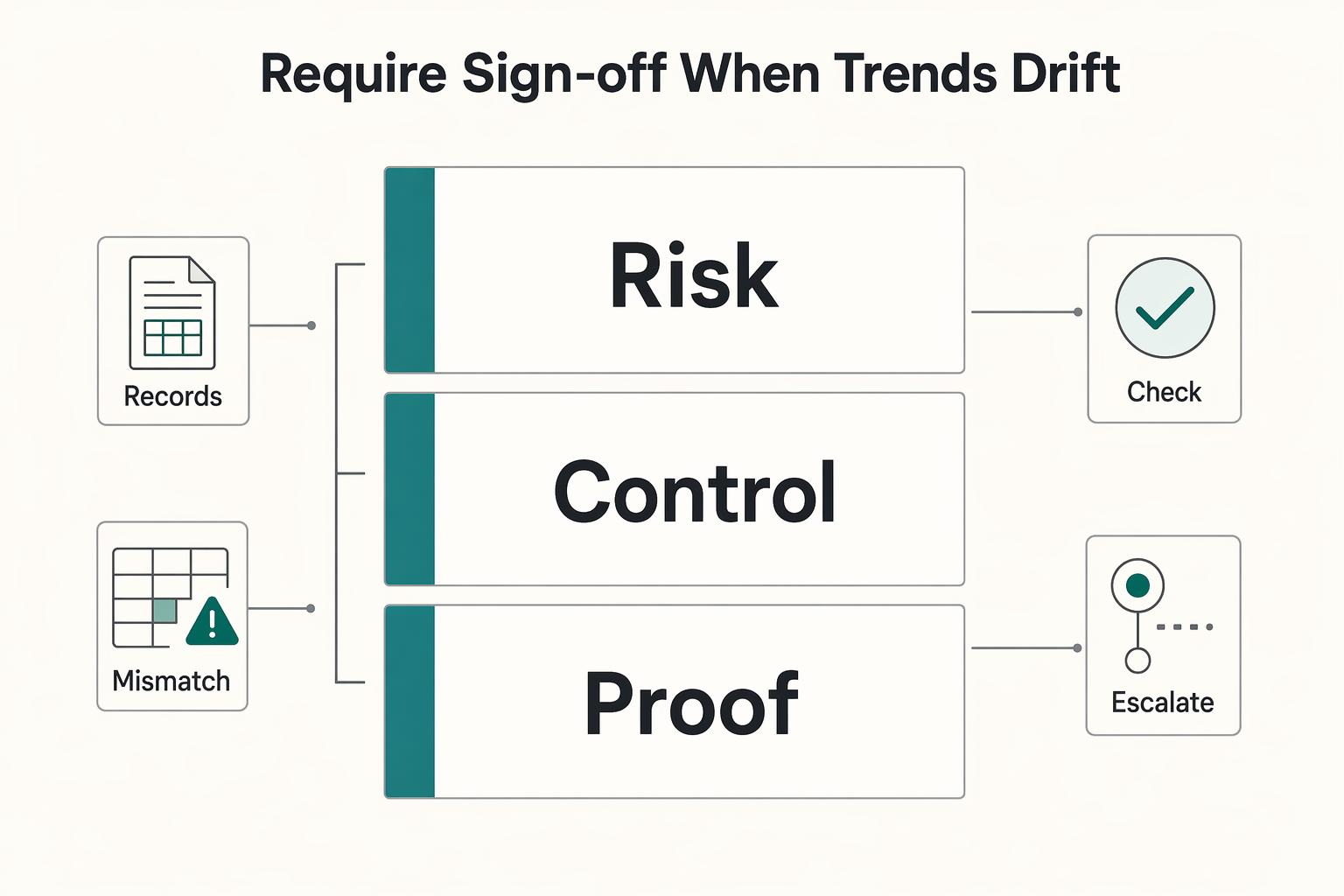
Require sign-off when trends drift#
Require sign-off before payout release when exception aging worsens or reconciliation trends deviate from policy targets. This is a review trigger, not a blanket release block for every open exception.
At sign-off, confirm:
- release items still map to settled and reconciled funds
- any variance is already approved and documented
- open exceptions are explicitly accepted as low risk or moved to hold
That turns the evidence pack into a real operating control: defensible release decisions now, and audit-ready records later.
This pairs well with our guide on How to Build a Float Management Strategy for Marketplace Platforms.
Compare rail and instrument choices for cash timing#
Pick rails and instruments by cash certainty first, then convenience. If payout release depends on near-immediate certainty, use rails with explicit finality. If manual intake and matching are the bottleneck, fix the invoice-to-payment path first.
Define Direct Presentment in your own operation#
Define what your team means by Direct Presentment before comparing it to anything else. The term is not precise on its own. Document the clock-start event in your operation, for example invoice presented, payment request delivered, debit submitted, or another event. Then document the proof you store at each stage: presentment timestamp, provider reference, settlement confirmation, and ledger post ID.
This prevents false comparisons. If Product means presented while Finance means settled, your CCC analysis is already misaligned before rail selection starts.
Compare rails by timing behavior#
Compare collection choices by actual timing behavior, not broad labels. Electronic payments is too broad a label, so split by the rail you actually run.
| Option | Timing certainty for cash release | Ops overhead to expect | Verification point |
|---|---|---|---|
| Internal Direct Presentment flow | Depends on your presentment definition and the downstream rail that settles payment | Medium: you must tie presentment events to settlement and return states | Confirm each presentment event links to a provider reference and a later settled or failed state |
| Electronic payments by rail | ACH is scheduled and batch-based with 23¼ hours/day processing and four settlements/day; FedNow supports transfers within seconds at any time; Fedwire is immediate, final, and irrevocable once processed | Exception handling differs by rail | Store rail name, settlement timestamp, and bank or provider reference on every item |
| E-invoicing-led bank transfer | Can improve upstream process predictability, but cash timing still depends on the transfer rail used | Can lower intake and matching effort when invoice data is structured | Verify the invoice ID carries into remittance data and matches in the ledger |
Separate initiation from final cash, especially on ACH. ACH has same-day windows such as 10:30 a.m. ET to 1:00 p.m. ET and 4:45 p.m. ET to 6:00 p.m. ET, but it remains a batch rail rather than continuous final settlement.
Returns can use same-day windows for both Same Day and standard ACH items, yet behavior varies. Nacha reported 59% of RDFIs said they used same-day return processing, and 45% of those used it for fewer than half of returns.
Reserve document-heavy tools for document-heavy flows#
Use document-heavy trade instruments when the commercial flow is document-heavy. A Letter of Credit (LC) is an undertaking to honor a documentary presentation, and a Bill of Lading is a document of title used in maritime trade workflows.
For standard platform payouts without shipping-title dependency, consider LC and bill-of-lading paths as exception routes that may require explicit approval. In those cases, include the presentation checklist, discrepancy status, and release condition in the evidence pack so document acceptance is not mistaken for settled cash.
Use SUA where control and traceability matter#
Evaluate Single Use Account (SUA) programs when card-heavy supplier flows need tighter control and cleaner traceability. A single-use virtual card number can be set for a specific supplier and amount, activated for a set time, and used as a unique payment identifier. Spend limits and restrictions can also be applied per card number.
Use this where reconciliation control matters more than the lowest nominal processing cost. Verify that one virtual number maps to one supplier, one payment amount, and one internal payable or invoice ID.
Document the final choice against four criteria: settlement predictability, reconciliation workload, return or dispute behavior, and expected directional impact on CCC and Free Cash Flow. If timing certainty is the constraint, separate ACH from FedNow and Fedwire in policy. If matching effort is the constraint, prioritize structured e-invoicing or SUA-style identifiers first.
Tune receivables and payables terms without harming growth#
Do not squeeze both sides of the cash cycle at once. Fix receivables friction you control first, and treat payables extensions as a limited test, not a default policy.
Fix AR friction first#
Start with self-inflicted AR friction before changing supplier terms. Check that invoices are clear, complete, and sent through your lowest-friction path, then enforce follow-up discipline in the AR Management System.
Use a weekly sample checkpoint: issue timestamp, delivery status, payment instructions, invoice ID, due date, and first follow-up date should all exist and align. If those fields are missing or inconsistent, the first problem is execution, not terms.
Push E-invoicing where manual handling is still heavy. The US federal context describes invoice processing as largely manual and highlights potential savings from electronic conversion. In Europe, Article 7 of the cited directive required public administrations to receive and process electronic invoices.
Test AP timing changes narrowly#
Change AP timing only after testing the commercial side effects. DPO tells you how long you take to pay suppliers, but a higher DPO is not automatically better if exceptions, disputes, or supplier friction increase.
Run a narrow test in one supplier segment and watch failed payouts, escalations, credit holds, and manual outreach in the following weeks. Treat rising exception rates per payable batch as the real red flag, not just louder inbox traffic.
Use extra care beyond 60 days. In the cited UK consultation context, terms beyond 60 days are framed as requiring agreement by both parties and not being grossly unfair.
Diagnose rising DSO at the source#
If DSO rises while payout speed is unchanged, do not assume a single cause. Check collection-side execution and payout timing side by side, and tighten disbursement holds only if your evidence shows payout timing is the driver.
Review these in the same weekly cut: Receivables Portfolio aging, payout release timing, and unresolved reconciliation exceptions. If aging worsens while release timing stays stable, prioritize upstream checks on invoice quality, follow-up cadence, and matching.
Late payment risk is material. The European Commission states late payments have a major impact on SMEs and notes that one in four bankruptcies are due to invoices not being paid on time.
Track quality, not timing optics#
Track term changes against quality, not timing optics. A faster reported cycle is not a true gain if exceptions are simply being shifted or hidden.
Keep weekly KPIs for:
- Receivables Portfolio quality, including aging buckets, disputed balance, and unmatched cash
- AR follow-up discipline, including invoices with no first chase by due date
- AP exception rate, supplier complaints, and manual payment interventions
- net CCC movement through DSO and DPO
Verify consistency across the AR system, settlement references, and ledger postings. If DPO improves while disputes or unpaid-supplier exceptions rise, roll back the term change and fix the operating cause first.
Use financing levers only when operating fixes are in place#
Treat financing as a targeted liquidity tool. If AR/AP exceptions are still distorting cash timing, prioritize resolving those so you can tell whether you are financing a real gap or a reconciliation issue.
Verify the baseline before financing#
Confirm your baseline Cash Conversion Cycle (CCC) signal is stable enough to evaluate. In the same weekly KPI cut from the prior section, verify that ledger postings, settlement references, and payout status align without heavy manual reconstruction. Also verify that unresolved AR/AP exceptions are not driving the timing signal.
If that check fails, consider pausing financing activation until disputed, unmatched, or late-posted items are clearer.
Match the instrument to the gap#
Pick the instrument that matches the gap you actually have:
| Instrument | Use case | Key note |
|---|---|---|
| Supply Chain Finance (SCF) | Manage cash conversion cycle and net working capital | Includes bridging the gap between paying suppliers and getting paid by customers |
| Payables finance | Buyer-led SCF for earlier supplier payment | Suppliers can receive discounted payment before invoice due date |
| Export Credit Agency (ECA) support | Export credit support | Product types can include loans, guarantees, or insurance; in the US EXIM states it fills gaps when private lenders are unavailable or unwilling |
| Letters of Credit (LC) discounting | Trade flows using documentary controls | An LC is a bank commitment to pay if documentary conditions are met, and UCP 600 negotiation allows a nominated bank to purchase complying drafts or documents |
Set activation rules before go-live#
Set the activation rule before go-live. In your KPI log, record the trigger, instrument, covered exposure, expected cash-flow timing effect, and the owner who will verify post-close results.
Keep disclosure impact in view. IFRS supplier-finance amendments are effective for annual periods beginning on or after 1 January 2024, and FASB issued supplier-finance transparency guidance on September 29, 2022. If you cannot state the expected cash-flow effect clearly before launch, delay activation.
Prevent common failure modes and recover fast#
Recovery discipline should be built in, not improvised. Define clear paths for delayed settlement, returned payouts, and duplicate retries before volume exposes weak points.
Define recovery paths in advance#
Define a recovery path for each high-impact failure class inside your Online Receivables Management Tools, and assign owner, response SLA, release decision, and closure evidence.
Your evidence pack should let Finance reconstruct the event without guesswork. At minimum, keep:
- source transaction ID
- provider event ID
- idempotency key, when a request is retried
- settlement confirmation or failure code
- payout or transfer ID
- ledger journal ID
- final exception disposition mapped to AR/AP
If your provider maintains transaction-to-payout linkage, preserve it because it improves payout-cycle reconciliation.
Pause release when duplicate risk appears#
When duplicate risk appears, consider pausing downstream release and reconciling upstream state before you resume Integrated Payables Solutions batch execution.
Use retry controls deliberately. Stripe supports API idempotency for safe retries. Adyen documents retrying with the same idempotency key after timeouts. Stripe also notes webhook endpoints can receive duplicate events and recommends logging processed event IDs for deduplication. Before restart, confirm the original request outcome, whether the upstream object already exists, and whether your ledger posted the state transition once.
Also treat failed payouts as state changes, not background noise. Stripe Connect states that a failed payout disables the involved external account until it is updated.
Track incident thresholds weekly#
Track incident thresholds weekly in KPIs, with platform-specific internal limits for backlog age, payout reversals, and unresolved mismatch volume by AR and AP segment.
For ACH, use the external Nacha markers where applicable: unauthorized debit return rate threshold 0.5%, administrative return rate level 3.0%, and overall debit return rate level 15.0%. If consumer EFTs are in scope, include Regulation E timing in incident handling where relevant, including 10-business-day / 45-calendar-day limits.
Restore speed only after corrective action#
Do not restore normal release velocity after a material incident until corrective actions are defined and assigned.
Your post-incident record should include root cause and follow-up actions to prevent recurrence. Require, at minimum, rule-logic updates, instrumentation-gap closure, and re-testing of the affected Direct Presentment or Electronic Payments flow against the same failure scenario. Validate retry-window assumptions too: Stripe documents redelivery for up to three days, while Adyen documents retries for up to 30 days, so dedupe windows and log retention must cover the provider window.
Conclusion#
The durable win is operational discipline: tighten collection signals, release funds against verified cash state where policy requires it, and require reconciliation evidence before each payout cycle.
-
Baseline before you change behavior. Lock current CCC, DSO, DPO, and exception-aging KPIs with one timestamp convention. For CCC, use CCC = DIO + DSO - DPO. If exception visibility is weak, start with an AR aging report by invoice date and number to help separate collection delay, settlement lag, and unresolved mismatch.
-
Map the cash path end to end. Document each step from invoice to payout with owner, timestamp, and gate. A practical minimum is: invoice issued, payment authorized, funds settled, ledger posted, reconciliation closed, payout released. Treating pending and available funds as the same state is a common payout-risk failure.
-
For settlement-gated programs, gate payout release on settlement certainty. Separate release, hold, and manual-review states explicitly. Settlement timing determines when cash is usable, so verify provider settlement state and internal ledger posting before payout cutoff. If reconciliation is unresolved or states conflict, route the payout to hold or manual review.
-
Automate cash-truth controls first. Prioritize eInvoicing and retry-safe state transitions before adding KPI presentation layers. Use idempotency for retries, and store the idempotency key with source transaction ID, provider event ID, payout or transfer ID, and ledger journal ID. You should be able to prove that a replay returned the first result instead of creating a duplicate action. Provider key limits and retention vary, so keep internal dedupe records long enough to cover reconciliation lag.
-
Standardize a pre-payout evidence pack. Include source transaction IDs, settlement confirmation, ledger journal IDs, batch totals, and exception disposition linked to AR and AP entries. Payout batch totals should tie to ledger and external statement totals, with approved variances documented before release.
-
Use rails and instruments selectively, not by default. A Single Use Account (SUA) can help when you need supplier-, amount-, and time-bound control. Evaluate SCF or LC when liquidity pressure or trade-risk conditions justify them, after core collection, settlement, and reconciliation controls are stable. If you already run quarterly finance reviews, include these decisions there.
If you keep one rule, use this: improve cash certainty before optimizing speed.
If you are standardizing payout gates and reconciliation across programs, contact Gruv to validate market coverage and rollout constraints.
Frequently Asked Questions
What changes in working capital management when you run a payment platform instead of a traditional business?
The main difference is cash-state timing, not just invoice timing. On a platform, funds can sit in a pending balance before they move to available balance, and pending cash should not be treated as spendable for payout. That makes the link between AR collection, settlement confirmation, reconciliation, and AP release critical.
How can we optimize cash between customer collection and seller disbursement without increasing payout risk?
Use cash-certainty gates first: release against available balance, hold pending balance, and route exceptions to review. Changing the payout schedule changes when payouts are sent, not when pending funds become available. Before payout cutoff, confirm settlement state, transaction-to-payout linkage, and ledger posting.
Which weekly metrics matter most for platform teams: **CCC**, **DSO**, **DPO**, or exception aging?
Use CCC, DSO, and DPO as management signals, but treat exception aging as the weekly control for safe cash movement. A stable cycle metric can still hide delayed settlement, stuck reconciliation, or payout failures. Pair AR aging by invoice date and number with unresolved mismatch age and count by rail or program.
What should we automate first if we can only fund one initiative this quarter?
There is no universal first initiative. Prioritize the biggest measured bottleneck: if payment state is unclear, automate state transitions and reconciliation evidence first. If collection friction is the clear bottleneck, improve capture next, but keep retries and posting logic safe before increasing throughput.
How do payout policy gates change liquidity, risk exposure, and user experience?
Tighter payout gates can improve liquidity control and reduce disbursement risk by blocking payouts against unsettled or conflicting funds. The tradeoff is user experience, because stronger gates can create more holds and slower access to funds. Account data quality also matters, since weaker bank details can increase payout failures even when cash controls are sound.
How do we design retry-safe operations that avoid duplicate disbursements?
Use an idempotency key for each create or release action, and reuse the same key when retrying that request. Store the key with internal transaction and payout references so you can confirm whether the first action already succeeded. Keep your own dedupe and audit logs long enough to cover retry windows and reconciliation lag.
Where Gruv fits
Plan and approve payout batches
See how payee status, approval rules, route review, and exception handling sit in one payout workflow.
See invoice-linked collection
Issue a payment request against an invoice, open hosted checkout, and keep provider status and finance references connected.
Researched and edited by the Gruv editorial team. Gruv builds cross-border billing, payouts, and finance-operations software for global businesses.
Sources
- beta.trade.gov/articletrusted
- beta.trade.gov/articletrusted
- consumerfinance.gov/rules-policy/regulations/1005/3trusted
- consumerfinance.gov/rules-policy/regulations/1005/11trusted
- ecfr.gov/current/title-12/chapter-II/subchapter-A/par...trusted
- epa.gov/sites/production/files/2018-01/documents/lea...trusted
- exim.gov/abouttrusted
- fdic.gov/sites/default/files/2024-03/fil16035.pdftrusted
Educational content only. Not legal, tax, or financial advice.
Related Posts

The Freelance Payment Penalty: A Modeled Audit of Platform Fees, FX Spreads, and Payout Delays
The money rarely disappears through a single, easy-to-spot fee. The real loss is stacked. A marketplace takes its commission, a processor adds a charge for international cards, a bank or payment company converts the currency at a spread, a platform holds the funds before release, and a wire sheds a little to intermediaries on the way in. Each layer looks defensible on its own, but the worker feels the combined result as a smaller deposit and a later payday.

How to Respond to a Subpoena for Business Records
Move fast, but do not produce records on instinct. If you need to **respond to a subpoena for business records**, your immediate job is to control deadlines, preserve records, and make any later production defensible.
A US Expat's Guide to Investing in UCITS ETFs to Avoid PFIC Issues
The real problem is a two-system conflict. U.S. tax treatment can punish the wrong fund choice, while local product-access constraints can block the funds you want to buy in the first place. For **us expat ucits etfs**, the practical question is not "Which product is best?" It is "What can I access, report, and keep doing every year without guessing?" Use this four-part filter before any trade: