
Quick Answer
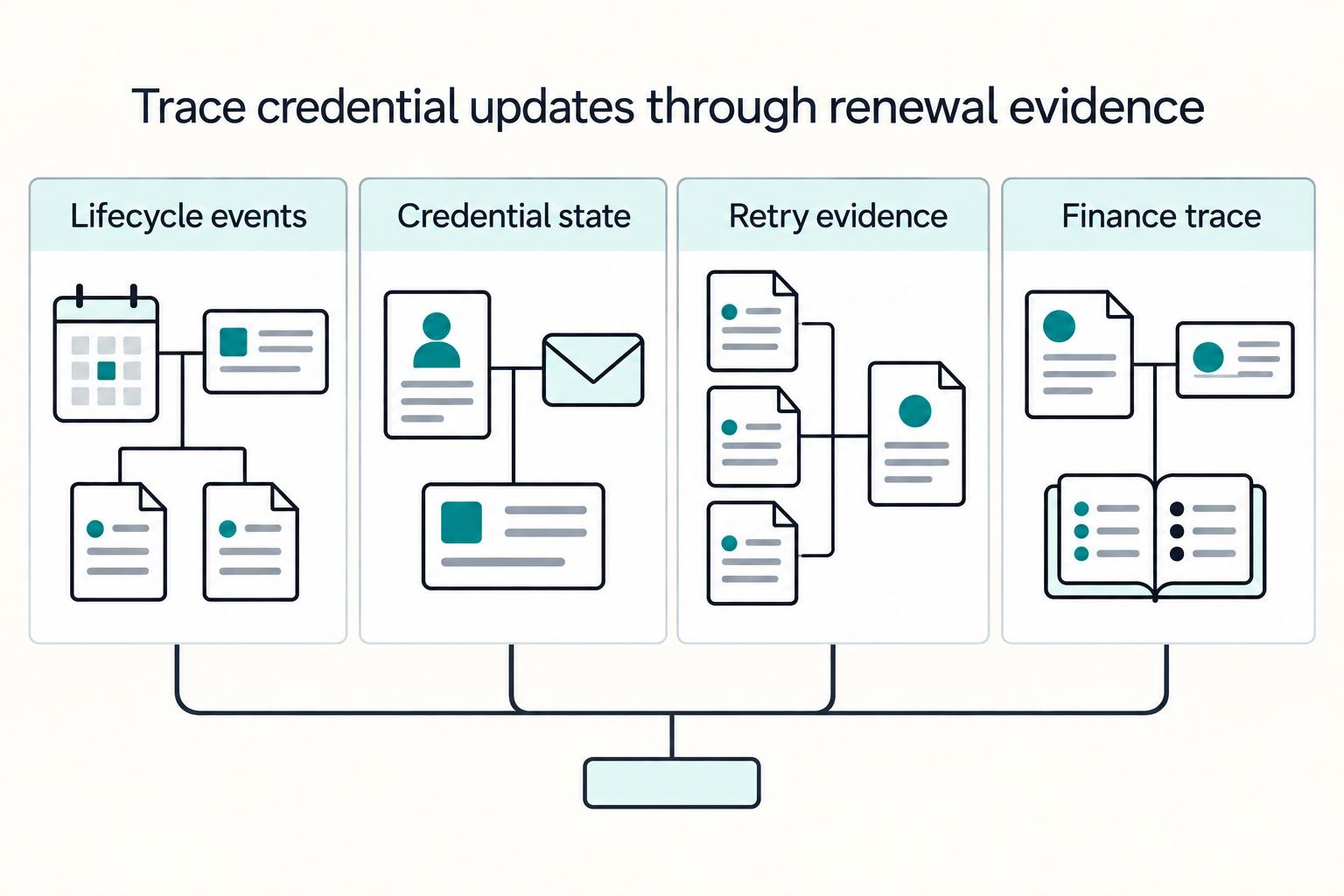
Start with your risk profile: use a processor-native updater for one-processor speed, and move to centralized credential lifecycle control when multiple processors or entities create reporting drift. Confirm coverage for Visa Account Updater and Mastercard ABU, then track three separate states: update received, authorization attempted, and payment recovered. Treat timing as an operational check, not a promise, by verifying whether updater responses and retries align with Visa’s two-business-day forwarding window.
Why expired card management becomes an operations issue at scale#
If you run card-on-file payments across products or merchant entities, this guide is about operating decisions, not billing basics. The real question is not whether you have an updater. It is which credential failures you actually cover, what still falls through, and how you will prove outcomes in logs and reconciliation.
- Who this guide is for
This guide is for platform founders, payments ops, finance, and engineering teams managing credential-on-file transactions at scale across geographies, processors, or product lines. The standard here is audit- and incident-ready control, not just turning on recurring billing.
In practice, you should be able to verify where credentials live, who can refresh them, which network events arrive, and whether finance can tie update events to settled results. If the current answer is only "the vendor handles it," treat that as incomplete until you validate scheme coverage, issuer participation, and market-by-market behavior.
- What actually breaks stored credentials
Expiry is only one lifecycle event. Card loss, fraud, closures, replacements, upgrades, and portfolio conversions can all change account details, so renewal failures are not always simple date rollovers.
Credential change is continuous. Card expiry may default to 36 or 48 months, yet Visa reports that on average 30 percent of VAU accounts in an issuer portfolio incur a change. Plan for ongoing lifecycle drift, not just periodic expiry handling.
BIN migration is another blind spot. Visa expanded BIN handling from six to eight digits. If any part of your stack still assumes six-digit logic in routing, mapping, or reporting, you are carrying avoidable break risk.
- What this guide helps you decide
The goal is to choose the right operating model, implement it in the right order, and verify performance with evidence rather than vendor claims. Updater programs can reduce preventable CNP declines, but outcomes are conditional. Issuer participation is required, and international support varies by country.
Start with a control-led rollout and confirm three basics early: network and scheme coverage, event-to-outcome traceability from update to authorization and settlement, and reporting artifacts finance can reconcile. Also watch timing behavior. Participating Visa issuers are expected to submit updated account information within two business days of change, so your downstream refresh and retry flow should be observable against that window. Strong execution means more than "credential refreshed." It separates and tracks update received, authorization attempted, and payment recovered so you do not mistake activity for recovered revenue. If you need a default reporting rule, we recommend separating updater activity from recovered revenue in your reports.
For a step-by-step walkthrough, see How to Scale a Gig Platform From 100 to 10000 Contractors: The Payments Infrastructure Checklist.
How to choose the right credential refresh model for your platform#
Pick the model that matches your main operating risk, not the one with the longest feature list. For teams running embedded payments across multiple products, geographies, or merchant entities, use the same scorecard each time: scheme coverage, credential control, PCI scope impact, integration effort, and failure-recovery depth. If your speed risk is the main risk, start with native updater services. If your bigger risk is fragmentation across providers, favor centralized credential management.
| Criterion | What to confirm | Grounded note |
|---|---|---|
| Scheme coverage | VAU, ABU, and Cartes Bancaires support | Confirm support for Visa Account Updater (VAU), Mastercard Automatic Billing Updater (ABU), and whether your infrastructure explicitly supports Cartes Bancaires. |
| Credential control | Who refreshes credentials across acquirers or processors | Native updater tools can be the fastest launch path in some single-processor setups; centralized credential management is stronger when you need provider-agnostic control across acquirers or processors. |
| PCI boundaries | Whether PCI DSS or SAQ A boundaries change | PCI DSS applies to entities that store, process, or transmit cardholder data and/or sensitive authentication data. SAQ A applies only when cardholder-data functions are completely outsourced to validated third parties. |
| Integration effort | How much net-new work the model adds | Native updater tools can be the fastest launch path in some single-processor setups because integration effort can be minimal. |
| Recovery proof | Whether refresh activity is separated from recovered payments | Keep update received, authorization attempted, and payment recovered separate. For VAU batch-style timing, Visa references forwarding responses within two business days. |
- Start with operating shape
This framework matters most when you already have coordination complexity: multiple entities, multiple products, a regional scheme mix, or more than one processor. In that environment, breakage is not only expiry. Reissues, closures, and upgrades matter too, and Visa notes that, on average, about 30 percent of VAU portfolio accounts incur a change, so you should treat lifecycle drift as normal.
For single-merchant, lower-complexity setups, a centralized control layer may add overhead before it adds clear value. Updater coverage may still be necessary, and centralized orchestration can be added when provider mix or control needs make it worthwhile.
- Score scheme coverage first
Recovery cannot happen where update events are unavailable, so coverage is your first hard filter. Confirm support for Visa Account Updater (VAU), Mastercard Automatic Billing Updater (ABU), and whether your infrastructure explicitly supports Cartes Bancaires alongside the major global brands.
Also confirm mode and limits by scheme. Some providers support real-time updater flows only for the two big networks, and some portfolio conversions, for example Visa-to-Mastercard, are not supported.
- Decide who controls credentials and PCI boundaries
Native updater tools can be the fastest launch path in some single-processor setups because integration effort can be minimal. Centralized credential management is stronger when you need provider-agnostic control across acquirers or processors.
PCI scope is part of this choice. PCI DSS applies to entities that store, process, or transmit cardholder data and/or sensitive authentication data. SAQ A applies only when cardholder-data functions are completely outsourced to validated third parties.
- Choose by recovery depth, then prove outcomes
Use a simple decision checkpoint. If speed risk dominates, start with native updater services. If ownership fragmentation dominates, centralize earlier. In either model, do not treat "credential refreshed" as "payment recovered."
Keep verification separate for update received, authorization attempted, and payment recovered. For VAU batch-style timing, Visa references forwarding responses within two business days. Your logs and reconciliation should make that path observable.
Best for fast launch and low engineering overhead#
If your main risk is time to launch, start with a processor-native updater. In a one-processor setup, it is often one of the fastest ways to reduce avoidable renewal failures without building a Card Management Platform (CMP).
| Provider | Grounded detail | Article note |
|---|---|---|
| Worldpay | Its updater can request and receive updated information for Mastercard, Visa, and Discover. | Approvals for the two major card brands can take 10-15 business days, and Worldpay recommends sending updater requests at least six days prior to the recurring billing due date. |
| Adyen | Describes Real Time Account Updater as an integration-free option. | Positioned as little to no extra integration work. |
| Braintree | Documents availability for merchants using Braintree Direct. | Also requires meeting US-based criteria; confirm merchant eligibility on your current processor contract. |
Native updater services are built to request refreshed card details when a vaulted card expires or is replaced. That makes them a practical fit for a growing platform with one primary acquirer and a near-term goal to reduce recurring payment breakage. For example, Worldpay says its updater can request and receive updated information for Mastercard, Visa, and Discover. It notes approvals for the two major card brands can take 10-15 business days.
The main advantage is low net-new engineering. Some providers position updater support as little to no extra integration work, and Adyen describes Real Time Account Updater as an integration-free option.
The constraint is coverage and eligibility. Not every card is eligible if the issuer does not participate, and some products have merchant or region limits. Braintree, for example, documents availability for merchants using Braintree Direct and meeting US-based criteria. Before launch, confirm support for the card networks you rely on, confirm your merchant eligibility on your current processor contract, and verify how and when updates are applied in your integration.
Portability is where the tradeoff usually shows up first. Some implementations are explicitly processor-tied, while others market acquirer-agnostic flexibility. Treat portability as vendor- and implementation-specific, not guaranteed. If you use Worldpay, it also recommends sending updater requests at least six days prior to your recurring billing due date. For adjacent operational hygiene, see How to Manage Client Assets Securely in 1Password.
Best for multi-processor scale and control#
When fragmentation becomes the bigger risk than launch speed, move credential handling into one control plane for credential lifecycle management. This fits platforms that run across multiple processors, products, or regions and need one policy for recurring renewal handling. It is especially practical for marketplace and SaaS operating models where different revenue motions still need consistent stored-credential rules.
What makes this the right fit#
The advantage is centralized decisioning. Instead of each processor deciding refresh behavior, one credential layer can ingest lifecycle updates, normalize them, and supply the credential used at charge time.
That matters because the two global networks do not handle lifecycle events the same way. Visa frames lifecycle coverage across stored PANs and network tokens, while ABU provides updated card numbers and expiry dates and supports both subscription updates and Pull inquiries. A shared control layer can help you keep one business policy while handling those differences underneath.
Worldpay's positioning reflects this model directly: acquirer-agnostic credential management with flexibility across multiple payment providers. The operational value is processor choice with less lifecycle rework when routing or regional setup changes.
What you gain when it works#
When it works, decisions get more consistent in one place. That includes how to handle network events, when to retry, when to trigger customer outreach, and how to report outcomes to product and finance ops.
You also get clearer observability. Visa cites research that 45% of shoppers used stored credentials in their most recent purchase, so renewal diagnostics can fragment when updater logs differ by processor. A centralized layer can make outcomes more comparable across flows.
There is also control value when your stack includes both PANs and network tokens. You can design reporting to verify not only that an update was received, but which credential type a renewal actually used.
Where complexity shows up#
The tradeoff is governance as much as engineering. Product, finance ops, and engineering need aligned definitions for refresh success, exception ownership, and source-of-truth handling when processors report different outcomes.
Network differences are the first sharp edge. ABU supports subscription and Pull models. Visa updates come via participating acquirers. Stripe's November 24, 2025 explainer notes that request details vary by network. If you abstract too early, those edge cases get harder to diagnose.
A second failure mode is treating an updater event as the finish line. Updated credentials can help keep details current, but they do not guarantee approval, so you still need event-to-authorization-to-settlement tracing.
Practical checks before you choose this path#
- Coverage check: confirm your control layer tracks PANs and network tokens, not only expiry updates.
- Network mechanics check: document ABU subscription and Pull handling and Visa acquirer-path handling.
- Evidence check: keep an audit trail from credential reference and update event through renewal attempt, retries, and payment outcome.
- Ownership check: assign named owners for exceptions, customer messaging, and reconciliation.
If you cannot produce that evidence trail, centralization is premature.
The "single connection" pitch is common in provider messaging. Gr4vy describes orchestration through a single connection as helping reduce costs and improve conversion. Treat that as directional, not guaranteed. Choose this model when you need one place to standardize credential handling across providers and you are ready to operate the added policy, logging, and reconciliation discipline.
Best for strict PCI boundaries and token-first architecture#
Choose this path when your primary risk is raw card-data exposure, not processor fragmentation. If your app, admin tools, or logs still touch PAN or CVV, fix capture boundaries first, then expand credential refresh coverage.
Use provider-hosted fields or VGS Collect for card capture, and pass only tokenized references into your CMP and billing stack. In Braintree's hosted-fields model, raw payment data goes from client to provider and does not touch your server. That can reduce exposure, but PCI DSS still applies under shared responsibility.
Why this is the right fit#
This is often strongest when you are replacing legacy card forms that post directly to your backend. A token-first design creates a cleaner boundary: collection stays in hosted capture components, while your CMP and billing flows operate on token references.
That boundary also aligns with core PCI constraints. CVV is sensitive authentication data, and Requirement 3.3.1.2 prohibits storing it after authorization. If PAN is stored, Requirement 3.5.1 requires it to be unreadable at rest.
What you gain and what it costs#
You gain tighter containment. Hosted fields and VGS Collect patterns are designed to keep sensitive card data from landing on your servers. A payment method nonce, or similar token reference, lets you process payments without routing raw card data through your systems.
You also take on token lifecycle discipline. Billing, retries, updater handling, and customer update flows must agree on which token is current, replaced, or invalid. If they do not, you can keep a cleaner PCI boundary and still create renewal failures.
Tokenization also does not end compliance work. PCI SSC guidance says tokenization can affect scope analysis, but it does not replace PCI DSS requirements. And recurring flows cannot rely on CVV reuse after authorization.
Operator checks before you commit#
- Capture check: verify PAN and CVV never land in server logs, support tools, analytics events, or error traces.
- Token-state check: define token states across CMP and billing, for example active, replaced, failed, pending update, and enforce a single current token for charge attempts.
- Evidence check: keep an audit trail from capture method to token or nonce creation, customer and billing mapping, and charge outcome.
For migrations from legacy forms, sequence matters. Move capture behind hosted fields or VGS Collect first, route only token references into CMP and billing, then broaden updater coverage.
Best for regional card portfolios with scheme complexity#
Choose this path when your portfolio includes local schemes alongside the two major global brands. For EU-heavy platforms, Cartes Bancaires can change routing, compliance, and updater coverage assumptions even if you keep one credential policy layer.
| Provider | Cartes Bancaires detail | Article note |
|---|---|---|
| Stripe | Documents global networks and local networks like Cartes Bancaires in France, and notes that some local brands need additional configuration. | States that for co-badged Cartes Bancaires cards in EUR the cardholder brand choice applies; if the cardholder does not choose, the merchant can choose the network. |
| Adyen | Documents updater connectivity for the two global brands plus Cartes Bancaires. | States that if you support both brands, the cardholder must be able to choose. |
| Global Payments | Its updater page mentions VAU and ABU. | The updater page does not mention Cartes Bancaires there. |
Once capture boundaries are clean, scheme behavior by market can become the next blocker. Stripe documents both global networks and local networks like Cartes Bancaires in France, and notes that some local brands need additional configuration. So your renewal policy can be centralized, but your scheme handling cannot be fully generic.
Why this is the right fit#
The differentiator here is co-badging and local-network rules, not just brand count. In applicable EEA cases, Regulation (EU) 2015/751 requires honoring cardholder brand choice for co-badged cards. Stripe's documented online condition includes co-badged Cartes Bancaires cards in EUR, and Adyen states that if you support both brands, the cardholder must be able to choose.
Operationally, a refreshed credential may only help if the next charge follows the selected network and a supported processor path. Stripe also states that if the cardholder does not choose, the merchant can choose the network. That rule should be explicit in payment decision logic, not left to local team convention.
What you gain and what it costs#
You gain a better fit for mixed regional portfolios. Adyen documents updater connectivity for the two global brands plus Cartes Bancaires. Global Payments' updater page mentions VAU and ABU, but does not mention Cartes Bancaires there. That is not a universal gap, but it is a clear reason to validate coverage processor by processor.
You also take on more complexity in routing, fallback, and reporting. Updater behavior can be synchronous real-time or asynchronous batch, and timing differences can distort retry analysis if you do not break results out by processor, scheme, and market.
Concrete use case#
An EU-heavy platform has meaningful Cartes Bancaires and Mastercard volume but wants one shared credential policy layer. You can keep one stored-credential state model while branching execution for French co-badged cards in EUR where cardholder brand choice applies. Central policy stays consistent. Payment execution becomes scheme- and jurisdiction-aware.
Operator checks before you commit#
- Coverage check: confirm updater support by processor and by scheme, not just by "cards." If Cartes Bancaires matters for French volume, get written confirmation of coverage, timing mode, and reporting fields.
- Compliance check: for applicable EEA co-badged flows, verify checkout and stored-credential payment paths preserve cardholder brand choice. If no choice is made, document when merchant-selected network is used.
- Failure-mode check: do not classify every recurring decline as expiry. Mastercard lifecycle guidance includes unpredictable events like loss or fraud, which can skew scheme-level conclusions.
- Evidence pack: keep scheme-tagged logs for updater response, chosen brand, retry attempt, and final authorization result. If finance cannot reconcile those records by market, this model is not ready to scale.
If your French or broader EEA portfolio is material, the added complexity can be justified. If it is small and you need fast coverage on one processor, a simpler Account Updater Services model is often a cleaner start.
Best for high-recovery recurring revenue#
If recurring renewals are a material revenue driver, use a layered recovery model: updater first, then governed retries, then customer re-collection, then lifecycle messaging. Updater programs are built to reduce authorization failures, not eliminate them, and participation is not universal across issuers and countries.
This fits subscription and repeat-transaction businesses where one failed cycle can compound into past-due accounts, support volume, and lost lifetime value. The tradeoff is operational. Payments, lifecycle messaging, and support need tight sequencing, and retries need strict duplicate protection.
Why this model earns the extra effort#
The upside extends beyond expiry-only recovery. Updater services can cover lifecycle changes such as card replacement and loss or theft events, and network support can include Visa, Mastercard, and Cartes Bancaires depending on provider coverage.
Recovery sequence that usually works#
- Start with automatic refresh and immediate retry where supported. If updated credentials are returned on refusal, retry immediately.
- Run a decline-aware retry ladder. Useful benchmarks: Stripe Smart Retries recommends 8 tries within 2 weeks; Braintree has three built-in automated retries before Past Due, with intervals between 1 and 10 days. Do not keep retrying unchanged credentials on true expired-card errors.
- Trigger customer outreach with re-collection. Route failed accounts to an update-payment-method flow.
- Use lifecycle messaging last. Escalate messaging only after updater, retries, and card-update paths fail.
Where teams usually get this wrong#
- Blind retries on stale credentials: low recovery value and potential network-fee exposure from excessive retries.
- Weak idempotency controls: automated retries and customer self-service updates can collide without unique idempotency keys.
- Poor state handoff across teams: if systems only show "payment failed," support and lifecycle actions can become misaligned.
What to verify before you scale#
- Coverage reality: confirm updater participation by network, issuer mix, and geography.
- Retry discipline: report updated-credential retries separately from unchanged-credential retries by decline reason.
- Evidence chain: log updater response, retry attempt number, idempotency key, customer email trigger, payment-method update event, and final authorization result.
For a monthly subscription portfolio, the sequence stays the same. When automatic refresh does not return usable credentials, run the retry ladder first, then card re-collection, then controlled lifecycle messaging.
Comparison table for the five options#
Choose the lowest-complexity option that still meets your failure-recovery and audit requirements. Use a model that is explicit about failure points: issuer participation, merchant enrollment, token portability, scheme differences, and reconciliation gaps.
| Option | Best for | Setup effort | PCI impact | Network/scheme coverage | Lock-in risk | Fallback depth | Observability requirements | Finance-ops reconciliation burden | Fails when |
|---|---|---|---|---|---|---|---|---|---|
| 1. Processor-native Account Updater | One processor, fast launch, low engineering overhead | Low. Some providers can enable with no payment-request changes. Enrollment can still take 10-15 business days. | Low incremental impact. PCI scope still depends on how you collect, store, and transmit card data. | Can be strong for Visa and Mastercard. Cartes Bancaires support is provider-dependent, so verify it. | Medium to high when updater is tied to provider tokenization. | Shallow to medium. Strong for automatic refresh, limited if you need cross-provider retries or deeper customer recovery. | Track updater outcomes, request statuses, and final authorization results. Separate updated-credential retries from unchanged-credential retries. | Low to medium in a single-processor setup, but you still need to reconcile updater fees with renewal outcomes. | The issuing bank does not participate, the merchant is not registered, or the card program does not support automatic updates. |
| 2. Centralized credential lifecycle layer | Multi-processor, multi-product, or multi-entity platforms needing one policy layer | High. You normalize lifecycle events, token references, and provider responses. | Variable. If you store, process, or transmit cardholder data, you remain in PCI DSS scope. | Can span major global brands and provider-supported Cartes Bancaires across integrations. | Lower provider lock-in, higher internal build commitment. | Medium to high. Better control over retries, routing, and provider failover. | High. Track lifecycle events beyond expiry, for example replacement, closure, and brand flip, and link them to auth outcomes. | High initially because finance reconciles multiple processors, updater outputs, and fee lines. | Token mapping across processors is inconsistent, lifecycle handling is weak, or scheme-level reporting is missing. |
| 3. Token-first PCI boundary model | Teams prioritizing stricter PCI boundaries before scaling updater logic | Medium to high. Hosted collection plus token lifecycle integration adds work. | Lower exposure when sensitive card data does not hit your servers. CVV/CVC must not be stored after authorization. | Coverage depends on downstream updater or acquirer, not hosted fields alone. | Low to medium when the vault supports exchange with multiple third parties. | Medium. Strong for clean re-collection flows, not enough alone for complex issuer-recovery logic. | Medium to high. Trace token creation or rotation, updater result, and final charge outcome together. | Medium because finance reconciles across vault/collection and payment-provider outputs. | Token lifecycle is poorly implemented, or billing cannot consume refreshed tokens. |
| 4. Regional scheme-aware model | EU-heavy portfolios where Cartes Bancaires behavior matters alongside the main global brands | High. Requires scheme- and market-specific routing, reporting, and exception handling. | Neutral to variable. PCI impact depends on collection architecture, not scheme logic alone. | Explicitly treats major global brands and Cartes Bancaires as separate operating dimensions. | Medium because regional requirements can narrow provider choices. | Medium to high with scheme-specific fallback rules. | High. You need scheme-level dashboards and decline-reason slices, not one blended metric. | High because month-end review can require market, scheme, and provider splits. | You run one blended policy across schemes, or local reporting is too thin to isolate failures. |
| 5. Layered high-recovery recurring-revenue model | Subscription and repeat billing programs that need deeper recovery after failed cycles | Medium to high. Requires updater, governed retries, customer re-collection, and support handoff. | Variable. PCI posture depends on how replacement cards are collected. | Starts with provider updater coverage across major global brands and, where available, Cartes Bancaires. | Medium if retry and lifecycle messaging logic sits outside the processor. | High. Deepest recovery path if sequencing is disciplined. | Very high. Log updater response, retry attempt, idempotency key, customer outreach trigger, payment-method update event, and final auth result. | High because finance must attribute recovery to updater vs retry vs customer re-collection. | Retries run blindly on stale credentials, duplicate protection is weak, or customer recovery is thin after auto-refresh fails. |
Real-time and batch updater modes should be treated as different setup shapes. Real-time paths can have transaction eligibility constraints. For example, one documented path requires no CVC, CVV, or CID in the payment. Batch paths can require extra configuration and an SFTP server. If you use batch, confirm operating limits early. One documented recommendation is no more than 20,000 changes per batch and starting the updater process at least 6 days in advance of billing.
Before rollout, require the updater outcome report and verify that request statuses and fees can be reconciled to payment outcomes in your own reporting. Some providers expose this reporting on daily, weekly, or monthly intervals. If finance cannot reconcile that chain, treat it as a launch blocker.
Practical pick rule: start with processor-native updater for single-processor speed. Move to a centralized lifecycle layer when portability and policy consistency become mandatory, prioritize token-first when PCI boundary risk is primary, and choose the layered recovery model only when your team can sustain the full evidence trail.
Related reading: Affiliate Marketing Management for Platform Operators Running a Partner Network.
Decision rules that prevent expensive rework#
Use these rules to choose a model you will not have to rebuild once volume, entities, and audit pressure increase.
- In simple setups, processor-native updater can be a practical start; consider lifecycle centralization once fragmentation appears.
For one processor and one core product, processor-native updater can be a lower-effort start. VAU and ABU can return refreshed account numbers and expiration dates, and updater coverage can include replacement events, including lost or stolen cards, not just expiry. Treat this as a practical starting point, not a universal law. As you add processors, entities, or product-specific retry policies, inconsistent lifecycle events, retry rules, and reporting can become harder to manage across teams.
- If raw card data appears in internal systems, pause scaling and fix capture first.
If PAN, CVV, or CVC is present in logs, support tools, analytics payloads, or admin views, move capture behind hosted fields so raw payment data bypasses your servers. This reduces exposure, even though it does not by itself determine final PCI assessment scope. PCI DSS Requirement 3.2 prohibits storing CVV or CVC after authorization. For displayed PAN, PCI guidance limits display to the first six and last four digits.
- When BIN-related breakage appears in your own incidents, normalize lifecycle events before tuning retries.
Some payment brands now use the first eight digits as the BIN instead of the first six. If parsing, routing, or card-metadata logic still assumes six digits, increasing retry cadence can repeat failures on stale or mismapped credentials. Fix state normalization first. Expiry updates, replacement cards, lost or stolen replacement, and related credential changes should map into one consistent lifecycle model before retry optimization.
- If finance cannot tie updater outputs to renewal outcomes, treat observability gaps as a launch blocker.
Updater performance is useful only when finance can reconcile updater results to downstream authorization and settlement outcomes. Providers can expose updater result reporting, including updated expiration dates, card numbers, and brands, and that output should be linked to payment outcomes. If you cannot produce that chain, do not call the rollout successful yet.
Before you commit to one model, translate these rules into an implementation checklist your payments, engineering, and finance owners can all sign off on in the Gruv docs.
Implementation checkpoints by product engineering and finance ops#
A practical sequence to reduce avoidable rework is: map lifecycle events, define customer-visible credential states, make retries replay-safe, then launch monitoring and finance evidence workflows.
1. Map lifecycle events before tuning retries#
Start with full credential lifecycle coverage, not just expiry. Card changes include predictable events like expiration and unpredictable events like loss or fraud replacement. Visa says account changes are common enough, about 30% annually in VAU portfolios, that treating updates as edge cases is risky.
Checkpoint: enumerate every event that can change stored credentials, then define what each event means for charging, messaging, and support. If your map only handles "expired card," you can misclassify reissues and replacements, and repeated declines can look retryable when the real issue is stale credentials.
2. Define clear customer-facing states and update paths#
Your product model needs a small shared state set that billing, support, and UX interpret the same way. Keep it simple, but make action explicit, for example pending update, updated, failed update, so teams and customers know what happens next.
Pair those states with self-serve updates. Customer portals and failed-payment email flows can route users directly to payment-method updates, which matters because updater coverage is not universal and some cards will not refresh automatically. If recovery links are hard to reach, support becomes the fallback channel by accident.
3. Make event handling replay-safe and auditable#
Engineering should treat safe retries and duplicate delivery handling as baseline controls. Use idempotency keys for retryable API calls, and deduplicate webhook event IDs before triggering charges, emails, or state transitions.
Then preserve an end-to-end audit trail from updater response to transaction outcome. API event logs help, but Stripe event retrieval is limited to 30 days, so keep durable internal logs for reconciliation and investigations. Useful fields include event ID, network or scheme, update result, retry attempt, and authorization outcome.
4. Gate retries with network-aware rules#
Retries should run only after lifecycle normalization confirms the decline is recoverable. Real-time updater checks during processing can help and may support immediate retry with refreshed details, but they do not justify open-ended retry loops.
Use processor retry automation where it fits, with hard stops for non-retryable conditions. Stripe documents skip conditions, including hard declines or no payment method, and Visa decline category guidance can indicate whether reattempts are allowed. When category data is missing, defaulting to no retry is a defensible control.
5. Build finance-ops evidence before calling launch complete#
A launch is not complete when updater is enabled. It is complete when finance can reconcile renewal outcomes from updater input through payout reporting. Reconciliation design should start with lifecycle and funds-flow understanding. In some payout modes, payout matching responsibility remains with the platform team.
Prepare the evidence pack before close:
- updater event logs
- retry outcome logs
- before-and-after decline categories by network where category codes are available
If available, store provider updater report extracts as joinable artifacts. For example, Checkout.com's real-time updater report refreshes daily at 08:00:00 UTC and includes a unique Event ID that can anchor reconciliation joins.
If you cannot trace a renewed invoice from updater event to successful authorization to payout reconciliation output, keep it in an exception queue. Assign ownership and review it on a regular cadence until unexplained variance is controlled.
Failure modes red flags and verification checks before scaling#
Do not scale because updater is live. Scale only when you can separate refreshable from non-refreshable failures, trace updater activity to payment outcomes, and prove data handling still meets policy. These issues can look minor until renewal variance and support demand expose them.
1. Decline classification drift#
Treating every failed renewal as an expiry problem is a core failure mode. Declines also come from insufficient funds, lost or stolen cards, and other issuer decisions, and hard decline codes should block automatic retry paths.
Verification check: review decline reasons before and after updater activity, split by network. If hard declines and non-expiry reasons remain high, additional retry tuning alone will not solve the problem. Operational red flag: support queues may grow with card-update requests for credentials that were not actually stale.
2. Updater success interpreted as payment success#
Updater responses are not the same as recovered revenue. Updater services can return updated PAN, expiration date, or account status, but the next authorization can still fail, and some cards do not support automatic updates.
Use these verification checks:
- Reconcile updater events with actual renewal payment outcomes, not updater hits alone.
- Track fallback-path completion when automatic refresh does not recover payment.
If fallback completion is weak, recovery design is still incomplete.
3. Scheme and BIN edge cases hidden by aggregate reporting#
BIN migration and conversion handling can fail, especially during portfolio changes. Visa notes that account update records risk rejection if conversion flagging is wrong during issuer portfolio changes.
Also validate scheme-level behavior, especially Mastercard versus Cartes Bancaires in EEA flows. Most Cartes Bancaires cards are co-badged, and EEA rules require customer brand choice for eligible co-badged cards, including when confirming payment or storing credentials for future use. If chosen-network behavior is inconsistent, treat it as a potential routing or compliance defect, not just reporting noise.
4. Governance gaps before expansion#
Before you expand into new embedded payment workflows, confirm controls that keep payment incidents from becoming audit incidents. Subscription payment-failure and status-change webhooks should already be wired, and event streams should support audit reconstruction across state changes and payment outcomes.
Use this go-live check:
- Confirm retry policy gates, including hard-decline stop conditions.
- Confirm data boundaries: CVV is sensitive authentication data and is not retained after authorization for card-on-file use.
- Confirm stored card data is minimized to what is necessary for business needs.
- Confirm idempotent requests and event logging tie updater actions, retries, and payment outcomes together.
If any item fails, expansion can add operational noise before recovery improves.
Conclusion#
Treat expired card handling as a platform control decision, not a billing toggle. The durable approach is credential lifecycle management, because failures come from more than expiry. Reissue, loss, theft, and account closure matter too.
- Choose the simplest operating model that still gives you control.
In simpler setups, native updater services can be a practical start. If you operate across multiple processors, entities, or geographies, centralizing reporting, retries, and exception handling is often what keeps reconciliation usable as you scale.
- Pick one model, then roll out by checkpoints.
Use the comparison criteria to force clear ownership: which schemes you support first, who handles post-decline fallback, and how updater status is tied to the next payment outcome. Your first checkpoint should be evidence, not volume: request, returned status, retry behavior, and final transaction outcome in one trail.
- Validate coverage, fallback, and reconciliation before expansion.
Coverage is conditional, participation-based, and program-dependent, so do not assume universal behavior. Visa Account Updater scope is limited to account number and expiration date changes, plus closed account and contact cardholder advices. Mastercard documents a post-decline fallback path (Pull inquiry) for cases where the first attempt still fails, and automatic retries depend on whether updated details are actually available.
Run outcome reviews on a fixed cadence and compare updater results to actual renewal outcomes. Reporting cadences like daily, weekly, or monthly, plus scheme-level splits such as visa and mc, help surface localized routing or coverage issues early.
Also account for timing in your checks. Visa states acquirers forward updater responses to merchants within two business days, so success should be measured at outcome level, not just request submission.
Score your current setup, choose one operating model, and execute a checkpoint-based rollout with finance and engineering aligned before broad scale.
If you want a second pass on your operating model before rollout, use your current flow and controls as inputs and contact Gruv to pressure-test coverage, recovery, and reconciliation assumptions.
Frequently Asked Questions
What is expired card management at scale for a platform team?
Expired card management at scale is broader than fixing expiration dates. You are managing credential lifecycle changes across recurring and card-on-file flows, including expiry, loss, replacement, closures, and conversions, then reconciling those updates to actual payment outcomes. Visa notes that, on average, 30 percent of VAU card accounts in an issuer portfolio incur a change each year.
Does Account Updater fully eliminate declines?
No. Updater services reduce declines tied to outdated credentials, but they do not eliminate declines. Updater programs are designed to reduce card-not-present failures caused by stale card data. You still need to verify updater activity against the next payment outcome.
Which card lifecycle events matter besides expiry?
Loss or stolen-card replacement, account number changes, account closures, product conversions, brand conversions, and other account changes all matter. Visa includes closures and conversions in VAU scope, and provider docs note card details can change for reasons beyond expiration. If you classify every failed renewal as an expiry issue, you can misclassify decline causes and choose the wrong recovery or outreach action.
When should we rely on processor-native updater tools versus a centralized control layer?
Use processor-native tools when you mostly run on one provider and want low-friction enablement. For example, Worldpay supports real-time updater requests with instruction.requestAccountUpdater=true, but enrollment approval can still take 10-15 business days. Move to a centralized control layer when you operate across multiple processors or geographies and need unified reporting and reconciliation.
How do PCI-compliant hosted fields change implementation risk?
Hosted fields and tokenized elements can reduce direct server exposure to sensitive card details. Stripe documents that Elements tokenize payment details without those details touching your server. But SAQ A boundaries remain strict: card-capture elements must come directly from a PCI-validated third party and remain inside the iframe.
What should we verify before rolling out credential refresh to new markets or schemes?
Confirm program coverage and eligibility conditions for each market and card scheme before rollout. Validate updater outcomes through reporting instead of assuming success, and set a cadence your finance and ops teams can use, daily, weekly, or monthly. Keep evidence that connects updater request, returned status, and final payment outcome, especially because real-time eligibility is conditional and batch updater flows are asynchronous.
Try a related tool
Researched and edited by the Gruv editorial team. Gruv builds cross-border billing, payouts, and finance-operations software for global businesses.
Sources
Includes 5 external sources outside the trusted-domain allowlist.
- docs.stripe.com/billing/revenue-recovery/smart-retriestrusted
- legislation.gov.uk/eur/2015/751trusted
- stripe.com/resources/more/what-is-a-card-account-update...trusted
- blog.pcisecuritystandards.org/faq-can-cvc-be-stored-for-card-on-file-or-re...external
- blog.pcisecuritystandards.org/8-digit-bins-and-pci-dss-what-you-need-to-knowexternal
- developer.mastercard.com/automatic-billing-updater/documentationexternal
- developer.mastercard.com/mastercard-processing-core/documentation/gui...external
- developer.visa.com/capabilities/vau/vau-faqexternal
Educational content only. Not legal, tax, or financial advice.
Related Posts

The Freelance Payment Penalty: A Modeled Audit of Platform Fees, FX Spreads, and Payout Delays
The money rarely disappears through a single, easy-to-spot fee. The real loss is stacked. A marketplace takes its commission, a processor adds a charge for international cards, a bank or payment company converts the currency at a spread, a platform holds the funds before release, and a wire sheds a little to intermediaries on the way in. Each layer looks defensible on its own, but the worker feels the combined result as a smaller deposit and a later payday.

How to Respond to a Subpoena for Business Records
Move fast, but do not produce records on instinct. If you need to **respond to a subpoena for business records**, your immediate job is to control deadlines, preserve records, and make any later production defensible.
A US Expat's Guide to Investing in UCITS ETFs to Avoid PFIC Issues
The real problem is a two-system conflict. U.S. tax treatment can punish the wrong fund choice, while local product-access constraints can block the funds you want to buy in the first place. For **us expat ucits etfs**, the practical question is not "Which product is best?" It is "What can I access, report, and keep doing every year without guessing?" Use this four-part filter before any trade: