
Quick Answer
Use the index as a sequencing gate, not a market-size shortcut. Score each industry-country row on timeliness, completeness, failure and reversal risk, compliance drag, and operational observability, then publish a confidence grade beside every score. Keep any row in pilot-only status when source, method, freshness, or ownership is unclear, and treat Form 8938 and FBAR as separate reporting checks before scale. Move to broader rollout only after reconciliation evidence and payout records show the corridor is operationally stable.
Start with the expansion decision, not the headline metric#
We start with the market-sequencing decision: choose the next country, contractor segment, and launch order using incomplete evidence rather than waiting for a perfect dataset. That gives us a practical way to build and use a Platform Economy Payment Index when cross-industry evidence is incomplete, so decisions rest on explicit assumptions instead of implied certainty.
This is a decision tool, not proof that a validated global index already exists across 20 industries. Use it to decide where to pilot, where to slow down, and where uncertainty is still too high for a full rollout.
Be explicit about confidence limits from the start. Platform-work measurement is difficult, and in 2019 the OECD, ILO, and European Commission launched the Joint Expert Group on Measuring Platform Work, which later published measurement guidelines. Given those measurement challenges, your payment-quality comparison should show source quality, date, and confidence level instead of implying false precision.
The risk is not just commercial. Platform-economy debates also include legal and compliance risk, including worker-classification risk and documented misclassification concerns. A market can look attractive on demand and still be operationally fragile, so use two simple operating rules:
- If a score lacks a named source, collection method, or freshness date, do not let it drive sequencing on its own.
- If a market looks strong mainly on demand signals while payment-quality evidence is weak, treat it as a pilot candidate, not a full rollout.
This piece gives you:
- A practical index design for incomplete public evidence
- Evidence standards, including when proxies are acceptable
- Comparison tables that separate industry effects from country effects
- Go or no-go rules that combine score quality, confidence, and operating risk
- An execution checklist so teams use the same scoring logic
Our goal is disciplined execution: build an internal index, show where it is weak, and make better expansion decisions than headline opportunity alone would support. The next step is to define exactly what the index is and what it is not.
What the Platform Economy Payment Index actually measures#
We use the index as a payment-outcomes score, not a stand-in for market momentum. In this framework, it measures how well contractors are actually paid, while Contractor Payment Software Market data reflects software demand rather than payment-quality outcomes.
| Term | What it tells you | What it does not tell you |
|---|---|---|
| Platform Economy Payment Index | A structured view of payment-quality outcomes for a defined market slice | Whether the software category is growing |
| Contractor Payment Software Market | Demand for contractor payment tools and related software | Direct payment-quality outcomes |
| Platform work taxonomy | How platform-enabled labor and value creation are classified | A contractor payment-quality score |
To keep the index decision-ready, anchor it to four outcomes: on-time settlement, in-full settlement, dispute and failure exposure, and payout reliability, for example across payout batches with reconciliation records. These are practical scoring choices, not pre-validated standards in the sources here, so define them clearly in your own data dictionary before you score anything.
Keep a hard boundary between context and measurement. Platform-work research is useful for defining online platforms and classifying work types, but those reviews focus on broader work dimensions rather than payment KPIs. Use taxonomy to frame the labor model, then use payment evidence to score payment quality.
Use a simple checkpoint: for your stage, track the right metrics and red flags, and make sure each score traces back to observable payment records and a dated reconciliation path. If you cannot show how a payout moved from approval to settlement, you still do not have a reliable payout-quality measure.
For a deeper dive, read The Gig Economy in 2026: Payment Volume Trends Contractor Growth and Platform Consolidation.
What the current evidence can and cannot support#
We set the boundary clearly: the current source set does not provide a validated public ranking of contractor payment quality across 20 industries. If you need a cross-industry index, you have to build it from payout evidence and mark uncertainty explicitly.
Most of the in-scope material is adjacent context, not payout-quality scoring. One platform-economy source explicitly says broader impact is difficult to assess and that measurement must account for platform diversity, size, and power. Platform-work typologies and capability research are similarly useful for context, but they do not by themselves show whether contractors are paid on time, in full, and with low failure exposure.
Before you score any source, classify it by:
- Unit of analysis
- Outcome actually measured
- Geography
- Method quality
In the current pack, the February 2023 ScienceDirect study with a sample of 346 Chinese enterprises examines digital platform capability and SME innovation performance, not industry payment-quality outcomes. The September 2023 MISQ article shows clear method discipline, including "Difference-in-Differences Specifications," which strengthens evidence handling. It still does not create a contractor payment-quality benchmark by vertical.
Use construction-sector signals conservatively. If you bring in sector-specific signals from outside this pack in your broader process, treat them as evidence that payment friction can exist under a given operating pattern, not as a universal baseline across all verticals.
Apply the same separation to macro context sources outside this pack. They can be useful for directional payments context, but not as proof of contractor payment quality by industry. If a source does not show payout outcomes, reconciliation behavior, or failure exposure, keep it in context, not scoring.
You might also find this useful: QuickBooks Online + Payout Platform Integration: How to Automate Contractor Payment Reconciliation.
Build the index architecture before you score anything#
Define the scoring architecture and confidence rules first. Otherwise, weak evidence can look more precise than it is. Use this provisional five-dimension model as a decision tool, not as a validated universal standard:
| Dimension | Core question | What should not stand alone as proof |
|---|---|---|
| Payment timeliness | Are contractors paid when expected? | Broad platform or macro trend context without payout outcomes |
| Payment completeness | Are contractors paid in full after normal deductions/flows? | Capability or innovation studies that do not measure payout outcomes |
| Failure and reversal risk | How often do payouts fail, reverse, or require rework? | General network commentary without reconciliation or failure signals |
| Compliance drag (KYC/KYB/AML) | How much compliance effort slows or blocks payout operations? | Regulatory context alone without observable payout impact |
| Operational observability | Can operators detect issues early and act before they scale? | High-level performance narratives without stage-specific metrics/red flags |
Set weights to match your actual risk profile, not a fixed formula. If payout speed and completeness are your primary business risk, weight timeliness and completeness more heavily. If regulatory exposure is your main blocker, weight compliance drag more heavily.
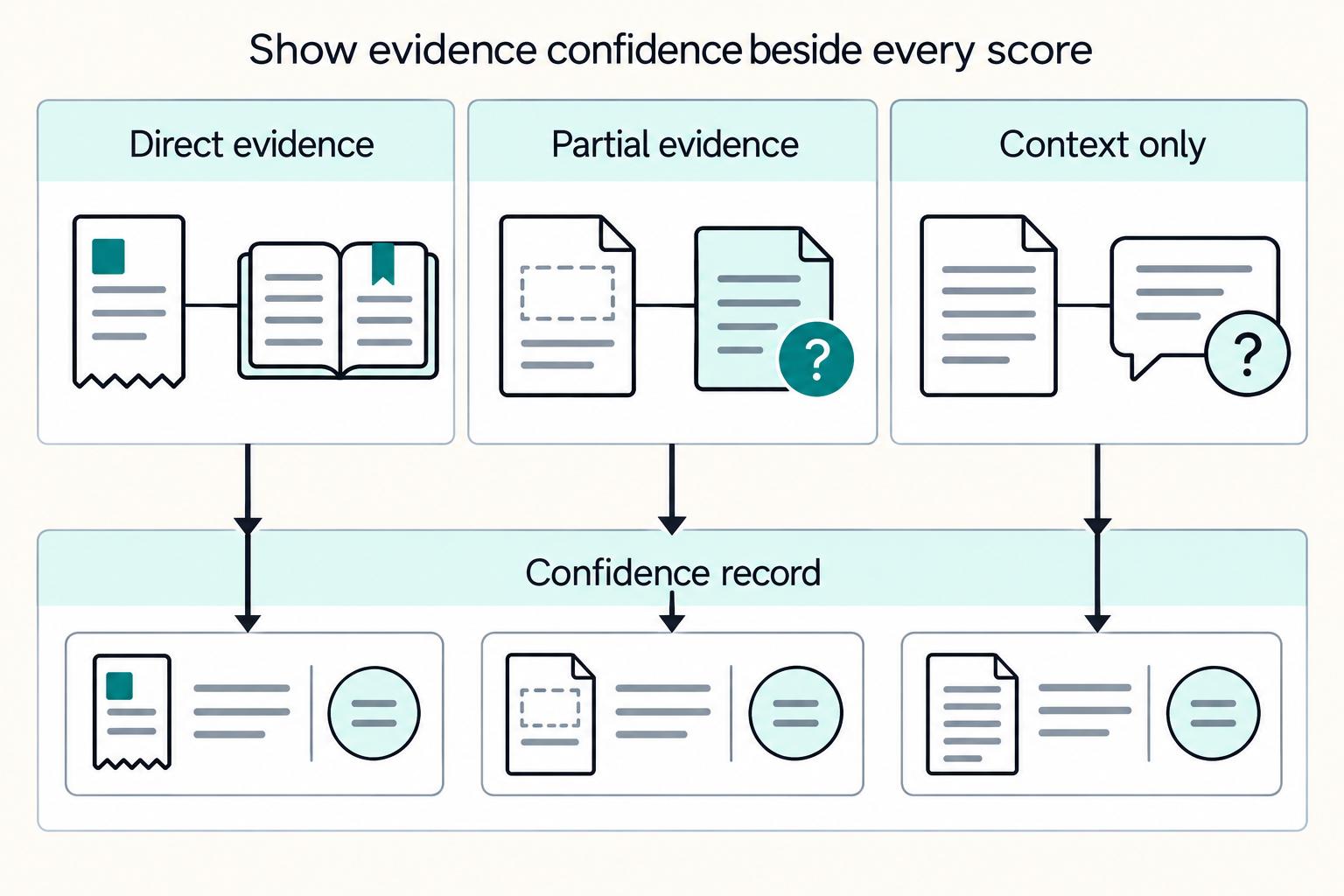
Add a confidence grade beside every dimension score so uncertainty stays visible:
| Confidence grade | Minimum evidence to allow a score | If minimum is not met |
|---|---|---|
| High | Direct, outcome-level payout evidence for the dimension | Keep score, note assumptions |
| Medium | Partial outcome evidence plus clear limits | Keep score with explicit caveats |
| Low | Indirect or context evidence only | Do not treat as a reliable cross-industry signal |
Finally, make checkpoints phase-aware. Track stage-appropriate metrics and early red flags across the platform lifecycle, and revisit partnership and growth-strategy choices. Network failure risk can be high, and fast growth in high-regulatory-complexity settings can create setbacks.
Related: IRS Form 1042-S for Platform Operators: How to Report and Withhold on Foreign Contractor Payments.
Use a strict data dictionary so teams score industries the same way#
A strict data dictionary keeps scoring drift from creeping in across teams. Without one, the same industry can get different scores because people apply checkpoints differently, treat validity states inconsistently, or accept unverified inputs.
Keep it short but strict: define each field's name, meaning, inclusion and exclusion logic, source owner, refresh expectation, and required validity evidence before it can be scored.
| Field group | What to define | Scoring error to block |
|---|---|---|
| Verification checkpoints | Required identity match, approval step, and supporting record | Checkpoint marked valid before required identity confirmation |
| Compliance consequences | Documented failure modes tied to noncompliance | Risk is understated because enforcement outcomes are ignored |
| Source authority | Whether a source is authoritative, context-only, or unverified | Reader aids or unofficial renderings are treated as legal authority |
| Verification metadata | Source, method, capture date, reviewer, and unresolved unknowns | Old, unofficial, or incomplete material is treated as scoring evidence |
Lock checkpoint definitions#
Before you start scoring, define checkpoint rules, including the exact evidence required before a status can be marked valid. If teams use different thresholds, scores will drift even when underlying behavior is the same.
For identity-sensitive checkpoints, require both data consistency and approval confirmation. Volunteer name and address details must match government-issued photo ID, and Form 13615 is not valid until an approving official or IRS contact confirms identity.
Separate collection from validity#
Treat collected and valid as separate states. A document can be present and still not be valid if required confirmation is missing.
When required proof is absent, record the status as incomplete or unknown rather than complete.
Require evidence packs for compliance inputs#
Do not accept a binary passed value on its own. Require the checkpoint evidence your program defines, plus exception tracking and audit artifacts.
This matters because documented noncompliance outcomes can include removal from all VITA/TCE programs and deactivation of a sponsoring partner's VITA/TCE EFIN.
Admit only documented, authoritative sources#
No metric enters the index without a documented source, method, and freshness date. IRB synopses are reader aids, not authoritative interpretations, and FederalRegister.gov XML pages do not provide legal notice.
If a source excerpt is unavailable or erroring, do not infer substantive rule details from it. Mark those details as unknown until verified in an official source.
Segment industries and countries before comparing scores#
Do not rank raw industry averages. Split each industry by operating pattern and country constraints first, then compare scores on that segmented basis.
Platform work is heterogeneous. In practice, an industry label is only a starting point, not a scoring unit on its own.
Segment by how the work gets paid#
Start with the operating pattern: project-based, recurring service, and marketplace task flow. If one industry includes more than one pattern, create separate rows before scoring.
Use a simple checkpoint for each row: assign a pattern tag plus a short justification tied to real payout flow examples. If you cannot defend that tag, the row is not ready to rank.
Add country constraints as explicit rows, not footnotes#
After pattern segmentation, add explicit country-constraint rows for VAT, Non-Resident Withholding, and Treaty Reductions. Keep these visible instead of burying them in a generic compliance score.
Given the limits of the current evidence base, score burden and data confidence rather than guessing legal mechanics. If any of those three rows is still unknown, mark the industry-country pair as provisional even when KPI signals look strong.
Use corridor contrasts to test score quality#
The same industry may score differently by corridor once constraints are applied. Treat that as a signal to check assumptions, not as an automatic scoring error. Pair any comparison with explicit confidence limits because cross-market and cross-industry evidence is still incomplete.
As a market-context signal, the September 2025 Technology in Society study with a stratified sample of 1,380 Austrian companies links stronger platform competition with easier switching and more negotiable terms. Use that as competitive-pressure context, not as proof of better payment timeliness, completeness, or failure outcomes.
| Industry-country pair | Compliance burden | Payout complexity | Data confidence |
|---|---|---|---|
| Project-based × Country A | VAT, Non-Resident Withholding, Treaty Reduction assumptions documented | Scored only after flow-specific exceptions are mapped | Provisional until tax and payout evidence are attached |
| Recurring service × Country B | Same three constraint rows completed with owner and review date | Scored against the recurring flow, not blended categories | Medium only with current operational evidence |
| Marketplace task flow × Country C | Assumptions explicit for the corridor and payee scenario | High-volume flow assessed as its own row | Low when evidence is policy-only without event-level support |
Use one gating rule: do not compare industry scores across countries until VAT, withholding, and treaty rows are completed and confidence-graded on the same basis.
We covered this in detail in Choosing Dynamic Discounting for Contractor Early Payment on Platforms.
Build a first-pass 20-industry scorecard with proxy signals#
Use this first-pass scorecard as a provisional rollout tool, not as proof of measured payment-quality outcomes. Keep your rollout posture conservative when confidence is limited or compliance burden is unclear, and expand only as evidence quality improves.
Use proxies for context, not outcome proof#
Mixed evidence is acceptable at this stage if each source has a defined role. Treat consultation and stakeholder-feedback materials as evidence-process context, contract documents as structure and constraint context, and versioned report histories as freshness context. Do not treat these sources alone as proof of timeliness, in-full rates, or payout-failure outcomes.
| Source type | Use | Not outcome proof of |
|---|---|---|
| Consultation and stakeholder-feedback materials | Evidence-process context | timeliness, in-full rates, or payout-failure outcomes |
| Contract documents | Structure and constraint context | timeliness, in-full rates, or payout-failure outcomes |
| Versioned report histories | Freshness context | timeliness, in-full rates, or payout-failure outcomes |
Treat this as a mapping exercise: collect the evidence, classify it, and surface gaps before product, hiring, and market spend harden.
Build each row with mandatory fields#
Each row should represent one segmented vertical-country-pattern pair. Before you assign rollout posture, require these fields:
| Field | Required detail |
|---|---|
| Evidence source and role | evidence process, compliance constraints, update cadence |
| Compliance burden | Required before you assign rollout posture |
| Operational risk | Required before you assign rollout posture |
| Evidence confidence | Required before you assign rollout posture |
| Known vs unknown note | In plain language |
| Freshness markers | date + version or refresh tag |
If source, method, freshness, confidence, or unknowns are missing, the row is incomplete.
Make uncertainty explicit#
The known vs unknown column should carry as much decision weight as the score itself. Use direct language:
Known: current documentation exists, and proxy relevance is explained.Unknown: a material part of operations is still inferred.
Keep freshness visible. A versioned trail is easier to trust than a static snapshot, and a dated evidence window plus a decision checkpoint helps prevent anecdotal drift.
Set color status from confidence plus risk#
Do not assign status colors from score alone. Read confidence, operational or compliance risk, and the known vs unknown field together:
| Status | Confidence read | Operational/compliance read | Known vs unknown read | Posture |
|---|---|---|---|---|
| Green | Current, documented, internally consistent | Burden is manageable; failure handling is understood | Unknowns are narrow and non-blocking | Eligible for scaled rollout |
| Yellow | Mixed or partially dated but still directional | Some burden or exception handling unresolved | Unknowns are material but bounded | Pilot with scope limits and review gates |
| Red | Sparse, contradictory, or mostly proxy-based | High burden or weak failure handling clarity | Unknowns sit in core launch mechanics | Defer scaled rollout |
Keep comparability strict: rows backed mostly by proxies are not equivalent to rows backed by operational evidence. Confidence is part of the decision, not a footnote.
Need the full breakdown? Read Finance Operations Priorities for Payment Platform CFOs.
Turn index outputs into go or no-go market sequencing#
Do not sequence markets by index score alone. Use a go or no-go rule that also requires confidence and owned reporting checkpoints.
| Index and evidence read | Reporting-read check | Sequencing choice |
|---|---|---|
| High score, high confidence | Filing ownership and required checks are current and testable | Broader launch can be considered |
| High or mid score, mixed confidence | Reporting path is only partially proven | Controlled expansion or pilot scope |
| Any score, low confidence | Core filing obligations or ownership are unresolved | No-go for scaled launch |
For U.S.-linked rows, use Form 8938 as a concrete checkpoint. It reports specified foreign financial assets when the applicable threshold is exceeded, and it is attached to the annual return due date, including extensions. Before you scale, confirm who the specified person is, whether assets are reportable or excluded, and which calendar or tax year applies on the form.
Keep threshold handling explicit instead of implied. For certain specified domestic entities, the instructions include $50,000 at year-end or $75,000 at any time during the tax year, while joint filers and taxpayers residing abroad can have higher thresholds. Also treat Form 8938 and FBAR as separate obligations. Form 8938 does not replace FinCEN Form 114 filing.
If those checks are still inferred, keep launch scope narrow until you have proven the end-to-end reporting path in real cases. Re-score when confidence, filing ownership, or account treatment assumptions change.
When a market looks promising but documentation burden is high, map your launch gates and exception paths first, then pressure-test the flow against Gruv Payouts.
Account for finance and tax friction before committing product resources#
Do not commit product resources until finance can show a testable reporting path for the corridor. A strong index score is still not decision-ready if Form 8938 scope, potential FBAR overlap, or withholding and treaty handling are still assumed.
What to map before launch#
| Area to map | Verification status | Decision needed before launch |
|---|---|---|
| Non-Resident Withholding | Rates, thresholds, and legal tests are not established | Which flows require withholding review, who owns that review, and what documentation must exist before payout |
| Treaty Reductions | Eligibility criteria and percentages are not established | Whether your workflow captures treaty-relevant inputs and how exceptions are escalated |
| Form 8938 | Used to report specified foreign financial assets when thresholds are exceeded; attached to the annual return due date (including extensions) | Who is a specified person, what is reportable vs excluded, and which calendar or tax year applies |
| FBAR (FinCEN Form 114) | Separate filing that may still be required even when Form 8938 is filed | Who checks dual-reporting exposure so Form 8938 is not treated as the only control |
For U.S.-linked corridors, start with Form 8938 classification: specified person status, then specified foreign financial asset status, including exclusions such as certain accounts maintained by a U.S. payer. Keep threshold handling explicit: for certain specified domestic entities, instructions reference $50,000 at year-end or $75,000 at any time during the tax year, and higher thresholds can apply to joint filers or taxpayers residing abroad.
Use an internal approval sequence, not assumptions#
A launch is not ready until finance can reproduce the reporting result on a real case. Use a defined internal sequence:
- Confirm whether the filer is a specified person.
- Confirm whether the assets are specified foreign financial assets, including applicable exclusions.
- Confirm the applicable calendar or tax year and the threshold context being used.
- Confirm whether an income tax return is required for that year.
- Confirm whether FBAR may still be required in addition to Form 8938.
The do-not-ship rule#
If documentation workflows are undefined, do not ship. If the team cannot show who files, which assets are included or excluded, which year or threshold logic is being applied, and whether FBAR may still apply, the index output is not ready to drive product investment.
As a final gate, confirm who would file, whether an income tax return is required for that year, how Form 8938 year and threshold logic is being applied, and whether FBAR may still be required. Keep deeper withholding and treaty specifics in market-specific analysis, such as Non-Resident Withholding on Contractor Payments: Platform Guide to the 30% Rule and Treaty Reductions.
For a step-by-step walkthrough, see Proforma Invoice Controls for Contractor Platform Pre-Payment Workflows.
Implement the index in Gruv operations without adding spreadsheet chaos#
If a score cannot be traced to a defined event record, do not use it for market sequencing. In practice, we should treat the index as an operating record, not just a spreadsheet artifact: define one event source per metric, route exceptions outside the happy path, and require a signed audit pack whenever a score changes.
Assign one source of truth for each metric#
Use a single named event source for every KPI input. Map each metric to a specific upstream event family. Where those modules are in scope, use Virtual Accounts deposit events for timeliness and completeness checks, and Payout Batches statuses for payout reliability and reconciliation visibility. Treat analyst notes and CSV exports as secondary evidence.
| Metric or input | Named evidence | Guidance |
|---|---|---|
| Timeliness | Virtual Accounts deposit events | Where those modules are in scope |
| Completeness | Virtual Accounts deposit events | Where those modules are in scope |
| Payout reliability | Payout Batches statuses | Where those modules are in scope |
| Reconciliation visibility | Payout Batches statuses | Where those modules are in scope |
| Analyst notes and CSV exports | Secondary evidence | Treat as secondary evidence |
This prevents manual drift. If two operators can update the same corridor from different time windows or ad hoc files, the score is no longer comparable. Before you admit any metric into the index, confirm event name, event owner, timestamp basis, and freshness. If that chain is unclear, hold the update.
Put controls where payment quality usually breaks#
Index distortion often comes from retries, edge cases, and compliance holds, not headline metrics. Use idempotent retries for payment and status jobs, and route unresolved cases into an exception queue so outcomes stay visible and reviewable.
Keep compliance delays distinct from payout-performance delays. Gate KYC, KYB, and AML states explicitly, where applicable, before they influence payment-quality scoring. Otherwise you will mix causes and misread corridor risk.
Require an audit pack for every score change#
Every score update should include:
- source links
- metric definitions
- variance notes on what changed and why
- sign-off from finance and payments ops
This keeps score changes explainable when leadership asks why a corridor moved from pilot to launch candidate. It also captures evidence-quality changes explicitly. That includes stale context such as a labor article dated September 2018 or blocked sources such as the inaccessible BrooklynWorks PDF, which may justify deferring or lowering confidence in scoring.
The same evidence discipline appears in another cited ScienceDirect study. It uses a U.S. bank sample of the top 300 institutions from Q1 2015 to Q2 2021 and reports robustness checks including propensity score matching and difference-in-differences tests. That does not validate contractor payout quality directly, but it does show the standard you should apply: document method, sample, and scope limits.
Start narrow, then expand by corridor#
Start with one high-confidence industry cohort where event coverage and exception handling are clear. Run a pilot, review audit packs after each update, then expand scoring corridor by corridor.
If a corridor lacks clean event mapping from Virtual Accounts or Payout Batches in your implementation, keep it out of the ranked set until the evidence chain is complete.
This pairs well with our guide on Contractor Offboarding Final Payment Controls for Multi-Market Platforms.
Red flags that make your index unreliable#
Your index becomes unreliable when indirect or stale evidence starts moving payment-quality scores as if it were direct operations data. If a source does not measure payment outcomes, do not let it change a payment-quality score unless you apply a documented adjustment and a confidence penalty.
Red flag 1: treating software-market momentum as payment performance. A contractor payment software market report may show demand for tooling, but that is not the same as payment outcomes. Using software growth as a payout-quality proxy can bias the index toward commercial momentum instead of operational outcomes and misallocate resources.
Red flag 2: mixing labor evidence into payment KPIs without normalization. Job-quality and labor-allocation research can add context, but it is not a payment KPI on its own. The cited ScienceDirect study analyzes employment outcomes, wages, autonomy, and satisfaction. That is why labor evidence should stay in a separate context layer unless you define a normalization method first. If you cannot explain that conversion, keep it out of the score.
What to verify before a source enters the index#
Before a source enters the index, verify four things:
- What exact outcome does this source measure?
- What date range does it cover?
- Can you verify method, owner, and freshness?
- Does it require a confidence downgrade because it is sparse, old, or indirect?
Freshness is an evidence-quality control, not a nice-to-have. Static monthly spreadsheets are described as outdated versus immediate, accurate, and verifiable reporting expectations in 2026, so your index should follow the same standard. If a source is old, sparse, or limited to one sector, do not discard it automatically, but label it clearly and assign a refresh plan. The October 2024 financial reporting quality paper makes the risk explicit: poor reporting quality harms decisions, including resource allocation. In this context, that can mean misallocating resources or scaling too fast in markets where regulatory complexity can create setbacks or failure.
Related reading: How Modern CFOs Make Payment Platform Expansion a Strategic Driver.
Turn the index into a grounded expansion decision#
The practical move is to publish a transparent version-one index that separates evidence from assumption and shows confidence for each score. You do not need to claim a validated cross-industry benchmark to make a better expansion decision. You need a scorecard your teams can inspect, challenge, and improve.
Publish a version one that you can defend#
Show the score and confidence grade together for each industry-country row, with source, method, and freshness documented. If evidence is context-specific, label it that way instead of presenting it as broad proof.
Use scope limits as part of the decision, not as an afterthought. A study built on 27 semi-structured interviews is still useful, but it is directional and context-specific. A six-digit NAICS method across US service industries is structured, but still bounded by that lens. When a core source dates to June 2020 or around September 2020, mark it as background context, not current operating truth.
We use index outputs as decision-support signals. They can show technical exposure overlap, but they do not prove displacement outcomes or adoption timelines.
Pilot markets before you scale spend#
We use version one to decide where we can learn fastest, then earn the right to scale. High score plus high confidence can move to pilot planning. An attractive score plus low confidence should stay in a tighter pilot with clear stop conditions.
Do not treat platform reach as payment quality. Evidence that platforms may affect 70% of service industries and over 5.2 million establishments is scale context, not settlement-quality proof. During pilots, prioritize direct payout evidence and let those results override index assumptions when they conflict.
Align one scoring method before GTM commitments#
Before finance, payments ops, and product commit budget, align on one scoring method and one evidence standard. Define what counts as direct evidence, what triggers confidence downgrades, who can change scores, and what documentation each update requires.
If you do one thing now, publish version one with confidence grades, run pilots from that baseline, and hold scaled spend until pilot evidence strengthens the scorecard.
Before you scale beyond pilot corridors, align finance, ops, and product on one traceable operating model and confirm market coverage in Gruv docs.
Conclusion#
If we cannot show direct payout evidence, clear confidence grades, and owned reporting checkpoints, we should not treat a strong market-opportunity signal as launch permission. Use the index to narrow the next pilot, document the evidence gap, and keep one traceable scoring method in place before spend expands.
Our practical close is simple: score one industry-country row at a time, test pilots where the evidence is strongest, and pause broader rollout when the audit pack is thin. If your team can defend the row, you can scale it. If not, keep it in pilot and refresh the score when new payout evidence arrives.
Frequently Asked Questions
Is there an existing validated Platform Economy Payment Index across 20 industries?
No. This guide supports building a decision tool, but does not support claiming an already validated cross-industry contractor payment-quality index across 20 industries.
What proxy signals are acceptable when direct contractor payment quality data is missing?
There is no approved set of proxy signals for contractor payment quality defined here. A defensible approach does combine prior-model evidence with structured stakeholder input, including formal input such as the July 2023 Request for Information, and clearly labels uncertainty until direct outcome data is available.
Why can’t software market growth reports be used as payment quality scores?
Because this guide does not establish software market growth as a measure of contractor payment outcomes. At most, growth can be treated as context, not as evidence of payment quality or reliability.
What is the most practical takeaway from construction-focused evidence like Cenfri and Levelset?
No specific Cenfri or Levelset benchmark can be treated as established here. Use sector-specific signals as sector-specific context, not as a baseline for ranking all industries.
Which unknowns must be resolved before a full cross-border market launch?
Resolve whether the activity is permitted and which exact conditions apply before launch. In the cited OFAC scenario, conditions include named licenses (GL 46B, 51A, and 52), commercially reasonable payment terms, and no blocked vessel involvement. Timing and payment-direction conditions also matter, including references to January 29, 2025 and Executive Order 14373 (January 9, 2026).
How often should an operator refresh index scores and confidence grades?
There is no required cadence to point to, so do not present one as a fixed rule. An explicit refresh mechanism is supported, as shown by formal feedback informing future policy updates. Use a documented cadence and trigger re-evaluation when source freshness or compliance conditions change.
Try a related tool
Researched and edited by the Gruv editorial team. Gruv builds cross-border billing, payouts, and finance-operations software for global businesses.
Sources
- brie.berkeley.edu/sites/default/files/new_work_and_value_creat...trusted
- cms.gov/priorities/innovation/team-frequently-asked-...trusted
- congress.gov/crs-product/R45576trusted
- irs.gov/businesses/corporations/do-i-need-to-file-fo...trusted
- irs.gov/forms-pubs/about-form-8938trusted
- taxpayeradvocate.irs.gov/wp-content/uploads/2026/01/ARC25_PurpleBook.pdftrusted
Educational content only. Not legal, tax, or financial advice.
Related Posts

Gig Economy 2026: Payment Volume Trends, Payout Rail Readiness, and Platform Consolidation
Treat **gig economy 2026 payment volume trends** as an execution question, not a headline-growth story. Some inputs are measurable now, including platform counts, payout-rail behavior, and jurisdiction-specific compliance requirements. What remains uncertain is any single, verified global gig payment volume number for 2026.
IRS Form 1042-S for Platform Operators: How to Report and Withhold on Foreign Contractor Payments
If you own compliance, legal, finance, or risk for a platform paying foreign contractors, sellers, or creators, you may need to make **Form 1042-S** operational. That means clear decisions, reliable checks, and escalation points your team can apply and defend.
Non-Resident Withholding on Contractor Payments: Platform Guide to the 30% Rule and Treaty Reductions
Start with the default. If a payment is in scope for NRA withholding and you cannot support reduced treatment, withhold 30% and escalate unresolved cases before release.