
Quick Answer
Start by keeping ACH as the default and charging for instant transfer unless a cohort-level margin case is proven. Segment 1099 and subcontractor groups, then compare retention and fill-rate lift against known fee drag such as Stripe’s 1.5% US instant payout pricing from June 1, 2024. Fix invoice approval delays in AP before rail changes, and use a holdout cohort to decide whether faster pay should expand or stay limited.
Why payout speed is a pricing and operations decision, not a blanket perk#
Payout speed can help you attract independent contractors, but only if you treat it as a pricing and operations decision, not a blanket perk. The real question is not whether faster pay sounds attractive. It is where speed should be free, where it should be paid, and where your current process is too slow for a faster rail to matter.
The market shows there is more than one workable model. Branch presents accelerated pay as a recruiting advantage for 1099 contractors. Wingspan offers two paths at once: instant access to funds in its wallet for free, and instant transfer to a bank account for a fee. Its pricing page gives you a concrete benchmark: an instant payout method for a 1% transaction fee. That is the right frame for this guide. You are not choosing between fast and not fast. You are deciding who gets subsidized speed, who can buy speed, and who should stay on standard ACH when margin does not support acceleration.
Worker demand is real, but that does not mean you should fund every payout. Worldpay says 94% of workers who had not used instant payouts before found the feature attractive, and 67% were willing to pay a small fee for immediate access to earnings. That leaves room for a paid-speed option instead of assuming free instant payouts are the only competitive response. These signals suggest access and choice can matter as much as a universal subsidy.
Two failure modes are worth watching. Some teams overbuild the perk and absorb the cost for every contractor, including low-urgency cohorts that would have accepted ACH. Others buy faster rails before fixing internal AP delays, so contractors still wait because invoices are stuck in approval. If time-to-approved is the real bottleneck, instant transfer may not change the experience enough to justify the cost.
Keep one checkpoint in mind as you read: measure total time-to-paid, not just rail speed. If approval takes three days and the payout rail takes minutes, your problem is AP throughput, not disbursement speed. Keep one failure mode in view too. If finance cannot tie payout choices back to margin by cohort, fast pay becomes an open-ended subsidy that is hard to unwind.
Before you move forward#
From here, connect three decisions that are usually split across teams. That combination is what turns payout speed into a commercial tool instead of an expensive perk.
- talent outcome: which contractor groups actually value faster access to funds
- AP reality: where approvals, exceptions, or paper checks create delay
- margin control: when speed should be free, fee-based, or limited by policy
What to prepare before you change payout speed#
Baseline the full payout path before changing speed, or you can accelerate the rail while the real delay stays upstream. Build one operating view of contractor payouts, AP approval flow, control ownership, and corridor limits.
Step 1. Measure the current payout path#
Create a single baseline of how your contractors are paid today, including ACH, paper checks, any faster method already in use, time-to-paid, payout failures/returns, and support tickets tied to late, missing, or rejected payments. Use one timeline definition across records so the data is comparable from invoice receipt through approval, scheduling, release, and settlement.
Keep rail mix visible, not blended. B2B payments continue shifting from checks to ACH (Nacha reported B2B ACH volume up 10% year over year in Q3 2025), but check risk is still material: in a 2024 survey cited by Federal Reserve Financial Services, 91% of organizations still used checks and 63% reported attempted or actual check fraud. If checks are in your contractor mix, track them as their own lane.
Step 2. Map AP handoffs and assign control ownership#
Map the real invoice approval workflow, including queue points, approvers, and exception paths. Track cycle time as APQC defines it: calendar days from invoice receipt until approval and scheduling for payment.
| Control area | What it includes | Ownership note |
|---|---|---|
| Payout policy rules | Off-cycle and exception approvals | Fix unclear ownership before adding faster rails |
| KYC/KYB controls | KYC/KYB controls where enabled, including beneficial ownership verification for legal-entity customers where regulated | Fix unclear ownership before adding faster rails |
| Audit logs | Payout events and status changes | Fix unclear ownership before adding faster rails |
| Reconciliation | Tie-outs to contractor tax reporting, such as Form 1099-NEC where required | Fix unclear ownership before adding faster rails |
Your governance pack should name clear owners for:
- payout policy rules, including off-cycle and exception approvals
- KYC/KYB controls where enabled, including beneficial ownership verification for legal-entity customers where regulated
- audit logs for payout events and status changes
- reconciliation by team, including tie-outs to contractor tax reporting (such as Form 1099-NEC where required)
If ownership is unclear, fix that before adding faster rails.
Step 3. Confirm corridor and rail constraints before you promise speed#
Document corridor assumptions early, especially for India and UPI. UPI is an instant payment system operated by NPCI, but availability depends on participating institutions and provider support. NPCI reported 694 banks live on UPI in February 2026, which still does not guarantee every contractor payout path is available to your platform.
Only promise instant payouts where your provider path, sponsor-bank path, and recipient-bank path are already confirmed. Where support is conditional, label it clearly as "where supported" and define the fallback rail for sales and support. Related: Payment Transparency for Contractors: How to Build a Payout Tracker Your Recipients Trust.
Step 1 segment contractors by value and payout sensitivity#
Start by segmenting contractors before you accelerate anything: faster payout should go first to cohorts where payout timing clearly affects outcomes and the margin can support the cost.
Use two inputs for each cohort:
- business contribution, such as revenue impact, fill urgency, and repeat engagement
- payout sensitivity, such as cash-flow dependency, milestone timing, off-hours payment needs, and late-pay support friction
Keep worker classification separate from payout policy. IRS guidance for independent contractors is about who controls how work is performed, and Form 1099-NEC reporting still needs to stay intact where applicable.
| Cohort | What to validate in your data | Default policy starting point |
|---|---|---|
| Marketplace-style 1099 contractors (frequent, smaller jobs) | Repeat rate, fill urgency, payment-related support volume | Prioritize faster rails first where supported; keep exceptions explicit |
| Lower-urgency independent contractors | Stable repeat work, lower timing pressure | Keep ACH as default; offer paid instant speed when needed |
| Project-based general contractor/subcontractor chains | Milestone or pay-application workflow, stage-based cash needs | Prioritize milestone release reliability first, then add faster rails selectively |
Use one hard rule before rollout: if a cohort cannot absorb speed cost, do not default to subsidized acceleration; offer paid instant payouts instead.
For rail choice, keep ACH in play. Nacha indicates ACH debits are typically settled the same day or next banking day, and Same Day ACH can be used for eligible payments up to $1 million. For construction-linked cohorts, account for milestone timing pressure: payment flows are commonly milestone-based, and Billd's 2025 report shows 64% of subcontractors reporting slow pay, with an average 56-day wait after pay-application submission.
We covered this in detail in How Independent Contractors Should Use Deel for International Payments, Records, and Compliance.
Step 2 design the payout menu and price it for margin#
Set a clear payout menu, then apply one hard rule: only subsidize speed when your unit economics justify it. Most contractors should still have one free default path.
Define a menu people can actually understand#
Use labels based on delivery timing and destination so contractors can quickly see what is free, what is faster, and what costs extra.
| Option | What you promise | Typical default use | Pricing stance |
|---|---|---|---|
| Standard ACH | Bank payout on the normal schedule. Stripe cites a standard schedule of 2 business days for free. | Low-urgency cohorts and larger milestone-based payouts | Free default |
| Expedited payout | Faster release than your normal cycle, without an instant-to-bank promise | Medium-urgency repeat workers where you need more speed but want to limit instant-fee exposure | Usually paid, or selectively subsidized |
| Instant payouts | Funds available within minutes where supported. Stripe cites 1% in most countries and 1.5% in the US, Australia, and New Zealand. | High-urgency, high-value cohorts with smaller, frequent payouts | Paid by default unless ROI supports subsidy |
The middle tier prevents a false choice between free ACH and instant-everything pricing.
Price speed from your unit model, not vendor copy#
Use a simple decision rule: subsidize faster payout only when expected acquisition, fill-rate, or retention lift is higher than payout-cost drag. If you cannot show that with your own data, charge for speed.
For US Stripe accounts, the cited instant payout fee moved to 1.5% per payout starting June 1, 2024, while the standard payout schedule remains 2 business days for free. That spread can erode margin quickly if instant becomes the default for broad 1099 cohorts.
Use Branch and Wingspan as market anchors, not proof of your ROI. Branch positions faster, flexible payouts and links speed to hiring and retention outcomes, but that is still a vendor claim. Wingspan is useful for packaging: it presents ACH, Debit, Credit, and instant transfer options, separates free instant wallet access from fee-based instant bank transfer, and cites an instant payout option at 1% transaction fee. The takeaway is structure, not copying a fee.
Add hard eligibility gates before launch#
Gate faster rails by contractor type and market support before release. Frequent, smaller-ticket 1099 cohorts may justify instant or expedited options, while larger subcontractor payouts often depend more on approval and release timing than rail speed.
| Pre-launch check | What to confirm | Purpose |
|---|---|---|
| Fee disclosure | Fee disclosure and estimated delivery timing are shown before method confirmation | Show cost and timing before method confirmation |
| Ledger tracking | Ledger entries store selected rail and fee separately | Margin tracking |
| Eligibility blocking | Instant selection is blocked for unsupported markets and large milestone flows that are not eligible | Prevent unsupported or ineligible instant use |
Apply the same discipline by corridor. In India, UPI is an instant real-time rail, and NPCI states users can transfer, pay, or collect directly between bank accounts through live members. Treat that as a strong option where enabled, and keep product language explicit as "where supported." For a deeper breakdown, see How to Pay Contractors in India Using UPI: Compliance and Speed Explained.
Before publishing the menu, confirm three checks:
- fee disclosure and estimated delivery timing are shown before method confirmation
- ledger entries store selected rail and fee separately for margin tracking
- instant selection is blocked for unsupported markets and large milestone flows that are not eligible
You might also find this useful: Competitive Benefits for International Contractors Without Misclassification Risk.
Step 3 remove internal delay in approvals before buying faster rails#
If approvals are slow, faster rails mostly make delay costlier. Shorten the invoice approval cycle in AP first, then decide where faster payout rails are worth paying for.
Rail speed is only one part of payout speed. APQC frames a separate stage: cycle time from invoice receipt to approval and payment scheduling. That stage happens before execution, so if most wait time is stuck in review, faster rails will not fix the contractor experience you are trying to improve.
Tighten the approval path before you optimize the payout path#
Treat approval delay as a workflow design issue, not a vague finance problem. Invoice approval is a defined AP sequence before payment, and it typically includes verification, document review, and exception handling. Time usually slips in exception loops when work bounces across ops, AP, and business approvers without clear ownership.
Use explicit routing rules and explicit escalation windows. Route by business rules (for example, contractor type, invoice amount, or mismatch reason), automate reminders, and assign owner accountability for every handoff.
Use this operator check:
- timestamp invoice receipt, first review, exception raised, final approval, payment scheduled, and payout sent
- tag each delay to an owner (
ops,AP, or business approver) - compare time spent before payment scheduling vs. after scheduling
If most elapsed time is before scheduling, internal latency is the bottleneck. In that case, faster rails will not materially change outcomes until approvals are tightened.
Replace manual exceptions with controlled rules#
Manual exceptions should be the minority path. If every mismatch turns into ad hoc Slack or email threads, you create hidden queues, weaker audit trails, and inconsistent contractor communication.
Define standard routing for common exception types, then define when AP can resolve directly and when ops or hiring teams must respond. This keeps fast-pay promises aligned with what your internal release process can actually deliver.
Keep paper checks as fallback, not default#
Keep paper checks as a controlled fallback, not the default payout path. The Federal Reserve notes check use has declined since the mid-1990s, and retail electronic payments exceeded check payments in 2003. It also notes electronic check collection is now the primary collection method.
Operationally, make trackable digital rails your default and reserve checks for justified exceptions. If payout still depends on mailing, reissuing, or manual status chasing, faster rails will not remove that friction.
If you want a deeper dive, read Invisible Payouts: How to Remove Payment Friction for Contractors Without Sacrificing Compliance.
Step 4 set compliance gates and auditability so speed does not create risk#
Speed should only release funds after controls pass. If you offer instant payouts, the core risk is not just margin, it is paying before identity, eligibility, and duplicate-execution checks are cleared.
Put policy gates in front of every rail, including ACH. Where your provider or banking program requires identity verification, make it a hard prerequisite. Use a risk-based CIP approach: verify identity and keep records of what you collected and checked.
Before release, confirm:
- identity status is complete where required
- AML/KYC review is cleared where supported
- market or program eligibility is valid for that contractor
- your configured velocity rule has not been triggered
A practical control is to sample recent payouts and confirm each one has a recorded pass/block decision before release, plus a clear exception owner when blocked controls are overridden.
Make retries safe before volume exposes duplicates#
Require idempotency keys on payout creation and make retries replay-safe. Idempotency helps make sure a retried request executes once, but retry-window limits still apply (for example, documented 24-hour behavior in some provider guidance), so you also need internal duplicate controls tied to payable ID, payout state, and reissue rules.
The failure pattern to prevent is straightforward: timeout, retry, late confirmation of the first request, then a second disbursement against one approved invoice. Idempotency reduces this risk, but state checks must still block second releases when a payout is pending or settled.
Standardize evidence and rail-specific failure handling#
Keep one minimum evidence pack for every payout state:
- internal request ID
- provider reference
- ledger posting reference
- webhook/status events
- reconciliation export tied to payout batch or transaction-level reporting
Then define failure handling by rail. ACH returns are not on one uniform timeline, and return handling can vary by code (including the cited 2-day to 60-day R11 treatment change). In relevant Nacha contexts, status/decision communication may also require ten (10) banking day handling discipline.
For each failure type (ACH return, rejected payout, delayed provider confirmation), assign:
- owner
- internal SLA
- contractor communication template
If confirmation is delayed, message it as pending confirmation, not paid.
Step 5 launch as an experiment with hard KPI checkpoints#
Launch payout speed as a controlled experiment, not a platform-wide promise. It is only a competitive advantage if faster pay changes contractor behavior enough to justify the added cost.
Start with one high-value segment of 1099 contractors, and expand only if that cohort clears your KPI gate. Use a phased rollout so parts of the change go live in planned stages, which gives you a cleaner read than a full switch. Keep the cohort definition tight so you can attribute outcomes to payout speed, not mixed operating conditions.
Hold back a small control group#
Keep a true holdout inside the eligible cohort so you can compare treated versus excluded users directly. A practical design is a 1-5% holdout over 1-3 months to read cumulative effects instead of first-week noise.
Protect test integrity during rollout. If manual overrides give holdout users faster pay, your comparison is no longer reliable.
Track only the KPIs that can change the decision#
Review a compact weekly KPI set to answer one question: did faster pay improve marketplace outcomes, or did it mainly shift cost timing?
| KPI | What to review |
|---|---|
| Contractor activation | Are eligible contractors starting work faster? |
| Repeat work or retention | Are treated contractors coming back more? |
| Job fill rate | Are posted jobs getting filled more often (match rate)? |
| Payout success | Are delivery outcomes improving without added failures? |
| Support contacts | Are payment-related tickets declining? |
| Gross margin impact | After payout-speed cost, is the cohort economics better or worse? |
Use holdout comparisons as the decision checkpoint. If the holdout outperforms treated users on key outcomes, treat that as a negative experiment result and redesign before broader rollout.
Keep the final rule blunt: if retention lift is weak and payout-cost growth is high, stop default fast pay for that cohort and shift to paid speed. This keeps payout speed from turning into an open-ended subsidy.
Mistakes that erase margin and how to recover#
The business case breaks when payout speed is treated as a universal perk instead of a controlled benefit. Recover by tightening eligibility, fixing approval delays, publishing rail coverage clearly, and enforcing audit-ready payout records.
- Mistake: giving instant payouts to everyone.
Recovery: limit faster payouts to cohorts where the cost can pay back (for example, high-LTV, high-urgency, or high-repeat contractors). Speed has direct variable cost: DoorDash Fast Pay shows a $1.99 cashout fee, and Stripe lists 1% in most countries, 1.5% in the US/AU/NZ for eligible instant payouts. Track fee spend by cohort against repeat work and fill-rate movement before expanding access.
- Mistake: blaming rails when approvals are the bottleneck.
Recovery: fix invoice approval throughput first. If invoices sit in AP queues, faster rails will not materially improve time-to-paid. Review queue times, exception routing, and escalation ownership before renegotiating payout providers.
- Mistake: promising rail coverage without market checks.
Recovery: publish exact "where supported" rules in-product and during onboarding. UPI coverage is framed within India's bank and platform network, so avoid presenting it as universal. Confirm destination country and bank support before showing a faster rail.
- Mistake: weak payout-event records.
Recovery: require event logging for request ID, provider reference, status changes, and ledger posting, then assign AP reconciliation ownership. Strong controls and audit-log review are core to catching anomalies, costly errors, and fraud risk.
Need the full breakdown? Read How to Pay US-Based Contractors from Australia.
Turn payout speed into a profit-aware growth lever#
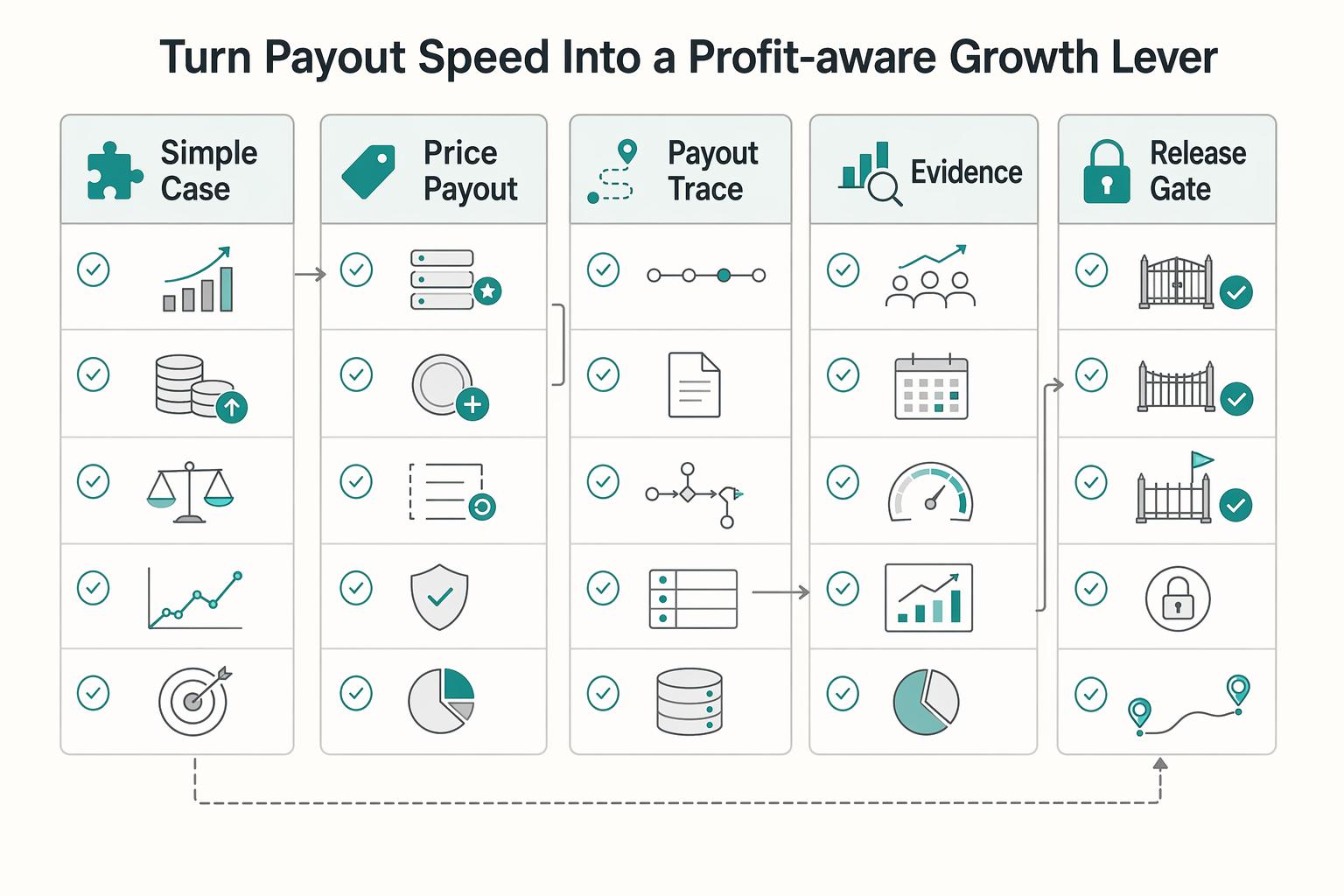
Use payout speed as a growth lever only when retention and fill-rate gains are larger than the margin drag. In practice: remove approval bottlenecks first, price speed tiers with explicit subsidy rules, and expand only through phased KPI gates.
-
Define cohorts and baseline economics. Segment by
1099 contractorsandsubcontractors, then by urgency and contribution. For each cohort, track rail mix, time from completed work to funds received, payout failure rate, support contacts about delays, and gross margin impact. Your checkpoint is simple: if delay is still in theinvoice approval cycle, faster rails will not feel faster. -
Price payout tiers with explicit subsidy rules. Offer a clear menu:
ACH, expedited (if supported), andinstant payoutswhere supported. Keep the free baseline explicit, such as 2 business days, and decide where faster speed is subsidized versus paid. This matters more when instant costs rise (for example, Stripe's US Instant Payouts fee moved from 1% to 1.5% on June 1, 2024). If retention lift is uncertain, start with paid speed. -
Fix AP throughput before buying faster rails. Audit handoffs, exception queues, and approval cutoffs inside
accounts payable (AP)first. Match your ACH promise to real processing windows for current-day versus future-business-day settlement points. Keep paper checks as a controlled fallback, not the default path. -
Enforce compliance gates and idempotency before launch. Assign cross-functional ownership early across finance, product, and ops. Ensure applicable KYC requirements are met before payouts, and maintain AML controls where your structure requires them, including customer identification checks. Require an
idempotency keyon every payout request so retries do not create duplicate disbursements, and keep audit-ready evidence for each payout. -
Launch in phases with KPI gates. Do not do a one-step cutover. Start with a high-value cohort, measure outcomes, and expand only when activation, repeat work, fill rate, payout success, and support contacts improve without unacceptable margin erosion. If gains are weak but costs are real, move that cohort from default fast speed to paid speed.
Related reading: A Deep Dive into Deel's Pricing and Fees for Contractors.
Frequently Asked Questions
How does payout speed create a real competitive advantage for contractor platforms?
It creates an advantage when it changes contractor choice or availability, not when it is just a nicer payment page. Fed research found that 75% of gig workers want to be paid more often than bimonthly, so faster access to earned funds can matter in recruiting and repeat participation. The check is simple: if your contractors still wait on the invoice approval cycle, faster rails will not feel faster.
When should we offer instant payout by default versus as a paid option?
Make it the default only for cohorts where faster access clearly improves a high-value outcome that covers the variable fee. A paid-speed option makes more sense when standard payout already meets expectations, especially if your free baseline is something like a 2 business day schedule and the faster option adds a clear per-payout cost. Stripe’s US Instant Payouts fee moved from 1% to 1.5% on June 1, 2024, which is exactly why a broad default subsidy needs a margin case.
What are the main tradeoffs between faster payouts and profitability?
You are trading contractor experience against direct payout cost and risk exposure. Instant payouts can settle within about 30 minutes when supported, but instant payments are also irrevocable, so payout errors are harder to reverse. If you want speed without margin drift, pair faster payouts with stronger controls and clear eligibility rules.
Which metrics prove payout speed is improving contractor quality and retention?
Use a holdout group instead of trusting a before-and-after story. Compare outcomes between exposed contractors and a group intentionally excluded from the change so you can estimate incremental impact. For quality, add SLA compliance, completion speed, and first-time resolution, then review retention or repeat-work trends alongside margin impact.
What usually breaks first when a team scales instant payouts too quickly?
The first pressure point is usually control coverage and exception handling. Because instant payments are irrevocable, unresolved payout errors become more costly as volume rises. Your checkpoint is whether controls and reconciliation processes stay reliable as payout volume increases.
How do finance, product, and ops split ownership of payout SLAs and controls?
Set explicit ownership so payout SLAs and controls do not drift. Finance can own payout policy, fee guardrails, and reconciliation review. Product can own the payout menu, eligibility rules, and what contractors see for standard versus instant options. Ops can own exception queues, failed payout communication, and escalation timing. If no one owns approval timing and unresolved failed payouts, your SLA is only a promise.
Try a related tool
Researched and edited by the Gruv editorial team. Gruv builds cross-border billing, payouts, and finance-operations software for global businesses.
Sources
- bsaaml.ffiec.gov/docs/manual/06_AssessingComplianceWithBSAReg...trusted
- ecfr.gov/current/title-31/subtitle-B/chapter-X/part-1...trusted
- federalreserve.gov/paymentsystems/check_about.htmtrusted
- federalreserve.gov/frrs/regulations/section-1010230-beneficial-...trusted
- gsa.gov/directives-library/accounts-payable-policy-m...trusted
- irs.gov/faqs/small-business-self-employed-other-busi...trusted
- irs.gov/businesses/small-businesses-self-employed/re...trusted
- sao.wa.gov/sites/default/files/2023-05/Accounts-Payable...trusted
Educational content only. Not legal, tax, or financial advice.
Related Posts
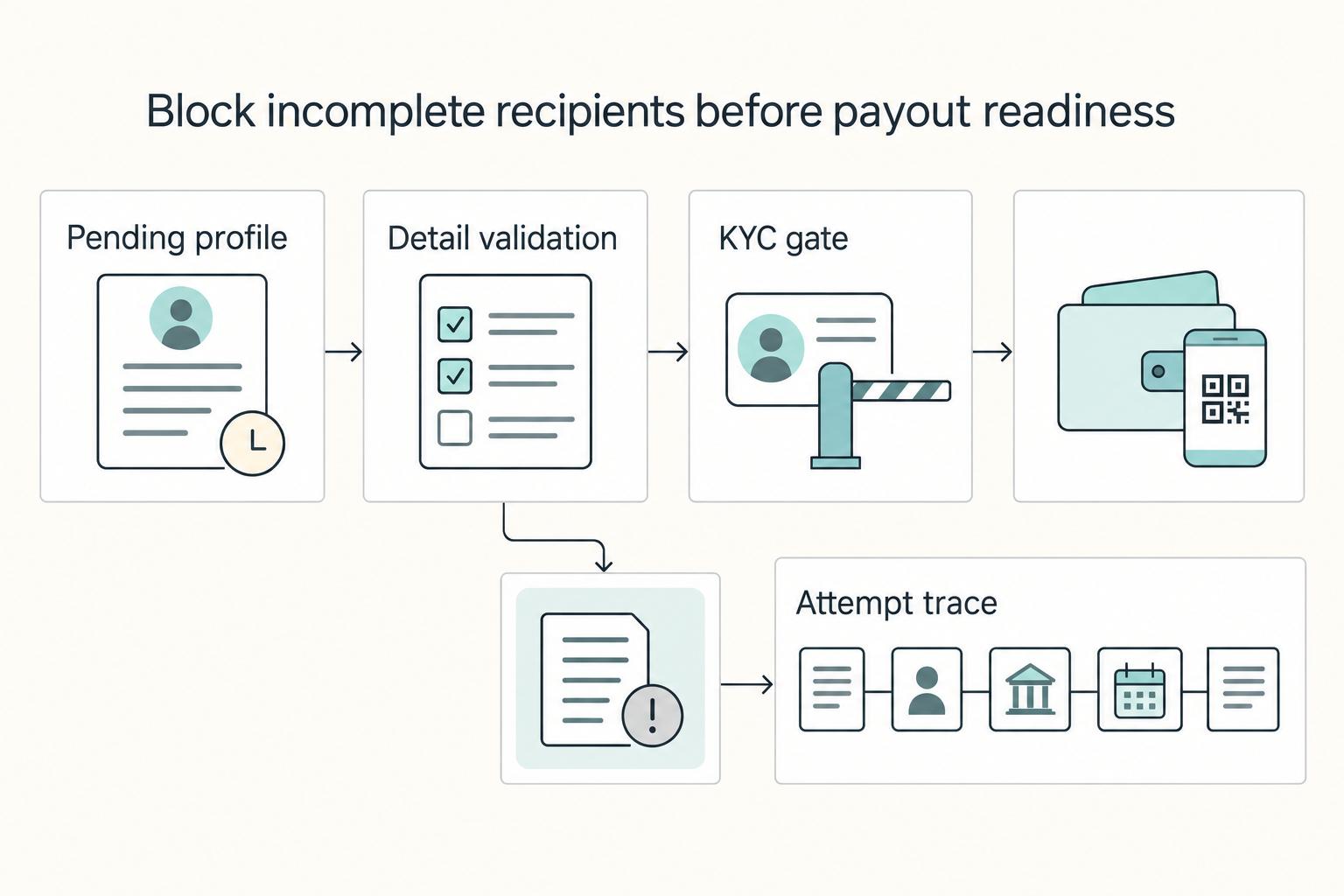
Pay Contractors in India With UPI Without Losing Control
Treat UPI as a fast payment rail, not the whole contractor payout operation. In India, that distinction matters. Unified Payments Interface was established by NPCI in 2016, supports instant bank-to-bank transfers across multiple banks 24/7, and works through widely used apps such as Google Pay, PhonePe, and Paytm. The rail is proven at national scale, with [BCG](https://www.bcg.com/publications/2025/india-upi-the-global-benchmark-for-digital-payments) reporting over 20 billion transactions each month and 84% of India's digital retail payments.
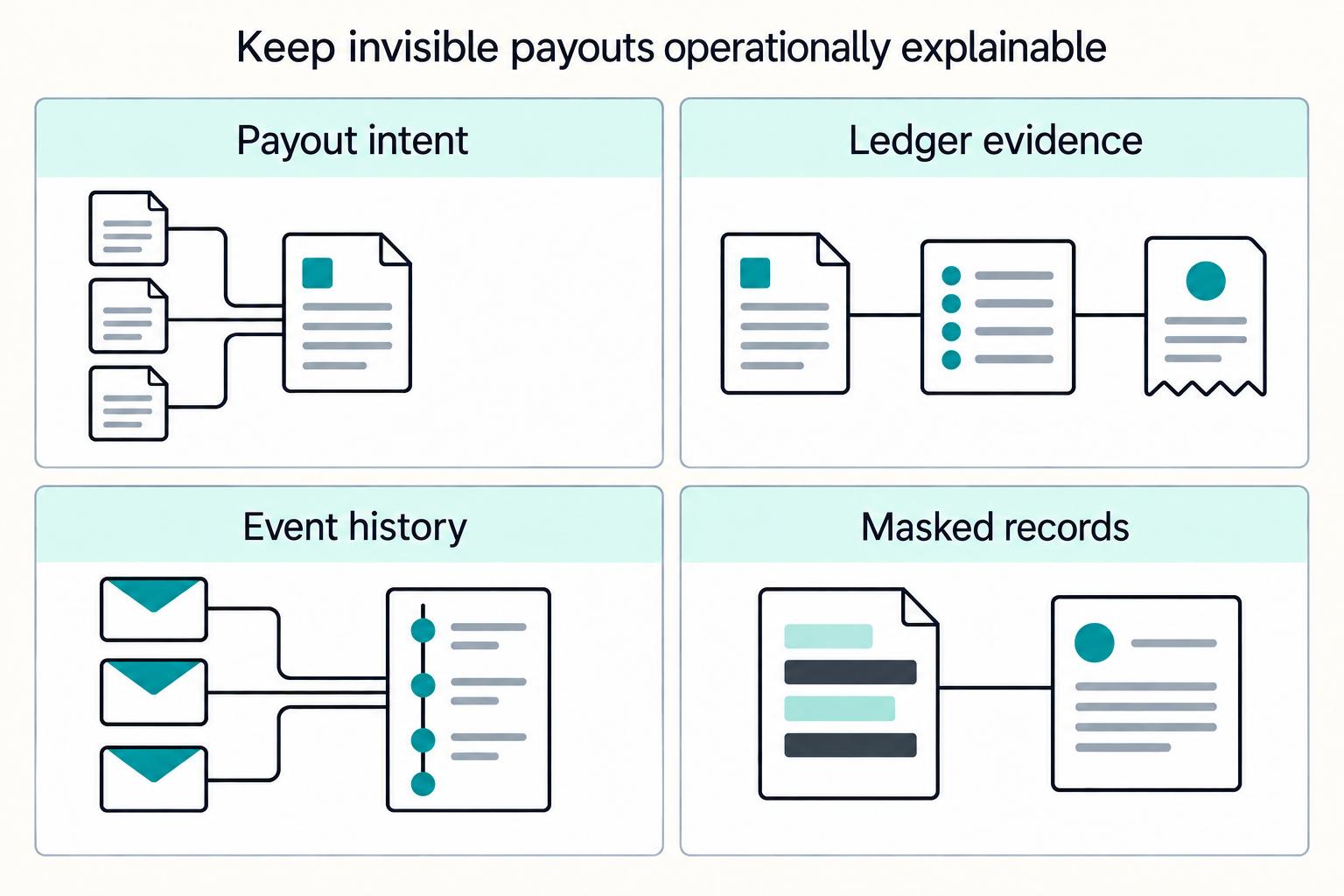
Invisible Payouts: How to Remove Payment Friction for Contractors Without Sacrificing Compliance
Invisible payouts should make life easier for contractors without hiding the controls your team needs. Contractors should get a predictable, low-friction flow, while internal teams can still enforce and document payout decisions when needed. If you run contractor payouts at scale, you need both outcomes at once. We recommend treating every easy payout as a controlled release path your team can replay later.
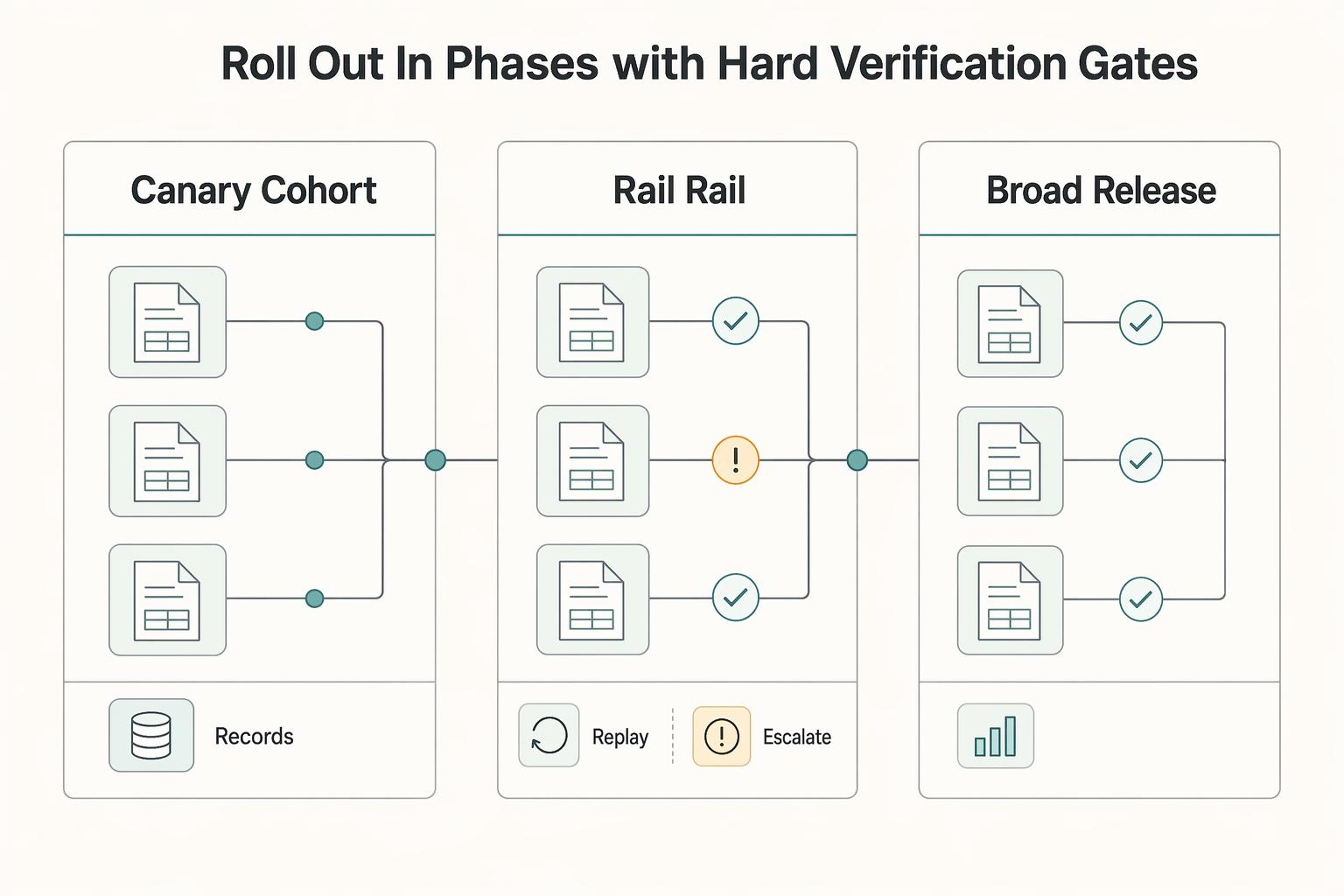
Building a Contractor Payout Tracker Recipients Trust
A payout tracker can help build trust when recipients can see what is happening, what happens next, and whether they need to act, without opening a support ticket. When payout status is vague, routine questions can turn into tickets, calls, and escalations. When status is clear, timestamped, and action-oriented, recipients can self-serve and support teams may spend less time chasing updates.