
Quick Answer
Shortlist by corridor, currency, account reachability and supported business purpose. Compare scheme timing separately from provider enablement, limits, fees and completion evidence. Pilot one recoverable route, reconcile actual financial effects, and resolve unknown originals before fallback.
How to Compare ACH, SEPA, PIX, and UPI for Platform Payouts#
Use this comparison matrix as a decision worksheet for ACH, bank wires, SEPA, Pix and UPI. Swift messaging may support a bank wire; it is not itself the settlement rail. Choose a corridor/currency and eligible recipient first, then compare timing, total cost and operational fit.
| Team | Main concerns |
|---|---|
| Finance | Fee predictability, foreign exchange exposure, and whether payouts can be reconciled cleanly |
| Payments ops | Beneficiary data quality, exceptions, and compliance gates |
| Engineering | Whether the integration is reliable enough for real traffic, asynchronous status changes, and retries |
This is intentionally written for a cross functional audience. Finance cares about fee predictability, foreign exchange exposure, and whether payouts can be reconciled cleanly. Payments ops cares about beneficiary data quality, exceptions, and compliance gates. Engineering cares about whether the integration is reliable enough for real traffic, asynchronous status changes, and retries. If one of those teams cannot support a rail in production, the answer is usually no, even if the rail looks attractive on paper.
ACH is a US-dollar bank-payment option in the US; international programs may link it to separate local routes. Fedwire is a US-dollar wire system, while cross-border bank wires can use correspondent routes and Swift messaging. SEPA credit transfers are euro-denominated across 41 scheme countries through participating PSPs. Pix is Brazil-focused; UPI connects participating accounts in India. Local availability does not establish arbitrary cross-border or business-payout eligibility.
It also helps to set expectations early on settlement and price. Terms like SEPA Instant, PIX, or UPI tell you something about the rail, but they do not guarantee the exact payout experience you will get from a specific provider route or configuration. The same caution applies to pricing. Provider fees, FX treatment, and rejection or return handling costs may stay unclear until commercial and provider confirmation. If you need a real go or no go decision, ask for corridor specific confirmation rather than relying on a generic product page.
One practical recommendation up front is simple. Do not choose your first rail mix only because it sounds fastest. Start with the rails your team can actually verify before launch. That means confirming supported markets and programs, checking the beneficiary data you must collect, and naming who in finance and ops owns final approval.
A common failure mode can be choosing a rail for speed, then discovering late that coverage is limited, pricing shifted during review, or no one owns exception handling when payouts start failing. The sections that follow are built to help you avoid that.
For the US-dollar timing tradeoff, see ACH vs Wire Transfer for Contractor Payouts When Platform Teams Should Use Each.
At a glance comparison matrix for ACH wire SEPA PIX UPI and SWIFT#
Use verified scheme basics to shortlist routes, then confirm the exact provider program, recipient eligibility, limits and fee schedule before go-live. Scheme timing is not a guarantee for the full platform-to-recipient process.
Compare geography/currency, scheme processing, recipient eligibility and actual provider operating constraints. Keep scheme-level facts separate from provider/API enablement and all-in delivery estimates.
| Rail | Settlement profile | Fee predictability | FX exposure | Compliance burden | Integration complexity | Best-fit use case | When to use / avoid | Operator checkpoint |
|---|---|---|---|---|---|---|---|---|
| ACH | US-dollar US-bank payments; batch/banking-day processing, with eligible Same Day service | Actual provider schedule/return fees | FX requires a separate funding or cross-border step | Actual entity/program duties | Submission, return/status and reconciliation controls | Scheduled eligible US-bank payouts | Avoid an unsupported instant or cross-border promise | Confirm bank eligibility, actual cutoff/calendar and current Same Day limit |
| Bank wire | Domestic/cross-border bank route; timing depends on system, currency and cutoffs | Provider, correspondent and recipient charges | Depends on funding/payout currencies and bank quote | Actual entity/program duties | Bank identifiers, status recovery and reconciliation | Supported urgent or higher-value bank transfers | Avoid treating every wire as Fedwire or a universal completion SLA | Confirm route, cutoff, charges, limits and recovery path |
| SEPA Credit Transfer | EUR across 41 scheme countries/participating PSPs; business-day processing | Actual provider fees | EUR route; FX separate if needed | Actual entity/program duties | Reachable account, receipt/cutoff and status model | Eligible euro bank payouts without an instant promise | Check receiving PSP/account participation | Confirm provider receipt calendar; covered EU PSP timing rules are not an all-route API SLA |
| SEPA Instant | EUR; scheme ten seconds from PSP receipt/authorization, 24/7 with short notified maintenance | Actual provider fees | EUR route; FX separate if needed | Actual entity/program duties | Reachability, limits and ambiguous-confirmation recovery | Eligible time-sensitive euro payouts | Scheme maximum removed; customer/provider/risk limits remain | Confirm route enablement; resolve timeout before a second payment |
| Pix | Brazil; funds available within seconds, 24h including non-business days | Actual participant/provider fees | Cross-currency funding is separate | Actual entity/program duties | Recipient data, limits and status/reconciliation | Eligible Brazil-local instant payouts | Participant payer/daily/monthly limits matter | Confirm business program, recipients, limits and exception ownership |
| UPI | Participating India bank accounts; round-the-clock transfers within seconds | Actual business-provider fees | Cross-currency/cross-border scope needs separate approval | Actual entity/program duties | Approved outgoing flow, recipient data, limits and status | Eligible India-local program where provider supports payouts | Collection-request support does not establish payout eligibility | Confirm business purpose, recipient accounts and current category/provider limits |
| Swift messaging for bank wires | Messaging network; underlying bank route determines settlement | Provider/correspondent/recipient costs | Actual bank/provider currency route | Actual entity/program duties | Message/payment references and bank-route reconciliation | Supported cross-border bank transfers | Avoid calling messaging itself instant settlement | Confirm route, expected evidence, charges and unresolved-attempt recovery |
Two checks prevent most bad rail decisions:
- Distinguish internal provider-balance movement from external transfer; verify the completion evidence for the actual route.
- Check scheme processing and provider receipt/cutoff/eligibility separately; test the full funding-to-recipient path.
Practical first-pass rule: mark a rail red until you have written confirmation of corridor support, required beneficiary data, and a named finance/ops approver.
For market selection, see PIX vs. SEPA vs. ACH vs. SWIFT: Choosing the Right Payout Rail for Each Market.
Which payout rail should you launch first for your platform#
Launch the first rail your team can operate and reconcile daily, not the one with the strongest speed claim. Start with one corridor and one rail, prove control in production, then expand.
Start with payout shape, then verify corridor reality#
| Starting condition | Rail to evaluate first | Why this is a practical first choice | Verify before go live |
|---|---|---|---|
| US domestic, recurring eligible USD bank payouts without an instant promise | ACH | Often aligns with scheduled, repeat payout flows | Coverage map, beneficiary data requirements, return handling, and daily reconciliation ownership |
| Time-sensitive payouts where local instant routing is confirmed for your program | PIX, SEPA Instant, or UPI | These are named local instant rails and can fit urgency-driven payouts when enabled for your corridor | Corridor approval, production enablement, webhook/status model, and exception ownership |
| Cross-border payouts or corridors without confirmed local rail coverage | Supported bank wire, potentially using Swift messaging | Practical fallback when local instant options are not available for your approved scope | Written fee/FX handling, status visibility, cutoff handling, and escalation path |
This is a launch rule of thumb, not a universal law. Public material can indicate broad global coverage or local instant capabilities, but you still need corridor-level confirmation before committing a rail to finance, ops, or product.
Choose the rail you can close operationally every day#
Engineering and finance should close the loop across the actual submission/status records, financial effects and ledger. Use the supported API, file or manual path with applicable updates/polling/reconciliation; monitor provider conditions and owned delays during the pilot.
Roll out in a narrow sequence#
| Step | Requirement |
|---|---|
| 1 | Pilot one corridor on one rail |
| 2 | Review failed, delayed, and rejected payouts until the exception queue has a clear owner and response path |
| 3 | Add a second rail only after retry handling and duplicate-event protection are stable |
Related: Procurement Technology Stack for Platform Operators: What Tools to Use at Each Growth Stage.
Hidden costs and tradeoffs that change total payout cost#
Total payout cost is rarely the number on the fee card. The reliable way to model it is: published fees + conversion behavior + failure handling + internal ops time.
Use the actual business-payout fee schedule for the chosen product, market and volume. A merchant checkout percentage is not a payout price. Include fixed/per-item fees, FX spread, correspondent or recipient-bank charges where relevant, returns and internal exception effort.
| Cost driver | What looks visible first | What usually changes real cost | What to verify before margin modeling |
|---|---|---|---|
| Provider fee schedule | A percent-plus-fixed number | Market-specific pages, product-specific pricing, and exception-based treatment in some cases | Exact market page, product scope, and page date |
| Currency conversion | One quoted rate | Spread behavior and additional bank/issuer charges outside provider line items | Quote source, timestamp, and whether external bank/issuer fees can apply |
| Failed payouts | Headline transfer fee | Rework, correction cycles, and support effort | Rejection reasons and manual touches per failed payout |
| Internal operations | Often omitted | Reconciliation workload and exception queue handling | Who owns exceptions and time-to-close per case |
Consumer-first versus operator-grade payout flows#
Consumer-friendly payout flows can be strong for recipient simplicity. For operators, the key constraint is that public consumer and merchant pages do not automatically produce a complete business payout-cost model across corridors and products.
Document how the provider defines domestic and international for this product. The sender entity, recipient market and funding route can affect pricing; do not import a classification from another checkout or consumer product.
Record the quote or fee-schedule version, market/product scope, effective date and assumptions. Refresh those inputs before commercial approval rather than preserving an old page date as a current rate.
Speed changes cost, not only wait time#
If you prioritize faster methods (including local instant options such as PIX, SEPA Instant, or UPI where available), include the operating burden in the same cost model. Faster payout expectations usually mean stricter monitoring, faster exception ownership, and tighter status handling to avoid support and finance cleanup.
Cost of failure checklist#
Before labeling any rail "lower cost," price failure paths explicitly:
- Duplicate payout risk: retries without replay-safe controls (for example, idempotency handling) can turn one incident into outsized loss.
- Delayed cash visibility: submitted payouts that do not reconcile cleanly to ledger movement create treasury and close-process overhead.
- Unresolved exception queues: rejected payouts and missing status resolution convert directly into labor cost.
If headline pricing is close, choose the option your team can verify, reconcile, and close without manual backlog drift.
For a step-by-step walkthrough, see Platform Payout Cost Estimator for Wire, ACH, and Local Rails.
Compliance and tax gates that block go live#
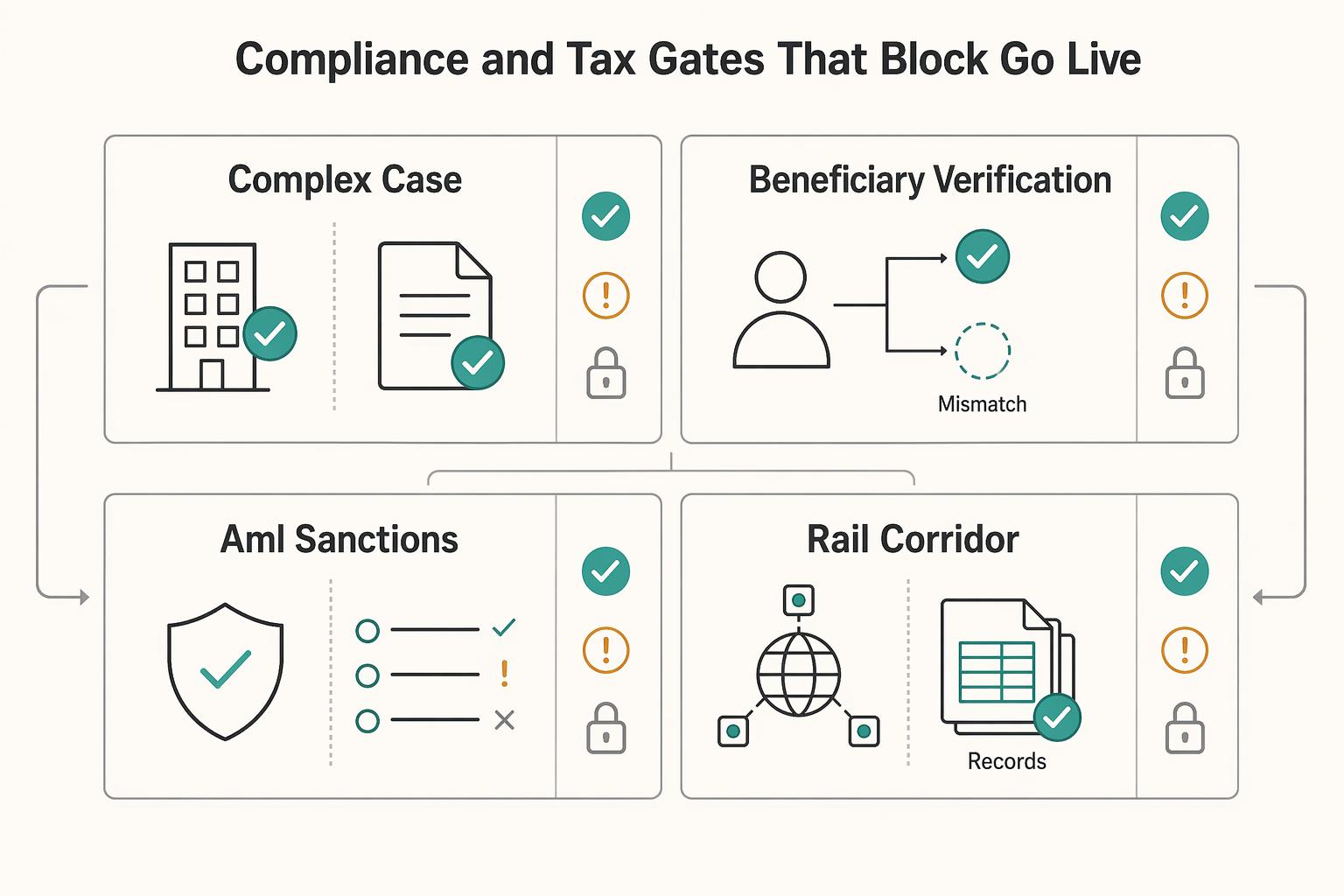
Before launch, clear the controls applicable to the actual entity, recipient and payout program. The diagram illustrates operational ownership; it does not impose every tax or AML requirement on every platform.
Map entity approval, required beneficiary checks, applicable AML/sanctions handling and rail/corridor enablement to named owners. A possible sanctions match needs investigation; confirmed prohibitions may require blocking or rejection and reporting under the relevant regime, rather than an ordinary internal hold.
| Gate | What must be true before launch | Common blocker | Evidence to keep |
|---|---|---|---|
| Entity approval | Your payout program can operate under the approved business profile | Document mismatches or incomplete ownership/business data | Approval status, owner, and final submitted entity records |
| Beneficiary verification readiness | Recipient records meet required checks for the intended payout flow | Missing fields or identity/profile mismatches | Required field list by route and exception handling notes |
| AML/sanctions policy handling | Applicable investigation, blocking/rejection/reporting and release authority are defined | Holds with no clear escalation owner | Policy decision log, queue owner, and exception records |
| Rail and corridor enablement | The selected method is actually enabled for your use case | Assuming a method is available for every recipient/corridor | Provider confirmation for production route coverage |
Delays usually come from control gaps, not from pricing models: unclear ownership, unresolved holds, and missing evidence. This is especially important when you plan to use SEPA, PIX, or UPI, where availability and eligibility can vary by provider setup and route.
Where the actual payer/payment facts create tax-data or information-reporting duties, identify the responsible filer, required payee data and retention/access process. Rail selection alone does not establish a 1099 obligation.
Build one pre-launch evidence pack#
Before go live, keep one shared pack that finance and ops can review quickly:
| Evidence item | What to keep |
|---|---|
| Compliance approvals | Final decision records |
| Approved policy exceptions | Scope/owner within lawful authority; no policy exception to a legal prohibition |
| Beneficiary data requirements | By payout route |
| AML/sanctions escalation | Ownership and queue location |
| 1099-related data capture | Ownership and storage location |
| Audit trail | Ownership for post-launch changes |
Do not mark ACH, wire, SEPA, PIX, or UPI as ready until each gate has a clear owner, an approval record, and retrievable evidence. For related U.S. routing context, see FedNow vs RTP vs ACH for U.S. Platform Payout Routing.
Integration and reliability checks for engineering and operations#
After compliance clears, the next go/no-go decision is technical: do not launch a rail until your team can submit payouts, track status changes, prevent duplicate execution, and reconcile movement without manual guesswork.
Set a minimum internal baseline before launch:
- A provider-supported submission/status or file/manual path for the actual route
- Supported asynchronous updates, polling or reconciliation with replay-safe processing
- Durable internal action/effect identity plus provider key controls where supported
- Recoverable unknown-attempt handling and consistent financial reconciliation
The engineering baseline is a recoverable submission and status path, with durable internal action identity, applicable provider controls and independent reconciliation evidence.
| Failure mode | What it looks like in production | What to verify before launch |
|---|---|---|
| Duplicate request submission | A timeout or retry path triggers a second payout attempt | Where idempotency keys are created, how replays are handled, and how duplicate attempts are detected |
| Asynchronous update gap | Provider-side status changes but your platform record does not update | How status is re-fetched, how inbound events are replayed safely, and how missing updates are surfaced |
| Stale FX quote usage | Approved economics and submitted payout details drift | Who owns quote refresh decisions, and which quote reference is stored with the request |
| Payout state mismatch | Provider state and internal ledger/dashboard disagree | State mapping rules, terminal-state handling, and a repeatable reconciliation check |
What to test before production#
Use a sandbox-to-production parity checklist for the exact live path: beneficiary creation, payout submission, asynchronous status handling, reject/return handling, and payout lookup after timeout scenarios. The goal is operational predictability, not perfect sandbox fidelity.
After a timeout, preserve the original action identity and reconcile the existing attempt through supported lookup/status/manual recovery. Reuse a provider key only within its supported scope and retention behavior. An expired key or missing confirmation does not prove failure. Resolve unknown exposure before submitting a replacement, especially across providers; SCT Inst can produce a belated positive confirmation.
Use a shared launch sign-off#
Require shared engineering/finance reconciliation sign-off for the actual adapter. Include representative API, file or manual records, supported status evidence, unknown-attempt tests, mapping rules and one reconciled financial run. Preserve valid obligations and executed effects during payment holds; release readiness is separate from recognition.
For cross-border ACH scope, see International ACH Transfers: Complete Guide for Platform Cross-Border Payouts.
Scenario recommendations by platform model and market#
Launch the narrowest payout scope your team can operate reliably today, then expand only when demand and controls are proven.
| Platform scenario | Recommended launch scope | What to verify before go live | Red flag |
|---|---|---|---|
| Creator or contractor marketplace in one domestic market | Keep your domestic rail mix plus one documented fallback route | Named owner for payout exceptions, beneficiary data requirements, and daily reconciliation between provider records and your ledger | Expanding to additional cross-border rails before recipient demand and exception handling are proven |
| Euro-denominated payouts to reachable SEPA accounts | Evaluate standard SCT or SCT Inst for the required timing | Account/PSP reachability, provider limits, receipt calendar, FX funding and timeout recovery | Treating the SEPA geography or ten-second scheme clock as universal recipient/API eligibility |
| Brazil or India growth bet | Enable local routes only where provider/entity/corridor support and fallback handling are explicit | Provider support by country, entity, and recipient type; AML review owner; manual escalation path when a payout cannot be released automatically | Launching a local route without a fallback and owner for exceptions |
| Cross-border multi-currency program | Keep volume gated until FX controls are explicit and approved | Quote validity rule, approval threshold, stored quote reference, and what happens when the quote expires before submission | Submitting against stale or missing FX quote context |
For file submission formats, see Batch Payout File Formats for NACHA ACH, ISO 20022 PAIN, and SEPA Credit Transfer.
30 day execution checklist from shortlist to production#
Use a 30 day plan only for a narrow launch with clear ownership. If corridor scope or exception ownership is still unsettled, treat this as a sequencing template, not a rollout promise.
| Week | Focus | What to lock by week end | Stop if |
|---|---|---|---|
| 1 | Shortlist and owners | Corridor/currency/recipient shortlist plus owners for applicable entity/beneficiary, AML/sanctions, tax/reporting, finance and exception controls | A rail is listed without a clear country, entity, or recipient-type decision |
| 2 | Technical design | Actual API/file/manual submission/status model, supported update handling, durable action identity, provider retry controls and unknown-outcome recovery | The team can submit payouts but cannot clearly explain duplicate prevention or replay handling |
| 3 | Controlled pilot | Small pilot batch, daily reconciliation between provider records and your ledger, and a written exception log | Exceptions are handled in inboxes or chat instead of a tracked queue |
| 4 | Production readiness | Finance, ops, and engineering sign-off, with explicit notes for where each rail is supported and when it is enabled | Any corridor is assumed live without documented enablement |
Document state mapping and durable financial-effect identity so duplicate updates do not duplicate money or accounting. Preserve valid historical financial events even if they arrive late. Resolve ambiguous attempts through owned reconciliation and escalation; refresh expired FX quotes with renewed approval where the approved economics change.
Run a rail-by-rail coverage check for your entity, corridor, currency, business purpose and recipient type. Record the provider evidence and unresolved conditions, then approve only the actual enabled route.
Related reading: How Bahtnet Works: Thailand Central Bank Wire Transfer for Platform Operators.
Compare your route-specific fee assumptions with the payment fee comparison tool.
Conclusion#
Choose the rail mix your team can actually operate with confidence. Headline speed is not the deciding factor if finance cannot reconcile it, ops cannot handle exceptions, or compliance still has open questions.
Match the route to corridor and currency: ACH and Fedwire support different US-dollar bank-payment needs; SEPA serves euro transfers across participating scheme accounts; Pix and UPI serve their supported local programs. Cross-border wires may use Swift messaging and correspondent banks. Confirm eligible recipients, business purpose, limits and route-specific completion evidence.
That is why your next step should be practical, not theoretical. Use the comparison matrix, the scenario rules, and the 30 day checklist to make one cross functional decision this week: which rail you will pilot first, in which corridor, with which fallback. If you are split between a faster local rail and an older route, pick the option your team can verify every day. A slightly slower method with clean reconciliation is usually the lower-risk launch choice than a faster route that leaves you guessing when a payout is delayed, rejected, or duplicated.
The trust-first checkpoint is simple. Before full rollout, get written confirmation from the provider on corridor coverage, beneficiary and entity support, and any production conditions that change by market or route. For cross-border programs, pay extra attention to hidden fees, unpredictable exchange rates, and lengthy settlement times. Those are the costs that usually turn a good-looking comparison into a bad operating outcome. If those points are still vague after commercial review, you do not have a go live decision yet.
One final rule is worth keeping: do not approve a rail on a demo alone. Approve it when finance, ops, and engineering can review the same pilot evidence and reach the same conclusion about what happened to a payout, including failures.
Frequently Asked Questions
Which payout rail should a marketplace launch first if it has limited engineering bandwidth?
Choose a route you can reconcile daily. Eligible US-dollar US-bank payouts may fit ACH; verify the actual recipient, calendar and return handling. Prove the supported adapter/status path, durable action identity and unknown-attempt recovery before expanding coverage.
When should operators choose ACH or Wire transfer instead of SEPA Instant, PIX, or UPI?
Evaluate ACH for eligible US-dollar US-bank payouts where its banking calendar and return handling fit. Evaluate wires for supported domestic or cross-border bank routes, using the actual currency, cutoff, fee and status model. SEPA, Pix and UPI serve different currency/geography scopes, so an older rail is not automatically a safer substitute. Resolve an unknown original attempt before fallback.
What minimum criteria should a payout method comparison tool include for finance and engineering teams?
Compare corridor/currency, recipient/account eligibility, scheme timing, actual fees/FX, applicable controls and adapter requirements. Record the supported API, file or manual submission/status path, replay controls, durable action identity and unknown-outcome recovery. Provider API/webhook features are not universal rail properties.
What usually breaks after launch in payout operations: compliance gating, settlement, or reconciliation?
This depends on the rail and implementation, so treat all three as launch risks to test. A rail can be technically "live" before your internal records are trustworthy, which makes reconciliation an early pressure point for many teams. A good checkpoint is simple: can engineering and finance explain one failed payout from API request to final ledger entry without guessing?
How should teams compare foreign exchange quote risk across payout methods?
Do not compare FX on a single quoted rate alone. Compare when the foreign exchange quote is created, whether it is indicative or committed, how long it remains usable, and what happens if the payout is retried, delayed, or rerouted. Cross-border business payments are exposed to currency fluctuations, so your approval rule should name who accepts quote risk and at what point a stale quote must be refreshed.
What evidence should be collected before approving go-live for a new payout rail?
Keep corridor/currency and eligible-account evidence, applicable controls, provider-supported submission/status paths, durable action/effect identity and unknown-attempt recovery. Include pilot financial reconciliation and owned exception outcomes. API/webhook evidence applies only where that adapter uses it.
Try a related tool
Researched and edited by the Gruv editorial team. Gruv builds cross-border billing, payouts, and finance-operations software for global businesses.
Sources
Includes 3 external sources outside the trusted-domain allowlist.
Educational content only. Not legal, tax, or financial advice.
Related Posts
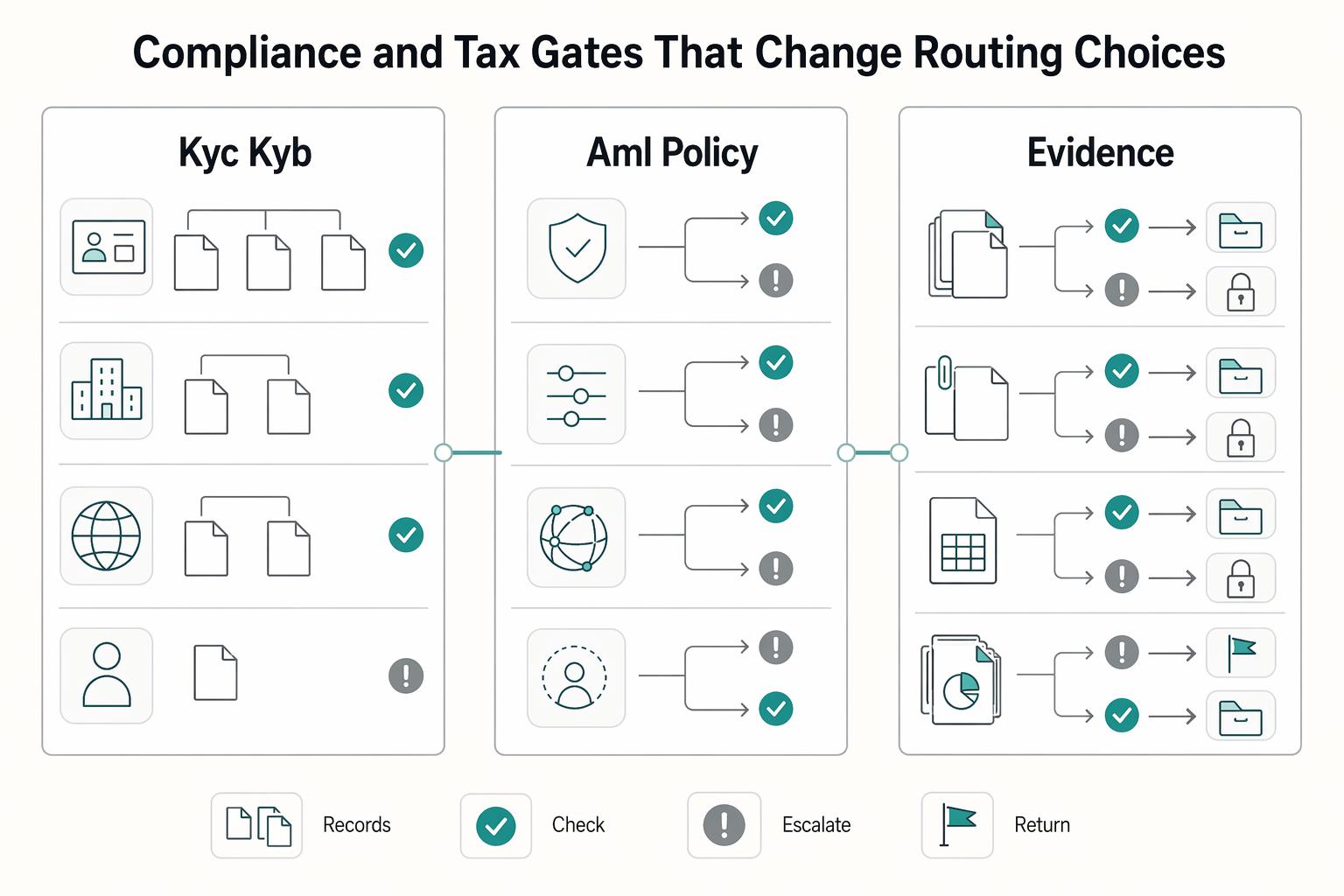
PIX vs. SEPA vs. ACH vs. SWIFT for Platform Payout Decisions by Market
If you own payouts, you do not need another glossary. You need a fast way to choose the rail that fits the job, then avoid the failures that show up after launch. This payout rail comparison is for finance, ops, and engineering teams that care less about labels and more about whether money lands on time, statuses reconcile cleanly, and exceptions stay out of inboxes.
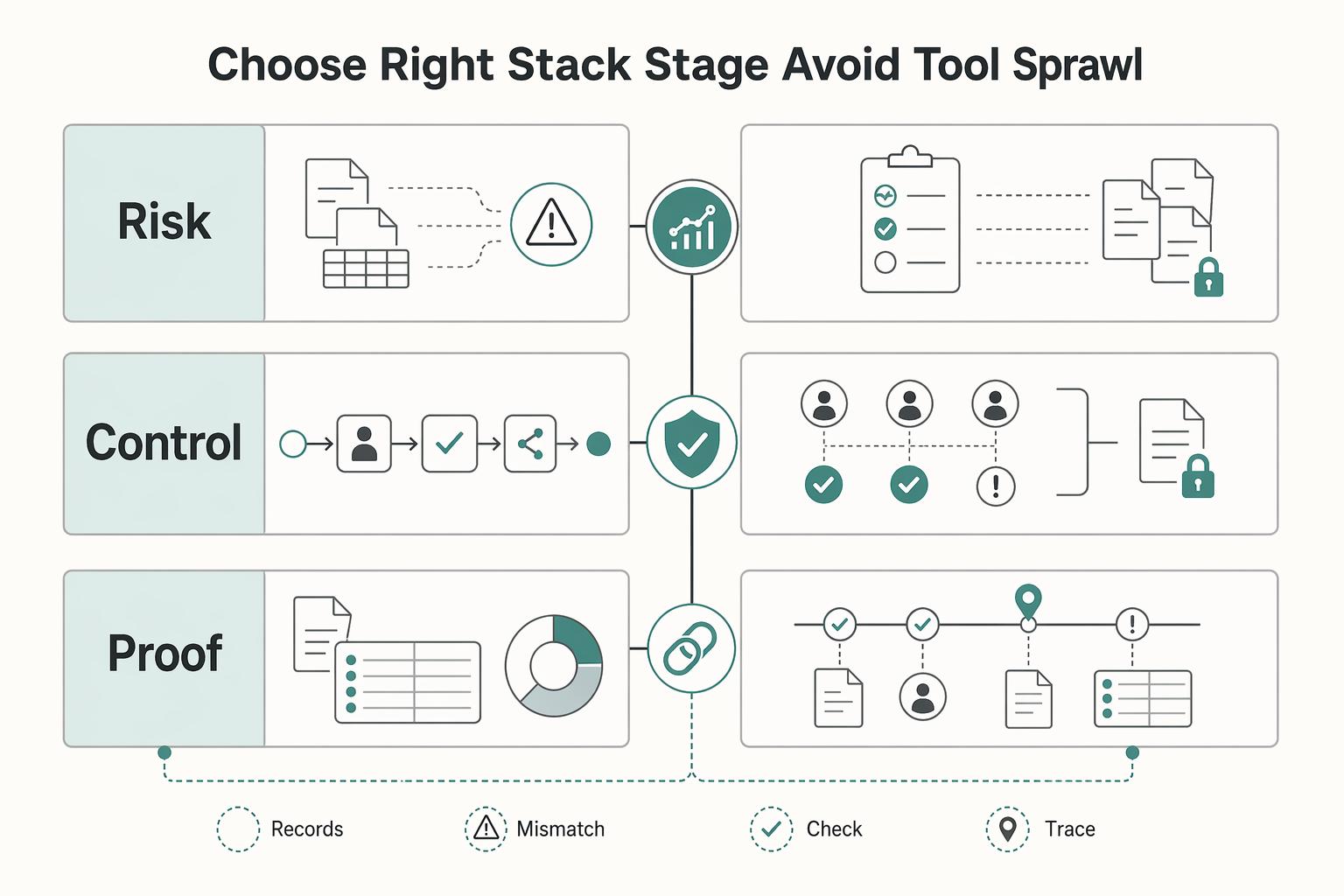
Procurement Technology Stack for Platform Operators at Each Growth Stage
Use funding stages as rough operating examples, not purchasing requirements. A small team can need strong payment controls, while a larger team may already have the required workflow in its ERP. Buy for the demonstrated gap.
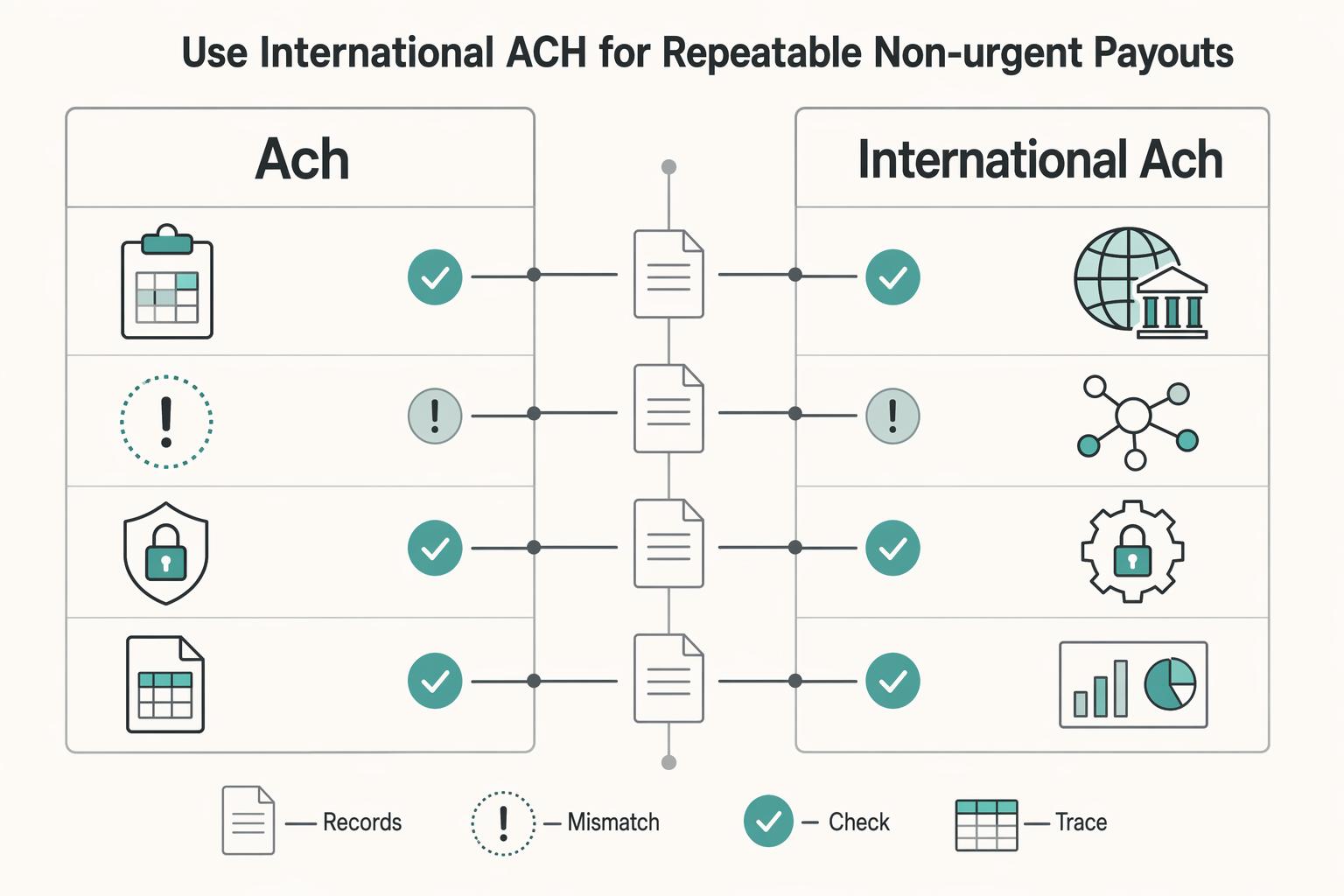
International ACH Transfers for Platform Operators
**International ACH can fit repeatable, non-urgent cross-border payouts when lower payout cost matters and you can still control approval, submission, recipient credit, and reconciliation.** For finance, ops, and product owners, this is less a payment-method debate than an ownership and control problem.