
Quick Answer
Use a payout cost estimator as a rail-selection model, not a loan-style calculator. Compare ACH, wire transfer, and local payment rails in one schedule, then show fee assumptions, timing expectations, market constraints, and the selected option with a written reason. Keep the inputs visible so finance and operations can review the logic. Recheck the model as outcomes come in, because the estimate is directional and should change when provider terms or corridor realities change.
How to estimate payout costs across wire, ACH, and local rails#
A useful payout cost estimator is a rail-choice tool, not a retirement calculator with a new label. For a platform finance or operations team, the real question is simpler. When should you send funds by ACH, when does a wire transfer justify its higher cost, and when do local payment rails make sense for a given market and payment flow?
That distinction matters because the search term itself is noisy. You will find plenty of pages built around generic cost-estimating guidance or an amortization schedule. Those are valid models for other problems, but they do not explain payout execution. A payout is not a loan balance changing over time. It is a payment-systems decision with its own flow, risks, timing, and cost tradeoffs.
If you build your estimator around that reality, it becomes useful in day-to-day operations instead of sounding financial while missing the operational decision. It should not produce a polished number in isolation. It should support a rail decision that can be repeated, reviewed, and improved.
A strong payout cost estimator does a few simple things well:
- compares wire, ACH, and local rails on the same basis
- makes its assumptions explicit
- keeps cost and timing expectations visible
- produces an output your team can review
- can be revisited as real results come in
Rather than treating payout math like a generic finance problem, treat it as a payment-systems problem with operational consequences. That keeps the estimator grounded in the actual work your team has to do.
We covered this in detail in payout timing and settlement speed.
Wire vs ACH vs local rails at a glance#
The three options solve different problems, so your estimator should compare them on that basis.
ACH is often the baseline rail for cost-effective, recurring domestic payments. That does not mean it wins every time. It means it is often the starting point when the payment fits a standard domestic flow.
Wire transfers are commonly used for fast, high-value, or international payments. They may justify their higher fees when urgency or payment type matters more than minimizing per-transaction cost. They also come with more limited reversibility than ACH.
Local payment rails matter when a local-bank-network route is available and improves the path for that country or corridor. In some cases, local rails can reduce correspondent-bank involvement and improve speed or cost. In others, availability or country-specific rules may limit their usefulness.
A simple comparison view helps keep the decision honest:
| Rail | Usually fits best | What your estimator should watch |
|---|---|---|
| ACH | recurring, cost-conscious domestic payments | slower processing and more limited international fit |
| Wire | urgent, high-value, or international payments | higher fees and limited reversibility |
| Local rails | markets where local-bank-network payouts are available | country coverage, local-bank requirements, and whether the speed/cost benefit is real in that market |
This is why a payout estimator should never be a one-line fee lookup. If all you compare is the direct charge to send the payment, you miss the real decision. The better comparison is not just fee versus fee. It is which rail best fits this payment, under stated assumptions about cost, timing, and market constraints.
That framing also stops teams from forcing one rail across every use case. The lower-cost rail on paper is not automatically the right rail in practice. The higher-cost rail is not automatically waste. And local rails should not be treated as obviously better or obviously worse without looking at the country and payment context.
What a platform payout cost estimator must include#
There is not a single canonical payout-estimator formula established here, so the safest approach is to keep the model explicit and limited to assumptions you can actually defend.
| Estimator input | What to show | Constraint or note |
|---|---|---|
| Rail options | ACH, wire, and local rails where supported | If a local option is not available in a country or for a payment type, do not leave it in the model as if it were interchangeable |
| Price assumptions | Fee assumptions for each option | Keep assumptions consistent when comparing providers |
| Timing assumptions | Make timing visible in the estimate | Standard ACH is commonly described as taking multiple business days; wires are typically used when speed matters more |
| Geography or payment-type constraints | Treat recurring domestic, urgent international, and market-specific local-rail options as different cases | If local bank-account requirements apply, model them as a constraint |
| Estimate status | State that the result is an estimate | Useful for planning and comparison, not a guarantee of the final amount or outcome |
| Written assumptions | Show what assumptions produced the estimate | Makes the model easier to trust and improve |
At minimum, a payout estimator should make a few things clear.
1. The rail options being compared#
Start with the actual choices: ACH, wire, and local rails where supported. If a local option is not available in a country or for a payment type, do not leave it in the model as if it were interchangeable with the others.
2. The price assumptions#
Write down the fee assumptions you are using for each option. If you are comparing providers, keep the assumptions consistent so the output is still comparable.
3. The timing assumptions#
A rail decision is often about more than price. Standard ACH is commonly described as taking multiple business days, while wires are typically used when speed matters more. If timing is part of the decision, make it visible in the estimate rather than leaving it implied.
4. The geography or payment-type constraints#
Recurring domestic payments, urgent international payments, and market-specific local-rail options should not be treated as the same case. If a country requires certain payments to originate from local bank accounts, that belongs in the model as a constraint, not a footnote.
5. A clear note that the result is an estimate#
An estimate is directional. It is useful for planning and comparison, but it is not a guarantee of the final amount or outcome.
6. Written assumptions#
If someone reviewing the payout cannot tell what assumptions produced the estimate, the model will be hard to trust and harder to improve.
In short, the most useful estimator is usually the one that is transparent about:
- which rails are being compared
- what price assumptions are being used
- what timing assumptions matter
- what country or payment constraints apply
- where uncertainty still remains
If those items are present, the model starts becoming operational instead of cosmetic.
Build the estimator math and output schedule#
Once you know what belongs in the model, the math can stay simple. It does not need to imitate a lending calculator.
That distinction matters. An amortization calculator shows how a loan payment is split between principal and interest over time. A payout estimator is different. It is usually a comparison table that helps you evaluate rails under a defined set of assumptions.
A practical starting point is to build one row per payout scenario and keep the inputs visible.
| Payout group | Rail | Fee assumption | Timing assumption | Country or market note | Estimated total | Selected rail | Notes |
|---|---|---|---|---|---|---|---|
| Group or scenario | ACH / Wire / Local rail | input | stated assumption | stated constraint or eligibility note | calculated output | chosen option | why it won |
That format matters because it makes the estimate explainable. Finance can review the cost logic. Operations can review whether the assumptions match the payment type. When the estimate changes, you can see which assumption moved.
A few practical rules improve the model:
- keep the inputs separate from the outputs
- show the assumptions next to the estimate
- compare alternatives before choosing a rail
- save a copy of key scenarios if helpful
- revise the table when provider terms or market conditions change
The goal is not mathematical theater. It is a repeatable schedule that helps someone review a payout decision with less guesswork.
For a step-by-step walkthrough, see contractor spend management and payout controls.
Decision rules for picking the rail by scenario#
The most defensible decision rules are methodological, not magical. A good estimator should help your team compare alternatives in a way that is transparent and reproducible.
| Decision rule | What to check | Why it matters |
|---|---|---|
| Start with a baseline | Use ACH as a reasonable baseline for routine, predictable domestic flows; compare wire for high-value, time-sensitive, or international payments; include local rails where available | Keeps alternatives in the comparison |
| Make assumptions easy to review | Show when a rail wins because a timing or fee assumption changed | Another reviewer can follow the logic and get to the same conclusion |
| Test what would change the answer | Ask which timing, fee, or market assumption would cause you to choose a different rail | A simple sensitivity check shows when the choice flips |
| Keep the scenario tied to the payment | Recurring domestic payouts, time-sensitive international payments, and countries with local bank-account requirements are not the same case | The rail should fit the payment context |
Start with a baseline and compare alternatives#
For routine, predictable domestic flows, ACH is often a reasonable baseline. For high-value, time-sensitive, or international payments, wire may be the more relevant alternative. Where local rails are available, they should be included in the comparison rather than ignored.
Make the assumptions easy to review#
If a rail wins only because one timing or fee assumption changed, that should be visible. A decision rule is more useful when another reviewer can follow it and get to the same conclusion.
Test what would change the answer#
If the choice flips when you change one assumption, that is useful information. Sensitivity analysis does not need to be complicated. It can be as simple as asking which timing, fee, or market assumption would cause you to choose a different rail.
Keep the scenario tied to the payment#
The right rail for recurring domestic payouts may not be the right rail for a time-sensitive international payment. Likewise, a local option may matter more in countries where local bank-account requirements apply.
You can turn those ideas into plain-language rules such as:
- use ACH as a common starting point for routine domestic payments
- compare wire when speed, value, or international reach matters more
- include local rails where supported, especially if they can avoid correspondent-bank friction or meet local-origin requirements
- document the assumption that makes one option win over another
- revisit the decision if the assumptions change
These rules matter because an estimator is not just a finance artifact. It is part of a system. If your model says one thing but your team cannot review it consistently, the model is not finished.
Need the full breakdown? Read wallet funding methods: ACH, wire, and debit card.
Hidden costs competitors skip and how to model them#
Many payout calculators look clean because they skip the messy parts. That makes them easier to market, but less useful in practice.
| Issue type | What the article says | Modeling note |
|---|---|---|
| Reported issue that qualifies as an error | Formal procedures can apply | Do not treat the send cost as the only operating cost |
| Inquiry about whether an EFT posted, without asserting an error | Error-resolution procedures do not apply | Leave room for issue handling without assuming every inquiry becomes a formal case |
| Documentation or information request | Can create cost; in some situations it must be treated as an error unless the consumer is simply asking for a duplicate copy for tax or record-keeping purposes | Include support and documentation handling in the estimate |
| Problems after the send | Operational work can follow when something goes wrong | Leave room for uncertainty instead of implying the send fee is the whole story |
One conservative way to think about hidden cost is to ask what work begins after a payment problem is reported, not just what the send costs on a good day.
Error-resolution work#
When a reported issue qualifies as an error, formal procedures can apply. Regulation E also requires compliance with error-resolution procedures when a consumer reports the loss or theft of an access device with possible unauthorized use. That is a reminder that payment issues can create real operational work beyond the original transaction price.
Not every inquiry is an error#
At the same time, not every customer question should be modeled as a full error case. If a consumer is only checking whether an EFT posted, without asserting an error, the error-resolution procedures do not apply. A realistic estimate should leave room for issue handling without assuming every inquiry becomes a formal case.
Documentation and information requests#
Requests for documentation or information can also create cost. In some situations, those requests must be treated as an error unless it is clear the consumer is simply asking for a duplicate copy for tax or record-keeping purposes. That means support and documentation handling can be part of the real operating burden.
Model the uncertainty honestly#
The cleanest fee comparison can still miss the operational work that follows when something goes wrong. A better estimator leaves room for that uncertainty instead of implying that the send fee is the whole story.
Related: publisher payment thresholds and payout limits.
How to operationalize this inside Gruv and review estimate vs actual regularly#
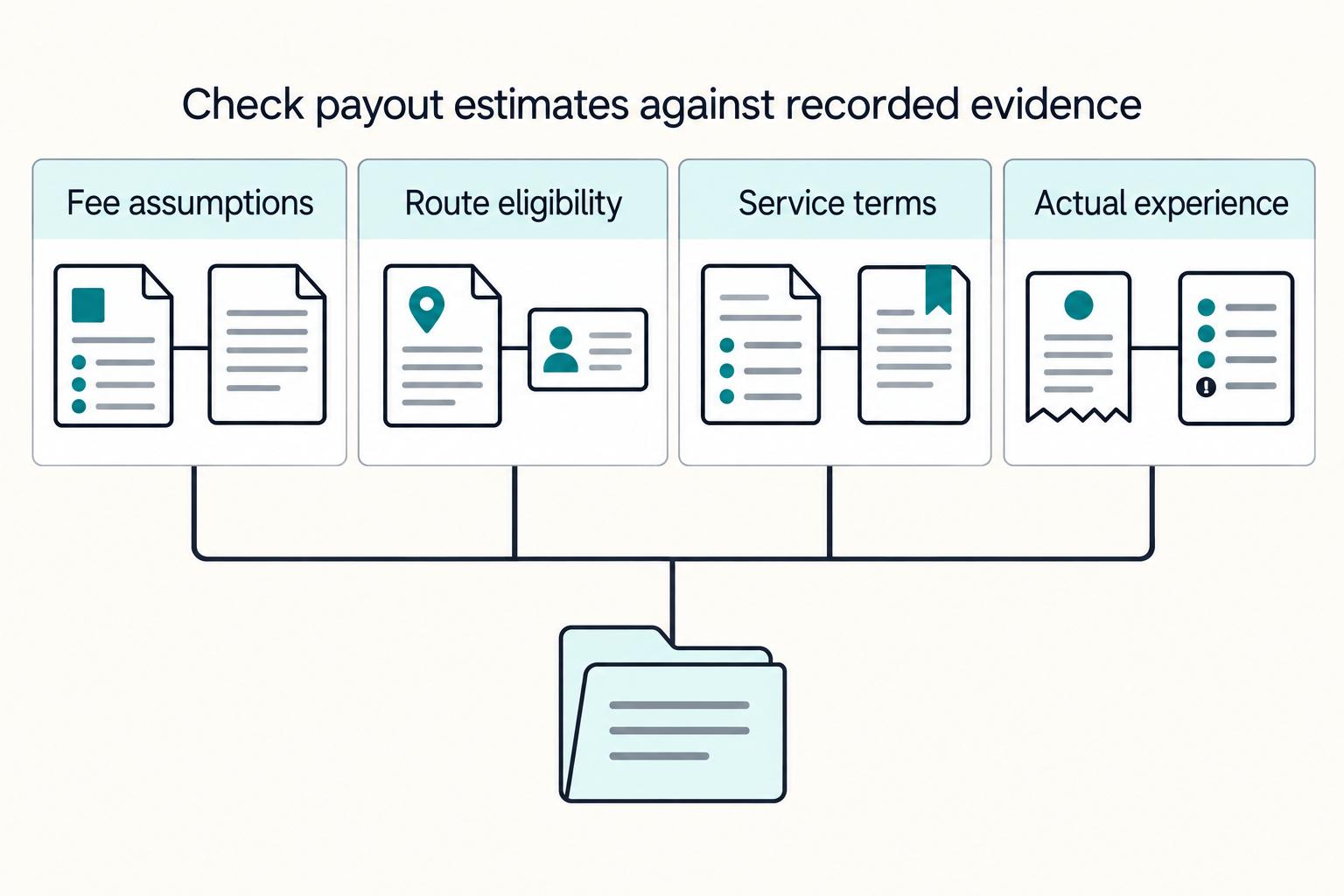
An estimator becomes more valuable when it is part of the workflow instead of a spreadsheet people forget to revisit. Inside Gruv, the practical starting point is to compare assumptions in one place, confirm what is supported in writing, and update the model as live experience accumulates.
Use Gruv to compare assumptions#
Gruv's tools page is built for global operations planning. It includes calculators, compliance checks, and planning tools, including a Payment Fee Comparison tool designed to compare percent fees, fixed fees, and FX markups and estimate net received.
That makes it a reasonable place to pressure-test the assumptions behind a payout estimate before you commit to a provider setup or rollout.
Get the evidence set in writing#
Before you standardize on a provider or rollout plan, keep the decision grounded in written evidence. A practical discipline is to ask vendors for the same evidence set and keep every response in writing.
That includes items such as:
- fee sheets
- country eligibility
- support SLA terms
- contract responsibility
Running live tests before signing can also help validate whether the written assumptions match the real experience.
Keep rollout expectations modest#
Gruv is modular by design, so teams can use one product or combine modules where supported. But coverage varies by market and program, so the safest move is still to confirm the exact country and workflow fit before treating an estimate as final.
Revisit the model on a regular cadence#
Whatever tool you use, save the scenarios that matter, keep the assumptions visible, and update them when experience changes. The broader lesson from cost-model documentation and comparison calculators is simple: assumptions should be explicit, saved, and refined over time rather than treated as permanent.
You might also find this useful: spend analytics for platforms and payout data.
Frequently Asked Questions and conclusion#
Is a payout cost estimator basically a retirement, APR, or amortization calculator?#
No. Those models may be useful for lending or personal finance, but they do not describe payout execution very well. A payout estimator is closer to a payment-systems comparison: which rail fits this payment, under what assumptions, and at what likely cost.
Why is a direct-fee comparison not enough?#
Because rail choice is usually shaped by more than the send fee alone. Timing, geography, payment type, and local-market constraints can all affect which option is actually suitable. And the output is still an estimate, not a guarantee.
When should ACH be the likely choice?#
ACH is often a good starting point for routine, predictable domestic payments. One ACH-versus-wire guide describes standard ACH as taking 1-3 business days, so it is usually more compelling when time sensitivity is not the main issue.
When does a wire transfer earn its higher operating cost?#
When the payment is high-value, time-sensitive, or international and faster execution matters enough to justify the added cost. Wires are often positioned that way, but the exact economics still depend on provider and market.
When do local payment rails make sense?#
When a local-bank-network option is available and materially improves the payment path for that market. In some cases, local rails can reduce correspondent-bank friction, and in some countries local-account requirements also matter.
What is the minimum math the estimator needs?#
Do not assume a universally sourced formula exists. At minimum, show the rail being compared, the fee assumption, the timing assumption if relevant, and any country-specific constraint that could change the choice.
How often should we compare estimate versus actual?#
Regularly enough that the assumptions stay current. The important part is not a magic cadence. It is keeping the model reviewable and updating it when provider terms, market coverage, or real outcomes change.
What should the output look like?#
A schedule or table that shows the rail options, the assumptions behind each option, the estimate itself, the selected rail, and the reason for the choice. If someone reviewing the payout cannot see how the estimate was built, the model is harder to trust.
A useful platform payout cost estimator is a rail-choice tool, not a generic finance calculator. It should help your team compare ACH, wire, and local options using clear assumptions about cost, timing, and country fit.
If you remember only one thing, make it this: estimates are estimates. Final cost depends on multiple factors, and procedures or provider terms can change. Document the cost drivers, review the estimate, and update it as conditions change.
Frequently Asked Questions
Is a payout cost estimator basically a retirement, APR, or amortization calculator?
No. Those models may be useful for lending or personal finance, but they do not describe payout execution very well. A payout estimator is closer to a payment-systems comparison: which rail fits this payment, under what assumptions, and at what likely cost.
Why is a direct-fee comparison not enough?
Because rail choice is usually shaped by more than the send fee alone. Timing, geography, payment type, and local-market constraints can all affect which option is actually suitable. And the output is still an estimate, not a guarantee.
When should ACH be the likely choice?
ACH is often a good starting point for routine, predictable domestic payments. One ACH-versus-wire guide describes standard ACH as taking 1-3 business days, so it is usually more compelling when time sensitivity is not the main issue.
When does a wire transfer earn its higher operating cost?
When the payment is high-value, time-sensitive, or international and faster execution matters enough to justify the added cost. Wires are often positioned that way, but the exact economics still depend on provider and market.
When do local payment rails make sense?
When a local-bank-network option is available and materially improves the payment path for that market. In some cases, local rails can reduce correspondent-bank friction, and in some countries local-account requirements also matter.
What is the minimum math the estimator needs?
Do not assume a universal formula applies. At minimum, show the rail being compared, the fee assumption, the timing assumption if relevant, and any country-specific constraint that could change the choice.
How often should we compare estimate versus actual?
Regularly enough that the assumptions stay current. The important part is not a magic cadence. It is keeping the model reviewable and updating it when provider terms, market coverage, or real outcomes change.
What should the output look like?
A schedule or table that shows the rail options, the assumptions behind each option, the estimate itself, the selected rail, and the reason for the choice. If someone reviewing the payout cannot see how the estimate was built, the model is harder to trust. A useful platform payout cost estimator is a rail-choice tool, not a generic finance calculator. It should help your team compare ACH, wire, and local options using clear assumptions about cost, timing, and country fit. If you remember only one thing, make it this: estimates are estimates. Final cost depends on multiple factors, and procedures or provider terms can change. Document the cost drivers, review the estimate, and update it as conditions change. Want to confirm what's supported for your specific country/program? Talk to Gruv.
Try a related tool
Researched and edited by the Gruv editorial team. Gruv builds cross-border billing, payouts, and finance-operations software for global businesses.
Sources
- acquisition.gov/far/part-31trusted
- connect.ncdot.gov/letting/Design%20Build%20Program/CANCELED%20...trusted
- consumerfinance.gov/rules-policy/regulations/1005/11trusted
- dot.nebraska.gov/media/splfs2zy/o-chap-12-cost-estimating.pdftrusted
- dot.nj.gov/transportation/capital/pd/documents/Cost_Est...trusted
- federalreserve.gov/boarddocs/supmanual/cbem/200904/0904cbem.pdftrusted
- gao.gov/assets/gao-20-195g.pdftrusted
- gao.gov/assets/gao-09-3sp.pdftrusted
Educational content only. Not legal, tax, or financial advice.
Related Posts
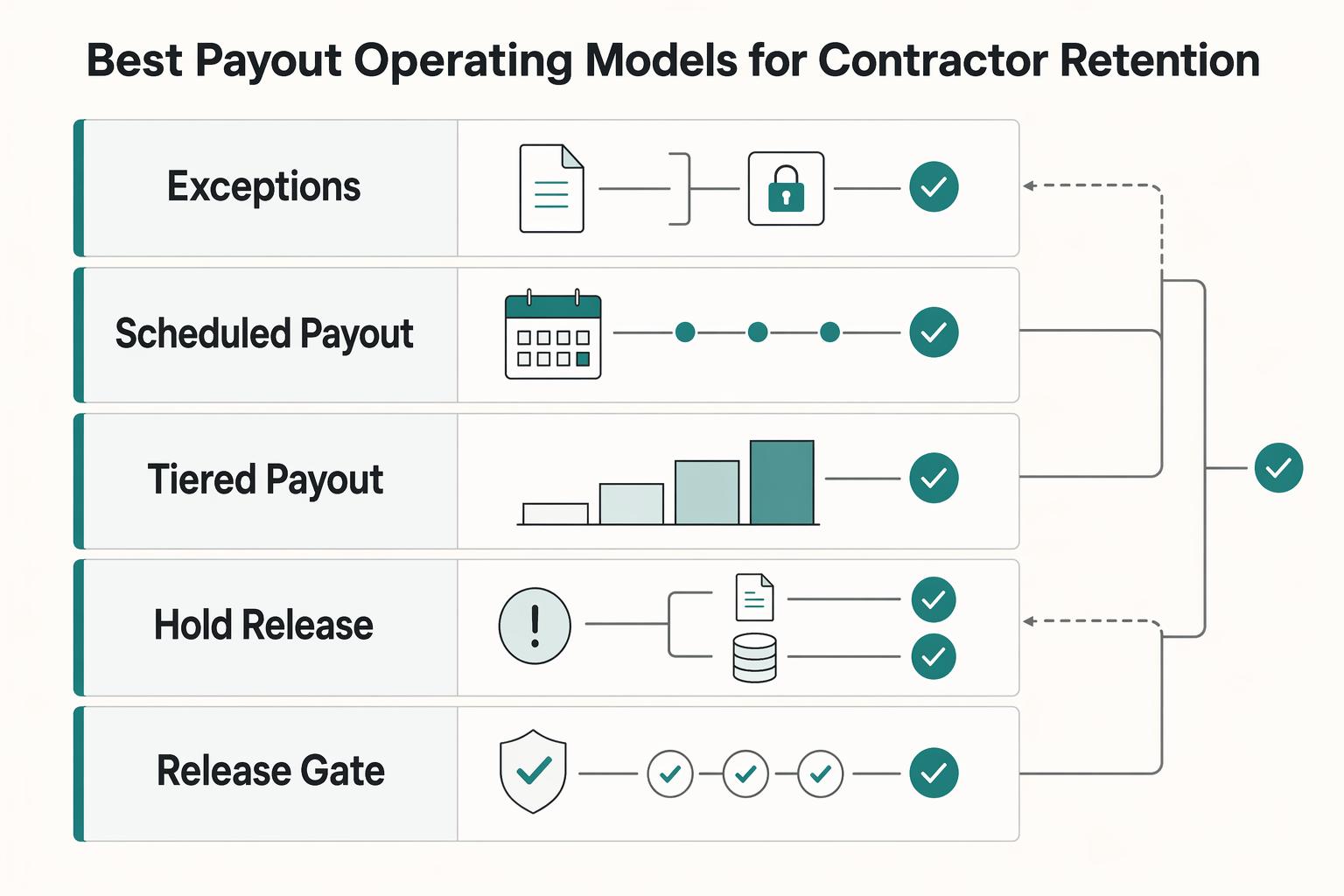
Bad Payouts Are Costing Your Supply in Two-Sided Platforms
Payout issues are not just an accounts payable cleanup task if you run a two-sided marketplace. They shape supply-side trust, repeat participation, and fill reliability. They can also blur the revenue and margin signals teams rely on.
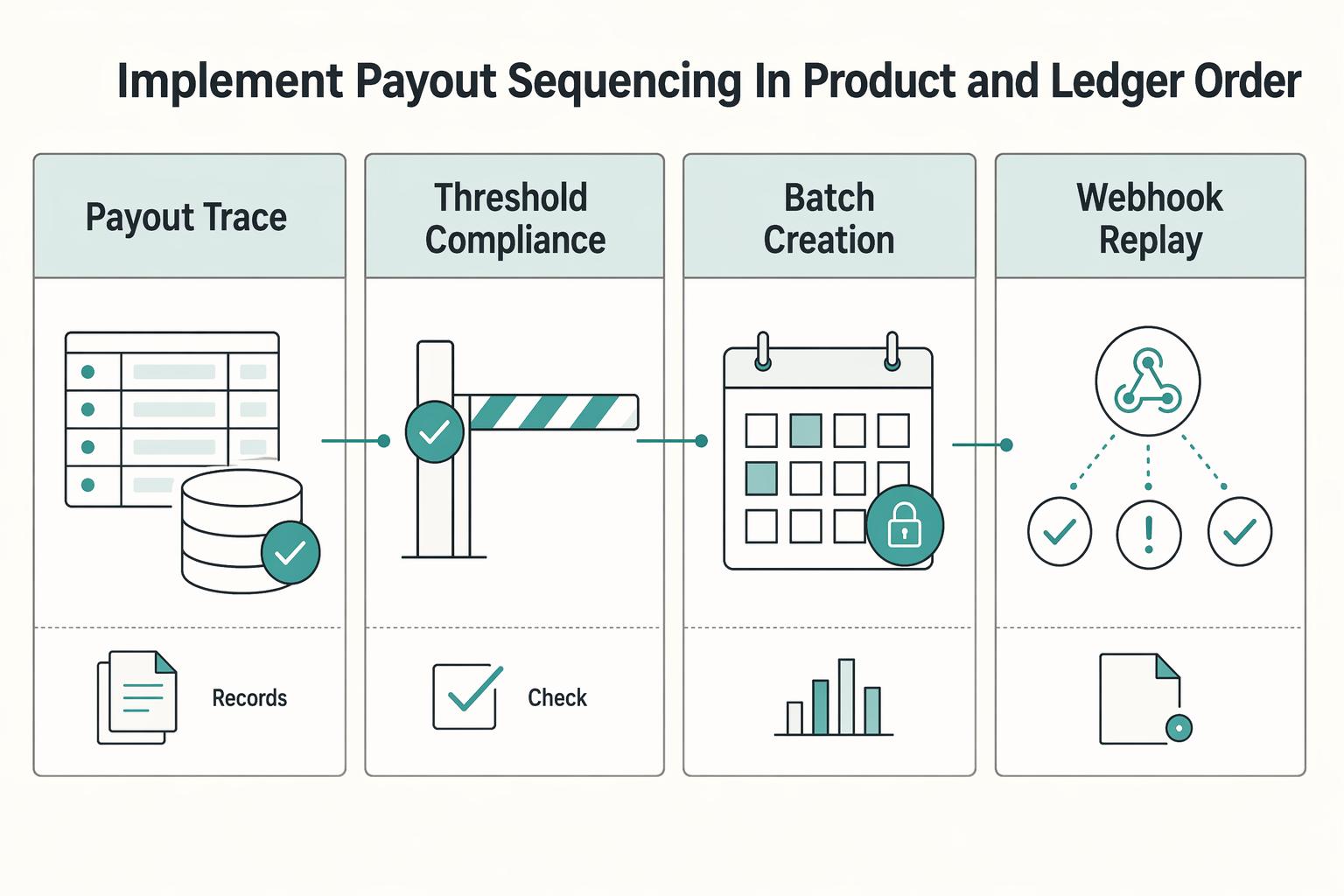
Set Publisher Payment Thresholds Without Delaying Recipient Payouts
Set payout minimums to manage transaction costs, but only if recipients can still predict when they will be paid. If thresholds are unclear or scoped poorly, you may lower fee drag while increasing rollover balances and "where is my payout?" pressure on operations.
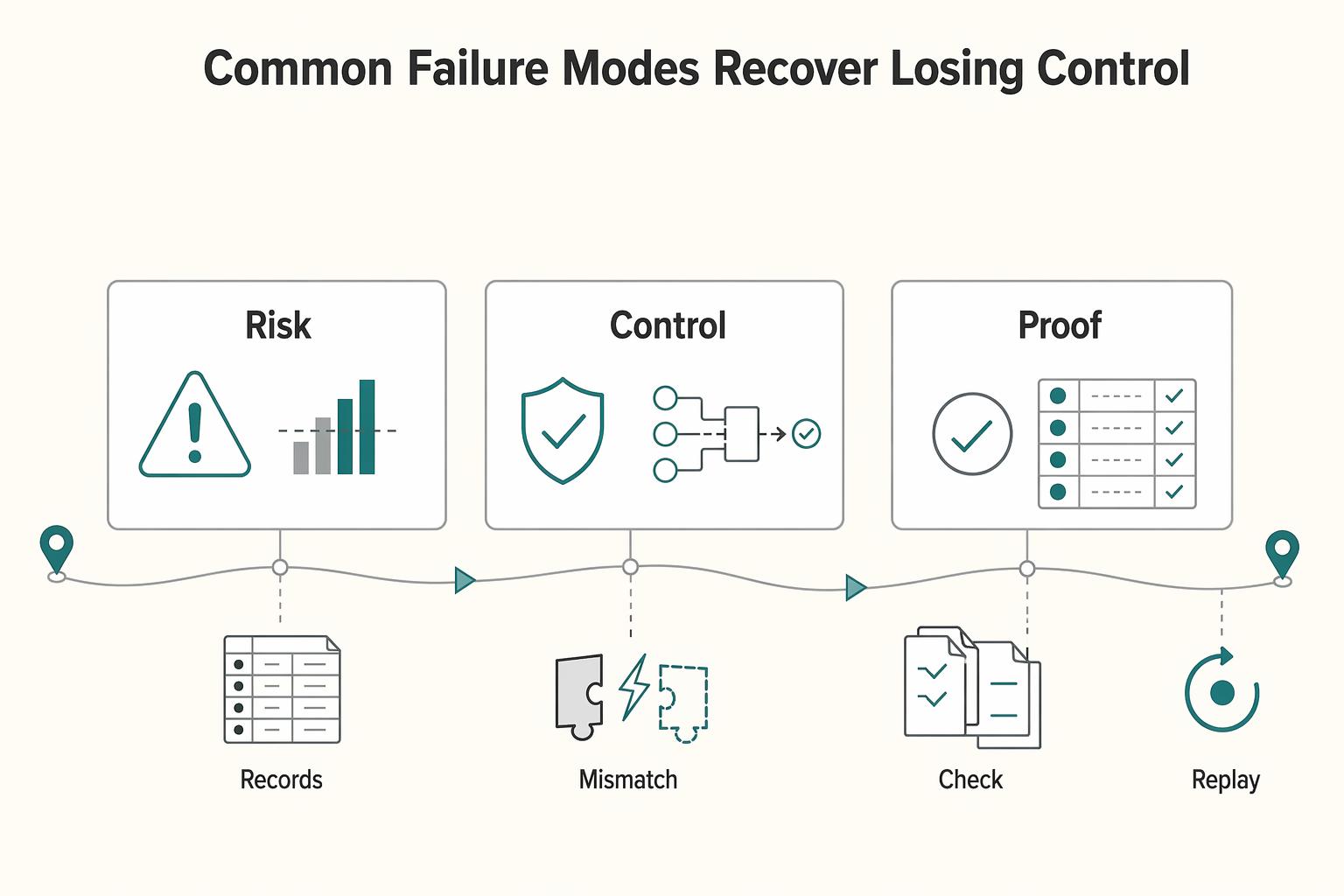
Spend Analytics for Platforms That Turns Payout Data Into Cost Decisions
Treat payout cost reduction as a controls decision first, not a dashboard exercise. If a proposed saving cannot be traced from payout activity into your ledger, checked through a reconciliation process, and tied to a clear settlement outcome, do not ship it, no matter how good the chart looks.