Use machine learning mainly for retry timing after you split soft and hard declines and confirm end-to-end event traceability. On a subscription platform, better results usually come from pre-attempt controls first, then narrow post-decline automation with policy caps, cooldown windows, and replay-safe execution. If labels are noisy or webhook history is incomplete, pause model work and fix instrumentation before rollout.
Machine learning helps most when recurring-payment failures are probabilistic, not deterministic. If a charge might succeed later because timing, issuer behavior, or customer segment matters, model-driven retry timing can improve recovery. If the failure is deterministic, such as an invalid API call, a blocked payment, or a hard decline that cannot be fixed right away, rules and process fixes usually do more good.
The goal is not more automation. The goal is a higher authorization success rate, meaning authorized payments divided by total payments submitted for authorization, without creating avoidable retry risk. On a subscription platform, that is the difference between recovered revenue and avoidable frustration.
This guide focuses on reducing involuntary churn: customers who did not mean to cancel, but whose payment flow failed. Some providers position AI retry timing as more targeted than fixed retry schedules for this job. Stripe, for example, describes Smart Retries as choosing the best times to retry failed payments and as more targeted than traditional rules-based retry logic. That can help, but it is not a reason to retry everything.
Every recovery action has a cost. A retry can improve recovery odds on a soft decline, which is temporary and may succeed later. The same policy can become wasteful or risky on hard declines, which usually cannot be resolved immediately. Provider behavior is also not identical. Stripe documents hard-decline suppression in Smart Retries, while Recurly notes hard declines are typically not retried but may have exceptions. Copying a default is not a strategy.
Use three checks before you conclude that ML is helping:
Treat provider examples as guardrails, not targets. Recurly can document caps like 20 total attempts or 60 days since invoice creation. Stripe can recommend 8 tries within 2 weeks for its Billing product. Those figures describe product behavior. They do not prove the same cadence is right for your issuer mix, payment methods, and customer segments.
Work from a clear decision sequence, instrumentation checkpoints, and explicit tradeoffs. Confirm failures are actually soft-decline recovery opportunities. Verify the issuer and BIN data supports that hypothesis. Flag failure modes early, especially brute-force retries and poor event classification. We covered dispute-side controls in detail in How to Handle Payment Disputes as a Platform Operator.
Use ML only when failures are context-dependent and your event data is reliable. Start by separating failure classes so each bucket gets the right action.
Start by bucketing declines by who can fix them. Group customer-solvable failures, such as insufficient funds or incorrect card details, separately from issuer- and acquirer-side failures, such as issuer unavailable, acquirer errors, and 3D Secure (3DS) failures such as 3D Not Authenticated.
Classify with provider fields like decline codes or refusalReason, not guesswork. Also check application-level outcome fields, not just transport status, because a provider can return HTTP 200 even when a payment is refused.
If failures are deterministic, optimize non-ML handling first. If outcomes vary by context, ML is more likely to pay off. In practice, that means fixing baseline logic and heuristics before modeling, then moving to machine learning when behavior changes by timing, issuer, or BIN and the rule set becomes hard to maintain.
Use BIN and issuer views as a readiness check. If you cannot explain outcome differences across the first 6 or 8 BIN digits, issuer, and retry timing, your problem framing is still too weak for modeling.
Set no-model triggers before you build: pause ML work when labels are noisy or API and webhook event history is incomplete.
Run a quick data-integrity check on failed renewals. Confirm each case has a full chain from API request through webhook outcome. If that chain is broken or inconsistent, fix instrumentation and run heuristics first, then revisit ML.
If you cannot trace a failed renewal from request to final recorded outcome, pause ML work. First make the system reliable: capture the right fields, make retries replay-safe, document compliance blockers, and define who decides when automation hits edge cases.
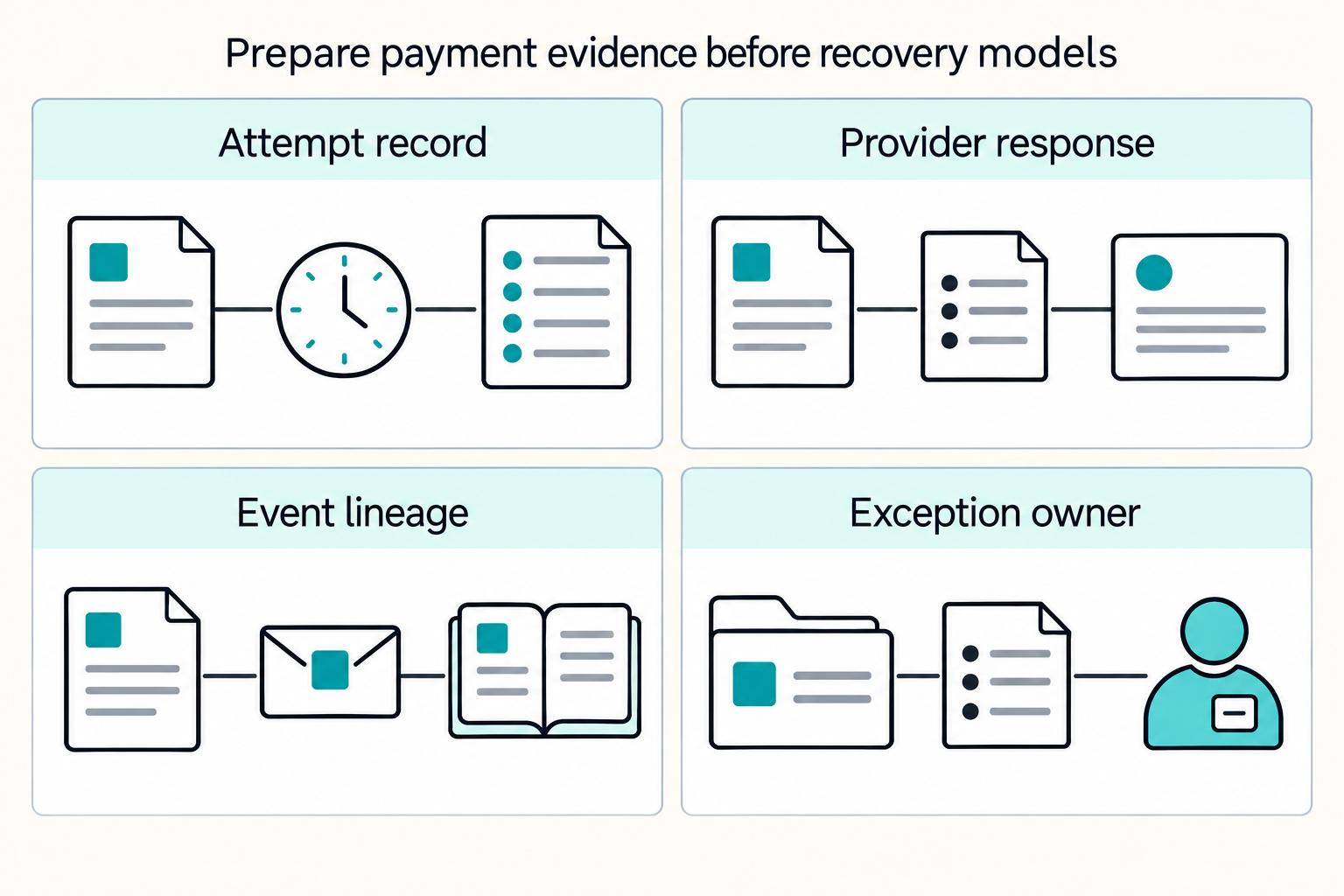
Build a practical minimum data spine in your payment records before you use ML for retry or routing decisions. Each payment attempt should include attempt timestamp, provider response or decline code, retry history, token state, BIN attributes, and issuer outcome, all tied to one persistent payment record.
| Field | Stored to answer |
|---|---|
| Attempt timestamp | When the attempt happened |
| Provider response or decline code | What exact response came back |
| Retry history | Whether it was a retry |
| Token state | Whether the token was usable |
| BIN attributes | Which issuer family was involved |
| Issuer outcome | What final outcome was recorded |
Be precise with BIN handling. The current issuer identifier context is 8 digits, so storing only a coarse prefix or derived region label can reduce issuer-level signal. Store machine-readable decline fields, not just a generic failed status, because providers can return decline codes and, in some cases, advice codes with suggested next steps.
Use a simple checkpoint. Sample failed renewals and confirm you can answer, from stored data alone, when the attempt happened, what exact response came back, whether it was a retry, whether the token was usable, which issuer family was involved, and what final outcome was recorded. If you still need cross-service log digging, your data spine is not ready.
Require clean event lineage across API requests, webhooks, and provider references. This keeps automated recovery idempotent instead of creating duplicate operations.
Use idempotency keys for retryable API operations and persist them with the payment record. Providers document that the same key should return the original result, including prior 500 outcomes, rather than create a second operation. Keys can be up to 255 characters, and providers may prune them after at least 24 hours. Keep your own durable linkage between internal correlation ID, provider request reference, webhook event ID, and posted entry.
For webhooks, design for duplicate delivery. A documented control is to log processed event IDs and skip repeats. Deduplicating only API retries, but not webhook deliveries, leaves the async path exposed to duplicate processing.
Add compliance gates to the design doc before you enable automatic actions. State, by market and program, where identity, business verification, AML review, or tax checks can block retries, reroutes, account activation, or recovery flows.
In U.S. banking regulation, Customer Identification Program procedures explicitly include minimum identity fields such as name, date of birth for an individual, and address. For legal entities, beneficial-owner identification and verification is required at account opening under the cited CDD rule. For EU VAT checks, VIES is a search engine over national VAT databases and returns a binary result, valid or invalid, so exception handling is required for follow-up. Also note that GB VAT number validation in that service ended on 01/01/2021.
Define owners and handoffs before the first experiment. Set clear ownership for policy decisions, decisioning logic, exception queues, and reconciliation checks.
Put handoff rules in the design doc, not just the org chart. If a retry is blocked by identity verification or VAT validation, route it to an exception queue with a reason code. If a webhook arrives without a matching API reference, route it as an engineering incident. If your records show a posted recovery without a settled provider outcome, consider holding it out of revenue reporting until resolved.
If you want a deeper dive, read How to Build a Subscription Billing Engine for Your B2B Platform.
Turn failure data into decisions before you automate anything. If a failure cannot map to one clear action, one owner, and one stop condition, keep it out of automation.
This matrix should be an operating document tied to your decision path, not a reporting artifact. A common split is simple: Product sets policy, Engineering encodes it, and Ops handles exceptions from the same playbook.
Define failure signals exactly as providers send them so each signal can trigger a specific action. Buckets like card_declined or payment_failed are usually too broad for retries, routing, or customer prompts.
Use the fields from your data spine: resultCode, refusalReason, refusalReasonCode, advice_code when present, token state, retry history, gateway incident status, and final recorded outcome. Include webhook refusal data as matrix input, not only synchronous API responses.
Separate failures into distinct classes before assigning actions: issuer declines, blocked or fraud-related declines, invalid API calls, authentication issues (including 3DS/SCA), and gateway availability issues. These root causes should not share one retry policy. Sample recent failed renewals and confirm each can be assigned to one primary row from stored data alone.
Map each signal to one primary intervention before you discuss models. Keep one primary intervention per row. Use qualitative expected lift unless you have controlled holdout data.
| Failure signal | Likely root cause | Intervention type | Owner | Expected lift | Risk note | Stop condition |
|---|---|---|---|---|---|---|
| Authentication required, or decline/advice says run 3DS/SCA | Card-not-present authentication not completed | Trigger 3DS/SCA flow, then reattempt once | Product + Engineering | Meaningful when authentication is the blocker | Added customer friction | Stop after one authenticated reattempt |
| Issuer unavailable or similar issuer connectivity signal | Issuing bank temporarily unreachable | Intelligent retries with timed spacing | Engineering | Time-sensitive recovery potential | Over-retrying can create noise | Cap attempts and duration; stop on hard decline or settled success |
| Not enough balance | Temporary insufficient funds | Intelligent retries, then customer payment-method update prompt if policy expires | Product + Ops | Situational recovery potential | Over-retrying can degrade customer experience | Use cooldown windows (if configured) and a hard policy end date |
| Gateway timeout, outage, or processor downtime | Gateway availability issue | Payment routing switch or backup gateway failover | Engineering | Can recover volume during incidents | Failover paths can create duplicate-attempt risk | Fail over only while incident flag is active and idempotency is enforced |
| Token unusable, repeated decline after account change, or stale credential pattern | Stored credential is outdated | Token refresh or account updater pull, then retry; otherwise prompt for update | Engineering + Ops | Useful when credentials changed | Repeated retries can continue failing | One refresh attempt before customer prompt |
| Internal fraud block on known-good traffic | False-positive risk rule | Narrow fraud/risk override | Risk/Ops | Targeted recovery path | Overrides must stay tightly scoped | Time-box override and require manual review triggers |
Encode stop conditions in code and posting logic, not just in the matrix. That is what prevents retry loops and duplicate collections.
Bound retries by both attempt count and duration. Smart Retries settings such as 8 tries within 2 weeks and duration options (1 week, 2 weeks, 3 weeks, 1 month, 2 months) are useful references, not universal policy. Treat hard declines as explicit stop signals. If the record already shows settled success, suppress later retry, reroute, and webhook-triggered recovery branches for that same obligation.
Layer duplicate-charge protection through internal state checks, API idempotency keys, and webhook deduplication. One control alone is not enough.
Review the matrix on a regular cross-functional cadence and treat edits as policy changes, not ad hoc fixes. Watch for drift: new refusal reasons, changing issuer patterns, routing fallback behavior, or temporary fraud overrides becoming permanent. Keep one shared reference so teams update the same logic.
The test is simple: for each major failure bucket, your team can point to the exact signal, next action, stop condition, and accountable owner without reconstructing decisions from old dashboards or threads.
Related: How to Migrate Your Subscription Billing to a New Platform Without Losing Revenue.
Before you automate retries, align your matrix with implementation details for idempotency, webhooks, and traceable ledger flows in the Gruv docs.
Once the matrix is in place, decide whether the next improvement belongs before the first authorization attempt or after the decline. Prioritize pre-attempt controls when first-attempt authorization is weak across issuers. Prioritize recovery automation when first attempts are strong and losses concentrate in failed renewals.
| Control | Grounded note | What to verify |
|---|---|---|
| Network tokens | Visa Acceptance reports 4.6% higher authorization rates on average for card-not-present transactions with tokens versus PAN | Compare first-attempt approval for tokenized versus PAN transactions |
| BIN-aware routing | Visa and Mastercard began assigning 8-digit BINs in April 2022 | Review issuer-level variance by BIN family |
| Issuer-preference reformatting | Stripe says Adaptive Acceptance can change messages before send, not only after decline | Test that before expanding retry logic |
| 3D Secure handling | Adyen states AUTHENTICATION_REQUIRED means the issuer mandates strong customer authentication and treats it as a soft decline | Confirm you can trigger 3DS, preserve the attempt reference, and run one authenticated reattempt |
Start with what you control before submission: tokenization and payment routing. Treat network tokens as a first-pass approval control, not only a security feature. Visa Acceptance reports 4.6% higher authorization rates on average for card-not-present transactions with tokens versus PAN, and it positions credential refresh as a way to keep recurring payments flowing when card details change.
Use BIN-aware routing narrowly. A Bank Identification Number comes from the leading digits of the card, and issuer assignment is not just six digits anymore for all networks. Braintree notes Visa and Mastercard began assigning 8-digit BINs in April 2022, so stale 6-digit tables may misclassify some issuers and route traffic poorly. Route only where your data shows persistent issuer or BIN-family variance, then verify on first attempts. As a checkpoint, compare first-attempt approval for tokenized versus PAN transactions and review issuer-level variance by BIN family.
Message quality directly affects approvals. Card requests are encoded into ISO 8583 messages, and Stripe notes there are 128 fields that issuers can interpret differently. Thin or malformed request data can depress approvals even when customer credentials are valid.
If your provider supports issuer-preference reformatting before submission, test that before you expand retry logic. Stripe describes Adaptive Acceptance as AI reformatting based on issuer preferences, and says changes can happen before send, not only after decline. Cleaner issuer-facing data can improve first-pass outcomes without adding a retry cycle.
For sampled failures, keep request payload variant, processor, issuer or BIN, response code, and final recorded outcome together so root causes stay explicit.
Treat AUTHENTICATION_REQUIRED as an SCA handling requirement, not a retry target. Adyen states this response means the issuer mandates strong customer authentication and treats it as a soft decline. If your flow cannot trigger and complete 3D Secure here, pre-attempt readiness is incomplete.
This also affects downstream routing plans. Stripe Orchestration notes that when 3DS is unsuccessful on the first attempt, it does not retry on the retry processor. Weak SCA handling can block both the original path and fallback recovery. Sample recent soft declines and confirm you can trigger 3DS, preserve the attempt reference, and run one authenticated reattempt.
Use first-attempt authorization rate as the gate metric, then segment by issuer and payment method. Stripe notes online authorization can be 10% lower than in person, so do not mix channels when diagnosing performance.
Track weekly:
For cleaner analysis, follow Stripe guidance: analyze unique declines and exclude failed retries. If first-pass approval is weak across issuers or payment methods, keep investing in tokenization, routing, message quality, and 3DS readiness. If first attempts are strong but failed renewals still drive churn, move recovery automation to the front of the queue.
For the full breakdown, read How to Reduce Subscriber Churn on Your Platform Without Sacrificing Margin.
Once first-pass controls are in place, keep post-decline recovery narrow and disciplined. For recurring payments, retry only recoverable decline classes, stop on hard declines, and make every retry safe to post.
Set retry policy from processor and gateway response codes, not generic "failed payment" labels. Stripe supports Smart Retries and custom retry schedules for failed subscription and invoice payments, and Zuora supports configuring retry logic by customer groups and gateway response codes.
| Path | Use when |
|---|---|
| Auto-retry | Transient or timing-sensitive patterns with evidence of later issuer recovery |
| Pause and re-time | Outcome depends on retry timing, not card changes |
| Trigger customer action | Hard declines, no available payment method, or signals that credentials must change |
Use three explicit paths:
Keep this map provider-specific. Stripe states it does not retry when the issuer returns a hard decline code or when no payment methods are available, and decline taxonomies can differ across gateways.
A common high-value ML use in recovery is retry timing, not retry volume. Stripe says Smart Retries uses AI to choose the best retry time, Recurly notes static one-size-fits-all schedules are less effective, and Braintree warns repeated attempts on the same payment method can inflate decline ratio and increase network-fee pressure.
| Approach | Recovery lift | Customer friction | Provider cost | Duplicate-charge risk |
|---|---|---|---|---|
| Intelligent retries | Often better than static timing when outcomes vary by issuer, segment, or time | Lower, with fewer visible repeat failures | More controlled by suppressing low-value attempts | Low only with idempotent posting controls |
| Fixed custom schedule | Useful for known segments, but can miss timing variation | Moderate | Moderate | Moderate if attempt identity is clean |
| Brute-force retries | Can be weak and inconsistent | Higher | Higher, with decline-ratio and fee pressure risk | High when retries and webhook replays are not controlled |
Treat defaults as starting points, not universal answers. Stripe documents 8 tries within 2 weeks as a recommended default and policy windows of 1 week, 2 weeks, 3 weeks, 1 month, or 2 months. Braintree documents three built-in automated retries before Past Due and at least two more times after.
Idempotent API retries and safe posting are separate controls, and you need both. Stripe supports idempotency for POST requests, and repeated requests with the same key return the same result, including 500 errors.
Webhooks help you react to async lifecycle events, but webhook handling alone does not prevent duplicate settlements. In your posting layer, treat replayed webhook deliveries as the same event, and key settlement posting to provider transaction or charge references, not only subscription ID.
A practical test is to replay the same failed and successful webhook twice in staging. You should still end with one attempt record per retry and one final settlement state.
Every retry policy needs a hard stop and a defined handoff. Stop retries at the policy limit, then route the next action from webhook signals instead of looping.
Stripe documents that attempt_count on invoice.payment_failed shows how many attempts were made, so use it for terminal routing. After exit, run card-updater logic first where available: Visa Account Updater exchanges updated card details for recurring payments, and Stripe says it can automatically attempt to refresh saved card details when cards are replaced. If that does not resolve payment, route to a payment-update flow or support based on account state and value.
Verify each exhausted renewal triggers one terminal action, matches provider attempt count, and does not re-enter auto-retry without a new payment method or new billing cycle.
This pairs well with our guide on How to Integrate Your Subscription Billing Platform with Your CRM and Support Tools.
The architecture that survives production is usually the one that starts simple, defines deterministic fallbacks, minimizes sensitive data, and fits your Merchant of Record model.
Start with provider-native optimization unless you need one decision layer across providers or internal signals your PSP cannot see. Stripe documents Smart Retries and custom retry schedules that can be enabled in the Dashboard, and Adyen offers Auto Rescue for shopper-not-present transactions such as subscription renewals.
Build an in-house service when decisions must span providers, products, or internal context. In that setup, decisions happen on your API path, and webhooks keep internal state synchronized as payment outcomes change. Webhooks push events instead of polling, but you still need deduping and state controls.
Use a simple rule here. With one PSP and a retry-timing problem, stay native first. If you need one policy across gateways or richer internal context, a custom decision point is more defensible.
Fallback behavior should be defined before incidents, not during them. Write deterministic rules for payment routing and retry suppression, and switch to them automatically when the model is unavailable, stale, or timing out.
During an incident, keep the path simple:
Keep fallback behavior reversible and idempotent. Continue using idempotency keys on API retries to avoid duplicate operations. Stripe documents idempotent retries and references a 24-hour window in its low-level error guidance.
Use only the data required for the decision and audit trail. GDPR's data minimisation principle requires limiting personal data to what is necessary, and PCI DSS requires PAN masking to at most the first six and last four digits when displayed.
Keep model features and logs narrower than raw provider payloads. Prefer masked card references, provider transaction IDs, webhook event IDs, and internal attempt IDs so you can reconcile decisions without exposing unnecessary sensitive fields.
Your Merchant of Record structure should shape your architecture choice up front. Under an MoR setup, the MoR is the legal payment entity and handles liabilities such as taxes, refunds, and chargebacks, which can change your data access, routing control, and dispute responsibilities.
Do not assume MoR contracts behave the same way. Some MoR providers support API-led integrations, but event access and routing freedom are provider-specific. Before building custom decisioning, document which events you receive via API and webhooks, which routing decisions you actually control, and who is accountable if a recovery action later becomes a refund or chargeback.
If the MoR controls most payment operations, prioritize native optimization plus clear event access. If you still operate core payments decisions, a custom service can make sense only with strong event coverage, auditability, and failure handling.
Treat your rollout timeline as a planning container, not proof the model is production-ready. Expand only when results hold under real payment noise, and stop quickly when they do not.
Start with instrumentation first. Better modeling on incomplete events still creates bad decisions. Before any pilot, confirm three basics: event completeness across API calls and webhooks, a decline taxonomy your team can act on, and parity between payment events and posted financial state.
Keep decline taxonomy simple at the top level. Stripe documents three payment failure categories: issuer declines, blocked payments, and invalid API calls. If your labels blend these, fix that before testing retries or routing so you do not mistake integration issues for issuer behavior. Also separate hard decline codes in retry logic, since those failures should not be retried without a new payment method.
Your verification pack should include:
Do not assume you can reconstruct everything later from your provider. Stripe documents retrieval of specific Event objects only for events created in the last 30 days. Archive event ID, provider reference, internal attempt ID, and final posting result during this phase.
Run a narrow pilot: one customer segment, one recurring payment method, and a holdout against current rules. Use a shadow test or canary-style rollout so the new logic sees live traffic while exposure stays limited until comparisons are clear.
Keep the intervention clean. If you also change tokenization, payment messaging, or dunning at the same time, you will not know what moved authorization outcomes. Keep retry policy configurable by retry count and maximum duration rather than assuming one cadence is always correct.
Review issuer drift on a consistent cadence even when aggregate metrics improve. Monitoring should track risk and cost signals with success rates, not approvals alone, so you catch slice-level degradation before broader rollout.
Scale by segment only when lift persists across repeated reviews and your dispute and fraud indicators stay within pre-set tolerance. Promotion should follow evidence, not momentum.
Treat external pilot results as directional, not predictive. Adyen reported average 26% cost savings and a 0.22% authorization-rate uplift in a pilot across over 20 enterprise merchants, but those results are pilot-specific. Your holdout and incident log are the promotion test for your issuer mix and payment methods.
If a segment fails review, pause expansion. Revert to deterministic fallback, keep webhook ingest and posting intact, and document whether the issue was label quality, drift, or retry policy.
Hold a regular go-or-no-go review with Product, Engineering, Payments Ops, and Finance together. Product owns policy changes, Engineering owns model behavior and incidents, Payments Ops owns exception patterns, and Finance owns reconciliation parity and revenue impact.
Define thresholds before pilot day one. Use a consistent packet each review: holdout comparison, authorization movement, retry efficiency, dispute and fraud trend, issuer drift notes, incident count, and open posting mismatches. If any required owner cannot sign off, treat it as a no-go.
Related reading: Understanding Payment Platform Float Between Collection and Payout.
Your weekly review should prevent false wins. Authorization rate alone is not success.
Use one KPI set together: authorization rate, payment failure rate, recovered renewals, retry efficiency, and dispute drift. This keeps acceptance, recovery, and dispute signals in one view instead of over-reading a single approval metric.
Keep retry efficiency strict by de-duplicating repeated attempts on the same payment. For any sampled failed renewal, you should be able to trace one payment, its retry count, and whether it ended in recovery or loss.
Treat aggregate trends as directional until you segment by issuer, BIN family, region, and payment method. BIN is a practical issuer proxy because it is the first 6 or 8 digits and helps identify issuing bank and network context.
Use period-aware comparisons, not screenshot-level week-over-week reads. If your analytics refresh on a daily window from 12:00 PM UTC to 11:59 PM UTC, align periods before drawing conclusions. If recovered renewals rise while dispute rate or fraud rate drifts up, flag it for review. If dispute rate approaches the 0.75% excessive-activity reference point, treat that as a stop-and-review signal.
Add a plain-English caveat line to every dashboard: model impact is only attributable when fraud prevention rules, pricing, and billing operations were stable or tested separately.
If fraud prevention rules changed in the same window, do not credit or blame machine learning yet. Use an A/B test and record concurrent changes in the weekly packet. If you need to separate risk-rule effects from model effects in more detail, use Fraud Detection for Payment Platforms: Machine Learning and Rule-Based Approaches.
Most leakage here is operational, not model quality. Fix retry policy, traceability, issuer-level controls, and compliance checks before you scale automation.
Do not retry every failure. Classify declines as hard or soft, then apply stop logic by decline class, payment method, and issuer behavior.
Hard declines are typically not fixable with an immediate same-method retry, while soft declines can be retried under policy. For any sampled failed renewal, you should be able to show why it was retried, how many attempts were made, and what stopped it. If you use provider defaults, treat them as a starting point, not a universal rule. A setting like 8 tries within 2 weeks may fit one setup, but applying it everywhere can inflate decline ratio and increase network-cost exposure from excessive retries.
Weak traceability turns recovery into guesswork. Each payment attempt should carry an API idempotency key, a request identifier for logs and support, and a durable internal payment ID that persists through webhooks into your records.
Run a regular reconciliation control. Each successful retry should map to one API request, one webhook event chain, and one posting entry. Because duplicate webhook deliveries can occur, endpoints should deduplicate events to avoid duplicate posting that later has to be unwound.
Do not generalize one issuer pattern to all issuers. Scheme and acquirer response behavior differs by issuer and can change, so issuer-specific tuning can drift.
Require issuer-level validation before broader rollout, not just aggregate lift. Define rollback triggers in advance: if recovery gains fade or hard-decline share worsens for a specific issuer or BIN family, disable that segment and fall back to deterministic rules.
Automation should not outrun your regulatory role. If you are a covered institution or operating under a partner program, confirm AML internal controls, CIP requirements, beneficial-ownership checks for legal-entity customers, and risk-based OFAC controls before enabling new automated actions.
Use a document gate before launch: each new automated action should name the owner, allowed markets or customer types, and blocked cases. If that control pack is missing, pause launch.
For a step-by-step walkthrough, see How to Build a Deterministic Ledger for a Payment Platform.
Use machine learning only where retry timing improves outcomes, and run it behind hard stop rules, idempotency, and compliance gates.
Build your decline matrix from authorization response code categories, then map each category to a retry or no-retry action. Keep it simple: failure signal, likely cause, intervention type, owner, stop condition, and evidence source. Hard declines should route to payment-method update flows, while retryable soft declines can be eligible for intelligent retry timing.
Define stop logic up front. For hard decline codes, stop automated retries and trigger customer payment-method updates. For retryable declines, set category-specific attempt caps and cooldown windows based on scheme and processor guidance, not one blanket retry number.
Before launch, confirm you can trace each failed payment through API request, webhook event, retry attempt, and final outcome. Require idempotency keys on create and update calls to prevent duplicate side effects. Verify webhook signatures before processing asynchronous events that drive recovery logic.
Start with a narrow segment where retry timing can realistically improve outcomes. Use ML for eligible retry timing, not for decline classes that already have deterministic handling. Keep ownership explicit across Product, Engineering, Payments Ops, and Finance, and watch for operational blockers like unmet KYC requirements.
Run a weekly KPI review because it improves operations, not because network rules require that cadence. Track authorization rate, recovered renewals, retry efficiency, post-retry hard-decline share, and duplicate-charge incidents. Scale only after results remain stable and compliant.
Related reads:
Map decline causes -> assign intervention type -> define stop conditions -> verify API/webhook traceability -> launch pilot segment -> review KPI bundle weekly -> scale only after stability and compliance checks
You might also find this useful: How to Use Subscriber Segmentation to Reduce Churn on Your Platform.
If your next decision is whether to run this stack yourself or use a managed commercial model, review Merchant of Record.
Machine learning-based retries work best on recoverable failures, especially soft declines. Smart Retries-style systems focus on choosing better retry timing because many failed payments can still be recovered. They are not a reliable fix for hard declines, which usually require customer action or a new payment method.
Intelligent retries optimize timing using historical outcomes and multiple failed-payment features, not a fixed calendar. Brute-force retries apply the same schedule regardless of decline context. That can raise unnecessary retry volume and increase network fee or compliance risk, including categories where guidance says not to retry.
There is no universal minimum row count in the sources. Start with clean historical failure records and retry outcomes that you can tie to the same payment attempt over time. If you cannot reliably connect repeated attempts to prior outcomes, fix instrumentation first.
There is no single retry count that fits every platform or processor. Provider defaults such as 8 tries within 2 weeks or three built-in automated retries can be useful references, but they are not universal rules. Set limits by decline category and network guidance, especially where some categories should not be retried at all.
Stop automated retries when you hit a hard decline or a decline category marked as non-retryable. For hard declines, recovery typically requires a new payment method rather than another immediate same-method retry. If retryable attempts keep failing, move to a customer update flow or cancellation under your policy.
Use idempotency keys on retry requests so repeated API calls do not create duplicate charge objects. Treat this as a core safety control, not an optional improvement. If you receive a duplicate-transaction decline, check whether a recent payment already exists before sending another authorization.
Authorization rate alone is not enough to prove business impact. Track recovered renewals or paid invoices and involuntary churn outcomes alongside auth rate. Also monitor downside signals such as duplicate-transaction declines and retries sent into non-retryable decline categories.
A former product manager at a major fintech company, Samuel has deep expertise in the global payments landscape. He analyzes financial tools and strategies to help freelancers maximize their earnings and minimize fees.
With a Ph.D. in Economics and over 15 years of experience in cross-border tax advisory, Alistair specializes in demystifying cross-border tax law for independent professionals. He focuses on risk mitigation and long-term financial planning.
Educational content only. Not legal, tax, or financial advice.

For cross-border payout platforms, effective fraud detection is less about a single model or rule than about controls you can document, explain, and defend under audit or incident pressure.
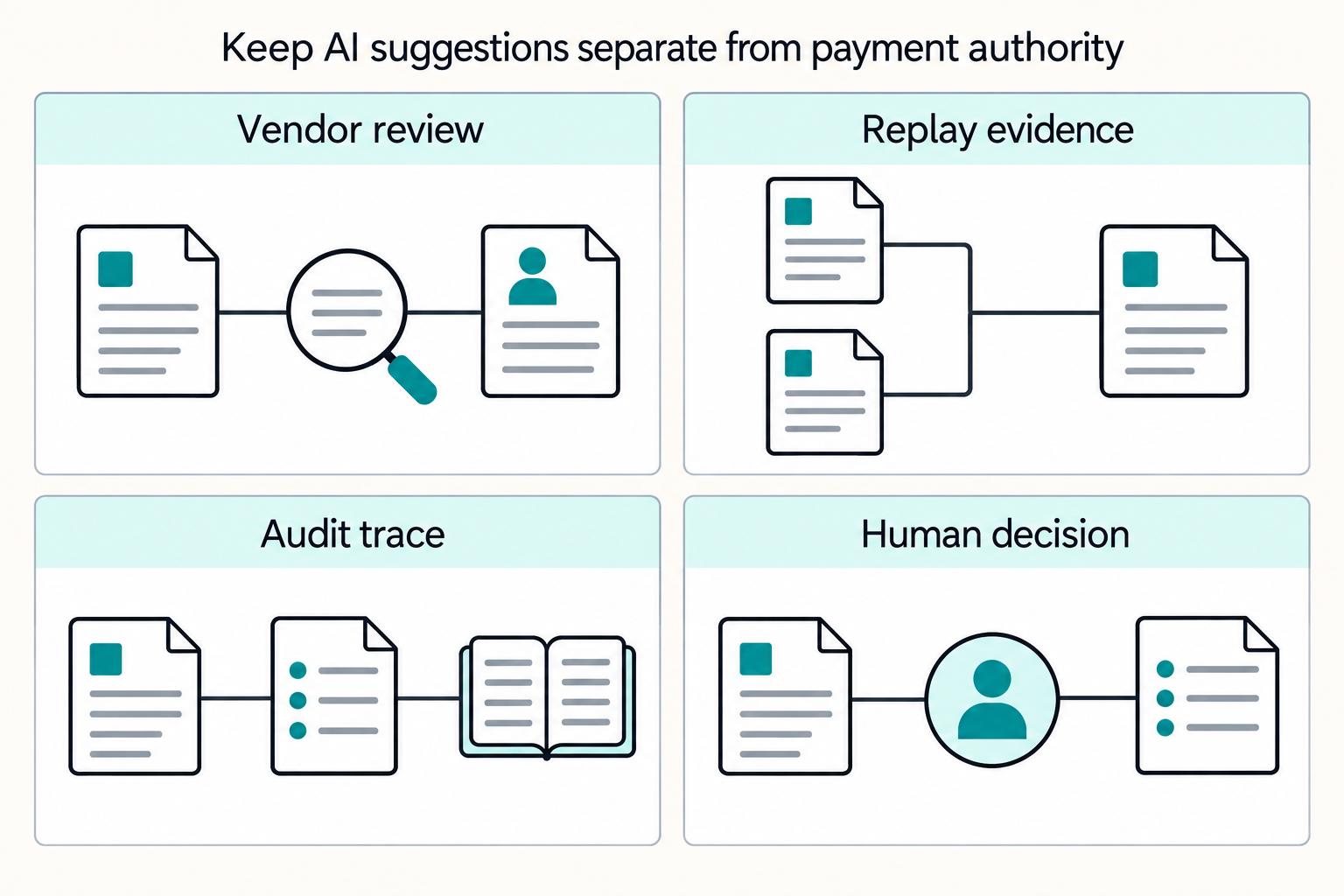
AI in AP is most useful when it speeds up invoice handling without weakening approvals, payment controls, or record matching. The real question is not whether a tool can read an invoice. It is whether your process still holds when documents are messy, approvals are conditional, and payment release has to stay controlled. Three points should frame your decision before you compare tools:

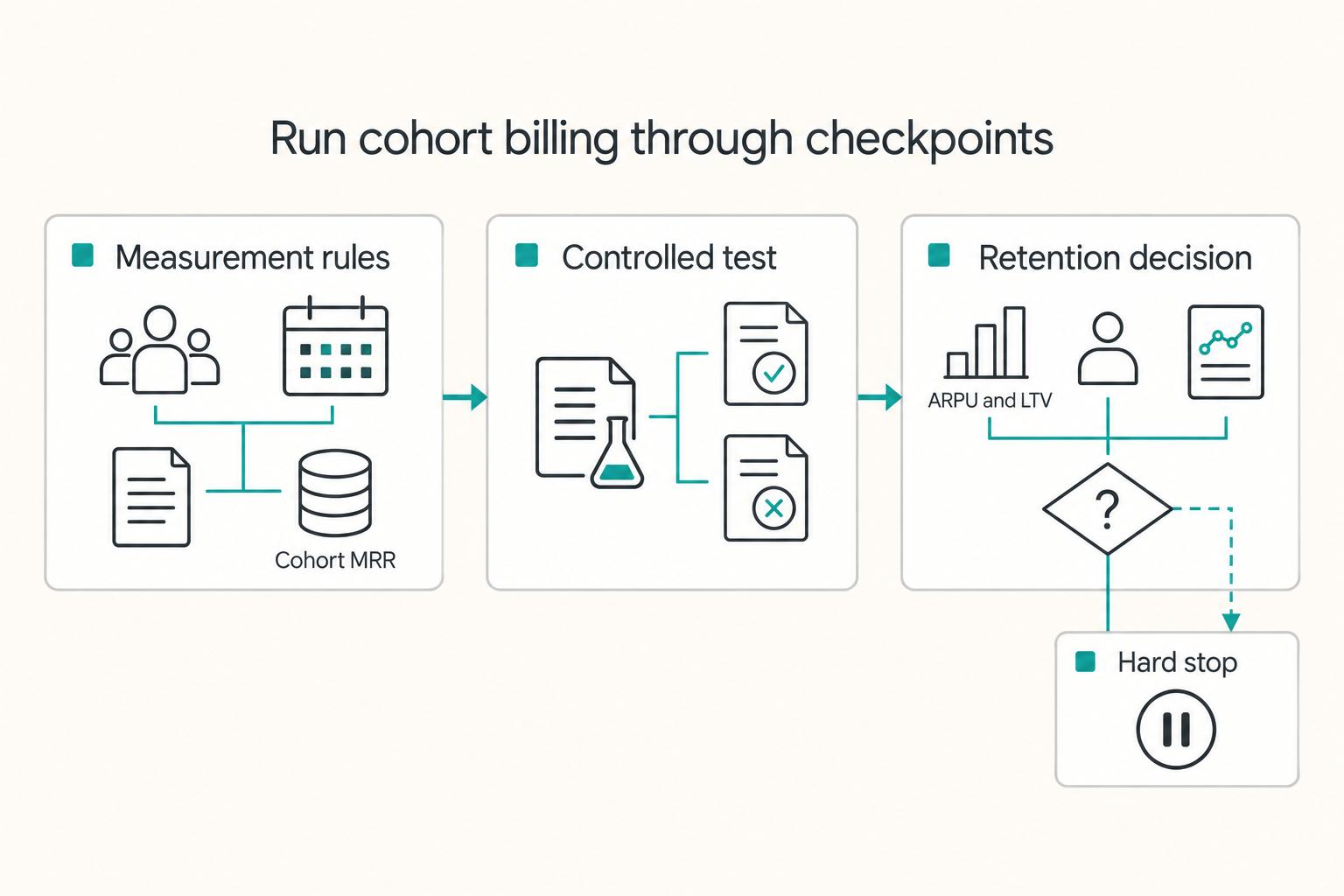
This is not really a pricing-page decision. It is a billing and measurement decision you need to explain, measure, and operate without mixing up product churn, billing churn, and reporting noise. That is the real job behind **elearning subscription retention cohort billing**, especially once finance asks why retention moved and ops has to prove the answer.