
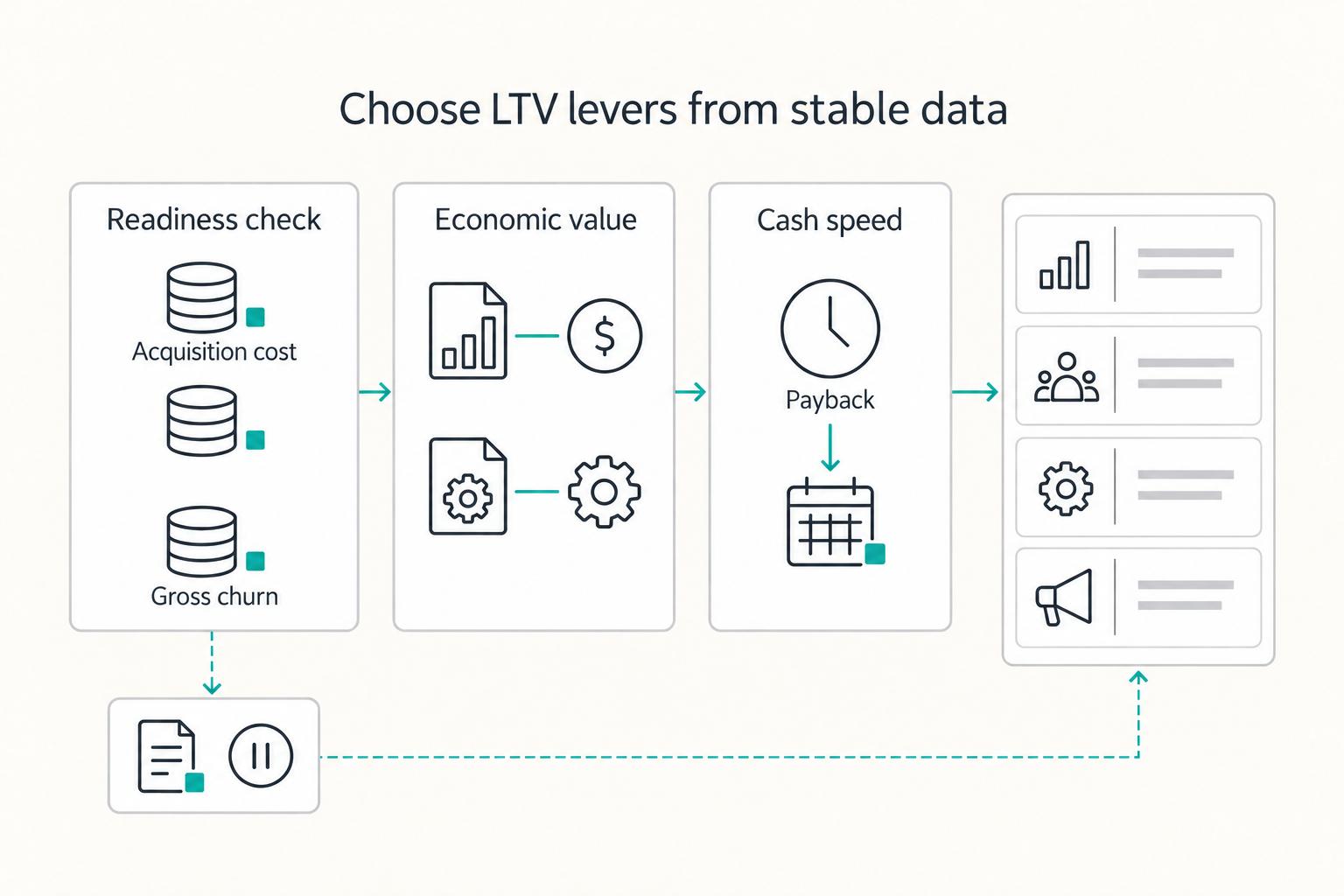
Quick Answer
Build consistent cohort measures of margin-adjusted LTV, matched CAC, payback, churn causes and eligible failed-payment recovery. Choose one observed constraint and one supporting lever. Cohort changes show associations; use controlled comparisons where feasible before attributing improvement to a pricing, recovery or onboarding intervention.
What Actually Changes Customer Lifetime Value#
For a subscription platform, Customer Lifetime Value is first a unit economics question. It rises or falls based on how reliably you turn acquired demand into recurring revenue over time. It also depends on how much of that revenue you retain and the margins behind it.
Subscription economics depend on acquiring customers and keeping them long enough to earn an adequate return after delivery costs. Measure acquisition and retention together, without importing a market-wide churn percentage as a target for your own cohort.
Use a stable baseline to choose among these seven operational levers:
- Monetization model
- Discount discipline
- Upselling
- Cross-selling
- Bundles
- Failed-payment recovery
- Onboarding and lifecycle retention
Customer Lifetime Value is the total expected revenue from one customer relationship over time. For platform operators, CLV is most useful when you connect it to CAC and margins, not when you treat it as a headline growth metric. If your LTV:CAC ratio looks healthy but churn is rising, the upside on paper may be weaker than the cash reality.
Recurring revenue changes what to inspect#
In a subscription model, revenue arrives over time, so retention behavior deserves the same attention as acquisition. The key is visibility: you need enough churn and revenue detail to see where value is being lost. A simple checkpoint is whether you can explain LTV movement over time rather than only at the blended company level.
Seven levers, ordered for decision value#
This guide walks through seven operational choices in a practical sequence. Each lever is framed by when it tends to matter, what economic effect to expect, what can go wrong, and what you should verify before scaling.
Recurring revenue can improve forecasting only when retention, billing reliability and margin remain healthy. Select the constraint in your own data rather than treating a market-size forecast as evidence of better unit economics.
If packaging, add-ons, coupons, or dunning are part of the constraint, see Subscription Billing Platforms for Plans, Add-Ons, Coupons, and Dunning.
Who this 7 lever list is for and how to choose#
Use this seven-lever sequence when you already run a recurring-revenue motion and can make decisions from stable operating data, not early noise. If you are still proving product-market fit or do not yet have a repeatable, scalable sales process, treat LTV:CAC as directional rather than decisive.
Run a readiness check first#
Start only when you can track acquisition cost, recurring revenue, and gross churn together. Keep this decision-oriented: if recent metric swings mostly come from fresh pricing, packaging, or targeting changes, you are not yet reading steady customer behavior.
Prioritize levers by economic decision value#
Rank each lever by expected LTV:CAC impact, CAC payback effect, implementation complexity, and speed to realized cash impact. If two options have similar upside, prioritize the one that improves payback sooner and with lower execution risk.
Sequence work to avoid scaling measurement noise#
A practical order is to fix weak measurement or obvious leakage first, then expansion levers, then experience-layer improvements. Treat this as an operating heuristic, not a universal law. Your checkpoint is whether you can clearly explain if LTV moved because churn improved, expansion improved, or definitions changed.
Apply the same gate to every lever#
For consistency, document four lines per lever: who it is best for, primary upside, primary downside, and one concrete use case. This keeps choices comparable and prevents "big project" bias when churn pressure is still raising your replacement burden.
For benchmark context on churn, trials, payment declines, and LTV, see Subscription Benchmark Report for Platform Operators: Churn Trials Payment Declines and LTV.
Score your baseline before pulling any lever#
If your team cannot explain where LTV is gained or lost by cohort, fix measurement before you tune pricing, onboarding, or dunning. Build a baseline scorecard first, then use it to decide where product, finance, and billing ops should spend effort.
Put five metrics on one page#
Margin-adjusted LTV#
Separate revenue LTV from gross-profit or contribution LTV. A simple steady-state estimate is periodic ARPA × gross-margin fraction ÷ customer churn fraction for the same period; hypothetical $100 monthly ARPA, 80% margin and 5% monthly customer churn gives $1,600. It assumes stable behavior and positive churn. For changing margins, expansion or low/zero churn, use explicit cohort cash-flow/contribution forecasts instead of dividing by net revenue churn.
LTV:CAC ratio#
Pair LTV and CAC using the same cohort definition and acquisition window. In SaaS, LTV is typically forward-looking, so mismatched windows can create false confidence. Why it matters: it shows whether retention or expansion is actually repaying acquisition spend.
Net revenue quality#
Use an internally named revenue-quality scorecard with separate treatment of discounts, credits, refunds, recognized revenue, receivables and cash collected. An unpaid invoice is not automatically a reduction of recognized revenue under every accounting basis. Lock definitions before comparing periods.
Churn split#
Separate intentional cancellation from customer loss attributable to unrecovered payment failure, and track recoverable failures and unknown outcomes separately while unresolved. A failed payment alone is not churn. Cohort analysis helps show where each loss concentrates and which operational owner should act.
Failed-payment recovery rate#
Track the share of failed recurring payments later recovered through retries or customer action. Many failed payments are recoverable, and Stripe reports recovery tools can materially improve outcomes. Why it matters: this is often one of the fastest cash-impact metrics in your baseline.
Lock definitions, owners, cadence, and failure signals#
| Metric | Working definition | Primary owner | Update cadence | Failure signal |
|---|---|---|---|---|
| Margin-adjusted LTV | Estimated lifetime gross profit or contribution under documented cohort assumptions | Finance | Monthly with cohort review | Revenue LTV looks healthy while contribution margin shrinks |
| LTV:CAC ratio | Cohort LTV divided by matched acquisition cost | Finance + Growth | Monthly | Ratio improvement comes from changed windows or methods, not performance |
| Net revenue quality | Separate recognized revenue, adjustments, receivables and collections using locked definitions | Finance | Weekly and month-end | MRR rises while realized revenue quality weakens |
| Churn split | Voluntary churn vs involuntary churn by cohort and lifecycle stage | Product + Billing ops | Weekly | All churn is treated as one retention problem |
| Failed-payment recovery rate | Recovered failed obligations / original failed obligations, fixed window and consistent count/amount unit | Billing ops | Daily or weekly | Retry logic exists, but recovered payments are not reconciled to churn |
Keep assumptions auditable#
Do not run this baseline from slide screenshots. Keep an evidence pack with source system, extraction date, filters, cohort logic, and adjustment assumptions. If ProfitWell provides MRR/churn/LTV and internal billing logs provide payment outcomes, document exactly how they are joined and which source wins when values conflict.
Treat external platform narratives (Meta, Google, iOS privacy changes, third-party cookies) as context inputs, not internal causal proof. Flag them separately.
Verification checkpoint: pull three recent cohorts and explain whether LTV moved because retention changed, expansion changed, margin changed, or payment recovery changed. If you cannot do that from the scorecard and source logs, pause lever rollout and fix instrumentation first.
Related: How to Build a Subscription Billing Engine for Your B2B Platform: Architecture and Trade-Offs.
Choose between subscription-first and hybrid monetization#
Choose the model that matches the customer's path to value, not a pricing ideology. There is no single correct model. In practice, subscription-first is often stronger when customers reach value quickly, while a one-time entry can reduce commitment risk when demand is episodic or trust is still forming. These are entry/offer design choices rather than mutually exclusive business categories: a subscription-first product can also be subscription-only. Compare actual terms and observed cohort behavior.
| Model | CAC payback profile | Churn sensitivity | Net Revenue stability | Expansion headroom |
|---|---|---|---|---|
| Subscription-first | Measure whether early repeat usage repays acquisition cost | More exposed in early renewal cycles if onboarding is weak | Strong recurring visibility when activation is consistent | Strong if upgrades/add-ons layer onto recurring plans |
| Subscription-only | Most dependent on retention from day one | Measure early renewal losses; do not assume a universal highest rank | Clean recurring picture, but less forgiving for low-fit cohorts | Expansion stays inside the recurring base |
| Hybrid with one-time purchase | Compare initial purchase contribution and later subscription conversion | Lower forced renewal exposure at entry | Blends recurring strength with one-time flexibility | Test optional paths against additional operating cost and complexity |
Hybrid pricing combines charging models, such as recurring plus one-off purchases or fixed fees plus variable usage. Its economic result depends on usage, delivery cost and retention; test the selected model rather than importing an adoption percentage as proof.
Compare the selected subscription and one-time offer on acquisition cost, delivery cost, retention and payback. Neither format is universally simpler or more profitable. If both are supported, record entry path and subsequent conversions so their cohort economics remain distinguishable.
Improve Net Revenue without price hikes#
Before you test a list-price increase, close obvious leakage in discounting and payment recovery so realized Net Revenue improves without a full pricing reset.
Tighten discount discipline#
Map discounts by channel, plan and renewal cohort. If discount use rises without better retention or contribution, test packaging and offer structure rather than simply adding coupons. A discount can be justified when incremental value exceeds its cost; evaluate that tradeoff by cohort.
Recover failed payments before labeling them as churn#
Separate recoverable payment failures from intentional cancellations. Use eligible automated retry and customer-update paths, then measure actual recovery against the original failed-payment cohort. A payment failure is not necessarily a completed cancellation, and recovery forecasts are not realized revenue.
Use targeted expansion instead of blanket discounts#
When you pull back broad promos, replace them with clearer bundles, add-ons, or upsell paths for higher-intent customers. This protects price integrity while still giving customers a reason to spend more, which is the same core profitability logic behind the discount warning above. Keep the change operationally simple: make the new offer clear enough that you can see whether Net Revenue and churn move in the right direction.
If your main decision is whether recurring fees or transaction fees create better lifetime value, see Choosing Between Subscription and Transaction Fees for Your Revenue Model.
Lift expansion revenue with upselling cross-selling and bundles#
If retention is steady and order value is not moving, expansion revenue is the next lever. Design upsells, cross-sells, and bundles around customer moments, not checkout promos.
| Approach | Best when | Measure with |
|---|---|---|
| Upselling | The higher tier is a clear continuation of value the customer already uses | Expansion MRR; exposed cohorts increase expansion revenue without a matching rise in downgrades or cancellations |
| Cross-selling | The added product solves a related problem for the same account | NRR, plus offer exposure, attach rate, AOV movement, and churn drift |
| Bundles | Customers are likely to want the components together and the package improves how they discover value | AOV; avoid overlapping packages that make pricing harder to read |
Upselling for the next logical commitment#
Upselling works when the higher tier is a clear continuation of value the customer already uses. Stripe defines Expansion MRR as additional recurring revenue generated by existing customers each month, and upsells are a direct way that metric can move. Trigger the offer from real usage or maturity signals, then track whether exposed cohorts increase expansion revenue without a matching rise in downgrades or cancellations.
Cross-selling for adjacent value#
Evaluate cross-sell against the same existing-customer cohort. Net revenue retention includes expansion alongside contraction and churn; gross revenue retention excludes expansion. State the selected reporting convention and assess attach rate, contribution margin and cancellation drift together.
Bundles for packaging and discovery#
Bundle components that customers need together and explain the price and entitlement clearly. Compare incremental contribution and retained recurring value, not only average order value. An overlapping or heavily discounted package can lift order value while weakening margins.
Expansion from existing customers can be more financially efficient than relying only on newly acquired customers, but only with disciplined offer design and measurement. Compare cohort-level AOV lift against churn drift, and read outcomes through NRR so expansion effects are visible.
Reduce involuntary churn from failed payments and billing ops#
Treat failed payments as an operations reliability issue first, especially when engagement is strong but renewal churn is rising. This lever can recover existing subscription revenue without waiting for product changes to mature.
Split involuntary churn from voluntary churn#
Keep confirmed payment failures separate from intentional cancellations and unknown payment outcomes. Define failure rate as failed first attempts divided by eligible first attempts, and recovery rate as recovered failed obligations divided by those failed obligations within a fixed window. Choose count-based or amount-based measurement, state it explicitly and keep the denominator consistent.
Diagnose failure reasons before changing the sequence#
Use decline codes to classify why payments fail, then route the next action from that reason. A generic "payment failed" event is not enough to decide whether the issue is likely recoverable, needs customer action, or reflects a billing-ops classification gap. Require a failure-reason taxonomy, not just a failed-payments total.
Retry with logic, then notify with a direct update path#
For a confirmed failure, classify the reason and apply the selected provider/payment-method recovery rules. Stripe does not execute retries for some cases, including missing methods and hard declines without a new method; local methods have separate opt-in/mandate limits. Send a direct update path promptly. Preserve unknown outcomes for verification, and coordinate one collection owner for the invoice so manual and automated paths cannot collect it twice.
Reconcile outcomes so recovered accounts are not mislabeled as churn#
Recovered payments should flow back into account status cleanly, and late payments should not remain stuck in failed states. This is where execution risk sits: outcomes depend on billing-stack quality, event accuracy, and cross-team status hygiene. Require an evidence pack on a weekly or monthly cadence with three views: failure and decline-code breakdowns, retry and notification recovery outcomes, and cohort-level impact on Customer Lifetime Value (LTV).
For a step-by-step walkthrough, see Retainer Subscription Billing for Talent Platforms That Protects ARR Margin.
Strengthen retention with onboarding personalization and lifecycle design#
If first-interval renewals are weak, improve onboarding clarity and lifecycle design before adding acquisition or upsell pressure, or you scale users who never reached value. This lever is usually strongest when acquisition is healthy but renewal is weak: the upside is more durable LTV, and the tradeoff is a slower feedback loop than billing-leakage fixes.
Start where early churn is concentrated#
Treat onboarding as an outcome, not a checklist. Check whether users who complete the first value-driving action actually return, since retention analysis ties return behavior to an initial event. Track performance by cohort, not blended averages. A cohort is a user group that shares a characteristic (for example, signup month, plan, or acquisition path). If one path shows healthy activation but weak first renewal, prioritize that path first.
Fix first-cycle clarity before monetization pressure#
When early churn is high, simplify the first-cycle experience and lifecycle messaging before pushing add-ons. Prioritize observed friction: unfinished setup, drop-off before the core action, support questions or messages opened without the intended action. Compare the incremental cost and retention benefit rather than assuming a universal acquisition-versus-retention cost multiple.
Scale personalization only after the base journey works#
Test personalization narrowly after the base journey works. Redesign first-cycle onboarding for one or two cohorts, then measure retention, margin and revenue quality against an appropriate comparison. Published uplift estimates do not guarantee your result. A confusing first experience remains a problem even with polished personalization.
Conclusion#
The winning move is restraint. You do not need all seven levers moving at once. You need the next lever that matches a real constraint in your numbers, and for many teams that starts with baseline clarity and revenue leakage before broader monetization changes.
Lock the baseline before you optimize#
If your scorecard cannot explain where retention is gained or lost by cohort, you are not ready to layer on more changes. At minimum, track revenue, upgrades, downgrades, churn, customer reactivation, total MRR, and LTV:CAC ratio. The key is auditability: if your billing stack lets you configure how MRR, churn, or active subscribers are calculated, document those definitions first so you do not compare two periods with two different measurement rules.
Choose the primary constraint, not the loudest idea#
A team with rising failed payments may need a billing recovery fix before it needs a packaging redesign. A team with weak first-cycle retention needs cohort analysis before it needs more upsell offers, because cohorts show where contraction and churn are actually happening across the lifecycle instead of hiding the problem inside one blended retention number. The key is a trigger-based decision rule: only pick a lever when you can name the condition that justifies it, the tradeoff it creates, and the checkpoint that would prove it is working or tell you to stop.
Judge progress on revenue quality, not just top-line lift#
More MRR is not automatically better if it comes with weaker retention or heavier contraction later. Keep reviewing Net Revenue Retention and LTV:CAC together, using a 3:1 LTV:CAC ratio as a rough benchmark rather than a universal rule, and pressure-test whether the gain is coming from durable customer value or from short-term monetization. If you track Net Revenue Retention, a 12-month view is common because it captures expansion, contraction, and churn in one measure; for B2B SaaS, the direction many teams aim for is over 100%, but the real point is whether existing-customer revenue is getting stronger.
The practical next step is simple: run the baseline scorecard, pick one primary lever and one supporting lever, then review impact before expanding scope. The red flag is trying to read causality after three or four changes go live together. Then you may see movement in Net Revenue Retention or retention without a credible explanation for why.
Frequently Asked Questions
What are the top operational levers for subscription LTV, and in what order should teams apply them?
Start with stable metric definitions and the split between intentional cancellation, confirmed payment failure and unknown payment outcomes. Choose the strongest observed constraint among the seven levers. A 3:1 LTV:CAC ratio is a SaaS rule of thumb, not a universal health gate; assess forecast uncertainty, margin, payback and cash runway together.
How do you calculate margin-adjusted LTV for decisions instead of reporting vanity metrics?
Distinguish revenue LTV from margin-adjusted value. Under stable behavior with positive customer churn, a simple estimate is periodic ARPA × gross-margin fraction ÷ customer churn fraction using the same period. It is unreliable for changing cohorts, expansion or zero churn; use explicit cohort forecasts then. Document delivery costs, acquisition matching and assumptions.
When does a subscription-first model outperform a one-time purchase model?
A subscription-first model can outperform one-time pricing when it helps convert one-time buyers into repeat customers and supports more predictable revenue. The upside is more predictable revenue plus more room for cross-sell and upsell, but subscription monetization has clear design tradeoffs versus one-off pricing. In practice, many teams keep both one-time and recurring paths and compare cohort outcomes.
Which actions improve Net Revenue fastest without raising prices?
Recover eligible failed payments and fix discount leakage before assuming a price increase is required. Stripe documents a recommended Smart Retries setting of eight tries within two weeks, but eligibility, payment method, hard declines, missing methods and configured policies govern actual execution. Check the current product configuration and reconcile the invoice before manual collection.
What should a team fix first when LTV is falling but acquisition still looks strong?
Check whether the drop is coming from retention, billing leakage, or churn classification mistakes. If acquisition still looks good, a common failure mode is growth that outpaces retention and payment recovery operations. In practice, review cohort retention and failed-payment recovery before you add more spend.
How should teams separate voluntary churn from failed payments in LTV analysis?
Record intentional cancellations separately from customer loss caused by unrecovered payment failure. Keep confirmed failures that may still recover and unknown payment outcomes out of final churn until the defined status/observation window resolves. Use failure reasons, retry outcomes and cohort evidence to investigate causes instead of assuming every cancellation is a product problem or every failed attempt is churn.
Try a related tool
Researched and edited by the Gruv editorial team. Gruv builds cross-border billing, payouts, and finance-operations software for global businesses.
Sources
Includes 3 external sources outside the trusted-domain allowlist.
- docs.stripe.com/billing/revenue-recovery/smart-retriestrusted
- stripe.com/resources/more/hybrid-pricing-modelstrusted
- stripe.com/resources/more/how-to-use-monthly-recurring-...trusted
- help.chartmogul.com/article/208-chart-customer-lifetime-value-ltvexternal
- help.chartmogul.com/article/161-cohort-analysisexternal
- paddle.com/help/profitwell-metrics/measure/subscription...external
Educational content only. Not legal, tax, or financial advice.
Related Posts
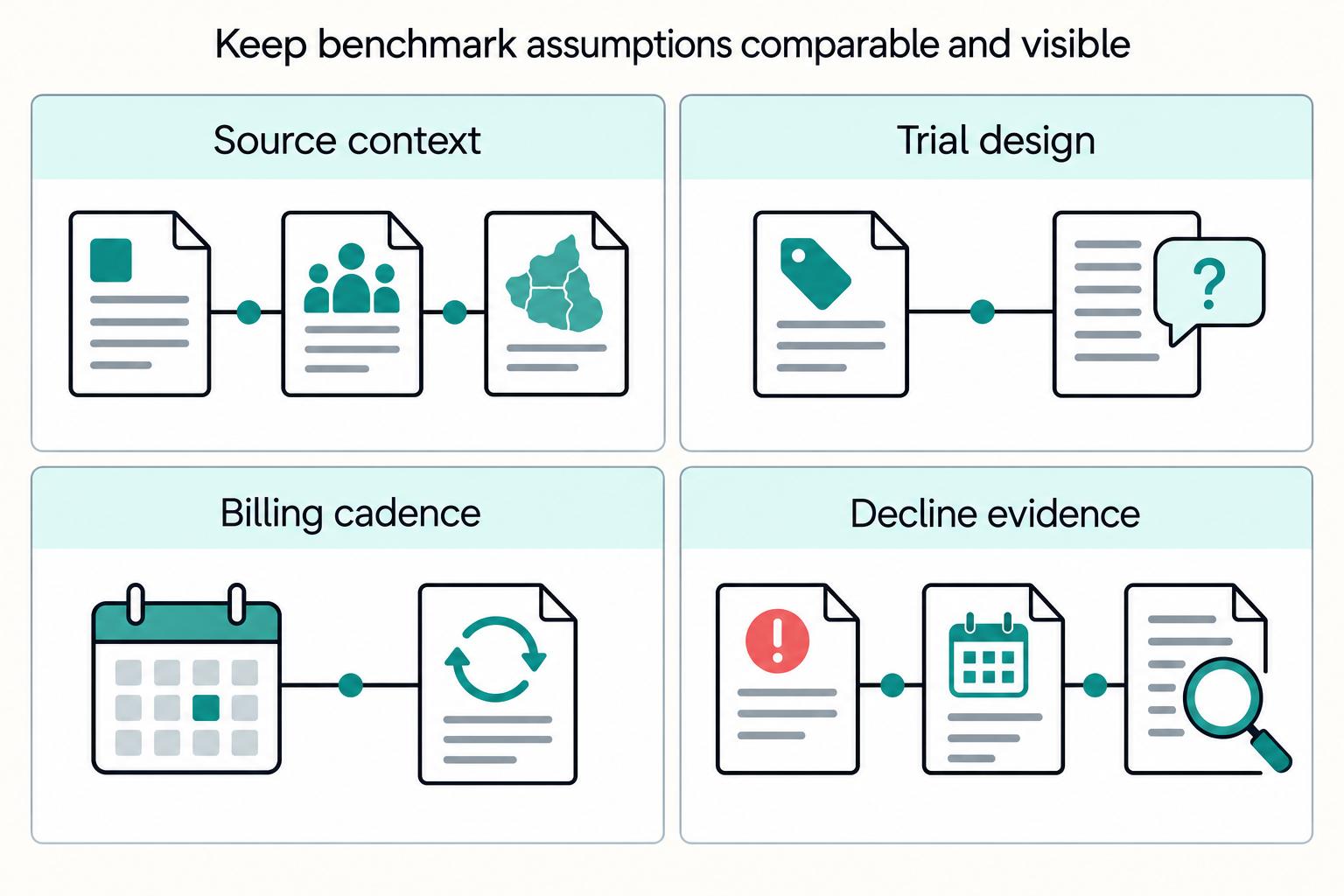
Subscription Benchmark Report for Platform Operators: Churn Trials Payment Declines and LTV
Use benchmark data as a filter, not a launch order. The real decision is not which market shows the highest headline LTV. It is which market can support your trial design, absorb payment friction, and clear compliance checks without turning early churn into noise.
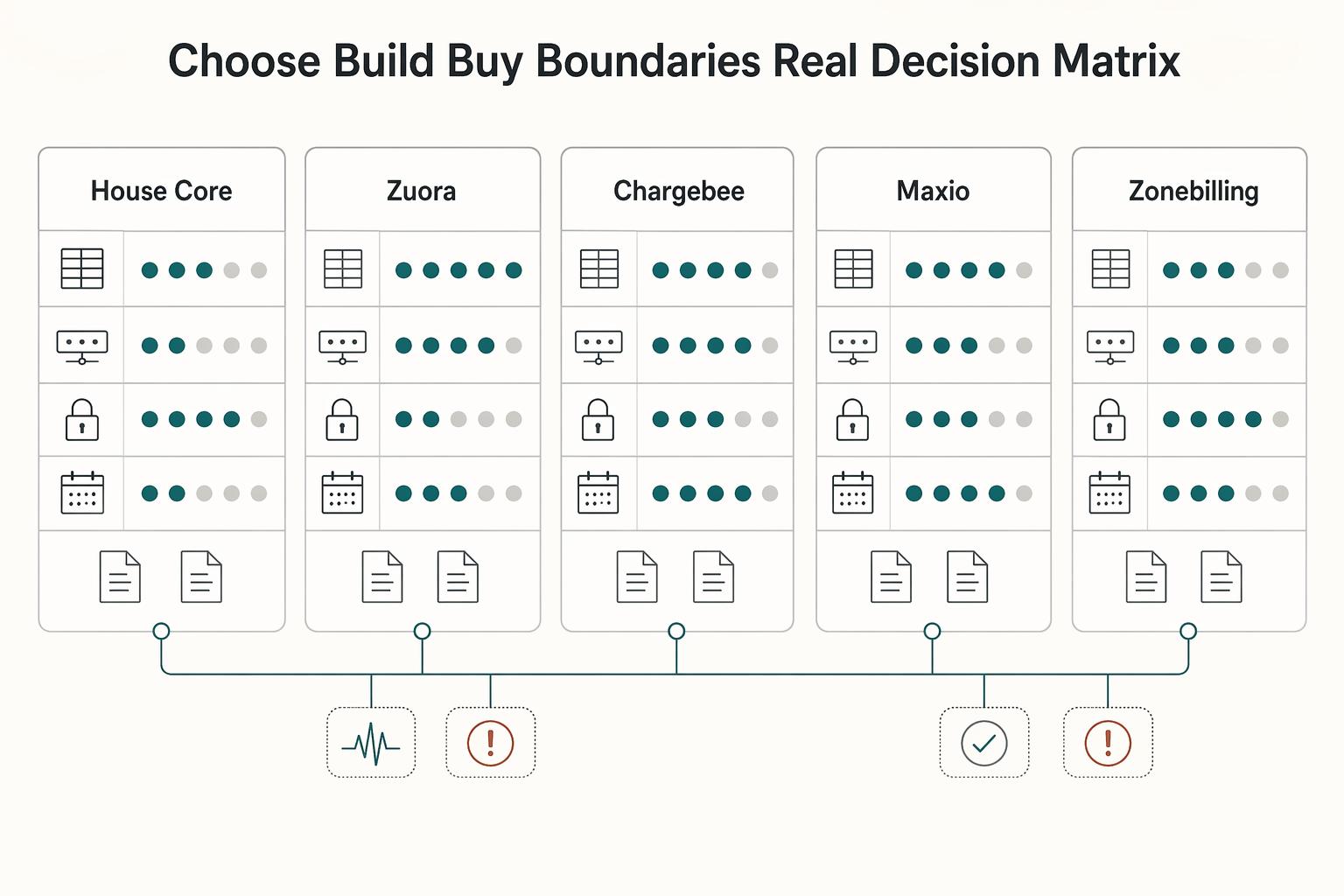
How to Build a Subscription Billing Engine for Your B2B Platform
If you are designing a B2B subscription billing engine, get the close and reconciliation model right before you chase product flexibility. A durable sequence is to define recurring billing scope (plans, billing periods, usage, and trials), then map settlement and payout reconciliation to transaction-level settlement outputs, and finally tie that discipline into month-end close controls. The real test is simple: finance should be able to trace invoices, payments, and payouts from source events through settlement records into reconciled close outputs without ad hoc spreadsheet rescue.
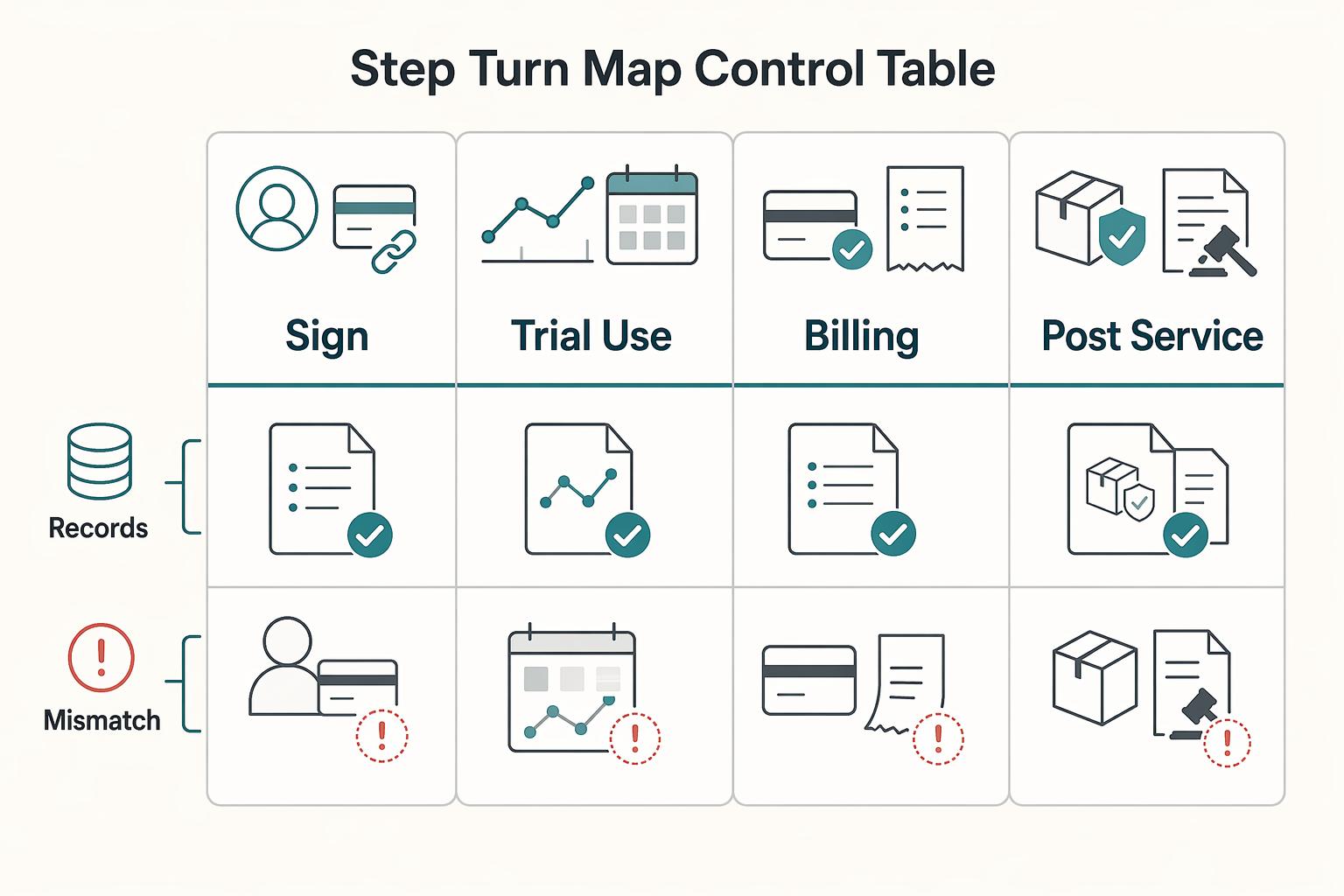
How Platforms Detect Free-Trial Abuse and Card Testing in Subscription Fraud
Trial abuse consumes product benefits; card testing probes payment credentials. They can appear in the same signup flow but need different responses. Track account behavior and payment attempts separately, then give each response an owner.