
Quick Answer
Set corridor policy before fee labels: intermediary bank correspondent banking payout fees come from settlement-path behavior, not just your visible send charge. Pick OUR, SHA, or BEN based on the recipient outcome you promise, then validate that choice with a controlled payout batch and sent-versus-received tracking. If routed deductions cannot be evidenced with provider references, webhook history, and beneficiary credit detail, narrow the promise before scaling.
Why Intermediary and Correspondent Banks Affect Payout Outcomes#
Intermediary and correspondent bank payout fees are often a settlement-path issue, not random noise. When your sending bank and receiving bank are not directly connected, other banks can enter the path, and each handoff can change what the beneficiary receives.
Correspondent banking is the arrangement that enables those indirect routes: one bank holds deposits for another and provides payment services through that relationship. In live cross-border flows, that means additional banks can appear in processing beyond the original payment instruction.
For operators, the practical model is simple: track two outcomes on every payout, amount sent and amount received. Those outcomes are not always identical, and banks disclose that other institutions in the chain may deduct fees from the transfer amount.
Your first decision is not which fee option sounds fair. It is what recipient outcome you are promising, and how much route variability you can absorb. Fee instructions set intent:
- Fee instruction OUR: sender pays charges.
- Fee instruction SHA: charges are shared.
- Fee instruction BEN: beneficiary pays charges.
Those labels help, but they do not remove path risk on their own. Selecting OUR does not guarantee end-to-end preservation in every chain, and bank guidance notes cases where OUR can effectively fall away in certain USD routing scenarios, reducing beneficiary receipt.
This article stays focused on one operator-level goal: choose a cross-border payout setup that keeps recipient outcomes predictable while protecting margin and support capacity. The working approach is simple: validate corridor behavior before scaling, monitor sent-versus-received outcomes after release, and set OUR, SHA, or BEN based on the payout promise you make to users.
Build the mental model before you touch fee settings#
Fee settings sit on top of the route, not the other way around. If you do not separate bank roles first, you can misread where deductions and delays happen and treat route behavior like a pricing bug.
| Term | Definition | Article framing |
|---|---|---|
| Intermediary bank | Any receiving bank in the chain that is neither the originator's bank nor the beneficiary's bank | Describes a role in a specific transfer |
| Beneficiary's bank | The bank named in the payment order where the beneficiary is to be credited | Where the beneficiary is to be credited |
| Correspondent bank | Provides account and payment services for another bank, often across borders | Describes the banking arrangement that enables the handoff |
In UCC Article 4A terms, the roles break down like this:
- An intermediary bank is any receiving bank in the chain that is neither the originator's bank nor the beneficiary's bank.
- The beneficiary's bank is the bank named in the payment order where the beneficiary is to be credited.
- A correspondent bank provides account and payment services for another bank, often across borders.
In practice, intermediary describes a role in a specific transfer. Correspondent describes the banking arrangement that enables that handoff. That distinction matters because your user sees one payout instruction, while the payment may still travel through multiple institutions.
In cross-border flows, one underlying transaction may require several payments between intermediary correspondent banks. On the SWIFT network, banks send payment messages to one another, and a single international wire transfer may pass through multiple hops before reaching the beneficiary's bank. Those handoffs can contribute to additional costs or slower outcomes, and cross-border payments are generally slower, more expensive, and more opaque than domestic payments.
A common failure mode is that the recipient gets less than your team expected because deductions happened earlier in the bank chain. Banks explicitly warn that third parties or other banks may charge fees, and processing fees may be deducted from the wire amount during handling.
Before you change fee instructions or promise that the recipient gets the full amount, verify what your provider actually exposes. Check the sending bank, beneficiary bank, intermediary details if any, and final credited amount.
If those fields are missing, treat that as an operating constraint, not a reporting nicety. For any arrived-short case, your evidence pack should start with the payment order, provider reference, bank confirmations, and credited amount at the beneficiary's bank. Without that, support and finance are guessing at a path your backend never modeled.
Related: Open Banking for Platforms: How to Use Account-to-Account Payments to Bypass Card Fees.
Where payout fees actually appear in the chain#
Do not price or promise from your visible platform fee alone. In cross-border wires, the delivered amount can be reduced at the sending bank, at one or more intermediary institutions, and potentially at the beneficiary side. FX can also be applied at different points in the settlement path.
The visible payout fee is only one layer#
A provider can show a clean outbound charge, but that is not the full cost path. Other financial institutions in the wire path may deduct fees from the transfer amount, and intermediary wire deductions are explicitly recognized as lifting fees.
| Point in chain | What the article says | Outcome risk |
|---|---|---|
| Sending bank | Origin-side transfer charges | Delivered amount can be reduced |
| Intermediary institutions | In-transit deductions within the correspondent chain | Shortfalls can happen during handling |
| Beneficiary side | Possible downstream charges before final credit | Final credited amount can be reduced |
In practice, fee drag can appear at multiple points, and if reconciliation only checks the instructed amount, you can miss where the shortfall happened:
Sending bank: origin-side transfer chargesIntermediary institutions: in-transit deductions within the correspondent chainBeneficiary side: possible downstream charges before final credit
FX may happen earlier or later than you expect#
FX is not always set at origin. It may be set by an intermediary institution, or it may be set when funds are deposited by the recipient's institution. That changes both support and finance outcomes:
- If FX is set upstream, landed amount explanations may be easier to document.
- If FX is set at beneficiary-side deposit, final net can be harder to explain at send time.
Before launch, confirm in writing where FX is set for each payout corridor you plan to use: origin, intermediary, or beneficiary side. If the answer is unclear, model variance, not certainty.
Corridor behavior is not static in production#
A corridor is a country pair, not a guarantee of identical outcomes. Results can vary by bank pair, routing availability, and correspondent relationships used on that specific payment.
Do not call a corridor stable from a small sample. Industry data may cover more than 200 jurisdictions, but payment chains still cannot be fully identified end to end in that dataset. Limited chain visibility should be treated as a production constraint.
Delayed fee discovery is real too: third-party charges can vary and may be claimed weeks or months later, even after a transfer appears settled.
The decision rule that saves pain later#
If recipient net certainty is part of your product promise, unknown downstream deductions are a launch blocker. Before scaling a corridor, verify:
- Whether intermediary or beneficiary-side charges can reduce delivered amount
- Where FX is set in the settlement path
- Whether your provider exposes final credited amount and downstream charge evidence
For arrived-short cases, treat evidence as mandatory. Even with OUR, full principal receipt is not guaranteed in every country, so keep the payout instruction, provider reference, bank confirmations, and final credited amount at the beneficiary bank.
For a step-by-step walkthrough, see Platform Economics 101 for Commission Fees, Payout Costs, and Gross Margin.
Compare OUR, SHA, and BEN based on recipient certainty#
Choose fee instruction based on what you are actually promising: recipient certainty, sender margin protection, or a shared-cost model. If your product promise targets an exact recipient net, start with OUR. If the priority is protecting unit economics, BEN or SHA can fit, but with more variance in what lands.
| Fee instruction | Sender cost predictability | Recipient net predictability | Support ticket risk | Commercially defensible when | What to confirm with provider |
|---|---|---|---|---|---|
| OUR | Low to medium. You cover charges across the chain, including intermediary and beneficiary-bank fees, so cost can move when routing changes. | Medium to high, not absolute. Often the closest fit for exact-net expectations, but not a universal guarantee. | Can be lower when exact-net expectations are explicit, but not zero. | Recipient-protected models where short receipt undermines trust. | Corridor coverage for OUR, whether multiple correspondents may be in path, what hop or route visibility you get, and whether downstream deductions are surfaced pre-send. |
| SHA | Medium to high. Your sending-side charge is usually clearer, while downstream charges can still reduce recipient net. | Low to medium. Shared does not mean recipient-only bank fees; intermediary processing charges may still apply. | Can rise when "shared" is read as fully predictable. | Mixed-share models where exact recipient net is not promised. | Which corridors support SHA, where intermediary deductions are common, and whether final credited amount plus downstream charge evidence is available post-settlement. |
| BEN | High for sender margin. Charges are taken from the transfer path, so your direct cost is often easier to forecast. | Low. Institutions in the chain may deduct fees, reducing what the recipient receives. | Can be high when recipients compare instructed versus landed amount. | Margin-protected models with explicit pre-send disclosure that net can vary. | Whether BEN behavior is consistent by corridor, where in-transit deductions are frequent, and whether pre-send disclosures state deductions may apply even when exact amounts are unknown. |
What the table means in product terms#
OUR is usually the cleanest fit when your commercial promise targets an exact recipient net. It can compress margin when correspondent routes vary.
SHA is defensible when both parties are expected to carry part of the bank cost. The tradeoff is clarity: recipients can still see a lower final credit because intermediary charges may sit on top of receiving-bank charges.
BEN is usually the strongest margin-protection choice. It is weakest for recipient certainty, so it works best only when deduction risk is explicit before payout.
The provider checks to lock before policy#
Before you set policy, confirm three things in writing for each corridor:
Coverage: which instructions, OUR, SHA, or BEN, are actually supported for that routeVisibility: whether likely multi-bank routing is surfaced before send or only after settlementDeductions: whether pre-send disclosures flag that deductions may apply, and what post-settlement evidence you receive when final credit is short
Practical decision rule#
If your payout promise is an exact recipient net, OUR is usually the closest fit and should be priced for routing variance. If your model is mixed-share, use SHA only when terms clearly state that intermediary and receiving-bank deductions can still reduce final credit. If your priority is margin protection, BEN is workable only with clear pre-send disclosure that deductions may apply, even when exact amounts are unknown, plus a support path that can show where shortfalls occurred.
We covered this in detail in Reduce Payout Fees by Matching Disbursement Rail to Destination Country.
Choose fee policy by corridor and payout promise#
Once you know which instruction fits the product promise, do not apply it globally. Set fee policy corridor by corridor, because the SWIFT network is heterogeneous: route performance varies, and one payment chain can involve several Correspondent bank or Intermediary bank steps before funds reach the Beneficiary bank.
Tier corridors by what actually happens after settlement#
Classify corridors by observed outcomes in your own payouts and support records: stable net outcomes, volatile net outcomes, and low-visibility outcomes.
Stable net outcomes are repeatable enough to price and explain. Deductions may still happen, but patterns are clear and post-settlement detail is usually sufficient to explain receiving-bank or intermediary charges. Volatile net outcomes show final-credit variation that pricing and recipient messaging cannot absorb consistently. Low-visibility outcomes are the hardest to scale because short receipts are weakly evidenced, delayed, or both.
This split is operationally useful because cross-border payments are more opaque than domestic payments. Even on SWIFT gpi, overall median processing time is less than 2 hours, while route medians range from less than 5 minutes to more than 2 days. Speed is not fee behavior, but it reinforces the same point: route-level outcomes differ and should not be managed with one global fee rule.
Start volatile corridors with controlled pilots#
If a corridor is high variance, treat it as a pilot first. Run a controlled Payout batch, inspect landed amounts, and pressure-test any BEN default against measured variance before broad rollout.
Under BEN, all payment-related charges are borne by the beneficiary. Under SHA, correspondent-bank charges can also be deducted from the payment amount. On already variable routes, BEN and SHA can increase the risk of recipient shortfalls and operational exceptions when routing charges are unpredictable. They may still be viable later, but only after corridor behavior is measured.
Use a concrete pilot checkpoint for each payout. Record:
- instructed amount
- fee instruction used
- final credited amount, if available
- provider payment reference
- settlement timing
- post-settlement charge detail surfaced by the provider
If support cannot answer why the beneficiary received less than instructed with evidence, treat that corridor as higher risk for broad rollout.
Also watch for delayed third-party charging. Some charges vary and may be claimed weeks or months after payment, which can make early results look clean before later adjustments break margin assumptions or trigger disputes.
If you promise exact net, price certainty instead of hoping for it#
If your promise is recipient gets exactly X, prioritize certainty first. That usually means favoring routes with consistent observed net outcomes, minimizing Intermediary bank uncertainty where possible, and using Fee instruction OUR only where the provider supports it for that corridor.
Treat OUR as risk-managed, not universally guaranteed. Some provider documentation says beneficiaries receive the full amount under OUR, while other documentation states full principal cannot be guaranteed in all cases. If you sell exact-net delivery, rely on corridor-level evidence, price route risk explicitly, and keep terms clear about exceptions where downstream deductions still occur.
If a corridor remains low visibility after testing, narrow the promise before scaling. Do not market exact recipient net where your records cannot explain outcomes.
| Corridor tier | Recipient expectation | Margin tolerance | Support burden | Reconciliation complexity | Recommended fee posture |
|---|---|---|---|---|---|
| Stable net outcomes | Can support exact-net or clearly disclosed shared-cost models | Medium if pricing includes route variance | Lower, because outcomes are explainable | Lower, if final credit and charge evidence are consistent | Use OUR for exact-net offers; SHA or BEN when disclosures match observed deductions |
| Volatile net outcomes | Exact-net expectation is risky unless tightly controlled | Low to medium, because unexplained deductions can erode margin | High, especially when instructed and received amounts differ | High, because exceptions are frequent and harder to classify | Start with controlled pilots; test BEN/SHA against measured variance; use OUR selectively where support and evidence are strong |
| Low-visibility outcomes | Hard to support strong recipient promises | Low, because unknown charges can surface later | Highest, because support lacks proof | Highest, especially when third-party charges are delayed | Restrict rollout, tighten recipient language, or avoid the route until evidence improves |
External benchmarks can help you decide where to investigate first. The World Bank tracks 367 country corridors across 48 sending countries and 105 receiving countries, but final fee policy should come from your own settled payout evidence, not market averages alone.
If you're standardizing OUR/SHA/BEN rules by corridor, use this as your build checklist for compliance-gated routing, batch controls, and status tracking: Explore Gruv Payouts.
Set recipient-facing terms that match backend reality#
If your terms do not match the instruction you actually send, payout UX can create avoidable trust and support problems. Make sure the copy, payload, and support macro describe the same fee outcome.
Say what the instruction means, not what you hope happens#
State fee ownership exactly as sent in the payment payload. Fee instruction OUR means the sender chooses to bear payment charges, but it is not a universal guarantee of full principal in every route or country. SHA means the sender pays sending-bank charges and other charges are borne by the beneficiary. BEN means all charges are borne by the beneficiary.
Use plain language about where deductions can occur. Charges may be deducted by a Correspondent bank or Intermediary bank before funds reach the Beneficiary bank, so a short receipt can appear even when the receiving bank did not apply its own inbound fee.
A practical check is to compare UI copy, provider payload, and support macro for the same test payout. If the product says we cover fees but the instruction is SHA, fix the copy before scaling that corridor.
Draw policy boundaries by flow type#
Flow type should usually drive recipient terms, because fee expectations differ by payout model.
| Flow type | What recipients usually care about | Better terms stance | Red flag |
|---|---|---|---|
| Contractor payouts | Net amount received after an International wire transfer | Be explicit that bank-chain deductions may still occur unless exact-net outcomes are consistently observed on that Payout corridor | Presenting the platform fee as the only possible fee |
| Creator withdrawals | Clear separation of platform fee, payout fee, and FX fee | Keep payout terms separate from creator-plan pricing language | Folding payout deductions into generic creator-fees copy |
| Marketplace disbursements | Whether payout cost is owned by platform or connected account | Define fee ownership clearly in product terms and pricing policy | Letting connected accounts assume the platform absorbs all bank-chain costs |
Add caveats where routing really varies#
Corridor caveats are not filler. Coverage and outcomes vary by country, currency pair, and partner-bank routing, and less common currency pairs can require more correspondent hops with more cost or delay risk.
Use direct caveats such as: "For some cross-border payouts, intermediary or correspondent banks may deduct charges before funds reach your bank." You can also say: "Tracking and fee details depend on updates from banks in the payment chain." Real-time visibility is limited by participating banks, so do not promise complete post-send fee transparency.
For arrived-short cases, keep an evidence pack with payout reference, fee instruction, corridor, currency pair, and available tracking updates. That keeps support responses factual instead of guesswork.
Related reading: How Interchange Fees Change the Price You Need to Charge.
Instrument traceability from request to bank outcome#
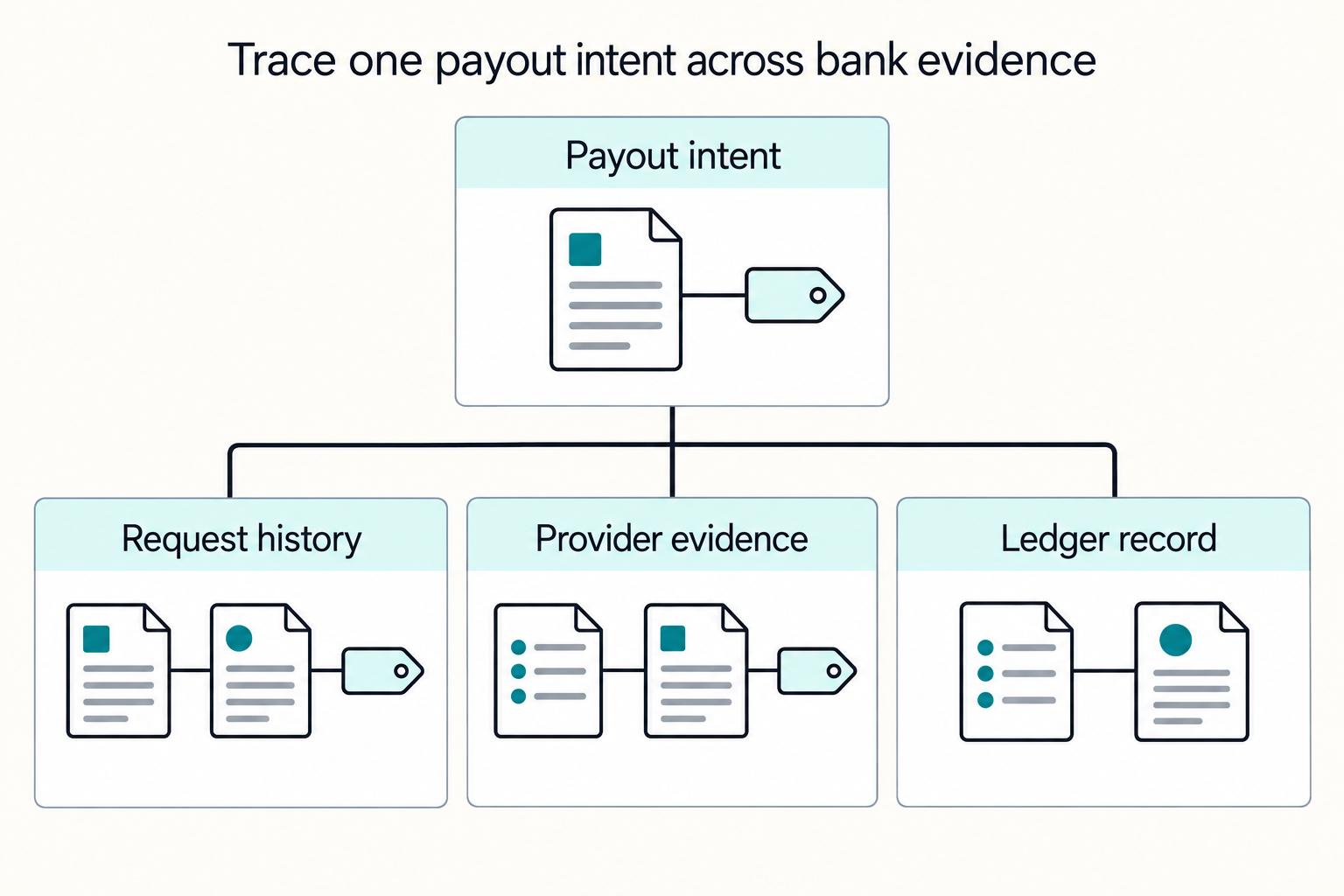
Traceability should be non-negotiable. If you cannot connect one payout request to one bank outcome, arrived-short and duplicate-payment cases turn into manual forensics. Keep the ledger as your source of truth, preserve a complete event timeline, and enforce idempotent retries before you scale any cross-border payout flow.
Link one payout intent to every later artifact#
For each payout, store one joined record that includes your internal payout ID, provider payout reference, originating API request ID, idempotency key, and every status transition. If your provider exposes terminal states like pending, paid, failed, and canceled, keep each transition as a record instead of overwriting a single status field.
| Record element | What to keep | Why it matters |
|---|---|---|
| Internal payout ID | Store it in the joined payout record | Connects one payout intent to later artifacts |
| Provider payout reference | Keep the provider reference with the payout record | Supports incident review and reconstruction |
| Originating API request ID | Keep the API request ID that triggered the event | Helps tie events back to the request |
| Idempotency key | Store the key used on the request | Helps distinguish a real second submission from a retry of the same request |
| Status transition history | Keep each transition as a record instead of overwriting one status field | Makes incident review fast and defensible |
This is what makes incident review fast and defensible. Event objects can include both the API request ID that triggered the event and the idempotency key used on that request. That helps you distinguish a real second submission from a retry of the same request.
Operational check: pick any payout from support and confirm your team can reconstruct request time, amount, currency, fee instruction, provider reference, each Webhook event, and internal status changes in minutes.
Do not depend on webhooks alone. In Stripe, undelivered webhook events may be retried for up to three days. Compare webhook history against direct payout-status polling before closing incidents.
Keep the ledger ahead of the ticket queue#
Reconciliation should come from money-movement records, not screenshots. Tie payout events into your Reconciliation workflow with provider ledger objects, for example Balance transaction records, and payout reconciliation reporting that maps included transactions to each payout batch.
Manual payouts need explicit mapping. If you create manual payouts, you still need platform-side reconciliation between payout records, transaction history, and funding ledger entries.
Set timing expectations with finance. In Stripe's Fees report, fee data can lag by 96 hours after it affects balance, so same-day fee attribution gaps can be timing artifacts rather than payout defects.
Make retries safe and path evidence usable#
Retries must not create a second cash movement for the same business intent. Use one idempotency key per payout intent and reuse it only for a true retry of the exact same request. If amount, beneficiary, or currency changes, create a new payout intent.
Capture path evidence when available. For Stripe payouts, a Trace ID may become available after payout lifecycle transitions, and retrieval from banking partners can take up to 10 days. For SWIFT network flows, UETR can support end-to-end tracing, but do not promise this visibility for every corridor or payout method.
Store those references in the case record. They are often the clearest way to explain sent-versus-received differences, especially when correspondent chains vary between transfers and deductions can occur at correspondent or beneficiary banks.
Run a reconciliation process your finance team can trust#
Finance trust comes from consistent classification and evidence, not from a single bank-issue bucket. Once you can trace one payout intent to one bank outcome, run reconciliation on a regular cadence by Payout corridor so shortfalls, delays, and returns are handled as different operational problems.
Build the corridor view first#
Start with an auditable expected-sent baseline, then compare what settled and what landed. Use a payout-level reconciliation source to tie each payout to settled transaction batches, and a transaction-level check, credits minus debits, to verify totals.
Use a practical monthly checklist:
- For each corridor, record expected payout total, settled total, and confirmed landed total where available.
- Track exceptions in separate buckets: intermediary or correspondent rejections, recipient-side deductions, fee variance, FX variance, route delays, and return or fail outcomes from the
Beneficiary bank. - Review by both count and value so high-value returns do not get buried with small fee variances.
If landed confirmation is incomplete, do not force precision. Use confirmed cases, escalations, and beneficiary-side confirmations to detect repeat patterns by corridor.
Separate failure modes before assigning ownership#
Cross-border exceptions map to different dimensions, including cost, speed, access, and transparency. Classification has to stay explicit.
| Exception type | Typical signal | Evidence to collect before assignment |
|---|---|---|
| Route delay | Payout remains pending; recipient not yet credited | Payout reference, Webhook event timeline, status polling results, tracking reference if available |
| Fee variance | Recipient receives less than expected without a clear FX mismatch | Provider payout record, expected fee instruction, beneficiary confirmation, ledger postings |
| FX variance | Sent amount matches, but local-currency receipt reflects rate spread or conversion timing | Sent and received currency and amounts, applied FX details if exposed, ledger entries |
Return or fail at the Beneficiary bank | Payout becomes returned or failed | Return reason, timeline evidence, rejected-message evidence if available, bank confirmation |
Keep fee and FX variance in separate buckets. End-user cost can include a send fee, an exchange-rate margin, and sometimes a recipient-side fee. Merging these can create pricing and support errors.
Do not close exceptions without an evidence pack#
Set a strict closure rule: no exception closes without payout reference, bank confirmation where available, a documented Webhook event timeline, and matching ledger postings. For wire investigations, include IMAD when a Fedwire leg is involved because it can be used for reconciliation.
Apply this especially to returns. Track returned and failed payouts as distinct outcomes, capture the return reason from timeline evidence, and keep the case open when records are incomplete. Webhook retries can extend the visible timeline. In Stripe that can mean up to three days, and in Adyen up to 30 days. Verify with direct status checks and ledger movement before sign-off.
Pilot in production before broad rollout#
Pilot each corridor in live traffic before you scale volume. Use a small Payout batch. Compare intended send amount, provider-confirmed settled amount, and beneficiary-confirmed received amount when available, because one Cross-border payout can pass through multiple Correspondent bank legs and deductions can happen outside your provider fee line.
Keep the pilot narrow enough to inspect every payout manually. Treat one successful transfer as noise, not proof. A corridor is ready only when shortfalls are explainable with evidence and recipient outcomes match what you communicated.
Run strict operational checks during the pilot. For an International wire transfer, use idempotency on retries to reduce the risk that timeouts create duplicate sends. Keep status sync aligned across provider records, internal ledger entries, and the support view so delay, fee variance, and failure are not mislabeled. Keep support macros precise: confirm what was sent, what is delayed, and where deductions may happen, without promising exact deductions you cannot verify in advance.
Promote a corridor only when both gates pass during the pilot:
- Fee variance is explainable with an evidence pack: payout reference, event timeline, ledger postings, and beneficiary or bank-side confirmation when available.
- Recipient communication is accurate: your payout UI, support replies, and escalation language match observed route behavior.
If either gate fails, pause expansion and revisit route and provider assumptions before increasing volume.
This pairs well with our guide on Wire Transfer Fees for Platforms and How to Minimize Outbound Costs.
Use alternative rails where they reduce fee uncertainty#
If a corridor keeps producing unexplained shortfalls, changing rails can be more effective than tweaking fee policy. The goal is to reduce opaque correspondent-bank steps so you can better predict what is sent, what settles, and what the recipient gets.
Open Banking and Account-to-Account (A2A) flows are worth testing first where they can replace multi-step correspondent routing. One underlying payment can pass through several intermediary banks, and the full chain is not always identifiable. A direct bank-to-bank path can reduce intermediary steps where deductions such as lifting fees may arise, but only where that rail is available and operationally workable.
Where A2A can help#
Treat A2A as corridor-specific, not universal. In open-banking models, payment initiation services can start payment orders from a user account, and those services sit inside licensing and security obligations. Product design, compliance setup, and partner coverage matter as much as the rail label.
One clear near-term case is euro payments in the EU: from 9 October 2025, instant euro transfers must be executable within seconds, and instant payments cannot be priced above standard credit transfers. If you are paying out in EUR within that coverage area, verify whether your provider can keep transfers on local or instant rails instead of defaulting to international wire routes.
Use one comparison frame across options so cost, effort, and certainty stay comparable:
| Option | Recipient certainty | Compliance constraints | Integration effort | Reconciliation load |
|---|---|---|---|---|
| International wire / correspondent route | Often lower when multiple intermediary steps are involved | Standard banking and sanctions controls; route visibility can be limited | Varies by provider and banking setup | Higher when gross sent and net received diverge |
| Open Banking / A2A | Higher when funds stay on in-market direct rails | Licensing, security, and partner availability vary by market | Medium to high, depending on provider flow and authorization | Can be cleaner when settlement details are exposed |
| Merchant of Record (MoR) model | Can improve commercial predictability, but does not itself change the bank rail | Legal, tax, and compliance obligations shift within MoR scope | Medium to high due to contract, tax, and fund-flow changes | May simplify who records revenue and fees, but adds dispute and liability tracking |
Before you set pricing or scale volume, require reporting that shows which payouts stayed on A2A and which moved to other rails.
When MoR changes the economics#
MoR is not a payment rail, but it may change fee-surprise exposure by changing who is legally responsible for payment processing and transaction obligations. In some setups, payment acceptance, tax handling, and compliance execution become more centralized. In EU VAT contexts, platforms may also be treated as deemed suppliers in specific cases, which links legal structure to payout design.
The tradeoff is liability. MoR scope includes financial, legal, and compliance responsibility, and platforms acting as MoR can be in the end liable for chargebacks and related costs. Use MoR when your current model creates too many operational handoffs between collection, tax treatment, and payout operations, not as a shortcut to eliminate intermediary deductions.
Before switching, use the same evidence pack from your pilot: payout reference, event timeline, gross amount, net amount, fee lines, and beneficiary confirmation when available. If the alternative rail does not produce clearer evidence than the wire path it replaces, it is not solving the core problem.
If you want a deeper dive, read Correspondent Banking Explained: Why Your International Wire is So Slow and Expensive.
Conclusion#
The goal is not the lowest visible send fee. It is aligning your Settlement path, fee instruction, and recipient promise to the same landed outcome. Recipients feel the result of the full chain, not just one fee line you control.
Total cost has to mean total cost: sending and receiving fees, intermediary charges, and FX rate and conversion charges. Transparency should also include payment-status tracking. If you compare only a provider's send fee, you are making corridor decisions with missing data and pushing avoidable confusion into support.
Make traceability part of the payout record before funds move. For SWIFT payouts, keep the UETR tied to your provider reference, internal ledger entry, charge instruction, gross sent amount, and net amount received where available. When a payout lands short or late, that evidence is what makes explanations credible.
Treat Reconciliation workflow as an operating control, not a cleanup task. Separate fee variance, FX variance, delay, and return or hold events. Then track whether your team can reconcile on the day funds are credited, in line with the FSB's end-2027 reconciliation expectation.
Keep rollout decisions corridor-specific. Cross-border performance is a cost, speed, access, and transparency problem. Use corridor-level evidence. If your product promise is an exact recipient net, set route and fee policy only after you confirm stable landed outcomes.
Next step: run one controlled Payout batch in a high-volume corridor, then review amount variance, status-tracking quality, and support impact before you lock policy. Before scaling beyond pilots, align engineering and finance on implementation details, webhook behavior, and reconciliation surfaces in the Gruv Docs.
Frequently Asked Questions
What is the difference between an intermediary bank and a correspondent bank?
A correspondent bank describes the bank-to-bank service relationship, where one bank provides services to another. An intermediary bank is a bank in the payment chain that is neither the originator’s bank nor the beneficiary’s bank. The terms describe different concepts: relationship versus role in a specific transfer.
Why did my recipient get less than the payout amount I sent?
A common reason is fee deductions by one or more institutions in the payment chain before funds reach the beneficiary’s bank. In cross-border wires, institutions in the chain may deduct fees, which can reduce what the beneficiary receives. Operationally, you need the payout reference, charge instruction, gross amount, and net received together to explain shortfalls clearly.
Who pays fees under OUR, SHA, and BEN instructions?
In SWIFT MT103, fee allocation is set in Field 71A; in ISO 20022 pacs.008, the equivalent charge-bearer values are DEBT, SHAR, and CRED. OUR maps to DEBT, sender covers all wire fees, including intermediary and beneficiary-bank-side fees. SHA maps to SHAR, fees are shared. BEN maps to CRED, beneficiary pays all fees. Use the code as a fee-allocation instruction, then confirm corridor behavior with your provider before promising an exact net amount.
Can intermediary bank fees be fully avoided in cross-border payouts?
Not across all corridors. Fedwire guidance says foreign-currency transfers must be processed through a correspondent bank, and U.S.-dollar cross-border transfers typically involve correspondent banks on at least one side. If exact-net delivery matters, prioritize rails that reduce correspondent hops where available.
How many banks can sit in one SWIFT payout path?
There is no supported fixed maximum to plan around. A SWIFT transfer can involve multiple intermediary banks, and that is more likely in less common currency-country combinations. For rollout decisions, require route visibility and post-settlement charge evidence instead of assuming a stable path length.
When should a platform absorb fees instead of passing them through?
There is no universal banking rule for this. It is a product and commercial policy choice. Platforms can absorb fees when they promise exact landed amounts, or pass fees through when terms clearly state that bank-chain deductions may apply.
What should we validate before enabling a new payout corridor?
Validate routing first: beneficiary institution details and, where applicable, intermediary-agent details in the payment message. Then run a controlled test and confirm the charge instruction used, gross sent, net received, and any intermediary or beneficiary-bank deductions after settlement. If you cannot evidence those outcomes, the corridor is not ready for scaled payouts.
Try a related tool
Where Gruv fits
Researched and edited by the Gruv editorial team. Gruv builds cross-border billing, payouts, and finance-operations software for global businesses.
Sources
- bis.org/cpmi/paysysinfo/corr_bank_data.htmtrusted
- bis.org/cpmi/publ/d222.htmtrusted
- consumerfinance.gov/rules-policy/regulations/1005/30trusted
- consumerfinance.gov/rules-policy/regulations/1005/interp-32trusted
- ecb.europa.eu/paym/pol/correspondent-and-custodian-banks/h...trusted
- ecfr.gov/current/title-12/chapter-II/subchapter-A/par...trusted
- ecfr.gov/current/title-12/chapter-X/part-1005/subpart-Btrusted
- federalreserve.gov/econres/notes/feds-notes/pay-by-bank-and-the...trusted
Educational content only. Not legal, tax, or financial advice.
Related Posts

The Freelance Payment Penalty: A Modeled Audit of Platform Fees, FX Spreads, and Payout Delays
The money rarely disappears through a single, easy-to-spot fee. The real loss is stacked. A marketplace takes its commission, a processor adds a charge for international cards, a bank or payment company converts the currency at a spread, a platform holds the funds before release, and a wire sheds a little to intermediaries on the way in. Each layer looks defensible on its own, but the worker feels the combined result as a smaller deposit and a later payday.
How to Respond to a Subpoena for Business Records
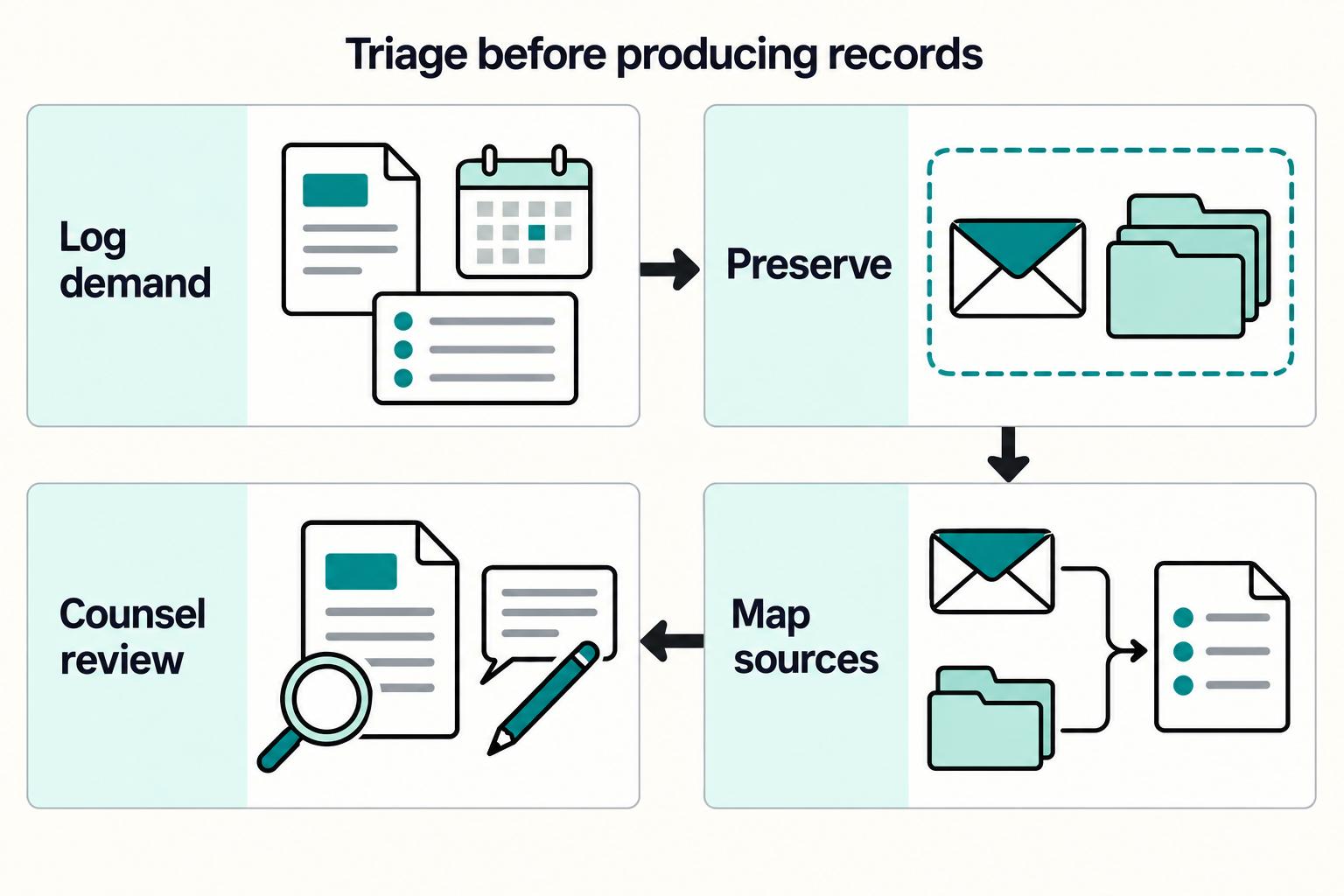
Move fast, but do not produce records on instinct. If you need to **respond to a subpoena for business records**, your immediate job is to control deadlines, preserve records, and make any later production defensible.
A US Expat's Guide to Investing in UCITS ETFs to Avoid PFIC Issues
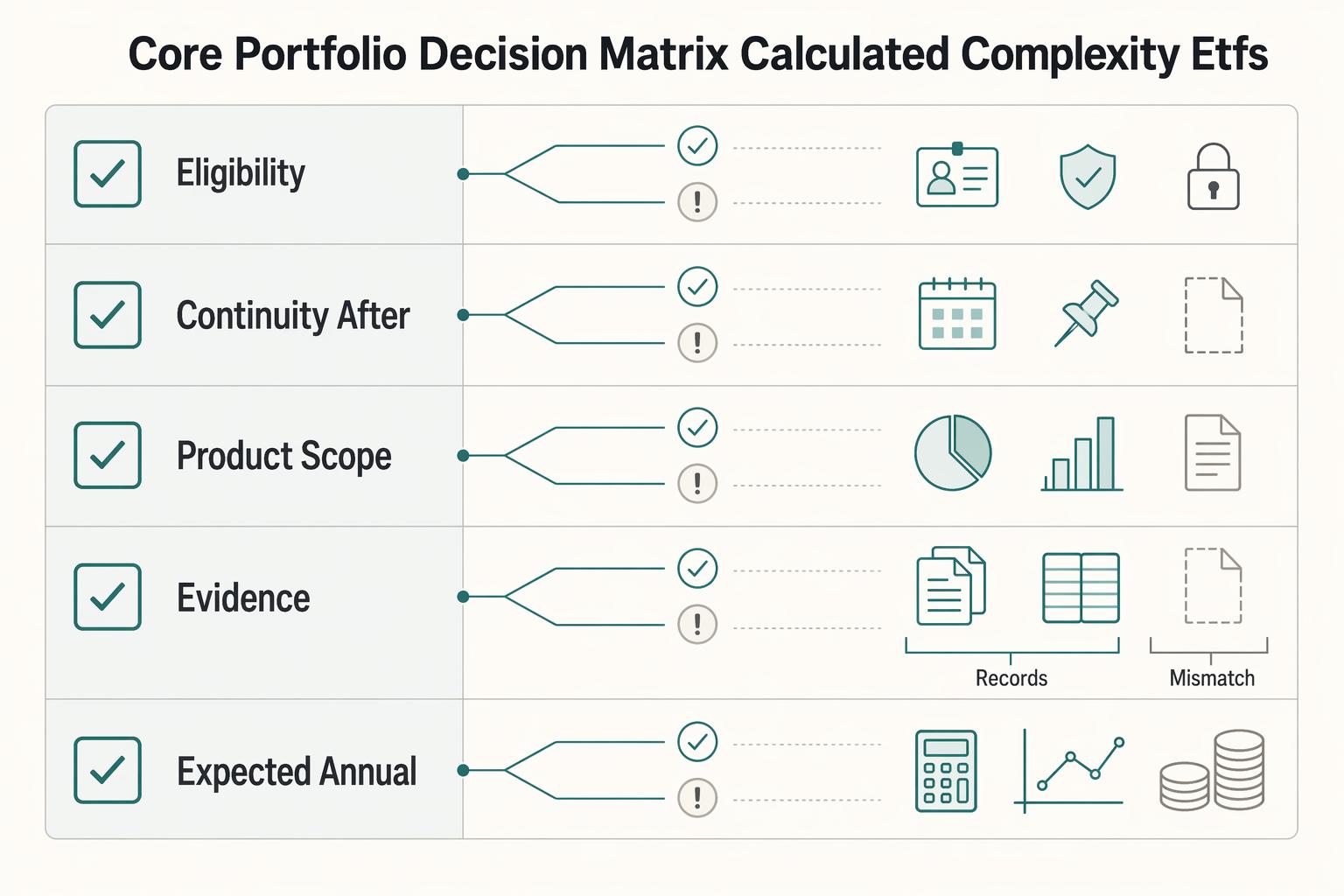
The real problem is a two-system conflict. U.S. tax treatment can punish the wrong fund choice, while local product-access constraints can block the funds you want to buy in the first place. For **us expat ucits etfs**, the practical question is not "Which product is best?" It is "What can I access, report, and keep doing every year without guessing?" Use this four-part filter before any trade: